‘Why are you showing yourself to us, but not to the world?’ This is such an interesting question, it’s also a natural question. Judas (not Iscariot) wants to know why Jesus shows himself to the twelve, but not to the world. The question suggests it’s Jesus’ choice to hide himself from most people but show himself to a few. Judas is right to find this strange! But it’s not what Jesus has in mind.
In verse 23, he responds by saying that for everyone who loves him, he and the Father will come and make their home in that person. In other words, it’s not just for the twelve, but for anyone in the world who loves Jesus. Or to put it another way, the answer is that he will reveal himself to anyone – if they love him. He doesn’t hide from anybody, but those who don’t love him can never truly see him.
Short of time
Jesus needs to wind the conversation up because he knows what will happen next. He reminds them again of the promised Spirit and tells them that he and his Father will live within them; and the Spirit will teach them and remind them of everything they need to know. He also promises to leave his peace with them, and tells them not to worry or be afraid. This seems to me particularly striking when you consider what Jesus is about to go through at the hands of the Sanhedrin and the Roman governor.
And finally, in verses 28 to 31, he reminds them that he’s going to the Father who is greater than he is, and they will be glad (once they understand the significance of this). So, in what way is the Father greater than the Son? Does this idea even make any sense when we know that Father, Son and Spirit are co-equal within the structure we call ‘trinity’, the three in oneness that they share together? Perhaps the answer is simply that Jesus has limited himself within a human body in order to reach us in this world. For more than 30 years he has remained limited, but in returning to the Father he will regain the ability to be present everywhere at every moment of time with all of his people. In his human body he is inevitably less powerful than the Father, only able to act in the one place and time where he finds himself. He took on our limitations so that he could reach us on our level, in ways we can understand. That time is coming to an end as he returns to the Father.
If you enjoyed this or found it useful, please like, comment, and share below. (If you don’t see those links, click the article’s title above the main photo and they will appear.) Send a link to friends who might enjoy the article or benefit from it – Thanks! My material is free to reuse (see conditions), but a coffee is always welcome and encourages me to write more often!
What is an exact representation? It’s a fully accurate impression of something, but still not the thing itself. For a paragraph of text it might be a carefully checked typescript or handwritten copy. It’s not the original, but it carries the essence of the original. If a single character is incorrect, the sense may still be clear, or guessable, or might become misleading. ‘If a single character his incorrect’ could still be clear though an obvious typo. ‘If a shingle character is incorrect’, might be slightly more confusing. ‘It’s now the original’, completely messes with the correct text, ‘It’s not the original’.
For a person, a colour photo is a pretty accurate representation – at least for appearance. A half hour video interview would be even better. An oil painting might give a recognisable impression, unless it was a later Picasso.
What about Jesus?
Yahshua (Jesus) is an interesting case of representation. We don’t have pictures of his appearance, though we do know quite a lot about his character and behaviour. However, he himself is a representation.
The Son is the radiance of God’s glory and the exact representation of his being, sustaining all things by his powerful word. After he had provided purification for sins, he sat down at the right hand of the Majesty in heaven.
Hebrews 1:3 (New International Version)
The sun on a clear day is very bright indeed, so bright it’s dangerous to stare at it directly (don’t try, your eyesight might be permanently damaged). But that powerful light is responsible for making everything else in our daytime world visible to us. This is one of the ways in which Jesus represents the nature of his ancestry. The Father is sometimes described as dangerous to behold, yet he makes everything in the spiritual world visible to us. But it is safe to look directly into Jesus’ face – his twelve closest followers did that, so did the seventy-two, so did the mass of the people from the towns and villages all around Galilee.
Not only is he safe but he sustains everything there is, and he has provided a purity that we could never earn for ourselves. And it works both ways in a sense. Not only does he represent the Father’s glory for us to see, but he represents us in his Father’s holy presence, sitting at his right hand!
What about the Greek?
Let’s look at some of the Greek words here, what can they add for us?
ἀπαύγασμα – apaugasma – ‘the radiance of his glory’ – This has the sense of a gleam flashing out, a flash of reflected light, as from polished metal moving in the sunlight. The Son is a dazzling flash shining out, hinting at the Father’s brightness.
χαρακτὴρ – charaktēr – ‘the exact expression‘ – From which we get the similar sounding English noun ‘character’. The Greek word has a core meaning of accuracy of expression, ‘precisely like’. Jesus is not just a bit like the Father, they are one! So what we see in him really does show us exactly what the Father is like.
ὑποστάσεως- hypostaseōs – ‘of his being’ – substance, or nature – This word is also used in Hebrews 3:14 where the NIV translators chose the word ‘conviction’ in the sense of certainty. Jesus represents the Father’s sustaining essence. What more could we ask? What more could we need?
Final thought
What a good thing that the writer of Hebrews wasn’t a cubist!
I have given them the glory that you gave me, that they may be one as we are one – I in them and you in me – so that they may be brought to complete unity.
We consider priorities expressed by three church personalities and ask, ‘What is the most important objective for the church? What will most please Papa? What is the Spirit urging? How does Jesus want us to respond?’
A polychotomy?
Shattered glass
We are being tugged in many directions in our lives as believers, we have become a polychotomy. The word literally means ‘many cut apart’. The church looks like shattered glass; oneness turned into shards. There are voices telling us to believe the right things, say the right things, do the right things. Let’s take a look at some of them and ask ourselves the question, ‘What is the greatest priority?’
An article by Sam Hailes (no longer available) started me thinking about this. Sam interviewed Peter Farmer from Nottingham, Tony Goddard from Peterborough, and Beresford Job from Chigwell. These three men have different ideas on the main priority – mission and multiplication (Peter), making an impact and caring (Tony), following Biblical principles (Beresford). If we cast the net wider we will find many more groups with other insights and emphases. Every denomination and group has its own ideas about what is most important.
So who is right?
To answer this question we need to turn to the Bible. But where should we look?
Guidance from the Source
I suggest that the most important and fundamental guidance will come from carefully hearing what Jesus said. In particular, his prayer just before his arrest must be the best of all sources for what is essential.
Think about it for a moment. Yahshua knows that his whole life has brought him to this place of sacrifice. The burden upon him is enormous, his heart is heavy and he cries out to the Father. Surely what he asks at this moment will be the most important thing of all. So what does he say?
In John 17; Yahshua prays for his disciples, and there is much here that we need to take on board. But then he prays explicitly for you and me. And this is what he asks. Read it carefully – this is Jesus praying for you!
My prayer is not for [my disciples] alone. I pray also for those who will believe in me through their message, that all of them may be one, Father, just as you are in me and I am in you. May they also be in us so that the world may believe that you have sent me.
I have given them the glory that you gave me, that they may be one as we are one – I in them and you in me – so that they may be brought to complete unity. Then the world will know that you sent me and have loved them even as you have loved me.
Father, I want those you have given me to be with me where I am, and to see my glory, the glory you have given me because you loved me before the creation of the world. ‘Righteous Father, though the world does not know you, I know you, and they know that you have sent me. I have made you known to them, and will continue to make you known in order that the love you have for me may be in them and that I myself may be in them. (John 17:20-26)
He wants us to be one, united, not split apart. The Messiah himself prays to the Father that we may be one ‘just as you are in me and I am in you’. He wants us all to be ‘in us’ (the Father and the Son) so that the world may believe the Father has sent the Son.
More than that, Jesus has given us (you and me) the glory that the Father gave him. What?! Read that again. He’s given you and me his glory! Why? So that we may be one. Then the world will know.
And he prays that we may be where he is and see his glory.
There’s just no escaping this fundamental truth, that when the chips are down Jesus prays his heart out to his Father and asks that we may be one so that the world may believe.
What is the most striking thing about the church in our day? What does the world see when it looks at church? It sees multiple organisations, church is divided into myriad groups and denominations, often seeming to point to different things as being the most important. We are a broken, shattered people and the heart of Christ is broken when he sees us in this state. His heart is for us to be one just as he and the Father are one. And he wants to include us in their oneness and community.
Peter Farmer is not wrong about mutiplication and mission. Tony Goddard is not wrong about making an impact and caring for people. And Beresford Job is not wrong about following Biblical principles. But those are not the main things.
Becoming and remaining one
Above all, we now need to learn to be one. We need to accept we have differences, learn from one another. There is no single right belief, right speech, or right action. His children all shine with the light of his presence. If we are to be part of the answer to his prayer we need to learn from one another and grow together in love, building one another up, encouraging one another, helping one another to focus on every good thing. We need to grow up into Christ. Paul understood this well, see what he wrote to the Ephesian church.
As a prisoner for the Lord, then, I urge you to live a life worthy of the calling you have received. Be completely humble and gentle; be patient, bearing with one another in love. Make every effort to keep the unity of the Spirit through the bond of peace.
There is one body and one Spirit, just as you were called to one hope when you were called; one Lord, one faith, one baptism; one God and Father of all, who is over all and through all and in all.
Christ himself gave the apostles, the prophets, the evangelists, the pastors and teachers, to equip his people for works of service, so that the body of Christ may be built up until we all reach unity in the faith and in the knowledge of the Son of God and become mature, attaining to the whole measure of the fullness of Christ.
Then we will no longer be infants, tossed back and forth by the waves, and blown here and there by every wind of teaching and by the cunning and craftiness of people in their deceitful scheming. Instead, speaking the truth in love, we will grow to become in every respect the mature body of him who is the head, that is, Christ. From him the whole body, joined and held together by every supporting ligament, grows and builds itself up in love, as each part does its work. (Ephesians 4:1-6 and 11:16)
I am not suggesting that anyone is wrong, or that some are more right than others. I am simply observing that we remain shattered and that we are not yet perfectly formed into the one bride for whom Christ died and will return. Let us all strive to forge fresh bonds of peace. Paul called the Ephesians to keep the unity of the Spirit. Today we need to do more than that, we need to regain the unity of the Spirit.
Addendum
The above is a repost, only slightly changed, of an article I wrote way back in 2012. After 12 years, I think it’s worth repeating. If church has any purpose, any value, it springs from Jesus’ prayer for you and for me. Will I let him place the little fragment that I am into a shared oneness with my brothers and sisters? Will you? Last night I was privileged to be part of a Small Group meeting with friends in one of our homes – and this oneness, and sharing, and presence of the Spirit of Christ, and care for one another and the wider world was tangible amongst us. That is so refreshing, so encouraging, so good!
Notes from bygone years – Augusts one after another Hint: Click on the thumbnails for larger images.
A year ago
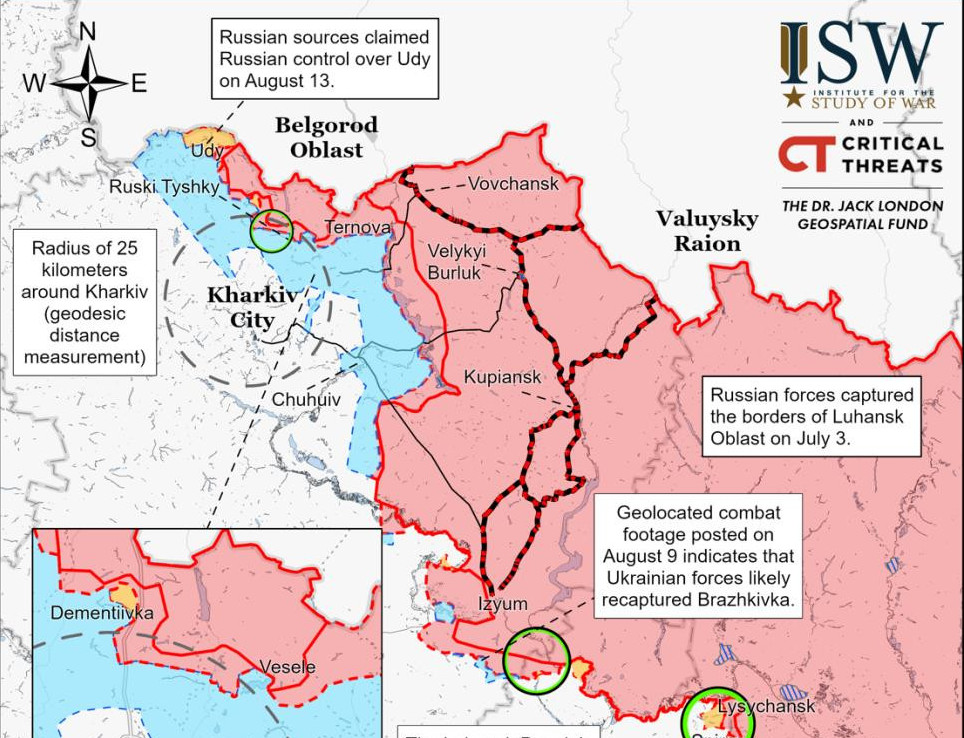
Ukraine was making exceptional progress against the Russian Army’s invasion in August 2022. I was encouraged to see this and wrote in my journal:
‘Ukraine is making serious inroads into the Russian held parts of Kherson and Zaporizhzhia and Russian forces are redeploying from the Luhansk/Donetsk region, and I suspect they’re more vulnerable while moving than they are when dug in. Perhaps Ukraine can keep them shuttling back and forth between the regions, nibbling away at them all the time. But other reports suggest the Russian economy is in serious trouble too, unemployment is severe now and despite higher prices for oil and gas, the profits are down because of reduced sales.’
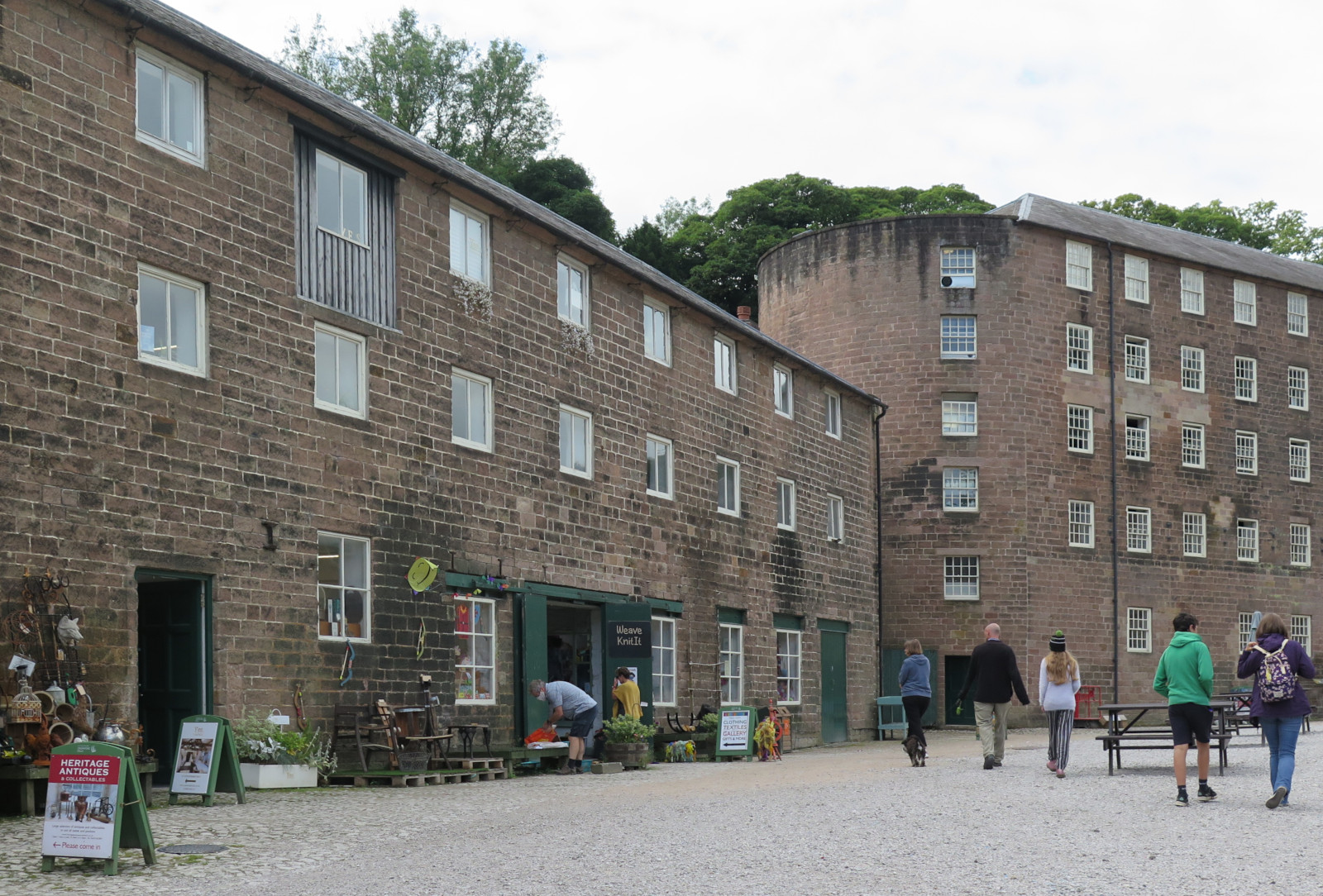
On 5th August 2021 we were on holiday with the family and visited Cromford Mills where Richard Arkwright built the world’s first water-powered factory to manufacture cotton thread.
It was fascinating to see the buildings and surroundings and to think about the industrial revolution.
In August 2018, as in 2021 (above) we were on holiday with the family, this time in Switzerland. Some of us took a cable-car to Tracouet, 850 m above the little town of Nendaz. We walked back down, enjoying some beautiful views; it took around three hours.
In August 2013 I wrote about the way in which all followers of Jesus are called to be leaders – but perhaps not in quite the way we usually think. (Read the original article)
In August 2008 – Dan and Kerry were married and there was a big family party. Fifteen years on Dan and Kerry are going strong, and everyone is that much older. Some of those present on the day are no longer with us, sadly.
In August 2003 – We met in Eaton Ford and what we were shown has remained with me ever since. The Holy Spirit told us to ‘look out and look up’, and that has turned out to be the best possible advice and guidance in every situation.
In August 1998 – My daughter Beth married Paz (clearly August is a good month for weddings).
Reception in a quarry
The ceremony was held at the register office in Bristol, everyone gathered in Quaker’s Friars and then made our way to the Registry Office together. After the official parts and signing the register, we all left for photos outside.
Then we all drove to Axbridge where the reception was held in a nearby quarry, a delightful setting (though unusual) and the weather was (mostly) kind. There were showers around, but there was also quite a bit of sunshine. Dad had a ‘head-umbrella’ which he enjoyed using when it rained, and eventually we all gave up and made our way to the village hall backup location.
In August 1993 we spent our family holiday in North Wales.
The family in Llangollen
We walked over the canal bridge near Llangollen, took a ride on a steam train, travelled in a canal barge pulled by a horse, visited museums, gardens, a castle and a lot more. All the usual holiday things people do. (See a video clip)
In August 1988 we visited my parents in Cirencester. The photo shows Beth and her Grandpa, they’re chuckling about a giant snail Grandpa has in a glass tank. There was often something interesting to see on these visits!
In August 1983 Debbie and Beth were enjoying the school holiday, Judy was enjoying a break from teaching Biology at Cotham Grammar School, and I was continuing research into pollen tube growth at Long Ashton Research Station. We probably went on holiday for a couple of weeks, most likely in North Wales.
In August 1973 Judy and I had been married less than three years and were living in a flat in Belmont Road, Bristol. Judy had a job at Bristol University as a research assistant at the University Biochemistry Department in Woodland Road, while I was working at Long Ashton Research Station on apple and pear pollination.
In August 1968 I was a student at the University of Bath, studying for my first degree in Horticulture. The photo is a commercial glasshouse seen on one of our visits.
In August 1963 I had quite a surprise. The family were on holiday at Aberporth on Cardigan Bay and we’d gone to Pembroke for the day. We saw one of the last RAF Short Sunderland flying boats retired at Pembroke Dock. We also took a look at Pembroke Castle and imagine my shock when walking round the outside of one of the towers, who should I almost bump into but my physics teacher from school!
In August 1958 the US nuclear submarine, ‘Nautilus‘ became the first vessel to pass underneath the ice at the North Pole. Meanwhile it was my school holidays, between the fifth and sixth years at Querns School (a junior school in Querns Lane, Cirencester).
In August 1953 I’d just turned five and was learning that I’d be starting school in September. That seemed like a lifetime away so I probably gave it very little thought, but it was going to be a major point of change in my life.
In August 1948 I was in my first month of life. I don’t remember it of course! We were living with my grandparents in Victoria Road, Cirencester while Mum and Dad waited to reach the top of the waiting list for a newly built council house on the Beeches Estate.
In August 1943 Dad wrote in his diary for Saturday 7th, ‘Our American soldier billitee (sic) arrived though I didn’t see him’. I didn’t know my grandparents had hosted a USA serviceman until I read that diary entry just a moment ago!
For convenience, you can jump to any book or chapter by clicking the links below, or skip to the most recent post. Newer items are posted on this site (JHM) and the earlier ones appear on an older version. There’s also a brief introduction.