The Temple incident

Yahshua was still at the beginning of his work, yet he was already growing in stature and favour. We should be growing in those same ways right now, and the only way that becomes possible is that we follow in his footsteps. However young or old you might be, and however far you may have already come with Yahshua, today, this very moment, is the start of the rest of your life. It’s a great opportunity.

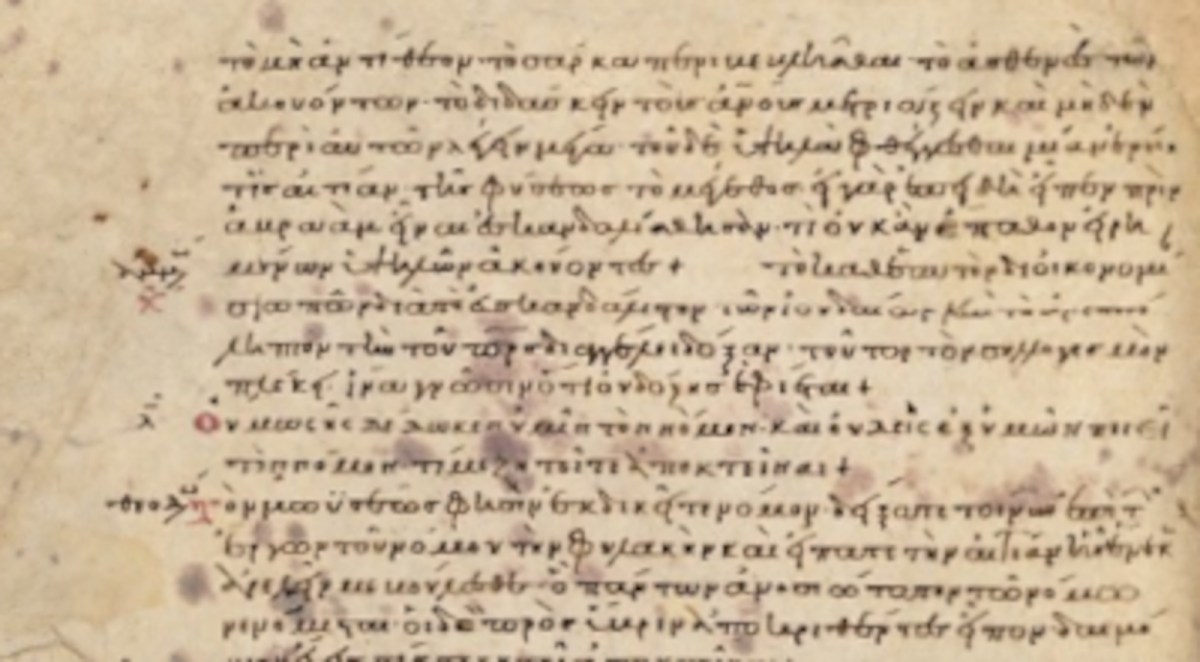
Greek commentary on John’s gospel dated 1190-1200 (Bodleian Library)

< Previous | Index | Next >

Cruising the gospel – luke 2:41-52

Bible text –Read it yourself (opens in a new tab)

The Temple incident
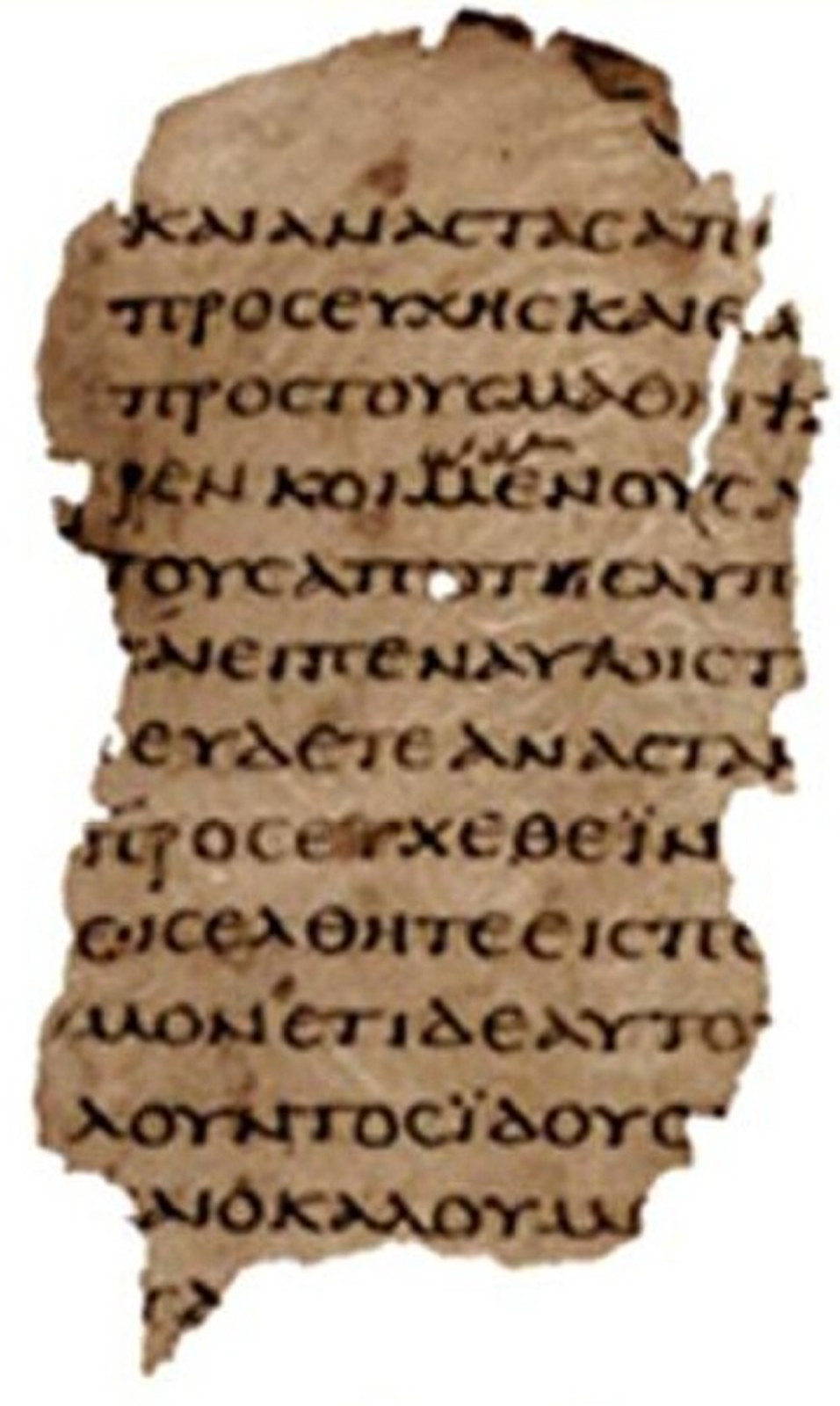
A fragment of Luke’s gospel
(Wikimedia)

2:41 – Yahshua (Jesus)’s parents Yosep (Joseph) and Maryam (Mary) always went up to Yerushelem (Jerusalem) for the Passover festival, along with many others from Natsrat (Nazareth).

When he was twelve-years-old, they made this journey as they always did, but this time after a day’s journey north towards home, Yosep and Maryam were unable to find him amongst the other travellers. Frantically they returned to Yerushelem to hunt for him there and, after three days searching, discovered him in the Temple deep in conversation with the teachers there.

People nearby listening to what was said were blown away by his understanding and answers. Maryam and Yosep were astonished. Maryam asked him why he’d treated them like this – ‘Your father and I have been frantically searching everywhere for you!’

His answer puzzled them. He asked why they had searched, to him it was natural that he’d be there in the Temple (my Father’s house).

He did what they told him, and they returned to Nasrat together, and Maryam stored it all away in her heart.

So what can we learn from all this?

First, let’s remind ourselves that as followers of Yahshua our whole purpose is to pay attention to everything he says and does and get out into the world around us to emulate him and do even more that he did. How is that possible? Yashua is greater than me, greater than you. How can we do more than he does?

The answer to that conundrum is simple, there’s only one of him, there are billions of us. He is the head, we are the arms and legs, eyes and ears. He is here to make decisions, we are here to carry out his commands. It’s really that simple! But it’s upside down in terms of our usual thinking, and astonishingly we can see the truth of this in Yashua even at the age of twelve!

We will probably be as puzzled and confused as Maryam and Josep were! Don’t expect to understand fully what the head is thinking. The body receives instructions and we need to learn to carry them out without question or understanding. We’re not accustomed to this. we’re used to organisations with managers at every level, taking commands from the top and seeing them trickle down to lower levels being interpreted step-by-step on the way down.

The CEO says, ‘Increase production and marketing of product x’. The production manager plans to build additional capacity, the buyers look for ways to obtain more raw material for product x for delivery beginning at the necessary time. The sales team prepares marketing material and designs product packaging, then finds companies to produce and print boxes.

But Jesus isn’t like a CEO, he is a King! He will lead us, he’ll come with us because he’s also our brother, he gives us gifts and he makes us fruitful. Those are the things we should learn to develop, improve in, and practice. The sequence is absolutely critical. It determines everything.

  • First we must meet Jesus and get to know him really, really well.
  • Second we must become disciples, learning to listen and follow.
  • Third we set out on mission, we reach the people around us, wherever we live, and work.
  • Fourth we must allow him to build us into church the way he wants it. That means, not the way we want it. That means not the way you and I want it.

(See JDMC for more on these four points.)

If we are honest, we can learn all of this from Jesus even as a 12-year-old. His parents had to learn this, so did the Temple teachers, so do we.

And notice Luke 2:41-52; Yahshua was still at the beginning of his work, yet he was already growing in stature and favour. We should be growing in those same ways right now, and the only thing that makes it possible is that we follow in his footsteps. However young or old you might be, and however far you may have already come with Yahshua, today, this very moment, is the start of the rest of your life. It’s a great opportunity. Make it a journey with the risen Lord and, long or short, it will be the most exciting and productive time of your life. So forget everything else, step out with Jesus and get going – right now!

See also:

< Previous | Index | Next >

Useful? Interesting?

If you enjoyed this or found it useful, please like, comment, and share below. (If you don’t see those links, click the article’s title above the main photo and they will appear.) Send a link to friends who might enjoy the article or benefit from it – Thanks! My material is free to reuse (see conditions), but a coffee is always welcome and encourages me to write more often!

You might also like:

Jesus as a child

Perhaps, from Luke’s point of view, since Yahshua is in a sense the first-born of his heavenly Father, not of Yosep, there was no need for the five shekel fee. Maybe the Simeon passage (Luke 2:25-33) is included specifically to make this clear.

Greek commentary on John’s gospel dated 1190-1200 (Bodleian Library)

< Previous | Index | Next >

Cruising the gospel – luke 2:21-40

Bible text –Read it yourself (opens in a new tab)

Circumcision and naming

A fragment of Luke’s gospel
(Wikimedia)

2:21 – Just as with Yohanan (John) and for every Jewish boy, on the eighth day after birth, Yahshua (Jesus) was circumcised and named. For the details of this read the previous post.

True to his word in his introduction, Luke arranges everything in proper chronological sequence, first the birth of Yashua, then his circumcision and naming, and then anything more he can find about him as a child. At sometime the family would have returned to Nasra (Nazareth) in the north near the shore of Lake Ginnosar (Galilee).

Temple offerings

There’s a lot to mull over in verses 22-24. There are two distinct obligations that must be fulfilled when Yahshua is about 40 days old. The first concerns Maryam’s purification following childbirth. After giving birth to a son, a mother was ceremonially unclean for 7 days. On the 8th day came circumcision as we have seen (Lev 12:3 and Luke 2:21). But a woman needed to wait a total of 40 days before she could touch anything holy or enter the sanctuary. (For a daughter those periods would be doubled to 14 and 80 days.)

An offering was required when the 40 days were up, she would bring a year-old lamb as a burnt offering and a pigeon or turtledove as a sin offering. The priest would make atonement for her, and she was then regarded as ritually clean (Lev 12:6–7). Poor people would not have been able to afford a lamb for the burnt offering, and in this case two turtledoves or two young pigeons were acceptable, one bird for the burnt offering and the other for the sin offering (Lev 12:8).

Luke mentions the concession for poverty so it seems Yosep and Maryam were needy at this time. The sin offering does not suggest any wrongdoing on Maryam’s part; it was simply a ritual uncleanness due to the loss of blood during the birth.

Redeeming the first-born

It was also necessary to redeem a first-born son (see Exodus 13:2, 12–15, repeated in Exodus 34:19–20, also Numbers 3:11–13, 40–51 and Numbers 18:15–16). However, the child did not need to be taken to the Temple for this redemption, and Luke doesn’t mention the five shekels being paid.

Perhaps, from Luke’s point of view, since Yahshua is in a sense the first-born of his heavenly Father, not of Yosep, there was no need for the five shekel fee. Maybe the Simeon passage (Luke 2:25-33) is included specifically to make this clear. Hearing this prophecy over the infant Yahshua clearly impressed Yosep and Maryam and gave them further pause for thought.

Hanna (Anna)’s words (Luke 2:36-38) will no doubt have reinforced these impressions and thoughts still further in Yosep and Maryam’s minds.

After fulfilling all the requirements for ritual cleansing and redemption, they returned home to Nasra (Nazareth), and Luke has no details to share about Yahshua’s early life there except for the generalisations that he grew, became strong, was filled with wisdom, and that Father’s grace was on him (Luke 2:40). There remains just one piece of additional detail, and we’ll look at that next time. We can also add, though Luke doesn’t tell us, that Yashua during his childhood years would have learned Yo-sep‘s trade as a general builder (not, as commonly thought, a carpenter, though carpentry would certainly have been included). He would also have been taught by a local scribe to read and write Hebrew and would have studied the Hebrew Bible exhaustively, learning considerable chunks by heart as all Jewish boys were required to do.

Question: Consider that Yahshua, as he grew up, worked with Yo-sep at building and repairing work. Do you think practice at building and repairing structures might have helped him later with the work of building and repairing relationships? Think about the skills involved in getting things to fit well, the need for firm, reliable foundations. Think about things like care, attention to detail, self-control, gentleness, love, joy, peace, patience, kindness, faithfulness. He came to repair relationships between everyday people and between those people and his Father in heaven. He said, ‘I will build my church’.

See also:

< Previous | Index | Next >

Useful? Interesting?

If you enjoyed this or found it useful, please like, comment, and share below. (If you don’t see those links, click the article’s title above the main photo and they will appear.) Send a link to friends who might enjoy the article or benefit from it – Thanks! My material is free to reuse (see conditions), but a coffee is always welcome and encourages me to write more often!

You might also like:

The birth of Jesus

‘Hey, don’t be afraid, guys; relax, nothing to worry about here.’ And he continued, ‘I’m bringing great news that will make everyone rejoice. Today, in David’s town, a Saviour has been born for you, Ha Maschiach (the Messiah), the Lord’.

Greek commentary on John’s gospel dated 1190-1200 (Bodleian Library)

< Previous | Index | Next >

Cruising the gospel – luke 2:1-20

Bible text –Read it yourself (opens in a new tab)

A baby is born

A fragment of Luke’s gospel
(Wikimedia)

2:1-7 – Some three months after the birth of Yohanan (John) it was almost time for Maryam (Mary) to give birth to Yashua (Jesus) after her return to Nasra (Nazareth), and in due course her time of labour would begin. Luke begins the chapter by telling us that the Roman Emperor Augustus had decreed a census for the entire empire. There’s a bit of difficulty here for Bible scholars and historians alike.

The chronology

It’s generally agreed that Yahshua (Jesus) was born well before our year zero, probably in the period 6 to 4 BC. If you want a nice round number go for 5 BC, you will be less than a year out so it’s quite reasonable as a guess to keep things simple. But (and it’s a big ‘but’) historians of the early Roman Empire under Augustus have found no record of a census in those years. There was a census in 6 AD but that is a very poor fit for several reasons.

The most obvious reason is the timing difference. Most historians assume Luke has inadvertently referred to the later census mistaking the date with the earlier one. Theologians have tried to reconcile the two dates in several ways but there’s been little agreement. But bear in mind that it’s entirely possible there was an earlier census and the records have been lost.

According to Luke’s account, here in chapter 2, the Emperor Augustus ordered that everybody (oikoumenē) should be registered. Luke says this was the first registration, when (or possibly before) Quirinius was governor of Syria, and adds that everyone went to their own ancestral town. That explains why YoSEP (Joseph) and Maryam travelled from Nasra to BaytLEhem (Bethlehem). Later, in Acts 5:37 Luke mentions the later census in 6 AD. He tells us that Gahmlee’el (Gamaliel) mentioned Judas the Gallilean, who rose up in the days of the census. This refers to the census of 6 AD, not one around 5 BC.

There is one further possibility. The ‘census’ might have been an affirmation of loyalty, not a tax raising exercise. Josephus writes in Antiquities 17.42 that there was an oath of loyalty to Augustus and Herod around 7–6 BC, and the 5th-century writer Orosius links an oath to Jesus’ birth. Matthew puts the birth of Jesus during Herod the Great’s reign, and Herod died in 4 BC. But Matthew doesn’t mention a census at all: and in his account the family seems to live in Bethlehem already and only later moves to Nazareth. Mark, John and Paul do not mention any census.

Family of David

YoSEP’s family were descended from the line of DahWEEth (David) at the town of BaytLEhem (Bethlehem), so that’s where he and his wife-to-be had to go. It must have been a very difficult journey for the pair of them, with the baby so nearly full-term. And she did, in fact give birth while they were right there in BaytLEhem for registration. They were unable to find accomm0dation in the small town, it must have been very crowded, so Maryam wrapped the baby in bands of cloth and laid him down in the farm animal’s hay trough.

The shepherds

Luke 2:8-20 Almost everyone in the western world is familiar with the story of the shepherds coming from the fields to worship and wonder at the new baby. It has become a standard and popular part of the Christmas story. While shepherds watched their flocks by night is one of those carols that everyone knows and loves, and the events are acted out at school nativity plays. So let’s read Luke 2:8-20 now and see how much of that popular story is here in Luke’s gospel.

The shepherds had been living outside at night to keep an eye on the sheep at a time when they they might have been prey to wolves or other predators if left alone. One of Yahweh’s angels appeared, his Shekinah glory shone brightly and they were terrified by this experience. To see the glory meant instant death according to the teaching of the priests. But the angel was unconcerned, saying something that in colloquial English might have been, ‘Hey, don’t be afraid, guys; relax, nothing to worry about here.’ And he continued, ‘I’m bringing great news that will make everyone rejoice. Today, in David’s town, a Saviour has been born for you, Ha Maschiach (the Messiah), the Lord. Luke, writing in Greek, uses the word Kyrios for Lord, the angel would have spoken Aramaic to the shepherds and therefore used the equivalent term Mar-ay (or possibly the Hebrew Adon or Adonai).

He added, ‘Here’s a clue for you, you’ll find a baby wrapped in strips of cloth and lying in a farm animal’s hay trough!’

And suddenly great crowds, a veritable army of angels, appeared in the sky, praising Yahweh (I Am) and saying, ‘Glory to God in the highest heaven,
and on earth peace to those on whom his favour rests.’ Once the angels had returned to the skies, the shepherds said to one another, ‘Let’s go and see this event that Mar-ay told us about!’

So the shepherds hurried to find YoSEP, Maryam, and the baby; and after seeing him they left and told others who were all amazed to hear the details. Maryam, meanwhile, stored it all away in her mind and quietly considered it. The shepherds returned to the fields, glorifying and praising Elohim for everything they’d witnessed which had come about just as they’d been told.

So what Luke writes here matches what we see in nativity plays in the 21st century apart from a bunch of farm animals in the outbuilding with the hay trough, and the three visiting kings (or wise men) with their gifts. But these visitors get a mention in Matthew’s account.

See also:

< Previous | Index | Next >

Useful? Interesting?

If you enjoyed this or found it useful, please like, comment, and share below. (If you don’t see those links, click the article’s title above the main photo and they will appear.) Send a link to friends who might enjoy the article or benefit from it – Thanks! My material is free to reuse (see conditions), but a coffee is always welcome and encourages me to write more often!

You might also like:

Mary visits Elizabeth

Her two journeys, three months apart, would have been hard (about four days on foot) and perhaps dangerous for a young woman travelling alone. She must have been a determined young lady. We don’t know if her parents approved or not, but clearly she was going to make the trip come what may.

A Greek commentary on John

< Previous | Index | Next >

Cruising the gospel – Luke 1:26-56

Bible text –Read it yourself (opens in a new tab)

A fragment of Luke’s gospel
(Wikimedia)

Luke 1:26-38 – Elishwa (Elizabeth) is now two thirds of the way through her pregnancy. It seems Gafriel (Gabriel) is a pretty busy angel around this time, having spoken to Zekharya (Zecheriah) about Johanan (John)’s birth, he now returns, this time to Glila (Galilee) to speak with Maryam (Mary) about her coming pregnancy.

His task this time is to visit the small village of Nasra (Nazareth) to visit and convey a message to a young virgin, Maryam, who was already engaged to marry Yosef (Joseph). The name is often shortened to Yose. Significantly Yosef was a descendent of King Dawith (David) and this explains the sense of Yahshua as a king, accounting for ‘royal’ in the sense that we who follow Yahshua are a ‘royal priesthood’. Remember that when you pray for someone or something. If you pray for someone to be healed or for a demon to be thrown out, it will be done because you are royalty! You did not deserve the title ‘royal’, but you inherited it as a brother or sister of King Yahshua.

The name Josef comes from the Hebrew root y-s-p, meaning ‘to add’. For an example, see Genesis 30:24.

Gafriel appears and tells Maryam, ‘Greetings, you who are highly favoured! Yahweh is with you.’ Luke tells us that this really worried Maryam, it’s likely the angel used the Holy name Yahweh, or perhaps the permitted Hebrew alternative Adonai (my Lord), today he might have used the Hebrew term Ha Shem (The Name). But however Gafriel put it, it would have been an astonishing thing for a young woman to hear. This is the sort of thing that might happen to an older man, especially if he was a priest, but to a young woman from one of the other tribes it would seem impossible, perhaps even forbidden. But who can argue with an angel, a messenger sent from the presence of Yahweh?

Gafriel immediately steps in to reassure her (Luke 1:30-33)

  • He tells her not to be afraid as she has found favour with the Almighty.
  • He says she will become pregnant and a son will be born and should be called Yahshua (Jesus). (This part may not have been very reassuring.)
  • He explains that this child will be great and will be called Elohim’s son.
  • He says that Yahweh will give Yahshua the throne of Dawith.
    And finally he says that this son will rule over Yisra’el (Jacob)’s descendants for ever and his kingdom will never come to an end.

These are very heavy-duty promises! Maryam expresses confusion, but the fear seems to have left her. She wants to know how she can become pregnant as she is a virgin. Gafriel tells her plainly, ‘Ruach (the Holy Spirit or Yahweh’s breath) will come over you and the power of Elyon (The Most High), so the baby will be called Ben Elohim (Son of God). Even your relative Elishwa is six months pregnant though everyone said it wasn’t possible. Nothing Yahweh promises will ever fail.

Maryam’s reply was simple – ‘I’m Yahweh’s servant, may what you have told me happen’.

Luke 1:39-56 – Maryam wasted no time, she hurried off to see Elishwa in the Judean hill country. When they met, Elishwa was filled with the Holy Spirit and loudly proclaimed Maryam to be blessed and her coming baby too. Elishwa’s baby jumped in her womb on hearing Maryam’s voice. Maryam was inspired to say more as well, see Luke 1:46-55 (often called ‘The Magnificat’). This is rightly a famous passage and it pays to read it through carefully. Compare it with the words of Hannah in 1 Samuel 2:1-10 and Psalm 113. I leave this as an exercise for the reader – What’s the same? What’s different? What is significant? Leave a comment below, tell me what you discovered.

This was no flying visit by Maryam, she remained with Elishwa for three months, until it was time for Johanan’s birth. Then Maryam travelled back to Nasra to her parent’s home. Her two journeys, three months apart, would have been hard (about four days on foot) and perhaps dangerous for a young woman travelling alone. She must have been a determined young lady. We don’t know if her parents approved or not, but clearly she was going to make the trip come what may; she knew it was important. She might have taken the shorter route through Samaria, or she might have taken the Jericho route in order to remain in Galilee and Judea. We don’t know. Luke 1:39 tells us that she hurried which suggests she might have chosen the shorter route.

See also:

The Wikipedia articles provide some useful information backed up by detailed references. If you want to understand the background in further detail they’re a good place to start, though they do focus a bit on Catholic and Orthodox opinion and teaching.

< Previous | Index | Next >

Useful? Interesting?

If you enjoyed this or found it useful, please like, comment, and share below. (If you don’t see those links, click the article’s title above the main photo and they will appear.) Send a link to friends who might enjoy the article or benefit from it – Thanks! My material is free to reuse (see conditions), but a coffee is always welcome and encourages me to write more often!

You might also like:

Intro and a Temple incident

Luke is pointing us to the very basis of why Yohanan’s birth will be so important. His father, Zekharya, was a priest. In Jewish thought the role of a priest was as a conduit between Yahweh (who is perfect and holy in every way) and sinful humanity.

A Greek commentary on John

< Previous | Index | Next >

Cruising the gospel – Luke 1:1-25

Bible text –Read it yourself (opens in a new tab)

A fragment of Luke’s gospel
(Wikimedia)

Luke 1:1-4 – Luke, a Greek medical doctor, was clearly well educated, so he begins this Greek history as any good Greek historian would have done around the turn of the 1st century AD. He writes a formal introduction, explaining what he wants to achieve and the name of the person he is writing to. Theophilus might be a personal name, but taken literally it means lover of God or friend of God, suggesting it’s intended for anyone who wants to give their allegiance to the Jewish deity Yahweh. Yahweh is a Hebrew name meaning I am or I’m who I am or I’m what I am. When Moses was told to go and speak to the Israelites enslaved in Egypt, he wanted to know who he should say had sent him with this extraordinary message of freedom. I am was the name provided to him for that purpose. It was an appropriate name then and it’s an appropriate one in 100 AD and remains appropriate today as well. Jesus comes to us via Latin Yesus from the Greek Yesous which in turn is from the Aramaic Yeshua; and that’s how Jesus would have been known by his family and friends. The Hebrew equivalent is Yahoshua which means Yahweh saves. Nothing could be more appropriate than that! It’s the same name as Joshua who led the Israelites into the promised land after 40 years in the wilderness. And Yahshua (Jesus) has a similar mission to Joshua’s, leading all who will follow him into an even greater place of promise to be and remain permanently with him and the Father.

Luke explains first that others have written accounts like the one he’s embarking on here, and mentions that he’s taken particular pains to search out the truth of everything so his new account will be trustworthy and accurate. And the reason Luke gives for the effort he is putting in is so that starting with the eyewitness accounts he can write a clear and well-ordered sequential account that can be relied on.

John’s birth foretold

Luke 1:5-25 – Luke decides to begin with the birth of John the Baptist. The Jewish Temple was under construction by Herod the Great’s architects and building labourers at the time of John’s birth, the Temple itself was in use at that time, though not yet complete. But Luke probably wrote his account shortly after the Temple had been torn down by the Romans in the year 70 AD. It was a time of great tribulation and despair in Jerusalem, but presumably Luke was writing elsewhere in the Greek part of the Roman Empire.

Zekharya (Zechariah) the Priest and his wife Elishwa (Elizabeth) were devout Jews but elderly. Zekharya’s division was taking its turn at work in the Temple, and he’d drawn lots for the task of burning incense at the altar. While he was doing this work, the Angel Gafriel (Gabriel) appeared to him. He learns that Elishwa will bear a son and that he’s to be called Johanan (John). But because of his doubts, Zekharya will not be able to speak until Johanan’s birth. Lack of faith is a serious failing, especially so for a Jewish priest.

The angel makes a few things clear about the boy to be born.

  • He’ll be a joy and delight to his parents.
  • Many will rejoice because of his birth.
  • He’ll be great in Yahweh’s eyes.
  • He must never drink alcohol.
  • He’ll be filled with Ruach (the Holy Spirit) even before he is born.
  • He’ll come ahead of ha Mashiach (the Messiah) in the spirit and power of Eliya (Elijah).
  • He’ll turn the hearts of parents to their children.
  • He’ll turn the disobedient to the wisdom of the righteous.
  • He’ll get people ready for ha Mashiach.

Law and grace

And right here, Luke is pointing us to the very basis of why Yohanan’s birth will be so important. His father, Zekharya, was a priest. In Jewish thought the role of a priest was as a conduit between Yahweh (who is perfect and holy in every way) and sinful humanity. The same was true for all religions in those days and it’s particularly clear in Roman religion where the Latin word pons, pontis means both bridge and priest. Indeed, we can take it further: pontifex is a bridge builder, and Pontifex Maximus, the greatest bridge builder, was the title given to the most senior priest, the Roman High Priest. Today the Pope holds this Roman title, Pontifex Maximus.

In Judaism the most senior priest was known as the Chief Priest. He was the only person ever allowed into the Holiest place in the Jewish Temple in Jerusalem. Once a year a rope was tied around one of his ankles and he would enter the Holy of Holies, first the Ulam (a porch), then the Hekhal (the Holy Place) , and then the Debir (the innermost sanctuary in the Temple). He would be in the presence of Yahweh there, and if the Chief Priest was incapacitated or died while he was there, other priests would be able to use the rope to pull him out without entering the holy place themselves.

Zekharya, though of the priestly family, could not enter the holiest place himself. The altar of incense was in the Hekhal, just outside the Holy of Holies which was screened off by a heavy curtain.

So, here’s the thing. Yahweh was unapproachable by anyone other than the Chief Priest. Yahweh’s Law, given to Moshe (Moses) must be fully obeyed, throughout a person’s entire life. Zekharya and other members of the priestly family could make sin offerings and other offerings as required when someone failed to obey the law in some way. But there always had to be a Priest in the loop, a sinner could not be purified any other way.

This promised son, to be called Yohanan, would prepare the way for ha Machiach (the Messiah) who would bring in a new covenant in which all people could approach Yahweh directly. So Zekharya and Elishwa had major roles to play as the parents of the one who would prepare a way for the Messiah and a new and different way to approach Yahweh. The old way of the Law was going to be replaced by a new way of grace.

Nobody, not even Zekharya and Elishwa could imagine what this new way would be like, but the son to be born in their old age was going to announce it and prepare for it, the angel had made that clear enough.

Struck dumb

It’s easy, perhaps natural, to see this as punishment for Zekarya’s disbelief. But there’s another, more likely, and I think better possibility. If Zekarya is able to speak he’ll probably relate his doubts to friends, family, and anyone willing to listen to the ramblings of an aged man. He’ll also tell them that he is to become a father, but they can see his age and his wife’s age, and for that reason alone nobody will believe a word he says. Better then, that he says nothing until the child is born. That way, faced with such a miracle, people will have little choice but to believe everything he tells them.

One other point might confirm my last paragraph. Luke is providing some historical background to the beginning of a new relationship between Yahweh and his people. This new relationship will replace punishment for wrong action with forgiveness and a new beginning. Under those circumstances seeing Zekarya’s dumbness as punishment is a bad fit with the rest of the story Luke is planning to write. It would be like starting off on the wrong foot.

Meanwhile in the Court of Israel and/or the Court of the Priests, people were beginning to wonder why Zekarya was taking so long over burning some incense. When he did leave the Temple he was unable to talk, they realised he’d had a vision as he was making signs about it. He returned home when his period of service was complete, Elishwa became pregnant and remained in seclusion for five months, rejoicing that she had been favoured by Yahweh and was now free of criticism and the disgrace of a woman unable to provide her husband with a son.

See also:

The Wikipedia articles provide a lot of useful information, all backed up by detailed references. If you want to understand the background in further detail they’re a good place to start.

< Previous | Index | Next >

Useful? Interesting?

If you enjoyed this or found it useful, please like, comment, and share below. (If you don’t see those links, click the article’s title above the main photo and they will appear.) Send a link to friends who might enjoy the article or benefit from it – Thanks! My material is free to reuse (see conditions), but a coffee is always welcome and encourages me to write more often!

You might also like: