Dealing with the body

They took down the body and followed the Jewish practice of spice embalming and wrapping it in linen strips. Very short of time before sunset, they found a newly-carved tomb nearby and laid the body there, Matthew’s Gospel suggests it was Yusuf’s own tomb.

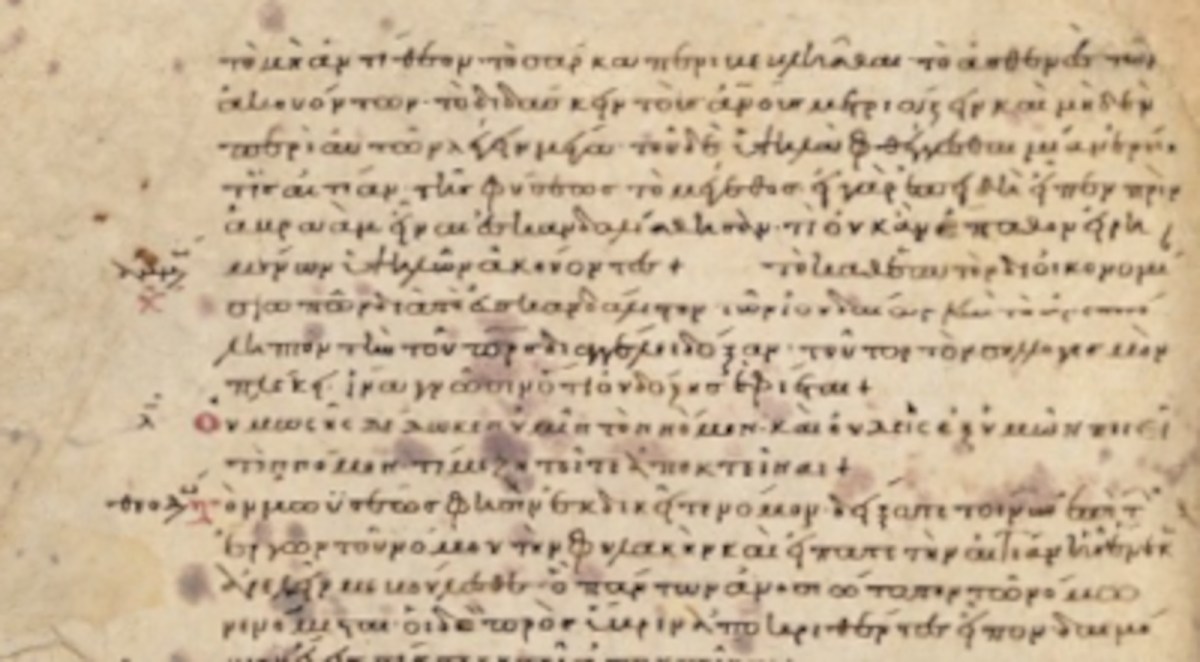
Greek commentary on John’s gospel dated 1190-1200 (Bodleian Library)

< Previous|Index|Next >

Cruising the gospel – John 19:31-42

Bible text –Read it yourself (opens in a new tab)

Shabta

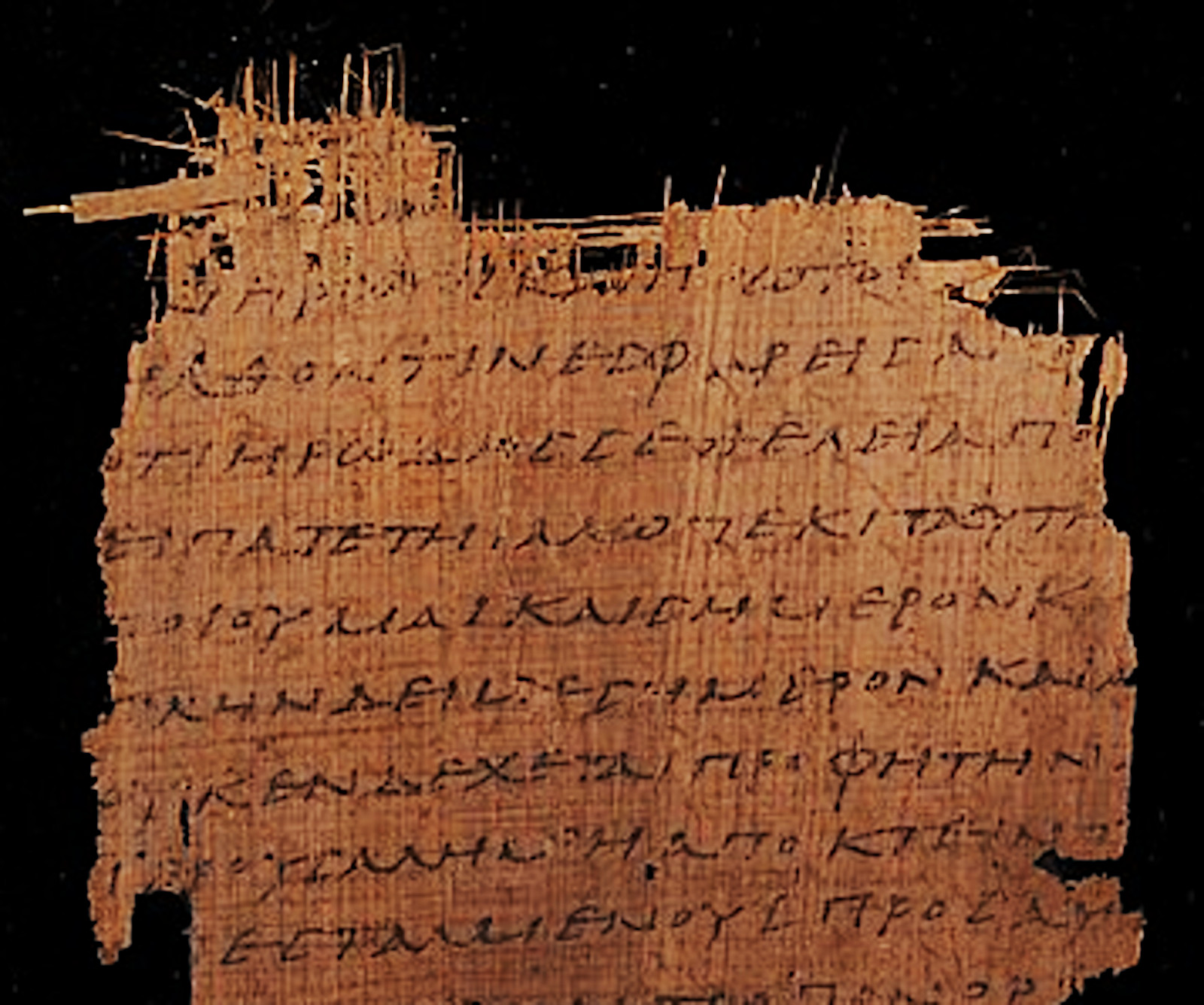
A fragment of John’s gospel
(Wikimedia)

19:31-37 – Because the following day was Shabta (Aramaic), Shabbat (Hebrew) or the Sabbath (English), it was an important day of rest. Shabta began at sunset on the previous day and ended at sunset too.

19:38-42 – So any tasks that needed to be done on Shabta would have to be completed before sunset the previous day. That’s why the Jewish leaders asked Pilatus to take the bodies down from the crosses before nightfall. Normally, bodies would be left to decay on the crosses and the corpses would be consumed by rats or by birds over the following days and weeks. But if it was necessary to remove them earlier, the Roman custom was to break the legs. It could take up to three days for a healthy, fit individual to die following crucifixion. Because a person on a cross would have to use their legs to lift their body to inhale, soldiers might be ordered to break the legs so the prisoner would be unable to breathe and would die within a few minutes. The Roman soldiers broke the legs of the criminals either side of Yahshua as both were still alive. But a spear in Yahshua’s side proved that he was dead, not just holding his breath and staying very still.

Removing Yahshua from the cross

Yusuf min Arimathea (Joseph of Arimathea) was a secret follower of Yahshua and later, probably by then already late afternoon, he was joined by Naqdimon (Nicodemus), who brought the necessary materials. Both men were members of the Sanhedrin (the Jewish religious council), both followed Yahshua despite the high risks involved, both would have known and been known by the disciples. They took down the body and followed the Jewish practice of spice embalming and wrapping it in linen strips. Very short of time before sunset, they found a newly-carved tomb nearby and laid the body there, Matthew’s Gospel suggests it was Yusuf’s own tomb.

Like those who had seen Yahshua die, Yusuf and Naqdimon must also have thought that this was the end of everything, that for all his amazing teaching and wisdom, this was the end of the ministry of Yahshua bar Yusuf (Jesus son of Joseph, as people generally believed him to be). They would not have understood yet, despite his teaching, that he was also, and far more significantly, Yahshua bar Yahweh! He was, and would remain, the Son of the Eternal Father.

See also:

*This Mormon discussion is interesting as it describes Jewish burial practices in the first century CE in some detail. It’s also downloadable as a PDF.

< Previous|Index|Next >

Useful? Interesting?

If you enjoyed this or found it useful, please like, comment, and share below. (If you don’t see those links, click the article’s title above the main photo and they will appear.) Send a link to friends who might enjoy the article or benefit from it – Thanks! My material is free to reuse (see conditions), but a coffee is always welcome and encourages me to write more often!

You might also like:

Matthew 27:32-66 – Cruising the Gospel

Before Jesus dies

Although used by pre-Roman societies, crucifixion was one of the worst experiences the Romans could inflict on a captured enemy, a violent and vicious criminal or a traitor. Remember the reluctance of the scared Roman Governor and the insistent demands of the angry Jewish High Priest that this terrible execution must go ahead.

Greek commentary on John’s gospel dated 1190-1200 (Bodleian Library)

< Previous|Index|Next >

Cruising the gospel – John 19:25-30

Bible text –Read it yourself (opens in a new tab)

Torment and shame

A fragment of John’s gospel
(Wikimedia)

19:25-27 – It’s impossible to imagine the horror of death by crucifixion. The shame of hanging naked in front of family, friends and strangers is hard to grasp in a society where nakedness was deemed utterly unacceptable. Add to this the extreme pain of the body’s full weight supported on heavy nails driven through wrists and heel bones (the feet were nailed from the side, one each side of the central wooden post) and the exhausting effort of getting enough air into the lungs – muscles continuously straining (despite the extreme pain) to lift the body enough to breathe. More recent studies suggest that an inability to inhale was not normally the cause of death. Also used by some pre-Roman societies, crucifixion was one of the worst experiences the Romans could inflict on a captured enemy, a violent and vicious criminal or a traitor. Remember the reluctance of the scared Roman Governor and the insistent demands of the angry Jewish High Priest that this terrible execution must go ahead. We discussed those factors last time.

Family

Yahshua’s mother (Mariam), his aunt Mariam and Mariam of Magdala (three Mary’s in total) were there in front of the cross as he suffered, and also one of his disciples, the one Jesus loved, usually thought to be Johanan (John). If that’s correct we’re reading the words of an eyewitness. Yahshua, seeing them there before him and thinking of them more than about himself (as he always did) tells John that from now on his mother is John’s mother and tells her that John is now her son. In this way he is taking care that both of them will be cared for in their sorrow and their longer term needs (both practical and emotional).

The death of Yahshua

Making sure that the Old Testament writings were fulfilled was important and was one way to help people understand that Yahshua was who he claimed to be. It was especially useful as a way of reaching the Jewish teachers of his day. Yahshua was aware of this even as death approached and remained committed to such fulfilment, in this case of Psalm 69:21. So he called out, ‘I’m thirsty’. After drinking from the sponge they held up for him, he said, ‘It’s done’, lowered his head and died.

And the little group of friends, family and followers in front of the cross must have thought this marked the end of his mission, the end of his purpose, and the end of everything. They couldn’t know it yet – but they were so very mistaken.

See also:

< Previous|Index|Next >

Useful? Interesting?

If you enjoyed this or found it useful, please like, comment, and share below. (If you don’t see those links, click the article’s title above the main photo and they will appear.) Send a link to friends who might enjoy the article or benefit from it – Thanks! My material is free to reuse (see conditions), but a coffee is always welcome and encourages me to write more often!

You might also like:

Matthew’s account of Jesus’ death – Cruising the Gospel

Mark’s account of the crucifixion – Cruising the Gospel

The Governor gives way

Such lofty characters were dangerous and had unexpected powers over ordinary mortals. You did not want to mess with them. The moment he hears that Yahshua might be the son of the Jewish god he becomes seriously scared.

Greek commentary on John’s gospel dated 1190-1200 (Bodleian Library)

< Previous | Index | Next >

Cruising the gospel – John 19:1-24

Bible text – Read it yourself (opens in a new tab)

Arresting Jesus

A fragment of John’s gospel
(Wikimedia)

19:1-7 – The Roman Governor, Pontius Pilatus (Pontius Pilate) perhaps thinking he could get away with a lesser punishment than crucifixion, decided to turn Yahshua (Jesus) over to the Roman troops to be ridiculed and severely beaten. In this he was seriously mistaken, the Jewish authorities were not going to accept anything less than the death penalty. Pilatus twice told them that he could find no cause for any legal charge against Yahshua. There was no breach of Roman law here, but the Jewish religious leaders saw a huge and unsufferable offence against their religious traditions. What was a Roman Governor to do in the face of this? His job was to maintain Roman rule, to put down rebellions, make sure taxes were paid and that peace prevailed in his province.

It’s worth mentioning here that Rome had no problem with local kings and kingdoms. Herod was a king, client tribes and kingdoms throughout the empire were tolerated, even officially encouraged. A claim to be ‘King of the Jews’ or ‘King of Judea’ was not in and of itself an offence against Roman law or government. At the time of Yahshua’s trial and official innocence under Roman law, local kings were widespread in Gaul, in Spain, in Germany and in North Africa and the entirety of what is now Turkey. The Roman Emperor ruled over kings and kingdoms, peace (the Pax Romana) was required everywhere and a Roman Governor in each province was held responsible for keeping that peace. Herod Antipas ruled Samaria, but Judea had no king at this moment. Archelaus had ruled Judea, Samaria, and Idumaea but he’d been deposed by Roman direct rule due to poor government and mismanagement. We can, I think, be sympathetic towards Pilatus, who had to prevent violence and uprisings in his Provinces of Judaea and Samaria. If his verdict of Yahshua’s innocence was going to cause a riot or some kind of violence he would have to make a difficult choice, either calm the protest by crucifying this innocent man who claimed to be the Jewish King, or forcefully put down the growing crowds calling for the death penalty. The Bible passages about these events make his dilemma very clear.

Verse 7 is notable. Romans were religious people with gods of their own and temples in every city. Like the Greeks they had traditions and stories about super powerful men being sons of this or that god. Such lofty characters were dangerous and had unexpected powers over ordinary mortals. You did not want to mess with them. The moment he hears that Yahshua might be the son of the Jewish god he becomes seriously scared. He’s just had the man beaten and mocked.

19:8-16 – In verse 8 he goes back to check, and in verse 12 we’re told he wanted to set Yahshua free. So now Pilatus is afraid of an angry crowd that includes senior Jewish religious leaders, and also terrified that he’s dealing with the son of a powerful god. If he allows a riot to develop he’ll be in trouble with the Emperor, if he executes this man he’ll be in trouble with a god! The only way out is to transfer the responsibility to others; and that’s exactly what he sets out to do.

In the end, the Jewish leaders lie to Pilatus to force him to act. They tell him to his face that he is no friend of Caesar if he allows Yahshua to live since anyone claiming kingship opposes Caesar. As I explained above, this is patently incorrect; there are kings in many if not most Roman provinces, ruling with the local Roman governor on Caesar’s behalf. But the direct threat to Pilatus is being spoken openly and he acts in the clearest way possible. He sits on the judgement seat and tells the Jews plainly, ‘Here’s your King‘. He speaks the truth. Their reply is brutal and final, ‘Take him away. Crucify him‘.

And Pilatus hands him over to the Roman troops.

19:17-24– The Roman troops took charge and Yahshua carried his cross to the nearby Golgotha (Skull Place) where he and two others were crucified, one either side of him.

Pilatus’ notice attached to Yahshua’s cross stated the truth – ‘Jesus of Nazareth, the King of the Jews’. The chief priests grumbled about these words, telling Pilatus, ‘Don’t write “The King of the Jews”, but “he claimed to be King of the Jews”. Responding grumpily, Pilatus told them, ‘I wrote what I wrote’. Pilatus understood who Yahshua was better than the senior Jewish clerics!

The soldiers took Yahshua’s clothes, sharing them out amongst the four of them. It would be a pity to waste them, perks of the job. They drew lots for his undergarment as it was woven as a single piece and they didn’t want to tear it. He hung naked on the cross until he died.

See also:

< Previous | Index | Next >

Useful? Interesting?

If you enjoyed this or found it useful, please like, comment, and share below. (If you don’t see those links, click the article’s title above the main photo and they will appear.) Send a link to friends who might enjoy the article or benefit from it – Thanks! My material is free to reuse (see conditions), but a coffee is always welcome and encourages me to write more often!

You might also like:

Arresting Jesus

John knew Peter well, they’d been around the entire time of Jesus’ teaching of the twelve, and perhaps they’d known one another for years before Jesus came on the scene, both families lived by fishing on Galilee, they were both called by Jesus to follow.

Greek commentary on John’s gospel dated 1190-1200 (Bodleian Library)

< Previous | Index | Next >

Cruising the gospel – John 18:1-40

Bible text – Read it yourself (opens in a new tab)

Arresting Jesus

A fragment of John’s gospel
(Wikimedia)

18:1-14 – Jesus and his disciples left the upper room and walked out of the city, presumably by a southern gate. They crossed the Kidron Valley and entered the garden of Gethsemene (from ‘gath’ meaning a press, and ‘Shemanim’ meaning oils). It was a place where olive trees grew and where the harvested olives were pressed to release the oil. ‘Garden’ does not imply decorative plants and flowers as we would think of a garden today. It was just the term for an enclosed agricultural space, a ‘garth’ or ‘gard’ with a wall around it to ‘guard’ it. Jesus and his followers often met here, and Judas was well aware of that fact.

Judas arrived outside the enclosure, followed by a group of soldiers (presumably Romans) as well as a group of Pharisees and some staff of the High Priest. Jesus left the walled enclosure and asked them who they were looking for, and they answered ‘Jesus of Nazareth’.

Jesus told them, ‘I am he’. And they stepped back and fell to the ground. ‘I am’ in Hebrew and in Aramaic sounds rather like ‘Yahweh’, the Holy Name that nobody was allowed to utter. This would have profoundly shocked the Pharisees and the High Priest’s staff. He asked them again, ‘Who are you looking for?’ Again they answered, ‘Jesus of Nazareth’. And he told them again, ‘I am he, so let these others leave’. Peter had a sword and struck out at Malthus, the High Priest’s servant, cutting off his ear lobe. Jesus told Peter to put the sword away. The Roman soldiers under their commander, and the Jewish officials accompanying them, arrested Jesus and tied his arms, probably behind his back, then took him to Annas, once High Priest, father-in-law of Caiaphas, the current High Priest. Annas asked questions about Jesus’ followers and about doctrinal matters and then sent him on to Caiaphas.

Peter’s denials

18:15-26 – Peter and one other disciple followed Jesus and the group who’d arrested him (bravely under the circumstances). There’s been some debate about the ‘other’ disciple. It might have been John, or Nicodemus, or Joseph of Arimathea, or possibly even the traitor, Judas. (Read some aspects of the debate for yourself.)

This other disciple made it possible for Peter to enter the home of Annas where there were some questions being asked of Jesus. So which of those characters mentioned above would most want Peter to hear that questioning and Jesus’ answers? Think about that for a moment. John knew Peter well, they’d been around the entire time of Jesus’ teaching of the twelve, and perhaps they’d known one another for years before Jesus came on the scene, both families lived by fishing on Galilee, they were both called by Jesus to follow. Peter was a man of action, he’d proved it once again by using his sword that very evening!

Annas questioned Jesus about his disciples and about his teaching (verse 19). Jesus often taught to crowds (you can’t get more public than that) and replied that he always taught in public in synagogues, or even the Temple courts. He didn’t teach in secret. Annas could learn about Jesus’ teaching from any of his many listeners. That remark drew an abusive slap in the face from one of the Jewish officials. Peter and the other disciple heard and saw all this. At this point Annas sent Jesus, still tied up, to Caiaphas.

And Peter denied being one of Jesus’ disciples for the second and third times. How did all this affect Peter? I’d suggest seeing and hearing the interrogation and the angry slap and recognising his own failure in denying he was a disciple all helped to stir Peter up and ready him for action. Frustration, helplessness, anger and guilt are a heady mix for anyone with a habit of activity. And I submit that John, knowing Peter as he did, would have expected that. I think John also understood that a time for action was coming very soon.

With Caiaphas

Although John doesn’t record the interaction between Jesus and Caiaphas, we can fill the gap a little from other sources, read Matthew 26 for example.

After the resurrection of Lazarus, Caiaphas had told the Sanhedrin that it would be better for one man to die for the people, than that the whole nation should perish. He was worried that the Romans would lose patience and intervene militarily.

And during Jesus trial before the Sanhedrin, Caiaphas directly questioned Jesus, demanding a clear answer on his identity: ‘I demand you tell us whether you are the Christ, the Son of God’. Jesus did not give a direct answer, but what he said was regarded as blasphemy and the Sanhedrin condemned him.

The Roman governor, Marcus Pontius Pilatus

Caiaphas and the Sanhedrin wanted the death penalty for Jesus, but only the Roman governor could provide such a sentence, so Caiaphas sent him on for a third hearing.

Pilate was not interested in religion, only in politics, so his first question was about Jesus’ kingship. Jesus explained that he hadn’t come to rule, but to testify to the truth. Pilate’s concern was not truth, either, but still only politics, so he went back outside to the waiting Jewish delegation and told them he didn’t find Jesus guilty of anything. But the custom is that at Passover time I release someone from captivity for you. I can release Jesus for you if you wish. ‘No’, they shouted back, ‘Not Jesus, release the agitator and rebel, Bar Abbas. This Aramaic name means, quite literally, ‘Son of the father’. This is striking indeed as Jesus is the true ‘Son of the Father’. Jesus was known in Galilee as ‘Yeshua bar Yoseph’, Jesus son of Joseph, but he was truly ‘Yeshua bar Abba’, Jesus son of the Father. The Jewish leaders were choosing the wrong man, but also the Wrong Father!

See also:

< Previous | Index | Next >

Useful? Interesting?

If you enjoyed this or found it useful, please like, comment, and share below. (If you don’t see those links, click the article’s title above the main photo and they will appear.) Send a link to friends who might enjoy the article or benefit from it – Thanks! My material is free to reuse (see conditions), but a coffee is always welcome and encourages me to write more often!

You might also like:

Praying for the glory

If Jesus is in John and is glorified, John shares in that glory too! Even if John doesn’t fully grasp what exactly the glory is, he certainly grasps that through Jesus that glory is already in him.

Greek commentary on John’s gospel dated 1190-1200 (Bodleian Library)

< Previous | Index | Next >

Cruising the gospel – John 17:24-26

Bible text – Read it yourself (opens in a new tab)

Sharing what he wants

A fragment of John’s gospel
(Wikimedia)

17:24-26 – If these verses do not astound you, you need to pay closer attention to what Jesus is saying. Let’s break the material down to consider it carefully. The first thing to note is that Jesus is not conversing with his followers here, he’s speaking with his Father. He’s not asking for strength during his coming ordeal on the cross, instead he’s just telling his heavenly Dad what he wants. And the first thing that comes to mind is that he wants his followers to be with him where he is and to see his glory. Well, they are with him, he’s in the upper room in Jerusalem and so are they.

Seeing the glory

But do they see his glory? No, I don’t think they do – not yet, not fully. Peter, James and John had been with Jesus on the mountain and had seen and heard what happened there. But they didn’t understand what was really going on. Peter, always the practical doer, was going to build three shelters. James might have had more intuition about it, but I imagine John would have got closer than the other two. John was the disciple ‘Jesus loved’, he viewed things from a more spiritual dimension, it was his nature to dwell on spiritual truth and look for hidden depths of meaning.

I think John is already aware that Jesus thinks of himself as Yahweh’s Son, he’s referred to himself as the Son, and he often talks about ‘My Father’. And I suspect John understood that was an eternal relationship. Jesus spells it out again here in the Garden as he prays to his Father. The Father loved him before the world was created and loves him still. And I imagine for John it was not too great a leap to see that this love is eternal and will remain even after the end of time itself. And in verse 26 Jesus says to his Father that he has made his followers aware that the Father has sent him (Jesus), that he’ll continue to show them that so the Father’s love will be in them and so that Jesus himself will be in them too.

Does this take us back to Jesus in glory on the mountain? Yes, I think it does! And John must have understood that if Jesus is in him, that he too must have been gloriously transformed on the mountain, so that he, John, can also talk freely with Moses concerning law and with Elijah concerning prophecy. If Jesus is in John and is glorified, John shares in that glory too! Even if John doesn’t fully grasp what exactly the glory is, he certainly grasps that through Jesus that glory is already in him and raises him to the giddy heights of the law and the prophetic.

And this is where we all stand if Christ is in us. We just need to see, as John did, that the glory arrives when Jesus does, that we share in him and in his glory permanently. So when my body dies (as it must) I continue to live gloriously because Jesus is in me. I’m sure Peter and James came to understand this too, certainly at Pentecost if not before. That was the moment when Jesus’ glory was fully revealed to the entire church, not just in theory but in full experience.

This was a moment they had been told to wait for, but when it came it was far beyond what they had imagined or expected.

See also:

< Previous | Index | Next >

Useful? Interesting?

If you enjoyed this or found it useful, please like, comment, and share below. (If you don’t see those links, click the article’s title above the main photo and they will appear.) Send a link to friends who might enjoy the article or benefit from it – Thanks! My material is free to reuse (see conditions), but a coffee is always welcome and encourages me to write more often!

You might also like:

Praying for the future

Within the threeness that we refer to as ‘The Trinity’ and sometimes think we understand, there is also a oneness, a complete unity.

Greek commentary on John’s gospel dated 1190-1200 (Bodleian Library)

< Previous | Index | Next >

Cruising the gospel – John 17:20-23

Bible text – Read it yourself (opens in a new tab)

Praying beyond and wider

A fragment of John’s gospel
(Wikimedia)

17:20-23 – These next three verses are amongst the most significant things Jesus ever said. These words are the mission statement for the church. Sometimes it seems to me they’re more of a ‘missing statement’ for us than a ‘mission statement’ because we overlook the implications. There’s great depth here if we will only pay close enough attention, so let’s step through these words in detail.

17:20 – Jesus is very clear that he is not praying only for the twelve followers who were with him as he spoke with his Father. No. He explicitly says, ‘I pray also for those who will believe in me through their message’. Who is that? It’s me. It’s you. You and I believed through the message brought to us in the Bible, written partly by people Jesus knew personally, taught, journeyed with, ate with, people he demonstrated his love to, some of them would soon see him die and later see him again alive. After praying for them he prays also for us!

Oneness every which way!

17:21 – He wants you and me to be one, just as he and the Father are one. There is nothing that you and I might differ over that can stand between us as two of his people. Not doctrine, not denomination, not wealth or poverty, wisdom or foolishness, not gifts or apparent lack of them, not skin colour or attitudes to this or that in church life or beyond it. The goal is not to be right, the goal is to recognise that our reconciliation was very, very costly. Loss of life and separation of Father and Son is what it took to bring peace and oneness to and between you and me. And we, in our shiny new oneness are to be part of the eternal oneness of the Father and the Son. Why? So that the world has a chance to believe that the Father sent the Son. It’s plain in verse 21. Yet there’s still more!

17:22 – Just read verse 22 again. The Father clothed his Son with glory and he passed it on to you and me! What? Why would he do that? So that you and I can be one just as the Father and the Son are one.

17:23 – And in this verse we see that Jesus is in us, and the Father is in Jesus Why is that necessary? It’s because within the threeness that we refer to as ‘The Trinity’ and sometimes think we understand, there is also a oneness, a complete unity. The Father, the Son and the Spirit are not just close friends in some unique way, or close relatives. The Holy Spirit is often described as ‘The Spirit of Christ’, and Jesus said, ‘If you’ve seen me you’ve seen the Father’. So when John tells us that without Jesus, we can do nothing (John 15:5), that implies quite undeniably that without the Spirit we can do nothing and without the Father we can do nothing. The astonishing thing that we rarely notice is that all of us who follow Jesus are now part of the Trinity. If you can’t quite swallow that idea, let me state it slightly differently. In John 15:5 just mentioned, Jesus says we need to remain in him and he in us. Well, Jesus is undeniably in the Trinity, and we are in Jesus – therefore… You fill in the dots.

The need to believe

We’d better start understanding and believing this, because if we don’t we can do – nothing. How amazing is this undeserved gift that we are now one with the Most High, one with Jesus, one with Yahweh, with the Spirit. We can make further supporting arguments for this claim.

  • We are a ‘royal priesthood’ (1 Peter 2:9), royalty is about authority and rule, priesthood is about bridging the gap between earth and heaven, enabling people to come into the Holy Presence. Jesus is King of Kings and he’s also the Great High Priest. We are in him. We do what we see Jesus do (we’re his disciples, or apprentices), just as he did what he saw the Father do.
  • We are ‘filled with the Spirit’ (see this search). Filled (in a different context) doesn’t mean half or three quarters, it means completely full and running over (Luke 6:38). Jesus is our head and we are his body, we are in him and he is in us. We were created a little lower than the angels; but I’d submit that in Christ, we are considerably higher than the angels!

But we should be very careful not to become proud or puffed up. We do not deserve to be one with the Most High, it’s a gift obtained at great cost, our humble gratitude is appropriate and required. And notice too, in verse 23, that the Father loves you just the same way he loved the Son before the foundation of the world. You are loved with the same love Jesus received before the beginning. And Paul wrote to the Galatians that love is greater than faith and it’s greater than hope. It is the greatest thing of all (1 Cor 13:13). This new life we received in Christ enables us to be and do all the things he will lead us into.

Some readers may feel I’ve gone too far in this post. If so, please leave a comment. I can’t guarantee to change my opinion, but I will certainly read all the comments and respond to them.

Next time, we’ll take a look at the final three verses of John 17.

See also:

< Previous | Index | Next >

Useful? Interesting?

If you enjoyed this or found it useful, please like, comment, and share below. (If you don’t see those links, click the article’s title above the main photo and they will appear.) Send a link to friends who might enjoy the article or benefit from it – Thanks! My material is free to reuse (see conditions), but a coffee is always welcome and encourages me to write more often!

You might also like:

The full measure of joy

[Jesus] says … ‘Your word is truth’. This makes perfect sense, Jesus himself is The Word, spoken into a broken world by the everlasting Father.

Greek commentary on John’s gospel dated 1190-1200 (Bodleian Library)

< Previous | Index | Next >

Cruising the gospel – John 17:13-19

Bible text – Read it yourself (opens in a new tab)

Completing the prayer

A fragment of John’s gospel
(Wikimedia)

17:13 – There’s so much in Jesus’ heart and mind as he completes the prayer for his immediate disciples. And there’s a lot for us to dig into and appreciate here too.

Do bear in mind throughout, that Jesus would have been speaking not only to the Father, but also wanted and expected his apprentices to overhear. His words are for them too, and through them passed on to you and me as well, in written form. Jesus intended you to read his words. It’s very personal!

Joy

Jesus wants his followers to have his own joy within them. What is Jesus’ joy? He doesn’t state it here, but surely what makes Jesus joyful is completing the work his Father sent him to do, returning to be in his Father’s presence again after living a life here in our broken world; and knowing that the Father himself is delighted and joyful that, despite unimaginable hardship, the task is completed and has broken the barriers that kept people from entering his Presence. Jesus has the same joy because he knows the same thing, the work is done, the goal is achieved, the way into Father’s presence is open to every Jesus follower, everyone doing Jesus’ own work. That work is love – love towards family, friends, neighbours, even enemies.

17:14 – Yahshua (Jesus) continues to speak to his Father about the situation, making four points.

  • He mentions that he has given them the Father’s word (not words, this is singular). Jesus is himself the Word spoken into physical existence.
  • The world has hated them.
  • The reason the world hates them is because they don’t belong to the world, and the world loves its own.
  • We are like Jesus, not belonging to the world.

One thing we should take away from this is that telling the Father things he already knows is perfectly acceptable. Our expressing them to him is neither pointless repetition nor trying his patience. We can do this too, we’re laying out the situation as we see it before we ask for help, guidance, comfort, encouragement, or action. The Holy Spirit may respond as we do this, showing us things we’d overlooked, pointing out the way forward, changing our perspective.

17:15-16 – Think about conversations between two friends, perhaps over a coffee or sitting in the shade on a hot, summer’s day. A typical conversation might include saying hello (a greeting), checking how the other person is, asking questions, offering help, discussing mutual interests and more. Yahshua says we are no longer servants, but friends, and he says he and the Father are one. He told the disciples, ‘If you’ve seen me you have seen the Father’. So it’s more than OK to be on friendly terms with the Father, the Son, and the Spirit; all those things we might discuss with any friend are things we can discuss with the Father. It’s what he wants us to do!

Only after describing the situation does Jesus move on to asking for things. He begins with clarity about what he is not asking, and then he asks for their (and our) protection from the enemy. Think about it! You are following Jesus, and he has asked for the Father’s protection over you, personally. The prince of darkness is restrained from harming you. How far does this go? Well, let me assure you, it goes the entire way. Down the centuries many of Jesus’ followers have died, as he did, at the hands of bad or ignorant people – killed by lions in Roman arenas or hanged by Nazis in the Second World War like Dietrich Bonhoeffer or Martin Niemöller. But all of them were protected from the greater catastrophe of falling into the hands of a spiritual enemy.

Why do we get this special treatment? Because in following Jesus we become like him. Jesus is not of this world, and neither are we.

Sanctified

17:17-19 – This Greek word, ἁγίασον (hagiason), is specific in its meaning; its sense is the act or process of making a thing or a person holy, to consecrate, to set apart, or as here to sanctify. Greek versions of the Old Testament use the same word in explaining that the Tabernacle and later the Temple were holy, and the priests were holy (set apart to serve). Jesus used the word when talking about the Temple, and in the Lord’s prayer when he said ‘Hallowed be thy Name’. In modern English we might say, ‘Let your name be kept holy’.

Here, speaking to his Father, he uses the same word of his followers, ‘Make them holy by the truth, your word is truth’. If you are following Jesus, then know that he has made you holy and set you apart to serve him and him alone! He asks that we be made holy, set apart, by the truth. So what truth is this?

Elsewhere Jesus said, ‘I am the Way, the Truth and the Life’. He also said, ‘The truth shall set you free’. He says here in verse 17, ‘Your word is truth’. This makes perfect sense, Jesus himself is The Word, spoken into a broken world by the everlasting Father.

And finally, in verse 19, Jesus says very clearly that he has set himself apart for his Father’s use on our behalf, so that we, too, can be truly set apart for the Father’s use as well.

Don’t forget who you are

If you take away nothing else from these verses, take away the amazing truth that following Jesus demonstrates you are set apart, holy and fit to serve the Father, precious and special. Do not be hoodwinked into thinking you are not significant. And don’t for one moment think that you’re significant because of what you do. You are significant because of who you are! Jesus is your brother, you’ve been brought right into the family, welcomed and hugged and loved by the Trinity, no less.

See also:

< Previous | Index | Next >

Useful? Interesting?

If you enjoyed this or found it useful, please like, comment, and share below. (If you don’t see those links, click the article’s title above the main photo and they will appear.) Send a link to friends who might enjoy the article or benefit from it – Thanks! My material is free to reuse (see conditions), but a coffee is always welcome and encourages me to write more often!

Praying for his apprentices

Jesus begins by reading back what he already knows. It’s time. His followers still don’t fully understand, but hearing this now, they will gradually understand as events unfold.

Greek commentary on John’s gospel dated 1190-1200 (Bodleian Library)

< Previous | Index | Next >

Cruising the gospel – John 17:6-12

Bible text – Read it yourself (opens in a new tab)

Take a look first

A fragment of John’s gospel
(Wikimedia)

17:6 – We learn a lot from the words of Jesus’ prayer. The first thing we can see is that Jesus believes his core followers, the disciples, are a gift to him from his Father. Jesus’ role here was to reveal the Father to these people he’d been given. They were a bit of a mixed bag, four fishermen, a tax agent, Judas Iscariot managed the funds and might have had a background in money management, and the other Judas may have been a farmer or a farm labourer. No doubt the others all had some sort of trade or working background too.

And this disparate bunch had all proved to be obedient and have obeyed the Father’s word. Jesus may just mean that they have done what he has asked of them, because Jesus himself is the Father’s word, a living message of grace, peace and love sent into a broken world.

17:7 – They know that everything Jesus has is from the Father. 17:8 – Jesus has passed on to his apprentices (disciples) the words the Father gave him, and they accepted them. They’re fully convinced that Jesus came from, and was sent by, the Father. 17:9 – And Jesus prays for them, not for the world but specifically for those he’s been given (the disciples). The disciples belong to the Father. Remember that this is true for all of us who believe. If we are following Jesus, then we belong to the Father who has given us to him.

17:10 – On other occasions Jesus says things like, ‘The Father and I are one’, or ‘If you’ve seen me you have seen the Father’. Here he says the same thing in yet another way. Clearly addressing the Father, Jesus says, ‘All I have is yours, and all you have is mine’.

Oneness, threeness, and glory

Notice the last few words of this verse, ‘Glory has come to me through them‘. So the glory that Jesus has comes to him, in part, through his disciples, his followers, his apprentices. Have you thought about what that really means? Bear in mind here that you, that I, that we are his disciples in the world today. Glory is supposed to come to Jesus through us! That can only happen if we, his people, are reaching out into the world as we are supposed to, spreading the knowledge of the anointed Jesus out into the world here and now.

Are you up for that? Am I?

17:11-12 – And now Jesus prays again for the disciples, for a separation is coming. This is prayer for us as well as a prayer for the twelve who were there with him as he spoke with the Father. Drink it in; make it personal.

He says he’s not staying in this world any longer and is returning to his Father, but we are remaining in this world. So he asks his Father (and ours) to protect us. Jesus asks his Father to protect us by the power of his name. And what is the Father’s name? He shared this name to Moses when Moses asked him, ‘Who shall I say has sent me?’ The name is Yahweh, the great I AM. Tell them I AM has sent you (Exodus 3:13-15). Father is the ultimate cause, the source of all things. Jesus is asking this so that we may be one, just as Jesus and his Father are one.

But there’s more! Jesus, speaking to the Father, says very clearly that the name has been give to him also. Perhaps here, more clearly than almost anywhere else, Jesus claims that he and the Father are one and the same. The Jewish leaders condemned Jesus for claiming equality with the Most High; he was actually claiming far more than mere equality!

And he adds (in verse 12) that he protected the disciples and kept them safe by that same name. The only one he lost was Judas, who betrayed him for a bag of cash.

And finally, we can say something else about names. When Jesus appeared in shining brightness on the mountain, he talked with Moses and Elijah (Matthew 17: 1-5). Have you ever wondered why those two?

Moses represents law, Jesus represents deliverance, and Elijah represents prophecy. And these three are seen to be in conversation. Who brought law? The Father, Yahweh, the great I AM inscribed the commandments on the stone tablets (on a mountain). Jesus brings us into the place of promise just as Joshua (the same name, by the way) brought Israel into the place of promise, the promised land. And Elijah brought communication, as did all of the Old Testament prophets, sharing Father’s words with the people.

This is a glorious picture of the trinity – The Father (giver of law), the Son (giver of deliverance), and the Spirit (giver of communication). They are one, and if we have the presence of any one we have the presence of them all. And that, my friends, is why Jesus had to return to the Father in order to send the Spirit. If the Spirit is in you and among you, then the Father and the Son are also in you and among you. It cannot be any other way!

What a deep truth to ponder!

< Previous | Index | Next >

Useful? Interesting?

If you enjoyed this or found it useful, please like, comment, and share below. (If you don’t see those links, click the article’s title above the main photo and they will appear.) Send a link to friends who might enjoy the article or benefit from it – Thanks! My material is free to reuse (see conditions), but a coffee is always welcome and encourages me to write more often!

Praying for the fundamentals

Jesus begins by reading back what he already knows. It’s time. His followers still don’t fully understand, but hearing this now, they will gradually understand as events unfold.

Greek commentary on John’s gospel dated 1190-1200 (Bodleian Library)

< Previous | Index | Next >

Cruising the gospel – John 17:1-5

Bible text – Read it yourself (opens in a new tab)

Take a look first
A fragment of John’s gospel
(Wikimedia)

17:1 – Here, Jesus reveals to us what is really fundamental through his prayer. He even begins with something fundamental, but it’s easy to read the words without noticing the implication – He looked up.

Jesus looked up. This was the first thing he did, even before he spoke. He looked towards the Father before he spoke to him. This is exactly what we all do immediately before we speak to another person. We look at them and then we begin to say whatever is on our mind. The looking is an important part of the communication; it announces an intention to say something, checks if the other party is ready to listen, and alerts others nearby that a conversation is about to start.

At the very least, if we’re about to say something it is kind and thoughtful to look and see if right now is a good time to do that. We are checking, but also making the connection to establish communication.

Now speak, freely and openly. Jesus speaks to the Father but also to his apprentices, the disciples.

The hour has come

Jesus begins by reading back what he already knows. It’s time. His followers still don’t fully understand, but hearing this now, they will gradually understand as events unfold. They will later recall that Jesus knew what they did not – and that he was prepared for it.

Glory!

17:2-3 – Jesus knows that he is going to receive glory, but he also knows that the purpose of it is that he can then glorify the Father. He has authority over everyone and he’s been given the power to give eternal life to those entrusted to him by the Father.

And what is eternal life? Why, it’s the knowledge of the Father and of the Son that the Father sent! Jesus has told them already, that if they’ve seen him, they have seen the Father. It really is that simple! Simple to say, yet still very hard for them to comprehend at this point. Right now they just don’t get it – but after Pentecost they will.

The work is complete

17:4 – The Father receives glory by the Son completing the task he was sent to do. Jesus has done everything except the very brief final act. Think about what he has already achieved. He was born into a broken world, and grew up as a young child, obedient to his parents. By the time he was twelve-years-old he had understood who his real Father is and was capable of debating with Jewish scholars at the Temple in Jerusalem. He grew up, learning the trade of carpentry. He went out into the river country to be baptised by John in the Jordan, and then he called people to follow him, teaching them everything they would need to know. He had prepared everything for them so that they could accept his Holy Spirit (the Spirit of Christ) when he would arrive and fill them just a little later.

17:5 -Now he is ready to be obedient in the final act too, and to receive again the glory he had in his Father’s presence even before the world began. These five verses at the beginning of John 17 summarise everything he has done and will do.

< Previous | Index | Next >

Useful? Interesting?

If you enjoyed this or found it useful, please like, comment, and share below. (If you don’t see those links, click the article’s title above the main photo and they will appear.) Send a link to friends who might enjoy the article or benefit from it – Thanks! My material is free to reuse (see conditions), but a coffee is always welcome and encourages me to write more often!

Speaking in Jesus’ place

We do not get to choose which parts of his work we are to do. We are to do all of it! We absolutely need one another in this task, when we stand alone we are weak, but together we are strong.

Greek commentary on John’s gospel dated 1190-1200 (Bodleian Library)

< Previous | Index | Next >

Cruising the gospel – John 16:25-33

Bible text – Read it yourself (opens in a new tab)

They will ask the Father
A fragment of John’s gospel
(Wikimedia)

Now we come to something extraordinary, and it’s something we need to take on board very personally. Every single follower of Jesus must grasp this for themselves. Don’t miss it! Seize it, hold this truth in your own understanding, feel it to be the deep truth that it actually is.

16:25-26 – So far, Jesus’ language has been figurative as he helps his followers grapple with things that are, frankly, too hard for them to comprehend. Now he says that a time is coming when he’ll communicate plainly with them, there’ll be no need to use figures of speech any more. Surely that time is the period after they receive the fullness of the Spirit of Christ? It will happen in the upper room at the soon-to-arrive Pentecost. From then on, Jesus says ‘they will ask in my name‘.

We (and they) are to stand in Jesus’ place and ask the Father as if we (they) are the Son! How many times must he tell us – we are his body walking this Earth! Collectively, we are intended and expected to carry on his work. We do not get to choose which parts of his work we are to do. We are to do all of it! We absolutely need one another in this task, when we stand alone we are weak, but together we are strong. Jointly and in concert we are Jesus’ body, walking this Earth.

So we no longer say, ‘Jesus, please ask the Father to do this and that’. Now we must say, ‘Father, we’re here in Jesus’ name asking you to do this and that.’ We must not feel how weak and small we are – and we are weak and small individually. Instead together, as the church, because we are Christ’s body, we have his strength and greatness!

Me – weak and small. Us – strong and great.

16:27-28 – Do we have the Father’s love? We do! Why? Because we love Jesus and know who sent him! Jesus explains that there’s a symmetry here. He came from the Father into the world. Now he will leave the world and go back to the Father. His physical presence in the world was a temporary exception.

Clarity and faith

16:29-30 – And Jesus’ followers get it. They tell him that he’s speaking clearly now, that they can see he knows everything, and that he doesn’t need anyone to ask him questions. Does that seem a little odd to you? It seemed odd to me at first.

Perhaps it’s simply that this was a method other Jewish Rabbis habitually used, encouraging their followers to ask questions to find out where they lacked knowledge and to then guide the teaching to address those gaps. Instead, Jesus already seems to know where the gaps are and he is well able to address gaps in their understanding without waiting to hear their questions.

Might it be this uncanny ability of Jesus that persuades them he really has been sent by the Most High?

What will they do next?

16:31-33 – Now Jesus asks them a question. You just told me you believe I came from the Almighty, but do you really believe? Truly? And he tells them they’ll all run away, back home, leaving him alone. These followers, the disciples learning to be like their Master, his trainees, his apprentices – they’re going to run off and leave him? Remember that they’d been treading the highways and byways of Judea and Samaria and Galilee, and even the ten Greek cities (The Decapolis) for three long, dusty, weary, yet exciting years. Are they going to abandon him now?

Jesus tells them they will, but he also says he won’t actually be alone because the Father will be with him. And he explains that he has shared all this with them so that in him they can have peaceful hearts. He’s told them what will happen, and he is not fazed by it, and neither should they be! They might feel they’ve let him down in his time of great need, he anticipates this and wants to let them know in advance that it’s OK. They shouldn’t be disheartened.

The world will throw more than enough trouble at them, but he wants their hearts to remain peaceful because he, Jesus, has already overcome the world.

< Previous | Index | Next >

Useful? Interesting?

If you enjoyed this or found it useful, please like, comment, and share below. (If you don’t see those links, click the article’s title above the main photo and they will appear.) Send a link to friends who might enjoy the article or benefit from it – Thanks! My material is free to reuse (see conditions), but a coffee is always welcome and encourages me to write more often!