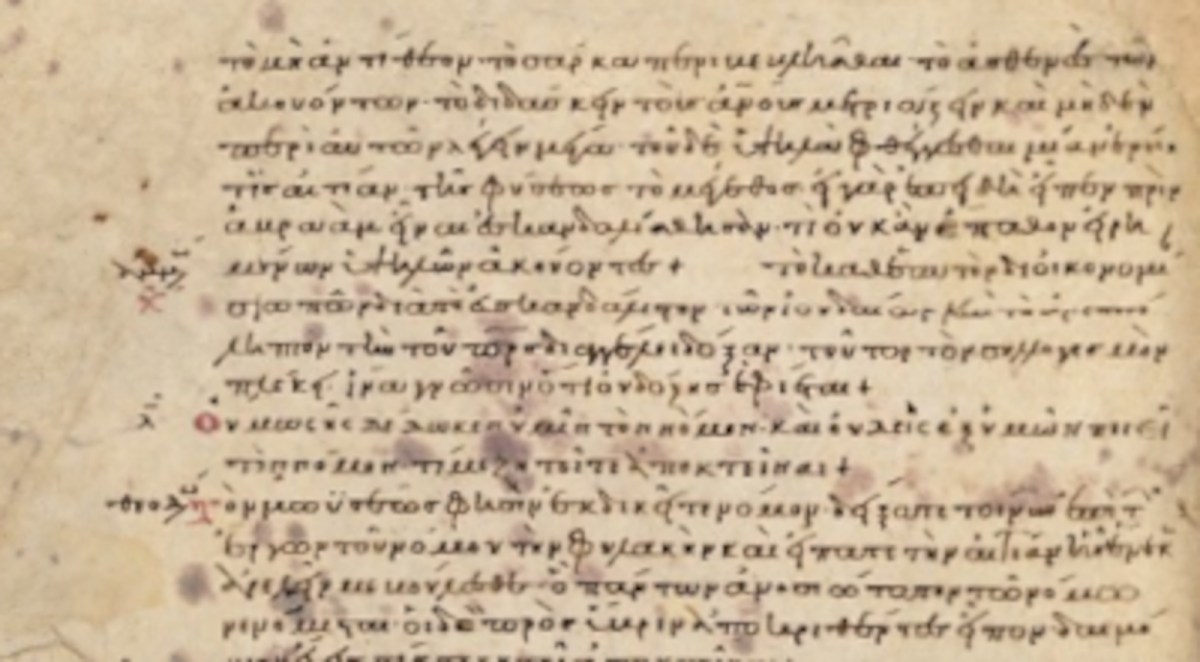
Greek commentary on John’s gospel dated 1190-1200 (Bodleian Library)
< Previous|Index|Next >
Cruising the gospel – luke 2:1-20
Bible text –Read it yourself (opens in a new tab)
A baby is born
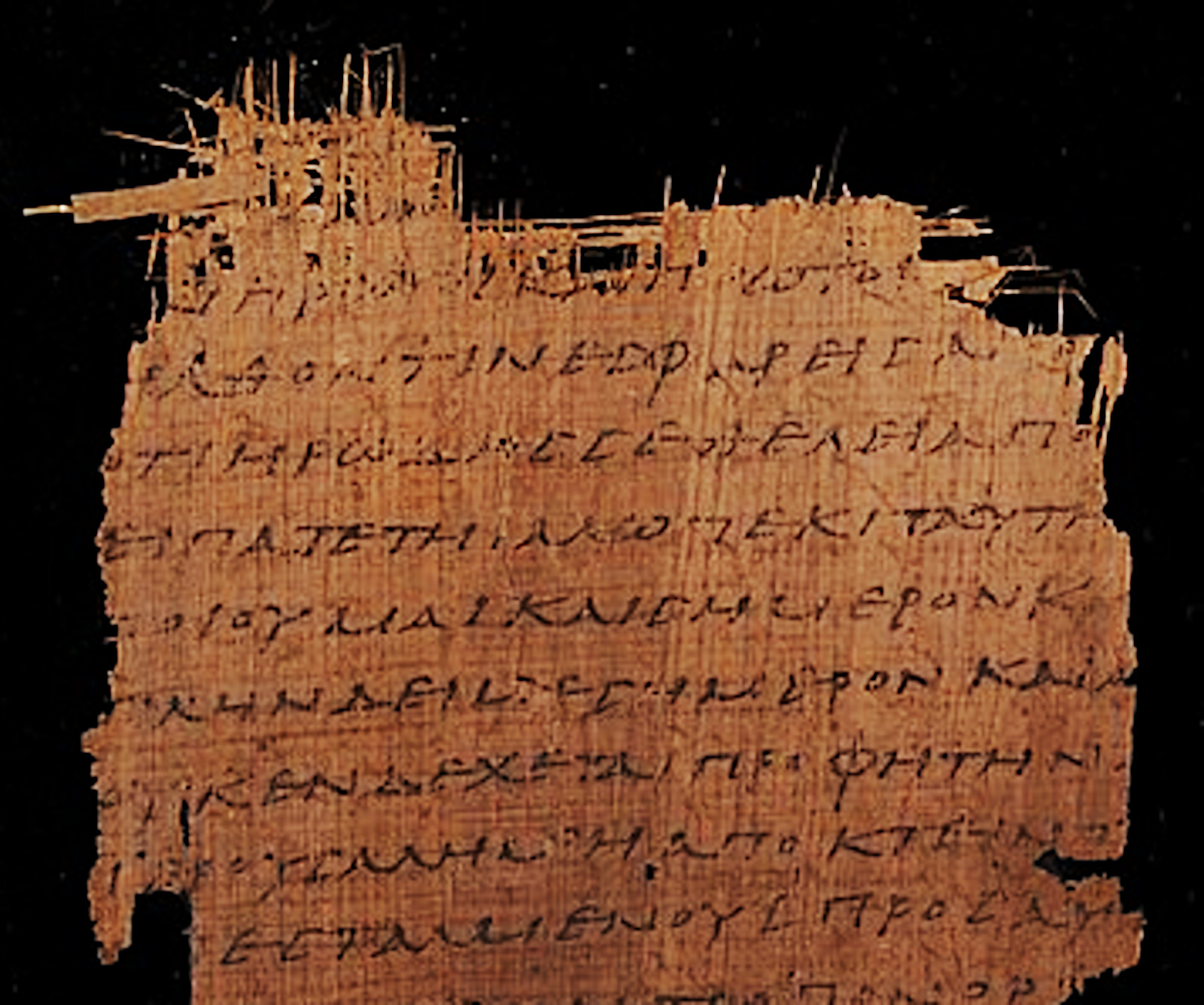
(Wikimedia)
2:1-7 – Some three months after the birth of Yohanan (John) it was almost time for Maryam (Mary) to give birth to Yashua (Jesus) after her return to Nasra (Nazareth), and in due course her time of labour would begin. Luke begins the chapter by telling us that the Roman Emperor Augustus had decreed a census for the entire empire. There’s a bit of difficulty here for Bible scholars and historians alike.
The chronology
It’s generally agreed that Yahshua (Jesus) was born well before our year zero, probably in the period 6 to 4 BC. If you want a nice round number go for 5 BC, you will be less than a year out so it’s quite reasonable as a guess to keep things simple. But (and it’s a big ‘but’) historians of the early Roman Empire under Augustus have found no record of a census in those years. There was a census in 6 AD but that is a very poor fit for several reasons.
The most obvious reason is the timing difference. Most historians assume Luke has inadvertently referred to the later census mistaking the date with the earlier one. Theologians have tried to reconcile the two dates in several ways but there’s been little agreement. But bear in mind that it’s entirely possible there was an earlier census and the records have been lost.
According to Luke’s account, here in chapter 2, the Emperor Augustus ordered that everybody (oikoumenē) should be registered. Luke says this was the first registration, when (or possibly before) Quirinius was governor of Syria, and adds that everyone went to their own ancestral town. That explains why YoSEP (Joseph) and Maryam travelled from Nasra to BaytLEhem (Bethlehem). Later, in Acts 5:37 Luke mentions the later census in 6 AD. He tells us that Gahmlee’el (Gamaliel) mentioned Judas the Gallilean, who rose up in the days of the census. This refers to the census of 6 AD, not one around 5 BC.
There is one further possibility. The ‘census’ might have been an affirmation of loyalty, not a tax raising exercise. Josephus writes in Antiquities 17.42 that there was an oath of loyalty to Augustus and Herod around 7–6 BC, and the 5th-century writer Orosius links an oath to Jesus’ birth. Matthew puts the birth of Jesus during Herod the Great’s reign, and Herod died in 4 BC. But Matthew doesn’t mention a census at all: and in his account the family seems to live in Bethlehem already and only later moves to Nazareth. Mark, John and Paul do not mention any census.
Family of David
YoSEP’s family were descended from the line of DahWEEth (David) at the town of BaytLEhem (Bethlehem), so that’s where he and his wife-to-be had to go. It must have been a very difficult journey for the pair of them, with the baby so nearly full-term. And she did, in fact give birth while they were right there in BaytLEhem for registration. They were unable to find accomm0dation in the small town, it must have been very crowded, so Maryam wrapped the baby in bands of cloth and laid him down in the farm animal’s hay trough.
The shepherds
Luke 2:8-20 Almost everyone in the western world is familiar with the story of the shepherds coming from the fields to worship and wonder at the new baby. It has become a standard and popular part of the Christmas story. While shepherds watched their flocks by night is one of those carols that everyone knows and loves, and the events are acted out at school nativity plays. So let’s read Luke 2:8-20 now and see how much of that popular story is here in Luke’s gospel.
The shepherds had been living outside at night to keep an eye on the sheep at a time when they they might have been prey to wolves or other predators if left alone. One of Yahweh’s angels appeared, his Shekinah glory shone brightly and they were terrified by this experience. To see the glory meant instant death according to the teaching of the priests. But the angel was unconcerned, saying something that in colloquial English might have been, ‘Hey, don’t be afraid, guys; relax, nothing to worry about here.’ And he continued, ‘I’m bringing great news that will make everyone rejoice. Today, in David’s town, a Saviour has been born for you, Ha Maschiach (the Messiah), the Lord. Luke, writing in Greek, uses the word Kyrios for Lord, the angel would have spoken Aramaic to the shepherds and therefore used the equivalent term Mar-ay (or possibly the Hebrew Adon or Adonai).
He added, ‘Here’s a clue for you, you’ll find a baby wrapped in strips of cloth and lying in a farm animal’s hay trough!’
And suddenly great crowds, a veritable army of angels, appeared in the sky, praising Yahweh (I Am) and saying, ‘Glory to God in the highest heaven,
and on earth peace to those on whom his favour rests.’ Once the angels had returned to the skies, the shepherds said to one another, ‘Let’s go and see this event that Mar-ay told us about!’
So the shepherds hurried to find YoSEP, Maryam, and the baby; and after seeing him they left and told others who were all amazed to hear the details. Maryam, meanwhile, stored it all away in her mind and quietly considered it. The shepherds returned to the fields, glorifying and praising Elohim for everything they’d witnessed which had come about just as they’d been told.
So what Luke writes here matches what we see in nativity plays in the 21st century apart from a bunch of farm animals in the outbuilding with the hay trough, and the three visiting kings (or wise men) with their gifts. But these visitors get a mention in Matthew’s account.
See also:
< Previous|Index|Next >
Useful? Interesting?
If you enjoyed this or found it useful, please like, comment, and share below. (If you don’t see those links, click the article’s title above the main photo and they will appear.) Send a link to friends who might enjoy the article or benefit from it – Thanks! My material is free to reuse (see conditions), but a coffee is always welcome and encourages me to write more often! 
You might also like:
Share this:


