A Greek commentary on John
< Previous | Index | Next >
Cruising the gospel – Luke 1:1-25
Bible text –Read it yourself (opens in a new tab)
(Wikimedia)
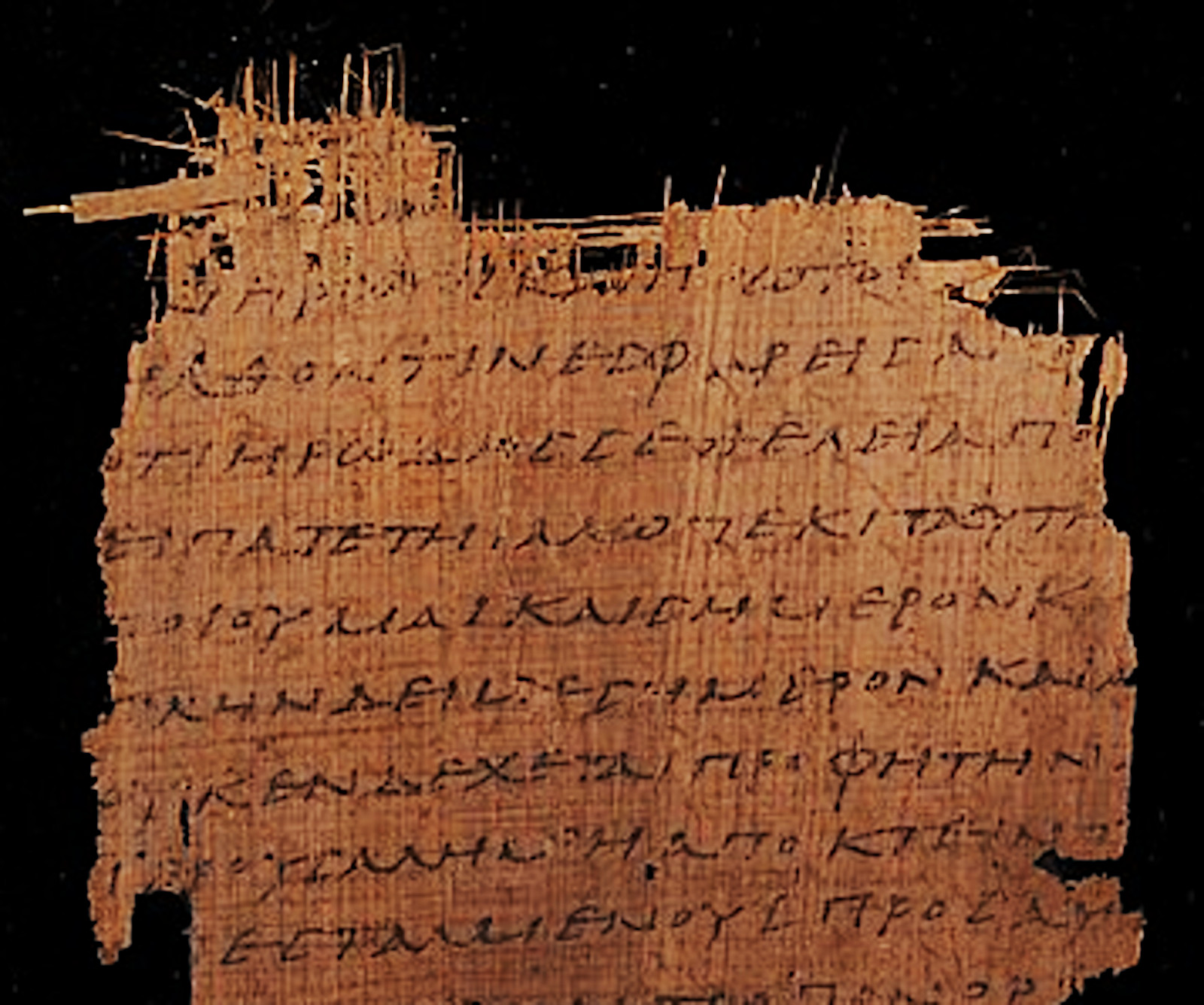
Luke 1:1-4 – Luke, a Greek medical doctor, was clearly well educated, so he begins this Greek history as any good Greek historian would have done around the turn of the 1st century AD. He writes a formal introduction, explaining what he wants to achieve and the name of the person he is writing to. Theophilus might be a personal name, but taken literally it means lover of God or friend of God, suggesting it’s intended for anyone who wants to give their allegiance to the Jewish deity Yahweh. Yahweh is a Hebrew name meaning I am or I’m who I am or I’m what I am. When Moses was told to go and speak to the Israelites enslaved in Egypt, he wanted to know who he should say had sent him with this extraordinary message of freedom. I am was the name provided to him for that purpose. It was an appropriate name then and it’s an appropriate one in 100 AD and remains appropriate today as well. Jesus comes to us via Latin Yesus from the Greek Yesous which in turn is from the Aramaic Yeshua; and that’s how Jesus would have been known by his family and friends. The Hebrew equivalent is Yahoshua which means Yahweh saves. Nothing could be more appropriate than that! It’s the same name as Joshua who led the Israelites into the promised land after 40 years in the wilderness. And Yahshua (Jesus) has a similar mission to Joshua’s, leading all who will follow him into an even greater place of promise to be and remain permanently with him and the Father.
Luke explains first that others have written accounts like the one he’s embarking on here, and mentions that he’s taken particular pains to search out the truth of everything so his new account will be trustworthy and accurate. And the reason Luke gives for the effort he is putting in is so that starting with the eyewitness accounts he can write a clear and well-ordered sequential account that can be relied on.
John’s birth foretold
Luke 1:5-25 – Luke decides to begin with the birth of John the Baptist. The Jewish Temple was under construction by Herod the Great’s architects and building labourers at the time of John’s birth, the Temple itself was in use at that time, though not yet complete. But Luke probably wrote his account shortly after the Temple had been torn down by the Romans in the year 70 AD. It was a time of great tribulation and despair in Jerusalem, but presumably Luke was writing elsewhere in the Greek part of the Roman Empire.
Zekharya (Zechariah) the Priest and his wife Elishwa (Elizabeth) were devout Jews but elderly. Zekharya’s division was taking its turn at work in the Temple, and he’d drawn lots for the task of burning incense at the altar. While he was doing this work, the Angel Gafriel (Gabriel) appeared to him. He learns that Elishwa will bear a son and that he’s to be called Johanan (John). But because of his doubts, Zekharya will not be able to speak until Johanan’s birth. Lack of faith is a serious failing, especially so for a Jewish priest.
The angel makes a few things clear about the boy to be born.
- He’ll be a joy and delight to his parents.
- Many will rejoice because of his birth.
- He’ll be great in Yahweh’s eyes.
- He must never drink alcohol.
- He’ll be filled with Ruach (the Holy Spirit) even before he is born.
- He’ll come ahead of ha Mashiach (the Messiah) in the spirit and power of Eliya (Elijah).
- He’ll turn the hearts of parents to their children.
- He’ll turn the disobedient to the wisdom of the righteous.
- He’ll get people ready for ha Mashiach.
Law and grace
And right here, Luke is pointing us to the very basis of why Yohanan’s birth will be so important. His father, Zekharya, was a priest. In Jewish thought the role of a priest was as a conduit between Yahweh (who is perfect and holy in every way) and sinful humanity. The same was true for all religions in those days and it’s particularly clear in Roman religion where the Latin word pons, pontis means both bridge and priest. Indeed, we can take it further: pontifex is a bridge builder, and Pontifex Maximus, the greatest bridge builder, was the title given to the most senior priest, the Roman High Priest. Today the Pope holds this Roman title, Pontifex Maximus.
In Judaism the most senior priest was known as the Chief Priest. He was the only person ever allowed into the Holiest place in the Jewish Temple in Jerusalem. Once a year a rope was tied around one of his ankles and he would enter the Holy of Holies, first the Ulam (a porch), then the Hekhal (the Holy Place) , and then the Debir (the innermost sanctuary in the Temple). He would be in the presence of Yahweh there, and if the Chief Priest was incapacitated or died while he was there, other priests would be able to use the rope to pull him out without entering the holy place themselves.
Zekharya, though of the priestly family, could not enter the holiest place himself. The altar of incense was in the Hekhal, just outside the Holy of Holies which was screened off by a heavy curtain.
So, here’s the thing. Yahweh was unapproachable by anyone other than the Chief Priest. Yahweh’s Law, given to Moshe (Moses) must be fully obeyed, throughout a person’s entire life. Zekharya and other members of the priestly family could make sin offerings and other offerings as required when someone failed to obey the law in some way. But there always had to be a Priest in the loop, a sinner could not be purified any other way.
This promised son, to be called Yohanan, would prepare the way for ha Machiach (the Messiah) who would bring in a new covenant in which all people could approach Yahweh directly. So Zekharya and Elishwa had major roles to play as the parents of the one who would prepare a way for the Messiah and a new and different way to approach Yahweh. The old way of the Law was going to be replaced by a new way of grace.
Nobody, not even Zekharya and Elishwa could imagine what this new way would be like, but the son to be born in their old age was going to announce it and prepare for it, the angel had made that clear enough.
Struck dumb
It’s easy, perhaps natural, to see this as punishment for Zekarya’s disbelief. But there’s another, more likely, and I think better possibility. If Zekarya is able to speak he’ll probably relate his doubts to friends, family, and anyone willing to listen to the ramblings of an aged man. He’ll also tell them that he is to become a father, but they can see his age and his wife’s age, and for that reason alone nobody will believe a word he says. Better then, that he says nothing until the child is born. That way, faced with such a miracle, people will have little choice but to believe everything he tells them.
One other point might confirm my last paragraph. Luke is providing some historical background to the beginning of a new relationship between Yahweh and his people. This new relationship will replace punishment for wrong action with forgiveness and a new beginning. Under those circumstances seeing Zekarya’s dumbness as punishment is a bad fit with the rest of the story Luke is planning to write. It would be like starting off on the wrong foot.
Meanwhile in the Court of Israel and/or the Court of the Priests, people were beginning to wonder why Zekarya was taking so long over burning some incense. When he did leave the Temple he was unable to talk, they realised he’d had a vision as he was making signs about it. He returned home when his period of service was complete, Elishwa became pregnant and remained in seclusion for five months, rejoicing that she had been favoured by Yahweh and was now free of criticism and the disgrace of a woman unable to provide her husband with a son.
See also:
- Gospel of Luke – Wikipedia
- Love and light -Life with CD
- Zechariah – Wikipedia
The Wikipedia articles provide a lot of useful information, all backed up by detailed references. If you want to understand the background in further detail they’re a good place to start.
< Previous | Index | Next >
Useful? Interesting?
If you enjoyed this or found it useful, please like, comment, and share below. (If you don’t see those links, click the article’s title above the main photo and they will appear.) Send a link to friends who might enjoy the article or benefit from it – Thanks! My material is free to reuse (see conditions), but a coffee is always welcome and encourages me to write more often! 
You might also like:
Share this:


Your approach to this gospel account is rich and fascinating, Chris. I look forward to what else you have to share with us on appreciating what Luke shares with us. Thank you for the privilege of exploring.
LikeLiked by 1 person