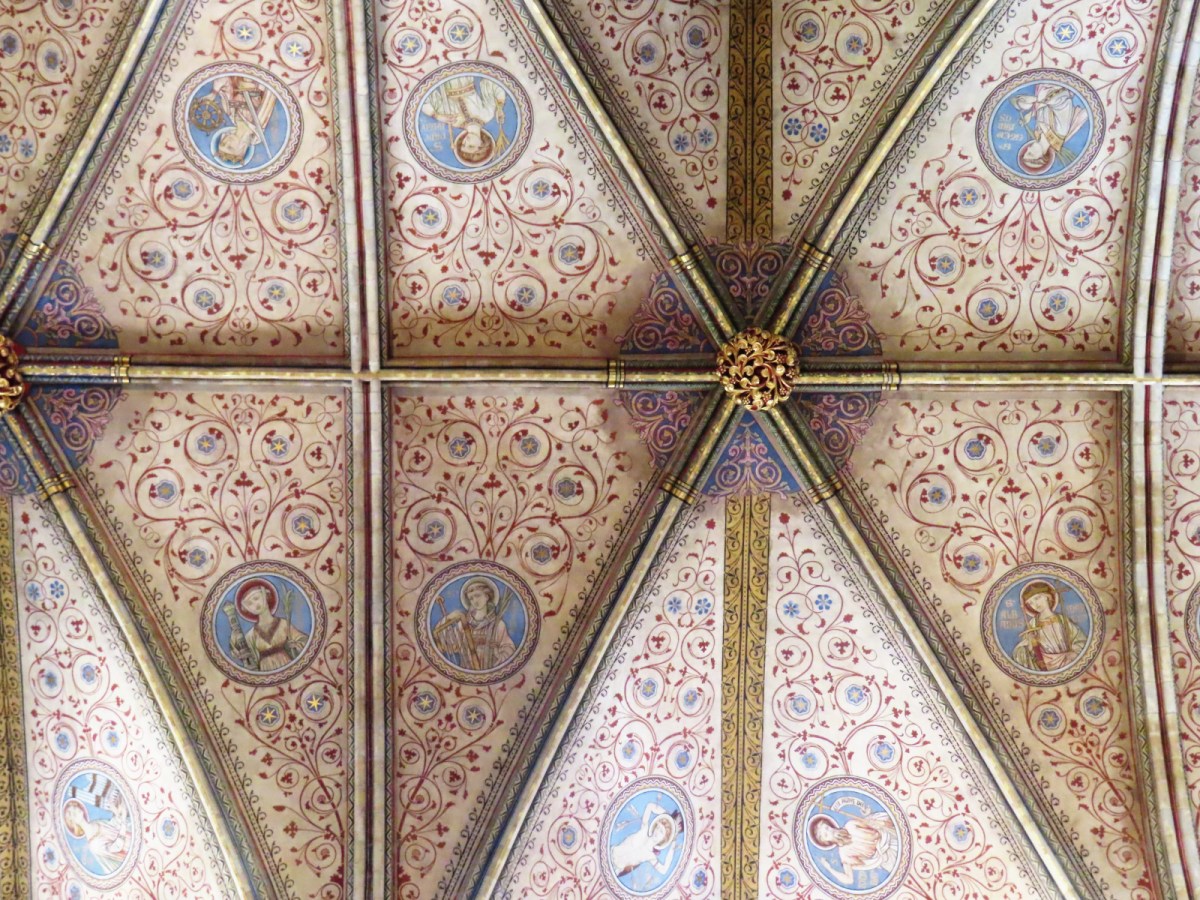
A stunning ceiling

We went to see Worcester’s famous cathedral. There was a service underway so we couldn’t visit the nave, but today’s photo shows a section of ceiling between the choir and the altar retaining stunningly beautiful medieval-style painted decoration.

A stunning ceiling

< Previous | Index | Next >

Image of the day – 201

What’s in an image? Sometimes quite a lot, more than meets the eye. I’m posting an image whenever I can.
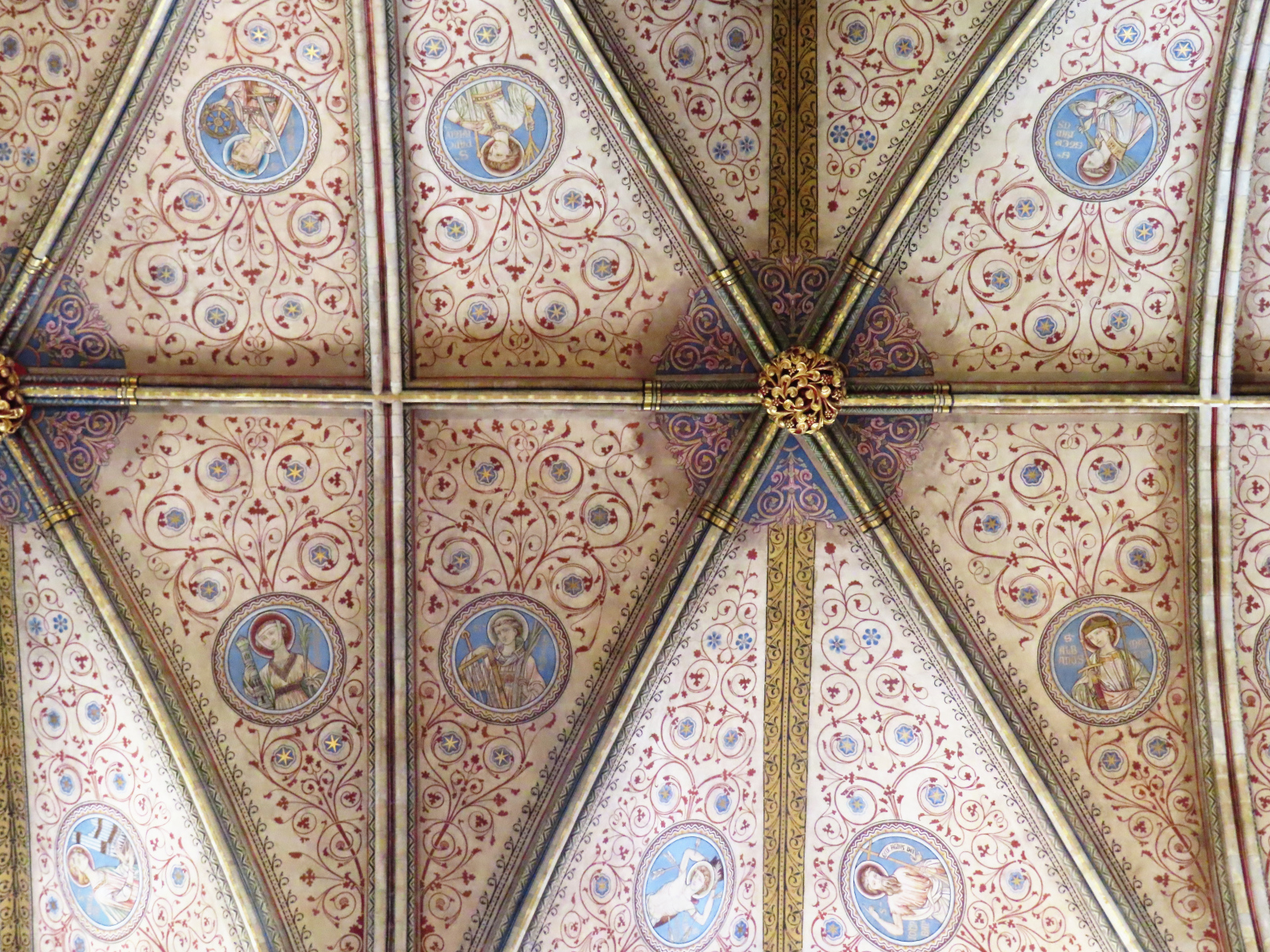
Click thumbnails to enlarge

We visited Worcester recently, we wanted to visit the birthplace of the famous composer, Edward Elgar, in a nearby village, but afterwards we drove to the old city, parked the car, and went to see the famous cathedral. There was a service underway so we couldn’t visit the nave, but today’s photo shows a section of ceiling between the choir and the altar retaining stunningly beautiful medieval-style painted decoration. The stone vaulting was built in the 14th century and the decoration restored in Victorian times.

Beautiful buildings

Up until Henry VIII’s split from the Catholic Church, some of the most beautiful buildings in Britain were the old monasteries and abbeys, all of them Catholic and most of them destroyed and/or sold off to Henry’s associates and friends. A few centuries later Oliver Cromwell’s men caused further loss and damage, pulling down statues and rood screens, whitewashing painted masonry, and more.

Here are a few of the ruined treasures I’ve seen with my own eyes and wished I might have seen before their destruction took place: Cirencester Abbey, Fountains Abbey, Malmesbury Abbey, Tintern Abbey, Whitby Abbey. See some of these and many more at English Heritage.

But here in Worcester Cathedral some of that splendour is still to be seen, and the ceiling is just a part of it. We can make good guesses about some of the losses from documents, drawings and paintings created by people who had seen some these places before they were destroyed. Past structures can be partially imagined as well, reconstructed in our minds from fragmentary records glued together by informed thinking.

This can be extended to the deeper past as well, we can imagine Roman Cirencester (or Corinium as it was known during that era), and know small parts of it quite well based on excavated remains and reconstructions.

And in our own day?

Lowther Estate

What parts of our own early 2000s architecture and artworks will be lost before future generations have an opportunity to admire and enjoy them? We do have one advantage over past times, and that’s our ability to photograph and video structures and artworks before they are lost. This was emphasised for me when Donna and I visited the Lowther Estate during our recent family holiday in the Lake District. We drove east from our holiday house in Windermere to visit this very grand old palace, built in 1806 to replace Lowther Hall which had suffered a fire and was in a poor state of repair.

The days of grand, old houses were passing and Lowther Castle was no exception. The grounds were used for tank training during World War 2 and the beautiful and extensive gardens decayed and were later used to grow spruce for timber. The roof of the building was removed along with many of the internal walls. The two photos below show part of the interior more than 100 years ago and as it appears today.
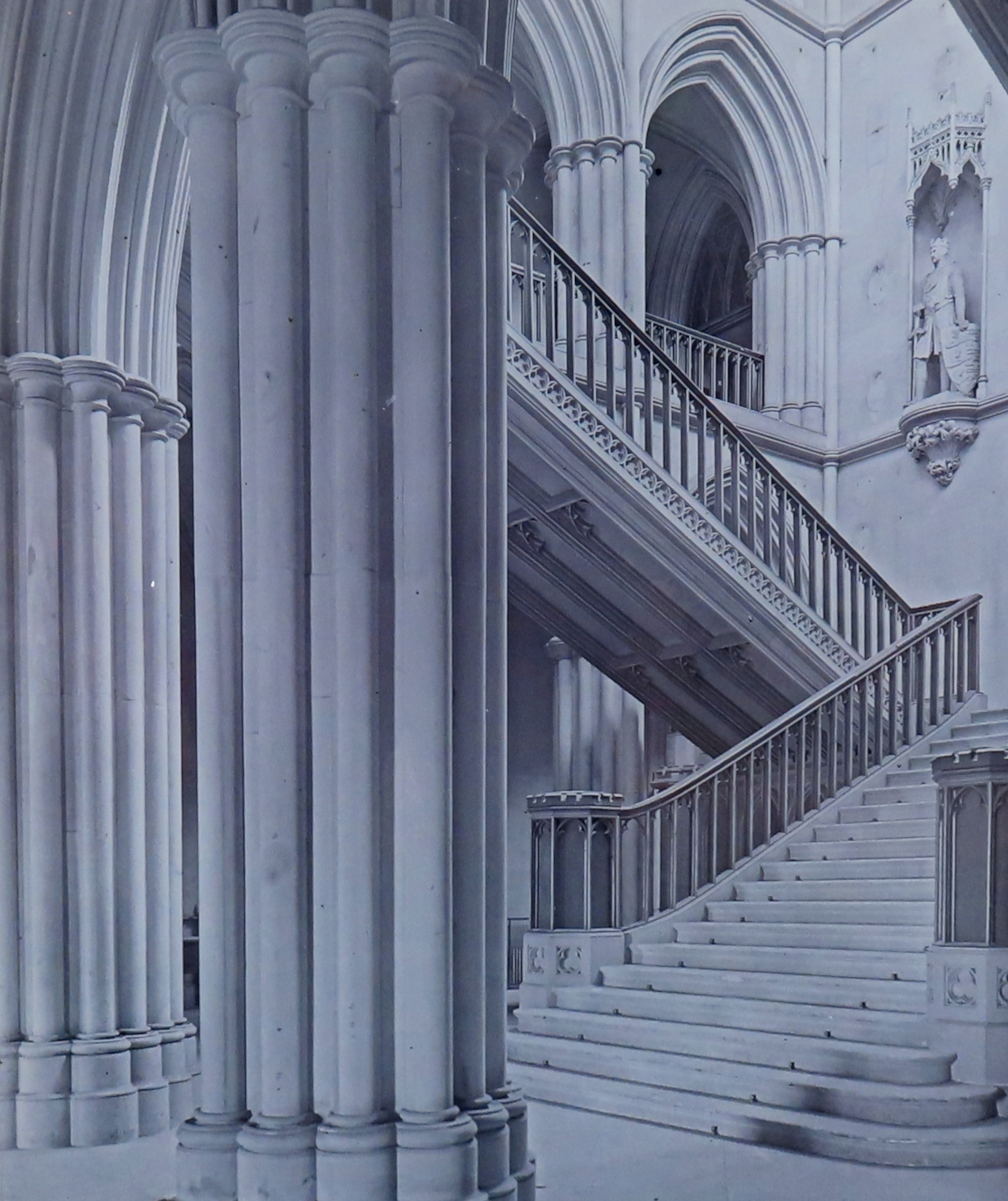
These images represent similar parts of the building. I can’t claim they’re correctly matched, but they are close. The top photo was taken before the roof was removed and the interior structures demolished.

Click the photos to expand them.
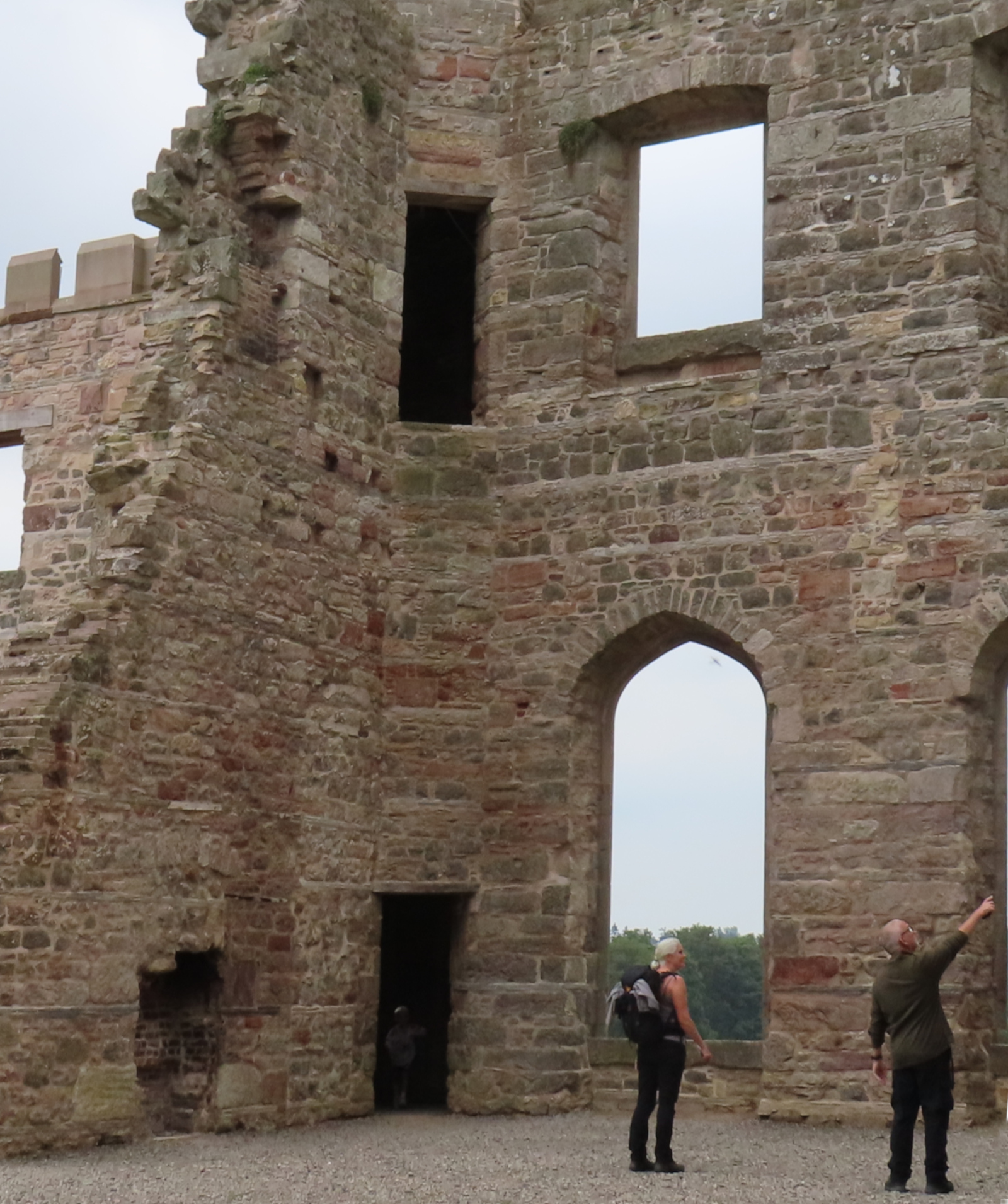
The lower photo shows the area as it is today. These images allow us to compare two instants in time, one before the destruction and one afterwards. In a sense we can see what has changed. Technology moves on, the first image lacks colour. For more recent changes we can compare colours, movement, sound and more. So the further back in time we go, the less full and accurate the information tends to be.
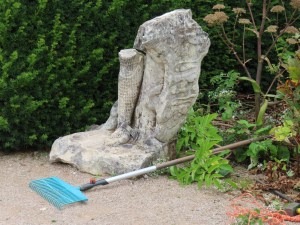
Remains of the statue

There’s one more detail worth mentioning. If you expand the first photo and look at the upper right, you’ll see a statue, probably of William Lowther, 1st Earl of Lonsdale (1757–1844), the man who had the present castle built between 1806 and 1814. He’s depicted as a knight in chain mail with a large sword. A small piece of that statue survives and today stands incongruously in the gardens outside the ruined building. This is one of the few details of the interior still visible to visitors today.

It seems extraordinary today that such an amazing building would be deliberately destroyed, but death duties often made it impossible for stately homes to continue in occupation and that was the case with Lowther Castle. So many lovely old houses were demolished for the same reason during the early 20th century. It’s one of the tragedies of that period of British history.

But there’s much to celebrate, too. The National Trust and English Heritage were set up to save, restore and conserve what remains; and without them we would have lost so, so much more. Let’s remember, too, that we each live our own lives and there are so many ways we can care for the people and places we value. Surely our place in this world, individually and together, is to do as much good and as little harm as possible in every aspect of our daily lives. So enjoy today to the utmost, care for the people you meet and the places you go, focus on justice, peace and beauty and you won’t go far wrong.

See also:

< Previous | Index | Next >

You might also like:

Useful? Interesting?

If you enjoyed this or found it useful, please like, comment, and share below. (If you don’t see those links, click the article’s title above the main photo and they will appear.) Send a link to friends who might enjoy the article or benefit from it – Thanks! My material is free to reuse (see conditions), but a coffee is always welcome and encourages me to write more often!

Are we dead or alive?

If I tell someone that I follow Jesus they will expect him to be like me. If I am mean, greedy, selfish and easily angered people will pick up the notion that Jesus might be like that too.

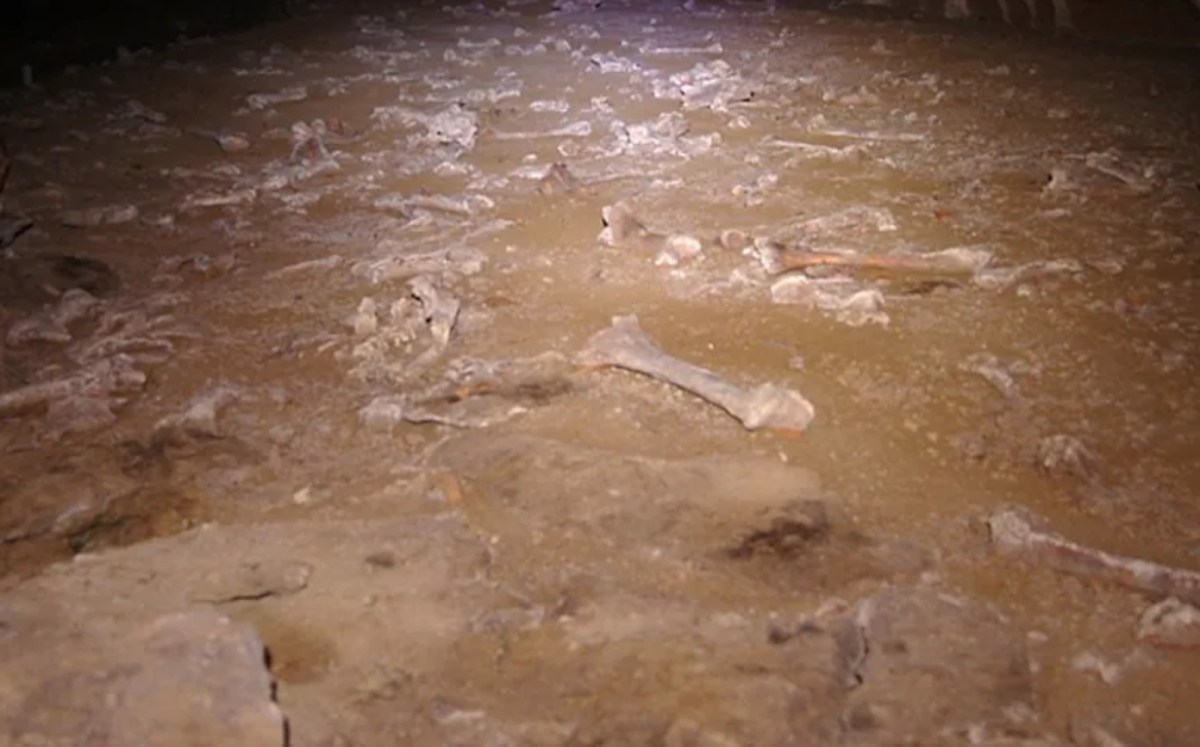
Dry bones (Wikimedia)

Click thumbnails to enlarge

A few days ago I posted Butterfly dead or alive? I considered the difference between a dead butterfly and a living one. I thought about this in biological terms, suggesting I’d write again soon on the spiritual aspects for people following Jesus. This is that second article.

I’ll go through each of the main points from that earlier article to draw spiritual truth out for anyone who believes they are alive in Christ. So here goes…

Ability to move

If I’m spiritually dead, then like the dead butterfly I will be unable to move. But what is spiritually equivalent to the physical ability to move? There may be more than one way of looking at this. Read Acts 17:1-8. What does this mean, in real, practical terms? Try reading the entire chapter, Acts 17, and it will become clear. Paul was explaining to Greek philosophers in Athens that the ‘Lord of Heaven and Earth’ is not served by humans because there’s nothing we can provide that he doesn’t already have. Instead he’s the One who gives us life and breath and everything else we might need. You’re not spiritually alive until you start paying attention to Jesus and agree to let him work in you and through you. He will change you in so many ways, all of them good. But if you’ve never met him before and never spent time with him you will not become alive spiritually. When you allow him to touch you in this way you will become alive and aware and, like the living butterfly, you’ll be able to move with energy that is within you, the essential energy Jesus has placed in you. The dead butterfly would be dried up and provide food for the ants. The living butterfly can detect predators, move to safety, and gather energy from floral nectar.

When we’re spiritually dead we can do nothing to help ourselves, but when Jesus has made us alive we can move freely, and not just in this physical world for we can now move spiritually too. It’s difficult to describe this to someone who has not yet experienced it. But come on in! You will never regret it.

Appearance, colour, lustre

As you continue to learn from Jesus you will become a thing of beauty and fragrance, well maintained spiritually, colourful, clean and cared for. The body ages and deteriorates over the years, but the spiritual heart and life will never age or fade.

Ability to sense danger

There are forces of spiritual evil in the world, as well as the more obvious physical dangers we face from falling rocks, dangerous drivers, illnesses of many kinds, or the occasional thunderstorm, earthquake, or volcano. Jesus does not give us any guarantee of safety from the physical world, but he will alert us to and protect us from spiritual danger and damage – if we pay more attention to him and his Holy Spirit than we do to our own ideas and preferences. Often, sadly, we do not.

Reproduction

This is an important one.

Spiritual reproduction is not like biological reproduction, although both result in growing numbers. In the case of spiritual reproduction it’s mostly a matter of living lives that will make people ask themselves, What’s different about them? People tend to know a good thing when they see it. If I tell someone that I follow Jesus they will expect him to be like me. If I am mean, greedy, selfish and easily angered people will pick up the notion that Jesus might be like that too. So I’d better become kinder, more gentle and helpful and generous, more loving towards the people around me.

Metabolism

Living creatures of all kinds, including people, have an active metabolism, it begins in humans and other animals when a sperm fertilises an egg cell, generating the very beginning of a new organism. And that metabolism continues all day and all night, year in and year out, until that new organism dies through accident, illness, or old age. There is a spiritual analogue for metabolism too. There are complex actions and interactions going on in the life of the church. A church can be healthy or sick, it can be hungry or fat, it can be happy or truly miserable. There are spiritual gifts poured out over people who follow Jesus and gather as church. These gifts are crucial in forming and sustaining church growth in helpful and useful ways.

I’ll finish by mentioning two phrases that are sometimes used in church circles; they both come from Romans chapter 6 and verse 11.

  • The first one is ‘Dead to sin’
  • The second is ‘Alive in Christ’.

Would you rather be dead, or alive? That, my friends, is the choice before us.

See also:

You might also like:

Useful? Interesting?

If you enjoyed this or found it useful, please like, comment, and share below. (If you don’t see those links, click the article’s title above the main photo and they will appear.) Send a link to friends who might enjoy the article or benefit from it – Thanks! My material is free to reuse (see conditions), but a coffee is always welcome and encourages me to write more often!
Butterfly dead or alive?

Like all living things, butterflies have a metabolism in which interlinked biochemical processes are always active. On death these processes cease and the remains are consumed as food by other organisms or colonised by fungi and bacteria which digest and reprocess the remains.

Painted lady

< Previous | Index | Next >

Image of the day – 200

What’s in an image? Sometimes quite a lot, more than meets the eye. I’m posting an image whenever I can.

Click thumbnails to enlarge

This painted lady butterfly was feeding on nectar from flowers of Verbena Bonariensis at Sizergh Castle in the southern Lake District. There were bees working these flowers as well, mostly bumble bees but also honey bees. The entire garden was buzzing with activity.

Why dead or alive?

This is not as random a question as it might sound. I’m part of a group of around ten people who meet weekly to think together about following Jesus in meaningful ways. We’d been considering Ephesians 2:1-10 where Paul writes that we were dead but have been given new life. I chose a random animal, a simple butterfly and asked the question – ‘What is the difference between a dead butterfly and a living one? We didn’t go into the answer in any depth, so I thought I might consider the differences here instead. Let’s make a list and work our way down.

  • A dead butterfly cannot move, it just lies on the ground motionless unless someone picks it up, the ants carry it away as food, or the wind blows and sweeps it along the ground. A living butterfly generates usable energy by feeding on the sugars in nectar from a flower and uses that energy to flap its wings for flight. And a simple brain controls the direction of the flight while the butterfly uses sight and smell to home in on useful flowers to collect more sugars. Being capable of directed movement is a key difference between death and life.
  • Appearance is another difference; a living butterfly has beautifully coloured wings. A recently deceased butterfly might look just the same for a short time, but those lovely wings will lose their lustre as the butterfly dries out. The colourful patterns will fade, dust and cobwebs will contaminate the surfaces. This is typical for all creatures, while they live they maintain and clean themselves, but after death these processes stop.
  • Ability to sense danger. When a butterfly is alive, if it’s resting in the sushine on a leaf or a flower and your shadow passes over it, it will launch itself into the air and fly away. The butterfly can’t distinguish between you and a predator (like a bird or a dragonfly) so it gets out of the way just in case.
  • Butterflies, like all lifeforms, are capable of reproduction. Adult butterflies mate, the males fertilise the female’s eggs, the eggs are laid on the plant that this particular butterfly needs for the growth of its caterpillars, the eggs hatch as baby caterpillars and these voraciously eat the leaves of the foodplant and grow and grow, then pupate on a stem, in a crevice, or underground to emerge as butterflies in the following spring or summer. It’s a complex life cycle, far more complex than that of a mammal, but it works well for butterflies. If a butterfly dies before it is able to mate, it will not contribute to the ongoing future of the species. If it dies after mating it will make a contribution to the next generation. Timing is everything!
  • Like all living things, butterflies have a metabolism in which interlinked biochemical processes are always active. On death these processes cease and the remains are consumed as food by other organisms or colonised by fungi and bacteria which digest and reprocess the remains through their own, different metabolic processes.

So it appears there are quite a few distinctions that can be made between something that is dead and the same thing when it’s alive. So, leaving biology aside for a moment, if we are aiming to follow Jesus, what might the difference between dead and alive look like? Can we gather some clues from the butterfly?

I’ve written another short article about that question.

See also:

< Previous | Index | Next >

You might also like:

Useful? Interesting?

If you enjoyed this or found it useful, please like, comment, and share below. (If you don’t see those links, click the article’s title above the main photo and they will appear.) Send a link to friends who might enjoy the article or benefit from it – Thanks! My material is free to reuse (see conditions), but a coffee is always welcome and encourages me to write more often!
Start with Jesus

A good start would be to state that church is defined by everything that Jesus is and does and teaches and by nothing beyond that.

Building work

church constitution – 3

< Previous | Index | Next >

Click to enlarge

Perhaps it’s time to focus a little more closely on the people who make up church.

Where should we look for guidance?

We have to start somewhere if we want church to be the way it’s supposed to be. Here are some people and places we might consider approaching.

  • The Pope – If you’re a Catholic this might seem like a good place to begin, but you’re going to find it hard to get an audience with the Pope so you might have to set your sights a little lower. Working your way down the hierarchy bit by bit you’ll probably find the local parish priest will be the only representative you can actually talk to.
  • The Archbishop of Canterbury – An Anglican will find the same issue, you’ll probably end up talking to the local vicar.
  • Your friends at church – Friends have the great advantage of being approachable and helpful, but perhaps you feel they have very little authority in spiritual matters, no more than you have yourself, maybe. Or possibly you don’t have any church friends.
  • Christian authors, websites, and published advice – There’s going to be an awful lot of reading there and you still may not find what you need.
  • The Bible? – Now there’s a thought! It’s still a lot of reading, and there are many translations to choose from. However, you can safely ignore the entire Old Testament because everything it contains was written before church began 2000 years ago. You could read Luke’s Gospel and Acts, they might once have been a single book and cover the life of Jesus and the story of how church originated and developed during the first 80 years or so. Not a bad idea! You don’t even need to buy a Bible, try these links to Luke and Acts (completely free).
  • What (or who) might be better than the New Testament? Might I suggest Jesus and the Holy Spirit?

The story really begins with Jesus’ Father, he planned everything and sent Jesus as a go-between. Jesus is as human as you and I am and we can relate to him as a messenger sent by his Father to explain everything we need to know. What you should d0 is find out why Jesus matters and why he sowed the seeds of church. Talk to him (that’s called prayer) but don’t make it complicated. Just talk to him like you would to anyone else. It doesn’t have to be out loud, Jesus is really good at hearing you think. That may seem strange at first, but as you get to know him better it will become easier, less weird, and really a lot of fun; he’s very much a fun guy, understands where you’re coming from and is very much on your wavelength. Try to spend time with other people who are getting to know him – you’ll help one another along the way.

I’ll give you a couple of hints about what he may show you. You can also read my personal story of discovering Jesus if you like. But remember, everyone’s story is different, your story will be unique to you. As you set out on this journey, try to remember the points below:

  • You matter to him, he cares about you.
  • He has far better answers about church than any of those people we mentioned earlier, from Popes and Archbishops on down.
  • Church is not about a place, it’s about people – his people.
  • Church is not complicated, it’s very, very simple. You can begin to understand all this with your friends or, if necessary, on your own – here’s one way to get started…
  • Sooner or later (probably sooner) you will come across the idea of church services. I recommend a bit of caution here.

    It’s a simple guide to help you think about what church really is and what your part in it might be. I wrote it a while ago and it needs updating, something I’ll try to do soon. Here’s a short extract.

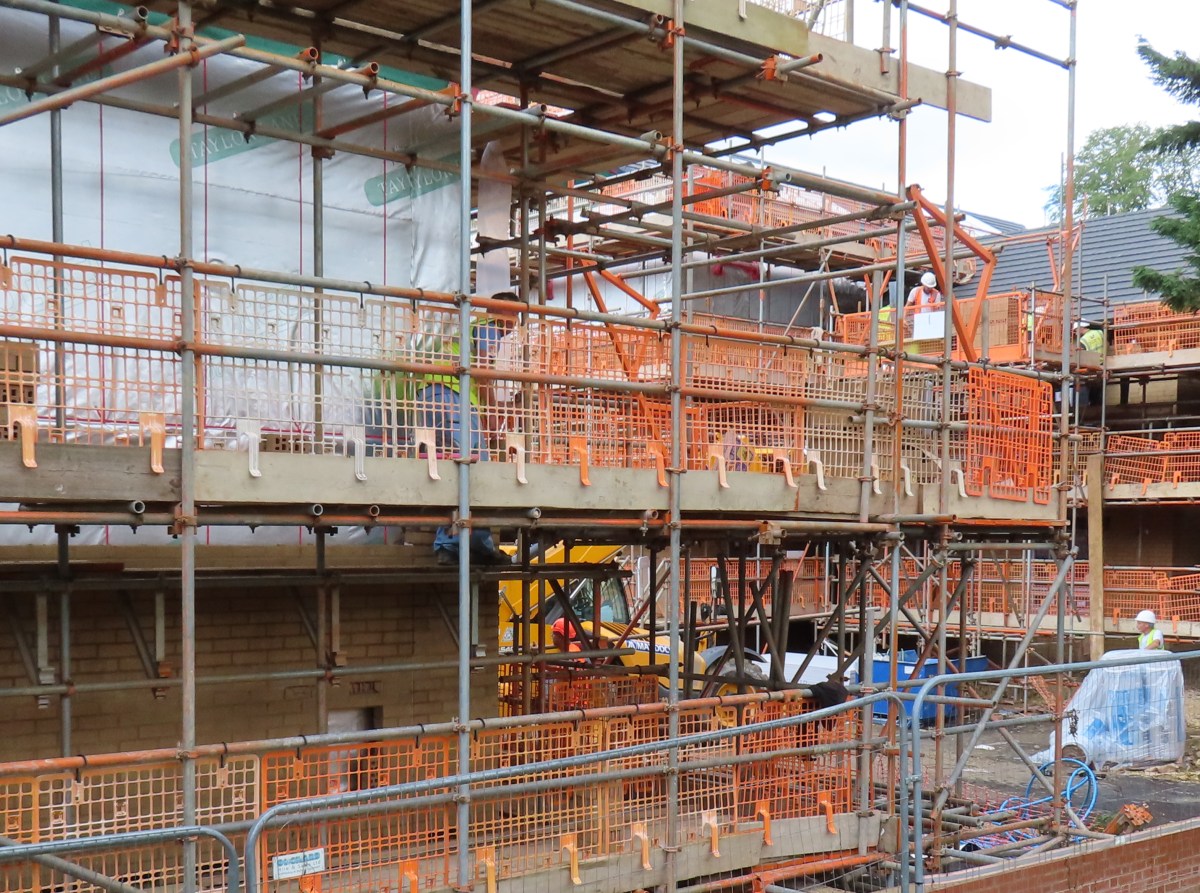
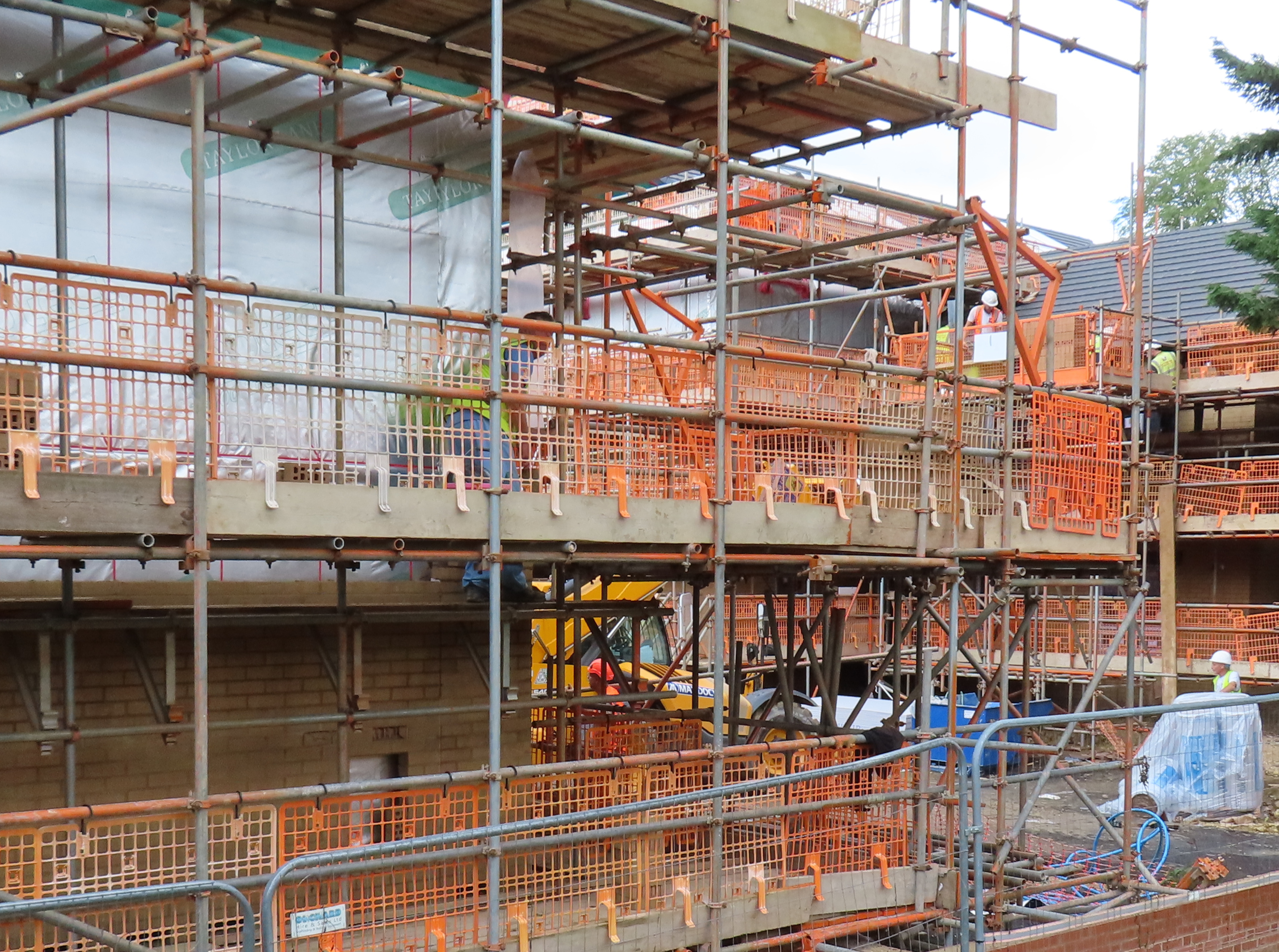
Let’s think about Jesus a bit more. What do already know about him? I’ll tell you one thing right away, he’s a builder and he’s an exceptionally good one. The photo show an active building site here in Cirencester where I live, if you enlarge the photo and look at it carefully you’ll see at least four builders at work. Despite the many pictures out there that claim to show Jesus, we don’t really know what he looked like though if you saw him in the street you might assume he was Arabic, not European, African or Asian. But if you really want to get to know someone, never begin with appearances, you’ll always learn a lot more from watching them at work. Jesus works for his Father’s business, he works in the building trade, turning all of us who follow him into a wonderful construction called the Church. He follows the plans his Father gave him and he builds not with bricks, stones, tiles and cement, but with people, ‘living stones’ as Peter puts it in one of his letters.

Start to follow him and he’ll use you in this great project, fitting you gently and carefully into a space where you’ll be a good fit with those around you. Together you will become a permanent part of what he is building.

You’ll understand right away that this isn’t how church is usually described and it’s not how Jesus is usually described either. But I want you to start thinking in terms of a living body, not a stone building put up by ordinary builders according to some architect’s design. Another way of envisaging church is as a body of people with a common purpose, relating well with one another, growing to look like Jesus in their thoughts and actions.

Jesus, although he is not here today in bodily form, interacts, communicates and relates to us through his Spirit.

The Constitution of church so far

1 – Church is not a particular place or building. It is, instead, a particular people

2 – A named place is not required, people can meet anywhere convenient to them.

3 – Jesus is the foundation of church, and he, personally builds it. We are not leaders in this work, we are servants working for and guided by Jesus, the Master Builder.

We’ll take those as the first three clauses of our Constitution for now. Perhaps they’ll be all we need – church is simple to define! Though people who don’t understand it sometimes make it seem complex, difficult, and counter-intuitive.

See also:

< Previous | Index | Next >

Useful? Interesting?

If you enjoyed this or found it useful, please like, comment, and share below. (If you don’t see those links, click the article’s title above the main photo and they will appear.) Send a link to friends who might enjoy the article or benefit from it – Thanks! My material is free to reuse (see conditions), but a coffee is always welcome and encourages me to write more often!

You might also like:

Introducing Luke

Luke’s gospel and Acts probably began as a single book dedicated to Theophilus (a Greek name meaning ‘friend of god’ or ‘lover of god’) and written to provide a clear background and history of the church from the birth of Jesus up to the time of writing – less than 90 years later.

A Greek commentary on John

< Previous | Index | Next >

Cruising the gospel – Luke

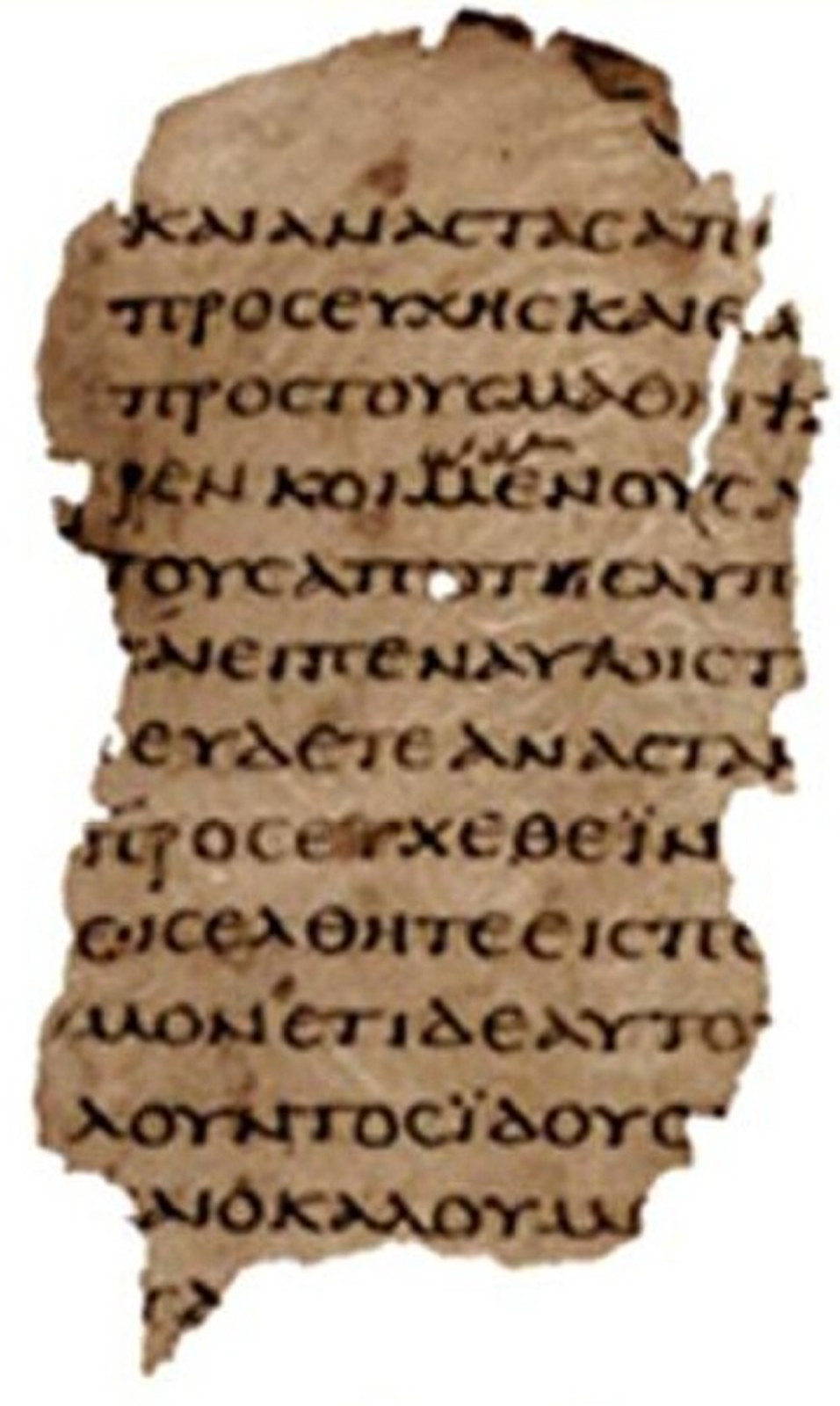
A fragment of Luke’s gospel
(Wikimedia)

Before we begin working through Luke, here’s a brief overview of the book and its author.

Luke is usually considered to be a Greek medical doctor who accompanied Paul on some of his missionary journeys around the Mediterranean. There’s no evidence that he was associated with or even met Jesus. Luke was a gentile or perhaps a Greek-speaking Jew. The many ‘we’ passages in Acts demonstrate Luke was with Paul on these occasions (see Acts 16:10–17; 20:5–15; 21:1–18; and 27:1–28:16). Further, Paul mentions Luke as his companion and co-worker in Colossians 4:14 (“Luke, the beloved physician”), Philemon 24, and 2 Timothy 4:11 (“Only Luke is with me”). Early church tradition consistently tells us that Luke wrote the gospel and Acts and adds that he was from Antioch in Syria, did not marry, and died in old age.

The author

Luke’s name is not mentioned in the gospel itself, and he’s an undistinguished person to be credited as author of a gospel; Matthew, Mark and John were three of Jesus’ disciples and perhaps thought to be more authoritative for that reason alone. However, Luke’s standard of Greek is very high, perhaps better and more learned than any other New Testament author.

Date of writing

This is not settled. Some authorities accept an early date, around 60 AD or a few years later. Supporting this are the facts that Acts concludes with Paul under house arrest in Rome, no mention of Nero’s persecution, and nothing about the Jewish War. But the commonest estimate is later, 80 to 85 AD, after the destruction of the Temple. This view is strengthened by the fact that Luke draws from Mark’s gospel, and that 21:20–24 seem to have been written with knowledge of the fall of Jerusalem.

Purpose

Luke’s gospel and Acts probably began as a single book dedicated to Theophilus (a Greek name meaning ‘friend of god’ or ‘lover of god’) and written to provide a clear background and history of the church from the birth of Jesus up to the time of writing – less than 90 years later. It may later have been converted into two volumes, one to accompany the other gospels and the second as an account of the early years of the church to be followed by the more detailed work of the collected letters written by Paul and others.

Theophilus may have been an early gentile follower of Jesus, the words ‘most excellent’ hint that he might have been an imperial official in the the Greek-speaking part of the Empire, but the way Luke writes suggests he might stand in for many Greeks of slightly lesser importance all of whom were ‘lovers of god’ and followers of Yahshua (Jesus).

See also:

The Wikipedia article on the book gives a lot of useful information all backed up by detailed references. If you want to understand the background in further detail it’s a good place to start. The article about the author is also useful and provides ample references.

< Previous | Index | Next >

Useful? Interesting?

If you enjoyed this or found it useful, please like, comment, and share below. (If you don’t see those links, click the article’s title above the main photo and they will appear.) Send a link to friends who might enjoy the article or benefit from it – Thanks! My material is free to reuse (see conditions), but a coffee is always welcome and encourages me to write more often!

You might also like: