Like all living things, butterflies have a metabolism in which interlinked biochemical processes are always active. On death these processes cease and the remains are consumed as food by other organisms or colonised by fungi and bacteria which digest and reprocess the remains.
What’s in an image? Sometimes quite a lot, more than meets the eye. I’m posting an image whenever I can.
Click thumbnails to enlarge
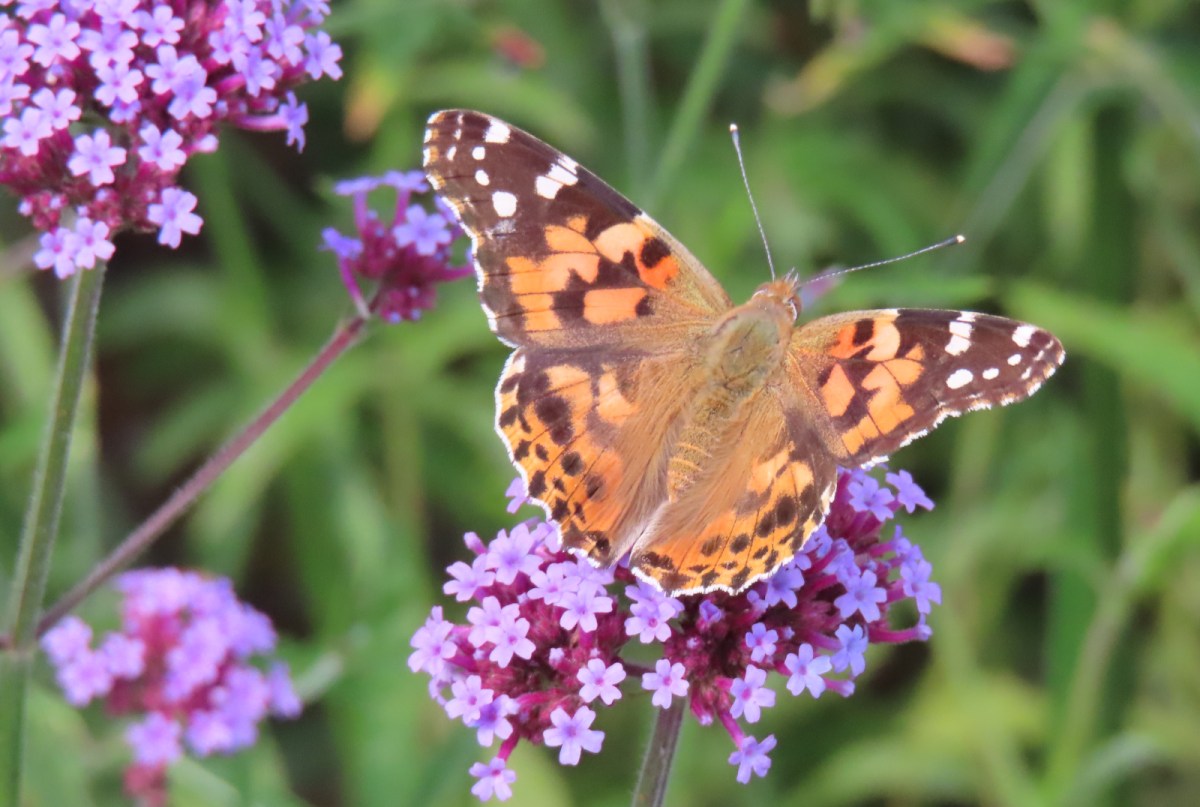
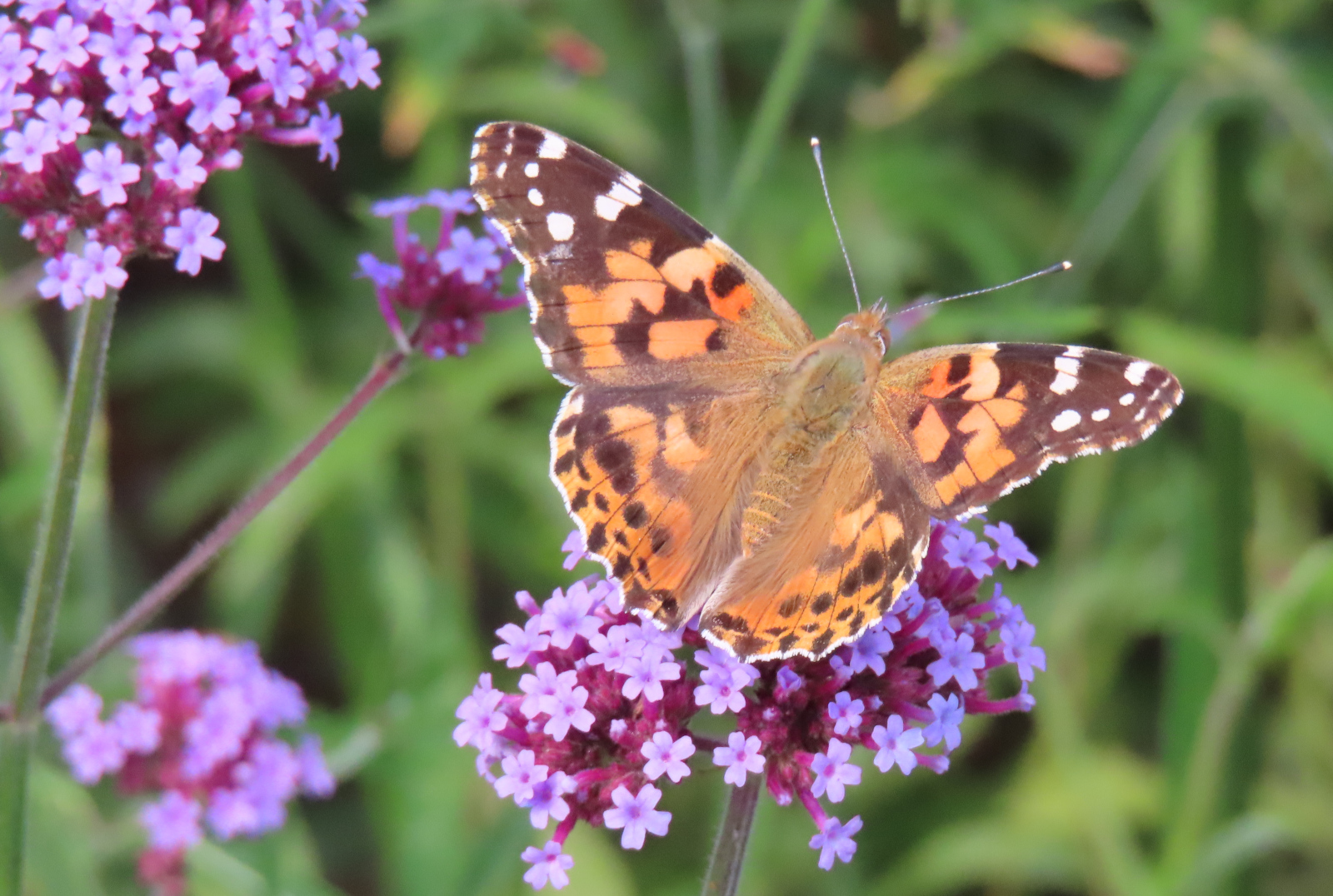
This painted lady butterfly was feeding on nectar from flowers of Verbena Bonariensis at Sizergh Castle in the southern Lake District. There were bees working these flowers as well, mostly bumble bees but also honey bees. The entire garden was buzzing with activity.
Why dead or alive?
This is not as random a question as it might sound. I’m part of a group of around ten people who meet weekly to think together about following Jesus in meaningful ways. We’d been considering Ephesians 2:1-10 where Paul writes that we were dead but have been given new life. I chose a random animal, a simple butterfly and asked the question – ‘What is the difference between a dead butterfly and a living one? We didn’t go into the answer in any depth, so I thought I might consider the differences here instead. Let’s make a list and work our way down.
A dead butterfly cannot move, it just lies on the ground motionless unless someone picks it up, the ants carry it away as food, or the wind blows and sweeps it along the ground. A living butterfly generates usable energy by feeding on the sugars in nectar from a flower and uses that energy to flap its wings for flight. And a simple brain controls the direction of the flight while the butterfly uses sight and smell to home in on useful flowers to collect more sugars. Being capable of directed movement is a key difference between death and life.
Appearance is another difference; a living butterfly has beautifully coloured wings. A recently deceased butterfly might look just the same for a short time, but those lovely wings will lose their lustre as the butterfly dries out. The colourful patterns will fade, dust and cobwebs will contaminate the surfaces. This is typical for all creatures, while they live they maintain and clean themselves, but after death these processes stop.
Ability to sense danger. When a butterfly is alive, if it’s resting in the sushine on a leaf or a flower and your shadow passes over it, it will launch itself into the air and fly away. The butterfly can’t distinguish between you and a predator (like a bird or a dragonfly) so it gets out of the way just in case.
Butterflies, like all lifeforms, are capable of reproduction. Adult butterflies mate, the males fertilise the female’s eggs, the eggs are laid on the plant that this particular butterfly needs for the growth of its caterpillars, the eggs hatch as baby caterpillars and these voraciously eat the leaves of the foodplant and grow and grow, then pupate on a stem, in a crevice, or underground to emerge as butterflies in the following spring or summer. It’s a complex life cycle, far more complex than that of a mammal, but it works well for butterflies. If a butterfly dies before it is able to mate, it will not contribute to the ongoing future of the species. If it dies after mating it will make a contribution to the next generation. Timing is everything!
Like all living things, butterflies have a metabolism in which interlinked biochemical processes are always active. On death these processes cease and the remains are consumed as food by other organisms or colonised by fungi and bacteria which digest and reprocess the remains through their own, different metabolic processes.
So it appears there are quite a few distinctions that can be made between something that is dead and the same thing when it’s alive. So, leaving biology aside for a moment, if we are aiming to follow Jesus, what might the difference between dead and alive look like? Can we gather some clues from the butterfly?
If you enjoyed this or found it useful, please like, comment, and share below. (If you don’t see those links, click the article’s title above the main photo and they will appear.) Send a link to friends who might enjoy the article or benefit from it – Thanks! My material is free to reuse (see conditions), but a coffee is always welcome and encourages me to write more often!
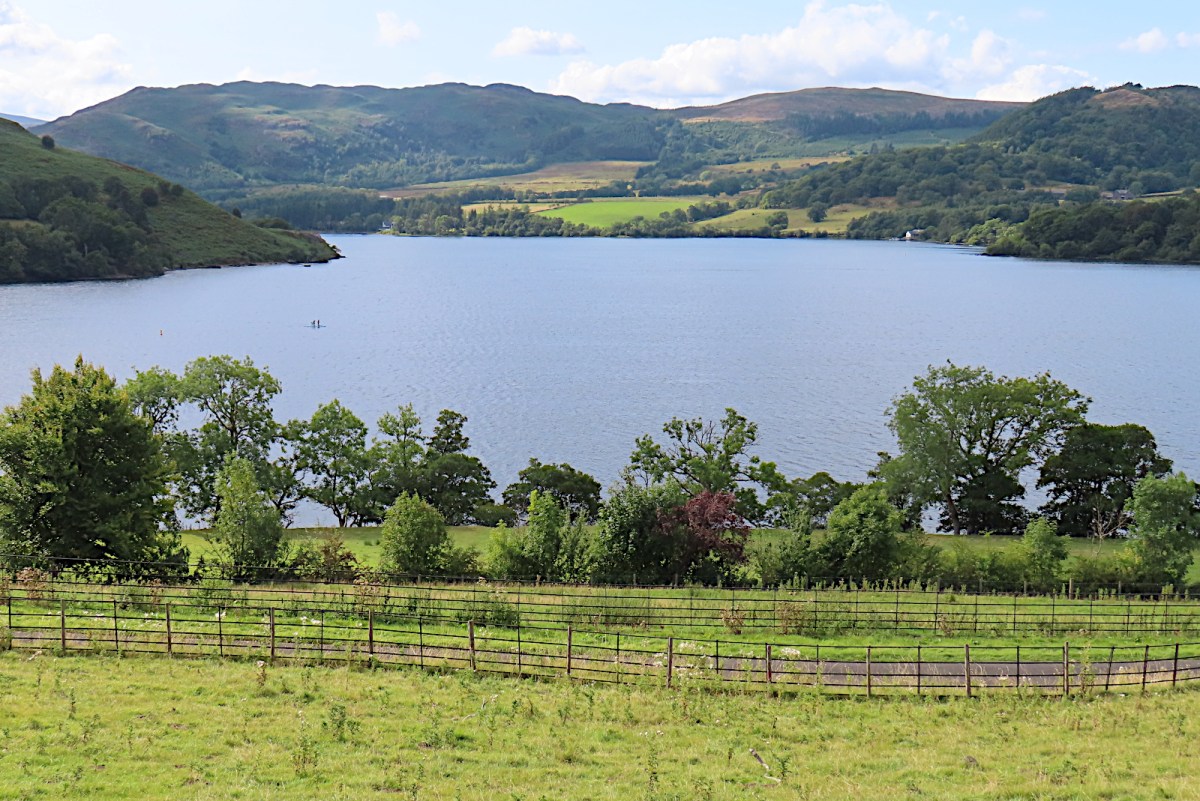
The Ullswater Way is a footpath allowing visitors to walk right round the entire lake. We walked parts of it, Donna and I walked to Pooley Bridge and back one day, and I walked several times to Howtown and back. There are good coffee shops at both destinations.
What’s in an image? Sometimes quite a lot, more than meets the eye. I’m posting an image whenever I can.
Click thumbnails to enlarge
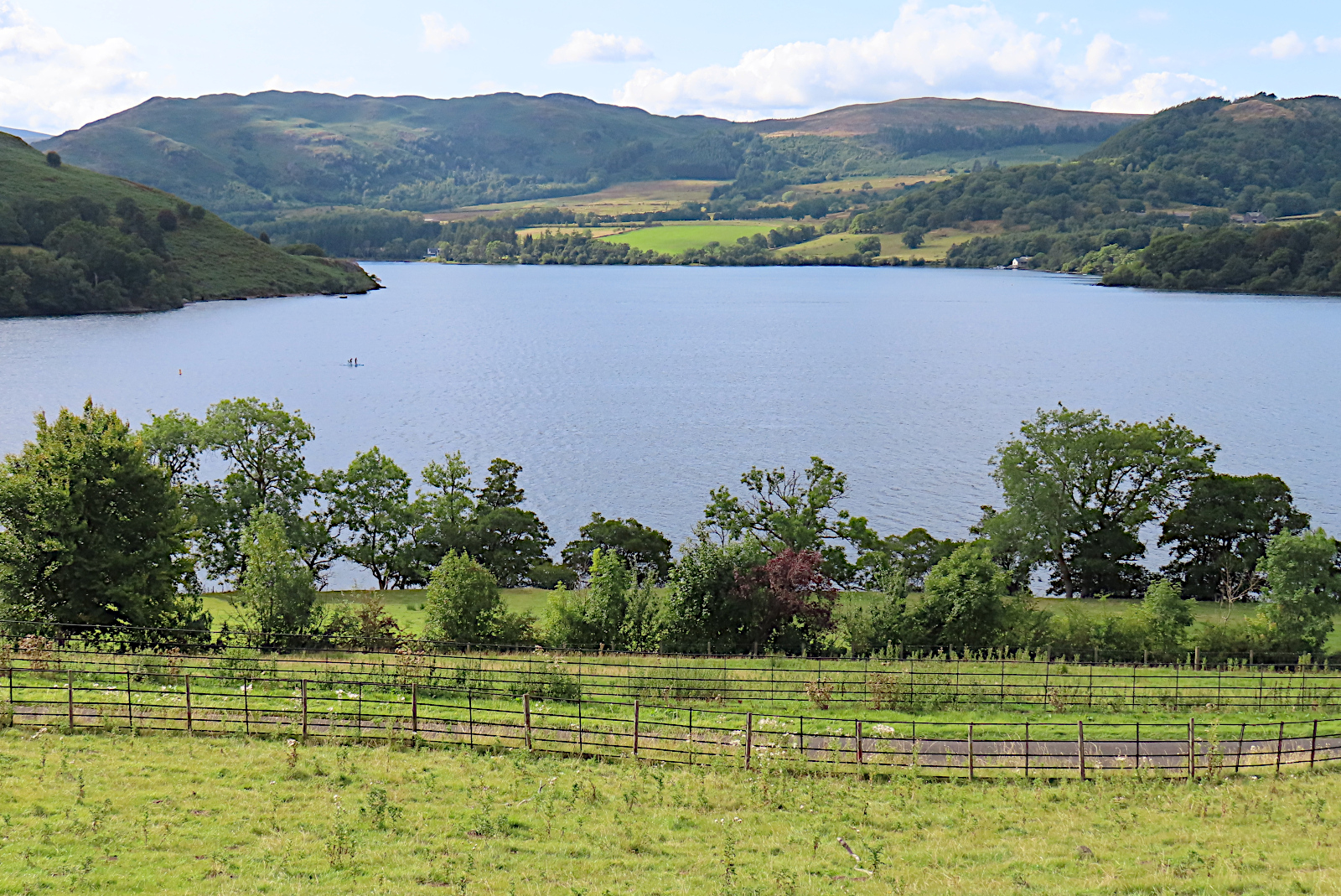
Ullswater is a lake in the north-east of the English Lake District. Donna drove up from Cirencester where we live and all the way home again too. I can’t share the driving as I still have no driving licence due to a medical issue nearly a year ago. I posted off my request to regain my licence today and hope soon to get my electric car back on the road and share the driving with Donna on long journeys again.
Refreshing
We had a great holiday – Debbie and Beth brought all the grandchildren along and Paz (Beth’s husband) joined us though Steve didn’t make it this year. Topping off the group was Aidan’s partner Jess and it was so good to get to know her a little better. After all the hot, dry weather we’ve had this summer in the south of the country it was wonderful to see lakes full of clean water, fields of green grass, and trees with healthy, fresh leaves. The countryside was thriving.
There’s no doubt remaining that we have messed with the Earth’s climate over the last hundred years or so and it’s becoming urgent to mend our ways. Fortunately there are some signs of progress. Despite resistance from some politicians, businesses and investors, more and more people are becoming aware and making efforts to change. And even small changes can make a difference.
In response to these shifts of climate, species of both plants and animals have been moving towards the poles and to higher hills and mountains to places where there are climates they are better adapted to. The Lake District is well north of the Cotswolds where I live most of the year, yet the conditions there are much more familiar to me, heavy snowfall in winter, much cooler summer conditions, more summer rainfall. Here in the south, summers in 2025 and 2026 have brought extreme heat and almost no rainfall. I won’t be surprised if 2027 turns out to be the same. The climate in southern England is now almost Mediterranean.
That’s another reason why the holiday week seemed so lovely to me; it was like turning the clock back 60 years or more to when I was young.
More about the lake and its surroundings
Ullswater runs from southwest to northeast across the northeastern part of the Lake District. This follows the glaciation history of the area; the glaciers of 25 000 years ago scoured out valleys from the central, highest point forming a pattern like the spokes of a wheel. This period is known as the late Devensian Glaciation, part of the Last Glacial Period. When the glaciers melted around 15 000 years ago, river-fed lakes replaced the ice, river erosion deepened the valleys and deposited silt where the rivers entered the lakes, creating the flat land areas now occupied by small towns and lowland farms. These fertile, flat areas are still slowly enlarging, encroaching further down each lake.
The Ullswater Way is a footpath allowing visitors to walk right round the entire lake. We walked parts of it, Donna and I walked to Pooley Bridge and back one day, and I walked several times to Howtown and back. There are good coffee shops at both destinations.
The holiday house
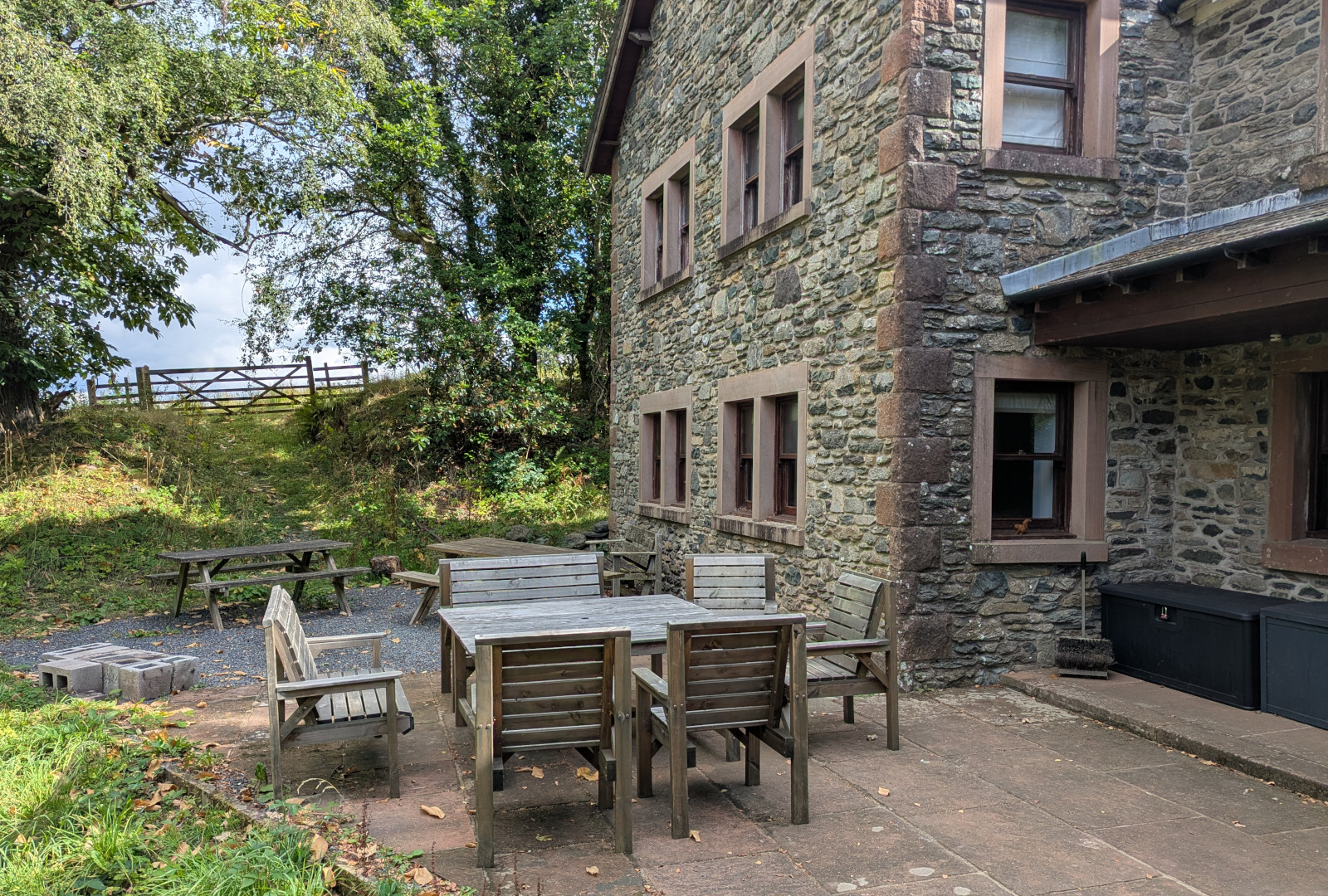
Our holiday house was very close to the path and it was well marked with signposts so reasonably easy to follow. There was a private field on the lake shore near the bottom of the rough track up to the house so we had our own little bit of shingle beach with room to park the car and some picnic benches. A lovely place to stay, though some of us would have liked a small shop within easy walking distance; but you can’t have everything!
Boats on Ullswater link Pooley Bridge with Howtown and Glenridding.
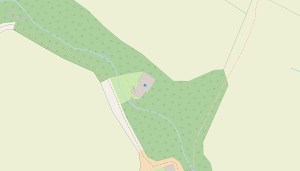
Map around the holiday house
Click the map to open it, you can then drag it and resize it to explore the area more fully and see Ullswater in context (if you shrink the map far enough).
People and language
During the Roman and sub-Roman periods The Lake District was occupied by close cousins of the Welsh. The people are still here but English has replaced the original Celtic language. Lots of familiar name elements appear on roadsigns for anyone with a slight knowledge of Wales, Cornwall or Brittany. Pen (top), crag (rock), mere (sea) and many more pop up all the time.
The mountains of Wales are known as the Cambrian Mountains and the area of the Lake District was traditionally called Cumbria. Wales (in Welsh) is called Cymru (say Come-ree) The Welsh language is Cymraig (pronounced Come-rye-g) so you can see the similarities right away. The Celtic language that was spoken in Cumbria was Cumbric. It’s pretty certain that back in Roman times the two languages would have been very similar and probably mutually understandable as two dialects. Also, something very close to Cumbric was spoken in south west Scotland.
Saint Patrick came from a Roman villa somewhere on this western coast, perhaps on the Welsh, Cumbrian, or south-west Scottish areas. He’d have been able to speak Cumbric or Welsh as well as Latin and perhaps Greek, later learning the Irish Gaelic as well, of course.
If you enjoyed this or found it useful, please like, comment, and share below. (If you don’t see those links, click the article’s title above the main photo and they will appear.) Send a link to friends who might enjoy the article or benefit from it – Thanks! My material is free to reuse (see conditions), but a coffee is always welcome and encourages me to write more often!
There were several groups of dinosaurs that had feathers. These were probably mostly for warmth, display or camouflage rather than flight thought there were some flying dinosaurs that had flight feathers.
What’s in an image? Sometimes quite a lot, more than meets the eye. I’m posting an image whenever I can.
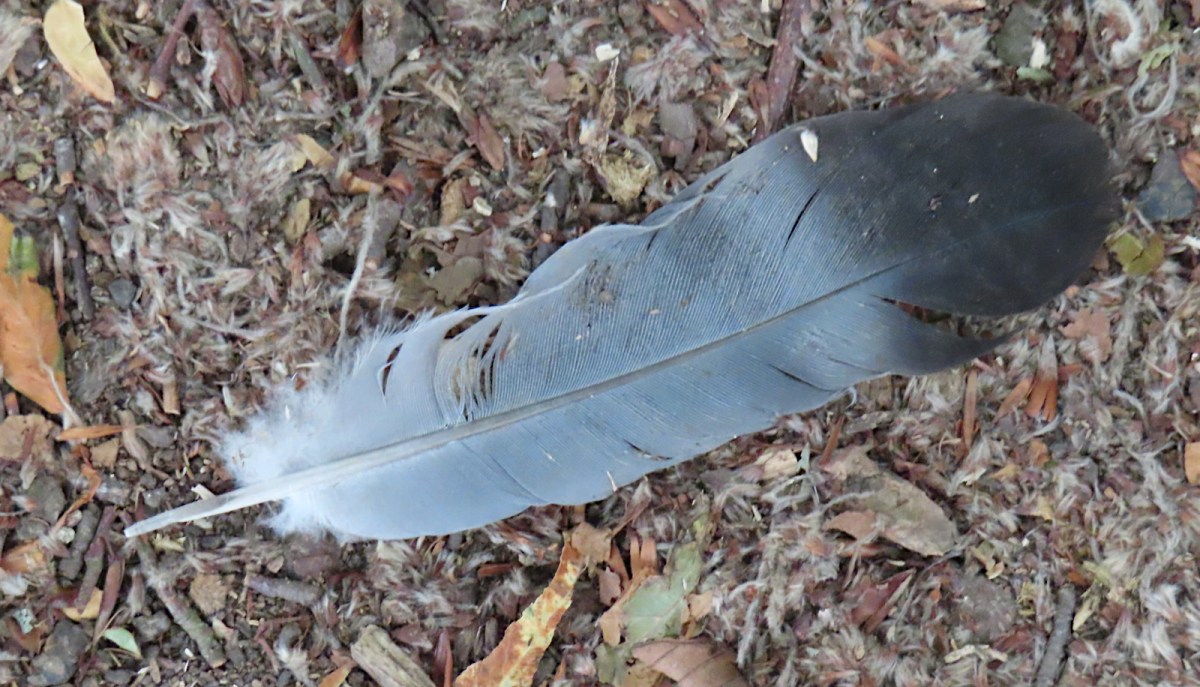
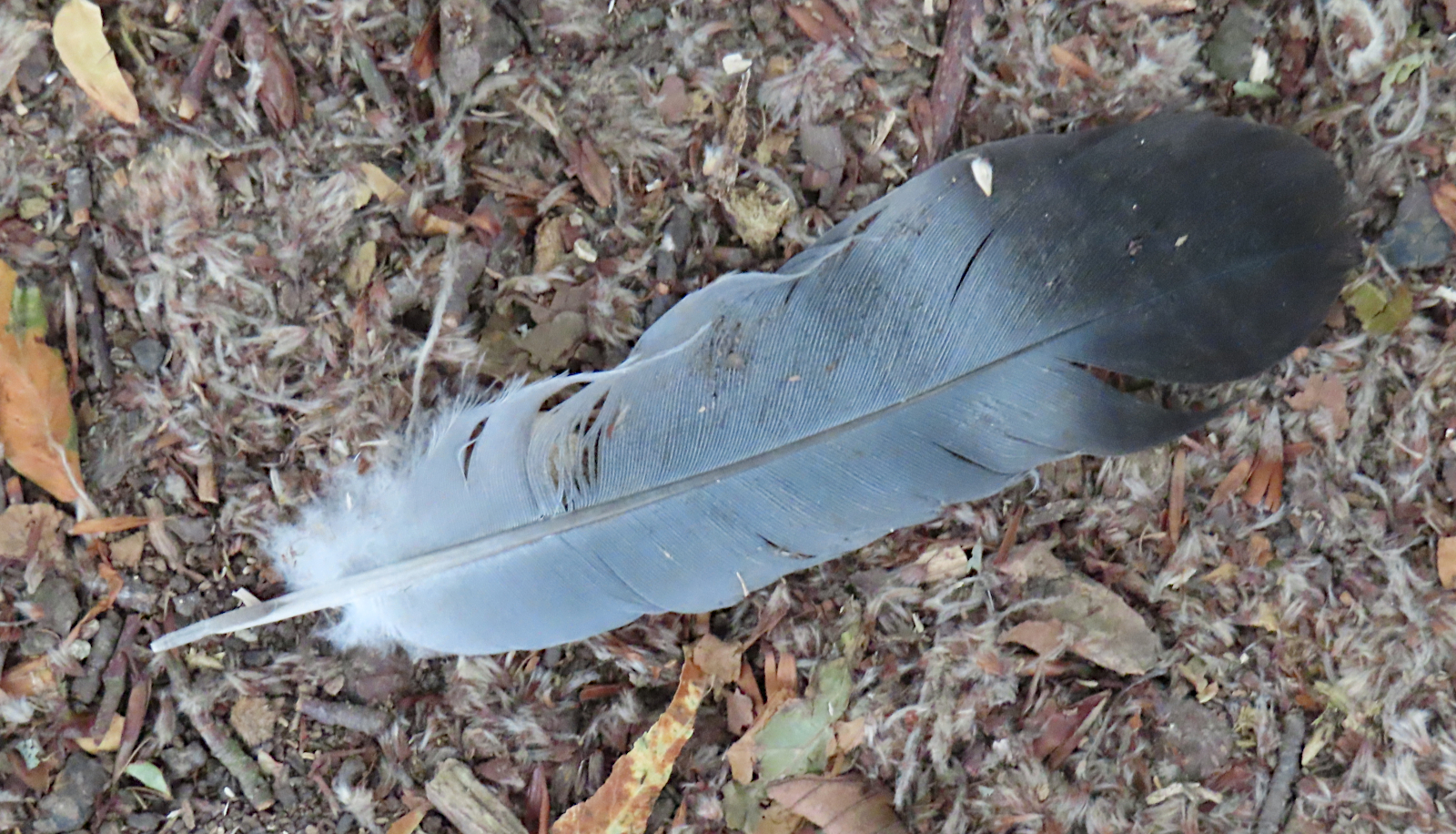
Abandoned feather
I’m sure you recognise this as a feather. But there may be quite a lot of things you don’t know about feathers too. In this post we’ll come up with as many questions and answers as we can.
What kind of bird is it from?
We all know that birds have feathers, but which species produced this particular feather, and what function did it provide? Most probably it came from a wood pigeon, according to Google’s image search.
The lowest part of the feather (bottom left) is downy and helps to keep the bird warm. The upper pale and dark grey parts have a different function altogether, they might be from the wings or tail of the bird to push the air in a downward motion to provide lift, or to guide direction of flight by manipulating the airflow in subtle ways calculated by the bird’s brain.
When a person is described as a bird-brain it may not be as derogatory as was intended! A bird’s brain is extremely well adapted to the work it has to perform. Feathers, too, are also very well adapted for the functions they provide; read more about the parts of a feather at Something over tea.
Do other animals have feathers, or is it just birds?
Mammals have hair or fur. Like feathers; skin, nails, claws, hair, fur, scales and horns are all composed of the protein keratin. It’s a tough, flexible protein with good structural strength and the ability to bend enough to resist fracturing. But among creatures living today, birds are the only group to have feathers. I wrote some other articles about birds.
Go back in time, however, and there were several groups of dinosaurs that had feathers. These were probably mostly for warmth, display or camouflage rather than flight thought there were some flying dinosaurs that had flight feathers – some of them on all four limbs so imagine a bird with four wings and teeth and you’ll get a rough idea of these creatures.
The Natural History Museum has an interesting article on its website about the origin of feathers. A lot of the detail remains to be worked out, but progress is being made.
Feathers have hidden features
A feather consists of a main central tube (the shaft) as the main support structure with a series of side branches (barbules) that can hook together. When these barbules get accidentally unhooked little gaps open up and the feathers become less affective (especially if they’re flight feathers on the wings or tail).
When birds preen, one of the things they are doing is using their beak to rezip any unhooked barbules. You can see some unzipped gaps on the feather in the photo at the top of the article.
Use of feathers by humans
Feathers are a natural resource. People have used them for centuries for clothing and display, for their insulating properties, or for artwork. Here are some specific examples, you can probably think of many more:
Display of authority or rank, think of the North American Indian war bonnet.
If you enjoyed this or found it useful, please like, comment, and share below. (If you don’t see those links, click the article’s title above the main photo and they will appear.) Send a link to friends who might enjoy the article or benefit from it – Thanks! My material is free to reuse (see conditions), but a coffee is always welcome and encourages me to write more often!
If you’ve made it to this point, then ‘Thank you for watching and thinking it over’, and thank you also for anything you can do, however small, to reduce your impact on our climate in the days and years ahead. Many small impacts can add up to something really significant.
The UK Government commissioned a video nine months ago to launch their response to what is now seen as a full blown climate emergency. It’s a good video; it includes presentations by people who are experts in their fields; it’s informative; and it’s very hard-hitting. It’s not widely available except through a series of local meetings throughout the UK where it’s being used very effectively to get people thinking and responding in useful ways at the local community level.
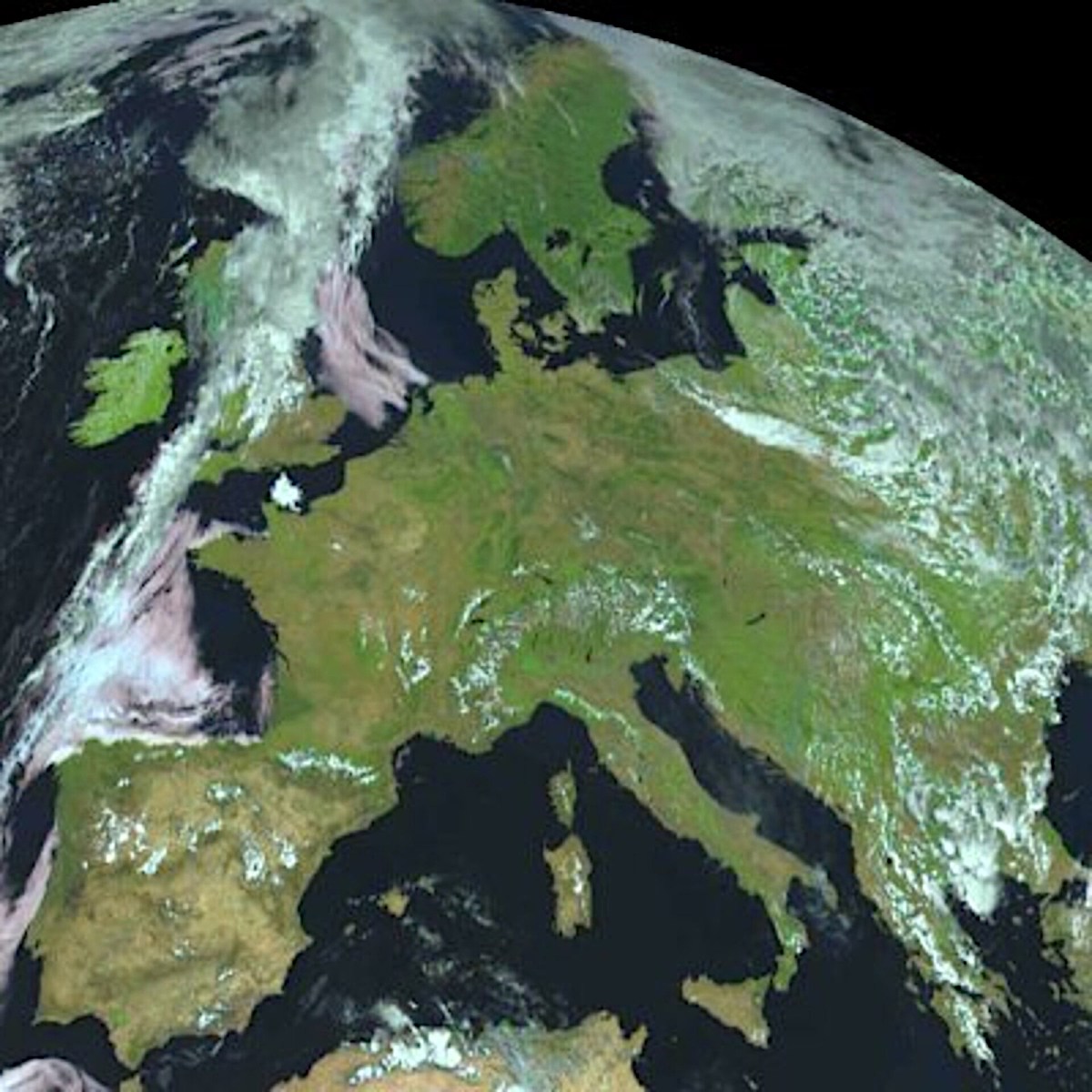
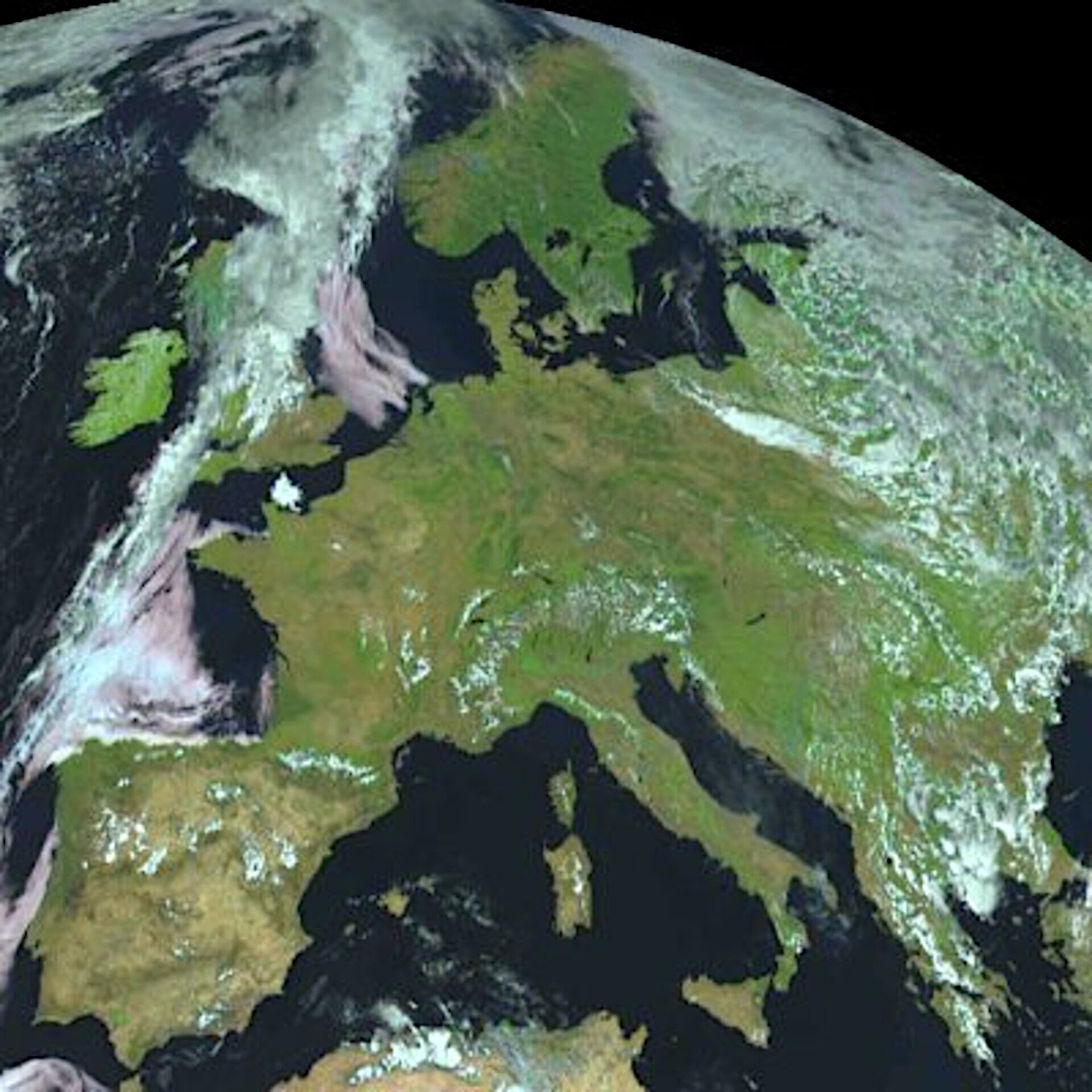
Click the video below to watch the Earth turn on its axis. Your home is here, can you spot it as it rolls by? This planet is home to every single one of us.
The UK Government video is available, however, on YouTube, published there by GB News.
Whether you live in the UK or not, I suggest you watch this video in full. (Note that the useful content ends at 2 hrs 41 mins into the video. There are plenty of natural breaks between speakers so you can watch it in sections if you find that more convenient.)
If you live in the UK, I also suggest you attend one of the many local meetings currently available, discuss what you have seen with others at the meeting, and try to get other local friends and family to join you. If you can’t find a meeting, you can always organise one yourself. as you watch, jot down anything that strikes you as particularly important or significant.
Finally, go through anything you wrote down and consider how it will affect you, your friends, your family, and your community. Is there anyone else you should share this with? Could you watch the video again with friends, family or neighbours and talk it over together? Also (and just as importantly) think about ways of reducing your individual impact on the climate.
If you’ve made it to this point, then ‘Thank you for watching and thinking it over’, and thank you also for anything you may do, however small, to reduce your impact on our climate in the days and years ahead. Many small impacts can add up to something really significant. That, after all, is how we got into this mess in the first place. It may also play a significant part in getting us out of the dangers we now face.
I have one last thing to say, and this is primarily for anyone involved in church in any shape or form; but please don’t let that stop you reading it. Jesus was prophetic and that’s a gift with two characteristics. On the one hand it forges links between people here on the planet we call Earth and the Father we think of as living in heaven. But also the prophetic gift involves bringing people together here on Earth, forging links between opposing sides, rebuilding trust and a willingness to work together, mending broken fences. Prophetic people are always demanding justice and aiming to reforge broken links. A sort of conciliation service. If we ever needed a conciliation service we need one now.
So if you are involved in any form of church, now is the time to recognise your prophetic gift (whether strong or weak) and use it to call as loudly as possible for everyone to work together to save this planet at last from the danger we have put it in. There is no time to lose. We need to bridge the gulf between those who would profit in the short term with no concern about next year or the decades and centuries ahead, and those who would do without in the here and now to secure a long term future for children, grandchildren and great-great- grandchildren.
Prophetic voices would give vision to the former, and hope to the latter. Indeed, there are many prophetic voices in the government film you just watched. It would be a serious mistake to think that church has a monopoly on gifts like this.
If you enjoyed this or found it useful, please like, comment, and share below. (If you don’t see those links, click the article’s title above the main photo and they will appear.) Send a link to friends who might enjoy the article or benefit from it – Thanks! My material is free to reuse (see conditions), but a coffee is always welcome and encourages me to write more often!
All that is required to restore native woodland in Scotland is to remove or significantly reduce the presence of Red Deer and sheep … Where deer-fencing is erected to protect an area the tree seedlings survive and soon grow too high for sheep (or even deer) to reach. Birch, rowan, willow, Scots pine and juniper rapidly recolonise in fenced areas.
Jesus said many astonishing things, though if we hear them often enough the astonishing nature of them can come to seem quite ordinary. There’s an old English saying, that ‘familiarity breeds contempt’. Few of us would claim ‘I am the Way, the Truth and the Life’ (John 14:6) has become so ordinary to us that we’d call it contemptible, but it’s certainly lost the incisive edge it must have had the day it was first heard. Let’s see if we can recapture some of that edgy significance.
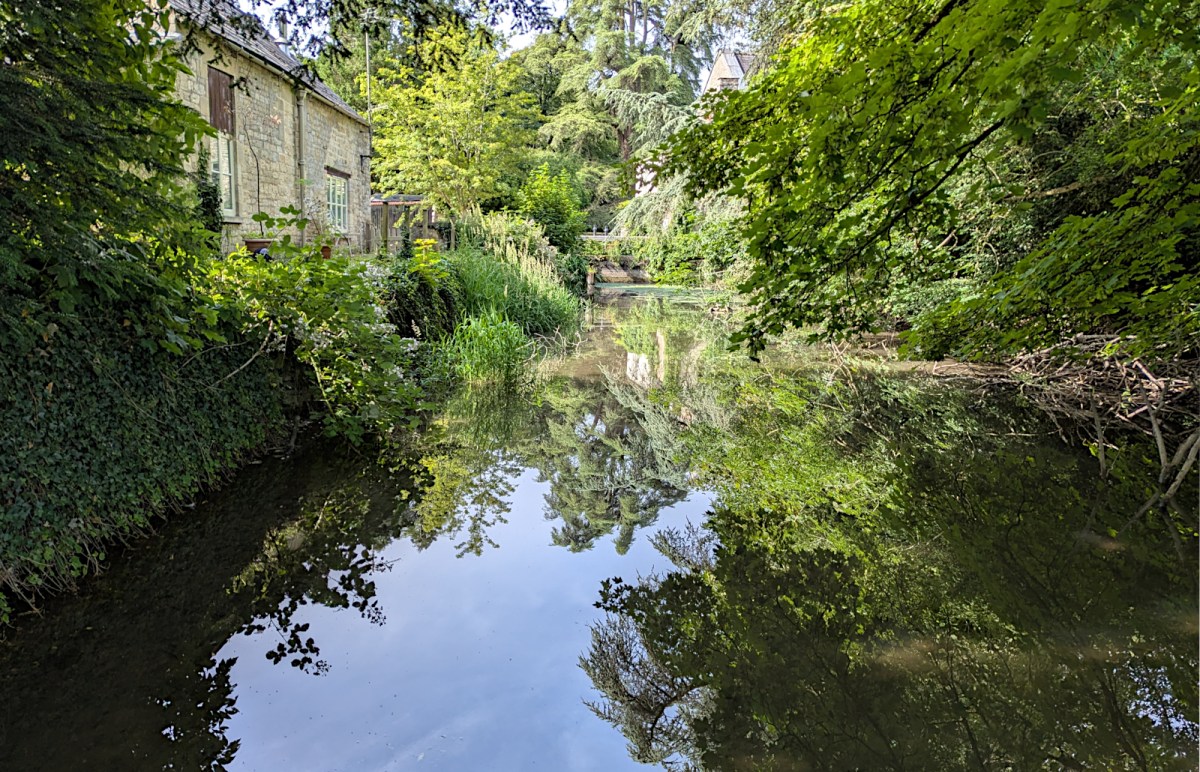
Barton Mill burned down in an unfortunate fire in 1926 and was never rebuilt. Watermills (and windmills) were going out of business at that time as most industries were running on steam power generated by burning coal, or by electrical energy, also usually from coal-fired power stations. Water power and wind power, now seen as green and therefore desirable, were seen in 1926 as ineffective and unable to compete with the more efficient alternatives. This was long before the downsides of fossil fuels were understood.
A place for wildlife
100 years after the fire, in 2026, the mill pond still exists, fed by a sluice gate taking water from the River Churn. The part of the pond in the photo is usually in water all year round, though other parts dry up in many summers, partly because of some silting up near the sluice and partly because the bed of the pond has silted up too, so now the water is shallow enough for yellow flag Iris and other plants to flourish.
There are many birds to be seen in this area too. Mallard ducks breed every spring, there are minnows and probably stickleback in the water and from time to time a kingfisher hunts along the water channels and the pond. Often all you see of the kingfisher is a darting flash of vivid blue. There used to be (and may still be) a pike. A single but very shy little egret hunted around here for the last few years, but this year I’ve seen two of them, probably a breeding pair. And their larger cousin, the grey heron also puts in an appearance now and then.
All life needs is an opportunity
Take any piece of ground, anywhere on Earth, and just leave it alone, life will move in, even if you choose a patch in the Sahara or Antarctica. If you clear a piece of ground somewhere with a reasonable climate and leave it alone, in just a human lifetime you’ll have thriving woodland with a full selection of insects, birds and mammals, and probably reptiles and amphibians too. The experiment has been made many times, sometimes deliberately, sometimes accidentally. If you choose the Sahara or Antarctica you might have to wait a bit longer, but the life forms that are adapted to those extreme conditions will move in eventually. Let’s look at some examples.
Broadbalk wilderness (UK)
A wheat field was deliberately left to revert to a natural state at Rothamsted Research Station in 1882. The land was left unmanaged where before it would have been ploughed and harrowed after harvesting the wheat in late summer and drilled with seed again in the autumn. This field had produced winter wheat every year since 1843, but now the scientists wanted to see what would happen if it was left uncultivated; for the first four years volunteer wheat grew, sparser and weaker year on year and after four years completely choked by weeds.
In 1900 the site was divided into three. One part was left deliberately untouched and gradually reverted to natural woodland; another third was mown annually and maintained as grassland; while the third section had all woody plants removed annually so the land became a natural, open mix of herbaceous plants.
The results have been very interesting and the experiment continues today. Levels of captured carbon are still rising in the soils of the site, nitrogen levels have risen as well. The samples and data are available for study and reanalysis.
Chornobyl (Ukraine)
The Chornobyl nuclear power station accident in 1986 rendered the city and a large area around it unusable. People were evacuated and the most contaminated areas became a restricted zone. Since the accident, time and rainfall have reduced the surface radioactivity considerably and it’s now possible to visit the area. In fact, wildlife has moved into the area from the very beginning and the changing conditions and environment have been studied in depth.
Almost 120 000 people were evacuated following the accident, so activities like farming, hunting, logging, and development ceased over an area of 4,200 km². Forests, wetlands and grasslands have reclaimed abandoned farms and villages; and vegetation grows freely through derelict buildings and former settlements. The pine woodland killed outright by the initial high-dose fallout remains one of the most nuclear-contaminated places on Earth, but even there substantial regrowth has happened. The loss of managed agriculture actually increased habitat diversity, reconnecting landscapes previously fragmented by farmland.
Large mammals rebounded strongly. Long-term census data show abundances of deer, elk, roe deer and wild boar comparable to those in uncontaminated regional nature reserves. Wolves are notably abundant, roughly seven times as common as in comparable reserves. Reintroductions have taken hold including endangered Przewalski’s horses, released in the late 1990s and now ranging freely and breeding. European bison have also been established, while beavers have recolonised rivers, canals and the cooling ponds, in places reversing Soviet-era drainage systems. Lynx, foxes and hundreds of bird species are present too.
However, there’s a mixed message – the abundant populations are due to the absence of humans, yet there remains clear evidence of radiation-induced harm to individuals. Some species are adapting and changing, showing signs of radiation resistance, for example.
Returning woodland (Scotland)
It seems that all that is required to restore native woodland in Scotland is to remove or significantly reduce the presence of Red Deer and sheep. Grazing species eat the young seedlings of trees and strip leaves from saplings. Where deer-fencing is erected to protect an area the tree seedlings survive and soon grow too high for sheep (or even deer) to reach. Birch, rowan, willow, Scots pine and juniper rapidly recolonise in fenced areas.
Other cases are numerous
Similar cases of large scale change include:
The reintroduction of wolves to Yellowstone Park in 1995 suppressed the elk population, allowing willow and aspen to return to riverbanks bringing back beavers and many other species including fish, moose and songbirds.
Oostvaardersplassen in the Netherlands where introducing large grazing animals brought back white-tailed eagles and other species.
Marine protected zones where closing areas to commercial fishing have seen biomass rebound. Examples include cod recovery on the Grand Banks off the east coast of Canada.
Reintroducing pine martens in parts of England shows promise in allowing native red squirrel populations to recover as the introduced grey squirrel population is suppressed.
Identifying common factors
A rule to cover all these examples will be useful. If the limiting, interfering factor(s) can be identified and removed life will usually return naturally – in any situation. Identifying the limiting factor(s) is the key to success. Reintroduction of missing species can also be a helpful part of the process but is often not necessary.
Growth and regeneration in church life
We can (and I suggest we should) think about abundance and limiting factors in church growth as well, what are the main interfering and limiting factors preventing abundant life returning like the ecosystems discussed above?
In the book of Acts, we see church life in its natural state, like a healthy ecosystem. Everything was in balance, there were no dedicated church buildings as we see in our villages, towns and cities today, and there was no hierarchy of management. People followed Jesus’ teachings because they understood the practical, social, and personal benefits. They met together as close friends, almost like family, eating together, working together, helping one another and doing so effortlessly and comfortably. I’m sure there were some difficulties and disagreements, and rough spots here and there, but they were all overcome informally.
Am I claiming there’s no life in church today? No, I’m not saying that. What I am saying (and I want you to hear this clearly) is that there’s a curtailed, limited kind of life in church as usually experienced in the 21st century. Church life is short of something essential; if we are to have fullness the parts that are missing need to be identified and restored. Just as an ecology lacking an important species cannot function as it should, so church culture lacking an important kind of leader cannot function as it should. And just as introducing the grey squirrels from North America unhinged UK woodland ecology, so introducing the wrong kind of leader unhinges church culture.
It’s an important factor we have largely failed to recognise. We need the full range of species Jesus put in place, and we need to remove the ones we introduced. Once you start to see the parallels between church culture and thriving ecosystem ecology, it all becomes very clear and is impossible to unsee. I’ve written a whole series elsewhere about church leadership.
Popes, priests, bishops, paid professionals, structures and hierarchies are not necessary (see Other church leaders 1 and Other church leaders 2). Nor did Jesus teach (or even suggest) that such functions and positions were required or helpful. Over the decades and centuries (two whole millenia now) church has grown more complex, more structured, less flexible and more traditional. It has also branched into many independent subsets. We’ll examine all that in a later article, referring back to earlier posts here on JHM as well.
But for now I’d suggest human management and leadership might be some of the limiting factors in the church environment, and that these have adversely affected the natural life and ecology of church as we know it today. We should consider removing these factors to see what will happen. And if necessary we might try reintroducing the leadership modelled by Jesus, going back to first principles.
Church life, too, will find a way. All it needs is the opportunity!
If you enjoyed this or found it useful, please like, comment, and share below. (If you don’t see those links, click the article’s title above the main photo and they will appear.) Send a link to friends who might enjoy the article or benefit from it – Thanks! My material is free to reuse (see conditions), but a coffee is always welcome and encourages me to write more often!