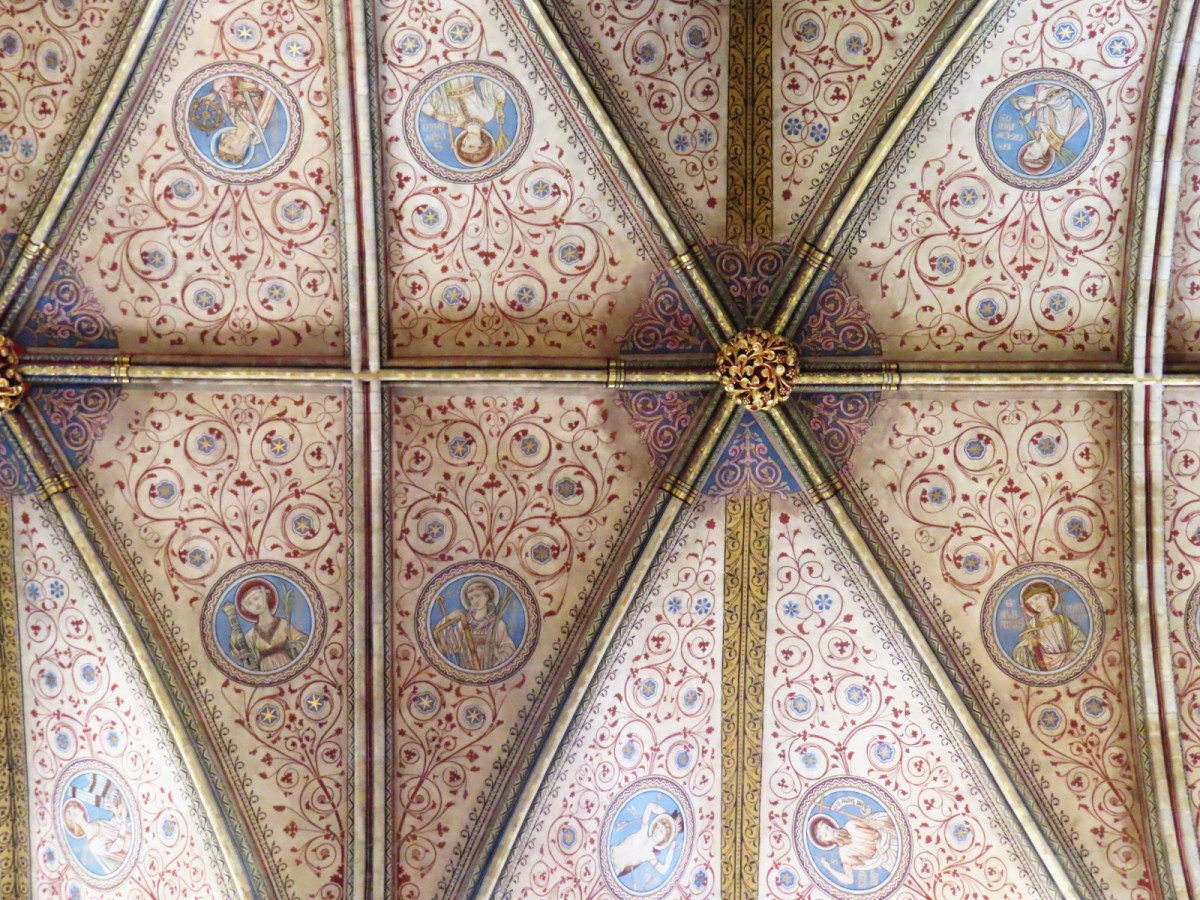
A stunning ceiling
< Previous | Index | Next >
Image of the day – 201
What’s in an image? Sometimes quite a lot, more than meets the eye. I’m posting an image whenever I can.
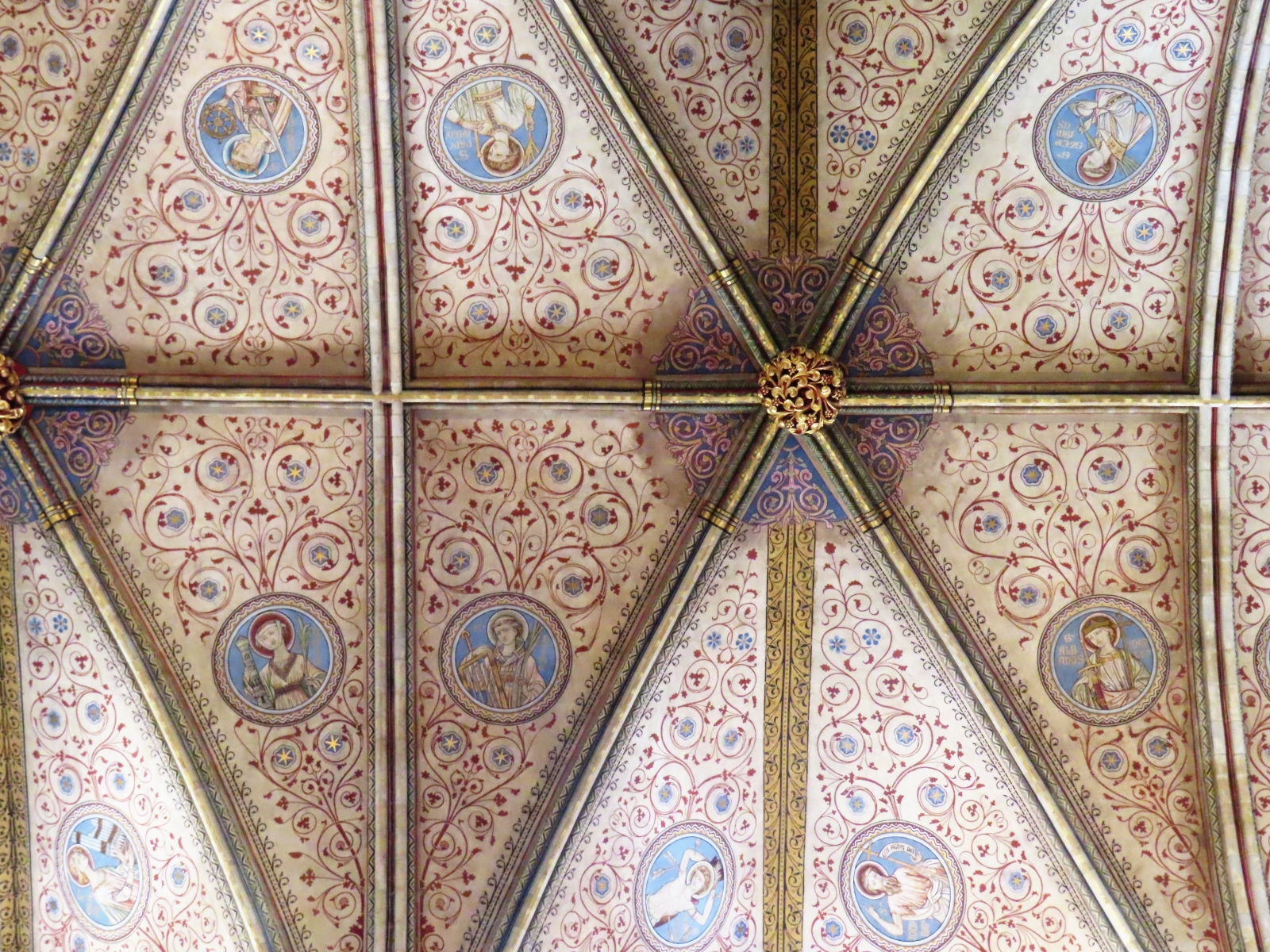
We visited Worcester recently, we wanted to visit the birthplace of the famous composer, Edward Elgar, in a nearby village, but afterwards we drove to the old city, parked the car, and went to see the famous cathedral. There was a service underway so we couldn’t visit the nave, but today’s photo shows a section of ceiling between the choir and the altar retaining stunningly beautiful medieval-style painted decoration. The stone vaulting was built in the 14th century and the decoration restored in Victorian times.
Beautiful buildings
Up until Henry VIII’s split from the Catholic Church, some of the most beautiful buildings in Britain were the old monasteries and abbeys, all of them Catholic and most of them destroyed and/or sold off to Henry’s associates and friends. A few centuries later Oliver Cromwell’s men caused further loss and damage, pulling down statues and rood screens, whitewashing painted masonry, and more.
Here are a few of the ruined treasures I’ve seen with my own eyes and wished I might have seen before their destruction took place: Cirencester Abbey, Fountains Abbey, Malmesbury Abbey, Tintern Abbey, Whitby Abbey. See some of these and many more at English Heritage.
But here in Worcester Cathedral some of that splendour is still to be seen, and the ceiling is just a part of it. We can make good guesses about some of the losses from documents, drawings and paintings created by people who had seen some these places before they were destroyed. Past structures can be partially imagined as well, reconstructed in our minds from fragmentary records glued together by informed thinking.
This can be extended to the deeper past as well, we can imagine Roman Cirencester (or Corinium as it was known during that era), and know small parts of it quite well based on excavated remains and reconstructions.
And in our own day?
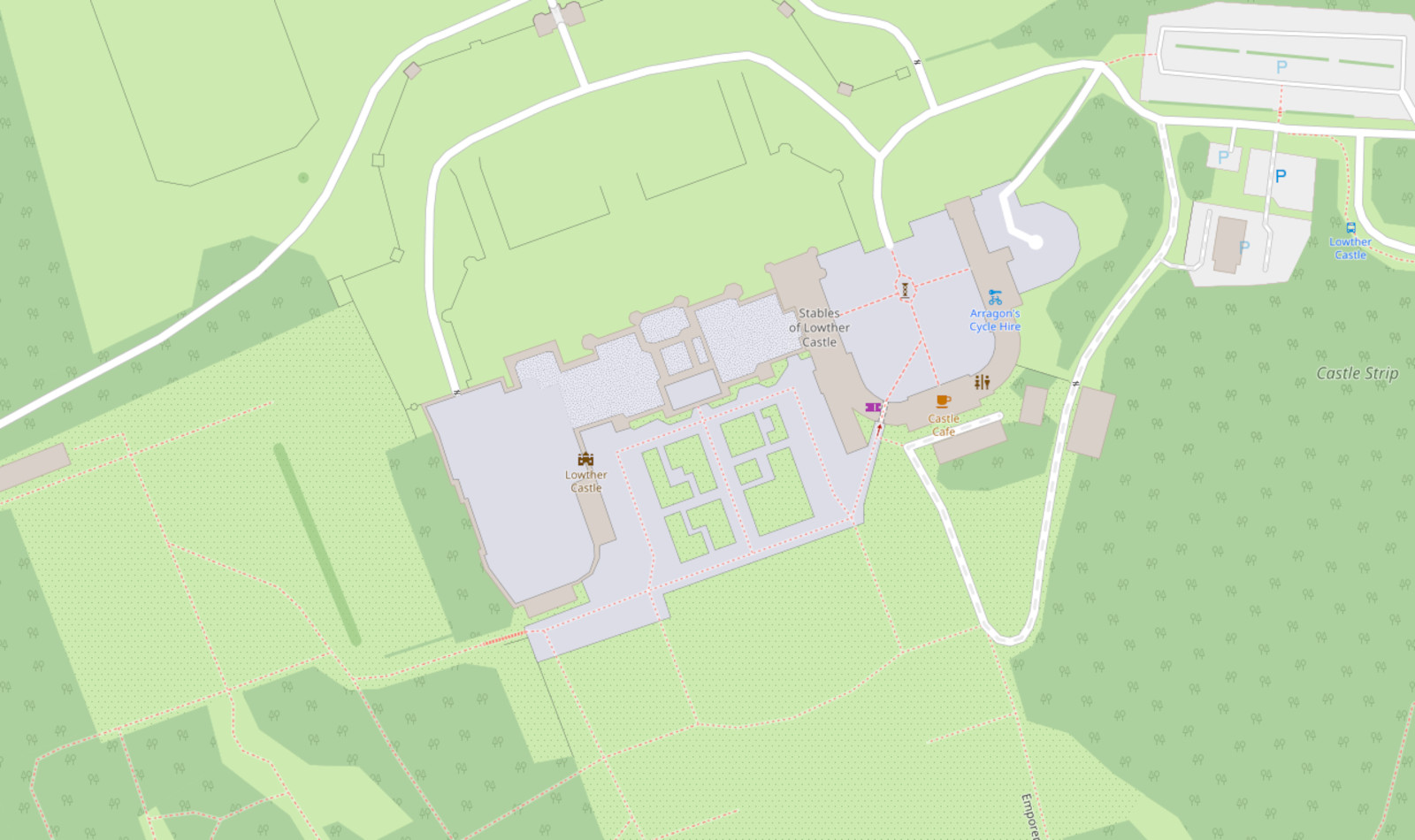
What parts of our own early 2000s architecture and artworks will be lost before future generations have an opportunity to admire and enjoy them? We do have one advantage over past times, and that’s our ability to photograph and video structures and artworks before they are lost. This was emphasised for me when Donna and I visited the Lowther Estate during our recent family holiday in the Lake District. We drove east from our holiday house in Windermere to visit this very grand old palace, built in 1806 to replace Lowther Hall which had suffered a fire and was in a poor state of repair.
The days of grand, old houses were passing and Lowther Castle was no exception. The grounds were used for tank training during World War 2 and the beautiful and extensive gardens decayed and were later used to grow spruce for timber. The roof of the building was removed along with many of the internal walls. The two photos below show part of the interior more than 100 years ago and as it appears today.
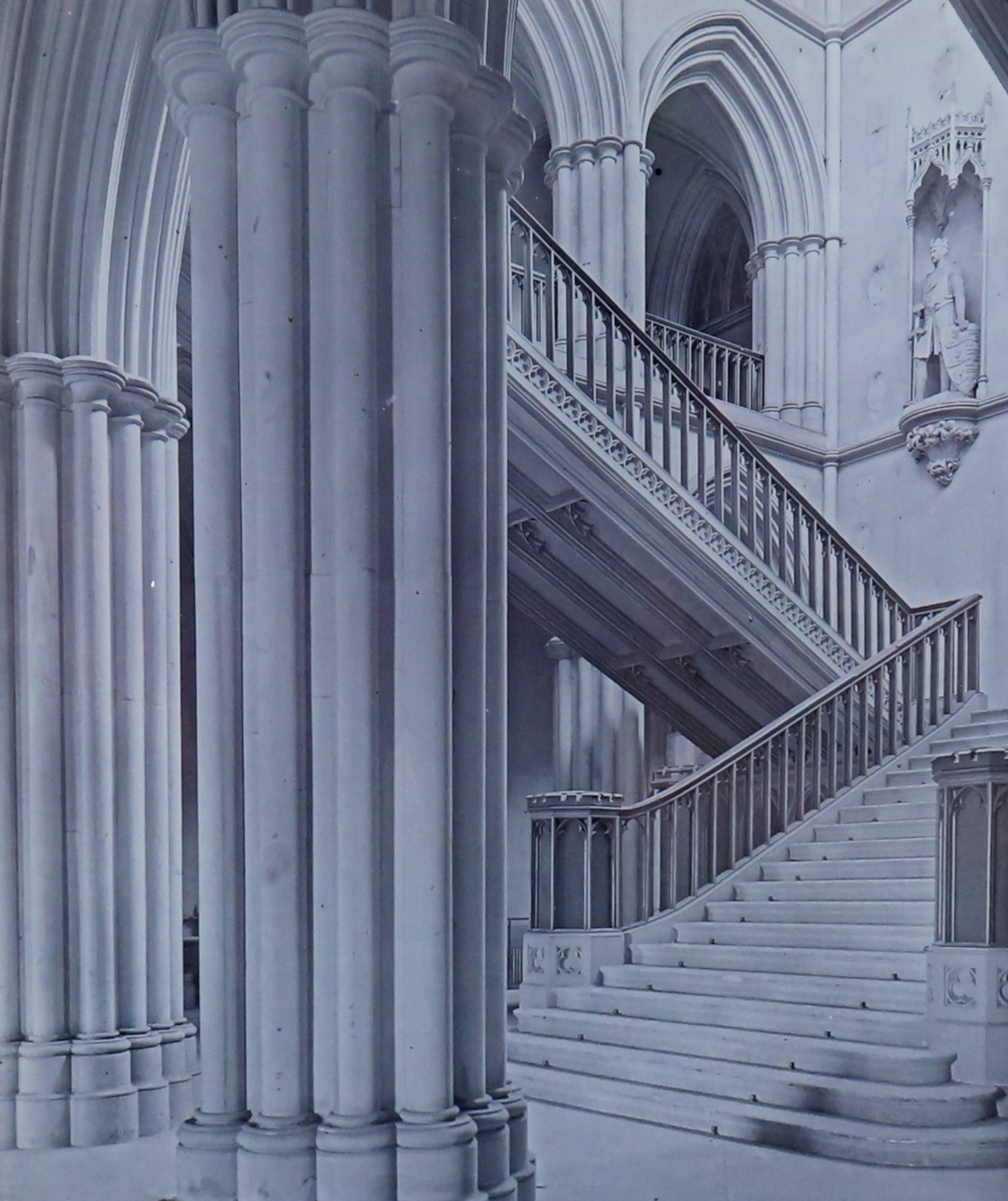
These images represent similar parts of the building. I can’t claim they’re correctly matched, but they are close. The top photo was taken before the roof was removed and the interior structures demolished.
Click the photos to expand them.
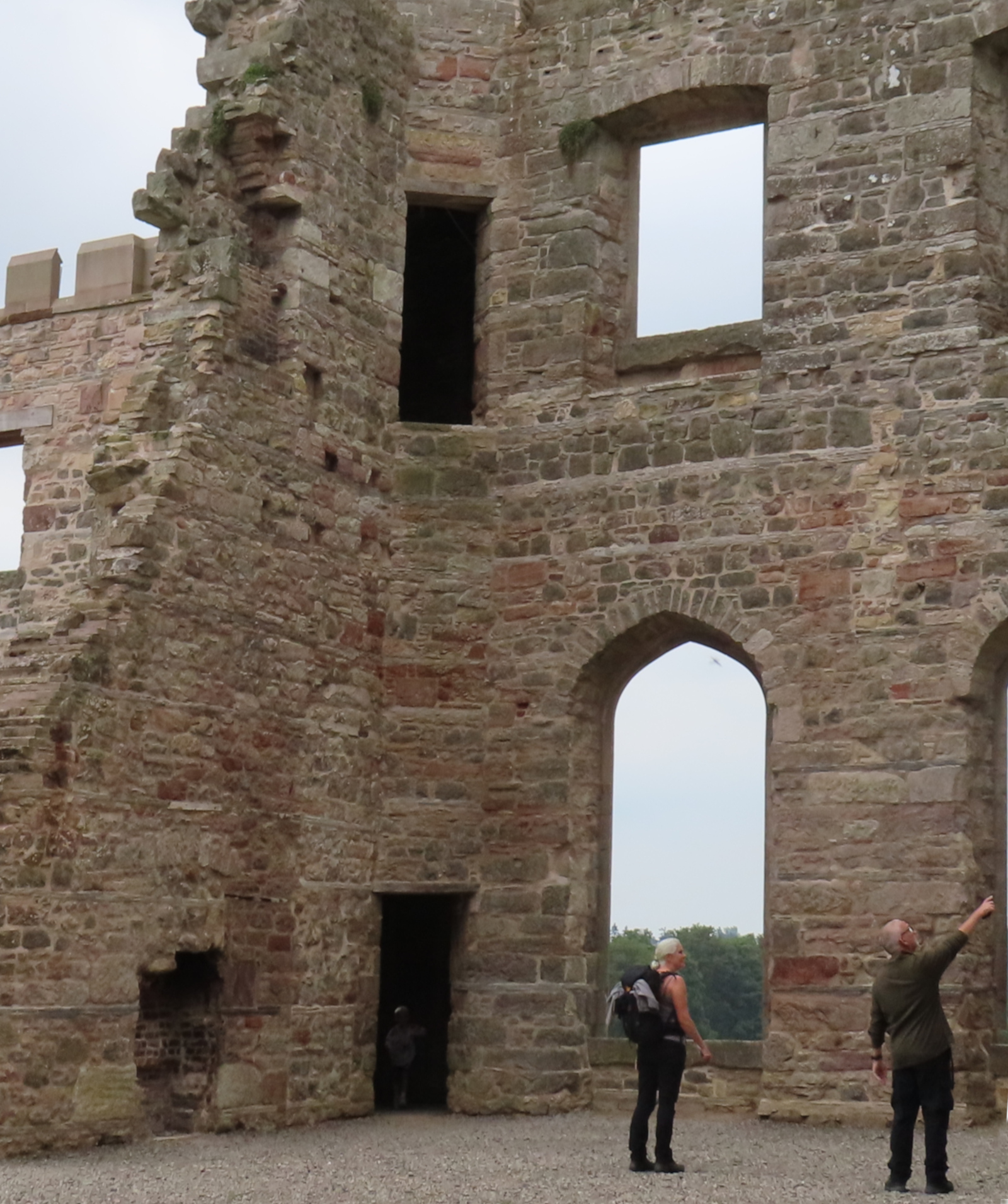
The lower photo shows the area as it is today. These images allow us to compare two instants in time, one before the destruction and one afterwards. In a sense we can see what has changed. Technology moves on, the first image lacks colour. For more recent changes we can compare colours, movement, sound and more. So the further back in time we go, the less full and accurate the information tends to be.
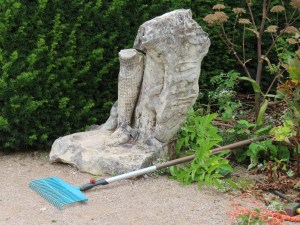
There’s one more detail worth mentioning. If you expand the first photo and look at the upper right, you’ll see a statue, probably of William Lowther, 1st Earl of Lonsdale (1757–1844), the man who had the present castle built between 1806 and 1814. He’s depicted as a knight in chain mail with a large sword. A small piece of that statue survives and today stands incongruously in the gardens outside the ruined building. This is one of the few details of the interior still visible to visitors today.
It seems extraordinary today that such an amazing building would be deliberately destroyed, but death duties often made it impossible for stately homes to continue in occupation and that was the case with Lowther Castle. So many lovely old houses were demolished for the same reason during the early 20th century. It’s one of the tragedies of that period of British history.
But there’s much to celebrate, too. The National Trust and English Heritage were set up to save, restore and conserve what remains; and without them we would have lost so, so much more. Let’s remember, too, that we each live our own lives and there are so many ways we can care for the people and places we value. Surely our place in this world, individually and together, is to do as much good and as little harm as possible in every aspect of our daily lives. So enjoy today to the utmost, care for the people you meet and the places you go, focus on justice, peace and beauty and you won’t go far wrong.
See also:
- Edward Elgar – Wikipedia
- English Heritage – Wikipedia
- Lowther Castle – Wikipedia
- National Trust – Wikipedia
- OpenStreetMap – Website
- Worcester Cathedral – Wikipedia
< Previous | Index | Next >
You might also like:
Useful? Interesting?
If you enjoyed this or found it useful, please like, comment, and share below. (If you don’t see those links, click the article’s title above the main photo and they will appear.) Send a link to friends who might enjoy the article or benefit from it – Thanks! My material is free to reuse (see conditions), but a coffee is always welcome and encourages me to write more often! 
Share this:


