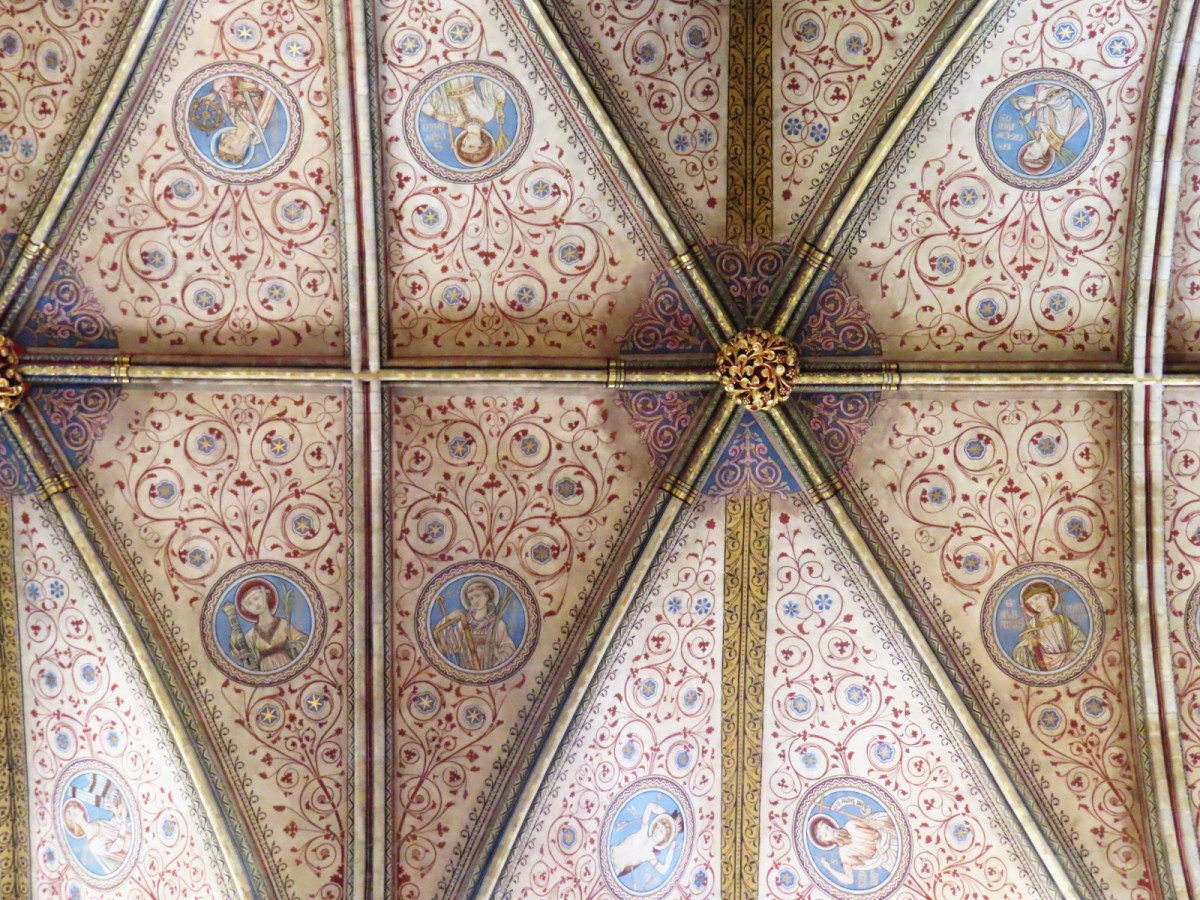
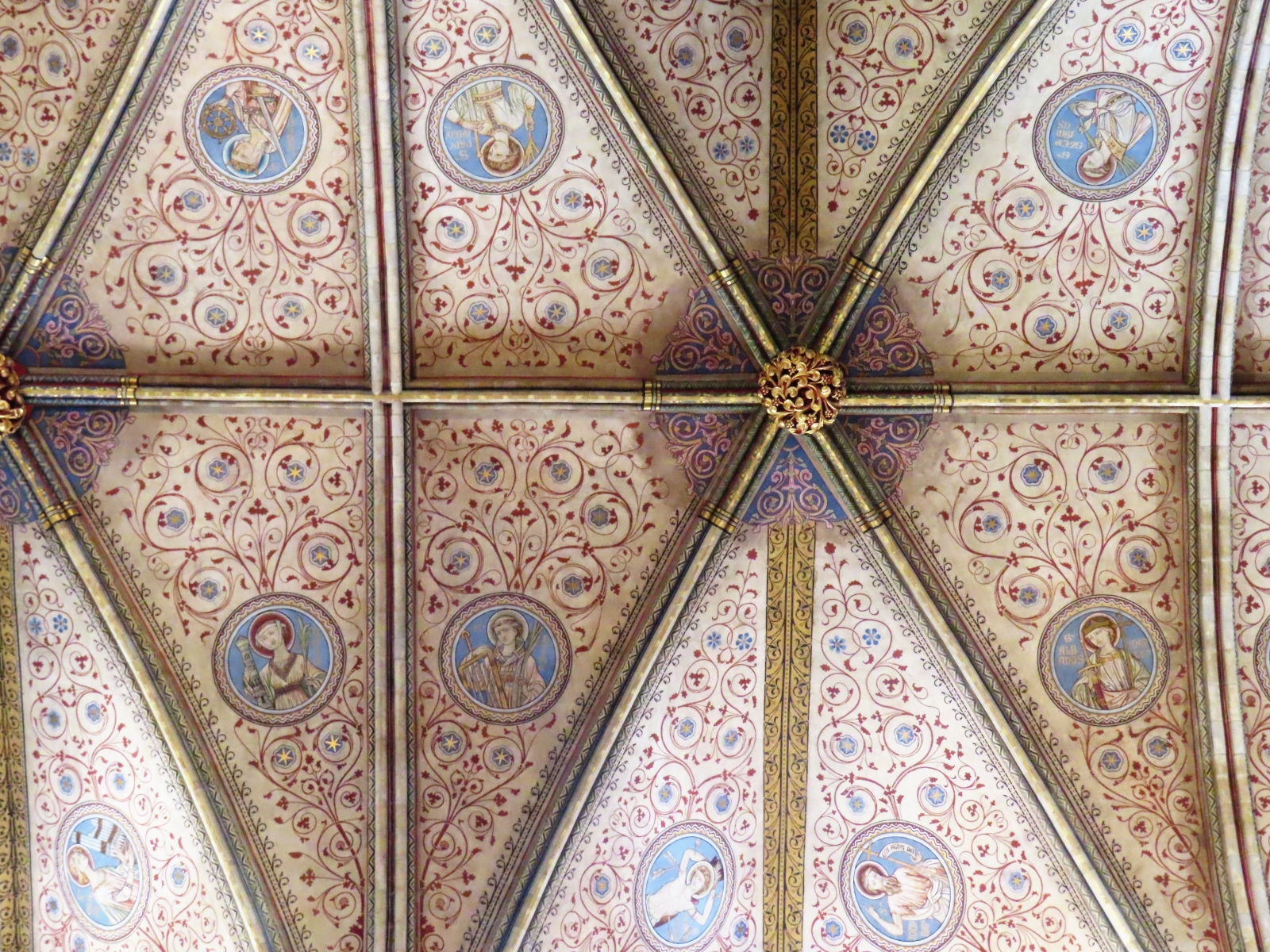
A stunning ceiling

We went to see Worcester’s famous cathedral. There was a service underway so we couldn’t visit the nave, but today’s photo shows a section of ceiling between the choir and the altar retaining stunningly beautiful medieval-style painted decoration.

A stunning ceiling

< Previous | Index | Next >

Image of the day – 201

What’s in an image? Sometimes quite a lot, more than meets the eye. I’m posting an image whenever I can.
Click thumbnails to enlarge

We visited Worcester recently, we wanted to visit the birthplace of the famous composer, Edward Elgar, in a nearby village, but afterwards we drove to the old city, parked the car, and went to see the famous cathedral. There was a service underway so we couldn’t visit the nave, but today’s photo shows a section of ceiling between the choir and the altar retaining stunningly beautiful medieval-style painted decoration. The stone vaulting was built in the 14th century and the decoration restored in Victorian times.

Beautiful buildings

Up until Henry VIII’s split from the Catholic Church, some of the most beautiful buildings in Britain were the old monasteries and abbeys, all of them Catholic and most of them destroyed and/or sold off to Henry’s associates and friends. A few centuries later Oliver Cromwell’s men caused further loss and damage, pulling down statues and rood screens, whitewashing painted masonry, and more.

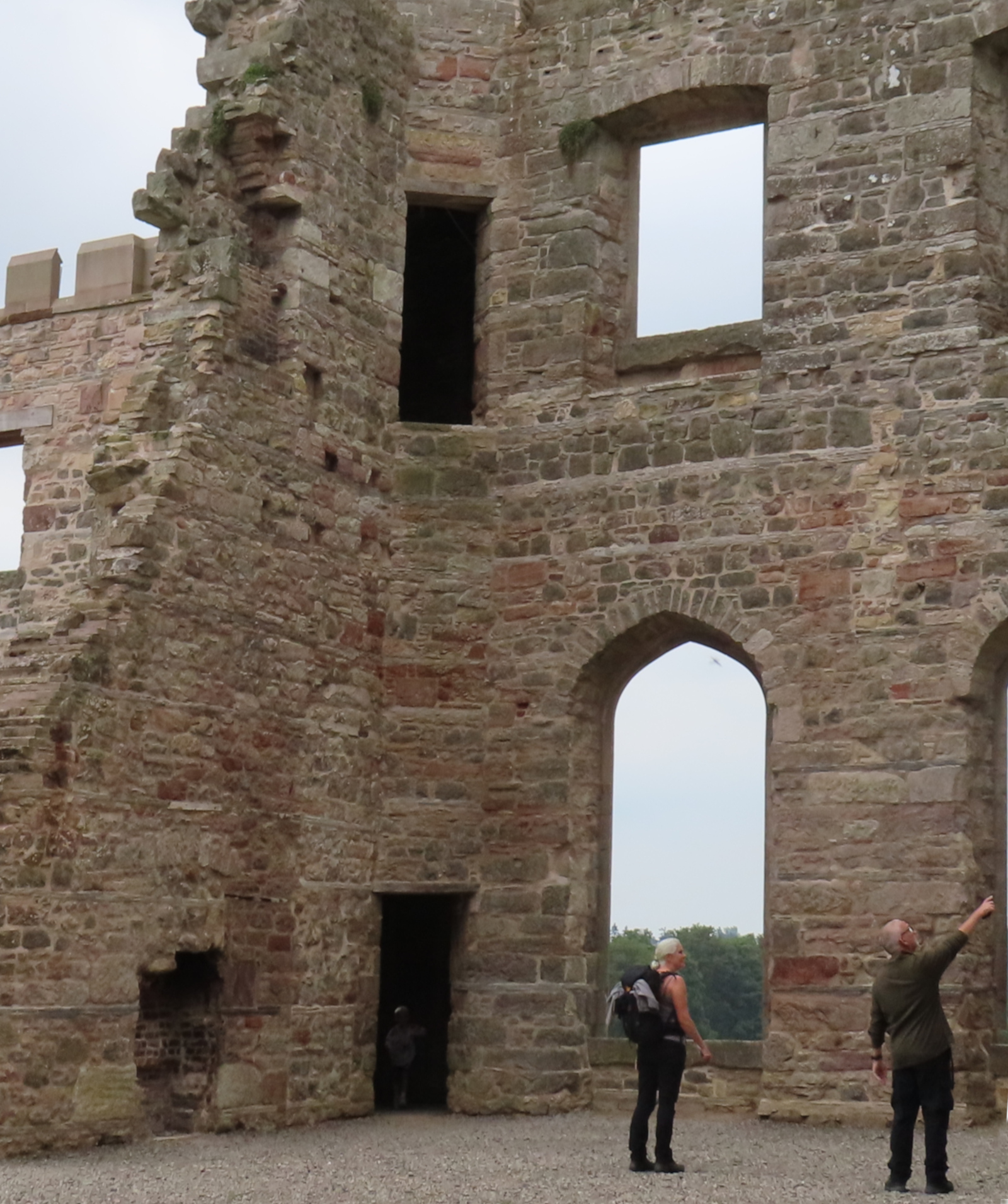
Here are a few of the ruined treasures I’ve seen with my own eyes and wished I might have seen before their destruction took place: Cirencester Abbey, Fountains Abbey, Malmesbury Abbey, Tintern Abbey, Whitby Abbey. See some of these and many more at English Heritage.

But here in Worcester Cathedral some of that splendour is still to be seen, and the ceiling is just a part of it. We can make good guesses about some of the losses from documents, drawings and paintings created by people who had seen some these places before they were destroyed. Past structures can be partially imagined as well, reconstructed in our minds from fragmentary records glued together by informed thinking.

This can be extended to the deeper past as well, we can imagine Roman Cirencester (or Corinium as it was known during that era), and know small parts of it quite well based on excavated remains and reconstructions.

And in our own day?

Lowther Estate

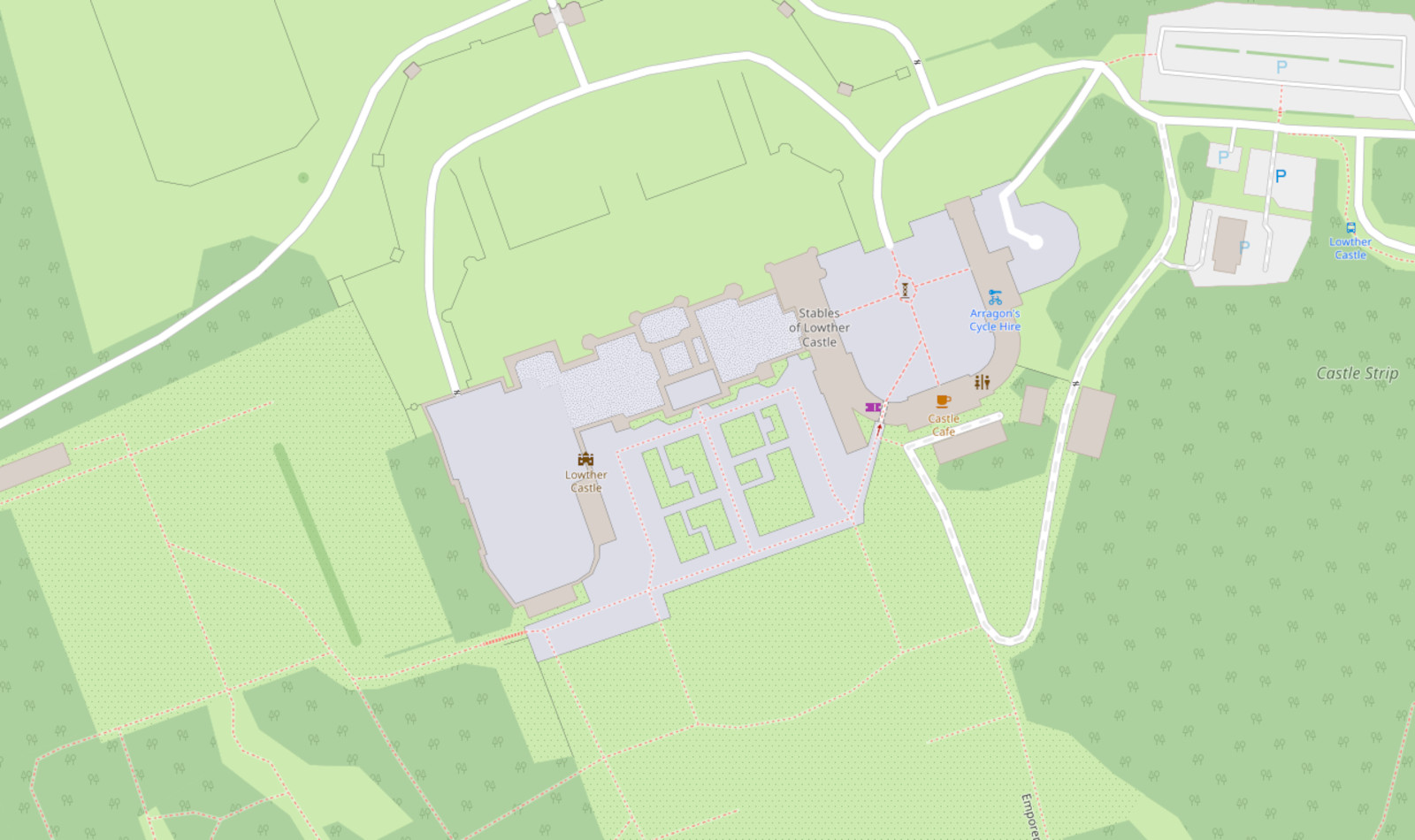
What parts of our own early 2000s architecture and artworks will be lost before future generations have an opportunity to admire and enjoy them? We do have one advantage over past times, and that’s our ability to photograph and video structures and artworks before they are lost. This was emphasised for me when Donna and I visited the Lowther Estate during our recent family holiday in the Lake District. We drove east from our holiday house in Windermere to visit this very grand old palace, built in 1806 to replace Lowther Hall which had suffered a fire and was in a poor state of repair.

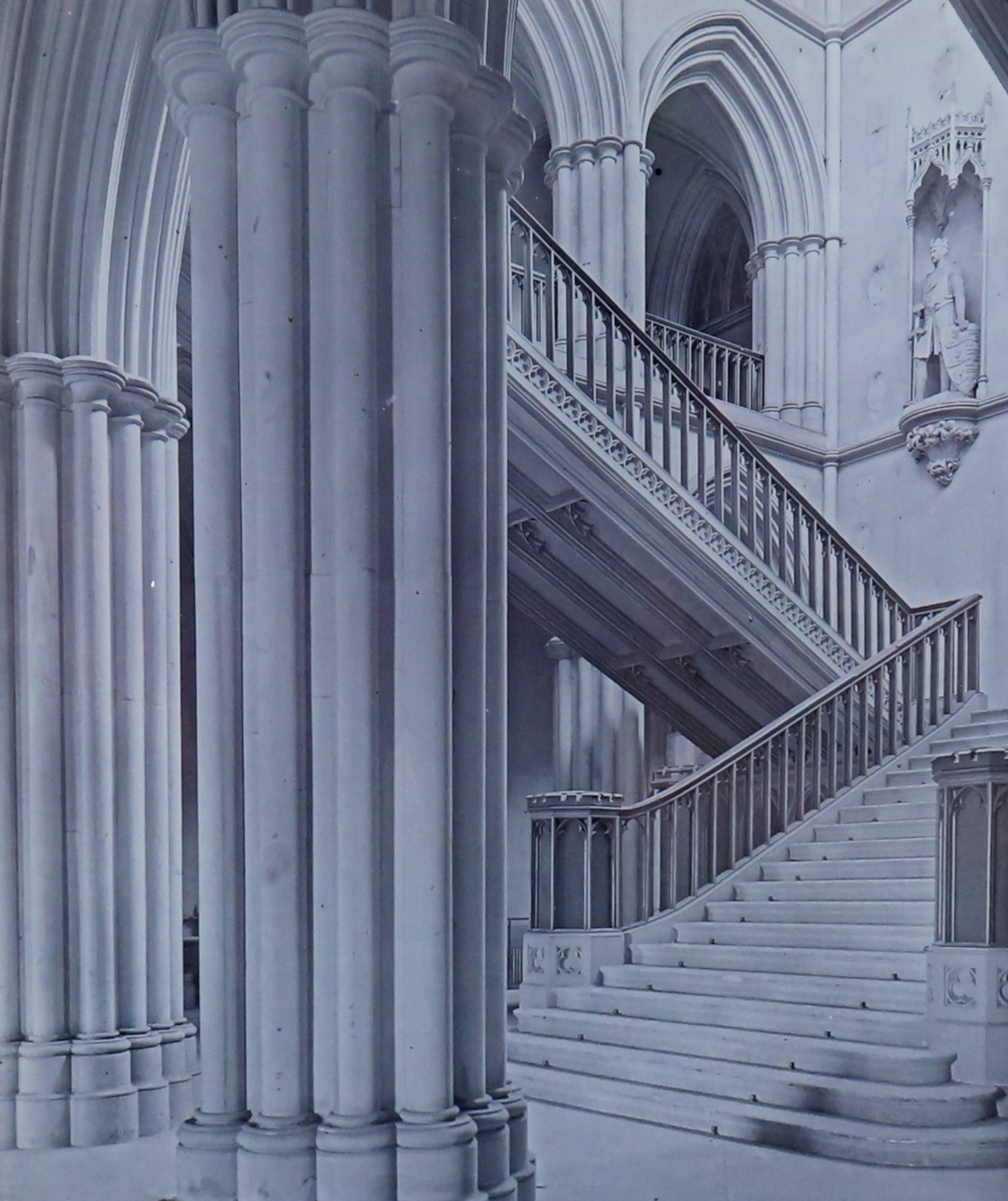
The days of grand, old houses were passing and Lowther Castle was no exception. The grounds were used for tank training during World War 2 and the beautiful and extensive gardens decayed and were later used to grow spruce for timber. The roof of the building was removed along with many of the internal walls. The two photos below show part of the interior more than 100 years ago and as it appears today.

These images represent similar parts of the building. I can’t claim they’re correctly matched, but they are close. The top photo was taken before the roof was removed and the interior structures demolished.

Click the photos to expand them.

The lower photo shows the area as it is today. These images allow us to compare two instants in time, one before the destruction and one afterwards. In a sense we can see what has changed. Technology moves on, the first image lacks colour. For more recent changes we can compare colours, movement, sound and more. So the further back in time we go, the less full and accurate the information tends to be.

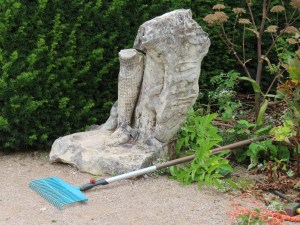
Remains of the statue

There’s one more detail worth mentioning. If you expand the first photo and look at the upper right, you’ll see a statue, probably of William Lowther, 1st Earl of Lonsdale (1757–1844), the man who had the present castle built between 1806 and 1814. He’s depicted as a knight in chain mail with a large sword. A small piece of that statue survives and today stands incongruously in the gardens outside the ruined building. This is one of the few details of the interior still visible to visitors today.

It seems extraordinary today that such an amazing building would be deliberately destroyed, but death duties often made it impossible for stately homes to continue in occupation and that was the case with Lowther Castle. So many lovely old houses were demolished for the same reason during the early 20th century. It’s one of the tragedies of that period of British history.

But there’s much to celebrate, too. The National Trust and English Heritage were set up to save, restore and conserve what remains; and without them we would have lost so, so much more. Let’s remember, too, that we each live our own lives and there are so many ways we can care for the people and places we value. Surely our place in this world, individually and together, is to do as much good and as little harm as possible in every aspect of our daily lives. So enjoy today to the utmost, care for the people you meet and the places you go, focus on justice, peace and beauty and you won’t go far wrong.

See also:

< Previous | Index | Next >

You might also like:

Useful? Interesting?

If you enjoyed this or found it useful, please like, comment, and share below. (If you don’t see those links, click the article’s title above the main photo and they will appear.) Send a link to friends who might enjoy the article or benefit from it – Thanks! My material is free to reuse (see conditions), but a coffee is always welcome and encourages me to write more often!

Cirencester at night

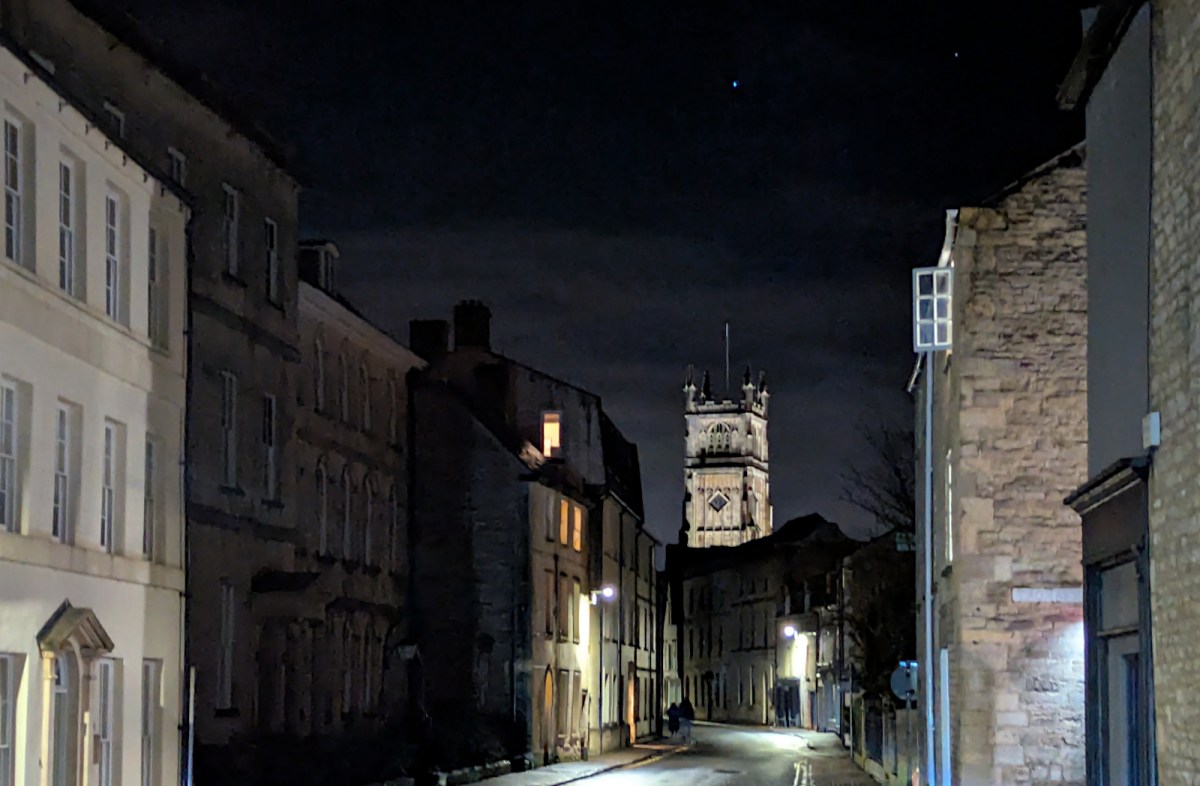
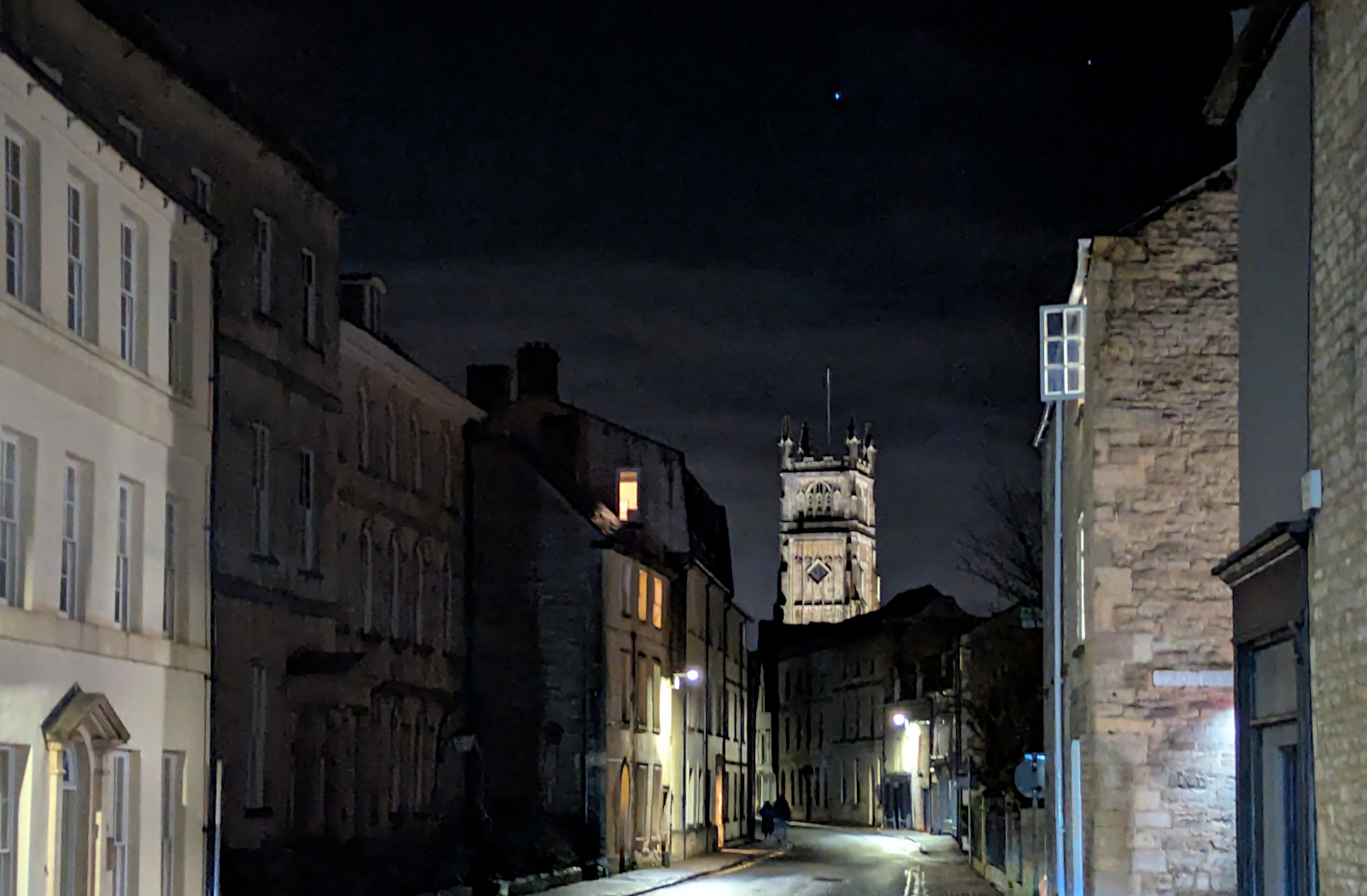
We are looking more or less along what was once a Roman street in old Corinium. Although it winds left and right here and there, nearly 2000 years ago it would have run almost entirely straight.

Jupiter and the church tower

< Previous | Index | Next >

Image of the day – 191

What’s in an image? Sometimes quite a lot, more than meets the eye. I’m posting an image every few days.

Jupiter and the church tower

The town’s streetlights illuminate the lovely old architecture in Dollar Street, and Jupiter is bright enough to see high above the church tower’s flag pole. Click the thumbnail to enlarge it and you’ll also see a star a little further to the right, almost over the open window. This is Saiph, the bottom-left star of Orion. If you’re looking at the sky from the southern hemisphere Saiph will be Orion’s top-right star and Jupiter will be very low in the sky.

Looking south

We are looking more or less along what was once a Roman street in old Corinium. Although it winds left and right here and there, nearly 2000 years ago it would have run almost entirely straight, part of the Roman military road between Glevum (Gloucester) and Calleva (Silchester) through the local Iron Age kingdom of the Dobunni whose capital was about four miles to the north of Corinium in what is now the village of Bagendon. Behind you, in this view, the road continued north-west to Glevum where there was a military fortress. Some British tribes were allies of the Romans, including the local Dobunni. Some tribes opposed the Romans and their conquest of these islands. In the south-east direction the same Roman road (Ermin Way) passed through the town’s Forum, past the Basilica and made its way to Calleva to the south and east.

See also:

< Previous | Index | Next >

You might also like:

Useful? Interesting?

If you enjoyed this or found it useful, please like, comment, and share below. (If you don’t see those links, click the article’s title above the main photo and they will appear.) Send a link to friends who might enjoy the article or benefit from it – Thanks! My material is free to reuse (see conditions), but a coffee is always welcome and encourages me to write more often!
A large bookshop

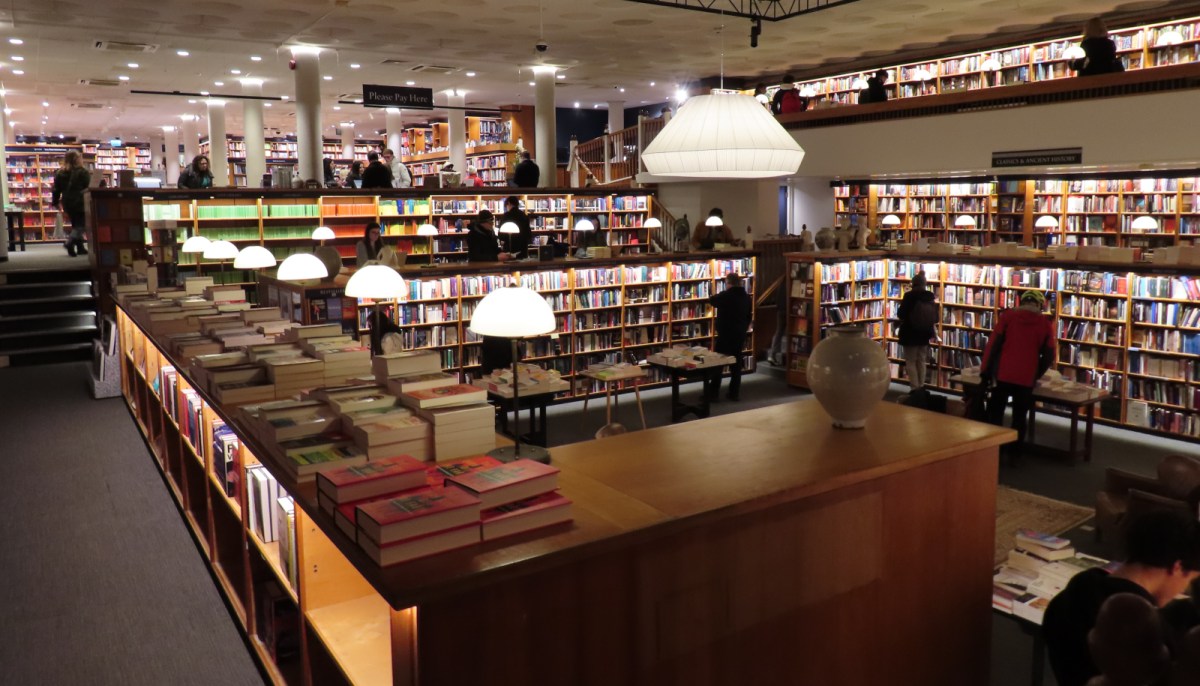
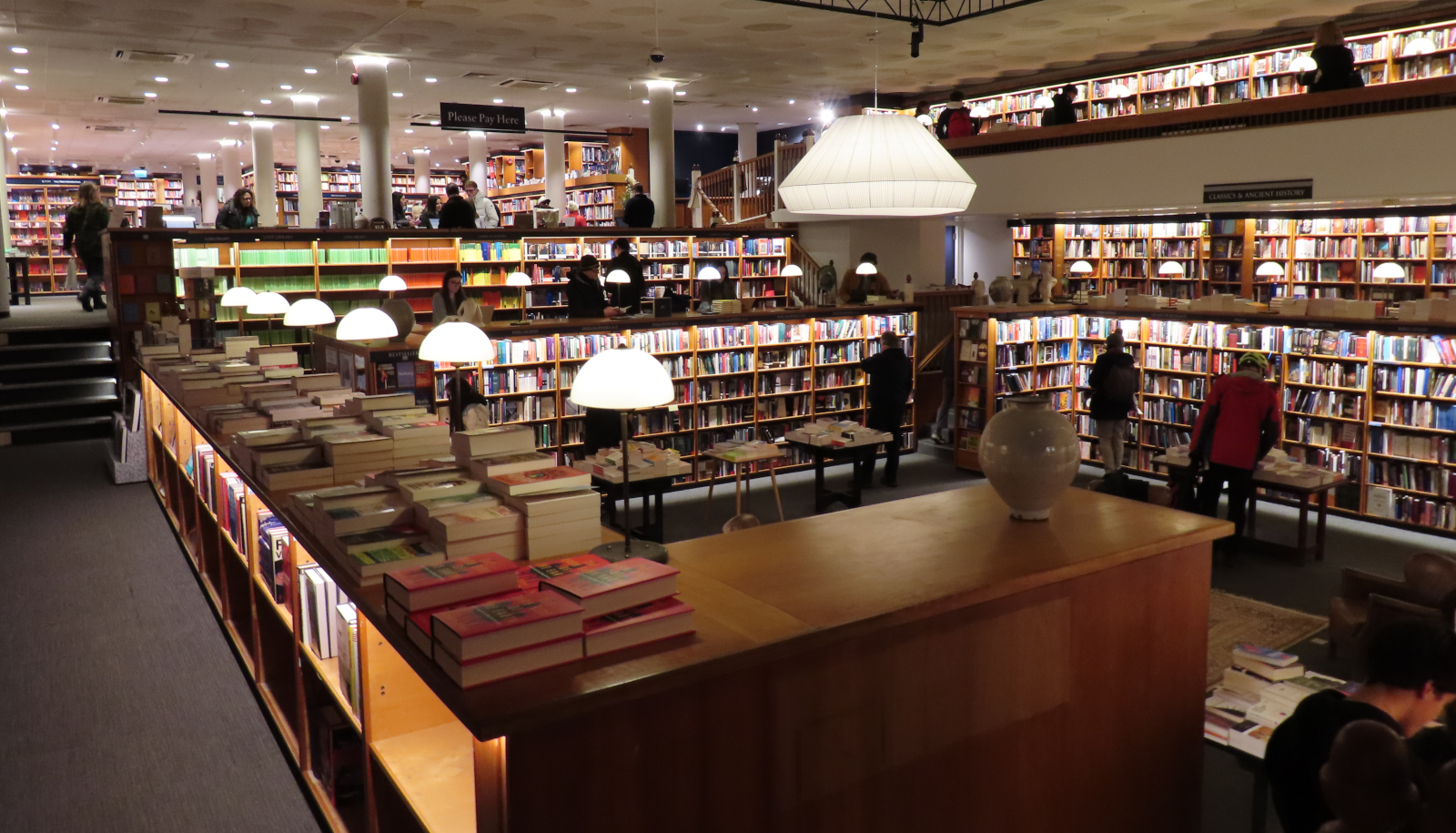
The basement, shown in the photo, is known as The Norrington Room and has five kilometres of bookshelves in it, containing 200 000 books.

The Norrington Room

< Previous | Index | Next >

Image of the day – 190

What’s in an image? Sometimes quite a lot, more than meets the eye. I’m posting an image every few days.

The Norrington Room
(Click to enlarge)

The photo shows the basement of Blackwell’s Bookshop in the centre of Oxford, the famous university town in the UK.

Blackwell’s Bookshop in Oxford is huge

You can get a good idea of size from the photo, there are four or five floors above the basement, large but not as open; the upper floors are smaller and have no long views like this one as the line of sight is broken up by countless units of shelving.

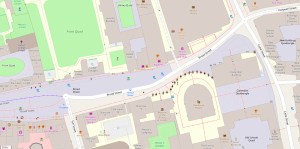
Map centred on Blackwell’s

This was where the original Blackwell’s bookshop was, but it has grown larger and larger over the years. The basement, shown in the photo, is known as The Norrington Room and has five kilometres of bookshelves in it, containing 200 000 books. Blackwell’s in Oxford also hosts a Caffè Nero on the first floor. The map (opens in a new tab, click to resize and drag it) is centred on the bookshop in the very heart of Oxford.

Some history

The current bookshop in Broad Street opened in 1879, though it was much smaller in those days, at a mere 4 m square. The first bookshelf unit is still in use, at the top of the stairs to the first floor. The shop soon expanded, incorporating the cellar and the first floor as well as several adjacent shops. There was an earlier Blackwell’s bookshop, also in Oxford, that opened in 1846.

Blackwell’s had an online presence from 1995, selling books worldwide. It also opened retail outlets in many other cities and towns across the UK. As a company it remained independent until the business was bought in 2022 by Waterstones, another major British book retailer.

See also:

< Previous | Index | Next >

You might also like:

Useful? Interesting?

If you enjoyed this or found it useful, please like, comment, and share below. (If you don’t see those links, click the article’s title above the main photo and they will appear.) Send a link to friends who might enjoy the article or benefit from it – Thanks! My material is free to reuse (see conditions), but a coffee is always welcome and encourages me to write more often!
The old Woolmarket

The idea of a wool market is an appropriate one for the town; in medieval times the wool trade was of high importance in the Cotswolds where a series of wool towns developed, of which Cirencester was the largest.

< Previous | Index | Next >

Image of the day – 184

What’s in an image? Sometimes quite a lot, more than meets the eye. I’m posting an image every few days.

Woolmarket (click images to enlarge)

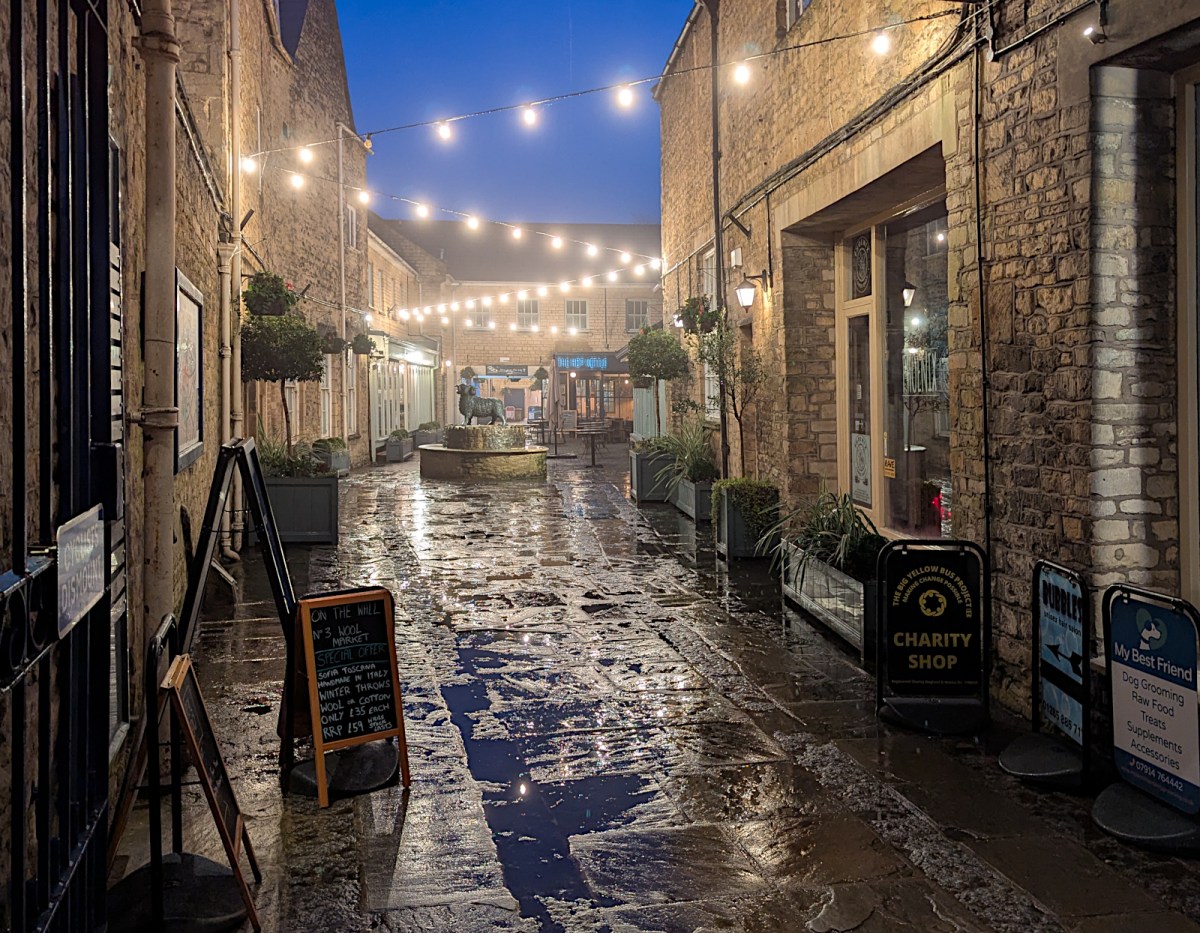
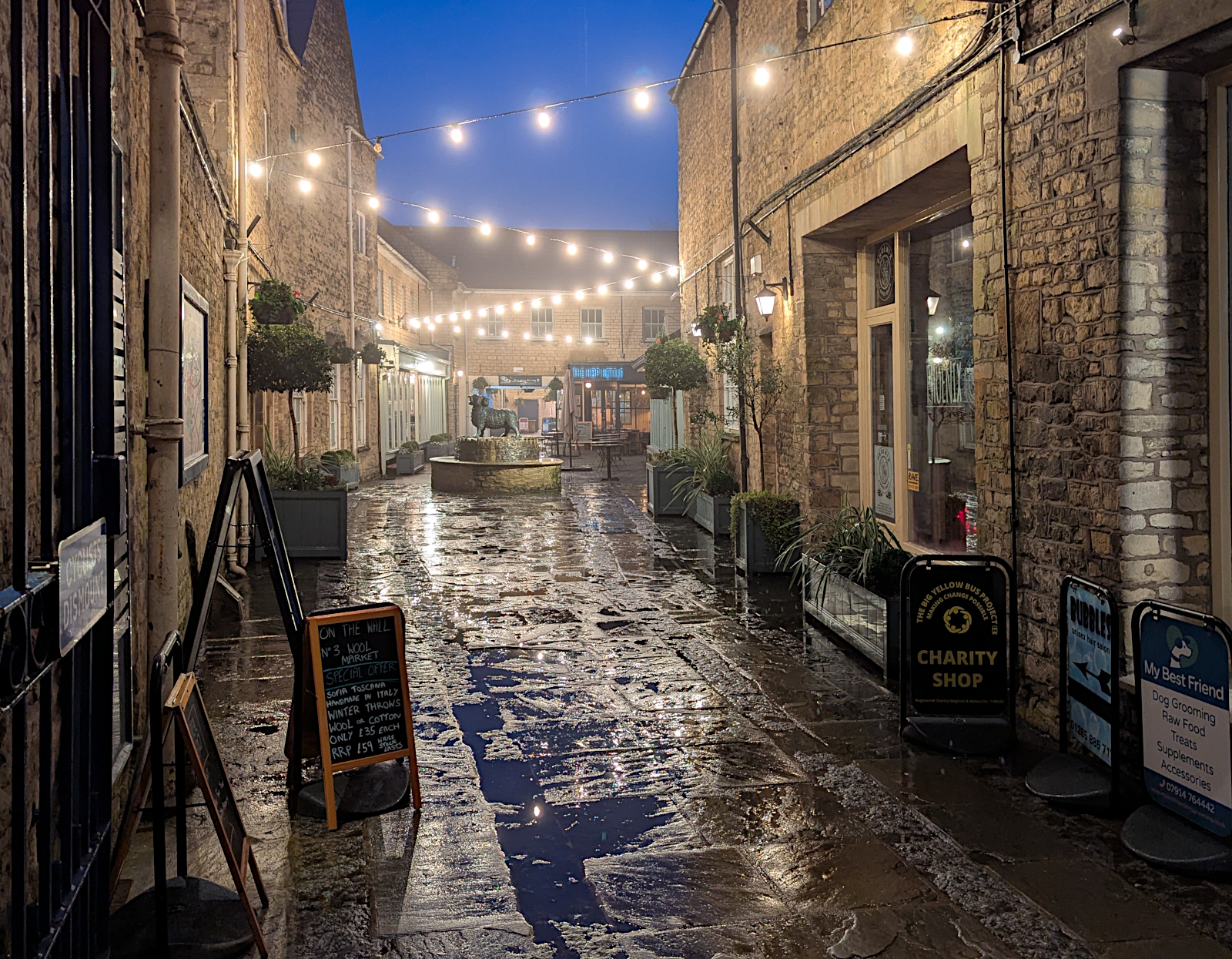
The Woolmarket is a small shopping area between Dyer Street and The Waterloo in Cirencester. It looks old, it’s presented as old, but in fact it’s a relatively recent development, created in the 1980s and further improved in 1996. The idea of a wool market is an appropriate one for the town; in medieval times the wool trade was of high importance in the Cotswolds where a series of wool towns developed, of which Cirencester was the largest. The town’s Parish Church of John Baptist was built and extended in part with money from the wool trade as was the old Abbey before it.

Many of the Georgian frontages around the centre of the town began their lives as the homes of wealthy wool merchants. They are now mostly offices or flats, and sometimes have the ground floors replaced by retail businesses with large windows for display. But look up and you’ll see right away two or three floors of Georgian architecture above those ground floors.

The photo

I took this photo on a wet evening on 18th January 2026, the paving slabs of natural stone glistening in the overhead lighting and the more distant buildings softened by descending mist as the damp atmosphere cooled down following sunset. It’s very typical of January in the Cotswolds. Sometimes we get snow, and heavy frosts are possible, but often it’s just a chill damp with muddy fields and foggy mornings.

The sheep statue

In the middle of the photo, look into the middle distance and you may spot the statue of a traditional Cotswold Lion sheep. This famous old breed was once widespread across a huge expanse of the Cotswolds, though now it is a rarity.

See also:

< Previous | Index | Next >

Useful? Interesting?

If you enjoyed this or found it useful, please like, comment, and share below. (If you don’t see those links, click the article’s title above the main photo and they will appear.) Send a link to friends who might enjoy the article or benefit from it – Thanks! My material is free to reuse (see conditions), but a coffee is always welcome and encourages me to write more often!
You might also like:

Pear-shaped

Teaching is not a bad thing, it’s an essential thing. A well-balanced community living in Jesus’ presence needs to receive truth from apostolic, prophetic, evangelistic, pastoral and teaching gifts.

A book by Graham Pulkingham

4 – developing faith

< Previous | Index | Next >

Click images to enlarge

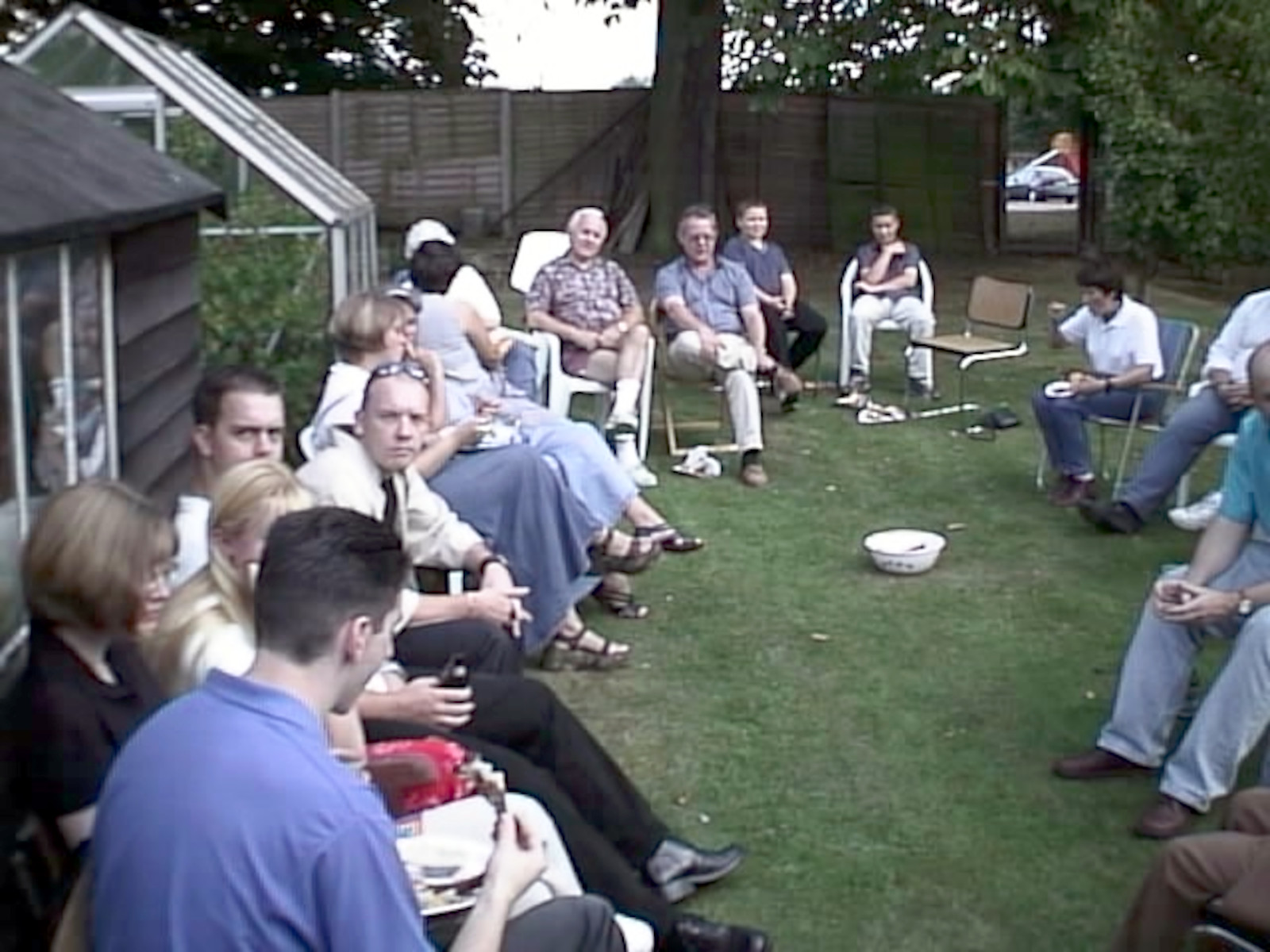
Arrival of Alan and Dorothy

A new family moved into the village and began to advise and work with Tony, Faith, Paul, Jenny and some of our friends from the next village, Claverham. During this time Judy and I began to feel that things were going a bit off-track. Judy actually wanted nothing to do with the new situation, I decided to go along to the meetings fairly often to keep in touch with our friends. I should add, right at the outset, that I don’t think there was any intention to derail the work that Father was doing amongst us, but rather to enrich it and bring additional knowledge and experience to the mix. But unintentionally this had the effect of changing track with a new focus on teaching that had not been there before. Teaching had never been a notable part of our meetings, we had always been guided mainly by prophecy, and by what we read in the Bible. We were exposed to teaching when we went to larger meetings (the pre-crusade rallies in Portishead for example and visits to Pip’n’Jay in Bristol or the meetings at Post Green), and from the popular books that were doing the rounds (books by Graham Pulkinhgham, Michael Harper, Colin Urquhart, David Watson and others) and we did a small amount of teaching when we were invited to visit local churches as ‘Fountain’. But in our own weekly and daily meetings there was little to no teaching. We were growing and learning together in our exciting faith journey. It was wonderful and extraordinary while it lasted.

But now Alan and Dorothy provided new songs (some of them truly excellent) and Alan taught regularly about how and when and where the meetings should take place as well as material about Jewish customs, feasts and celebrations. Alan and Dorothy came from a background of small gatherings in a different part of the UK (Blyth). So the Spirit-guided growth we had experienced gradually gave way to ideas and processes managed mainly by Alan. Something similar to this has happened over and over again throughout church history. Personally I learned a good deal by seeing it happen both from the outside (because I wasn’t directly involved in the events) and also from the inside (because I was at many of the meetings and had a ringside seat, so to speak). Sometimes I feel I should have shared my thoughts and feelings clearly, but Alan was experienced in meetings of this kind and I was not. I didn’t feel it was my place to interfere, nor was I part of what was happening. When I went along to a meeting I always felt I was accepted partly because I didn’t stir up trouble, but somehow seen as not quite making the grade. Everyone must have been aware that I had some doubts though I was careful not to express them too often or too forcefully. I was, however, grieving about the loss of the sense of direction we’d had together and the subtle shifts in emphasis.

A bad thing can sometimes spark good outcomes

What a strange heading, but it’s true! A few years later my wife Judy was diagnosed with bowel cancer and everything changed. Your friends are always your friends, through good times and bad, so at some point in late spring or early summer 1995 I think, I approached Tony and Faith with this really bad news and invited them to visit and pray with us. And because your friends are always your friends, they were not slow to respond. This coincided with a time when the meetings with Alan and Dorothy were proving rather difficult though I didn’t know that at the time.

Before long Tony and Faith, and Paul and Jenny were coming round for an evening visit at least once a week, and eventually two or even three times a week as Judy’s illness progressed. But what happened during those meetings was astounding and utterly unexpected. Jesus was palpably present every single time we met, and his Spirit was so active amongst us. We experienced prophecy, interpreted tongues, and deep coincidences between songs we were singing, what we were thinking and Bible readings that popped out in the moment. We knew we were right in Father’s presence every time we met. This was holy ground. None of us had experienced anything like it before. The cancer spread and I, for one, had no expectation of physical healing, but Judy and I were both blessed deeply by the renewed presence of our friends and by the experiences in the meetings. It’s fair to say we were all changed by these times together and I know that all of us who remain will never forget it. Judy died on 28th December 1995 and Paul is now no longer with us either. I’m sure all of us learned a lot through the shared experience of those times. Looking back from the perspective I have now, it seems that the change in the meetings following Alan and Dorothy’s arrival combined with the astounding times and experiences as we met again during Judy’s illness, starkly illuminated the difference between living and meeting in our own human wisdom and strength and the freedom we had in the pure presence of Jesus and his Spirit. There’s something further to say about this.

Teaching is not a bad thing, it’s an essential thing. A well-balanced community living in Jesus’ presence needs to receive truth from apostolic, prophetic, evangelistic, pastoral and teaching gifts. If any are missing or if there is an imbalance, any group, no matter how well-meaning, risks derailment in one form or another.

Winding down

After Judy’s death, the five of us continued to meet for a while, and sometimes we were joined by a couple from Clevedon, members of a new local church, and also by Donna (now my second wife) who was a work colleague from Long Ashton Research Station.

These meetings, too, were good but things were still changing. I remain in touch with Tony and Faith occasionally, though less so with Jenny. Donna and I were married a few years later and left the south-west for the east of England, but that’s another story and I’ll share my personal journey of faith there in the next part of this series. Paul and Jenny moved east as well to be closer to more of her family. Tony and Faith still live in the village of Yatton. Donna and I moved west again ten years ago and now live in Cirencester, Gloucestershire.

See also:

< Previous | Index | Next >

Useful? Interesting?

If you enjoyed this or found it useful, please like, comment, and share below. (If you don’t see those links, click the article’s title above the main photo and they will appear.) Send a link to friends who might enjoy the article or benefit from it – Thanks! My material is free to reuse (see conditions), but a coffee is always welcome and encourages me to write more often!
You might also like: