Are we dead or alive?

If I tell someone that I follow Jesus they will expect him to be like me. If I am mean, greedy, selfish and easily angered people will pick up the notion that Jesus might be like that too.

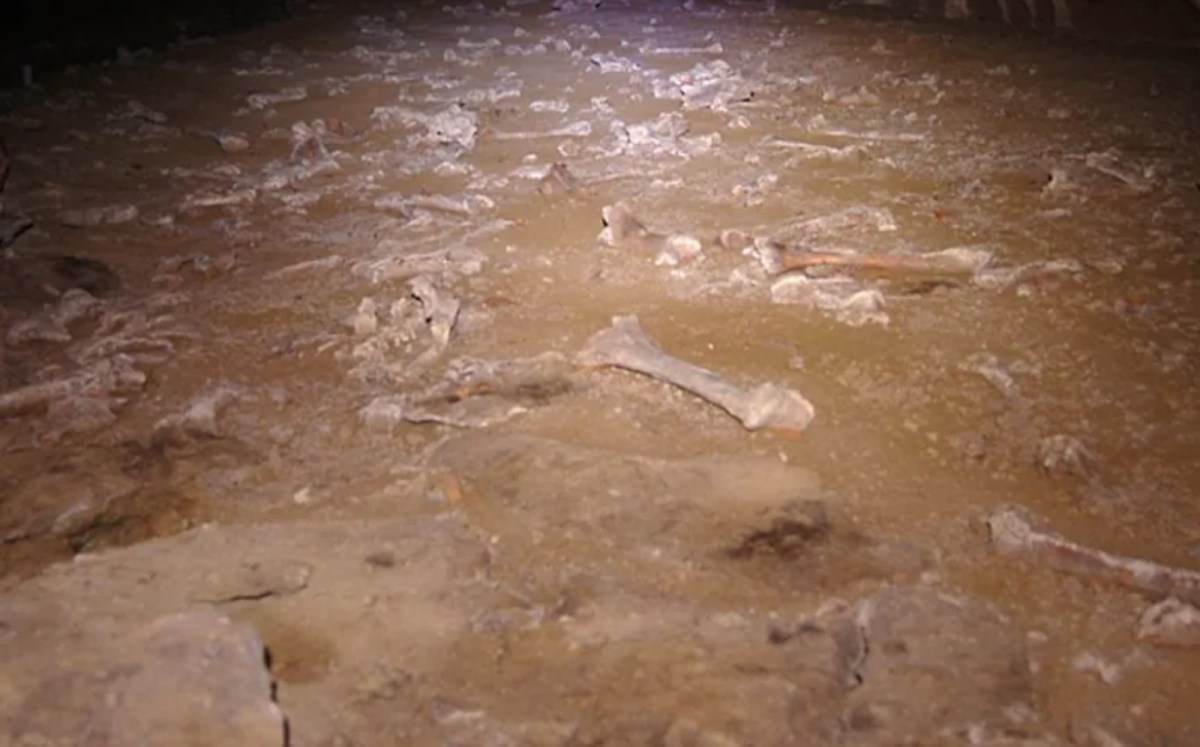
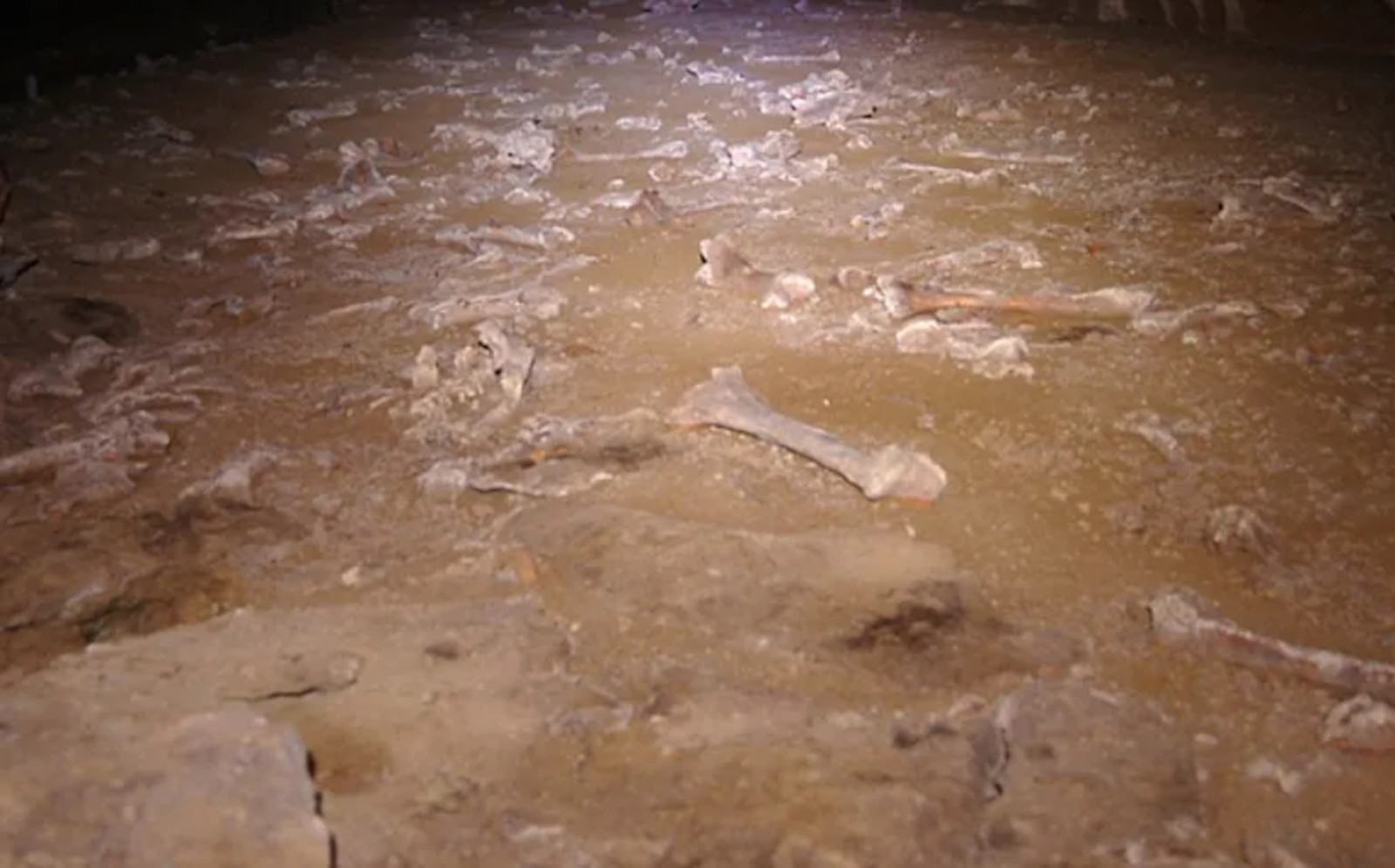
Dry bones (Wikimedia)
Click thumbnails to enlarge

A few days ago I posted Butterfly dead or alive? I considered the difference between a dead butterfly and a living one. I thought about this in biological terms, suggesting I’d write again soon on the spiritual aspects for people following Jesus. This is that second article.

I’ll go through each of the main points from that earlier article to draw spiritual truth out for anyone who believes they are alive in Christ. So here goes…

Ability to move

If I’m spiritually dead, then like the dead butterfly I will be unable to move. But what is spiritually equivalent to the physical ability to move? There may be more than one way of looking at this. Read Acts 17:1-8. What does this mean, in real, practical terms? Try reading the entire chapter, Acts 17, and it will become clear. Paul was explaining to Greek philosophers in Athens that the ‘Lord of Heaven and Earth’ is not served by humans because there’s nothing we can provide that he doesn’t already have. Instead he’s the One who gives us life and breath and everything else we might need. You’re not spiritually alive until you start paying attention to Jesus and agree to let him work in you and through you. He will change you in so many ways, all of them good. But if you’ve never met him before and never spent time with him you will not become alive spiritually. When you allow him to touch you in this way you will become alive and aware and, like the living butterfly, you’ll be able to move with energy that is within you, the essential energy Jesus has placed in you. The dead butterfly would be dried up and provide food for the ants. The living butterfly can detect predators, move to safety, and gather energy from floral nectar.

When we’re spiritually dead we can do nothing to help ourselves, but when Jesus has made us alive we can move freely, and not just in this physical world for we can now move spiritually too. It’s difficult to describe this to someone who has not yet experienced it. But come on in! You will never regret it.

Appearance, colour, lustre

As you continue to learn from Jesus you will become a thing of beauty and fragrance, well maintained spiritually, colourful, clean and cared for. The body ages and deteriorates over the years, but the spiritual heart and life will never age or fade.

Ability to sense danger

There are forces of spiritual evil in the world, as well as the more obvious physical dangers we face from falling rocks, dangerous drivers, illnesses of many kinds, or the occasional thunderstorm, earthquake, or volcano. Jesus does not give us any guarantee of safety from the physical world, but he will alert us to and protect us from spiritual danger and damage – if we pay more attention to him and his Holy Spirit than we do to our own ideas and preferences. Often, sadly, we do not.

Reproduction

This is an important one.

Spiritual reproduction is not like biological reproduction, although both result in growing numbers. In the case of spiritual reproduction it’s mostly a matter of living lives that will make people ask themselves, What’s different about them? People tend to know a good thing when they see it. If I tell someone that I follow Jesus they will expect him to be like me. If I am mean, greedy, selfish and easily angered people will pick up the notion that Jesus might be like that too. So I’d better become kinder, more gentle and helpful and generous, more loving towards the people around me.

Metabolism

Living creatures of all kinds, including people, have an active metabolism, it begins in humans and other animals when a sperm fertilises an egg cell, generating the very beginning of a new organism. And that metabolism continues all day and all night, year in and year out, until that new organism dies through accident, illness, or old age. There is a spiritual analogue for metabolism too. There are complex actions and interactions going on in the life of the church. A church can be healthy or sick, it can be hungry or fat, it can be happy or truly miserable. There are spiritual gifts poured out over people who follow Jesus and gather as church. These gifts are crucial in forming and sustaining church growth in helpful and useful ways.

I’ll finish by mentioning two phrases that are sometimes used in church circles; they both come from Romans chapter 6 and verse 11.

  • The first one is ‘Dead to sin’
  • The second is ‘Alive in Christ’.

Would you rather be dead, or alive? That, my friends, is the choice before us.

See also:

You might also like:

Useful? Interesting?

If you enjoyed this or found it useful, please like, comment, and share below. (If you don’t see those links, click the article’s title above the main photo and they will appear.) Send a link to friends who might enjoy the article or benefit from it – Thanks! My material is free to reuse (see conditions), but a coffee is always welcome and encourages me to write more often!

Speak to the bones

It’s good that we want to communicate and act, but it’s not good when we ourselves decide what to say and what to do.

Part 4 of a series – ‘The valley of dry bones’

< Taking a good look | Index | The word of Yahweh >

Now Yahweh says something strange to Ezekiel. He tells Ezekiel to speak to the bones, to prophecy to them. Is there any purpose in speaking to what is dead? Let’s look carefully at Ezekiel 37:4.

Then he told me, ‘Prophecy to these bones. Tell them, “Dry bones! Hear Yahweh’s word.”‘

Ezekiel 37:4

There are several important points to notice. If Ezekiel hadn’t understood these points the amazing things that are about to happen would not have happened. At least, they wouldn’t have happened through Ezekiel. Yahweh would have found another way, another person to serve him; Ezekiel would have missed out. Hearing is important, and the mechanism for hearing is complex.

1 – Listen and speak

Yahweh spoke to Ezekiel. Ezekiel listened so that he could pass on what he had received. This is the place where we often go wrong. We see a need and we act to meet it, we say what we think best, we do what we think best.

Structure of a human ear – From Wikimedia Commons

It’s good that we want to communicate and act, but it’s not good when we ourselves decide what to say and what to do. Even Yahshua (Jesus) didn’t do this, he set us a good example, he said only what he heard the Father say (John 12:49-50), he did only what he saw the Father do (John 5:19). If we don’t get this first step right we become unusable, no good for the eternal purposes of the Most High. Listen first. That’s what Ezekiel did and so should we.

2 – It may not make much sense

‘Prophecy to these bones’, says Yahweh. Put yourself in Ezekiel’s place, try to imagine it. Bones are not animate objects. At one time they were but now they are not. Here’s a conversation that didn’t take place – but it might have done. If Ezekiel had been like me it probably would have gone something along these lines…

Yahweh: ‘Listen to me carefully.’ – Ezekiel: ‘Yes, Lord. I’m listening.’

Yahweh: ‘I want you to talk to those bones over there, I want you to tell them that..’ – Ezekiel: ‘Wait, wait, wait. I must be hearing wrong, Lord. You want me to talk to who?’

Yahweh: ‘Not who, what. I want you to talk to the bones’. – Ezekiel: ‘No, Lord.’

Yahweh: ‘No? What do you mean – no?’ – Ezekiel: ‘Er.. No ears, Lord. I mean the bones can’t hear, they have no ears. They won’t hear me.’

Yahweh: ‘I’ll deal with that, you just get on and prophecy, OK?’ – Ezekiel: ‘But my friends will think I’m stupid.’ – Yahweh: ‘And your point is?’

Yahweh: ‘You’re wasting time here, Ezekiel. I need a job done and I need it to be done right away. I’ll find someone else.’ – Ezekiel: ‘No, no. I’ll do it. I’ll talk to the bones. Can I use a really quiet voice, Lord?’

Yahweh: ‘I need a very loud voice for this job. If you’re speaking to dry bones you have to speak up.’ – Ezekiel: ‘But, Lord, I have no idea what to say.’

Yahweh: ‘Might that be because I haven’ t told you yet? Hmm? You must command them to hear me, even though they have no ears.’ – Ezekiel: ‘OK-a-a-a-a-y’

Yahweh: ‘Tell them, “Dry bones! Hear Yahweh’s word.”‘

3 – Hear his word!

Before Ezekiel can give the message to the bones, he must command them to hear. Assuming we can get past steps 1 and 2, this third step is something we often miss out. Before giving the message we need to command the deaf to hear. This is a step of preparation. It may require months or even years of prayer. It may mean demanding to be heard over and over and over again. It may mean criticism and derision and even facing serious abuse. But it needs to be done. There are no short cuts in hearing and speaking, seeing and doing.

Will we be like Ezekiel? Will we be unwavering in our obedience even if we appear foolish or unpopular or at risk? And is it worthwhile speaking to something that’s dead? Yes! Lazarus was dead, Yahshua spoke to him, and he came out of the grave.

< Taking a good look | Index | The word of Yahweh >

Dry bones in the valley

Before Ezekiel sees the bones or even goes to the valley, Yahweh’s hand is on him. This is the touch that says, ‘I am going to use you’.

Part 2 of a series – ‘The valley of dry bones’

< Ezekiel in exile | Index | Taking a good look >

This time we’re going to take a look at the first verse of Ezekiel 37; the start of the section on the valley of dry bones. Let’s see what Father has for us in this verse.

‘Yahweh’s hand was on me and he brought me out by the Spirit of Yahweh and set me in the middle of a valley. It was full of bones.’ (Ezekiel 37:1)

We can’t tell whether Ezekiel visited a real valley or whether the entire section from verse one to verse fourteen is a vision. Perhaps it’s most likely to have been a vision. But it doesn’t really matter, it’s far from being the most important thing.

A desert scene
A dry and dusty desert (Image from Wikipedia – original and copyright details)

‘Yahweh’s hand was on me…’ – That’s what Ezekiel says. And this is always Papa’s heart toward us; unless his hand is on us we cannot move except by our own efforts. This is fundamental to everything the Almighty does. He speaks, he moves, he demonstrates, he heals, he forgives – and in all these ways he touches us.

Have you noticed how often Jesus touched people? He touched their eyes and mouths and ears when he healed. He touched what was ritually unclean – a leper, a dead girl. The most intimate thing we can do is to touch someone. Touch brings us closer than words ever can. What do we do when a child is afraid, or anxious, or hurt? We pick them up or hug them or kiss them better. We need to touch and be touched. So Yahweh’s hand was on Ezekiel.

And notice that this is the first thing that happens, before Ezekiel sees the bones or even goes to the valley, Yahweh’s hand is on him. This is the touch that says, ‘I am going to use you’. The Almighty lays hold of us because we are his instruments and he plans to use us in some way.

Have you felt his hand on you in your life? I hope so! But if not, pray that he will touch you and use you in whatever way he chooses. If he knows you are truly willing he will use you. That’s what he longs to do with all his people. He has chosen to use us to do his work in this world today. We are to go in his name (Matthew 28:18-20); we are his body; we are his hands, his feet, his eyes and ears and mouth (1 Corinthians 12). Isn’t that extraordinary?

‘…and he brought me out by the Spirit of Yahweh…’ – He brings us out and he does it by his own Spirit. Out from what? Out from the place where we currently are! See how he is one with himself in doing this? It’s explicit in the Hebrew, the name is used twice. Yahweh uses the Spirit of Yahweh. He chooses what he wants us to do, and then he uses his own Spirit (the Holy Spirit, the Spirit of Christ) to guide us. If necessary he will nudge us.

Sometimes we get stuck in a place. I don’t mean physically, I mean a place in our lives from which we are unable or unwilling to move on. Sometimes we are simply waiting for direction. It might be something we’re doing or a thought pattern we return to or just that he has finished using us in one situation and now wants us in a different one. Whether we are stuck or not – he brings us out, he draws us on, he sends his own Spirit to lead us into the next thing, the next place. For an example read about Roy Godwin. If you want the full story you can buy his book.

And notice this, if Ezekiel had not moved he would not have come to the valley. We have a propensity to cling to what we know and to keep doing what is already familiar. But we need to be ready to allow the Spirit to move us at any time so that we can receive something new, Father’s next thing for you, for me.

‘…and set me in the middle of a valley.’ – And so Yahweh sets Ezekiel in the valley. Now a valley is a low point and must be surrounded by higher ground. Ezekiel is placed ‘in the middle’ of this valley, right at the lowest point. He is as far from the surrounding hills and mountains as it is possible to be.

We know this feeling don’t we? Life is hard and promising to get harder yet. There are low points in our lives and there are also low points in the life of the church. Such valleys are places of defeat where there seems no hope or joy or victory; these are assuredly not ‘mountain-top’ experiences. We’ve all been there. Ezekiel was aware of the state of Israel in captivity under Babylon, but Yahweh’s Spirit brought him here so there must surely be a reason for it. Does it sometimes seem as if church is in a valley? A slough of despond? At times like these we need to remember that Papa has something in mind to show us. Jesus didn’t just come to redeem people, he came to redeem situations too.

‘It was full of bones.’ – What do bones usually signify to you? Are they always just the dusty remnants following final and permanent defeat? Or might they suggest that what was once alive might yet be restored? More on this next time.

< Ezekiel in exile | Index | Taking a good look >

Ezekiel in exile

Have we, the church (or at least the western church) been taken far from our true and full inheritance in Christ?

Part 1 of a series – ‘The valley of dry bones’

< No earlier items | Index | Dry bones in the valley >

For much of my life Ezekiel’s words about the valley of dry bones have seemed highly significant. I now feel I should work through the passage in detail here. I’ll take it verse by verse and we’ll see what it has to say to us today.

StormLight

First, a little background; Ezekiel saw the valley in a vision, as part of a series of visions. Right at the beginning of the first chapter he gives us the details.

In the thirtieth year, in the fourth month on the fifth day, while I was among the exiles by the Kebar River, the heavens were opened and I saw visions of God.

On the fifth of the month — it was the fifth year of the exile of King Jehoiachin — the word of Yahweh came to Ezekiel the priest, the son of Buzi, by the Kebar River in the land of the Babylonians.

There the hand of Yahweh was upon him. I looked, and I saw… (Ezekiel 1:1-4)

Living in exile – There are several things to notice right away. Ezekiel was an exile from the promised land and was among other exiles. In other words he was not alone, but along with others he was not where he truly belonged. Worldly powers had taken them far from the land of their inheritance. But Ezekiel was a Jew and of a priestly family, that personal inheritance could never be taken from him.

Is that true for us? Have we, the church (or at least the western church) been taken far from our true and full inheritance in Christ? I’m not talking about salvation here, nor do I mean our individual lives in Christ and he in us. Those cannot be taken; I mean the posture and behaviour of the church.

The Almighty has permitted the church to be captured by all kinds of worldly attraction and methodology. We have replaced falling on our faces in the presence of his glory and power with worship bands. We have replaced going in the name of Yahshua (Jesus) with outreach initiatives. We’ve replaced sitting at his feet, hearing him speak and watching him work with training sessions. We’ve replaced loving our neighbour with leaflets through doors.

Of course all these things have their place and all are useful – worship bands, outreach initiatives, training sessions and attractive leaflets are not bad in and of themselves. But they should not and cannot replace his glory and power, going in his name, listening and watching him or loving our neighbour. Peter’s intentions on the mountain were good, but he missed something significant. What you and I can do for Jesus is not the point, what he wants is that we listen to him (Matthew 17:1-5). And implicit in hearing the Master is obedience.

But all is not lost! – As an exile from the land of promise, Ezekiel was by the river when the heavens were opened and he saw visions of (or from) the Most High. Do you think that might be true for us too? Is it possible that in the middle of this foreign place the church has been taken to, the heavens might be opened and we might truly see the Most High? Notice what he says at the start of verse 4 – the hand of Yahweh was on me. I looked and I saw.

Is his hand not also on us? If we look, we too, will see. But we surely won’t see unless we look! King David wrote, ‘Taste and see that Yahweh is good’. (Psalm 34:8) We need to look, listen, and taste. What does this mean? Simply this – it’s time to check Papa out, it’s time to hear what he is saying, see what he is doing, and taste the flavour of his nature and love. We will not be disappointed! Others are asking the same sorts of questions. Alan Hirsch for example, in his book The Forgotten Ways, argues strongly that we need to think afresh and re-calibrate our behaviour. Ed Stetzer, in his foreword to Alan’s book writes:

‘The Forgotten Ways’ has become a foundational text for exploring the missional nature of the church, challenging … what it means for the church to reactivate anew its forgotten ways.

We haven’t even started on the dry bones passage yet, but we have set the scene. We know that even if we are in exile the Master can reach us with a new vision, that he can touch us, and that we are free to look and see. There is everything to play for. Are you up for this?

Next time we’ll look at those dry bones – I promise!

< No earlier items | Index | Dry bones in the valley >

Valley of dry bones – INDEX

Is it now time for dusty dryness to be transformed into vigorous, vibrant activity? This short series examines the implications.


(See indexes on other topics)

Ezekiel’s writing about the valley of dry bones has much to say to us about life and death in the church.

Is it now time for dusty dryness to be transformed into vigorous, vibrant activity? This short series examines the implications. (First written in 2011, currently under revision.)

A desert scene
A dry and dusty desert (Image from Wikipedia – original and copyright details)
  1. Ezekiel in exile – Ezekiel’s words about the valley of dry bones seem significant.
  2. Dry bones in the valley – Ezekiel 37:1.
  3. Taking a good look – A question in the middle of the valley.
  4. Speak to the bones – Is there any point in speaking to what is dead?
  5. The word of Yahweh – The bones are to come to life!
  6. The bones come together – Ezekiel begins speaking to the bones.
  7. Sinew, muscle and skin – He watches as the bones are covered.
  8. Prophecy to the breath – Ezekiel is called to speak again.
  9. An overwhelming army – The bodies come to life and stand.
  10. The dry bones of church will live – A prophecy for the church today.