Painted lady
< Previous | Index | Next >
Image of the day – 200
What’s in an image? Sometimes quite a lot, more than meets the eye. I’m posting an image whenever I can.
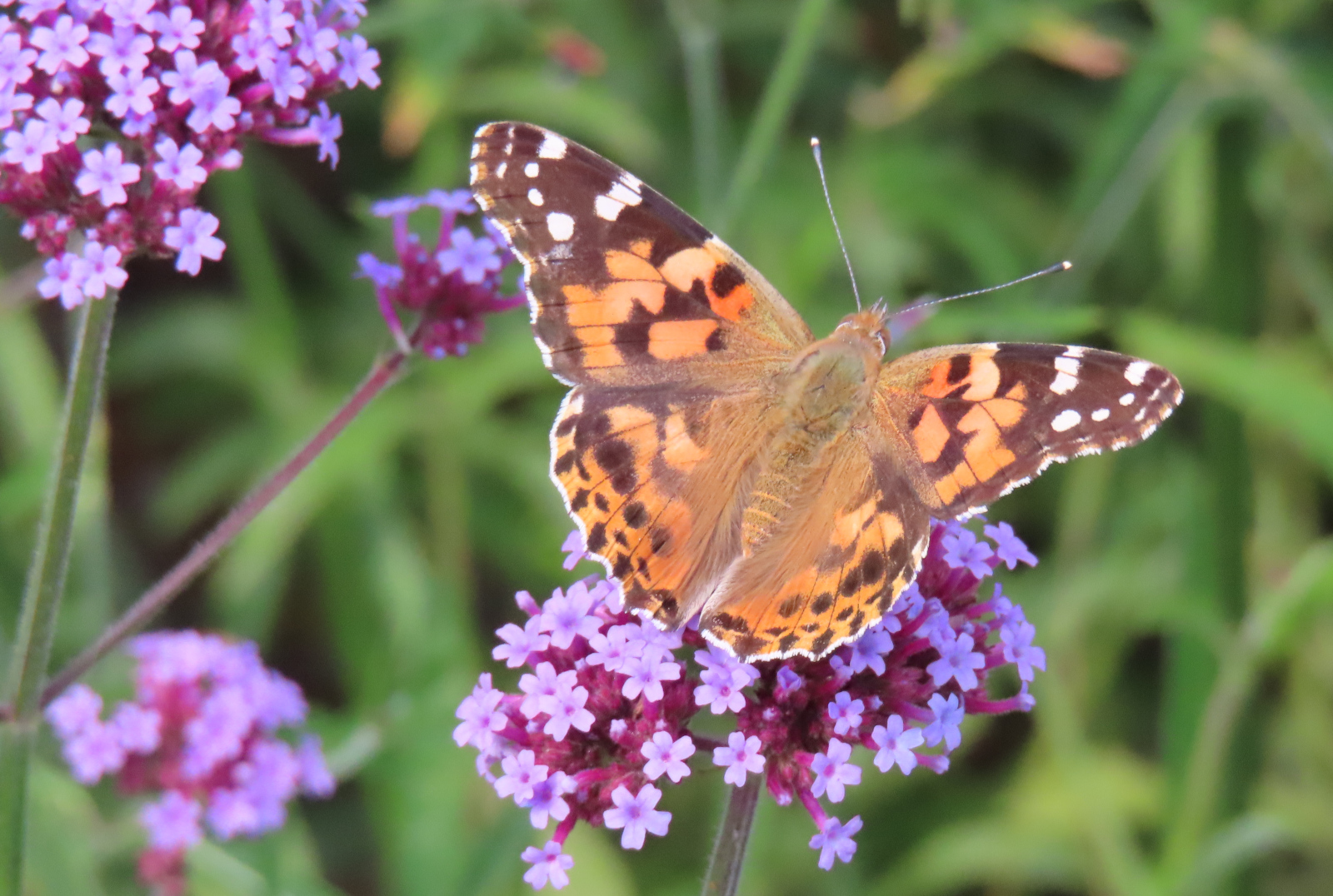
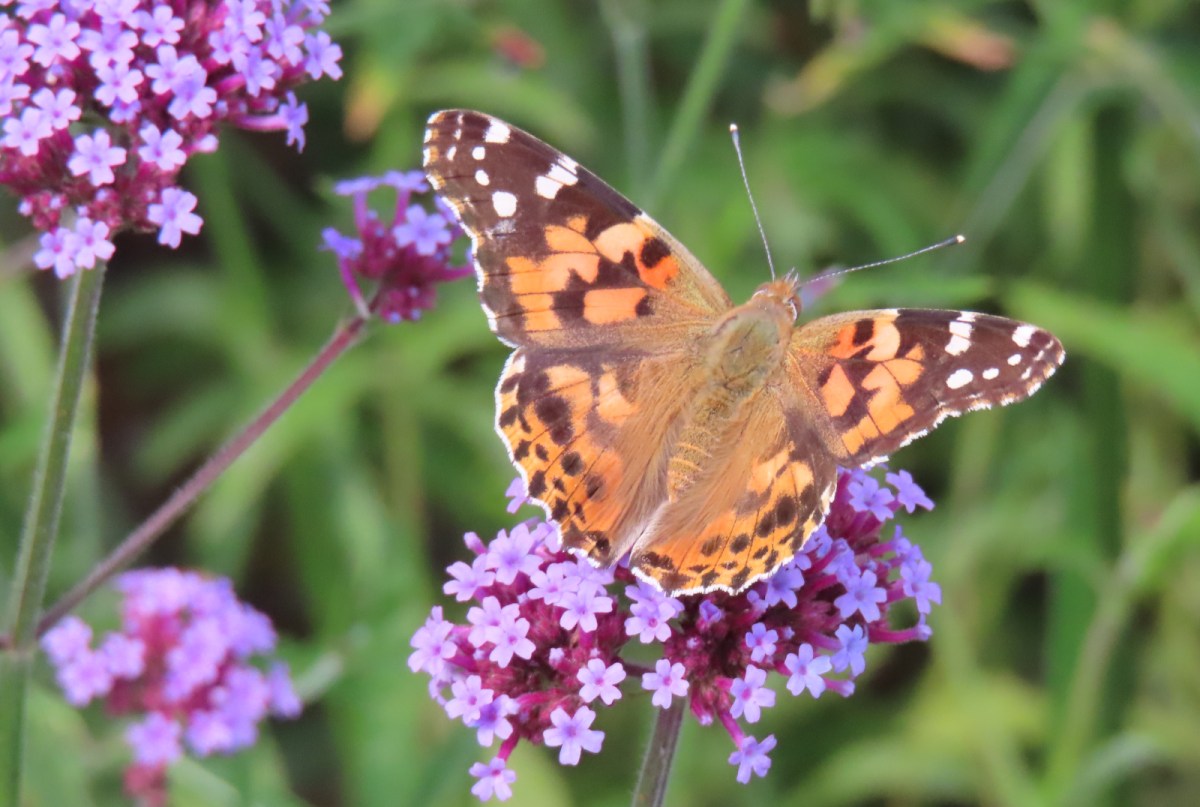
This painted lady butterfly was feeding on nectar from flowers of Verbena Bonariensis at Sizergh Castle in the southern Lake District. There were bees working these flowers as well, mostly bumble bees but also honey bees. The entire garden was buzzing with activity.
Why dead or alive?
This is not as random a question as it might sound. I’m part of a group of around ten people who meet weekly to think together about following Jesus in meaningful ways. We’d been considering Ephesians 2:1-10 where Paul writes that we were dead but have been given new life. I chose a random animal, a simple butterfly and asked the question – ‘What is the difference between a dead butterfly and a living one? We didn’t go into the answer in any depth, so I thought I might consider the differences here instead. Let’s make a list and work our way down.
- A dead butterfly cannot move, it just lies on the ground motionless unless someone picks it up, the ants carry it away as food, or the wind blows and sweeps it along the ground. A living butterfly generates usable energy by feeding on the sugars in nectar from a flower and uses that energy to flap its wings for flight. And a simple brain controls the direction of the flight while the butterfly uses sight and smell to home in on useful flowers to collect more sugars. Being capable of directed movement is a key difference between death and life.
- Appearance is another difference; a living butterfly has beautifully coloured wings. A recently deceased butterfly might look just the same for a short time, but those lovely wings will lose their lustre as the butterfly dries out. The colourful patterns will fade, dust and cobwebs will contaminate the surfaces. This is typical for all creatures, while they live they maintain and clean themselves, but after death these processes stop.
- Ability to sense danger. When a butterfly is alive, if it’s resting in the sushine on a leaf or a flower and your shadow passes over it, it will launch itself into the air and fly away. The butterfly can’t distinguish between you and a predator (like a bird or a dragonfly) so it gets out of the way just in case.
- Butterflies, like all lifeforms, are capable of reproduction. Adult butterflies mate, the males fertilise the female’s eggs, the eggs are laid on the plant that this particular butterfly needs for the growth of its caterpillars, the eggs hatch as baby caterpillars and these voraciously eat the leaves of the foodplant and grow and grow, then pupate on a stem, in a crevice, or underground to emerge as butterflies in the following spring or summer. It’s a complex life cycle, far more complex than that of a mammal, but it works well for butterflies. If a butterfly dies before it is able to mate, it will not contribute to the ongoing future of the species. If it dies after mating it will make a contribution to the next generation. Timing is everything!
- Like all living things, butterflies have a metabolism in which interlinked biochemical processes are always active. On death these processes cease and the remains are consumed as food by other organisms or colonised by fungi and bacteria which digest and reprocess the remains through their own, different metabolic processes.
So it appears there are quite a few distinctions that can be made between something that is dead and the same thing when it’s alive. So, leaving biology aside for a moment, if we are aiming to follow Jesus, what might the difference between dead and alive look like? Can we gather some clues from the butterfly?
I’ve written another short article about that question.
See also:
- Butterfly – Wikipedia
- Painted lady – Wikipedia
- Sizergh Castle – Website
< Previous | Index | Next >
You might also like:
Useful? Interesting?
If you enjoyed this or found it useful, please like, comment, and share below. (If you don’t see those links, click the article’s title above the main photo and they will appear.) Send a link to friends who might enjoy the article or benefit from it – Thanks! My material is free to reuse (see conditions), but a coffee is always welcome and encourages me to write more often! 
Share this:


