Truth and facts

Physical facts can often be pinned down rather well by careful measurement using accurate instruments; but there are other kinds of fact and some of those may be much harder to assess.

Thinking out loud

How can we best define ‘truth’, how should we judge whether something is ‘factual’? And what happens if I live my life in ignorance of the way things really are? It’s possible to be unwittingly ignorant, but it’s also possible to pretend to be ignorant. Clearly there’s a big difference between not knowing something and pretending not to know it. Does that difference matter? And if so, how?

What a lot of questions!

We should begin with some definitions, I think.

Facts

Maybe this won’t be too hard to pin down. Here’s a simple example.

‘Water is a liquid’ – Correct?
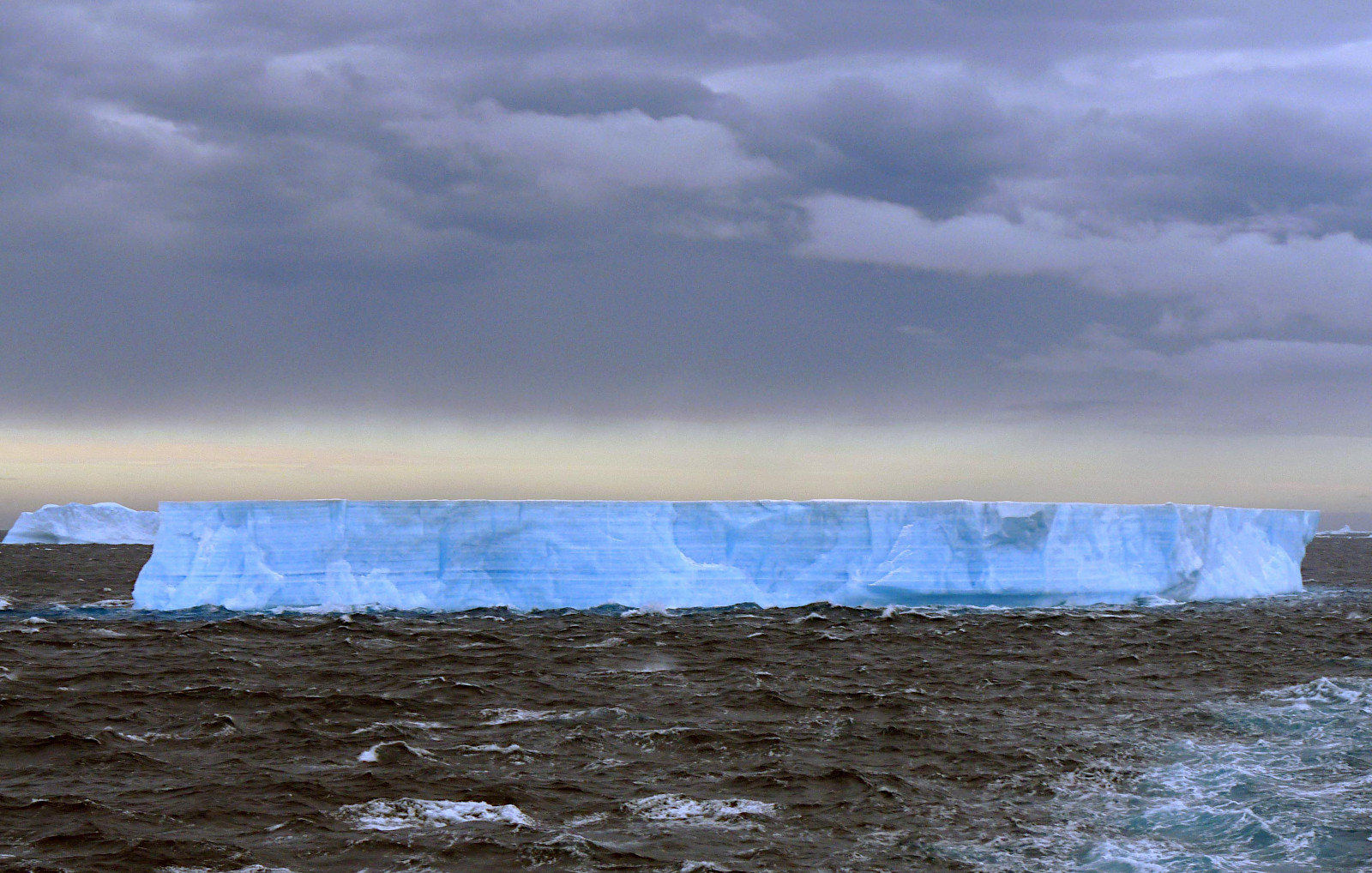
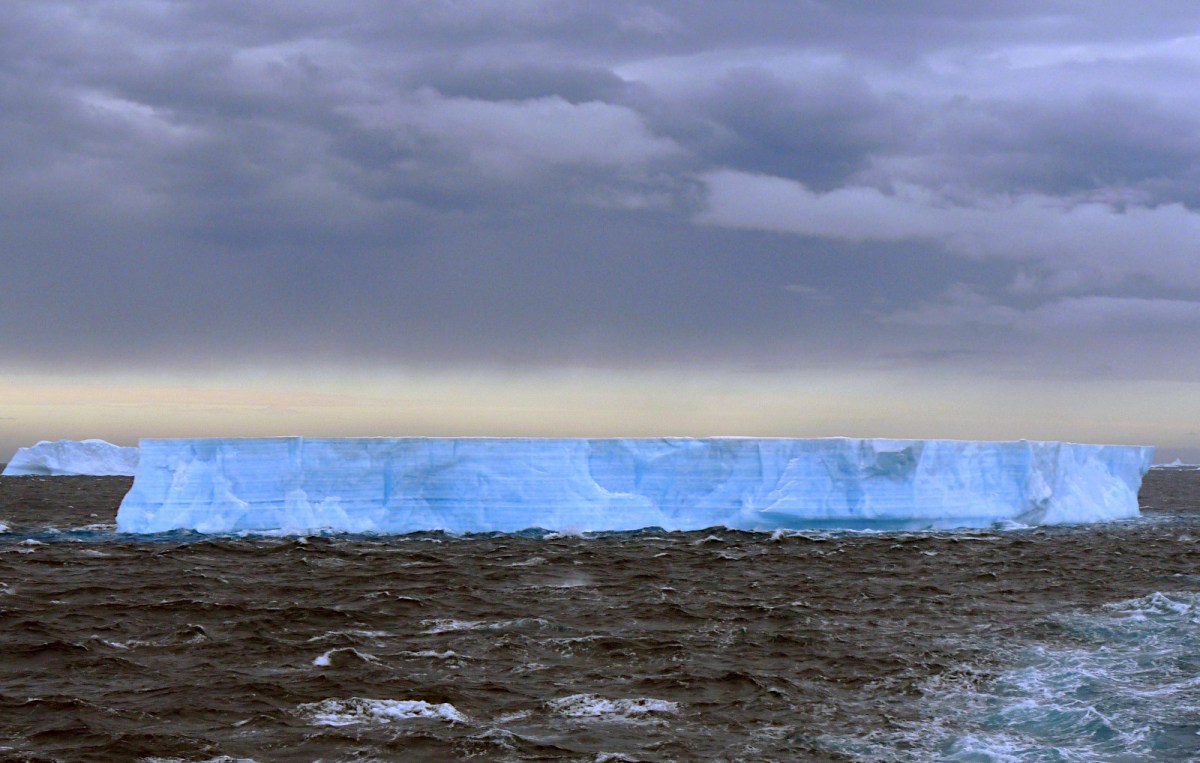
All water!
(WIkimedia)

Well, with a few caveats it is generally true. If the atmospheric pressure is 101.3 kPa and the temperature is between 0 C and 100 C it will be more or less correct. If the conditions are different, the statement could be false.

Does it matter? Well, it might do. If the water is deep and you can’t swim, don’t claim it’s a solid; and whether you make that claim or not, take my advice and don’t walk on it! Almost everything in the photo is water; the clouds are made of tiny droplets of liquid water, the iceberg is frozen water, the churning sea is liquid water heavily contaminated with salts. Which of the three would you prefer to walk on?

That example already establishes that facts may be conditional and that ignoring them might have consequences. What makes it all the more tricky is that we may be unaware of the conditions, the consequences, or both.

Physical facts can often be pinned down rather well by careful measurement using accurate instruments; but there are others kinds of fact and some of those may be much harder to assess. A legal case might depend on whether a particular person was in a particular place at a certain time. And assessing such situations may depend on evidence (perhaps a time-stamped video recording), or it may depend partly or even wholly on whether we trust or believe a witness statement.

Truth

Now things get rather difficult. If there are facts available it may indeed, be possible to decide if a statement is true or false. But something may be true or false even though there are no facts available to help us decide.

What about the statement, ‘There is a higher power behind the universe’. As it happens, I believe that statement to be true. But I wouldn’t have to ask many people in the street to find someone who believes the same statement to be false. And let’s be honest about this – there is no evidence one way or the other. As a believer, I might say that I had a revelation, or a vision, or a feeling and they may be real for me, but I have no evidence to show to the person with no faith. And they might give me reasons for their belief that such a power does not exist, but those reasons do not, indeed can not amount to evidence.

And there are many other examples of unprovable true/false statements.

  • The 15 quadrillionth digit of π= 6, true or false? One day we might calculate this, but currently we don’t know the value of this digit.
  • There will still be life on Earth a billion years from now, true or false? We do not know.
  • There’s a junction ahead, will you turn right or left? Nobody can know until you make the manoeuvre.
People

Once we consider the motives people may have (or not have) the difficulties grow again. When Donald Trump says he will do something, we can’t even tell whether he’s saying it because he intends to do it, or to achieve an effect of some kind, or to mislead.

And make no mistake, everyone is like Donald Trump in principal, he is just an outstanding and topical example. Every action and every word of every person must be considered as a possible intention, a possible attempt to achieve an effect, or even perhaps to mislead. We all do it, though we may not even recognise that we are doing it!

Consequences

How are we to live our lives if falsehoods are presented as truth and fact? That’s a good question we all need to consider.

We do have one advantage, however. And it’s a big one.

Actions based on false information will fail. Think about that for a moment. Once again it will help to use an example. Let’s suppose you are visiting a foreign country and you are told that in this place, cars are driven on the right-hand side of the road. If the information is correct things will go more smoothly than if it is incorrect. Never mind why a piece of information is incorrect; it might be an innocent mistake, a misunderstanding, or it might be deliberate. The knowledge that it is incorrect is all we need to know to keep us safe.

This is important: misinformation will lead to mishaps.

If Vladimir Putin makes false claims to enhance his chances of success, it will work until it doesn’t! We live in a universe where false information results in unexpected outcomes. We may get away with it for a while, but we will not get away with it forever.

John Lydgate had a great thought; he wrote, ‘You can please some of the people all of the time, you can please all of the people some of the time, but you can’t please all of the people all of the time.’ He was later slightly misquoted by Abraham Lincoln and also by Winston Churchill .

‘You can fool all the people some of the time, and some of the people all the time, but you cannot fool all the people all the time.’

That is absolutely right!

In conclusion

So how, then, should we live?

Always try to speak the truth – Check what people tell you – And remember, if you mislead you will, sooner or later, come unstuck. People will generally forgive a mistake. But if you make mistakes often they will stop trusting you. And if most of the things you say are untrue, people may conclude you are deliberately misleading them.

The next level of depravity after deliberately misleading people, is to harm them if they oppose you. That way you may get your way because people fear you. They have seen what happened to others who fell out of windows or were offered cups of tea and they will want to avoid a similar fate.

We live in a wicked world. It’s good to be truthful and honest, but it’s necessary to be to be careful and wise about other’s motives too. Jesus told his followers to be as shrewd as snakes, yet as innocent as doves. It’s great advice in a sometimes confusing world!
Political turmoil in the USA

[A] wider war is possible. There’s a real possibility of a European conflict between Russia and the rest of Europe. There’s a chance of civil war between opposing groups within the Russian Federation.

Forward look, ukraine – 5

< Previous | Index | Next >

Larger view
(Wikimedia)

Feb 2025

So much has changed since our last Forward Look.

The world has seen political turmoil in the USA where President Trump has taken over from Biden. When you stick a spade into an ant’s nest and turn the soil over, there’s a period of frantic activity while the ants go into emergency mode, assess the damage, and begin to rescue whatever they can from the mayhem. That is the USA in February 2025.

And make no mistake, a frantic USA spells trouble for Ukraine, for the whole of Europe (I include the UK here), and perhaps for Russia and China as well. Predicting anything at this stage is about as useful as predicting the result of a horse race without knowing the length or nature of the course or the form of any of the horses.

But what I can say, is that wider war is possible. There’s a real danger of a European conflict between Russia and the rest of Europe. There’s a chance of civil war between opposing groups within the Russian Federation, and there are also possibilities of a second civil war in the USA and/or a third world war. I fervently hope that none of these things will happen, but events rarely take account of our hopes.

We’re going take a wider look at things here because so much has changed in such a short period of time.

First, let’s just catch up on the current state of the war between the invading Russians and the defending Ukrainians.

Russian and Ukrainian war efforts

Russia is finding it more and more difficult to continue the war. Russian casualties (dead and seriously wounded) are growing close to a million. The Russian economy is in an awful state, 40% of the state budget is being spent on the war. Inflation is rampant, interest rates are extremely high, many professional people have fled the country and Ukraine is systematically destroying Russian oil pipelines, distilleries, fuel storage installations and transport infrastructure, military air bases, radar systems, training facilities and military headquarters.

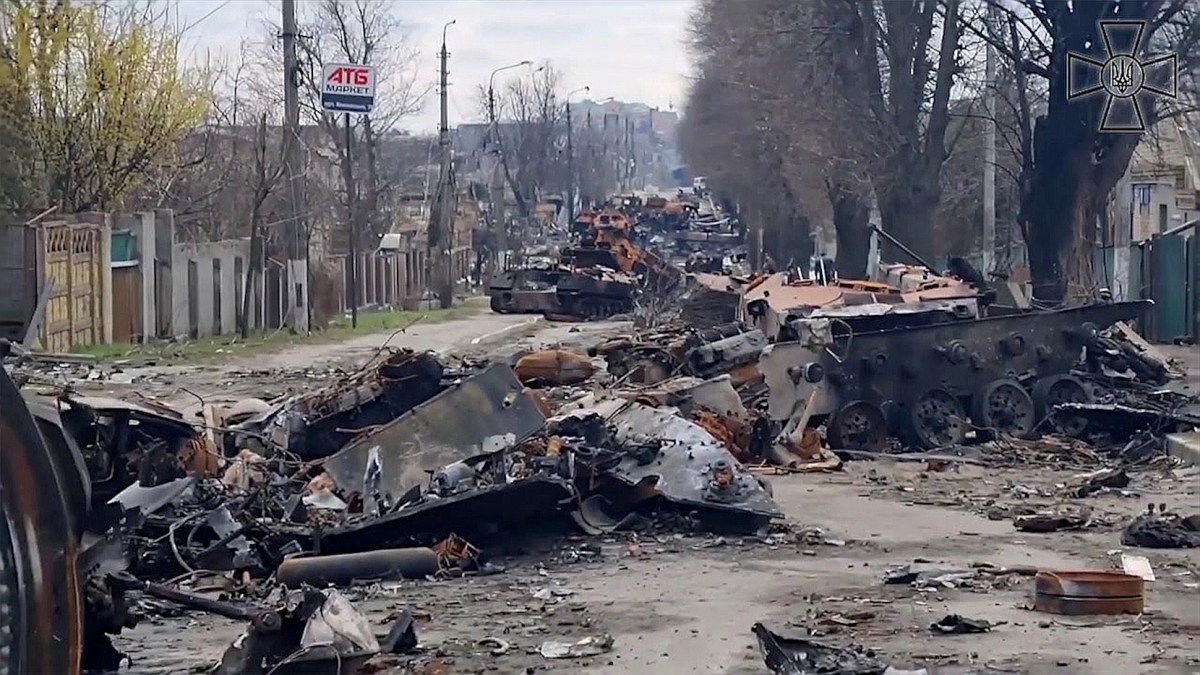
The much touted Russian ‘advance’ in Ukraine has all but stalled and, in some places, has reversed to retreat. The once feared ‘second most powerful army in the world’ has been fighting against a much smaller neighbour for three years and has failed to win. Hardly an impressive display of military might! Russia has lost most of its huge military power at sea, in the air, and on land. They continue to lose between 1000 and 2000 troops every single day. They have lost almost all their tanks and armed personnel carriers and are unable to replace them as fast as they are losing them.

Ukraine on the other hand has been getting better and better at defeating Russian attacks using a combination of high tech drones, great planning and anticipation, nimble action, good training, surprise, and constant technical innovation.

They continue to defend successfully against most incoming drones and missiles. As long as they continue to receive sufficient support, they will, I believe, continue to succeed and will eventually defeat Russia. In their favour is the fact that they and some of their European allies continue to ramp up the production of both weapons and ammunition to levels sufficient to defeat demoralised Russian forces – themselves facing more and more serious shortages of such materiel.

The political climate in February/March 2025

Now we have to pause. At the end of February the situation is changing daily, even hourly at times. Rather than try to make any predictions, I think it’s better to point you to some online resources that you can check daily or weekly to keep yourselves informed in such dynamic times.

I’ve mentioned both these sources previously, but here they are again.

  • Jake Broe – Jake posts a video every day or two. He’s a retired US Air Force pilot, so he knows what he’s talking about in military matters, but he is also an astute political observer and commentator. His videos are closely packed with the latest updates, and he provides links with the evidence needed to back up the things he says. There are no wild claims here, just good reporting, intelligent comment and useful material. Jake is well worth hearing and following.
  • Silicon Curtain – Jonathan Fink posts on Silicon Curtain as well as the shorter-form Silicon Bites. Here you’ll find great comment, opinion, and some penetrating, in-depth interviews with other key players and commentators. Every single video is well worth watching.

You will learn so much from these two excellent channels, but there’s a great deal more good material online. Try this YouTube search for recent material, but don’t believe everything you see and hear. The material turned up by the search may be true or false, checked or unchecked. Use your own judgement.

If you prefer the written form, use the same search in Google or another search engine. (Copy and paste this search or a similar one… war in ukraine 2025 latest news …into any search engine.)

See also:

< Previous | Index | Next >

Useful? Interesting?

If you enjoyed this or found it useful, please like, comment, and share below. (If you don’t see those links, click the article’s title above the main photo and they will appear.) Send a link to friends who might enjoy the article or benefit from it – Thanks! My material is free to reuse (see conditions), but a coffee is always welcome and encourages me to write more often!

An old survivor

Much of the old tree would have survived for while, so the new shoot was shaded and would have grown out at an angle, attracted towards the light. Since then, the new growth has itself become a mature tree.

< Previous | Index | Next >

Image of the day – 138

What’s in an image? Sometimes quite a lot, more than meets the eye. I’m posting an image every day or so.

Click to enlarge

I spotted this old tree when we visited Blenheim Palace today. It’s probably an ancient oak though I didn’t get close enough to check with certainty.

The thickest part, the lumpy-looking base is the remaining stump, all that remains of the original tree that would have grown from an acorn many hundreds of years ago. That tree was a sapling, then a youthful, vigorously growing tree; eventually if became a mature, majestic oak. But then the rot would have set in – literally. Holes made by a woodpecker, or damage from a storm cracking off a branch, gave access to unprotected wood beneath the bark. Insects may have burrowed into the wood, and eventually fungal spores would have germinated and started the decay process in earnest.

The weakened tree would have lost its vigour and been reduced to a hollow stump and failing branches. But finally, a new shoot must have appeared near the base and formed new, young growth. Much of the old tree would have survived for while, so the new shoot was shaded and would have grown out at an angle, attracted towards the light. Since then, the new growth has itself become a mature tree.

Another possibility is that a branch of the original tree survived, and with the other branches missing, grew into the shape we now see. A careful examination of the tree might reveal the truth. But however this curious old tree survived, it certainly has an unusual story to tell!

Donna and I enjoyed our day at Blenheim and will visit again from time to time this year as the seasons roll by. I’ll probably write about the place again.

See also:

< Previous | Index | Next >

Useful? Interesting?

If you enjoyed this or found it useful, please like, comment, and share below. (If you don’t see those links, click the article’s title above the main photo and they will appear.) Send a link to friends who might enjoy the article or benefit from it – Thanks! My material is free to reuse (see conditions), but a coffee is always welcome and encourages me to write more often!

Inside out

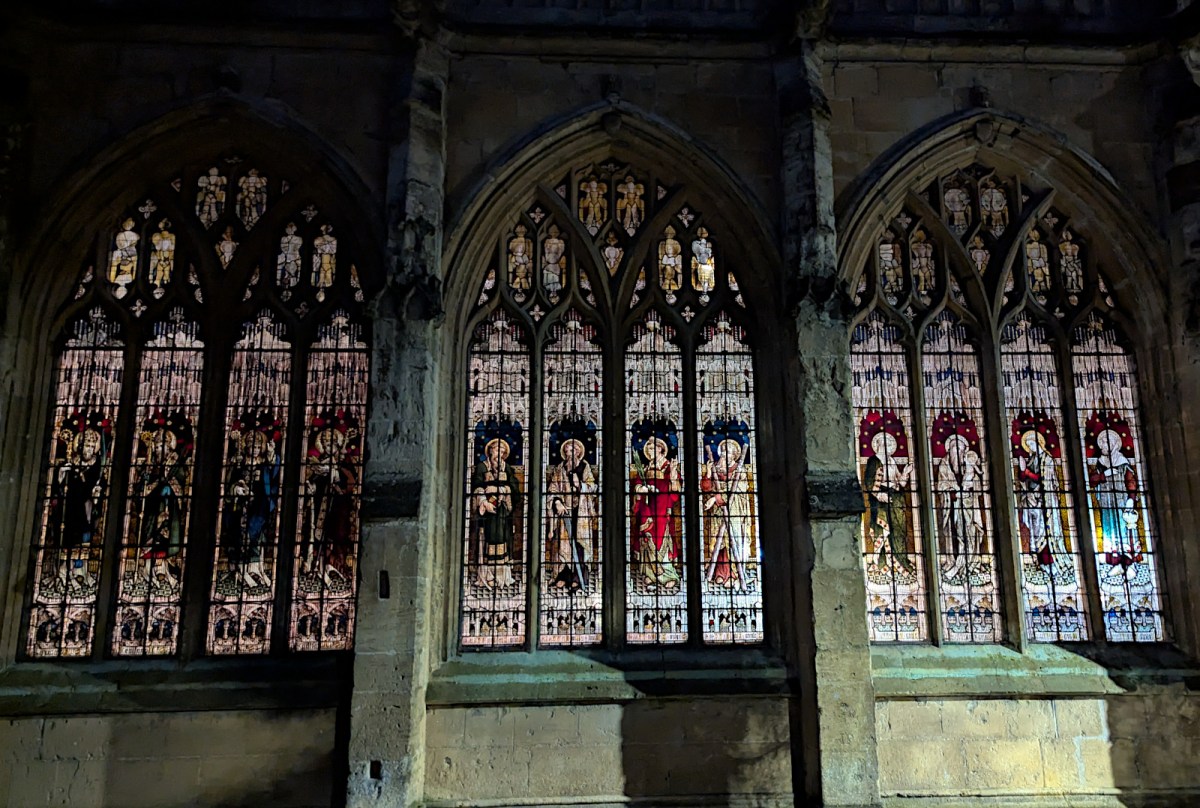
In this photo, taken from outside the church after dark, the relatively bright, modern lighting inside shows up the windows very nicely.

< Previous | Index | Next >

Image of the day – 137

What’s in an image? Sometimes quite a lot, more than meets the eye. I’m posting an image every day or so.

Click to enlarge

These windows are inside-out. They are stained-glass, and part of Cirencester’s Parish Church. When they were built, the idea was that they would look impressive from the interior in a world without anything much brighter than a candle or an oil lamp. Illuminated in daylight and seen from within a relatively dark building, they would have been amazing – and they still are.

But in this photo, taken from outside the church after dark, the relatively bright, modern lighting inside shows up the windows very nicely. The makers could hardly have imagined them being seen in this way!

See also:

< Previous | Index | Next >

Useful? Interesting?

If you enjoyed this or found it useful, please like, comment, and share below. (If you don’t see those links, click the article’s title above the main photo and they will appear.) Send a link to friends who might enjoy the article or benefit from it – Thanks! My material is free to reuse (see conditions), but a coffee is always welcome and encourages me to write more often!

Asteroid heading our way

There is absolutely no need to panic. If you’ve heard about this and are worried, calm down and read on for the simple facts and where to go for more detail.

Image: Wikimedia

Science and technology – 4

< Previous | Index | Next >

Asteroid track
(Wikimedia)

There is absolutely no need to panic. If you’ve heard about this and are worried, calm down and read on for the simple facts and where to go for more detail.

I imagine almost everyone will have heard about this asteroid by now. News stories have varied from rather scary to suggesting the risk is extremely tiny, so letߴs begin by setting out the most important things to know:

  • The full name of the asteroid is 2024 YR4
  • It will pass Earth in 2028, but will definitely miss
  • It has about a 2% chance of hitting Earth in 2032
  • It therefore has a 98% chance of missing entirely in 2032
  • As we define its orbit better, the chance of a hit is likely to drop to zero
  • If the chance of a hit becomes large, we can probably nudge it to miss

If it does become clear that the asteroid will hit Earth, here are some further important things to know:

  • We already know the ground track along which it would hit
  • It would most likely fall in the Atlantic Ocean
  • If so, it would cause a very large tsunami
  • It might fall in South America or Africa and make a crater 1.5 km wide
  • It would destroy everything over a much larger area outside the crater
  • We would have plenty of time to move people out of the way, either from coastal areas in the event of an ocean hit, or from the impact zone if the asteroid hit land. Clearly, many lives could be saved but it would be very costly.
See also:

Having set out those basic facts as we know them in late February 2025, I’m not going to discuss things in more detail. Instead, I’ll list some good sources for further information. These are very roughly in order of the usefulness and detail provided. Simplest at the top, more detail as you go down the list.

< Previous | Index | Next >

Useful? Interesting?

If you enjoyed this or found it useful, please like, comment, and share below. (If you don’t see those links, click the article’s title above the main photo and they will appear.) Send a link to friends who might enjoy the article or benefit from it – Thanks! My material is free to reuse (see conditions), but a coffee is always welcome and encourages me to write more often!