It all took longer than we expected and some changes had to be made to the design as events unfolded, but by the beginning of February the new system was in and working.
What’s in an image? Sometimes quite a lot, more than meets the eye. I’m posting an image every day or so.
Click to enlarge
At the end of January our heat pump was installed, and before long we had warm radiators and underfloor heating, something we’d missed since our gas boiler developed a fault in October. At the time our first thought was to get the boiler repaired, the part would cost £500 and the labour would be a similar amount and at the end of the process we’d still have a seven-year-old boiler and we’d still be burning gas. We wanted to avoid using gas if possible because we want to reduce the amount of carbon-dioxide we produce.
There is a substantial government grant to make heat pumps a more attractive idea, so we thought it made sense to take advantage of it. After discussing it with our energy supplier, Octopus Energy, one of their surveyors visited, made a plan of the rooms, specified the required changes to our radiators, planned for pipe runs and siting of equipment, and we were ready to roll.
It all took longer than we expected and some changes had to be made to the design as events unfolded, but by the beginning of February the new system was in and working.
A different kind of heat
Our old heating system used a gas boiler, it could produce a lot of heat quickly on demand, so we had a series of thermostats to turn radiators and heated floors on and off as required to keep rooms at the right temperature. At night and during the middle of the day a time clock turned the system off entirely to save money, then came back on half an hour before we arrived home after work and half an hour before we woke up in the morning.
The new system is on all the time. A room thermostat increases or reduces the flow rate to keep the house at whatever temperature we set, and starting from cold it can take several days to achieve the set temperature. We’re beginning to like this way of working; the house stays at the temperature we prefer, around 19 C, and it only rises higher if the outside temperature is high. In that case the heat pump stops heating the house and just provides hot water.
Energy bills
It’s still early days to assess how our heating bill will change. The heat pump is an electrical system so our electricity bill will rise, but our gas bill will now be zero. The heat pump cools down outside air by extracting energy from it, and pushes that energy into our radiators and hot water tank. One kilowatt of electricity can push about four kilowatts of heat into our home, and as we have solar panels on our roof and a storage battery, some of that energy can come from the roof even at night. There is no environmental effect, we’re not producing carbon dioxide and the heat we steal from outside leaks back out again over time. The better our house is insulated, the slower it will leak and the less electricity we will need to maintain the temperature difference between the cold outside and the warm inside.
When we buy electrical power from the grid to pump heat (mainly in midwinter), that grid power is more than 50% green as well; so even that is far better than burning gas to keep warm.
Image of the day 144
This is the 144th ‘Image of the day’ I’ve posted. That is what we’d have called a gross when I was a child. Ten eggs in a box was ten, but twelve eggs in a box was a dozen and six was half a dozen. We still use those terms. A baker’s dozen was thirteen, a dozen with one extra for good measure. And a dozen dozen also had a special name – a gross. 12 x 12 = 144. So today there is a gross of ‘Images of the day’ on the Journeys of Heart and Mind website!
I wonder if I’ll ever reach a great gross, ie a dozen gross, or 1728 ‘Images of the day’?
If you enjoyed this or found it useful, please like, comment, and share below. (If you don’t see those links, click the article’s title above the main photo and they will appear.) Send a link to friends who might enjoy the article or benefit from it – Thanks! My material is free to reuse (see conditions), but a coffee is always welcome and encourages me to write more often!
What’s in an image? Sometimes quite a lot, more than meets the eye. I’m posting an image every day or so.
Click to enlarge
Most English villages had a piece of common land where any villager could graze sheep or cattle, but the coming of field enclosures from the late Middle Ages onwards, reduced or removed many of these open spaces.
This one in Siddington, near Cirencester must be one of the smallest, if not the very tiniest! It would be very difficult to graze sheep or cattle here! (I suspect it was rather larger in the 1800’s.) Some very large commons remain in other parts of the Cotswolds, notably near Stroud at Minchinhampton, Rodborough and Selsey Commons.
If you enjoyed this or found it useful, please like, comment, and share below. (If you don’t see those links, click the article’s title above the main photo and they will appear.) Send a link to friends who might enjoy the article or benefit from it – Thanks! My material is free to reuse (see conditions), but a coffee is always welcome and encourages me to write more often!
Jesus begins by reading back what he already knows. It’s time. His followers still don’t fully understand, but hearing this now, they will gradually understand as events unfold.
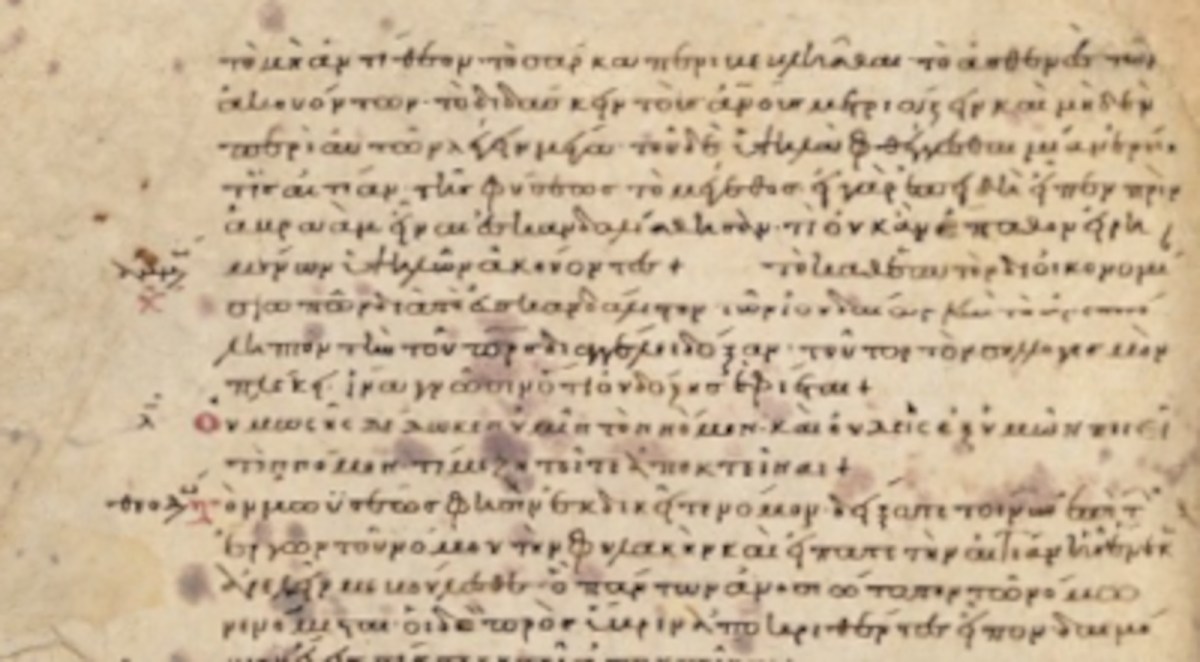
Greek commentary on John’s gospel dated 1190-1200 (Bodleian Library)
17:6 – We learn a lot from the words of Jesus’ prayer. The first thing we can see is that Jesus believes his core followers, the disciples, are a gift to him from his Father. Jesus’ role here was to reveal the Father to these people he’d been given. They were a bit of a mixed bag, four fishermen, a tax agent, Judas Iscariot managed the funds and might have had a background in money management, and the other Judas may have been a farmer or a farm labourer. No doubt the others all had some sort of trade or working background too.
And this disparate bunch had all proved to be obedient and have obeyed the Father’s word. Jesus may just mean that they have done what he has asked of them, because Jesus himself is the Father’s word, a living message of grace, peace and love sent into a broken world.
17:7 – They know that everything Jesus has is from the Father. 17:8 – Jesus has passed on to his apprentices (disciples) the words the Father gave him, and they accepted them. They’re fully convinced that Jesus came from, and was sent by, the Father. 17:9 – And Jesus prays for them, not for the world but specifically for those he’s been given (the disciples). The disciples belong to the Father. Remember that this is true for all of us who believe. If we are following Jesus, then we belong to the Father who has given us to him.
17:10 – On other occasions Jesus says things like, ‘The Father and I are one’, or ‘If you’ve seen me you have seen the Father’. Here he says the same thing in yet another way. Clearly addressing the Father, Jesus says, ‘All I have is yours, and all you have is mine’.
Oneness, threeness, and glory
Notice the last few words of this verse, ‘Glory has come to me through them‘. So the glory that Jesus has comes to him, in part, through his disciples, his followers, his apprentices. Have you thought about what that really means? Bear in mind here that you, that I, that we are his disciples in the world today. Glory is supposed to come to Jesus through us! That can only happen if we, his people, are reaching out into the world as we are supposed to, spreading the knowledge of the anointed Jesus out into the world here and now.
Are you up for that? Am I?
17:11-12 – And now Jesus prays again for the disciples, for a separation is coming. This is prayer for us as well as a prayer for the twelve who were there with him as he spoke with the Father. Drink it in; make it personal.
He says he’s not staying in this world any longer and is returning to his Father, but we are remaining in this world. So he asks his Father (and ours) to protect us. Jesus asks his Father to protect us by the power of his name. And what is the Father’s name? He shared this name to Moses when Moses asked him, ‘Who shall I say has sent me?’ The name is Yahweh, the great I AM. Tell them I AM has sent you (Exodus 3:13-15). Father is the ultimate cause, the source of all things. Jesus is asking this so that we may be one, just as Jesus and his Father are one.
But there’s more! Jesus, speaking to the Father, says very clearly that the name has been give to him also. Perhaps here, more clearly than almost anywhere else, Jesus claims that he and the Father are one and the same. The Jewish leaders condemned Jesus for claiming equality with the Most High; he was actually claiming far more than mere equality!
And he adds (in verse 12) that he protected the disciples and kept them safe by that same name. The only one he lost was Judas, who betrayed him for a bag of cash.
And finally, we can say something else about names. When Jesus appeared in shining brightness on the mountain, he talked with Moses and Elijah (Matthew 17: 1-5). Have you ever wondered why those two?
Moses represents law, Jesus represents deliverance, and Elijah represents prophecy. And these three are seen to be in conversation. Who brought law? The Father, Yahweh, the great I AM inscribed the commandments on the stone tablets (on a mountain). Jesus brings us into the place of promise just as Joshua (the same name, by the way) brought Israel into the place of promise, the promised land. And Elijah brought communication, as did all of the Old Testament prophets, sharing Father’s words with the people.
This is a glorious picture of the trinity – The Father (giver of law), the Son (giver of deliverance), and the Spirit (giver of communication). They are one, and if we have the presence of any one we have the presence of them all. And that, my friends, is why Jesus had to return to the Father in order to send the Spirit. If the Spirit is in you and among you, then the Father and the Son are also in you and among you. It cannot be any other way!
If you enjoyed this or found it useful, please like, comment, and share below. (If you don’t see those links, click the article’s title above the main photo and they will appear.) Send a link to friends who might enjoy the article or benefit from it – Thanks! My material is free to reuse (see conditions), but a coffee is always welcome and encourages me to write more often!
What’s in an image? Sometimes quite a lot, more than meets the eye. I’m posting an image every day or so.
Click to enlarge
For some time I’ve been walking sections of the Cotswold Canals as and when I have an opportunity and the inclination. Yesterday I walked a section that included the famous Sapperton Tunnel.
Tunnel construction started in 1784 by digging vertical shafts down from the hilltop at intervals along the line of the future canal, and then tunnelling in both directions towards adjacent shafts, hopefully meeting halfway and repeating the process until the tunnel was completed in 1789.
The photo shows where one of these twenty-five vertical shafts was cut. The spoil from digging was scattered all around and no attempt was made to cart it away; and that accounts for the mound. And as it was not possible to cultivate the mound, trees have grown over the years. So the wooded mounds are now very visible features of the landscape.
If you enjoyed this or found it useful, please like, comment, and share below. (If you don’t see those links, click the article’s title above the main photo and they will appear.) Send a link to friends who might enjoy the article or benefit from it – Thanks! My material is free to reuse (see conditions), but a coffee is always welcome and encourages me to write more often!
I was allowed to return after fifteen minutes to find a tired Mum and a sleeping daughter. They were able to come home a few days later. How exciting to be no longer just a married couple, but now a young family! (1975)
Dec 2024 (3 months before publishing this article)
I’ve decided to add one more section here to further extend the seasonal interest – so welcome to what happened three months ago. If it becomes onerous or not interesting enough, I might drop it again. Consider it experimental.
Click to enlarge
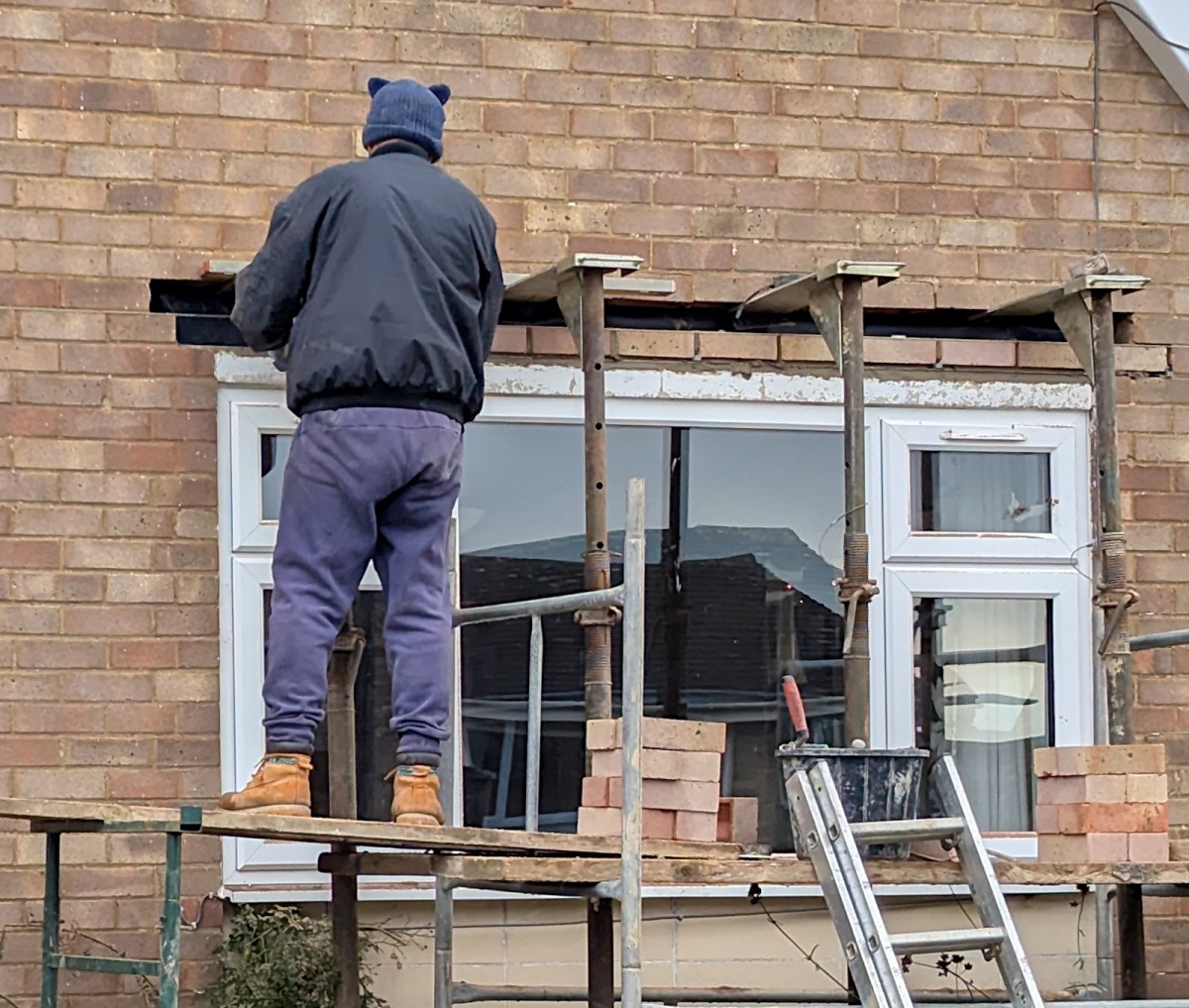
We received designs for our enlarged bedroom window with opening panes, the very narrow existing window was too small for an openable section and in midsummer it got too hot; we’d like to let in some fresh air while we’re asleep. Work on the house improvements and repairs started this month as well. We were preparing for a heat-pump installation on 16th, but that was delayed until January 27th so we had to survive a lack of central heating for a little longer than we’d hoped.
I collected my season’s greetings cards from the printer and wrote and posted some of them, I hand delivered the rest. Donna ran a 10 km race at Westonbirt on 15th, her longest run so far (it was a gallant effort, a run/walk, as she needs more training to do that distance without breaks along the way).
We visited York on 21st and 22nd, to spend time with my daughters and our four grandchildren. It’s always good to see them, but it’s quite a long journey and we don’t get there as often as we’d like.
JHM: I posted 17 haiku on COVID-19; and a forward look on the war in Ukraine. World events: Bashar al-Assad fled Damascus after being overthrown; and the Parker Solar Probe broke the record for the closest pass of the Sun.
On 7th, we drove down to St Neots where we have many friends, including Kevin. He had married Lariana who we also know, a few weeks earlier in South Africa, and it was wonderful to be there for the UK celebration and to meet Lariana’s son for the first time. What a lovely occasion!
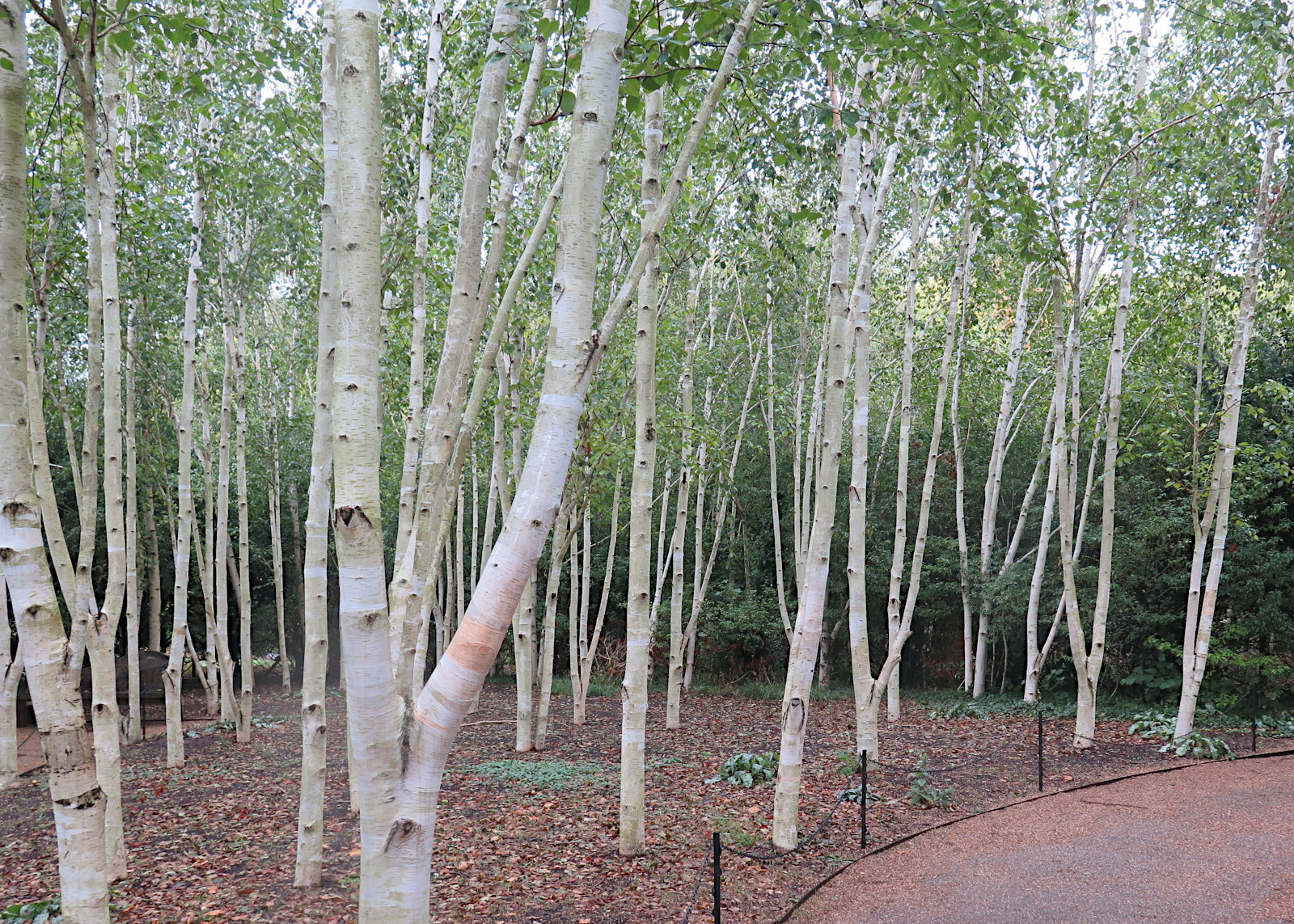
We stayed overnight and spent the following morning at Anglesey Abbey, a National Trust house and garden that we love, but have not been able to visit for some years. The photo shows some silver birch trees growing alongside Anglesey’s Winter Walk – so beautiful. In the spring, there’s a dense cover of maroon tulips beneath these trees.
And finally we were able to spend more time with Kevin and Lariana before driving home to Cirencester.
I bought a refurbished Pixel 7 phone to replace my old Pixel 3. I was very pleased with it once I’d transferred all my data across and got everything arranged to my satisfaction.
I completed the task of transcribing Dad’s diaries and continued scanning old 35 mm films.
Highlights of the month for me were the sinking of another Russian ship by Ukrainian drone boats, the third flight of Starship, and a visit to The Newt and its Roman villa reconstruction (see photo above).
This month I watched live video as NASA astronauts launched to the International Space Station on SpaceX Crew-6, Isobel’s brother Will died in Glasgow after a long illness, and Greenshop Solar sent an engineer to survey our property for solar panels. We had a day in Bristol on 18th when we visited the old docks area and enjoyed a stroll down Park Street, and we drove to Weston on 31st and stayed for a week, so more on that in the April Blast from the past.
We walked in Cirencester Park on a dry, sunny but cold day. The photo shows one of the sculptures that was on display there and on the far right, the Broad Ride leads down the hill into Cirencester. You can see the Parish Church Tower at the far end. The Park is a lovely feature of the town, and because some of the local footpaths from home lead into the park much further west, it means Broad Ride and some of the side trails are alternative ways to walk into town and back.
We were helping to look after Donna’s Dad, Tony. He was suffering from Parkinson’s and the dementia that typically comes with it when it’s fairly advanced. Sometimes he worried about things that he was imagining, but playing YouTubes on the TV distracted him most wonderfully if they were on his favourite topics – wild birds, motor bikes, places he knows and so on.
COVID-19 took off in the UK in March, Donna and I were taking precautions early in the month, but by the end of March government lockdowns were under way as well. It seemed a great blessing that Tony was at home and, as carers, we could visit as part of the household. Otherwise Tony would have had to go into care as Isobel could no longer manage on her own, and then it would have become impossible to visit him. Public reaction to COVID-19 was sometimes odd, there was a run on loo rolls in the shops, for example! Many supermarket shelves became empty.
My new computer arrived, a System 76 Gazelle laptop running Ubuntu; Donna and I celebrated our 22nd wedding anniversary, and by the end of the month we were beginning to discover what living with COVID-19 was going to be like.
World events: The WHO declared COVID-19 to be a pandemic; and by 24th the United Kingdom was in lockdown.
On 14th March I drove up to Thorganby for the day and returned in the evening. It was great to see the family and share lunch with them. The photo was taken at the playing field on the southern edge of the village.
In St Neots I continued meeting with several different groups of friends. Mo had lost his job and they had not even paid him for the hours he’d done. Sue was worried about not having been tithing, but I pointed out that we’re a royal priesthood, so we should be receiving tithes and taxes, not paying them! John was understanding more and more about Jesus’ teaching on how to live life and how it’s about people, not organisations.
Eclipse in cloud
There was a partial solar eclipse on 20th, and I sponsored Debbie who was eating on £1/day for a week.
JHM: I wrote about watching a potter; and about pictures and music. World events: Ancient cities including Nimrud were destroyed by ISIS; and the Dawn probe orbited Ceres, the first visit to a dwarf planet.
I retired from Unilever, my last day was on 26th when there was a leaving ‘do’ at lunchtime, the photo shows my boss, Pete, chuckling. He was probably about to make a funny remark at my expense! I’d taken a lot of photos earlier in the month for memories of the Colworth Research site, it was a grand old house with landscaped gardens and felt a bit like working on a National Trust property!
Beth, Paz and Meredith visited on 31st, perhaps on their way south from York for some time with Paz’s parents in Hastings. St Neots is about half way so it made a good place to break the journey.
I was working for Unilever Research, helping with web development tasks as part of the Knowledge Systems Group (KSG). The photo was taken from my desk, probably on my Nokia phone. This building would later be demolished (see Nov 2009).
World events: China passed a law to prevent Taiwan becoming independent; and the dwarf planet Makemake was discovered.
The garden wall at the front of the house was cracked and leaning, and also narrowed the entrance making it harder to park our two cars side-by-side. So I knocked it down – goodbye wall! The car you can see is my Ford Sierra, bought at Harrison Ford in Weston-super-Mare. We always referred to him as ‘Harry’.
This month we bought tiles for our planned new kitchen, Debbie had a birthday party in Bristol, Beth was working at Axbridge Court and writing up her archaeology project, and I was at several Unilever computing meetings and a three day Java conference in London.
World events: Sony released the Playstation 2; and Vladimir Putin was elected President of Russia.
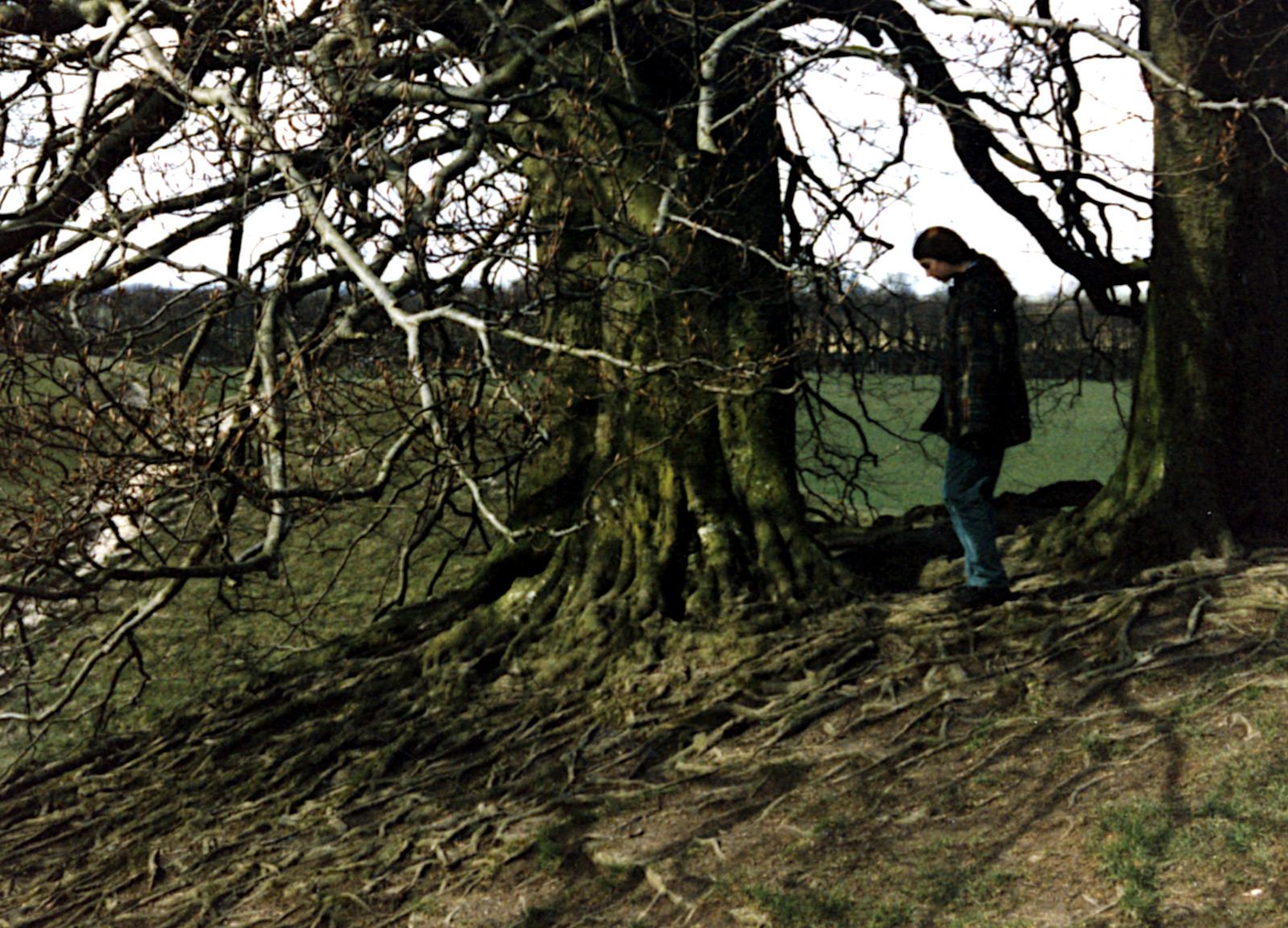
Judy and the girls did some trips together while I was at work, the photo shows Beth on a visit to Avebury.
Although she was still very fit, Judy couldn’t really handle the pace or the stress of teaching and had given up her job. The staff at Cotham Grammar School had made a retirement collection and given the money to her, specifically to visit Paris which she had always wanted to do.
We flew out from Lulsgate and stayed in a tiny, backstreet hotel. The room had a restricted view onto an inner courtyard, but we spent very little time there and were out and about in the city a great deal. One day, we climbed up the first two stages of the Eiffel Tower and I was very impressed that Judy managed to make it all the way quite easily. The weather was perfect, three sunny, warm days. On 23rd we sent a postcard of the Arc de Triomphe to my Mum and Dad in Cirencester.
There was some serious storm damage along the sea-front in Clevedon, we went to take a look and were suitably impressed. On 16th Debbie and Beth performed at the Colston Hall with the Nailsea orchestra.
And on 25th we spent the morning in Charlton Kings with Judy’s Mum and Dad, and the afternoon with mine in Cirencester at Churnside. Cindy came too with little Sebastian.
World events: Police sealed off Brixton after poll tax protests; and Imelda Marcos went on trial.
We were living at 22 Rectory Drive in Yatton, between Bristol and Weston-super-Mare. Debbie had her tenth birthday and Beth was approaching seven.
I was working for the Plant Science Division at Long Ashton Research Station, though to be honest the project I’d suggested was not going very well. I don’t think anyone was surprised, it was ambitious and tricky to achieve; I needed to cut frozen sections, treat them with an antibody attached to a fluorescent marker to localise the plant hormone gibberellin, and then examine them in the frozen state.
World events: The GNU Manifesto for a free computer operating system was published; and Mikhail Gorbachev became leader of the Soviet Union..
Beth was approaching two-years old, and Debbie was five on 12th. This shot was taken in the lounge of our house in Rectory Drive, Yatton. I’ve cropped it wide so you can see some of the girl’s toys as well as some details in the kitchen beyond. Judy was at home with the girls at this time, but considering teaching again as soon as Beth was old enough. I was working at Long Ashton Research Station.
Most of our local shopping was done in Yatton’s Precinct, a small paved square surrounded by small shops and a compact Somerfield supermarket with a small car park nearby. This was an easy walk from home and had all the essentials, we banked at NatWest on the corner there, bought bread at Pullins Bakery on the High Street, and there was a good hardware shop at the other end of the village.
Debbie was born on 12th March at Bristol Maternity Hospital which was in Queen Victoria House, Redland Hill at that time, a large, red brick building. I was with Judy almost up to the birth, but she was getting exhausted and it was decided there should a surgical intervention to speed things up and I was politely told to leave.
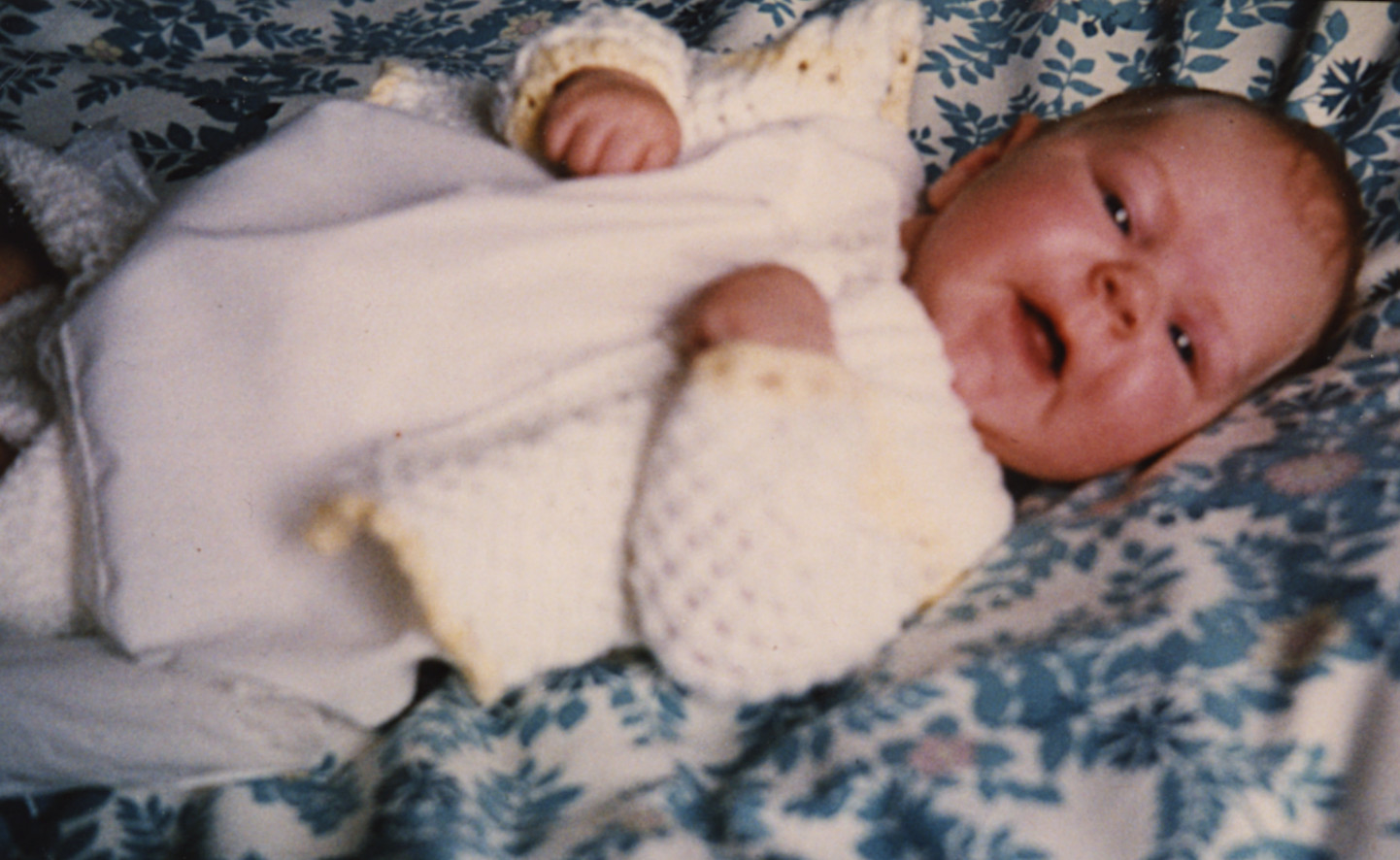
I was allowed to return after fifteen minutes to find a tired Mum and a sleeping daughter. They were able to come home a few days later. How exciting to be no longer just a married couple, but now a young family! The photo is the earliest I could find, but Debbie was clearly a couple of months old by then.
On 28th we travelled to Lincolnshire with Judy’s Mum and Dad for her brother, Frank’s, wedding to Kathy the following day. This was Debbie’s first journey – she probably slept most of the way!
On 17th March I was still collecting data from my final year project, but I’d already written up the results of three trials and it was too late to fully analyse the fourth trial as the project report needed to be submitted.
I was sharing ‘digs’ on Widcombe Hill with my friend Pete, we had a shared room upstairs in the home of Colonel and Mrs Boss. Pete was having treatment for a tuberculosis infection in a kidney, he’d had part of one kidney removed and was now taking tablets daily and needing regular injections as well. Fortunately Mrs Boss was a nurse and was able to administer the injections.
There were deep snow-drifts at the beginning of the month. Around 13th of March I was on a Lower Sixth day trip to London. We visited the GPO Tower and took the lift up to the rotating restaurant at the top (it was open to the public in those days).
Towards the end of the month I went on a week’s biology field course at Brantwood House overlooking Coniston Water, returning in April. We stayed in the old home of John Ruskin; it’s no longer a field centre, but is managed today by the National Trust, but back then we had the run of the place!
It may have been around this time we moved from the Beeches Estate to 37 Victoria Road (Churnside), previously my grandparents home. Parts of the house were always cold in the winter, particularly the hall and the kitchen, I remember. Dad had two paraffin heaters to help keep the place warmer, and this is the user manual for the Aladdin heater that was usually in the kitchen. In March it was only lit on particularly cold days.
I was in my second year at Querns School. On one occasion, I don’t know when, I clearly remember being dropped off in the morning by my Grandpa’s chauffeur (Cooper). This happened sometimes, though usually Mum or Dad would take me to school; when I was older I used to ride my bike instead. Dad had given me a note and told me to give it to Mr Cooper and my six-year-old mind told me this was terribly important.
I jumped out of the car and thanked Cooper, but completely forgot the note. I burst into tears and ran back towards the car yelling, ‘Mr Cooper, Mr Cooper’. The car had already started to move, but he heard me, stopped, and I gave him the note. Later, Dad told me it wasn’t that important and I shouldn’t have got so upset about it. He told me that Cooper had mentioned that I ‘took on so’.
On 10th March, all BBC medium wave broadcasts changed to new, internationally agreed wavelengths. This tuning diagram was printed in the Radio Times and Dad kept it as a guide to future listening.
Mum and Dad had a valve radio in a brown, wood effect, bakelite case (I still have it). Although I don’t remember it from 1950, I do remember ‘Listen with Mother’, probably from 1952 or ’53 and later. I also remember ‘Uncle Mac’ broadcasting children’s music selections. And in 1957, when I was nine, I remember hearing the ‘beeps’ from Sputnik picked up by the radio telescope at Jodrell Bank. All of this on the same little radio. But I was only twenty months when the frequencies changed.
World events: The first VW Microbus rolled off the assembly line; and Egypt demanded that Britain remove all its troops from the Suez Canal.
The 4th, 17th and 20th are noted in Dad’s diary as busy nights with ‘much hostile activity’ in the area covered by their radar equipment. On 4th he was ‘up all night’, and on 20th a German Ju 88 was ‘knocked down’ by a British fighter.There were lots of letters to and from Lilias during this month, and also some from Dad’s friend Joe Speakman.
On 22nd Dad went down to Alford in an RAF truck and caught a morning train to Kings Cross. After lunch he caught the 2.30 from St Pancras to Bedford and changed for Cardington with some service friends. He played piano in the NAAFI and the following day had some trade tests at Cardington and was found wanting in maths. The image shows a distant view of Cardington as it might have looked when Dad was there.
Then, on 28th he was back in Cirencester on leave meeting old friends and family, driving Guv (his father) around the Jefferies’ nurseries in Siddington, Somerford Keynes and Watermoor.
Last month (use the Feb 1940 link below) I described the ground floor of the John Jefferies shop at 2 Castle Street in 1940 (my memories are from the 1950s, but little would have changed since 1940). This time I’ll describe an office on the first floor.
A wooden staircase ran up from the ground floor, heading south, then north again with a small landing half way up. Turning right from the top of these stairs, then through the door on the left would take you into my Grandpa’s office. His full name was Edward Arthur Jefferies, know as ‘Ted’ to my Granny Norah (‘Nor’), or ‘Guv’ to her and to many other members of the family. He was the head of the business at the time, having taken over when his uncle William Jefferies retired or died.
Grandpa’s office had a window overlooking the Market Place and Cricklade Street. The window was at an angle on the corner of the building, just above the customer entrance which also came out at an angle on the corner. There was a large streetlight just outside the window, which always intrigued me. (The photo taken in 1915 shows Jefferies shop on the right, you can see the angled entrance and office window above. The pavement below was always known as ‘Jefferies Corner’).
Grandpa had a wooden desk with, I think, a leather insert and an expanse of blotting paper. He also had a set of rubber stamps hanging from a sort of roundabout, and an ink pad. He would always let me sit on his lap and use the stamps on some scrap paper. And one stamp had adjustable sections that could be turned to stamp the correct date, though I was never allowed to alter those.
More about the first floor next time…
World events: The Soviet Union and Finland signed a peace treaty; and Hitler and Mussolini met at the Brenner Pass to celebrate their pact.
If you enjoyed this or found it useful, please like, comment, and share below. (If you don’t see those links, click the article’s title above the main photo and they will appear.) Send a link to friends who might enjoy the article or benefit from it – Thanks! My material is free to reuse (see conditions), but a coffee is always welcome and encourages me to write more often!