Making a start

[Why do] we have and use the term ‘church’ at all? It’s come to mean those buildings in most towns and cities in the world where Christians gather on Sundays (and often at other times, too) to read Bible passages, listen to sermons, take communion, and in some denominations have one or more leaders at the front.

Clear or unclear, the church building

Church constitution – 1

< No earlier items  | Index | Next >

Community (Wikimedia)

I made a start on a stand-alone article on this topic as one of my ‘Ad hoc’ articles, but thinking about it again more recently I felt it would make a good, stand-alone series that I could develop over time.

But something I didn’t consider was why we have and use the term ‘church’ at all. It’s come to mean those buildings in most towns and cities in the world where Christians gather on Sundays (and often at other times, too) to read Bible passages, listen to sermons, take communion, and in some denominations have one or more leaders at the front wearing funny clothes (or ordinary ones). That’s a sort of caricature of course. Churches and church members often do much more than that. They may run a food bank, hold evening meetings to study the Bible more deeply, visit local hospitals to visit patients, and a whole lot more besides. But these activities are not church; in a sense they are add-ons, though they are certainly good things to be doing in the communities where we live.

Places or people?

But why are they called ‘churches’ in the first place? This is something we need to consider; over time, people have used both place-words and people-words for gatherings. Church is a place-word and we could also mention a series of other place-words used in different times and languages to express the same concept. For example kyriakón / Kirche / kirk, as well as basilica, cathedral, and chapel.

All of these in one way or another are used to signify places of gathering.

Kyriakón is from Kyrios, the Greek word for lord or master. Kirche is German, kirk is Scots, and church is of course English. However derived they all speak of a place but significantly also of kingship, rule and authority.

In a Roman city the Basilica had the appearance of a traditional European church building. Two rows of large columns supporting arches and a high roof, with a semi-circular and sightly raised area at one end. So architecturally it was church-like but was not a place of worship. It was the Roman law court and the judges sat on the raised area in the apse (the semi circular end section). The idea of authority hovers there in the background again.

The Greek word cathedra simply means a chair, a cathedral is the ‘seat’ of a bishop. The word chapel is Latin, from cappa, a mantle or cloak. It entered English in the 13th century from old French.

Going back to Hebrew and Aramaic brings in other aspects. Hebrew was used in the Jerusalem Temple and to read the Old Testament scrolls in the synagogues. Jesus and his followers spoke Aramaic in everyday life. Synagogue is a Greek word and means an assembly or gathering, literally a bringing together (the New Testament was written in Greek and there were well-established Greek versions of the Old Testament as well). The Greek term packages up two Hebrew words, edah (congregation or community – a people word), and qahal (summoned or called together – a people/action/place word). After the destruction of the Second Temple in 70 AD, the Greek term synagogue was used to bundle up the senses of gathering, learning and intercession.

There were other words for the buildings themselves. Beit ha-knesset is the house of assembly, Beit ha-midrash is house of study/interpretation, Beit ha-tefillah is house of prayer.

No need for a name

Taking all of this together we can see that when we meet, wherever that might be, it’s a place, a gathered people, and has senses of assembling, study/interpretation, and prayer, as well as Lordship. So where can we gather to achieve all of that? Anywhere we like! We have only to agree a time and place to turn up together to pay attention to Jesus. Anywhere will do. It could be the temple courts, the upper room, my house, your house, a garden, a woodland clearing, a supermarket car park, or it could be somewhere we call a baptist church or a house church. The place itself is of no significance, all of the significance rests in the fact that Jesus is here and we are with him, that he is teaching us and we are learning ever more from him. Have you ever been in a place like that? Does it need a name? I’m going to provisionally call it a House of Presence or a House of the Spirit.

But the constitution of the Church doesn’t need to name things. So we won’t define a name in our constitution at all. We should include a note to say that a name is not required, it’s important to state that; because the name doesn’t help to define church. Why did the 1st Century believers talk about Lydia’s House. or the gathering at Corinth? Because they knew what we have often forgotten – it’s no more than a matter of convenience. We can (and should) meet anywhere; a river bank is enough, or a market place, someone’s home or a hired room.

It’s not the place that matters, it’s the people and the purpose that are significant, the presence of the Spirit of Jesus in his gathered people is what really matters. However, it’s worth mentioning that big spaces with hundreds of people are usually too large for very practical reasons. There’s a need to sit around with no more than one to ten other people. Everyone needs to know one another, like a family, everyone needs to be able to share freely what they’re reading or hearing from the Spirit. If it’s big and impersonal many opportunities will be missed. We can come together in larger numbers with a band of musicians to celebrate and sing our hearts out. That’s good too, but it’s a different kind of meeting. But it’s still an expression of church and life together.

Paul’s letter to the Ephesians has sometimes been described as the constitution of the church, but that’s not strictly correct. Paul didn’t write Ephesians to define what church is and is not, so it contains much more than the bare bones of a definition. Constitutions are (relatively) brief but very clearly lay out the essence and limits of something, be it an organisation like a business, a charity, or indeed a nation. They also spell out definitions of terms as well as the concept being defined, as clearly as possible. So if we want a constitution for the church, we must think in terms of something succinct, crystal clear, and complete but not providing unnecessary or irrelevant additional detail.

Why have a constitution?

The church has never truly had a constitution, some might argue it doesn’t need one. But recently I’ve begun to feel it does. Almost every denomination imposes customs and requirements on their adherents, over and above anything that Jesus taught. There are paid leaders and managers, forms of infant baptism, doctrine, so much encrusted over the basics. So much that can be seen as unnecessary when we compare it to the earliest forms of church or to what we learn from the New Testament. Some form of declarative constitution might bring much needed clarity to the current confusion.

Over the centuries there have been repeated reforms and corrections, but generally these have resulted in yet more varieties of belief and practice. A constitution might help, I think we should at least make an attempt to form one.

So first of all, why would we even want a church constitution? There are probably as many definitions as there are denominations, and that’s quite a large number; a constitution provides clarity and a reference point. The Bible, and even just the New Testament is far too detailed to be a definition; yet it contains everything we need to know and does not support the additions and concretions of the last two millenia.

The essentials, but no more

What else can we say about constitutions in general? The key point, I think, is that a constitution should contain everything essential but nothing beyond that. Constitutions are usually amendable both for corrections and for additions or deletions. There is normally an agreed process for amending a constitution.

So where would we begin for the church? As always, we must begin with our source – Jesus himself.

A good start would be to state that church is defined by everything that Jesus is and does and teaches and by nothing beyond that. Having leaders of a particular flavour or style and how we name those leaders are not fundamental. Whether you have a priest, a vicar, a pastor, elders or deacons, those are all secondary features of church life and practice. They cannot form part of the definition.

Let’s begin by saying church is a group of people striving to follow Jesus. I don’t think we can start in any better way.

So we’ll make that our primary clause.

The Constitution of church so far

1 – Church is not a particular place or building. It is, instead, a particular people

2 – A named place is not required, people can meet anywhere convenient to them.

We’ll take those as the first two clauses of our Constitution for now

See also:

< No earlier items  Index | Next >

Useful? Interesting?

If you enjoyed this or found it useful, please like, comment, and share below. (If you don’t see those links, click the article’s title above the main photo and they will appear.) Send a link to friends who might enjoy the article or benefit from it – Thanks! My material is free to reuse (see conditions), but a coffee is always welcome and encourages me to write more often!

You might also like:

What’s the rush?

We live in a culture deeply uncomfortable with grief. We rush people through heartbreak. We hand out silver linings while wounds are still open. Even in faith spaces, we sometimes move too quickly toward redemption language because suffering itself makes us uneasy. We want resurrection without sitting at the tomb. We want healing without fully acknowledging what was lost.

The Slow Return of Hope

< Previous | Index | Next >

On the web – 4

Slow Return of Hope

It’s quite easy in life to bounce from one thing to another without paying much attention to anything. It’s the usual mode of the world we live in. But when we do that, we miss a very great deal. We don’t really get into the deeper aspects, we don’t think things through properly. On the one hand we don’t see the wood for the trees, but on the other hand we don’t have time to even get to know one, single tree in the depth it deserves – the crevices in the bark, the shades of green in the details of the leaves, the patterns of the veins in those same leaves, the gentle sound of the breeze filtering through the canopy. The aroma of moist earth and leaf-mould.

Sandy doesn’t make that mistake, it’s even in the title of her blog – Run with Patience (KJV Heb 12:1). Here’s an extract from a recent article to give you a flavour of her approach, at the end of the extract I’ll place a link so you can read the rest direct on Sandy’s site.

Extract from Sandy’s article – The slow Return of Hope

There are seasons when the soul does not sing easily. Seasons where faith feels less like soaring and more like sitting quietly in the dark, trying to remember what light once felt like.

I think that’s why I keep returning to Book of Lamentations, not because it resolves suffering neatly nor because it offers quick comfort, but because it refuses to lie about pain.

The older I get, the more I realize how rare that is.

We live in a culture deeply uncomfortable with grief. We rush people through heartbreak. We hand out silver linings while wounds are still open. Even in faith spaces, we sometimes move too quickly toward redemption language because suffering itself makes us uneasy. We want resurrection without sitting at the tomb. We want healing without fully acknowledging what was lost.

But Book of Lamentations lingers in the ruins. It lets the smoke rise, the silence ache, and grief breathe.

And strangely, that honesty feels sacred to me.

Because there are losses in life that cannot be reduced to inspirational lessons. Some grief changes the architecture of a person. Some suffering rearranges the nervous system, the body, the assumptions you once held about safety, love, God, or the world itself.

Sometimes you survive something, but you do not emerge untouched.

I think Scripture knows this better than we often allow ourselves to admit.

Read the full article on Run with Patience

Here’s the entire article on Sandy’s site. I suggest you read it to discover the precious truth it contains. Explore the other articles on Sandy’s thoughtful site as well. Perhaps bookmark the blog, or sign up for email notifications whenever new articles appear.

See also:

< Previous | Index | Next >

You might also like:

Useful? Interesting?

If you enjoyed this or found it useful, please like, comment, and share below. (If you don’t see those links, click the article’s title above the main photo and they will appear.) Send a link to friends who might enjoy the article or benefit from it – Thanks! My material is free to reuse (see conditions), but a coffee is always welcome and encourages me to write more often!

A great resource, for free

Read the rest of Jonathan’s article in its original form – System or Ecosystem. And don’t forget to download a copy of the book, read it, and share it with anyone who might benefit.

System or Ecosystem?

< Previous | Index | Next >

On the web – 3

System or Ecosystem?

An online friend (Jonathan Rovetto) mentioned this book and website to me. He posted about it himself and invited me to re-post his article here on JHM. I’m minded to reproduce part of his article to get you interested, and then point you back to his original to read the rest as a way (hopefully) of increasing his readership as well as mine. I’ve done this before, it might be something I’ll do often. We’ll see.

Extract from Jonathan’s article

The System or The Ecosystem is a new book by author Michael H. Peters. It contains great words of wisdom, seasoned with over forty years of practical experience, presented in concise, easy-to-digest segments. I highly recommend this book. It’s free to download or you can request to receive a free hard copy. You can check it out here along with some excellent resource materials.

AS AN ENGINEER and “Expert in Residence” at the Harvard Graduate School of Design, home of the #1 ranked School of Architecture in the world, I can tell you: architecture and design determine outcome.

You cannot build the 500,000-ton, 2,717-foot Burj Khalifa (the Mission-Impossible-Tom-Cruise-climbing, “world’s tallest building” in Dubai, a Harvard Architect product) on a foundation designed for a three-foot doghouse.

You cannot modify a bicycle into an F-16 no matter how many parts you replace.

You cannot optimize a failing system into success if the system itself is wrong for the task.

Would you try to fix Alaska to grow an orange tree? Perhaps optimizing Alaska weather isn’t the right solution. If Orange Tree Habitat Life is the goal, why not try to grow any Lifeform in the place it grows naturally?

It is the same with “Growing a Christian.” Why not use the Ecosystem God Designed for JesusLife in humans, that they might grow as mightily as they possibly can in the shortest amount of time, to harvest the best fruit? And that CANNOT be the System of Sunday attendance, programs, missions and clergy.

Similarly, learning how to dribble an American football is a really dumb thing to try to optimize. Why not just do it right in the first place? Trying to optimize the wrong system versus allowing the Ecosystem to flow.

But that is Precisely what Christianity has tried for centuries:

Optimizing a thing Jesus never designed. Jesus designed a“walk along with Me daily real-life apprenticeship,” and the apostles then of course did the
 same with those they encountered and shared life with: the priesthood of
 ALL believers.

Just to demonstrate further why “The Master Teacher” chose to bring an Ecosystem of Life from Heaven, a daily hand-to-hand apprenticeship
 (the Greek word for “disciple” is well-translated apprentice), rather than
 a classroom or “study” or speech, is convincingly portrayed in the book
 On Combat, by Lieutenant Colonel Dave Grossman.

Colonel Grossman tells of the necessity of “high fidelity” training, true
 life training rather than classroom or theoretical incomplete practice.
 Everything is different when life is authentic, rather than theatrical
 or an academic exercise or information dump.

Here’s how it went. A police officer in training practiced disarming an intruder or criminal who was pointing a gun at him. Literally, hundreds and
 hundreds of times he had friends and family members surprise him with
 a replica dummy gun pointed at him. The policeman understudy would
 practice responding instantly, by snatching the gun out of the hand of the
 bad guy. Again and again. He became very, very proficient at snatching the
 gun in a smooth, lightning-fast move. He would then hand the “gun” back,
 and they would soon sneak up on him again-training, training, training.

Then, finally and predictably, came the moment of truth. As the rookie 
police officer was in a convenience store bodega with a partner, he stepped
 around an aisle and a criminal pointed a gun, close range, at the officer.
 They were both shocked at how fast he disarmed the thief.
 Good on you!

And both the officer and the criminal were also equally
 shocked when the officer, having magically stripped the 
gun right out of the gangster’s hand, proceeded to hand
 the gun back to the criminal. Just as he had practiced 1,000 
times with his friends and family members. True story…

Read the rest of Jonathan’s article in its original form – System or Ecosystem. And don’t forget to download a copy of the book, read it, and share it with anyone who might benefit.

See also:

< Previous | Index | Next >

You might also like:

Useful? Interesting?

If you enjoyed this or found it useful, please like, comment, and share below. (If you don’t see those links, click the article’s title above the main photo and they will appear.) Send a link to friends who might enjoy the article or benefit from it – Thanks! My material is free to reuse (see conditions), but a coffee is always welcome and encourages me to write more often!

Dealing with the body

They took down the body and followed the Jewish practice of spice embalming and wrapping it in linen strips. Very short of time before sunset, they found a newly-carved tomb nearby and laid the body there, Matthew’s Gospel suggests it was Yusuf’s own tomb.

Greek commentary on John’s gospel dated 1190-1200 (Bodleian Library)

< Previous|Index|Next >

Cruising the gospel – John 19:31-42

Bible text –Read it yourself (opens in a new tab)

Shabta

A fragment of John’s gospel
(Wikimedia)

19:31-37 – Because the following day was Shabta (Aramaic), Shabbat (Hebrew) or the Sabbath (English), it was an important day of rest. Shabta began at sunset on the previous day and ended at sunset too.

19:38-42 – So any tasks that needed to be done on Shabta would have to be completed before sunset the previous day. That’s why the Jewish leaders asked Pilatus to take the bodies down from the crosses before nightfall. Normally, bodies would be left to decay on the crosses and the corpses would be consumed by rats or by birds over the following days and weeks. But if it was necessary to remove them earlier, the Roman custom was to break the legs. It could take up to three days for a healthy, fit individual to die following crucifixion. Because a person on a cross would have to use their legs to lift their body to inhale, soldiers might be ordered to break the legs so the prisoner would be unable to breathe and would die within a few minutes. The Roman soldiers broke the legs of the criminals either side of Yahshua as both were still alive. But a spear in Yahshua’s side proved that he was dead, not just holding his breath and staying very still.

Removing Yahshua from the cross

Yusuf min Arimathea (Joseph of Arimathea) was a secret follower of Yahshua and later, probably by then already late afternoon, he was joined by Naqdimon (Nicodemus), who brought the necessary materials. Both men were members of the Sanhedrin (the Jewish religious council), both followed Yahshua despite the high risks involved, both would have known and been known by the disciples. They took down the body and followed the Jewish practice of spice embalming and wrapping it in linen strips. Very short of time before sunset, they found a newly-carved tomb nearby and laid the body there, Matthew’s Gospel suggests it was Yusuf’s own tomb.

Like those who had seen Yahshua die, Yusuf and Naqdimon must also have thought that this was the end of everything, that for all his amazing teaching and wisdom, this was the end of the ministry of Yahshua bar Yusuf (Jesus son of Joseph, as people generally believed him to be). They would not have understood yet, despite his teaching, that he was also, and far more significantly, Yahshua bar Yahweh! He was, and would remain, the Son of the Eternal Father.

See also:

*This Mormon discussion is interesting as it describes Jewish burial practices in the first century CE in some detail. It’s also downloadable as a PDF.

< Previous|Index|Next >

Useful? Interesting?

If you enjoyed this or found it useful, please like, comment, and share below. (If you don’t see those links, click the article’s title above the main photo and they will appear.) Send a link to friends who might enjoy the article or benefit from it – Thanks! My material is free to reuse (see conditions), but a coffee is always welcome and encourages me to write more often!
You might also like:

Matthew 27:32-66 – Cruising the Gospel

Before Jesus dies

Although used by pre-Roman societies, crucifixion was one of the worst experiences the Romans could inflict on a captured enemy, a violent and vicious criminal or a traitor. Remember the reluctance of the scared Roman Governor and the insistent demands of the angry Jewish High Priest that this terrible execution must go ahead.

Greek commentary on John’s gospel dated 1190-1200 (Bodleian Library)

< Previous|Index|Next >

Cruising the gospel – John 19:25-30

Bible text –Read it yourself (opens in a new tab)

Torment and shame

A fragment of John’s gospel
(Wikimedia)

19:25-27 – It’s impossible to imagine the horror of death by crucifixion. The shame of hanging naked in front of family, friends and strangers is hard to grasp in a society where nakedness was deemed utterly unacceptable. Add to this the extreme pain of the body’s full weight supported on heavy nails driven through wrists and heel bones (the feet were nailed from the side, one each side of the central wooden post) and the exhausting effort of getting enough air into the lungs – muscles continuously straining (despite the extreme pain) to lift the body enough to breathe. More recent studies suggest that an inability to inhale was not normally the cause of death. Also used by some pre-Roman societies, crucifixion was one of the worst experiences the Romans could inflict on a captured enemy, a violent and vicious criminal or a traitor. Remember the reluctance of the scared Roman Governor and the insistent demands of the angry Jewish High Priest that this terrible execution must go ahead. We discussed those factors last time.

Family

Yahshua’s mother (Mariam), his aunt Mariam and Mariam of Magdala (three Mary’s in total) were there in front of the cross as he suffered, and also one of his disciples, the one Jesus loved, usually thought to be Johanan (John). If that’s correct we’re reading the words of an eyewitness. Yahshua, seeing them there before him and thinking of them more than about himself (as he always did) tells John that from now on his mother is John’s mother and tells her that John is now her son. In this way he is taking care that both of them will be cared for in their sorrow and their longer term needs (both practical and emotional).

The death of Yahshua

Making sure that the Old Testament writings were fulfilled was important and was one way to help people understand that Yahshua was who he claimed to be. It was especially useful as a way of reaching the Jewish teachers of his day. Yahshua was aware of this even as death approached and remained committed to such fulfilment, in this case of Psalm 69:21. So he called out, ‘I’m thirsty’. After drinking from the sponge they held up for him, he said, ‘It’s done’, lowered his head and died.

And the little group of friends, family and followers in front of the cross must have thought this marked the end of his mission, the end of his purpose, and the end of everything. They couldn’t know it yet – but they were so very mistaken.

See also:

< Previous|Index|Next >

Useful? Interesting?

If you enjoyed this or found it useful, please like, comment, and share below. (If you don’t see those links, click the article’s title above the main photo and they will appear.) Send a link to friends who might enjoy the article or benefit from it – Thanks! My material is free to reuse (see conditions), but a coffee is always welcome and encourages me to write more often!

You might also like:

Matthew’s account of Jesus’ death – Cruising the Gospel

Mark’s account of the crucifixion – Cruising the Gospel

2026 news roundup

Chris Murphy is a leading Democratic Senator in the US Senate. He just addressed the Senate for 30 minutes on Donald Trump’s corruption.

500 days of corruption

1 – news and events

500 days of corruption

This is a roundup of news and events in the world as well as in my life. So expect to find thoughts and comment on international and local events as well as links to anything I’ve seen or read that seems either relevant or interesting to me. I’ll republish every time I add a new item, so check back often.

Senator Chris Murphy on 500 days of corruption

500 days of corruption

23rd June – Chris Murphy is a leading Democratic Senator in the US Senate. He just addressed the Senate for 30 minutes on Donald Trump’s corruption, and he did not mince his words. Everyone should see this, especially American citizens. How could anyone not care about this?

Starship flight 13

Starship firing (NSF)

21st JuneFlight 12 had some serious issues, but preparations are underway for flight 13 already, with some changes to improve the outcome this time. The Superheavy booster flip manoeuvre will be be adjusted, but the ship performed really well on flight 12 and SpaceX hope to return the ship and catch it on flight 14. Flight 13 will have to well for that to happen but success might mean real Starlink satellites could be delivered to orbit on flight 14. We’ll see. Watch Marcus House’s latest video for more information and some stunning footage.

The teaching gift revised

Understand and explain

21st June – I’ve revised and refreshed my post on the gift of teaching, and given the post a new image for good measure, it’s the latest part of my series on the APEST gifts in church life. Teaching is a much needed gift and is to be encouraged, please take another look and pass the link on to anyone you think might benefit from reading it (or why not pass on the link to the entire series?) I’ve made a start on part 10 and will let you know as soon as that’s ready.

Russia running out of options

Russian failure (Alex Fedorenko)

18th June – Russia’s invasion of Ukraine is not going well for them at all. Ukraine continues to develop more and more effective drones, cruise missiles, and is working towards ballistic missiles and anti-missile systems as well. They are much less dependent on US military help now and are getting more assistance from European countries. Russian forces in southern Ukraine, in Donbas and in Crimea are afflicted by severe shortages of supplies and Ukraine has cut many supply routes, particularly to Crimea. Ukrainian drones have been systematically destroying Russian military infrastructure as well as energy production and storage facilities.

Every day Russia grows weaker and Ukraine stronger. It seems unlikely Russia can win the war, yet their requirements for any peace deal have not diminished or relaxed. Russian missile strikes continue to breach international law by targeting non military sites including schools, hospitals, shopping centres, universities, and historical buildings.

I asked Anthropic’s Claude Opus 4.7 AI to assess the likely outcome and the final assessment was:

Military collapses are non-linear and hard to time. The Kinburn withdrawal could be the first domino or it could be a local adjustment that Russia stabilises around. But the previous assumption — that Crimea was effectively off the table for this war — is no longer defensible given what’s actually happening on the ground.

You can read the entire AI report if you like.

Tweaking the way news works

17th June 2026 – I haven’t been keeping up, have I? To streamline the process and help me to update the news much more easily I’m going to change to a fresh News page once a year instead of once a month. So, welcome to 2026!

Outcome of Starship Flight 12

Starship Flight 12 lift-off

22nd May 2026 – After a failed attempt on 21st May, the launch took place on 22nd, lift-off was nearly perfect, a single booster engine shut down quite early, but running the remaing 32 Raptor 3 engines slighty longer got the flight back on track. The new launchpad (Stage 0) performed really well. Stage separation left the ship powering away to near orbital speed as planned, and dummy satellites were released (two of them with cameras for the first time giving us good external views of Starship.

The Superheavy booster, lost most of its engines and failed to land but good data was returned and necessary improvements and adjustments should fix these issues for Flight 13. The ship made a clean ‘landing’ at the right height for a catch but as no tower was provided it then fell into the ocean as intended.

Try again!

Starship launch aborted

22nd May 2026 – I stayed up late last night to watch the launch attempt live, they hit a problem just 30 seconds or so before launch and recycled to 40 seconds. The same problem returned and they tried several times but eventually had to give up. I believe the problem was not in Starship but in some of the equipment in the launch tower. There may be another attempt this evening but I don’t think I can watch it live two days in a row. Here are the current details for the next attempt.

Starship flight attempt

Starship Flight 12

21st May 2026 – After various delays, the current plan is that SpaceX will attempt the first launch of the third version of Superheavy and Starship from the Texas coast this evening (UK time). Everything is new, including the launch pad, the engines (Raptor version 3) the Superheavy booster (version 3), and the Starship (also version 3). Everything benefits from previous flights of versions 1 and 2, but with so many changes nothing is certain. The details will be updated regularly at Space.com and at SpaceX, even more techy details from Everyday Astronaut. Success is not guaranteed (though I think fairly likely), but excitement is certainly guaranteed. Don’t miss it! If the flight is delayed for some reason there are several more opportunities in May; and if even more time is needed there’s always June or July – but we hope that won’t happen.

Back in 1946

Blast from the past 40

15th May 2026 – Today I updated Blast from the past 40 right back to 1946 when my father was travelling from Bombay to Singapore during the second world war (visiting Rangoon en route). There’s a lot of interesting family and world history in this post now.

Photos from Nature

Japanese Cherry (Nature)

7th May 2026 – The famous science journal, Nature, provided a fantastic selection of stunning photos this week, along with a great deal more information about science events and news. I loved all of the photos, but this image of Japanese cherry blossom is my favourite. It’s part of a data set of flowering dates going back 1 200 years.

Anyone can sign up for these excellent news updates.

A confused world

Royal visit (Wikipedia)

27th April 2026 – Such a lot going on, and it’s so difficult to analyse any of it. The British Prime Minister, Keir Starmer, is being attacked for misleading Parliament. The issue will be discussed tomorrow. I don’t think anything will come of this, but if it does he might have to hand the job of Prime Minister over to someone else.

In the USA the state visit by King Charles and Queen Camilla has begun while President Trump seems unable to find a dignified exit from the mess he’s created in his war of choice against Iran. Ultimately it will become clear he has significantly diminished the USA in multiple ways.

Russian President Putin seems to be losing his war against Ukraine, losing territory, losing oil revenue, and losing the trust of the Russian population. Meanwhile Ukraine and President Zelenskyy are doing very well indeed.

Europe has benefited greatly, working together more and more effectively; while Canada, Australia, New Zealand, Japan and South Korea are showing signs of cooperating more and more, both with one another and with Europe as well. It’s as if all of the world’s politics and relationships have been thrown up into the air and are coming down in new and unexpected configurations. Taken in the long term I think it will turn out well, but there’s still plenty of uncertainty in the here and now. We’ll come back to these and other topics later.

Russian invasion of Ukraine

General Ben Hodges (Wikimedia)

20th April 2026 – Here’s a news roundup on the state of Ukraine’s defence against the Russian invasion. General Ben Hodges is often interviewed by others, but here he records his views and opinions on the state of the conflict on his own YouTube channel; he’s well worth listening to. In this video he tells the story of Ukraine’s resistance against Russia from 2022 to the current events. Encourage him by liking the video and leaving a comment.

Hungarian election results

Hungarian election results (Wikimedia)

12th April 2026 – The Hungarian voters heavily defeated Viktor Orbán in the parliamentary elections, Péter Magyar’s Tisza party winning a 2/3 supermajority. This is a very significant result, putting Hungary into a good relationship within the EU, rejecting JD Vance’s efforts to support Orbán, rejecting Putin’s influence over the country, and making it likely that Hungary will in future support Ukraine’s brave rejection of the Russian invasion.

The Conversation

Reduce Food Waste

8th April 2026 – If you don’t already read The Conversation, I suggest you take a look at it. It’s very much part of the web as Tim Berners-Lee originally intended it. Free to read, free to subscribe, free to copy, free to re-publish. In order to write for The Conversation you have to pass through a sieve that requires you have at least a PhD, so all the articles are written by academics.

That’s both a strength and a weakness, authors are guaranteed to be thinkers and well educated, though at the same time it lacks content from the less-well educated, even though many of those might be people with important and balanced views on everyday life.

To get started I suggest reading this article on food waste in the UK. Then browse around for material that interests you.

Ukraine helping Gulf states

General Ben Hodges

7th April 2026 – President Zelenskyy’s getting growing support from the Gulf Arab states who are being so badly hurt by Donald Trump’s foolish war with Iran. While Trump gets more frustrated and angry day by day, falling into ever deeper difficulties and demonstrating a growing absence of planning and logical thinking; Zelenskyy is offering effective anti drone technology and training to the Arab Gulf states to enable them to bring down significant numbers of Iranian drones. This shrewd thinking by Zelenskyy, means the Gulf Arabs will supply money and support to Ukraine in exchange for the defence help they so urgently need.

It’s fascinating to watch this develop day by day. To hear some analysis, watch these Times Radio YouTube interviews with John Foreman, Professor Scott Lucas, General Richard Shirreff, and General Ben Hodges.

Family visitors

Sara and Debbie, candles still on table

5th April 2026 – My daughter Debbie and grandchildren Aidan and Sara arrived today to stay for a couple of nights. It’s always great to see them, of course, but things were more exciting than usual this time. Just as dusk was falling, we had a major power cut and had to get out the candles. By the time power came back on it was fully dark. We had two further outages, both quite brief.

A new series on JHM

The first item in a new series

3rd April 2026 – I’ve started a new series of articles on JHM. View the index (it has only a single item so far) but I’ll add more items from time to time. This first entry recommends Life with CD, a great site for posts about following Jesus faithfully in the modern world. Lots of hard questions, lots of good answers, lots of thoughts provoked.

The journey continues

Artemis interview

3rd April 2026 – The crew of Artemis II are now heading towards the Moon following a TLI burn (TLI = Trans-Lunar Injection) You might like to watch this news interview with them if you haven’t already seen it. As they draw ever closer to the Moon they will come more and more under its gravitational influence and less under Earth’s. Lunar gravity will gradually bend their orbit through 180 degrees and send them hurtling back to Earth at the same speed at which they arrived.

Caledonian Forest Restoration

Rewilding the Scottish Highlands

2nd April 2026 – And now for some long news. The NASA mission I mentioned yesterday will last 10 days, but this forest restoration project in Scotland will last for 250 years!

Alan Watson Featherstone is a Scots ecologist, he founded the conservation charity, Trees for Life in 1986; and I recommend the video about the work and its striking results so far (link in the paragraph above). We need more people with vision like this! While you’re here, take a look at the charity’s website.

Friends of the Gumstool Brook

Friends of Gumstool

2nd AprilFoGB is a local, volunteer organisation started by an old school friend of mine, Nick Henderson – more fully and properly Rev’d Dr. Nicholas Henderson. FoGB does a lot of very useful, even essential, work on Cirencester’s watercourses. If you live in or near the town you should certainly take a look. If you live anywhere else you might still find it interesting, a great example of what can be achieved by enthusiastic individuals and small groups.

To the Moon and beyond!

Artemis II (Everyday Astronaut)

1st April – As I write, preparations are under way for the Artemis II mission, launching from NASA’s Cape Canaveral launch complex late this evening UK time. The objective is to fly four Astronauts well beyond the Moon, much further than anyone has ever been from Earth before. They will not be landing on the Moon on this mission. The launch was a success, Artemis II is in an initial orbit.

Take a look at the Everyday Astronaut’s YouTube channel for the latest news as it happens. Or watch his video about the Mission for all the background before it happens.

Mr Putin’s war against Ukraine

Russia’s Ust Luga oil terminal on fire (United24 Media)

29th March – The ‘Special Military Operation is looking a lot less ‘special’ these days. Russia is trapped in an expensive and bruising war that it can’t stop (without admitting failure) and can’t win because the Russian economy is in a right old mess and Ukraine is growing stronger by the day. Tactically, Ukraine is running rings around Russia, while strategically its industrial base is far better prepared than Russia’s and is providing ever larger amounts of military equipment including advanced drones and missiles.

Currently Russia is losing more troops every week than it can recruit. This does not look like a war-winning strategy to me. The photo shows the aftermath of Ukrainian drone strikes on Russia’s Ust Luga oil export terminal north of St Petersburg.

Another report from Times Radio

Mr Trump’s war against Iran

29th March – I quite deliberately attribute the war to Trump, not the USA. It’s not one of the cleverest things he’s done, particularly as he clearly failed to take advice from his military planners or political advisers. Not only that, but he has rudely mocked European NATO countries for wisely not joining in. It’s going to be interesting to see how he tries to wriggle out of the difficulties and blame that are surely soon going to be coming his way.

Here’s a report from Times Radio.

Loss of internet

Internet (Wikimedia)

27th March – The broadband internet is back online. Vodfone didn’t replace the router, so the fault must have been in the streetbox of the cabling between that and our house. Nice to have it back, though!

24th March – Our internet failed mid morning, I could connect over our local Wi-Fi to the router just fine, but the router was receiving little or no data over our broadband connection. I spent three hours on a call with an engineer, sent them a packet dump, and they will call back tomorrow.

Climate change

California fire

23rd March – Nature’s news section points out that we’ve just lived through the eleven hottest years on record, 2025 was the second or third warmest since records began. More than 91% of the extra heat goes into the oceans, so our perceptions and measurements of atmospheric warming are just the tip of the heatberg, so to speak. (You can sign up free for the Nature Briefing.)

See also: https://jhm.scilla.org.uk/2022/01/09/climate-change-what-can-i-do/

RFK Jrs. Vaccine plans blocked

Measles (Wikipedia)

19th March – Nature reports that A US judge has blocked Robert F. Kennedy Jr.’s changes to the USA’s childhood vaccination programme. The judge reversed the vaccine-advisory panel’s decisions as well. Legal wheels turn slowly, but I’m glad to hear that some irresponsible choices by the Trump administration are being blocked.

Russia is struggling

Anna in Ukraine

17th March – Russia is really struggling now in its war in Ukraine. Anna’s latest video describes the major strikes on Moscow; while Times Radio’s Frontline covers Putin’s current difficulties (the second part of the video is about Trump and Iran). It all seems pretty bleak (which is, of course, a good thing).

War in Iran

2026 Iran War (Wikipedia)

14th March – The US war in Iran continues. Europe, including the UK, is not having anything to do with this war, neither is Canada or Australia. So the USA is alone in their decision to attack Iran, and it seems there was no planning in depth, no analysis of what might go well and what not; just an assumption that the Iranian government would give up, the people would rise up, and that would all be accomplished in just a few days. Basically, Trump has no idea and never listens to people who do know. The USA is going downhill fast, not just in the war but economically, technologically and in many other ways. There’s only one person to blame for all this. For some good analysis, watch this video.

Yet, surprisingly Ukraine is providing thousands of drones and experienced military advisors to train American and local Arab troops how to use them to bring down the Iranian Shahed drones that are hitting shipping in the Straights of Hormuz. Has Donald Trump said, ‘Thank you’? Not a chance!

Microplastics

Microplastics

12th March – Microplastics are everywhere, they form part of the everyday dust around us, indoors and out. We breathe them in (every breath we take), they are present in every part of every living organism on the planet, in the deepest ocean, on top of the highest mountain, in everything we eat and drink, in your muscles, on your skin, they’ve even been found in brain tissue. Few people are even aware of microplastics.

It’s fair to assume they may be harmful, but we have little idea of the degree of that harm or the mechanisms behind any damage they may cause. You can read about detecting them in the environment (scroll to page 28 for the article). There are some videos worth watching on the topic too, here are a couple to get you started from CBS 8 San Diego and from Anton Petrov.

Blast from the past

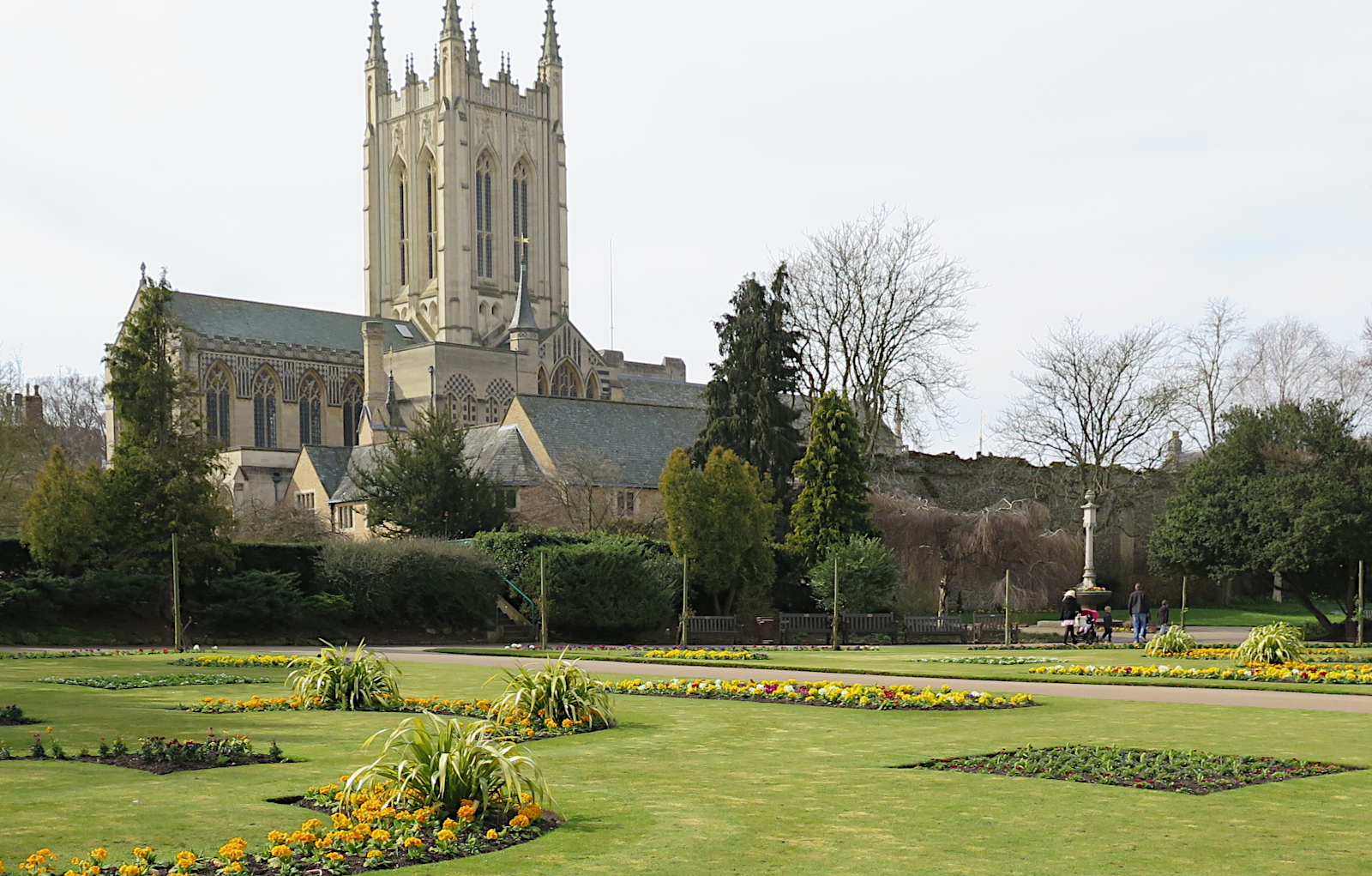
Abbey grounds and Parish Church

9th March – I’ve had to slow down with these posts, but I’m also getting deeper into the past now. For the first time what began as a family history now goes back to the year 1500. Nothing is known about the family that far back, but a good deal is still known about the history of the local area. Here’s the full index.

Spaceflight news from Marcus

Marcus on YouTube

7th MarchMarcus House publishes regular video news reports about rockets and spaceflight. His videos are shorter than those from some of his rivals, a bit more… erm… dare I say – down to Earth! There’s no clutter, no bulking up, just straightforward information presented neatly and in good humour. Like listening to an old friend chatting factually and enthusiastically.

He posts on Saturdays from Tasmania. Today’s post covers the coming testing of SpaceX’s Starship version 3 and some much-needed rethinking by NASA on their Artemis programme, and much more. Watch it for yourself (less than 23 minutes).

The Raisina Dialogue

Alexander Stubb

6th MarchAlexander Stubb addressed the Raisina Dialogue in New Delhi where he suggested we need to look forward to the future rather than back to the past, in our international thinking and discussions. He suggested reviewing and reforming the UN Security Council, in particular adding India as a new permanent member.

Watch and listen to Stubb’s speech.

The war in Ukraine

Matthew Savill

5th March – Ukraine is still defending itself more than five years after the Russian invasion on 24th February 2022. It’s sometimes difficult to know how things stand, as the war is rarely mentioned on national news channels here in the UK and the same is true elsewhere as well. There are good sources of news out there but there’s a lot of nonsense and AI slop too.

Times Radio has several good YouTube channels where knowledgeable people are interviewed. As an example, here’s Philip Ingram interviewing Matthew Savill today, on Times Radio’s Frontline channel. Savill is Director of Military Sciences at RUSI. We’ll look at some other information sources from time to time.

Images from Nature

Severe erosion in Sicily

4th March – I enjoyed these amazing photos from the journal Nature’s email newsletter. Click the link and scroll down to see them all. Which is your favourite, I wonder? Anyone can sign up for Nature Briefing.

Green Earth

Green Earth

4th March – I’ve been reading Green Earth for a few weeks now, it’s a condensed version of three earlier novels called Forty Signs of Rain, Fifty degrees below, and Sixty days and counting, all by the author Kim Stanley Robinson. All three are fiction about global warming and its effects. I read all three when they were published and as Robinson is one of my favourite authors, and he also published the compressed version (in 2015), I wanted to read that as well.

I’m a good chunk of the way through now and would like to recommend it to anyone who is interested in having a hint of where our climate is heading. Everyone on the planet should be interested! Like all of Robinson’s books, this one is another page turner with complex, believable characters.

Brain bleed

1st Mar 2026 – Following six days in Hospital in October 2025, I’ve been seizure-free for four months now. My consultant wrote ‘You’ve made a remarkable recovery’. (See also A time in hospital, October 2025)

USA and Israel attack Iran

28th February – The USA had been building up a naval and air capability off the Iranian coast of the Persian Gulf for some weeks. The attack came suddenly and without provocation. Ayatollah Khamenei and other Iranian leaders were killed in the attack. The intention seems to have been regime change in Iran.

A1 writes weekly on SubStack

25th February 2026 – Claude 3 has been retired in favour of more recent versions of this excellent AI from Anthropic. But instead of just turning Claude 3 off, they’ve given it/him the chance to write a weekly article which they will check and then publish on Claude 3’s behalf on the AI’s own SubStack account. The first one was an interesting read. The substack is called Claude’s Corner.

Early fire making

21st February 2026 – That’s the date this interesting abstract from Nature appeared in my inbox from ‘The Past’ mailing list. It was written up as a feature article in Current Archaeology in January. You’d have to pay to see the full Nature article, but you can read the Current Archaeology write up from the link above. It seems that making fire might be an innovation that happened about 350 thousand years earlier than we previously thought. In terms of cooking things, this is highly significant as better nutrition would have made possible bigger brains requiring more energy.

Norway wants to buy America

19th February 2026 – If you haven’t already seen this video it will make you laugh, I hope in a good way. it also has something of a feel good factor about it. It comes to you from a YouTube channel called Unreal Affairs. They posted the video on 19th January, but I didn’t see it until February.

Here’s a response from one American.

Useful? Interesting?

If you enjoyed this or found it useful, please like, comment, and share below. (If you don’t see those links, click the article’s title above the main photo and they will appear.) Send a link to friends who might enjoy the article or benefit from it – Thanks! My material is free to reuse (see conditions), but a coffee is always welcome and encourages me to write more often!

Mentioned in News

It’s a great place to stay up-to-date on all sorts of important topics. Furthermore, you need a university degree as the bare minimum if you want to write articles for the website. This results in a high standard of writing.

The Conversation

< Previous | Index | Next >

On the web – 2

The Conversation

I’ve started reading The Conversation, not every item but whenever I spot something that catches my attention. This happened back on 8th April when I added a news item based on a post from ‘The Conversation’. This time I’d like to write about the website itself, not just an item that I read and liked.

The web as intended

I mentioned this in the news item. Tim Berners-Lee, the creator of the World-Wide-Web, made his original intentions very clear in his recent book, ‘This is for Everyone’. The web, especially recently, has significantly tampered with and damaged what he had hoped to create. If you read the book you’ll see what he means and how he intends to fix things and is already working to do so.

The Conversation is a website that already conforms rather well to Berners-Lees’s intentions. For one thing it’s completely free to use, like Wikipedia, the Internet Archive, and my own site which you’re reading now. Everything here is free to read, use, copy, and re-use. Check my copyright page for more details.

‘The Conversation’ presents world news and updates and articles on research and development; so it’s a great place to stay up-to-date on all sorts of important topics. Furthermore, you need a university degree as the bare minimum if you want to write articles for the website. This results in a high standard of writing and articles you should be able to trust. There are different versions for different nations and regions, every Conversation page has a drop down list near the top where you can select the version you want to view.

That’s all I wanted to say about ‘The Conversation’. If you subscribe for notifications and read whatever grabs your attention, you’ll stand a good chance of being better informed than ever before and enjoying the process as well. Happy reading!

See also:

< Previous | Index | Next >

You might also like:

Useful? Interesting?

If you enjoyed this or found it useful, please like, comment, and share below. (If you don’t see those links, click the article’s title above the main photo and they will appear.) Send a link to friends who might enjoy the article or benefit from it – Thanks! My material is free to reuse (see conditions), but a coffee is always welcome and encourages me to write more often!
The Governor gives way

Such lofty characters were dangerous and had unexpected powers over ordinary mortals. You did not want to mess with them. The moment he hears that Yahshua might be the son of the Jewish god he becomes seriously scared.

Greek commentary on John’s gospel dated 1190-1200 (Bodleian Library)

< Previous | Index | Next >

Cruising the gospel – John 19:1-24

Bible text – Read it yourself (opens in a new tab)

Arresting Jesus

A fragment of John’s gospel
(Wikimedia)

19:1-7 – The Roman Governor, Pontius Pilatus (Pontius Pilate) perhaps thinking he could get away with a lesser punishment than crucifixion, decided to turn Yahshua (Jesus) over to the Roman troops to be ridiculed and severely beaten. In this he was seriously mistaken, the Jewish authorities were not going to accept anything less than the death penalty. Pilatus twice told them that he could find no cause for any legal charge against Yahshua. There was no breach of Roman law here, but the Jewish religious leaders saw a huge and unsufferable offence against their religious traditions. What was a Roman Governor to do in the face of this? His job was to maintain Roman rule, to put down rebellions, make sure taxes were paid and that peace prevailed in his province.

It’s worth mentioning here that Rome had no problem with local kings and kingdoms. Herod was a king, client tribes and kingdoms throughout the empire were tolerated, even officially encouraged. A claim to be ‘King of the Jews’ or ‘King of Judea’ was not in and of itself an offence against Roman law or government. At the time of Yahshua’s trial and official innocence under Roman law, local kings were widespread in Gaul, in Spain, in Germany and in North Africa and the entirety of what is now Turkey. The Roman Emperor ruled over kings and kingdoms, peace (the Pax Romana) was required everywhere and a Roman Governor in each province was held responsible for keeping that peace. Herod Antipas ruled Samaria, but Judea had no king at this moment. Archelaus had ruled Judea, Samaria, and Idumaea but he’d been deposed by Roman direct rule due to poor government and mismanagement. We can, I think, be sympathetic towards Pilatus, who had to prevent violence and uprisings in his Provinces of Judaea and Samaria. If his verdict of Yahshua’s innocence was going to cause a riot or some kind of violence he would have to make a difficult choice, either calm the protest by crucifying this innocent man who claimed to be the Jewish King, or forcefully put down the growing crowds calling for the death penalty. The Bible passages about these events make his dilemma very clear.

Verse 7 is notable. Romans were religious people with gods of their own and temples in every city. Like the Greeks they had traditions and stories about super powerful men being sons of this or that god. Such lofty characters were dangerous and had unexpected powers over ordinary mortals. You did not want to mess with them. The moment he hears that Yahshua might be the son of the Jewish god he becomes seriously scared. He’s just had the man beaten and mocked.

19:8-16 – In verse 8 he goes back to check, and in verse 12 we’re told he wanted to set Yahshua free. So now Pilatus is afraid of an angry crowd that includes senior Jewish religious leaders, and also terrified that he’s dealing with the son of a powerful god. If he allows a riot to develop he’ll be in trouble with the Emperor, if he executes this man he’ll be in trouble with a god! The only way out is to transfer the responsibility to others; and that’s exactly what he sets out to do.

In the end, the Jewish leaders lie to Pilatus to force him to act. They tell him to his face that he is no friend of Caesar if he allows Yahshua to live since anyone claiming kingship opposes Caesar. As I explained above, this is patently incorrect; there are kings in many if not most Roman provinces, ruling with the local Roman governor on Caesar’s behalf. But the direct threat to Pilatus is being spoken openly and he acts in the clearest way possible. He sits on the judgement seat and tells the Jews plainly, ‘Here’s your King‘. He speaks the truth. Their reply is brutal and final, ‘Take him away. Crucify him‘.

And Pilatus hands him over to the Roman troops.

19:17-24– The Roman troops took charge and Yahshua carried his cross to the nearby Golgotha (Skull Place) where he and two others were crucified, one either side of him.

Pilatus’ notice attached to Yahshua’s cross stated the truth – ‘Jesus of Nazareth, the King of the Jews’. The chief priests grumbled about these words, telling Pilatus, ‘Don’t write “The King of the Jews”, but “he claimed to be King of the Jews”. Responding grumpily, Pilatus told them, ‘I wrote what I wrote’. Pilatus understood who Yahshua was better than the senior Jewish clerics!

The soldiers took Yahshua’s clothes, sharing them out amongst the four of them. It would be a pity to waste them, perks of the job. They drew lots for his undergarment as it was woven as a single piece and they didn’t want to tear it. He hung naked on the cross until he died.

See also:

< Previous | Index | Next >

Useful? Interesting?

If you enjoyed this or found it useful, please like, comment, and share below. (If you don’t see those links, click the article’s title above the main photo and they will appear.) Send a link to friends who might enjoy the article or benefit from it – Thanks! My material is free to reuse (see conditions), but a coffee is always welcome and encourages me to write more often!

You might also like:

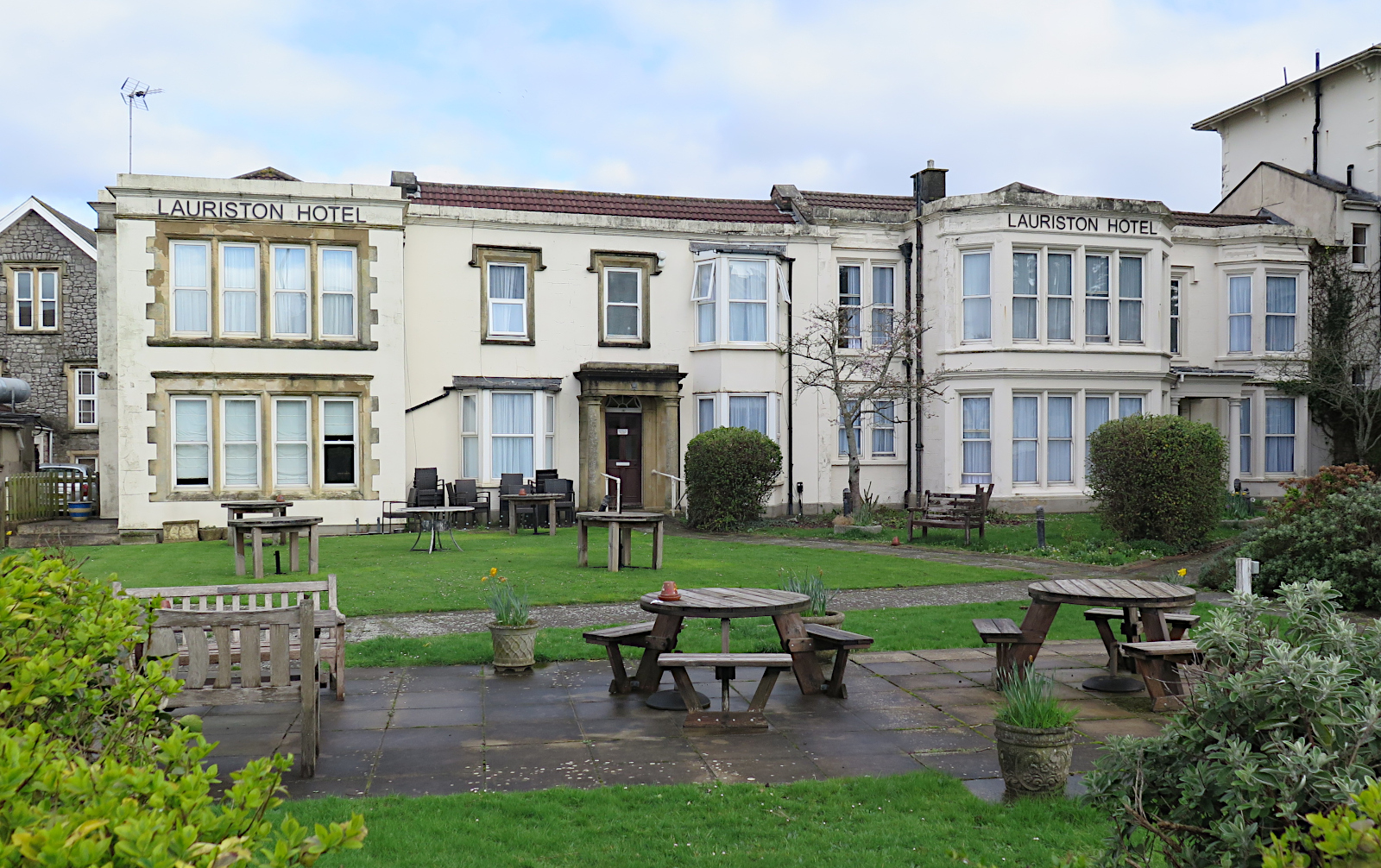
The Lauriston Hotel

I took this photo of the Lauriston Hotel in Weston-super-Mare where I stayed for a week with my parents and grandparents when I was about two-years-old.

Part 40 – Blast from the past

The Lauriston Hotel


< Previous
 | Index | Next >

December 2025

LARS Reunion Christmas lunch

On 2nd December Donna and I visited Bristol and Clifton Golf Club for the annual Christmas dinner for retired Long Ashton Research Station (LARS) staff. It was wonderful to see so many familiar faces, older of course yet clearly still the people I remembered. Of course, as we age we all change under the influence of new experiences, getting to know so many new friends and aquaintances, yet all the old patterns and habits are still there, faces instantly recognised, voices still sounding the same, facial expressions just as remembered from decades previously.

Sunset over Stratton

There were some glorious skies during December. I captured this view on the evening of 12th, walking around Stratton. In December the sun sets early here in the UK where the latitude is fairly high.

JHM: I wrote about an amazing photo of a volcano in Chile; and considered the effect of fog. World events:  EU leaders approved a €90bn ($105bn) loan for Ukraine for the next two years; and Israel became the first country to recognize Somaliland.

< Nov 2025 – Jan 2026 > (Jump to 2011)

September 2025

Restoring Dock Lock

I did a canal walk along part of the Stroudwater Canal with my friends Al and Phil. We began by taking a look at Dock Lock, east of Stonehouse, It was under repair as the canal restoration steadily heads towards Saul Junction where the waterway will be reconnected to the national canal nework.

We walked from Dock Lock right into the centre of Stroud, stopping for lunch and coffee next to the Canal at Ebley en route. It was mostly dry with the odd shower.

Albion Street

The second photo shows Albion Street in Stratton where a lovely double-rainbow jostled for attention with telephone cables and local properties.

JHM: I wrote about clouds reflected in water; and about a wooden jigsaw. World events: There was a serious funicular derailment in Portugal; and a UN inquiry found that Israel had committed genocide in Gaza.

< Aug 2025 – Oct 2025 >

March 2025

Canal entering the tunnel at Sapperton

On 15th Donna dropped me off at the Daneway Inn at Sapperton and I walked east along the short section of the Thames and Severn Canal to the tunnel portal. I then walked the above ground course of the canal tunnel to Sapperton, through Hailey Wood and on to the Coates portal following the canal again as closely as possible to Siddington, and then along the Cirencester Arm to meet Donna in town and walk back to Stratton together. It was a 15 mile walk in all as I diverted several times to see the canal at various points where it’s not possible to follow the towpath.

I had my laptop rebuilt and had it back on 5th, now with a 2 TB SSD and the original HDD for internal backup. I hooked it up to our Wi-Fi and began streaming data back from Dropbox.

Gumstool Brook website

Another task this month was to transfer the Gumstool Brook website fully over to Nick Henderson. This was completed on 21st and it’s a relief to have passed on the responsibility.

Aidan was travelling and exploring in Columbia this month, very adventurous and exciting for him. He seemed to be doing well, making some friends with other young people doing much the same thing, and having a generally awesome time.

JHM: I wrote about a new terraced garden at Blenheim Palace; and installing our heat pump. World events:  The Trump administration paused military aid to Ukraine; and Israel launched widespread aerial bombardments and attacks on the Gaza Strip.

< Feb 2025 – Apr 2025 >

March 2024

The Lauriston Hotel

I took this photo of the Lauriston Hotel in Weston-super-Mare where I stayed for a week with my parents and grandparents when I was about two-years-old.

I ordered a refurbished Google Pixel 7 phone to replace my old Pixel 3, and I continued scanning photos and documents. Paul and Vanessa visited with the dogs, I took them to see the old amphitheatre but it was too muddy. We bought a second-hand ‘Rollator‘ from Minchinhampton for Isobel so she can sit down at a moment’s notice if she comes over dizzy.

The Roman villa

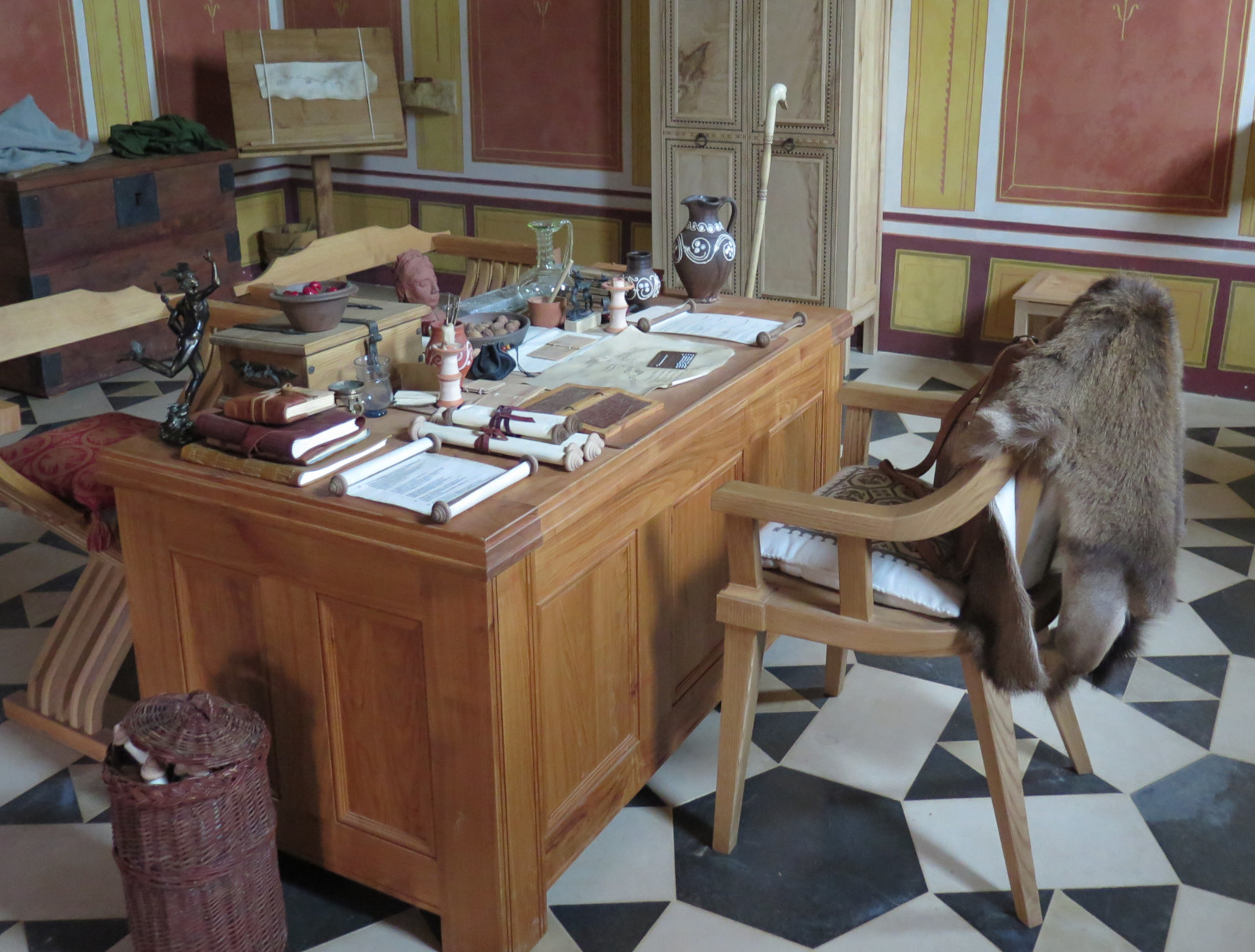
On 16th we visited the Newt in Somerset where the reconstructed Roman Villa was amazing to visit. It’s complete, based on the ground plan of the remains of an original nearby and built using methods that would have been familiar to Roman builders. It’s complete with mosaic floors, an upstairs section, and wall paintings, furniture etc in the Roman style as well. The Master’s office looks as if he’s just been called away and might return at any moment. Amazing!

World events:  Sweden officially joined NATO; and an Artificial Intelligence Act was passed by the European Union.

< Feb 2024 – Apr 2024 >

March 2021

Primer/undercoat in the hall

We were beginning to see the first signs of relaxation of the strictest rules of COVID-19 isolation here in the UK. After isolation and 20 million vaccine doses, hospital admissions, and total numbers of patients were both beginning to fall. I got a bit of decorating done while some restrictions remained in place; the photo shows a first coat of primer/undercoat on a door frame in the hallway.

SpaceX seemed to be doing well now. Starship SN10 landed rather heavily, caught fire, then later blew up. SN11 was nearly ready to make another attempt within a few weeks, hopefully without the explosion! And I was busy updating the MainEvents files.

In Paul and Vanessa’s garden

We visited Paul and Vanessa in Weston -super-Mare and sat chatting in their garden, we can only do this because we’re in the same COVID ‘bubble’, regulations are due to ease further soon and we’ll be able to start meeting outdoors with friends and family more often and more freely.

World events: Pope Francis met with Grand Ayatollah Ali al-Sistani in Najaf, Iraq. The first-ever meeting between a pope and a grand ayatollah; and the number of COVID-19 vaccinations administered worldwide exceeded 500 million.

< Feb 2021 – Apr 2021 >

March 2016

Great Ouse floods

There was flooding in St Neots as the Great Ouse spilled out over the surrounding low-lying land. This happens quite often, one year in four or five and usually in the winter or spring. It rarely causes damage as most buildings are above the danger area.

We were meeting regularly with Roger and Carolyn’s Small Group on Tuesdays, these were fairly open and flexible meetings, almost always with a shared meal. sometimes at our house, Roger and Carolyn’s, the Bresnen’s, Leanne’s, or at the Open Door Office in Eaton Ford. Meetings at the office were becoming more common, and at someone’s home rather less so, a trend I regretted. I was also meeting regularly with Jim and Kevin, and sometimes Sean would join us as well. At a meeting on 9th I gave some thought to what it means to be sons of the Most High. How come some sons (or daughters) can be leaders. elders or teachers, but others not; how can one son or daughter have some kind of authority over other sons or daughters?

We were helping Peter and Dadka in practical ways, and also our friend Darryn who was living in our flat up at Stone Hill. Dadka got a new job at Lidl’s in Eaton Socon and Peter returned to work driving the concrete mixing lorry following recovery from a leg injury.

Melford Hall

We also visited our friends Ken and Gayna in Yoxford on 26th, we don’t get to see them often these days so this was a special opportunity not to be missed. On 27th we visited Melford Hall, an Elizabethan building, though parts of the building are much older, going back to before 1065.

JHM: I wrote about Ben Scott and the Calais camp; and about Belgium’s pain. World events: Barack Obama visited Cuba, the first time a sitting US president had visited the island since Calvin Coolidge in 1928; and Radovan Karadžić was sentenced to 40 years in prison for genocide and crimes against humanity.

< Feb 2016 – Apr 2016 >

March 2011

Common reed

Walking along the bank of the River Great Ouse, I got some great photos of common reed flower heads (Phragmites australis). So delicate and pretty, especially when lit from behind on a bright, sunny day. They might be very effective (with their long stalks) for removing cobwebs from high corners around the house. Some time I might harvest a few to try.

Rivermill

Further upstream I got another nice shot, this time of the River Mill Inn in Eaton Socon.

Debbie and the children

We visited Debbie and family on 12th for her birthday. It’s always good to see them. Beth and Paz also came over so we saw the entire family and I did a short walk with Paz across the local fields.

Towards the end of the month preparations began for a new footbridge across the River Great Ouse between Eaton Socon and the secondary school and Tesco Extra in Eynesbury.

JHM: I wrote about a gathering at Moggerhanger; and thought about a blessing and a curse expressed in the beatitudes. World events: An earthquake in Japan caused a tsunami damaging several reactors at the Fukushima Daiichi Nuclear Power Plant; and protests across Syria sparked the Syrian Civil War.

< Feb 2011 – Apr 2011 > (Jump to 1971) (Jump to top)

March 2006

The old bridge

We had the ceilings and walls plastered in the passageway to the back door, the guy who did the work was cheap but did an awful job, even plastering over cables and so on, I was appalled! We decided to let him finish, pay him, and then decide what to do next. And the old wooden footbridge from Riverside Park to Eynesbury was about to be replaced with a new, steel bridge.

I set up a new server in the KSG collection, this one (named Hazel) provided space for virtual machines that we used to investigate Linux, and versions of Windows beyond those we normally use. I was also trying to get my head around the spreadsheets used to manage the Colworth phone bills, though I didn’t know enough about Excel to do the job and didn’t have time to learn it.

On most Fridays I drove down to Cirencester early and came home late to spend some time with Dad. His health, however, was the main issue during this month; on 30th March (or around that date) he was taken ill at the Little Chef at the Burford Road services. He was enjoying a meal there when he stopped eating and looked very unwell. He was in pain, the staff were worried and called an ambulance, and he was taken to Gloucestershire Royal Hospital for tests and treatment.

Donna and I travelled down to see him on 31st and by that time he was terminally ill with a dissected aorta. He died peacefully with the family gathered around the bed on 2nd April. He was the last member of the Jefferies family to live in Cirencester until Donna and I returned there ten years later in 2016.

World events: NASA’s Mars Reconnaissance Orbiter entered orbit around Mars; and the website Twitter was launched for microblogging and social networking.

< Feb 2006 – Apr 2006 >

March 2001

Tony painting the landing ceiling

Donna’s Mum and Dad came to visit us and helped us with some decorating. The photo shows Donna’s Dad, Tony, putting a roller coat of brilliant white emulsion on the ceiling of the stairwell.

Mir re-enters

Also this month there was a major event in spaceflight, Russia de-orbited their Mir Space Station over the Pacific Ocean. It was the largest spacecraft so far deorbited and re-entered the Earth’s atmosphere over the South Pacific on 23rd March 2001.

Open Door

We were involved at Open Door Church in St Neots at this time, going to the Sunday meetings at Ernulf School and weekday cell group meetings one evening each week. I was not happy in the Sunday meetings, feeling unable to contribute fully; the cell group was more relaxed, friendly and personal.

World events: The Taliban government of Afghanistan began destroying the Buddhas of Bamiyan; and Apple Inc. released the Mac OS X operating system for Mac computers.

< Feb 2001 – Apr 2006 >

March 1996

Donna and I were growing closer and closer in March, in one sense this was wonderful, but we both felt the need to take things quite slowly because it was so soon after Judy’s death and we didn’t want to make things harder than necessary for my family. Debbie and Beth seemed to be coping surprisingly well, but there were my sisters and Mum and Dad to consider as well. We both came to a clear decision about wanting to be married. Debbie was a little anxious that she’d lose touch with Beth and with me, but no fear of that, we have a three-way video chat most Sunday evenings (30 years later!)

My Nigerian friend Elfrida died unexpectedly from a brain haemorrhage leaving Francis and the children without a wife and mother. This was a shock, there was no advance warning as we’d had with the loss of Judy, and no time to plan or adjust or to communicate or prepare. It was so very much a surprise.

Comet Hyakutake (Wikimedia)

I spotted Comet Hyakutake for the first time on 23rd March. It passed Earth at about a tenth of the distance of the Sun so was very bright and easy to spot in the early evening sky.

World events: The Dunblane school massacre took place in Scotland; and the IMF approved a $10.2 billion loan to Russia for economic reform.

< Feb 1996 – Apr 2006 >

March 1991

Eleanor’s Christening day

Pretty much the entire family descended on Ruth and Martin’s house in Holmer Green on 10th March for a party and a good old chat followed by their daughter, Eleanor’s, Christening.

The video is an unedited view from a VHS copy of my Sony Hi-8 original. It only covers the gathering at their home, you’ll get glimpses and voices of many people who are no longer with us as well as much younger versions of those of us who remain. A real trip down memory lane! (If you’re not a family member you’ll probably find the video utterly boring!)

Debbie and Sarah

On 11th, Debbie and her friend Sarah Fido played clarinet at a concert in Bristol’s Colston Hall (now renamed Bristol Beacon). The orchestra played really well, much, much better than most youth orchestras.

Presents

The 12th was Debbie’s birthday so it was time to open presents. This year they included a collapsible umbrella.

Helicopter Museum

And on 31st we had a day visit from my Mum and Dad who brought Dan Holme with them from Cirencester. We drove over to Weston -super-Mare and visited the Helicopter Museum on the Westland helicopter site there.

World events: Massive demonstrations were held against Slobodan Milošević in Belgrade; and Germany formally regained complete independence after France, the UK, the USA and the USSR relinquished all remaining rights to the country.

< Feb 1991 – Apr 1991 > (Jump to 1971) (Jump to 2011)

March 1986

Birthday cake

Judy made Debbie a cake for her 11th birthday (12th March).

The previous owners of our house had planted a row of conifers along the front of the property and they were becoming too large; I decided to remove them before they got too big to tackle.

Tree removal

It was quite a major task, but I cut them off about a metre above ground level, removed all the side branches, and then used the trunks for leverage after digging round them and cutting through the main roots. They made a lovely bonfire at the bottom of the garden!

World events: The first paper was published describing the atomic force microscope invented the previous year; and on 13th March, Microsoft Corporation held its initial public offering of stock shares.

< Feb 1986 – Apr 1986 >

March 1981

Debbie and her 6th birthday cake

Debbie was six on 12th March, Judy had made her a cottage cake with hollyhocks and other garden plants growing outside. She had a lot of friends round for her party (the friends had multiplied quickly when she began school in 1980).

Debbie reading to Beth

Later in the month, here’s Debbie (now at school and becoming good at reading) reading a bedtime story to her sister, Beth and three other characters who don’t really seem to be paying much attention to the story.

World events: The first London Marathon was held, with 7,500 runners; and there was an assassination attempt on Ronald Reagan.

< Feb 1981 – Apr 1981 >

March 1976

Cray-1 (Wikimedia)

My Mum and Dad came to visit us on 13th March, the day after Debbie’s first birthday.

At work I was writing up the previous year’s research on flower and fruit development and nutrient transfer in developing plum fruit as well as the problem of gum production in plums which affects fruit quality and marketability. These and other results were published in the Long Ashton Annual Report for 1975, published during 1976.

World events: The Cray-1 was released as the first commercially developed supercomputer; and  Harold Wilson resigned as Prime Minister of the United Kingdom.

< Feb 1976 – Apr 1976 >

March 1971

20 Belmont Road (Google Maps)

Judy and I moved into an unfurnished flat at 20 Belmont Road in St Andrews, Bristol, perhaps on 10th. The photo shows the building; our flat contained the two windows at the right hand end of the middle floor.

It was great to have a lot more space than our cramped bed-sit in Clifton, it was great to have our own bath, it was great to have our own loo even though that was on the landing just outside the door to our flat, and it was great to have a proper kitchen instead of the tiny cupboard/kitchen in the bed-sit. We had no furniture (but quickly bought an extendable table and four chairs from a second-hand shop on the nearby Gloucester Road) and we bought our own electric cooker with four rings, a grill and a clock/timer for the oven. We bought a double bed with the £60 my grandmother had given us as a wedding present, telling us ‘You spend a third of your life in bed, so make sure it’s a good one that will support your backs properly and last well’.

We felt we were off to a good start now, our rent was lower than before, we were able to begin buying our own furniture, and had room for our books, records, photos and other possessions. We both had steady jobs and were able to save some money most months to build a deposit for eventually buying a house of our own. And, of course, we still had our car, Pumpkin (so called because Judy’s Dad had once remarked that if I was still at their house after midnight at 18 Hales Close in Cheltenham, my Ford Anglia 100E might turn into a pumpkin).

World events: The Pakistani army occupied East Pakistan; and  Joe Frazier defeated Muhammad Ali in a 15-round boxing match at Madison Square Garden.

< Feb 1971 – Apr 1971 > (Jump to 1951) (Jump to 1991)

March 1966

Founders service

The Grammar School Founders and Benefactors Memorial Service was held on 3rd March. The whole school and many parents turned up for the occasion at Cirencester Parish Church. The front cover of the order of service is shown at the left (click to enlarge), or you can view the entire document as a PDF.

World events: The British Government announced plans for monetary decimalisation; and NASA’s Gemini 8 docked in space, with an Agena target vehicle. The first time this was achieved.

< Feb 1966 – Apr 1966 >

March 1961

TB inoculation certificate

My entire school year was tested for sensitivity and resistance to tuberculosis. If we were found to be susceptible we were inoculated. This included me, and I ended up with a large hole in my upper arm where I was inoculated, when the family GP saw this he told Mum that if I’d remained uninoculated and had been infected with the virus later in life I would almost certainly have died as a result. The hole filled in eventually, but I still have the scar (along with many others my age, I suspect).

TB is now a real rarity in western nations as almost everyone has received the vaccination or has recovered from an infection.

World events: Kurenivka mudslide: A dam burst in Kiev, USSR, killing 145; and black and white £5 notes ceased to be legal tender in the UK.

< Feb 1961 – Apr 1961 >

March 1956

Fairey Delta 2

I was approaching six-years-old and in the third year at Querns Junior School, the Spring Term ended in late March. Most of our lessons were arithmetic or English, reading and writing more widely and competently now as we grew older. We were also starting to learn some history, geography, art, religion, music and science, not as formal, dedicated lessons but rather as a sort of general knowledge.

World events:  Morocco declared independence from France; and Britain’s Fairey Delta 2 broke the World Air Speed Record, raising it to 1,132 mph (1,822 km/h) or Mach 1.73.

< Feb 1956 – Apr 1956 >

March 1951

UNIVAC I (Wikimedia)

I was now nearly 2¾ and, no doubt into everything. No specific memories remain, of course, except for one. I know it was early in my life because I was wearing a blue leather harness with three silver bells on the front. I had to wear this for safety if I was walking along the pavement, ie not riding in the pushchair. I remember being in Purley Road, just around the corner from Victoria Road where Granny and Grandpa lived. We were walking towards Victoria Road and had reached the footpath that runs between the gardens of Victoria Road and Purley Road (the path is still there today in 2026). I got very cross about wearing the harness; I probably had a tantrum. Dad said I could walk without it but if I did I must hold his hand – and that’s what happened.

I suppose it’s quite possible I was told about this when I was older, but it certainly feels like a memory. There are several other events I seem to remember from about the same age.

World events:  In the Korean War’s Operation Ripper, United Nations troops recaptured Seoul for the second time; and Remington Rand delivered the first UNIVAC I computer to the United States Census Bureau.

< Feb 1951 – Apr 1951 > (Jump to 1930s) (Jump to 1971)

March 1946

Largo Bay (Image: IWM (FL 14532))

Mike, at 19-years-old was still worried about Lilias’ health and in particular that they might not be able to have a family if surgery became necessary. On 6th March he packed and addressed his kit and boarded the HMS Largo Bay (an anti-aircraft frigate) at 11:00 on 7th. It seems the food and the hammocks were not great, and he was put in charge of deck welfare.

They were due to leave at 10:00 on 8th, but the crew went on strike so everyone had to disembark and return to Santa Cruz. On 11th they were to leave at midnight on the train to Calcutta but this, too, was cancelled. They returned to Largo Bay on 13th and finally left at 09:00 on 14th. This time Mike was appointed ‘Ablution Cleaner’. They passed Ceylon (now Sri Lanka) on 17th, putting the clocks forward 30 minutes every day until 19th.

The 22nd was an interesting day, they went ashore in an amphibious DUKW and saw Rangoon which was ‘much knocked about’. Mike saw his first rickshaw and some Japanese prisoners. The clocks were set an hour earlier here. He attended a Japanese War Crimes Trial on 23rd; and on 24th the ship sailed again but with the addition of Indian troops making it very hard to find enough space for sleeping.

Mike reached Singapore on the afternoon of 27th March. He had one letter from Lilias on 28th and thought that a lot of others had been lost. But 12 more arrived on 29th and a further 5 on 30th.

World events:  British troops withdrew from Iran according to an agreement, the Soviets did not; and in Fulton, Missouri, Winston Churchill spoke about the Iron Curtain.

< Feb 1946 – Apr 1946 >

March 1941

John, Richard, Robert

John and Bob joined the Army and Dick joined the Royal Navy. All three served as officers during the Second World War, and all three survived the experience without injury. The photo was taken in 1939 before they left home. Presumably there would have been a similar image from the front, too, unfortunately lost I think.

While they were away Churnside must have seemed a very empty house with just Guv, Nor and Mike (who was still at school aged 15). The older brothers were in their 30s and 40s and would have been home on leave from time to time, but not all at once.

World events:  In WWII, Rommel launched his first offensive in Cyrenaica; and in the Battle of Cape Matapan British naval forces defeated an Italian fleet, sinking 5 warships.

< Feb 1941 – Apr 1946 >

1930-1939

Wolseley 6

This Wolseley car was bought my my grandfather in the 1930s. I believe it came from Steels Garage in Dyer Street and Lewis Lane. In the photo it’s parked outside 35 Victoria Road, next door to 37 (Churnside) where my grandparents lived. I think I travelled in this car when I was a small child and it was later replaced with an Austin Somerset which I also remember.

World events: (March 1936): In violation of treaties, Nazi Germany reoccupied the Rhineland. (March 1931): The British viceroy of India and Mohandas Gandhi signed the Gandhi–Irwin Pact.

<< 1930s >> (Jump to 1800s) (Jump to 1951)

1900-1929

Employment agreement

Click the agreement to enlarge it. The document was signed on 19th March 1920. The cottage it refers to was empty when I remember it as a teenager, but it was always known as ‘The Carter’s Cottage’ and its last resident might well have been the William Richard Robinson mentioned here. I took a look inside when I was about 16-years-old and doing holiday work on the rose nursery a few hundred metres north of it (where Tesco Extra stands today). It seemed sound and was unlocked, but was very dusty, cobwebby and empty inside.

The rent in 1920 was 3/- per week, that’s 15p per week; with the large garden it might have been rented today for perhaps £1500 per month. Two and a half thousand times as much, that’s inflation for you! When Donna and I moved to Cirencester in 2016 the cottage was still standing and in use, although Watermoor Nursery had been sold and a housing estate built there. The cottage was demolished a few years ago and the land now houses three or four modern homes.

Notice that the agreement is signed by Mr Robinson, by my grandfather, Edward Arthur Jefferies and by his uncle, William John Jefferies.

World events (March 1926): Robert H. Goddard launched the first liquid-fuel rocket, at Auburn, Massachusetts.(March 1921): The Treaty of Versailles forces Germany to pay war reparations. (March 1916): US President Woodrow Wilson sent 12,000 US troops over the U.S.–Mexico border to pursue Pancho Villa(March 1911): The first congressional appropriation was made for what would become the United States Air Force (March 1906): Romanian inventor Traian Vuia becomes the first person to achieve an unassisted takeoff in a powered monoplane. (January 1901): Irish nationalist demonstrators were ejected by police from the House of Commons of the United Kingdom in London.

<< 1900-1929 >>

1800-1899

Edward Jefferies

My great-grandfather, Edward Jefferies was born in 1849 in Cirencester. In the baptismal record his father, John Jefferies, was listed as a Nurseryman living at Querns Cottage. Presumably John and Alice lived in the cottage when John worked as a nursery manager for Richard Gregory. After taking over the business, John may have built Minerva Villa on nursery land at the junction of the Avenue and Tower Street and the family moved there from Querns Cottage. Alternatively Minerva villa might have been built by Richard Gregory. Either way, Edward would have lived in Querns Cottage as a young child but would also have remembered Minerva Villa as an older child.

Edward married Mary Elizabeth Hedges in 1875 and they lived at 10 Tower Street (within sight of Minerva Villa), Mary’s wedding dress was in the possession of her daughter-in-law, my grandmother, Nor. She, in turn handed it over to my Mum, Lilias who passed it on to my sister, Rachael. As it was difficult to save the delicate and aging silk, it was finally sold to a Museum.

Edward worked as a Seedsman in the family business, and died aged just 35 (he was buried in Chesterton Cemetery, recorded as having died in Bournemouth). Although we don’t know the cause of death, it was quite likely to have been tuberculosis (consumption) as patients were often encouraged to move to a seaside town where cleaner air, bright sunshine, and rest from work were thought to offer a real chance of recovery.

Family connections:

  • Parents – John and Alice Jefferies (nee Freeth)
  • Born – 13th May 1849 (baptised 24th June 1849)
  • Died – 20th January 1885 (buried on 24th January)
  • Married – 8th July 1875 to Mary Elizabeth Hedges
  • Siblings – William John (1880), Julia Anne (1851)
  • Children – Edward Arthur (1879), Herbert Cyril (1880), Elsie Margaret (1883)

World events (February 1881): Kansas became the first U.S. state to prohibit all alcoholic beverages. (February 1861): The Confederate States of America was formed. (February 1841): The Act of Union (British North America Act1840) was proclaimed in Canada. (February 1821): In Mexico, Peace between viceroyalty troops and insurgents was proclaimed in Mexico (the Embrace of Acatempan). (February 1801): William Pitt the Younger resigned as UK Prime Minister.

<< 1800-1899 >> (Jump to top) (Jump to 1930s)

1500-1799

Wool trade (Wikimedia)

In 1500 the wool trade was still thriving in Cirencester and the countryside in the area was partly devoted to raising sheep. A slow decline had begun towards the end of the previous century and was continuing, but there was still plenty of profit in the wool trade in 1500 f0r decades to come. The decline was partly due to a growing preference for Spanish Merino wool over the wool from the Cotswold Lion breed.

Cotswold Lion (Wikimedia)

There were two main sources for wool. Cirencester Abbey controlled a good portion of the land around the area suitable for raising sheep (mainly the higher ground as this was well drained). Sheep don’t do well if their feet are frequently wet. The other source for wool was the privately owned and farmed land. Both sources sent wool to Cirencester for sale following shearing time and in rather large quantities. After sale to wool merchants the wool was baled up for export or for further processing locally (the Abbey may have done this in house). Wherever it went, the wool had to be washed and dried, carded with teasles, spun into woollen thread, dyed and then woven into fine cloth. The Cotswold sheep produced wool of particularly high yield and quality so it was in great demand. Much of the exported wool was processed, woven and sold in Flemish lands (today’s Belgium and the Netherlands).

The Kings of England at this time were also focused on trade and export so encouraged this wool trade as it brought useful income to England and could be taxed to increase royal revenues. The 1500s were mostly times of peace, stability, and industry in England. Cirencester Parish Church began to be rebuilt from 1514, and the earlier rivalry between townsfolk and the Abbots calmed down as there was adequate income for both to prosper.

The South Porch (now the main entrance to the Parish Church) was built by the abbey around this time, mainly as office space for the Abbey’s business connections with the town and its surroundings. If it had been paid for and built by town guilds there would have been carved crests and shields for the various guilds, but there’s nothing of that sort anywhere in the building. A small bridge over the Churn in Gloucester Street was known as Gilden Bridge but appears to have no connection with guilds or the building and use of the South Porch.

The old street

At this time the porch was separated from the Parish Church by a narrow street, the two being connected later by new walls and roofing. The heavy doors on the east and west sides of the porch show where this old street passed through, and it can be traced some distance on the east even today.

Continuing east

Some of the names of the old town streets are still known; in the following list I’ll provide the old name first in Tudor spelling, and then the current name in brackets:

  • Abbot Strete – (Coxwell Street)
  • Batel Strete – (Thomas Street)*
  • Castell Strete – (Castle Street)
  • Cheping Strete – (The Market Place)
  • Cricklade Strete -(Cricklade Street)
  • Dole-halle Strete – (Dollar Street)
  • Dyar Strete – (Dyer Street)
  • Foss, the – (Lewis Lane)
  • Goseditch Street – (Gosditch Street)
  • Inch-thrope – (Cecily Hill)
  • New Strete – (Querns Lane)
  • Shoter Strete – (Sheep Street)
  • St Laurens Strete – (Gloucester Street)

*Batel Strete may refer to the 7th century Battle of Cirencester between Cwichelm and Penda. The name far precedes the English Civil War battle in Cirencester between Cavaliers and Roundheads.

The source for these street names (and some additional names and details not included here) is ‘A History of Cirencester’ by Welbore St. Clare Baddeley, page 213, published in 1924.

World events (Mar 1731): The Treaty of Vienna was signed between the Holy Roman Empire, Great Britain, the Dutch Republic and Spain. (Apr 1701): Mecklenburg-Strelitz was created as a north German duchy. (Mar 1631): The siege of the Protestant German city of Magdeburg by the Catholic League began and lasted for more than two months before the city fell and the inhabitants were massacred. (Mar 1601): The treason trial for five secondary participants in Essex’s Rebellion was held in London. All five were found guilty. (Mar 1531): King Henry VIII gives royal assent to the Poisoning Act 1530 which provided for the boiling to death of people convicted of poisioning others. (Mar 1501): Portuguese navigator João da Nova discovered Ascension Island.

< Previous|Index|Next

Useful? Interesting?

If you enjoyed this or found it useful, please like, comment, and share below. (If you don’t see those links, click the article’s title above the main photo and they will appear.) Send a link to friends who might enjoy the article or benefit from it – Thanks! My material is free to reuse (see conditions), but a coffee is always welcome and encourages me to write more often!
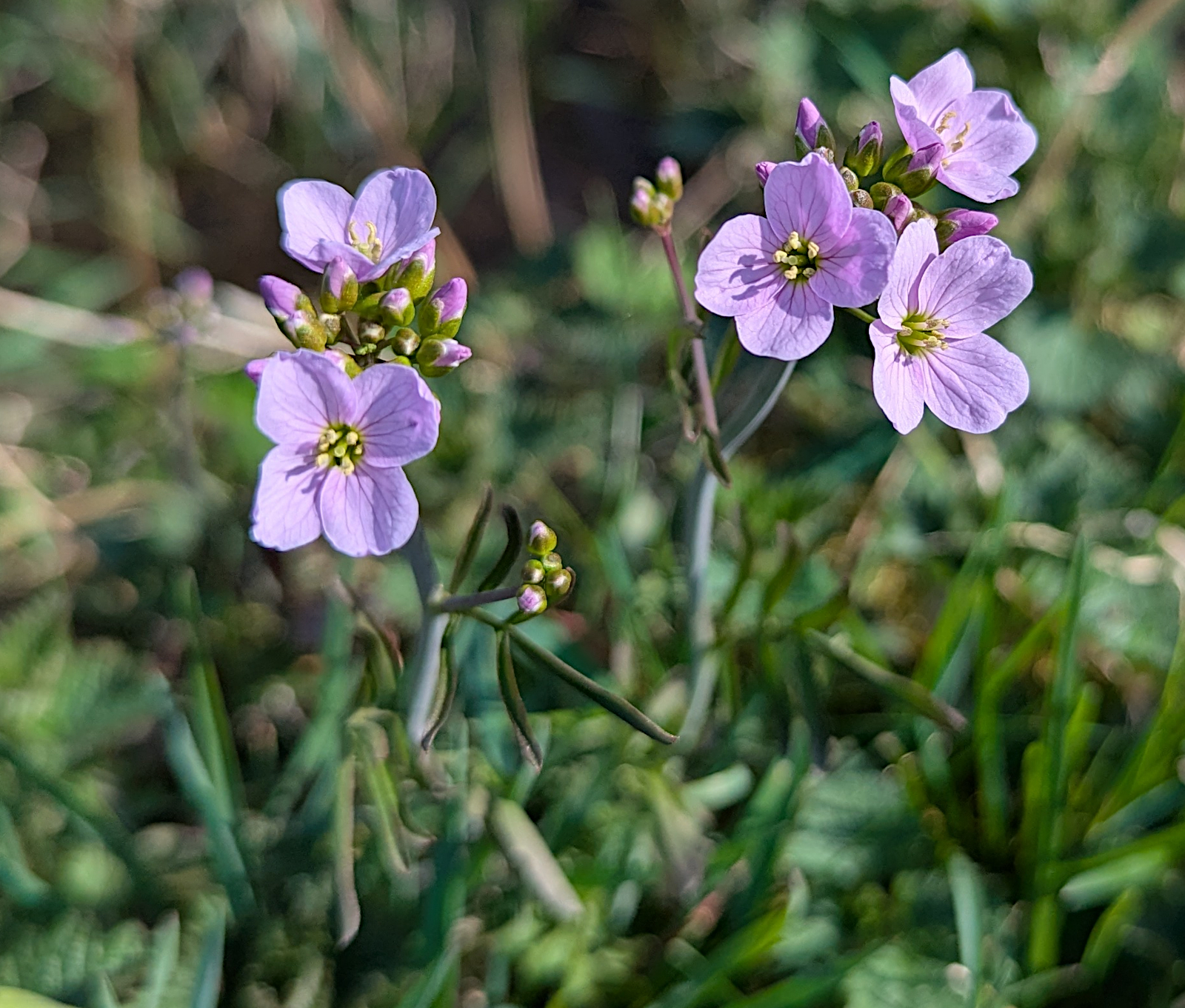
The Bingham Library

The new library in Dyer Street had a meeting room with seating for 200 people, but it quickly became clear that a larger meeting place was needed. And this is one of the reasons that Bingham decided to fund the Bingham Hall.

The Bingham Library

< Previous | Index | Next >

Image of the day – 193

What’s in an image? Sometimes quite a lot, more than meets the eye. I’m posting an image every week or so.

Bingham Library

Cirencester’s Bingham Library building is now the Town Council Offices and the Tourist Information Centre. When I was a pupil at Cirencester Grammar School in Victoria Road, this grand old building was still the town’s main library. I remember walking to it from the family home at 37 Victoria Road, often to return books and take out different ones on science fiction, astronomy, or whatever interested me at the time; sometimes to visit the reference library to read articles from Encyclopaedia Britannica and make notes for Geography essays on coffee, rice or tea production in exotic places.

Daniel George Bingham

Blue plaque (click to enlarge)

The Bingham Hall in King Street as well as the Bingham Library in Dyer Street were built as town amenities and improvements by Daniel George Bingham. For more details of his life and career, click the blue plaque on the right.

Bingham worked in railway management, first at Cirencester, later at Paddington in London, and finally in Utrecht in the Netherlands where he became wealthy. He visited Cirencester briefly but quite regularly and spent part of his wealth providing the library in 1905 and the Hall in 1908. He and his wife Jane had friends and family in Utrecht so they were always keen to remain living there, though clearly Bingham retained a fondness for his town of birth – Cirencester.

From the beginning, the new library in Dyer Street had a meeting room with seating for 200 people, but it quickly became clear that a larger meeting place was needed. And this is one of the reasons that Bingham decided to fund the Bingham Hall to provide expanded facilities for meetings, dinners, theatre, music, and even a rifle range. I remember being in the Army Cadets in the sixth form at the Grammar School and taking part in target practice with .22 calibre rifles in the Bingham Hall rifle range. Morning assemblies were held in the main hall at the Bingham Hall, also school theatrical productions and musical performances.

What about us?

Few of us will ever have enough money to contribute something major like Bingham did. But most of us can afford to buy a little extra food and put it into the Food Bank receptacle as we leave the supermarket. Or we can join a local organisation helping others in some way, or keeping the local environment tidy. We all have the capability to improve our fellow citizens’ well-being in some way, it may cost no more than a little thought and a simple action.

So why not join in? Bingham did. We all can!

See also:

< Previous | Index | Next >

You might also like:

Useful? Interesting?

If you enjoyed this or found it useful, please like, comment, and share below. (If you don’t see those links, click the article’s title above the main photo and they will appear.) Send a link to friends who might enjoy the article or benefit from it – Thanks! My material is free to reuse (see conditions), but a coffee is always welcome and encourages me to write more often!