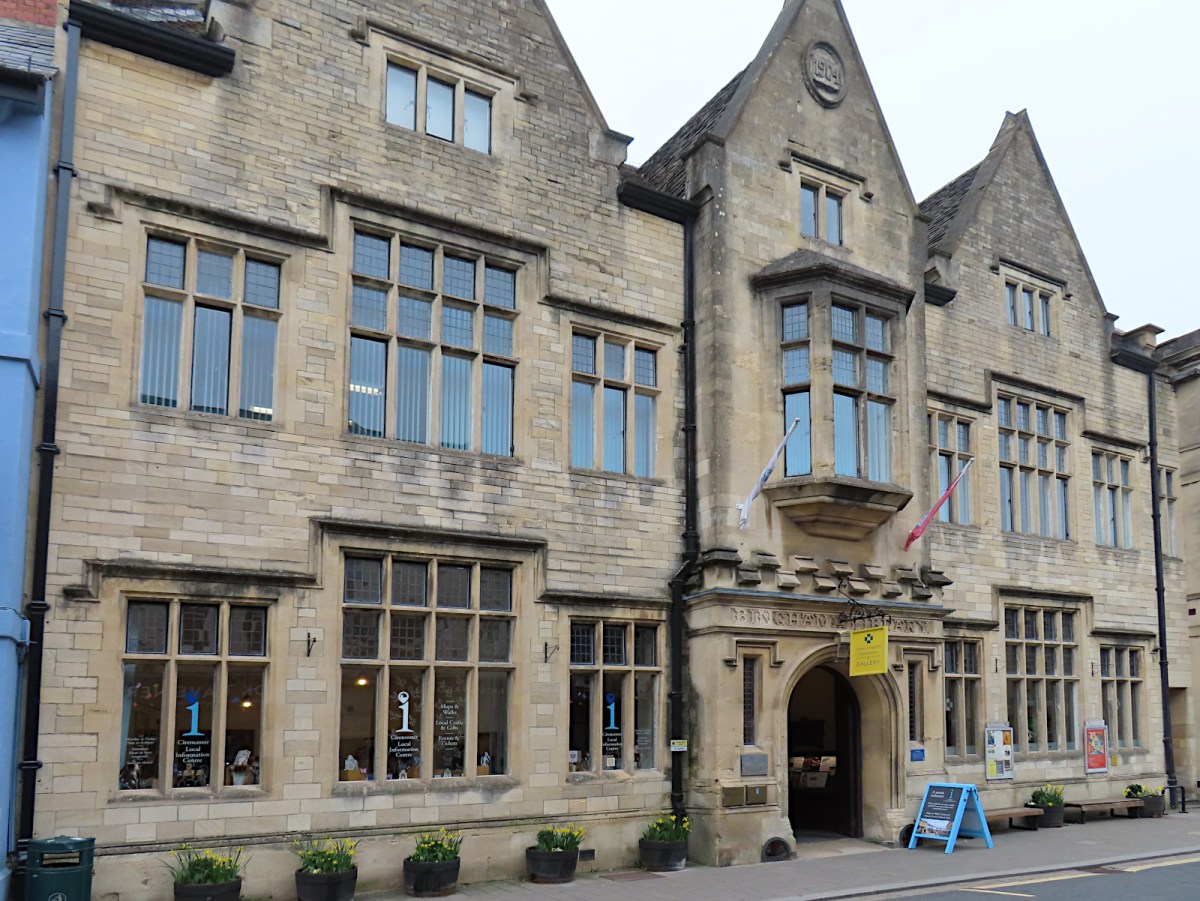
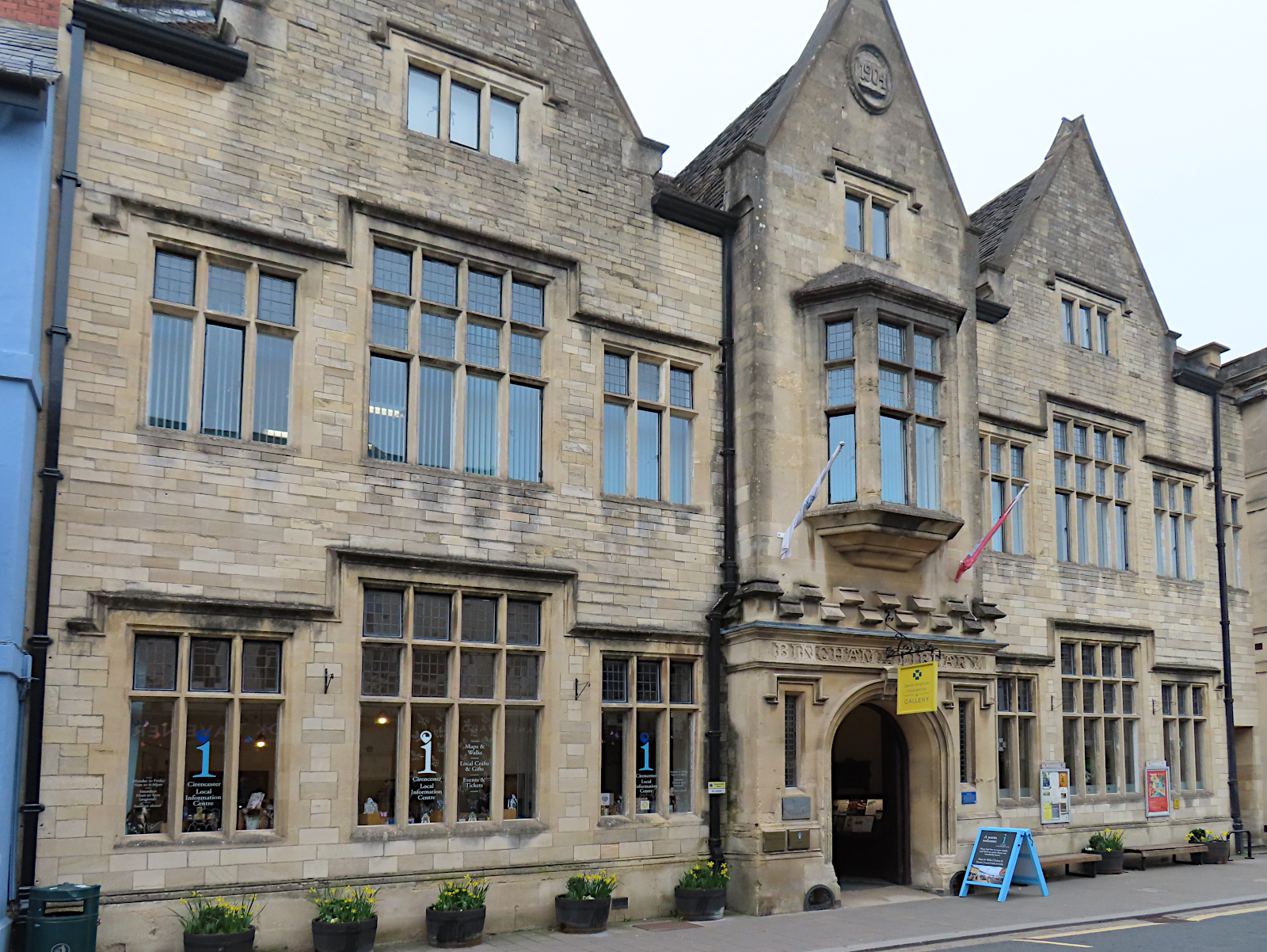
The Bingham Library

The new library in Dyer Street had a meeting room with seating for 200 people, but it quickly became clear that a larger meeting place was needed. And this is one of the reasons that Bingham decided to fund the Bingham Hall.

The Bingham Library

< Previous | Index | Next >

Image of the day – 193

What’s in an image? Sometimes quite a lot, more than meets the eye. I’m posting an image every week or so.

Bingham Library

Cirencester’s Bingham Library building is now the Town Council Offices and the Tourist Information Centre. When I was a pupil at Cirencester Grammar School in Victoria Road, this grand old building was still the town’s main library. I remember walking to it from the family home at 37 Victoria Road, often to return books and take out different ones on science fiction, astronomy, or whatever interested me at the time; sometimes to visit the reference library to read articles from Encyclopaedia Britannica and make notes for Geography essays on coffee, rice or tea production in exotic places.

Daniel George Bingham

Blue plaque (click to enlarge)

The Bingham Hall in King Street as well as the Bingham Library in Dyer Street were built as town amenities and improvements by Daniel George Bingham. For more details of his life and career, click the blue plaque on the right.

Bingham worked in railway management, first at Cirencester, later at Paddington in London, and finally in Utrecht in the Netherlands where he became wealthy. He visited Cirencester briefly but quite regularly and spent part of his wealth providing the library in 1905 and the Hall in 1908. He and his wife Jane had friends and family in Utrecht so they were always keen to remain living there, though clearly Bingham retained a fondness for his town of birth – Cirencester.

From the beginning, the new library in Dyer Street had a meeting room with seating for 200 people, but it quickly became clear that a larger meeting place was needed. And this is one of the reasons that Bingham decided to fund the Bingham Hall to provide expanded facilities for meetings, dinners, theatre, music, and even a rifle range. I remember being in the Army Cadets in the sixth form at the Grammar School and taking part in target practice with .22 calibre rifles in the Bingham Hall rifle range. Morning assemblies were held in the main hall at the Bingham Hall, also school theatrical productions and musical performances.

What about us?

Few of us will ever have enough money to contribute something major like Bingham did. But most of us can afford to buy a little extra food and put it into the Food Bank receptacle as we leave the supermarket. Or we can join a local organisation helping others in some way, or keeping the local environment tidy. We all have the capability to improve our fellow citizens’ well-being in some way, it may cost no more than a little thought and a simple action.

So why not join in? Bingham did. We all can!

See also:

< Previous | Index | Next >

You might also like:

Useful? Interesting?

If you enjoyed this or found it useful, please like, comment, and share below. (If you don’t see those links, click the article’s title above the main photo and they will appear.) Send a link to friends who might enjoy the article or benefit from it – Thanks! My material is free to reuse (see conditions), but a coffee is always welcome and encourages me to write more often!

A recommended site

In first-century Jewish society, a woman approaching a rabbi — in public, uninvited, without the mediation of a husband or male relative — was itself an act that would raise eyebrows and clench jaws.

Chris Dryden’s website

< Previous | Index | Next >

On the web – 1

CD’s website

Sometimes I read something so good that I want to share it with my readers. This happened recently with one of Christoper Dryden’s posts. When I asked if I might republish it here, he very generously agreed. But I’m having second thoughts. Not about sharing it, but about sharing it in full. I think it will be better to share enough that my readers will want to go and read the rest on CD’s blog.

The extract

Reading: Mark 5:21-43

ContextWhat social barriers does the bleeding woman overcome to reach Jesus, and why is this significant?

This scripture does not indicate the social barrier, but we can infer the following: she has a disease, which doesn’t make her socially acceptable for starters. The nature of the disease, apparently, would make her unclean, so she shouldn’t be seen in public. Touching the garment of Jesus would be considered scandalous and outrageous cos the belief was that those touched by the unclean would be unclean themselves. She’s a social outcast, and she should know her place and deal with the fact that she’s worse off for looking to get her problem sorted, only for it not to work out. She’s a woman, that also ain’t becoming of someone who wishes to approach this guy. Seen in that light, the amount she’s overcome to reach out speaks volumes about the level of faith she has that one touch could make all the difference. It explains Jesus’ own commentary on the situation, namely that her faith has made her whole. And as I reflect on that, there’s the nudge to consider what level of faith can be exercised to trust Jesus. And also, there’s a challenge of how we can demonstrate and declare, for the benefit of other social outcasts, that their issues can be solved by reaching out to touch Jesus, who is near them?

In first-century Jewish society, a woman approaching a rabbi — in public, uninvited, without the mediation of a husband or male relative — was itself an act that would raise eyebrows and clench jaws. Layer on top of that the twelve years of haemorrhaging, which under the Levitical code rendered her perpetually ritually unclean (Leviticus 15:25-27), and you start to appreciate what she was carrying before she ever took a single step toward Jesus. It wasn’t just a physical condition. It was a sentence. Twelve years of isolation. Twelve years of being untouchable. Twelve years of being told, in effect, that she didn’t qualify.

She had also spent everything she had on physicians who left her worse off, not better. So not only is she socially marginalised, she is financially spent and medically hopeless. She has nothing left to lose. And that, right there, might be the very thing that unlocks her faith. When you’ve exhausted every other option, the audacity to reach for Jesus becomes a lot less surprising.

Seen in that light, the amount she’s overcome to reach out speaks volumes about the faith she has that a single touch could make all the difference. It explains Jesus’ own commentary on the situation: her faith has made her whole. And as I reflect on that, there’s a nudge to consider what level of faith is required to trust Jesus. And also, there’s a challenge of how we can demonstrate and declare, for the benefit of other social outcasts, that their issues can be solved by reaching out to touch Jesus, who is near them?

Someone might feel like they don’t qualify. They feel like they’ve been told — by circumstance, by history, by the voice in their own head — that the door to Jesus isn’t for them. This woman’s story is a loud and clear rebuttal of that lie. She reached, He responded, and the power that went out of Him was not accidental. He knew. He always knows. And He is never contaminated by what comes to Him, broken and desperate. He is only ever transformative.

Content: How does Jesus treat both the synagogue leader and the unclean woman with equal dignity?

What a fascinating word – dignity. Let’s get ourselves a running definition or walking, if we prefer the strolling approach.  Dignity is about worth, value and honour. To treat people with dignity is to confer on them a sense that they are of worth and value and should be duly honoured…

Reading more

My hope is that you’ll want to read the whole thing. Don’t miss the opportunity, you will not regret it! And if you like Dryden’s writing as much as I do, you’ll bookmark his site and keep coming back for more.

< Previous | Index | Next >

You might also like:

Useful? Interesting?

If you enjoyed this or found it useful, please like, comment, and share below. (If you don’t see those links, click the article’s title above the main photo and they will appear.) Send a link to friends who might enjoy the article or benefit from it – Thanks! My material is free to reuse (see conditions), but a coffee is always welcome and encourages me to write more often!
Life always wins out

All forms of life are precious and we depend on many of them to provide food, purify water, generate the oxygen we need to breathe, clean away life forms that have died, and much, much more.

Fallen tree, climbing ivy

< Previous | Index | Next >

Image of the day – 192

What’s in an image? Sometimes quite a lot, more than meets the eye. I’m posting an image every few days.

Fallen tree, climbing ivy

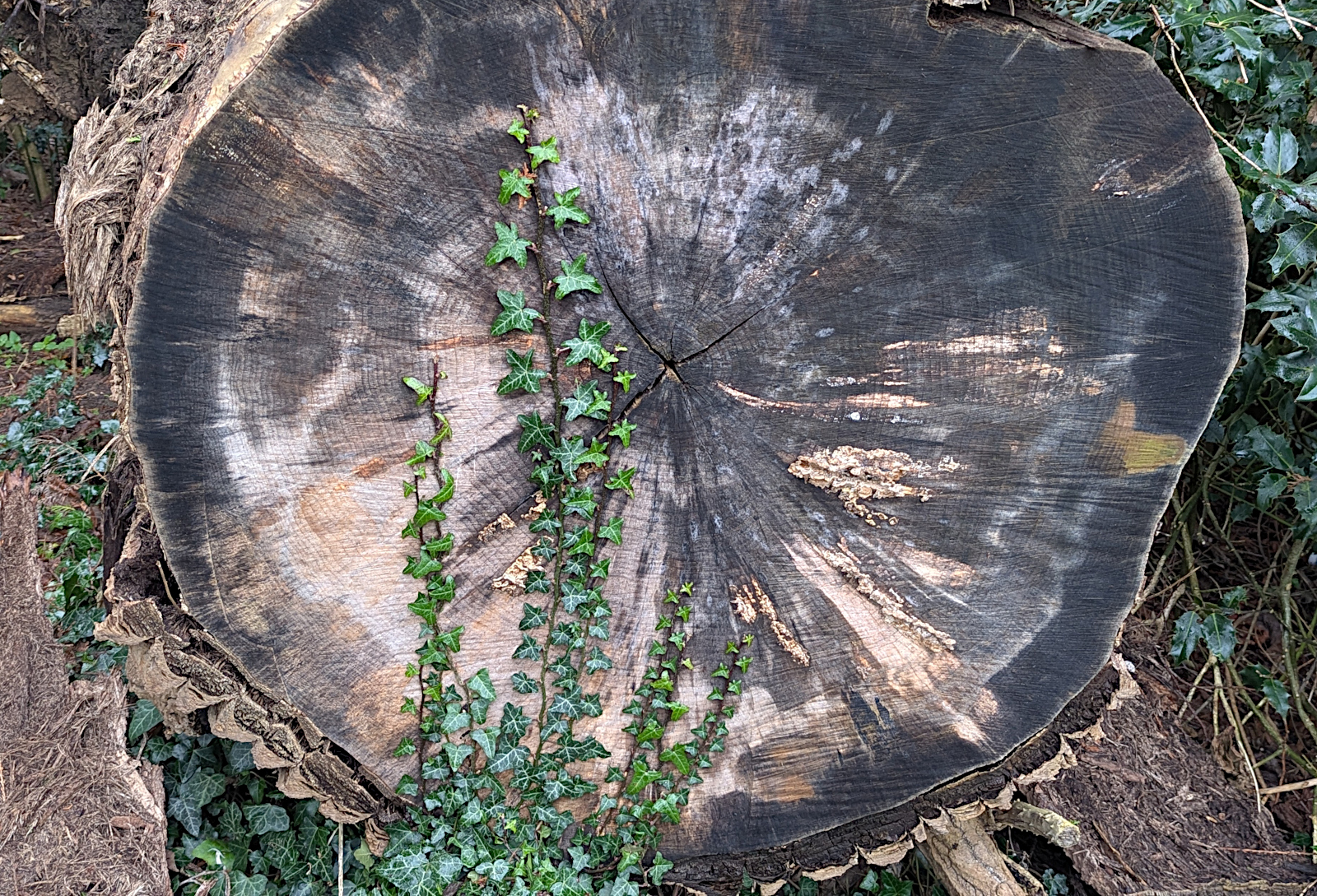
This old tree trunk, clearly felled by chainsaw, is being colonised by ivy. Once the tree stood tall and strong and it’s likely that ivy clung to its trunk and branches. Now the tree lies on the ground, entirely dead, but ivy still uses the trunk as a support to grow upwards to continue to reach the light.

No giving up

Life is not in the habit of giving up, generations come and go, no individual tree, person, or anything else lasts for ever, not even a species. But life itself adapts, changes, and takes advantage of what went before. There has been life on planet Earth for around four billion years, that’s only 500 million years after the planet itself was formed. And it’s developed enormously in variety and complexity since chemistry first gave rise to biology.

We’re still filling in the gaps in what we know, but our knowledge is expanding and the gaps are shrinking. What we do know is that living things are very good at taking advantage of circumstances. That’s what the ivy is doing on the dead tree trunk. The need for sunlight is critically important for plants as the energy from that light allows them to build sugars from water and carbon dioxide. A stock of sugars enables them to survive the nights where the sun is absent, and survive the long, dark, cold, winter months as well.

All forms of life are precious and we depend on many of them to provide food, purify water, generate the oxygen we need to breathe, clean away life forms that have died, and much, much more.

Animals of all kinds and sizes ultimately depend on the sugars made by plants. Many animals feed on plants, stealing their sugars in a variety of forms, some feed on other animals, stealing sugars in secondhand forms; some, like us humans, eat both plants and animals. But almost all life depends ultimately on sunlight for its supply of energy.

That same great source of light also informs us, lets us see. Without light, eyes would be of no value whatsoever. Without light we would all be profoundly blind.

Jesus said, ‘I am the light of the world’. What does he mean by that? Is he saying that he is a light without which we’d be profoundly blind?

I think that’s exactly what he’s saying. Light is essential for vision and vital energy. The sun enables physical vision and energy. Jesus provides another kind of vision and energy. Search it out! It’s not too hard to find.

See also:

< Previous | Index | Next >

You might also like:

Useful? Interesting?

If you enjoyed this or found it useful, please like, comment, and share below. (If you don’t see those links, click the article’s title above the main photo and they will appear.) Send a link to friends who might enjoy the article or benefit from it – Thanks! My material is free to reuse (see conditions), but a coffee is always welcome and encourages me to write more often!
Large White

The adult in the photo is feeding on nectar from a Buddleia inflorescence. Butterflies and bees home in on these.

< Previous | Index | Next >

Image 94 – What’s in an image? Sometimes quite a lot, more than meets the eye. I’m posting an image every day or so.

Announcement – I’m making a few more changes, The image number is moving down so the title can be more relevant to the content, and I’m adding date and place for the image source.

Click to enlarge

The large white butterfly is the bane of vegetable gardeners. The adult females lay their eggs under the leaves of brassica crops – cabbages, cauliflowers, brussels sprouts and more. The caterpillars that hatch out feed voraciously on the plants, and as they grow larger they consume the leaves faster and faster, sometimes leaving just a stalk and nothing for the gardener to harvest.

The adult in the photo is feeding on nectar from a Buddleia inflorescence. Butterflies and bees home in on these. Although the photo’s one of my favourites, it’s technically poor as it’s enlarged from a small part of a shot taken back in September. Still – I like it and I want to share it.

When: 16th September 2024
Where: Hidcote Garden, Gloucestershire, England

See also:
Favourites

For convenience, here’s a list of my favourite images:

Anemone, Cloud, Honeybee, Hydrangea, Kiftsgate1, Kiftsgate2, Large White, Mugshot, Nelson, Robin, Rose, Spilhaus, Sunset1, Weston beach

Themed image collections

The links below will take you to the first post in each collection

Cirencester, Favourites, Irish holiday 2024, Roman villa

< Previous | Index | Next >

Useful? Interesting?

If you enjoyed this or found it useful, please like, comment, and share below. (If you don’t see those links, click the article’s title above the main photo and they will appear.) Send a link to friends who might enjoy the article or benefit from it – Thanks! My material is free to reuse (see conditions), but a coffee is always welcome and encourages me to write more often!
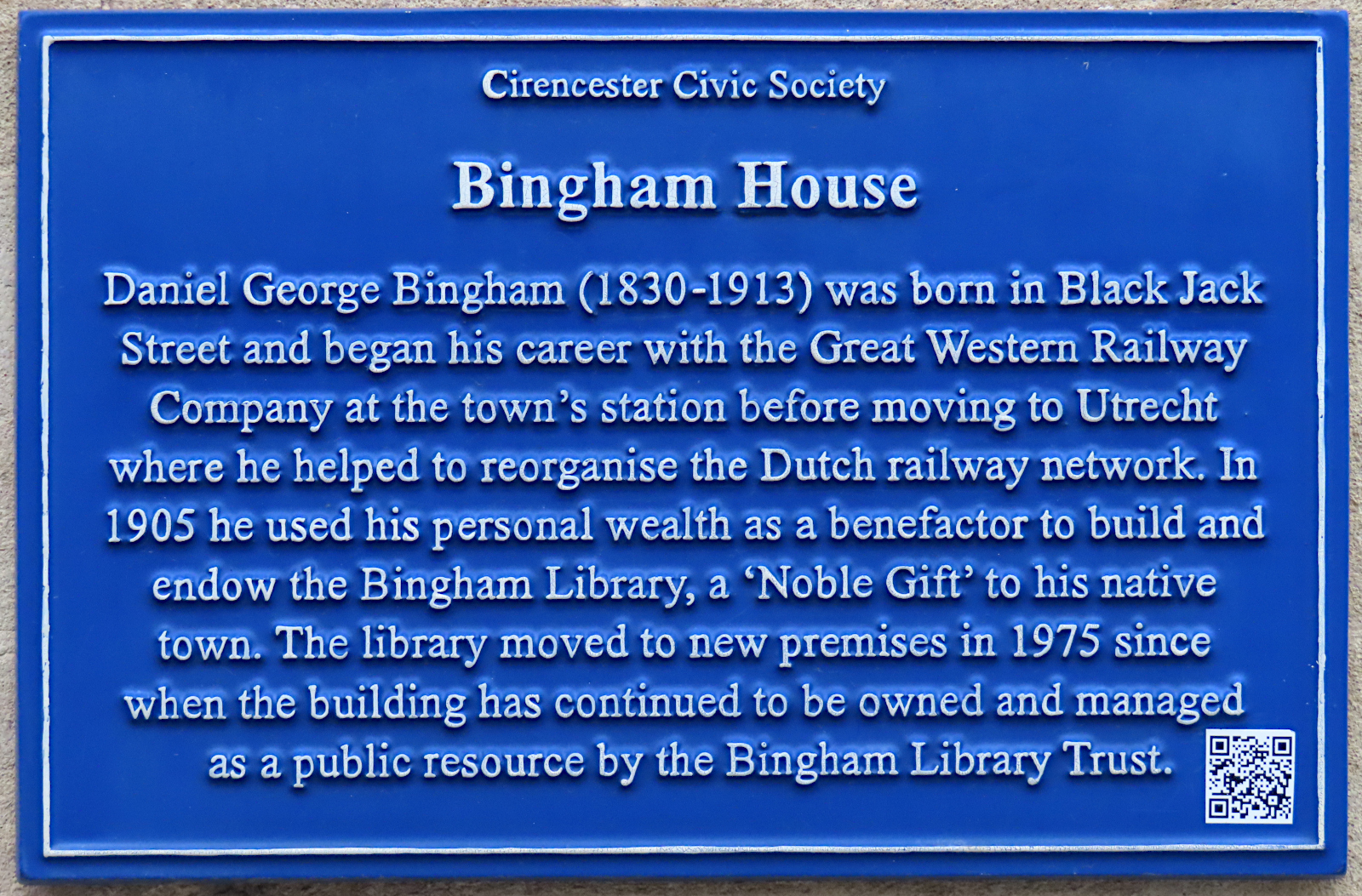
Image of the day – 93

The worker honeybee in the photo is collecting pollen. Insect-pollinated plants have slightly sticky pollen that lodges on the bee’s hairy body. Bees visit flowers to collect nectar from the base of the petals, but get dusted with sticky pollen in the process.

< Previous | Index | Next >

What’s in an image? Sometimes quite a lot, more than meets the eye. I’m posting an image every two days or so.

Click to enlarge

Like all plants and animals, bees are pretty well suited to the actions they need to perform to live and reproduce. That’s what evolution does, it homes in on the best shape and size of wings, the optimum size for flight muscles, best arrangement of hairs on the legs to brush loose pollen towards the pollen sac for collection and transport, the best mouthparts for collecting nectar and so forth.

Quite a challenge, and an astounding achievement, but entirely doable by making small, random changes and selecting the best.

Here’s an example to make that bold claim clearer. If a random change enables the worker bees to carry on just a few days longer in the autumn, the hive will have slightly larger stores of honey for the coming winter. That hive will survive when a hive with less capable workers might not. And that’s enough. The new queens from the surviving hive will carry the altered gene and it’ll be present in the workers of the new colonies those queens create. The altered colonies will also survive in slightly colder places than before so will succeed at slightly higher altitudes and in slightly cooler climates.

The worker honeybee in the photo is collecting pollen. Insect-pollinated plants have slightly sticky pollen that lodges on the bee’s hairy body. Bees visit flowers to collect nectar from the base of the petals, but get dusted with sticky pollen in the process. Bees clean themselves like most insects (you’ve probably seen houseflies doing it, sweeping off particles of dust with one leg while standing on the others). When bees clean themselves, most of the pollen end up stuck together as a lump and lodges on a series of special hairs on the hind legs. Look closely and you can see this bee’s pollen load on its rear leg; an orange/yellow colour. Pollen is protein rich and the bees feed it to the bee pupae in the hive.

The plant feeds the bees nectar for energy and pollen for growing young bees; while the bees move pollen from flower to flower, and often from plant to plant over quite long distances, sometimes a mile or more. So the bees and the plants both benefit, it’s a useful co-operative effort.

Favourites

For convenience, here’s a list of my favourite images:

Anemone, Cloud, Honeybee, Hydrangea, Kiftsgate1, Kiftsgate2, Large White, Mugshot, Nelson, Robin, Rose, Spilhaus, Sunset1, Weston beach

Themed image collections

The links below will take you to the first post in each collection

Cirencester, Favourites, Irish holiday 2024, Roman villa

< Previous | Index | Next >

Useful? Interesting?

If you enjoyed this or found it useful, please like, comment, and share below. (If you don’t see those links, click the article’s title above the main photo and they will appear.) Send a link to friends who might enjoy the article or benefit from it – Thanks! My material is free to reuse (see conditions), but a coffee is always welcome and encourages me to write more often!
Image of the day – 2

Come on mate, get preening! How do you expect to find an attractive female robin with scruffy, untidy feathers like that?

< Previous | Index | Next >

What’s in an image? Sometimes quite a lot, more than meets the eye.

I’m posting an image each day, or as often as I can; a photo I took, an image from Wikipedia, NASA, or some other open source, a diagram or a map. Whatever takes my fancy. This is the second in the series.

The robin at Pretty and Pip

Pretty & Pip is one of my favourite coffee shops in Cirencester. I wrote ‘the robin‘ because he’s always there, in their lovely courtyard. If I didn’t know the guy that owns and manages this place I might even think the robin ran it! He certainly thinks he belongs there, and he does a pretty good job of picking up cake crumbs and generally keeping the place spick and span.

But come on mate, get preening! How do you expect to find an attractive female robin with scruffy, untidy feathers like that?

Favourites

For convenience, here’s a list of my favourite images:

Anemone, Cloud, Honeybee, Hydrangea, Kiftsgate1, Kiftsgate2, Large White, Mugshot, Nelson, Robin, Rose, Spilhaus, Sunset1, Weston beach

Themed image collections

The links below will take you to the first post in each collection

Cirencester, Favourites, Irish holiday 2024, Roman villa

< Previous | Index | Next >

Useful? Interesting?

If you enjoyed this or found it useful, please like, comment, and share below. (If you don’t see those links, click the article’s title above the main photo and they will appear.) Send a link to friends who might enjoy the article or benefit from it – Thanks! My material is free to reuse (see conditions), but a coffee is always welcome and encourages me to write more often!
Elephant hawk moth

The caterpillar did something extraordinary – it mimicked a small snake

Have you ever seen an elephant hawk moth? If you live in Europe or Asia you might have spotted one of these amazing insects. In the United Kingdom they are fairly common, but perhaps not often seen. It’s a real treat to spot an adult or a caterpillar, both are amazing sights.

An elephant hawk moth male (credit: Wikipedia)
The circle marks the spot (credit OpenStreetmap)

Walking in the Cotswold Water Park recently, near the Gateway Centre on Lake 6, we spotted an elephant hawk moth caterpiller crossing the footpath (close to the grey circle in the map.

For a short time we just watched as it made its way across the path. But before it made it to the vegetation on the far side, some people appeared with a dog. The dog ran up enthusiastically to greet us and accidentally kicked the caterpiller before running off again. The caterpillar did something extraordinary – it mimicked a small snake.

Am I a caterpillar, or am I a snake?

The caterpillar crossing a stony path

For perhaps 20 seconds or so it writhed its body in a convincingly snakelike movement, and it pumped up several body segments behind the head, tucking its head down at the same time. With eye spot markings on its flanks, a scaly pattern on the entire body, and by raising up the front part of the body, it really did look the part. I wasn’t fast enough to get a photo, but I did get some video of the recovered caterpillar continuing on its way afterwards.

Searching the internet later, I found several good images of the caterpillar mimicking a small snake. Perhaps the best of these is show below.


The caterpillar looking very much like a snake (credit iSpot)

The natural world is so amazing, and so full of surprises, but mimicry is quite a common feature in both plants and animals. The European white dead-nettle has leaves that cannot sting but match the appearance of the unrelated stinging nettle very closely. Some insects look like pieces of wood, or a leaf, or a patch of white lichen, or a bird dropping. Many slugs look very much like animal droppings of various kinds, and as they move so slowly only an alert predator is likely to notice them. Predators, too, use camouflage which is not truly mimicry, but helps them merge into dappled sunshine and shade. Fish are often dark on top and silvery underneath. Sometimes they are patterned and look like the gravel bed of a stream or river.

Amazing!

See also: