Mentioned in News

It’s a great place to stay up-to-date on all sorts of important topics. Furthermore, you need a university degree as the bare minimum if you want to write articles for the website. This results in a high standard of writing.

The Conversation

< Previous | Index | Next >

On the web – 2

The Conversation

I’ve started reading The Conversation, not every item but whenever I spot something that catches my attention. This happened back on 8th April when I added a news item based on a post from ‘The Conversation’. This time I’d like to write about the website itself, not just an item that I read and liked.

The web as intended

I mentioned this in the news item. Tim Berners-Lee, the creator of the World-Wide-Web, made his original intentions very clear in his recent book, ‘This is for Everyone’. The web, especially recently, has significantly tampered with and damaged what he had hoped to create. If you read the book you’ll see what he means and how he intends to fix things and is already working to do so.

The Conversation is a website that already conforms rather well to Berners-Lees’s intentions. For one thing it’s completely free to use, like Wikipedia, the Internet Archive, and my own site which you’re reading now. Everything here is free to read, use, copy, and re-use. Check my copyright page for more details.

‘The Conversation’ presents world news and updates and articles on research and development; so it’s a great place to stay up-to-date on all sorts of important topics. Furthermore, you need a university degree as the bare minimum if you want to write articles for the website. This results in a high standard of writing and articles you should be able to trust. There are different versions for different nations and regions, every Conversation page has a drop down list near the top where you can select the version you want to view.

That’s all I wanted to say about ‘The Conversation’. If you subscribe for notifications and read whatever grabs your attention, you’ll stand a good chance of being better informed than ever before and enjoying the process as well. Happy reading!

See also:

< Previous | Index | Next >

You might also like:

Useful? Interesting?

If you enjoyed this or found it useful, please like, comment, and share below. (If you don’t see those links, click the article’s title above the main photo and they will appear.) Send a link to friends who might enjoy the article or benefit from it – Thanks! My material is free to reuse (see conditions), but a coffee is always welcome and encourages me to write more often!

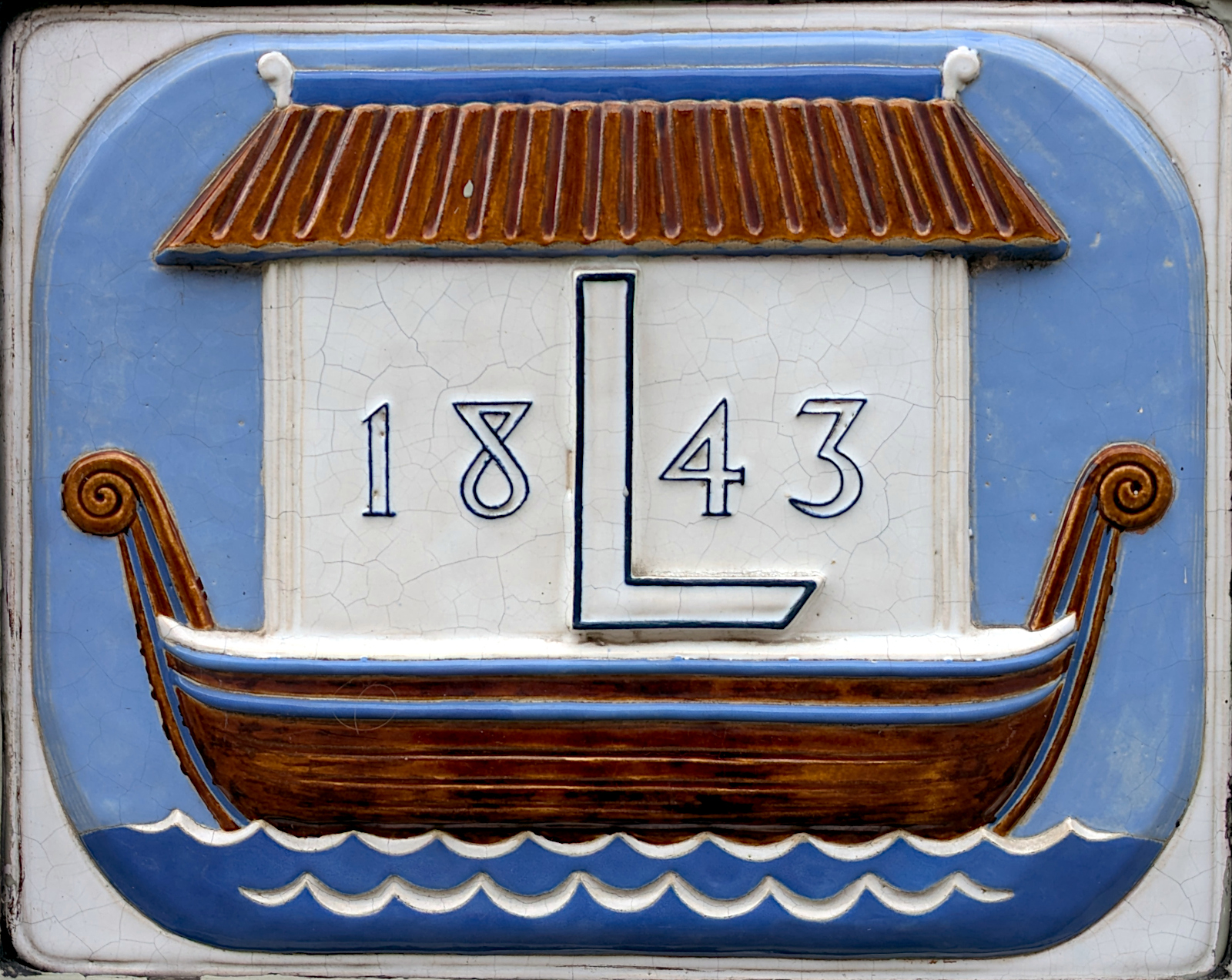
Arkell’s Brewery plaque

It’s likely the cracking will have been caused by differential thermal expansion and contraction with the iron changing its dimenions rather more than the ceramic glaze.

< Previous | Index | Next >

Image of the day – 189

What’s in an image? Sometimes quite a lot, more than meets the eye. I’m posting an image every few days.

Click images to enlarge

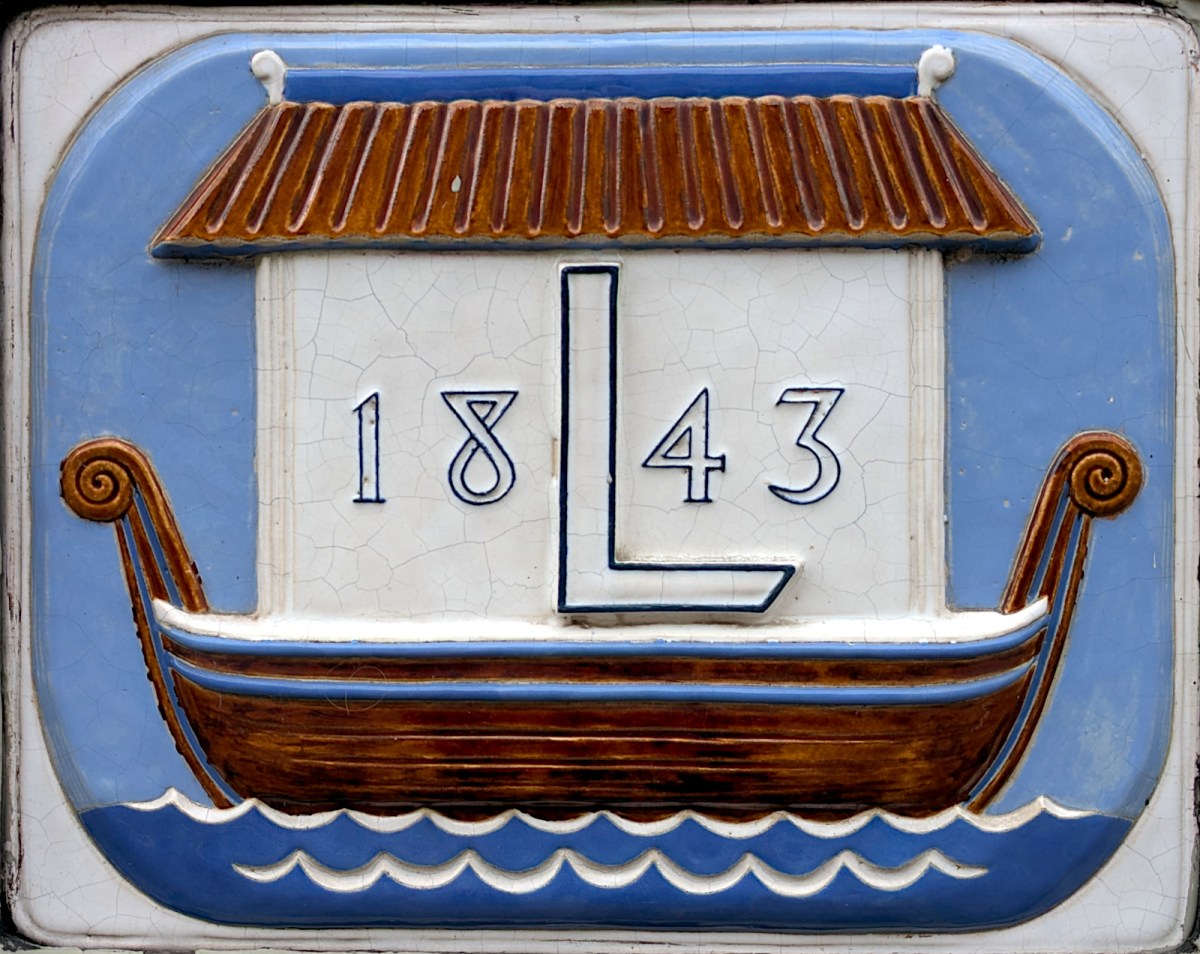
This is one of the old brewery plaques, once numerous across Britain. This example is in Castle Street, outside The Brewers Arms, not far from the junction with Querns Lane and Lewis Lane.

Arkell’s Brewery

The brewery originated in 1843, the year on the plaque. It was founded in Swindon by John Arkell, remains family-owned and operates as one of the oldest remaining brewery companies in Britain.

The plaque is probably of cast iron with enamel decoration and apart from some cracks seems to be in almost perfect condition. It’s likely the cracking will have been caused by differential thermal expansion and contraction with the iron changing its dimenions rather more than the ceramic glaze. The plaque has seen more than 180 day/night cycles in its time!

Brasso

The image is of Noah’s ark with a large capital letter ‘L’, so a play on Arkell (‘arkL’). There’s a long history of businesses advertising their presence with logos and other illustrations, it happens in all nations and cultures, sometimes the themes, names and images employed can become quite famous and long-lived. When I was a young child, Brasso (a British brass polish) was sold in steel containers with blue and white rays coming out in all directions. It’s still available today in cans with the same design. And it probably looked just the same in Victorian times as well! When I was young it was fitted with a low-profile, steel screw-cap, today it has a much larger, plastic cap. Otherwise, it looks identical to me.

See also:

< Previous | Index | Next >

You might also like:

Useful? Interesting?

If you enjoyed this or found it useful, please like, comment, and share below. (If you don’t see those links, click the article’s title above the main photo and they will appear.) Send a link to friends who might enjoy the article or benefit from it – Thanks! My material is free to reuse (see conditions), but a coffee is always welcome and encourages me to write more often!
Come on in!

The simplest and cheapest way to travel would have been to walk, and people often did exactly that. For an example look no further than the old story of Dick Whittington.

< Previous | Index | Next >

Image of the day – 188

What’s in an image? Sometimes quite a lot, more than meets the eye. I’m posting an image every few days.

Click images to enlarge

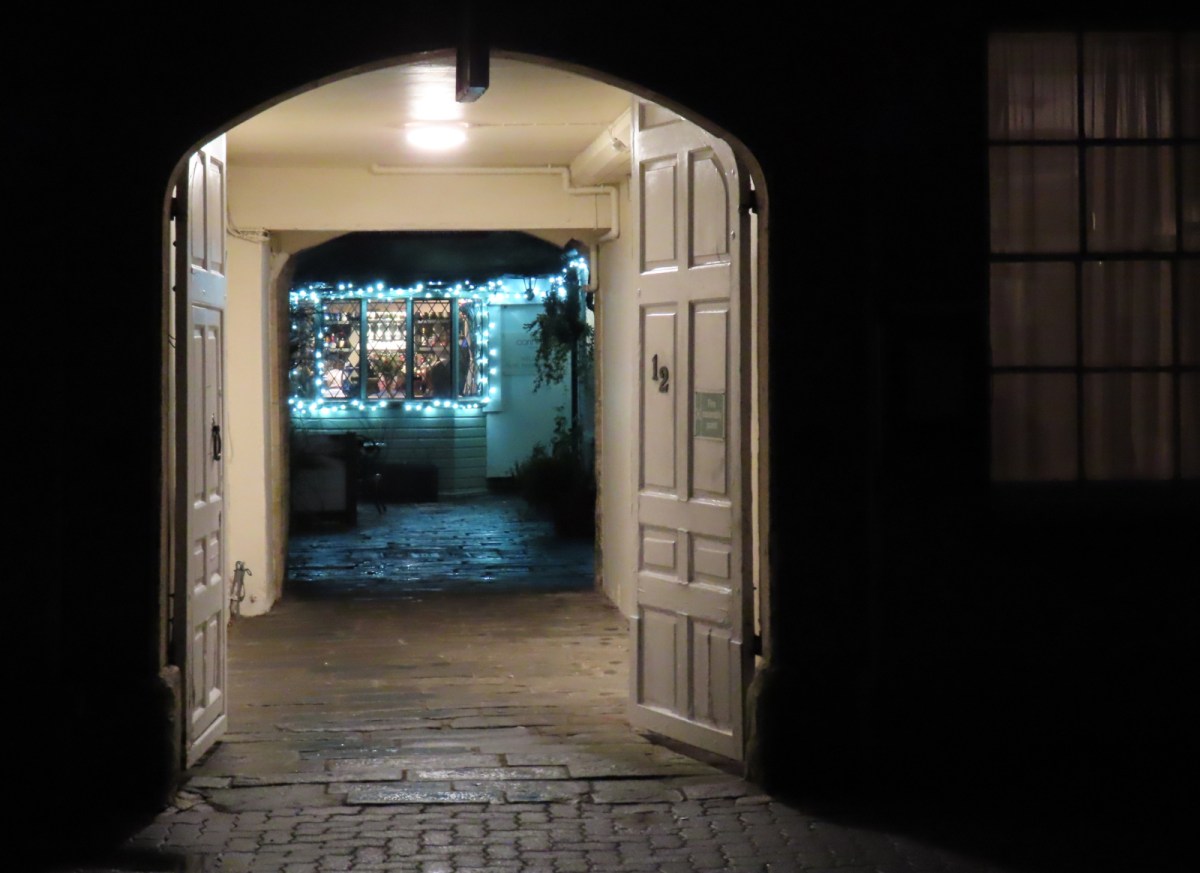
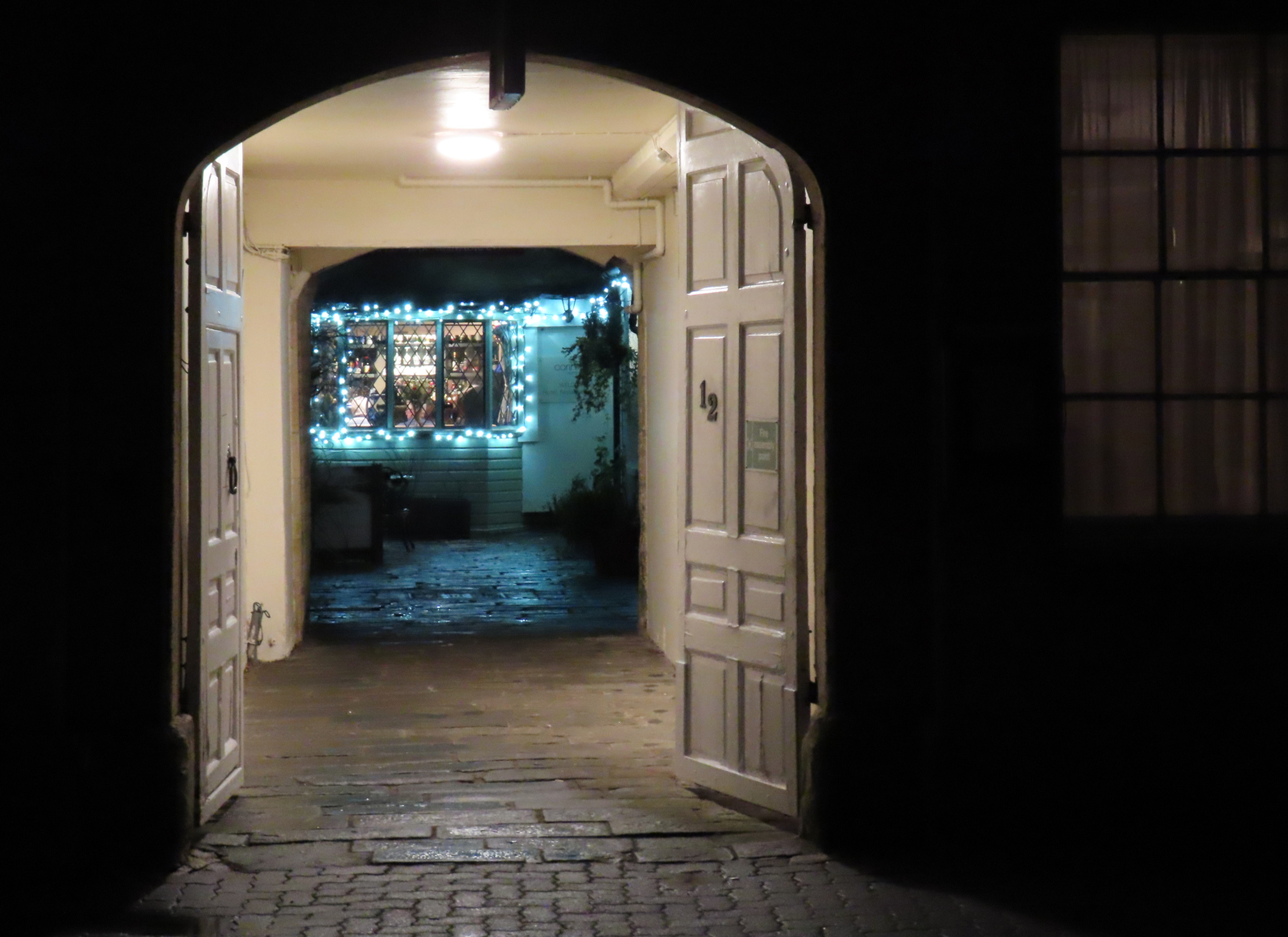
This photo was taken in Cirencester, peering in through an entrance to a courtyard beyond. If you are familiar with the town, I wonder if you know where this is? *The answer is at the bottom of the post.

There’s an invitation in this photo

That’s why I called it ‘Come right in!’ There seems to be an unspoken welcome here. What appeals to you most in this picture? Is it the warmth of the light? Or perhaps the sparkle of the decorative lights at the far end? Or the open doors beckoning you to enter? In days of yore, this double doorway might have allowed a horse to be brought inside for stabling, feeding, watering and grooming to recover for use the following day. The carriage would have remained on the street outside.

‘Days of yore’, this funny old expression is a poetical way of saying long ago. ‘yore’ is an Old English word closely related to the modern word ‘year’. So the sense is ‘in the days of years ago’. There’s a large garden at the back of the hotel, with a lawn scattered with tables and chairs, a lovely place to eat and drink with friends or family in the summer months. I imagine the horses sometimes being turned out to graze in a grassy field here, what a treat for them!

Shelter for travellers

Travelling on horseback or by horse and carriage was a slow affair, requiring regular stops for meals or to shelter for the night, and that’s why the old routes between towns in Britain are liberally scattered with pubs, inns and hostels. Practically every village of hamlet would have had one and towns would have had many more. They’re not hard to spot, although these days many have been converted to other uses.

It wouldn’t always have been necessary to pay for accommodation, friends or family along or near the route would have made travellers welcome and on dry, warm, summer nights it would have been possible to pull off the main roads and sleep outside or in the carriage. The simplest and cheapest way to travel would have been to walk, and people often did exactly that. For an example look no further than the old story of Dick Whittington. In Roman times there were parallel systems for official/military and public use. Every 30 to 50 km (a day’s journey) there were mansiones or official stops with good accomodation, fresh horses, dining areas, and perhaps even baths. And between these were mutationes, (literally ‘changes’) for a brief stop, a fresh horse, and perhaps some refreshments but without overnight facilities. Non-official, privately run facilities included cauponae and tabernae, some of these were a bit rough and disreputable, some were well appointed with courtyards, kitchens, and decorated dining rooms. Several modern English terms come from these words – mansion, mutation, and tavern are notable.

The Bible is usually regarded as a religious book, but it’s also a good historical source as well. Read the book of Acts, for example, to get a good idea of what travel by land and sea was like 2000 years ago. See for example Acts 28:11-16 where a place near Rome called ‘Three Taverns’ is mentioned (Tres Tabernae).

* It’s the Corinium Hotel in Gloucester Street, once the Corinium Court Hotel.

See also:

< Previous | Index | Next >

Useful? Interesting?

If you enjoyed this or found it useful, please like, comment, and share below. (If you don’t see those links, click the article’s title above the main photo and they will appear.) Send a link to friends who might enjoy the article or benefit from it – Thanks! My material is free to reuse (see conditions), but a coffee is always welcome and encourages me to write more often!
You might also like:

Image of the day – 80

Hot water rose in the system and the returning pipes contained cooler, denser water that flowed down, re-entered the boiler and warmed up again.

< Previous | Index | Next >

What’s in an image? Sometimes quite a lot, more than meets the eye.

I’m posting an image every two days (or as often as I can). A photo, an image from the internet, a diagram or a map. Whatever takes my fancy.

Click to enlarge

The Montalto Estate in County Down had an extensive fruit and vegetable garden to supply the house year round with freshly harvested crops. Greenhouses were an important feature, providing out-of-season crops and exotic fruits like pineapples and citrus. These greenhouses needed heating in the winter months and this was supplied by wide-bore cast iron pipes below the plant benches.

The remains of some of these pipes are visible in the photo. They usually ran in pairs; there were no circulating pumps, instead the boiler would be below ground in a stokehole and the hot water would rise and flow by gravity acting on the changes in density. Hot water rose in the system and the returning pipes contained cooler, denser water that flowed down, re-entered the boiler and warmed up again.

I remember greenhouse heating systems just like this from my childhood, my father had a role in the family business at that time, a nursery with greenhouses full of cuttings and seedlings and houseplants that needed heating during the winter. There was a wonderful smell of greenery, the pipes were always warm, yet never too hot to touch, delicate maidenhair ferns grew wild around the pipework below the benches and these were allowed to remain because the fronds were always useful in making bouquets and buttonholes for sale in the shop in town, or for weddings and other occasions. Even on cold, frosty days you’d want to take off your coat, hat and gloves if you went into a greenhouse!

Modern glasshouses are very different, they have oil or gas fired systems controlled automatically on demand by thermostats, and the heat may be distributed by water pipes or by fan-blown air circulation.


Images from our Irish holiday 2024

For convenience, here’s a list of all the Irish holiday images:

28th Jul – Welsh Botanic Garden, Robin, Fishguard
29th Jul – Wicklow Mts, Glendalough, Powerscourt, Rose, Greystones
30th Jul – Liffey, Temple Bar, St Patrick’s Cathedral
31st Jul – Newgrange, Battle of the Boyne
1st Aug – Monasterboice, Mourne, Thrift, Window
2nd Aug – Spelga Dam, Hydrangea, Pipework, Lough Neagh
3rd Aug – Coagh, Springhill, Portrush
4th Aug – Beach at Portrush
5th Aug – Giant’s Causeway, Carrick-a-Rede, Portrush

Themed image collections

The links below will take you to the first post in each collection

Cirencester, Favourites, Irish holiday 2024, Roman villa

< Previous | Index | Next >

Useful? Interesting?

If you enjoyed this or found it useful, please like, comment, and share below. (If you don’t see those links, click the article’s title above the main photo and they will appear.) Send a link to friends who might enjoy the article or benefit from it – Thanks! My material is free to reuse (see conditions), but a coffee is always welcome and encourages me to write more often!
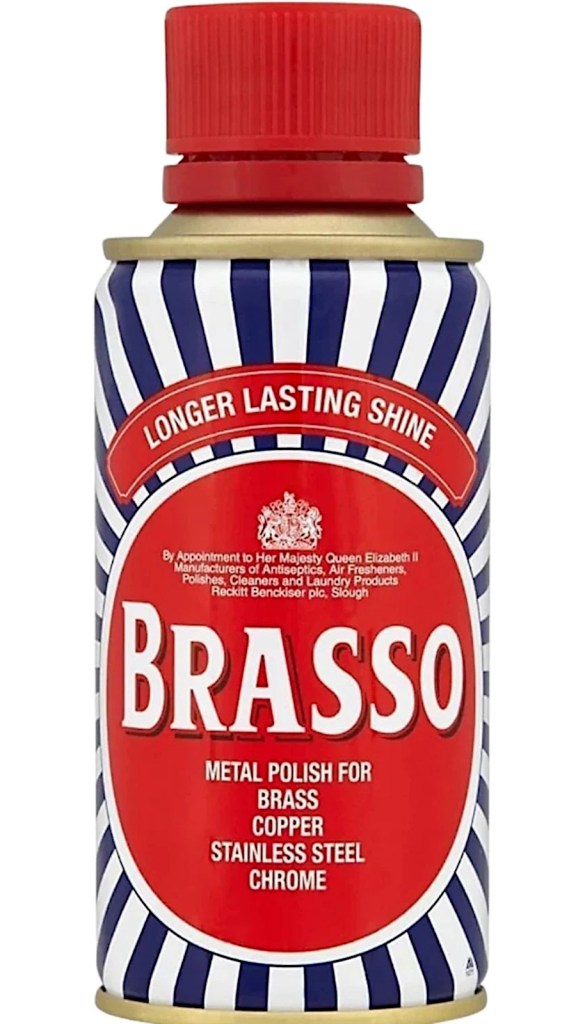
Image of the day – 79

Thrive like an Irish Hydrangea, get rooted in surroundings and situations that bring out your very best.

< Previous | Index | Next >

What’s in an image? Sometimes quite a lot, more than meets the eye.

I’m posting an image every two days (or as often as I can). A photo, an image from the internet, a diagram or a map. Whatever takes my fancy.

Click to enlarge

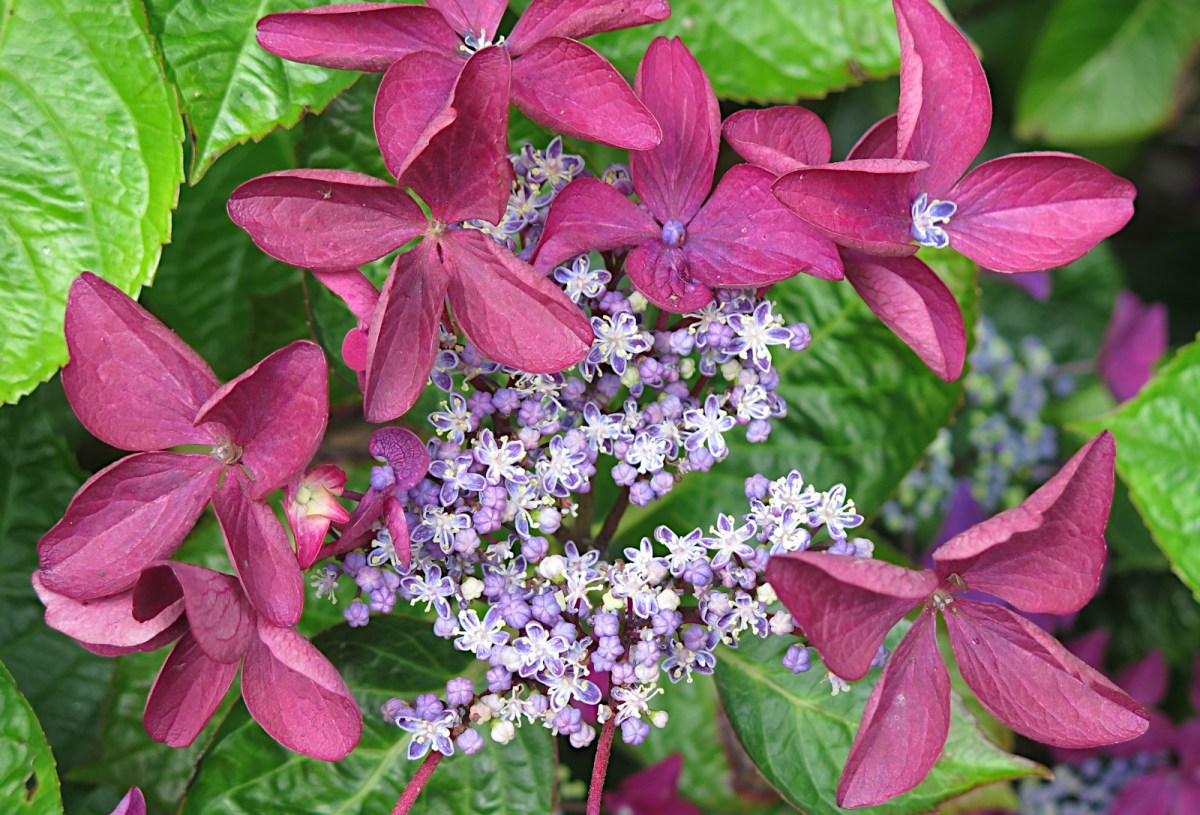
Irish gardens often have the most magnificent Hydrangeas, in striking colours, not just white, blue and pinks, but purples and very vivid blues as well as many kinds like the lacecaps where there are small inner flowers and large outer ones as in the photo.

It seems there’s something in the Irish soils or climate that cause Hydrangeas to thrive particularly well! We visited the Montalto Estate just south of Ballynahinch where I took this shot, but it’s typical of all the gardens we visited in our two weeks in Ireland.

Perhaps the same is true for people. Do we thrive best in particular places? Perhaps the cultural ‘soil and climate’ suit us best in the country we call home, or amongst people we know well. Some people are energised by good company and parties, others (like me) are energised by solo activities. I can walk for miles on my own and come home afterwards feeling calm, balanced, and ready for anything. Others I know are just the opposite, a long, solo ramble would be hard to endure.

Whatever the individual differences it’s good for all of us to spend time in the ways that are most comfortable to us. Thrive like an Irish Hydrangea, get rooted in surroundings and situations that bring out your very best. You deserve it! And the people around you deserve it too.


Images from our Irish holiday 2024

For convenience, here’s a list of all the Irish holiday images:

28th Jul – Welsh Botanic Garden, Robin, Fishguard
29th Jul – Wicklow Mts, Glendalough, Powerscourt, Rose, Greystones
30th Jul – Liffey, Temple Bar, St Patrick’s Cathedral
31st Jul – Newgrange, Battle of the Boyne
1st Aug – Monasterboice, Mourne, Thrift, Window
2nd Aug – Spelga Dam, Hydrangea, Pipework, Lough Neagh
3rd Aug – Coagh, Springhill, Portrush
4th Aug – Beach at Portrush
5th Aug – Giant’s Causeway, Carrick-a-Rede, Portrush

Themed image collections

The links below will take you to the first post in each collection

Cirencester, Favourites, Irish holiday 2024, Roman villa

< Previous | Index | Next >

Useful? Interesting?

If you enjoyed this or found it useful, please like, comment, and share below. (If you don’t see those links, click the article’s title above the main photo and they will appear.) Send a link to friends who might enjoy the article or benefit from it – Thanks! My material is free to reuse (see conditions), but a coffee is always welcome and encourages me to write more often!