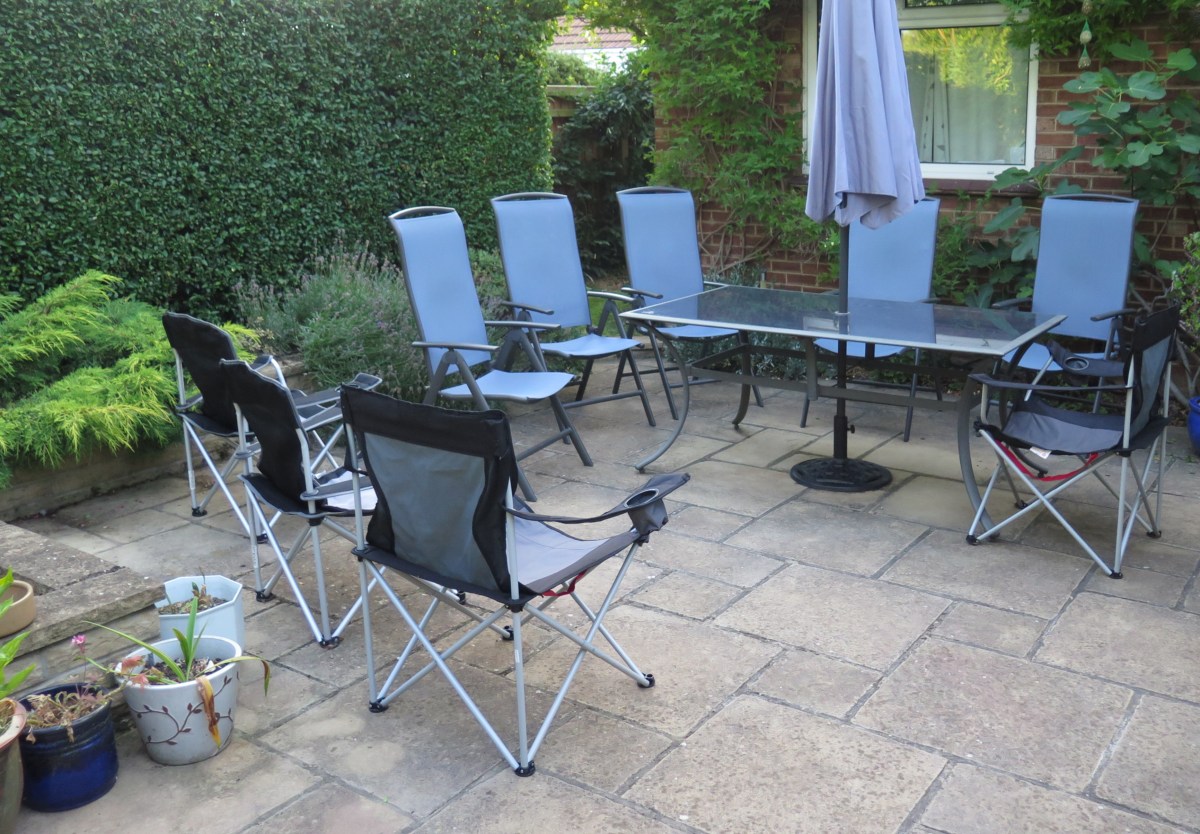
Our old patio
< Previous | Index | Next >
Image of the day – 202
What’s in an image? Sometimes quite a lot, more than meets the eye. I’m posting an image whenever I can.
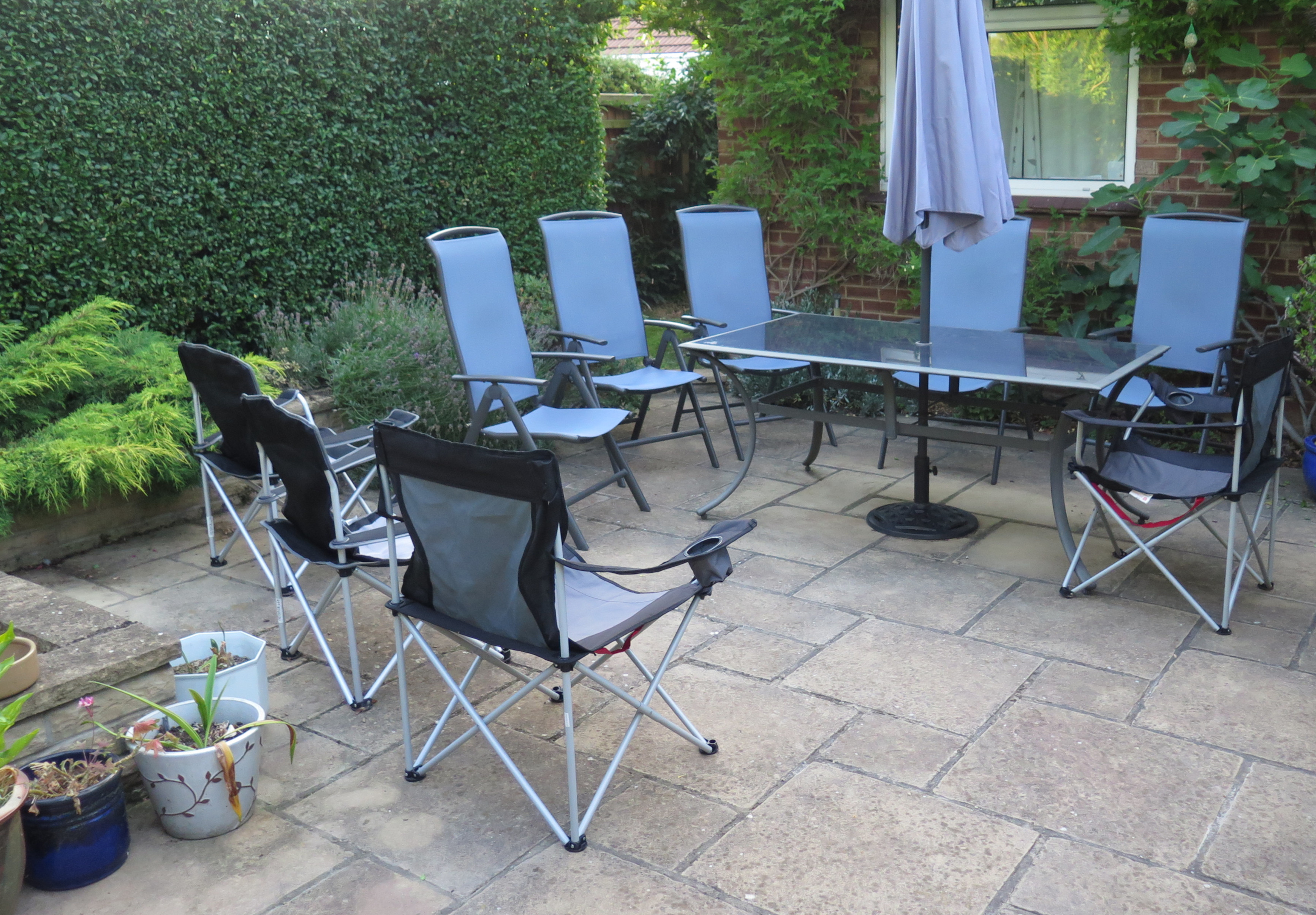
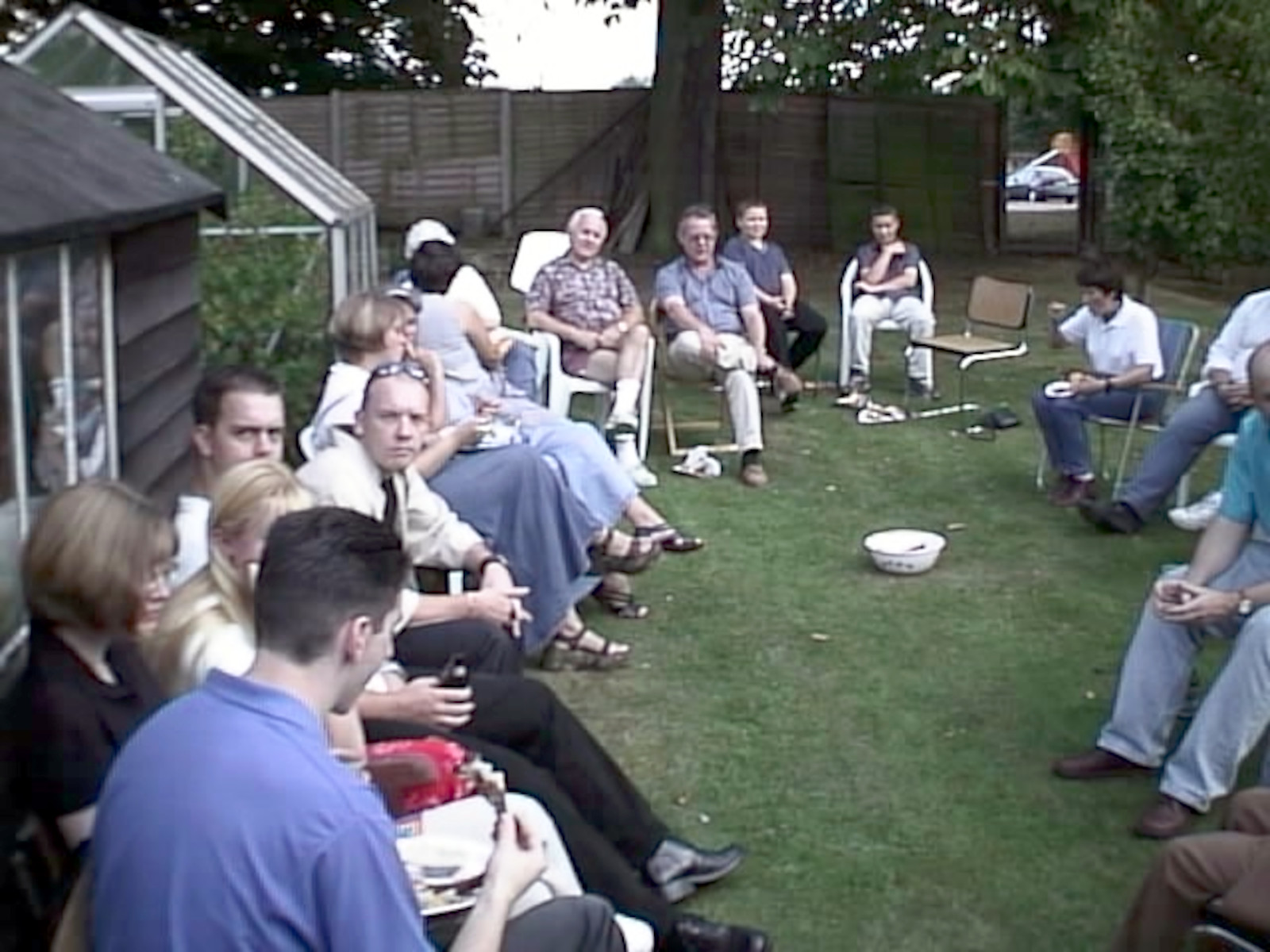
Before we moved to Cirencester we lived in a big old detached property in St Neots, Cambridgeshire. We could seat 10 or 11 people around the big table in our dining room, and a similar number on the patio outside. Our friends called it ‘The Party House’. When we first moved in, the house and garden both needed a lot of work; the second photo shows our housewarming party in September 1999, soon after we moved there. The mix of people includes people from work (Unilever), friends from church (Open Door, St Neots), and neighbours.
But Cirencester house prices are far higher than in St Neots so when we moved we bought a much smaller place and extended it, turning the garage into a bedroom and en suite bathroom. We still miss the spaciousness, but we love living in Cirencester. I began my life in this lovely, old, Cotswold town and it seems fitting to complete my life here too.
The local countryside
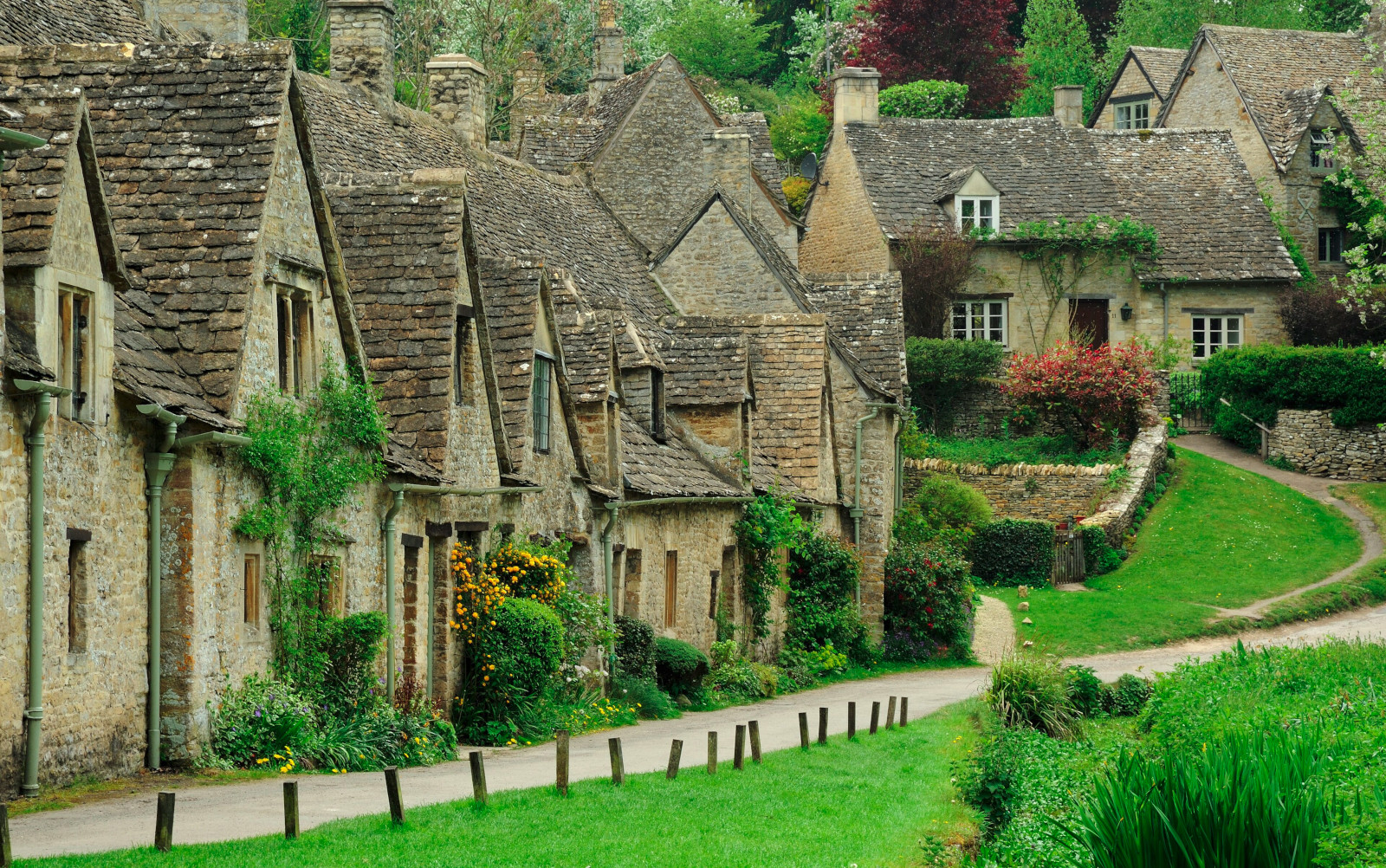
Quite apart from the town of Cirencester itself, the Cotswold countryside is very special. The towns and villages are all built from the same honey-coloured Oolitic limestone. Although it’s a beautiful colour when it’s freshly quarried or pressure washed, the stone ages to a pleasant neutral grey and becomes mottled as it hosts the growth of white, yellow and black lichens. Many of the buildings have traditional anti-drip ridges above the windows and doors, the roof tiles are frequently of Cotswold stone as well, and gutters, downpipes, doors and window frames are usually painted in a sympathetic, dusky, greyish-pale-green hue as well. These old homes, farmhouses and outbuildings blend gracefully into the countryside. Some of these buildings are rightfully famous, like Bibury’s Arlington Row (pictured above right). It almost looks as if the houses have sprung out of the ground like the nearby trees and hedges!
Historical change
Historically things were very different. If you’d visited the Cotswolds in 1500, the only stone buildings would probably have been ecclesiastical or military: churches, cathedrals and castles would have been built in stone along with city walls, but all the houses and many businesses (shops, pubs, inns and so on) would have been built of heavy wooden frames with wall infill of wattle and daub, a building technique going right back to Neolithic times.
Some of the old houses in Cirencester were originally built this way, rich wool merchants replacing them with stone in Georgian times, and in some cases a stone front was built just outside the old timber frame walls giving the appearance of a stone structure at lower cost. Arlington Row in Bibury was built by a local monastery for wool storage and later divided up for use as weaver’s cottages.
Rivers
Cirencester’s River Churn is part of the headwaters of the Thames. As rivers go it’s very small, rising at Seven Springs just south of Cheltenham, high in the Cotswold hills, running through a wooded, winding valley twelve miles to Cirencester and then joining the Thames at Cricklade after a further ten miles through flatter land. From the confluence with the Thames the Churn is by far the longer of the two rivers, but both names are very old, going back to the Iron Age, and perhaps a good deal earlier. Where they meet, the Thames is wider and deeper than the Churn so would have been thought the main river.
More on St Neots
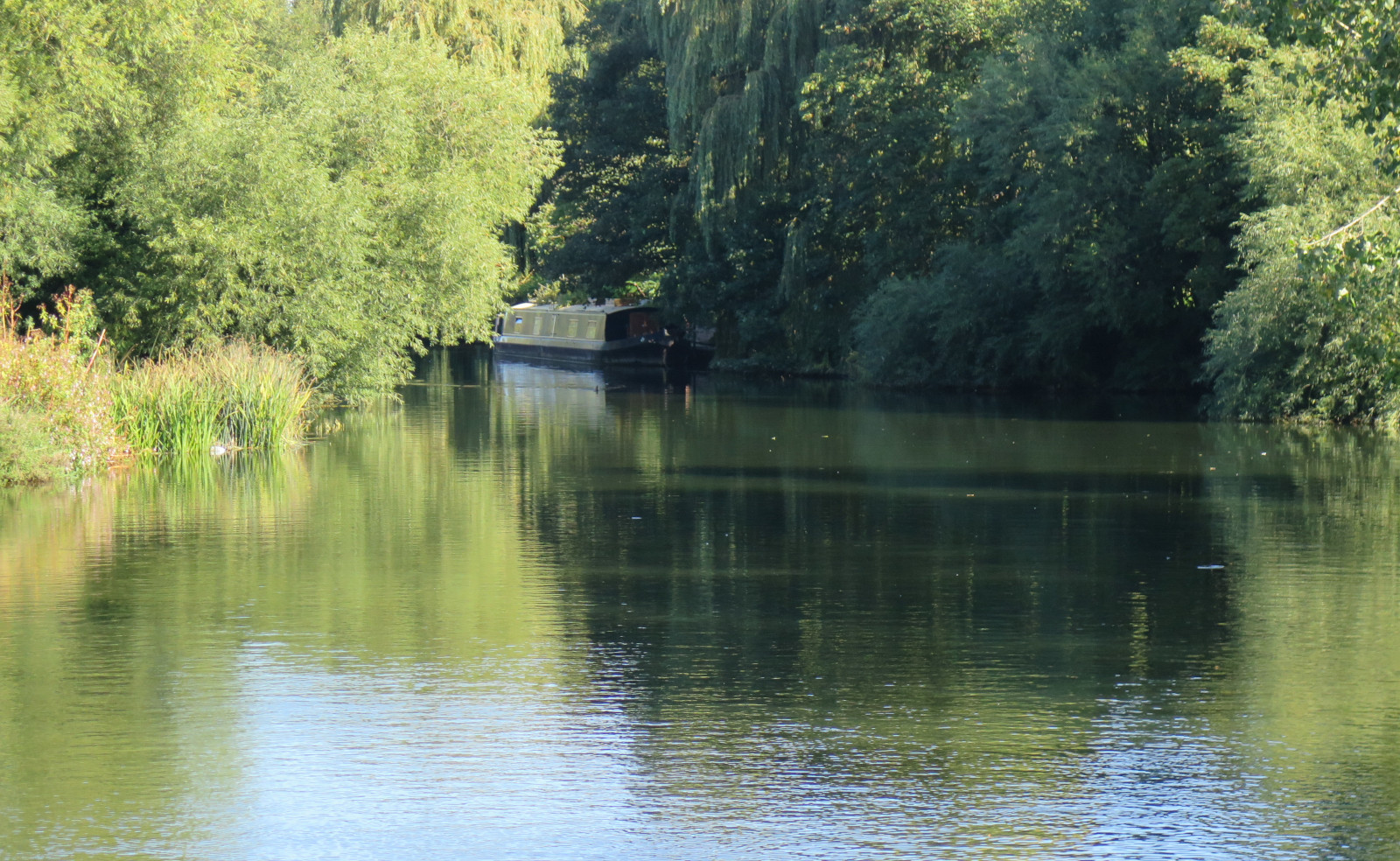
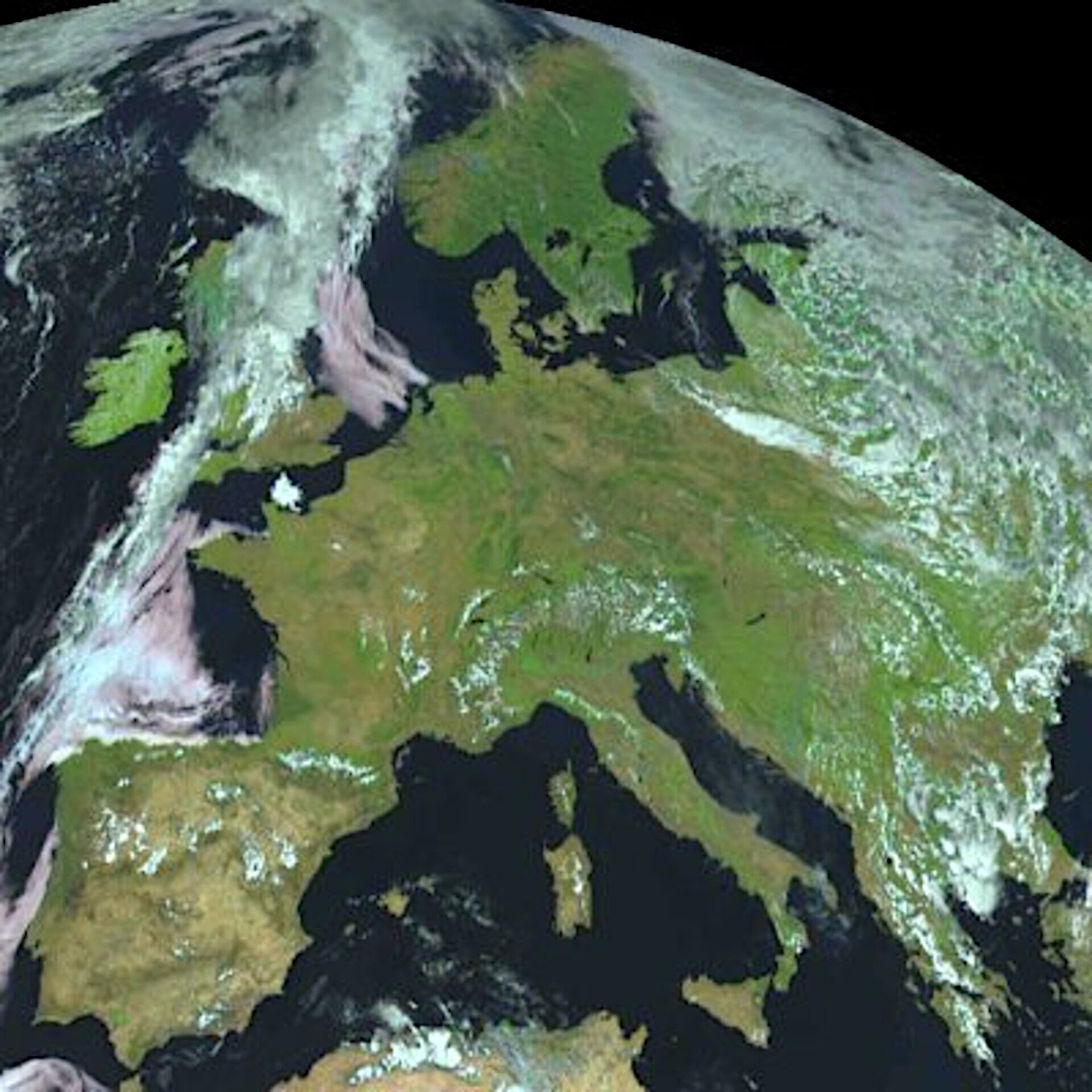
I began this article with a photo of the patio at our old home in St Neots and I should say some more about that lovely old town before finishing. One of the main features of St Neots is the River Great Ouse, a huge and navigable river by comparison with the little Churn. Both the Thames and the Great Ouse enter the southern part of the North Sea on the east coast of England and at that point both are significant rivers.
Cirencester had an Abbey, St Neots had a Priory; both are long since gone, but both are remembered still. Cirencester has a lovely public park, The Abbey Grounds, St Neots has a public building called The Priory Centre for theatrical and musical performances and all sorts of local events and meetings. Donna and I have very much enjoyed living in both places.
St Neots is a good deal larger than Cirencester and both towns are still growing rapidly in size and population.
Being at home
As I was writing I began to see how important home is. Home can be anywhere on the land surface of this planet called ‘Earth’. But there is something special about home, this is true for all of us. The difference between St Neots and Cirencester is quite minor. English is the most spoken language in both towns. Food and drink are similar in both places, so are the customs and the public holidays and the way life is lived. I could feel at home in either place and I have friends in both places.
But the place where I currently live is special in certain ways. I know Cirencester very well, but St Neots will have changed slightly since we moved ten years ago. For all of us, home is the most familiar place in the world – quite literally.
And I began to see that the same is true in places that are not places at all. For me, heaven is a familiar ‘place’ too. Of course it’s not a physical place in the way St Neots or Cirencester are. But it’s certainly home for me, where everything is familiar and reliable. Heaven is where my heart is already, Jesus is there, his Spirit lives in me and with me day by day, hour by hour.
‘Home is where your heart is’, we are told. My heart is already in this mysterious non-place which is beyond any normal meaning of the word ‘place’. Thinking in terms of place just helps me relate the extraordinary to the ordinary of everyday life.
Perhaps in this last section I’ve lost many of my readers, but I know some of you understand what I’m trying to say. There is more mystery in this universe than we can grasp with everyday thoughts and ideas. Don’t dismiss these thoughts as the ramblings of a deluded old man, they are not that at all. Here is a hidden truth that we can all lean into; and there’s a treasure here that you do not want to miss. So take my advice – go on digging until you find the treasure. His name and his character are there for all who will look deep and long.
Consider starting by reading the gospels, or my personal story of discovering church, or what church is like when it’s growing as it should.
See also:
- Cirencester – Website
- Cirencester– Wikipedia
- St Neots – Website
- St Neots – Wikipedia
< Previous | Index | Next >
You might also like:
Useful? Interesting?
If you enjoyed this or found it useful, please like, comment, and share below. (If you don’t see those links, click the article’s title above the main photo and they will appear.) Send a link to friends who might enjoy the article or benefit from it – Thanks! My material is free to reuse (see conditions), but a coffee is always welcome and encourages me to write more often!