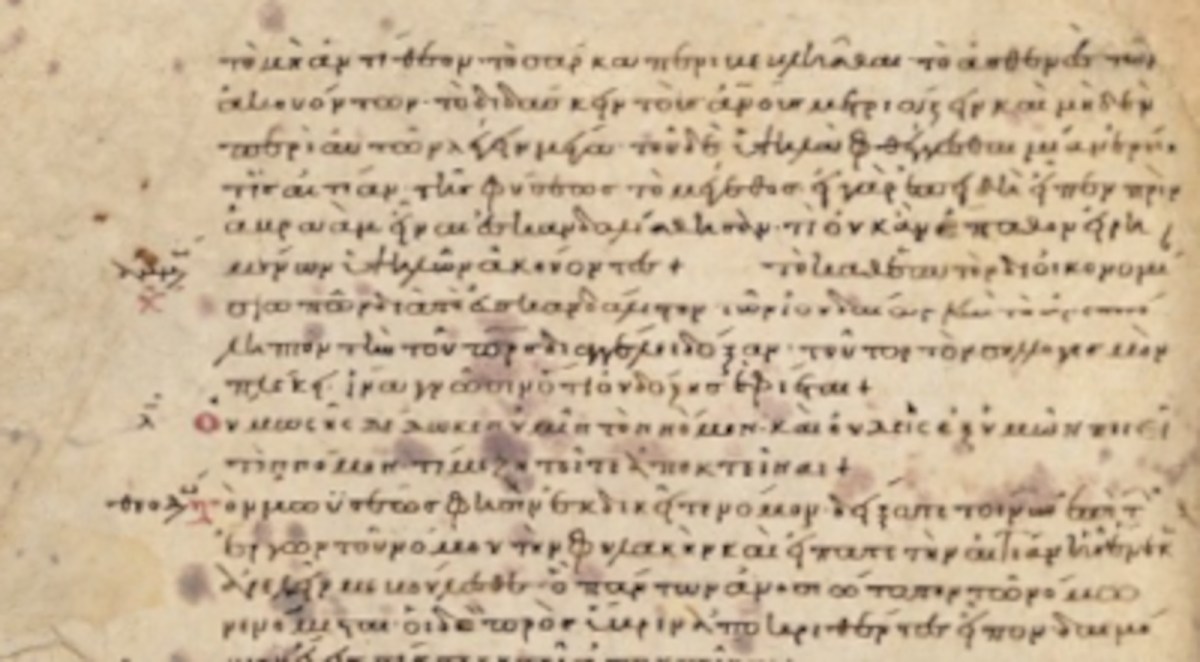
Greek commentary on John’s gospel dated 1190-1200 (Bodleian Library)
Cruising the gospel – John 19:31-42
Bible text –Read it yourself (opens in a new tab)
Shabta

(Wikimedia)
19:31-37 – Because the following day was Shabta (Aramaic), Shabbat (Hebrew) or the Sabbath (English), it was an important day of rest. Shabta began at sunset on the previous day and ended at sunset too.
19:38-42 – So any tasks that needed to be done on Shabta would have to be completed before sunset the previous day. That’s why the Jewish leaders asked Pilatus to take the bodies down from the crosses before nightfall. Normally, bodies would be left to decay on the crosses and the corpses would be consumed by rats or by birds over the following days and weeks. But if it was necessary to remove them earlier, the Roman custom was to break the legs. It could take up to three days for a healthy, fit individual to die following crucifixion. Because a person on a cross would have to use their legs to lift their body to inhale, soldiers might be ordered to break the legs so the prisoner would be unable to breathe and would die within a few minutes. The Roman soldiers broke the legs of the criminals either side of Yahshua as both were still alive. But a spear in Yahshua’s side proved that he was dead, not just holding his breath and staying very still.
Removing Yahshua from the cross
Yusuf min Arimathea (Joseph of Arimathea) was a secret follower of Yahshua and later, probably by then already late afternoon, he was joined by Naqdimon (Nicodemus), who brought the necessary materials. Both men were members of the Sanhedrin (the Jewish religious council), both followed Yahshua despite the high risks involved, both would have known and been known by the disciples. They took down the body and followed the Jewish practice of spice embalming and wrapping it in linen strips. Very short of time before sunset, they found a newly-carved tomb nearby and laid the body there, Matthew’s Gospel suggests it was Yusuf’s own tomb.
Like those who had seen Yahshua die, Yusuf and Naqdimon must also have thought that this was the end of everything, that for all his amazing teaching and wisdom, this was the end of the ministry of Yahshua bar Yusuf (Jesus son of Joseph, as people generally believed him to be). They would not have understood yet, despite his teaching, that he was also, and far more significantly, Yahshua bar Yahweh! He was, and would remain, the Son of the Eternal Father.
See also:
- Jesus and the Ossuaries* – BYU
- Joseph of Arimathea – Wikipedia
- Nicodemus – Wikipedia
*This Mormon discussion is interesting as it describes Jewish burial practices in the first century CE in some detail. It’s also downloadable as a PDF.
Useful? Interesting?
If you enjoyed this or found it useful, please like, comment, and share below. (If you don’t see those links, click the article’s title above the main photo and they will appear.) Send a link to friends who might enjoy the article or benefit from it – Thanks! My material is free to reuse (see conditions), but a coffee is always welcome and encourages me to write more often! 
You might also like:
Matthew 27:32-66 – Cruising the Gospel
Share this:


