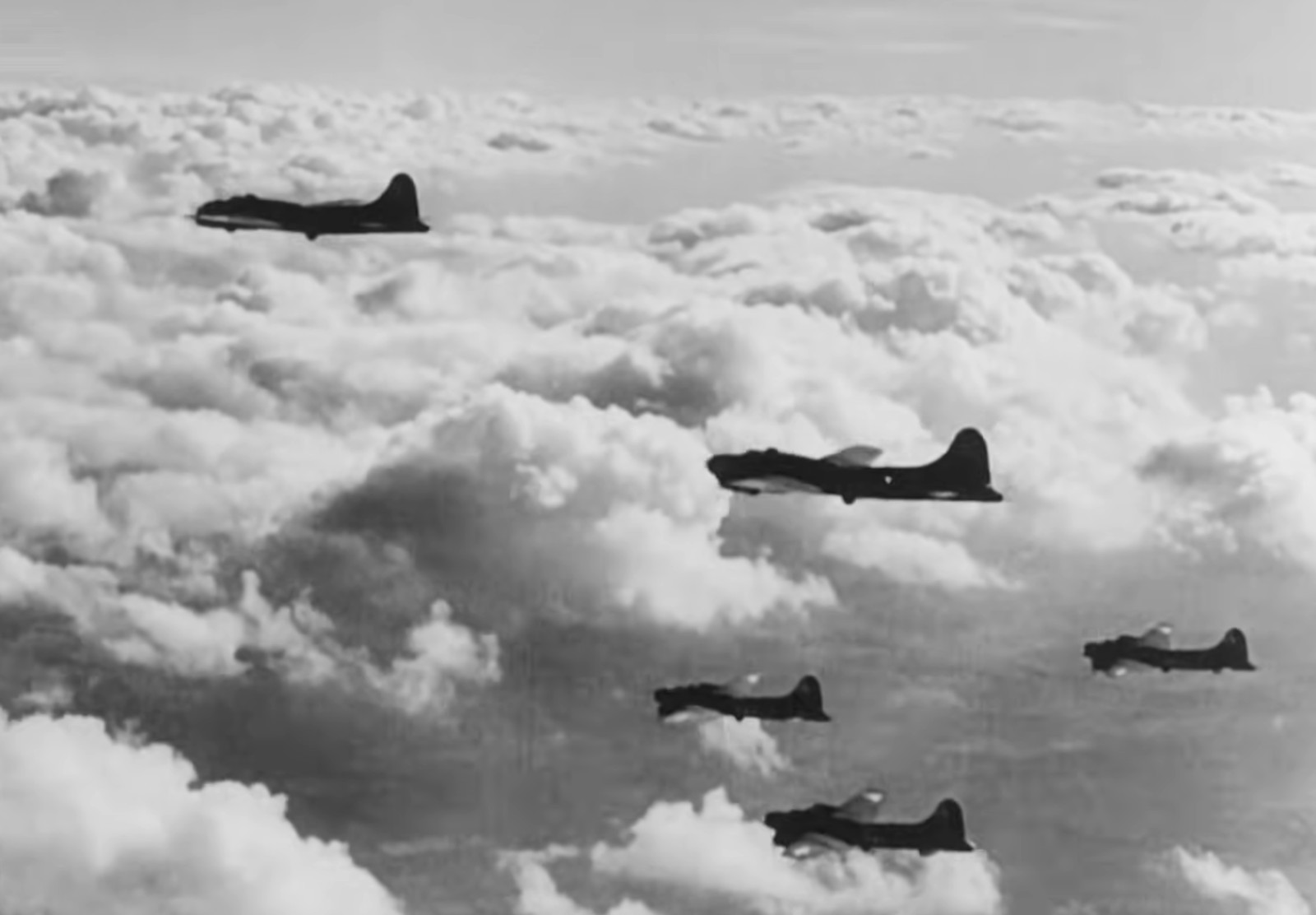
There were several groups of dinosaurs that had feathers. These were probably mostly for warmth, display or camouflage rather than flight thought there were some flying dinosaurs that had flight feathers.
What’s in an image? Sometimes quite a lot, more than meets the eye. I’m posting an image whenever I can.
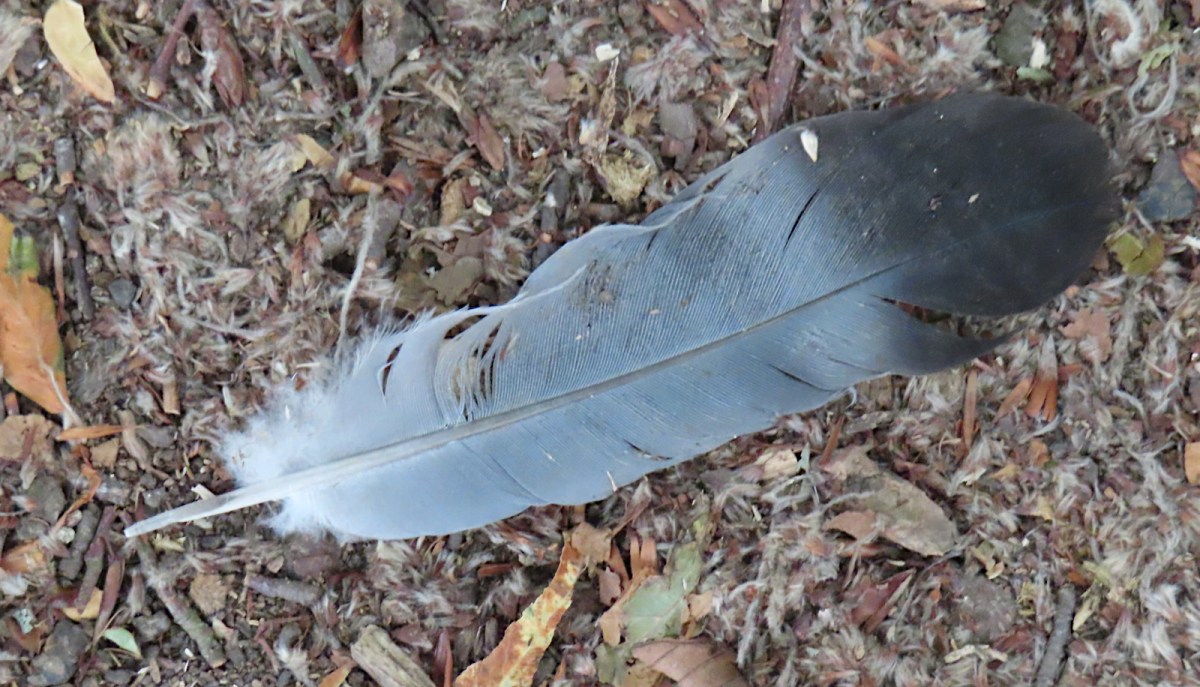
Abandoned feather
I’m sure you recognise this as a feather. But there may be quite a lot of things you don’t know about feathers too. In this post we’ll come up with as many questions and answers as we can.
What kind of bird is it from?
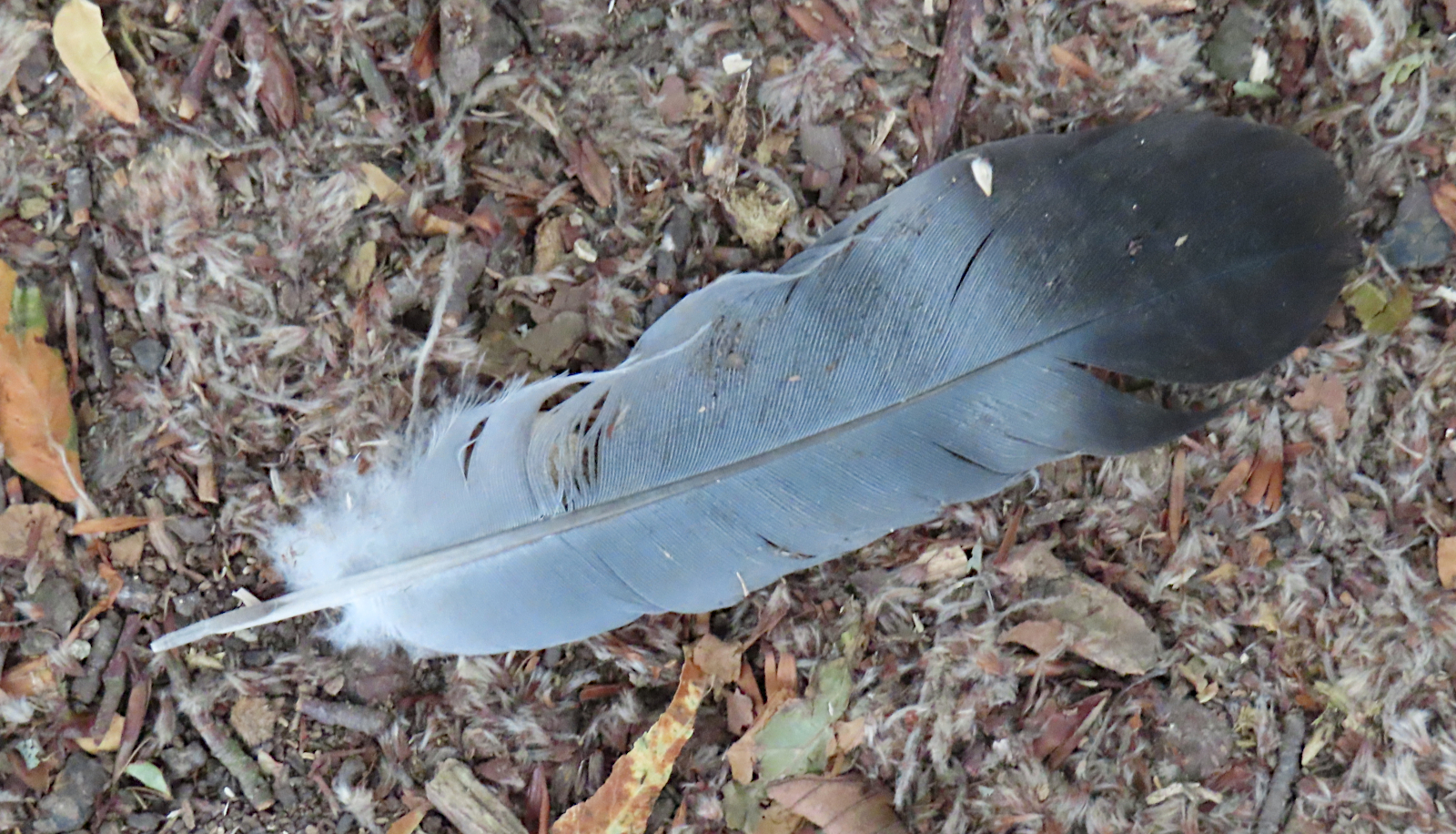
We all know that birds have feathers, but which species produced this particular feather, and what function did it provide? Most probably it came from a wood pigeon, according to Google’s image search.
The lowest part of the feather (bottom left) is downy and helps to keep the bird warm. The upper pale and dark grey parts have a different function altogether, they might be from the wings or tail of the bird to push the air in a downward motion to provide lift, or to guide direction of flight by manipulating the airflow in subtle ways calculated by the bird’s brain.
When a person is described as a bird-brain it may not be as derogatory as was intended! A bird’s brain is extremely well adapted to the work it has to perform. Feathers, too, are also very well adapted for the functions they provide; read more about the parts of a feather at Something over tea.
Do other animals have feathers, or is it just birds?
Mammals have hair or fur. Like feathers; skin, nails, claws, hair, fur, scales and horns are all composed of the protein keratin. It’s a tough, flexible protein with good structural strength and the ability to bend enough to resist fracturing. But among creatures living today, birds are the only group to have feathers. I wrote some other articles about birds.
Go back in time, however, and there were several groups of dinosaurs that had feathers. These were probably mostly for warmth, display or camouflage rather than flight thought there were some flying dinosaurs that had flight feathers – some of them on all four limbs so imagine a bird with four wings and teeth and you’ll get a rough idea of these creatures.
The Natural History Museum has an interesting article on its website about the origin of feathers. A lot of the detail remains to be worked out, but progress is being made.
Feathers have hidden features
A feather consists of a main central tube (the shaft) as the main support structure with a series of side branches (barbules) that can hook together. When these barbules get accidentally unhooked little gaps open up and the feathers become less affective (especially if they’re flight feathers on the wings or tail).
When birds preen, one of the things they are doing is using their beak to rezip any unhooked barbules. You can see some unzipped gaps on the feather in the photo at the top of the article.
Use of feathers by humans
Feathers are a natural resource. People have used them for centuries for clothing and display, for their insulating properties, or for artwork. Here are some specific examples, you can probably think of many more:
Display of authority or rank, think of the North American Indian war bonnet.
If you enjoyed this or found it useful, please like, comment, and share below. (If you don’t see those links, click the article’s title above the main photo and they will appear.) Send a link to friends who might enjoy the article or benefit from it – Thanks! My material is free to reuse (see conditions), but a coffee is always welcome and encourages me to write more often!
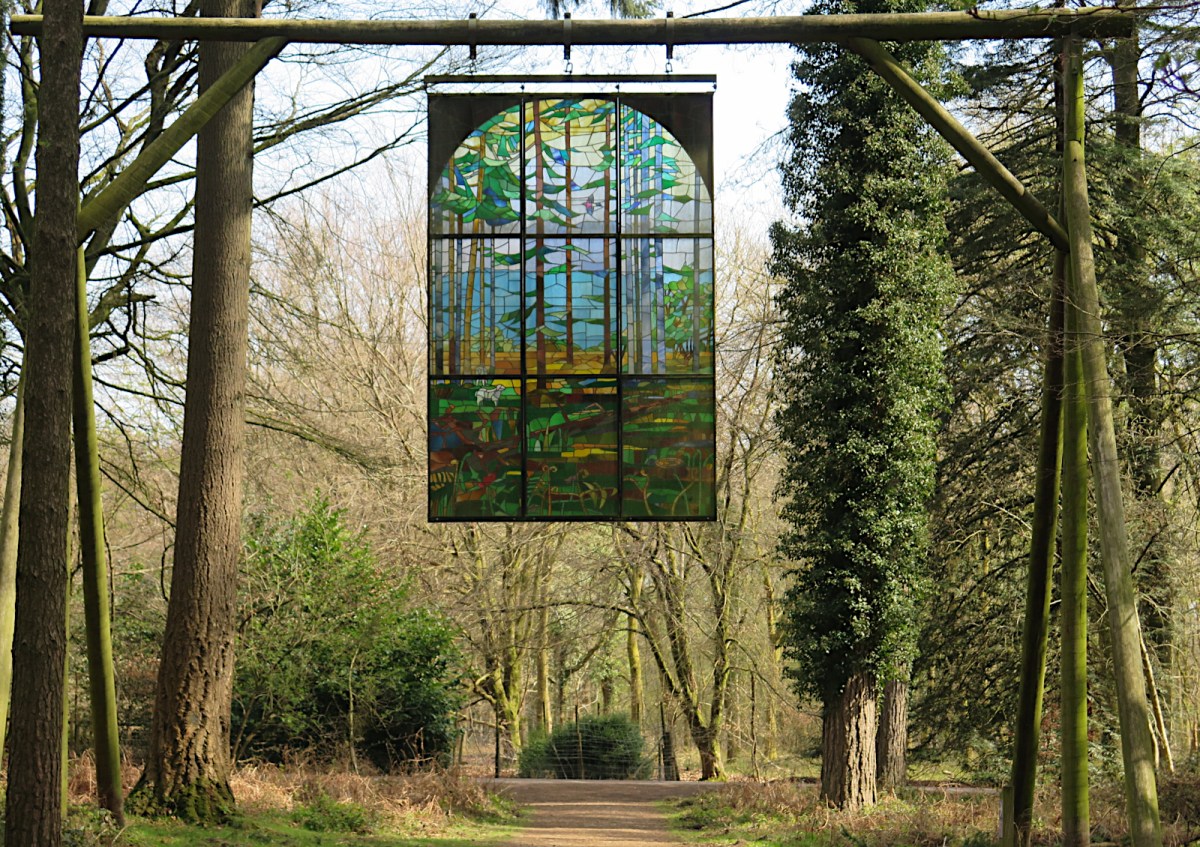
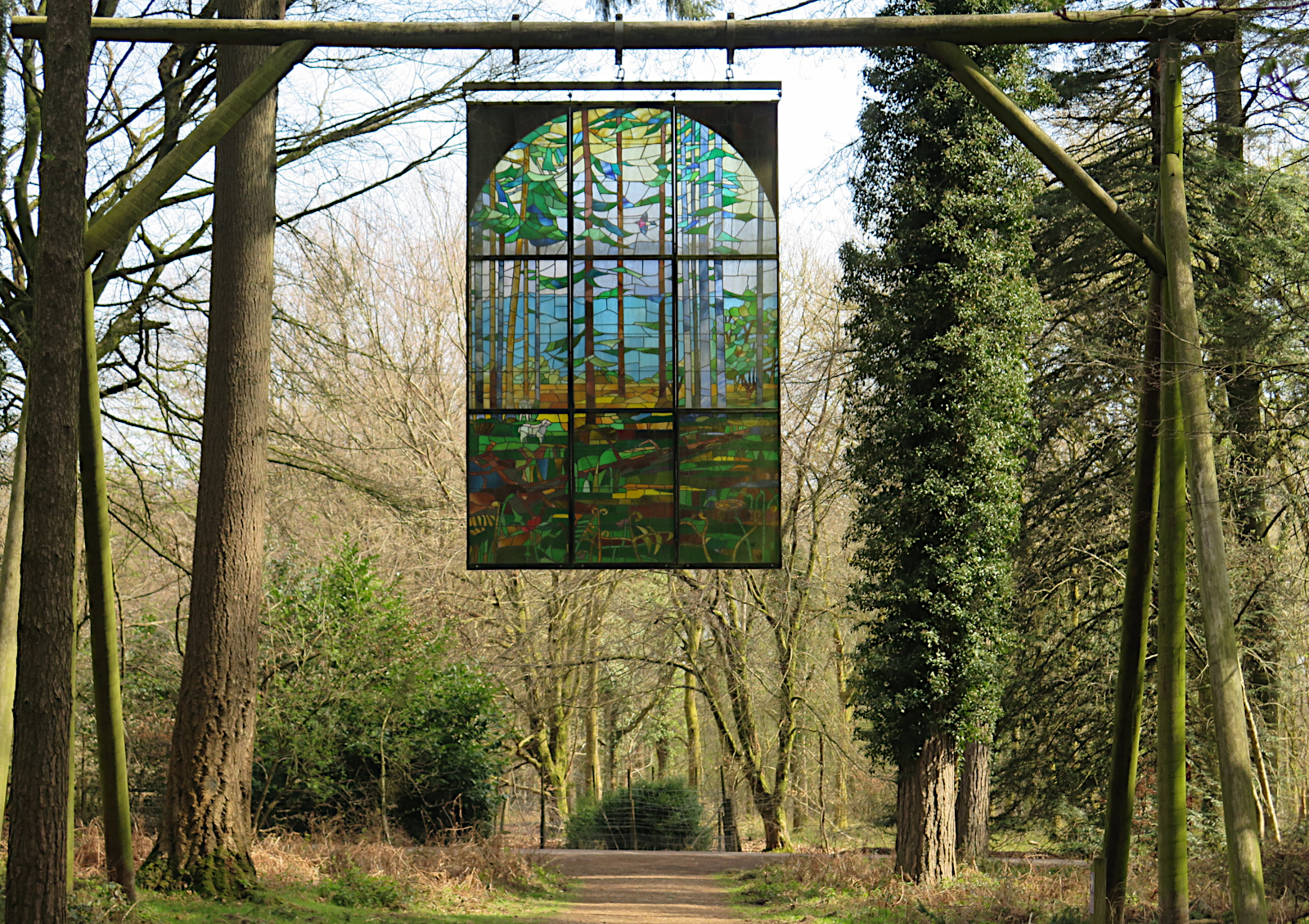
Speech House has a sculpture trail set up and we walked some of it, then drove to Monmouth to explore the lovely old town, and on to Chepstow stopping again at Tintern Abbey before crossing the old Severn Bridge.
We travelled to York by train on 1st January, returning on 3rd. I took the photo while we were waiting for the Cross Country train back to Cheltenham. It was great to see all the family again, and rail travel is definitely easier than the long trek by road. Until I can drive again, Donna would have to do the entire trip both ways, it’s a long way and a bit daunting (though Debbie seems to be happy enough to drive down with Sara and/or Aidan to visit us in Cirencester).
Family in Fulford
The second photo shows some of us at Beth and Paz’s home in Fulford. From left to right are Jess and Aidan, Mero, and Paz. Beth is reflected in the window. It was a lovely, relaxed time and so good to see everyone.
JHM: I wrote about the significant difference between who I am and what I do; and a bit of a hero about Mark Carney. World events: Bulgaria adopted the euro, becoming the 21st member state of the eurozone; and Israel became the first country to recognize Somaliland; while the United States officially left the World Health Organization.
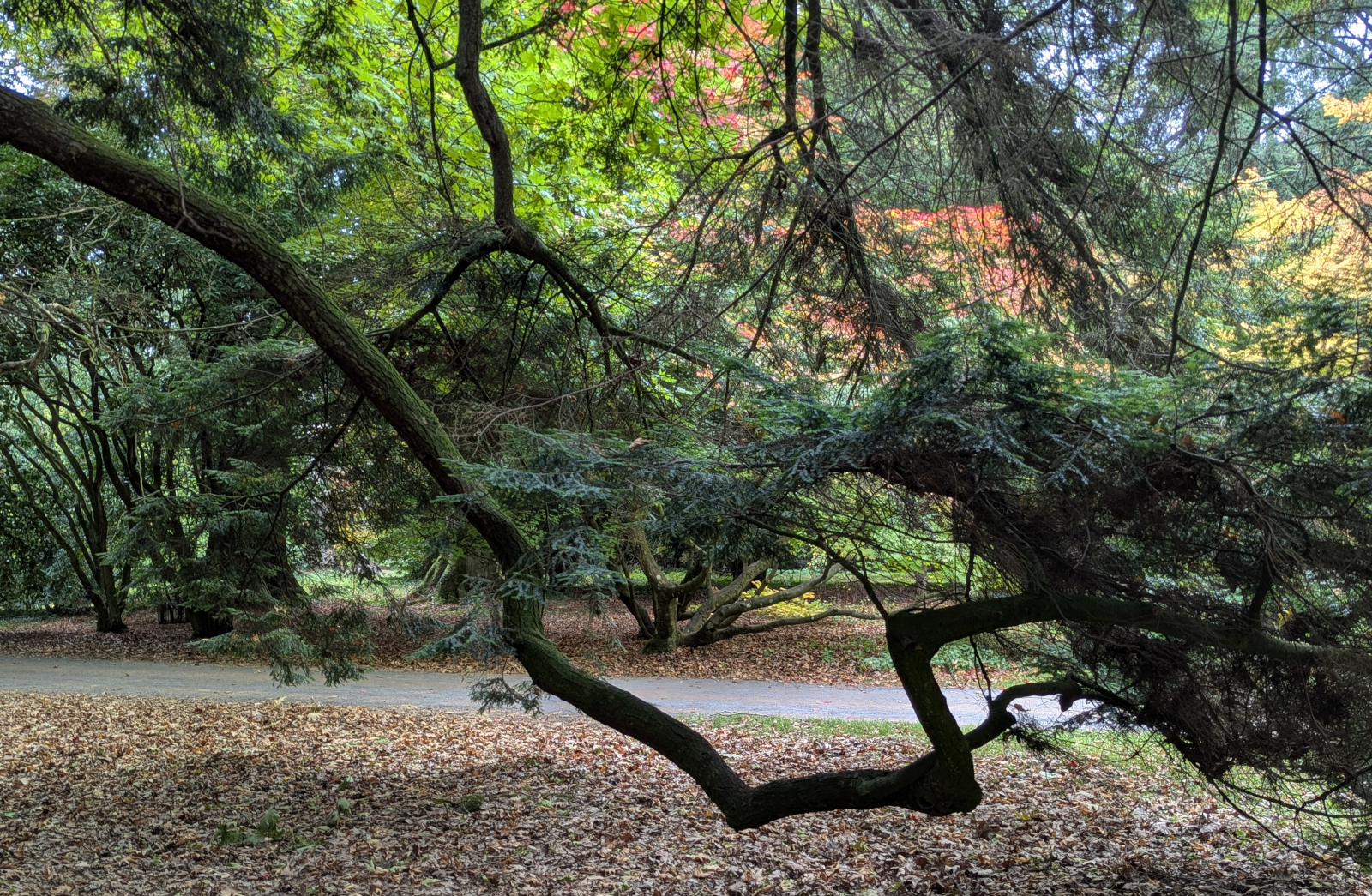
Donna and I visited Westonbirt Arboretum and enjoyed some of the autumn colours; on the way round I spotted this low-hanging branch of cedar and just had to take a photo. Lots of colours here as well as interesting shapes.
Churnside
Walking through the town one day I took this photo. It shows Churnside, 37 Victoria Road; originally my grandparents house, and later my parent’s house. Most of my teenage years were spent in this home and it was a short walk to school as this was also in Victoria Road.
My old work colleague, Dave Clarke came to visit me in town for coffee, a light lunch, and a chat on 3rd. I always enjoy meeting Dave and we usually find a lot to talk about.
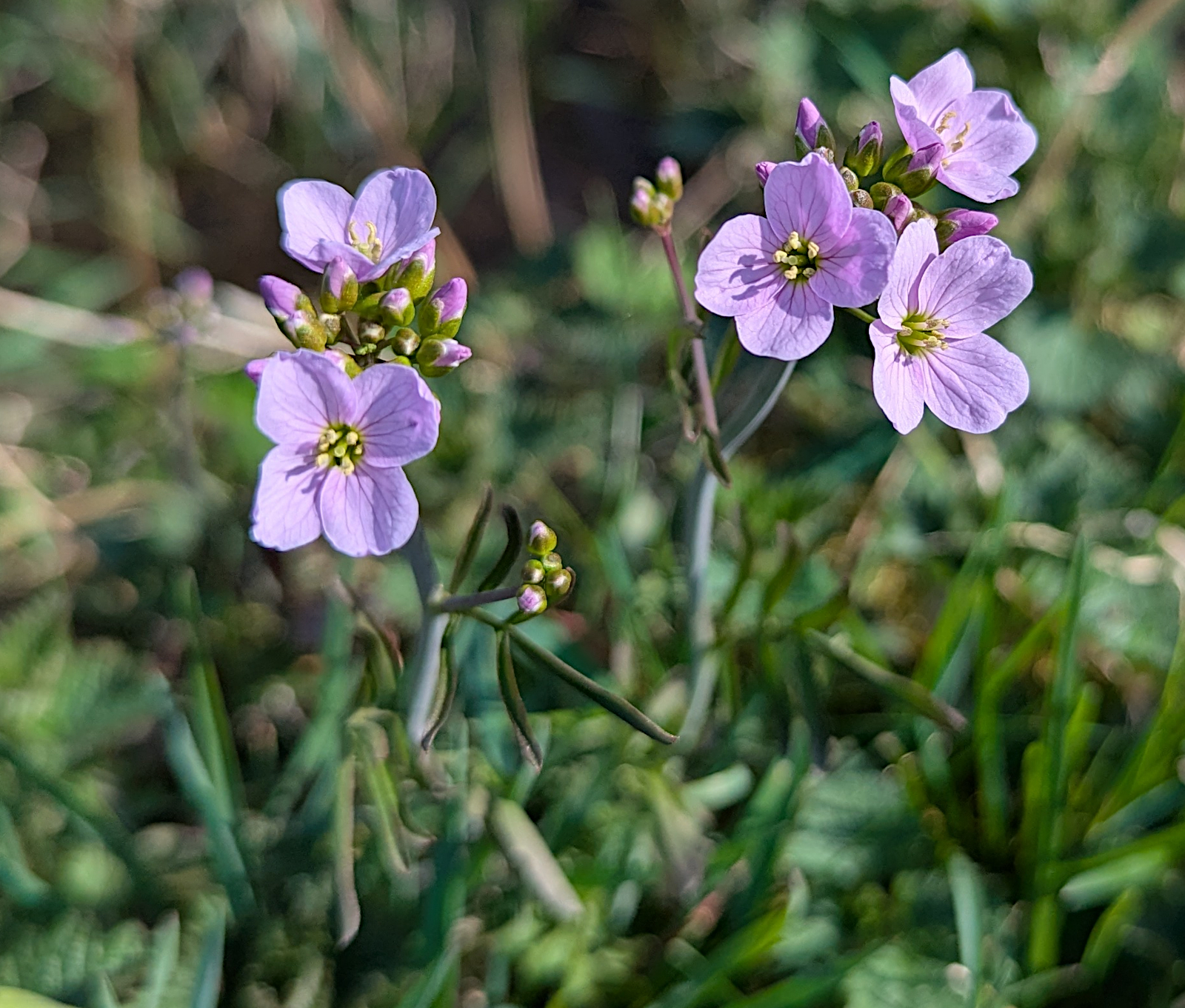
I noticed some areas of cuckoo flower growing in the grass along Riverside Walk on my way into town and took a photo. Such a pretty little thing and only visible for a short time while it’s in flower; by the time the seeds are ready to fall the plants are usually deeply hidden by grasses, nettles and other actively growing vegetation.
Aidan did a bungee jump while in South America, and the video appeared in WhatsApp, rather him than me!
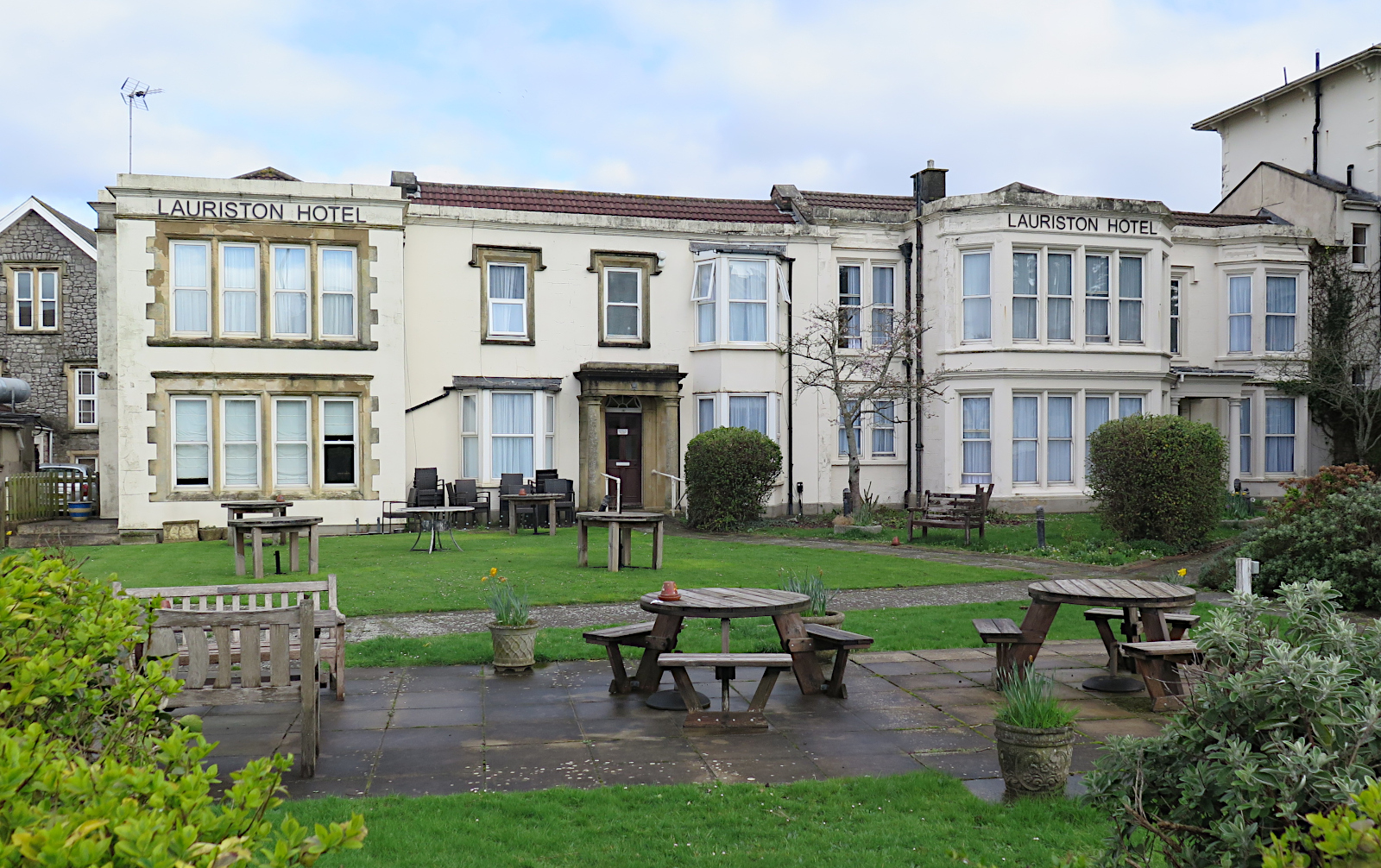
I took this photo of the Lauriston Hotel in Weston-super-Mare where I stayed for a week with my parents and grandparents when I was about two-years-old.
I ordered a refurbished Google Pixel 7 phone to replace my old Pixel 3, and I continued scanning photos and documents. Paul and Vanessa visited with the dogs, I took them to see the old amphitheatre but it was too muddy. We bought a second-hand ‘Rollator‘ from Minchinhampton for Isobel so she can sit down at a moment’s notice if she comes over dizzy.
The Roman villa
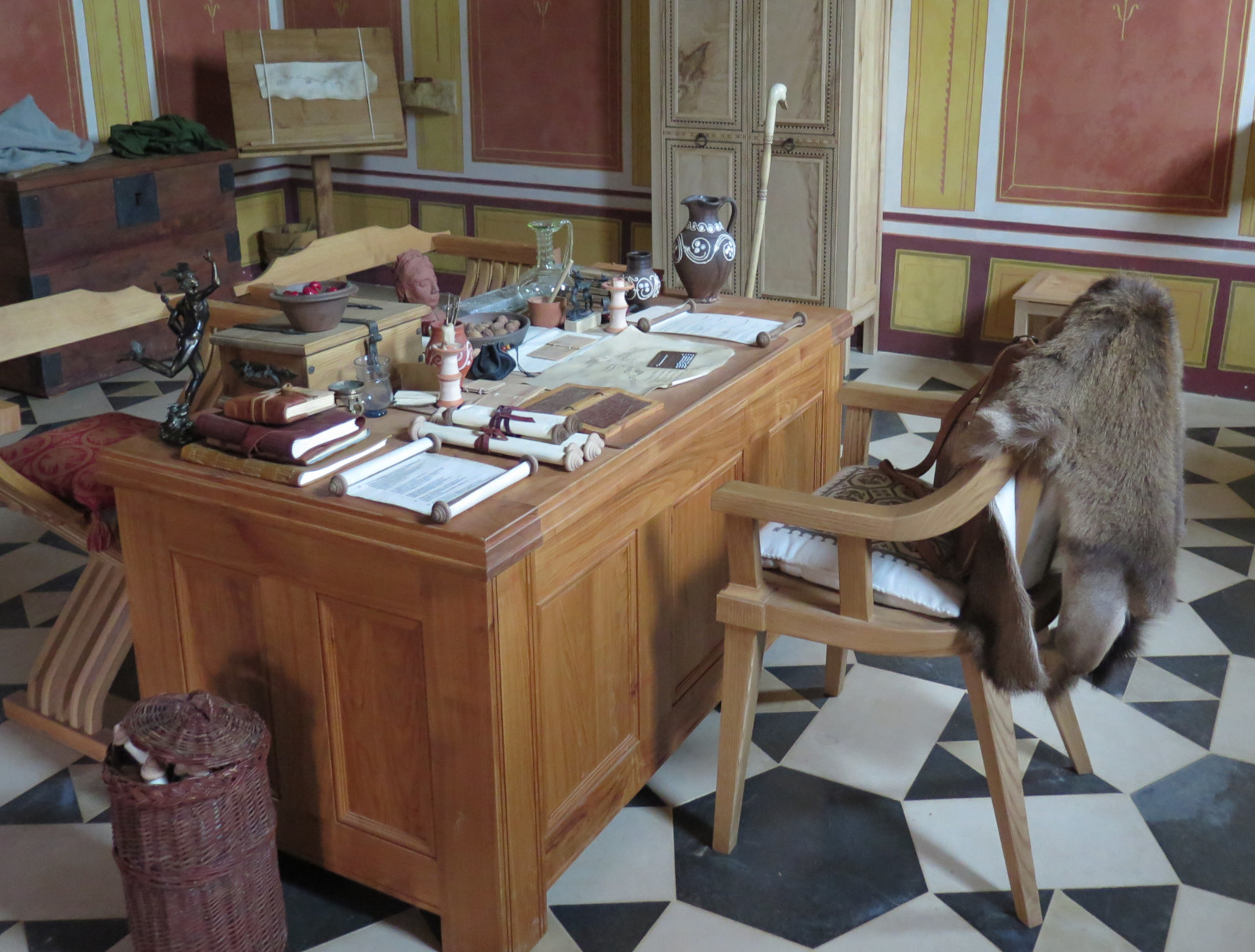
On 16th we visited the Newt in Somerset where the reconstructed Roman Villa was amazing to visit. It’s complete, based on the ground plan of the remains of an original nearby and built using methods that would have been familiar to Roman builders. It’s complete with mosaic floors, an upstairs section, and wall paintings, furniture etc in the Roman style as well. The Master’s office looks as if he’s just been called away and might return at any moment. Amazing!
We visited the Forest of Dean, just across the River Severn from Gloucester and a lovely journey whichever way you approach it. Speech House has a sculpture trail set up and we walked some of it, then drove to Monmouth to explore the lovely old town, and on to Chepstow stopping again at Tintern Abbey before crossing the old Severn Bridge and making our way home from there. It was a lovely day out; and how lovely to be able to do things like this again after all the COVID-19 restrictions are starting to ease.
SpaceX seemed to be doing well now. Starship SN10 landed rather heavily, caught fire, then later blew up. SN11 was nearly ready to make another attempt within a few weeks, hopefully without the explosion! And I was busy updating the MainEvents files.
Bradford Tithe Barn
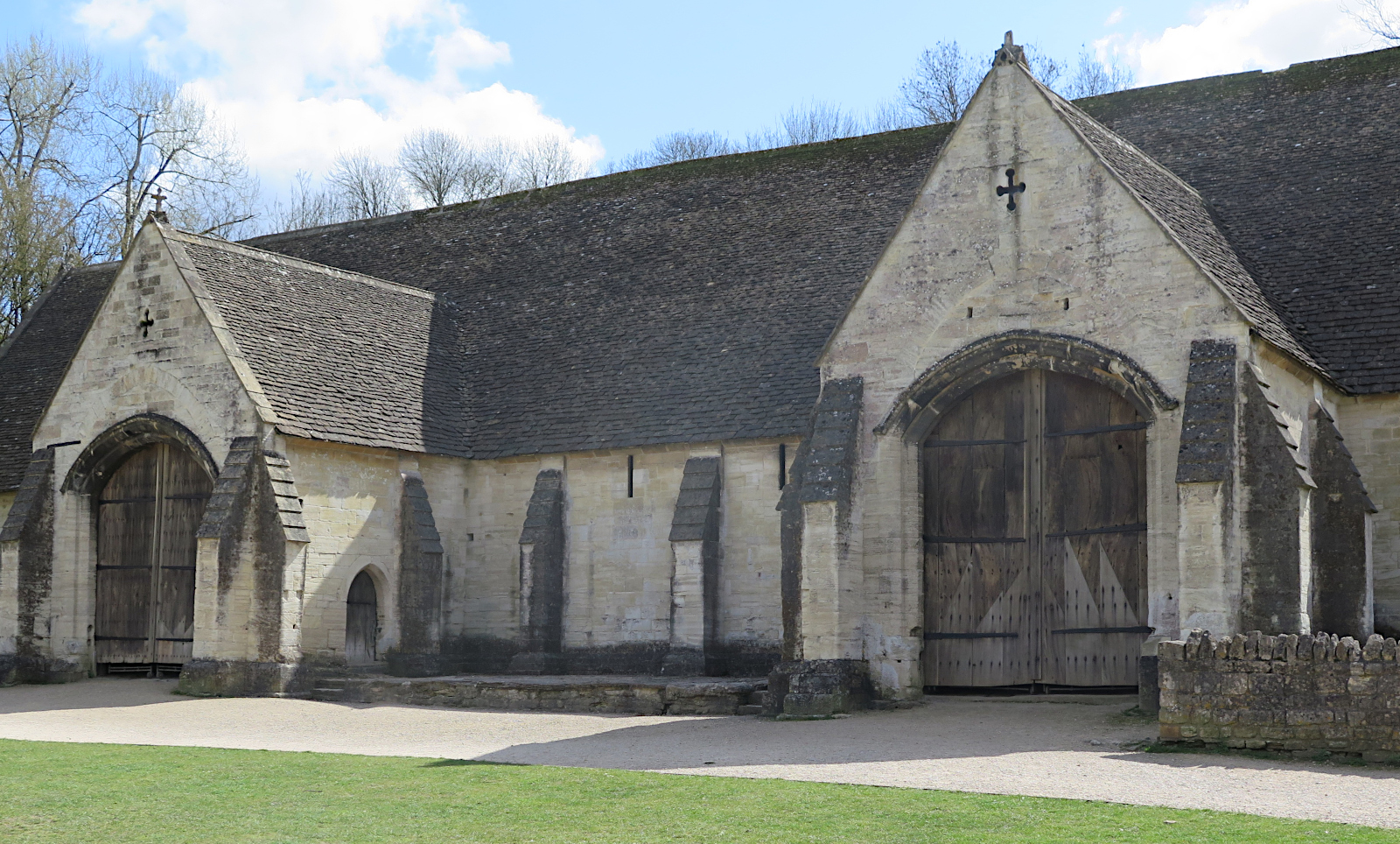
We met Paul and Vanessa in Bradford-on-Avon on 16th and walked part of the Kennett and Avon Canal together, then Donna and I took a look at the historic Barton Grange Farm near the town. The old tithe barn is very similar to the Barton Grange Barn in Cirencester!
World events: Pope Francis met with Grand Ayatollah Ali al-Sistani in Najaf, Iraq. The first-ever meeting between a pope and a grand ayatollah; and the number of COVID-19 vaccinations administered worldwide exceeded 500 million.
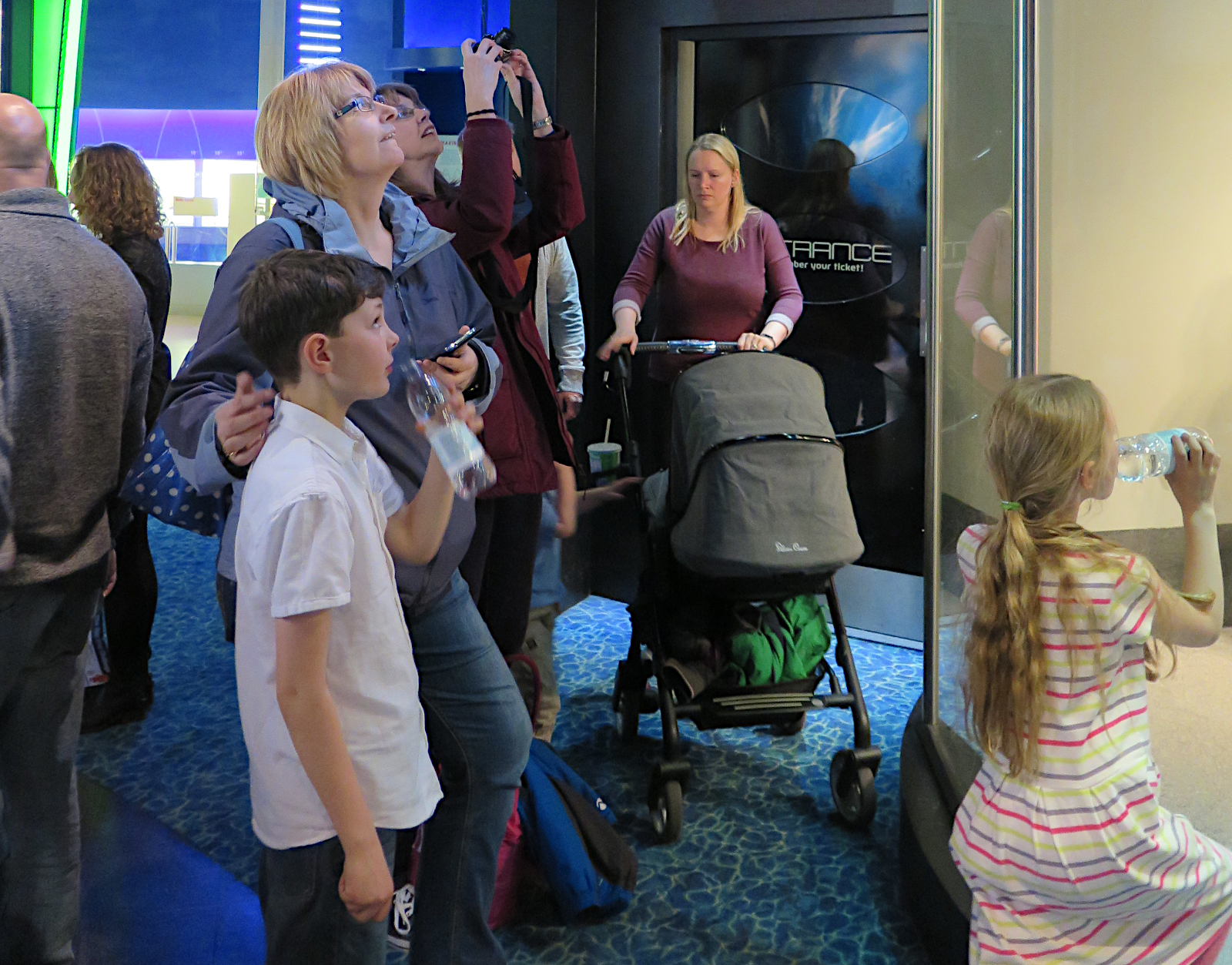
We met the family in Leicester for a day at the National Space Centre. The photo shows young astronauts in training, Aidan and Sara making sure they stay well hydrated.
Bury St Albans
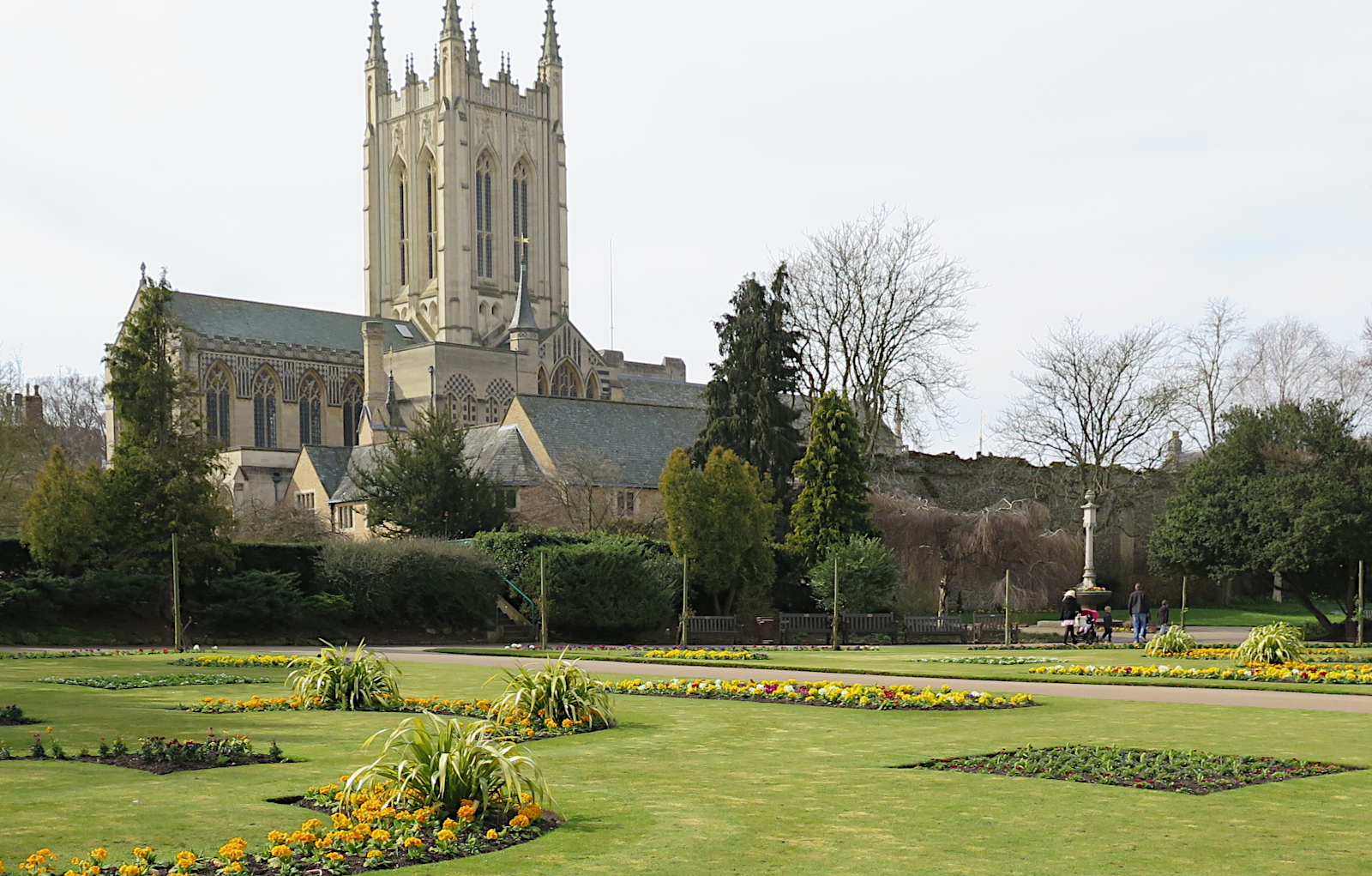
We explored Bury St Albans, a beautiful town some distance east of Cambridge and an area we hadn’t seen before. We rented a little space for a week on the east coast and spent the time exploring and visiting old friends. We stopped at St Albans on our way home to St Neots. The photo shows Bury St Albans Cathedral and part of on the central city parks.
At this time I was still typing up my old hand-written notebooks as Diary files, storing them as editable odt files as well as pdfs. In April I was working through the notebooks for 1996.
Approach roads for the new foot and cycle bridge across the River Great Ouse between Eaton Socon and Eynesbury were making rapid progress. But apart from putting in some piling and rebar, form work and some pouring of concrete for the abutments on both banks there was no sign of progress on the bridge itself yet.
Removing the shed base
I finished removing the old shed base in the garden during April. I smashed the concrete into manageable sized pieces with the sledgehammer and carted the pieces away to the recycling centre over the space of a week or so. The photo shows the job nearing completion.
Verity and Aidan
On the 20th Debbie, Steve and Beth drove down to Sundown Adventureland (near Lincoln) with the grandchildren and we drove up to meet them there. There was a flume running around the site with boats that were actually quite large.
Meredith focused on cake
And of course there were good things to eat and drink though we had mostly brought everything we needed with us. There was a lot to see and do. So we were busy all afternoon long. It seemed like a shame when we made our way back to the car park and headed off home again.
Dad died on 2nd April at Gloucestershire General Hospital. He’d suffered from a dissected aorta a few days earlier, and it was not possible to repair the damage. He was not in pain and died peacefully with almost the entire family around the bed.
Dad’s desk, just as he left it
On 3rd My three sisters and I met with Dad’s solicitor, Richard Mullings, for an initial discussion about what needed to be done and to begin the process of working through the will. I spent the night at Churnside and on 4th I decided to make a detailed photographic record of Churnside just as Mum and Dad had left it.
The back sitting room
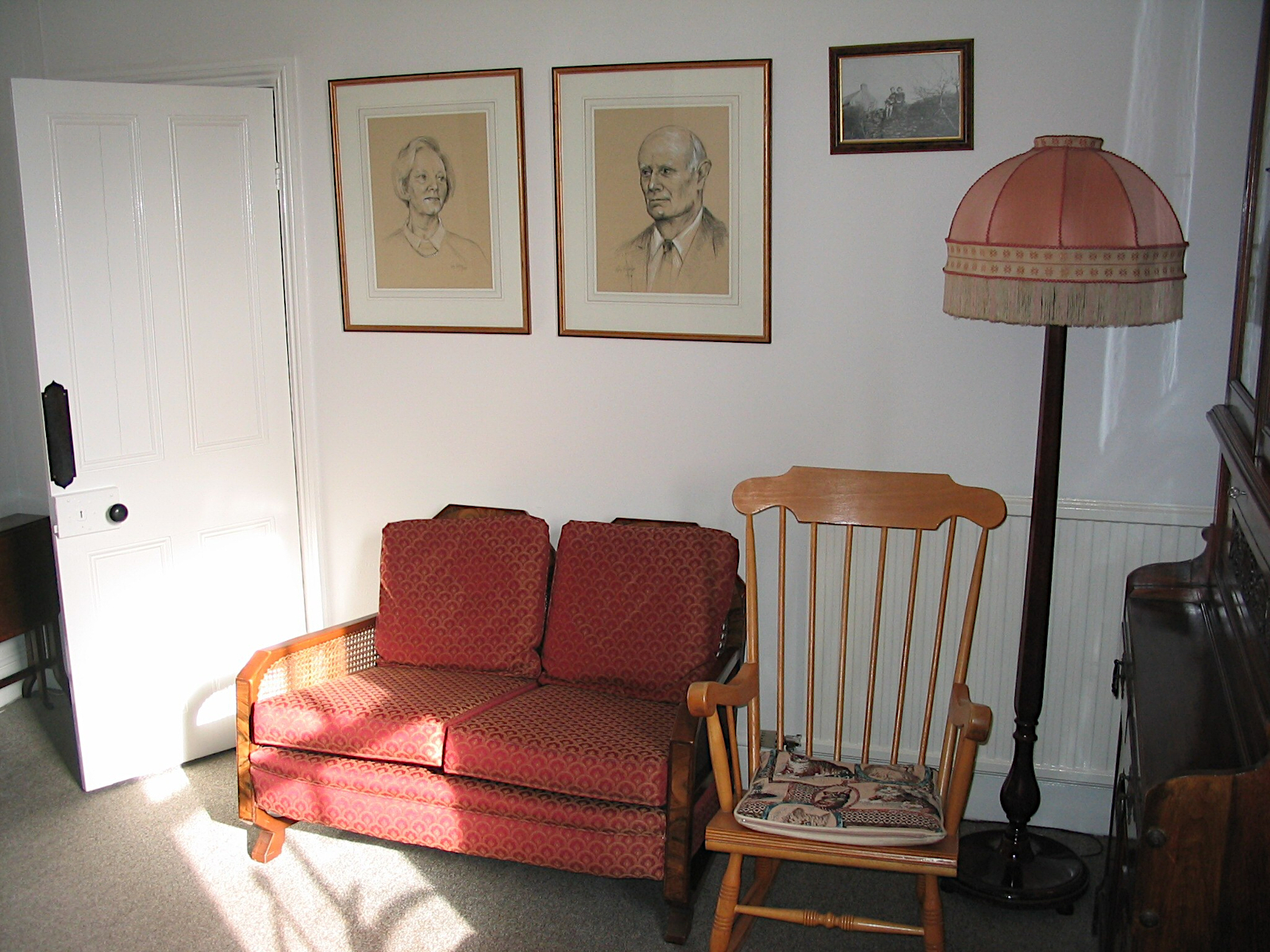
The second photo shows the Back Sitting Room (as we always knew it), the pictures on the wall show my parents, Mike and Lilias and the sofa belonged to Mum’s Aunt Annie from Belfast where she and her husband Samuel had lived most of their lives.
Churnside, 37 Victoria Road
I took photos of the outside of the house on 5th April, here’s a view from the west looking across Victoria Road at an angle. The house is close to Tower Street where my grandfather’s family had lived when he was a child, and also to The Avenue where my great-great-grandfather had lived.
World events: The European Space Agency’s Venus Express space probe entered Venus orbit; and Iran announced a deal with Russia, involving a joint uranium enrichment company in Russia.
On the 1st of April we drove to Cirencester to visit my Mum and Dad and went with them to Eastleach to look at the daffodils for which the village is rightfully famous.
Donna with her parents
Then we travelled to High Wycombe on Donna’s birthday to spend the weekend with her parents. In the photo she’s watching TV with her Mum and Dad while I snuck a photo while I had a chance.
Geoff and Dawn
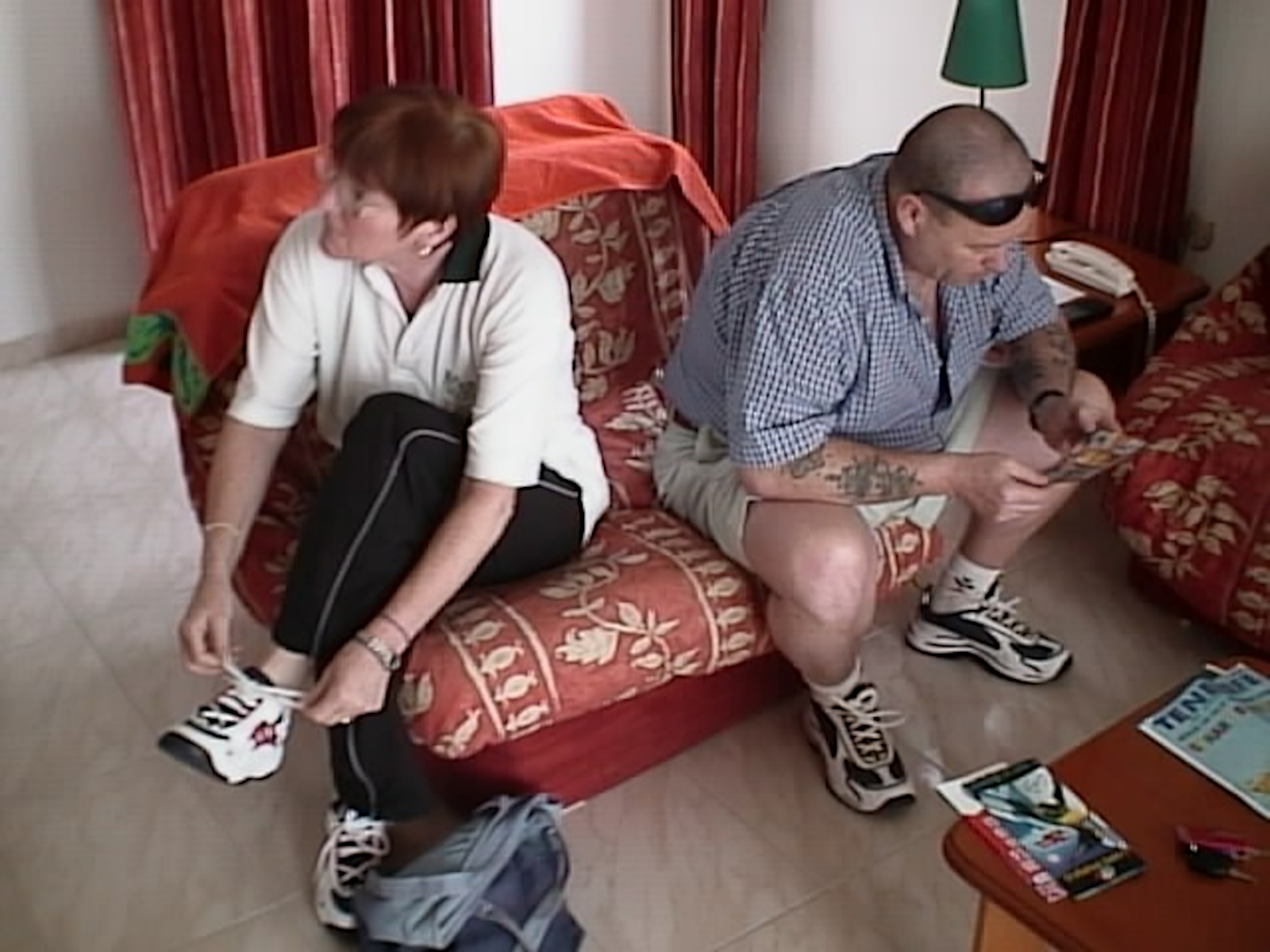
Later in the month we flew to Tenerife with our friends Geoff and Dawn who had a time share in Los Christianos. Here they are getting ready to leave the timeshare on an expedition somewhere.
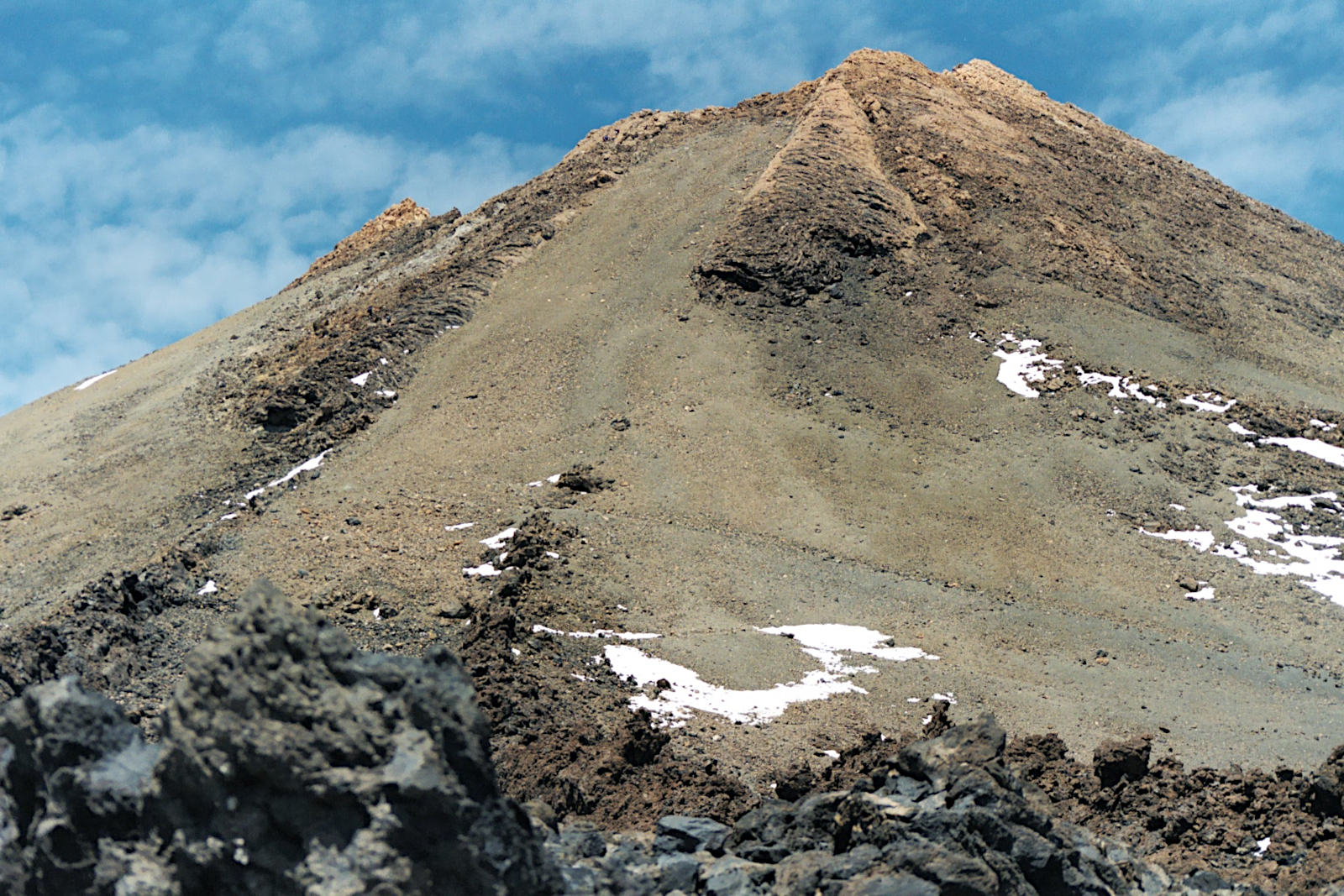
Mount Teide
We drove up to Mount Teide on this holiday where there were still patches of snow lying near the summit. It was the reverse of the Grand Canyon where we made snowballs at the top and at the bottom the conditions demanded shorts and T-shirts.
JHM: In April 2001 I had a simple web page, an early precursor of the current site. World events: Former Yugoslav President Slobodan Milošević surrendered to police special forces to be tried; and The Parliament of Ukraine voted to dismiss Prime Minister Viktor Yushchenko.
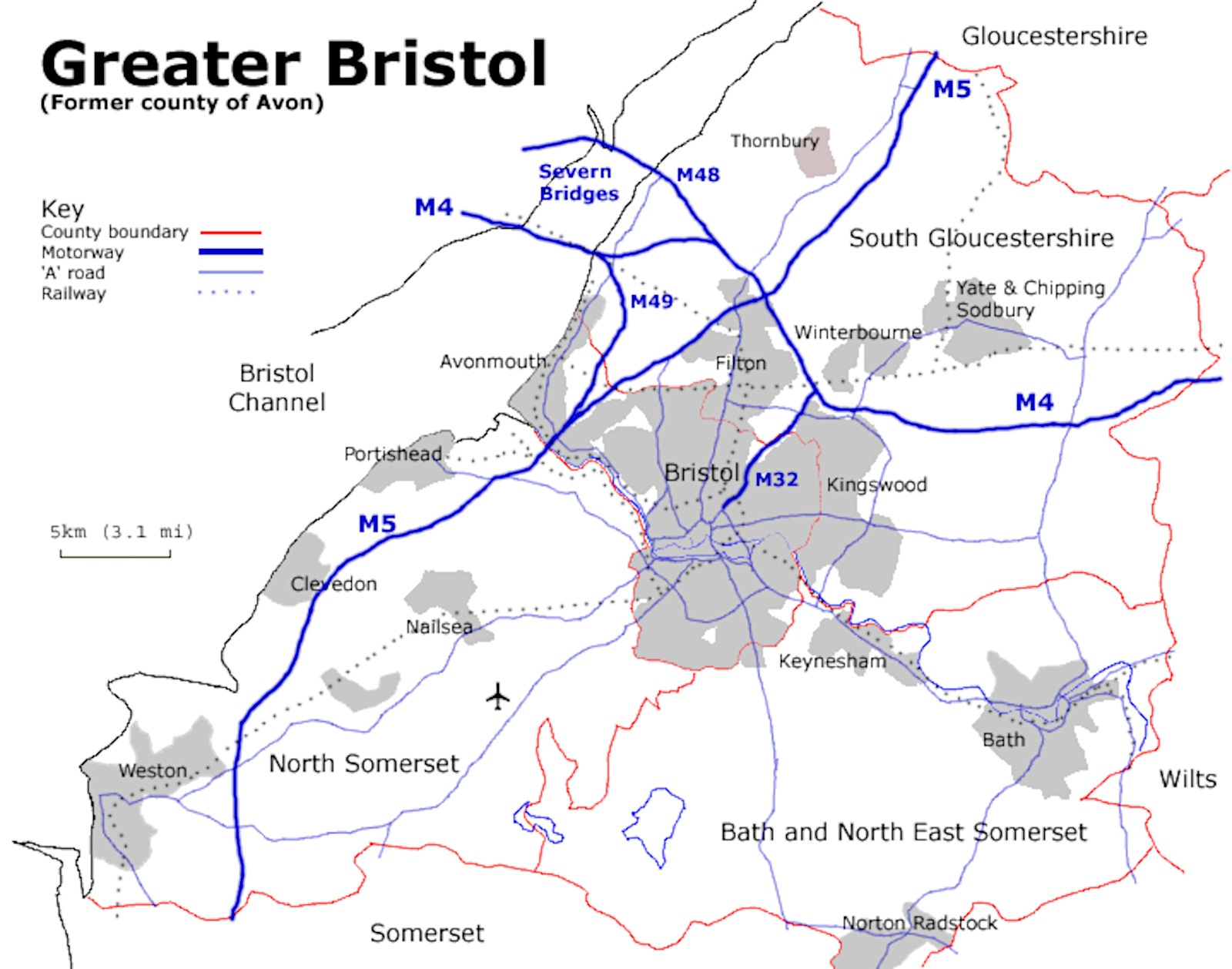
On April 1st, the County of Avon was abolished. This seemed a real pity to me, it was a sensibly sized area based around the cities of Bristol and Bath, a very nice entity and quite logical, so I regretted its demise. Dad had minor surgery during April, the work was done with a local anaesthetic and he needed morphine to sleep properly on the first evening; but by the and of the month he was better than before the op.
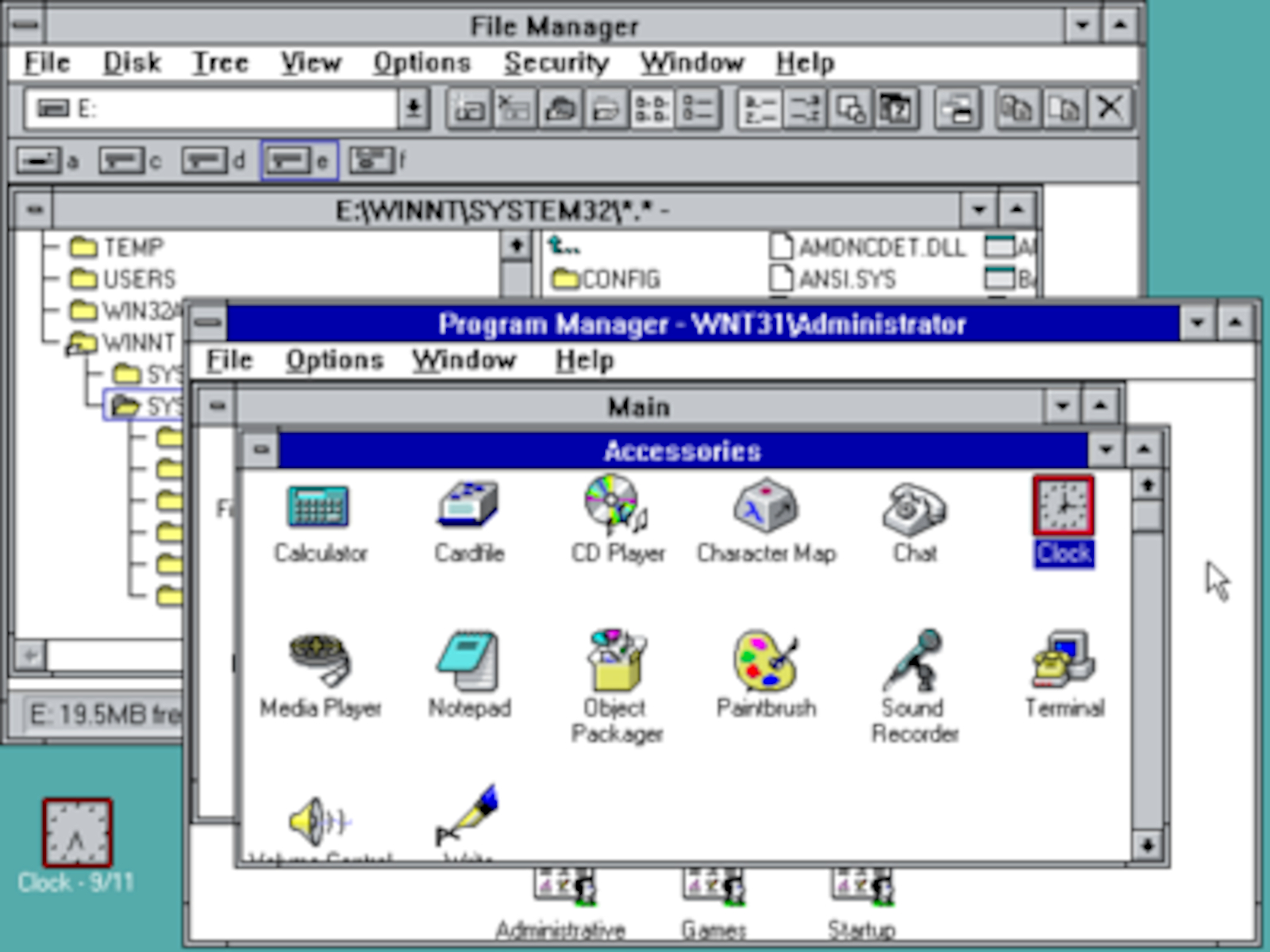
Donna had a rather difficult and unhappy month, but got through it OK eventually. Meanwhile it was an interesting time in Computing at Long Ashton. Some of the science staff were getting irritated by slowness in moving forward with better Computing facilities. Micha Semenov, a Russian, was pushing hard and just doing things for himself without waiting for the Computing Department. He bought a Windows 95 machine for his office, and then an NT box as well, meanwhile telling Peter Shewry that the Computing section was too slow moving forward.
He was right to be concerned. I could foresee problems ahead as my boss, Pete, wanted to save money and go slowly. He was right that resources were restricted, but he didn’t seem to want to make the case for more funding.
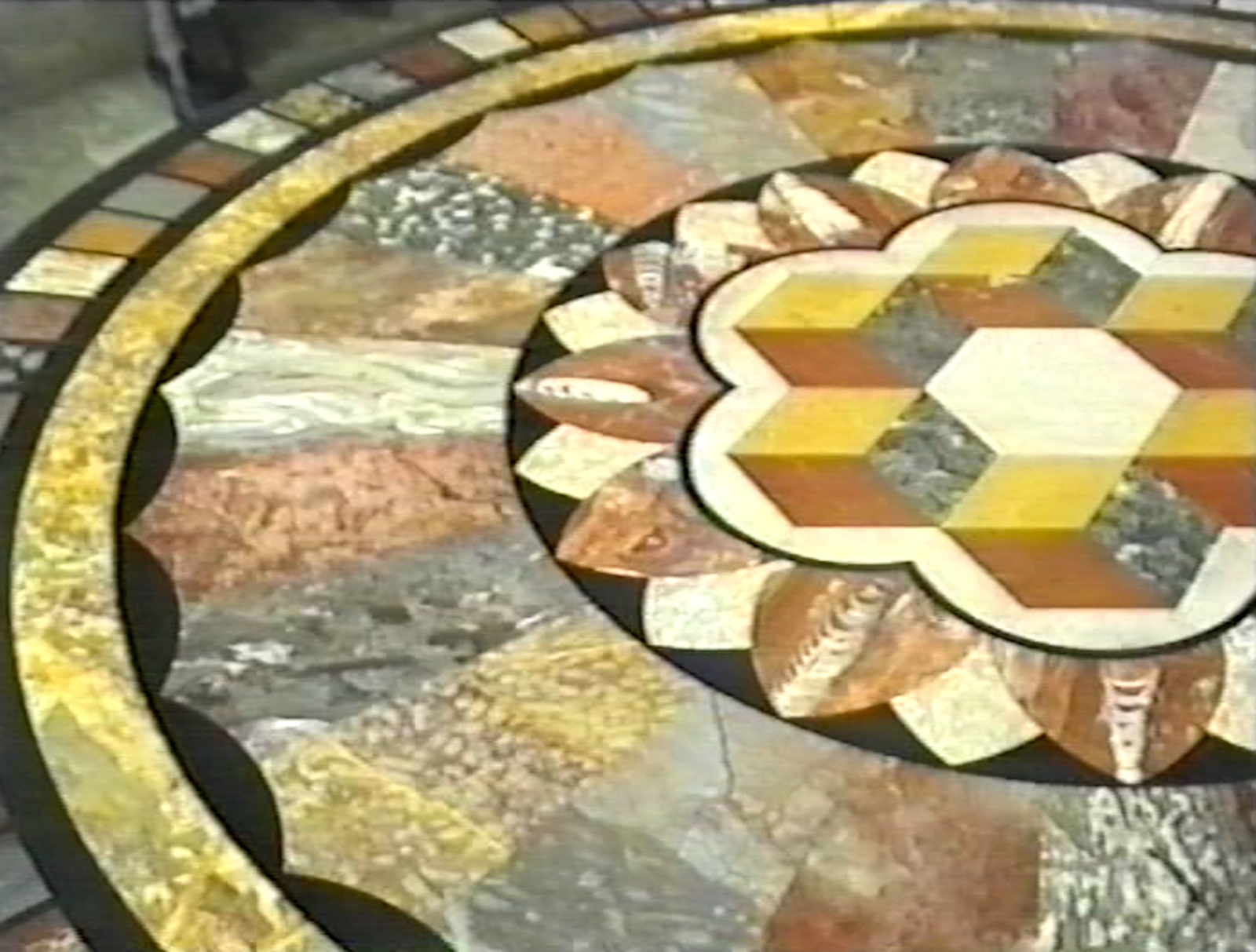
We visited the Natural History Museum in London on 5th; Judy was very impressed with this table made of a range of different coloured stones fitted carefully together and finely polished.
The table top
The second image gives a much clearer view of the table top itself. We enjoyed our museum trip, it’s a lovely old building full of so many things of great interest.
Fritillary in flower
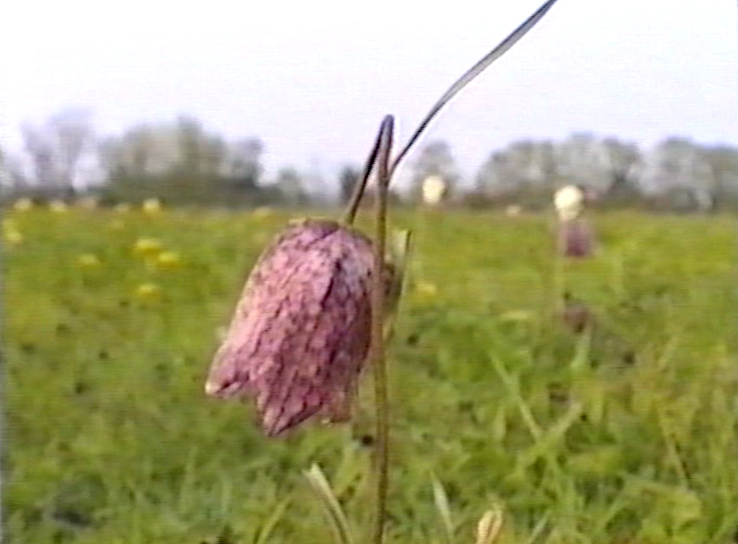
On the 28th we were back in Cirencester, visiting Granny and Grandpa (my parents) and visiting the fritillaries in North Meadow at Cricklade. There are so many of these spread out across the enormous meadow – absolutely stunning!
You can buy these plants for the garden, but North Meadow is a large natural population, they’ve been thriving here for generations.
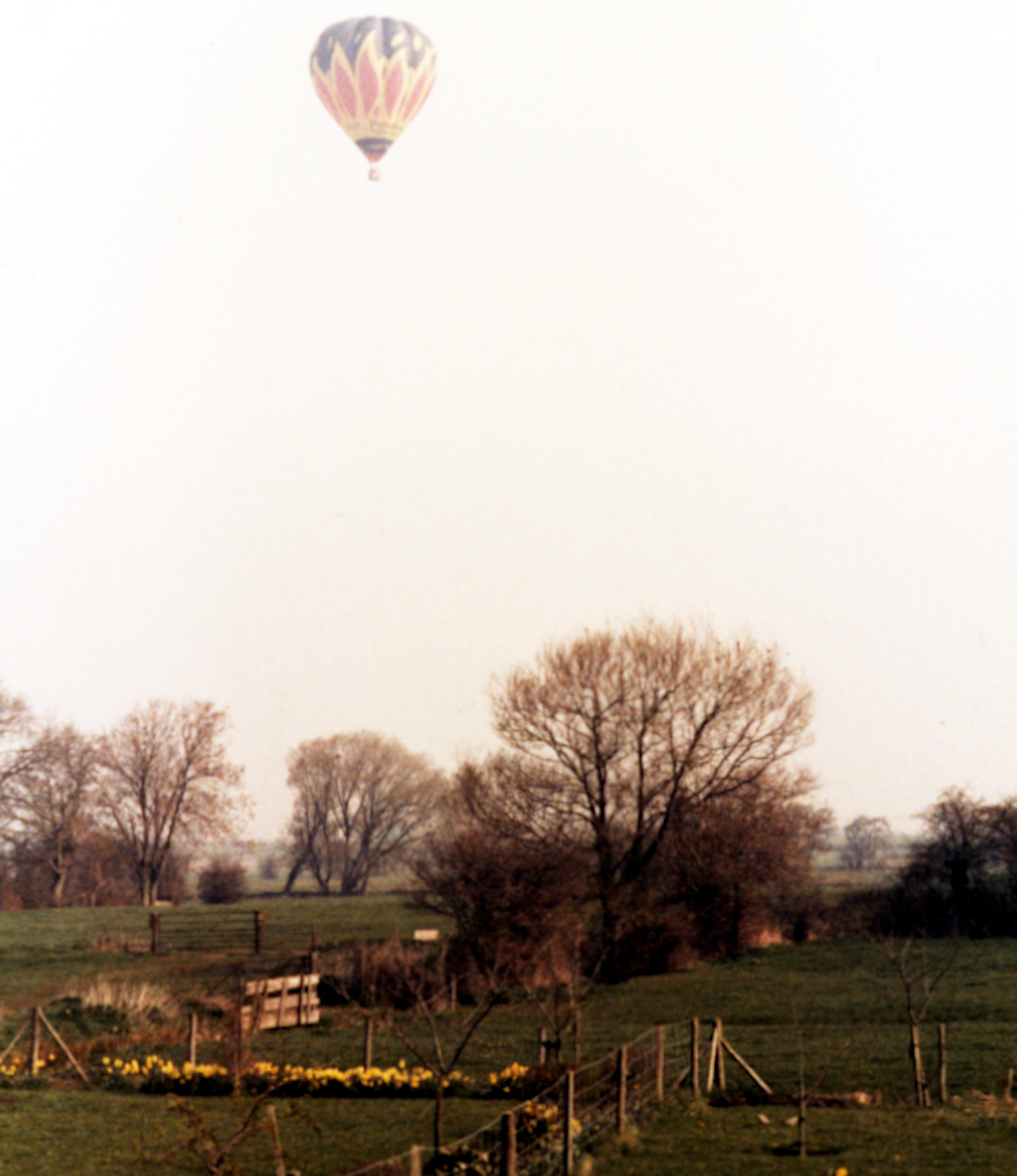
A hot air balloon flew near our house in Stowey Road, it was quite low, so very exciting to see. On one occasion (it might very well have been this one) a balloon landed in Hangstones Playing Field nearby and we walked down to see it on the ground.
A fine bonfire
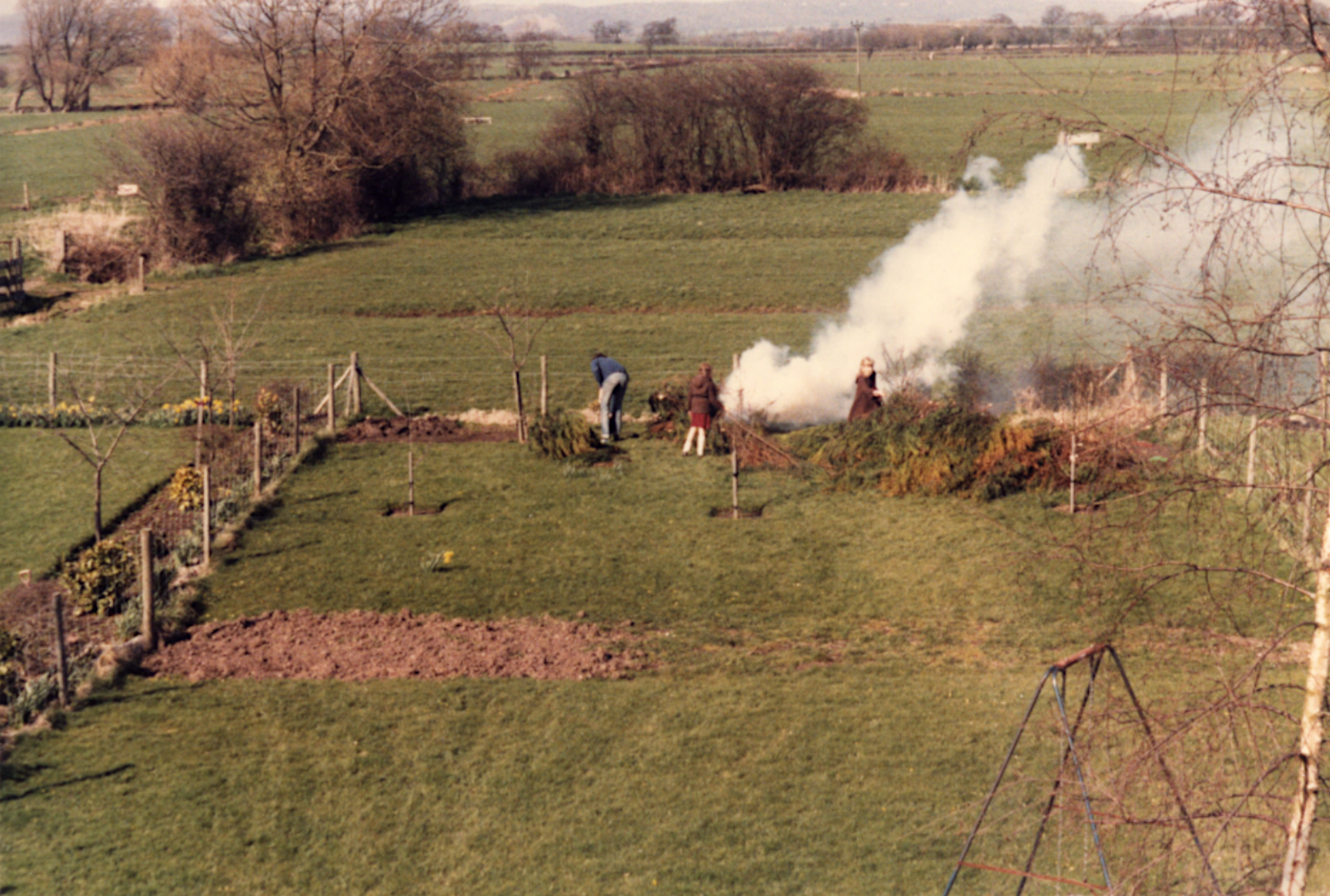
In March I had cut down a row of conifers growing at the front of our house; the remains were all wheelbarrowed down to the bottom of the garden and I made a bonfire to burn the waste. That was a job for early April, and here’s a photo Judy took of the work in progress. I had to choose a day when the wind wouldn’t blow the smoke across other people’s gardens. Now, in 2026, I’d take the material to the local recycling centre for producing wood chips or compost, or try to find a way to turn it into wood char for digging into our garden soil, but in the 1980s burning the waste was quite normal.
Judy and I were both 37, Debbie was 11-years-old and Beth was seven, but eight the following month.
I was working at Long Ashton Research Station in the Pollination Unit and one of the experiments arranged by the Unit head, Ray Williams, was the result of poor gooseberry yields on a farm north-west of Birmingham. Ray agreed to conduct some experiments to work out whether poor pollination or some other cause was responsible. We replicated trials on a Long Ashton plot north of the A370 and also on the fruit grower’s farm. A summer student helped with the work and we published a paper on the results of this study in 1982.
Judy and I were 32, Debbie was 6, and Beth was two, but would be 3 in May.
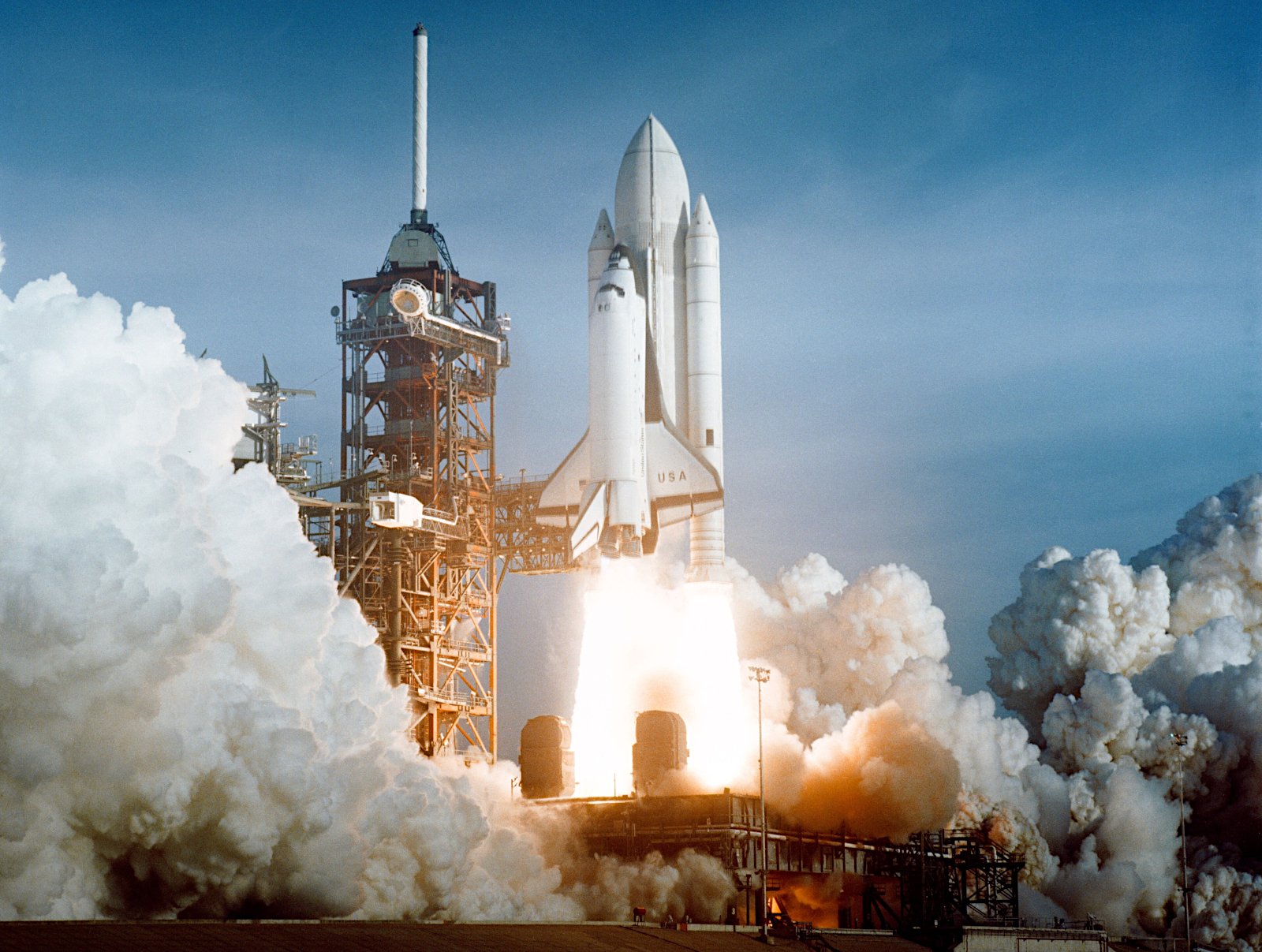
World events: Bucks Fizz’s song “Making Your Mind Up” won the 1981 Eurovision Song Contest in Dublin; and Space Shuttle Columbia, with NASA astronauts John Young and Robert Crippen, launched on the STS-1 mission, returning to Earth on April 14, the first time a crewed reusable spacecraft had returned from orbit.
Mike and Lilias visited an airshow in April and watched an RAF Hercules transport plane dropping parachutes. He took some 8 mm cine of this process and the photo shows one of the frames from the film.
With his RAF background and experience, and as a keen aeromodeller, he was always enthusiastic about flying and didn’t like to miss an opportunity to see and photographically record any event of this sort. It’s very much part of who he was.
In April 1976 Judy and I were 27, and Debbie was one-year-old.
Talks were underway for introducing a new grade structure for scientific staff. I was engaged in the Willows Section at Long Ashton Research Station in October 1970 as an Assistant Scientific Officer with a salary in the region of £800/year. There were separate Experimental Officer grades, paid rather less and with no way to cross between the two classes of grade. So it seemed I might do reasonably well when the changes were announced in September/October 1871, just five or six months away. One lived in hope!
Judy and I were 22 years old and living in our unfurnished flat, 20 Belmont Road in St Andrews, Bristol. We were starting to collect furniture (mostly second hand) to prepare the time when we might be able buy a home of our own. However, we lacked a fridge and couldn’t afford to buy one brand new. But Judy knew a colleague at the University who was buying a new fridge and wanted to sell her old one second hand. We offered, I think, £20 and she was happy with that. It was quite old and battered, though we weren’t worried about that, but while cleaning it we found some maggots living in the four feet that were steel pressings welded on and open on the inside. There were fatty deposits in the feet and the maggots were munching away. What to do?
Fibreglass resin
I didn’t fancy digging out the fat and the maggots, but I had some fibreglass resin left over from repairing a rusty hole in the boot of our car. So I pushed some balls of newspaper in first and then plastered over the openings with a strong mix of resin. It became quite hot as it was setting and I had to brush cold water over it to keep it safe, but it did the job and we were able to give the inside of the fridge a good clean out, plug it in, and start using it. In the previous summer in our bed-sit we had to get the milk in as soon as possible after delivery, wrap a damp towel around it, and stand it outside our window on the stone window ledge to keep it cool. Now we had a fridge which made life much simpler. It also taught me a useful lesson about fibreglass – don’t add too much accelerant to the resin!
World events: Libya, Syria and Egypt signed an agreement to form a confederation; and some 200,000 people in Washington, D.C., and 125,000 in San Francisco marched in protest against the Vietnam War.
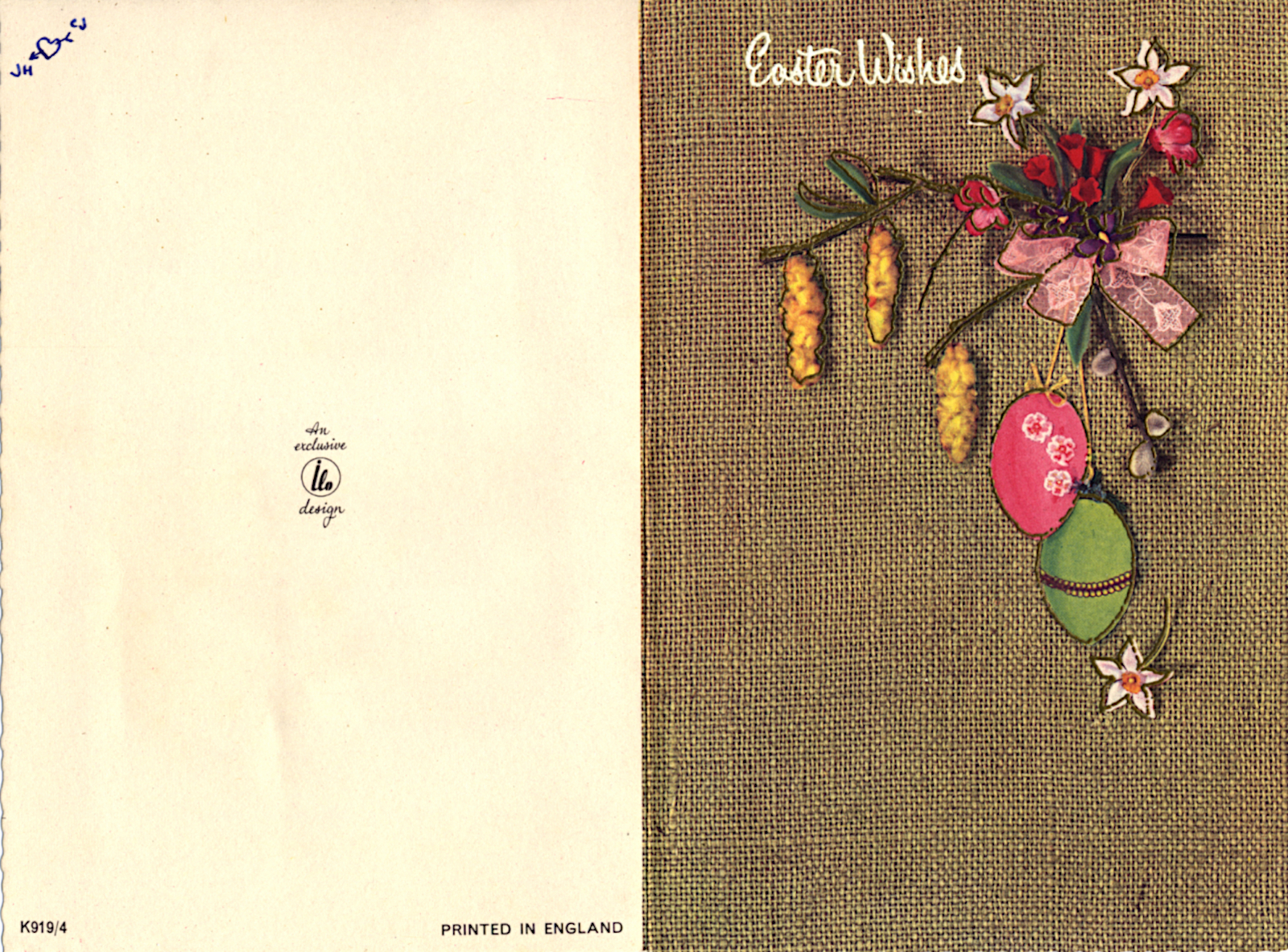
This was my Easter card to Judy, it looks very dull and boring and would never sell today, but hessian was definitely ‘in’ during the mid 60s to mid 70s so at the time it would have seemed cool and classy. How times and fashions change!
I was still at Cirencester Grammar School at this time, studying Biology, Chemistry and Physics at A level, General Studies O*, and Art O-level which I managed to squeeze in by dropping PE. With the exams coming up in just a couple of months, the emphasis now was on revision. Judy was a year behind me though we had been taking biology lessons together (which was part of how we got to know one another in the first place).
Judy and I were both 17 years old at the time but my birthday is in July and hers was in September so we were in different school years.
World events: The United Kingdom asked the United Nations Security Council for authority to use force to stop oil tankers that violated the embargo against Rhodesia; and Ian Brady and Myra Hindley were tried at Chester Crown Court for the murders of 3 children.
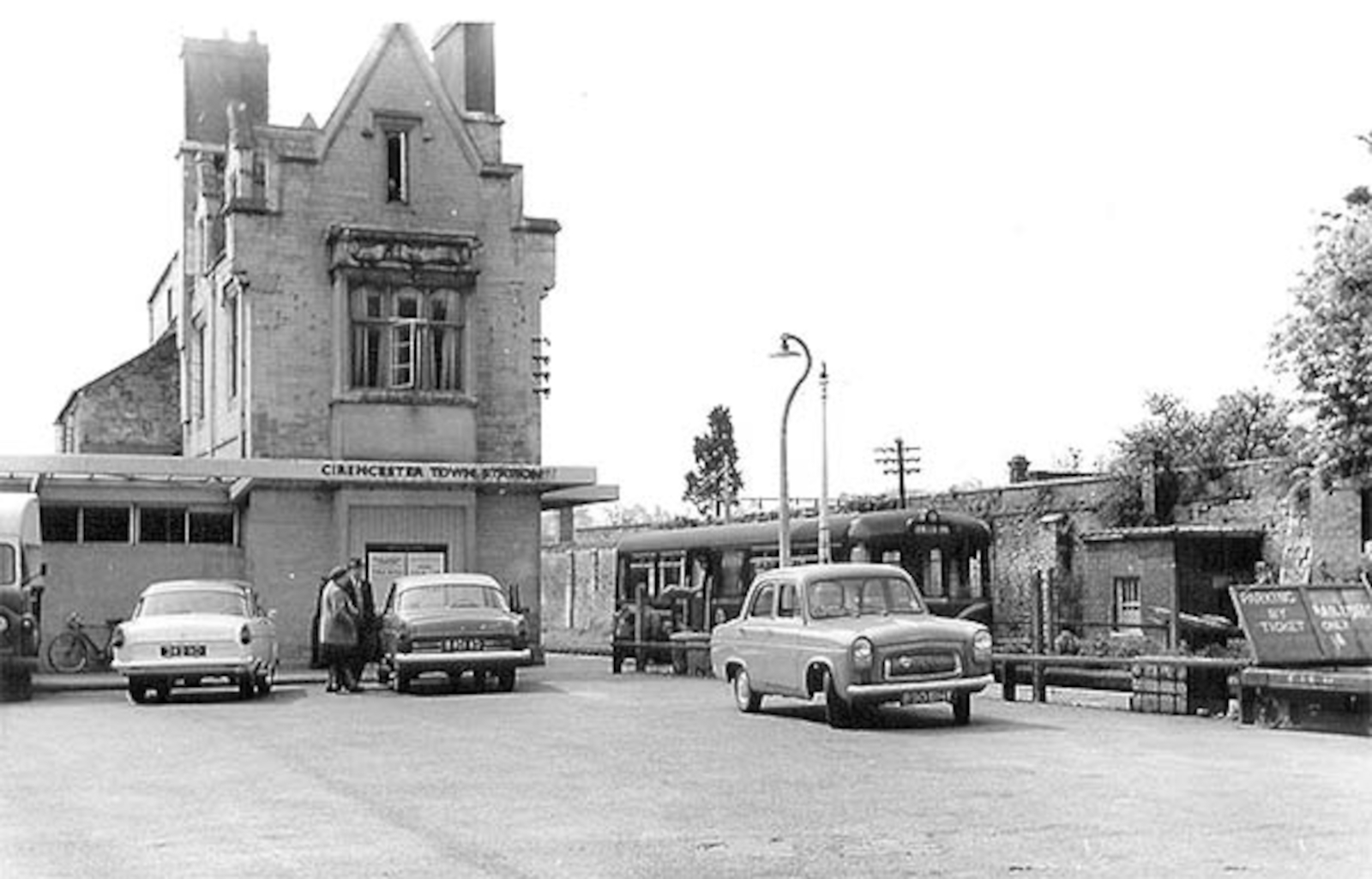
The railway branchline from Kemble to Cirencester was to close a few years after this photo was taken in 1961. The new extension to the station building on the extreme left is still there in 2026, as is the listed main part of the building, built by Brunel as the western terminus from Paddington.
I was twelve-years-old, studying at Cirencester Grammar School for O levels in a range of subjects including Latin which I would eventually drop. My favourite subjects at this time were Maths, English Language, Chemistry, Physics, Geography, Music and History; I was unable to fit Art in, though that was another subject I would have enjoyed. Subjects I did not like were Latin, French, and English Literature.
I began the summer term of my third year at Querns School. I was really used to school by this time and we were starting to broaden our knowledge a bit, learning elements of geography, religion (RE), music and history now as well as arithmetic and English. I was developing an interest in science and technology too, not from school but from a chidren’s encyclopaedia I’d been given for Christmas or a birthday.
In 1951 I was 2¾-years-old, and Mum was expecting a baby brother or sister to arrive in the autumn. I didn’t really understand what this meant, of course, but I clearly remember not wanting to put my hand on Mummy’s tummy while she was in the bath, and the curious kicking movements when I did.
World events: After its clandestine removal from Westminster Abbey on Christmas Day, 1950, the Stone of Scone resurfaced at Arbroath Abbey in Scotland; and the Treaty of Paris (1951) was adopted, establishing the European Coal and Steel Community.
April 1946
Scene from The True Glory
On 1st April, Mike was on Motor Transport (MT) guard duty so slept in a tent, presumably at the entrance; he had the following day off in compensation and wrote to Lilias and also to his friend Joe. He saw the film, The True Glory on the base. Click the link to watch it yourself if you like, it’s very gung-ho and 1950s, covering D-Day and the Normandy landings.
Letter writing continued apace, there was swimming at the Lido on 7th and on 10th he passed his MT test and received a new driving licence. on 14th he took Communion in Singapore Cathedral
World events:Videotape was first demonstrated at a 1956 convention in Chicago; and the actress Grace Kelly legally married Rainier III, Prince of Monaco, with a religious ceremony the following day.
This covers about 75 years from April 1951 to January 2026 To be continued.
Useful? Interesting?
If you enjoyed this or found it useful, please like, comment, and share below. (If you don’t see those links, click the article’s title above the main photo and they will appear.) Send a link to friends who might enjoy the article or benefit from it – Thanks! My material is free to reuse (see conditions), but a coffee is always welcome and encourages me to write more often!
If you’ve made it to this point, then ‘Thank you for watching and thinking it over’, and thank you also for anything you can do, however small, to reduce your impact on our climate in the days and years ahead. Many small impacts can add up to something really significant.
The UK Government commissioned a video nine months ago to launch their response to what is now seen as a full blown climate emergency. It’s a good video; it includes presentations by people who are experts in their fields; it’s informative; and it’s very hard-hitting. It’s not widely available except through a series of local meetings throughout the UK where it’s being used very effectively to get people thinking and responding in useful ways at the local community level.
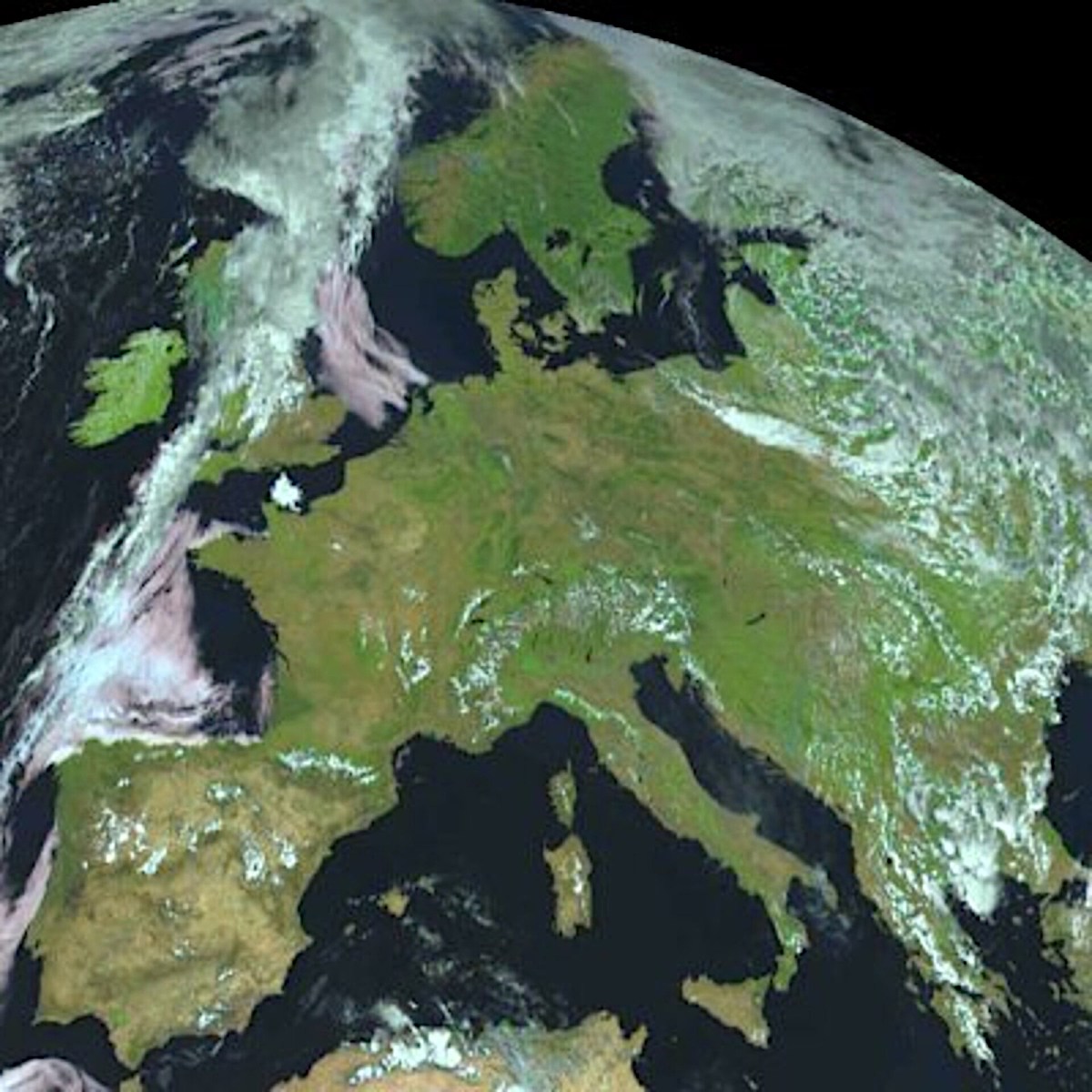
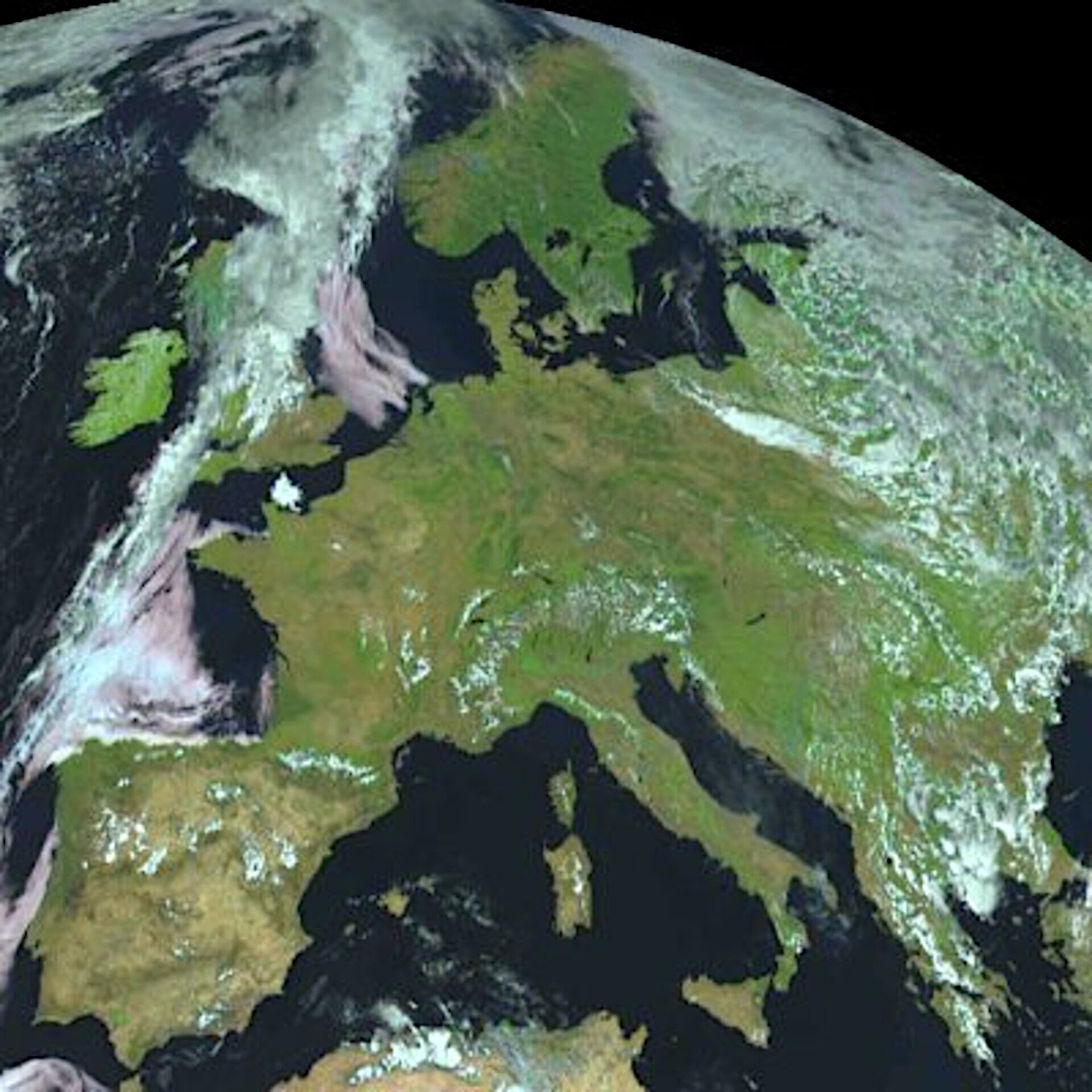
Click the video below to watch the Earth turn on its axis. Your home is here, can you spot it as it rolls by? This planet is home to every single one of us.
The UK Government video is available, however, on YouTube, published there by GB News.
Whether you live in the UK or not, I suggest you watch this video in full. (Note that the useful content ends at 2 hrs 41 mins into the video. There are plenty of natural breaks between speakers so you can watch it in sections if you find that more convenient.)
If you live in the UK, I also suggest you attend one of the many local meetings currently available, discuss what you have seen with others at the meeting, and try to get other local friends and family to join you. If you can’t find a meeting, you can always organise one yourself. as you watch, jot down anything that strikes you as particularly important or significant.
Finally, go through anything you wrote down and consider how it will affect you, your friends, your family, and your community. Is there anyone else you should share this with? Could you watch the video again with friends, family or neighbours and talk it over together? Also (and just as importantly) think about ways of reducing your individual impact on the climate.
If you’ve made it to this point, then ‘Thank you for watching and thinking it over’, and thank you also for anything you may do, however small, to reduce your impact on our climate in the days and years ahead. Many small impacts can add up to something really significant. That, after all, is how we got into this mess in the first place. It may also play a significant part in getting us out of the dangers we now face.
I have one last thing to say, and this is primarily for anyone involved in church in any shape or form; but please don’t let that stop you reading it. Jesus was prophetic and that’s a gift with two characteristics. On the one hand it forges links between people here on the planet we call Earth and the Father we think of as living in heaven. But also the prophetic gift involves bringing people together here on Earth, forging links between opposing sides, rebuilding trust and a willingness to work together, mending broken fences. Prophetic people are always demanding justice and aiming to reforge broken links. A sort of conciliation service. If we ever needed a conciliation service we need one now.
So if you are involved in any form of church, now is the time to recognise your prophetic gift (whether strong or weak) and use it to call as loudly as possible for everyone to work together to save this planet at last from the danger we have put it in. There is no time to lose. We need to bridge the gulf between those who would profit in the short term with no concern about next year or the decades and centuries ahead, and those who would do without in the here and now to secure a long term future for children, grandchildren and great-great- grandchildren.
Prophetic voices would give vision to the former, and hope to the latter. Indeed, there are many prophetic voices in the government film you just watched. It would be a serious mistake to think that church has a monopoly on gifts like this.
If you enjoyed this or found it useful, please like, comment, and share below. (If you don’t see those links, click the article’s title above the main photo and they will appear.) Send a link to friends who might enjoy the article or benefit from it – Thanks! My material is free to reuse (see conditions), but a coffee is always welcome and encourages me to write more often!
We need to have challenging conversations with one another, Holy Spirit-led conversations like those Jesus had with his disciples and with those he met as he travelled with them in Galilee and in Israel.
I read an article on Run with patience recently; it’s a site I particularly like and value, because the author, Sandy, very often provokes my own thinking in good and helpful directions. Please read her article and see what you think, then below I’ll share what it sparked off for me.
In her excellent and deeply probing article, Sandy writes that it’s always easier to pay attention to what others do than to pay attention to what we ourselves do. It’s far easier to judge others than it is to judge ourselves. Jesus was not like that, and we’re supposed to be on a path in which we become more and more like him.
As I read through the Gospels, I find Jesus continually drawing people’s attention somewhere else. Again and again, conversations that begin with outward behavior somehow find their way back to the heart. Someone asks about washing hands, and He speaks about what comes out of a person’s heart. Someone wants to debate the law, and He begins talking about love.
Early believers were sometimes referred to by their pagan neighbours as Christians, a term that means ‘little Christs’. Meant in a sneering, derogatory way, this might instead be taken as a great compliment. We are supposed to be on a journey (not just a ‘spiritual journey’, but more particularly a very practical journey) to think and behave more and more like Christ.
This series is about ‘activating the church’ and here we get a glimpse of one way in which we need to become individually more active. Turning up on Sundays to listen to a sermon will not be nearly enough, nor will daily Bible reading. We will need to get our hands dirtier than that. We need to practice. We need to notice when we mess up and learn from our failures. We need to make an effort to stop making the same mistakes. We need to have challenging conversations with one another, Holy Spirit-led conversations like those Jesus had with his disciples and with those he met as he travelled with them in Galilee and in Israel. We need to tell one another, kindly, ‘What you did or said there didn’t meet the standard required of a disciple’. Perhaps not in those judgemental words, but gently turning the subject back to the heart.
How much church life needs this! There are people out there facing judgement and unkindness who desperately need to hear truths they may think they cannot live, people within the body and those beyond. Just read Paul’s letters, see how over and over and over again he urges people to follow the way of Christ, to hear the quiet voice of the Spirit, to reach out to one another and to those beyond with healing, grace, gentleness and truth. It’s always possible to find a kind way to share a truth and people will love you for it, both those within and those beyond the church family.
If we’re to grow, reach those around us, and encourage one another, we will only succeed by being both wise and gentle. The more practice we get the better. Paul was good at this, and Jesus of course was the expert he was trying to follow. Read the gospels with this in mind, see how Jesus managed it and allow yourself to grow to be more like him.
Cells in the body
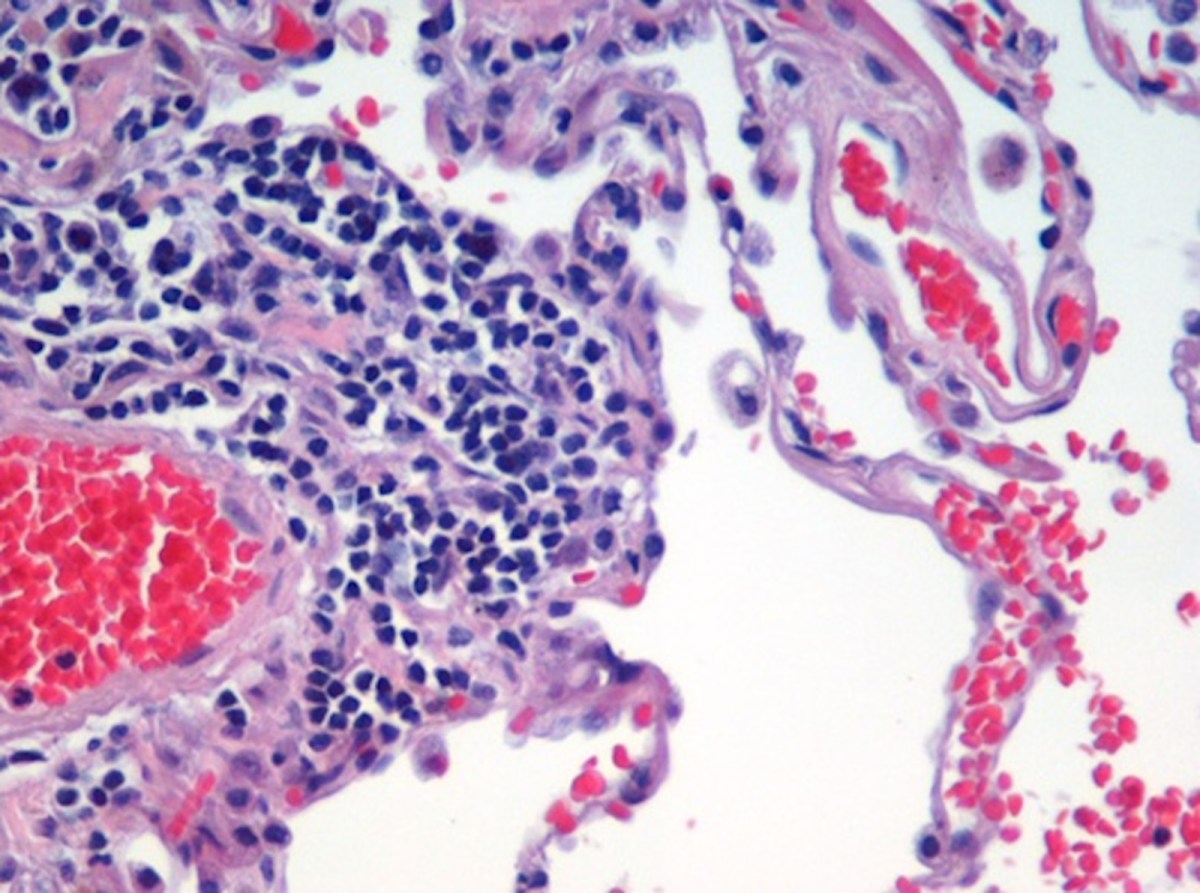
Every person is a collection of cells and the cells are not randomly arranged but are connected as parts of various specialised structures, a heart, two lungs, a brain and many nerves and blood vessels – a full list would be very long indeed. These parts of the body interact and if any part fails to function the body will exhibit medical symptoms and might even die.
Think of yourself as a cell in the body of Christ, the church. For that is what you are! You have a function and you have connections with other cells. Usually you will have very local and strong connections, perhaps as part of an organ, and/or you may have less local connections as nerve cells and blood cells do. But you all play a part, a small but important part in the health of Christ’s body as a whole. The church in this generation is sick, ill at ease and not always (perhaps even rarely) functioning as designed. It’s sick purely because the cells are not working together as intended. Jesus wants to heal his body, and inevitably that means he wants to get all the cells (you, me and millions of others) working together as we were designed to do. Red blood cells must collect oxygen in the lungs and carry it to every part of the body. There they must hand off the oxygen and pick up carbon dioxide. In the lungs they must hand off the carbon dioxide to be breathed out and pick up more oxygen.
What must the cells in the body of Christ (the church) be doing? Prophetic cells must hear spiritual truth and share it widely with the rest of the body. They must also feel anguish about injustice in the world and share that widely too. They are vocal chord cells, if you will. Shepherding (pastoral) cells must notice friction and difficulties between other cells and step in to comfort, encourage and move us on from any harmful disagreement. What about the many cells that come in on Sundays to sit and listen? They must be helped to see what they are gifted for, what their active task should be, and encouraged to begin working in appropriate ways to build the body. Not a single one of of us has been given sitting and listening as a task to do in the body! There are no audience cells in your body, every cell is too busy for that, doing an essential, designated task.
Who are we?
Take church as a whole, whether locally in a village or part of a town, or even world-wide. If it is functioning as it should, that body of individuals will look and act like a person – Jesus! More often, it looks like an unfortunate mess. Local church, if it was a body, would usually be mindlessly hobbling about, suffering from both insanity and damaged bones and muscles. It’s still Jesus, but in a form we’d find hard to recognise. It’s Jesus crucified, not Jesus risen.
What to do about it?
Begin with prayer – Ask the Holy Spirit to open your ears, eyes and mind to reveal the way forward. You can ask this for yourself, for a small group, for an entire local church, or for the universal church – why not pray for all four? Pray particularly for the circumstances around you right now. Be prepared to see these prayers answered, perhaps in ways you can’t anticipate.
Start to read about the topic of waking and activating church. There are links to some of my other articles here. Activating church is the series you’re reading right now. Another series you might find helpful is Developing faith. the story of my own journey and formation. The series on JDMC (Jesus, Disciple, Mission, Church) explains more about helping a smallish group grow into a Jesus-focused family, it comes with more reading suggestions, practical exercises, and links to more resources. There’s even a free book with questions for groups to discuss together as they move forward.
Keep notes – jot down the things you ask in prayer, note down in your own words the ideas you come across as you read the Bible, other books on topics that interest you, as well as anything that grabs your attention in online material.
Consider sharing this article, the series, and the other material with the people you are meeting with.
If you enjoyed this or found it useful, please like, comment, and share below. (If you don’t see those links, click the article’s title above the main photo and they will appear.) Send a link to friends who might enjoy the article or benefit from it – Thanks! My material is free to reuse (see conditions), but a coffee is always welcome and encourages me to write more often!
All that is required to restore native woodland in Scotland is to remove or significantly reduce the presence of Red Deer and sheep … Where deer-fencing is erected to protect an area the tree seedlings survive and soon grow too high for sheep (or even deer) to reach. Birch, rowan, willow, Scots pine and juniper rapidly recolonise in fenced areas.
Jesus said many astonishing things, though if we hear them often enough the astonishing nature of them can come to seem quite ordinary. There’s an old English saying, that ‘familiarity breeds contempt’. Few of us would claim ‘I am the Way, the Truth and the Life’ (John 14:6) has become so ordinary to us that we’d call it contemptible, but it’s certainly lost the incisive edge it must have had the day it was first heard. Let’s see if we can recapture some of that edgy significance.
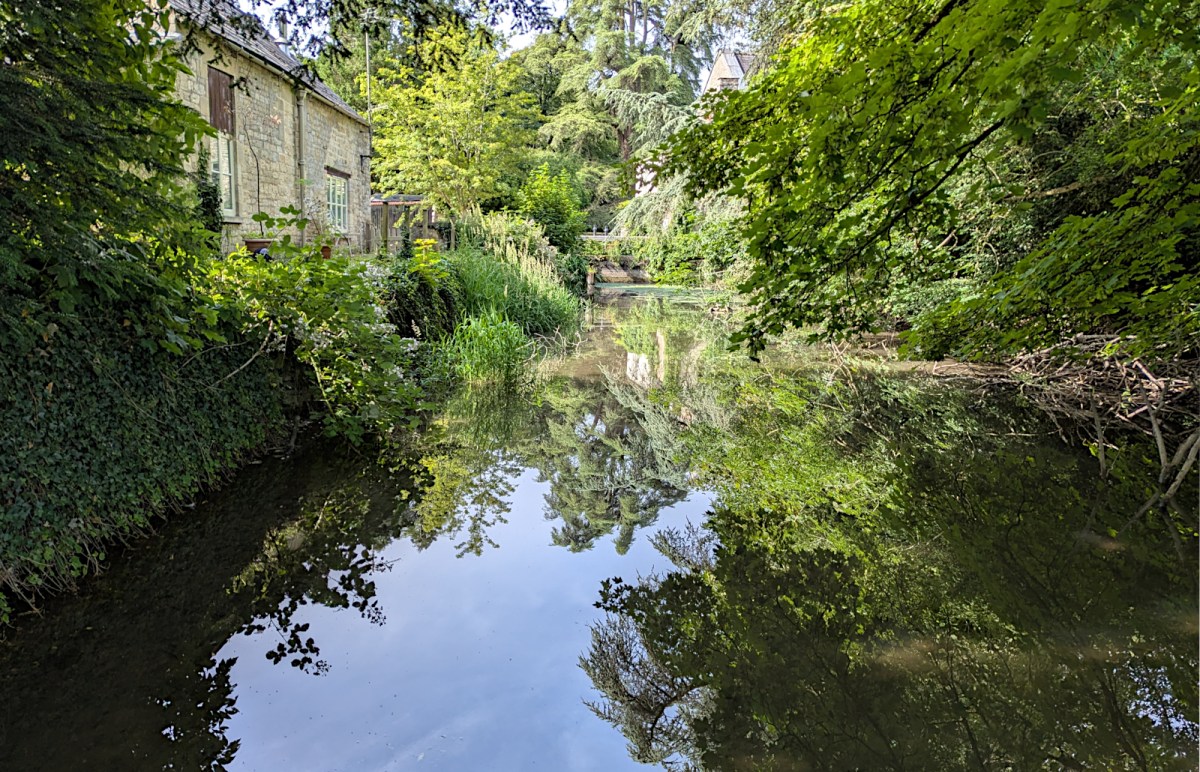
Barton Mill burned down in an unfortunate fire in 1926 and was never rebuilt. Watermills (and windmills) were going out of business at that time as most industries were running on steam power generated by burning coal, or by electrical energy, also usually from coal-fired power stations. Water power and wind power, now seen as green and therefore desirable, were seen in 1926 as ineffective and unable to compete with the more efficient alternatives. This was long before the downsides of fossil fuels were understood.
A place for wildlife
100 years after the fire, in 2026, the mill pond still exists, fed by a sluice gate taking water from the River Churn. The part of the pond in the photo is usually in water all year round, though other parts dry up in many summers, partly because of some silting up near the sluice and partly because the bed of the pond has silted up too, so now the water is shallow enough for yellow flag Iris and other plants to flourish.
There are many birds to be seen in this area too. Mallard ducks breed every spring, there are minnows and probably stickleback in the water and from time to time a kingfisher hunts along the water channels and the pond. Often all you see of the kingfisher is a darting flash of vivid blue. There used to be (and may still be) a pike. A single but very shy little egret hunted around here for the last few years, but this year I’ve seen two of them, probably a breeding pair. And their larger cousin, the grey heron also puts in an appearance now and then.
All life needs is an opportunity
Take any piece of ground, anywhere on Earth, and just leave it alone, life will move in, even if you choose a patch in the Sahara or Antarctica. If you clear a piece of ground somewhere with a reasonable climate and leave it alone, in just a human lifetime you’ll have thriving woodland with a full selection of insects, birds and mammals, and probably reptiles and amphibians too. The experiment has been made many times, sometimes deliberately, sometimes accidentally. If you choose the Sahara or Antarctica you might have to wait a bit longer, but the life forms that are adapted to those extreme conditions will move in eventually. Let’s look at some examples.
Broadbalk wilderness (UK)
A wheat field was deliberately left to revert to a natural state at Rothamsted Research Station in 1882. The land was left unmanaged where before it would have been ploughed and harrowed after harvesting the wheat in late summer and drilled with seed again in the autumn. This field had produced winter wheat every year since 1843, but now the scientists wanted to see what would happen if it was left uncultivated; for the first four years volunteer wheat grew, sparser and weaker year on year and after four years completely choked by weeds.
In 1900 the site was divided into three. One part was left deliberately untouched and gradually reverted to natural woodland; another third was mown annually and maintained as grassland; while the third section had all woody plants removed annually so the land became a natural, open mix of herbaceous plants.
The results have been very interesting and the experiment continues today. Levels of captured carbon are still rising in the soils of the site, nitrogen levels have risen as well. The samples and data are available for study and reanalysis.
Chornobyl (Ukraine)
The Chornobyl nuclear power station accident in 1986 rendered the city and a large area around it unusable. People were evacuated and the most contaminated areas became a restricted zone. Since the accident, time and rainfall have reduced the surface radioactivity considerably and it’s now possible to visit the area. In fact, wildlife has moved into the area from the very beginning and the changing conditions and environment have been studied in depth.
Almost 120 000 people were evacuated following the accident, so activities like farming, hunting, logging, and development ceased over an area of 4,200 km². Forests, wetlands and grasslands have reclaimed abandoned farms and villages; and vegetation grows freely through derelict buildings and former settlements. The pine woodland killed outright by the initial high-dose fallout remains one of the most nuclear-contaminated places on Earth, but even there substantial regrowth has happened. The loss of managed agriculture actually increased habitat diversity, reconnecting landscapes previously fragmented by farmland.
Large mammals rebounded strongly. Long-term census data show abundances of deer, elk, roe deer and wild boar comparable to those in uncontaminated regional nature reserves. Wolves are notably abundant, roughly seven times as common as in comparable reserves. Reintroductions have taken hold including endangered Przewalski’s horses, released in the late 1990s and now ranging freely and breeding. European bison have also been established, while beavers have recolonised rivers, canals and the cooling ponds, in places reversing Soviet-era drainage systems. Lynx, foxes and hundreds of bird species are present too.
However, there’s a mixed message – the abundant populations are due to the absence of humans, yet there remains clear evidence of radiation-induced harm to individuals. Some species are adapting and changing, showing signs of radiation resistance, for example.
Returning woodland (Scotland)
It seems that all that is required to restore native woodland in Scotland is to remove or significantly reduce the presence of Red Deer and sheep. Grazing species eat the young seedlings of trees and strip leaves from saplings. Where deer-fencing is erected to protect an area the tree seedlings survive and soon grow too high for sheep (or even deer) to reach. Birch, rowan, willow, Scots pine and juniper rapidly recolonise in fenced areas.
Other cases are numerous
Similar cases of large scale change include:
The reintroduction of wolves to Yellowstone Park in 1995 suppressed the elk population, allowing willow and aspen to return to riverbanks bringing back beavers and many other species including fish, moose and songbirds.
Oostvaardersplassen in the Netherlands where introducing large grazing animals brought back white-tailed eagles and other species.
Marine protected zones where closing areas to commercial fishing have seen biomass rebound. Examples include cod recovery on the Grand Banks off the east coast of Canada.
Reintroducing pine martens in parts of England shows promise in allowing native red squirrel populations to recover as the introduced grey squirrel population is suppressed.
Identifying common factors
A rule to cover all these examples will be useful. If the limiting, interfering factor(s) can be identified and removed life will usually return naturally – in any situation. Identifying the limiting factor(s) is the key to success. Reintroduction of missing species can also be a helpful part of the process but is often not necessary.
Growth and regeneration in church life
We can (and I suggest we should) think about abundance and limiting factors in church growth as well, what are the main interfering and limiting factors preventing abundant life returning like the ecosystems discussed above?
In the book of Acts, we see church life in its natural state, like a healthy ecosystem. Everything was in balance, there were no dedicated church buildings as we see in our villages, towns and cities today, and there was no hierarchy of management. People followed Jesus’ teachings because they understood the practical, social, and personal benefits. They met together as close friends, almost like family, eating together, working together, helping one another and doing so effortlessly and comfortably. I’m sure there were some difficulties and disagreements, and rough spots here and there, but they were all overcome informally.
Am I claiming there’s no life in church today? No, I’m not saying that. What I am saying (and I want you to hear this clearly) is that there’s a curtailed, limited kind of life in church as usually experienced in the 21st century. Church life is short of something essential; if we are to have fullness the parts that are missing need to be identified and restored. Just as an ecology lacking an important species cannot function as it should, so church culture lacking an important kind of leader cannot function as it should. And just as introducing the grey squirrels from North America unhinged UK woodland ecology, so introducing the wrong kind of leader unhinges church culture.
It’s an important factor we have largely failed to recognise. We need the full range of species Jesus put in place, and we need to remove the ones we introduced. Once you start to see the parallels between church culture and thriving ecosystem ecology, it all becomes very clear and is impossible to unsee. I’ve written a whole series elsewhere about church leadership.
Popes, priests, bishops, paid professionals, structures and hierarchies are not necessary (see Other church leaders 1 and Other church leaders 2). Nor did Jesus teach (or even suggest) that such functions and positions were required or helpful. Over the decades and centuries (two whole millenia now) church has grown more complex, more structured, less flexible and more traditional. It has also branched into many independent subsets. We’ll examine all that in a later article, referring back to earlier posts here on JHM as well.
But for now I’d suggest human management and leadership might be some of the limiting factors in the church environment, and that these have adversely affected the natural life and ecology of church as we know it today. We should consider removing these factors to see what will happen. And if necessary we might try reintroducing the leadership modelled by Jesus, going back to first principles.
Church life, too, will find a way. All it needs is the opportunity!
If you enjoyed this or found it useful, please like, comment, and share below. (If you don’t see those links, click the article’s title above the main photo and they will appear.) Send a link to friends who might enjoy the article or benefit from it – Thanks! My material is free to reuse (see conditions), but a coffee is always welcome and encourages me to write more often!