Petal doubling makes flowers more showy, but often at the cost of the ‘doubled’ flowers being less interesting to pollinating insects. The additional petals may be modified stamens so less pollen is produced. Compare a wild rose to a garden rose and you’ll see what I mean.
What’s in an image? Sometimes quite a lot, more than meets the eye. I’m posting an image every few days.
Click images to enlarge
These autumn leaves are on a purple Cotinus coggygria bush, common name ‘smokebush’. Like many trees and shrubs at this time of year, Cotinus leaves change colour in autumn before falling to the ground. The shrub will produce fresh, new leaves in the spring. But look more closely and you may see something else.
The leaves in the image have developed interveinal patches of necrotic tissue, making the plant even more striking in autumn. I had never noticed this condition before moving to Cirencester, but there’s a Cotinus in the grounds of the Stratton House Hotel and Spa that does this annually. The shrub seems healthy in the spring and summer. For a week or two at the end of October this patterned necrosis makes the autumn leaves look even more spectacular.
Irregularities of this kind are common in both animate and inanimate natural systems and not infrequently appear as deliberate ‘enhancements’. Here are one or two notable examples:
Leaf variegation – Gardeners and plant breeders select and propagate from stable variegations. Normally plants with variegation grow more slowly because the efficiency of photosynthesis is compromised.
Petal doubling – This make flowers more showy, but often at the cost of the ‘doubled’ flowers being less interesting to pollinating insects. The additional petals may be modified stamens so less pollen is produced. Compare a wild rose to a garden rose and you’ll see what I mean. How often do you see bees working garden roses?
Variations in animal characteristics – amongst cats and dogs (and also budgerigars, canaries, parrots and chickens you’ll see size and shape changes as well as behavioural, colour and pattern modifications. Compare a Jack Russell with a retriever or a blue budgie with a green one and you’ll find plenty of differences to ponder.
Frost hardiness in plants. Frost sensitive species cannot survive winter in temperate or arctic conditions, so hardiness is a prized feature of many garden plants, and plant breeders pay attention to things like this. A Dahlia or Chrysanthemum that can flower for an extra week or two in the autumn may be worth a higher price, for example.
Fruit colour and flavour components. These days strawberries are much larger than when I was child, and they are often red inside, not just on the outer surface.
Many variations of this kind are deliberately selected for by plant and animal breeders.
Certain other changes have been caused deliberately, even in humans. Lower lip enlargement, neck ringing to generate extended neck length, foot binding, and forms of male and female circumcision have been required for a variety of religious and cultural reasons. Hair styling, removal, or transplantation, piercing of ears, noses and other body parts are common, and don’t forget tattooing. And in plants; pruning, clipping, or bonsai are widely employed.
In the world of rock and stone, coloured and uncoloured crystals may be prized as jewels and fetch fantastic prices. I wrote about an example of this, a geode I spotted in an ordinary, traditional, Cotswold dry stone wall.
If you enjoyed this or found it useful, please like, comment, and share below. (If you don’t see those links, click the article’s title above the main photo and they will appear.) Send a link to friends who might enjoy the article or benefit from it – Thanks! My material is free to reuse (see conditions), but a coffee is always welcome and encourages me to write more often!
Just a short message this time, I read the latest from ‘Aforgetfulsoul’ and she expresses very clearly what it really means to follow Jesus. So if you want some good, wholesome, thought-provoking wisdom, look no further. Here’s a brief extract…
I am excited to think that my life as a believer is not a matter of rigid scheduling of ‘religious’ activities, but is a pattern woven by my Father according to his purposes, where he asks for my yielding, my desire to be attuned to his promptings, my availability to be ‘interrupted’ and to recognise in the smallest event some sign that God is at work and asking me to share it.
But do read the whole article. This is exactly the way I feel about my own life, it’s one of the reasons I often add a tiny, ‘throw-away’ remark in my articles whatever the major topic, drawing attention to spiritual aspects of the everyday things I notice or am involved in. If he’s worth following (and he is) Jesus will be in every little part of my life. Often partly hidden – but there.
We often make things far too complicated. Too structured. Too organised.
The abbey’s construction was a huge project continuing throughout the 12th century. To fund the ambitious project, Henry I and his successors, Henry II and Richard I, granted the abbey revenues and privileges, such as exemption from tolls, access to commerce, and timber and stone for construction.
What’s in an image? Sometimes quite a lot, more than meets the eye. I’m posting an image every few days.
Click images to enlarge
In medieval times there was an Augustinian Abbey in Cirencester. Like so many abbeys and monasteries in the United Kingdom it was dissolved during the reign of King Henry VIII and afterwards demolished. The outline of the walls is marked in the Abbey Grounds with small, square paving slabs, and a few of the column bases are visible too, but that is all that remains above ground where the Abbey once stood. There are some additional carved stones and other items in the Corinium Museum.
The photo shows a Lego model of the Abbey, currently on display in the Parish Church. You can see a Lego tree in the garden within the cloisters, and part of the nave of the Abbey church. The model is complete with its tower although this doesn’t appear in the main photo, but it’s there in the image below.
Construction and history
The Abbey and tower
Some of the political and practical history of the founding and later dissolution of the abbey are well described in blog articles published by the Corinium Museum. These articles, and the Wikipedia article are well worth reading. They are linked below.
Long before the Abbey was built the land where it later stood was part of the Roman City of Corinium Dobunnorum; the River Churn (in those times named Kern, Kerin or Corin) had been divided into two, one part outside the city walls as a defensive feature, the other part within the city as a source of water for drinking, washing, for industry, building and so forth. The Saxons, moving West into the still Romano-British part of what is now South-West England, took control of the area, but had no use for a derelict Roman city. However, there was a Roman church building in the area where the abbey would later be founded, and a Saxon church was built over the Roman church.
Early in the 12th century, King Henry I founded St Mary’s Abbey, building the chancel on the site of the Roman and Saxon churches. About 1130, Abbot Serlo arrived with a community of canons to set up residence .
The abbey’s construction was a massive project continuing throughout the 12th century. To fund the ambitious undertaking, Henry I and his successors, Henry II and Richard I, granted the abbey revenues and privileges, such as exemption from tolls, access to commerce, and timber and stone for construction. Henry II allowed the abbey the revenues and control of the town (or ‘vill’) of Cirencester around 1155, initiating centuries of friction with the local townspeople. The abbey church was consecrated in 1176 in the presence of King Henry II and several bishops, but building work on the cloisters, refectory, dormitories, and the abbot’s house continued for many more years.
The result of all this effort was the most wealthy and influential Augustinian abbey in the Kingdom. The abbey flourished through its ownership of very large estates in the Cotswolds and an important role in the very profitable medieval wool trade.
Dissolution
The townspeople repeatedly asked the Crown to grant them a borough charter, but this was consistently and strongly opposed by the abbots. In the end, Henry VIII’s dissolution of the monasteries ended with the destruction of the abbey and the confiscation of much of its wealth and property. A Royal Commisioner, Robert Southwell arrived in the town on 19th December 1539 to receive the surrender from the last abbot, John Blake. There was no resistance, and the abbot and monks received pensions, but the buildings were torn down and everything of value was sold off.
Religion or faith?
As with so many JHM articles, as I write I am deeply struck by the huge gulf between religion (usually a very worldly affair as in the history of Cirencester Abbey) and faith (with its basis not so much in what we think as in who we are and how we live.) The distinction is essential if we are to live full lives, discovering who Jesus is and why he matters so much.
If you enjoyed this or found it useful, please like, comment, and share below. (If you don’t see those links, click the article’s title above the main photo and they will appear.) Send a link to friends who might enjoy the article or benefit from it – Thanks! My material is free to reuse (see conditions), but a coffee is always welcome and encourages me to write more often!

The UK is a rich mix of people from many cultural backgrounds. That’s why the title is not ‘Christmas Greetings’. Please accept the greetings and replace the word ‘Season’ with whatever you like.
This great cross hangs from the high ceiling between the nave and the chancel of Cirencester Parish Church of St John Baptist.
Click to enlarge
This cross was carved and carefully gilded by craftsmen from Cirencester’s past. It hangs on stout iron chains from the heavy timbers of the chancel roof and for centuries has been the focal point for worshippers sitting in the pews of the nave. At first glance it almost seems to have been studded with jewels, but in fact it’s plain wood with gilded ornamentation.
In the centre of the cross is a lamb carrying a banner marked with the cross of St George. This lamb represents Jesus, the sacrificial ‘lamb of God’. At the top of the upright timber is a winged St Matthew, author of Matthew’s Gospel, at the extreme left of the cross beam is St Mark portrayed as a winged lion and at the right hand end St Luke as a winged ox wearing a crown. Right at the bottom of the upright timber is St John, shown here as an eagle.
More about those images
The lamb with the banner of St. George represents the Agnus Dei (the Lamb of God), symbolising Jesus Christ, and later iconography mixes symbols of sacrifice and victory. Jesus Christ was seen as both sacrificial (the lamb) and a victorious king (the banner).
The winged man represents St. Matthew because his gospel emphasises Christ’s human nature. His account begins with a genealogy of Jesus’ descent from Abraham highlighting his human, earthly origins. The winged aspect signifies divine inspiration of the gospel message and the angelic wings refer to Matthew’s task as a messenger of God’s word.
St. Mark is shown as a winged lion because his gospel starts with the roaring voice of John the Baptist in the wilderness, (roaring like a lion) while the wings refer to the four winged creatures described in the books of Ezekiel and Revelation. The lion represents the strength of Mark’s message and the resurrection of Christ, the wings speak of the four evangelists being guardians of the throne of God.
St. Luke the Evangelist is traditionally symbolized by a winged ox (or bull or calf). The symbol is derived from the four living creatures in the Book of Ezekiel and Revelation, which early Christian tradition associated with the four Gospel writers. The ox was chosen for St. Luke because it was an animal of sacrifice in the Old Testament, representing the sacrificial aspect of Jesus’ ministry, which Luke emphasizes in his Gospel by beginning with the priestly duties of Zechariah. The wings signify that the Gospel message is to be spread throughout the world.
St. John is shown as an eagle because it’s his symbol as one of the four evangelists. His gospel is seen as soaring into theological heights, also true of his visionary writings in the Book of Revelation. And the eagle is associated with divine power, heavenly vision, and spiritual insight as seen in the book of Revelation.
These medieval traditions are all very well, but the carved, gilded cross is also a distraction from the dreadful truth that a wooden cross was an instrument of torture and death. It’s easy to get wrapped up in traditions and forget that Jesus died to provide the opportunity for us to turn back from the brink. The heavy timbers to which Jesus was nailed to die were not ornate or gilded, and there were no traditions portrayed on them. Jesus (Yeshua, Isa) came in simplicity offering a simple opportunity and sharing simple truth. You don’t need a degree in history or theology to follow him, just an open, willing mind and a light touch from his spirit of love and truth.
In that vein, here’s something I add every year, I’ll offer it up to you again now. The UK is a rich mix of people from many cultural backgrounds. That’s why the title is not ‘Christmas Greetings’. Please accept the greetings and replace the word ‘Season’ with whatever you like. If you’re Hindu you could choose Pancha Ganapati, or Jewish friends might go with Hannukah in December, if you’re Muslim you might look forward to the start of the holy month of Rajab; Buddhists might consider Bodhi Day, and there are more groups of people I haven’t mentioned specifically. But whatever you celebrate, please take my greetings as a blessing for the whole of next year – spring, summer, autumn and winter. I’m not here to press you into a new and different tradition. I’m here to dismiss tradition in its entirety and offer love, peace and grace in its place. The teachings of Jesus are simple and there are thoughts about them throughout the articles on this website.
PS – If you like the photo, click the thumbnail for the full size version. Print it out, put it in a frame and hang it on the wall. Give a copy to friends if you think they’d like it; or send them a link to this message.
Unlike life, death is stable. It’s not often that you see a dead body come alive again. That would be resurrection, it’s not something that we expect to see happening regularly (or at all)!
I’m writing about these three topics in obedience to a prompting from the Holy Spirit. I need to say that at the outset. And I think I’m going to need to create two versions, one for people who are following Jesus, and another for people who have no idea what I’m talking about. I’m going get stuck right in, please bear with me; my hope and prayer is that there’ll be something here for everyone.
For those who have no idea
We all know what life is, or at least, we think we do. Life is a metastable state. Let’s define ‘metastable’ – Imagine a pencil lying near the centre of a table; if you push it a little it will move across the surface but it won’t fall over. It can’t! (unless you push it so far that it reaches beyond the edge of the table it is always fully supported on the table’s surface. That pencil is a stable object.
Now take the pencil and stand it up on it’s point. Let it go and it will fall over. A pencil standing on its point is unstable.
Now take the pencil and stand it on the table with its point uppermost. If the pencil has a good, flat end and the table surface is even and horizontal, you will be able to do this with a little care. Now push the pencil point sideways a tiny amount and then release it, it’ll wobble a bit but then remain standing and settle down. But push it beyond a certain amount and it will fall over. That’s metastable, the pencil can cope with a tiny movement, but push it too far and it’ll fall over.
Life is like that, it’s a metastable condition. Most of the time we live day after day as the weather changes, sometimes warmer, sometimes cooler, sometimes wet, sometimes dry. Put us in a place too hot, too cold, too dry (a desert), or too wet (an ocean) and we will die. Not immediately, perhaps, but push us too far, and like the point-up pencil, we’ll fall. Life is metastable. All of us will die eventually, if not of overheating or drowning, then eventually of old age. It’s not normal to live for ever.
Unlike life, death is stable. It’s not often that you see a dead body come alive again. That would be resurrection, it’s not something that we expect to see happening regularly (or at all)!
That’s about all there is to say to the ‘No idea’ group.
For those following Jesus (or might like to)
Jesus had some really interesting things to say about life. He reminded people that life is metastable, but without using that term. He claimed that there is a different kind of life, a spiritual life parallel to biological life, a life that is stable rather than metastable, a life that has the potential to be stable as either permanent life or permanent death. And he further explained that we can choose either permanent condition.
These claims don’t make sense, do they? I’ve stated them as simply and straightforwardly as I can. I should add that these deep truths cannot be grasped by intellect or understood by logic. They are, I suspect, completely distinct from the physical world and from the rationality of mind and brain. These things are unmeasurable and indescribable, available only through faith, hope, and love.
So if you want to explore further, faith, hope and love are the tools you will need to do so. Faith is a mysterious idea, quite hard to pin down or explain. Hope is something we all have, though perhaps we all hope for slightly different things. But love is the most important and the strongest of the three, it’s the one key you truly need to unlock resurrection (a return to life) and to grasp the enormous benefit of permanent life and the desperate state of permanent death. So take love as the starting point. If you are new to all this, Henry Drummond is a good guide and companion on the exciting journey that lies ahead.
If you enjoyed this or found it useful, please like, comment, and share below. (If you don’t see those links, click the article’s title above the main photo and they will appear.) Send a link to friends who might enjoy the article or benefit from it – Thanks! My material is free to reuse (see conditions), but a coffee is always welcome and encourages me to write more often!

Paul’s letter to the Ephesians has sometimes been described as the constitution of the church, but that’s not strictly correct. Paul didn’t write Ephesians to define what church is and is not, so it contains much more than the bare bones of a definition. Constitutions are (relatively) brief but very clearly lay out the essence and limits of something, be it an organisation like a business, a charity, or indeed a nation. They also spell out definitions of terms as well as the concept being defined, as clearly as possible. So if we want a constitution for the church, we must think in terms of something succinct, crystal clear, and complete but not providing unnecessary additional detail.
Why have a constitution?
The church has never truly had a constitution, some might argue it doesn’t need one. But recently I’ve begun to feel it does. Almost every denomination imposes customs and requirements on their adherents, over and above anything that Jesus taught. There are paid leaders and managers, forms of infant baptism, doctrine, so much encrusted over the basics. So much that can be seen as unnecessary when we compare it to the earliest forms of church or to what we learn from the New Testament. Some form of declarative constitution might bring much needed clarity to the confusion.
Over the centuries there have been repeated reforms and corrections, but generally these have resulted in yet more varieties of belief and practice. A constitution might help, we should at least make an attempt to form one.
So first of all, why would we even want a church constitution? There are probably as many definitions as there are denominations, and that’s quite a large number; a constitution provides clarity and a reference point. The Bible, and even just the New Testament is far too detailed to be a definition; yet it contains everything we need to know and does not support the additions and concretions of the last two millenia.
The essentials, but no more
What else can we say about constitutions in general? The key point, I think, is that a constitution should contain everything essential but nothing beyond that. A definition brings clarity and focus. Constitutions are usually amendable both for corrections and for additions or deletions. There is normally an agreed process for amending a constitution.
So where would we begin for the church? As always, we must begin with our source – Jesus himself.
A good start would be to state that church is defined by everything that Jesus is and does and teaches and by nothing beyond that. Having leaders of a particular flavour or style and how we name those leaders are not fundamental. Whether you have a priest, a vicar, a pastor, elders or deacons, those are all secondary features of church life and practice. They cannot form part of the definition.
Let’s begin by saying church is a group of people striving to follow Jesus. I don’t think we can start in any better way.
We’ll make that our primary clause.
Making a start
1 – Church is a group of people striving to follow Jesus.
Let’s check this statement. It’s a group so we’re defining the minimum size to be two. One person alone following Jesus therefore falls outside our definition. And another point in that first statement is that complete success in following Jesus is not an essential of church either, so two or more people doing their best to follow Jesus becomes our initial attempt at defining what church is. We can adjust our primary clause to make this explicit.
1 – Church is a group of two or more people striving to follow Jesus.
Perhaps we need to clarify the relationship between the people that make up church. They are a community, interacting with one another, and cooperating in following Jesus. Let’s add that in as well. And we need to include the idea of making progress, so…
1 – Church is a community of two or more people striving together to follow Jesus ever more closely.
Let’s add some support from the New Testament. Matthew 4:18-21 shows that people are chosen, called, and follow. Also, I now begin to see that there needs to be some statement before this one, declaring that Jesus is our source and foundation. So let’s renumber our clause as 2 to leave room for a new number 1 to be written later. So now we have…
2 – Church is a community of two or more people striving together to follow Jesus ever more closely. (Matthew 4:18-21)
I’ve linked to Bible Gateway for convenience. The link is not part of the constitution, but the Bible verses themselves are.
For now I’d like to adopt that as the first stab at a constitution for the church. We’ll need to expand it by adding further clauses later. Some of these additions will extend the definition while others will limit it. I plan to revisit this topic repeatedly. But for now I’d love to hear suggestions for improvement as well as objections to this initial statement. How should we extend it? What else do you think we should include? What should we leave out? What might future clauses cover?
If you enjoyed this or found it useful, please like, comment, and share below. (If you don’t see those links, click the article’s title above the main photo and they will appear.) Send a link to friends who might enjoy the article or benefit from it – Thanks! My material is free to reuse (see conditions), but a coffee is always welcome and encourages me to write more often!
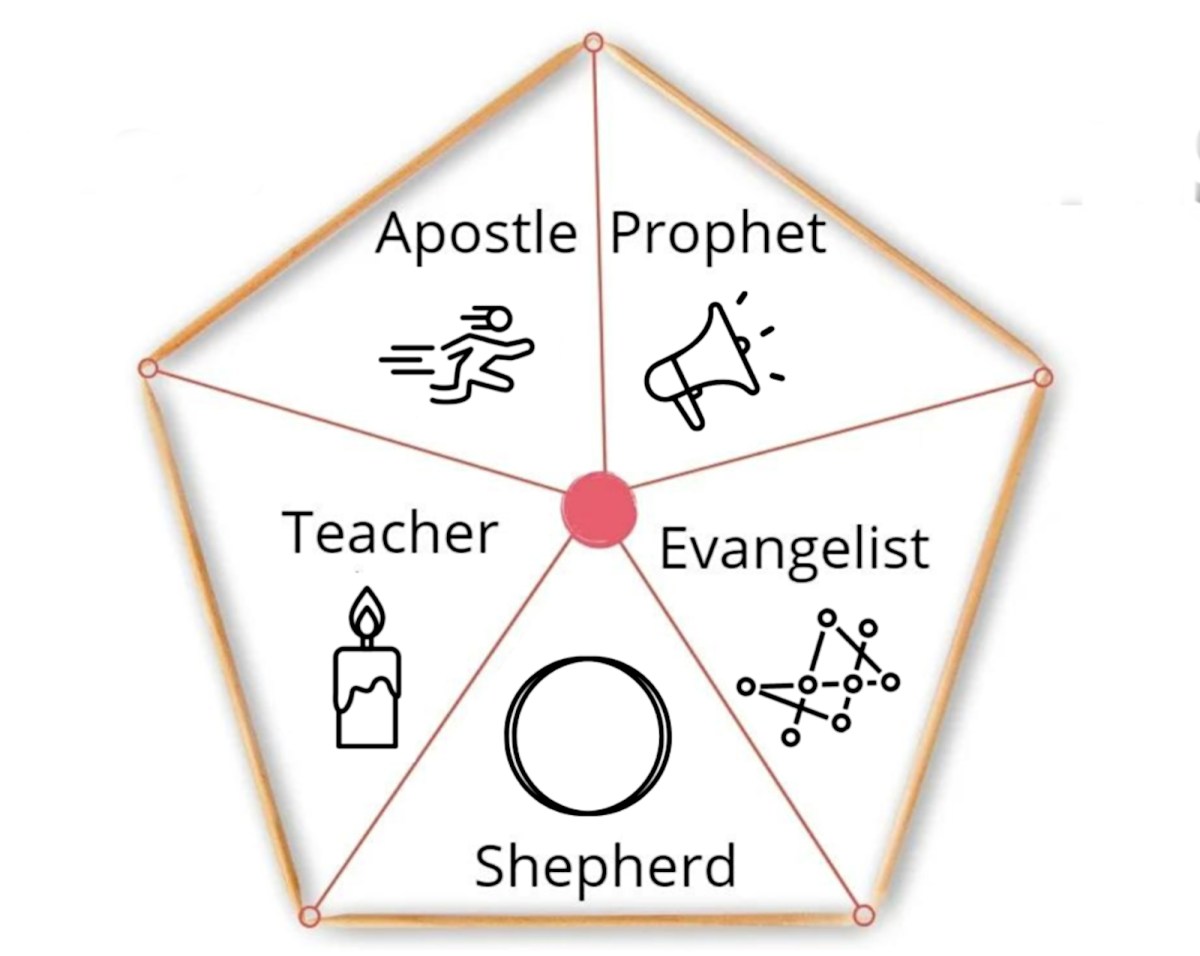
Put an upturned bucket over a patch of grass in your garden. Lift the bucket every day and take a look, then re-cover the patch… How long does it take for the grass to die?
What’s in an image? Sometimes quite a lot, more than meets the eye. I’m posting an image every few days.
Click to enlarge
Trees provide shade, most welcome on a hot day, and they provide shelter when it rains (though this may be unwise during thunderstorms).
But notice the absence of grass beneath these conifers. Shade and shelter are exactly what other plants don’t need; they depend on plenty of light and water to enable them to grow. Light is essential as it provides the energy to split water into hydrogen and oxygen, and water is essential as the raw material for this process. The oxygen is released into the atmosphere, while the hydrogen is bonded with carbon dioxide from the atmosphere to make energy-storing sugars for use at night and to build cellulose, the main support molecule that gives stems, branches and tree trunks their strength.
The lack of light and water under tree canopies creates a kind of local desert. You can see this clearly in the photo from the presence and absence of grass. So how do the trees survive? That’s a great question! Their roots spread out widely and deep, far enough to reach moist soil and deep ground water. In persistent rain, water drips from the drenched leaves above. And root, trunk and branch all contain stores of water so a tree can cope with a long, dry summer far better than the grass can.
Light
Here’s an experiment anyone can do. Put an upturned bucket over a patch of grass in your garden. Lift the bucket every day and take a look, then re-cover the patch. See how long it takes for the grass to turn yellow. How long does it take for the grass to die?
For plants, light is essential. There are some animals that live in dark caves or underground, with no light. Earthworms are a good example, but like all animals they get their food by consuming plants and other animals. But for most creatures, including us humans, light is essential nonetheless. Whether we are plant eaters (like cows and sheep) or meat eaters (like lions and wolves) or omnivores eating either or both (like humans and rats) we still need light to see in order to find and identify the things we must eat to stay alive.
Water
For plants, water is part of their ‘food’, it’s needed to make sugars. For animals water is of no value as food, but it’s essential to prevent dangerous dehydration. All animals know when they’re thirsty and they’ll find water and drink to keep themselves alive. Think of a man lost in a desert, the cartoons have him croaking out, ‘Water.. Water..’ Imagine someone unable to find water, they’d die of thirst long, long before they died of hunger. Most of us would be in danger after a few days without drinking, but we could live for several weeks with nothing to eat. And of course, if you are a fish too little water would mean you couldn’t breathe, and if you were a land animal too much would mean you would drown.
Spiritual (not religious)
The idea of essentials has been carried over into spiritual ideas too. Light and water (and food) are so clearly necessary for life that they make good analogies and illustrations. What did Jesus mean when he said, ‘I am the way, the truth and the life’? Or when he explained to the Samaritan woman at the well that he would provide water that never runs out, or when he told his followers, ‘I am the bread of life’ or ‘I am the light of the world’?
He was simply saying, I am essential, you can’t live without me. I’m necessary for life. Just as in the physical world, how would it feel to live in the dark, without water and without sustenance? How long would you last? How long would I last?
Many people today feel sure there is no spiritual aspect to life at all, it’s just about living your life in the here and now and then dying from accident, illness, or just old age. Others think there’s much more to life than that. At the very least there are moral and philosophical truths to consider. We should care for one another, help one another, and cooperate in helpful and kind ways.
Food for thought. Let me know below how you think about the essentials of life. Do you have any thoughts to share on this?
If you enjoyed this or found it useful, please like, comment, and share below. (If you don’t see those links, click the article’s title above the main photo and they will appear.) Send a link to friends who might enjoy the article or benefit from it – Thanks! My material is free to reuse (see conditions), but a coffee is always welcome and encourages me to write more often!
Christopher Dryden, who writes at Life with CD always creates great posts, closely focusing on sharing, expanding on and interpreting Biblical themes and passages.
His work is always worth reading. He calls us back to the truth at its deepest heart. Do take a look.
From my longer perspective today at seventy-seven years old I can see that what seemed a minor difference between me and the Open Door elders is in truth a yawning gulf. It’s not just that I took a misstep, but that the entire edifice of following Jesus (Church almost everywhere and throughout history) took an enormous misstep.
Donna and I were married in 1998 and Tony was my best man; Donna’s best friend, Jane, was her chief bridesmaid. Donna had taken a new job with Unilever Research at their research site a little north of Bedford. She bought a cottage in the village of Tilbrook and when we were married I moved into the cottage with her and Unilever offered me a job on their intranet web team, initially to create a website that could be duplicated for each of their research sites – two in the UK, one in the USA and one in the Netherlands.
Donna was keen to find a church in the nearby town of St Neots, or if necessary in Bedford.
We soon found the cottage was far too small, and moved to a four-bedroom property in Eaton Ford, part of St Neots. The internet had barely hit its stride in the late ’90s, so it wasn’t nearly as easy to find a church (or anything else) as it would be today.
One weekend before we were married, I was visiting Donna , and on the Sunday I said, ‘Come on , let’s drive into St Neots and see what we can find’. She said, ‘No, you’ll never find anything that way’. But we jumped into the car and I prayed very briefly to be shown where to go – and off we went. We drove through the middle of the town and out towards Eynesbury but saw nothing of interest, then I turned right and down a couple of streets and coming to a secondary school we spotted an A-board welcoming people to ‘Open Door Church’. We followed the sign, parked the car, and made our way into ‘Ernulf School’ and there we were – Open Door Church! It turned out to be a lively, welcoming place, just what Donna was looking for. Over the next week or so she got to know some of the people and was invited to join a cell group run by Rob and Jean and a couple from France who were planning to return home in a few weeks time. And that was that! By the time I was working at Unilever and had moved into the cottage full time, Donna was well-established at Open Door, the French couple had moved back to France, and Rob and Jean were running the cell group on their own. They quickly became good friends, we even had a holiday in Scotland with them one year.
A wrong step
How easily we do this! Wanting to support Donna, I was happy to go along to the Sunday meetings at Open Door and, far more to my taste, join in with the weekly cell meetings every Wednesday or Thursday. But there was a fly in the church ointment. It was expected that people taking part regularly would ‘join’ the church and sign the membership book. This also involved promising to give your allegiance to Open Door. That was something I found hard – a step too far, a very big ask. My allegiance was to Jesus and him alone. But I did want to support Donna in her new membership of Open Door and it seemed to be something couples were expected to do together. So I put my doubts to one side and signed up – that was a major wrong step!
Trying to right the wrong
What’s the best thing to do if you take a wrong turning? Usually the best thing is to retrace your steps to the point of the mistake and take a different path. As the weeks went by it became clearer and clearer to me that I was in a bad place. I had agreed to be guided by the leaders of Open Door Church but knew that my only guidance should come through Jesus and his Spirit working in me and in my brothers and sisters.
So I wrote to the elders, explaining my mistake and asking to be released from membership and the promise of allegiance I had made. Nothing like this had happened before and they really had no idea what to do. They invited me to visit the lead elder’s (Tony’s) house, and when I went along he had also invited another elder, Brian. They asked me to explain what I meant. I told them, as gently as I could, that in my view all followers of Jesus should follow him alone. I added that this did not mean I wanted to leave Open Door. The reaction surprised me, almost as if I had decided to follow Islam, Hinduism or Buddhism. They were cold, even a bit frosty, and it was very clear that they felt I was rejecting their authority in some rather dangerous way. It was as if they felt that following Jesus implied following the elders. I was left feeling, ‘Hang on, this is my life in which I can follow anyone I wish, and I’ve chosen Jesus. Do you think he will lead me to cause problems for you?’
They wanted to talk again the following week, and this time told me that they’d heard my point of view and now wanted me to hear the conditions under which I might continue to come to Open Door meetings. The main point was that they wanted to be assured that if I said or did anything in a meeting that they objected to, and they asked me to stop, that I would do so. And so, on those terms, I was allowed to continue to meet with them on Sunday mornings and for weekday cell group meetings.
Meeting again with other friends
Although I continued to meet at Open Door for some time, I felt unable to contribute freely on Sunday mornings. Sometimes I would share something prophetic, or a vision, but I didn’t want to upset Tony or the elders so I was always quite careful. And now and again I’d sing in the Spirit and others would join in, or I’d speak in a tongue and someone would interpret and that always felt safe enough because the interpretation was not through me! Or I’d dance, usually near the back of the room.
Rob and Jean, however, were personal friends and also seemed to have no issues over anything I said or did either on Sundays or at cell group sessions, but rather welcomed the input. Over the years the group leaders were changed repeatedly but I was still allowed the same freedom almost all of the time we lived in St Neots.
Meeting at home
All of this left me feeling that life in St Neots was poorer in some ways than life in Yatton. I missed my friends, but above all I missed the spiritual depth and intensity of meeting completely freely, guided by the Holy Spirit alone and allowing him to speak to each one through the way he was using all the others. I missed the kind of community I’d experienced in Yatton. I knew it didn’t depend on particular people being involved, but instead, what it required was that all those present intended to rely only on Jesus. ‘I can do all things in Christ who strengthens me’ (Philippians 4:13) and ‘Without Christ I can do nothing’ (John 15:5).
Where was I to find these people? I can’t be sure of the details at this point – who was involved first or how we got started. But my sister Rachael was involved very early on, as were various St Neots friends, my friends Jody and Peter from Unilever, and eventually many more from a wide area in Cambridgeshire, Northhamptonshire and Bedfordshire.
For eleven years I kept a list of meetings and now I can refer to that list to pick out the first time we met at each new location, and that will give a feeling for how the meetings spread and grew. There were rarely more than 10 people at a meeting, but I knew how these small gatherings worked (from long experience in Yatton). There were no rules, but we encouraged everyone to feel free to contribute in any way providing they felt it was from the Spirit and aligned with the way Jesus would contribute. So there was usually a sense of openness and freedom. Almost always there would be tongues with interpretation, Bible readings or at least a few quotes, prayer for guidance and for any needs expressed by those present, prophecy, and plenty of peaceful silence for thought and processing of what others had contributed. The meetings were never boring, and more often than not we could identify a theme that had come together little by little as we met. Most times we’d begin with coffee and a chat.
Dec 2002 – Eaton Ford
May 2006 – Rugby
Nov 2006 – Eaton Socon
Mar 2007 – Great Doddington
Feb 2008 – Little Paxton
May 2010 – Brampton
Jun 2010 – Hinchingbrooke
Jul 2010 – Letchworth
Jul 2010 – Eynesbury
Aug 2010 – Cornerstone, St Neots
Sep 2010 – Watton-at-Stone
Oct 2010 – Corby
Feb 2011 – Offord d’Arcy
Apr 2011 – Moggerhanger
Apr 2011 – Costa, St Neots
Nov 2011 – Earls Barton
May 2012 – Oundle
As you can see, things got under way slowly but spread in an accelerating manner. And in addition to these meetings all around the area, some of us were involved in other things, we had larger celebration meetings when we’d invite other friends along and there’d be music, singing, dancing and the praise and worship would be free and enthusisastic. For me these little meetings were encouraging and exciting – just as in Yatton there was a feeling that Father was pouring his nature and character out amongst us. Jesus was with us.
Donna meanwhile continued with Open Door and the cell group meetings (later renamed Small Group). I drifted away from Open Door’s Sunday meetings as I found it difficult to contribute and disagreed with a fair proportion of the teaching on offer. There was far more freedom in the Small Group environment.
The Eatons
Some time in the past, St Neots Evangelical Church had planted an offshoot called ‘The Eatons’ in Eaton Ford and Eaton Socon (once Bedfordshire villages but by this time absorbed as districts of the growing town of St Neots). Over time, the number of people meeting each week had fallen significantly and only a handful remained. I don’t recall how I heard about this situation, but I felt the Holy Spirit nudging me to go along one Sunday morning to meet them, and specifically to encourage them.
So I began to meet with them every Sunday morning and they were encouraged. I explained why I was there, and that encouraged them too. A turning point for me was that some of the members would go into another room to pray with whoever had been chosen to speak that morning. Sometimes there would be a visiting speaker, other times it would be one or two of the group. One day, only one person, Jim, went out to pray so I followed him out and joined in the prayer. He was touched by this I think, and we struck up a friendship which has lasted right up to the present day.
The Eatons reminded me very much of Zetland Road Church and Horsecastle Chapel (see part 2 of this series), they were just the same kind of traditional, independent, evangelical gathering. The Eatons had made a bargain with Jesus, they had ‘laid out a fleece’. They had stated that if two or three new families joined them by the end of the current year they would continue, but if not they would close down the meetings and wrap up the finances and the organisation. They counted my appearance as a step in the right direction, but I explained gently that I was not a permanent feature but had been told to come and encourage them. I was even invited to speak to them one Sunday morning which I did, though I’m not a great public speaker – far from it! I don’t recall what I spoke about but it was politely and kindly received. In due course The Eatons did close down but I had made some new friends. Not just Jim and his wife Pam, but some others too including Sean. Jim and Sean became involved in some of the home meetings mentioned earlier.
A longer perspective
From my longer perspective today at seventy-seven years old I can see that what seemed a minor difference between me and the Open Door elders is in truth a yawning gulf. It’s not just that I took a misstep, but that the entire edifice of following Jesus (Church almost everywhere and throughout history) took an enormous misstep at some point in its past development. Do we follow Jesus and Jesus alone? Or do we follow people who have structured what began as a simple community into a series of organisations that often disagree with one another on the details of what to think, what to believe, and how to behave?
The change may have been kickstarted by the Roman Empire making Christianity the official religion of the Empire in the 300s CE. Or it may go back even before that. But whatever the origins, it’s a misinterpretation and misrepresentation of what Jesus and the early church intended and practised. That all are equal under one head (Jesus), that all are filled with and empowered by his Spirit, and structures of stone or of management are not required or permitted. Church is community, a structure of children, women and men organised and motivated by the Same Holy Spirit and following only one master – Jesus!
If you enjoyed this or found it useful, please like, comment, and share below. (If you don’t see those links, click the article’s title above the main photo and they will appear.) Send a link to friends who might enjoy the article or benefit from it – Thanks! My material is free to reuse (see conditions), but a coffee is always welcome and encourages me to write more often!
Teaching is not a bad thing, it’s an essential thing. A well-balanced community living in Jesus’ presence needs to receive truth from apostolic, prophetic, evangelistic, pastoral and teaching gifts.
A new family moved into the village and began to advise and work with Tony, Faith, Paul, Jenny and some of our friends from the next village, Claverham. During this time Judy and I began to feel that things were going a bit off-track. Judy actually wanted nothing to do with the new situation, I decided to go along to the meetings fairly often to keep in touch with our friends. I should add, right at the outset, that I don’t think there was any intention to derail the work that Father was doing amongst us, but rather to enrich it and bring additional knowledge and experience to the mix. But unintentionally this had the effect of changing track with a new focus on teaching that had not been there before. Teaching had never been a notable part of our meetings, we had always been guided mainly by prophecy, and by what we read in the Bible. We were exposed to teaching when we went to larger meetings (the pre-crusade rallies in Portishead for example and visits to Pip’n’Jay in Bristol or the meetings at Post Green), and from the popular books that were doing the rounds (books by Graham Pulkinhgham, Michael Harper, Colin Urquhart, David Watson and others) and we did a small amount of teaching when we were invited to visit local churches as ‘Fountain’. But in our own weekly and daily meetings there was little to no teaching. We were growing and learning together in our exciting faith journey. It was wonderful and extraordinary while it lasted.
But now Alan and Dorothy provided new songs (some of them truly excellent) and Alan taught regularly about how and when and where the meetings should take place as well as material about Jewish customs, feasts and celebrations. Alan and Dorothy came from a background of small gatherings in a different part of the UK (Blyth). So the Spirit-guided growth we had experienced gradually gave way to ideas and processes managed mainly by Alan. Something similar to this has happened over and over again throughout church history. Personally I learned a good deal by seeing it happen both from the outside (because I wasn’t directly involved in the events) and also from the inside (because I was at many of the meetings and had a ringside seat, so to speak). Sometimes I feel I should have shared my thoughts and feelings clearly, but Alan was experienced in meetings of this kind and I was not. I didn’t feel it was my place to interfere, nor was I part of what was happening. When I went along to a meeting I always felt I was accepted partly because I didn’t stir up trouble, but somehow seen as not quite making the grade. Everyone must have been aware that I had some doubts though I was careful not to express them too often or too forcefully. I was, however, grieving about the loss of the sense of direction we’d had together and the subtle shifts in emphasis.
A bad thing can sometimes spark good outcomes
What a strange heading, but it’s true! A few years later my wife Judy was diagnosed with bowel cancer and everything changed. Your friends are always your friends, through good times and bad, so at some point in late spring or early summer 1995 I think, I approached Tony and Faith with this really bad news and invited them to visit and pray with us. And because your friends are always your friends, they were not slow to respond. This coincided with a time when the meetings with Alan and Dorothy were proving rather difficult though I didn’t know that at the time.
Before long Tony and Faith, and Paul and Jenny were coming round for an evening visit at least once a week, and eventually two or even three times a week as Judy’s illness progressed. But what happened during those meetings was astounding and utterly unexpected. Jesus was palpably present every single time we met, and his Spirit was so active amongst us. We experienced prophecy, interpreted tongues, and deep coincidences between songs we were singing, what we were thinking and Bible readings that popped out in the moment. We knew we were right in Father’s presence every time we met. This was holy ground. None of us had experienced anything like it before. The cancer spread and I, for one, had no expectation of physical healing, but Judy and I were both blessed deeply by the renewed presence of our friends and by the experiences in the meetings. It’s fair to say we were all changed by these times together and I know that all of us who remain will never forget it. Judy died on 28th December 1995 and Paul is now no longer with us either. I’m sure all of us learned a lot through the shared experience of those times. Looking back from the perspective I have now, it seems that the change in the meetings following Alan and Dorothy’s arrival combined with the astounding times and experiences as we met again during Judy’s illness, starkly illuminated the difference between living and meeting in our own human wisdom and strength and the freedom we had in the pure presence of Jesus and his Spirit. There’s something further to say about this.
Teaching is not a bad thing, it’s an essential thing. A well-balanced community living in Jesus’ presence needs to receive truth from apostolic, prophetic, evangelistic, pastoral and teaching gifts. If any are missing or if there is an imbalance, any group, no matter how well-meaning, risks derailment in one form or another.
Winding down
After Judy’s death, the five of us continued to meet for a while, and sometimes we were joined by a couple from Clevedon, members of a new local church, and also by Donna (now my second wife) who was a work colleague from Long Ashton Research Station.
These meetings, too, were good but things were still changing. I remain in touch with Tony and Faith occasionally, though less so with Jenny. Donna and I were married a few years later and left the south-west for the east of England, but that’s another story and I’ll share my personal journey of faith there in the next part of this series. Paul and Jenny moved east as well to be closer to more of her family. Tony and Faith still live in the village of Yatton. Donna and I moved west again ten years ago and now live in Cirencester, Gloucestershire.
If you enjoyed this or found it useful, please like, comment, and share below. (If you don’t see those links, click the article’s title above the main photo and they will appear.) Send a link to friends who might enjoy the article or benefit from it – Thanks! My material is free to reuse (see conditions), but a coffee is always welcome and encourages me to write more often!