Notes from bygone years – March after March after March
Two years ago
There were no posts in March 2021, but I walked a long section of the old Thames and Severn Canal. The photo shows the towpath on the left and the bed of the canal on the right. The canal is being restored, but it will be a long time before this section can carry barges again.
The old canal and towpath
Five years ago
In March 2018 I posted about moving into our new house and adding an extension (‘Our new home in the Cotswolds‘). The building work was disruptive in the extreme, of course. We had to move out for four weeks, and make do with just part of the original space for much longer than that. But it was worth it.
We used to watch TV here!
Ten years ago
Grasshopper landing
In March 2013 I wrote about a TED interview with Elon Musk. Perhaps you haven’t heard of the TED talks, but everybody has heard of Elon. The post is interesting: Musk was already experimentally landing rockets ten years ago, and TED continues to be a great ideas platform. Take a look and explore the links in the original post.
Rachael also shared a picture of an old-fashioned plough making furrows. The soil needs to be churned up and overturned before something new can be grown. There is a necessary process of breaking before the land can be used.
We thought about how Father releases us from ourselves. At the beginning he said, ‘Let there be light’; he still speaks those words into his people today and pours light into the darkest places in our hearts.
Twenty years ago
March 2003, another early blog post about a meeting at home. This time there were only two of us, but we heard such a lot! For example, that the tiny stonecrop, the great cedar, and the mighty oak tree were all planted by Father’s hand. The important thing is not to be big or strong, but to be planted by the master.
Have we come to a time when the church is perfect and is missing nothing? I don’t think so! What fresh revelation will be next?
In a recent, very brief conversation on Twitter I suggested that something was ‘ground breaking’. Specifically it concerned some ideas about following Jesus, and whether one particular idea was ground breaking.
Thinking about this afterwards I realised that a useful conversation requires that we agree on what we mean by ‘ground breaking’ in the context of the lives and activities of believers interacting together in groups.
Arguably, ‘ground breaking’ might originally be a farming or growing term. Before taking a harvest, it’s necessary to plant seeds in fertile soil, get them to germinate, and wait for them to grow. The farmer has much to do during that process, but the very first requirement is to do some ground breaking. Turning the soil with a plough (or a spade) loosens it, damages any weeds growing there, makes it easier to sow seed, and enables water and air to penetrate (both are needed). A bit of ground breaking can work wonders!
Jesus, ground breaker par excellence
In one sense of course, Jesus did all the ground breaking that could possibly be needed in church life. He only did what he saw his Father do, and only said what he heard his Father say. And he told his followers, ‘My Father is a gardener’. He also told a striking parable about seed falling in different places, including well prepared soil as well as several kinds of unprepared, unsuitable, or poorly prepared ground.
His is a foundational kind of ground breaking that we cannot and do not need to repeat. But there’s something else I would call ground breaking; something that happens every time principles, knowledge, or behaviour that the church has forgotten is restored. It’s happened over and over again.
Lesser ground breakings
One relatively recent example would be the spiritual revival that took place in the 1960s and 70s. I’m old enough to remember the excitement of discovering two things in those days. The understanding that the Holy Spirit poured out gifts on his people and wanted us to put them to use, and the idea that small groups meeting outside the denominations were capable of rapid and dynamic growth. They were exciting times. Out of this sprang three phenomena that are still with us today; multiple streams of new organisations like New Frontiers, New Wine, and many more; a re-invigoration of parts of most denominations, Anglican, Baptist, Methodist, Catholic and more; and thirdly the house church movement based around small, intimate groups of friends.
Going back a little we can see that the Azusa Street events were ground breaking in the same sense and resulted in the two main streams of Pentecostal churches.
Before that we might identify the Welsh revival when a new sense of unworthiness and Father’s forgiveness resulted in large numbers of people praising and worshipping, encouraging one another, and preaching to their neighbours in towns and villages. Before that the Wesleys and Methodism flourished and it was understood that small groups can be a powerful way for people to grow and develop together. And there are many more ground breaking events like these right back through the centuries.
When I talk about ground breaking I definitely include developments like these, discoveries that there was, in the earliest state of the church, some other element of following Jesus which has since fallen into disuse or even faded from memory entirely. Rediscovering how things used to be and might be again is ground breaking in this lesser sense.
New, vigorous growth
Such freshly re-broken ground almost always seems to result in new, vigorous growth where previously things had become somewhat tired and wooden. Think in terms of a neglected, weak, dehydrated plant that has just been potted up with fresh compost, is being watered regularly, and now stands in a new spot where there is fresh air, adequate humidity, and plenty of light. A plant like that will put on a sudden spurt of growth, form new shoots and leaves, and perhaps flower for the first time in ages.
We need to see more ground being rebroken and experience that fresh flush of growth and energy again and again. Have we come to a time when the church is perfect and is missing nothing? I don’t think so! What fresh revelation will be next?
Note: Ground breaking can also mean a ceremonial turning of soil at the start of a construction project. It can be instructive to think of Jesus’ work as the start of a building project – the New Jerusalem, which is the church (see Revelation 21:9-10). But that’s a whole topic on its own.
What was happening on the blog in past Februaries?
Five years ago
I didn’t write any blog posts in February 2018, so here’s a photo instead. Donna’s father, Tony, was 80 on 1st of the month; we drove down to Broadstone near the south coast of Dorset to meet the rest of the family. He was very pleased with his cake, though there were only eight candles on it. Eighty would have needed ten times the effort to blow out!
How should we manage and govern our meetings? How is church to be led? Everything changed in the 1960s and 70s as the Holy Spirit swept into the denominational church. Existing churches were impacted, the house church movement began, and new streams of church sprang up.
Read it if you’d like to, but also read the comments where some very good points are made.
Twenty years ago
On the 18th February 2003, I met at home with friends and the Holy Spirit spoke to us about walls being broken down. We heard about other related things too. The notes from the meeting outline what happened.
Now Yahweh says something strange to Ezekiel. He tells Ezekiel to speak to the bones, to prophecy to them. Is there any purpose in speaking to what is dead? Let’s look carefully at Ezekiel 37:4.
Then he told me, ‘Prophecy to these bones. Tell them, “Dry bones! Hear Yahweh’s word.”‘
There are several important points to notice. If Ezekiel hadn’t understood these points the amazing things that are about to happen would not have happened. At least, they wouldn’t have happened through Ezekiel. Yahweh would have found another way, another person to serve him; Ezekiel would have missed out. Hearing is important, and the mechanism for hearing is complex.
1 – Listen and speak
Yahweh spoke to Ezekiel. Ezekiel listened so that he could pass on what he had received. This is the place where we often go wrong. We see a need and we act to meet it, we say what we think best, we do what we think best.
It’s good that we want to communicate and act, but it’s not good when we ourselves decide what to say and what to do. Even Yahshua (Jesus) didn’t do this, he set us a good example, he said only what he heard the Father say (John 12:49-50), he did only what he saw the Father do (John 5:19). If we don’t get this first step right we become unusable, no good for the eternal purposes of the Most High. Listen first. That’s what Ezekiel did and so should we.
2 – It may not make much sense
‘Prophecy to these bones’, says Yahweh. Put yourself in Ezekiel’s place, try to imagine it. Bones are not animate objects. At one time they were but now they are not. Here’s a conversation that didn’t take place – but it might have done. If Ezekiel had been like me it probably would have gone something along these lines…
Yahweh: ‘Listen to me carefully.’ – Ezekiel: ‘Yes, Lord. I’m listening.’
Yahweh: ‘I want you to talk to those bones over there, I want you to tell them that..’ – Ezekiel: ‘Wait, wait, wait. I must be hearing wrong, Lord. You want me to talk to who?’
Yahweh: ‘Not who, what. I want you to talk to the bones’. – Ezekiel: ‘No, Lord.’
Yahweh: ‘No? What do you mean – no?’ – Ezekiel: ‘Er.. No ears, Lord. I mean the bones can’t hear, they have no ears. They won’t hear me.’
Yahweh: ‘I’ll deal with that, you just get on and prophecy, OK?’ – Ezekiel: ‘But my friends will think I’m stupid.’ – Yahweh: ‘And your point is?’
Yahweh: ‘You’re wasting time here, Ezekiel. I need a job done and I need it to be done right away. I’ll find someone else.’ – Ezekiel: ‘No, no. I’ll do it. I’ll talk to the bones. Can I use a really quiet voice, Lord?’
Yahweh: ‘I need a very loud voice for this job. If you’re speaking to dry bones you have to speak up.’ – Ezekiel: ‘But, Lord, I have no idea what to say.’
Yahweh: ‘Might that be because I haven’ t told you yet? Hmm? You must command them to hear me, even though they have no ears.’ – Ezekiel: ‘OK-a-a-a-a-y’
Before Ezekiel can give the message to the bones, he must command them to hear. Assuming we can get past steps 1 and 2, this third step is something we often miss out. Before giving the message we need to command the deaf to hear. This is a step of preparation. It may require months or even years of prayer. It may mean demanding to be heard over and over and over again. It may mean criticism and derision and even facing serious abuse. But it needs to be done. There are no short cuts in hearing and speaking, seeing and doing.
Will we be like Ezekiel? Will we be unwavering in our obedience even if we appear foolish or unpopular or at risk? And is it worthwhile speaking to something that’s dead? Yes! Lazarus was dead, Yahshua spoke to him, and he came out of the grave.
I sum these topics up on my Twitter profile as biology, web, science, technology, family, faith, history, and travel.
Having recently restarted blogging after a long pause, I’ve been thinking through how best to move forward – what should I change, what should I drop, and what should I keep?
Today’s post explains some of this, I’ll share what I’m doing and what I plan to do next. I’ll consider any comments you may leave, either here on the blog, or on Twitter or Facebook. But here’s how I see things right now.
Buy me a coffee
I’m offering everything I publish for free, but will always be delighted to receive a small gift, especially if you have sold or republished something (though even then it’s optional). Details are at coffee.scilla.org.uk .
Cruising the Gospel
This is a moribund blog that I’m in the process of restarting. I’m not sure yet whether to continue it in its present form, or to roll it into Journeys of Heart and Mind (JHM) as a topic in its own right. Currently I’m inclined to keep it as it is, and perhaps generate some PDFs from each book I complete. See it at gospel.scilla.org.uk .
Gateway
My Gateway site is mainly for my own use, but it’s full of links about Cirencester (my home town in England), local time and weather, some Christian links, local and national news, science and technology links and so forth. Some of you might like to take a peek. If so, head to gate.scilla.org.uk .
JDMC
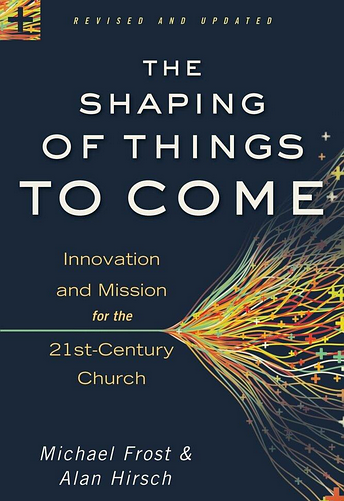
JDMC stands for Jesus, Disciple, Mission, Church and is an introduction to Alan Hirsch’s Forgotten Ways. To learn more and download a copy to print (or read online), visit jdmc.scilla.org.uk . I need to update this booklet and plan to when I have time, unfortunately the web links in the PDF open OK, but using the browser to return take you back to the title page; I’ve been unable to fix this so far. If you open the links in a new tab you’ll be OK, but it’s easy to forget.
Journeys of Heart and mind
I intend to continue with this more or less as it stands. That means a mix of topics will appear here, articles about all of the things that motivate me as they occur to me (so in no particular order). I sum these topics up on my Twitter profile as biology, web, science, technology, family, faith, history, and travel. Others include photography, astronomy, spaceflight, archaeology and a few more. One thing I will add is a way of seeing just posts on one of these topics at a time, I think that will be useful; not everyone wants to see everything. You’re reading on this site at the moment.
Photos
I use Smugmug to display my photos and will continue with this, but I need to rearrange things in topic folders to make it more usable. Visit photos.scilla.org.uk to browse my all time favourites.
Twitter
My main Twitter account is ChrisJJ, but I have a second account, JHM. I haven’t used the JHM account for a long while, but might post tweets about faith topics there, and everything else on ChrisJJ. My mind is far from made up on this as there are quite a few pros and cons.