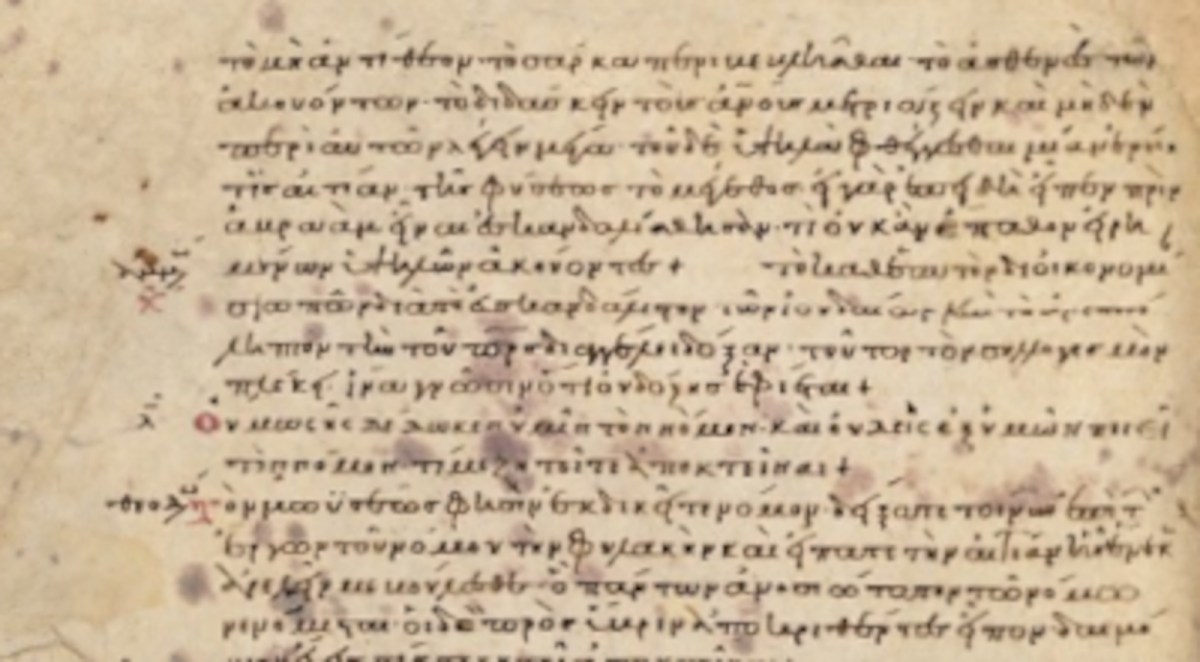
Greek commentary on John’s gospel dated 1190-1200 (Bodleian Library)
< Previous|Index|Next >
Cruising the gospel – luke 1:57-80
Bible text –Read it yourself (opens in a new tab)
A baby is born
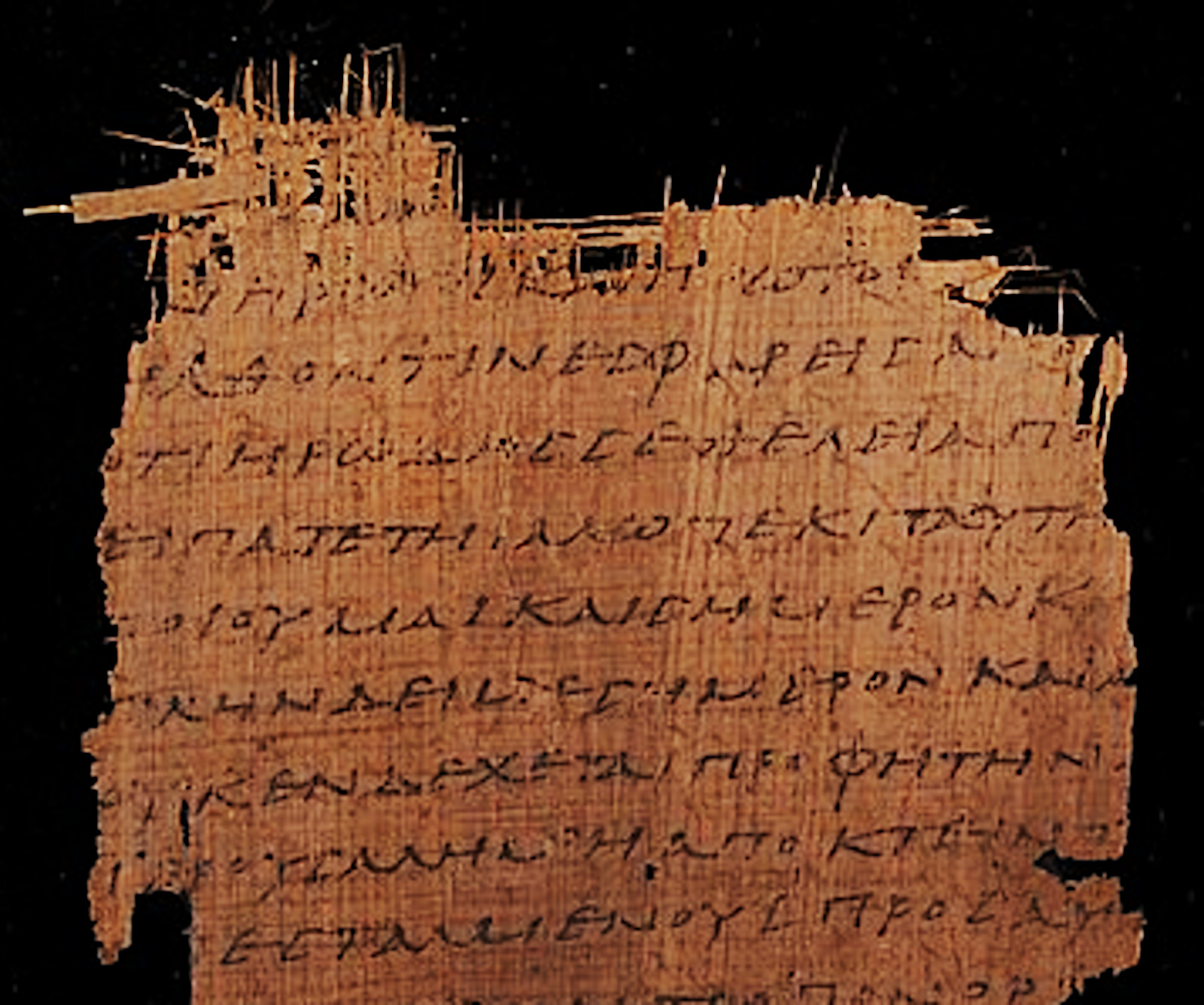
(Wikimedia)
1:57-66 – Maryam (Mary) has returned to Nasra (Nazareth) , and the time came when Elishwa (Elizabeth) began her labour. The promised son was born and there was a lot of rejoicing by friends and family. Male babies were traditionally circumcised on the eighth day and a name had be chosen in advance as it was needed during the ceremony. Normally, a firstborn son would be named after his father and that’s what the relatives suggested and expected, but Elishwa said, ‘No! He’s to be called Yohanan (John).’
They pointed out, rightly, that Yohanan was not the name of anyone in the family and they ignored Elishwa’s objection and asked Zekharya (Zechariah) what name he wanted to give the baby. So they gave him a writing tablet and he wrote , ‘His name is Yohanan’.
Suddenly, Zekharya could speak again and loudly praised Elohim (God). The neighbours were awestruck (it must have been an amazing moment to witness the man who’d been dumb for so long suddenly speaking aloud again!) People discussed it far and wide over the Judean Hill Country. Everyone who heard about it wondered what the future would hold for this clearly unusual and special child. They could clearly see that Yahweh (The Lord)’s hand was on him!
1:67-80 – Zekharya was filled with Ruach (the Holy Spirit) and prophesied:
‘Praise be to the Lord, the God of Israel,
because he has come to his people and redeemed them.
He has raised up a horn of salvation for us in the house of his servant David (as he said through his holy prophets of long ago),
salvation from our enemies and from the hand of all who hate us –
to show mercy to our ancestors
and to remember his holy covenant, the oath he swore to our father Abraham:
to rescue us from the hand of our enemies,
and to enable us to serve him without fear in holiness and righteousness
before him all our days.
And you, my child, will be called a prophet of the Most High;
for you will go on before the Lord to prepare the way for him,
to give his people the knowledge of salvation through the forgiveness of their sins,
because of the tender mercy of our God,
by which the rising sun will come to us from heaven
to shine on those living in darkness
and in the shadow of death,
to guide our feet into the path of peace.’
And the child grew and became strong in spirit; and he lived in the wilderness until he appeared publicly to Israel.
We don’t know how old John was when he went to live in the wilderness or how long he remained at home as a child. But what we can see clearly is the difference between a gift of prophecy received at a particular time for a particular purpose (think of Zekarya’s words above as a good example) and coming as a prophet like Johanan. This distinction remains today, people sometimes prophecy in a meeting as the Holy Spirit gives them something to say, but Johanan was more like one of the Old Testament Prophets in many ways: his entire life was dedicated to a specific goal and purpose. In fact people thought he was Elijah come again. Prophets like this had not been seen in Israel for a very long time.
Background for the ceremony
The details are not entirely clear for the early first century AD. The ceremony was named in Hebrew בְּרִית מִילָה or brit milah which means ‘Covenant of circumcision’. There is no extant document describing the words or action of this ceremony in any detail, we have fragmentary references from Josephus, brief extracts from 2nd century rabbinic writings, some mentions by Philo and in the New Testament, and a few clues from architectural features and carved lettering.
But the eighth day timing after birth was normal following Genesis 17:12 and Leviticus 12:3; it was non-negotiable even if it fell on Shabbat (the Sabbath) or a festival.
The ceremony itself
In the first century the circumcision would normally be done by the child’s father or by a trusted individual nominated by the father. A flint knife was traditionally used, or sometimes a metal blade. Flint would have had several very practical advantages, a fresh flake taken from a flint core would be far sharper than any metal knife and would also be sterile (though 2000 years ago this would not have been understood, of course). It’s also conceivable, even likely, that the practice might date back to very early times. Bronze implements were available in Moshe (Moses)’s day, but iron was rare and very expensive (being sourced at that time from meteorites). Neither metal would take an edge even remotely as sharp as flaked flint. Traditions may last for very long periods of time and for a sharp and clean edge flint would have been a great choice. The significance of circumcision was entirely covenantal, proof of obedience and inclusion in the promises given to Avraham (Abraham) and all his descendants.
The process would have been quick, the blood flow diminished by light pressure, and often an olive oil or powder dressing would have been used. Suitable styptic powders available at the time might have included frankincense, alum, myrrh, cinnamon or cassia bark, ashes or burnt organic materials or colophony/rosin or plant gums. Many of these materials were used for dressing wounds, but we have no specific information on their use for circumcision.
The name was given at the circumcision. This is one of the better-attested features of the period: Luke 1:59 and 2:21 both place the naming at the eighth-day rite, and it fits what we know of Second Temple practice. Later Jewish custom moved the naming of girls to the synagogue, while boys’ naming stayed attached to the circumcision.
A celebratory meal with guests followed, and this had a semi-legal status as something that was appropriate for circumision.
We don’t know if there were specific words to be spoken, nor do we have an order of prayer or anything of that sort, we don’t know if wine was involved, or whether there were specific Old Testament readings. The current Jewish liturgy for Brit milah developed much later.
See also:
- Circumcision – Wikipedia
- Flint – Wikipedia
- Second Temple – Wikipedia
< Previous|Index|Next >
Useful? Interesting?
If you enjoyed this or found it useful, please like, comment, and share below. (If you don’t see those links, click the article’s title above the main photo and they will appear.) Send a link to friends who might enjoy the article or benefit from it – Thanks! My material is free to reuse (see conditions), but a coffee is always welcome and encourages me to write more often! 
You might also like:
Matthew 27:32-66 – Cruising the Gospel
Share this:


