If you’ve made it to this point, then ‘Thank you for watching and thinking it over’, and thank you also for anything you can do, however small, to reduce your impact on our climate in the days and years ahead. Many small impacts can add up to something really significant.
The UK Government commissioned a video nine months ago to launch their response to what is now seen as a full blown climate emergency. It’s a good video; it includes presentations by people who are experts in their fields; it’s informative; and it’s very hard-hitting. It’s not widely available except through a series of local meetings throughout the UK where it’s being used very effectively to get people thinking and responding in useful ways at the local community level.
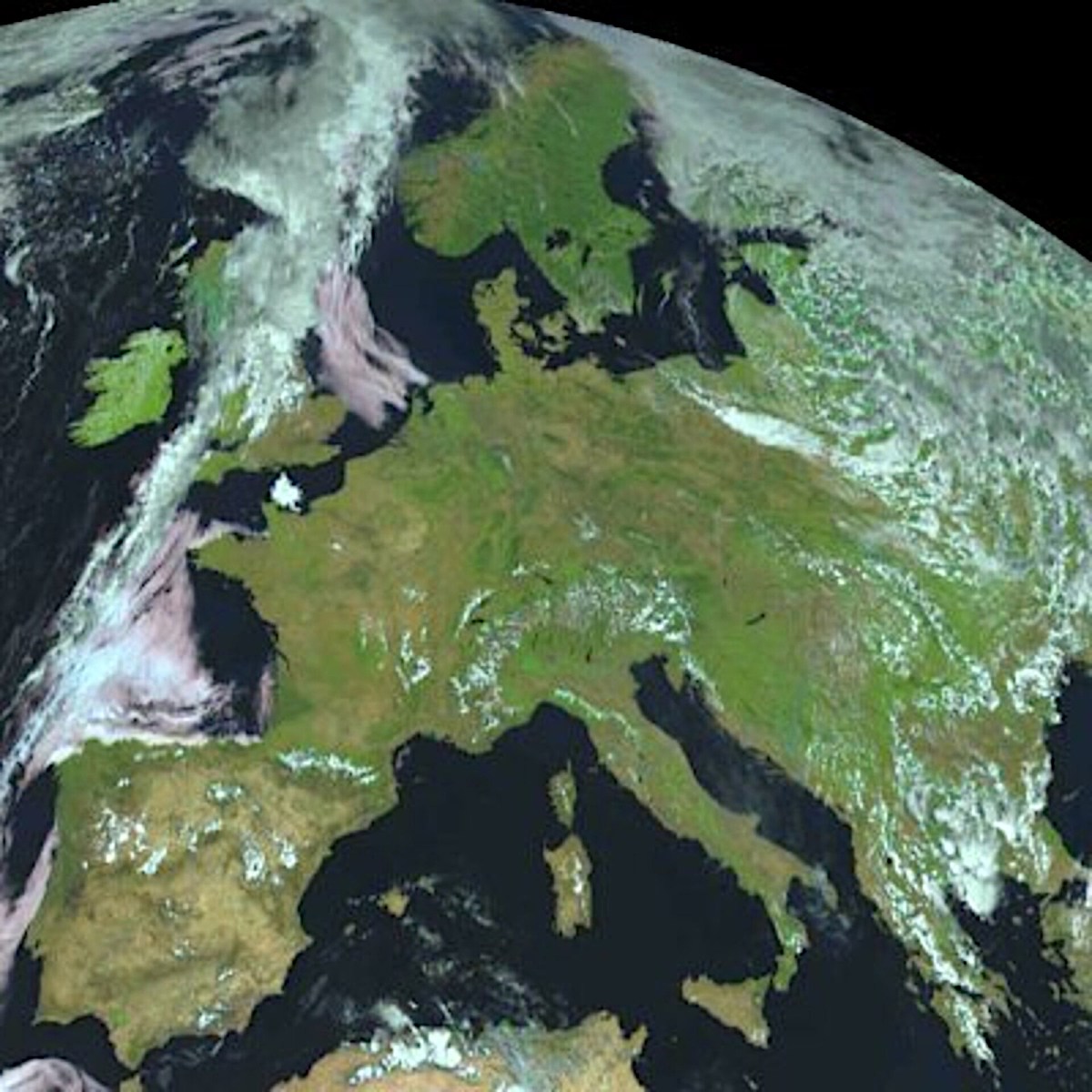
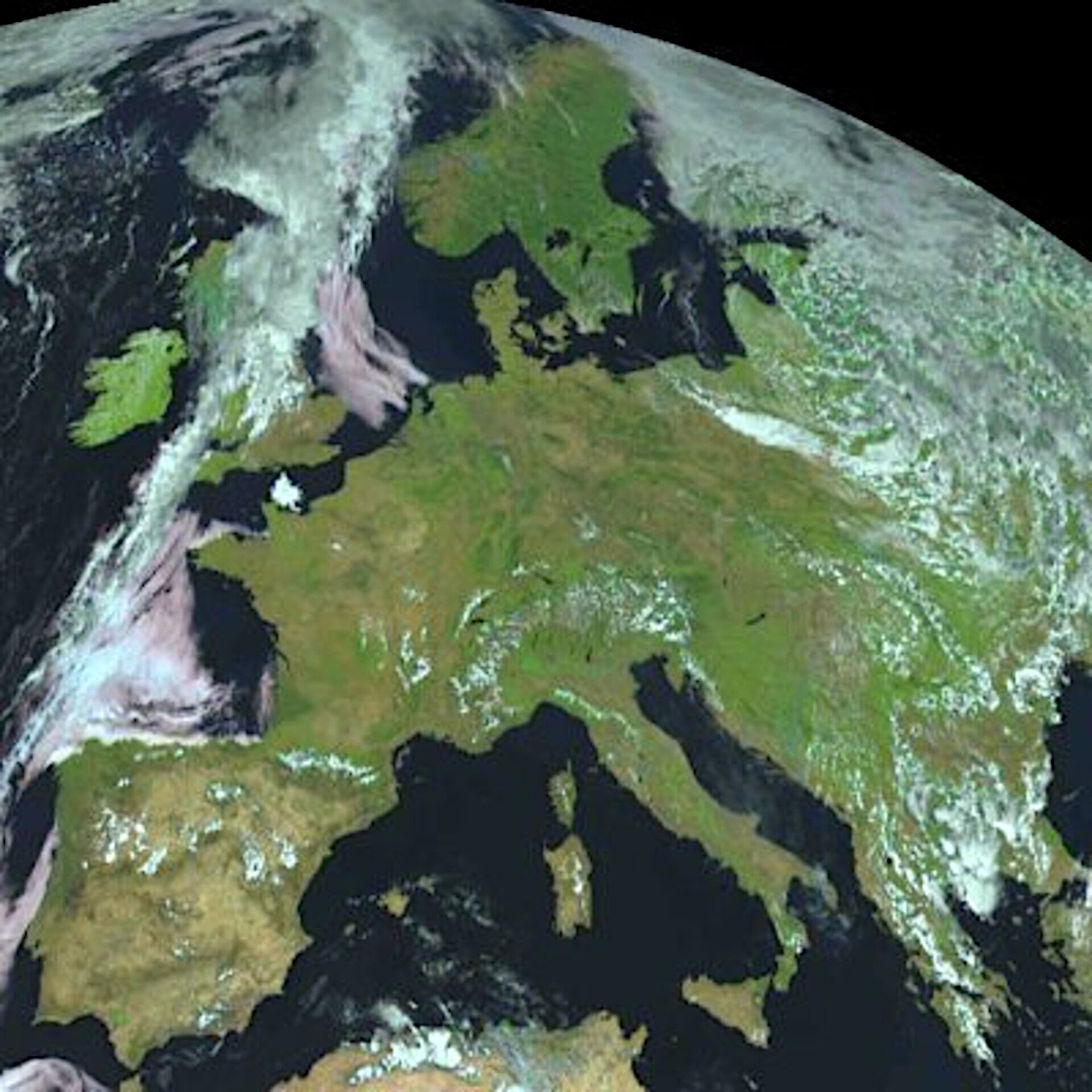
Click the video below to watch the Earth turn on its axis. Your home is here, can you spot it as it rolls by? This planet is home to every single one of us.
The UK Government video is available, however, on YouTube, published there by GB News.
Whether you live in the UK or not, I suggest you watch this video in full. (Note that the useful content ends at 2 hrs 41 mins into the video. There are plenty of natural breaks between speakers so you can watch it in sections if you find that more convenient.)
If you live in the UK, I also suggest you attend one of the many local meetings currently available, discuss what you have seen with others at the meeting, and try to get other local friends and family to join you. If you can’t find a meeting, you can always organise one yourself. as you watch, jot down anything that strikes you as particularly important or significant.
Finally, go through anything you wrote down and consider how it will affect you, your friends, your family, and your community. Is there anyone else you should share this with? Could you watch the video again with friends, family or neighbours and talk it over together? Also (and just as importantly) think about ways of reducing your individual impact on the climate.
If you’ve made it to this point, then ‘Thank you for watching and thinking it over’, and thank you also for anything you may do, however small, to reduce your impact on our climate in the days and years ahead. Many small impacts can add up to something really significant. That, after all, is how we got into this mess in the first place. It may also play a significant part in getting us out of the dangers we now face.
I have one last thing to say, and this is primarily for anyone involved in church in any shape or form; but please don’t let that stop you reading it. Jesus was prophetic and that’s a gift with two characteristics. On the one hand it forges links between people here on the planet we call Earth and the Father we think of as living in heaven. But also the prophetic gift involves bringing people together here on Earth, forging links between opposing sides, rebuilding trust and a willingness to work together, mending broken fences. Prophetic people are always demanding justice and aiming to reforge broken links. A sort of conciliation service. If we ever needed a conciliation service we need one now.
So if you are involved in any form of church, now is the time to recognise your prophetic gift (whether strong or weak) and use it to call as loudly as possible for everyone to work together to save this planet at last from the danger we have put it in. There is no time to lose. We need to bridge the gulf between those who would profit in the short term with no concern about next year or the decades and centuries ahead, and those who would do without in the here and now to secure a long term future for children, grandchildren and great-great- grandchildren.
Prophetic voices would give vision to the former, and hope to the latter. Indeed, there are many prophetic voices in the government film you just watched. It would be a serious mistake to think that church has a monopoly on gifts like this.
If you enjoyed this or found it useful, please like, comment, and share below. (If you don’t see those links, click the article’s title above the main photo and they will appear.) Send a link to friends who might enjoy the article or benefit from it – Thanks! My material is free to reuse (see conditions), but a coffee is always welcome and encourages me to write more often!
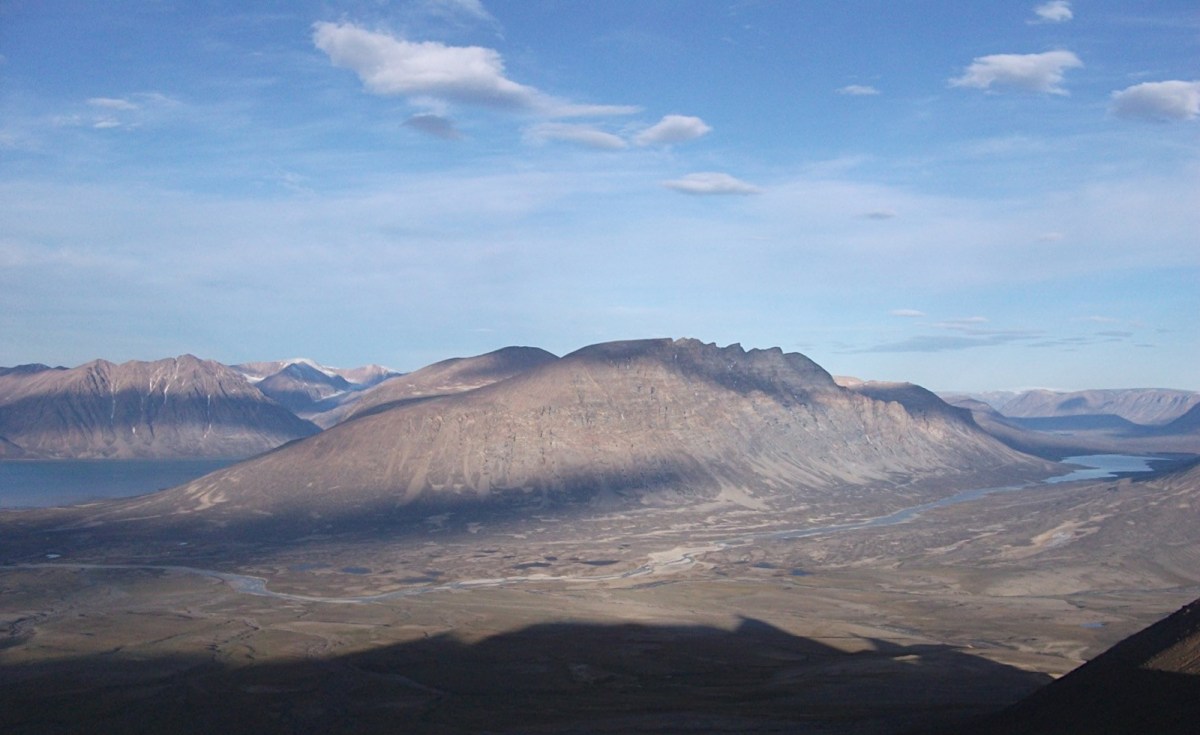
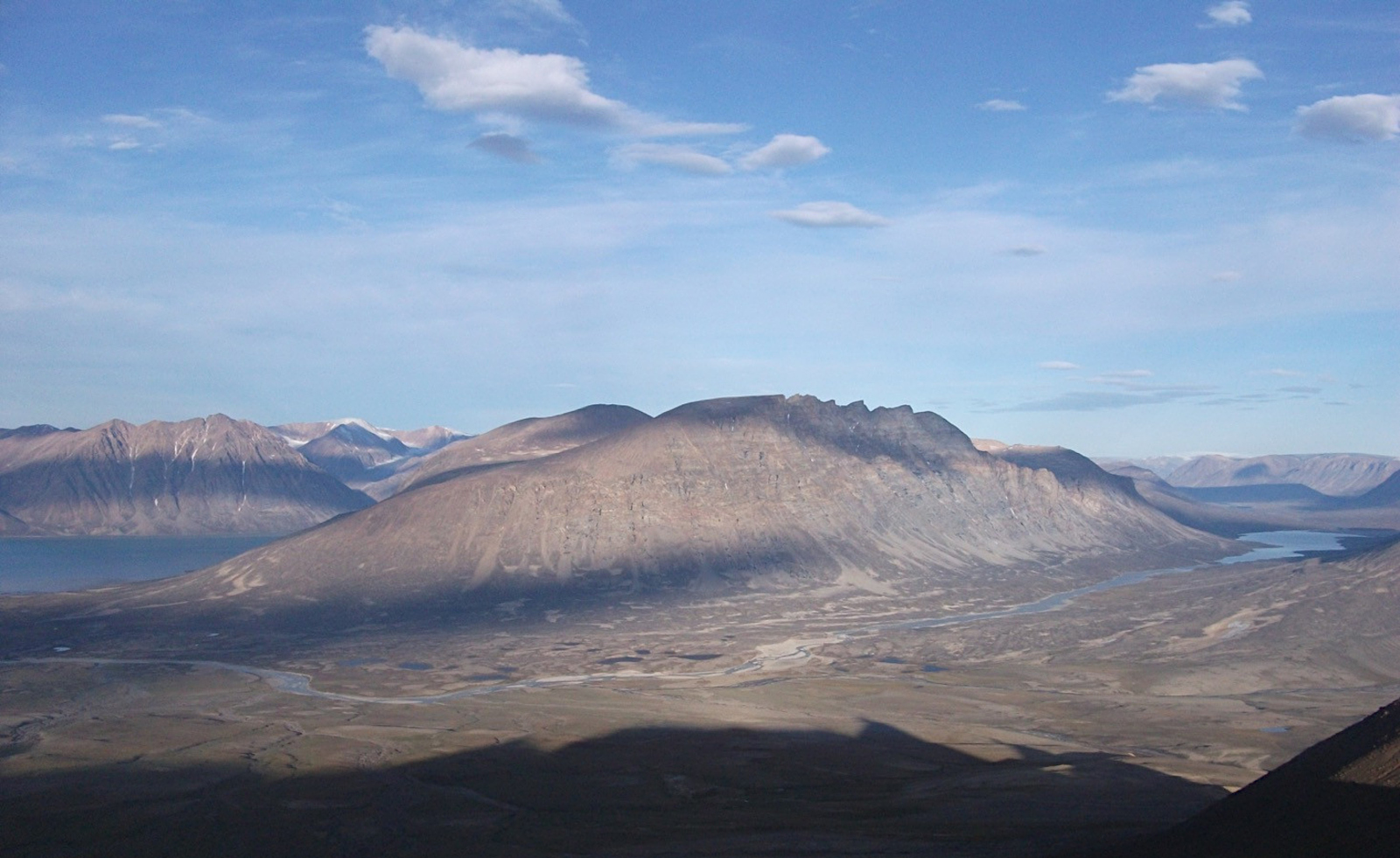
The photo shows a valley in Greenland, a valley is a low point, but Trump’s arrogant rudeness was another kind of low-point, and his falsifications were low-points as well.
What’s in an image? Sometimes quite a lot, more than meets the eye. I’m posting an image every few days.
Greenland (click images to enlarge)
A huge rumpus has developed over Mr Trump’s fixation on owning Greenland. I’ve never been to Greenland, but I’ve seen many photos and read accounts by people who have visited or who live there. It’s a large island with hospitable inhabitants but a very inhospitable climate, mostly covered by an ice cap up to 3 km (2 miles) deep, and peopled by a rich mix of the hardy Inuit natives of the land and Danes. The photo shows a valley in Greenland, a valley is a low point, but Trump’s arrogant rudeness was another kind of low-point, and his falsifications were low-points as well.
The rumpus continued until Trump backed down, but in his Davos address and press conference Trump said many things that did not ring true in my ears and mind so I wanted to see a fact-check.
What follows was not written by me. It’s Chat GPT’s response to my request for the AI to read the transcript, fact-check the claims, and draft a 1000-word essay for me. I planned to edit it into a finished article to publish here, but I decided instead to publish the draft as is.
Read it below: ChatGPT as a guest author on my blog.
Here’s my request to ChatGPT:
Please examine President Trump’s Davos press conference, fact check his claims and draft a 1000 word essay based on your findings.
Feel free to put this prompt into an AI of your choosing, the output will vary between AIs and may change over time as well.
Fact-Checking President Trump’s Davos Speech and Press Conference
Introduction
In January 2026, U.S. President Donald Trump delivered a highly anticipated speech at the World Economic Forum (WEF) in Davos, Switzerland, and later faced questions at a press conference. His address was notable not only for its bold proclamation of U.S. ambitions — especially regarding Greenland — but also for a wide array of controversial and, in many cases, misleading or incorrect claims about international relations, economics, and domestic policy. This essay examines the context of the speech, fact-checks key assertions, and evaluates the broader implications of the rhetoric deployed.
A Controversial Theme: Greenland and U.S. Expansionism
Perhaps the most eye-catching aspect of Trump’s Davos address was his discussion of Greenland, the vast Arctic island that is an autonomous territory of Denmark. Trump reiterated his desire for the United States to acquire Greenland, labeling it “critical” to U.S. and NATO security. He also — for the first time in this campaign — publicly pledged not to use military force to obtain it. – Time
However, this position was controversial for multiple reasons:
International Law and Sovereignty: Greenland is part of the Kingdom of Denmark; any transfer of sovereignty must be voluntary and negotiated. Danish leaders have consistently rejected selling or ceding control of the territory. – AP
Misrepresentation of Defense History: Trump implied that the U.S. “gave Greenland back” after World War II. In reality, the U.S. military presence in Greenland was based on agreements that affirmed Denmark’s sovereignty over the island while allowing the U.S. strategic access — but Greenland was not “returned” in the sense of ending U.S. ownership, because it was never wholly U.S. territory. – MediaITE
Strategic Importance vs. Imperialism: Trump’s framing of Greenland as a necessary bulwark against global threats was criticized as overly nationalistic and potentially destabilizing for NATO unity. European leaders stressed sovereignty and peaceful cooperation. – Guardian
Although Trump’s explicit rejection of military force was welcomed by markets and some commentators, the overall push was seen as a diplomatic provocation rather than constructive strategy. – Time
Misleading and False Claims
Beyond Greenland, Trump’s remarks included a number of statements that were factually inaccurate or misleading. Fact-checkers from multiple outlets documented significant issues:
1. NATO Contributions and Benefits
Trump characterized NATO as a burden on the United States, asserting the U.S. “never got anything” out of the alliance. This framing ignores both measurable benefits and longstanding structural agreements:
The U.S. does bear a large share of NATO defense spending, but it does not pay 100% of it; in 2024, U.S. defense spending comprised roughly 60-plus percent of total NATO expenditure. – NewsChannel3-12
NATO membership delivers both strategic security for the U.S. and economic and political stability among allies, which benefit U.S. interests. – NewsChannel3-12
2. Wind Energy and China
Trump derided renewable energy efforts, particularly wind power, and claimed he couldn’t find evidence of wind farms in China. This is demonstrably false:
China ranks first in the world in installed wind power capacity, with roughly 40–45 percent of global capacity. – Reddit
Such misstatements underscore pervasive misunderstandings about energy infrastructure.
3. Trade and Economic Claims
Trump’s economic narrative included assertions about U.S. trade imbalances and export markets that were incorrect:
He claimed the European Union does not buy American farm products and automobiles, implying that U.S. exports are negligible. In fact, the EU is a major market for U.S. agricultural exports and is among the top vehicle export destinations for U.S. manufacturers. – WRALNews
Additional claims about trade deficits — especially exaggerated figures about China and Canada — were similarly misleading when evaluated against official trade statistics. – WRALNews
4. Election and Historical Falsehoods
During the speech, Trump reiterated the claim that the 2020 U.S. presidential election was “rigged.” This assertion has been conclusively debunked by multiple courts, election officials, and independent fact-checkers. – HindustanTimes
Furthermore, in discussing geopolitical conflicts, Trump mischaracterized some historical events (e.g., conflating diplomatic tensions or border disputes with actual wars). – MediaITE
Economic Performance and Domestic Policy
Trump also touted U.S. economic performance under his administration, claiming low inflation and high growth. While inflation has been reduced from peaks seen earlier in the decade, some of Trump’s accompanying statistics — like headline growth figures and the scale of investment commitments — were overstated compared with independent economic data. – NewsWeek
His framing of U.S. economic strength was intended to contrast with his characterisation of the previous administration, though key metrics show that inflation, growth, and market performance fluctuate due to broader global and domestic conditions, not solely presidential policies. – NewsWeek
Rhetoric, Reactions, and Implications
Trump’s Davos speech was met with a mixture of shock, criticism, and, in some quarters, applause for his combative posture. European leaders, especially from Denmark and the EU, expressed concern about his Greenland remarks and his critiques of European energy and economic policy. – Guardian
Financial markets reacted positively to the pledge not to use force in pursuing Greenland, but broader geopolitical analysts warned that pushing such rhetoric in a forum dedicated to economic cooperation risked undermining U.S. credibility. – Time
Conclusion
President Trump’s appearance at the 2026 World Economic Forum was consequential — not just for its content but for the contradictions and controversies it generated. While his call for U.S. leadership and economic strength resonated with some domestic audiences, the fact-checking analysis reveals that many claims were inaccurate, misrepresented complex facts, or repeated debunked narratives. The emphasis on territorial ambitions like Greenland, along with misstatements about trade, energy, and alliances, highlights the challenges of integrating nationalist and transactional rhetoric into forums predicated on multilateral cooperation.
In sum, the Davos speech stands as a stark example of how high-level international engagement can be shaped as much by political theatre and domestic audience signaling as by policy substance — and the importance of grounding such speeches in verifiable facts if they are to foster trust and constructive global dialogue.
If you enjoyed this or found it useful, please like, comment, and share below. (If you don’t see those links, click the article’s title above the main photo and they will appear.) Send a link to friends who might enjoy the article or benefit from it – Thanks! My material is free to reuse (see conditions), but a coffee is always welcome and encourages me to write more often!
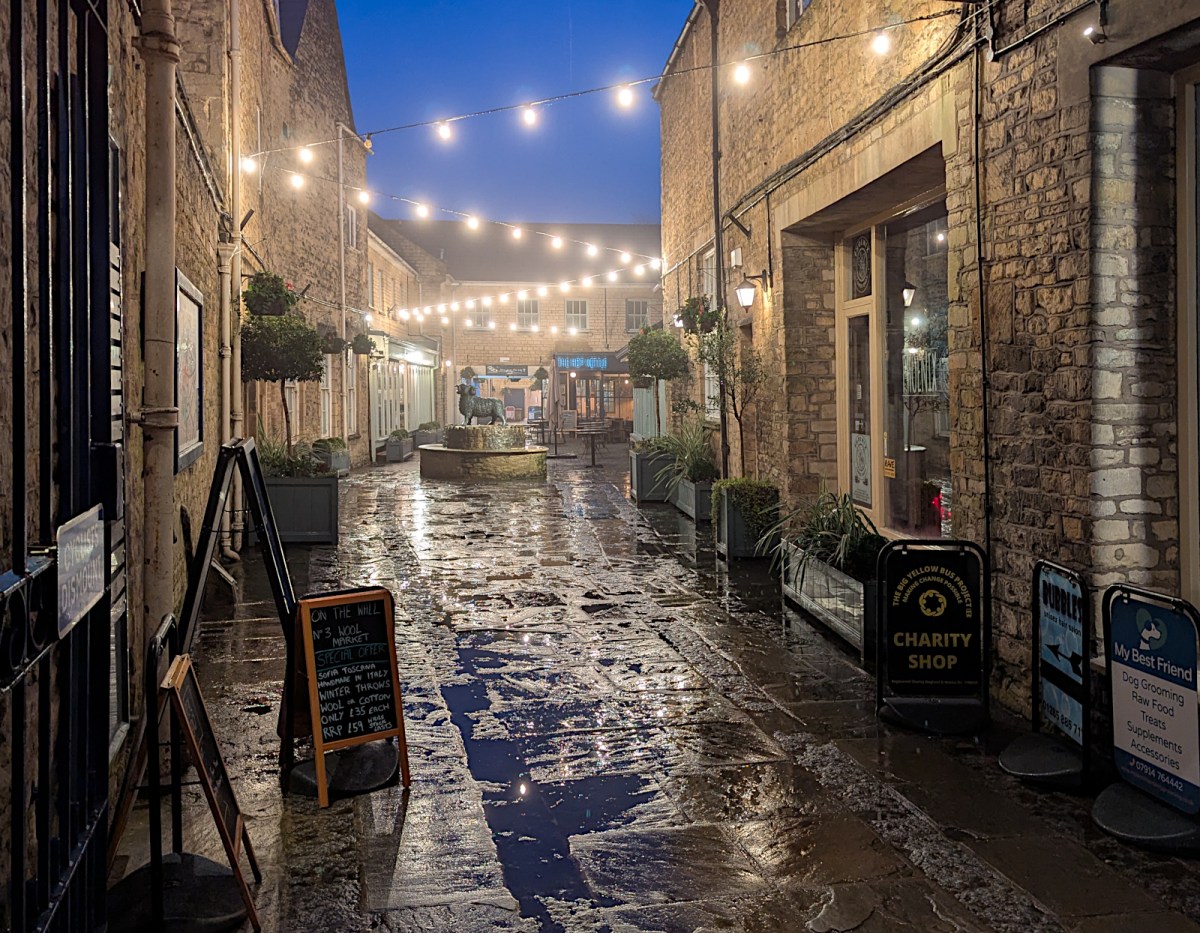
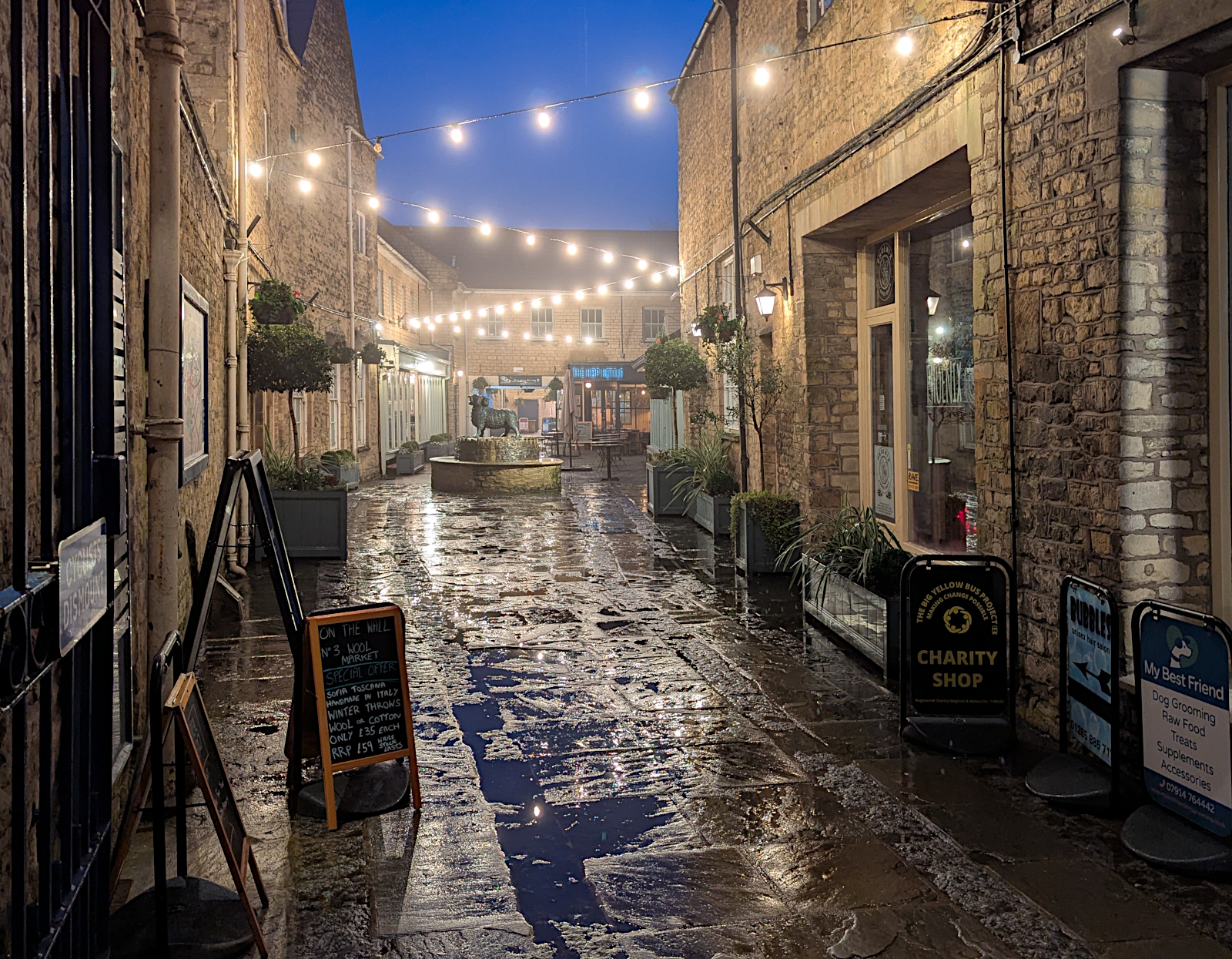
The idea of a wool market is an appropriate one for the town; in medieval times the wool trade was of high importance in the Cotswolds where a series of wool towns developed, of which Cirencester was the largest.
What’s in an image? Sometimes quite a lot, more than meets the eye. I’m posting an image every few days.
Woolmarket (click images to enlarge)
The Woolmarket is a small shopping area between Dyer Street and The Waterloo in Cirencester. It looks old, it’s presented as old, but in fact it’s a relatively recent development, created in the 1980s and further improved in 1996. The idea of a wool market is an appropriate one for the town; in medieval times the wool trade was of high importance in the Cotswolds where a series of wool towns developed, of which Cirencester was the largest. The town’s Parish Church of John Baptist was built and extended in part with money from the wool trade as was the old Abbey before it.
Many of the Georgian frontages around the centre of the town began their lives as the homes of wealthy wool merchants. They are now mostly offices or flats, and sometimes have the ground floors replaced by retail businesses with large windows for display. But look up and you’ll see right away two or three floors of Georgian architecture above those ground floors.
The photo
I took this photo on a wet evening on 18th January 2026, the paving slabs of natural stone glistening in the overhead lighting and the more distant buildings softened by descending mist as the damp atmosphere cooled down following sunset. It’s very typical of January in the Cotswolds. Sometimes we get snow, and heavy frosts are possible, but often it’s just a chill damp with muddy fields and foggy mornings.
The sheep statue
In the middle of the photo, look into the middle distance and you may spot the statue of a traditional Cotswold Lion sheep. This famous old breed was once widespread across a huge expanse of the Cotswolds, though now it is a rarity.
If you enjoyed this or found it useful, please like, comment, and share below. (If you don’t see those links, click the article’s title above the main photo and they will appear.) Send a link to friends who might enjoy the article or benefit from it – Thanks! My material is free to reuse (see conditions), but a coffee is always welcome and encourages me to write more often!
You see the lights and you might hear the engine or the sound of the tyres on the road surface. But there’s no way you could tell the make and model of the car. The details are hidden.
What’s in an image? Sometimes quite a lot, more than meets the eye. I’m posting an image every few days.
Click images to enlarge
Sometimes it’s foggy in Cirencester. The Cotswolds is in the south-west of England and the prevailing winds come from the south-west and are laden with water vapour after crossing the Atlantic. As the air rises over the Cotswolds and other hilly country, some of that water vapour condenses as rain and some as fog. Once the sun appears, any mist or fog clears away with the rising temperature.
It’s all in the detail
As you look at the scene in the photo, you’ll notice right away that the fog obscures details on the church tower while the details on the nearer, and much less tall buildings in the foreground are quite sharp. This is always the way of things in foggy conditions. Nearby objects reveal more detail than those further away. If you stood near the base of the tower and looked towards the top you’d see the same thing. Stonework at the same level as your head would be clear, but raise your gaze to the top of the tower and you’d see few details. In heavy fog you might not see the top of the tower at all.
This is a great illustrative parallel of our ability to see spiritual details too. Look at the people around you and you see a lot of detail – hair colour, eye colour, style of hair, details of clothing , now look up and the detail seems to vanish. The Bible tells us that the Creator is hidden in dark clouds. The English words dark and darkness didn’t traditionally mean an absence of light, the sense was of something hidden from view. When you look into the headlights of a car coming towards you at night you see the lights and you might hear the engine or the sound of the tyres on the road surface. But there’s no way you could tell the make and model of the car. The details are hidden although (or even because) there’s so much light.
Yahweh (God) is like that too, as you get to know him the first thing you’ll understand is the simplest thing of all – he is there! Just an indistinct outline in the distance. As you draw closer, gradually you’ll begin to see how brightly he shines, but spend some time with him and more detail will appear, not what he looks like because he’s not a physical object in our universe, but you’ll start to see that he consists of a pure love, you’ll notice that he cares deeply about everyone, not just his followers, that he is the source of such things as peace, and grace, and joy, and that he knows you better than you know yourself. This experience feels very like walking towards an object almost invisible in the fog and discovering it to be a beautiful tree or an an amazing building. And the closer you get, the more detail you can distinguish – the veins on the leaves or the surface details in the stone.
Making a start
But how can you begin to know him? Where do you start? The answer is simple, begin right where you are right now. Start by noticing that the people you know (and you yourself) have a threefold nature. You are physical, like a stone or a puddle of water, but you also have a mind – utterly unlike a stone or a puddle! Is it so surprising, then, that there’s a third dimension to your existence and nature? These dimensions overlap yet they are distinct.
Your physical presence can be measured just like that of a stone, you have a certain size, shape, and mass, if you’re in motion you have measurable velocity, direction of movement, momentum and so forth. You possess colour and reflectivity. But overlapping with this physical presence are your senses of touch, sight, hearing and the rest.
The stone lacks these abilities. You have a brain that constantly evaluates the information coming from your senses and combines them into knowledge of your environment. This makes you aware of other objects (don’t trip over that stone, don’t step in that puddle), other lifeforms (chase away the fly that has landed on your arm, don’t step on that frog on the footpath), other people (talk to your neighbour, pay for the item you just bought, wave to your friend across the road, ask for directions).
Pushing through the fog
And that third dimension? Most of the overlap here is with your emotions, the love you feel for family and close friends, the fears you entertain (fear of death, fear of injury, fear of loss). There’s a spiritual element to your nature that overlaps mere emotion and goes way beyond feelings. This is another dimension that you can explore and it’s part of our nature that we sometimes fail to consider and rarely, if ever, visit.
So go there, move towards that somewhat foggy zone and the further you go, the more you will see. And I can assure you, the more you see the more you’ll be drawn along to explore further because what you find will be delightful, encouraging and fulfilling. And remember, in the fog, the further and higher you look the less you will see. But go closer and the details will become clearer. Drawing close is the only way to deal with fog.
And there’s a huge additional advantage, the physical and the mental aspects of your existence will pass away, the atoms of your body will be recycled, dispersed, and used to construct other things. But the overlapping spiritual aspects remain, because they are not dependent on the physical world in any way, they remain.
If you enjoyed this or found it useful, please like, comment, and share below. (If you don’t see those links, click the article’s title above the main photo and they will appear.) Send a link to friends who might enjoy the article or benefit from it – Thanks! My material is free to reuse (see conditions), but a coffee is always welcome and encourages me to write more often!
What’s in an image? Sometimes quite a lot, more than meets the eye. I’m posting an image every few days.
Click to enlarge
Here are two flowering plants with colours on opposite sides of the colour wheel. They’re very distant relatives; the yellow Narcissus (daffodil) is a monocot, the purply-blue Streptocarpus is a dicot. You can’t get much further apart in the family tree of flowering plants, but they look well together.
These two plants simply could not survive in one another’s home territory. The Narcissus needs plenty of moisture, produces leaves in late winter, is not troubled by frost, and flowers in the springtime. It also appreciates some bright sunshine.. Streptocarpus cannot take any degree of frost at all, and is touchy about water. Not enough and it will wilt and die, too much and… wait for it… It will wilt and die! It likes the soil to dry out completely and then have a real drenching, but do not water it again until the soil is really dry. It likes shade or partial shade, but not full sunshine.
Adaptation
The fact that these two plants like such different conditions is nothing to do with the fact they are very distant relatives. All plants growing in the wild are well adapted to the soil type, climate, other plants and animals of the places they inhabit. Natural selection over many, many generations will ensure that this is so. It’s only the survivors that will have a chance to produce seeds. By definition, the next generation comes only from the plants that survived the current generation. Survivors thrive; the rest die out.
Climate change
And this in turn is one of the challenges life faces in the changing climate we are creating. The climate has changed dramatically in the past, but it has always happened slowly, usually taking tens of thousands of years to shift from ice age to interglacial, or from desert to semi-desert to grassland to forest. A species may seem to move north or south, east or west, remaining in the climate zone that suits it best. But what is actually happening is that as a climate zone shifts geographically, conditions become less suitable in one area and more hospitable in another. Perhaps the species manages to survive a little further north than before but struggles and dies on the southern edge of its old range.
This process takes time, but the global warming trends we see due to greenhouse gas releases are many times faster than any natural climate change. Populations cannot respond fast enough under such circumstances; they go into decline and die out – the species may then become extinct, gone forever.
If you enjoyed this or found it useful, please like, comment, and share below. (If you don’t see those links, click the article’s title above the main photo and they will appear.) Send a link to friends who might enjoy the article or benefit from it – Thanks! My material is free to reuse (see conditions), but a coffee is always welcome and encourages me to write more often!