Blast from the past… 7

In June 1963 I was 14 years old and on a school day trip to Coventry; I took a photo in the new central area of the city.

< Previous | Index | Next >

Notes from bygone years – June, June and yet more June
Hint: Click on the thumbnails for larger images.

A year ago

On 25th June 2022 we walked a section of the Cotswold Way, from Dowdeswell Reservoir a couple of hours south-east of Cheltenham, to Cooper’s Hill four miles or so south-east of Gloucester. The walk was 13 miles on a beautiful clear day with light haze, the Malvern Hills (on the horizon in the photo, but nearly lost in the haze) are 22 miles away.

The view north-west across Cheltenham

We walked with Donna’s brother, Paul, and his wife, Vanessa; they do a lot more walking than we do. With stops along the way for coffee and lunch, it was a great experience. A steep climb up the scarp at the beginning and then a more gentle amble along the top took us to Cooper’s Hill.

<May 2022 – Jul 2022>

Two years ago

In June 2021 we visited Malham Cove with the family, an area of limestone pavement in Yorkshire.

Steep climbs up and down, but fantastic views and an astonishing area of deep and wides cracks to enjoy at the top.

<May 2021 – Jul 2021>

Five years ago
Image from Wikimedia

In June 2018 I posted an article on JHM, ‘Adoption as an heir‘. In Roman society, wealthy people might adopt someone as their heir, to ensure that their life’s work would be continued. And this same notion would make sense in helping them to understand that a god might do something similar. Paul uses this tradition to explain that the One God of the Jewish nation doesn’t want us to be slaves or even employees, but heirs with Christ.

<May 2018 – Jul 2018>

Ten years ago

In June 2013 I wrote about leadership, and how Jesus trained leaders. Like the Pharisees, Jesus taught his disciples how to teach. He did it by example, but he also took his closest followers away from the crowds from time to time to spend time teaching them personally in some detail. For more about this, read the original post.

<May 2013 – Jul 2013>

Fifteen years ago

In June 2008 I wrote about ‘Jesus in the prison cell‘, with a video of an Iranian Muslim who met Jesus and decided to follow him. It was an extraordinary story. There are more recent videos, in much better video quality, but I have not watched those. You can find them by searching for Afshin Javid in the You Tube search bar.

<May 2008 – Jul 2008>

Twenty years ago
From Wikimedia

In June 2003 we were going to meet for prayer and to hear what the Holy Spirit would say to us, but as there were only two of us, we instead took a walk up the riverbank.

Here’s what happened.

<May 2003 – Jul 2003>

Twenty-five years ago

In June 1998 Donna and I visited Kimbolton School where there was a summer fair with old cars and all sorts of stalls and events.

We were able to see the inside of the house as well.

<May 1998 – Jul 1998>

Thirty years ago

In June 1993 Judy and I took our daughter Beth and her French school exchange visitor, Julia, to see the Brecon Beacons.

<May 1993 – Jul 1993>

Thirty-five years ago

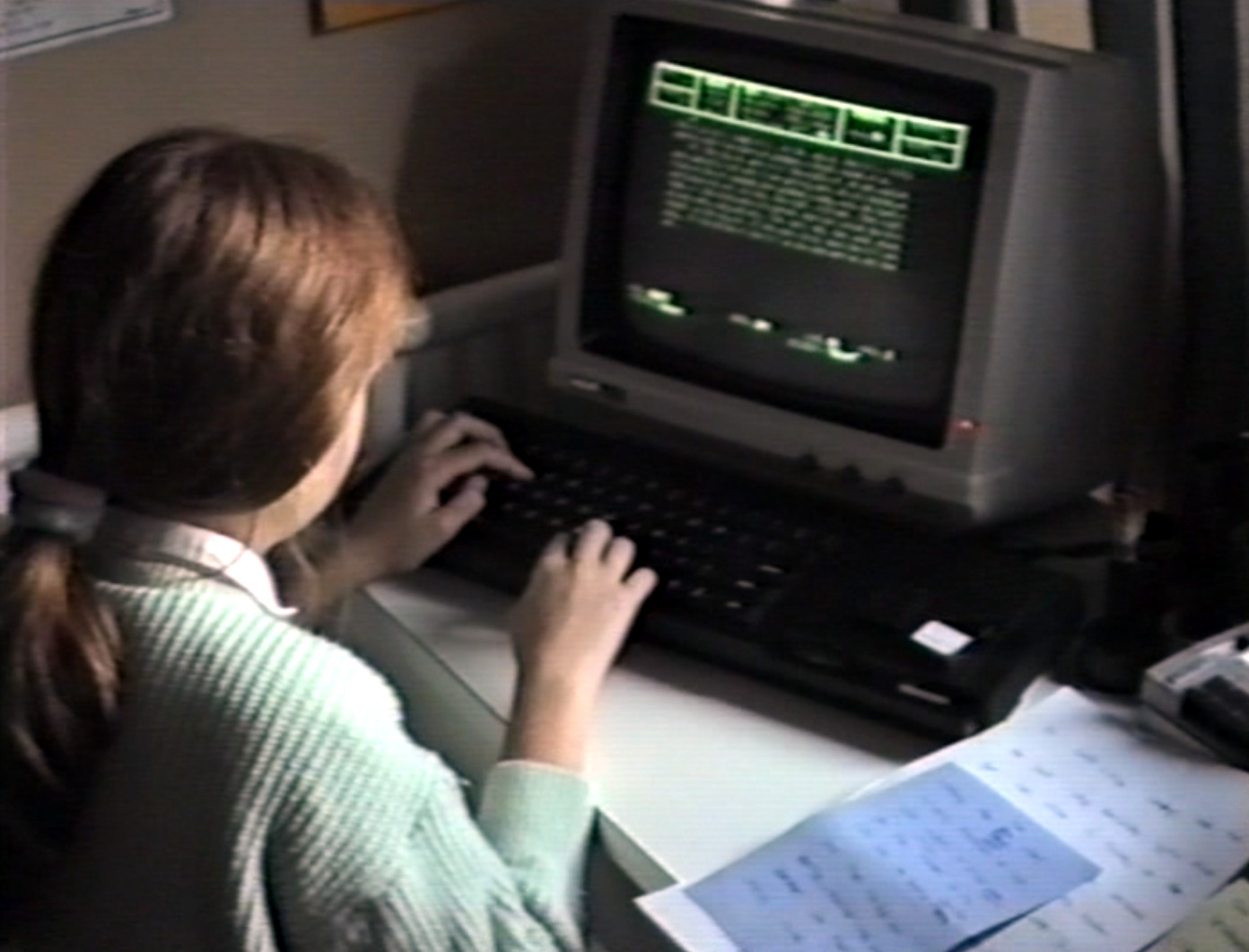
In June 1988 we were still using a Sinclair QL for word processing with a green screen monitor (though the QL supported colour).

<May 1988 – Jul 1988>

Forty years ago

In June 1983 I was experimenting with apple pollen tube growth at Long Ashton Research Station.

<May 1983 – Jul 1983>

Forty-five years ago

In June 1978 Debbie was three and we met my grandmother (in the wheelchair) at my parent’s home in Cirencester.

<May 1978 – Jul 1978>

Fifty years ago

In June 1973 Judy and I, along with my Mum and Dad, watched a hydrogen balloon (or perhaps a helium balloon) being filled and flying out of Cirencester Park. Amazing to see!

<May 1973 – Jul 1973>

Fifty-five years ago

In June 1968 I was on a sandwich degree course at Bath University and was working hard on a fruit and vegetable farm. I had my first car at this time and was able to visit Judy in Cheltenham and my parents in Cirencester.

<May 1968 – Jul 1968>

Sixty years ago

In June 1963 I was 14 years old and on a school day-trip to Coventry; I took a photo in the new central area of the city.

<May 1963 – Jul 1963>

Sixty-five years ago

In June 1958 I was nine-years-old, in my 5th year at junior school.

<Nothing earlier – Jul 1958>

Seventy years ago

In June 1953 I was four and chose a postcard of Mallard to send to my Granny-in-Ireland.

<Nothing earlier – Jul 1953>

Seventy-five years ago

In June 1948 I was almost a full-term foetus, and had not yet seen the big world outside my Mum.

<Nothing earlier – Jul 1948>

Eighty years ago

In June 1943 my Dad was at boarding school. On 17th they held a fire drill in which he played the role of a casualty with two broken legs. Rendcomb College clearly took World War II seriously (as, of course, they should).

<Nothing earlier – Jul 1943>

< Previous | Index | Next >

Blast from the past – INDEX

(See indexes on other topics)

This is an index page, from here you can browse around all the articles in this series, or find a particular one you’d like to read. Due to a heavy workload these posts are now going out about three month late, but they still form a growing record of family history.

Blast from the past… 13December 2023
Blast from the past… 12November 2023
Blast from the past… 11October 2023
Blast from the past… 10September 2023
Blast from the past… 9August 2023
Blast from the past… 8July 2023
Blast from the past… 7 June 2023
Blast from the past… 6May 2023
Blast from the past… 5April 2023
Blast from the past… 4March 2023
Blast from the past… 3February 2023
Blast from the past… 2January 2023

Blast from the past… 1December 2022

Meet two of my online friends

They are both unusual people, have rather special ways of looking at the world, and comment from opposite sides of the war in Ukraine.

Yaroslava (Yara) is Ukrainian, she lives in Kyiv with her son and her cat; she writes and photographs what she sees around her and posts news and thoughts. Konstantin is Russian, but left in 2022 and now lives in Uzbekistan; he gives 30-minute live YouTubes about life and events in Russia followed by open discussions online, and he runs a breakfast club for Ukrainians and Russians in Tashkent.

I’m exaggerating when I say they are my friends. I exchange messages with Yara occasionally and follow her on Twitter, but I’ve never had a reply from Konstantin. But to me they feel like friends. They are both unusual people, have rather special ways of looking at the world, and comment from opposite sides of the war in Ukraine. I think they would agree with one another on many things, both oppose the invasion and the war, and both feel compelled to communicate these things to the world.

I’d like to introduce you to them.

Yara

The two best places to look for Yara are on BuyMeACoffee and on Twitter. Click through and read some of her posts. Yara is artistic and expresses herself poetically, what comes through most clearly are her heart and her feelings in the moment. She writes about the war (of course) and she uses imagined dialogues quite often. On Twitter she sometimes tells us how she is feeling, shares photos (most of them very, very good) and makes delightful short videos as she walks around Kyiv. Yara is proud of her city, and rightly so.

Konstantin

Find Konstantin on YouTube (Inside Russia), I recommend his daily live videos. He thinks things through very thoroughly before starting a session, and usually he sets out his points carefully and convincingly. Sometimes his emotions show through a little of course, but logical thinking, business experience, and planning ahead are his strengths. He has a relaxed pace in his livestreams and this can make him seem slow to develop an argument, but it also make it easier to follow the underlying logic.

Summary

Yara and Konstantin are two very different people. What they have in common is that through no choice of their own they have been deeply affected by the war – as have their friends, families and neighbours.

Both have had their working lives interrupted, and both have embarked on new and perhaps unexpected projects. Both are worth listening to if you want to better understand this terrible conflict and how it’s disrupting life on both sides.

I’ll say no more about them, they will both speak for themselves.

Nova Khakovka

Under the appalling circumstances of the breach of the Nova Khakovka dam a few days ago, I can’t publish this post without mentioning it. But words fail me. There are none that fit. ‘Tragic’ barely scratches the surface. And if it was a deliberate act, ‘evil’ and ‘heinous’ are utterly inadequate.

Yara and Konstantin have both responded to the breach in their different ways and I’m sure they will mention it again as the details and the terrible after-effects become clearer. The world will not forget this event. If it was due to poor maintenance or improper management (this seems rather unlikely but is conceivable) then Russia must take responsibility because they invaded Ukraine, captured the dam, and were in control at the time of failure. If it was deliberately breached following a political or military order to do so, that is even worse and the world will not forgive those responsible. In time there will be clarity on the cause of the dam failure, currently there is a great deal of circumstantial evidence pointing to a deliberate act on the part of Russia.

Quick note on AGI

Following my recent post on AGI dangers (AGI – Hopeful and less hopeful news) I want to draw attention to a Guardian podcast that I think everyone should listen to.

The podcast discusses whether it may be possible to develop AGI without causing an existential threat to humanity. This is a hugely important issue, we all need to be informed and we should all have an opinion.

AGI – Hopeful and less hopeful news

Personally, I think the threat is real and potentially impossible to stop with very little time for effective countermeasures.

It’s fair to say that few people are currently thinking about the future of Artificial General Intelligence (AGI). Those who do are mostly researchers and engineers working on the topic.

The hope is based around alignment, a term used broadly to mean the degree to which an AGI can be made to conform to human goals and objectives. Poorly aligned AGI would probably be diasastrous and unsafe, well aligned AGI might be beneficial and safe. And let’s be clear at the outset: there are concerns about how AGI (and even current technology like ChatGPT) will cause disruption and harm by affecting social behaviour or employment in the way new technologies have done in the past. But that’s not what we are addressing here. The more significant thinking is about the existential threat to humanity. Will an AGI spell the end, will it render humans extinct?

Nor are we discussing here whether or not it will be possible to develop an AGI, some people argue not, that there’s some kind of unbridgeable leap between current AI systems and an intelligent system with thoughts, ideas of its own, and self-awareness. But we know this is incorrect; such a system has already been created by evolution – humans! This level of intelligence is achievable and it’s already been done. It may take time, it might not be easy, but developments in neural networks and related systems will lead to AGI sooner or later. ChatGPT can already write workable computer code – just think about that for a moment.

The hopeful news

The hopeful news comes from OpenAI, the company that created ChatGPT and the GPT software behind it. They have found that process supervision produces better results than outcome supervision. And this gives us a much better chance of understanding how the AI makes its choices. Process supervision feeds back on the quality of the interim stages of an AI’s processing; but outcome supervision feeds back on only the quality of the final result.

Understanding how an AGI works might help developers build in robust alignment features; and if process supervision is more effective than alternatives, it stands a good chance of being employed by developers.

The less hopeful news

The unhopeful news comes from discussions about the nature of risk and human thinking about risk, expressed in discussions on LESSWRONG and elsewhere.

Closing thoughts

Currently, only a very small number of people are concerned about a possible existential threat from AGI. But most of the people with that concern are some of the same people that have knowledge and experience of AGI, what AI can currently do, and how quickly the systems might advance and escape our control.

Personally, I think the threat is real and potentially impossible to stop with very little time for effective countermeasures. But I also think it might just be possible to avoid the danger, but only if we have binding international agreements and strong oversight. However, I further suspect that it might be impossible to agree those necessary measures completely enough, rigorously enough, or fast enough to be fully effective.

In my judgement we are on rather shaky ground, and the more people who give this serious thought as soon as possible, the better. When the stakes are so very high there can be no such thing as too careful or too thorough.

See also: