ChatGPT on the word ‘apostle’

To provide some basic background for my article ‘Travelling with an apostle‘, I used the AI tool ChatGPT. In case you’re interested here’s the prompt I used (in blue) and the result returned by the AI. I then wrote my article, not based on the ChatGPT output, but informed by it. It’s easy to use to research any topic and can be a big time saver.

To try it yourself just visit chatgpt.com, it’ll open in a new tab.

My Prompt:

Explain what is meant by the word ‘apostle’ and how the meaning or interpretation may have changed over time.

ChatGPT’s response:

The word “apostle” comes from the Greek ἀπόστολος (apostolos), and its meaning has both a linguistic history and a history of interpretation shaped by theology and church practice.

1. Original Greek meaning

In classical Greek, apostolos meant “one who is sent out” — a messenger, envoy, or delegate. It derives from the verb ἀποστέλλω (apostellō), meaning to send off or to dispatch. The term could be used in secular contexts for:

  • a naval expedition or fleet
  • an official envoy or ambassador
  • a commissioned representative sent with authority

The key idea was authorized sending — someone acting on behalf of another.

2. Use in the New Testament

In the New Testament, the word takes on a more specific religious meaning.

a. The Twelve Apostles

Most prominently, it refers to the Twelve chosen by Jesus (e.g., Mark 3:14; Luke 6:13). Here, an apostle is:

  • personally chosen by Jesus
  • commissioned to preach and teach
  • given authority to act in his name

In this sense, “apostle” becomes almost a technical title. The Twelve symbolize the restoration of the twelve tribes of Israel and serve as foundational witnesses to Jesus’ ministry and resurrection.

b. A broader missionary sense

The New Testament also uses apostolos more broadly. Figures like Paul, Barnabas, and possibly Junia (Romans 16:7) are called apostles. Paul emphasizes that his apostleship comes from being sent by Christ, not from human appointment (Galatians 1:1).

Here the meaning expands to:

A commissioned messenger of Christ sent to establish and guide communities.

This sense highlights mission and authority, not just membership in the Twelve.

3. Early Christian development

As Christianity spread, the term evolved further.

a. Apostles as foundational witnesses

By the late 1st and 2nd centuries, “apostle” increasingly referred to the original generation of eyewitnesses to Jesus. Apostolic authority became linked to:

  • authentic teaching
  • continuity with the original witnesses
  • the foundation of the church

This gave rise to the idea of apostolic tradition and later apostolic succession — the belief that church leaders inherit authority through an historical chain tracing back to the apostles.

b. Narrowing of the term

Over time, many Christian traditions restricted the title to the earliest figures. In much of Catholic, Orthodox, and traditional Protestant theology:

  • the apostles are a unique, unrepeatable group
  • their authority is foundational rather than ongoing in the same form

4. Later and modern interpretations

a. Missionary and honorary usage

In later centuries, “apostle” was sometimes used honorifically, such as:

  • “Apostle to the Gentiles” (Paul)
  • “Apostle to Ireland” (St. Patrick)
  • “Apostle of Germany” (St. Boniface)

Here it means an exceptionally influential missionary, not a member of the original apostolic circle.

b. Contemporary Christian movements

Some modern Christian groups, especially in charismatic and restorationist movements, use “apostle” for contemporary leaders who are seen as:

  • church planters
  • spiritual overseers
  • pioneers of new ministries

This reflects a return to the broader New Testament sense of sent ones, though it is debated among Christians. Many denominations reject applying the title to modern figures, arguing that apostolic authority was unique to the early church.

5. Summary of the shift in meaning

Across time, the meaning of apostle has moved through several stages:

  1. Classical Greek: a commissioned envoy or messenger
  2. New Testament (narrow): the Twelve chosen by Jesus
  3. New Testament (broad): missionaries sent with Christ’s authority
  4. Early church: foundational eyewitnesses and guarantors of tradition
  5. Later usage: honorary title for great missionaries
  6. Modern movements: active leadership office in some churches

The constant thread is authorized sending, but the scope of who qualifies — and what authority they carry — has been interpreted differently depending on historical and theological context.


If you like, I can compare how different Christian traditions (Catholic, Orthodox, Protestant, and charismatic) specifically understand apostles today, or look more closely at how Paul defended his apostleship.
Enough is enough

< Previous | Index | Next >

Image of the day – 185

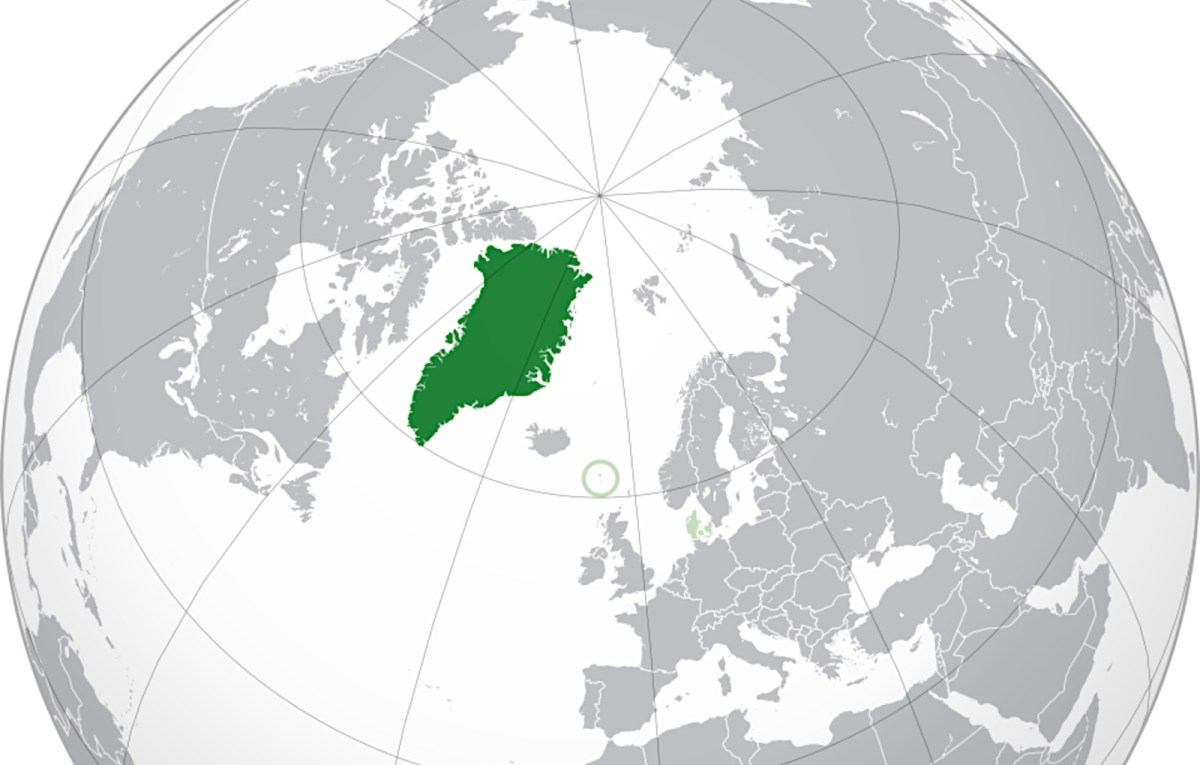
Click to enlarge (Wikimedia)

It’s past time to challenge Mr Trump on his outrageous statements of intent. There are so many ways that what he is proposing for Greenland is simply not going to happen. I believe that’s true whether you take an American view, or a Greenlandic view or, indeed any other.

Let’s see this from an American perspective first. My next door neighbour has a larger house than mine, and he also has a bigger and more expensive car than mine. So if I was to follow the Trump approach I might just say, ‘I need my neighbour’s house and car’. Does that justify my actions if I knock down a section of his garden fence and break one of his windows, take his car keys, change the locks on his door, and seize his car and house for my own use?

Clearly it does not. The police would soon be knocking on my door, probably with an arrest warrant. Saying I need something does nothing to make it legally mine. I’d soon find out that the police and the law courts would have a different opinion!

Yet this is effectively what Mr Trump is saying to Greenland. The USA ‘needs’ Greenland. If the USA needs anything, it needs to mind its own business, apply some common sense, and observe international law. We’ve seen countries with overwhelming military power make similar demands in the 20th century. Adolf Hitler argued that Germany needed lebensraum (literally ‘living space’). Poland and Russia had space they did not need (in Hitler’s opinion), so the German army was ordered to take it – first by invading Poland. and later by invading the Soviet Union. In the end that did not work out well for Germany.

Perhaps we should dig into the details and see how Trump might come unstuck.

An invasion of Greenland would involve American forces. There is no land border so troops would have to be taken in by air and/or by sea. The first thing would be for Trump to require the Pentagon to draw up plans for such an invasion. But American forces of all ranks owe allegiance, not to the President of the USA, but to the Constitution. They would be right to refuse orders that were either illegal or immoral. I think Trump would be stuck right there. Orders to invade an allied nation would be seen as neither legal nor moral. About as legal and moral as me taking my neighbour’s car and house!

I believe France, Germany and Norway already have small numbers of troops in Greenland to bolster Danish forces, and I further understand that British troops will join them very soon. I expect them to be joined by Polish, Finnish, Swedish and other forces, also very soon. What will they do? My first task if I was ordered to make it harder for an enemy force to land would be to consider ways to block those landings. Greenland is very inhospitable in the winter months. Even more so for forces unfamiliar with such conditions. And if American forces did arrive, I’d focus on ways to limit or destroy their supplies. But I don’t think Trump will get this far. His foolish bluster will be dealt with long before any invasion of Greenland gets under way. American politicians, both Democrat and Republican will make sure of that. Crowds would be out on the streets demanding he back down. It would be a disaster for Trump, Vance, MAGA, and for the USA as a whole.

Invading Greenland is probably Trump’s worst idea so far. If he persists he will be bought down. And his landing will be very hard indeed. I suggest he learns ice-skating as fast as possible, he’s going be on severely slippery ice soon, with no grip. And even if he becomes a great skater, he’ll be on very thin ice and the heavier you are, the more likely the ice is to break! You don’t live long if you’re plunged into severely cold water (nearly -2 C around Greenland). If you’re unfit and have a dodgy heart, your time would be even more limited. I hope you’re listening, Donald!

A rumpus is brewing

The fourth video above, Trump officials rebuff Greenland, Denmark calls… discusses rare earth minerals, what is being overlooked here is that any resources in the rocks of Greenland are covered by an ice sheet one mile deep. For all the talk of the ice melting due to global warning, no rare earths in Greenland are going to be reachable for many decades to come.

I’ll leave you with a final thought:

  • Russia believed it was strong, but under Putin’s misguided leadership it has lost much of the strength it once possessed.
  • The USA believes it is strong, but under Trump’s misguided leadership, it is starting to lose that strength. If he can damage the US this much in one year, what effect will he have over four years? I hope and pray he will not remain President for a full term.

< Previous | Index | Next >

Instructions for the chain blog

What does Jesus mean to me and how do I respond to him?

< Index >

If you want to join in, here’s what you need to do

The full title for the chain is What does Jesus mean to me and how do I respond to him? You can use the full title or abbreviate it any way you think fit, or you can use a different title providing your post is about the same idea or a particular aspect of it.

There are no rules on article length, just write as short or long a contribution as you feel comfortable with.

It’s a long time since I took part in one of these chains, but they are fun to do. My post will be the first link in the chain and I’ll make it live immediately after posting these instructions. I’ll invite three other bloggers to write further items on the same topic. When one of those bloggers completes their article I’ll add a link to their post in the index and they, in turn, can then invite up to three more contributions from people they know. If you were not invited but you’d like to join in anyway, please go ahead and submit an article. And if you’ve already contributed and would like to write another article feel free to do so.

Please include a link to these instructions somewhere in your contribution – thanks! At or near the end is useful, top and end is even better. Optionally include a link to the index so readers can see the full list of contributions.

Some people may not want to join in, and that’s just fine. But hopefully we’ll end up with a decent number of posts on a single topic. Chain blogs usually peter out eventually, and that’s fine too. If I think a post is unkind or thoughtless I may decline to include it in the list, but I’ll respond to the author so they have a chance to alter it and try again if they wish to do so.

If you don’t have a blog you can still contribute. As long as your article is available somewhere online and I can link to it, that will be enough. If you have just completed a contribution, send me a web link to it and I’ll add it to the index. As a last resort you could send me your contribution as a word processor file and I’ll publish it here on JHM as a guest post.

Add your article by sending me a comment to these instructions with the URL of your contribution. Provide your name as well if you want me to include it in the index. Alternatively email me the URL (and your name if you wish) – chris@scilla.org.uk

< Index >

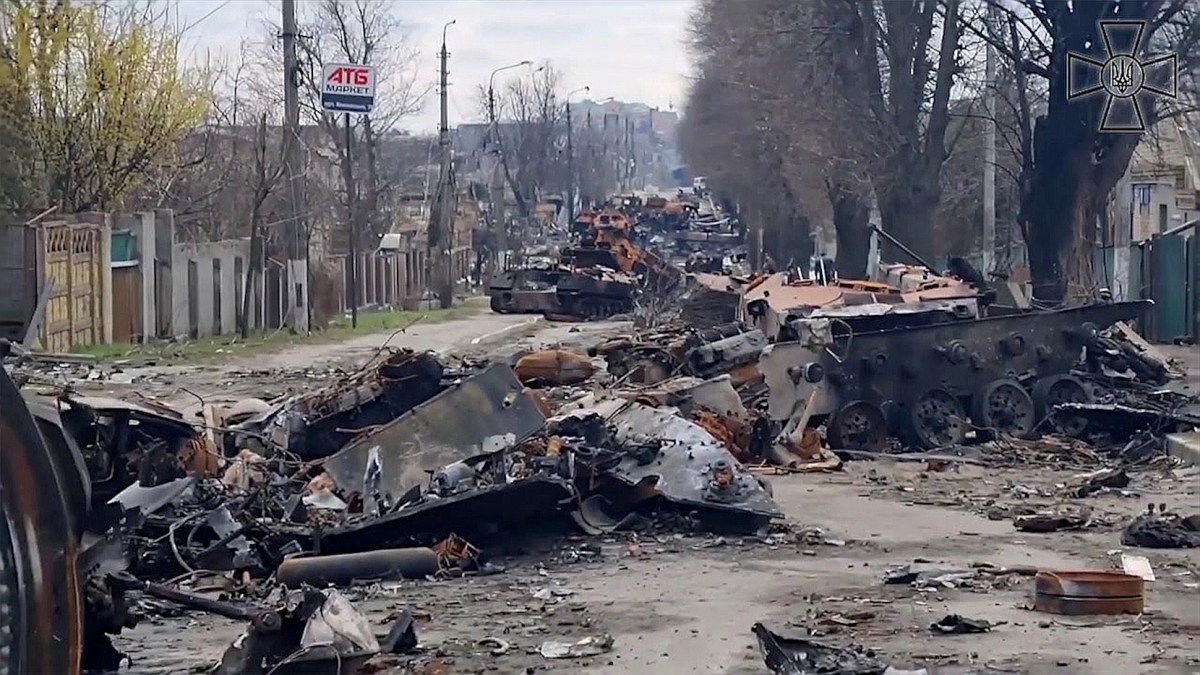
Forward look – Ukraine – 3

You’ll find this Times Radio interview with Philip Ingram most interesting.

DECember 2024(2)

< Dec 2024 | Index | Jan 2025 >

Larger view
(Wikimedia)

This is an interim addition to the series on Ukraine. If you are interested in what lies ahead for Ukraine and the disgraceful Russian invasion that is still underway there, you’ll find this Times Radio interview with Philip Ingram most interesting.

See also:

< Dec 2024 | Index | Jan 2025 >

Useful? Interesting?

If you enjoyed this or found it useful, please like, comment, and share below. (If you don’t see those links, click the article’s title above the main photo and they will appear.) Send a link to friends who might enjoy the article or benefit from it – Thanks! My material is free to reuse (see conditions), but a coffee is always welcome and encourages me to write more often!

How do I choose topics?

I want to explain difficult concepts in ways that non-experts can understand. I believe it’s important for all of us to have some grasp of how science works and why it’s useful.

Passions and interests
Larger view
(Mediawiki)

I like to write about things I’m passionate about, but that provides a good deal of scope because I’m deeply interested in quite a few disparate things. A brief personal history will explain why.

I was interested in science and technology as a child, I did well in O-levels in Chemistry and Physics, also Maths and Geography. For A-levels I chose Chemistry, Physics and Biology and passed all three, securing a place at the University of Bath for a BSc degree. My first job was doing biological research, first on tree growth, then on flower and fruit development for an MSc (lots of microscopy which I loved).

I had an early interest in astronomy and spaceflight, and that has remained with me to this day. At the same time, I became convinced that I should follow Jesus, and spent a good deal of time attempting to separate the wheat of Jesus from the chaff of church tradition and formality. I used to collect coins (almost entirely British coins) and I’m fascinated by history and archaeology. I took up photography around the age of 9 and have stuck with it as a hobby ever since.

I could add more, but regular readers will already recognise some familiar posting topics from that list above.

So what do I post?

Around half of my posts these days are based on photos I’ve taken. I’m on Image of the day – 88 at the moment. Sometimes it’s just a photo with descriptive text, sometimes I try to draw out something a little deeper in the text.

Perhaps another 25%(ish) of my posts are about faith and following Jesus. Not too religious, I hope, more practical and applicable to every day living. Some are clearly teaching on a topic that I feel is important, but perhaps widely ignored or misunderstood. Others are more casual notes about something I’ve seen, or heard, or thought.

A smaller proportion of posts relate to the war in Ukraine. I feel quite strongly about this as you will already realise if you have read any of them. But I want to be positive as far as possible, and appeal to the good that is in most ordinary people to a greater or lesser extent.

Then there are posts on science and technology topics, this one for example on star formation. I want to explain difficult concepts in ways that non-experts can understand. I believe it’s important for all of us to have some grasp of how science works and why it’s useful.

I began writing more or less regularly way back in 2002, sometimes there have been significant times when I’ve been silent for a while, other times I’ve been on a roll. And even before blogs were a thing, I was writing online about this and that. See this example from January 1997. You’ll probably note some similar topics, even that far back.

Any thought or questions? Leave them in the comments section below (or click the ‘Comment’ link below the main image), thanks.

Useful? Interesting?

If you enjoyed this or found it useful, please like, comment, and share below. (If you don’t see those links, click the article’s title above the main photo and they will appear.) Send a link to friends who might enjoy the article or benefit from it – Thanks! My material is free to reuse (see conditions), but a coffee is always welcome and encourages me to write more often!