Image of the day – 69

I don’t know the age of this house, but it is clearly a timber-framed structure and some of those main timbers have adjusted comprehensively to the action of gravity over several centuries.

< Previous | Index | Next >

What’s in an image? Sometimes quite a lot, more than meets the eye.

I’m posting an image every two days (or as often as I can). A photo, an image from the internet, a diagram or a map. Whatever takes my fancy.

Click to enlarge

Here’s Cirencester’s wonkiest house – well, one of them. Until the 18th century, many buildings would have been constructed of timber, and we all know that timber is prone to warp even after seasoning, and it also responds to pressure and stress by slowly changing its shape.

Modern engineered wooden products generally avoid these issues. For example, plywood is in layers with the grain running in different directions from layer to layer. A thin sheet of wood is weak along the line of the grain, in that direction it will split easily when bent. But it will resist bending and splitting if rotated 90°. So multiple sheets glued together can be strong in all directions.

A timber-framed house

I don’t know the age of this house in Dollar Street, but it is clearly a timber-framed structure and some of those main timbers have adjusted comprehensively to the action of gravity over several centuries. Look at the glazing in the windows, for example, compare the windows with their fellows, side-by-side and up and down. See what I mean? At some point a layer of render was added to hide and protect the timbers so these are no longer visible.

The building is unoccupied at present, but I imagine it’s safe enough. Imagine how the new owners in due course will struggle to make right-angled furniture fit into walls and floors at odd angles

What about us?

Are we sometimes a little bit like this house? Do the pressures of life, sustained over years, even decades, cause us to be a little distorted? Is it difficult for other people with their right-angled opinions and requirements to fit into our expectations given our out-of-true alignments? Is the truth about us sometimes plastered over and hidden from view?

Or might it be the other way around? Am I, are you, straight and true and the fault lies with everyone else?

Cirencester

For convenience, here’s a list of all the Cirencester area images:

A417 roadworks, Advent Market, Bishops Walk, Baunton, Canal 1, 2, Castle Street, Christmas lights 1, 2, Church 1, 2, 3, 4, 5, 6, Churn flood, Countryside, Fallen tree, Fleece, Gasworks, Gloucester Street, Hare 1, 2, Hospital, Market Place 1, Phoenix Fest, Riverside Walk, Stone plaque, Stratton Meadow, Tank traps, View, Wonky 1, 2, Yellow Iris

Themed image collections

The links below will take you to the first post in each collection

Cirencester, Favourites, Irish holiday 2024, Roman villa

< Previous | Index | Next >

Useful? Interesting?

If you enjoyed this or found it useful, please like, comment, and share below. (If you don’t see those links, click the article’s title above the main photo and they will appear.) Send a link to friends who might enjoy the article or benefit from it – Thanks! My material is free to reuse (see conditions), but a coffee is always welcome and encourages me to write more often!

Sean Carroll on future and prediction

If you’re interested in the future of society and human culture (and who is not?) then you’ll be fascinated to hear what Sean has to say in this podcast episode.

A recent Sean Carroll podcast considers the future, and in particular how humanity lives and how this may change. He discusses the nature of predictability, and its limits. Fascinating stuff!

Larger view
(Mediawiki)

Sean Carroll is an American theoretical physicist and philosopher specialising in quantum mechanics, cosmology, and the philosophy of science. He’s the Homewood Professor of Natural Philosophy at Johns Hopkins University.

He’s also active on the internet with his website, Preposterous Universe and interviews experts on a host of topics on his podcast Mindscape. For fuller details about Sean and his work, it’s worth reading the Wikipedia article about him and/or visiting his website (both linked below).

Episode 270

Most episodes of the podcast are interviews with scientists, philosophers and others. But Episode 270 is a solo appearance in which Sean thinks aloud on a topic by himself, and that’s not to say he ignores the ideas and work of others – far from it. He discusses his own ideas and those of others, explaining why the early stages of exponential growth may not be easily distinguishable from other kinds of curve such as asymptotic (where growth eventually slow and creeps ever closer to a maximum) or even a singularity or a phase transition (where growth may suddenly settle into a new and altogether different pattern).

Sean unpacks a lot of ideas here, and he’s careful to express his thoughts in ways that most people will be able to understand and digest. Sean is a mathematician (a necessary skill for any physicist) but even non-mathematicians will be able to follow his arguments here.

If you’re interested in the future of society and human culture (and who is not?) then you’ll be fascinated to hear what Sean has to say in this podcast episode. He will certainly cut the ground out from under your feet if you hold the opinion that we will go on expanding and thriving indefinitely.

See also:

Useful? Interesting?

If you enjoyed this or found it useful, please like, comment, and share below. (If you don’t see those links, click the article’s title above the main photo and they will appear.) Send a link to friends who might enjoy the article or benefit from it – Thanks! My material is free to reuse (see conditions), but a coffee is always welcome and encourages me to write more often!

Image of the day – 68

An imaginary, stone creature with wings stares down at you as it helps to support the stone ceiling below the tower.

< Previous | Index | Next >

What’s in an image? Sometimes quite a lot, more than meets the eye.

I’m posting an image every two days (or as often as I can). A photo, an image from the internet, a diagram or a map. Whatever takes my fancy.

Click to enlarge

Here’s a second photo from inside Cirencester’s Parish Church. This time we’re looking up for a view of the nave’s wooden ceiling with it’s interesting construction and wooden boarding that supports the external lead sheets to provide the necessary weather-proofing. The structure is certainly a cut above the average house roof!

If you look to the left of the top of the leftmost stone pillar, you will notice a grotesque figure. An imaginary, stone creature with wings stares down at you as it helps to support the stone ceiling below the tower, this space under the tower forms the West Porch of the building.

You can also see some of the north-facing nave windows just below the wooden ceiling, and sunlit stonework from beams shining through the south-facing nave windows (out of sight in this view).

Cirencester

For convenience, here’s a list of all the Cirencester area images:

A417 roadworks, Advent Market, Bishops Walk, Baunton, Canal 1, 2, Castle Street, Christmas lights 1, 2, Church 1, 2, 3, 4, 5, 6, Churn flood, Countryside, Fallen tree, Fleece, Gasworks, Gloucester Street, Hare 1, 2, Hospital, Market Place 1, Phoenix Fest, Riverside Walk, Stone plaque, Stratton Meadow, Tank traps, View, Wonky 1, 2, Yellow Iris

Themed image collections

The links below will take you to the first post in each collection

Cirencester, Favourites, Irish holiday 2024, Roman villa

< Previous | Index | Next >

Useful? Interesting?

If you enjoyed this or found it useful, please like, comment, and share below. (If you don’t see those links, click the article’s title above the main photo and they will appear.) Send a link to friends who might enjoy the article or benefit from it – Thanks! My material is free to reuse (see conditions), but a coffee is always welcome and encourages me to write more often!

The Wayback Machine

So let’s look at some examples… But do bear in mind that the retrieval process may be quite slow. Time travel takes time.

Time travel would be interesting, but we can be pretty sure it can’t be done. However, history lets us visit the past in a sense. And when it comes to the web, there’s always the amazing Wayback Machine.

The Wayback Machine archives websites and stores them for future use, and anyone can use it to see past versions of sites, or visit sites that are no longer available. Also, anyone can enter a web address and ask for it to be archived.

The Wayback Machine has had a torrid time with DDoS attacks and data theft over the last few weeks, but it’s all fixed and working again as of 14th October (though in read-only mode for the time being).

So let’s look at some examples. Click the links below to check them out, but do bear in mind that the retrieval process may be quite slow. Time travel takes time:

Why not explore some old websites for yourself? Just visit web.archive.org and search for a website you like or one that no longer exists.

What serious uses does it have?

The Wayback Machine (or Web Archive) serves a number of useful purposes beyond viewing old versions of websites for fun.

  • Historical research
  • For checking accountability
  • Verification
  • As legal evidence
  • Viewing websites that no longer exist

For further details, read the Wikipedia article on the Wayback Machine.

Useful? Interesting?

If you enjoyed this or found it useful, please like, comment, and share below. (If you don’t see those links, click the article’s title above the main photo and they will appear.) Send a link to friends who might enjoy the article or benefit from it – Thanks! My material is free to reuse (see conditions), but a coffee is always welcome and encourages me to write more often!
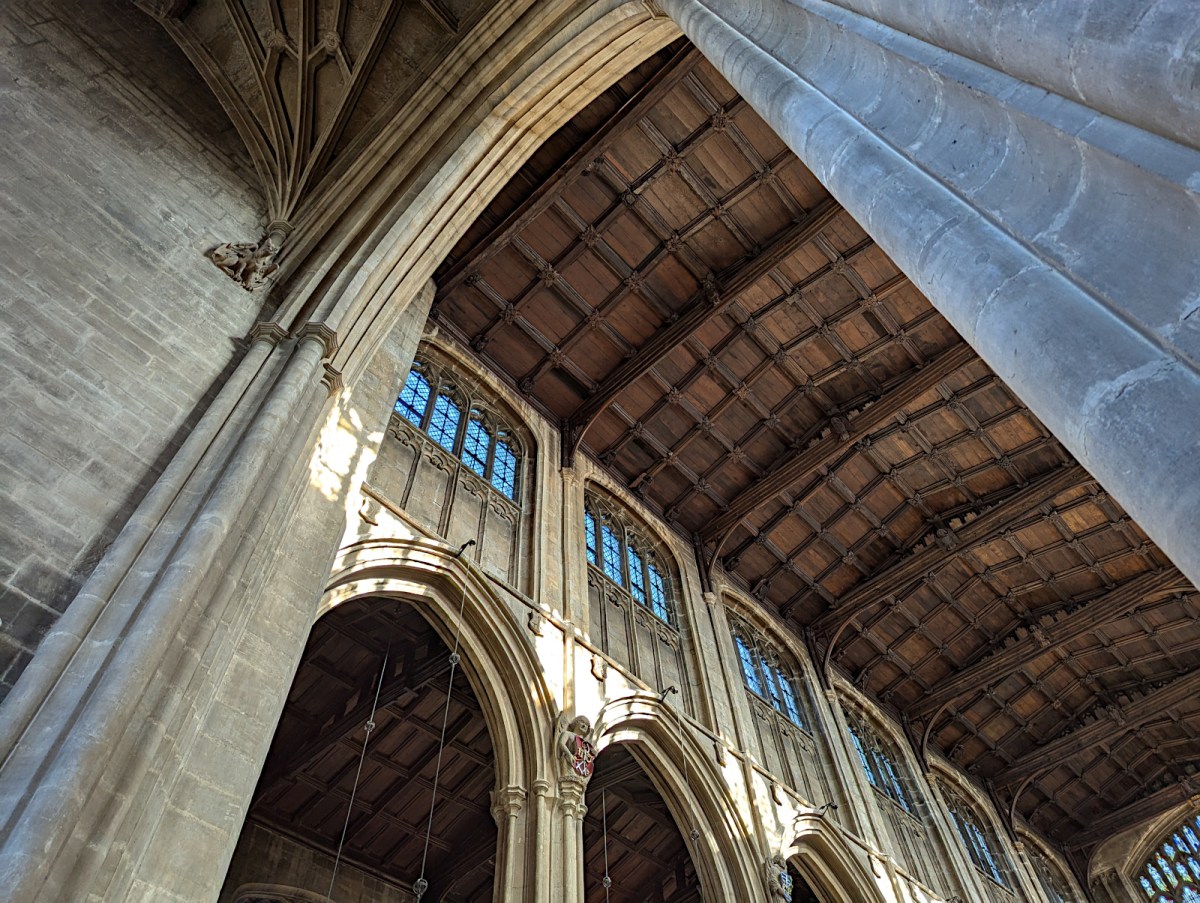
Image of the day – 67

Because the church is so large (one of the largest in England), it’s sometimes called ‘The Cathedral of the Cotswolds’.

< Previous | Index | Next >

What’s in an image? Sometimes quite a lot, more than meets the eye.

I’m posting an image every two days (or as often as I can). A photo, an image from the internet, a diagram or a map. Whatever takes my fancy.

Click to enlarge

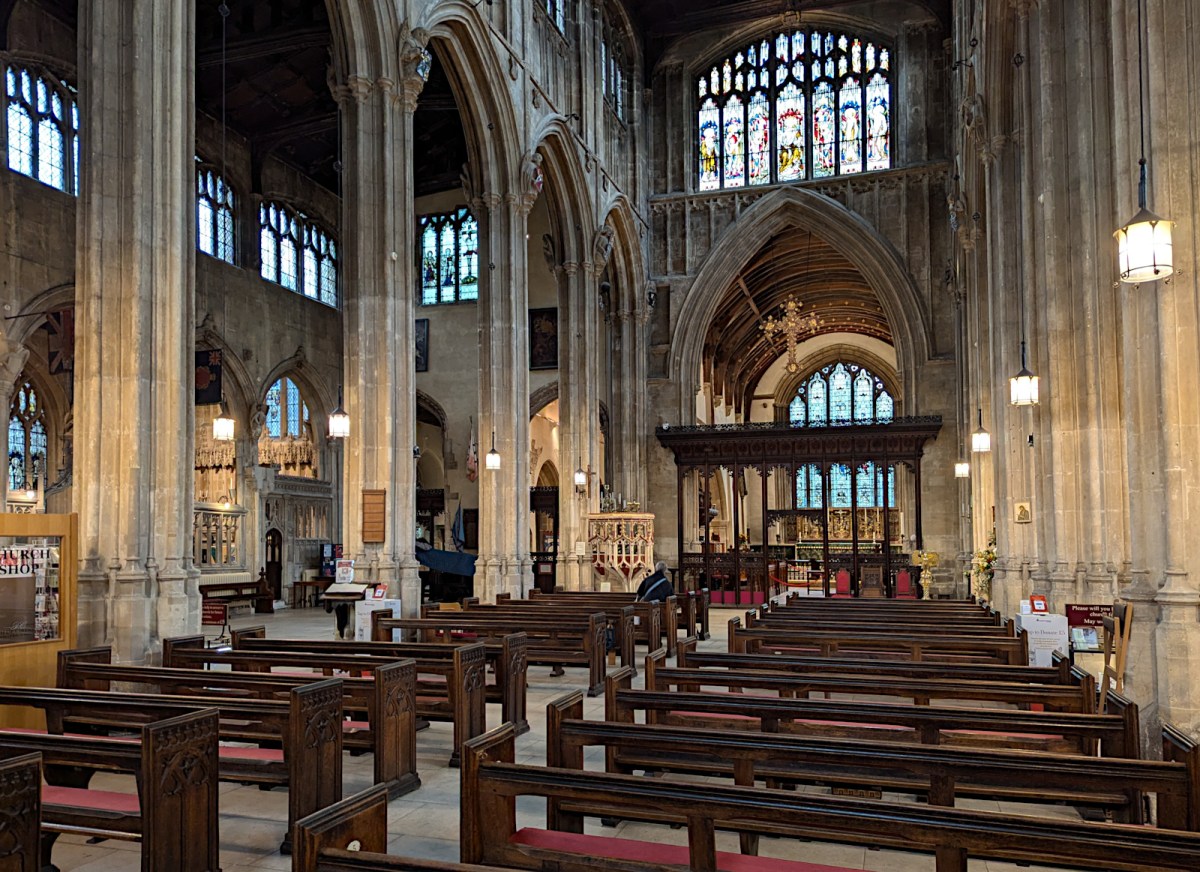
This is an interior view of Cirencester’s Parish Church of John Baptist. The long view you see here is the nave with the chancel at the far end (beyond the screen); the chancel is the oldest part of the building, perhaps dating to about 100 years after the Norman invasion; it’s in this area that the Saxon church stood. Alterations and additions were built at various times from the late 12th century through to the mid 16th century, the tower being added at the beginning of the 15th.

The church overlies parts of the Roman city of Corinium, possibly concealing some ‘missing features’. The city would have baths and a theatre as both were important features in Roman times. No trace of either has been found by the archaeologists.

Because the church is so large (one of the largest in England), it’s sometimes called ‘The Cathedral of the Cotswolds’. Nonetheless, it’s just a local parish church.

Cirencester

For convenience, here’s a list of all the Cirencester area images:

A417 roadworks, Advent Market, Bishops Walk, Baunton, Canal 1, 2, Castle Street, Christmas lights 1, 2, Church 1, 2, 3, 4, 5, 6, Churn flood, Countryside, Fallen tree, Fleece, Gasworks, Gloucester Street, Hare 1, 2, Hospital, Market Place 1, Phoenix Fest, Riverside Walk, Stone plaque, Stratton Meadow, Tank traps, View, Wonky 1, 2, Yellow Iris

Themed image collections

The links below will take you to the first post in each collection

Cirencester, Favourites, Irish holiday 2024, Roman villa

< Previous | Index | Next >

Useful? Interesting?

If you enjoyed this or found it useful, please like, comment, and share below. (If you don’t see those links, click the article’s title above the main photo and they will appear.) Send a link to friends who might enjoy the article or benefit from it – Thanks! My material is free to reuse (see conditions), but a coffee is always welcome and encourages me to write more often!