The idea of a wool market is an appropriate one for the town; in medieval times the wool trade was of high importance in the Cotswolds where a series of wool towns developed, of which Cirencester was the largest.
What’s in an image? Sometimes quite a lot, more than meets the eye. I’m posting an image every few days.
Woolmarket (click images to enlarge)
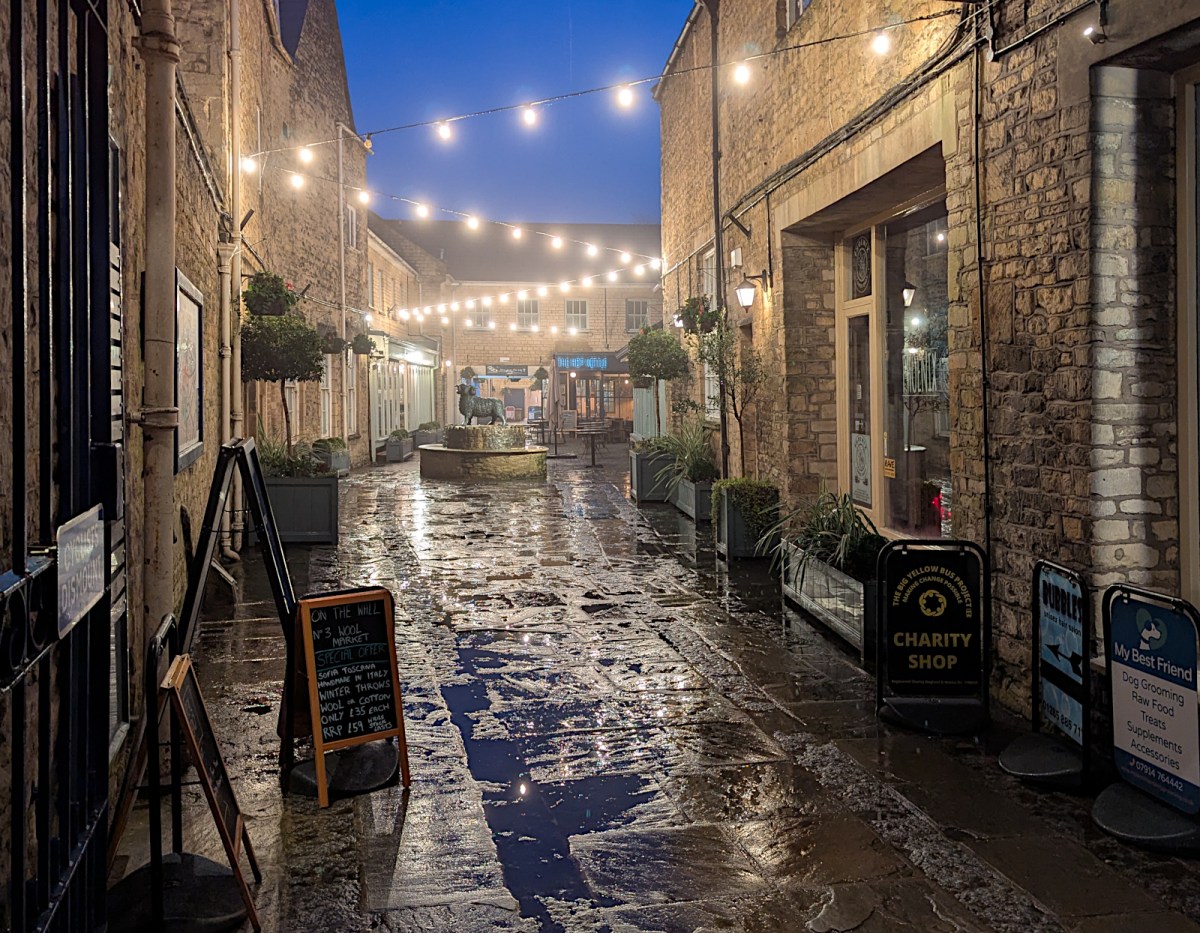
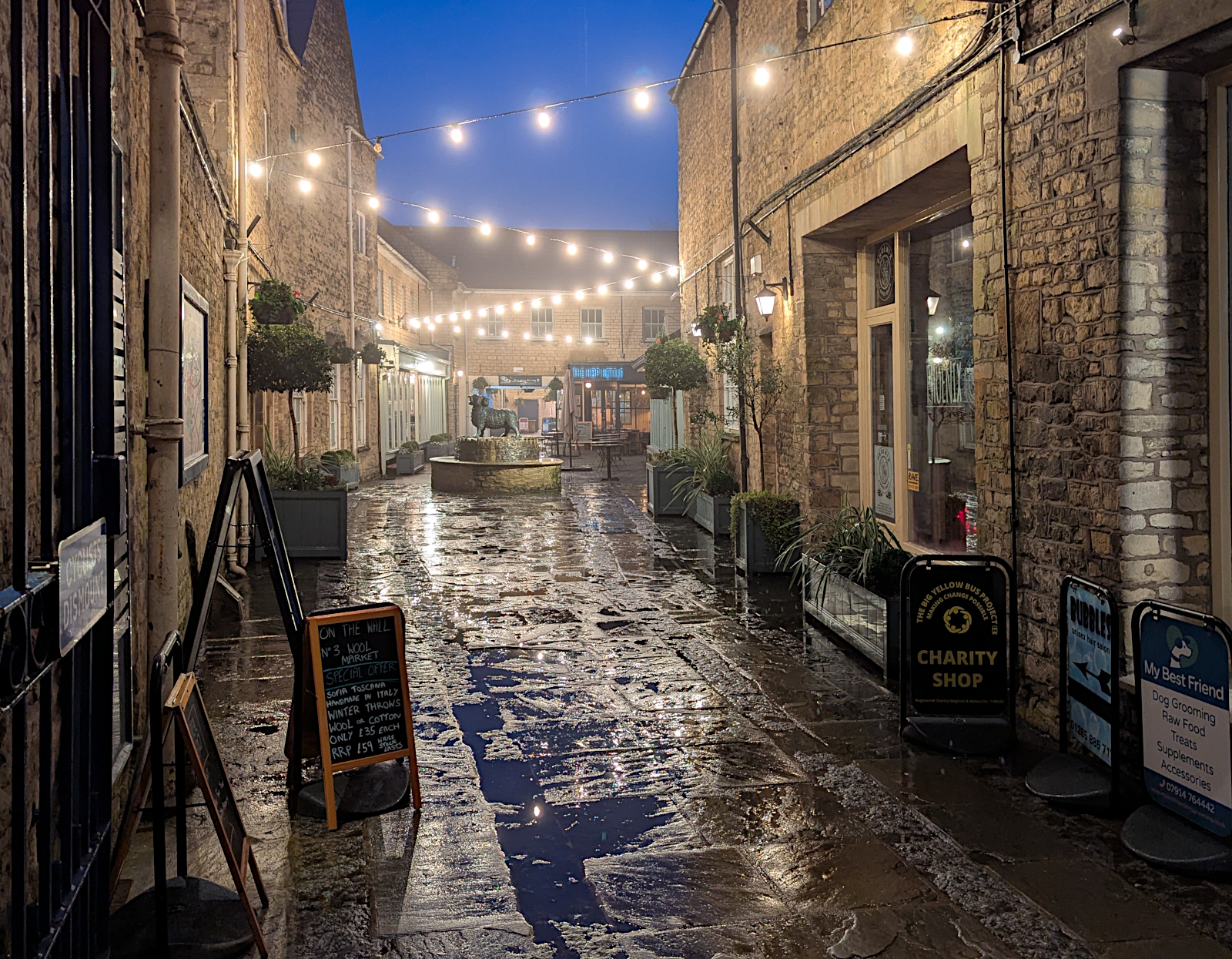
The Woolmarket is a small shopping area between Dyer Street and The Waterloo in Cirencester. It looks old, it’s presented as old, but in fact it’s a relatively recent development, created in the 1980s and further improved in 1996. The idea of a wool market is an appropriate one for the town; in medieval times the wool trade was of high importance in the Cotswolds where a series of wool towns developed, of which Cirencester was the largest. The town’s Parish Church of John Baptist was built and extended in part with money from the wool trade as was the old Abbey before it.
Many of the Georgian frontages around the centre of the town began their lives as the homes of wealthy wool merchants. They are now mostly offices or flats, and sometimes have the ground floors replaced by retail businesses with large windows for display. But look up and you’ll see right away two or three floors of Georgian architecture above those ground floors.
The photo
I took this photo on a wet evening on 18th January 2026, the paving slabs of natural stone glistening in the overhead lighting and the more distant buildings softened by descending mist as the damp atmosphere cooled down following sunset. It’s very typical of January in the Cotswolds. Sometimes we get snow, and heavy frosts are possible, but often it’s just a chill damp with muddy fields and foggy mornings.
The sheep statue
In the middle of the photo, look into the middle distance and you may spot the statue of a traditional Cotswold Lion sheep. This famous old breed was once widespread across a huge expanse of the Cotswolds, though now it is a rarity.
If you enjoyed this or found it useful, please like, comment, and share below. (If you don’t see those links, click the article’s title above the main photo and they will appear.) Send a link to friends who might enjoy the article or benefit from it – Thanks! My material is free to reuse (see conditions), but a coffee is always welcome and encourages me to write more often!
You see the lights and you might hear the engine or the sound of the tyres on the road surface. But there’s no way you could tell the make and model of the car. The details are hidden.
What’s in an image? Sometimes quite a lot, more than meets the eye. I’m posting an image every few days.
Click images to enlarge
Sometimes it’s foggy in Cirencester. The Cotswolds is in the south-west of England and the prevailing winds come from the south-west and are laden with water vapour after crossing the Atlantic. As the air rises over the Cotswolds and other hilly country, some of that water vapour condenses as rain and some as fog. Once the sun appears, any mist or fog clears away with the rising temperature.
It’s all in the detail
As you look at the scene in the photo, you’ll notice right away that the fog obscures details on the church tower while the details on the nearer, and much less tall buildings in the foreground are quite sharp. This is always the way of things in foggy conditions. Nearby objects reveal more detail than those further away. If you stood near the base of the tower and looked towards the top you’d see the same thing. Stonework at the same level as your head would be clear, but raise your gaze to the top of the tower and you’d see few details. In heavy fog you might not see the top of the tower at all.
This is a great illustrative parallel of our ability to see spiritual details too. Look at the people around you and you see a lot of detail – hair colour, eye colour, style of hair, details of clothing , now look up and the detail seems to vanish. The Bible tells us that the Creator is hidden in dark clouds. The English words dark and darkness didn’t traditionally mean an absence of light, the sense was of something hidden from view. When you look into the headlights of a car coming towards you at night you see the lights and you might hear the engine or the sound of the tyres on the road surface. But there’s no way you could tell the make and model of the car. The details are hidden although (or even because) there’s so much light.
Yahweh (God) is like that too, as you get to know him the first thing you’ll understand is the simplest thing of all – he is there! Just an indistinct outline in the distance. As you draw closer, gradually you’ll begin to see how brightly he shines, but spend some time with him and more detail will appear, not what he looks like because he’s not a physical object in our universe, but you’ll start to see that he consists of a pure love, you’ll notice that he cares deeply about everyone, not just his followers, that he is the source of such things as peace, and grace, and joy, and that he knows you better than you know yourself. This experience feels very like walking towards an object almost invisible in the fog and discovering it to be a beautiful tree or an an amazing building. And the closer you get, the more detail you can distinguish – the veins on the leaves or the surface details in the stone.
Making a start
But how can you begin to know him? Where do you start? The answer is simple, begin right where you are right now. Start by noticing that the people you know (and you yourself) have a threefold nature. You are physical, like a stone or a puddle of water, but you also have a mind – utterly unlike a stone or a puddle! Is it so surprising, then, that there’s a third dimension to your existence and nature? These dimensions overlap yet they are distinct.
Your physical presence can be measured just like that of a stone, you have a certain size, shape, and mass, if you’re in motion you have measurable velocity, direction of movement, momentum and so forth. You possess colour and reflectivity. But overlapping with this physical presence are your senses of touch, sight, hearing and the rest.
The stone lacks these abilities. You have a brain that constantly evaluates the information coming from your senses and combines them into knowledge of your environment. This makes you aware of other objects (don’t trip over that stone, don’t step in that puddle), other lifeforms (chase away the fly that has landed on your arm, don’t step on that frog on the footpath), other people (talk to your neighbour, pay for the item you just bought, wave to your friend across the road, ask for directions).
Pushing through the fog
And that third dimension? Most of the overlap here is with your emotions, the love you feel for family and close friends, the fears you entertain (fear of death, fear of injury, fear of loss). There’s a spiritual element to your nature that overlaps mere emotion and goes way beyond feelings. This is another dimension that you can explore and it’s part of our nature that we sometimes fail to consider and rarely, if ever, visit.
So go there, move towards that somewhat foggy zone and the further you go, the more you will see. And I can assure you, the more you see the more you’ll be drawn along to explore further because what you find will be delightful, encouraging and fulfilling. And remember, in the fog, the further and higher you look the less you will see. But go closer and the details will become clearer. Drawing close is the only way to deal with fog.
And there’s a huge additional advantage, the physical and the mental aspects of your existence will pass away, the atoms of your body will be recycled, dispersed, and used to construct other things. But the overlapping spiritual aspects remain, because they are not dependent on the physical world in any way, they remain.
If you enjoyed this or found it useful, please like, comment, and share below. (If you don’t see those links, click the article’s title above the main photo and they will appear.) Send a link to friends who might enjoy the article or benefit from it – Thanks! My material is free to reuse (see conditions), but a coffee is always welcome and encourages me to write more often!
How extraordinary to see both lava and snow close together, lava inside the volcano and snow on the slopes outside. Truly, the natural world is completely amazing.
What’s in an image? Sometimes quite a lot, more than meets the eye. I’m posting an image every few days.
Click images to enlarge
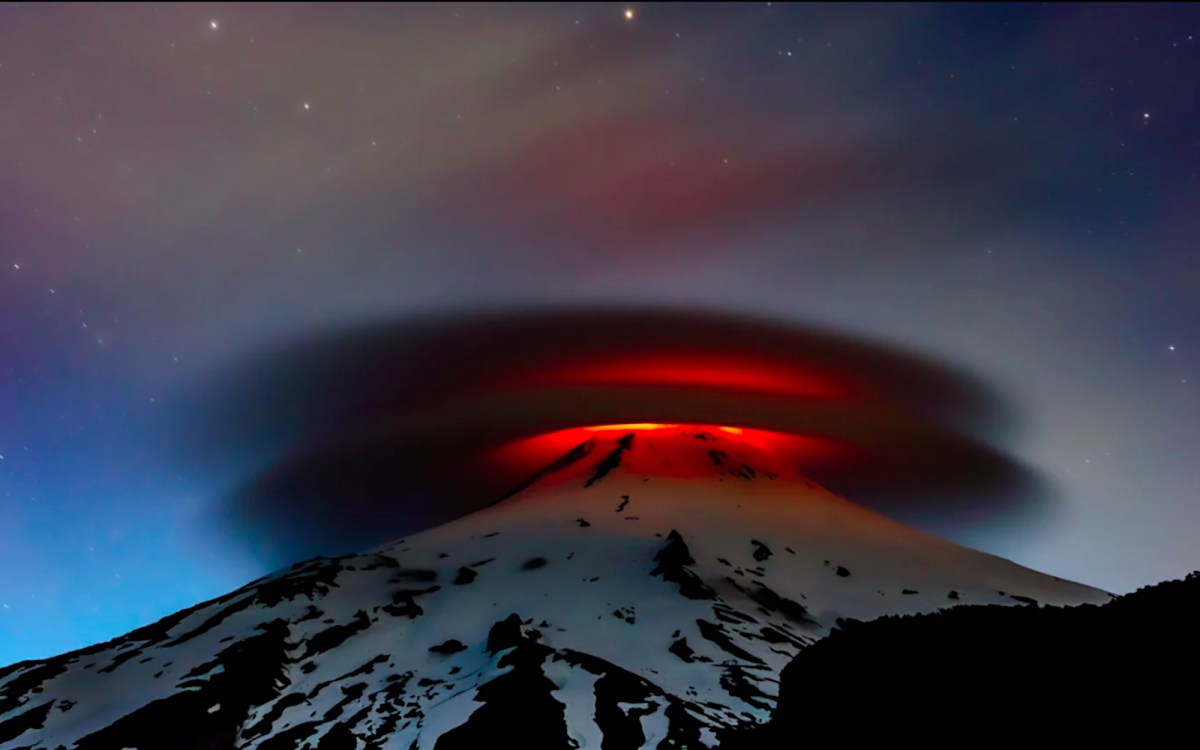
This photo really is extraordinary. Take a guess at what might be going on here first. Then I’ll tell you all about it.
Needless to say, I did not take this photo. It was in Nature Briefing, anyone can sign up free of charge for science news and photos from the prestigious scientific journal, Nature. The signup link is in the upper, right of the Nature home page.
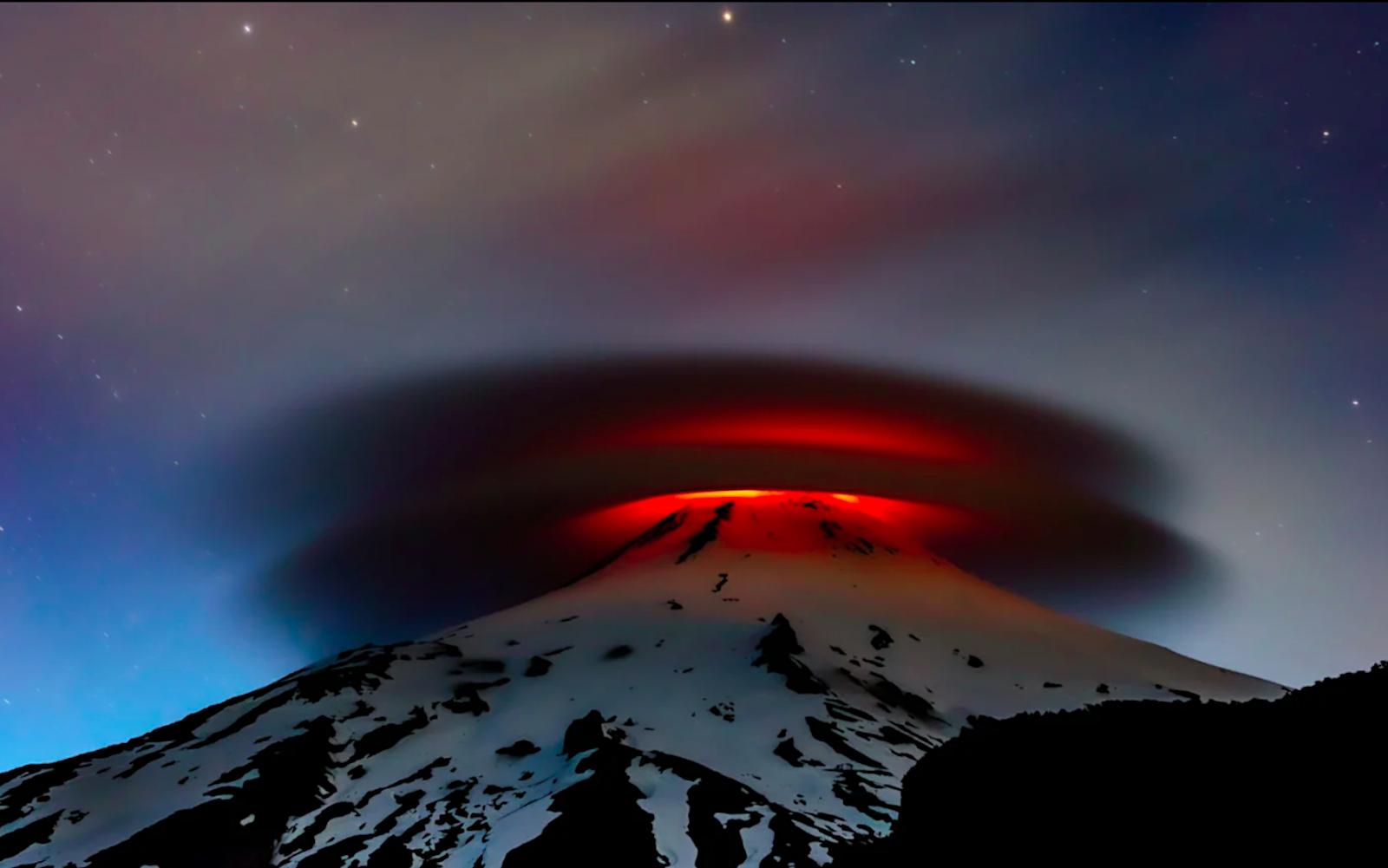
The image was made by the photographer Francisco Negroni and shows Villarrica, described as the most dangerous volcano in Chile. (You can buy a much more detailed version of this image online.)
Two heavy, dark clouds have formed over the volcanic caldera, illuminated by the lava. The heat of the lava below has evaporated the central part of both these clouds, forming them into perfect rings. The sky was already dark enough for stars to be visible. How extraordinary to see both lava and snow close together, lava inside the volcano and snow on the slopes outside. Truly, the natural world is completely amazing.
Think about that last point, lava is literally red hot, around a thousand degrees C, snow is made of water ice, it can’t exist above 0 C at atmospheric pressure. The volcanic rock between the lava and the ice provides sufficient thermal insulation to allow these incompatible materials to survive inside and outside the volcanic cone at the same time!
People of faith may say that God made it that way, people of science will provide a physical explanation. Many people, perhaps even most, might argue these two views are incompatible. But that’s not necessarily the case; there are many people who are both good Christians (or Muslims, Jews, Buddhists or Hindus) and also good scientists. Very often faith communities have enabled and supported great advances in science and technology, enabling us to understand and explain all sorts of phenomena in mechanistic ways that sometimes seem not to require any kind of faith at all. It’s a conundrum that philosophers sometimes explore and discuss.
If you enjoyed this or found it useful, please like, comment, and share below. (If you don’t see those links, click the article’s title above the main photo and they will appear.) Send a link to friends who might enjoy the article or benefit from it – Thanks! My material is free to reuse (see conditions), but a coffee is always welcome and encourages me to write more often!
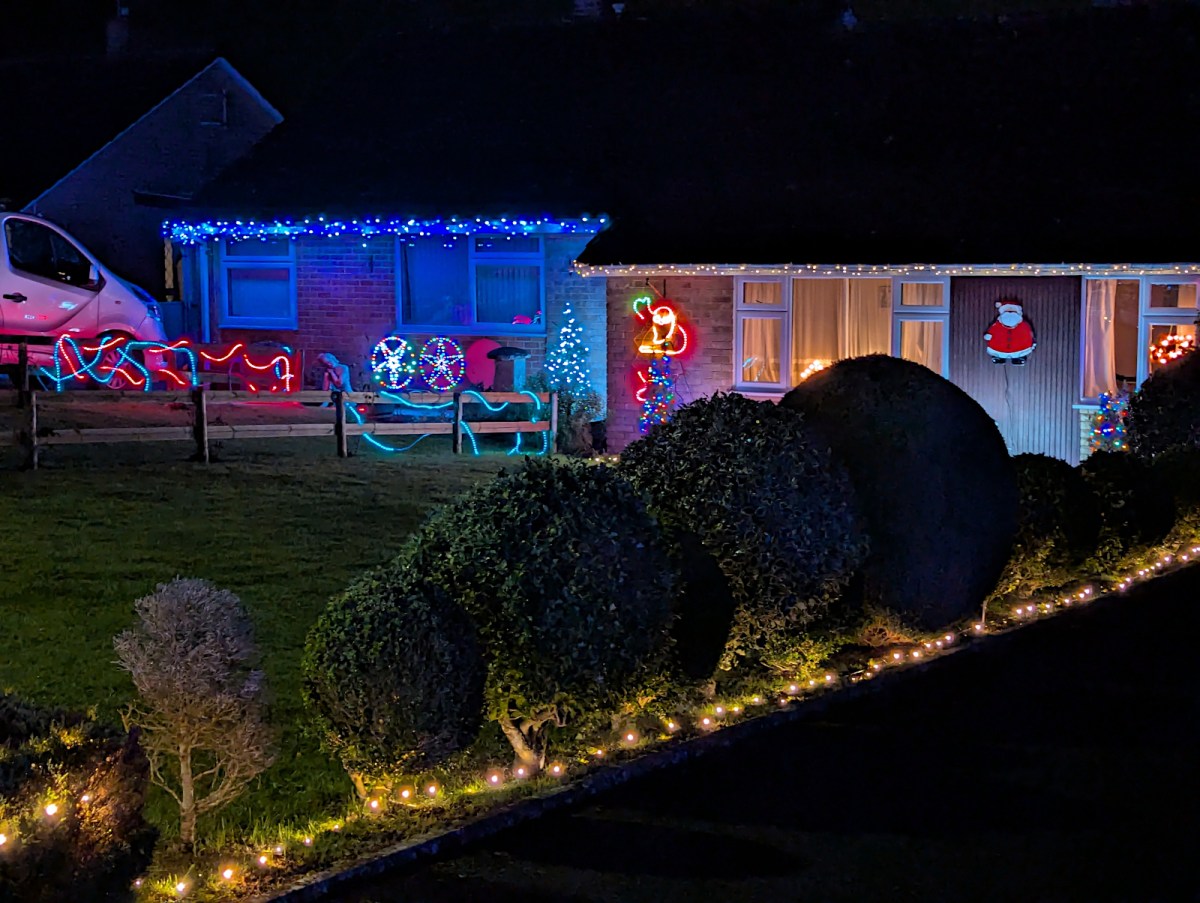
At Vale Road in Stratton on the northern edge of the Cotswold town of Cirencester, residents (and one in particular) put a lot of effort each year into decorating their homes and gardens with all sorts of coloured and illuminated decorations. And they invite the people who come to look to make a contribution to Macmillan Cancer Support.
What’s in an image? Sometimes quite a lot, more than meets the eye. I’m posting an image every few days.
Click images to enlarge
People love Christmas lights and decorations, and people hate illness particularly if there’s no cure. So can Christmas lights help people with incurable illness? Yes they can! But…how?
Well, one way is to use the Christmas decorations to raise money for charity, and that’s what one street in Cirencester has been doing every year for some time now.
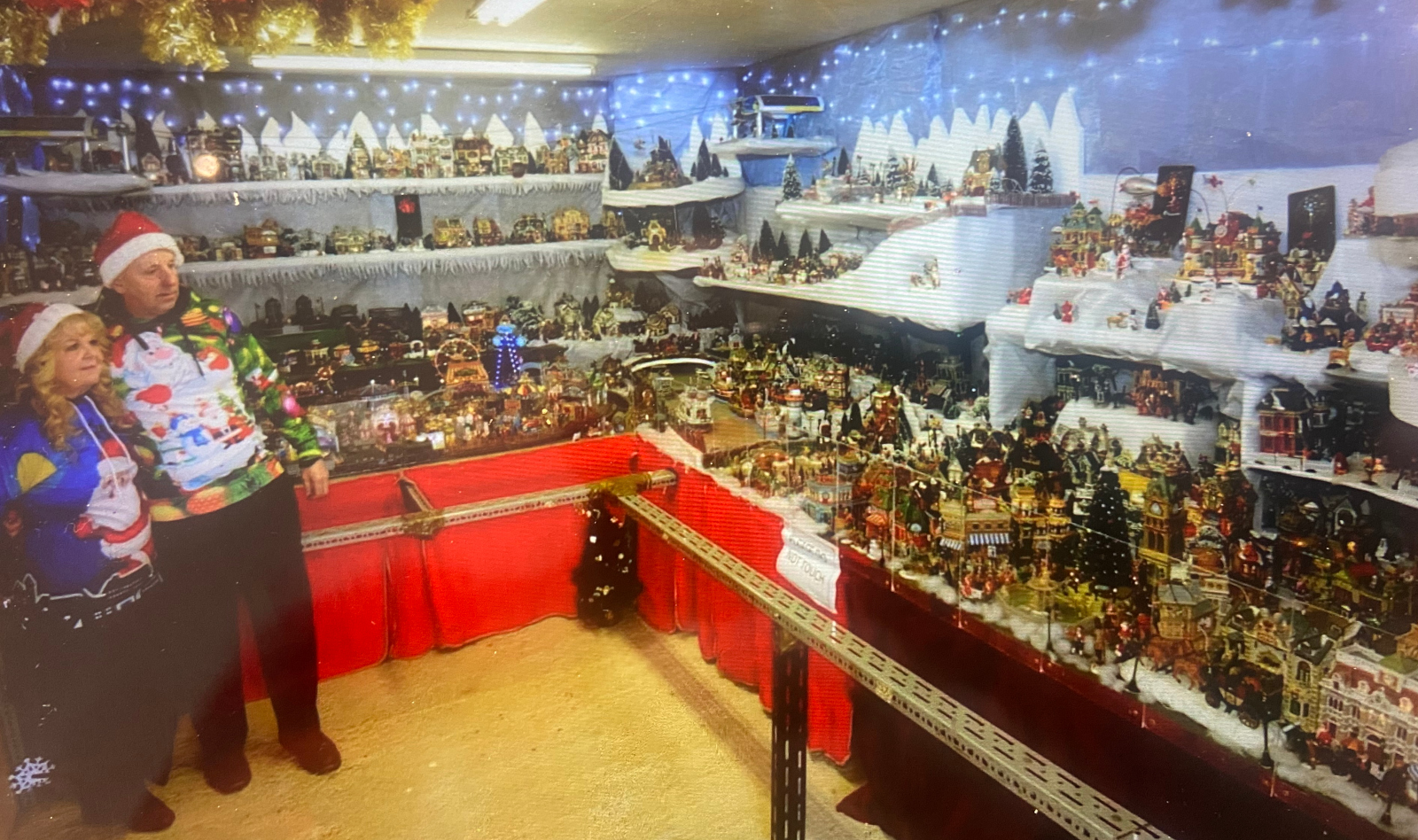
There’s more inside – a model village!
At Vale Road in Stratton on the northern edge of the Cotswold town of Cirencester, residents (and one in particular) put a lot of effort each year into decorating their homes and gardens with all sorts of coloured and illuminated decorations. And they invite the people who come to look to make a contribution to Macmillan Cancer Support. This charity provides care, help, nursing and support for cancer patients and their families right at the time when they need help most. They will help families care for a mum, a dad, or a grandparent at home.
The heart of the action
If you live in Cirencester or the local area, why not drive out to Vale Road and park in a nearby street like Vaisey Road, Tinglesfield or Park View? (But please don’t block any driveways or park near junctions.) Then walk the short distance to Vale Road. You can pay for a tour of the best of the lights, delight your children (or grandchildren), and help support a great cause all at the same time. What could be better than that?
If you enjoyed this or found it useful, please like, comment, and share below. (If you don’t see those links, click the article’s title above the main photo and they will appear.) Send a link to friends who might enjoy the article or benefit from it – Thanks! My material is free to reuse (see conditions), but a coffee is always welcome and encourages me to write more often!
Petal doubling makes flowers more showy, but often at the cost of the ‘doubled’ flowers being less interesting to pollinating insects. The additional petals may be modified stamens so less pollen is produced. Compare a wild rose to a garden rose and you’ll see what I mean.
What’s in an image? Sometimes quite a lot, more than meets the eye. I’m posting an image every few days.
Click images to enlarge
These autumn leaves are on a purple Cotinus coggygria bush, common name ‘smokebush’. Like many trees and shrubs at this time of year, Cotinus leaves change colour in autumn before falling to the ground. The shrub will produce fresh, new leaves in the spring. But look more closely and you may see something else.
The leaves in the image have developed interveinal patches of necrotic tissue, making the plant even more striking in autumn. I had never noticed this condition before moving to Cirencester, but there’s a Cotinus in the grounds of the Stratton House Hotel and Spa that does this annually. The shrub seems healthy in the spring and summer. For a week or two at the end of October this patterned necrosis makes the autumn leaves look even more spectacular.
Irregularities of this kind are common in both animate and inanimate natural systems and not infrequently appear as deliberate ‘enhancements’. Here are one or two notable examples:
Leaf variegation – Gardeners and plant breeders select and propagate from stable variegations. Normally plants with variegation grow more slowly because the efficiency of photosynthesis is compromised.
Petal doubling – This make flowers more showy, but often at the cost of the ‘doubled’ flowers being less interesting to pollinating insects. The additional petals may be modified stamens so less pollen is produced. Compare a wild rose to a garden rose and you’ll see what I mean. How often do you see bees working garden roses?
Variations in animal characteristics – amongst cats and dogs (and also budgerigars, canaries, parrots and chickens you’ll see size and shape changes as well as behavioural, colour and pattern modifications. Compare a Jack Russell with a retriever or a blue budgie with a green one and you’ll find plenty of differences to ponder.
Frost hardiness in plants. Frost sensitive species cannot survive winter in temperate or arctic conditions, so hardiness is a prized feature of many garden plants, and plant breeders pay attention to things like this. A Dahlia or Chrysanthemum that can flower for an extra week or two in the autumn may be worth a higher price, for example.
Fruit colour and flavour components. These days strawberries are much larger than when I was child, and they are often red inside, not just on the outer surface.
Many variations of this kind are deliberately selected for by plant and animal breeders.
Certain other changes have been caused deliberately, even in humans. Lower lip enlargement, neck ringing to generate extended neck length, foot binding, and forms of male and female circumcision have been required for a variety of religious and cultural reasons. Hair styling, removal, or transplantation, piercing of ears, noses and other body parts are common, and don’t forget tattooing. And in plants; pruning, clipping, or bonsai are widely employed.
In the world of rock and stone, coloured and uncoloured crystals may be prized as jewels and fetch fantastic prices. I wrote about an example of this, a geode I spotted in an ordinary, traditional, Cotswold dry stone wall.
If you enjoyed this or found it useful, please like, comment, and share below. (If you don’t see those links, click the article’s title above the main photo and they will appear.) Send a link to friends who might enjoy the article or benefit from it – Thanks! My material is free to reuse (see conditions), but a coffee is always welcome and encourages me to write more often!