The higher you look, the less you see

You see the lights and you might hear the engine or the sound of the tyres on the road surface. But there’s no way you could tell the make and model of the car. The details are hidden.

< Previous | Index | Next >

Image of the day – 183

What’s in an image? Sometimes quite a lot, more than meets the eye. I’m posting an image every few days.
Click images to enlarge

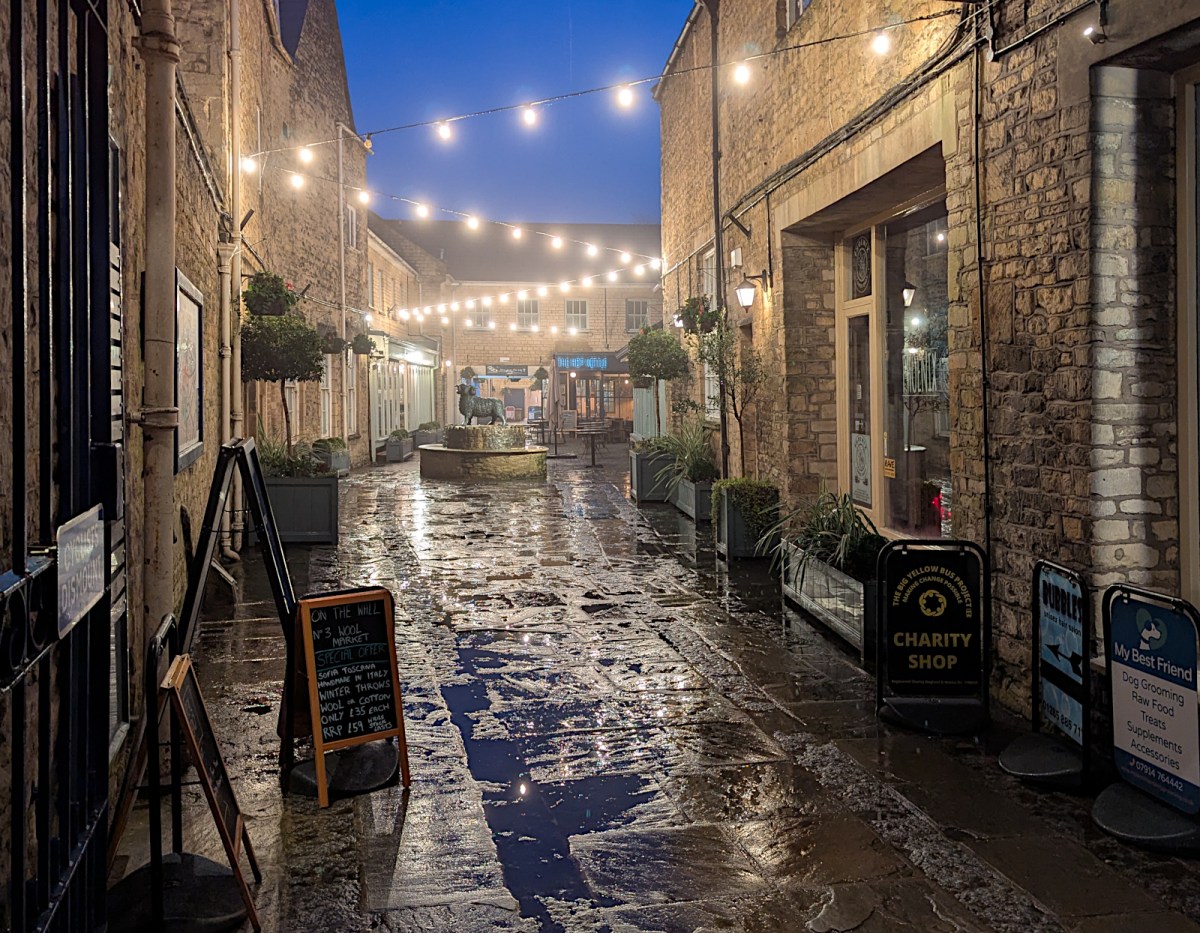
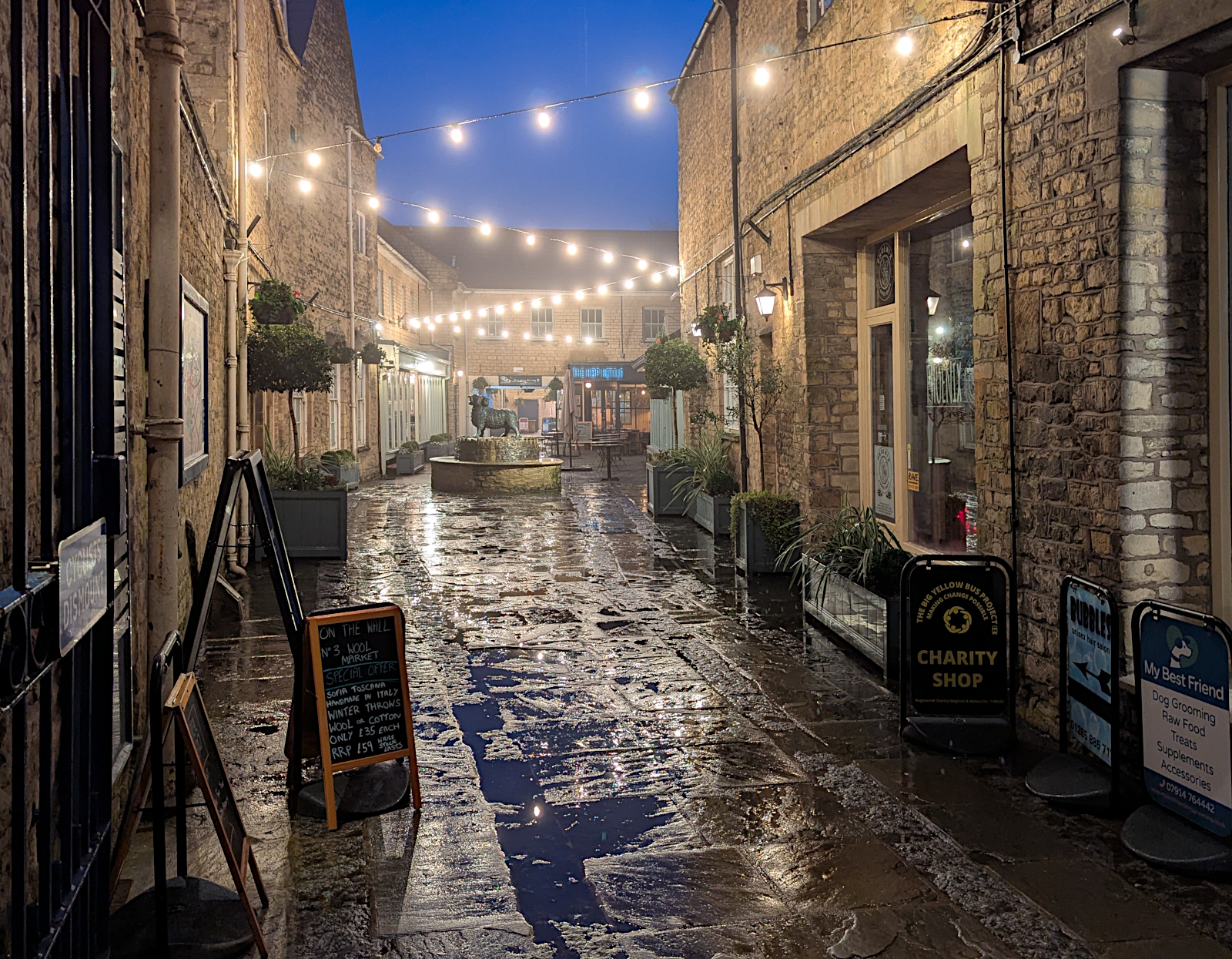
Sometimes it’s foggy in Cirencester. The Cotswolds is in the south-west of England and the prevailing winds come from the south-west and are laden with water vapour after crossing the Atlantic. As the air rises over the Cotswolds and other hilly country, some of that water vapour condenses as rain and some as fog. Once the sun appears, any mist or fog clears away with the rising temperature.

It’s all in the detail

As you look at the scene in the photo, you’ll notice right away that the fog obscures details on the church tower while the details on the nearer, and much less tall buildings in the foreground are quite sharp. This is always the way of things in foggy conditions. Nearby objects reveal more detail than those further away. If you stood near the base of the tower and looked towards the top you’d see the same thing. Stonework at the same level as your head would be clear, but raise your gaze to the top of the tower and you’d see few details. In heavy fog you might not see the top of the tower at all.

This is a great illustrative parallel of our ability to see spiritual details too. Look at the people around you and you see a lot of detail – hair colour, eye colour, style of hair, details of clothing , now look up and the detail seems to vanish. The Bible tells us that the Creator is hidden in dark clouds. The English words dark and darkness didn’t traditionally mean an absence of light, the sense was of something hidden from view. When you look into the headlights of a car coming towards you at night you see the lights and you might hear the engine or the sound of the tyres on the road surface. But there’s no way you could tell the make and model of the car. The details are hidden although (or even because) there’s so much light.

Yahweh (God) is like that too, as you get to know him the first thing you’ll understand is the simplest thing of all – he is there! Just an indistinct outline in the distance. As you draw closer, gradually you’ll begin to see how brightly he shines, but spend some time with him and more detail will appear, not what he looks like because he’s not a physical object in our universe, but you’ll start to see that he consists of a pure love, you’ll notice that he cares deeply about everyone, not just his followers, that he is the source of such things as peace, and grace, and joy, and that he knows you better than you know yourself. This experience feels very like walking towards an object almost invisible in the fog and discovering it to be a beautiful tree or an an amazing building. And the closer you get, the more detail you can distinguish – the veins on the leaves or the surface details in the stone.

Making a start

But how can you begin to know him? Where do you start? The answer is simple, begin right where you are right now. Start by noticing that the people you know (and you yourself) have a threefold nature. You are physical, like a stone or a puddle of water, but you also have a mind – utterly unlike a stone or a puddle! Is it so surprising, then, that there’s a third dimension to your existence and nature? These dimensions overlap yet they are distinct.

Your physical presence can be measured just like that of a stone, you have a certain size, shape, and mass, if you’re in motion you have measurable velocity, direction of movement, momentum and so forth. You possess colour and reflectivity. But overlapping with this physical presence are your senses of touch, sight, hearing and the rest.

The stone lacks these abilities. You have a brain that constantly evaluates the information coming from your senses and combines them into knowledge of your environment. This makes you aware of other objects (don’t trip over that stone, don’t step in that puddle), other lifeforms (chase away the fly that has landed on your arm, don’t step on that frog on the footpath), other people (talk to your neighbour, pay for the item you just bought, wave to your friend across the road, ask for directions).

Pushing through the fog

And that third dimension? Most of the overlap here is with your emotions, the love you feel for family and close friends, the fears you entertain (fear of death, fear of injury, fear of loss). There’s a spiritual element to your nature that overlaps mere emotion and goes way beyond feelings. This is another dimension that you can explore and it’s part of our nature that we sometimes fail to consider and rarely, if ever, visit.

So go there, move towards that somewhat foggy zone and the further you go, the more you will see. And I can assure you, the more you see the more you’ll be drawn along to explore further because what you find will be delightful, encouraging and fulfilling. And remember, in the fog, the further and higher you look the less you will see. But go closer and the details will become clearer. Drawing close is the only way to deal with fog.

And there’s a huge additional advantage, the physical and the mental aspects of your existence will pass away, the atoms of your body will be recycled, dispersed, and used to construct other things. But the overlapping spiritual aspects remain, because they are not dependent on the physical world in any way, they remain.

See also:

< Previous | Index | Next >

Useful? Interesting?

If you enjoyed this or found it useful, please like, comment, and share below. My material is free to reuse (see conditions), but a coffee is always welcome!

You might also like:

A glorious colour contrast

The climate has changed dramatically in the past, but it has always happened slowly, usually taking tens of thousands of years.

< Previous | Index | Next >

Image of the day – 148

What’s in an image? Sometimes quite a lot, more than meets the eye. I’m posting an image every few days.

Click to enlarge

Here are two flowering plants with colours on opposite sides of the colour wheel. They’re very distant relatives; the yellow Narcissus (daffodil) is a monocot, the purply-blue Streptocarpus is a dicot. You can’t get much further apart in the family tree of flowering plants, but they look well together.

These two plants simply could not survive in one another’s home territory. The Narcissus needs plenty of moisture, produces leaves in late winter, is not troubled by frost, and flowers in the springtime. It also appreciates some bright sunshine.. Streptocarpus cannot take any degree of frost at all, and is touchy about water. Not enough and it will wilt and die, too much and… wait for it… It will wilt and die! It likes the soil to dry out completely and then have a real drenching, but do not water it again until the soil is really dry. It likes shade or partial shade, but not full sunshine.

Adaptation

The fact that these two plants like such different conditions is nothing to do with the fact they are very distant relatives. All plants growing in the wild are well adapted to the soil type, climate, other plants and animals of the places they inhabit. Natural selection over many, many generations will ensure that this is so. It’s only the survivors that will have a chance to produce seeds. By definition, the next generation comes only from the plants that survived the current generation. Survivors thrive; the rest die out.

Climate change

And this in turn is one of the challenges life faces in the changing climate we are creating. The climate has changed dramatically in the past, but it has always happened slowly, usually taking tens of thousands of years to shift from ice age to interglacial, or from desert to semi-desert to grassland to forest. A species may seem to move north or south, east or west, remaining in the climate zone that suits it best. But what is actually happening is that as a climate zone shifts geographically, conditions become less suitable in one area and more hospitable in another. Perhaps the species manages to survive a little further north than before but struggles and dies on the southern edge of its old range.

This process takes time, but the global warming trends we see due to greenhouse gas releases are many times faster than any natural climate change. Populations cannot respond fast enough under such circumstances; they go into decline and die out – the species may then become extinct, gone forever.

See also:

< Previous | Index | Next >

Useful? Interesting?

If you enjoyed this or found it useful, please like, comment, and share below. My material is free to reuse (see conditions), but a coffee is always welcome!

You might like these posts too…

Greenshifting

Plants (secondary) trap some of the energy in sunlight and use it to grow and to store in chemical form. And animals (tertiary) obtain energy by eating plants or other animals.

Image: Wikimedia

Science and technology – 3

< Previous | Index | Next >

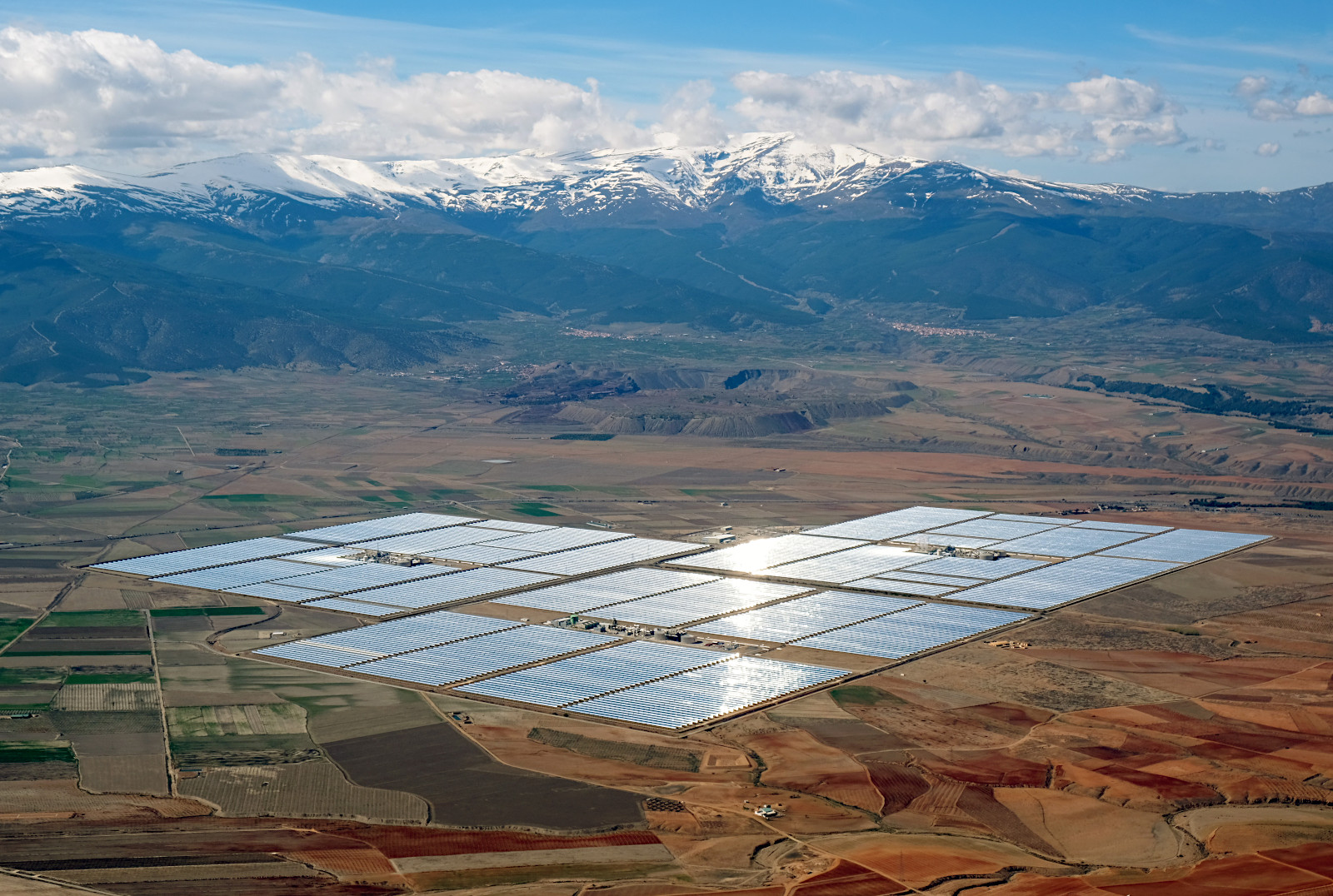
Solar farm
(Wikimedia)

We’ve just had a heat pump system installed in our home and it is so, so different from the old, gas-fired boiler that used to keep us warm in winter. I’ll give you some details about it in another article. But the main reason I’m writing is to explore what it means to be migrating towards clean, green energy; and what it means if we fail. But before we can focus on any of that, we need to understand where our energy comes from and where it goes.

Primary energy sources

We all use energy every day, as a species. And just like all other forms of life, that energy comes almost entirely from rearrangements within atomic nuclei. There are two ways this can happen – nuclear fusion and nuclear fission. Fusion is what happens in the centre of the sun where hydrogen atoms are combining to form helium, releasing a lot of heat in the process. Fission is what happens suddenly in a nuclear bomb or slowly in a nuclear reactor. Heavy atoms fall apart and release energy as they do so. The rule is that heavy elements release energy if they break apart (fission), while light elements release energy if they join together (fusion). Elements in the middle mass range around iron don’t break apart or join together easily and produce little or no energy if forced to do so. Indeed, sometimes these elements might require energy.

The sun’s energy comes from fusion in the core and is eventually released as sunshine. Sunshine heats the Earth’s surface and winds are caused as air masses expand or contract due to temperature changes. Waves, in turn, are caused by wind crossing water surfaces.

Some of the Earth’s inner energy comes from the spontaneous fission of heavy elements in the core and mantle, and some is remnant heat from Earth’s formation 4.5 billion years ago; that core energy is released in the form of volcanoes, earthquakes, and hot springs.

Tidal energy is the final source we need to consider. This is the result of gravitational forces from the Sun and Moon causing bulges in the oceans, the Earth revolves daily beneath these ocean bulges and the water depth varies as the state of the tide changes throughout the day.

It’s also gravitational contraction that gets the centre of a star dense enough and hot enough for fusion to begin in the first place. That’s it for primary energy sources. All of these count as green energy as none of them release carbon dioxide.

We can collect solar or wind energy, for example, with a clear conscience, also geothermal energy, hydroelectric power, hot springs, tidal power, or nuclear. There may be issues with all of these, but none of those issues have anything to do with releasing greenhouse gases.

Plants and animals

Everything else is what I call secondary or tertiary energy. Plants (secondary) trap some of the energy in sunlight and use it to grow and to store in chemical form. And animals (tertiary) obtain energy by eating plants or other animals. These too can be counted as green. The natural world runs on light from the sun, and all the carbon dioxide released is balanced by the light trapping mechanism of plants that uses carbon dioxide from the air and water from the ground and releases oxygen. The carbon is used to create the structural elements of wood and all the living tissues of plants and animals. Most of this is recycled naturally by decay within a few years or decades, and the carbon balance of the Earth doesn’t change. Except sometimes carbon containing materials were trapped long term in geological deposits of coal, oil and natural gas. This sequestration of carbon compensated for the continual, slow warming faced by the planet as the sun increased its output of light and heat over geological time.

Deep time

All stars grow brighter and hotter as they age, a perfectly natural and well understood process that we don’t need to consider here – except to mention that it happens. Rising temperatures cause shifts in a planet’s climate, and if it goes far enough a planet can become very hot, lose its water to space, and become a roasting desert like Venus.

This did not happen to the Earth because the continual, slow removal of carbon from the surface kept carbon dioxide levels low and significantly reduced the greenhouse effect.

Early human technology

Early human technologies did not involve the use of coal, oil or gas. When fire was first discovered and tamed for human use, the only fuels were wood and various kinds of plant and animal oils and fats. Our technology remained green, using only recently captured energy.

But around 4000 years ago, people began to discover surface deposits of coal and oil. The Romans and the Chinese knew of coal and used it on a small scale as a fuel.

We were still remaining green on the whole. The industrial revolution began with water power to mill grains, process wool into cloth, and so on. The first industrial towns were always built in valleys where there were rivers of sufficient size to power the machinery. Up to this time it’s difficult to find much change in atmospheric carbon dioxide levels in, for example, ice cores or ancient timber. When carbon fuel was needed for processes needing extreme heat (eg iron smelting, pottery firing), charcoal was used; this was made by incomplete burning of wood in an oxygen poor environment.

But then came steam power!

Advancing industrial growth

It soon became clear that charcoal was not available in sufficient amounts to be a suitable fuel for burgeoning industry. Instead, coal began to be mined in ever-increasing quantites to feed iron and steel works, power pumps to move water from mines, and more and more to power transport. Railways and shipping consumed ever larger amounts of carbon in the form of coal. Oxygen was consumed and carbon dioxide released – and at that point the human race started on a dangerous path towards climate change. At first the increase in carbon dioxide levels was imperceptible and so was the increase in average temperatures.

And that is where we were 100 years ago.

Oil is not mainly carbon, like coal. It has almost two hydrogen atoms to every carbon in its structure so it’s slightly more green than coal. Hydrogen oxide (aka water) is a less powerful greenhouse gas than carbon dioxide. Gases are even better than oil, methane is best of all as it contains four hydrogens to every carbon.

But to be fully green we must move all our energy production to solar, wind, nuclear, and tidal energy supplies. There are financial incentives to make the move too. To burn coal, oil or gas at a power station you must construct the power plant and transmission lines and then continually buy the raw materials to burn to generate power.

Wind turbines, solar panels and hydro also involve building infrastructure, but the fuels to run them – sunshine and wind – are free. This makes the energy they supply to the power grid much cheaper than energy from non-green technologies.

The economical costs of mining or drilling, as well as the health and environmental costs of emissions from non-green energy sources renders the move to greener energy an absolute no-brainer. And that’s before we start to take into account the serious risks of a warmer climate. These include rising sea-levels; unlivably high temperatures; heavier and unpredictable rain; forest fires; spreading of deserts; and harsher and more frequent cyclones and hurricanes. All of these horrors are already with us and are worsening year on year by larger and larger amounts.

Back-pedalling furiously cannot save us now. But it’s not too late to moderate the damage, eventually stabilise the problems we face, and see a gradual return to what was once normal. But we absolutely must act now, the longer we leave it, the worse it will get.

See also:

< Previous | Index | Next >

Useful? Interesting?

If you enjoyed this or found it useful, please like, comment, and share below. My material is free to reuse (see conditions), but a coffee is always welcome!

Where is the sea-ice going?

The time to begin thinking about consequences and mitigation is now, not in ten or twenty years time.

Antarctic sea-ice

Larger view
(Wikimedia)

The news headlines are covering all kinds of world issues – the Russo-Ukrainian war, the revolution in Syria, Donald Trump’s coming second term in the White House, world economics, and more.

But there’s an event going on of far greater importance than any of those other issues, and that concerns the latest results of research into Antarctic sea-ice.

The problem? It’s melting much faster than we thought.

And why is that such a big deal? Because of the implications that global warming is progressing so much faster than we realised, combined with the potential loss of ice shelves, one and a half metres of sea-level rise far sooner than we expected, and the further potential for catastrophic sea level rises much, much greater than that.

That’s alarming in anyone’s book. But it’s not alarmist, it’s just stating an unpalatable truth. The time to begin thinking about consequences and mitigation is now, not in ten or twenty years time. And it’s most certainly way past time to deny that climate change is a thing at all.

I urge you to listen to the New Scientist podcast on this, episode 279 released on 6th December 2024. It has all the details.

Useful? Interesting?

If you enjoyed this or found it useful, please like, comment, and share below. My material is free to reuse (see conditions), but a coffee is always welcome!

The truth is the truth

Unexpected results are always disappointing and sometimes very harmful

Let’s talk about truth.

Truth is like the stars in the sky above, sometimes cloudy skies hide the stars from view, but we know they’re still there. And when the clouds move away we see them clearly again, they remain the same, the constellations are still recognisable. It’s possible to navigate by the stars, they are dependable and reliable.

Truth is reliable too; when we navigate according to the truth our decisions and choices will produce the expected results. If we are fed untruth, our choices will produce unexpected results. And unexpected results are always disappointing and sometimes very harmful – to us and to others.

In this world we are surrounded by a great deal of untruth. It puzzles me that so many people assume that misinformation will result in good choices. We see it everywhere – in politics, in business, in warfare, in daily life. Let’s look at a few examples:

  • Russia’s war in Ukraine – From the very beginning truth has been discarded. Russian leaders have deliberately ‘adjusted’ history, results of battles, and their motives. Perhaps they believe their own claims! So many decisions on goals, strategy and tactics have been based on untruth and the disastrous results are plain to see.
  • Brexit – From the very beginning truth has been discarded. British leaders have deliberately ‘adjusted’ history, results of policy changes, and their intentions. Perhaps they believe their own claims! So many decisions on goals, legal positions and rule changes have been based on untruth and the disastrous results are plain to see.
  • Anti-vaccination campaigns – From the very beginning truth has been discarded. Campaigners have deliberately ‘adjusted’ the science, results of trials, and their fears. Perhaps they believe their own claims! So many decisions on messages, responses to other views and serious dangers have been based on untruth and the disastrous results are plain to see.
  • Climate change denial – From the very beginning truth has been discarded. Deniers have deliberately ‘adjusted’ evidence, results of scientific study, and their arguments. Perhaps they believe their own claims! So many decisions on arguments, scientific reasoning and inferences have been based on untruth and the disastrous results are plain to see.

Do you see a pattern here? You may disagree with me strongly on any or all of my assertions above, but the plain fact remains that if you fail to see the truth about something, deliberately or not, and you base your actions on the flimsy foundations of error, lies, or misinformation (your own or from others), you will fail. Sooner or later bad choices will result in bad outcomes. They always do.

Claiming something to be true when it’s false will never, in the long term, work in your favour or in mine.

Truth matters. Let’s value it, search it out, base our choices on it, and benefit from the best outcomes available to us.

Climate change – What can I do?

By showering less often I’m cutting my water use to less than half, and turning down the flow rate reduces water use by about half again.

I’ve just watched the latest ‘Just have a think’ video from Dave Borlace. I really enjoy his videos – they are well produced, clear, uncompromising, polite, thorough … well, you get the idea. The latest one asks what we can do individually to help reduce the pace of climate change, and he describes a survey that shows most people are just waiting for someone else to do something about it.

That rings true!

Here’s the video, watch it, then scroll on down and read my personal take on, ‘What can I do?’ I believe we can have a large impact – if we all pull together.

What can I do?

I’m going to share one idea with you, something I’ve been doing for a long time now, and something I’m finding quite easy that also makes a big difference. Just remember though, this one idea is just an example. Maybe you can think of something in your own life that you could change that would also have a useful impact.

I used to shower every day, after all it takes less time, water and energy than having a bath and that has to be a good thing, right? Well, yes.

But for a number of years now, I’ve made a point of showering once every two or three days, turning down the water flow, turning down the temperature, and also minimising my use of shower gel. I still enjoy my showers, the temperature’s warm enough to be pleasant, I’m not advocating cold showers!

So how does this help?

Much more than you might think. By showering less often I’m cutting my water use to less than half, and turning down the flow rate reduces water use by about half again. So I’m using only 25% as much overall. Turning down the temperature a little combined with the reduced water use reduces the heating energy required to perhaps just 20%. I only use shower gel under my arms and around the more personal parts of my body, cutting consumption by 50% or maybe a bit more. Combined with showering less often my use of shower gel is therefore down to 20 or 25% overall.

Bear in mind that shower gel takes energy to manufacture as do the plastic bottles that it comes in, as does disposing of the empties. Add in the energy cost of producing and supplying water, and of removing and treating the waste water, and it all begins to add up.

I hope this illustrates the energy savings that can be achieved by one, small change in one person’s lifestyle. And there are other benefits too. For example, my skin microbiome is probably more healthy for the reduced frequency and coverage of shower gel. If we all did this, and thought of other ways to reduce our individual energy use, we could make a huge difference.

Don’t just leave it to others. Work out what you can do – and make a difference!

See also