Meet two of my online friends

They are both unusual people, have rather special ways of looking at the world, and comment from opposite sides of the war in Ukraine.

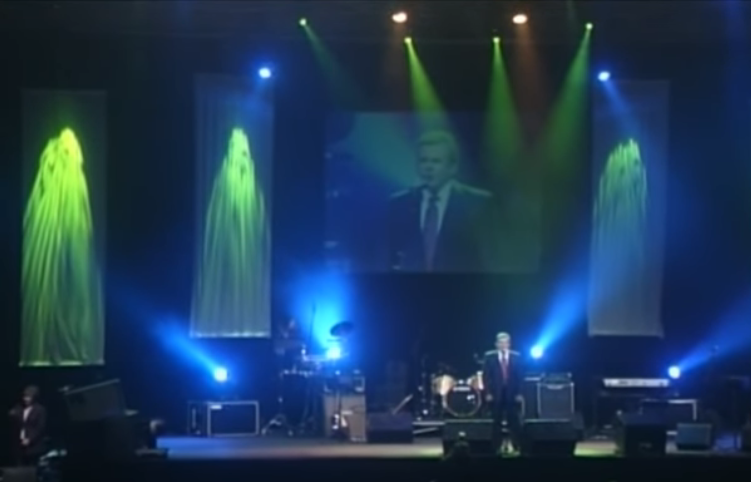
Yaroslava (Yara) is Ukrainian, she lives in Kyiv with her son and her cat; she writes and photographs what she sees around her and posts news and thoughts. Konstantin is Russian, but left in 2022 and now lives in Uzbekistan; he gives 30-minute live YouTubes about life and events in Russia followed by open discussions online, and he runs a breakfast club for Ukrainians and Russians in Tashkent.

I’m exaggerating when I say they are my friends. I exchange messages with Yara occasionally and follow her on Twitter, but I’ve never had a reply from Konstantin. But to me they feel like friends. They are both unusual people, have rather special ways of looking at the world, and comment from opposite sides of the war in Ukraine. I think they would agree with one another on many things, both oppose the invasion and the war, and both feel compelled to communicate these things to the world.

I’d like to introduce you to them.

Yara

The two best places to look for Yara are on BuyMeACoffee and on Twitter. Click through and read some of her posts. Yara is artistic and expresses herself poetically, what comes through most clearly are her heart and her feelings in the moment. She writes about the war (of course) and she uses imagined dialogues quite often. On Twitter she sometimes tells us how she is feeling, shares photos (most of them very, very good) and makes delightful short videos as she walks around Kyiv. Yara is proud of her city, and rightly so.

Konstantin

Find Konstantin on YouTube (Inside Russia), I recommend his daily live videos. He thinks things through very thoroughly before starting a session, and usually he sets out his points carefully and convincingly. Sometimes his emotions show through a little of course, but logical thinking, business experience, and planning ahead are his strengths. He has a relaxed pace in his livestreams and this can make him seem slow to develop an argument, but it also make it easier to follow the underlying logic.

Summary

Yara and Konstantin are two very different people. What they have in common is that through no choice of their own they have been deeply affected by the war – as have their friends, families and neighbours.

Both have had their working lives interrupted, and both have embarked on new and perhaps unexpected projects. Both are worth listening to if you want to better understand this terrible conflict and how it’s disrupting life on both sides.

I’ll say no more about them, they will both speak for themselves.

Nova Khakovka

Under the appalling circumstances of the breach of the Nova Khakovka dam a few days ago, I can’t publish this post without mentioning it. But words fail me. There are none that fit. ‘Tragic’ barely scratches the surface. And if it was a deliberate act, ‘evil’ and ‘heinous’ are utterly inadequate.

Yara and Konstantin have both responded to the breach in their different ways and I’m sure they will mention it again as the details and the terrible after-effects become clearer. The world will not forget this event. If it was due to poor maintenance or improper management (this seems rather unlikely but is conceivable) then Russia must take responsibility because they invaded Ukraine, captured the dam, and were in control at the time of failure. If it was deliberately breached following a political or military order to do so, that is even worse and the world will not forgive those responsible. In time there will be clarity on the cause of the dam failure, currently there is a great deal of circumstantial evidence pointing to a deliberate act on the part of Russia.

Fallen Rhododendron flowers

He invites us to share in his spiritual life, a gift since we cannot deserve or earn it.

Fallen Rhododendron flowers lie on the ground – they are still beautiful. If you follow Jesus, perhaps you might say the same of fallen people (ie all of us); fallen people are lost but still beautiful too. But unlike the flowers, for fallen people hope remains; there is a Way, a Truth, a Life.

Rhododendron flowers lying on the ground where they fell

Jesus said, ‘I am the Way, the Truth, and the Life

The Way

Jesus is the Way because he is the only road to safety. We are free to follow any route through life that we wish, but the only road that promises and ensures safety is the road that Jesus travelled. Like us, he was born, lived as a child and went through the process of growing up. Unlike us he didn’t mess up.

If I want to walk in safety, I can only do it by walking with Jesus. I need to get to know him better, listen to what he says, say what I hear him say, do what I see him do.

The Truth

Jesus is the truth because he doesn’t hide from us. How can we define truth and falseness? Well, people sometimes say of a person, ‘What you see is what you get’. This is never literally, reliably, always true of any other human being. We hide things for a variety of reasons, even as children. If we’re ashamed of something, we hide it. If we break something, we might say someone else did it, or pretend we weren’t there at the time. Human nature is to turn to what is false when the truth is inconvenient or embarrassing or dangerous. Jesus is the exception that proves this rule of human nature. Not only did he always stick to what is true, he is truth personified.

The Life

We are alive because we are self-sustaining physical systems carrying out physical processes. Anything that destroys the systems or stops the processes causes us to die. If I’m not allowed to breathe, I will die. If I’m not allowed to eat or drink, I will die. Jesus, during his time with us, was just the same. But he was nailed to a cross which made it impossible to breath unless he could support his body weight, and he was not allowed to eat or drink and when, finally, he was offered something, he refused it. As he grew weak, breathing became impossible and he died. Yet he also has a spiritual life, and physical life was restored to him for a time as well (though bodily he was different in some very significant ways).

He invites us to share in his spiritual life, a gift since we cannot deserve or earn it. And he doesn’t want to wait, he chooses to give us spiritual life now, while we are still physically alive. For a time we can have both as he did, and later we retain the spiritual life even after our physical life is over.

Yes, it’s a mystery. No, we can’t explain it. But Jesus is not only the Way, and the Truth, he is also the Life!

If you want to follow the Way, discover the Truth, and live the Life, you really need to get to know Jesus better. One way is to read the book called Luke. It’s in the Bible, and it’s available online for free.

The end of humanity?

For such an alarming topic it’s a remarkably calm discussion, but also a very informative and thought-provoking conversation.

The rise of AI and the possibility (some would say certainty) that this means the end of human civilisation and the extinction of our species, are topics being seriously warned against by a number of thinkers, scientists, and AI experts.

Artificial General Intelligence – Image from Wikimedia

The Guardian discusses these issues with ‘the father of AI’, Geoffrey Hinton.

Listen to the podcast and see what you think. The potential end of humanity is not something to be swept under the carpet. We need to think about it right now. It would be extraordinarily foolish to wait, it might already be too late. For such an alarming topic it’s a remarkably calm discussion, but also a very informative and thought-provoking conversation.

I believe everyone should have the chance to listen to this.

See also:

Human origins

Theorists can move forward again – and the picture seems a little more complicated than we thought.

Where did we come from, and how? We’ve long thought in terms of an evolutionary ‘tree’, but our origins in Africa are more like a braided channel. This idea provides a better fit to the data.

Based on fossil evidence alone, studies of human evolution have long agreed that modern humans evolved in east Africa and radiated out from there. But with the development of cheap, fast and reliable DNA evidence from modern populations, and DNA from fossil teeth and bone samples, it’s becoming clear that theorists can move forward again – and the picture seems a little more complicated than we thought.

Human dispersion, events described in the article all took place in Africa – Image from Wikimedia

On 17th May, Ragsdale and others published a research paper in Nature; ‘A weakly structured stem for human origins in Africa’; their evidence suggests evolutionary connections in populations that were separated for a while before recombining. So instead of an evolutionary tree (which most people were expecting) it seems that our human past is more like a set of braided channels.

Previous views on human evolution proposed a tree structure (branching but not recombining). However, the new ‘weakly structured stem’ model fits the data better than a tree model. It also explains the diversity of genetic forms in modern human populations, and shows that there is no single place in Africa where humans ‘originated’. After this process within Africa, humans spread out as show in the map.

See also:

Blast from the past… 6

In May 1993 we made some very large bubbles in the back garden.

< Previous | Index | Next >

Notes from bygone years – May without limits

A year ago

In May 2022 we visited St Neots in Cambridgeshire, our home town before moving to Cirencester where we live today. We were visiting friends for a big party in their local village hall.

Pretending to be on a tropical beach

The whole thing was themed for a Caribbean feel, and we all had our photos taken against a backdrop of palm fronds, a golden beach, and sparkling sea dotted with distant islands.

<Apr 2022 – Jun 2022>

Two years ago

In May 2021 I took a photo of this plaque in Black Jack Street, Cirencester. It commemorates 1900 years of the town’s existence, founded by the Roman invaders in 75 AD. I wonder what they’d make of it now?

The phoenix rising from the ashes has long been Cirencester’s emblem. Corinium, as the Romans called it, was a frontier settlement in 75 AD and the years immediately following, but it grew to become the regional capital of south western Britain – the province of Britannia Prima.

Wikipedia has a good article about Corinium.

<Apr 2021 – Jun 2021>

Five years ago

In May 2018 I wrote about the work going on in our new house. The builders had done much of the work on the new extensions, but nothing was finished yet and a lot of our possessions were inaccessible – including our summer clothes. And the weather was getting warmer and warmer!

Our partly liveable house

If you’d like to know more, read the original article.

<Apr 2018 – Jun 2021>

Ten years ago

In May 2013 I was reading ‘The Shaping of Things to Come’, an excellent book by Michael Frost and Alan Hirsch. Amongst other things, they remark on the fact that Jesus was a Jew, the New Testament was written almost entirely by Jewish authors (the exception being Luke), and the earliest church (in Jerusalem) was Jewish in nature too. If we are to understand Jesus, the New Testament, and the church, we have to pay attention to their Jewishness. Read the original post.

<Apr 2013 – Jun 2013>

Fifteen years ago
The ‘Sagrada Familia’

May 2008 – We had a holiday in Catalonia and visited Barcelona where we took a look at the famous Sagrada Familia with its amazing ‘biological’ shapes. What an astonishing place it is!

To learn more about this wonderful feat of design and engineering by the architect Antoni Gaudi, read the Wikipedia article.


<Apr 2008 – Jun 2008>

Twenty years ago

In May 2003 I was reminded about the significance of rivers and their behaviour and about the river in the books of Ezekiel and Revelation. Life is not about the mundane things we do from day to day, and we don’t get far by our own abilities. Real life has an essentially spiritual focus. I wrote a blog post about a meeting that helped me see these things more clearly.

<Apr 2003 – Jun 2003>

Twenty-five years ago

May 1998 saw me designing an automated news website for internal use by research teams at Unilever. I’d only been in the job for a month, and I already had an overall mechanism in mind and was working on the programming required.

<Apr 1998 – Jun 1998>

Thirty years ago

In May 1993 we made some very large bubbles in the back garden. We had a special bubble-making kit with a large fabric loop on the end of a wand. It was an amazing process! The picture shows my daughter Beth and nephew Tom experimenting with a bubble.

<Apr 1993 – Jun 1993>

Thirty-five years ago

In May 1988 I was working at Long Ashton Research Station near Bristol, developing techniques for imaging water droplets on waxy leaves by rapid freezing and scanning electron microscopy. This led to a paper on the topic.

<No earlier data – Jun 1988>

Forty years ago

It’s May 1983 and time for the annual school fete; my daughter Beth and her friend Vicky were in fancy dress, walking with their teacher.

How time flies – my grandchildren are older now than my children were then.

<No earlier data – Jun 1983>

Forty-five years ago

In May 1978 I borrowed a friend’s car (we didn’t have a car at the time) and drove with a very excited daughter to visit her baby sister at Bristol Maternity Hospital.

<No earlier data – Jun 1978>

Fifty years ago

In May 1973 Mum and Dad visited us for the day and we spent some time in Clevedon. Here’s Dad taking photos on the rocky shoreline.

<No earlier data – Jun 1973>

Fifty-five years ago

In May 1968 I was in lodgings in Pershore, working on a fruit and vegetable farm nearby as part of my undergraduate degree at Bath University. It was a sandwich course in horticulture, and the summers were the industrial experience part of the course.

<No earlier data – Jun 1968>

Sixty years ago

May 1963 and I was in my fifth year at Cirencester Grammar School.

<No earlier data – Jun 1963>

< Previous | Index | Next >