What’s in an image? Sometimes quite a lot, more than meets the eye.
I’m posting an image every day (or as often as I can). A photo, an image from the internet, a diagram or a map. Whatever takes my fancy.
Welsh National Botanic Garden
We enjoyed a holiday in Ireland from 28th July to 12th August and I’ll share some photos from our trip. I’ll return to more Roman villa photos later.
This first photo is from our journey out from Cirencester where we live. We took the M5 down to the Second Severn Crossing and then the M4 to its end in South Wales, stopping later at the National Botanic Garden of Wales for a light lunch and a break from driving.
The photo shows a view inside their amazing ‘Great Glasshouse’, the world’s largest single-span glasshouse. With its protection, it’s been possible to nurture not just some tropical and semi-tropical plants, but entire biomes. The exprience reminded us of Cornwall’s Eden Project. Although the Great Glasshouse is smaller, it is still very, very impressive.
If you had a greenhouse this big, what would you like to grow in it?
Images from our Irish holiday 2024
For convenience, here’s a list of all the Irish holiday images:
If you enjoyed this or found it useful, please like, comment, and share below. (If you don’t see those links, click the article’s title above the main photo and they will appear.) Send a link to friends who might enjoy the article or benefit from it – Thanks! My material is free to reuse (see conditions), but a coffee is always welcome and encourages me to write more often!
Notes from bygone years – Some of the most august months of August Hint: Click on the thumbnails for larger images.
August 2023 (1 year before publishing this article)
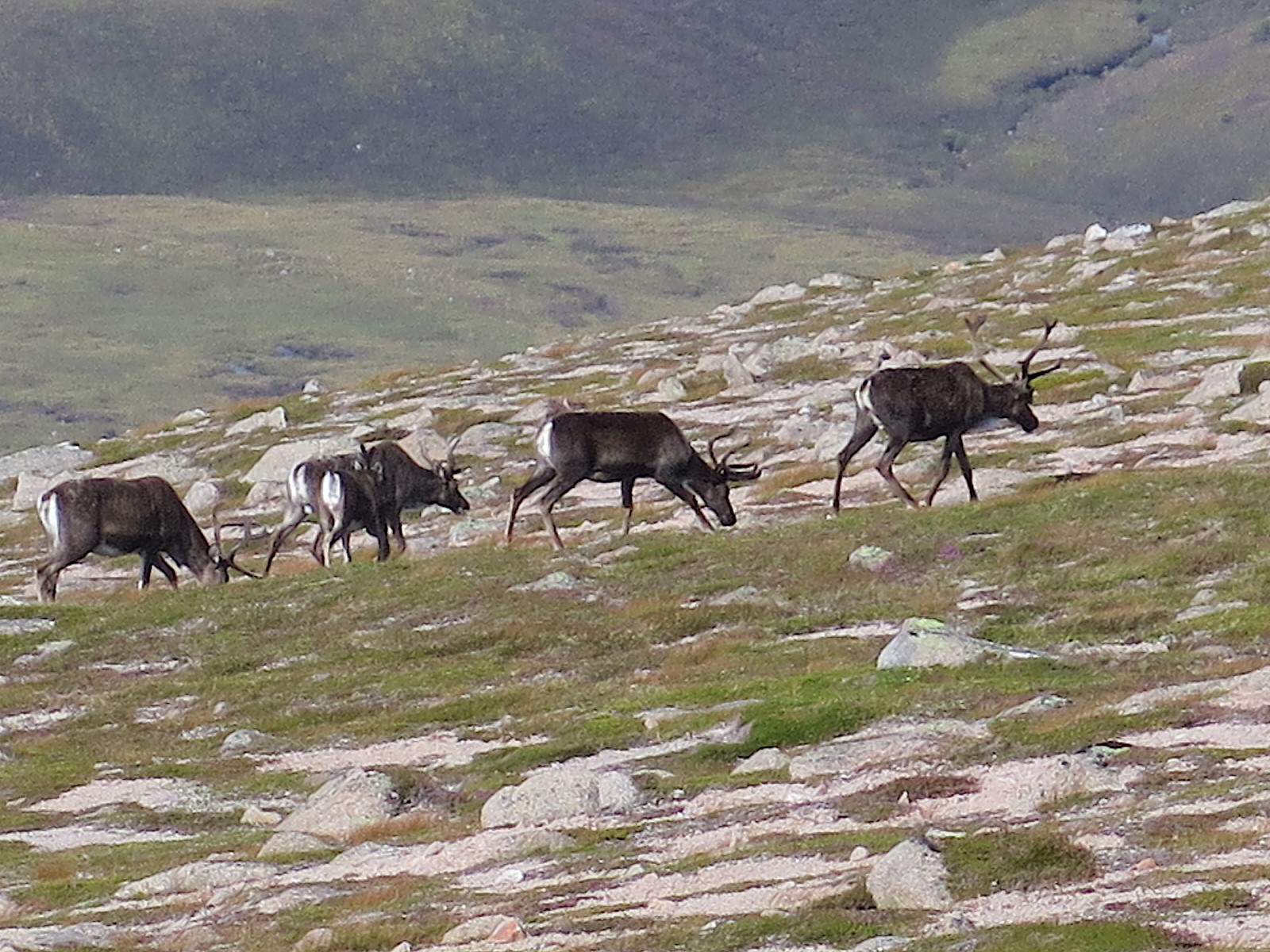
Reindeer on Cairn Gorm
For our family holiday this year we had decided to book a big house in Scotland (there were ten of us, me and Donna, my two daughters and their husbands, and four grandchildren) so we needed a lot of space! We did many interesting trips and walks, and some of us decided to attempt the summit of Cairn Gorm. We saw a herd of reindeer on the way up, and the summit was in the clouds. If it had been clear, we might have gone further south-west for the views, but we really enjoyed our walk, even so.
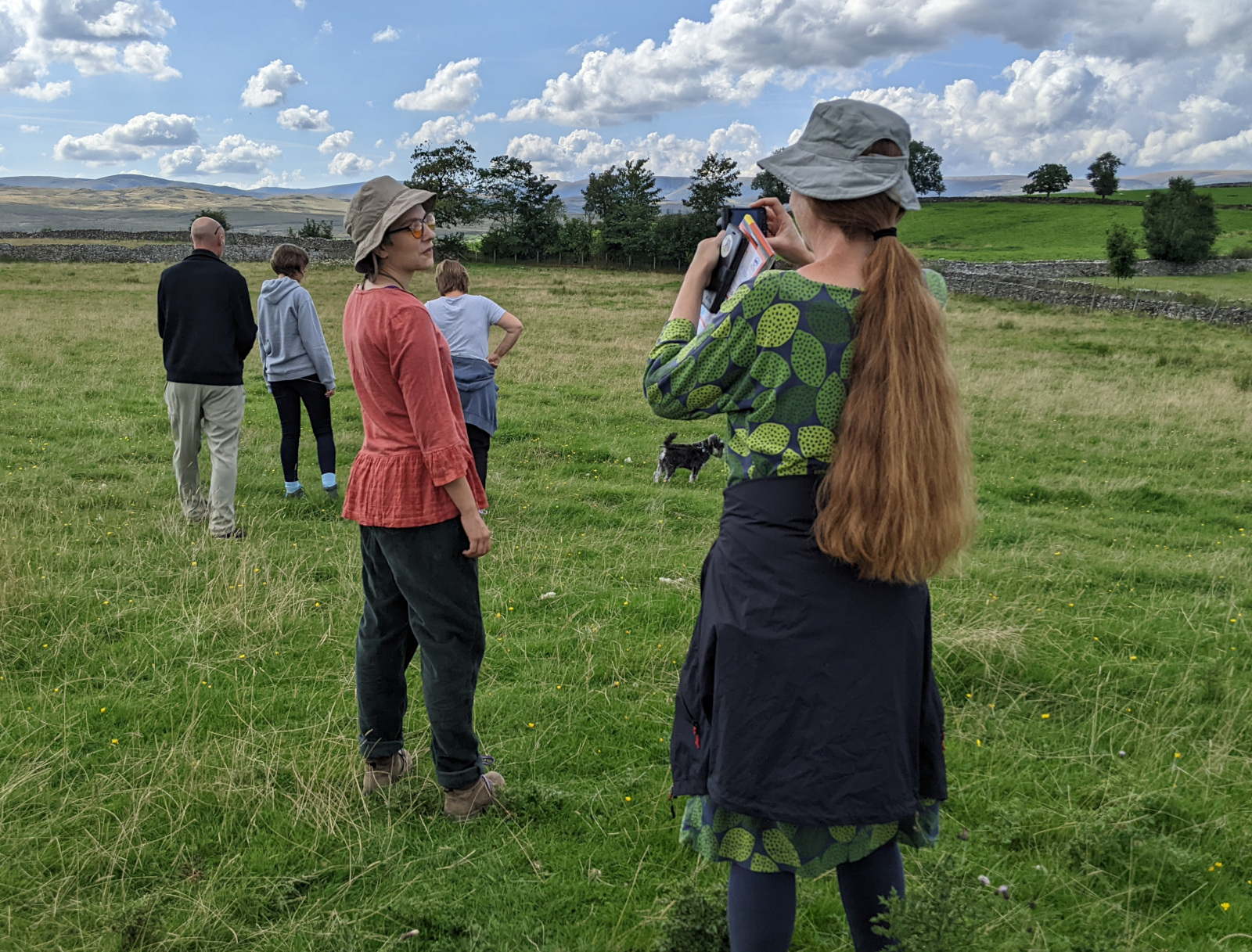
This year’s family holiday was at Shap in the Pennines. In the photo, part of the family was out for a walk in the lovely countryside around the holiday house.
As usual, there was a lot to see and do, the Lake District is not far from here and the Pennines are full of interest too.
Some of us walked from Keswick to the top of Skiddaw one day. There were good local walks from our house in Shap, too. Donna and I spent a day exploring Haweswater Reservoir and other parts of the Lake District. We usually do a jigsaw while on holiday – this time it was a picture of Cirencester Market Place.
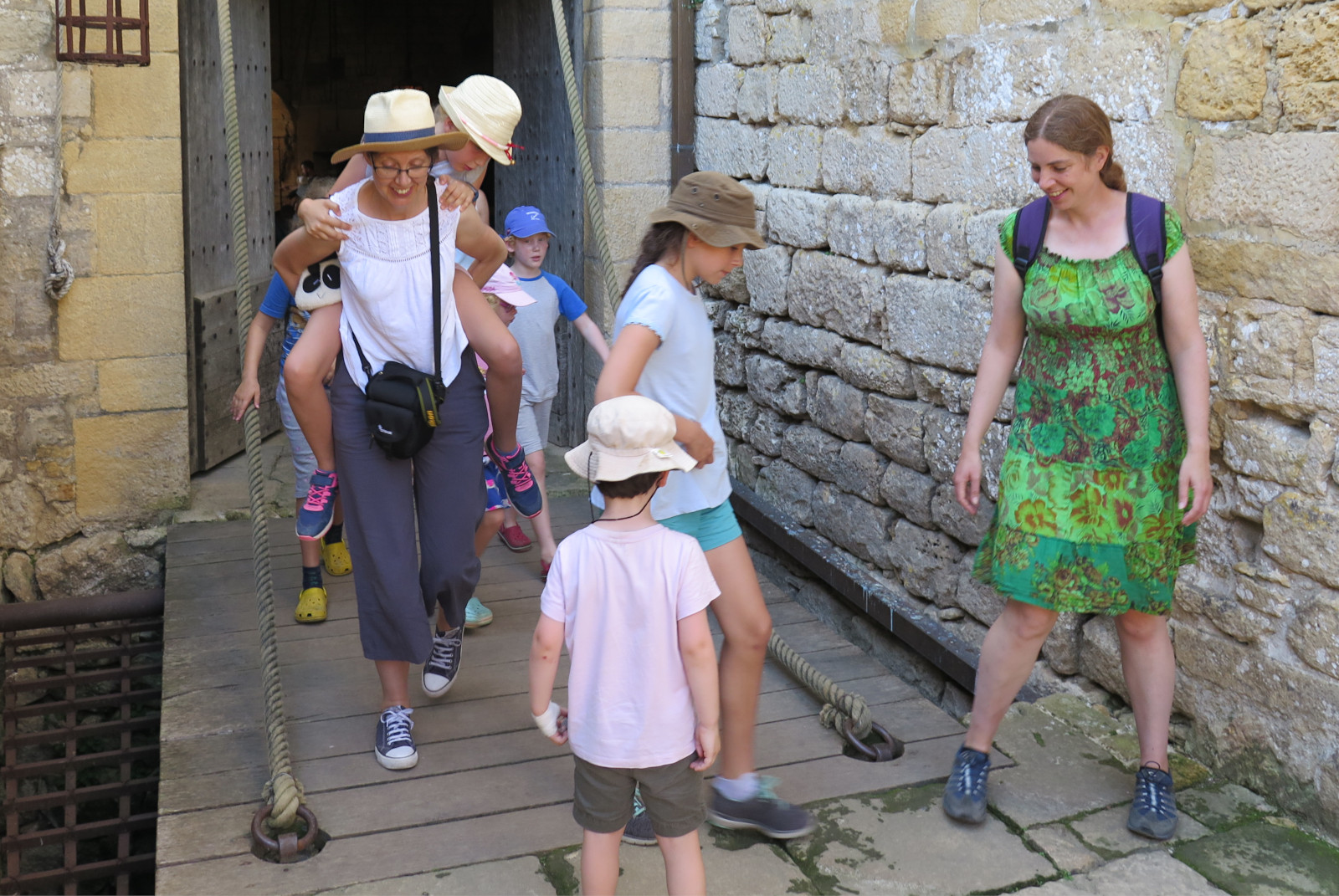
This year’s family holiday was in the Dordogne; in the photo, some of us are crossing the drawbridge of the lovely medieval castle, ‘Château de Beynac‘. Visiting this place was a fairy tale experience, we have nothing of this age and completeness in England apart from Dover Castle, perhaps. The château was just one of many interesting visits, and the holiday home was perfect for us, with a pool for the children and room for us all to spread out.
World events: 11 billion tons of Greenland ice melted in a single day; in Iceland, a funeral was held for the lost Okjökull glacier.
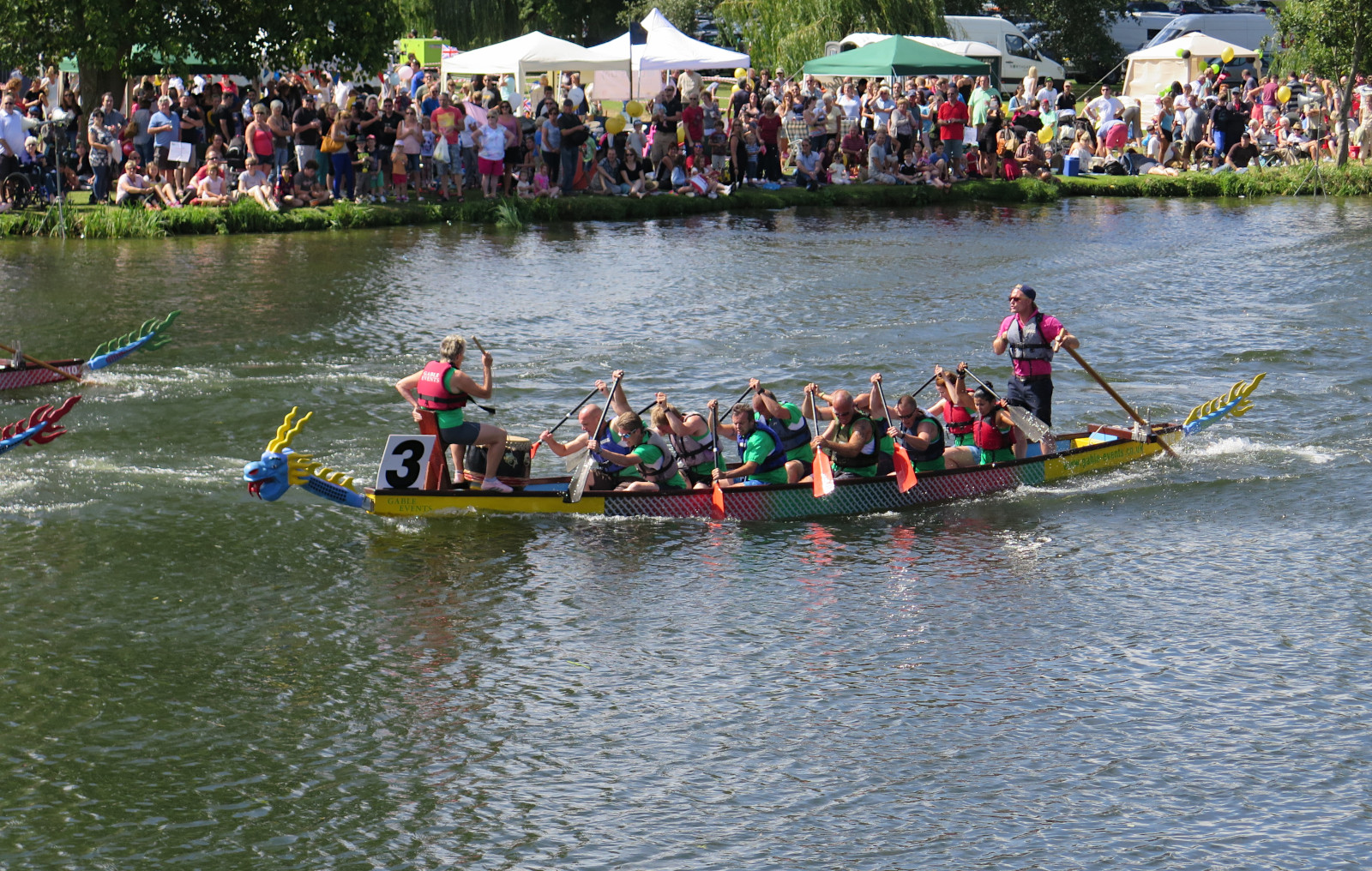
We returned from our family holiday in Lyme Regis on 1st August, and visited Donna’s Mum and Dad in Broadstone on our way home. Two of our friends were ill, one was in hospital after heart surgery and was recovering slowly and getting out of danger, the other had hepatitis and had been in and out of hospital. Both were improving. On the fun side, we watched dragon boat racing on the river in St Neots (photo).
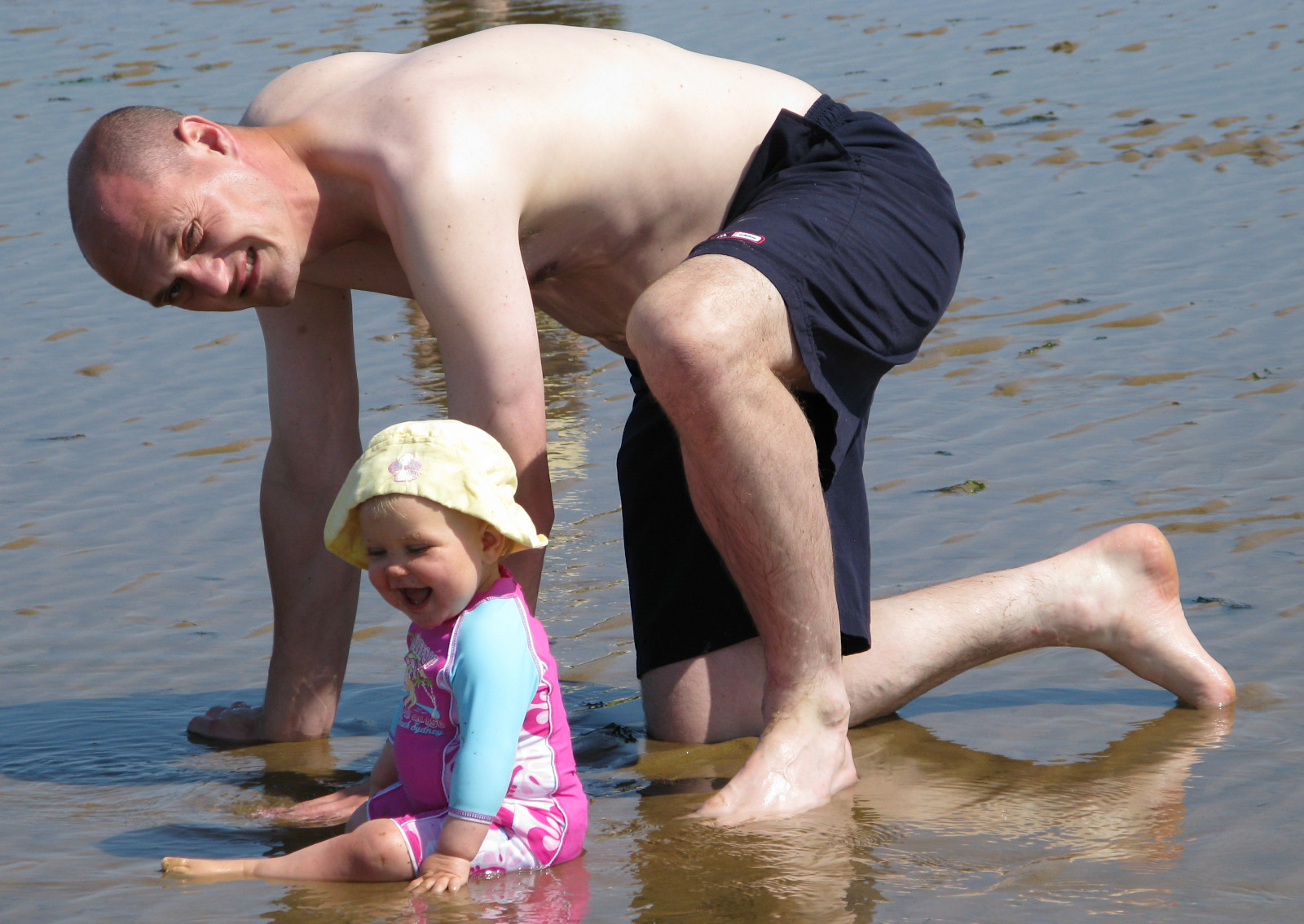
August is certainly the month for holidays in the UK. In 2009 we rented a large house in Aldeburgh and of course, the beach was high on everyone’s list of things to do. The photo shows Sara and her Dad, Steve, on Hunstanton Beach.
I imagine the conversation going something like this… Sara: ‘Come on Daddy, sitting in the water is great!’ Steve: ‘Hmm.. Nah, I’d rather not, thanks.’
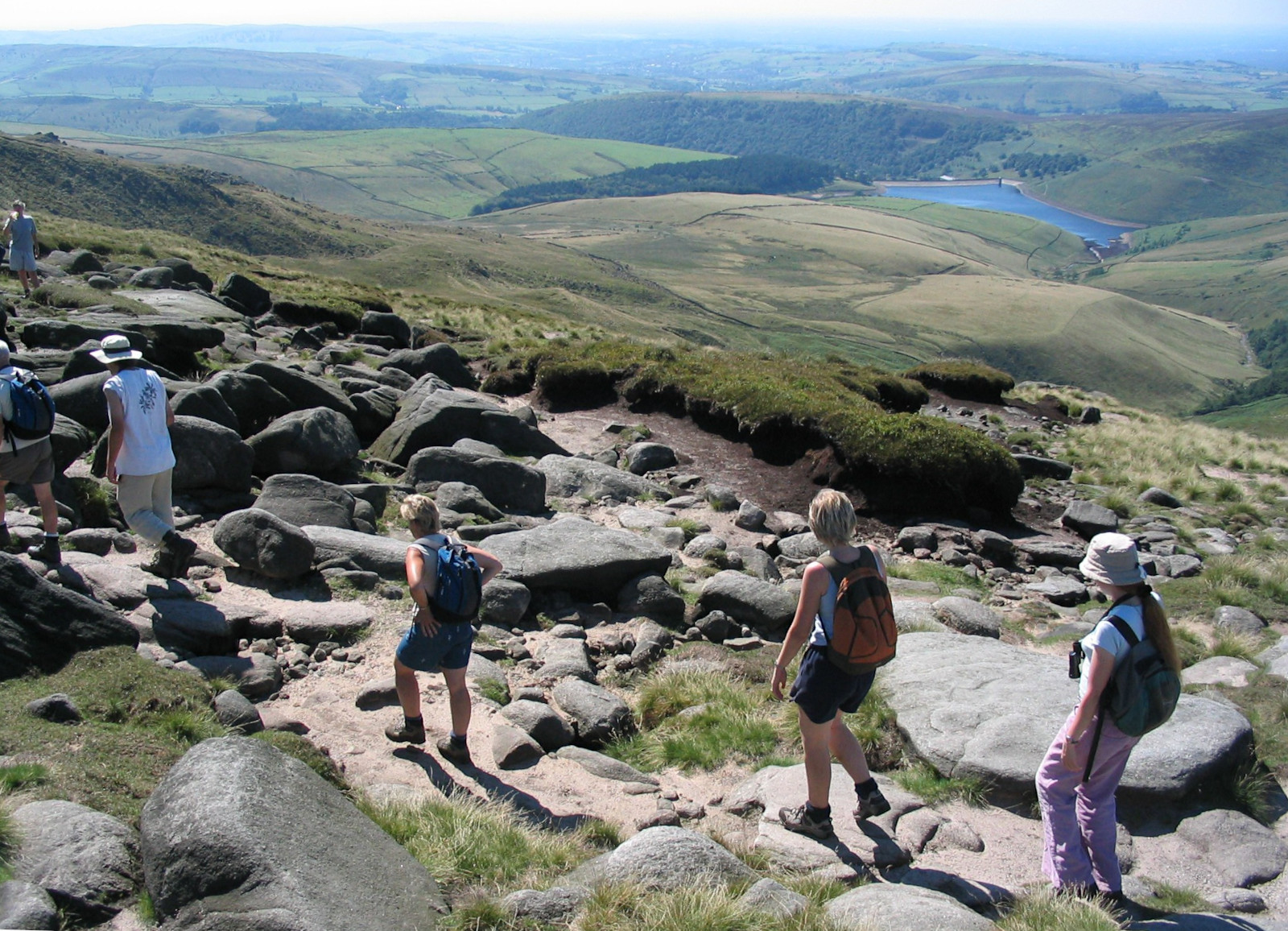
We made a day trip to walk on Kinder Scout with Beth and Paz from their home in Disley, and met up with friends from St Neots that we knew through Open Door Church.
It was a great walk on a fine, sunny day, heading up Grinds Brook from Edale, then over the top to Kinder Downfall, back along some of the edges and down Jacob’s Ladder.
World events: NASA’s MESSENGER spacecraft was launched to visit Mercury; and the Summer Olympics were held in Athens.
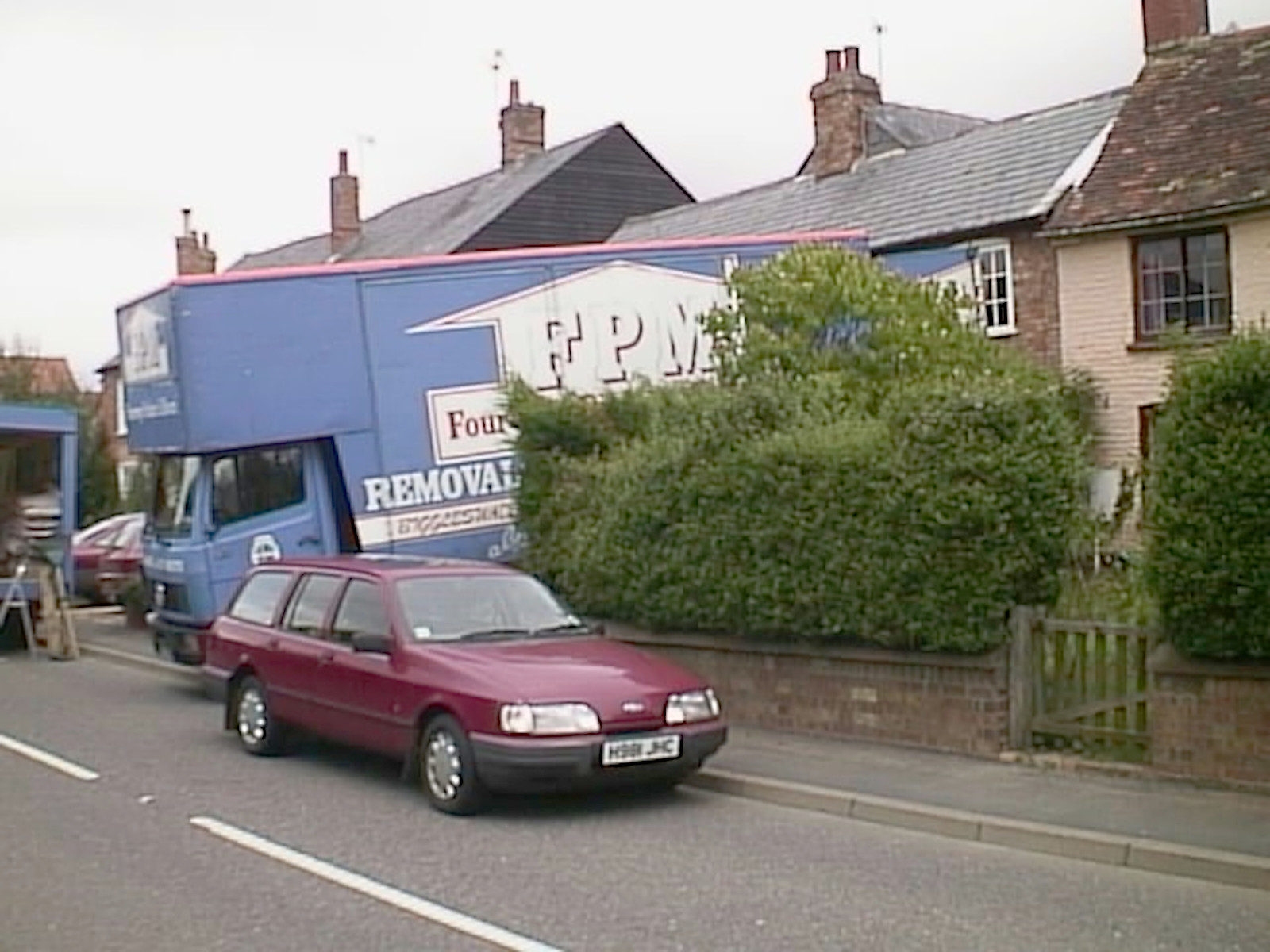
We moved house on 20th August, from Tilbrook to St Neots, from a two-bedroom cottage to a four-bedroom detached house. Our furniture looked very sparse in the new, larger space!
We’d enjoyed living in a village, but looked forward to walking to the shops and only needing the car for longer trips.
World events: There was a total solar eclipse in Europe; and East Timor regained independence from Indonesia.
August was a difficult month. We went to the Bristol Balloon Fiesta on 6th, great fun as always! The photo shows Beth and Judy at the event. Judy was diagnosed with bowel cancer, though it seemed likely surgery would successfully remove it.
Judy, Beth and I had a holiday at Janzé in Normandy and the surgery was to be performed on our return, probably early in September but it might have been late August.
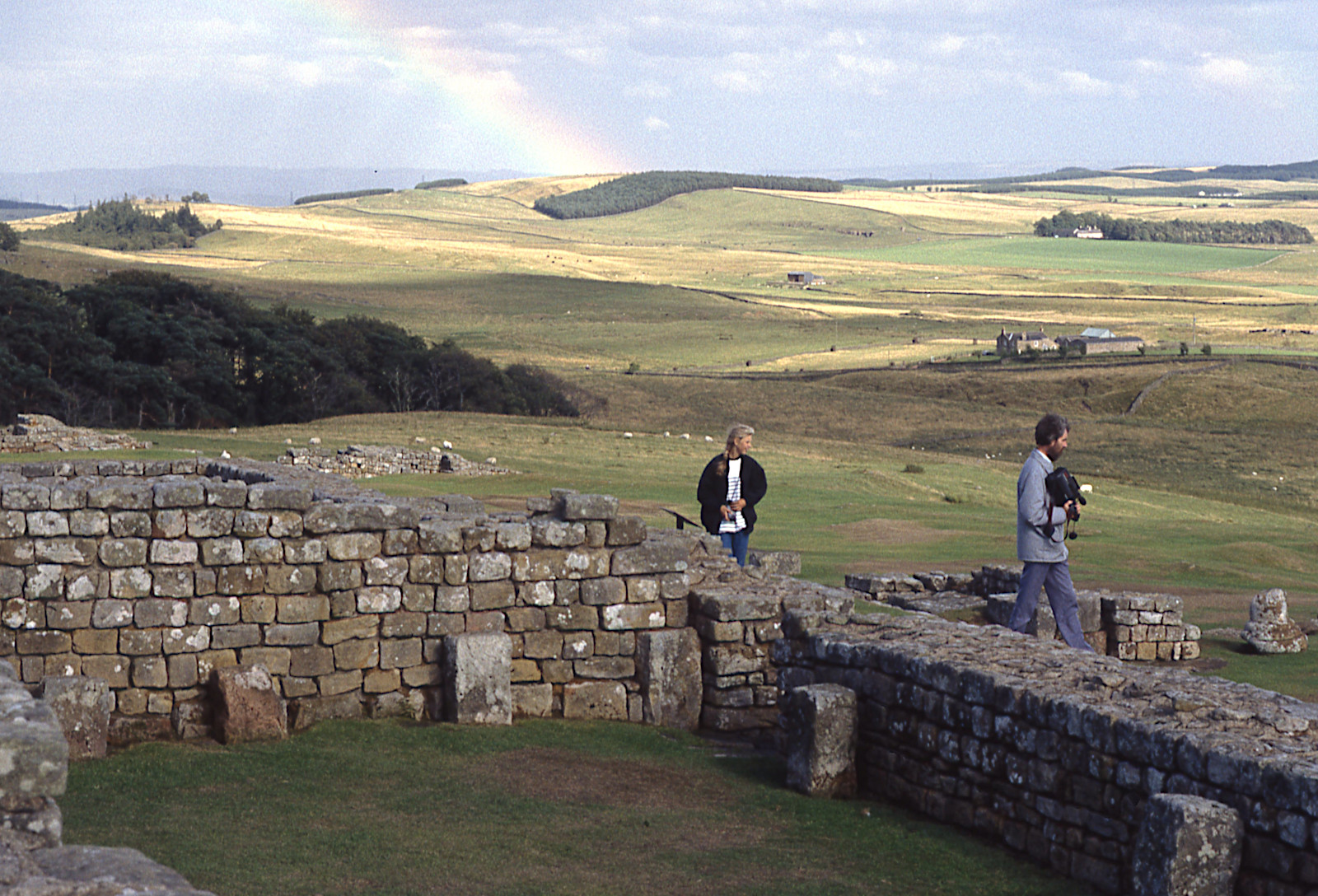
This year’s holiday was on the northern coast of the Lake District at Silloth, we were able to visit Hadrian’s Wall, Wordsworth’s house, Edinburgh, Carlisle and more.
In this photo taken by Judy you can see part of the Roman Wall fortress of Housesteads, with Debbie and me just beyond the building.
World events: The Singing Revolution in the Baltic States demanded independence from the Soviet Union; and NASA’s Voyager 2 captured images and data at Neptune.
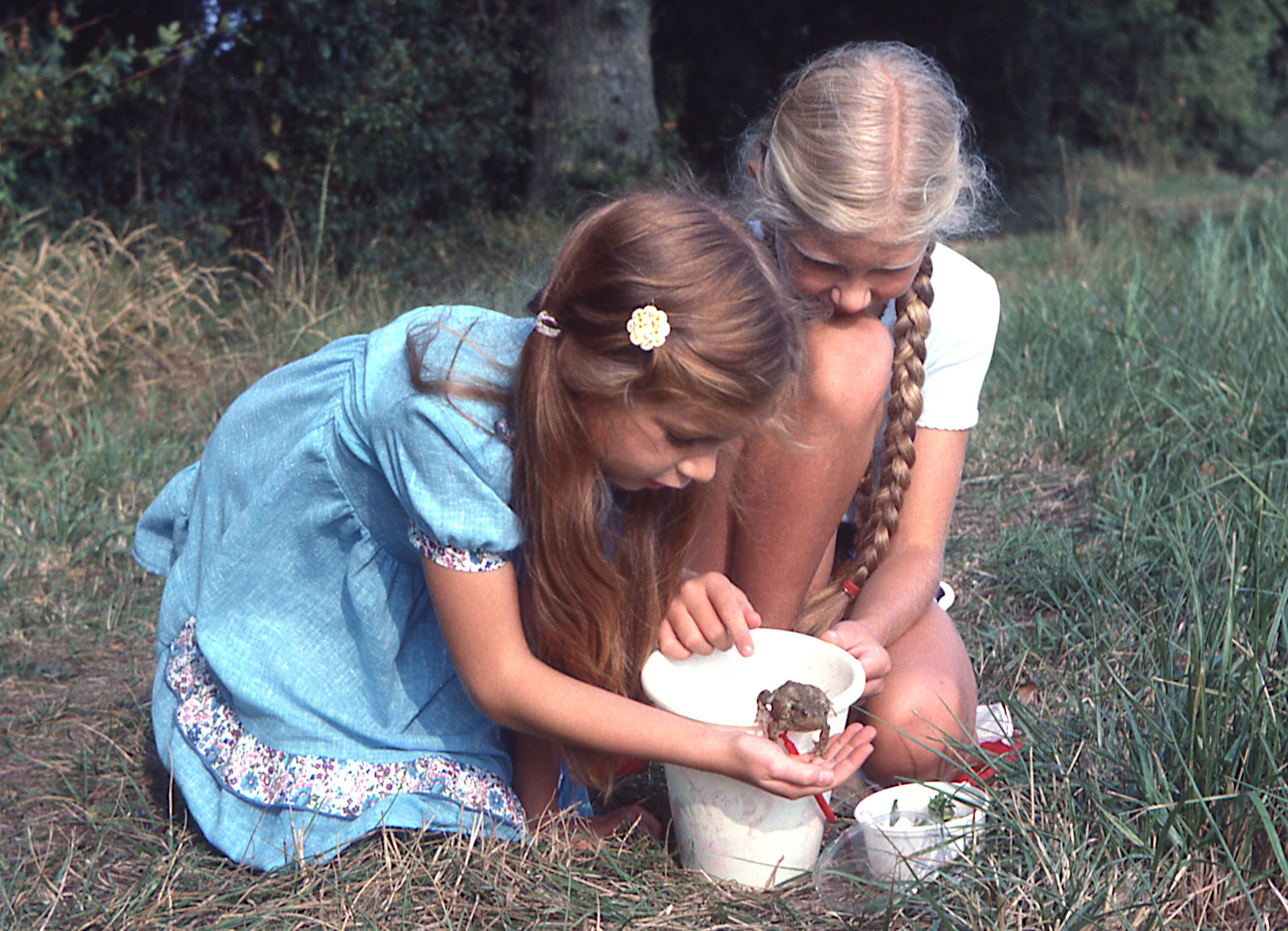
Soon after our holiday, we found a toad in our garden, trapped it in a plastic bucket, and took it to a nearby field to release it. In the photo, Beth has the toad moving onto her hand with help from Debbie, and soon afterwards it was free, hopefully in a toad friendly environment.
It wasn’t unusual in Yatton to find wildlife in the house or garden – a field mouse, a bird, a frog or whatever.
There’s remarkably little to say about this month, I’ve failed to locate any photos, cine film, documents or other physical evidence.
We were living at 22 Rectory Drive, in Yatton; Judy was being a full time Mum with Debbie aged four and Beth just one and a quarter. I was working on fruit tree pollination at Long Ashton Research Station.
By this time Judy would have been four months pregnant and we were well aware of it. We were living in an unfurnished flat in Belmont Road, Bristol, and trying to buy a house. Judy was aware of the years ticking by and wanted to start a family, while I was hoping we could sort the house while on two salaries.
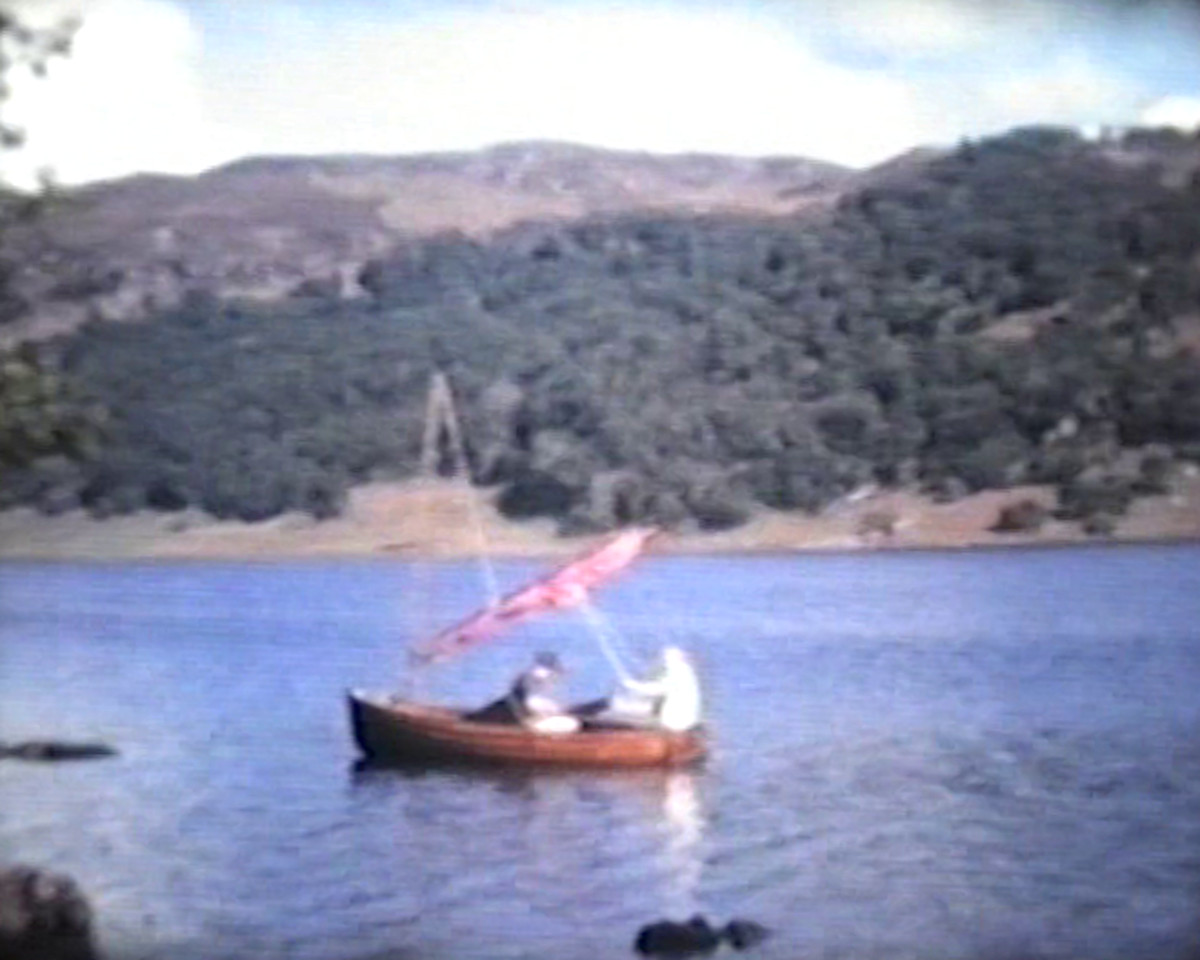
The still from Dad’s cine camera shows Cindy’s husband Peter boating on Loch Nell near Oban. Mum and Dad had driven up to visit them, and Pete’s Mum and twin brother were there as well.
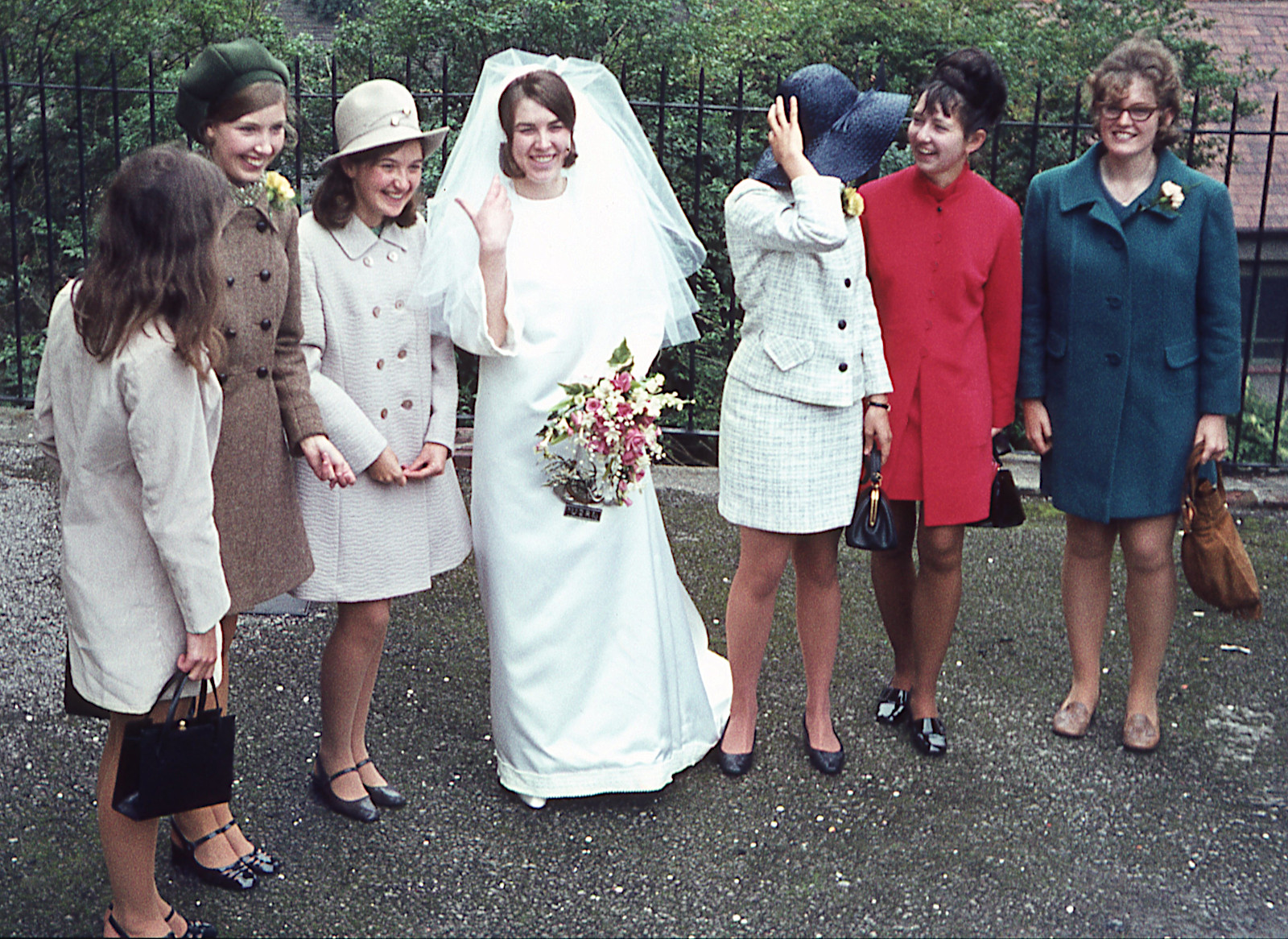
The summer of 1969 saw Judy’s friend Big Mary marry her PhD fiance Malcolm. They were both Welsh speakers, as many of the Aberystwyth students were. The photo shows Maggs (Judy’s closest friend at Aber), Judy, Little Mary, Big Mary and Jan (I think) in red. The other two I recognise but can’t put names to.
I took the photo after the Welsh chapel ceremony, but before the reception. It was a valleys wedding, I think in Cwmbran.
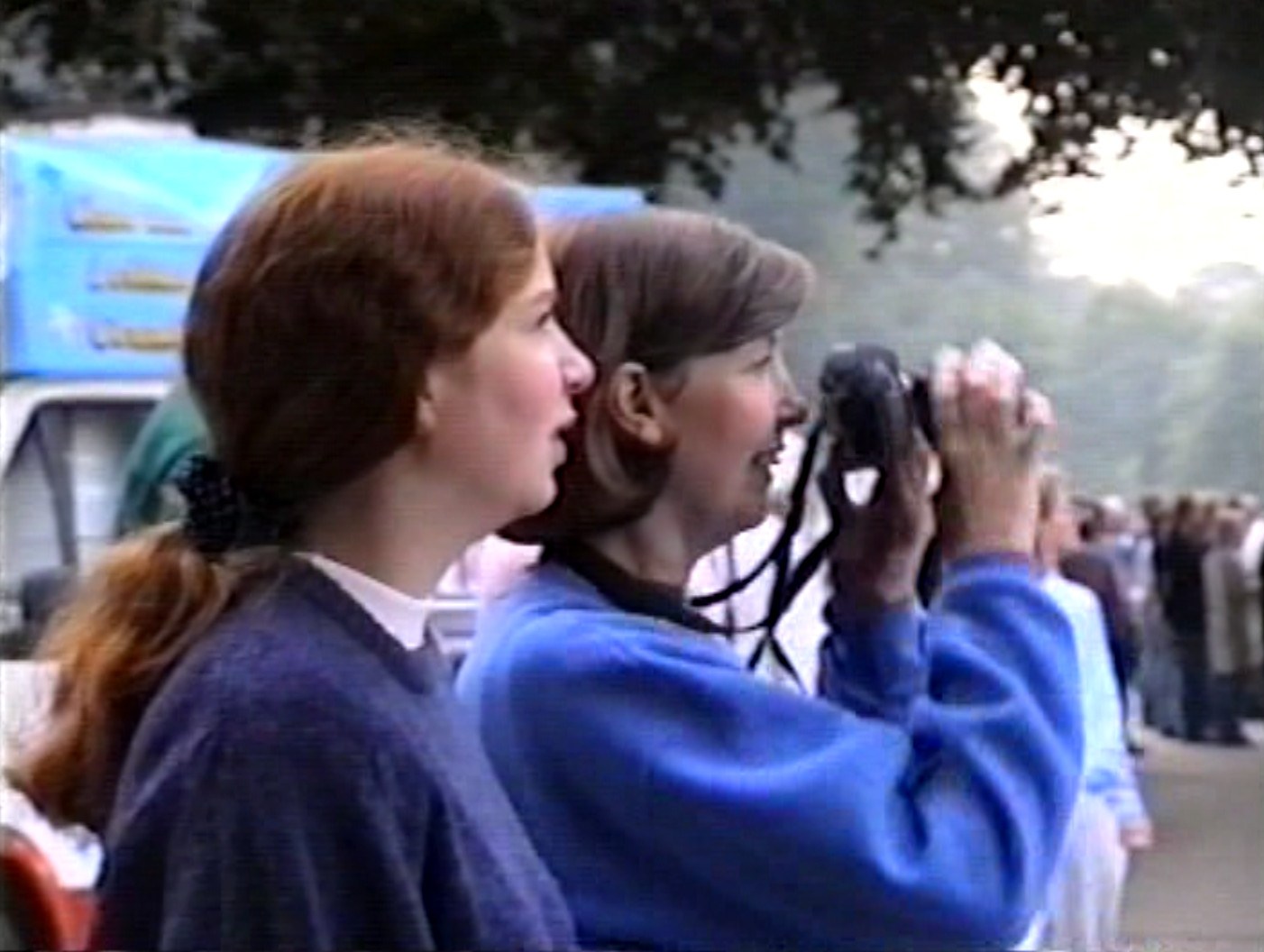
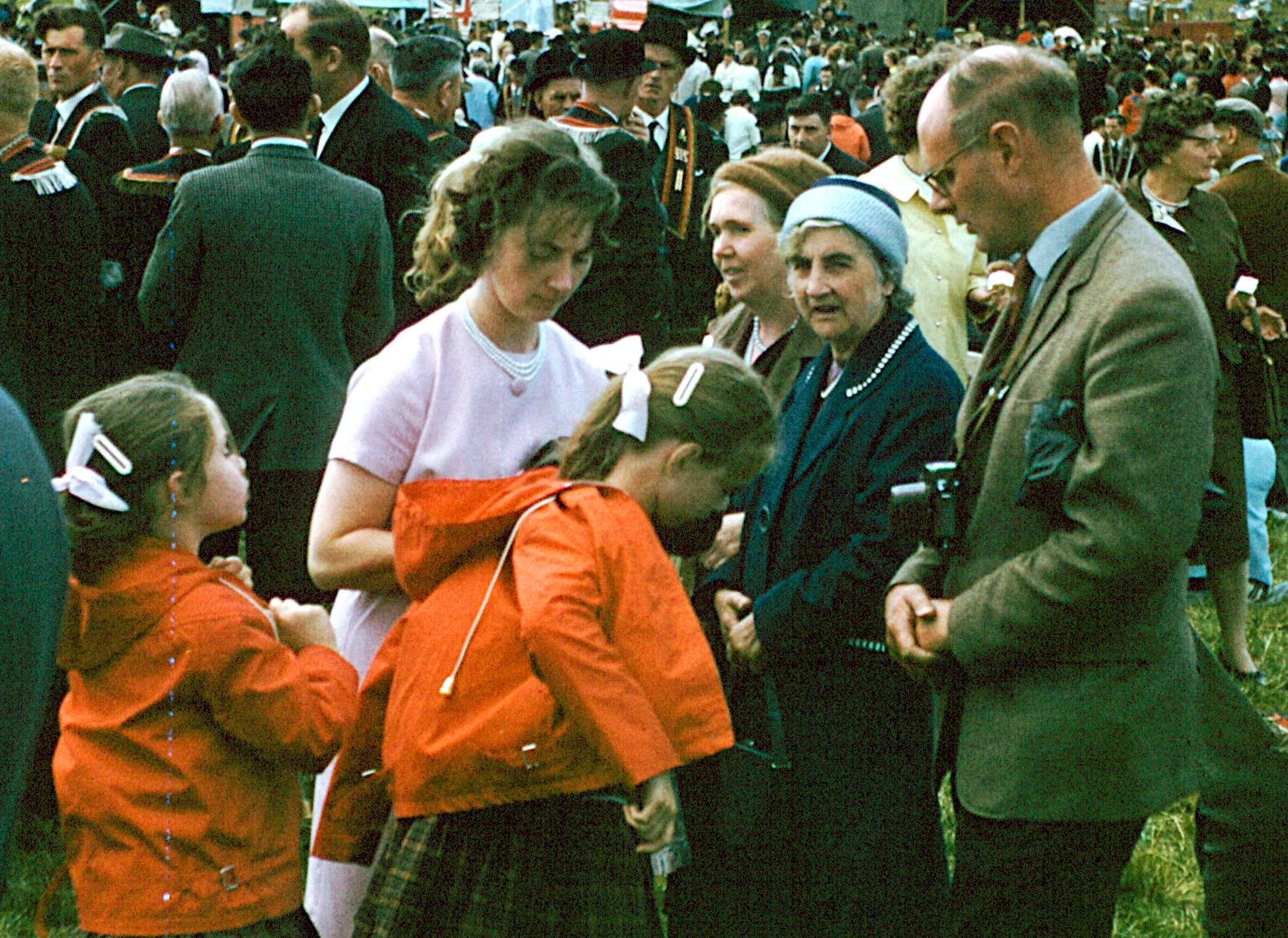
We were on holiday in Coagh, Northern Ireland and visited the Black Saturday parade in nearby Cookstown. Here we are at the Assembly Field after the parade.
In the photo you can see Rachael, Lilias, Ruth, Jane (my great-aunt), Selina (my grandmother) and Mike. We always knew our Irish grandmother as ‘Granny-in-Ireland’ to distinguish her from our English grandmother, Nor.
World events: The last executions took place in the UK; Mary Poppins had its world premiere in Los Angeles.
The 11+ exam results came in, I think while we were on holiday at Burnham-on-Sea, I had passed and would start at Cirencester Grammar School in September. During the same holiday, we heard that my Grandpa had died on 22nd and Dad had to drive home for a couple of days leaving Mum, me and Cindy in the holiday caravan.
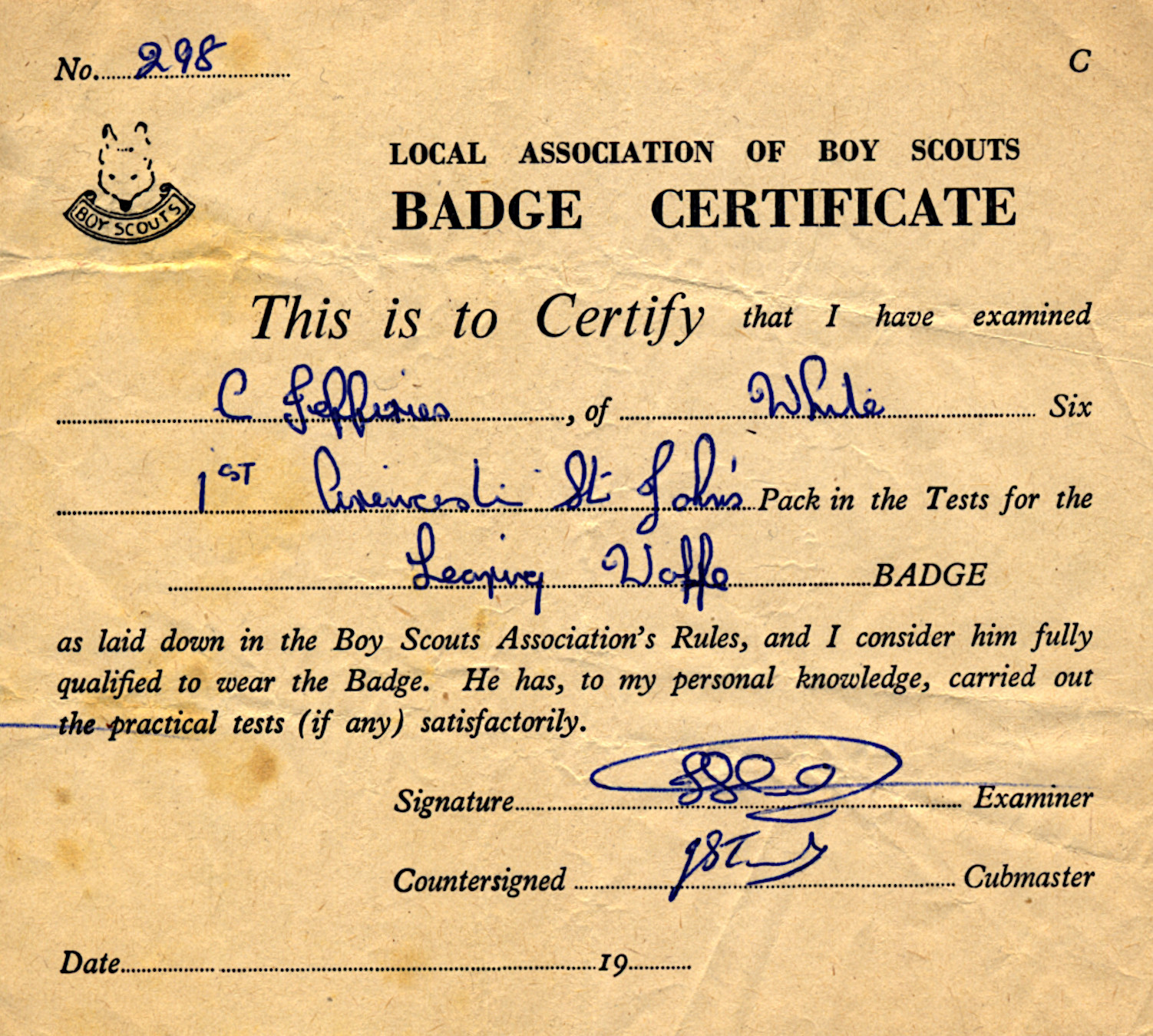
Also in August, I passed my Leaping Wolf badge before moving from Cubs to Scouts.
World events: NASA’s Explorer 6 satellite returned the first images of Earth from space; and the Mini car went on sale in the UK.
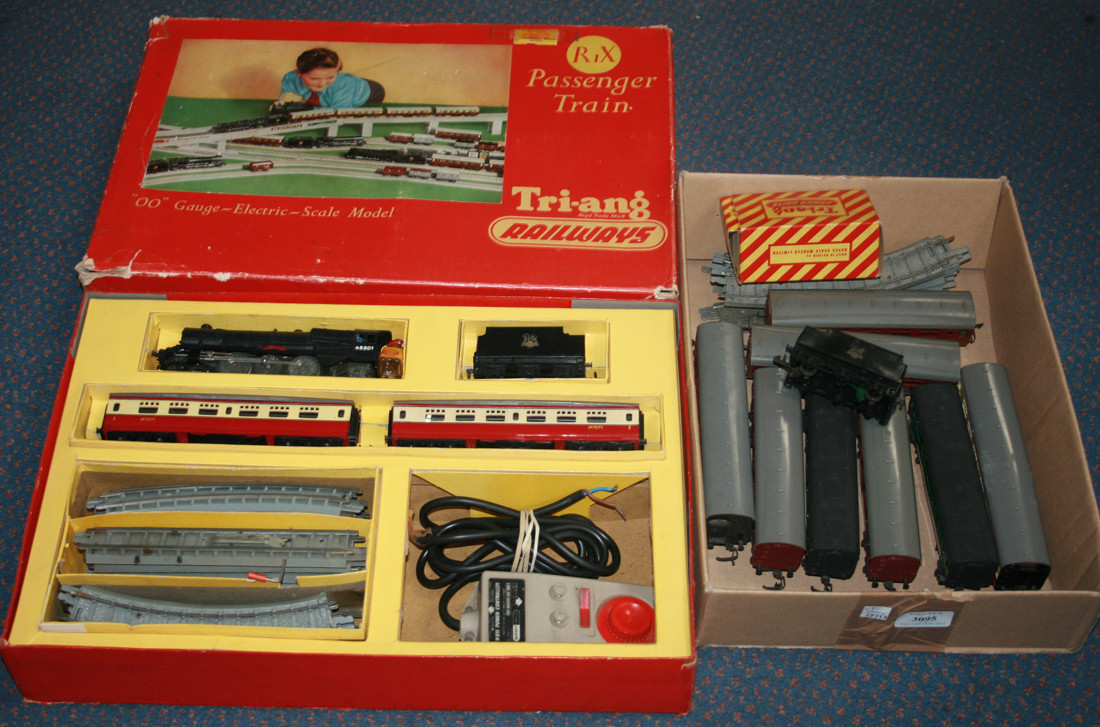
I had just turned six-years-old and I remember playing with my electric train set that I was given, either for my birthday or perhaps the previous Christmas.
It was similar to the set on the left of the photo. I well remember the picture on the box lid.
Now starting my second year of life (my first birthday was in late July), we were still living with my grandparents, I think.
I might have started saying one or two words at this stage, I was probably able to stand with perhaps a wobble or two and a sudden sit-down now and then. And maybe I could walk short distances by this time too. I remember a blue harness with three or four silver bells on the front and this was used when we walked outside on the pavement, but that memory almost certainly comes from the age of two or three.
Dad took his final radar exam on 14th and found out on 15th that he’d passed and was being posted to Inverness. He was also troubled that his girlfriend at the time, Libby, was not as interested in him as he’d assumed.
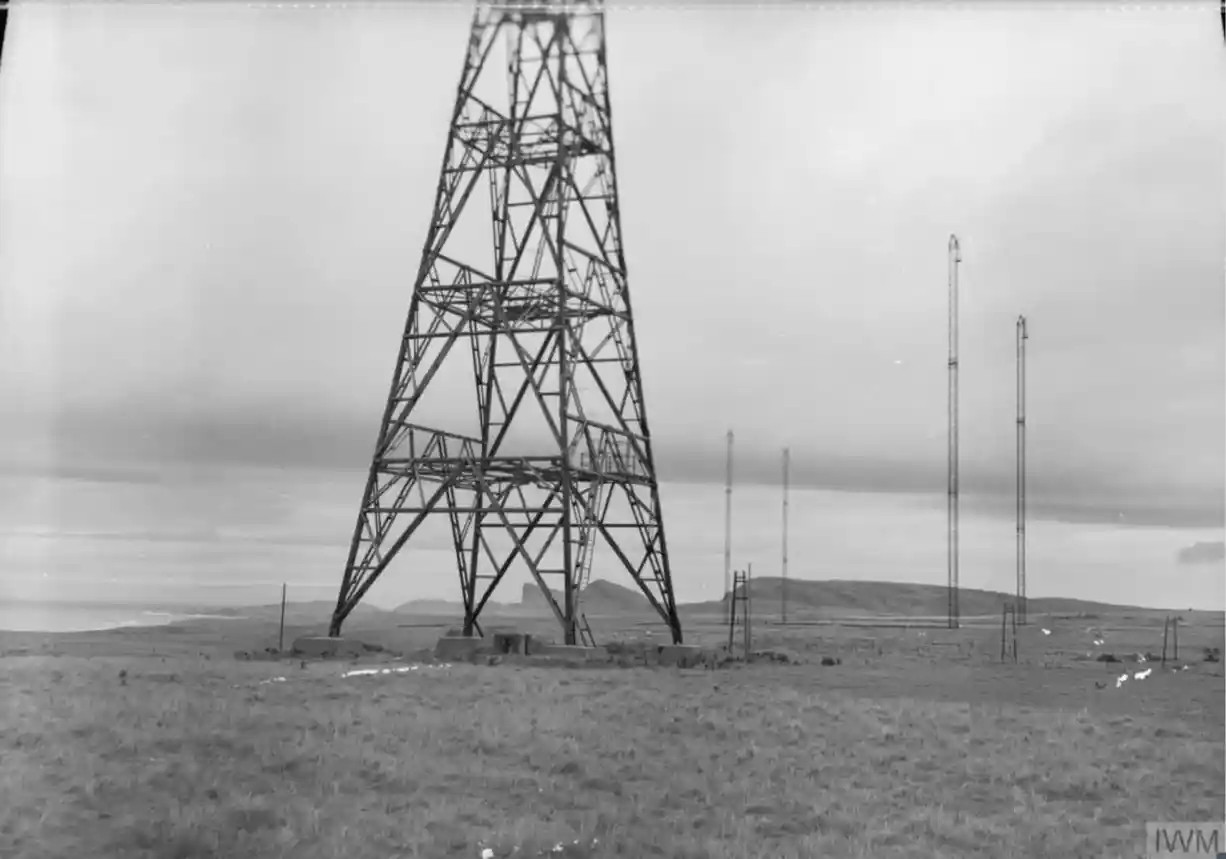
After leave in Cirencester from 16th he left for Inverness on 22nd via Paddington, Kings Cross, and overnight to Edinburgh, then via Perth to Inverness on 23rd. He was then told he was being posted to Northern Ireland instead! On 25th it was another rail journey via Perth and Glasgow to Dumfries and on 26th to Stranraer for the boat to Larne and then Belfast. With his friends Joe and Tony he caught a ‘funny’ train to Cookstown and then RAF transport to Ballinderry radar station. The photo shows part of a Chain Home radar site, similar to Ballinderry.
On the 31st Dad went to the village shop in Coagh and wrote in his diary ‘talked to girl for long time’. That girl, four years later, became my Mum!
World events: The Warsaw uprising began; and the world’s first undersea oil pipeline was laid between England and France (to supply fuel to the advancing allied forces).
If you enjoyed this or found it useful, please like, comment, and share below. (If you don’t see those links, click the article’s title above the main photo and they will appear.) Send a link to friends who might enjoy the article or benefit from it – Thanks! My material is free to reuse (see conditions), but a coffee is always welcome and encourages me to write more often!
What’s in an image? Sometimes quite a lot, more than meets the eye.
I’m posting an image every day (or as often as I can). A photo, an image from the internet, a diagram or a map. Whatever takes my fancy.
Silver birch
Today’s image shows a piece of ground lightly covered with silver birch; but the history of this area is interesting. During the war it was an RAF airfield (RAF Riccall) with runways, brick and concrete buildings, bomb stores and more. The airfield was in used from 1944 to 1958, and today the brick structures are collapsing, the runways have cracked and are mostly covered by layers of moss, grass and other low vegetation, and the other areas have become scrubland and lightly wooded areas as shown in the photo.
This clearly illustrates how much time and maintenance effort is required to hold back the natural world from recolonising our built infrastructure. What begins with the typical grass and weeds of cultivated ground soon becomes an impenetrable mass of brambles and young trees. As they grow larger, the trees shade out the brambles, and fallen leaves cover the concrete and tarmac and accumulate as fresh soil. Tree roots probe small cracks and, as they grow, heave even heavy structures aside. It’s a fascinating process. Skipwith Common, with the old airfield on its north-western edge, is representative of Yorkshire’s lowland heath ecology.
We think our built environment is solid and secure – not so! It’s easily overwhelmed once we stop maintaining it. Look at the land around the site of Chornobyl in Ukraine for another example of the speed of wildlife return to an area substantially left alone by humans.
If you enjoyed this or found it useful, please like, comment, and share below. (If you don’t see those links, click the article’s title above the main photo and they will appear.) Send a link to friends who might enjoy the article or benefit from it – Thanks! My material is free to reuse (see conditions), but a coffee is always welcome and encourages me to write more often!
What’s in an image? Sometimes quite a lot, more than meets the eye.
I’m posting an image every day (or as often as I can). A photo, an image from the internet, a diagram or a map. Whatever takes my fancy.
Aloe aristata
Today’s picture is a close up of an Aloe aristata plant with a developing flower bud. All plants, animals, fungi, bacteria and even viruses have ways of reproducing themselves. That’s one of the defining characters of life of any kind. We can be absolutely confident that the same will be true of any life forms anywhere in the universe.
The Aloe flower bud will develop on a tall stalk and if the flowers that form are pollinated they will produce and release seeds that stand a chance of germinating and growing into new, similar, Aloe plants. In the natural way of things, each Aloe will produce an average of one new plant, and the population will remain in balance.
The only choices available to life are to survive for ever with no reproduction, or to live for a limited time and leave behind new versions to carry on the process. What life cannot do is live forever and reproduce: that would lead to overpopulation and catastrophic failure of resources. Even with reduced family sizes, the planet is no longer capable of supporting the billions of people on our planet. We face catastrophic population collapse due to lack of resources at some point unless we can reduce our population size in some other way first. That’s a matter of simple arithmetic, not a political statement or some kind of guesswork. If we don’t face and fix the issue, something else will sooner or later.
Themed image collections
The links below will take you to the first post in each collection
If you enjoyed this or found it useful, please like, comment, and share below. (If you don’t see those links, click the article’s title above the main photo and they will appear.) Send a link to friends who might enjoy the article or benefit from it – Thanks! My material is free to reuse (see conditions), but a coffee is always welcome and encourages me to write more often!
What’s in an image? Sometimes quite a lot, more than meets the eye.
I’m posting an image every day (or as often as I can). A photo, an image from the internet, a diagram or a map. Whatever takes my fancy.
The fresh green of spring
There are few things as amazing as life. Perhaps there’s literally nothing as amazing as life in the entire universe! The photo shows the young, expanding leaves of a small-leaved lime tree (Tilia cordata).
Like all deciduous, temperate trees, leaf buds are formed the previous summer and over-winter after the old, mature leaves fall in late autumn. As temperatures increase in springtime, these buds swell and grow and the young leaves appear and expand. At first they’re a beautiful, pale green (lime green) but become a darker and duller shade as the days lengthen and they mature.
These processes all take place naturally in ways that are more complex than most of us might expect. Both plants and animal bodies are composed of countless tiny cells in much the same way that a large building might be made of bricks. Each cell is alive, contains a full copy of the organism’s DNA, and many of them have specialised roles to play. By cooperation and coordination they manage all the behaviours and activities that we see on the larger scale. So in some respects an expanding leaf is a lot like a growing community of people working together as a village or business. Having specialists makes it possible to do so much more, but cooperation becomes essential, not merely optional.
The rioting we’ve seen in some British cities in recent days has been disruptive and damaging to society as a whole. When the cells of an organism behave in uncoordinated and uncontrolled ways we call it a cancer. Rioting is a kind of cancer in a human society. We all know what happens when cancer becomes so widespread that the organism can no longer function. But organisms have ways of dealing with errant cells before they become overwhelming, and so do societies. Both police action and peaceful counter-demonstrations have been effective in controlling the UK riots in recent days.
Themed image collections
The links below will take you to the first post in each collection
If you enjoyed this or found it useful, please like, comment, and share below. (If you don’t see those links, click the article’s title above the main photo and they will appear.) Send a link to friends who might enjoy the article or benefit from it – Thanks! My material is free to reuse (see conditions), but a coffee is always welcome and encourages me to write more often!