Image of the day – 28

Similar tank traps have been used along the front lines by both sides in the ongoing Russian invasion of Ukraine.

< Previous | Index | Next >

What’s in an image? Sometimes quite a lot, more than meets the eye.

I’m posting an image every day (or as often as I can). A photo, an image from the internet, a diagram or a map. Whatever takes my fancy.
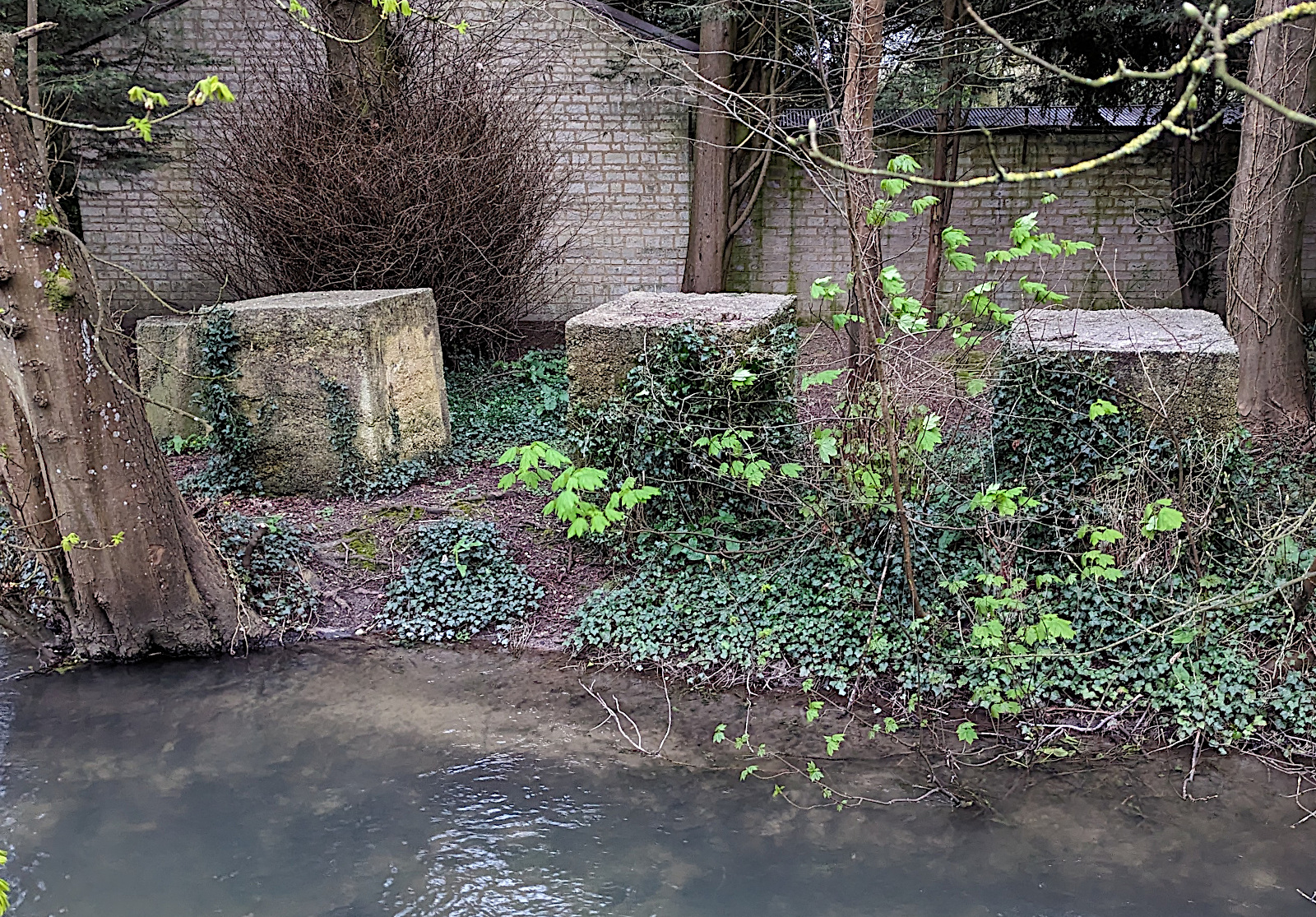
Tank traps

We have some history today. The river is the Churn and it runs in several different channels through the Cotswold town of Cirencester. On the bank you will notice three, large, concrete blocks; there’s also a fourth, partly hidden by the block on the left. The blocks were placed here during the Second World War to slow down German armour in the event that Britain was invaded. German failure to win the Battle of Britain in the air war prevented the invasion, but at the time the blocks were cast and put in place invasion remained a real threat.

The trees in the photo and the wall in the background are more recent than the blocks. The river bank led to an open field with the grounds and gardens of Abbey House beyond at that time, with the centre of the town on the other side of the gardens. The town would have been very vulnerable to attack from this direction.

Similar tank traps have been used along the front lines by both sides in the ongoing Russian invasion of Ukraine. The main difference is that modern, concrete traps are pyramidal (‘Dragon’s Teeth‘, not cubic. The sloping sides use less concrete and are more effective against tanks, but concrete cubes were also commonly used in the 1940s.

It pays to anticipate problems. But wars are rarely anticipated years in advance; political differences can boil over into actual conflict quite suddenly. And once they have started it can be very difficult to bring them to an end.

NOTE: These blocks can be seen from Grove Lane in Cirencester, quite close to the Norman Arch. From inside the Abbey Grounds, walk through the arch and turn right along the footpath for just a few yards. Look across the river, and there they are! A piece of Cirencester history that you can see for free.

< Previous | Index | Next >

Cirencester

For convenience, here’s a list of all the Cirencester area images:

A417 roadworks, Advent Market, Bishops Walk, Baunton, Canal 1, 2, Castle Street, Christmas lights 1, 2, Church 1, 2, 3, 4, 5, 6, Churn flood, Countryside, Fallen tree, Fleece, Gasworks, Gloucester Street, Hare 1, 2, Hospital, Market Place 1, Phoenix Fest, Riverside Walk, Stone plaque, Stratton Meadow, Tank traps, View, Wonky 1, 2, Yellow Iris

Themed image collections

The links below will take you to the first post in each collection

Cirencester, Favourites, Irish holiday 2024, Roman villa

Useful? Interesting?

If you enjoyed this or found it useful, please like, comment, and share below. (If you don’t see those links, click the article’s title above the main photo and they will appear.) Send a link to friends who might enjoy the article or benefit from it – Thanks! My material is free to reuse (see conditions), but a coffee is always welcome and encourages me to write more often!

Last words from JDMC

You will only grow and progress if you do the work yourselves daily, weekly, and on into the extraordinary future that Father already has planned for you.

< Previous | Index | Next >

This article is an extract from my short book, Jesus, Disciple, Mission, Church (JDMC). The bite-sized piece below is roughly two percent of the book. It’s the very last section so is a bit different from the rest: there are no questions for readers to ponder, just a blessing at the end.

I suggest reading the blessing and making it your own. And why not see if any of your friends are interested too? Share the link with them, or meet over a coffee to chat about it. Alternatively you could return to the beginning of this series and get them started that way.

Not the end, just the beginning
JDMC cover

Please don’t think that because you have reached the end of the guide, you have also reached the end of the journey. I hope you’ll explore the more detailed books on ‘The Forgotten Ways’ as well.

The various parts of this JDMC guide are just that – a guide. You will only grow and progress if you do the work yourselves daily, weekly, and on into the extraordinary future that Father already has planned for you. He will show you and lead you but you must take the steps one by one. As you live and work and discover new things together you can expect to grow significantly and have an impact on those around you.

An intricate fabric

Remember that the six forgotten ways are woven together to form a rich and intricate fabric. Although I’ve presented them here individually and in a linear form, they are not like that in reality. Each depends on the others, all are needed in our lives together. They don’t begin with knowing Jesus and end with doing stretching things together, they are more like a grand party where the participants, the music, the lighting, the flowers, the food, and the decorations create an unparalleled overall experience.

Take one of them away and the party will be much the poorer.

However, each way does depend on the previous one and provoke the next in significant ways. People who put Jesus first will find themselves becoming disciples. If we truly follow him and love him, we’ll do what he says by going out and deep. Amongst groups of new believers who are open, the APEST gifts will find an opportunity. Where apostolic foundations take root, organic forms of church life will develop. And where church is active, stretching challenges are inevitable.

Just do it!

So make a start in your own lives and your own situation. Listen to what the Spirit says and do what he tells you. Keep Jesus at the centre. Make disciples and grow as disciples yourselves. Make sure to go out but also embed yourselves deep in the local culture. Explore your gifts and encourage one another in using them. Don’t over-organise but be ever more fully alive as parts of one living body. And face some stretching challenges together.

A blessing

I bless you in the name of Jesus, that you may you find yourselves at the heart of revolutionary and explosive growth. It might seem to begin ever so slowly, but stick with it and see what it will become! You’ll find your deepest peace, not by resting, but by being fully active children of the Father and walking daily with the Son.

More sections of JDMC

Introduction – JDMC, what does it contain? – Using JDMC – how to approach it

Working together in six ways – Intro and Way 1 – Ways 2, 3 and 4 – Ways 5 and 6, six ways

Way One, Jesus at the centre – Jesus at centre 1 – Jesus at centre 2 – Jesus at centre 3

Way Two, Becoming disciples – Disciples 1 – Disciples 2 – Disciples 3

Way Three, Outward and integrated – OutAndInt1, OutAndInt2

Way Four, Gifts for building – GiftsForBuilding1, GiftsForBuilding2

Way Five, A living organism – LivingOrg1, LivingOrg2

More sections will appear here…

The work of the Spirit – Intro – Jesus, disciples, outward – Gifts, living, community, help

Other church leaders – Intro, bishops, elders – Deacons, pastors, priests

Last words – The end can also be the beginning

< Previous | Index | Next >

Read the book

This was extracted from Jesus, Disciple, Mission, Church (JDMC), page 49. Download the whole thing or read it online – GetJDMC.scilla.org.uk

Useful? Interesting?

If you enjoyed this or found it useful, please like, comment, and share below. (If you don’t see those links, click the article’s title above the main photo and they will appear.) Send a link to friends who might enjoy the article or benefit from it – Thanks! My material is free to reuse (see conditions), but a coffee is always welcome and encourages me to write more often!
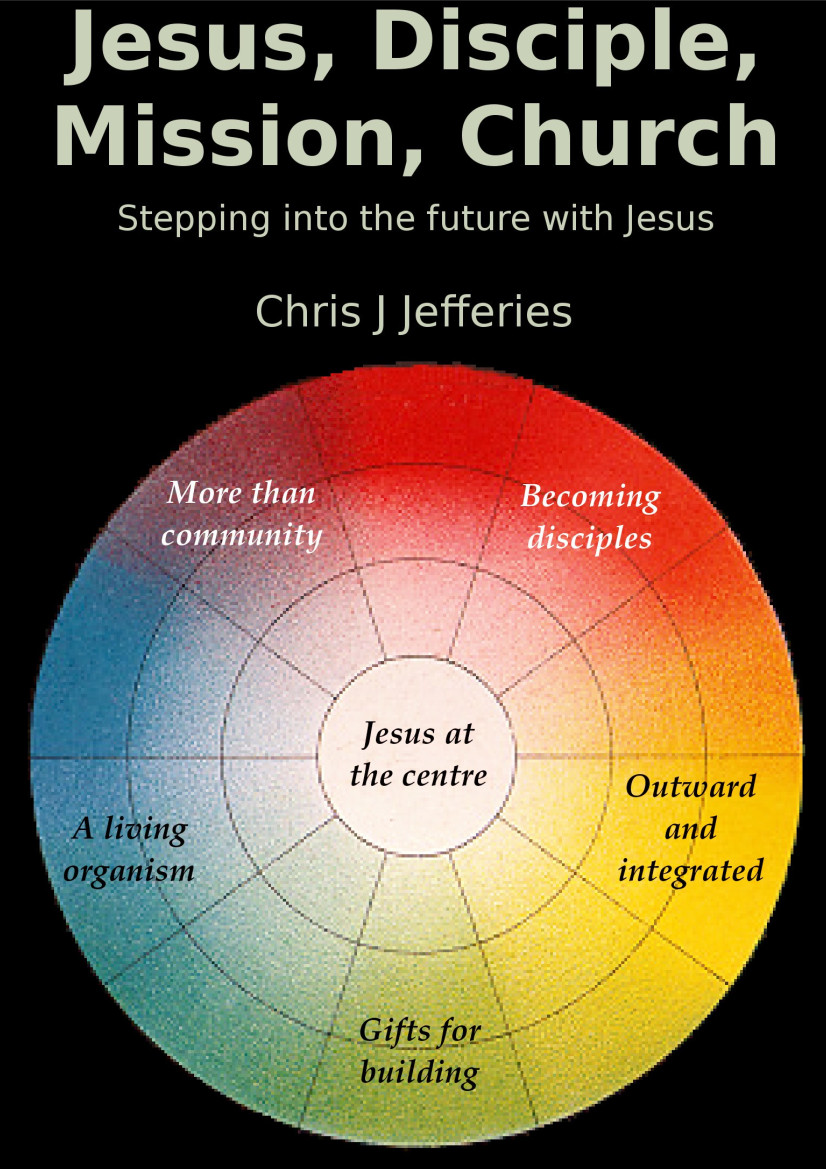
Image of the day – 27

In the natural way of things, each Aloe will produce an average of one new plant, and the population will remain in balance.

< Previous | Index | Next >

What’s in an image? Sometimes quite a lot, more than meets the eye.

I’m posting an image every day (or as often as I can). A photo, an image from the internet, a diagram or a map. Whatever takes my fancy.

Aloe aristata

Today’s picture is a close up of an Aloe aristata plant with a developing flower bud. All plants, animals, fungi, bacteria and even viruses have ways of reproducing themselves. That’s one of the defining characters of life of any kind. We can be absolutely confident that the same will be true of any life forms anywhere in the universe.

The Aloe flower bud will develop on a tall stalk and if the flowers that form are pollinated they will produce and release seeds that stand a chance of germinating and growing into new, similar, Aloe plants. In the natural way of things, each Aloe will produce an average of one new plant, and the population will remain in balance.

The only choices available to life are to survive for ever with no reproduction, or to live for a limited time and leave behind new versions to carry on the process. What life cannot do is live forever and reproduce: that would lead to overpopulation and catastrophic failure of resources. Even with reduced family sizes, the planet is no longer capable of supporting the billions of people on our planet. We face catastrophic population collapse due to lack of resources at some point unless we can reduce our population size in some other way first. That’s a matter of simple arithmetic, not a political statement or some kind of guesswork. If we don’t face and fix the issue, something else will sooner or later.

Themed image collections

The links below will take you to the first post in each collection

Cirencester, Favourites, Irish holiday 2024, Roman villa

< Previous | Index | Next >

Useful? Interesting?

If you enjoyed this or found it useful, please like, comment, and share below. (If you don’t see those links, click the article’s title above the main photo and they will appear.) Send a link to friends who might enjoy the article or benefit from it – Thanks! My material is free to reuse (see conditions), but a coffee is always welcome and encourages me to write more often!

Image of the day – 26

The wallpaper in the image is from Kelmscott Manor in Oxfordshire, once the home of William and Jane Morris.

< Previous | Index | Next >

What’s in an image? Sometimes quite a lot, more than meets the eye.

I’m posting an image every day (or as often as I can). A photo, an image from the internet, a diagram or a map. Whatever takes my fancy.

Wallpaper

Wallpaper – This old-fashioned wallpaper clearly shows how the pattern repeats both vertically and horizontally. You can find repeats like this in vinyl floor coverings, fabrics, wipe-clean tablecloths and more. Materials that look like natural stone or wood can make the repeats harder to spot, but they’re still there.

There’s a trade-off between the cost of producing a larger scale of repeat (to make it harder to detect) and using a small scale of repeat (to minimise the cost).

The wallpaper in the image is from Kelmscott Manor in Oxfordshire, once the home of William and Jane Morris. They both worked on projects connected with the Arts and Crafts movement, and this pattern is an example of some of the designs created by them.

Themed image collections

The links below will take you to the first post in each collection

Cirencester, Favourites, Irish holiday 2024, Roman villa

< Previous | Index | Next >

Useful? Interesting?

If you enjoyed this or found it useful, please like, comment, and share below. (If you don’t see those links, click the article’s title above the main photo and they will appear.) Send a link to friends who might enjoy the article or benefit from it – Thanks! My material is free to reuse (see conditions), but a coffee is always welcome and encourages me to write more often!

Image of the day – 25

Even today…a wooden roof frame is constructed and then covered to form a roof. Good ideas tend to last a long time!

< Previous | Index | Next >

What’s in an image? Sometimes quite a lot, more than meets the eye.

I’m posting an image every day (or as often as I can). A photo, an image from the internet, a diagram or a map. Whatever takes my fancy.

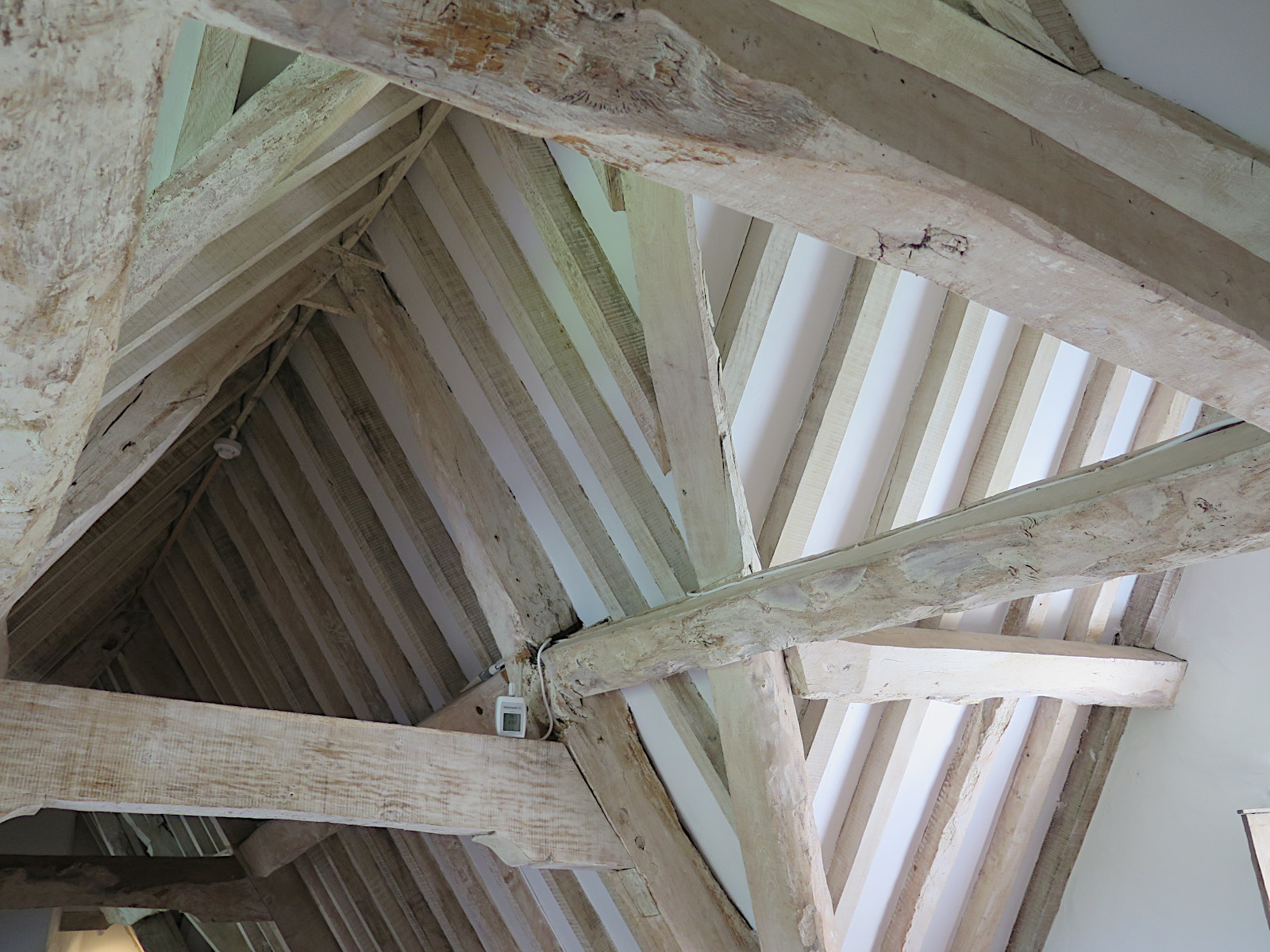
Roof timbers

How would we manage without roof timbers? They are by far the most common form of support for tiles, slates, thatch, or any other waterproof roof covering. The roof timbers in the photo are a couple of hundred years old, but they’re not significantly different from Medieval or even Roman roof timbers. Even today, although the timbers are much slimmer and are pre-manufactured as truss structures, the principle remains that a wooden roof frame is constructed and then covered to form a roof. Good ideas tend to last a long time!

Is the same true for some of our institutions? From parliaments to town councils, from universities to infant schools, and from multinational corporations to village shops, many of the fundamental patterns are inherited from past generations. If it works well, why change it?

What other examples can you think of? But if you don’t want to ponder that question, just click on the image and enjoy those amazing roof timbers in more detail.

Themed image collections

The links below will take you to the first post in each collection

Cirencester, Favourites, Irish holiday 2024, Roman villa

< Previous | Index | Next >

Useful? Interesting?

If you enjoyed this or found it useful, please like, comment, and share below. (If you don’t see those links, click the article’s title above the main photo and they will appear.) Send a link to friends who might enjoy the article or benefit from it – Thanks! My material is free to reuse (see conditions), but a coffee is always welcome and encourages me to write more often!