Seeing and believing

No gardener would know her name, and in that moment she recognises his voice. She cries out ‘Rabboni!’ (‘Teacher!’) and reaches to grab him, perhaps just an arm, more likely a full hug. Her misery and grief fall away immediately, replaced by astonishment and joy. But Yahshua says, ‘Don’t hang onto me because I have not yet gone up to the Father.’

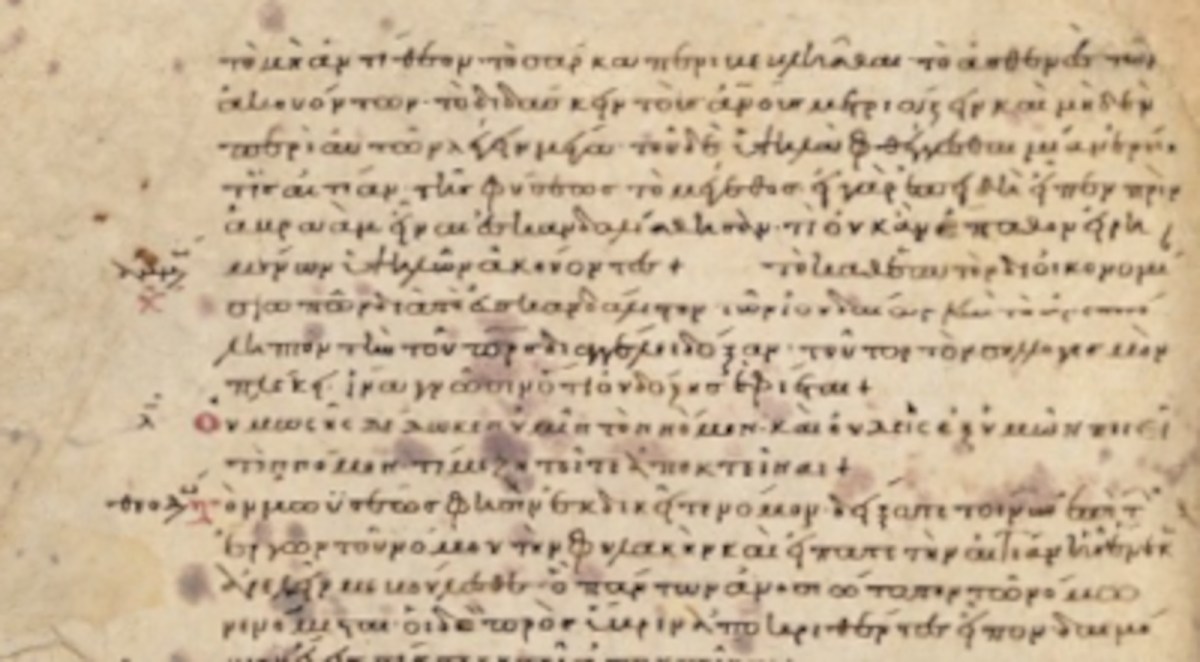
Greek commentary on John’s gospel dated 1190-1200 (Bodleian Library)

< Previous|Index|Next >

Cruising the gospel – John 20:1-18

Bible text –Read it yourself (opens in a new tab)

An amazing day

A fragment of John’s gospel
(Wikimedia)

20:1-10 – It’s now the day after the Sabbath, and the normal work of the week could begin. But this was not a normal week. Jesus’ disciples, family and friends would have been subdued, grieving, and wondering how things could have gone so wrong, so suddenly. But there were still practicalities to be dealt with and today was the first day when those tasks could be done.

Early, well before sunrise (Sabbath had ended at sunset the day before) Maryam Magdalitha (Mary or Miriam Magdalene) walked to the grave where they had laid Yahshua’s (Jesus’) body, wrapped in strips of cloth with a separate piece of linen for his head. The first thing Maryam noticed, probably from some distance away, was that the heavy stone that closed the grave had been rolled away to one side. Panicking, she didn’t go any closer but must have been horrified; turning round she ran back to Shimon Kepha (Simon Peter) and Johanan (John) and told them the conclusion she must have jumped to, that someone had removed the body and she didn’t know where they’d taken him.

Shimon and Johanan set out running to the tomb and Maryam was right behind them. Johanan ran fastest and bent over and looked in through the low opening and saw the linen strips inside, but didn’t go in. Then Kepha arrived and just went straight into the tomb; he saw the linen strips as well, and also the head cloth. Then Johanan went inside the tomb, saw the same things, and believed.

What’s the significance of this? The author, very likely Johanan himself, explains in verse 9 that they didn’t understand from the Bible that Yashua had to rise again from death. This is not surprising. The Bible mentioned here is what we call ‘The Old Testament’. It was the Hebrew Bible or a Greek translation of it, and the passages that suggested the Son would die and rise again are scattered around in the books of various prophets, the Psalms and elsewhere and are always straightforward (though more so in hindsight). The opportunity for hindsight was only now beginning to open. Yahshua had explained some of this to them. Johanan, who was a close friend of Yahshua and a deep thinker had seen him die and now made the mental leap to understanding that for Yahshua death was a temporary affair. He’d said he’d return from death, and he wasn’t here in the grave anymore, somehow he was alive again! Johanan got it immediately. Kepha, a more down-to-earth and practical person did not, at least, not just yet. The two of them didn’t seem to worry about Maryam in her distress, but no doubt deeply distracted themselves, turned back to the city and the place where they were staying.

10:11-18 – Maryam, still crying in grief, now finally looked inside the tomb herself and saw two people, one sitting where Yahshua’s head had rested and the other at his feet. Seeing the tears rolling down Maryam’s cheeks they asked her why she was crying. The use of the word ‘woman’ here seems to us rather strange, perhaps unkind, perhaps distant and rather aloof. But it was a normal way to address a woman at that time, much as we might still say to a man, ‘What’s the matter, man?’, ‘What’s up, chap?’ or ‘You OK, mate?’ or just ‘What’s the problem? So let’s translate this the way we might say it today. Think in terms of these two angels saying, ‘Why are you crying?’ or ‘Why are you crying, Lady?’ And she tells them, through her sobs, ‘They’ve taken the Master away and I have no idea where they’ve put him.’

Turning round, she saw a figure standing outside the tomb. We know the tomb entrance is low so she’s unlikely to see the person’s face until she is outside, and with tears in her eyes she may not be seeing anything very clearly.

In fact, it’s Yahshua, and he also asks, ‘Why are you crying? Who are you looking for?’ She assumes it’s the gardener who perhaps looks after the nearby olive trees and asks him, ‘If you’ve moved him – tell me where he is and I’ll go and get him’.

Yahshua, seeing how confused she is, says only one word. He appreciates how blurred her vision is so he simply speaks her name.

‘Maryam’.

No gardener would know her name, and in that moment she recognises his voice. She cries out ‘Rabboni!’ (‘Teacher!’) and reaches to grab him, perhaps just an arm, more likely a full hug. Her misery and grief fall away immediately, replaced by astonishment and joy. But Yahshua says, ‘Don’t hang onto me because I have not yet gone up to the Father. Instead, go now to my brothers and tell them that I’m going up to my Father and your Father, to my Elohim (Gods) and your Elohim’. And right away, off she went to tell them.

Why did I write ‘Gods’ in the previous paragraph, not ‘God’? Because ‘Elohim’ is a plural form in Hebrew, the singular is ‘El’ or ‘Eloah’. Plurals are sometimes used to stress importance and power, Queen Victoria used ‘we’ rather than ‘I’ – ‘We are not amused’ instead of ‘I’m not amused’ In the Hebrew Bible ‘Elohim’ is a plural noun but when referring to the Almighty it takes singular verbs, As if Queen Victoria had said, ‘We am not amused’. In Aramaic it is ‘Elah’ or ‘Alaha’ allied to the Arabic ‘Allah’. We shouldn’t miss the significance of this, there’s a hint of threeness here. The Father and the Spirit are ‘up there somewhere’ while Yahshua is still ‘down here’. He plans to return to be with them, and later he will send the Spirit to come to live in and among his followers. Two thousand years later, the Spirit is still here in and among Yahshua’s followers. The Spirit is entirely capable of being ‘up there’ and ‘down here’ simultaneously.

And why did he tell Maryam not to cling to him? Perhaps he’s simply saying that the most urgent thing for him now is to get back to be fully in his Father’s presence because only then can he send the Spirit, someone they need in them as soon as possible. In a hostile and confusing world any delay in the coming of the Spirit will leave the disciples vulnerable and without direction. Maryam can help by taking the news that Yahshua is alive back to them right away. Clinging to Jesus is natural but only benefits one person while leaving the many feeling lost, distressed and confused. I think Maryam understood this right away because she headed back to the city immediately without another word.

It’s also significant that Yahshua appeared to a woman before he appeared to any of the men he’d been teaching for three years. In Jewish tradition scribes taught village boys to read and memorise the Old Testament Law. Girls were not taught these things. And Rabbis (Teachers) would take men as disciples, but not women. Yahshua broke tradition by teaching both men and women, and he now chooses to appear to a woman first. This is a lesson that church understood at the beginning, but forgot for 1900 years and has begun to relearn very slowly over the last seventy or eighty years.

See also:

< Previous|Index|Next >

Useful? Interesting?

If you enjoyed this or found it useful, please like, comment, and share below. (If you don’t see those links, click the article’s title above the main photo and they will appear.) Send a link to friends who might enjoy the article or benefit from it – Thanks! My material is free to reuse (see conditions), but a coffee is always welcome and encourages me to write more often!

You might also like:

Matthew 27:32-66 – Cruising the Gospel
Transparency

Some people are not at all transparent, with hidden motives, fears, doubts, and agendas. Treat such people with caution – what you think you see may not be what you actually get!

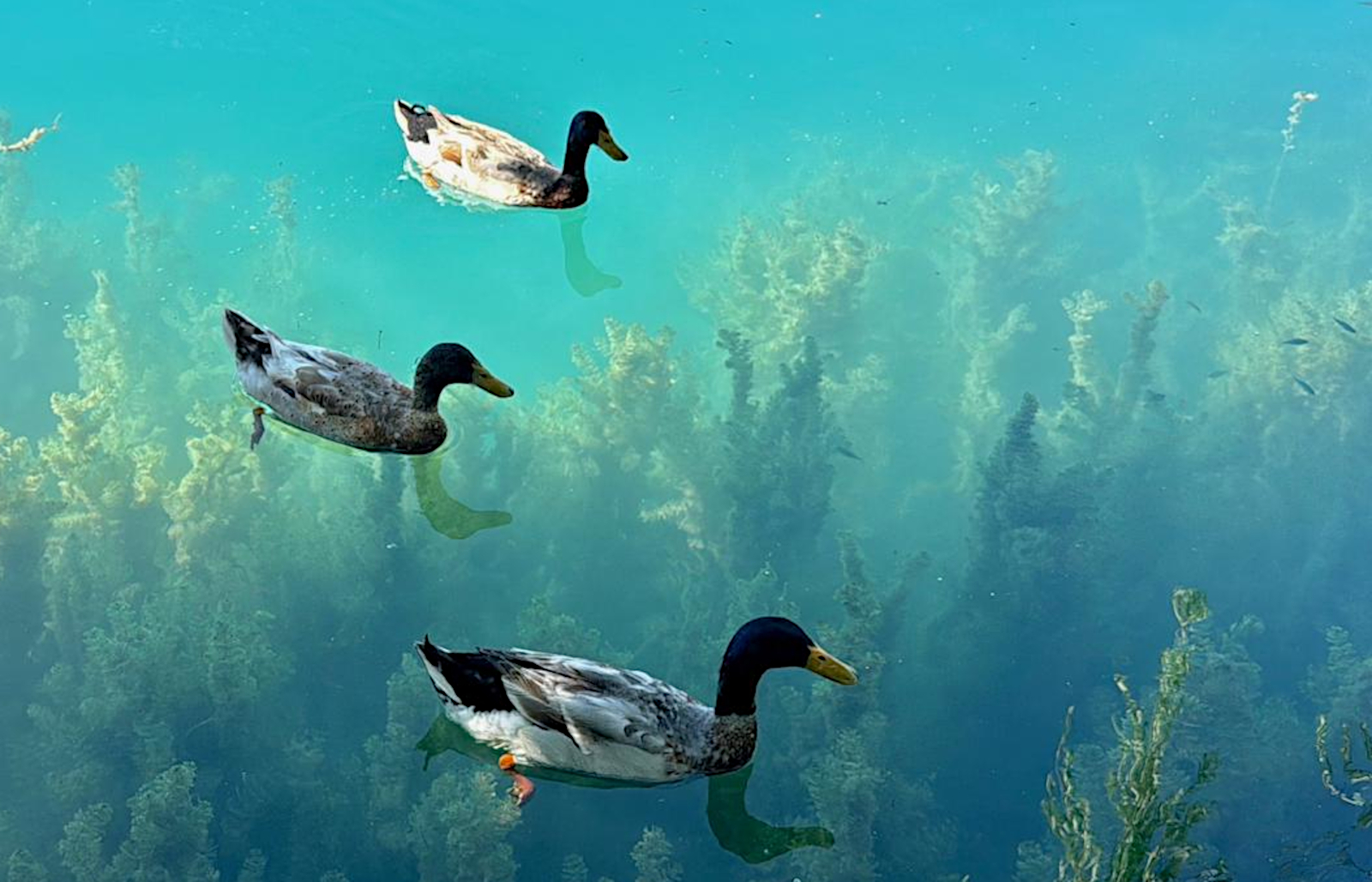
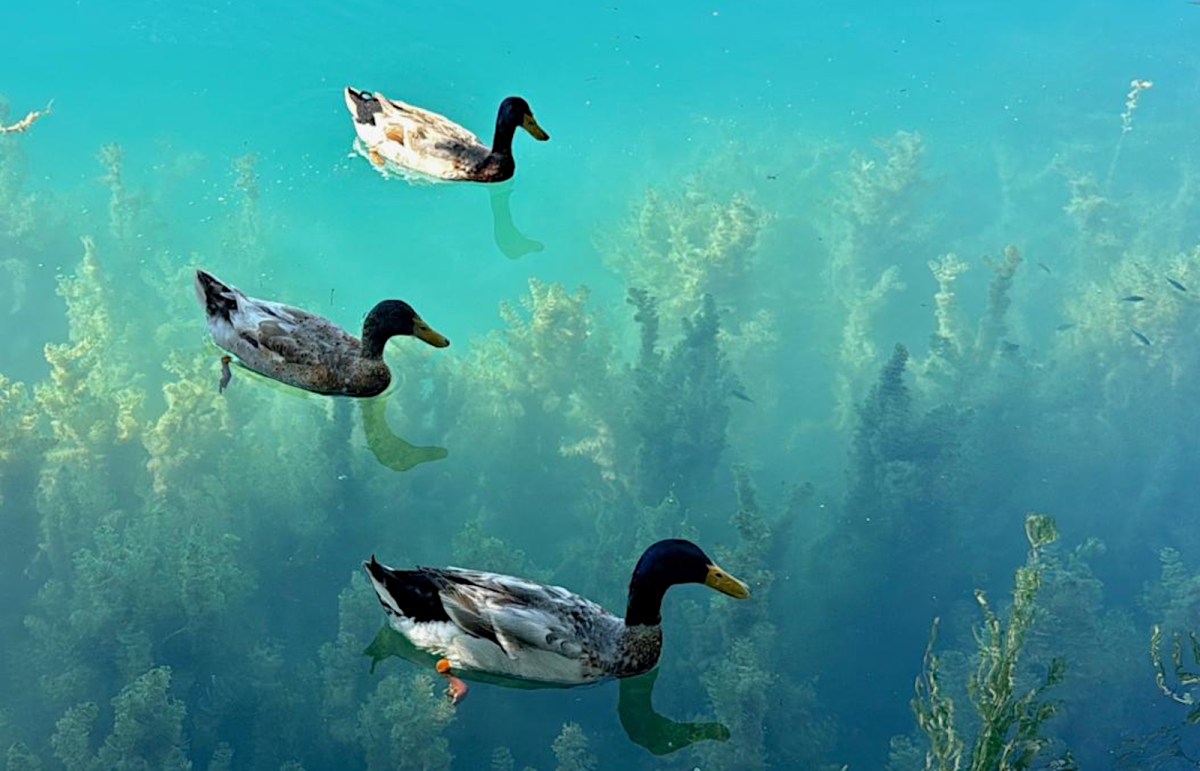
Ducks on clear water (Photo by Jess Grzeb*)

< Previous | Index | Next >

Image of the day – 196

What’s in an image? Sometimes quite a lot, more than meets the eye. I’m posting an image whenever I can.

Ducks on clear water (Photo by Jess Grzeb*)

What does it mean to be transparent? In different ways, this word can used of material, of people, and of organisations. The photo is almost surreal, it looks as if the ducks are floating in mid-air above the water.

*Many thanks to Jess Grzeb for letting me use her remarkable photo.

Transparent material

The water in this photo (Lake Bled in Slovenia) is about as transparent as water in nature gets. Light is bent as it enters the water from the air, and again as it returns from water to air. Both water and air are transparent, of course, but they have different densities and the speed of light is a little slower through water than through air. The main effect of this bending is that the water looks a good deal shallower than it actually is. You can easily check this for yourself, fill a bucket with water and put a straight stick into it. The stick no longer looks straight.

Air is a gas, water is a liquid, glass is a solid, but all three can be either transparent or cloudy. Smoke turns transparent air cloudy, suspended mud will do the same for water, and glass can be manufactured to be cloudy as well. But of course, you can only see long distances through transparent materials. The universe itself is for the most part incredibly transparent. With telescopes we can see unimaginably far across the universe.

Transparent people

If a person is ‘transparent’ we do not mean, of course, that you can physically see through them. But metaphorically their nature and motives are clear for all to see. They tend to be open-minded, kind, thoughtful and make no attempt to hide their thoughts and opinions. If they think something they tend not to conceal it, and if you disagree it’s probably no big deal for them. They’re often live-and-let-live people.

Transparent people are useful in society. They say what they mean and they mean what they say. They’re reliable and you can trust them. I was once described by a colleague at work as a WYSIWYG person. It’s an old term from the early days of word processing; back in the 1970s computer screens were rather primitive and could only display text in one, very basic, typeface. On modern devices you can compose the text and images as they will appear in the printed document, that’s WYSIWYG and it makes life far, far simpler. Some people are not at all transparent, with hidden motives, fears, doubts, and agendas. Treat such people with caution – what you think you see may not be what you actually get!

Transparent organisations

So we come now to the third category of things that may or may not be transparent. Governments and companies are good examples of organisations that can vary greatly in their transparency. Few or even no governments or companies are fully transparent, both have aspects that require secrecy such as details of military capability or of new products in development. But not all governments are equally secretive, of course; and the same goes for companies.

Some examples will help here. Here’s a topical example: the Russian government is clearly much less transparent than the Ukrainian government. The presence of a dictatorial president in Vladimir Putin and the presence of a corrupt and wealthy oligarchy puts Russia amongst the most obscured of governments in the world. They are not alone in this, but they are one of the most extreme examples. Ukraine on the other hand has an open minded, democratically elected president in Volodymyr Zelenskyy. There is still some corruption in the Ukrainian system (but show me a government with no corruption at all).

The USA is an interesting case, the nation’s constitution is clear and requires openness and a transparent, law-abiding government. But the rules seem to be regularly flouted or ignored by President Trump who apparently has little interest in (or patience with) order, truth, legality or indeed transparency.

Perhaps among the most transparent governments are those like Switzerland, Canada and New Zealand – WYSIWYG nations.

When it comes to companies, we see the same thing; a wide range from open transparency on the one hand to deliberate obscurity on the other, particularly amongst high-tech businesses with commercial secrets to hide or those trying to make fast profits on illegal practices. Much lower transparency than Lake Bled here!

Governments and businesses alike range from law-abiding openness and clarity to some that are murky and perhaps even corrupt. There is a strong inverse relationship between transparency and corruption.

See also:

< Previous | Index | Next >

You might also like:

Useful? Interesting?

If you enjoyed this or found it useful, please like, comment, and share below. (If you don’t see those links, click the article’s title above the main photo and they will appear.) Send a link to friends who might enjoy the article or benefit from it – Thanks! My material is free to reuse (see conditions), but a coffee is always welcome and encourages me to write more often!

Stars dancing in the sky

There is beauty in so many natural things – a waterfall, a flower opening from a bud, the swirling patterns in a shoal of fish or a murmuration of starlings at dusk.

Cirencester’s church tower

< Previous | Index | Next >

Image of the day – 195

What’s in an image? Sometimes quite a lot, more than meets the eye. I’m posting an image whenever I can.

Cirencester’s church tower

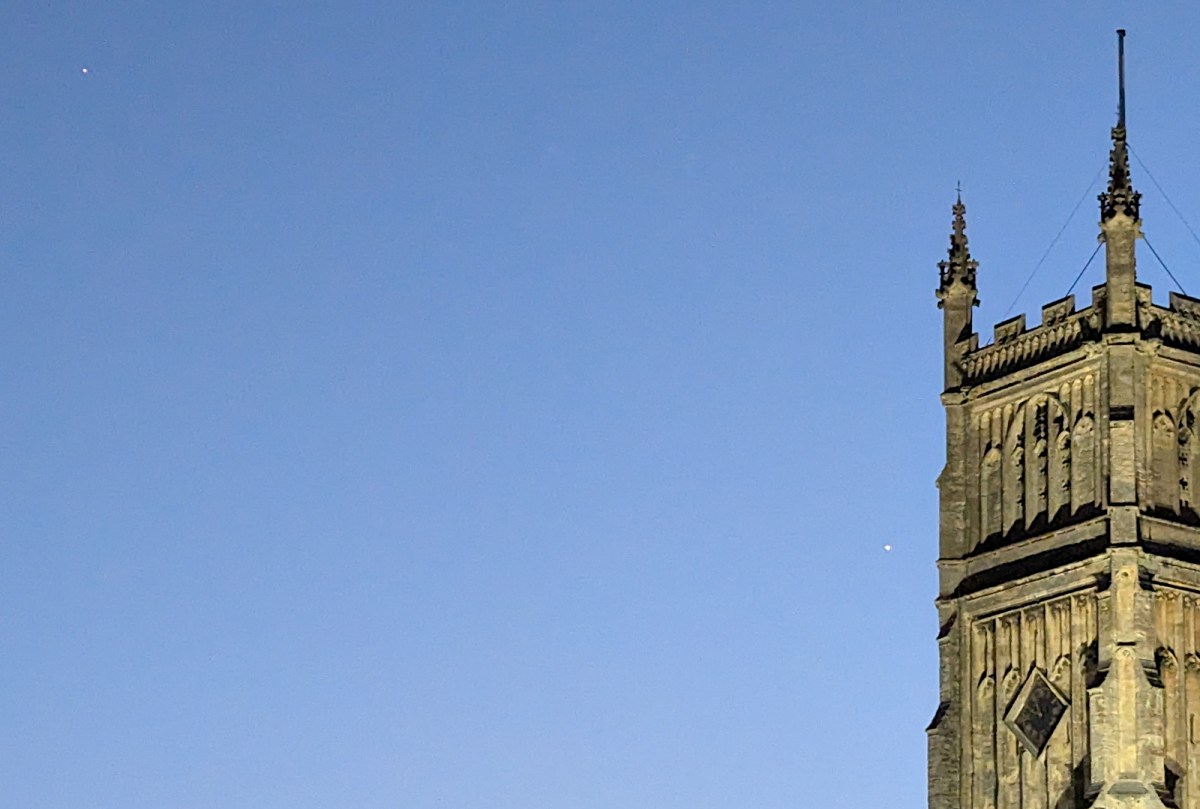
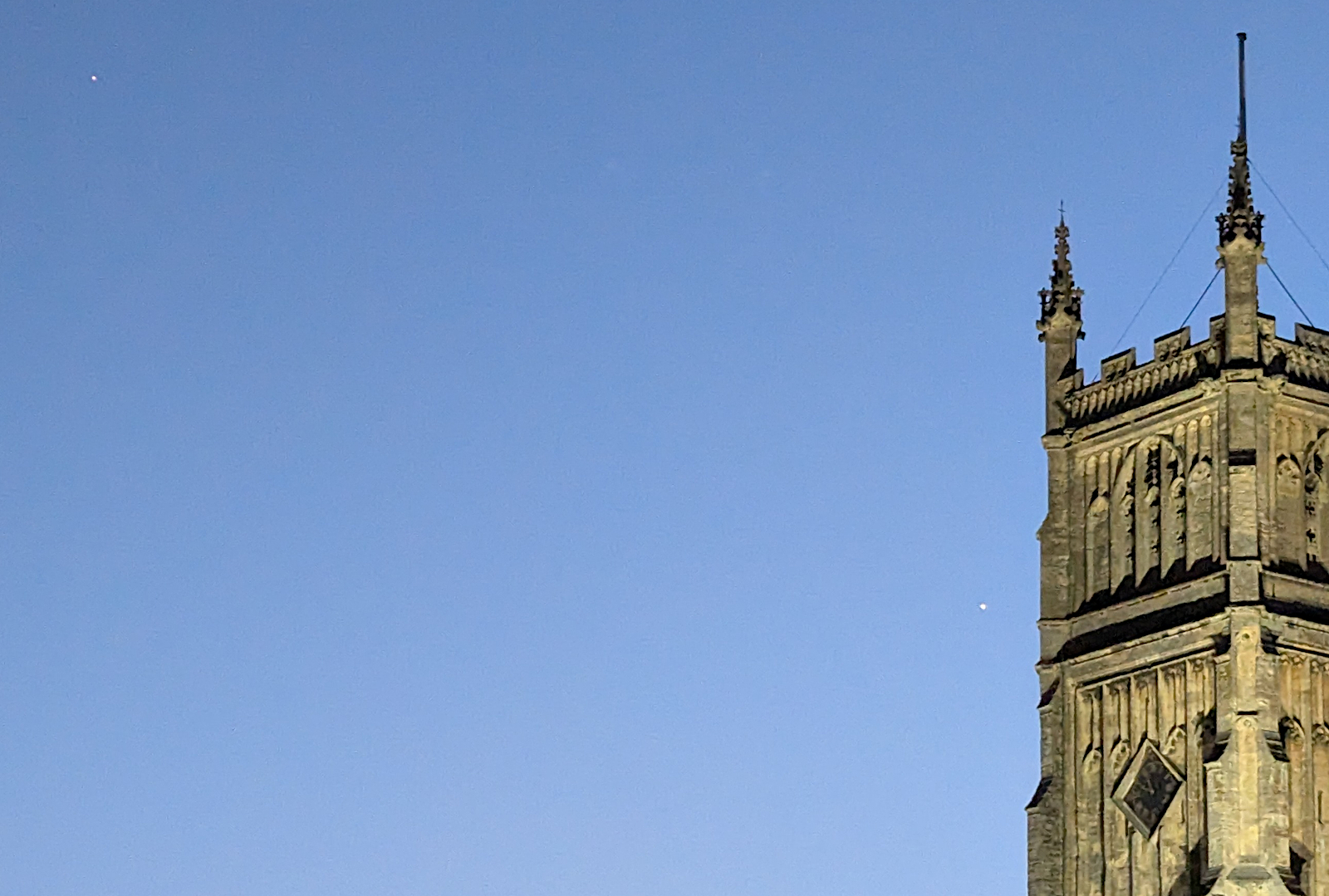
On a clear evening during late May or early June, take a look at the western sky after sunset and you’ll see two very bright stars quite close together. They’re not stars at all, in fact. They are the planets Venus and Jupiter. The brightest of the two is Venus, setting slightly earlier than Jupiter until the beginning of June. The photo was taken on 25th May while the two planets were still far apart in the sky. Venus is brighter, the same side of the sun as Earth is. It’s just to the left of Cirencester’s Church tower in the photo. Jupiter is a little fainter, up in the top-left corner. Jupiter is a larger planet than Venus (about ten times the diameter, but it’s also much further away; far, far beyond the sun from our point of view. If you’re struggling to find the planets click the thumbnail image to expand it and you’ll see them both quite easily.

Passing close

The two planets will pass very close indeed in the first week of June. As I mentioned above, it’s merely a line of sight closeness, there’s no chance of a collision. Astronomers call a coming-together in the sky a planetary conjunction. At one time people thought the star of Bethlehem might have been a close conjunction like this, but these events can be predicted accurately far into the future and we now know there are no events from 2000 years ago that would fit the idea.

Nonetheless it’s a beautiful thing to see and you don’t even need a telescope. It’s something you can watch evening by evening with the naked eye or a pair of binoculars (providing the weather cooperates). Serious warning, don’t look until the sun has set. You can damage your eyes by looking at the sun, and seeing it in binoculars is particularly dangerous. Hint: go on watching after the planets move further apart, you’ll get a continuing sense of how active our Solar System can be.

What makes something beautiful?

It’s hard to pin down, isn’t it? There is beauty in so many natural things – a waterfall, a flower opening from a bud, the swirling patterns in a shoal of fish or a murmuration of starlings at dusk. There is beauty in athletics, the perfect pole vault, a new world record, a plunging, almost splashless entry into the water from a high board after a long series of breathtaking manoeuvres on the way down. A special sunset or sunrise. A list of beautiful things could go on for ever!

There’s also beauty in human relationships, children playing together, smiling and laughing; the elderly chatting together about times past. There’s beauty in the flavours of food and drink as well, some combinations are just so special, cheese and fruit, even really simple things like a ripe apple and a chunk of mature Cheddar, or some Brie with ripe grapes and crispy crackers.

Beauty seems, at its heart, to depend on everything good and right. Kindness and gentleness are beautiful things, anger and violence are ugly.

What about me? How can I become more beautiful? Think about it from your own point of view if you are reading this; what can you do or say or think or display that will make other people catch their breath and think, ‘Ah, there’s something beautiful here, something commendable, something I can appreciate and value.

Living and behaving in beautiful ways costs nothing, and greatly benefits those around us. So what is not to like? If everyone on the planet was determined to live better and more kindly today than they did yesterday, what a wonderful world this would become!

See also:

< Previous | Index | Next >

You might also like:

Useful? Interesting?

If you enjoyed this or found it useful, please like, comment, and share below. (If you don’t see those links, click the article’s title above the main photo and they will appear.) Send a link to friends who might enjoy the article or benefit from it – Thanks! My material is free to reuse (see conditions), but a coffee is always welcome and encourages me to write more often!

Seemingly a leafy town

When I say ‘landscape’ I’m thinking here of the way the rising hills and the meandering river valley reveal a town snuggled into a cosy counterpane of woodland as in the photo.

Cirencester’s church tower

< Previous | Index | Next >

Image of the day – 194

What’s in an image? Sometimes quite a lot, more than meets the eye. I’m posting an image whenever I can.

Cirencester’s church tower

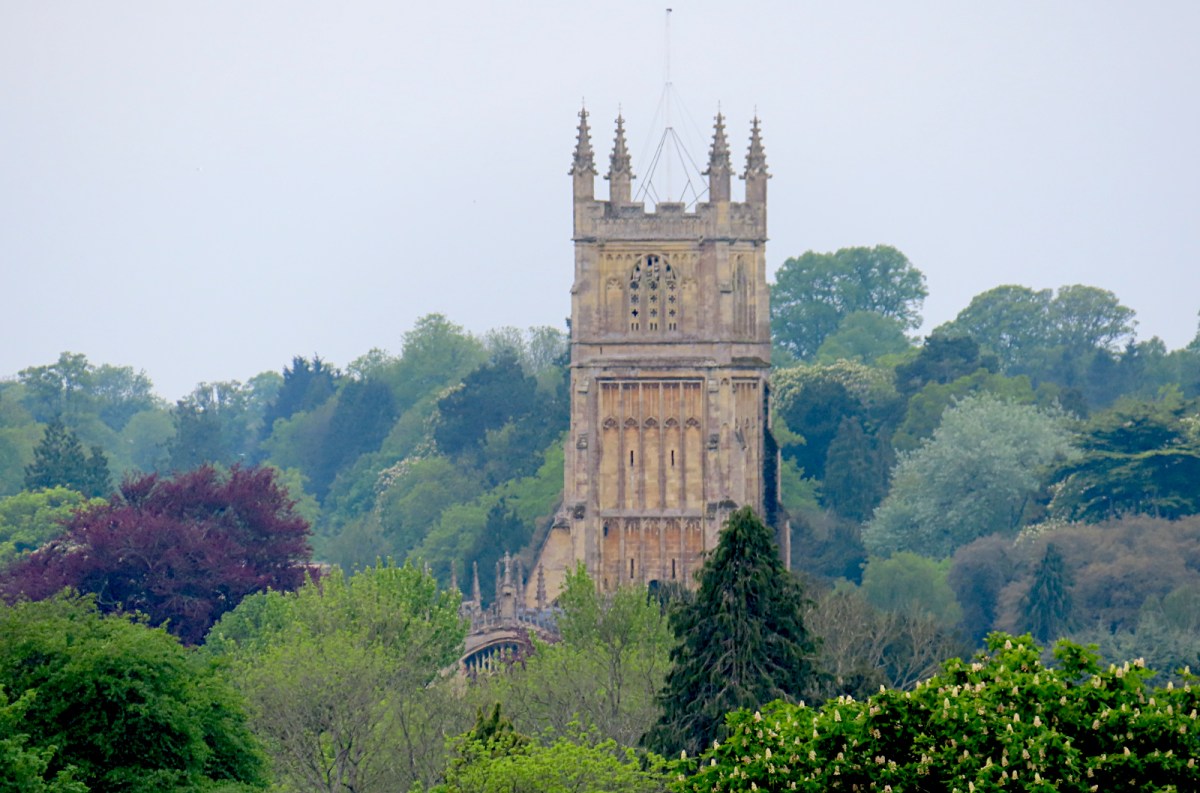
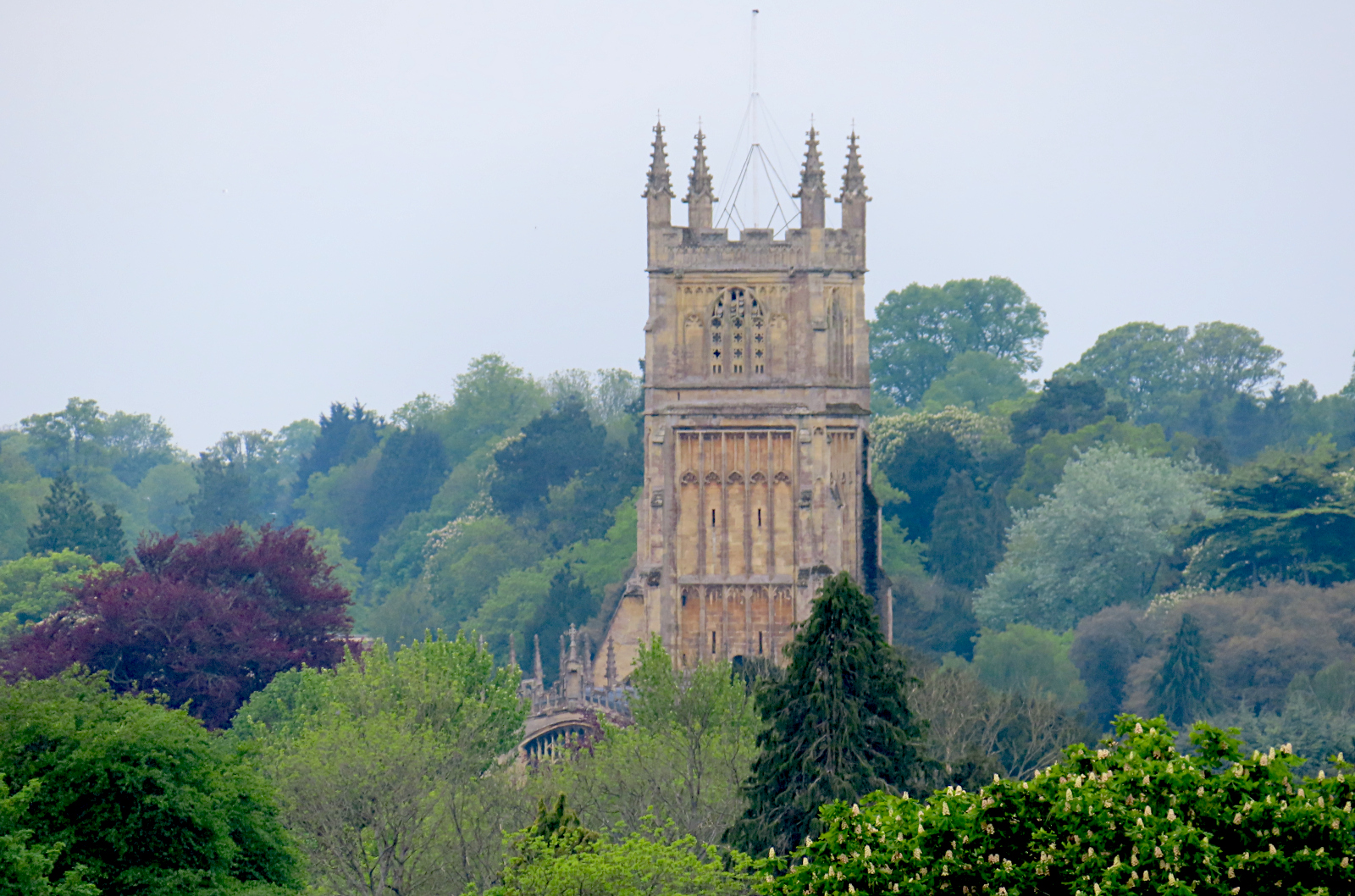
Seen at a distance from the east, Cirencester’s buildings are almost entirely hidden by trees. Only the tallest structures remain visible, mostly just the tower of the Parish Church. This telephoto shot shows it clearly; I’ve compensated for some summer haze by increasing the contrast a little.

Inside the town

It’s a very different matter when you’re in the town itself. Most of the larger buildings are in and around the Market Place. The church tower is at the western end of the Market Place and really all you can see are buildings. From the Abbey Grounds there are views over the rising land to the east across Tar Barrow Field towards the point where I took this photo (here’s the opposite view from near the tower towards the higher ground where I took today’s image). Northwards, the Cotswold Hills rise ever higher as you approach Gloucester and Cheltenham where the land falls suddenly and steeply about 300 m to the floor of the Severn Valley. In the West the hills increase towards Stroud and Tetbury as they also do to the south on the roads heading for Swindon and Marlborough.

Central Cirencester therefore lies in a hollow, part of the Churn Valley, and because the Churn meanders along its course there appear to be hills in every direction. Without the wandering of this valley, Cirencester would have hills mostly on the east and west. If it wasn’t for the church tower, Cirencester would be invisible from every direction, hidden by woodland and fields with scattered hedgerow trees, until you reach the built environment.

The old centre dates mostly to the 18th and 19th centuries with many wool merchant’s houses built of cut Cotswold stone blocks, often built in Georgian ashlar style and now converted to shops and offices. There are a few, scattered, timber-built properties remaining in some of the older streets in the town, almost entirely within 1½ km of the town centre. There are other wooden buildings now hidden, re-fronted in Georgian times with stone. Further out are Victorian and Edwardian streets, then houses from the 1920s and 30s, followed by post war housing estates from the 40s, 50s and right up to the present day. The town is still expanding.

Landscape affects the feel of a place

It’s important to notice this because the principle applies far more widely than you might, at first, think. When I say ‘landscape’ I’m thinking here of the way the rising hills and the meandering river valley reveal a town snuggled into a cosy counterpane of woodland as in the photo above. The entire feel of the town depends to a great extent on the underlying landscape features and the ten thousand years of water erosion since the end of the last ice-age. Had these events not taken place, Cirencester and its Roman predecessor, Corinium, would have been very different from the places they actually are and were.

Just consider how this applies to other aspects of life. Here’s a short list to consider. It really is a fundamental process.

  • Education – Shapes a person’s entire life.
  • Character – This affects how other people will understand you and treat you in life.
  • Genetics – Will affect everything from skin colour to health issues.
  • Wealth – Can open doors, create or close opportunities.
  • Faith – May provide strength to persevere, can bring peace and calm in difficulties.
  • Vision – Nobody can do what they cannot imagine!

Have a think about your own life. What things have been fundamental in shaping who you are and what you have achieved (or may achieve)? What has been really special so far in life? What is the ‘landscape’ underlying your life and how has it affected you and the way others perceive you?

See also:

< Previous | Index | Next >

You might also like:

Useful? Interesting?

If you enjoyed this or found it useful, please like, comment, and share below. (If you don’t see those links, click the article’s title above the main photo and they will appear.) Send a link to friends who might enjoy the article or benefit from it – Thanks! My material is free to reuse (see conditions), but a coffee is always welcome and encourages me to write more often!

The changing USA

As long as he gets what he wants, he doesn’t seem to care it it’s legal or illegal, innocent or corrupt, good or bad for the American economy, good or bad for the world economy, good or bad for the environment.

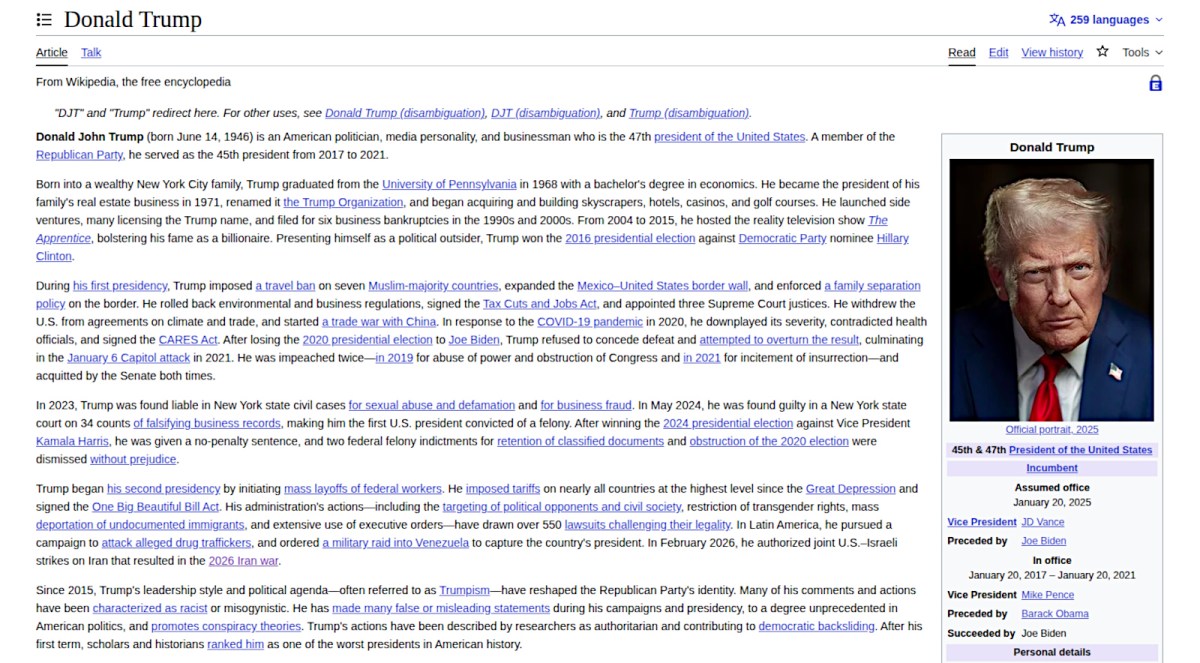
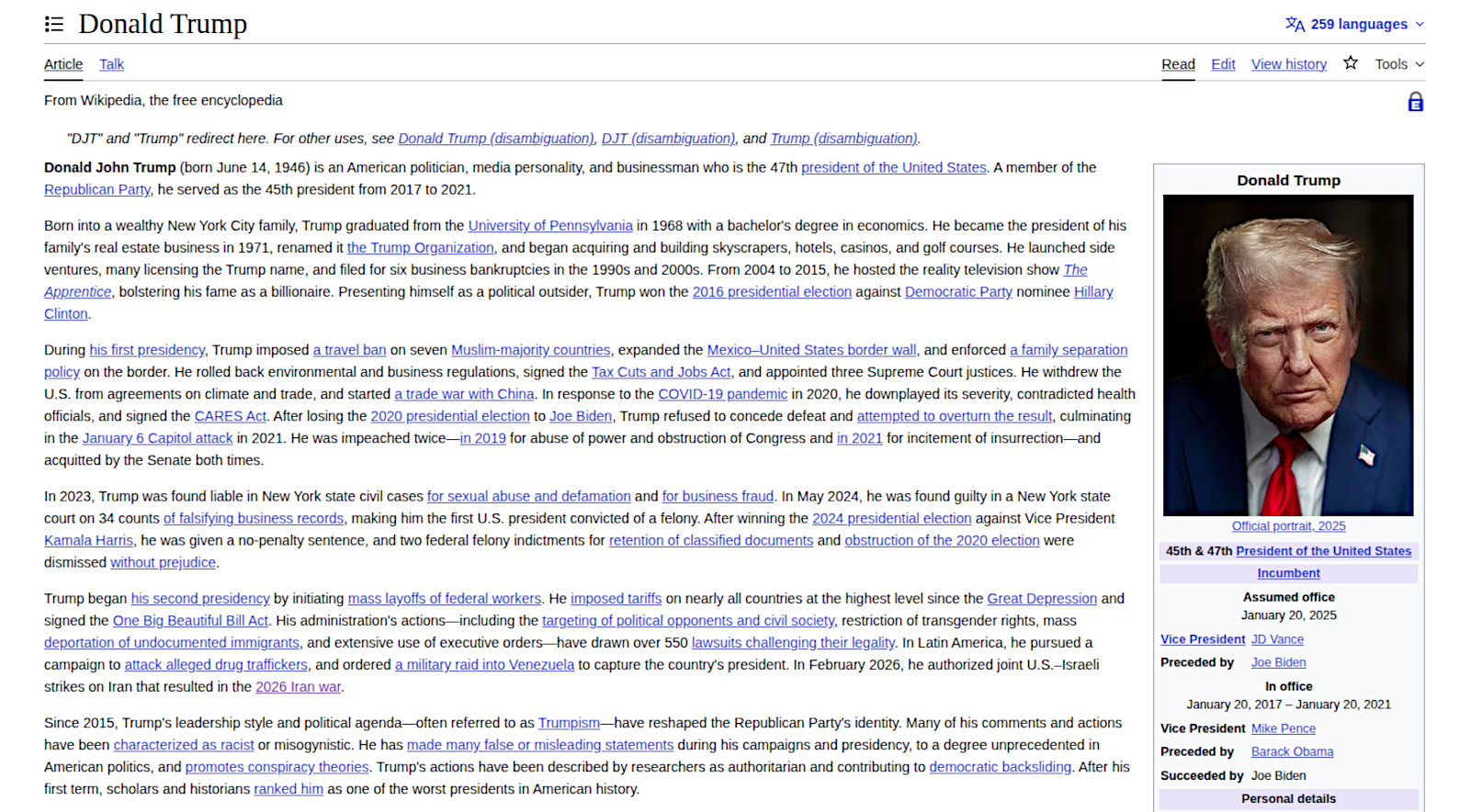
Wikipedia’s entry on Donald Trump

Thinking out loud – 5

Trump on Wikipedia

I wrote this post originally quite early in Donald Trump’s second presidency. I might write a second version as so many more things have changed since then.

It’s perplexing how much has changed in US domestic politics and international relations since Donald Trump’s second term as president began on 20th January.

I’m not going to try to summarise his actions, analyse his reasons for them or the effect they may have going forward. Instead I’m going to explain how one ordinary British citizen (me) views the underlying reasons for the way Trump behaves and why those around him act the way they do.

Right at the start I must admit that I have little to go on; my knowledge is limited to what he has done and said as reported by the news media, the reactions from the many world leaders and business people who have met him, the outcome (so far as we know them) of his actions, and comment from others on his personality, character and behaviour. But mostly, what I write below will be based on what I’ve observed in interviews and on news broadcasts, articles, and the response of others.

So, if you’re prepared to hear thoughts and opinions from a very ordinary member of the British public – read on.

Intellect

Donald Trump has a BSc in economics (and I have one in horticulture, another in mathematics and computing as well as an MSc by thesis on plant reproductive biology). I appreciate, therefore, that Trump has both the intellect and work ethic required to achieve his degree. It’s a significantly harder challenge than doing well in primary or secondary education.

Legal issues and bankruptcy

Following his university education, Trump found work in the family property business. However, things didn’t always go too well for him, there were legal battles over race discrimination and contempt of court, and six of his businesses have been declared bankrupt. The details are included in the Wikipedia article about him, with references to sources.

How things look

This seems to have set the tone for his current approach to legality and success in politics as well. Winning by whatever means he deems necessary seems to be his normal approach to political life. As long as he gets what he wants, he doesn’t seem to care it it’s legal or illegal, innocent or corrupt, good or bad for the American economy, good or bad for the world economy, good or bad for the environment. Sometimes he may genuinely not understand what he’s dealing with, ‘Drill Baby Drill’ is a dreadful intention to express if you’re a person who understands the damage that will be done to to our very fragile environment and ecosystems. And he clearly had no idea that imposing tariffs on imports was tantamount to a severe tax on United States Citizens.

Mr Trump has stabbed Ukraine in the back by his unkind and unhelpful remarks to Volodymyr Zelenskyy in the White House combining ignorance and rudeness in an extraordinary way. He tries to be friendly to the some of the world’s worst characters – Vladimir Putin is a prime example, Benjamin Netanyahu is another – while at the same time rudely dismissing and criticising many who would help him if he took a more conciliatory line, people like the leaders of Canada, most European nations, and so forth.

War

Mr Trump has skilled and experienced military analysts and experts ready with good advice and wisdom. He ignores them. Apparently he prefers guesswork, trial and (mostly) error to sound advice, good judgement and deferring to those with experience, an ability to think through the options and war game out the possible and likely outcomes.

See also:

Useful? Interesting?

If you enjoyed this or found it useful, please like, comment, and share below. (If you don’t see those links, click the article’s title above the main photo and they will appear.) Send a link to friends who might enjoy the article or benefit from it – Thanks! My material is free to reuse (see conditions), but a coffee is always welcome and encourages me to write more often!