For such an alarming topic it’s a remarkably calm discussion, but also a very informative and thought-provoking conversation.
The rise of AI and the possibility (some would say certainty) that this means the end of human civilisation and the extinction of our species, are topics being seriously warned against by a number of thinkers, scientists, and AI experts.
The Guardian discusses these issues with ‘the father of AI’, Geoffrey Hinton.
Listen to the podcast and see what you think. The potential end of humanity is not something to be swept under the carpet. We need to think about it right now. It would be extraordinarily foolish to wait, it might already be too late. For such an alarming topic it’s a remarkably calm discussion, but also a very informative and thought-provoking conversation.
I believe everyone should have the chance to listen to this.
Theorists can move forward again – and the picture seems a little more complicated than we thought.
Where did we come from, and how? We’ve long thought in terms of an evolutionary ‘tree’, but our origins in Africa are more like a braided channel. This idea provides a better fit to the data.
Based on fossil evidence alone, studies of human evolution have long agreed that modern humans evolved in east Africa and radiated out from there. But with the development of cheap, fast and reliable DNA evidence from modern populations, and DNA from fossil teeth and bone samples, it’s becoming clear that theorists can move forward again – and the picture seems a little more complicated than we thought.
Human dispersion, events described in the article all took place in Africa – Image from Wikimedia
On 17th May, Ragsdale and others published a research paper in Nature; ‘A weakly structured stem for human origins in Africa’; their evidence suggests evolutionary connections in populations that were separated for a while before recombining. So instead of an evolutionary tree (which most people were expecting) it seems that our human past is more like a set of braided channels.
Previous views on human evolution proposed a tree structure (branching but not recombining). However, the new ‘weakly structured stem’ model fits the data better than a tree model. It also explains the diversity of genetic forms in modern human populations, and shows that there is no single place in Africa where humans ‘originated’. After this process within Africa, humans spread out as show in the map.
Verse 15 is a big ‘if’. Jesus doesn’t ask us to do what he tells us; he simply points out that, if we love him, we will do what he says. So we are faced with the reality of what is in our hearts where Jesus is concerned. Do I love him, or don’t I? How far will I go in following him? Some of the way? All of the way?
The Spirit of Truth
The Holy Spirit comes as a gift from the Father in answer to a request from Jesus. And the Spirit is pretty special because he speaks for us, helps us, and will always stay with us. Read this personally – The Spirit of Christ, sent by the Father, speaks for you, helps you, and will always stay with you. Has this been your experience? If not, perhaps you need to get to know Jesus even better and make sure that you truly love him and therefore keep his commands. Look deeper into your own heart and pay more attention to your daily experience on this journey with Jesus. (If you’re still in doubt, press the ‘Previous’ link twice and re-read the notes on verses 1-7.) The Spirit of Christ cannot be anything but the Spirit of Truth, because Jesus declared himself to be ‘the Way, the Truth, and the Life’.
Pity the poor world!
‘The world’ is a way of saying ‘worldly people’ – in other words people who know the world, but have little or no clue about Jesus. Knowing the world is our default position, as we grow and experience life, we get to know the world and its ways better and better. That’s life! But this knowing provides no way to become familiar with the Spirit of Truth.
But if you are following Jesus, you will see and know his Spirit because the Spirit lives with you – inside you.
Leaving us?
The disciples didn’t yet fully understand what was happening. Jesus is going to leave them, but not like children without parents. Verse 18 is very clear, Jesus absolutely and explicitly tells them that he, the Son, and the Spirit (his Spirit) are one. They are not quite the same, but they cannot be separated. Jesus has a human bodily form and therefore lives with, but outside, the disciples; the Spirit has no bodily form and will live inside the disciples. Not only that: they will realise that Jesus is in his Father, and he is also in them. If Jesus is in us and he is also in the Father, then we too are somehow part of their oneness!
Back to verse 15
Verse 15 is reiterated in verse 21. If we have and keep Jesus’ commands, then we love him. And if we love Jesus, the Father will love us, Jesus will love us, and he’ll show himself to us. We are in such a safe place! All our lives we existed in a physical reality, but now we live in a spiritual reality as well!
As time passes we are learning more and more about the town’s Roman structure, even in parts excavated decades ago.
We are all aware of the story of Pompeii, the Roman town near Vesuvius that was buried in 79 AD when the volcano erupted. So how can an ancient town be expanding?
Much of the old city remains to be excavated; about a third of the site remains untouched. Recently, work began on an entire city block surrounded by four of the Roman streets. And although little has been uncovered so far, the tops of the Roman buildings are beginning to appear as the solidified volcanic ash is carefully removed. Even better – this new excavation is near the centre of the old town, so finding out what lies hidden there may be even more exciting than a dig in the outskirts.
As time passes we are learning more and more about the town’s Roman structure, even in parts excavated decades ago, new discoveries add to our knowledge all the time. An earthquake 27 years before the famous eruption damaged a house next to the public baths. Work to extend the baths involved demolishing the remaining structure of the house, but some of the foundations and mosaic pavements were simply covered by the new work and have recently been discovered.
The above is based on the Current World Archaeology article listed below, please read the article for more detail.
Further information
Gabriel Zuchtriegel – An archaeologist’s Twitter feed with a lot of posts on Pompeii
In May 2022 we visited St Neots in Cambridgeshire, our home town before moving to Cirencester where we live today. We were visiting friends for a big party in their local village hall.
Pretending to be on a tropical beach
The whole thing was themed for a Caribbean feel, and we all had our photos taken against a backdrop of palm fronds, a golden beach, and sparkling sea dotted with distant islands.
In May 2021 I took a photo of this plaque in Black Jack Street, Cirencester. It commemorates 1900 years of the town’s existence, founded by the Roman invaders in 75 AD. I wonder what they’d make of it now?
The phoenix rising from the ashes has long been Cirencester’s emblem. Corinium, as the Romans called it, was a frontier settlement in 75 AD and the years immediately following, but it grew to become the regional capital of south western Britain – the province of Britannia Prima.
In May 2018 I wrote about the work going on in our new house. The builders had done much of the work on the new extensions, but nothing was finished yet and a lot of our possessions were inaccessible – including our summer clothes. And the weather was getting warmer and warmer!
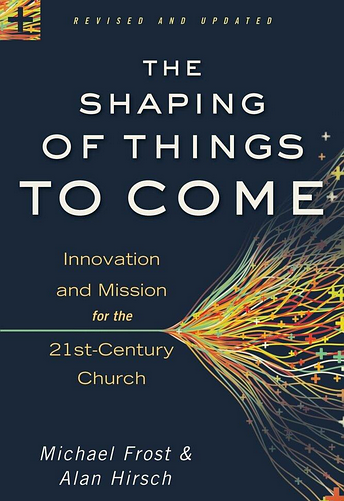
In May 2013 I was reading ‘The Shaping of Things to Come’, an excellent book by Michael Frost and Alan Hirsch. Amongst other things, they remark on the fact that Jesus was a Jew, the New Testament was written almost entirely by Jewish authors (the exception being Luke), and the earliest church (in Jerusalem) was Jewish in nature too. If we are to understand Jesus, the New Testament, and the church, we have to pay attention to their Jewishness. Read the original post.
May 2008 – We had a holiday in Catalonia and visited Barcelona where we took a look at the famous Sagrada Familia with its amazing ‘biological’ shapes. What an astonishing place it is!
To learn more about this wonderful feat of design and engineering by the architect Antoni Gaudi, read the Wikipedia article.
In May 2003 I was reminded about the significance of rivers and their behaviour and about the river in the books of Ezekiel and Revelation. Life is not about the mundane things we do from day to day, and we don’t get far by our own abilities. Real life has an essentially spiritual focus. I wrote a blog post about a meeting that helped me see these things more clearly.
May 1998 saw me designing an automated news website for internal use by research teams at Unilever. I’d only been in the job for a month, and I already had an overall mechanism in mind and was working on the programming required.
In May 1993 we made some very large bubbles in the back garden. We had a special bubble-making kit with a large fabric loop on the end of a wand. It was an amazing process! The picture shows my daughter Beth and nephew Tom experimenting with a bubble.
In May 1988 I was working at Long Ashton Research Station near Bristol, developing techniques for imaging water droplets on waxy leaves by rapid freezing and scanning electron microscopy. This led to a paper on the topic.
In May 1978 I borrowed a friend’s car (we didn’t have a car at the time) and drove with a very excited daughter to visit her baby sister at Bristol Maternity Hospital.
In May 1968 I was in lodgings in Pershore, working on a fruit and vegetable farm nearby as part of my undergraduate degree at Bath University. It was a sandwich course in horticulture, and the summers were the industrial experience part of the course.
In the life of the church the central figure is Jesus and the central idea is that he is Lord. The church was founded on this person and this truth nearly 2000 years ago.
Where should we start in church life, where should we start in mission, or in teaching, or in any other aspect of being a believer and follower of Jesus? The answer is simple and rather obvious – we should start with Jesus himself.
Following my post ‘Ground breaking‘ on 26th February, I’d like to examine a particular example. In my study guide, JDMC, I set out to help small groups of individuals live out Jesus’ command to ‘go into all the world and make disciples’. The idea is that making disciples is the first step on the journey to starting a movement that will grow and grow. Alan Hirsch, in setting out this idea in his seminal book ‘The Forgotten Ways’, identified six factors that work together to make a movement buzz and thrive. The first factor is that there needs to be a person and an idea that together can become the focal point for the movement.
All vigorously growing movements have this centralised focus. For the communist revolution in Russia in the early part of the 20th century the person was Karl Marx and the idea was that wealth should be shared, not held primarily by a ruling class. The means of production should be owned, not by industrialists, but by the workers themselves.
It’s not hard to identify the same structure in all sorts of other historical movements; think of Al Qaeda, the Methodist movement, female suffrage, the rise of the German Nazi party between the first and second world wars, the growth of Amazon as a supply and delivery business. I could go on, there are many examples, and it’s not hard to see a central personality and a central notion or purpose for each.
Jesus is Lord!
In the life of the church the central figure is Jesus and the central idea is that he is Lord. The church was founded on this person and this truth nearly 2000 years ago. He gave us everything we need to become disciples, and he imbued the church with everything it needs to be a thriving, thrusting movement. And although in the first few hundred years, there was explosive growth, a real movement on a major scale, something that swept through the Graeco-Roman world and far beyond – that momentum stalled. Something fundamental, in church today, seems to be missing.
This is the first of six essential ingredients that Alan Hirsch argues that we need to rediscover and reactivate in the church. I think he is right. We need to recover the sense that Jesus is at the heart of church life, and that he is Lord.
It’s fair to argue that this is exactly what Jesus himself meant when he told his disciples to go out into the world and make disciples. But he surrounded that command with some super-important statements. First he said that he has full authority, then he told them to go and make more disciples, he said to teach those new disciples to do all the things he’d taught his initial disciples, and then he finished by telling them that he’d be with them all the way. They did what he’d asked, they made many more disciples who also understood that Jesus is Lord and that they were, in turn, to make more disciples. And they did. And that is a movement! They literally changed their world.
But it’s essential that we do more than just repeat the slogan, ‘Jesus is Lord’. We need to live the slogan out; as disciples of Jesus, we need to do what he did, and to speak into our culture the things he spoke into his culture. He told us to love the people in our lives, he said we should forgive people who are unkind to us. He calls us to imitate his words, but also his thinking and his actions. It’s essential to go as he did, to bless the people around us, to help the helpless, feed the hungry, and meet every need as and when we come across it. Jesus blessed people in many ways, if we are truly his disciples so will we. But as Alan Hirsch points out, there’s more to it than just this one factor. We may be ever so familiar with Jesus, and have a close knowledge of him. We might study him at degree level, publish learned papers about him, write theses about his life and work, and read and write great books about him, and never once see any hint of a rapidly expanding movement.
Knowing Jesus is not, on its own, enough. It is, however an indispensable first step. We do need to know Jesus intimately, to understand who he is, and follow him to the best of our abilities. Yet this alone is insufficient for the rapidly growing movement we would all, surely, like to see! There are five other necessary factors and we will look at another one next time. Alongside the person and the idea there also needs to be a gift. We’ll discuss this in detail in the next part of this short series, but for now it’s enough to know that Jesus is not only the person, and his lordship the idea, but also Jesus himself is the gift. Jesus gave himself for us. This is the supreme gift, but there are others as we shall see.
BUT! In the meantime, get to know Jesus as never before. Spend time discovering him as a person by reading through the gospels of Matthew, Mark, Luke and John. Ask him to reveal himself more fully to you, he is always happy to answer this request, whether you are poor or wealthy, healthy or unwell, highly educated or unable to read. Consider what it means that he is Lord, and consider the cost involved in giving himself and the benefit of that gift to you and to me.
Remember, you need to get to know a person – Jesus: and you need to grapple with an idea – Jesus is Lord: and you need to understand a gift – Jesus’ action in pouring himself out for you, for me, for all of us.
Some resources
Meanwhile, let me leave you with some places to look for more information on this.
The best way to get to know Jesus better is to keep reading the Gospels (Matthew, Mark, Luke, John). They are freely available on line in a variety of languages and versions. Bible Gateway is a good source, but there are plenty of others. If you like, take a look at my website, Cruising the Gospel.
My guidebook, JDMC, presents Alan Hirsch’s six forgotten ways in a short, introductory, workbook format for individuals, or better, a small group of up to 12 people. Part One – Jesus at the Centre is the relevant section.
Alan Hirsch’s widely read book ‘The Forgotten Ways’ is available in print or in ebook form. Buy it from Eden, Google Play Books, Amazon or from your local bookshop.
** LATEST ** – The next launch attempt is now scheduled for Thursday 20th April. Check the latest news at Spaceflight Now.
Monday’s planned test flight of the Super Heavy booster carrying Starship was called off due to a pressurisation issue caused by a failed valve. The booster’s ability to carry a significant load (like a fully fuelled Starship) depends on the fuel tanks being pressurised at all times. It’s the same process that makes drinks cans so strong despite being very thin walls. An empty can crumples whereas an unopened can is pressurised and is significantly stronger.
If the valve issue can be fixed on Tuesday, there might be a new launch attempt on Wednesday. Watch this space (no pun intended).
Just a short post this time, to alert anyone who may not know… SpaceX is planning the first ever launch of Starship on an orbital flight tomorrow, Monday 17th April.
There are several places you can watch this attempt live on YouTube. I recommend three of them in particular. If you’re new to all this, try the SpaceX stream. If you’re more knowledgeable you might prefer one of the others.
Felix Schlang, a German who moved to Florida to be closer to the action
Marcus House, an Australian spaceflight enthusiast in Tasmania
I didn’t post an article in April 2022, but Donna and I visited Weston-super-Mare and I spotted this fruit and vegetable shop in one of the back streets. There were strawberries here, but they’re not in season; there were pineapples but those don’t grow in the UK; there were pears that should be ready to pick in September or October. Almost nothing in this shop was grown locally. Why?
A traditional greengrocer’s shop
It’s lovely to have choices like this, but they come at a cost to the environment that we usually overlook. The solution lies in my pocket and yours; we should try to buy locally produced fruit and vegetables that are within a few weeks of being in season.
No blog posts in April 2021 either, but on 4th April the weather was warm and bright and we enjoyed eating outside for the first time in 2021.
Eating outside on 4th April
Three days later!
But oh my word, look at the same table just three days later. Snow! The moral of this little story is plain, do things while you can. Don’t wait, don’t hesitate, who knows what tomorrow might bring…
In April 2018 I had a bit of a rant about rescuing Britain from the dreadful mess it seemed to be in. I grumbled about the effects of Brexit, about poverty, the underfunded health service, an underfunded education system, the need for food-banks, the excessive cost of homes.
Read the article. Let me know if you think things have improved in the last five years.
In April 2013 I wrote about ‘Men, women and children‘. The topic really was leadership, and I stand by all I wrote at that time.
Can men lead in church? How about women, are they allowed to lead? And what about children? Perhaps it depends who you ask, there are different opinions and different traditions.
Read my post from ten years ago and let me know what your views are.
There was no article in April 2008. However, we had a holiday in Catalonia and visited Barcelona where we took a look at the famous Sagrada Familia with its amazing ‘biological’ shapes. What an astonishing place it it!
To learn more about this wonderful feat of design and engineering by the architect Antoni Gaudi, read the Wikipedia article.
In April 2003, I wrote about a meeting at home. Father spoke to us about leadership, coincidentally I drew on what I’d learned in this meeting when I wrote the article mentioned in the ‘Ten years ago’ section above!
A firm foundation
We are weak, like freshly poured concrete; but Jesus is patient and knows we will become strong enough for the task he’s given us.
Twenty-five years ago
In April 1998, Donna and I were on our way home from our honeymoon in Florida, and I began a new job at Unilever’s Colworth Laboratory north of Bedford.
Thirty years ago
In April 1995 my first wife, Judy, was recovering from failed chemotherapy for bowel cancer metastases. Clearly this was not a great situation, but she was fitter than she had been since before her operation to remove the primary tumour. We began meeting again at home with friends in Yatton, near Bristol, where we lived. These were by far the best meetings with friends in Jesus’ presence that any of us had ever experienced. Awesome and hard to describe adequately.
Erm… I can’t count! That was not thirty years ago, it was twenty-eight years ago! Ah well, I’ll let it stand.
Thirty years ago
I’ll try again! In April 1993 Judy and I were living in Yatton with our daughters, and my Mum and Dad visited us on 15th. We drove into Bristol and looked around the covered market and The Galleries shopping centre.
Prepare for much better and more natural interaction with devices like Alexa, your satnav, book readers, aids for the blind and much more. No more need to remember the right words and phrases to use.
What does a conversation with ChatGPT look like? I test it out below and add some short notes and thoughts on what it might mean for the future.
I ran a simple chat session with ChatGPT, just to get an idea of how good it is at understanding questions and returning understandable, useful answers in ordinary language. Everything in the conversation below with a yellow background was typed by me, the rest is from ChatGPT. Where my typing is an aside for you, my readers, and not sent to ChatGPT, I’ve put it in braces {}.
The headquarters of Open AI, the developers of ChatGPT – From Wikimedia
The conversation is quite long, but I hope it will interest you and perhaps cause you to raise questions in your own mind. If you want to discuss any thoughts on AI in general (and ChatGPT in particular) just leave them in the comments section below. Thanks.
The conversation
Chris – Hi, my name is Chris and I’d like you to introduce yourself; please don’t be nervous, just give me an informal introduction.
ChatGPT – Hi Chris! I’m ChatGPT, a language model designed to communicate with humans and assist with various tasks. Think of me as a robot that can talk with you through text. I’m always eager to learn new things and help you in any way I can, so feel free to ask me anything!
Chris – Thanks! Good to meet you. OK, I’ve got the idea that you are robot-like. There are a couple of things I’d like to know. Why are you called ‘ChatGPT’? And what is a language model?
ChatGPT – Good to meet you too, Chris!
ChatGPT is named after the GPT (Generative Pre-trained Transformer) language model architecture, which is used to build me. GPT is a type of neural network that is trained on massive amounts of text data, allowing it to generate coherent and natural-sounding text. The “Chat” part of my name refers to my ability to chat with humans like you, using text as our mode of communication.
Speaking of language models, a language model is a type of artificial intelligence that can analyze and generate human language. Essentially, a language model is a computer program that is trained on large amounts of text data, allowing it to learn the rules and patterns of language. Once trained, a language model can perform a wide variety of tasks, such as generating text, translating between languages, or answering questions. I’m a particularly advanced type of language model, based on the GPT-3.5 architecture, which allows me to handle a wide range of tasks and communicate with people like you in a natural and engaging way.
Chris – I must congratulate you, your replies are certainly engaging and natural. Do you mind if I ask some more questions? This is an interesting conversation.
ChatGPT – Thank you, Chris! I’m always happy to answer questions and have interesting conversations, so please feel free to ask me anything you’d like.
{I thought I’d introduce some typos next, to see if ChatGPT would struggle to parse the text. But it didn’t bat an electronic eyelid, answering quickly and correctly.}
Chris – What sort of toxt deta were you trainers with? Do you know where it came from? A few examples of sources would be helpful.
ChatGPT – I was trained on a diverse set of text data, ranging from news articles and academic papers to social media posts and online discussions. The training data comes from various sources and domains, covering a wide range of topics and writing styles to help me understand and generate text in a natural and diverse manner.
Some examples of sources that were used to train me include:
Wikipedia: A large online encyclopedia with articles on almost every topic imaginable.
Books: A wide range of books on various topics, from fiction to non-fiction.
Web pages: Crawled from the internet, including blog posts, news articles, and online discussions.
Social media: Posts from popular social media platforms like Twitter and Reddit.
Scientific journals: Academic papers from various scientific disciplines.
News sources: Articles from major news outlets like CNN and the New York Times.
The training data was collected from various sources and pre-processed to remove irrelevant or duplicated content, ensuring that the data was of high quality and diverse enough to train me to generate human-like text.
Chris – In that case let’s try to draw on some of the material you’ve seen from those sources. I live in an English town called Cirencester. It’s in a region called The Cotswolds. Please write a short essay about Cirencester for me.
ChatGPT – Sure, I’d be happy to write a short essay about Cirencester for you!
Cirencester is a charming town located in the heart of the Cotswolds, a picturesque region known for its rolling hills, quaint villages, and traditional architecture. With a history dating back to Roman times, Cirencester is home to a wealth of historical and cultural attractions that draw visitors from around the world.
One of the town’s most notable landmarks is the Cirencester Parish Church of St. John Baptist, a stunning example of medieval architecture that has been standing for over 900 years. The church is home to a variety of beautiful stained-glass windows, intricate stone carvings, and historical artifacts that provide a glimpse into the town’s rich history.
Another must-visit attraction in Cirencester is the Corinium Museum, which houses an impressive collection of Roman artifacts and exhibits that showcase the town’s Roman heritage. Visitors can explore the museum’s extensive collection of mosaics, coins, and pottery, as well as learn about the daily lives of the Roman citizens who once called Cirencester home.
In addition to its historical attractions, Cirencester is also known for its natural beauty and outdoor activities. The town is surrounded by idyllic countryside, with plenty of opportunities for hiking, cycling, and exploring the Cotswold Way, a 100-mile walking trail that winds through the region’s stunning landscapes.
Whether you’re interested in history, culture, or outdoor activities, Cirencester has something to offer. With its unique blend of ancient and modern, this charming town is a must-visit destination for anyone looking to experience the best of the Cotswolds.
Chris – That was really good! Do you write poetry as well? How about a short poem (three or four verses) about Cirencester?
ChatGPT – Sure, I can certainly give it a try! Here’s a short poem about Cirencester:
In the heart of the Cotswolds lies a town, With Roman roots and ancient renown. Cirencester, where history meets charm, And natural beauty keeps us calm.
Streets lined with stone and buildings grand, A parish church that still does stand. Corinium’s past in the museum’s keep, A town that makes our hearts leap.
Cirencester, oh, how you inspire, In every season, by every fire. A gem in the Cotswolds, a treasure to see, A place where our hearts are free.
Chris – Great! Here’s something a bit harder, can you do a haiku on Cirencester?
ChatGPT – Sure, here’s a haiku about Cirencester:
Roman walls stand tall, Cirencester’s ancient embrace, Cotswold’s heart of stone.
Chris – Great again, and hard to do. I have one last question for you; how should I solve a quadratic?
ChatGPT – To solve a quadratic equation, there are several methods, but one of the most commonly used is the quadratic formula. The quadratic formula states that for an equation of the form ax^2 + bx + c = 0, the solution for x is given by:
x = (-b ± sqrt(b^2 – 4ac)) / 2a
where “sqrt” denotes the square root function.
To use this formula, you simply plug in the values of a, b, and c from your quadratic equation into the formula, and then simplify the expression to find the solutions for x.
It’s worth noting that there are other methods for solving quadratic equations, such as factoring and completing the square, but the quadratic formula is generally considered the most reliable and efficient method, especially for more complex equations.
Chris – Thanks! Enjoy your time chatting to some other people. By the way, how many people can you converse with at the same time? I can only manage four or five.
ChatGPT – As an AI language model, I can theoretically converse with an unlimited number of people simultaneously, as long as the incoming messages are not too frequent and I have enough computing resources to process them all in a timely manner. However, I can only provide individualized responses to each person based on the messages they send me, so the more people involved in the conversation, the more difficult it may be to keep track of multiple threads of conversation at once.
Some thoughts on what you’ve just read
I think you’ll agree that ChatGPT is pretty good at giving understandable and useful responses in English to a range of questions. It’s pretty much the sort of conversation you’d expect from a very well-read human. It seems most unlikely that today’s AI systems, including ChatGPT, actually ‘think’ in anything like a human way. It manipulates language very cleverly in ways that are useful and seem human-like. But these AI systems don’t understand meaning, they don’t have feelings or emotions, they don’t have thoughts or opinions.
Might they have the earliest glimmerings of these things? There’s no evidence that they do. But the teams developing such systems have sometimes expressed caution. The danger here is that any much more advanced future system that did have a spark of self-awareness might arise without us even knowing about it, and if it was capable of modifying itself it could become exponentially more clever. Even a few days of exponential improvement could result in a more powerful mind than any human. After that, the AI could outwit us with ease and make decisions that we might not like. The difficulty is that the time available for us to intervene would be a much smaller window than we might suppose or plan for.
In the near future (likely starting in months, not years) a welcome development will improve those systems that already use speech recognition and/or speech generation. Prepare for much better and more natural interaction with devices like Alexa, your satnav, book readers, aids for the blind and much more. No more need to remember the right words and phrases to use, fewer misunderstood commands, the ability to ask for more or different information.
Expect help with programming, planning astronomical observing sessions, writing up research, having your articles proof read and copy edited. Perhaps soon you’ll be able to throw away your keyboard! Laptops might start to look like tablets. Bedtime? Ask for a story.
ChatGPT can do that already…
Chris – Write me a children’s bedtime story about a dog, a mouse, an oak tree and an ant hill.
ChatGPT – Once upon a time, there was a friendly dog named Max. Max loved exploring the forest near his home and making new friends. One day, while he was wandering through the woods, he met a tiny mouse named Mimi. Max and Mimi quickly became best friends and spent hours playing together.
As they were playing, Max noticed a beautiful oak tree nearby. The tree was enormous, with branches stretching high into the sky. Max and Mimi decided to climb up the tree and see what they could find. When they reached the top, they discovered a bustling ant hill. Thousands of tiny ants were working together to gather food and build their home.
Max and Mimi watched in awe as the ants worked tirelessly. They were amazed at how much the little ants could accomplish when they worked together. Max and Mimi decided to help the ants by gathering food for them. Max used his strong nose to sniff out berries, while Mimi used her quick reflexes to catch insects.
The ants were overjoyed to receive Max and Mimi’s help. They thanked the two friends by giving them a special gift – a magical acorn that would grant them one wish. Max and Mimi thought long and hard about what they should wish for.
Finally, Max said, “I wish for all the animals in the forest to be friends, just like us.” Mimi nodded in agreement. She added, “And I wish for the oak tree to grow even taller and stronger, so it can provide shelter for even more creatures.”
Their wish was granted, and from that day forward, all the animals in the forest were friends. The oak tree grew taller and stronger, and even more animals found shelter in its branches. Max and Mimi continued to play together and explore the forest, knowing that their wish had made a difference in the lives of so many creatures.
As the sun began to set, Max and Mimi said goodnight to their new friends and curled up together under the oak tree. The stars twinkled above them, and the gentle breeze rustled the leaves. Max and Mimi felt grateful for the adventure they had shared and fell asleep with happy hearts, dreaming of all the fun they would have tomorrow.




 Journeys of Heart and Mind
