Reflections on Barton Mill Pond
< Previous | Index | Next >
Image of the day – 198
What’s in an image? Sometimes quite a lot, more than meets the eye. I’m posting an image whenever I can.
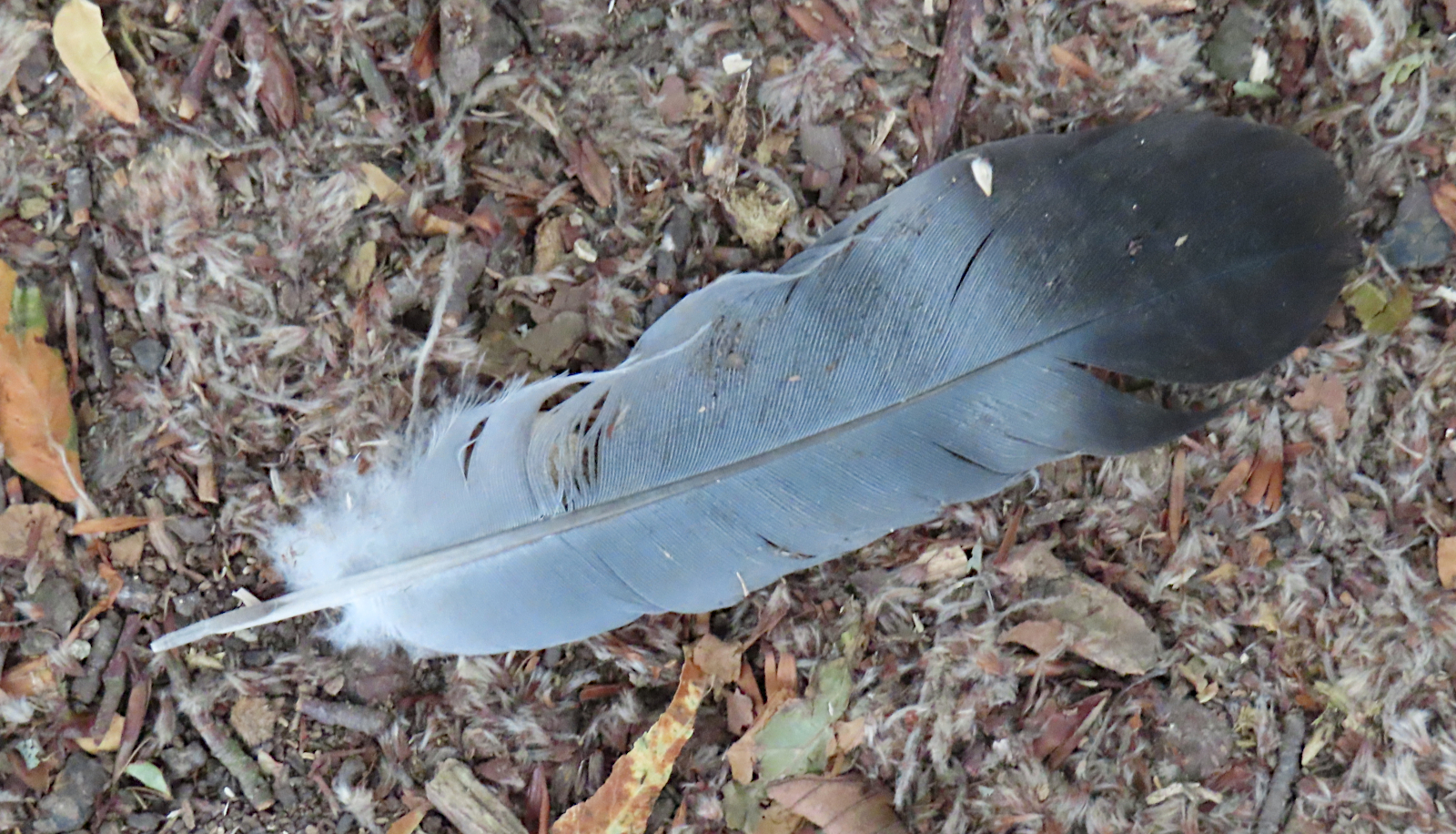
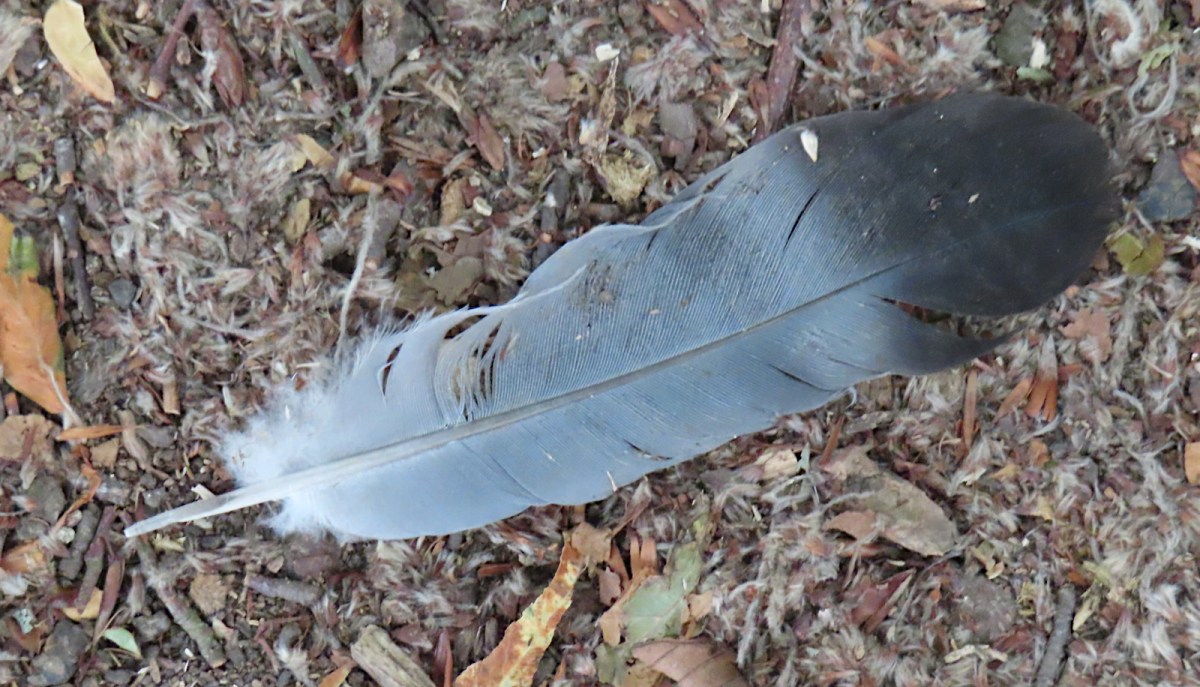
I’m sure you recognise this as a feather. But there may be quite a lot of things you don’t know about feathers too. In this post we’ll come up with as many questions and answers as we can.
What kind of bird is it from?
We all know that birds have feathers, but which species produced this particular feather, and what function did it provide? Most probably it came from a wood pigeon, according to Google’s image search.
The lowest part of the feather (bottom left) is downy and helps to keep the bird warm. The upper pale and dark grey parts have a different function altogether, they might be from the wings or tail of the bird to push the air in a downward motion to provide lift, or to guide direction of flight by manipulating the airflow in subtle ways calculated by the bird’s brain.
When a person is described as a bird-brain it may not be as derogatory as was intended! A bird’s brain is extremely well adapted to the work it has to perform. Feathers, too, are also very well adapted for the functions they provide; read more about the parts of a feather at Something over tea.
Do other animals have feathers, or is it just birds?
Mammals have hair or fur. Like feathers; skin, nails, claws, hair, fur, scales and horns are all composed of the protein keratin. It’s a tough, flexible protein with good structural strength and the ability to bend enough to resist fracturing. But among creatures living today, birds are the only group to have feathers. I wrote some other articles about birds.
Go back in time, however, and there were several groups of dinosaurs that had feathers. These were probably mostly for warmth, display or camouflage rather than flight thought there were some flying dinosaurs that had flight feathers – some of them on all four limbs so imagine a bird with four wings and teeth and you’ll get a rough idea of these creatures.
The Natural History Museum has an interesting article on its website about the origin of feathers. A lot of the detail remains to be worked out, but progress is being made.
Feathers have hidden features
A feather consists of a main central tube (the shaft) as the main support structure with a series of side branches (barbules) that can hook together. When these barbules get accidentally unhooked little gaps open up and the feathers become less affective (especially if they’re flight feathers on the wings or tail).
When birds preen, one of the things they are doing is using their beak to rezip any unhooked barbules. You can see some unzipped gaps on the feather in the photo at the top of the article.
Use of feathers by humans
Feathers are a natural resource. People have used them for centuries for clothing and display, for their insulating properties, or for artwork. Here are some specific examples, you can probably think of many more:
- Display of authority or rank, think of the North American Indian war bonnet.
- Insulation, pillows, duvets, down jackets
- Art and craft, eg The Feather Book.
See also:
< Previous | Index | Next >
You might also like:
Useful? Interesting?
If you enjoyed this or found it useful, please like, comment, and share below. (If you don’t see those links, click the article’s title above the main photo and they will appear.) Send a link to friends who might enjoy the article or benefit from it – Thanks! My material is free to reuse (see conditions), but a coffee is always welcome and encourages me to write more often! 
Share this:


