The Sopwith Pup

The navy and the army (the Royal Flying Corp was part of the army) ordered numbers of the planes and they served well until superseded.

< Previous | Index | Next >

Image of the day – 151

What’s in an image? Sometimes quite a lot, more than meets the eye. I’m posting an image every few days.

Click to enlarge

This lovely old aeroplane is a Sopwith Pup, as used by the Royal Flying Corp during the First World War. Sopwith was a major British aircraft manufacturer of the day. This aircraft is still flying from time to time in England where it’s based at Old Warden Airfield, itself a survivor of the First World War. This particular aircraft was built after the war and modified back to the fighter configuration.

In the photo the engine is being tested after maintenance, so a couple of side panels have been removed for inspection. The propeller was spinning, you can see the motion blur in the image.

Here’s the same aircraft in action.

Design and construction

Based on a smaller, earlier aircraft, Sopwith designed the larger Pup as a fighter in 1915 with the first prototype appearing in 1916. Both the navy and the army (the Royal Flying Corp was part of the army) ordered numbers of the planes and they served well until superseded and transferred for training purposes as newer, more effective fighting planes rapidly evolved.

This aircraft was much lighter than its German counterparts. It could take off and land on grass surfaces, in quite short distances. The Pup was very manoeuvrable, had a tight turning circle, and a high service ceiling for those times.

The Pups were replaced with Sopwith Camels during 1917.

Old Warden Aerodrome

Old Warden was a First World War air station, as already mentioned. It lies just north of Shefford and south-east of Bedford. Today it’s the home of the Shuttleworth collection of old aircraft and motor vehicles, a very fine and famous collection with a long history, originally as a private collection, but now open to the public. The old aircraft are frequently rolled out, and often one or more are performing in the air.

Everything that’s not active on a particular day is stored in a series of First World War hangers and those are all open to visit as a museum with informative explanatory material on display as well. There is active maintenance and restoration going on, and some of that may be on display too.

If you’re interested in this sort of thing, and are in the area, I highly recommend popping over for a visit.

See also:

< Previous | Index | Next >

Useful? Interesting?

If you enjoyed this or found it useful, please like, comment, and share below. My material is free to reuse (see conditions), but a coffee is always welcome!

You might also like:

Nearly a year ago now…

Installing our heatpump

It all took longer than we expected and some changes had to be made to the design as events unfolded, but by the beginning of February the new system was in and working.

< Previous | Index | Next >

Image of the day – 144

What’s in an image? Sometimes quite a lot, more than meets the eye. I’m posting an image every day or so.

Click to enlarge

At the end of January our heat pump was installed, and before long we had warm radiators and underfloor heating, something we’d missed since our gas boiler developed a fault in October. At the time our first thought was to get the boiler repaired, the part would cost £500 and the labour would be a similar amount and at the end of the process we’d still have a seven-year-old boiler and we’d still be burning gas. We wanted to avoid using gas if possible because we want to reduce the amount of carbon-dioxide we produce.

There is a substantial government grant to make heat pumps a more attractive idea, so we thought it made sense to take advantage of it. After discussing it with our energy supplier, Octopus Energy, one of their surveyors visited, made a plan of the rooms, specified the required changes to our radiators, planned for pipe runs and siting of equipment, and we were ready to roll.

It all took longer than we expected and some changes had to be made to the design as events unfolded, but by the beginning of February the new system was in and working.

A different kind of heat

Our old heating system used a gas boiler, it could produce a lot of heat quickly on demand, so we had a series of thermostats to turn radiators and heated floors on and off as required to keep rooms at the right temperature. At night and during the middle of the day a time clock turned the system off entirely to save money, then came back on half an hour before we arrived home after work and half an hour before we woke up in the morning.

The new system is on all the time. A room thermostat increases or reduces the flow rate to keep the house at whatever temperature we set, and starting from cold it can take several days to achieve the set temperature. We’re beginning to like this way of working; the house stays at the temperature we prefer, around 19 C, and it only rises higher if the outside temperature is high. In that case the heat pump stops heating the house and just provides hot water.

Energy bills

It’s still early days to assess how our heating bill will change. The heat pump is an electrical system so our electricity bill will rise, but our gas bill will now be zero. The heat pump cools down outside air by extracting energy from it, and pushes that energy into our radiators and hot water tank. One kilowatt of electricity can push about four kilowatts of heat into our home, and as we have solar panels on our roof and a storage battery, some of that energy can come from the roof even at night. There is no environmental effect, we’re not producing carbon dioxide and the heat we steal from outside leaks back out again over time. The better our house is insulated, the slower it will leak and the less electricity we will need to maintain the temperature difference between the cold outside and the warm inside.

When we buy electrical power from the grid to pump heat (mainly in midwinter), that grid power is more than 50% green as well; so even that is far better than burning gas to keep warm.

Image of the day 144

This is the 144th ‘Image of the day’ I’ve posted. That is what we’d have called a gross when I was a child. Ten eggs in a box was ten, but twelve eggs in a box was a dozen and six was half a dozen. We still use those terms. A baker’s dozen was thirteen, a dozen with one extra for good measure. And a dozen dozen also had a special name – a gross. 12 x 12 = 144. So today there is a gross of ‘Images of the day’ on the Journeys of Heart and Mind website!

I wonder if I’ll ever reach a great gross, ie a dozen gross, or 1728 ‘Images of the day’?

See also:

< Previous | Index | Next >

Useful? Interesting?

If you enjoyed this or found it useful, please like, comment, and share below. My material is free to reuse (see conditions), but a coffee is always welcome!

Time for a new paradigm

Times change and businesses and organisations have to change too. You see the same situation in ecosystems: weather patterns change, or a new species of plant or animal moves in, and the balance shifts.

Wikipedia’s entry on Patreon

Thinking out loud – 4

Patreon on Wikipedia

Times change and businesses and organisations have to change too. You see the same situation in ecosystems: weather patterns change, or a new species of plant or animal moves in, and the balance shifts. Plants and animals that used to thrive begin to struggle or even die out, others prosper.

Internet conditions have been changing, and continue to do so. YouTube, pressured by the popularity of Tik-Tok style short video clips is bringing YouTube ‘shorts’ front and centre, and longer, more serious videos are both more expensive to host (because they are longer, slower to upload, and need more storage), and less popular with younger audiences (a recently growing sector.) Blogs have become less popular for the same reasons. Print media have been suffering too, everyone wants video reports on current events. Even TV channels are suffering, seen as boring and not for the current generation.

So what to do when the old models fail? That was the issue Fraser Cain faced.

Here’s a story of frustration and hard work when a website failed, revenues had been trending downwards for some time and the YouTube part of the operation proved problematic for a different reason. The solution? Patreon, and a new (old) approach to funding. Watch Fraser Cain’s video below where he shares the full story of the website failure and reconstruction, the problem with YouTube, and the new emphasis on Patreon going forward.

Patreon

The answer, as you have seen, was to find a new model; or perhaps it’s just an even older model come back in disguise! Provide material, perhaps in large part for free, but then charge a weekly or monthly subscription for extras. These might be coverage in greater depth, providing additional topics, giving an opportunity to provide feedback, or win prizes, or sell ‘merch’, or whatever other benefits you might think of.

Patreon is becoming more and more popular with creators, and for very good reason – the model is extremely successful. It works well for creators, and it works well for viewers who can enjoy an ad-free experience. Not everyone will be willing to pay for the extras, but that doesn’t matter. As long as the income exceeds the costs of production it’s a success. so the more people a creator can sign up, the lower the fee can become. It’s a great idea, it works for everyone.

See also:

Here are some further links to Fraser’s material, as well as a few other content creators using Patreon very effectively:

Useful? Interesting?

If you enjoyed this or found it useful, please like, comment, and share below. My material is free to reuse (see conditions), but a coffee is always welcome!

From the Stone Age

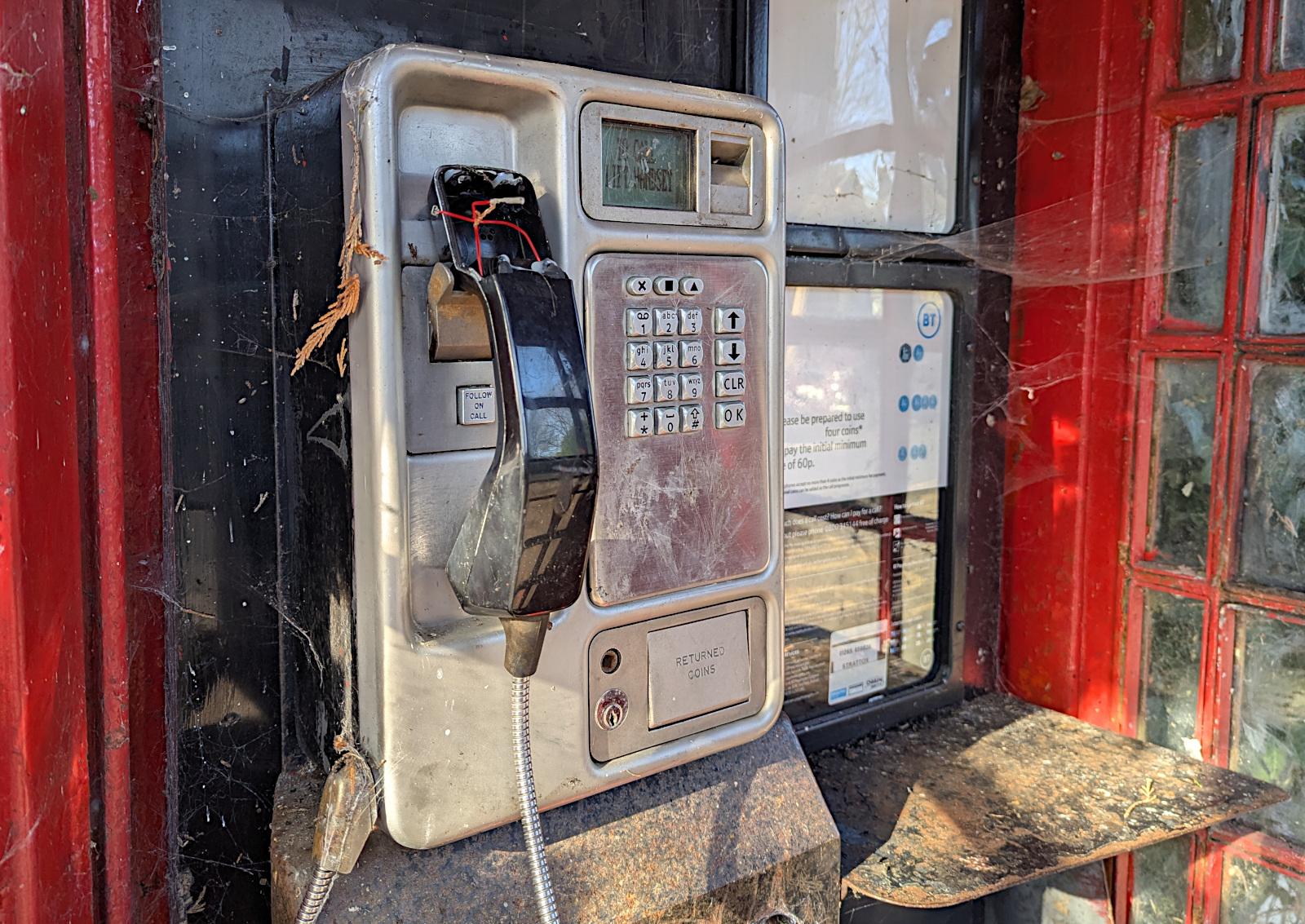
As mobile phones became more affordable and widely available the need for phone boxes vanished. This one was never removed and stands forgotten by the pavement, more or less unnoticed, draped in cobwebs, laden with layers of dust.

< Previous | Index | Next >

Image 136 – What’s in an image? Sometimes quite a lot, more than meets the eye. I’m posting an image every day or so.

Click to enlarge

Stone Age?

Well – Stone Age in terms of communications technology! A long time ago, way, way back in the 1980s, telephone kiosks like this one were widespread in the UK. You can see the red paint for which these phone boxes were so famous.

This particular box stands at the junction of the Gloucester Road and the Cheltenham Road in Stratton, where we live. It must have been quite busy when it was first installed. I well remember standing waiting at a box like this, sometimes there might even have been a queue of three or four people waiting to make a call.

And I remember the standard phone box smell as well. There was always a certain degree of dampness about them, often mixed with stale tobacco smoke. There was a little shelf containing a local residential directory and a yellow pages with business numbers and adverts.

This example of the British Telecom (BT) phone box has seen better days. It was converted with up-to-date equipment that must have replaced the original, black, bakelite handset with its black, enamelled, steel coin-box with Button A and Button B. But as mobile phones became more affordable and widely available the need for phone boxes vanished. This one was never removed and stands forgotten by the pavement, more or less unnoticed, draped in cobwebs, laden with layers of dust.

See also:

< Previous | Index | Next >

Useful? Interesting?

If you enjoyed this or found it useful, please like, comment, and share below. My material is free to reuse (see conditions), but a coffee is always welcome!

Greenshifting

Plants (secondary) trap some of the energy in sunlight and use it to grow and to store in chemical form. And animals (tertiary) obtain energy by eating plants or other animals.

Image: Wikimedia

Science and technology – 3

< Previous | Index | Next >

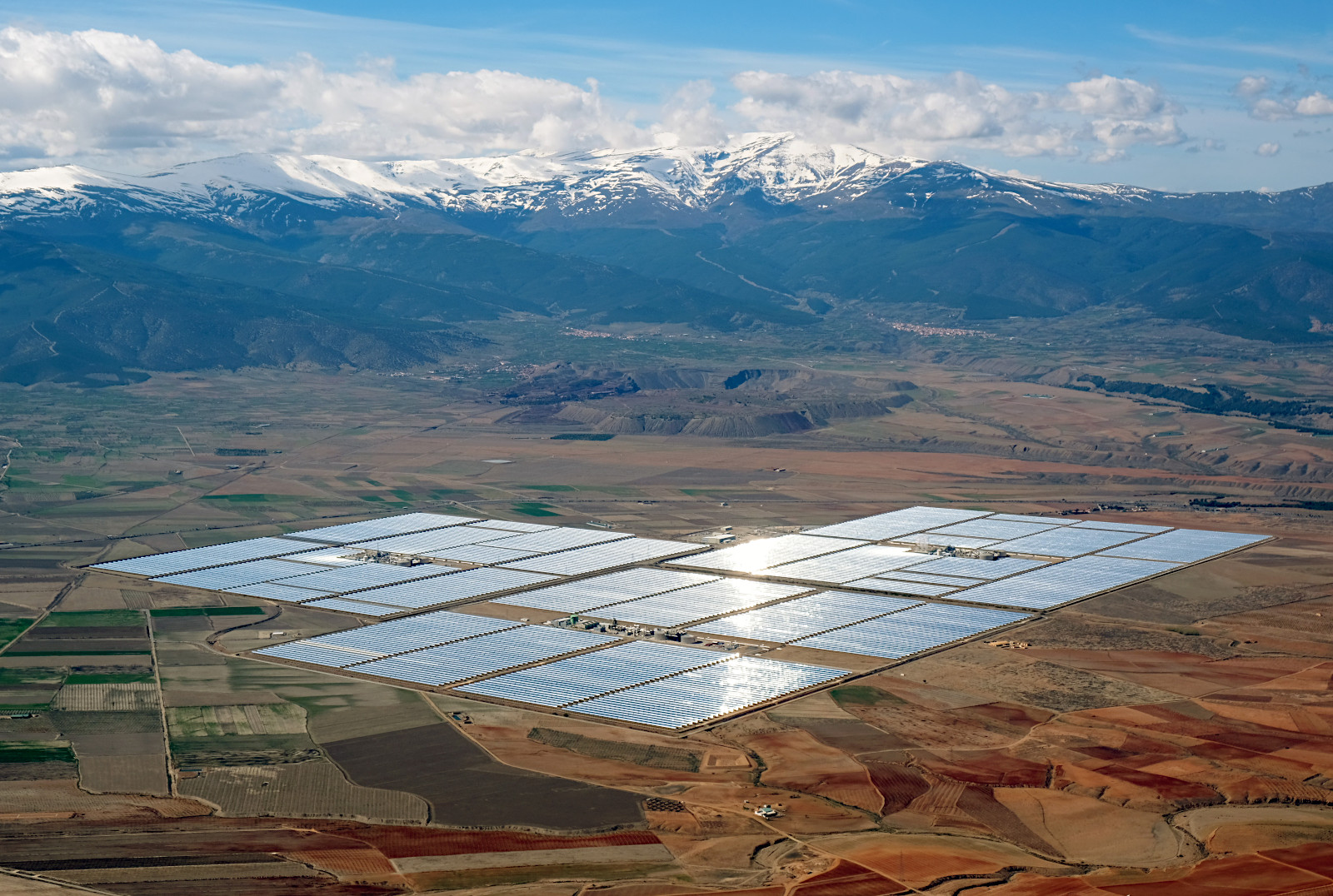
Solar farm
(Wikimedia)

We’ve just had a heat pump system installed in our home and it is so, so different from the old, gas-fired boiler that used to keep us warm in winter. I’ll give you some details about it in another article. But the main reason I’m writing is to explore what it means to be migrating towards clean, green energy; and what it means if we fail. But before we can focus on any of that, we need to understand where our energy comes from and where it goes.

Primary energy sources

We all use energy every day, as a species. And just like all other forms of life, that energy comes almost entirely from rearrangements within atomic nuclei. There are two ways this can happen – nuclear fusion and nuclear fission. Fusion is what happens in the centre of the sun where hydrogen atoms are combining to form helium, releasing a lot of heat in the process. Fission is what happens suddenly in a nuclear bomb or slowly in a nuclear reactor. Heavy atoms fall apart and release energy as they do so. The rule is that heavy elements release energy if they break apart (fission), while light elements release energy if they join together (fusion). Elements in the middle mass range around iron don’t break apart or join together easily and produce little or no energy if forced to do so. Indeed, sometimes these elements might require energy.

The sun’s energy comes from fusion in the core and is eventually released as sunshine. Sunshine heats the Earth’s surface and winds are caused as air masses expand or contract due to temperature changes. Waves, in turn, are caused by wind crossing water surfaces.

Some of the Earth’s inner energy comes from the spontaneous fission of heavy elements in the core and mantle, and some is remnant heat from Earth’s formation 4.5 billion years ago; that core energy is released in the form of volcanoes, earthquakes, and hot springs.

Tidal energy is the final source we need to consider. This is the result of gravitational forces from the Sun and Moon causing bulges in the oceans, the Earth revolves daily beneath these ocean bulges and the water depth varies as the state of the tide changes throughout the day.

It’s also gravitational contraction that gets the centre of a star dense enough and hot enough for fusion to begin in the first place. That’s it for primary energy sources. All of these count as green energy as none of them release carbon dioxide.

We can collect solar or wind energy, for example, with a clear conscience, also geothermal energy, hydroelectric power, hot springs, tidal power, or nuclear. There may be issues with all of these, but none of those issues have anything to do with releasing greenhouse gases.

Plants and animals

Everything else is what I call secondary or tertiary energy. Plants (secondary) trap some of the energy in sunlight and use it to grow and to store in chemical form. And animals (tertiary) obtain energy by eating plants or other animals. These too can be counted as green. The natural world runs on light from the sun, and all the carbon dioxide released is balanced by the light trapping mechanism of plants that uses carbon dioxide from the air and water from the ground and releases oxygen. The carbon is used to create the structural elements of wood and all the living tissues of plants and animals. Most of this is recycled naturally by decay within a few years or decades, and the carbon balance of the Earth doesn’t change. Except sometimes carbon containing materials were trapped long term in geological deposits of coal, oil and natural gas. This sequestration of carbon compensated for the continual, slow warming faced by the planet as the sun increased its output of light and heat over geological time.

Deep time

All stars grow brighter and hotter as they age, a perfectly natural and well understood process that we don’t need to consider here – except to mention that it happens. Rising temperatures cause shifts in a planet’s climate, and if it goes far enough a planet can become very hot, lose its water to space, and become a roasting desert like Venus.

This did not happen to the Earth because the continual, slow removal of carbon from the surface kept carbon dioxide levels low and significantly reduced the greenhouse effect.

Early human technology

Early human technologies did not involve the use of coal, oil or gas. When fire was first discovered and tamed for human use, the only fuels were wood and various kinds of plant and animal oils and fats. Our technology remained green, using only recently captured energy.

But around 4000 years ago, people began to discover surface deposits of coal and oil. The Romans and the Chinese knew of coal and used it on a small scale as a fuel.

We were still remaining green on the whole. The industrial revolution began with water power to mill grains, process wool into cloth, and so on. The first industrial towns were always built in valleys where there were rivers of sufficient size to power the machinery. Up to this time it’s difficult to find much change in atmospheric carbon dioxide levels in, for example, ice cores or ancient timber. When carbon fuel was needed for processes needing extreme heat (eg iron smelting, pottery firing), charcoal was used; this was made by incomplete burning of wood in an oxygen poor environment.

But then came steam power!

Advancing industrial growth

It soon became clear that charcoal was not available in sufficient amounts to be a suitable fuel for burgeoning industry. Instead, coal began to be mined in ever-increasing quantites to feed iron and steel works, power pumps to move water from mines, and more and more to power transport. Railways and shipping consumed ever larger amounts of carbon in the form of coal. Oxygen was consumed and carbon dioxide released – and at that point the human race started on a dangerous path towards climate change. At first the increase in carbon dioxide levels was imperceptible and so was the increase in average temperatures.

And that is where we were 100 years ago.

Oil is not mainly carbon, like coal. It has almost two hydrogen atoms to every carbon in its structure so it’s slightly more green than coal. Hydrogen oxide (aka water) is a less powerful greenhouse gas than carbon dioxide. Gases are even better than oil, methane is best of all as it contains four hydrogens to every carbon.

But to be fully green we must move all our energy production to solar, wind, nuclear, and tidal energy supplies. There are financial incentives to make the move too. To burn coal, oil or gas at a power station you must construct the power plant and transmission lines and then continually buy the raw materials to burn to generate power.

Wind turbines, solar panels and hydro also involve building infrastructure, but the fuels to run them – sunshine and wind – are free. This makes the energy they supply to the power grid much cheaper than energy from non-green technologies.

The economical costs of mining or drilling, as well as the health and environmental costs of emissions from non-green energy sources renders the move to greener energy an absolute no-brainer. And that’s before we start to take into account the serious risks of a warmer climate. These include rising sea-levels; unlivably high temperatures; heavier and unpredictable rain; forest fires; spreading of deserts; and harsher and more frequent cyclones and hurricanes. All of these horrors are already with us and are worsening year on year by larger and larger amounts.

Back-pedalling furiously cannot save us now. But it’s not too late to moderate the damage, eventually stabilise the problems we face, and see a gradual return to what was once normal. But we absolutely must act now, the longer we leave it, the worse it will get.

See also:

< Previous | Index | Next >

Useful? Interesting?

If you enjoyed this or found it useful, please like, comment, and share below. My material is free to reuse (see conditions), but a coffee is always welcome!

Supersonic flight

A smaller development and test version is already flying and has just made its first supersonic flight. This is the Boom XB-1.

Image: Wikimedia

Science and technology – 2

< Previous | Index | Next >

History

Most people know that Concorde was a joint UK/France development that resulted in a commercial supersonic passenger plane. It was technically successful and carried passengers across the Atlantic from 1976 until 2003, but for several reasons it was never commercially successful. There was also a Soviet version, the Tupolev Tu-144 that crashed spectacularly at the Paris Airshow in 1973.

But today, both Concorde and the Tu-144 are history.

Present development

Not so many readers will be aware of a commercial project to design and build a new supersonic passenger plane, or that a smaller development and test version is already flying and has just made its first supersonic flight. This is the Boom XB-1, specifically designed to cause less noise and, amusingly considering the company’s name, less transonic boom audible from the ground.

So far the project is going well; the test-flight program is well underway with promising results so far. The full-size airliner (Overture) would be substantially smaller than Concorde and carry fewer passengers, but if successful in service a larger model might be considered.

See also:

< Previous | Index | Next >

Useful? Interesting?

If you enjoyed this or found it useful, please like, comment, and share below. My material is free to reuse (see conditions), but a coffee is always welcome!

Being hacked

The flurry of ‘your password has been changed’ announcements grew and grew, and was then joined by texts and emails telling me I could gain access to my account again using this or that six-digit key.

I was hacked! I suppose I shouldn’t be surprised, but I’m usually quite careful and it’s the first time it’s happened to me. The hacker(s) seemed mostly to be interested in websites that might give them access to money in some shape or form. An understandable motive. You don’t want to be hacked, it’s taken several days of hard effort to drag myself clear, and although the activity has dropped to a very low level now, it might still be too soon to feel completely safe.

Here’s what happened as far as I can tell.

I was browsing around on Patreon, noting the range of people running businesses, charitable sites, enthusiast groups, news and comment on specialist topics and so forth.

I spotted one site offering advice on the digital currency market, an idea that has always intrigued me. And somehow I managed to click through to links to sign up – mistakenly imagining they were just for more information. I soon got a charge on my PayPal account, quite a large charge that I couldn’t at first identify except that it came from Patreon. When I understood that to be the case I went into my Patreon account and discovered (to my horror) that I was now a member of the advice site I thought I’d been browsing.

It didn’t take long to unsubscribe myself, and apart from a second, much smaller, Patreon payment through PayPal, that seemed to be the end of the matter. But then further payments appeared, but each one was rolled back by Patreon to my PayPal account, presumably because I was no longer a member of the account and there was some lag in the process.

After that (and I don’t know whether there’s a connection between what had already happened and what happened next) I began to receive password change announcements from a range of sites I use. PayPal was the first so I contacted them and they refunded a payment I’d queried because they judged it to be fraudulent. But the flurry of ‘your password has been changed’ announcements grew and grew, and was then joined by texts and emails telling me I could gain access to my account again using this or that six-digit key.

At that point I became very suspicious. Why were these access key messages coming to me? Someone had put false passwords into some of my sites and then used the ‘I forgot my password option’. But they hadn’t been able to login. They knew my email address (often the username) and so did the website, so the access key came to me. But if I was to enter one of them, the site would let the hacker in – not me. This happened with PayPal, Patreon, Buy Me A Coffee, Microsoft, Etsy and several more.

I’ve had a bit of a fright, lost some money (not catastrophically, but annoyingly) and have had to spend a lot of time getting everything straightened out. The flow of emails and texts has diminished now, just one or two this evening. If I have a week or two without any sign of activity I shall heave a big sigh of relief.

I’ve been through all the passwords in my password manager, removing sites that I never use or are no longer available, changing all reused passwords, and making sure all that remain are strong (long, random, containing both upper and lower case, numerals, and special characters). The password manager generates and stores these for me and can log me in automatically on most sites.

I’m looking forward to relaxing again in time, but for the moment I’m still being vigilant.

See also:

Useful? Interesting?

If you enjoyed this or found it useful, please like, comment, and share below. My material is free to reuse (see conditions), but a coffee is always welcome!

Comet G3 (Atlas)

[This] image featured in NASA’s Astronomy Picture of the Day for 25th January 2025. Visit the website and have a browse around, there are so many fine images here!

< Previous | Index | Next >

Image 131 – What’s in an image? Sometimes quite a lot, more than meets the eye. I’m posting an image every day or so.

Enlarge
(NASA)

This might be the most striking photo you’ll ever see of a comet. OK, I dare say there will be better images out there, but this one is still pretty amazing.

The image featured in NASA’s Astronomy Picture of the Day for 25th January 2025. Visit the website and have a browse around, there are so many fine images here!

If you look closely (click the thumbnail and expand it as far as it will go) you’ll see plenty of stars in the image, too. Of course, they are way, way in the background far beyond the Solar System whereas the comet is right here inside the system along with the Sun, Planets, Moon, me and you.

See also:

< Previous | Index | Next >

Useful? Interesting?

If you enjoyed this or found it useful, please like, comment, and share below. My material is free to reuse (see conditions), but a coffee is always welcome!

Lichens

Lichens are the main food source for a variety of animal species from small mites and insects to the remarkably large reindeer. They tend to be protein-poor but may be rich in carbohydrates.

< Previous | Index | Next >

Image 130 – What’s in an image? Sometimes quite a lot, more than meets the eye. I’m posting an image every day or so.

Enlarge

Lichens are amazing. They’re always small, they grow in slowly expanding colonies, and they consist of cooperating fungi and algae. A number of different species of fungi can grow like this, combined with various yeasts and bacteria. The assemblage often looks like a simple plant, often almost flat, but sometimes filamentous, branching or in the form of flakes. Circular forms like the one in the image are common. The Wikipedia article listed below has photos of a range of different forms.

The grey colony in the photo has grown out from the centre ‘cleaning’ other life forms from the surface of the underlying limestone and spreading out further around the perimeter. The black lichen was destroyed as the grey lichen crossed over it, but new colonies of the black lichen have established on the clean rock left behind. The situation is dynamic, but very slow. Return for another photo a month later and little will have changed.

Lichens are the main food source for a variety of animal species from small mites and insects to the remarkably large reindeer. They tend to be protein-poor but may be rich in carbohydrates.

See also:

< Previous | Index | Next >

Useful? Interesting?

If you enjoyed this or found it useful, please like, comment, and share below. My material is free to reuse (see conditions), but a coffee is always welcome!

Really?

Professor J P Hudson offered a prize to anyone who could submit a paper for publication without … a spelling mistake, or a punctuation error, or an unclear phrase. And I don’t think he ever had to pay out the prize.

< Previous | Index | Next >

Image 129 – What’s in an image? Sometimes quite a lot, more than meets the eye. I’m posting an image every day or so.

Enlarge

I was amused when I saw this in a local shop window a couple of years ago. Sometimes we’re not quite as good with words as we should be, and right at the start I admit that I’m just as bad as anyone else. But this one did give me a chuckle. It just begs the question,

‘So.. er… What would unconscious eating be, exactly?’

Just my silly sense of fun!

I think what happens, ever so easily, is that I word something in a way that’s not clear and then cannot, myself, spot the issue. It needs a fresh eye, a fresh mind to spot mistakes like this.

When I worked at Long Ashton Research Station in the 1970s, the Director, Professor J P Hudson, offered a prize to anyone who could submit a paper for publication without him spotting a spelling mistake, or a punctuation error, or an unclear phrase. And I don’t think he ever had to pay out the prize (£5 I think, quite a lot in those days).

Sometimes we need to see what we have written from a new perspective in order to fix or avoid simple mistakes. And sometimes we need the same fresh look at our habits, likes and dislikes, relationships with others, understanding of science, what we believe about the world, the people we meet, and not least, what we believe to be true about spiritual things.

It’s far too easy to go along familiar pathways in our lives without seeing the need to question what we think and say and do.

When: 25th September 2023
Where: Cirencester

See also:

< Previous | Index | Next >

Useful? Interesting?

If you enjoyed this or found it useful, please like, comment, and share below. My material is free to reuse (see conditions), but a coffee is always welcome!