Image of the day – 27

In the natural way of things, each Aloe will produce an average of one new plant, and the population will remain in balance.

< Previous | Index | Next >

What’s in an image? Sometimes quite a lot, more than meets the eye.

I’m posting an image every day (or as often as I can). A photo, an image from the internet, a diagram or a map. Whatever takes my fancy.
Aloe aristata

Today’s picture is a close up of an Aloe aristata plant with a developing flower bud. All plants, animals, fungi, bacteria and even viruses have ways of reproducing themselves. That’s one of the defining characters of life of any kind. We can be absolutely confident that the same will be true of any life forms anywhere in the universe.

The Aloe flower bud will develop on a tall stalk and if the flowers that form are pollinated they will produce and release seeds that stand a chance of germinating and growing into new, similar, Aloe plants. In the natural way of things, each Aloe will produce an average of one new plant, and the population will remain in balance.

The only choices available to life are to survive for ever with no reproduction, or to live for a limited time and leave behind new versions to carry on the process. What life cannot do is live forever and reproduce: that would lead to overpopulation and catastrophic failure of resources. Even with reduced family sizes, the planet is no longer capable of supporting the billions of people on our planet. We face catastrophic population collapse due to lack of resources at some point unless we can reduce our population size in some other way first. That’s a matter of simple arithmetic, not a political statement or some kind of guesswork. If we don’t face and fix the issue, something else will sooner or later.

Themed image collections

The links below will take you to the first post in each collection

Cirencester, Favourites, Irish holiday 2024, Roman villa

< Previous | Index | Next >

Useful? Interesting?

If you enjoyed this or found it useful, please like, comment, and share below. My material is free to reuse (see conditions), but a coffee is always welcome!

Image of the day – 23

By cooperation and coordination they manage all the behaviours and activities that we see on the larger scale. 

< Previous | Index | Next >

What’s in an image? Sometimes quite a lot, more than meets the eye.

I’m posting an image every day (or as often as I can). A photo, an image from the internet, a diagram or a map. Whatever takes my fancy.

The fresh green of spring

There are few things as amazing as life. Perhaps there’s literally nothing as amazing as life in the entire universe! The photo shows the young, expanding leaves of a small-leaved lime tree (Tilia cordata).

Like all deciduous, temperate trees, leaf buds are formed the previous summer and over-winter after the old, mature leaves fall in late autumn. As temperatures increase in springtime, these buds swell and grow and the young leaves appear and expand. At first they’re a beautiful, pale green (lime green) but become a darker and duller shade as the days lengthen and they mature.

These processes all take place naturally in ways that are more complex than most of us might expect. Both plants and animal bodies are composed of countless tiny cells in much the same way that a large building might be made of bricks. Each cell is alive, contains a full copy of the organism’s DNA, and many of them have specialised roles to play. By cooperation and coordination they manage all the behaviours and activities that we see on the larger scale. So in some respects an expanding leaf is a lot like a growing community of people working together as a village or business. Having specialists makes it possible to do so much more, but cooperation becomes essential, not merely optional.

The rioting we’ve seen in some British cities in recent days has been disruptive and damaging to society as a whole. When the cells of an organism behave in uncoordinated and uncontrolled ways we call it a cancer. Rioting is a kind of cancer in a human society. We all know what happens when cancer becomes so widespread that the organism can no longer function. But organisms have ways of dealing with errant cells before they become overwhelming, and so do societies. Both police action and peaceful counter-demonstrations have been effective in controlling the UK riots in recent days.

Themed image collections

The links below will take you to the first post in each collection

Cirencester, Favourites, Irish holiday 2024, Roman villa

< Previous | Index | Next >

Useful? Interesting?

If you enjoyed this or found it useful, please like, comment, and share below. My material is free to reuse (see conditions), but a coffee is always welcome!

Image of the day – 21

The plant, on the other hand, is a living organism. Nobody designed or manufactured it – life is much more wonderful than that!

< Previous | Index | Next >

What’s in an image? Sometimes quite a lot, more than meets the eye.

I’m posting an image every day (or as often as I can). A photo, an image from the internet, a diagram or a map. Whatever takes my fancy.

It’s quite amazing how life clings on, even in the most adverse circumstances. This plant was growing in my front drive, somehow finding a way to get its roots into a narrow gap in the block paving. The blocks were designed by a garden landscaping company and manufactured to particular standards of hardness and resistance to my car rolling over them. They were designed to last.

The plant, on the other hand, is a living organism. Nobody designed or manufactured it – life is much more wonderful than that! The universe we live in is tailored to build ever more complex things from very simple beginnings. A handful of quantum fields is all it takes, and these are exquisitely able to give rise to fundamental subatomic particles. These group together, eventually settling into simple atomic nuclei. As the universe expanded and cooled, atoms of simple elements appeared, almost entirely hydrogen and helium. Stars condensed and formed heavier elements up to iron. I could go on, but it’s a long story! Maybe some other time?

For now, just consider the battle between order (my paving blocks and the urge I have to remove weeds that neither I nor my wife want to see growing there) and disorder (weeds thriving wherever they can, despite my best efforts). Life always wins in the end, it seems!

Themed image collections

The links below will take you to the first post in each collection

Cirencester, Favourites, Irish holiday 2024, Roman villa

< Previous | Index | Next >

Useful? Interesting?

If you enjoyed this or found it useful, please like, comment, and share below. My material is free to reuse (see conditions), but a coffee is always welcome!

Image of the day – 14

Any creative work seems quite magical, as what was only in the creator’s mind appears in actuality and can be seen and touched.

< Previous | Index | Next >

What’s in an image? Sometimes quite a lot, more than meets the eye.

I’m posting an image every day (or as often as I can). A photo, an image from the internet, a diagram or a map. Whatever takes my fancy.

Here’s another view of the gardens at Hidcote. Lawrence Johnston designed Hidcote with the concept of ‘garden rooms’, one of which is the focus of this photo. Walking through the Hidcote garden you pass from one room to another, to another repeatedly. There are constant surprises every time you turn a corner or pass through an opening in a hedge. It’s delightful.

I love this kind of garden and I think you might too, if you ever have a chance to visit Hidcote – take it!

This, to me, says something about the nature of creation in general. There’s a design stage during which the idea of ‘rooms’ is a foundational step, and even some of the layout, or even most of it, take shape in the designer’s imagination. And almost always there’s a second stage after things start to be laid out on the ground (for a garden). In this second stage, it may become clear that improvements are possible once you see the ‘lay of the land’. Little tweaks and changes can improve the design significantly.

But always, in any creative work, something comes into existence that was simply not there before. Any creative work seems quite magical, as what was only in the creator’s mind appears in actuality and can be seen and touched, or in the case of a garden – walked in and admired.

Themed image collections

The links below will take you to the first post in each collection

Cirencester, Favourites, Irish holiday 2024, Roman villa

< Previous | Index | Next >

Useful? Interesting?

If you enjoyed this or found it useful, please like, comment, and share below. My material is free to reuse (see conditions), but a coffee is always welcome!

Image of the day – 11

Hidcote is managed by the National Trust to very high standards, and National Trust food is also very good.

< Previous | Index | Next >

What’s in an image? Sometimes quite a lot, more than meets the eye.

I’m posting an image every day (or as often as I can). A photo, an image from the internet, a diagram or a map. Whatever takes my fancy.

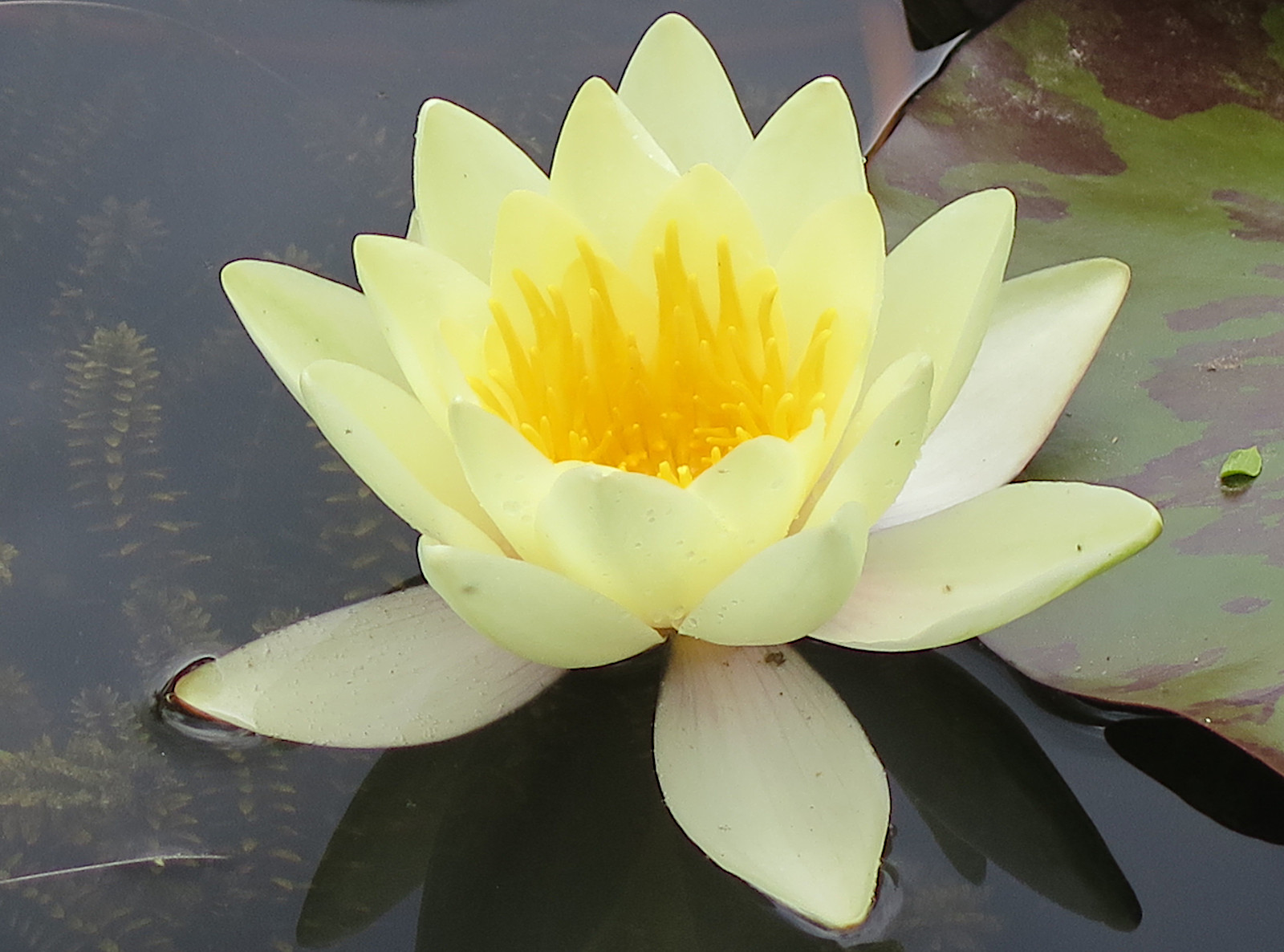
A waterlily at Hidcote

Hidcote is a wonderful garden near Chipping Camden, north of Cirencester where we live, and I took this photo in June 2024. Donna and I spent a while casually strolling around, enjoying the sunshine and the gardens and stopping for lunch. Hidcote is managed by the National Trust to very high standards, and National Trust food is also very good. We are National Trust members so we don’t pay an entry fee and can come here as often as we like, we know the place really well.

Most of us would agree that a water lily flower is a thing of beauty, yet it is also ephemeral; it’s here today, gone tomorrow. Living things are all like that, from the tiniest bacteria to the largest blue whale. Life makes up for temporary fragility by it’s abundant reproduction and ability to adapt to new opportunities. Life is amazing!

Themed image collections

The links below will take you to the first post in each collection

Cirencester, Favourites, Irish holiday 2024, Roman villa

< Previous | Index | Next >

Useful? Interesting?

If you enjoyed this or found it useful, please like, comment, and share below. My material is free to reuse (see conditions), but a coffee is always welcome!

A hedge of dead and dying beech?

Rose breeders … grow thousands of seeds and select those few with outstanding colour, fragrance, [or] disease resistance

It’s springtime, mid-April. and this hedge looks mostly dead. Just one of the beech trees making up the hedge is producing fresh, green leaves. All the rest are covered with dried-up, brown leaves left over from last year. What’s going on?

This hedge consists of seedling beech, they are all different in many ways. They grow at different speeds, some slower, some faster. Their leaves will vary from one plant to the next, some will be paler, some darker. Some will be hairy, others may be smooth and glossy. The bark will vary in roughness and colour.

When you grow seedlings, whether beech or any other plant, every individual will be unique, for uniformity you must use cuttings or grafts so that each plant is genetically the same.

What you are seeing in this hedge is variation in timing; the beech closest to the camera comes into leaf earlier than the others, but in a few weeks from now they will all have green leaves. Garden and commercial plants are often identical to one another and are given names to distinguish them. Rose breeders, for example, grow thousands of seeds and select those few with outstanding colour, fragrance, disease resistance or any other desirable characteristic. The best of the best are bulked up by grafting, given a name like ‘Yorkshire Prince’ or ‘Summer Festival’, and then sold on to garden centres. Grow roses from seed to plant in your garden and you are likely to be badly disappointed (though you might get lucky and produce a winner).

The term ‘plant breeding’ includes breeding for seed production, for example to produce wheat or bean or squash seeds of a named type. This is a different (though allied) process from breeding for vegetative propagation as with roses.

See also

A coffee is always welcome!

Blast from the past… 5

Do things when you can. Don’t wait, don’t hesitate, who knows what tomorrow might bring…

< Previous | Index | Next >

Notes from bygone years – A load of Aprils

A year ago

I didn’t post an article in April 2022, but Donna and I visited Weston-super-Mare and I spotted this fruit and vegetable shop in one of the back streets. There were strawberries here, but they’re not in season; there were pineapples but those don’t grow in the UK; there were pears that should be ready to pick in September or October. Almost nothing in this shop was grown locally. Why?

A traditional greengrocer’s shop

It’s lovely to have choices like this, but they come at a cost to the environment that we usually overlook. The solution lies in my pocket and yours; we should try to buy locally produced fruit and vegetables that are within a few weeks of being in season.

<Mar 2022 – May 2022>

Two years ago

No blog posts in April 2021 either, but on 4th April the weather was warm and bright and we enjoyed eating outside for the first time in 2021.

Eating outside on 4th April
Three days later!

But oh my word, look at the same table just three days later. Snow! The moral of this little story is plain, do things while you can. Don’t wait, don’t hesitate, who knows what tomorrow might bring…

<Mar 2021 – May 2021>

Five years ago

In April 2018 I had a bit of a rant about rescuing Britain from the dreadful mess it seemed to be in. I grumbled about the effects of Brexit, about poverty, the underfunded health service, an underfunded education system, the need for food-banks, the excessive cost of homes.

Read the article. Let me know if you think things have improved in the last five years.

<Mar 2021 – May 2021>

Ten years ago
A child leading? – Image from Wikimedia

In April 2013 I wrote about ‘Men, women and children‘. The topic really was leadership, and I stand by all I wrote at that time.

Can men lead in church? How about women, are they allowed to lead? And what about children? Perhaps it depends who you ask, there are different opinions and different traditions.

Read my post from ten years ago and let me know what your views are.

<Mar 2013 – May 2013>

Fifteen years ago
The ‘Sagrada Familia’

There was no article in April 2008. However, we had a holiday in Catalonia and visited Barcelona where we took a look at the famous Sagrada Familia with its amazing ‘biological’ shapes. What an astonishing place it it!

To learn more about this wonderful feat of design and engineering by the architect Antoni Gaudi, read the Wikipedia article.

<Mar 2013 – May 2008>

Twenty years ago

In April 2003, I wrote about a meeting at home. Father spoke to us about leadership, coincidentally I drew on what I’d learned in this meeting when I wrote the article mentioned in the ‘Ten years ago’ section above!

A firm foundation

We are weak, like freshly poured concrete; but Jesus is patient and knows we will become strong enough for the task he’s given us.

Twenty-five years ago

In April 1998, Donna and I were on our way home from our honeymoon in Florida, and I began a new job at Unilever’s Colworth Laboratory north of Bedford.

Thirty years ago

In April 1995 my first wife, Judy, was recovering from failed chemotherapy for bowel cancer metastases. Clearly this was not a great situation, but she was fitter than she had been since before her operation to remove the primary tumour. We began meeting again at home with friends in Yatton, near Bristol, where we lived. These were by far the best meetings with friends in Jesus’ presence that any of us had ever experienced. Awesome and hard to describe adequately.

Erm… I can’t count! That was not thirty years ago, it was twenty-eight years ago! Ah well, I’ll let it stand.

Thirty years ago

I’ll try again! In April 1993 Judy and I were living in Yatton with our daughters, and my Mum and Dad visited us on 15th. We drove into Bristol and looked around the covered market and The Galleries shopping centre.

< Previous | Index | Next >

Time flies!

I plan to gird up my literary loins and begin to put things right

It’s been a long, long time since my last post. I sent a hasty ‘Happy Christmas’ post on 23rd December 2020 and since then – nothing. I really have been rather busy, but also have somehow lacked the energy to make the effort. I don’t know why – perhaps I just needed a break.

In the next few days I plan to gird up my literary loins and begin to put things right. There are a lot of unanswered comments that I need to deal with first, I want to say something about a song I especially like, and I’ve been asked to write a little about my personal history. So watch this space.

Meanwhile, just for fun, here’s my friend Kevin and his daughters at the Cotswold Wildlife Park in August. (It’s well worth a visit, by the way.)

Kevin is taking a photo of a waterlily. Don’t drop your phone, Kevin! Don’t fall in, Kevin! He didn’t – but it looked risky for a moment there.

Is church unbalanced?

If we learn to cooperate with one another … we will catch a view of [Jesus’] nature and so will the world around us

Part 6 of a series – What are we doing?

The good and bad of services | Index | New situation, new (old) ways >

So – Is church unbalanced? What a question! And what do I mean by unbalanced, anyway?

A rose with three petals missing is barely a rose at all

Let’s put it it like this. I’ve been talking most of my life about five things that seem to me to be of the utmost importance. I’ve been trying to live and grow in these five things, and I’ve always wanted to express them and share them widely. But I’ve found few who will listen, and even fewer who understand at a heart level. Here are the five things briefly described; as you read the list consider their effectiveness within church and beyond church (out in the world).

  • The church should spread and multiply everywhere
  • The church must speak truth into its own culture and into the culture of the world around it
  • The church should stir up desire in people’s hearts and minds, and help them find the way to live and move in truth and light
  • The church needs to nurture and encourage people, especially when they face pain, danger, hardship or doubt
  • The church should communicate in effective, memorable ways

Although the church is working in some of these ways, it doesn’t seem well-equipped to move equally in them all. What’s the problem and how can it be resolved?

Alan Hirsch, one of my favourite authors, explains this very clearly in a short video. It takes less than five minutes to watch, but they will be five minutes well spent. Can I encourage you to watch and listen as he explains where these five things come from, how they are all essential, and where they should lead us? He has analysed and expressed it all very clearly, but if you’re new to this stuff you’ll need an open and listening heart for the pattern to emerge and gel.

All of this is especially relevant to the series of articles on what we are doing in church life and how we might make some changes. We really do need the mind of Christ; our own minds alone are not up to the task. If we learn to cooperate with one another so as to allow Jesus to express himself in us and through us corporately, we will catch a view of his nature and so will the world around us. Being church on our terms will not take us any further than we have already gone, being church on Jesus’ terms will transform everything. What have we been missing?

I’d like to develop some of this in further posts. But finally, please note that Alan talks about realignment, how the five functions are fundamental, and how we don’t have permission to extract parts we don’t like. We’ll discuss some of these other dimensions in future posts too.

Additional resources

The good and bad of services | Index | New situation, new (old) ways >

A bowl of cacti

She gave me a beautifully arranged little bowl with a variety of colourful, healthy-looking cacti in it.

CactiLast time I saw my sister, Ruth, she surprised me with an early birthday present. She gave me a beautifully arranged little bowl with a variety of colourful, healthy-looking cacti in it. Lovely!

So – did she grow them painstakingly from seed? Or did she buy them fully grown and re-pot them in this beautiful arrangement? Or perhaps she bought the little earthenware pot already planted up.

To see what she did, scroll down for a larger picture…

Down

v

v

v

Down some more…

v

v

v

v

Here is the answer…
Cacti
She crocheted them, pot and all! How clever! How unexpected! And what fun. Thank you, Ruth!