Mist arising

The faded warm colour of the sky, the stark blackness of the skeletal trees, and rising mist make a scene I just had to capture. I had only my phone with me, but for wide-field, distant views that’s good enough.

< Previous | Index | Next >

Image of the day – 141

What’s in an image? Sometimes quite a lot, more than meets the eye. I’m posting an image every day or so.

Click to enlarge

This photo was taken from the Gloucester Road, between Cirencester and the village of Stratton a mile to the north. It was the 15th of January 2025, at nearly five in the evening. The sun had already set so the air was cooling after a mild day with good sunshine and the moist air above the grass in the fields was condensing as mist.

The faded warm colour of the sky, the stark blackness of the skeletal trees, and rising mist make a scene I just had to capture. I had only my phone with me, but for wide-field, distant views that’s good enough. There’s a hint of mystery here too, we can only guess what might be hidden in the most misty areas.

And I couldn’t help thinking about the parallels with people. Before birth we are hidden, like the darkness before the dawn (you need to imagine a country dawn, not a city dawn, no streetlights, no artificial light). After birth we are visible to all and we change, growing in size, growing in knowledge, growing too in wisdom – hopefully. Most of our life is lived in the full light of day. We have a job, we raise a family, we interact with others as friends, or family, or perhaps sometimes even as enemies.

Lives, like days, begin, run their course, and then become evening. In the evening of life, the pace slows, there are memories that may be well-defined, or sometimes, like the mist, our memories hide things from us. The light fades, and when we die we enter darkness like the night.

Or do we? People have discussed what happens after death, every generation that has lived has wondered about this. Some people are certain that the darkness of death is the end of all sensation. And they are right, of course. But might there be other possibilities? Every generation has also held untestable ideas. Is there a God? If so, what is he/she like? Answers to untestable questions are not wrong, they are just not capable of being tested.

It has always seemed quite sensible to me to live my life as if what I do matters during the night of my life as well as during its day. But also, the teaching of Jesus is very logically sound, not testable but also, as far as I can see, internally coherent and free of self contradiction. That quality amazes me, I believe his claims to be true, testable or not. He has convinced me. Maybe he has convinced you too, or maybe not. We have that freedom, and we cannot persuade one another using the scientific approach, good as that is for studying more measurable and therefore testable matters.

See also:

< Previous | Index | Next >

Useful? Interesting?

If you enjoyed this or found it useful, please like, comment, and share below. (If you don’t see those links, click the article’s title above the main photo and they will appear.) Send a link to friends who might enjoy the article or benefit from it – Thanks! My material is free to reuse (see conditions), but a coffee is always welcome and encourages me to write more often!

Sheep, a street, and a home

The rest of the week we might have left-over meat from Sunday, often minced and made into cottage pie or shepherd’s pie. And we had non-meat days in the week as well, perhaps macaroni cheese, or kippers. or baked beans on toast, or cod.

< Previous | Index | Next >

Image of the day – 140

What’s in an image? Sometimes quite a lot, more than meets the eye. I’m posting an image every day or so.

Click to enlarge

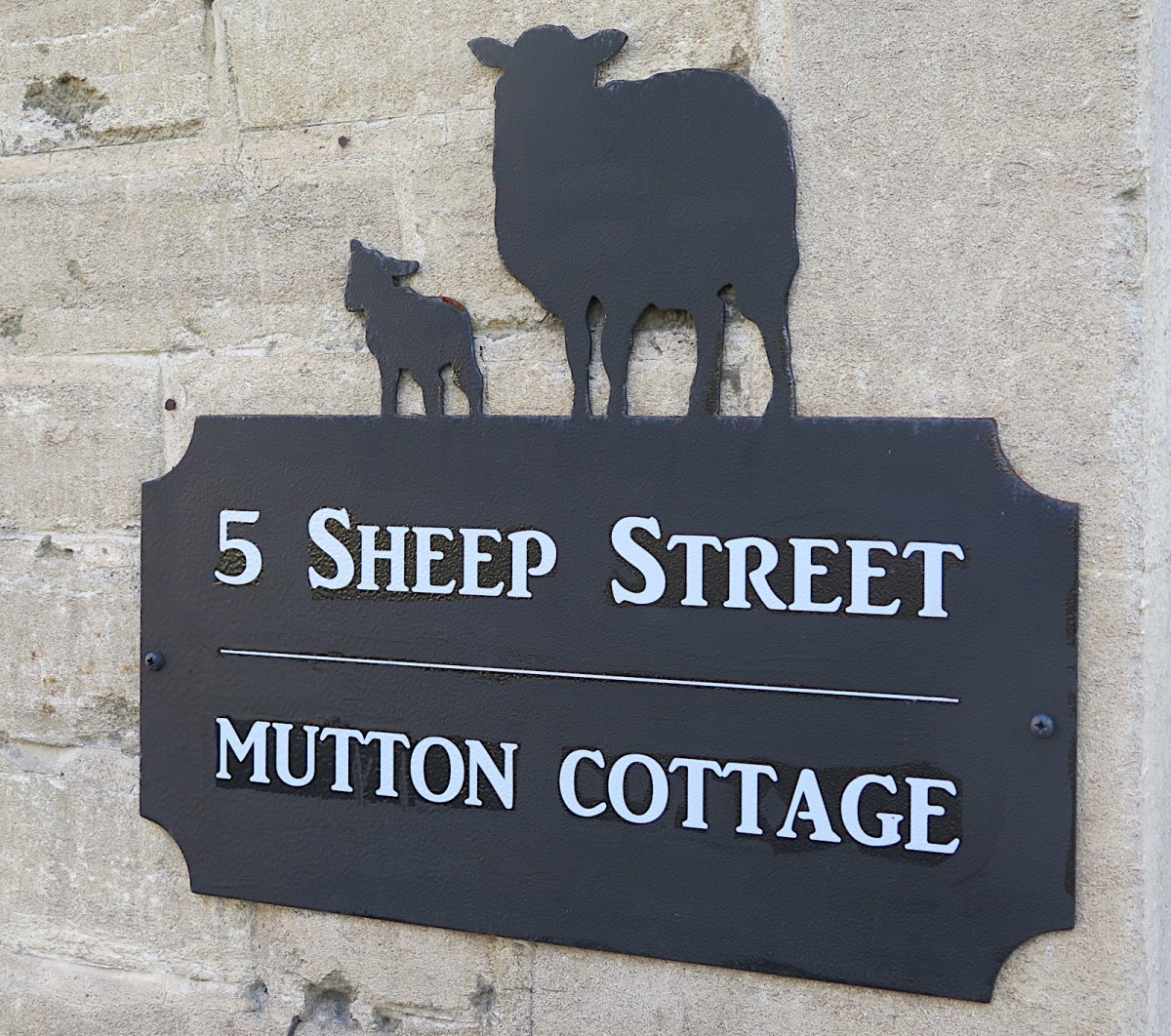
As a child I remember that we had a joint of meat on Sunday. And we usually had a fried breakfast on Sunday too, bacon, egg, fried bread, and perhaps a sausage as well. Sunday was a good day, a day to look forward to! The Sunday joint was sometimes mutton, sometimes pork, and just now and again, beef. But hardly ever chicken because chicken was too expensive. I also recall whale meat on at least one occasion. The rest of the week we might have left-over meat from Sunday, often minced and made into cottage pie or shepherd’s pie. And we had non-meat days in the week as well, perhaps macaroni cheese, or kippers. or baked beans on toast, or cod.

Today’s photo is from a house entrance in Cirencester’s Sheep Street. The house is not really a cottage at all. Hand sawn stone (known as ashlar) was an expensive material, so a genuine cottage would have probably have been built of undressed Cotswold stone straight from the quarry. Mutton (sometimes on a Sunday) is the meat of a mature sheep, tougher than lamb and needing more cooking time.

Why these references to sheep?

That’s easy to answer if you know something about the history of the Cotswolds! The land in this region is very good for farming sheep and in Medieval times wool was much in demand throughout Europe. Woollen cloth was still a major industry in early Victorian times, and the wealth created from the sale of unprocessed wool and woollen fabrics paid for many fine churches and merchant’s houses in towns across the region. Cirencester was no different, the famous Parish Church of St John the Baptist was built on wool money, and the many merchants’ houses in the centre of the town were funded in the same way. One of them, in Coxwell Street, still has its counting house attached.

That explains the references to sheep. You’ll find others, there’s the ‘Wool Market’, the ‘Fleece Hotel and Restaurant’, and Shepherd’s Way to name just three.

See also:

< Previous | Index | Next >

Useful? Interesting?

If you enjoyed this or found it useful, please like, comment, and share below. (If you don’t see those links, click the article’s title above the main photo and they will appear.) Send a link to friends who might enjoy the article or benefit from it – Thanks! My material is free to reuse (see conditions), but a coffee is always welcome and encourages me to write more often!
Fine weather if you have fine kit!

We had the right gear for staying dry in rain, mud and heavily dripping vegetation, so we were warm and comfortable amid the fragrance of wet grass and decaying leaves.

< Previous | Index | Next >

Image 121 – What’s in an image? Sometimes quite a lot, more than meets the eye. I’m posting an image every day or so.

Enlarge

There is a saying amongst the walking fraternity, that ‘There’s no such thing as bad weather, just bad kit’. Here are two of my friends, the three of us were out for a lovely walk in wet weather in the Cotswolds. We had the right gear for staying dry in rain, mud and heavily dripping vegetation, so we were warm and comfortable amid the fragrance of wet grass and decaying leaves.

Perhaps this not not everyone’s favourite activity, but we loved it! Damp October days like this one are good for spotting early autumn colour on the trees as well as mushrooms and toadstools amongst the fallen leaves and blades of grass. There is so much to see everywhere you look.

When: 19th October 2023
Where: Near Edgeworth, Cotswolds

< Previous | Index | Next >

Useful? Interesting?

If you enjoyed this or found it useful, please like, comment, and share below. (If you don’t see those links, click the article’s title above the main photo and they will appear.) Send a link to friends who might enjoy the article or benefit from it – Thanks! My material is free to reuse (see conditions), but a coffee is always welcome and encourages me to write more often!

A Cotswold scene

Travelling north and west from Cirencester takes you through steadily rising hills peaking at 330 metres or so, and dissected by water-cut valleys until you reach the Cotswold scarp.

< Previous | Index | Next >

Image 116 – What’s in an image? Sometimes quite a lot, more than meets the eye. I’m posting an image every day or so.

Enlarge

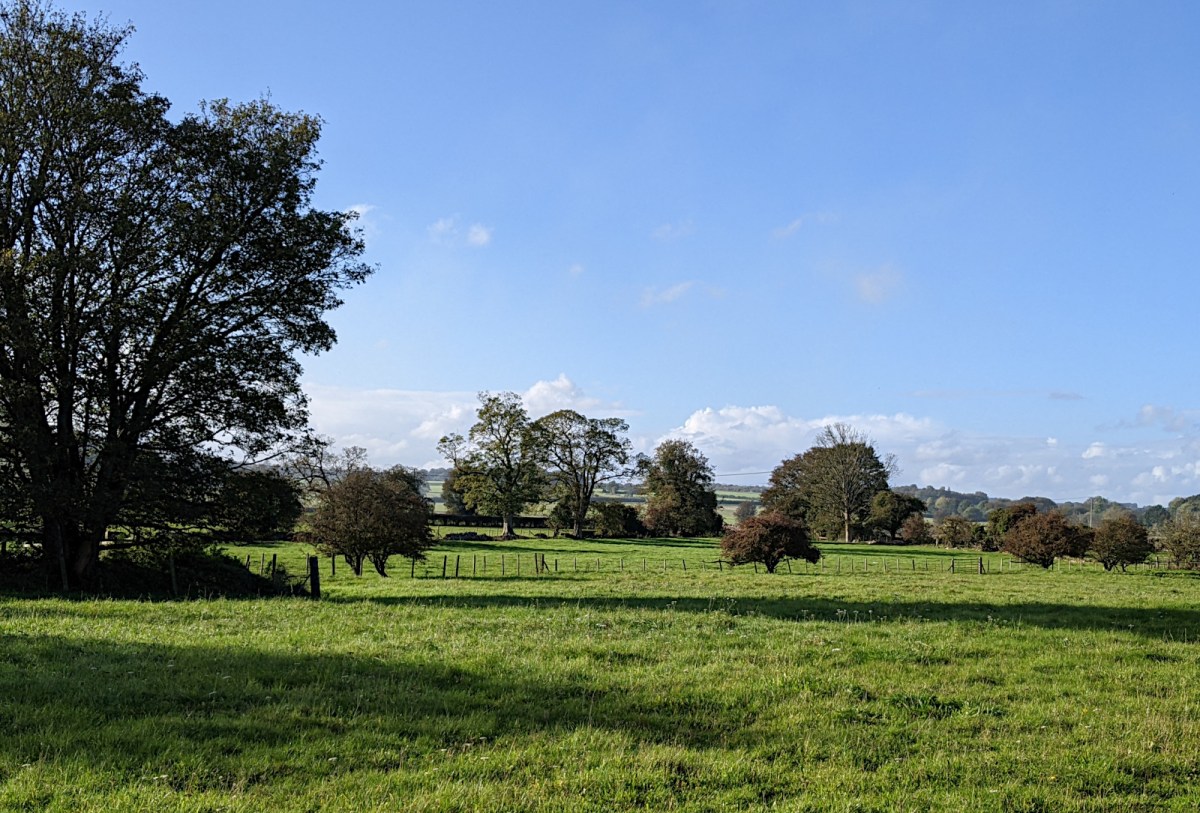
This farmland just on the edge of Cirencester is a classic Cotswold scene. There is higher land in the background with scattered trees, and in the foreground you can see rich pasture good for cattle or horses.

The flat, pasture land is part of the River Churn flood plain, while the low hills beyond are outcrops of oolitic limestone, the rock that forms the backbone of the Cotswold hills. Travelling north and west from Cirencester takes you through steadily rising hills peaking at 330 metres or so, and dissected by water-cut valleys until you reach the Cotswold scarp that drops back almost to sea-level within a short distance. Beyond that is the wide, flat vale of the River Severn, and beyond that again, Wales with its hills and mountains. In medieval times Cirencester was known in Welsh as Caer Ceri. If the Saxons had not settled quite so far west, Cirencester might have signs saying ‘Croeso y Gaerceri’, and the Severn would have been Hafren.

When: 26th October 2023
Where: Gloucester Road, leaving Cirencester

< Previous | Index | Next >

Cirencester

For convenience, here’s a list of all the Cirencester area images:

A417 roadworks, Advent Market, Bishops Walk, Baunton, Canal 1, 2, Castle Street, Christmas lights 1, 2, Church 1, 2, 3, 4, 5, 6, Churn flood, Countryside, Fallen tree, Fleece, Gasworks, Gloucester Street, Hare 1, 2, Hospital, Market Place 1, Phoenix Fest, Riverside Walk, Stone plaque, Stratton Meadow, Tank traps, View, Wonky 1, 2, Yellow Iris

Themed image collections

The links below will take you to the first post in each collection

Cirencester, Favourites, Irish holiday 2024, Roman villa

Useful? Interesting?

If you enjoyed this or found it useful, please like, comment, and share below. (If you don’t see those links, click the article’s title above the main photo and they will appear.) Send a link to friends who might enjoy the article or benefit from it – Thanks! My material is free to reuse (see conditions), but a coffee is always welcome and encourages me to write more often!

Chastleton window

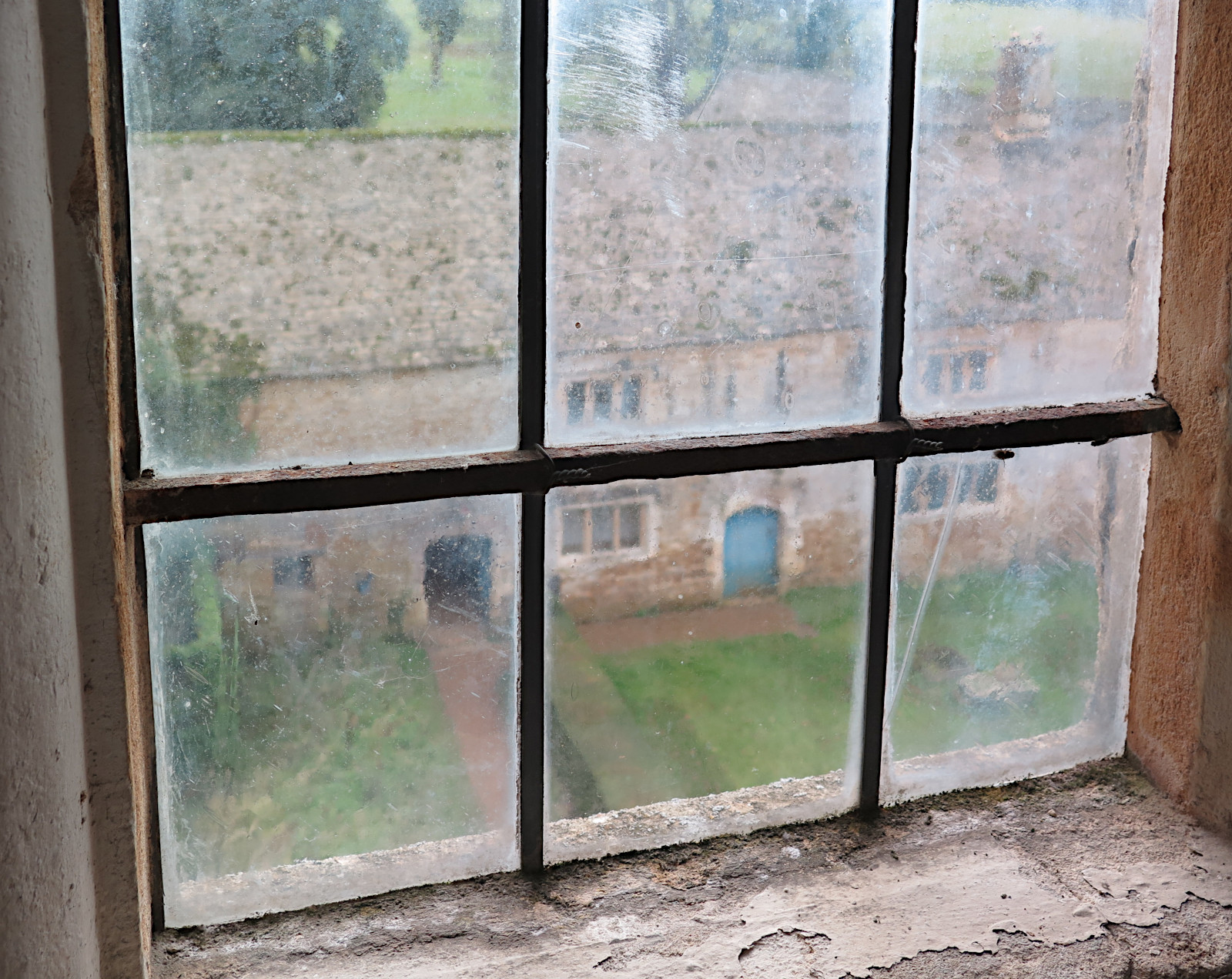
The panes of old glass are held in place with lead, reinforced by a horizontal iron bar for additional strength and rigidity.

< Previous | Index | Next >

Image 108 – What’s in an image? Sometimes quite a lot, more than meets the eye. I’m posting an image every day or so.

Click to expand

I wonder what past events might have been witnessed by this lovely, old window at Chastleton House in Oxfordshire? Windows are not made like this any longer, the window frame is stone-built as part of the structure of the house. The panes of old glass are held in place with lead, reinforced by a horizontal iron bar for additional strength and rigidity.

Chastleton is on the eastern edge of the Cotswolds, between Stow-on-the-Wold and Chipping Norton. It’s famous for its amazing plaster ceilings but it would still be an architectural gem without those. It’s managed by the National Trust these days.

The house was built in the Jacobean period between 1607 and 1612; it was owned by the same family for almost 400 years until the National Trust took over in 1991.

When: 15th December 2023
Where: Chastleton House, Oxfordshire

See also:

< Previous | Index | Next >

Useful? Interesting?

If you enjoyed this or found it useful, please like, comment, and share below. (If you don’t see those links, click the article’s title above the main photo and they will appear.) Send a link to friends who might enjoy the article or benefit from it – Thanks! My material is free to reuse (see conditions), but a coffee is always welcome and encourages me to write more often!