We do not get to choose which parts of his work we are to do. We are to do all of it! We absolutely need one another in this task, when we stand alone we are weak, but together we are strong.
Now we come to something extraordinary, and it’s something we need to take on board very personally. Every single follower of Jesus must grasp this for themselves. Don’t miss it! Seize it, hold this truth in your own understanding, feel it to be the deep truth that it actually is.
16:25-26 – So far, Jesus’ language has been figurative as he helps his followers grapple with things that are, frankly, too hard for them to comprehend. Now he says that a time is coming when he’ll communicate plainly with them, there’ll be no need to use figures of speech any more. Surely that time is the period after they receive the fullness of the Spirit of Christ? It will happen in the upper room at the soon-to-arrive Pentecost. From then on, Jesus says ‘they will ask in my name‘.
We (and they) are to stand in Jesus’ place and ask the Father as if we (they) are the Son! How many times must he tell us – we are his body walking this Earth! Collectively, we are intended and expected to carry on his work. We do not get to choose which parts of his work we are to do. We are to do all of it! We absolutely need one another in this task, when we stand alone we are weak, but together we are strong. Jointly and in concert we are Jesus’ body, walking this Earth.
So we no longer say, ‘Jesus, please ask the Father to do this and that’. Now we must say, ‘Father, we’re here in Jesus’ name asking you to do this and that.’ We must not feel how weak and small we are – and we are weak and small individually. Instead together, as the church, because we are Christ’s body, we have his strength and greatness!
Me – weak and small. Us – strong and great.
16:27-28 – Do we have the Father’s love? We do! Why? Because we love Jesus and know who sent him! Jesus explains that there’s a symmetry here. He came from the Father into the world. Now he will leave the world and go back to the Father. His physical presence in the world was a temporary exception.
Clarity and faith
16:29-30 – And Jesus’ followers get it. They tell him that he’s speaking clearly now, that they can see he knows everything, and that he doesn’t need anyone to ask him questions. Does that seem a little odd to you? It seemed odd to me at first.
Perhaps it’s simply that this was a method other Jewish Rabbis habitually used, encouraging their followers to ask questions to find out where they lacked knowledge and to then guide the teaching to address those gaps. Instead, Jesus already seems to know where the gaps are and he is well able to address gaps in their understanding without waiting to hear their questions.
Might it be this uncanny ability of Jesus that persuades them he really has been sent by the Most High?
What will they do next?
16:31-33 – Now Jesus asks them a question. You just told me you believe I came from the Almighty, but do you really believe? Truly? And he tells them they’ll all run away, back home, leaving him alone. These followers, the disciples learning to be like their Master, his trainees, his apprentices – they’re going to run off and leave him? Remember that they’d been treading the highways and byways of Judea and Samaria and Galilee, and even the ten Greek cities (The Decapolis) for three long, dusty, weary, yet exciting years. Are they going to abandon him now?
Jesus tells them they will, but he also says he won’t actually be alone because the Father will be with him. And he explains that he has shared all this with them so that in him they can have peaceful hearts. He’s told them what will happen, and he is not fazed by it, and neither should they be! They might feel they’ve let him down in his time of great need, he anticipates this and wants to let them know in advance that it’s OK. They shouldn’t be disheartened.
The world will throw more than enough trouble at them, but he wants their hearts to remain peaceful because he, Jesus, has already overcome the world.
If you enjoyed this or found it useful, please like, comment, and share below. (If you don’t see those links, click the article’s title above the main photo and they will appear.) Send a link to friends who might enjoy the article or benefit from it – Thanks! My material is free to reuse (see conditions), but a coffee is always welcome and encourages me to write more often!
Beth was 1¾ this month, and Debbie was almost 5-years-old. We were living at 22 Rectory Drive in Yatton at that time and Debbie would have settled in at the Infants School and made a fair number of friends. (1980)
August 2024 (6 months before publishing this article)
Click to enlarge
We were on our annual family holiday, this time at Portrush in Northern Ireland. On 5th of the month we drove to the Giant’s Causeway and spent a very interesting time looking around. Then we visited the Carrick-a-Rede rope bridge. This was quite an experience as well.
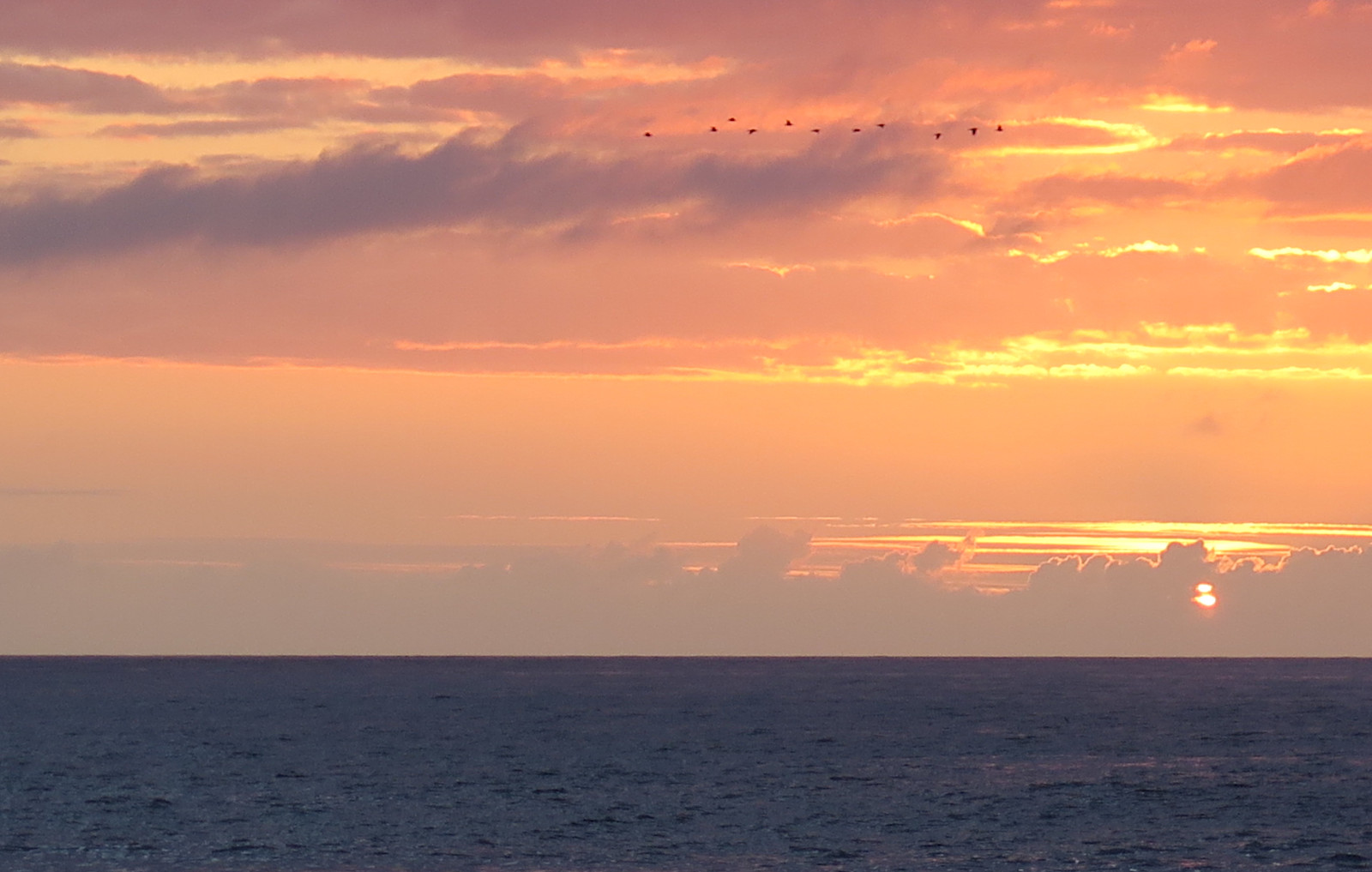
On the evening of 5th, Paz cooked steak for those who wanted it, and later I strolled around the harbour. The sunset was magnificent and I took a lot of photos, including the view of birds heading home as the sun sets.
Gas mains were being replaced in Cirencester. A team was going around, street by street, digging up the roads and pavements and fitting large bore, yellow, plastic pipes – where possible passing them through the old metal pipework they are replacing. Disruption was considerable for a week or two until the work was done and the team moved to a another street. Each property lost gas for only a few hours. Overall the work continued for months.
Cavendish House in Cheltenham closed down in February. Shopping has moved on these days and department stores are dying. I remember going to Cavendish house with my parents as a child, with my first wife before and after we were married, and noting that it was still trading much more recently – but now, it’s gone!
And we visited ‘Nature in Art‘ at Twigworth this month, too; a lovely old house with art exhibits indoors, but also many interesting installations in the gardens.
We drove up to York for a visit and to watch the Fulford School musical, ‘Beauty and the Beast’. Meredith was the beast, Verity played the part of Belle’s father, and Sara was one of the young lady ‘hangers on’ of the villain of the piece, Gaston.
It was very well done by everyone; we were highly impressed. I’d have loved to take some photos, but these days it’s not permitted.
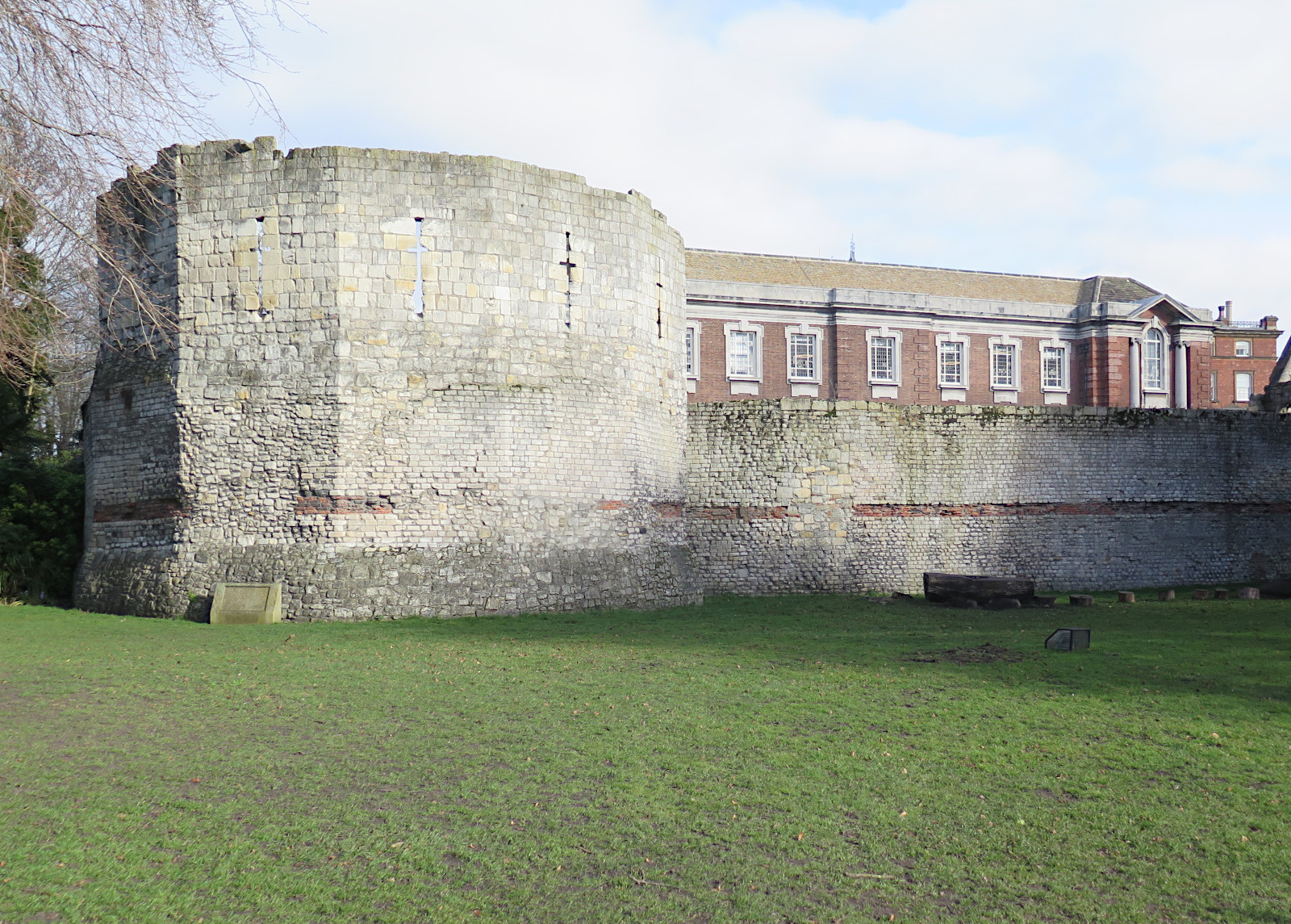
The day after the musical we explored the city centre including All Saints Church and the Museum Gardens. The photo, taken in the Gardens, shows part of the Roman fort dated to 107-108 CE, along with a surviving tower, ‘The Multangular Tower’. The Roman masonry consists of small blocks of stone and the red strip of Roman brick. The much larger stones above are medieval. Click the photo for a clearer view of these details.
On 11th it was clear that there had been more than a thousand coronavirus deaths in China, and although the rate of infection had been reduced it was still around 6% per day. This all seemed rather worrying. By 19th the virus was being called COVID-19 and it seemed to me that we were on a knife-edge between containing the infection or facing a world-wide endemic disease like a very serious kind of flu.
I was pulled over by the police after missing an exit on a roundabout in Gloucester and braking hard. They were very nice about it. After checking my licence and finding it clean they wished me a nice day and sent me on my way.
My sister Cindy held a book signing event in Cirencester at a local bookshop; in the photo she is squeezed between copies of her latest book and various toys and other items. (Find a copy of Cindy’s novel.)
During the month I met often with my friends Mo and Sue Urbano at their home in Eynesbury, and also with a group of friends at local coffee shops. These were useful times of growing together in following Jesus to the best of our abilities. There were other people too and there are snippets of the conversations in my journal. This was a busy period in my life.
We visited Broadstone to stay with Donna’s parents, and Paul and Vanessa came down from Weston-super-Mare as well. We walked on the beach with them at Sandbanks to get some exercise.
We were living in St Neots at this time, in the old village of Eaton Ford, once in Befordshire but now incorporated into the town as part of Cambridgeshire.
Unilever Colworth’s Christian Union (CU) met every Monday lunchtime and of course the meetings were not denominational in any way since we were all from different places and denominations (or in my case from no denomination at all). This was one of the features that made it so good.
Peter Farmer visited us and stayed the night on 6th, in 2009 he had been visiting one region of Britain every month to find out how people were meeting and reaching out. Quite a project! The following day we had a great meeting at Moggerhanger House.
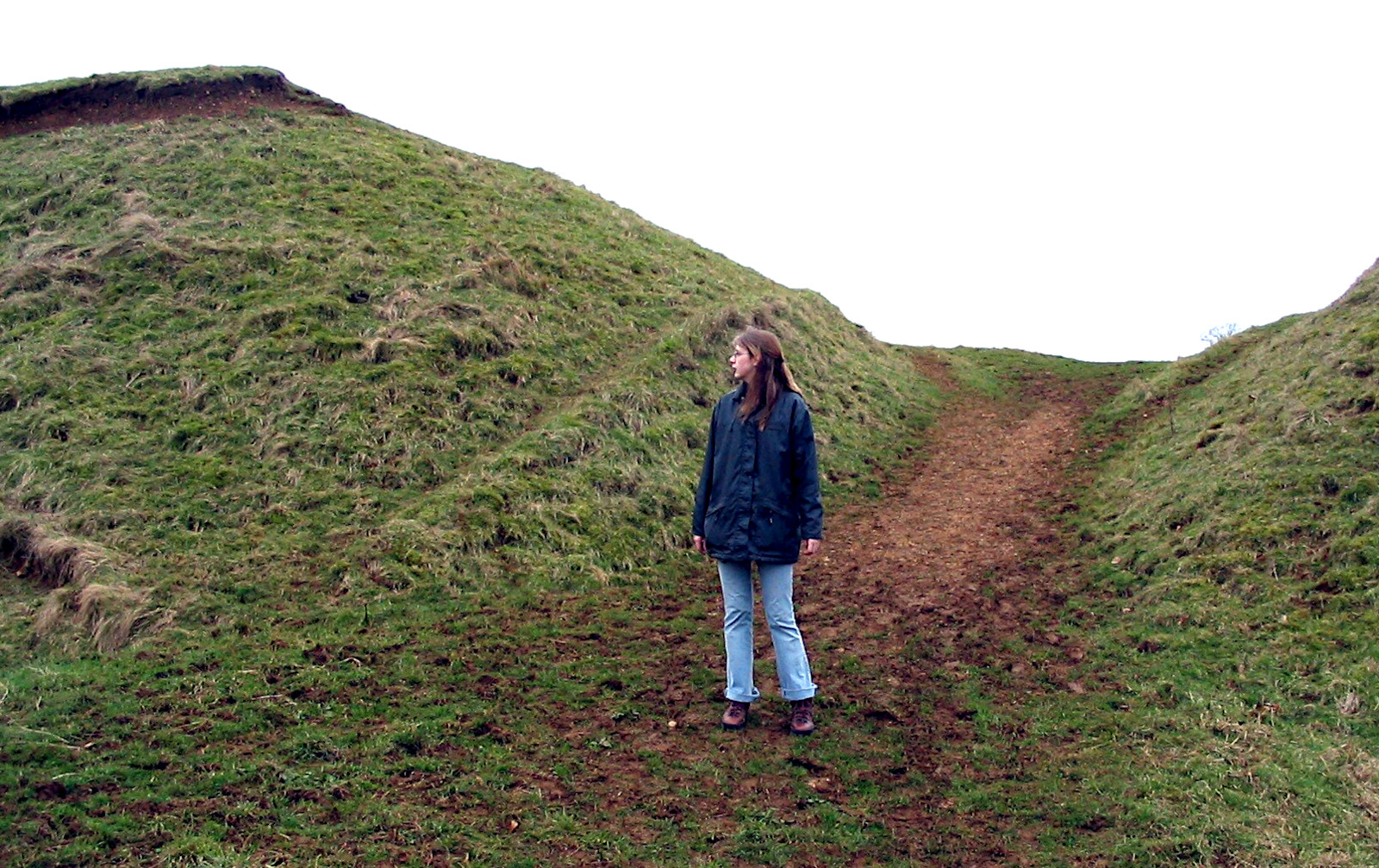
Driving cross country, I visited Debbie and Steve in Chipping Sodbury; Debbie and I walked to the nearby Iron Age hill fort which is very well-preserved. I didn’t even know it was there! There’s a double mound and a deep ditch between them; in the photo Debbie is standing in the entrance across one of the earthworks.
I had recently bought a new Nokia 6230 phone. It seems primitive indeed as I write this in 2025, but at the time it was an impressive little device. The iPhone appeared in 2007 and changed phones forever.
World events:North Korea announced it had nuclear weapons; and YouTube was founded (but not yet operating).
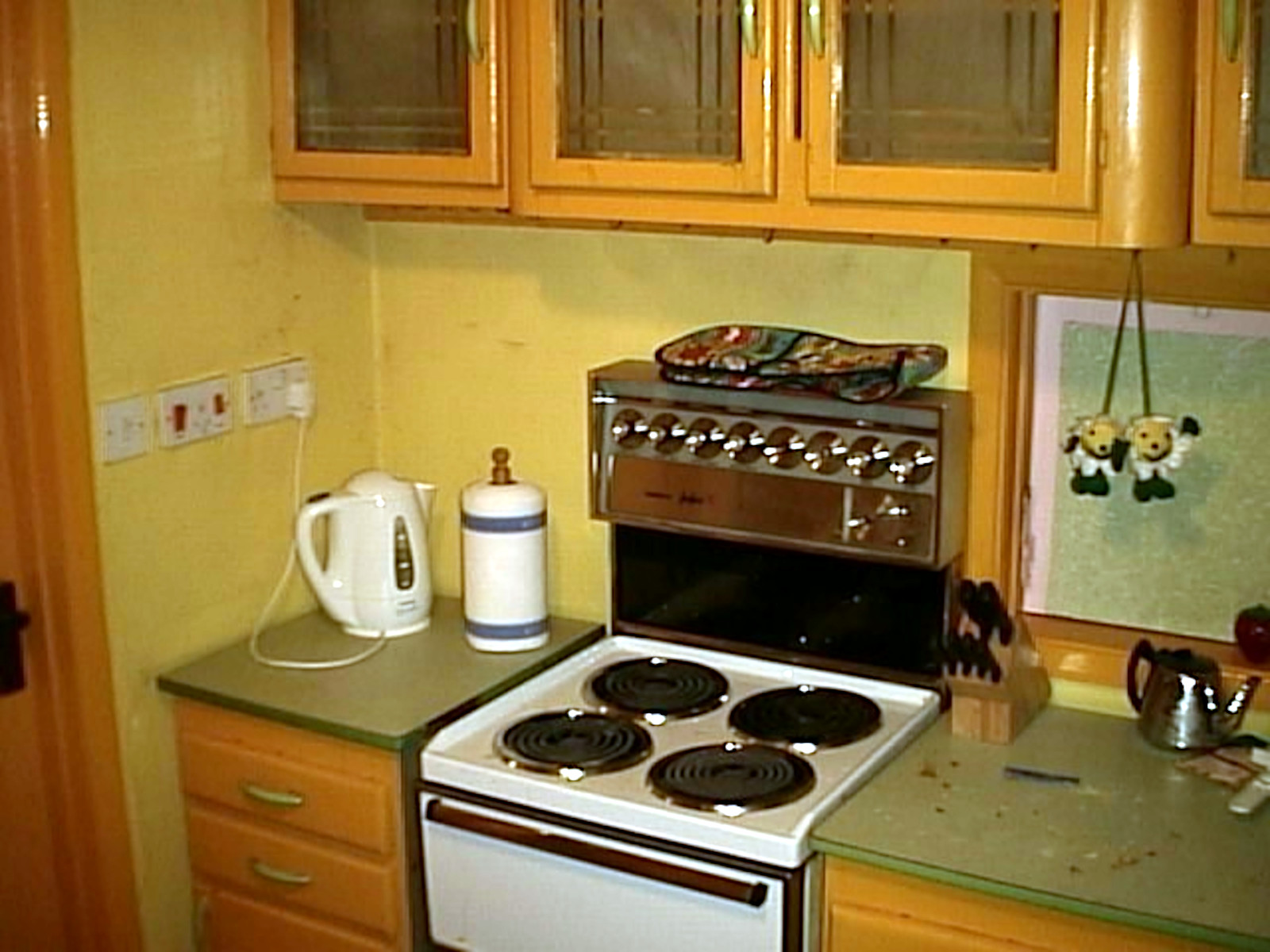
This is the kitchen, still as it was when we moved into our new home in Eaton Ford, St Neots. One of the things we’ll always remember is that the earthing on the cooker was faulty and it was sometimes possible to get a bit of a jolt from a metal pan handle. Renewing the kitchen was high on our to-do list and a few days after this photo was taken, we began taking down the old units and redecorating ready for the kitchen fitters to start work.
Near Calais
Towards the end of the month we travelled to Calais with the Open Door Church Small Group we were part of. Here we are walking along the coast path south-west of the town, I think. It was a good weekend break and fun to all be together. I can recommend it as a way to cement friendships, doing anything together is helpful.
Despite Judy’s best intentions, she had to give up working at Cotham Grammar School because of the stress and demanding hours. She was still not fully fit after some issues with chemotherapy in late 1994. Apart from her teaching job she was in really good shape and able to live perfectly normally.
For the first time in ages we were able to spend time together as a family in the evenings and weekends and that was a real joy for me and our daughters, Debbie and Beth, now 20 and 17 years old.
World events:Steve Fossett landed in Canada, the first person to fly solo across the Pacific by balloon; and Barings Bank in the UK collapsed.
On 10th of the month Debbie took a leading role in the Larchmount Players pantomime production of Tom the Piper’s Son in Yatton Methodist Church Hall. She did really well, a great performance. There were two further performances the following Saturday.
On the 20th we visited Judy’s parents in Cheltenham during the day and mine in Cirencester in the evening before driving back home.
We were living at 22 Rectory Drive in Yatton, between Bristol and Weston-super-Mare. Debbie was nearly ten years old and Beth still six.
My Uncle Dick received a letter (image above) about a book published in Cirencester in 1911. Nobody seemed to want this book at the time and my Dad gave it to me in February 1985, I was working as a microscopist and the book is about microscopy. In January 2017, I asked again if the Corinium Museum would like to have it, and this time they were interested so that’s where it can be found today. If you wish, you can read the letter, the book, and the museum form online.
Beth was 1¾ this month, and Debbie was almost 5-years-old. We were living at 22 Rectory Drive in Yatton at that time and Debbie would have settled in at the Infants School and made a fair number of friends. Judy was at home, looking after the house and I was working at Long Ashton Research Station.
I was considering ways to localise the plant hormone family of gibberellins in sections of plant tissue. The Pomology Division in which I worked was being closed down and the options were redundancy or a move to East Malling Research Station in Kent where pomology research was to continue.
Judy was looking (and feeling) very pregnant by this time. But she was in good health and there were no issues. The ante-natal classes had been helpful and we’d accumulated a lot of freebies and gifts and had bought necessary items ourselves as well. There were baby clothes and blankets, little booties and sterilising kits and bottles and teats and all the other things we thought we’d need. All this stuff fitted neatly in the basketwork crib Judy had made.
My MSc thesis was with the binders at this point. It was good to have all that paperwork and typing and drawing of diagrams (see photo) and charts behind me before the baby arrived!
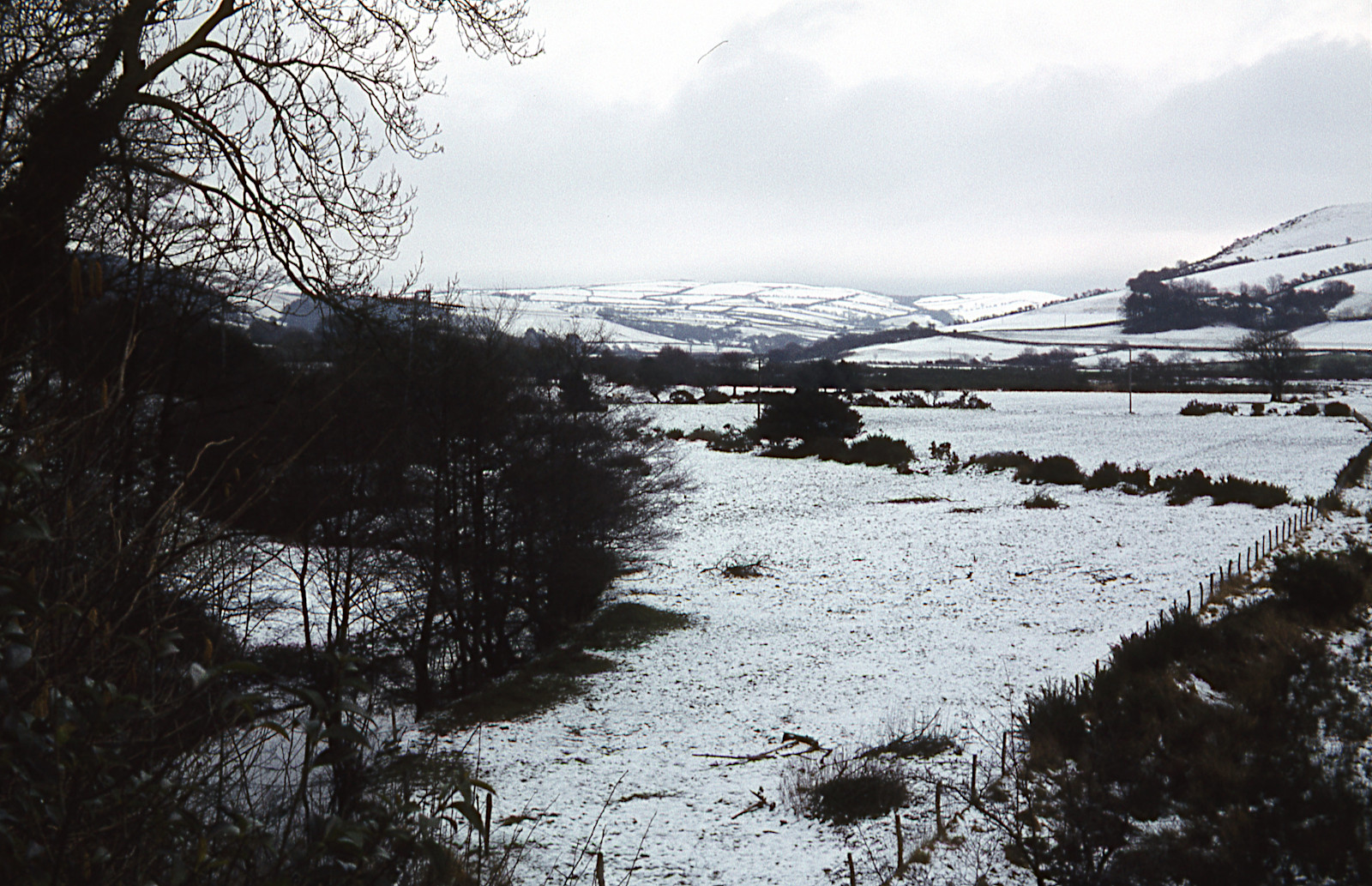
I can’t be certain, but I believe this photo was taken by Judy on her way home from Aberystwyth (where she was at university) to Cheltenham, probably on a Black and White coach. That would be appropriate as the countryside looks black and white as well! I was in my final term at Bath University, and we were both working towards our finals.
World events: Tourists died in an avalanche at Val-d’Isère, France; and Richard Branson founded the Virgin Group as a discount mail-order record retailer.
Cousin Sue had her 21st birthday party on 6th of the month and Granny-in-Ireland’s 67th birthday was on 9th (she was my Mum’s mother).
School continued through February, it was my second term in the Lower Sixth, studying for A levels in Biology, Chemistry and Physics. My sister Cindy was also at the Grammar School, in the third year I think. Ruth and Rachael were still at junior school (Querns School).
World events:The Gambia became independent of the UK; and Ranger 8 crashed on the Moon after photographing possible astronaut landing sites.
One of my favourite toys at this time was Meccano; I’d had small amounts of this as birthday and Christmas presents. There were red bendy steel sheets in various sizes, green strips, dozens of nuts and bolts, wheels, axles – what fun for an eleven-year-old! But around this time I was given large quantities of second-hand Meccano parts, hand-me-downs from my cousins Tim and Jeremy. That was so exciting!
World events: The first CERN particle accelerator became operational in Geneva; and the Hollywood Walk of Fame was established.
We were living at 17 Queen Anne’s Road on Cirencester’s Beeches Estate. There were two conifers, one outside our house and another outside our next door neighbours, the Watts family.
There had been more of these trees, planted when the estate was built; but children being children the young trees had been tweaked and pulled about and most had eventually died. Mum and Mrs Watts would run out and chase the boys away, and had managed to save our two trees.
I was six-years-old and my sister Cindy was three.
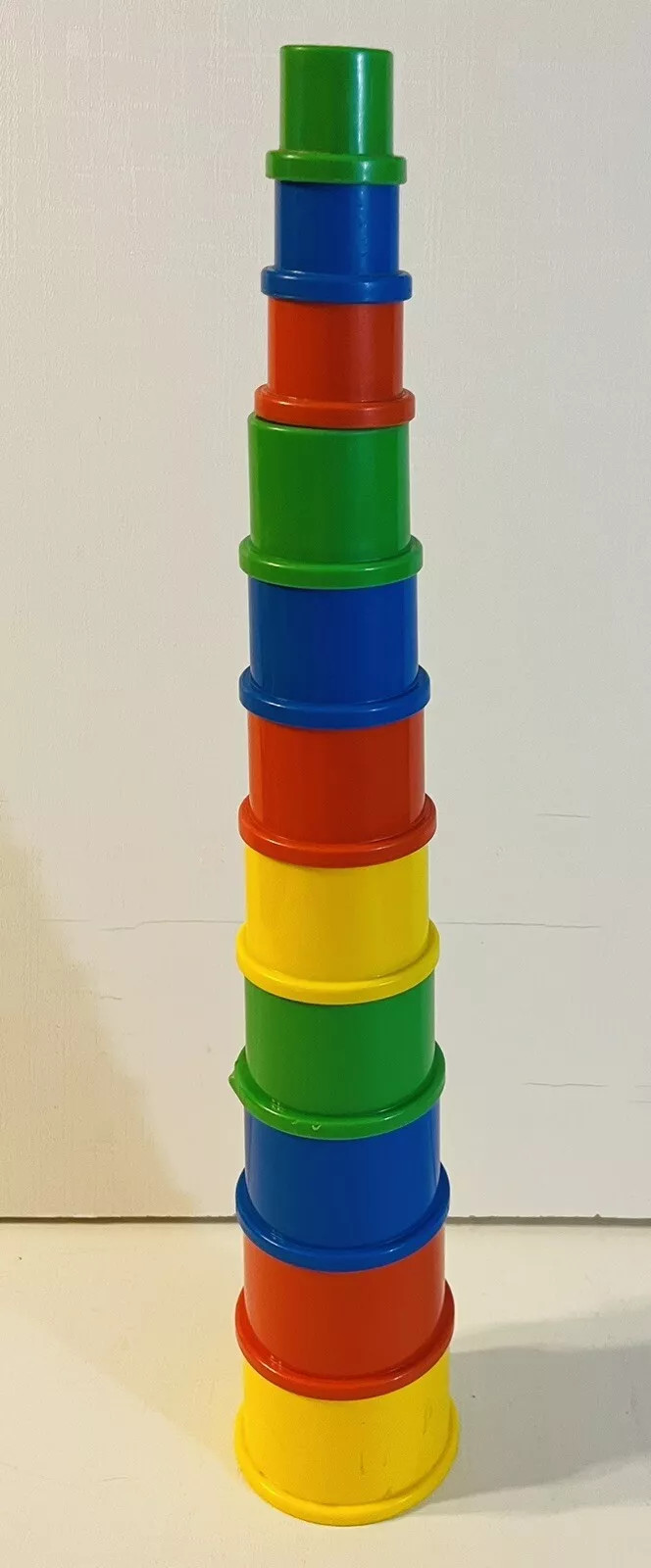
We were a little family in our own, rented council house on the Beeches estate. I had a cardboard box, open at the top, containing my toys. I remember (from later) that there was a nesting stack of bakelite pots in different colours.
You could put them inside each other (I probably watched Mum or Dad do this) or you could make a tower with them (and I’m sure I enjoyed pushing the tower over).
World events:Chiang Kai-shek was re-elected president of the Republic of China; and in New York a credit card (Diners Club) was first used.
On 3rd February Dad travelled back to Skendleby, in Lincolnshire where he was a radar operator on a Chain Home RAF site. It was about a mile north-east of the village, but is not marked on the map, of course.
Mum and Dad continued to write often, on 17th he was troubled to learn that she was unwell and might need surgery that would result in her not being able to have children. On 24th he heard that she would not need the operation after all. He writes in his diary, expressing his extreme relief; and had she needed that op, I wouldn’t be here to write this now!
World events: An oral version of penicillin was announced; and Roosevelt, Churchill and Stalin met at the Yalta Conference.
John Jefferies & Son Ltd had a florists shop on the corner of Cirencester Market Place and Castle Street, now the Vodafone shop. In February 1940 we can assume the vegetable-seed trade was good as the wartime population would have been growing their own produce on every available scrap of land. The ‘Dig for Victory‘ campaign would have encouraged this.
Entering the front door on the corner, there was a space for customers, with a service counter on the right and a private door opposite the shop’s display windows. Through the door and turning right, was a small, almost triangular outdoor space where buckets of cut flowers were stored, and there was always a smell of cooking emanating from the kitchens of Viner’s Restaurant next door in Castle Street.
Turning left instead brought you to a wooden staircase leading to offices on the floor above. There were also steps (possibly stone) leading down to the cellar.
If you enjoyed this or found it useful, please like, comment, and share below. (If you don’t see those links, click the article’s title above the main photo and they will appear.) Send a link to friends who might enjoy the article or benefit from it – Thanks! My material is free to reuse (see conditions), but a coffee is always welcome and encourages me to write more often!
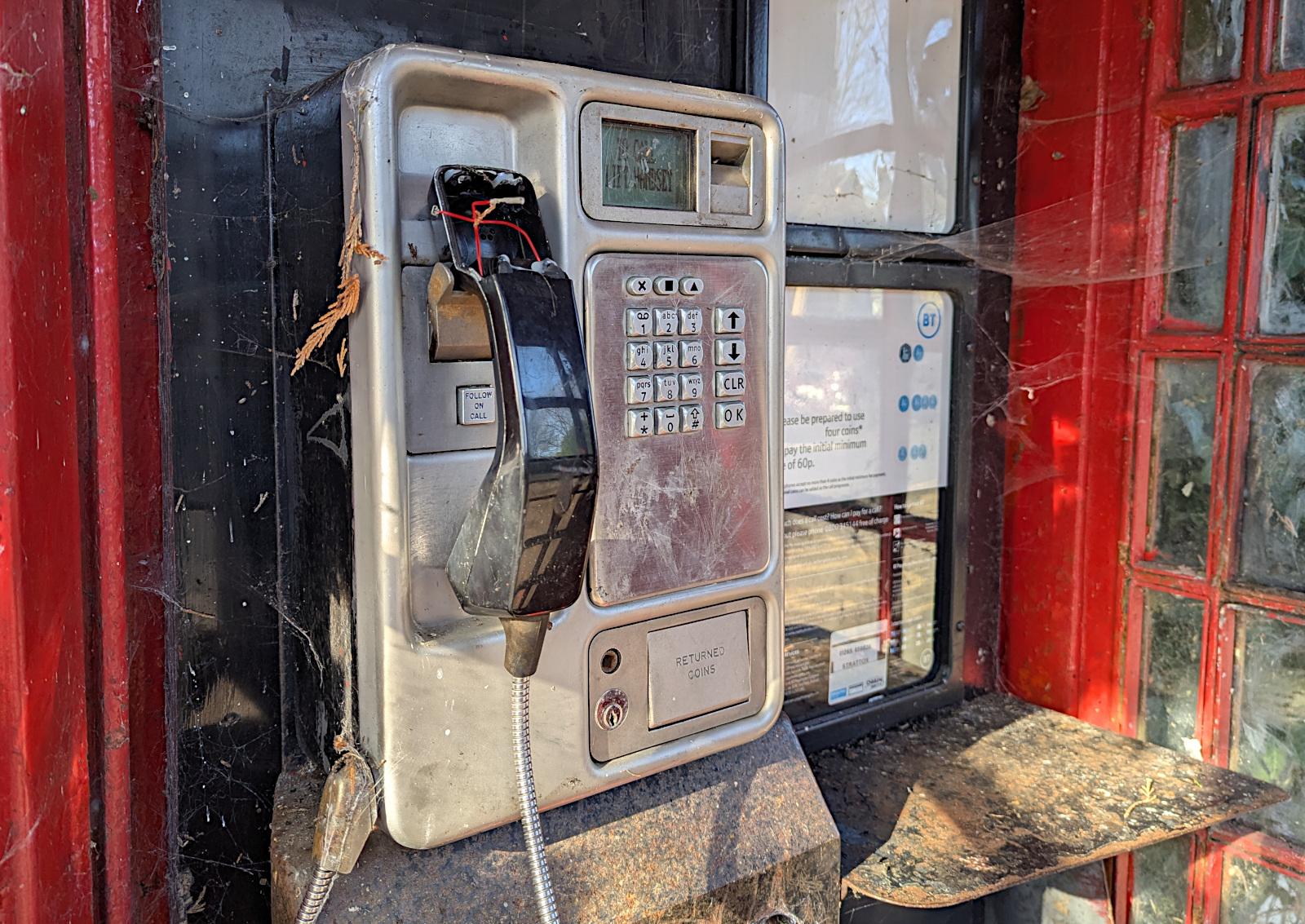
As mobile phones became more affordable and widely available the need for phone boxes vanished. This one was never removed and stands forgotten by the pavement, more or less unnoticed, draped in cobwebs, laden with layers of dust.
Image 136 – What’s in an image? Sometimes quite a lot, more than meets the eye. I’m posting an image every day or so.
Click to enlarge
Stone Age?
Well – Stone Age in terms of communications technology! A long time ago, way, way back in the 1980s, telephone kiosks like this one were widespread in the UK. You can see the red paint for which these phone boxes were so famous.
This particular box stands at the junction of the Gloucester Road and the Cheltenham Road in Stratton, where we live. It must have been quite busy when it was first installed. I well remember standing waiting at a box like this, sometimes there might even have been a queue of three or four people waiting to make a call.
And I remember the standard phone box smell as well. There was always a certain degree of dampness about them, often mixed with stale tobacco smoke. There was a little shelf containing a local residential directory and a yellow pages with business numbers and adverts.
This example of the British Telecom (BT) phone box has seen better days. It was converted with up-to-date equipment that must have replaced the original, black, bakelite handset with its black, enamelled, steel coin-box with Button A and Button B. But as mobile phones became more affordable and widely available the need for phone boxes vanished. This one was never removed and stands forgotten by the pavement, more or less unnoticed, draped in cobwebs, laden with layers of dust.
If you enjoyed this or found it useful, please like, comment, and share below. (If you don’t see those links, click the article’s title above the main photo and they will appear.) Send a link to friends who might enjoy the article or benefit from it – Thanks! My material is free to reuse (see conditions), but a coffee is always welcome and encourages me to write more often!
I shall try not to be absent for long periods, and I may post more items like the one you’re reading now – me thinking aloud about what to do next and how to do it.
Change is good as long as it’s not just change for change’s sake. Writing this blog has seen quite a lot of change over the decades and it’s time for another tweak, I think.
There have been lean times when I’ve posted nothing for several months, and over the last couple of years I’ve been posting almost daily. It’s not exhausting – I love writing – but it has taken chunks of time out of other activities. Something else I realise has been choked off a little by the daily habit is the opportunity to write at greater length on topics that might benefit from that.
There are some older topics I want to revisit and extend. An example of that is the series on walking the Cotswold Canals.
So I think, going forward, there will be days when I post nothing because I’m working on something a bit more expansive. Some topics might be best served by writing a short series on the same theme. We’ll see. I’m very much expecting to decide these things on the spur of the moment.
I shall try not to be absent for long periods, and I may post more items like the one you’re reading now – me thinking aloud about what to do next and how to do it. I hope that won’t be too boring!
Plants (secondary) trap some of the energy in sunlight and use it to grow and to store in chemical form. And animals (tertiary) obtain energy by eating plants or other animals.
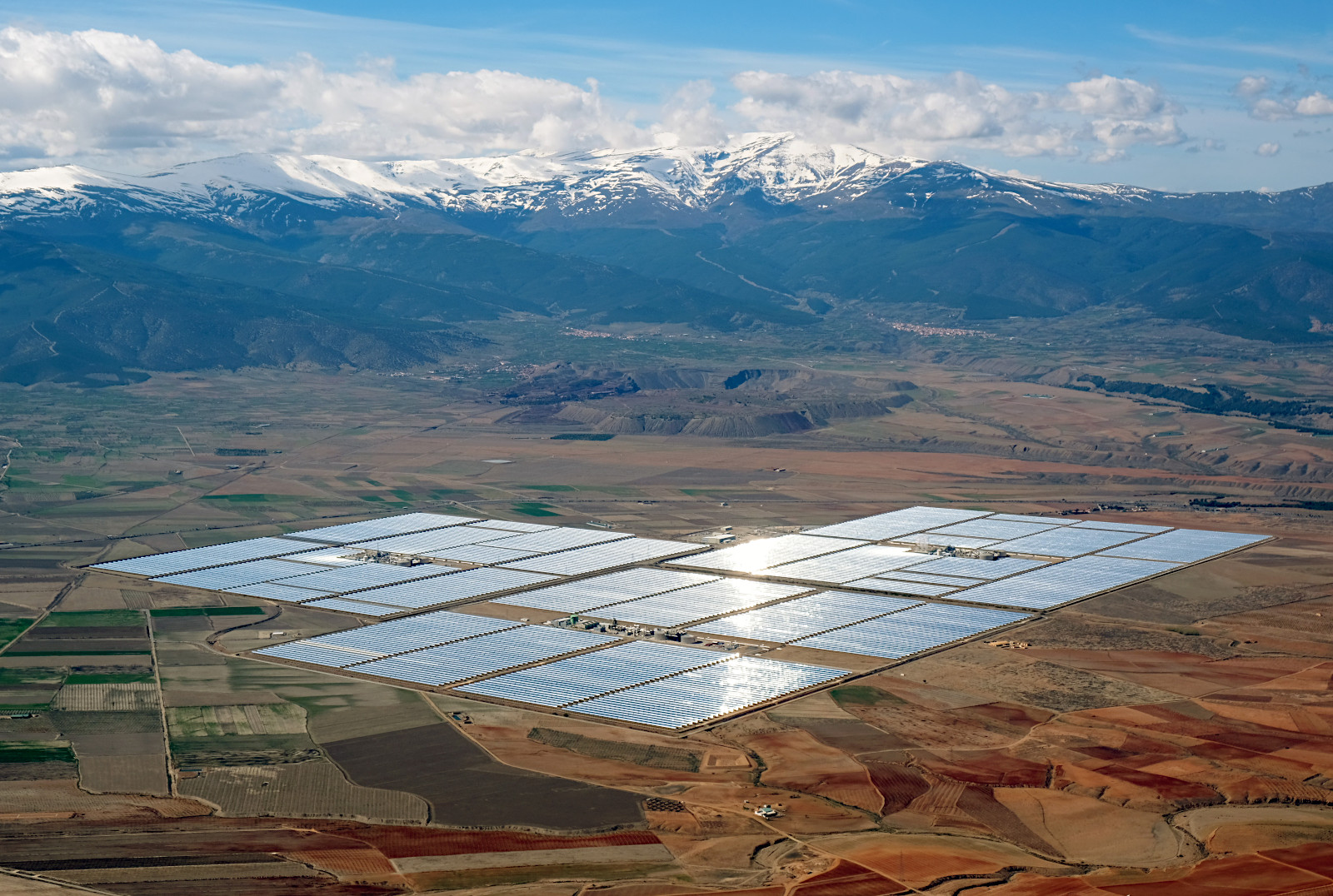
We’ve just had a heat pump system installed in our home and it is so, so different from the old, gas-fired boiler that used to keep us warm in winter. I’ll give you some details about it in another article. But the main reason I’m writing is to explore what it means to be migrating towards clean, green energy; and what it means if we fail. But before we can focus on any of that, we need to understand where our energy comes from and where it goes.
Primary energy sources
We all use energy every day, as a species. And just like all other forms of life, that energy comes almost entirely from rearrangements within atomic nuclei. There are two ways this can happen – nuclear fusion and nuclear fission. Fusion is what happens in the centre of the sun where hydrogen atoms are combining to form helium, releasing a lot of heat in the process. Fission is what happens suddenly in a nuclear bomb or slowly in a nuclear reactor. Heavy atoms fall apart and release energy as they do so. The rule is that heavy elements release energy if they break apart (fission), while light elements release energy if they join together (fusion). Elements in the middle mass range around iron don’t break apart or join together easily and produce little or no energy if forced to do so. Indeed, sometimes these elements might require energy.
The sun’s energy comes from fusion in the core and is eventually released as sunshine. Sunshine heats the Earth’s surface and winds are caused as air masses expand or contract due to temperature changes. Waves, in turn, are caused by wind crossing water surfaces.
Some of the Earth’s inner energy comes from the spontaneous fission of heavy elements in the core and mantle, and some is remnant heat from Earth’s formation 4.5 billion years ago; that core energy is released in the form of volcanoes, earthquakes, and hot springs.
Tidal energy is the final source we need to consider. This is the result of gravitational forces from the Sun and Moon causing bulges in the oceans, the Earth revolves daily beneath these ocean bulges and the water depth varies as the state of the tide changes throughout the day.
It’s also gravitational contraction that gets the centre of a star dense enough and hot enough for fusion to begin in the first place. That’s it for primary energy sources. All of these count as green energy as none of them release carbon dioxide.
We can collect solar or wind energy, for example, with a clear conscience, also geothermal energy, hydroelectric power, hot springs, tidal power, or nuclear. There may be issues with all of these, but none of those issues have anything to do with releasing greenhouse gases.
Plants and animals
Everything else is what I call secondary or tertiary energy. Plants (secondary) trap some of the energy in sunlight and use it to grow and to store in chemical form. And animals (tertiary) obtain energy by eating plants or other animals. These too can be counted as green. The natural world runs on light from the sun, and all the carbon dioxide released is balanced by the light trapping mechanism of plants that uses carbon dioxide from the air and water from the ground and releases oxygen. The carbon is used to create the structural elements of wood and all the living tissues of plants and animals. Most of this is recycled naturally by decay within a few years or decades, and the carbon balance of the Earth doesn’t change. Except sometimes carbon containing materials were trapped long term in geological deposits of coal, oil and natural gas. This sequestration of carbon compensated for the continual, slow warming faced by the planet as the sun increased its output of light and heat over geological time.
Deep time
All stars grow brighter and hotter as they age, a perfectly natural and well understood process that we don’t need to consider here – except to mention that it happens. Rising temperatures cause shifts in a planet’s climate, and if it goes far enough a planet can become very hot, lose its water to space, and become a roasting desert like Venus.
This did not happen to the Earth because the continual, slow removal of carbon from the surface kept carbon dioxide levels low and significantly reduced the greenhouse effect.
Early human technology
Early human technologies did not involve the use of coal, oil or gas. When fire was first discovered and tamed for human use, the only fuels were wood and various kinds of plant and animal oils and fats. Our technology remained green, using only recently captured energy.
But around 4000 years ago, people began to discover surface deposits of coal and oil. The Romans and the Chinese knew of coal and used it on a small scale as a fuel.
We were still remaining green on the whole. The industrial revolution began with water power to mill grains, process wool into cloth, and so on. The first industrial towns were always built in valleys where there were rivers of sufficient size to power the machinery. Up to this time it’s difficult to find much change in atmospheric carbon dioxide levels in, for example, ice cores or ancient timber. When carbon fuel was needed for processes needing extreme heat (eg iron smelting, pottery firing), charcoal was used; this was made by incomplete burning of wood in an oxygen poor environment.
But then came steam power!
Advancing industrial growth
It soon became clear that charcoal was not available in sufficient amounts to be a suitable fuel for burgeoning industry. Instead, coal began to be mined in ever-increasing quantites to feed iron and steel works, power pumps to move water from mines, and more and more to power transport. Railways and shipping consumed ever larger amounts of carbon in the form of coal. Oxygen was consumed and carbon dioxide released – and at that point the human race started on a dangerous path towards climate change. At first the increase in carbon dioxide levels was imperceptible and so was the increase in average temperatures.
And that is where we were 100 years ago.
Oil is not mainly carbon, like coal. It has almost two hydrogen atoms to every carbon in its structure so it’s slightly more green than coal. Hydrogen oxide (aka water) is a less powerful greenhouse gas than carbon dioxide. Gases are even better than oil, methane is best of all as it contains four hydrogens to every carbon.
But to be fully green we must move all our energy production to solar, wind, nuclear, and tidal energy supplies. There are financial incentives to make the move too. To burn coal, oil or gas at a power station you must construct the power plant and transmission lines and then continually buy the raw materials to burn to generate power.
Wind turbines, solar panels and hydro also involve building infrastructure, but the fuels to run them – sunshine and wind – are free. This makes the energy they supply to the power grid much cheaper than energy from non-green technologies.
The economical costs of mining or drilling, as well as the health and environmental costs of emissions from non-green energy sources renders the move to greener energy an absolute no-brainer. And that’s before we start to take into account the serious risks of a warmer climate. These include rising sea-levels; unlivably high temperatures; heavier and unpredictable rain; forest fires; spreading of deserts; and harsher and more frequent cyclones and hurricanes. All of these horrors are already with us and are worsening year on year by larger and larger amounts.
Back-pedalling furiously cannot save us now. But it’s not too late to moderate the damage, eventually stabilise the problems we face, and see a gradual return to what was once normal. But we absolutely must act now, the longer we leave it, the worse it will get.
If you enjoyed this or found it useful, please like, comment, and share below. (If you don’t see those links, click the article’s title above the main photo and they will appear.) Send a link to friends who might enjoy the article or benefit from it – Thanks! My material is free to reuse (see conditions), but a coffee is always welcome and encourages me to write more often!
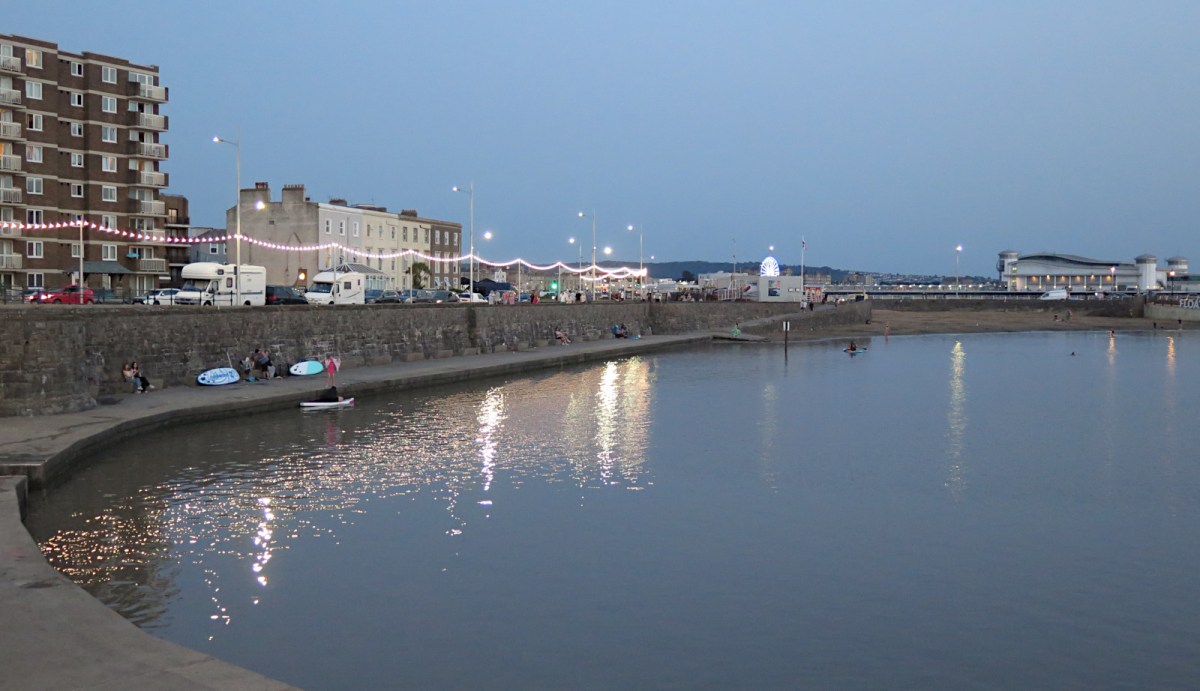
The Marine Lake was built in the 1920s and has just been dredged and refurbished. It’s free to use, and within the lake the tide never goes out, but on every high tide some of the water is replaced to keep it clean.
Image 135 – What’s in an image? Sometimes quite a lot, more than meets the eye. I’m posting an image every day or so.
Click to enlarge
This is one of the jewels of Weston-super-Mare – The Marine Lake. One feature of the coastline here is that it has one of the highest tidal ranges in the world (14.5 m), second only to the Bay of Fundy in Canada, I believe. The beach is very gently shelving as well, so at low tide the sea retreats between two and a half and 3 kilometres!
The Marine Lake was built in the 1920s and has just been dredged and refurbished. It’s free to use, and within the lake the tide never goes out, but on every high tide some of the water is replaced to keep it clean. It’s also large enough for a lot of people to use it at the same time, and it includes a large, sandy beach above the waterline. It’s also right in the heart of busy part of town, with plenty of cafes and restaurants, shops, the big wheel, the pier and much more just a stroll away.
My photo was taken late in the evening after sunset in September so there are few people using the Marine Lake. But believe me, in the middle of the afternoon on a sunny day in July it would be quite crowded. There’s a very long and wide sandy beach stretching north and south of Weston pier, and many people use that for sunbathing or making sandcastles regardless of the state of the tide.
The Marine lake is a marvellous feature. Without it, Weston would not seem like Weston at all!
If you enjoyed this or found it useful, please like, comment, and share below. (If you don’t see those links, click the article’s title above the main photo and they will appear.) Send a link to friends who might enjoy the article or benefit from it – Thanks! My material is free to reuse (see conditions), but a coffee is always welcome and encourages me to write more often!
We all make new friends right through our lives, don’t we? And that’s good. But our old friends, even if we hardly keep in touch, always have a special place in our hearts and minds.
Image 134 – What’s in an image? Sometimes quite a lot, more than meets the eye. I’m posting an image every day or so.
Donna and I are on the right in this selfie, our friends Tony and Faith are there on the left. Donna and I have been married nearly 27 years now and Tony was my best man, but he and I go back a lot further than that.
I moved to Yatton way back in 1975 with my first wife, Judy. Yatton is a large village between Bristol and Weston-super-Mare, and two of the first local people we got to know were Tony and Faith. They became great friends and we were deeply involved in exciting times of rapid and informal church growth in and around the village. Two other local friends, Paul and Jenny, were part of that too and the six of us became close. Later, things moved on and we drifted apart a bit, but we began meeting very frequently again when Judy became ill with cancer. She died at the and of 1995.
We all make new friends right through our lives, don’t we? And that’s good. But our old friends, even if we hardly keep in touch, always have a special place in our hearts and minds. Shared experiences are never forgotten and can always be re-lived in our minds. The gratitude and joy are permanent, the bond remains, those things don’t depend on seeing a person recently or regularly.
I have precious friends all over the globe. I’m really bad at keeping in touch, but I’ll name a few places – Cirencester, Florida, Germany, New Zealand, Nottingham, Stamford, St Neots, Sweden, Texas, and many other places in the UK, of course. And I have other good friends I have yet to meet! Electronic forms of conversation make that entirely possible.
If you enjoyed this or found it useful, please like, comment, and share below. (If you don’t see those links, click the article’s title above the main photo and they will appear.) Send a link to friends who might enjoy the article or benefit from it – Thanks! My material is free to reuse (see conditions), but a coffee is always welcome and encourages me to write more often!
Some of the other street art includes a giant chicken peering at shoppers around a street corner, and a turtle flying over what looks like a hilly landscape; or is it swimming over an underwater coral reef?
Image 133 – What’s in an image? Sometimes quite a lot, more than meets the eye. I’m posting an image every day or so.
Street art
This painted building is in Weston-super-Mare, near the sea front. There’s a lot of great street art in Weston, some of the best I’ve seen anywhere, and this is just one example of many.
I love the way the sealions’ eyes are also the centres of flowers, and how the blue background is clearly sky in the left of the picture but then becomes water with the goldfish swimming through it on the right, yet the horizon from the left continues on the right. There are so many subtle clues and miscues, it’s a delightful, yet confusing image. What kind of mind can come up with art like this? Although the picture’s on the wall, it’s also off the wall so to speak! And is that a banana I see there? Or is it a yellow eel?
Some of the other street art includes a giant chicken peering at shoppers around a street corner, and a turtle flying over what looks like a hilly landscape; or is it swimming over an underwater coral reef? These are the sorts of paintings that stop you in your tracks because of the enigmas and optical illusions they create.
If you enjoyed this or found it useful, please like, comment, and share below. (If you don’t see those links, click the article’s title above the main photo and they will appear.) Send a link to friends who might enjoy the article or benefit from it – Thanks! My material is free to reuse (see conditions), but a coffee is always welcome and encourages me to write more often!
Questions and enigmas make us think harder, and discuss the possibilities amongst ourselves, while the observing teacher gets a clear sense of whether the students are understanding the important principles.
What Jesus says next is a complete riddle for his followers. ‘Soon you won’t see me, but soon after that you will see me.’ They discussed this amongst themselves, over and over it seems; but they didn’t ask the Master to explain what he meant. Perhaps they were embarrassed because they couldn’t work it out. In verse 10, Jesus had mentioned he would be ‘going to the Father’ and they were puzzled about that as well. And what did ‘soon’ imply?
Jesus understood perfectly what was going on in their minds and that they’d like to ask him about it, but were not going to. And this is typical of him in his dealings with all his followers, not just then, but now as well. He asks questions and he makes enigmatic remarks. The reactions of his followers inform him more than a straightforward conversation would and, more to the point, they help his followers learn.
How we learn
Any teacher knows how to use this method whether the subject is art, maths, science, history – whatever. Questions and enigmas make us think harder, and discuss the possibilities amongst ourselves, while the observing teacher gets a clear sense of whether the students are understanding the important principles. It’s likely this was a method used by any Jewish rabbi. Ask a tricky question, then let the learners wrestle with it and observe their level of understanding.
So remember, when Jesus gives you a question or a problem to resolve, it’s most likely just a way of helping you go deeper or further. And if necessary, don’t be afraid to ask him! He knows your difficulties but he wants you to make the effort and, if necessary, he will help you out. Even if he needs to explain, the fact that you wrestled with it first will help his explanation stick.
So what did he mean?
First he lets them know that he understands their struggles and need to ask, and then he adds a little more information – that they will cry in deep sadness while the world rejoices. And here comes another standard teaching idea, use an illustration, something quite different, something familiar, but something with important similarities. Jesus tells them it will be like a woman giving birth – lots of pain and anguish but with relief and great joy when accomplished.
And now they understand the principle, he adds more detail for them. Their time of grief is now, but he’ll see them again and they’ll rejoice. Nobody will be able to steal that joy from them and they won’t need to ask him any more questions. In fact, they’ll be able to ask his Father (in Jesus’ name) for anything. So far they have not done this – ask, receive, and rejoice!
And what about us?
Can we expect the same? Should we, too, expect to ask in Jesus’ name, receive, and rejoice? Yes! Indeed we should! Does Jesus say to us, ‘So far you have not done this’? Perhaps he does for some of his people and for some of the time. Often we think in terms of faith – ‘Do I have too little faith?’. Frankly, it’s a bad question.
Faith is important, of course. Faith is one of the three things that Paul tells us will remain. The other two are hope and love. And Paul is very, very clear about it, the greatest of the three is not faith, but love! (1 Corinthians 13:1-2) Do you love Jesus? Does he love you? Do you have the Father’s love?
Let me remind you, that yes you do! And this love is greater than faith. Faith is required, but it’s not the measure of the answer. Father’s love is always the measure of the answer.
When you ask for something in Jesus’ name, you may or may not see the answer you expect. Anyone moved a mountain recently? Faith expects that you will trust the answer to Father’s wisdom and love. We don’t always see what we expect. We don’t always immediately receive what we ask. We need to be wise, recognise his love, remain patient and not give up.
And another thing to remember, sometimes we ask in hope, not faith. That’s OK too. There’s nothing wrong with the prayer of hope; there’s no shame in it. Sometimes there is a gift of faith, received in the moment, and we feel certain that what we ask will be done. If so, go ahead and use it! If not, pray anyway, Father listens, he does not turn away. He loves you! We all know what that’s like, we have all been children and some of us have been parents.
If you enjoyed this or found it useful, please like, comment, and share below. (If you don’t see those links, click the article’s title above the main photo and they will appear.) Send a link to friends who might enjoy the article or benefit from it – Thanks! My material is free to reuse (see conditions), but a coffee is always welcome and encourages me to write more often!
The largest boat you can see is the Steep Holm Ferry. It makes return trips out to Steep Holm island with a stay of ten to twelve hours, and basically it’s the only way to get there unless you have your own seaworthy vessel.
Image 132 – What’s in an image? Sometimes quite a lot, more than meets the eye. I’m posting an image every day or so.
Click to enlarge
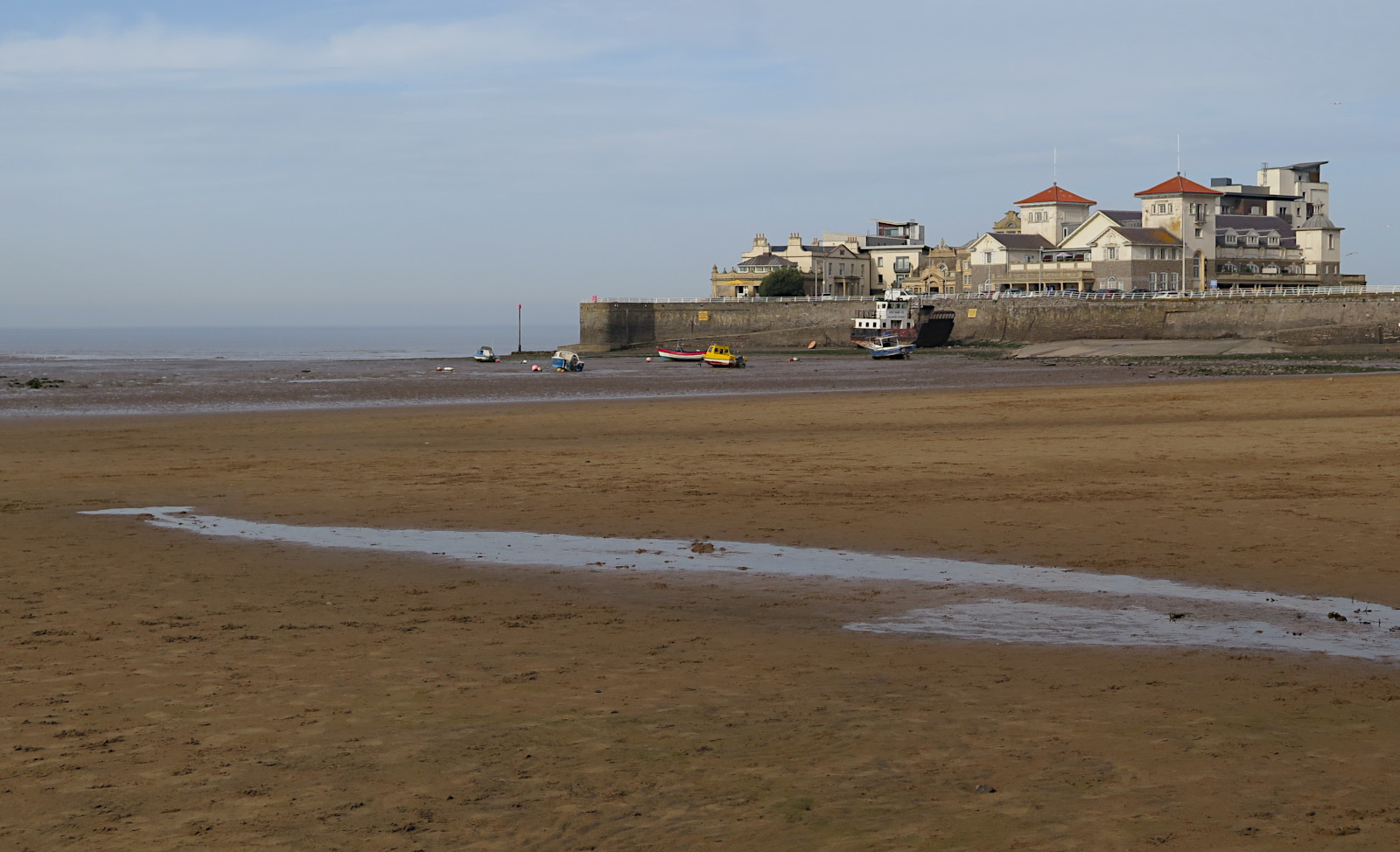
The beach in the photo is at Weston-super-Mare. Beyond it is Knightstone Harbour with boats high and dry because the tide is partly out. And beyond the harbour and the causeway you can see the buildings including Dr Fox’s Tearoom, Knightstone baths, Stones Cafe, and Knightstone Opera House. When we’re in Weston, Donna and I sometimes enjoy breakfast at Stones.
Originally it must have been a sandbank jutting out towards the Severn Estuary, perhaps with a backbone of exposed rock. Today it’s been built up and would barely be recognisable to the local people of two hundred years ago.
The largest boat you can see is the Steep Holm Ferry. It makes return trips out to Steep Holm island with a stay of ten to twelve hours, and basically it’s the only way to get there unless you have your own seaworthy vessel. The water here can’t make up its mind whether it’s the River Severn estuary or the North Somerset coast. It’s sixteen or so kilometres wide, in terms of weather and water conditions it can be treacherous.
If you enjoyed this or found it useful, please like, comment, and share below. (If you don’t see those links, click the article’s title above the main photo and they will appear.) Send a link to friends who might enjoy the article or benefit from it – Thanks! My material is free to reuse (see conditions), but a coffee is always welcome and encourages me to write more often!
















 Journeys of Heart and Mind


