Becoming disciples-1

It will help us if we talk about these commitments daily, read what the Bible has to say about them, and pray and work together to sharpen our focus.

< Previous | Index | Next >

This article is an extract from my short book, Jesus, Disciple, Mission, Church (JDMC). The bite-sized piece below is roughly two percent of the book. This time we begin on the second forgotten way.

Introduction

Becoming disciples is important because it’s the main way believers grow to be more like Jesus. It’s not a process with a beginning and an end; it’s ongoing throughout our lives. And we’re not automatically disciples simply because we have believed. Not all of the crowds who listened to Jesus or were healed by him were disciples. Only those who followed him and were greatly changed could claim to be disciples (Matthew 4:19, Matthew 10:38).

The English word ‘disciple’ is rather old-fashioned these days, but it has more or less the same meaning as ‘apprentice’. In particular it’s all about learning to do the things that the expert is already doing, and Jesus is the expert here. Apprentices don’t just learn from books; this is a hands-on experience. At first, things will often go wrong, but apprentices get better and better by repeatedly doing something under supervision. Expect that to happen to you as Jesus’ apprentice.

Because this change is hard and takes time, Jesus put most of his effort into three years of living closely with a small band of men and women who were prepared to do much more than simply be amazed. They were utterly transformed in those three years. The fact that Jesus worked this way reveals how important making disciples was and is. He put everything he had into those few, and when he returned to the Father they were the ones he continued to work with to reach the nations and build his church (John 17:6-23).

Jesus needs men and women who will become conformed to his image. They are his disciples.

The challenges for us include rejecting false gods such as consumerism, becoming more and more like Jesus, and understanding that we most effectively change by doing, not merely by thinking. Imagine an apprentice plumber who had studied all the books on plumbing but had never bent a pipe or soldered a joint.

Discuss or consider – ‘We most effectively change by doing, not merely by thinking.’ Is this true in your experience? List some examples. Think about the skills involved in sport, work, music, art. Are there any areas of life in which regular practice doesn’t help?

A more effective way

If we are going to become disciples, who will disciple us? Sometimes it’s been thought that we need to follow others who have set us a good example. But if we follow another person there is always a risk of following some bad habits in amongst the good. This must be so; we know that nobody is perfect.

To do better than this we must follow a leader and guide who is perfect (Matthew 4:18-22, 5:43-48, John 10:30) , and that’s a tall order indeed for any human being – except one.

Discuss or consider – Who could you turn to as the One example to follow? Yes, the answer is obvious, of course. But what does this mean in practice? Talk together about anything you might try to help you become better disciples of Jesus.

Really mean business

We can begin by setting ourselves the highest standard for discipleship – the standard Jesus himself set us. This includes loving the Father with all our heart, mind and strength; denying ourselves; lifting our own heavy cross; and following Jesus and loving those around us in active and meaningful ways (Luke 10:25-28, Matthew 16:24-25, James 2:14-17).

It will help us if we talk about these commitments daily, read what the Bible has to say about them, and pray and work together to sharpen our focus. Read the Bible (2 Timothy 3:16-17), especially the gospels, with a view to what we must do (not just what we must think). Regular patterns of prayer, together and alone, are essential (Philippians 4:6). Don’t forget worship (Hebrews 12:28, Romans 12:1) another key part of becoming a disciple. And worship includes serving one another and the wider community, offering everything back to the Father.

So we need to become kinder, more generous and more patient. We must think about justice, and giving and using our spiritual gifts. And we will need to meet around Jesus and encourage one another. We are responsible for the way we use our time, our skills and our money. These resources are not just for our own pleasure; the way we live speaks volumes about what we value – and the world is watching and listening.

We need to care about our neighbours and about the environment. How can we release more time for friends and family? Are there ways we can represent the Almighty’s deep concern for justice? How can we better care for our surroundings? Try to become an ace recycler, or help keep the locality clean and tidy. Save fuel by turning down the heater or the air conditioner; drive less and walk or cycle short distances instead.

Jesus’ disciples lived and travelled together, ate and talked and listened and learned together. Community is an essential part of being a disciple, for us as for them. He calls us to love one another as he loves us (Ephesians 4:32, Galatians 5:22-23).

Discuss or consider – Pick one or two of the ideas in this section (or ideas of your own) and consider together how you could use them regularly to focus more on living as disciples of Jesus.

More sections of JDMC

IntroductionJDMC, what does it contain?Using JDMC – how to approach it

Working together in six waysIntro and Way 1Ways 2, 3 and 4Ways 5 and 6, six ways

Way One, Jesus at the centreJesus at centre 1Jesus at centre 2Jesus at centre 3

Way Two, Becoming disciplesDisciples 1Disciples 2Disciples 3

Way Three, Outward and integratedOutAndInt1, OutAndInt2

Way Four, Gifts for buildingGiftsForBuilding1, GiftsForBuilding2

Way Five, A living organismLivingOrg1, LivingOrg2

More sections will appear here…

The work of the SpiritIntroJesus, disciples, outwardGifts, living, community, help

Other church leadersIntro, bishops, eldersDeacons, pastors, priests

Last wordsThe end can also be the beginning

< Previous | Index | Next >

Read the book

This was extracted from Jesus, Disciple, Mission, Church (JDMC), pages 17 and 18. Download the whole thing or read it online – GetJDMC.scilla.org.uk

Useful? Interesting?

If you enjoyed this or found it useful, please like, comment, and share below. (If you don’t see those links, click the article’s title above the main photo and they will appear.) Send a link to friends who might enjoy the article or benefit from it – Thanks! My material is free to reuse (see conditions), but a coffee is always welcome and encourages me to write more often!

Jesus at the centre-3

Consider the everyday. How do you love the Lord, the creation, and other people (how do you treat them), consider your obedience, are you willing to spend time in Jesus’ company?

< Previous | Index | Next >

This article is an extract from my short book, Jesus, Disciple, Mission, Church (JDMC). The bite-sized piece below is roughly two percent of the book. This article completes our deeper look at the first forgotten way.

Everything is holy!

Make those ‘ordinary’ things holy! Every part of the Tabernacle was holy, not just the impressive parts, but every little thing. (Exodus 40:9) If we are truly a temple built of living stones, we are all marked as holy, set apart for the Almighty’s exclusive use. (Ephesians 1:13) How can you make cleaning, shopping, work and study holy? Sometimes we think of holiness in terms of what we avoid doing. Instead, begin to think more positively in terms of what you do.

Even the things that give us the greatest pleasure can be enjoyed in his presence, with his blessing and in gratitude. Sometimes we regard these things as worldly, and of course they can be if we misuse them. But they can (and should) also be brought into the place of holiness, part of the kingdom. Think of nothing as apart from him.

Worship is much more than singing songs and praising the Lord, it’s also a matter of obedience. Worship is living lives that honour Jesus, it’s gratefully offering our world back to him. As you read the Bible pay attention to what constitutes worship and allow that learning to reshape how you define and practice worship.

In particular consider the everyday. How do you love the Lord, the creation, and other people (how do you treat them), consider your obedience, are you willing to spend time in Jesus’ company?

Not only should Jesus be at the very centre of our lives, he should also not have to share that place with anyone or anything else.

Discuss or consider – Do you reserve certain activities for use only in church? What are they? They might include prayer, worship and communion; is it possible to take these activities out into society? If not, why not? If so, how?

Put the gospels first

Measure everything you do against what Jesus taught. And to get to grips with that teaching, read and think about the parables and topics like prayer, money and the kingdom; go through the Sermon on the Mount thoroughly. (Matthew 5:1-7:29) Do your best to absorb these truths into your daily life and expect to be deeply affected by them. (Check my post from 24th June 2013 for more on this.)

Reading the gospels on a steady cycle is one idea, aim to read a section every day. If possible read the same passages as other people you know so you can talk about what you read and share insights. Get as many people as possible to join in. Study one of the gospels in depth from time to time. Studying a gospel can be done together or it might be made the topic for a teaching series.

When you read other parts of the New Testament, read them with the life, words, actions and nature of Jesus as the framework. Let Jesus be the source of light that makes the entire New Testament clear to you. And when you read the Old Testament books, look for Jesus there as well. Interpret everything with Jesus’ teachings and actions in mind.

Discuss or consider – Talk together about practical ways you might spend more time in the gospels. They focus on Jesus and they’ll help you do the same. What could you do individually? Even better, what could you do together?

Taking it further

Spread the benefits. If you found this session useful, encourage others to try it.

Where will you take this next? Make some notes about things you have decided to do and goals you want to achieve. Make a list of questions you want answered. Check out the extra information below. Come back and revisit this section from time to time.

Discuss – What is the most important thing you have learned during this
part of the guide? Different things may stand out for different people.
Which of the ideas here and those of your own could you begin to put into
practice? (Don’t bite off more than you can chew! But make sure you
actually make a start on something.)

More sections of JDMC

IntroductionJDMC, what does it contain?Using JDMC – how to approach it

Working together in six waysIntro and Way 1Ways 2, 3 and 4Ways 5 and 6, six ways

Way One, Jesus at the centreJesus at centre 1Jesus at centre 2Jesus at centre 3

Way Two, Becoming disciplesDisciples 1Disciples 2Disciples 3

Way Three, Outward and integratedOutAndInt1, OutAndInt2

Way Four, Gifts for buildingGiftsForBuilding1, GiftsForBuilding2

Way Five, A living organismLivingOrg1, LivingOrg2

More sections will appear here…

The work of the SpiritIntroJesus, disciples, outwardGifts, living, community, help

Other church leadersIntro, bishops, eldersDeacons, pastors, priests

Last wordsThe end can also be the beginning

< Previous | Index | Next >

Read the book

This was extracted from Jesus, Disciple, Mission, Church (JDMC), pages 15 and 16. Download the whole thing or read it online – GetJDMC.scilla.org.uk

Useful? Interesting?

If you enjoyed this or found it useful, please like, comment, and share below. (If you don’t see those links, click the article’s title above the main photo and they will appear.) Send a link to friends who might enjoy the article or benefit from it – Thanks! My material is free to reuse (see conditions), but a coffee is always welcome and encourages me to write more often!

The exact representation

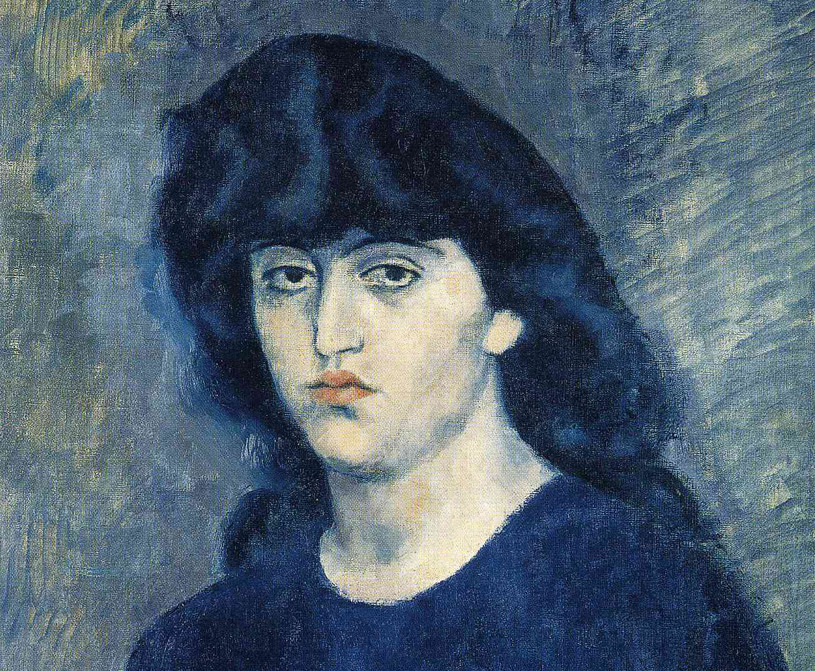
For a person, a colour photo is a pretty accurate representation – at least for appearance. A half hour video interview would be even better.

Picasso in 1904 (Blue period) – (Wikipedia)

What is an exact representation? It’s a fully accurate impression of something, but still not the thing itself. For a paragraph of text it might be a carefully checked typescript or handwritten copy. It’s not the original, but it carries the essence of the original. If a single character is incorrect, the sense may still be clear, or guessable, or might become misleading. ‘If a single character his incorrect’ could still be clear though an obvious typo. ‘If a shingle character is incorrect’, might be slightly more confusing. ‘It’s now the original’, completely messes with the correct text, ‘It’s not the original’.

Picasso in 1910 (Cubism) – (Wikipedia)

For a person, a colour photo is a pretty accurate representation – at least for appearance. A half hour video interview would be even better. An oil painting might give a recognisable impression, unless it was a later Picasso.

What about Jesus?

Yahshua (Jesus) is an interesting case of representation. We don’t have pictures of his appearance, though we do know quite a lot about his character and behaviour. However, he himself is a representation.

The Son is the radiance of God’s glory and the exact representation of his being, sustaining all things by his powerful word. After he had provided purification for sins, he sat down at the right hand of the Majesty in heaven.

Hebrews 1:3 (New International Version)

The sun on a clear day is very bright indeed, so bright it’s dangerous to stare at it directly (don’t try, your eyesight might be permanently damaged). But that powerful light is responsible for making everything else in our daytime world visible to us. This is one of the ways in which Jesus represents the nature of his ancestry. The Father is sometimes described as dangerous to behold, yet he makes everything in the spiritual world visible to us. But it is safe to look directly into Jesus’ face – his twelve closest followers did that, so did the seventy-two, so did the mass of the people from the towns and villages all around Galilee.

Not only is he safe but he sustains everything there is, and he has provided a purity that we could never earn for ourselves. And it works both ways in a sense. Not only does he represent the Father’s glory for us to see, but he represents us in his Father’s holy presence, sitting at his right hand!

What about the Greek?

Let’s look at some of the Greek words here, what can they add for us?

ἀπαύγασμα – apaugasma – ‘the radiance of his glory’ – This has the sense of a gleam flashing out, a flash of reflected light, as from polished metal moving in the sunlight. The Son is a dazzling flash shining out, hinting at the Father’s brightness.

χαρακτὴρ – charaktēr – ‘the exact expression‘ – From which we get the similar sounding English noun ‘character’. The Greek word has a core meaning of accuracy of expression, ‘precisely like’. Jesus is not just a bit like the Father, they are one! So what we see in him really does show us exactly what the Father is like.

ὑποστάσεως- hypostaseōs – ‘of his being’ – substance, or nature – This word is also used in Hebrews 3:14 where the NIV translators chose the word ‘conviction’ in the sense of certainty. Jesus represents the Father’s sustaining essence. What more could we ask? What more could we need?

Final thought

What a good thing that the writer of Hebrews wasn’t a cubist!

A coffee is always welcome!

‘Greatest thing’ republished – INDEX

The analysis excited me, Henry Drummond confirmed what I already knew to be true – this new life in Christ is all about love.

(See indexes on other topics)

Here’s a modern English version of Henry Drummond’s ‘The Greatest Thing in the World’. His wonderful essay on love was originally created in 1884, and it analyses Paul’s famous chapter 13 of 1 Corinthians. Well worth a read!

Read it online or download it
  • The modern English version is available to read or download online (a couple of the links in the PDF no longer work, I’ll correct them when I can).
  • The Victorian original is also available.
  • Many printed versions are available too, take your pick.
Article series

You might enjoy this series of short articles in which I examined Henry Drummond’s essay in more detail.

Why create a new version?

Why have I gone to the trouble of translating this essay into modern English? Basically, because it deserves a wider audience. Years ago The Greatest Thing was often reprinted as a booklet and was very popular. I remember buying a copy in Wesley Owen’s on Park Street in Bristol back in the 1970s when the language was still less than 100 years out of date. It was a great read and it helped to change my life. The analysis excited me, Henry Drummond confirmed what I already knew to be true – this new life in Christ is all about love. At the same time the little book challenged me and drew me on.

This great essay is no longer widely known or read. It deserves better. It will speak to readers today just as it always did. Read it!

Acknowledgements

And finally, I just want to thank the family members and friends who read my early drafts and made helpful suggestions, pointed out errors, or were just encouraging. You know who you are.

Licencing

Copyright in the original has expired while the new version comes with a Creative Commons licence. So please feel free to print or republish either version and distribute it as widely as you like.

See also:

A fresh Greek New Testament

The parable of the sower may begin a little differently

FaithOrKnowledge3

The Tyndale Greek New Testament will be published on 15th November 2017, just three days from now. This is a rare event and will provide a new source for Koine Greek scholars and translators of the New Testament.

The new version sticks to the earliest Greek sources and draws on the most up-to-date research and scholarship available. The publishers write:

The Greek New Testament holds a special place in Christian thinking as the mouthpiece for God’s revelation of the Gospel and of Jesus Christ. While there are a few trusted Greek texts currently in print, significant advances have been made in Greek transmission studies of the New Testament since a standard text was last adopted in 1975.

Here’s one example of the way the new version may affect future translations. The parable of the sower may begin a little differently, simply because of the placing of a paragraph mark in the early manuscripts. It will take a long time for changes like this to feed through into the modern language Bibles we can buy and read, and translators may or may not decide to make changes. Watch this space!