What we need in any situation is a chance to see things at as many levels as possible. It’s the only way to get the full picture.
Some of us are detail people, some of us are big picture people. Some fall between those extremes – it’s a continuum, not an either/or. Have you ever thought about the implications of this?
The detail
Exquisite artwork
I saw some beautiful artwork today. Here’s an example, delightful flowers and leaves, hand painted. You may notice some drops of water on the surface of the artwork and also some scratches in the lower right, I’ll explain that in a moment. But water and scratches don’t diminish the quality of the underlying artwork. Look at the use of carefully chosen colours, various shades of pink for the petals, the delicate brush strokes; all these details are significant and give a sense of light and shade, solidity, fragility of the petals, strength of the stems.
But what about the big picture? Is this a fragment from a large canvas? Or is it part of a Roman wall painting from a villa in Herculaneum or a town house in Pompeii? Let’s look at the big picture.
Does the big picture make a difference? What is the purpose of the painting? Why is it wet and scratched? Can we date the work, or attribute it to a known artist?
Scroll on down and take a look.
. . . .
The big picture…
Things may not be as we expected, seeing the big picture can change the way we think about things.
Here’s the big picture, now you know more than you did before.
The artwork was on the surface of a three dimensional structure, a statue of a hare. It’s wet because it’s been raining, and the scratches are from bumps and interactions with other objects in the environment.
The big picture and the detail both have their place.
We need an overview and we need a closer look
This is true in almost all real-life situations. If we only see the detail it’s difficult to fit those details into a wider understanding. And if we only see the big picture, we miss out on some of the fascinating, astonishing details.
What we need in any situation is a chance to see things at as many levels as possible. It’s the only way to get the full picture. Sometimes we say someone is a ‘big picture’ person, or a ‘detail’ person. Both of them may be missing out one way or the other. Helpful to have both in a team!
Notes from bygone years – Lots of past Septembers Hint: Click on the thumbnails for larger images.
A year ago
I didn’t post to my blog in September 2022, so here’s an extract from my journal for 8th instead. We were on holiday in Wales along with Donna’s Mum, brother Paul and his wife Vanessa. It was an eventful day.
We drove into Tenby and unexpectedly bumped into our friends Simon and Carol! None of us had any idea we would be in Tenby that day, our friends live in Yorkshire!
At lunchtime I saw reports on my phone mentioning that the Queen’s doctors were concerned about her health. Later in the day her death was announced and it seemed very strange that Prince Charles was now King Charles III. I wrote in my journal:
[Elizabeth II] had such a long reign (the longest of any British Monarch) and she leaves King Charles III as the most aged new Monarch ever. She did her job extraordinarily well. It comes as something of a shock to be writing these words on this day in my journal. It’s a day that seemed always to be delayed and would never actually arrive – yet here it is.
Back in our holiday home in Llantissilio, we watched the news and caught up with some of the details of the day. There was also startling news from Ukraine with Russian forces abandoning a large region in Kherson and retreating in disorder in an even larger region near Kharkiv.
In September 2021 I wrote about a new song from a musician I know, Sarah Reynolds. The theme of the song is that when we seem to be facing defeat and are struggling just to hang on, hope may not be as far off as we imagine.
Take a look at the original post and listen to the song, ‘Wilderness’.
In September 2018 we were on holiday with the family in Switzerland. I wrote a blog post about walking the bisses (irrigation streams). It was a fascinating day. Here’s a link to my post.
In September 2013 I wrote about my project ‘Cruising the Gospel’.
The idea was to help and encourage people to read through the biblical books of Matthew, Mark, Luke and John, considering what we can learn about Jesus and about ourselves as we read. Anyone can follow along, reading and pondering small, manageable chunks along the way. (Read the original article)
On 29th September 2008 I wrote to Elon Musk and SpaceX to congratulate them. Why? Because the previous day had seen them launch their Falcon I rocket successfully – after three consecutive failures! Read my blog post and message.
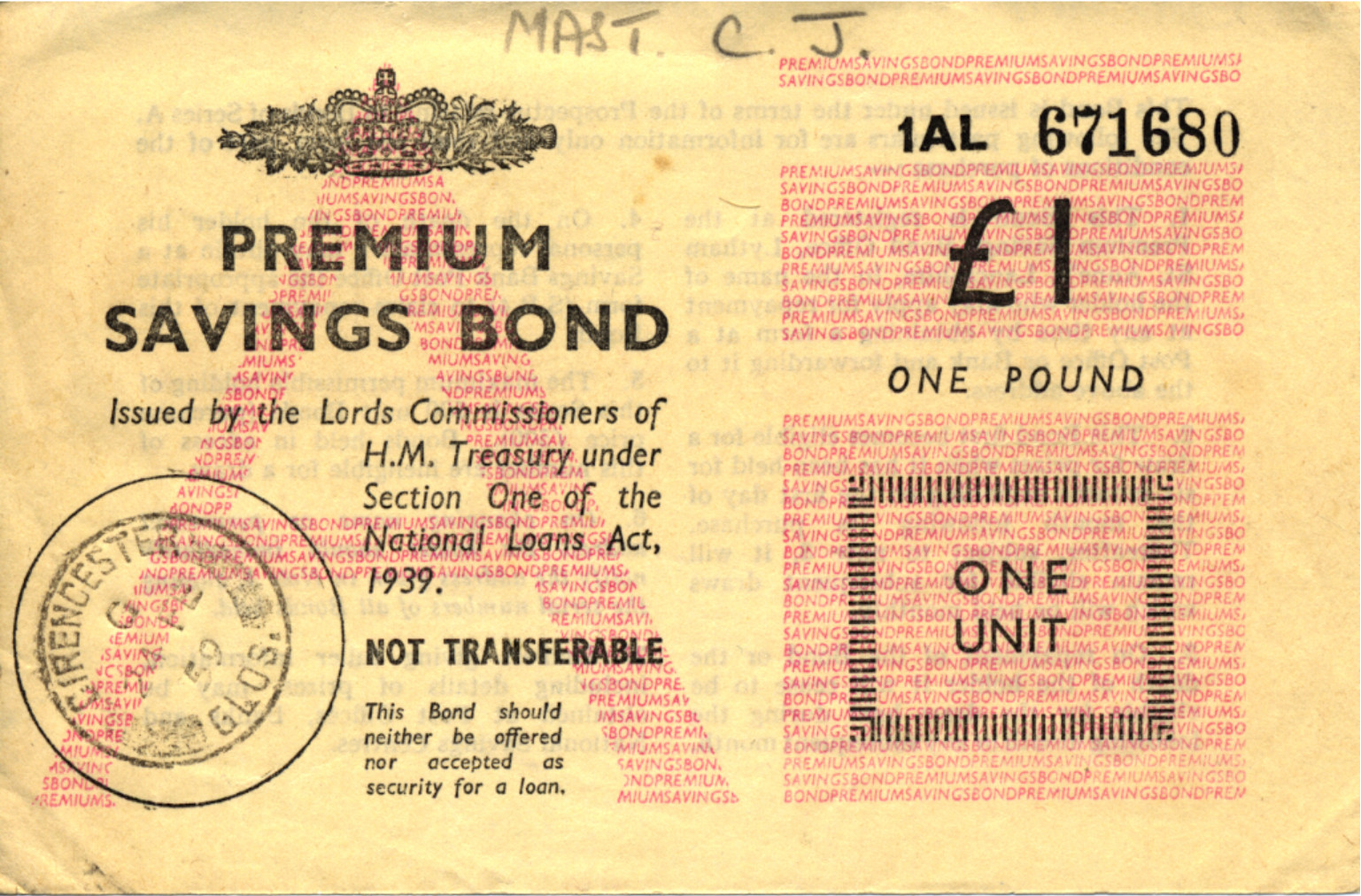
In September 2003 we visited my parents in Cirencester. Dad had just bought Mum a battery-powered cat that ‘purred’ when you stroked it. Mum loved having a cat, but Dad felt that at their age they shouldn’t have another one after the previous cat died. The pretend ‘cat’ was an amusing compensation, but I don’t think Mum was very convinced!
In September 1998 we were looking forward a few weeks to a relaxing holiday in Fetiye, Turkey. I’d been to Istanbul briefly on a school trip in December 1964, but I had never been to any other part of the country. A week on the Mediterranean coast sounded great and we hoped the weather would be kind.
In September 1993 I was working as the Microcomputing Manager at Long Ashton Research Station near Bristol. Part of my job involved networking PCs, here’s a message I sent asking for help. Click the image for a larger view.
Notice the ASCII art (text characters used to make larger ‘text’ or images, and the way a reply uses > characters to mark quoted text. All very primitive, all time consuming, and none of it necessary any more.
The 10th September was Judy’s birthday, and in 1988 Debbie and Beth made her a birthday meal in the evening. It was quite a spread as you can see if you click on the thumbnail.
The family records are blank in September 1978, the month that Debbie turned 3½. But on the world scene there were some significant events. Menachem Begin and Anwar Sadat discussed peace and signed the Camp David Accords, and 122 rioters died in Tehran when the Shah’s troops opened fire.
In late 1973 John Jefferies & Son in Cirencester were preparing their Christmas hyacinth brochure, perhaps in September.
This would be issued later, mailed out to regular customers and available in their shop (now Vodafone) in the Market Place. The bulbs were grown in the dark in the basement of the Tower Street warehouse; the building still exists, converted into flats next to Minerva Court.
In September 1968 I was about to begin my third year as a student at the University of Bath. It was a sandwich course so required four years to allow for industrial placements.
In September 1963 I began my 5th year at Cirencester Grammar School. This was an important year for me and my school friends, with O level mock exams after Christmas and the real O levels to face in June.
In September 1958 I began my final year at Junior School. This would be the year of the important 11-plus exams that would decide whether we would go to the Grammar School in Victoria Road or to the Secondary Modern at Deerpark.
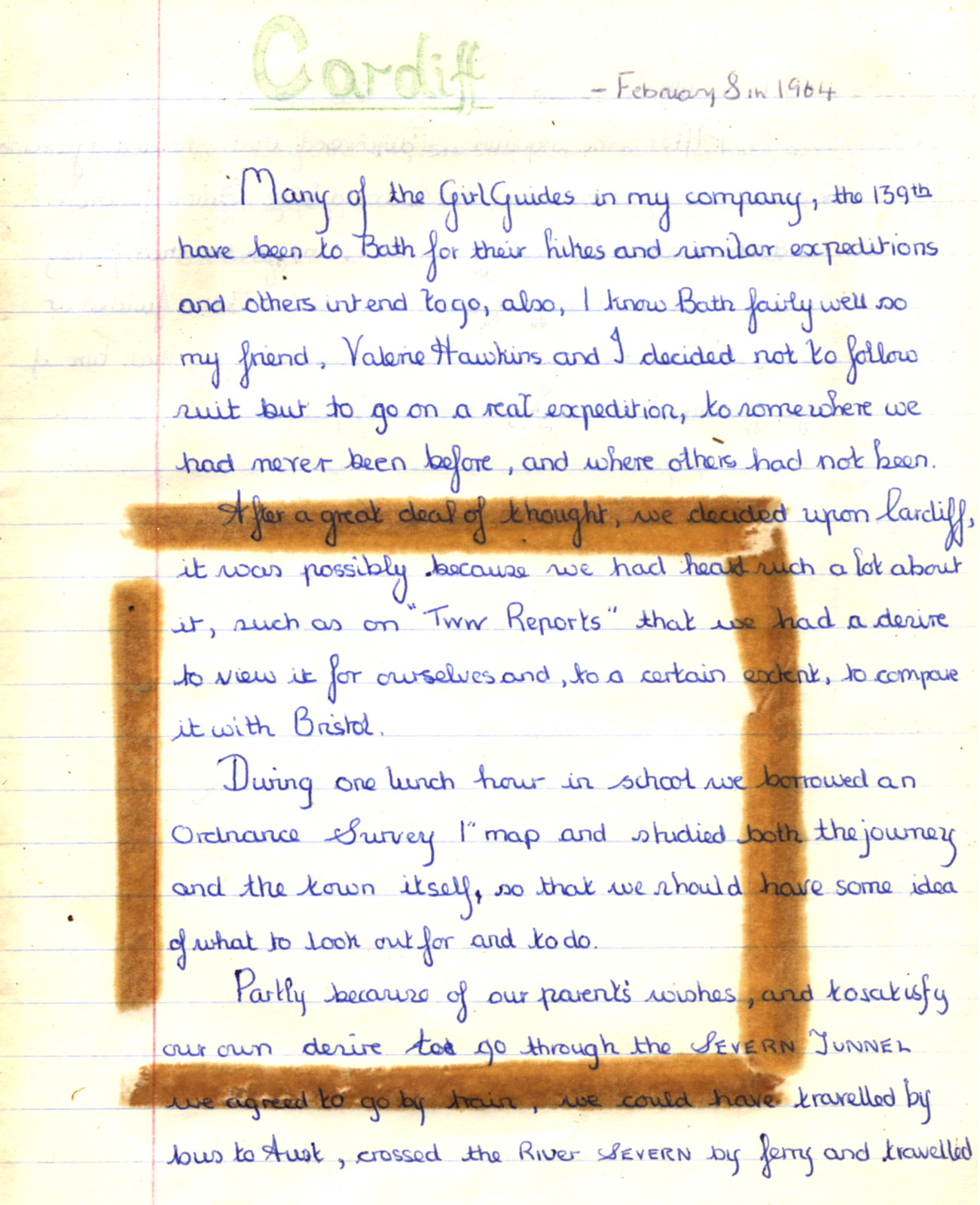
In September 1953 I’d been five for a month or so and I it was time to began my first ever school term. I went to Querns School, and was unhappy when my Mum left me on the first day. I cried later when the teacher told us that we would stop to eat elevenses. This was not a word I knew, and I heard it as ‘lemonses’. What I did know was that lemons are very sharp and I did not want to eat one!
The pupil’s entrance was along the little lane at the side of the school, shown in the photo. I remember walking up and down that lane very clearly indeed.
In September 1948 I was in my second month of life, and Mum and Dad celebrated their first wedding anniversary. It seems they didn’t waste a whole lot of time! I would have been getting my arms and eyes under better control by this time. Dad was busy with C&DMAC (a model aircraft club). His maternal grandmother’s second husband died on 19th, Dad always knew him as ‘Gramp’.
In September 1943 Dad shot a lot of starlings, apparently. He heard that he’d passed his School Certificate successfully, was active in the ATC, and had a busy social life.
Here’s a simple diagram of a hydrogen atom. The little black ball is the nucleus, a proton, 10 000 times smaller than the atom as a whole, the white part represents an electron, spread out like a cloud around the nucleus. The proton and the electron were once thought of as fundamental particles that had no underlying structure. For the electron that remains true. The proton on the other hand consists of three quarks, but for the purposes of chemistry we can still think of it as ‘fundamental’.
A hydrogen atom can react with other atoms in quite specific ways. New and more complex behaviour emerges as atoms combine. Here are some of those emergent properties:
A molecule of methane, four hydrogens attached to a carbon atom
Two atoms of hydrogen can combine as a molecule of hydrogen, a gas that can become explosive when mixed with air.
Two hydrogen atoms and an oxygen atom can combine as a water molecule. Everyone knows that pure water is safe to drink.
Four hydrogens and a carbon atom can combine as a molecule of methane gas. This is the domestic gas that we use for cooking and for heating our homes. Methane is also a powerful greenhouse gas, contributing to global heating.
Three hydrogens and a nitrogen atom can combine as a molecule of ammonia, a poisonous gas that dissolves readily in water.
Two hydrogens and a suphur atom can combine as a molecule of hydrogen suphide, a gas that smells like rotten eggs.
There are many other molecules that include hydrogen.
Protons, and similar particles called neutrons can combine in larger numbers to make heavier and larger nuclei surrounded by much larger clouds of electrons (we’re leaving out a great deal of detail here). Together, these are the various chemical elements; there are more than 100 different kinds. Sodium, oxygen, phosphorus, chlorine, nitrogen, lead, iron, gold, sulphur, copper, tin and so on.
Chemistry
So – Take 100 different atoms and combine them together in various ways and you can clearly see that many, many different molecules are possible. Imagine 100 different kinds of Lego bricks and you begin to see the range of possibilities. There are rules of chemistry that restrict the combinations that can form, but even allowing for those rules, the number of possible molecules is huge . Here are some examples.
Sulphuric acid – two hydrogens, a sulphur, and four oxygen atoms
Table salt – one sodium and one chlorine atom
Bleach – two chlorine atoms
Laughing gas – two nitrogens and two oxygen atoms
We see chemistry appearing as soon as we have atoms. Chemistry just isn’t there in the world of subatomic particles like protons, neutrons and electrons. Like every object you can think of, we are made of atoms in complex chemical combinations so it’s quite hard for us to imagine a universe without chemistry. And atoms began emerging very early in the formation of the universe, perhaps 18 000 years after the origin. Chemistry started around 370 000 years as the universe continued to cool and atoms were able to begin combining ever more freely. At first hydrogen, helium and a small amount of lithium were the only elements available, all the others up to iron formed inside stars, while exploding stars (supernovae) generated the heavier elements and scattered these and the lighter elements far and wide. Once that had happened, perhaps 500 million years ago, the full range of atoms were available and chemistry took off in earnest.
Atoms are emergent, beginning to form once the universe became cool enough. And chemistry emerges given the presence of atoms and even lower temperatures. Could atoms and chemistry have been predicted given the presence and behaviour of subatomic particles? Perhaps. But it would have taken a real genius, a physicist with great foresight and imagination. But physicists are made of atoms and complex chemistry – so the real answer must be ‘no’!
That’s the thing about emergence – new kinds of objects and new processes ’emerge’ when the materials and conditions to do so exist. Sometimes emergence is rapid, even sudden. But as we shall see in a future post, sometimes it’s very slow indeed, or long delayed even after the possibility of emergence has existed for a very long time. Chemistry emerged quickly once atoms and low enough temperatures became available. So the opportunity was ‘slow’ to occur, but the emergence was immediate thereafter. We can think of these things separately – emergence opportunity, emergence delay, and emergence rate.
Notes from bygone years – Augusts one after another Hint: Click on the thumbnails for larger images.
A year ago
Ukraine was making exceptional progress against the Russian Army’s invasion in August 2022. I was encouraged to see this and wrote in my journal:
‘Ukraine is making serious inroads into the Russian held parts of Kherson and Zaporizhzhia and Russian forces are redeploying from the Luhansk/Donetsk region, and I suspect they’re more vulnerable while moving than they are when dug in. Perhaps Ukraine can keep them shuttling back and forth between the regions, nibbling away at them all the time. But other reports suggest the Russian economy is in serious trouble too, unemployment is severe now and despite higher prices for oil and gas, the profits are down because of reduced sales.’
On 5th August 2021 we were on holiday with the family and visited Cromford Mills where Richard Arkwright built the world’s first water-powered factory to manufacture cotton thread.
It was fascinating to see the buildings and surroundings and to think about the industrial revolution.
In August 2018, as in 2021 (above) we were on holiday with the family, this time in Switzerland. Some of us took a cable-car to Tracouet, 850 m above the little town of Nendaz. We walked back down, enjoying some beautiful views; it took around three hours.
In August 2013 I wrote about the way in which all followers of Jesus are called to be leaders – but perhaps not in quite the way we usually think. (Read the original article)
In August 2008 – Dan and Kerry were married and there was a big family party. Fifteen years on Dan and Kerry are going strong, and everyone is that much older. Some of those present on the day are no longer with us, sadly.
In August 2003 – We met in Eaton Ford and what we were shown has remained with me ever since. The Holy Spirit told us to ‘look out and look up’, and that has turned out to be the best possible advice and guidance in every situation.
In August 1998 – My daughter Beth married Paz (clearly August is a good month for weddings).
Reception in a quarry
The ceremony was held at the register office in Bristol, everyone gathered in Quaker’s Friars and then made our way to the Registry Office together. After the official parts and signing the register, we all left for photos outside.
Then we all drove to Axbridge where the reception was held in a nearby quarry, a delightful setting (though unusual) and the weather was (mostly) kind. There were showers around, but there was also quite a bit of sunshine. Dad had a ‘head-umbrella’ which he enjoyed using when it rained, and eventually we all gave up and made our way to the village hall backup location.
In August 1993 we spent our family holiday in North Wales.
The family in Llangollen
We walked over the canal bridge near Llangollen, took a ride on a steam train, travelled in a canal barge pulled by a horse, visited museums, gardens, a castle and a lot more. All the usual holiday things people do. (See a video clip)
In August 1988 we visited my parents in Cirencester. The photo shows Beth and her Grandpa, they’re chuckling about a giant snail Grandpa has in a glass tank. There was often something interesting to see on these visits!
In August 1983 Debbie and Beth were enjoying the school holiday, Judy was enjoying a break from teaching Biology at Cotham Grammar School, and I was continuing research into pollen tube growth at Long Ashton Research Station. We probably went on holiday for a couple of weeks, most likely in North Wales.
In August 1973 Judy and I had been married less than three years and were living in a flat in Belmont Road, Bristol. Judy had a job at Bristol University as a research assistant at the University Biochemistry Department in Woodland Road, while I was working at Long Ashton Research Station on apple and pear pollination.
In August 1968 I was a student at the University of Bath, studying for my first degree in Horticulture. The photo is a commercial glasshouse seen on one of our visits.
In August 1963 I had quite a surprise. The family were on holiday at Aberporth on Cardigan Bay and we’d gone to Pembroke for the day. We saw one of the last RAF Short Sunderland flying boats retired at Pembroke Dock. We also took a look at Pembroke Castle and imagine my shock when walking round the outside of one of the towers, who should I almost bump into but my physics teacher from school!
In August 1958 the US nuclear submarine, ‘Nautilus‘ became the first vessel to pass underneath the ice at the North Pole. Meanwhile it was my school holidays, between the fifth and sixth years at Querns School (a junior school in Querns Lane, Cirencester).
In August 1953 I’d just turned five and was learning that I’d be starting school in September. That seemed like a lifetime away so I probably gave it very little thought, but it was going to be a major point of change in my life.
In August 1948 I was in my first month of life. I don’t remember it of course! We were living with my grandparents in Victoria Road, Cirencester while Mum and Dad waited to reach the top of the waiting list for a newly built council house on the Beeches Estate.
In August 1943 Dad wrote in his diary for Saturday 7th, ‘Our American soldier billitee (sic) arrived though I didn’t see him’. I didn’t know my grandparents had hosted a USA serviceman until I read that diary entry just a moment ago!
The day began with a flight to Inverness Airport, and then a short journey north with several stops en route, ending at Dornoch where we spent the night in a traditional hotel.
We skipped breakfast as we were keen to get to the airport and could buy something there after checking in. Paul gave us a lift to Weston-super-Mare railway station where we loaded our luggage onto the Airport Shuttle bus and watched the countryside go by until turning into Lulsgate Airport. The bus service from Weston is very efficient and only £7 return, but on arrival we discovered our flight with EasyJet was running 45 minutes late because landing had been delayed at Schipol on the plane’s first flight of the day. We had more time than expected to grab coffee and choose a light breakfast.
Once on the plane (an Airbus A320), we were soon airborne and had good views of familiar local landmarks including south Bristol, the Chew Valley and Blagdon reservoirs, and Flat Holm in the Bristol Channel. After that we were in thick cloud until we got our first views of Scotland on our approach to Inverness Airport. We were soon in the arrivals area with our bags and had a rather long wait for our turn at the car hire desk. But then we were quickly on the road out from the airport and able to start our journey towards the north coast.
Heading north from Inverness
We had decided not to visit Inverness on this trip, but to get started right away on the NC500 route. We had visited Inverness briefly on an earlier holiday, and thought we might get a chance to visit again during our family get-together in the Cairngorms in August. We skirted the city on the A9, crossed the river by the bridge and visited the Shandwick Stone for our first stop. This is a Pictish carved monument encased in glass; there are many of these Pictish stones in the north-east of Scotland, but the others are all in museums so it’s great that this one still stands where it was erected, about 1200 years ago. It is a Christian monument with a cross forming an important part of the design, clearly showing that the Christian faith had reached the north-east of Scotland by 800 AD.
We drove on to Portmahomack, a pretty fishing village, well known for its mermaid sitting on a rock on the pebbly beach. We parked the car to explore on foot and take some photos, then we drove across a second bridge near Dingwall before heading on to Dornoch for our first night’s stay in a comfortable, little hotel in the town. Had we not flown we would have needed one or two nights en route to limit the daily driving. This would have been fun, and would have allowed us to explore others places in England and in Scotland on our way to Dornoch. But we didn’t have much time and wanted to focus on the NC500 route as much as possible.
Dornoch
We had time to explore a little during the late afternoon. Dornoch is a beautiful small town, peaceful and historic.
Strolling out to the coast just 1 km from the town centre, we ate at ‘The Highland Larder’, refreshingly different and with an open-sided shelter against wind and rain.
We walked around the old streets, noticed the widespread use of warm sandstone for older buildings like the little castle, and looked in shop windows as we passed. The cathedral here is the most northerly on the British mainland, only the Orkney Islands have a cathedral further north than this. We decided to look around the cathedral the next day and instead spend our time getting a feel for the town. We stayed in The Eagle Hotel which was unpretentious, comfortable and friendly.
Notes from bygone years – Julys duly remembered Hint: Click on the thumbnails for larger images.
A year ago
On 7th July 2022 I noted that ‘the Conservative party is in a state of confusion right now’. Not a lot has changed in the last twelve months; it seems the Conservative ship is still foundering. I included a picture of a sinking ship in my article, here it is again. I also argued for a general election as soon as possible and we’re still waiting on that one! So the big question now is, ‘Will the Conservatives still be in power in July 2024?’ Hard to say, isn’t it! In my judgement it’s very unlikely, but we’ll have to wait and see. The last possible date for the next general election is 28th February 2025. (See the original post.)
Starship’s first launch, 20th April 2023 – Image from Wikimedia
In July 2021, SpaceX‘s Superheavy Booster 3 was being tested at Boca Chica in Texas. They continue to develop and build boosters (and Starships too) at a prodigious rate, and have already launched the full stack on it’s first test flight. That flight failed to reach orbit, and caused serious damage to the launch mount but, following repairs, they are very nearly ready for a second attempt and have made a lot of changes following lessons learned from flight 1.
In July 2018 I shared an extract from my short guide, JDMC. I emphasised the work of the Holy Spirit in church life and looked at ways we can recognise and value his activity.
I didn’t want JDMC to be only about what we do, but more significantly about what Jesus does. (Read the original article)
Research shows we are often in situations where we’re amongst people we recognise, but know almost nothing about. In July 2013 I was thinking about this and how I might notice and engage with such people. (Read the original article)
In July 2008 I wrote about the famous Welsh hymn, ‘Dyma gariad fel y moroedd’ or in English ‘Here is love vast as the ocean’. Read about the hymn’s origins and listen to it in the original article.
July 2003 saw us meeting at home to listen to what the Spirit would say and watch what he would do. And of course, we were not disappointed. Afterwards I posted ‘Fallen and lifted up‘ to capture something of that evening.
In July 1998 we visited Kimbolton, just a short distance from our home in Tilbrook. Although it’s a village, Kimbolton always seemed much more like a small town with a market place and Kimbolton Castle, now a private school.
In July 1993 Judy, Debbie and Beth went to see a Sealed-Knot re-enactment of a Civil War battle. I didn’t go to this as I was probably at work at the time.
In July 1988 My Mum was sixty and we had a party at The Catherine Wheel pub in Bibury. Here she is unwrapping a present – a Mickey Mouse landline telephone. She had always wanted one of these!
In July 1983 my mathematician friend, Phil, and I had a scientific paper published. Phil built a mathematical model for the effect of temperature on apple pollen tubes. This was based on experimental measurements I’d made in spring 1982.
In July 1978 Beth was just two months old (whoops, I think I just gave her age away). We were living in a terraced house in Yatton and I was working on plum and apple pollination.
In July 1973 I inspected the base for a greenhouse with my father-in-law, Ron Hill. Here we are, having a good look. As you can see, Ron’s garden in Charlton Kings was beautifully maintained.
In July 1968 I celebrated my 20th birthday. I don’t remember the occasion, but it would have involved a bit of a party with my Mum and Dad, my three sisters, Judy, and possibly her parents and brother too. From my current perspective it seems a very long time ago!
In July 1963 I was 14 years old and we might have been on holiday, but more likely it would have been August. In any case, here’s my Dad taking a photo of the family on the beach on the coast of Ceredigion, Wales.
In July 1953 I was four, turning five and hadn’t yet started school. Mum, Dad, my little sister, Cindy, and I lived in Queen Anne’s Road on the Beeches estate in Cirencester.
July 1948 was the month I was born. I was one of the first two children to be delivered at Cirencester’s new maternity hospital. It’s now the main building of today’s Cirencester Hospital.
The tidal range is enormous, exceeded only by the Bay of Fundy in North America, and the beach is gently shelving here so the tide goes out several miles.
We had decided to fly to Inverness and pick up a hire car there, mainly because we had limited time with Donna’s work and other commitments and we wanted to spend our time on the NC500 route, not driving to Inverness and back.
Perhaps the title is incorrect as the day was spent hundreds of miles from the North Coast 500 (NC500), but it was the first day of our holiday. Our nearest airport is Lulsgate, south-west of Bristol; and Donna’s brother Paul and his wife, Vanessa, live in Weston-super-Mare, which is very close; we drove down on Friday evening, 16th June, and spent the night with them ready to catch our flight the following morning.
Weston-super-Mare beach and pier with the Welsh coast in the distance
It was good to spend the evening chatting over coffee, having a bit of a catch up. We like Weston, the photo shows the beach and the pier. In addition to those, notice the land on the horizon which is part of South Wales, the Bristol Channel which is very wide at this point, and the mud between the sea and the sand. The tidal range is enormous, exceeded only by the Bay of Fundy in North America, and the beach is gently shelving here so the tide goes out several miles. This photo shows Weston closer to high tide than low tide!
We brought our bags into the house and gave Paul the keys as we won’t be needing them and it would be good if he was able to move the car if a need arose.
We slept well, knowing we had a long journey in the morning. It would be the first day travelling north from Inverness.
What is the North Coast 500?
This name, often abbreviated to just NC500, is a famous touring route along the north coast of the mainland of Scotland. You can follow the route in either direction, starting from Inverness Castle. We chose the anti-clockwise version, making the fabulous Highlands scenery a grand finale to our journey.
Which part of a holiday is best in your view? Is it setting out on a new adventure, being away and exploring, or returning home?
Donna and I had an amazing trip around the north coast, mostly following the North Coast 500 route. We flew into Inverness and made our way north, then west and eventually south again, finally heading back to Inverness for the flight home.
Notes from bygone years – June, June and yet more June Hint: Click on the thumbnails for larger images.
A year ago
On 25th June 2022 we walked a section of the Cotswold Way, from Dowdeswell Reservoir a couple of hours south-east of Cheltenham, to Cooper’s Hill four miles or so south-east of Gloucester. The walk was 13 miles on a beautiful clear day with light haze, the Malvern Hills (on the horizon in the photo, but nearly lost in the haze) are 22 miles away.
The view north-west across Cheltenham
We walked with Donna’s brother, Paul, and his wife, Vanessa; they do a lot more walking than we do. With stops along the way for coffee and lunch, it was a great experience. A steep climb up the scarp at the beginning and then a more gentle amble along the top took us to Cooper’s Hill.
In June 2018 I posted an article on JHM, ‘Adoption as an heir‘. In Roman society, wealthy people might adopt someone as their heir, to ensure that their life’s work would be continued. And this same notion would make sense in helping them to understand that a god might do something similar. Paul uses this tradition to explain that the One God of the Jewish nation doesn’t want us to be slaves or even employees, but heirs with Christ.
In June 2013 I wrote about leadership, and how Jesus trained leaders. Like the Pharisees, Jesus taught his disciples how to teach. He did it by example, but he also took his closest followers away from the crowds from time to time to spend time teaching them personally in some detail. For more about this, read the original post.
In June 2008 I wrote about ‘Jesus in the prison cell‘, with a video of an Iranian Muslim who met Jesus and decided to follow him. It was an extraordinary story. There are more recent videos, in much better video quality, but I have not watched those. You can find them by searching for Afshin Javid in the You Tube search bar.
In June 2003 we were going to meet for prayer and to hear what the Holy Spirit would say to us, but as there were only two of us, we instead took a walk up the riverbank.
In June 1973 Judy and I, along with my Mum and Dad, watched a hydrogen balloon (or perhaps a helium balloon) being filled and flying out of Cirencester Park. Amazing to see!
In June 1968 I was on a sandwich degree course at Bath University and was working hard on a fruit and vegetable farm. I had my first car at this time and was able to visit Judy in Cheltenham and my parents in Cirencester.
In June 1943 my Dad was at boarding school. On 17th they held a fire drill in which he played the role of a casualty with two broken legs. Rendcomb College clearly took World War II seriously (as, of course, they should).