Russian advances on the front line

In some ways, predicting the future is a fool’s errand, we will always fail in the detail. But where there are clear trends we can make educated guesses, and these can inform our actions in the here and now.

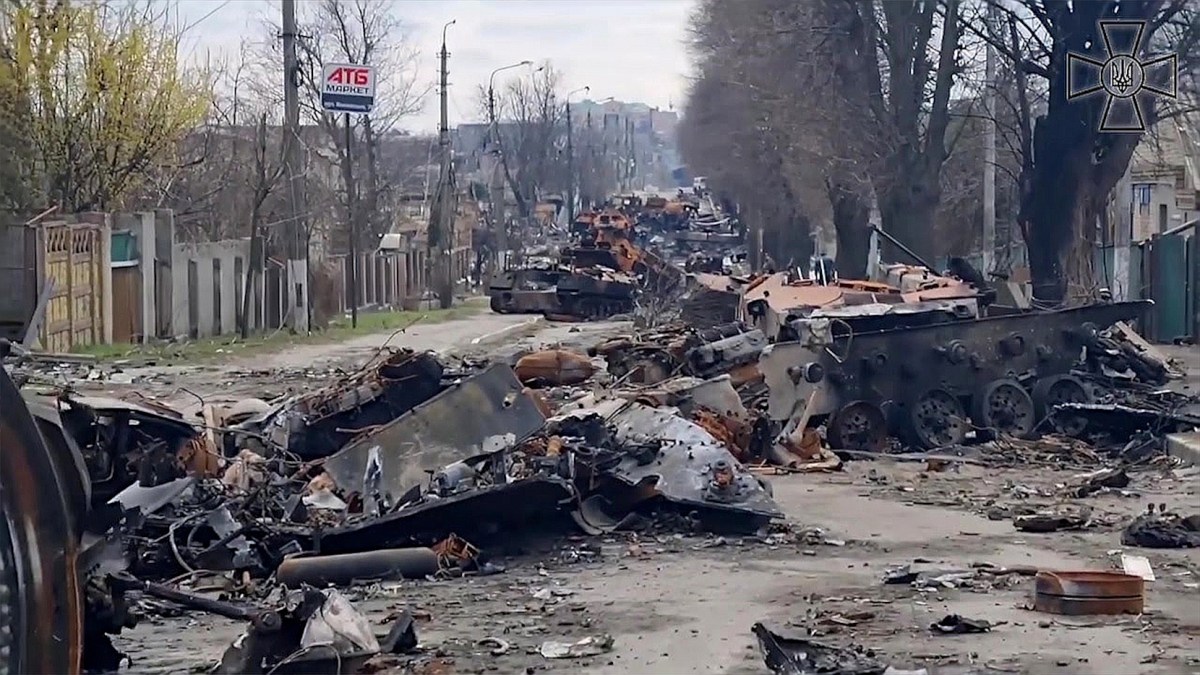
A destroyed Russian column in Bucha (Wikimedia)

forward look, ukraine – 1

< No earlier post | Index | Next >

What began as a Russian invasion of Ukraine, a show of force aimed at decapitation of the state, the destruction of democracy, and the installation of a puppet administration didn’t work out well for Russia.

Larger view
(Mediawiki)

There are many sources of news, interviews, and comment covering events in Russia and Ukraine. There’s a list of some of these at the end of the article. The history of events so far is also well covered. But here I want to consider the future. What might happen next?

In some ways, predicting the future is a fool’s errand, we will always fail in the detail. But where there are clear trends we can make educated guesses, and these can inform our actions in the here and now. Looking ahead is hugely useful. Do I need to buy more bread? How long will the milk remain usable? How can I raise the money to start a new business? Where shall I go on holiday next year? How should we change our behaviour to reduce the impact of global warming? Even walking along a footpath involves thinking about the next step, avoiding obstacles. Whether we’re planning our next footfall, considering our next holiday or our next career step – trying to predict the future is essential. And remembering the past is part of the process as we ask ourselves, ‘Have we seen a situation like this before? What happened last time?’

So what is likely to happen next in the war between Russia and Ukraine?

Russian advances on the front line

The pattern of previous months has continued, Russia has pushed forward, little by little, day by day, sometimes in just one part of the front line, sometimes in several. But these advances have been mostly small, often just tens or hundreds of metres, sometimes a couple of kilometres. Looking at a large scale map it’s difficult to see any change at all, and sometimes Ukraine has pushed back. The bigger story, perhaps, is the cost to Russia in terms of men and materiel. They are losing around 40 000 men a month, along with large numbers of vehicles including tanks and armoured personnel carriers. Giving up ground slowly gives Ukraine many opportunites to destroy Russian troops and equipment.

The wet, muddy season that bogs down military vehicles has not yet fully materialised. Surely it will come soon. We may see a sharp drop in large scale movements by both sides; but there are other factors too. Russian losses in men and materiel have been savage, Ukrainian drone strikes have destroyed large amounts of stored ammunition and equipment, army HQ facilities, fuel supplies, airfields, and military industrial facilities. All of this is slowing Russian forces down and making everything more difficult.

It seems likely that Russia’s creeping advance will stall, and perhaps even go into reverse. There are already some signs that this is already happening, both in Kursk and along the frontlines in Ukraine. Expect this trend to continue.

Presence of Korean forces

The evidence so far is that Korean troops are not likely to make much difference. They have not been very effective so far in Kursk where they’ve been deployed. At best, they may delay Russia’s need to find additional Russian troops.

Donald Trump as US President Elect

This is a difficult one to call. Trump tends to be erratic and therefore unpredictable. Perhaps the best we can do is wait and see. Ukraine will hope for the best but prepare for the worst.

Technology

The Ukrainians have been very effective in developing novel solutions to seemingly intractable military problems; consider the sea drones, FPV warfare on the front lines, the development and use of very long range weapons to perform deep strikes on Russian facilities, the development of a cruise missile, even rumours of nuclear capability within a few months.

The trends here are suggestive. Russia has been innovative too, but on a much smaller scale. Certainly they have also made advances with FPV warfare and with electronic countermeasures, but to a greater extent than Ukraine they have depended on drawing down stocks of older and older equipment.

Russia seems to be slowly becoming less effective, Ukraine is rather quickly becoming more effective. Draw your own conclusions assuming this trend continues.

Power and energy supplies

Both nations have destroyed energy facilities. Russia has destroyed almost all Ukraine’s thermal power stations, and a large amount of hydro-electric power as well. Ukrainians will face a hard winter with insufficient electricity supply, depending now on nuclear plants and imports from the European grid.

Ukraine has seriously damaged Russian oil facilities, taking out many refineries and storage depots. It’s also likely that Russian oil pipelines will freeze this winter, and getting them back online will be very difficult and expensive to say the least. Even without Ukrainian strikes, Russian infrastructure of all kinds is in a poor state because of inadequate maintenance, and there were some notable failures last winter.

Russian economy

Sanctions have profoundly hurt Russia’s economy. Oil and gas revenues have been very hard hit, many skilled and unskilled industrial staff have died in the war leaving severe manpower shortages, the Rouble has fallen in value, inflation and high interest rates are making themselves felt. The future doesn’t look promising.

Unhappy and rebellious populace

It’s quite clear that the Russian people are becoming unhappy. By contrast, in Ukraine people are weary but morale remains high.

Russia can flip when the people are deeply unhappy; there have been similar situations before. In 1917 the autocratic leadership of the Czar brought both defeat in war and hunger to the population – there was a revolution. In 1991, the fall of the Soviet Union followed defeat in Afghanistan and restlessness at home. And in 2024 we see similar conditions building right now – the Russian Army may fail in Ukraine and there’s growing unrest as living conditions worsen and so many families have lost fathers, husbands, brothers and sons in Putin’s war.

We can only conclude that something similar may happen again. It’s not guaranteed, but nor is it impossible.

I might revisit this topic in future if I sense there are useful new points to be made.

See also:

< No earlier post | Index | Dec 2024 >

Useful? Interesting?

If you enjoyed this or found it useful, please like, comment, and share below. (If you don’t see those links, click the article’s title above the main photo and they will appear.) Send a link to friends who might enjoy the article or benefit from it – Thanks! My material is free to reuse (see conditions), but a coffee is always welcome and encourages me to write more often!

Is the West fumbling security?

I urge you to watch the video below, in which Jonathan Fink interviews … Dr Benjamin Tallis. It’s a fascinating, and I think important, conversation.

Image from Wikimedia

I never thought I would say this. But I approve of some of Boris Johnson’s actions. But let me be a bit more specific; I disapprove strongly of almost everything he did as Prime Minister, but there is one exception:

I like the way he stood up to Russia and clearly understood that enabling Ukraine to win and standing firm against Russia’s objectives and actions was necessary to Europe’s (and the UK’s) long term safety. Although that is all in the past now, we should still be analysing the European situation as it is today, and facing it by planning and acting wisely in our own and our neighbour’s best interests.

With that in mind, I urge you to watch the video below, in which Jonathan Fink interviews the researcher, political analyst, member of the RUSI think tank and author, Dr Benjamin Tallis. It’s a fascinating, and I think important, conversation. The thinking exposed by the interview is crucial to the survival of our way of life in a very dangerous world.

See also:

Useful? Interesting?

If you enjoyed this or found it useful, please like, comment, and share below. (If you don’t see those links, click the article’s title above the main photo and they will appear.) Send a link to friends who might enjoy the article or benefit from it – Thanks! My material is free to reuse (see conditions), but a coffee is always welcome and encourages me to write more often!

‘Gradually, then suddenly’

Nobody can predict when the crash will come. But I believe General Hodges is right when he suggests that current events in Kursk are unlikely to be the only surprise.

What is going to happen next in Russia’s war against Ukraine? We don’t know, we’ll have to wait and see. But it’s possible to make some broad predictions even without knowing the facts.

General Ben Hodges, speaking about Vladimir Putin and the Russian Army’s current floundering against Ukraine, quoted Ernest Hemingway :

How did you go bankrupt?

Two ways. Gradually, then suddenly.

Ernest Hemingway – ‘The Sun also Rises’
The Kursk incursion – ISW

This is certainly true of Russia, they are wasting their soldiers, wasting their equipment, the economy is sliding out of control, and the population is now beginning to hear the very bad and disturbing news from Kursk Oblast (click the map for a larger version).

And it’s just as true for Putin personally. His moral bankruptcy in Russia and in the world at large is going to catch up with him. Abraham Lincoln’s famous words are relevant here: ‘You can fool all of the people some of the time, and some of the people all of the time, but you can not fool all of the people all of the time.’

The truth has a way of coming out, and it often chooses very bad moments to do so!

Nobody can predict when the crash will come. But I believe General Hodges is right when he suggests that current events in Kursk are unlikely to be the only surprise Ukraine will spring on all of us, perhaps in the near future or maybe a little while later.

We’re still in the ‘gradually’ stage. But for Russia and for Putin the ‘suddenly’ phase will surely follow.

Watch the interview with Ben Hodges
Kyiv Post interview with General Ben Hodges

The Kyiv Post interviewed Ben Hodges on 21st August 2024, answering a series of questions about Ukraine’s recent activity in Russia’s Kursk Oblast, as well as some more general questions.

Useful? Interesting?

If you enjoyed this or found it useful, please like, comment, and share below. (If you don’t see those links, click the article’s title above the main photo and they will appear.) Send a link to friends who might enjoy the article or benefit from it – Thanks! My material is free to reuse (see conditions), but a coffee is always welcome and encourages me to write more often!
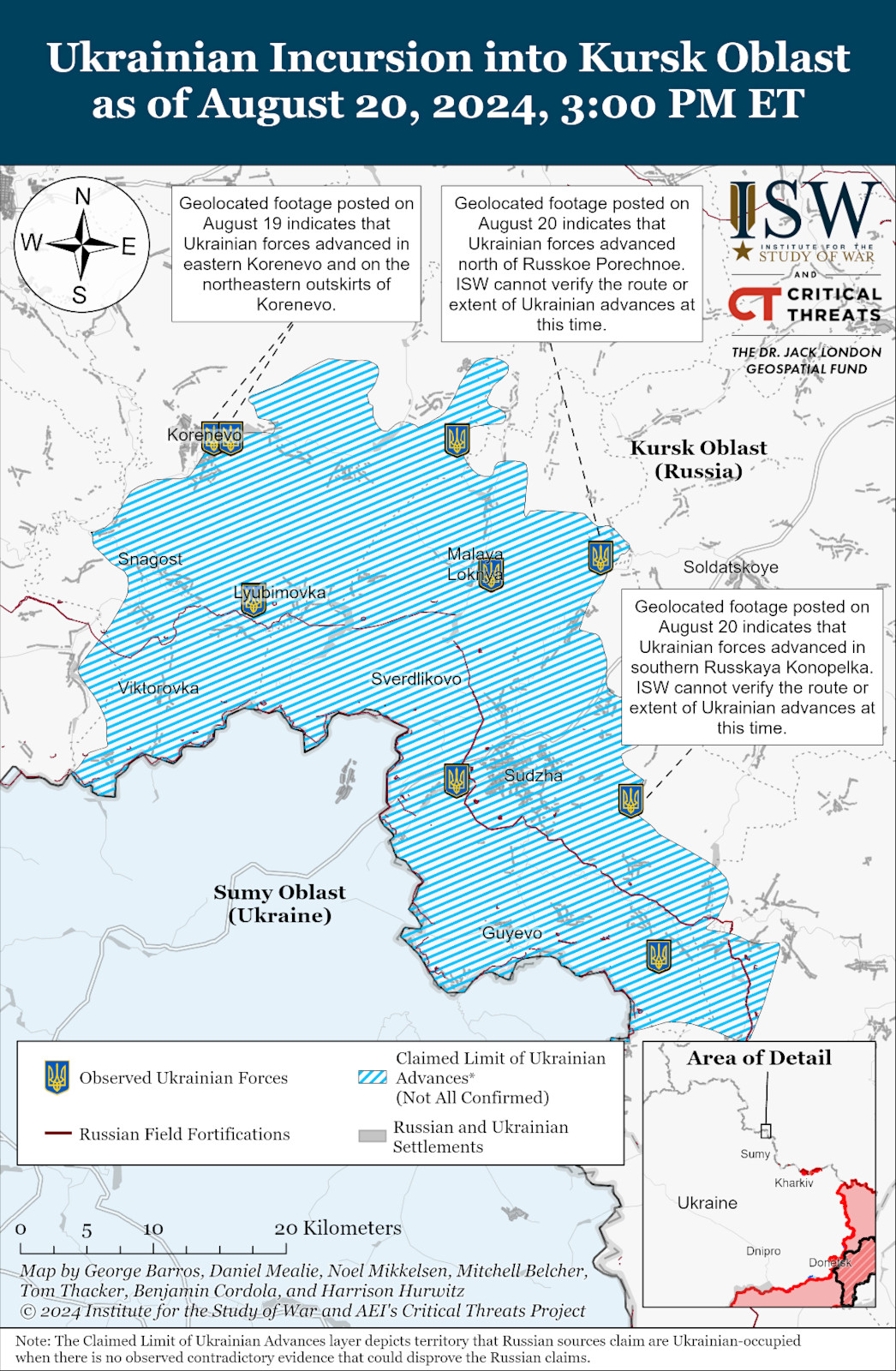
Image of the day – 28

Similar tank traps have been used along the front lines by both sides in the ongoing Russian invasion of Ukraine.

< Previous | Index | Next >

What’s in an image? Sometimes quite a lot, more than meets the eye.

I’m posting an image every day (or as often as I can). A photo, an image from the internet, a diagram or a map. Whatever takes my fancy.

Tank traps

We have some history today. The river is the Churn and it runs in several different channels through the Cotswold town of Cirencester. On the bank you will notice three, large, concrete blocks; there’s also a fourth, partly hidden by the block on the left. The blocks were placed here during the Second World War to slow down German armour in the event that Britain was invaded. German failure to win the Battle of Britain in the air war prevented the invasion, but at the time the blocks were cast and put in place invasion remained a real threat.

The trees in the photo and the wall in the background are more recent than the blocks. The river bank led to an open field with the grounds and gardens of Abbey House beyond at that time, with the centre of the town on the other side of the gardens. The town would have been very vulnerable to attack from this direction.

Similar tank traps have been used along the front lines by both sides in the ongoing Russian invasion of Ukraine. The main difference is that modern, concrete traps are pyramidal (‘Dragon’s Teeth‘, not cubic. The sloping sides use less concrete and are more effective against tanks, but concrete cubes were also commonly used in the 1940s.

It pays to anticipate problems. But wars are rarely anticipated years in advance; political differences can boil over into actual conflict quite suddenly. And once they have started it can be very difficult to bring them to an end.

NOTE: These blocks can be seen from Grove Lane in Cirencester, quite close to the Norman Arch. From inside the Abbey Grounds, walk through the arch and turn right along the footpath for just a few yards. Look across the river, and there they are! A piece of Cirencester history that you can see for free.

< Previous | Index | Next >

Cirencester

For convenience, here’s a list of all the Cirencester area images:

A417 roadworks, Advent Market, Bishops Walk, Baunton, Canal 1, 2, Castle Street, Christmas lights 1, 2, Church 1, 2, 3, 4, 5, 6, Churn flood, Countryside, Fallen tree, Fleece, Gasworks, Gloucester Street, Hare 1, 2, Hospital, Market Place 1, Phoenix Fest, Riverside Walk, Stone plaque, Stratton Meadow, Tank traps, View, Wonky 1, 2, Yellow Iris

Themed image collections

The links below will take you to the first post in each collection

Cirencester, Favourites, Irish holiday 2024, Roman villa

Useful? Interesting?

If you enjoyed this or found it useful, please like, comment, and share below. (If you don’t see those links, click the article’s title above the main photo and they will appear.) Send a link to friends who might enjoy the article or benefit from it – Thanks! My material is free to reuse (see conditions), but a coffee is always welcome and encourages me to write more often!
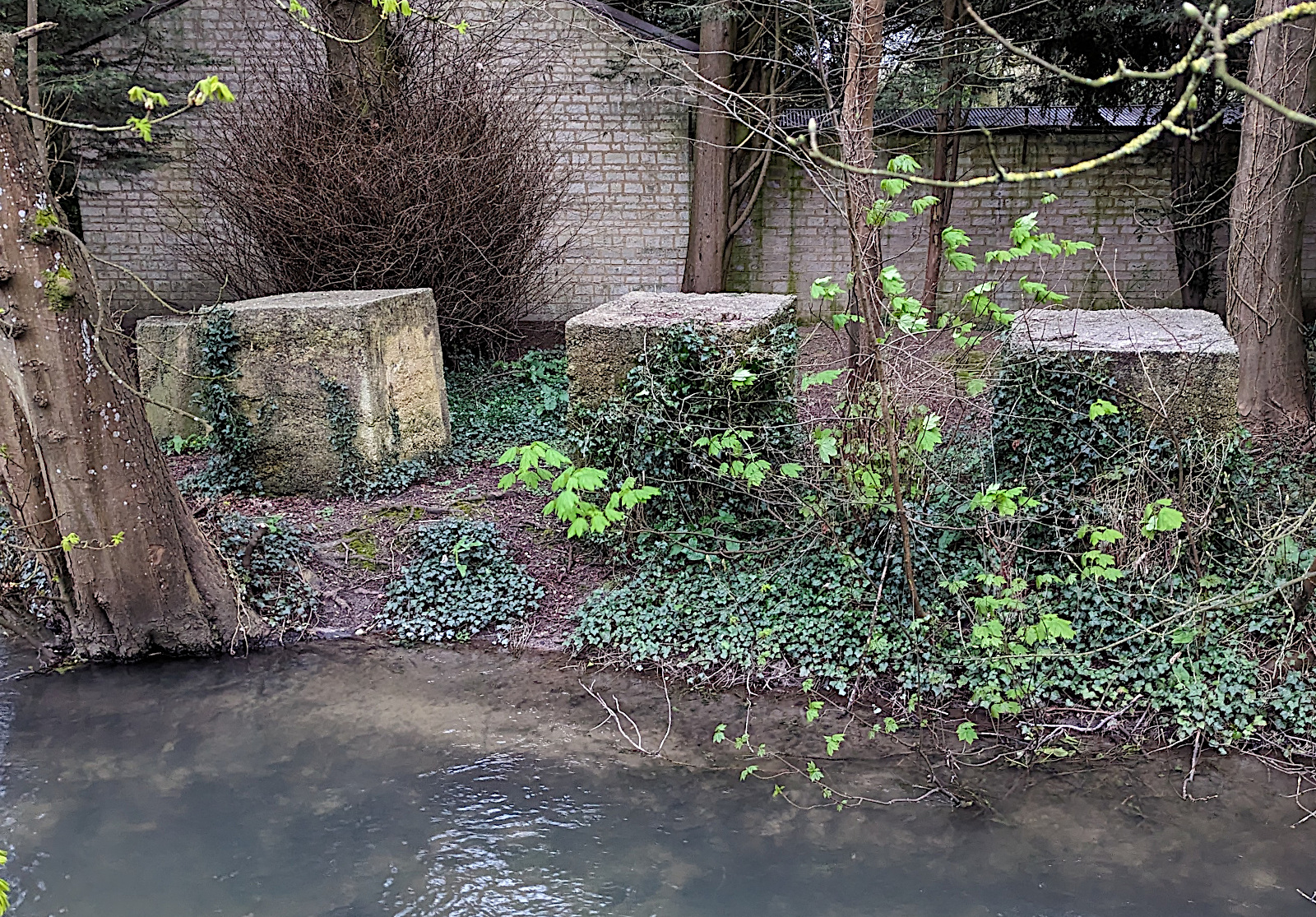
Image of the day – 10

The UK has helped with military and civil aid, and has often led the way in extending the range of weapons supplied.

< Previous | Index | Next >

What’s in an image? Sometimes quite a lot, more than meets the eye.

I’m posting an image every day (or as often as I can). A photo, an image from the internet, a diagram or a map. Whatever takes my fancy.

England and Ukraine flags flying at Uphill

Uphill is a village just south of Weston-super-Mare in North Somerset. At the top of a prominent hill is a partially ruined church and on the tower is a flagpole. Currently there are two flags flying, the red cross on a white ground of England, and the Blue and yellow of Ukraine.

There are many Ukraine flags flying in England, on flagpoles in small cottage gardens, to those on official buildings. England (and indeed the rest of the United Kingdom) supports Ukraine’s valiant battle against conquest by her belligerant and bullying neighbour, Russia. The UK has helped with military and civil aid, and has often led the way in extending the range of weapons supplied, as well as the uses to which it may be put.

We have given Ukraine arms and ammunition, and also permission to use it as they wish.

Slava Ukraini!

Themed image collections

The links below will take you to the first post in each collection

Cirencester, Favourites, Irish holiday 2024, Roman villa

< Previous | Index | Next >

Useful? Interesting?

If you enjoyed this or found it useful, please like, comment, and share below. (If you don’t see those links, click the article’s title above the main photo and they will appear.) Send a link to friends who might enjoy the article or benefit from it – Thanks! My material is free to reuse (see conditions), but a coffee is always welcome and encourages me to write more often!