The Bingham Library
< Previous | Index | Next >
Image of the day – 193
What’s in an image? Sometimes quite a lot, more than meets the eye. I’m posting an image every week or so.
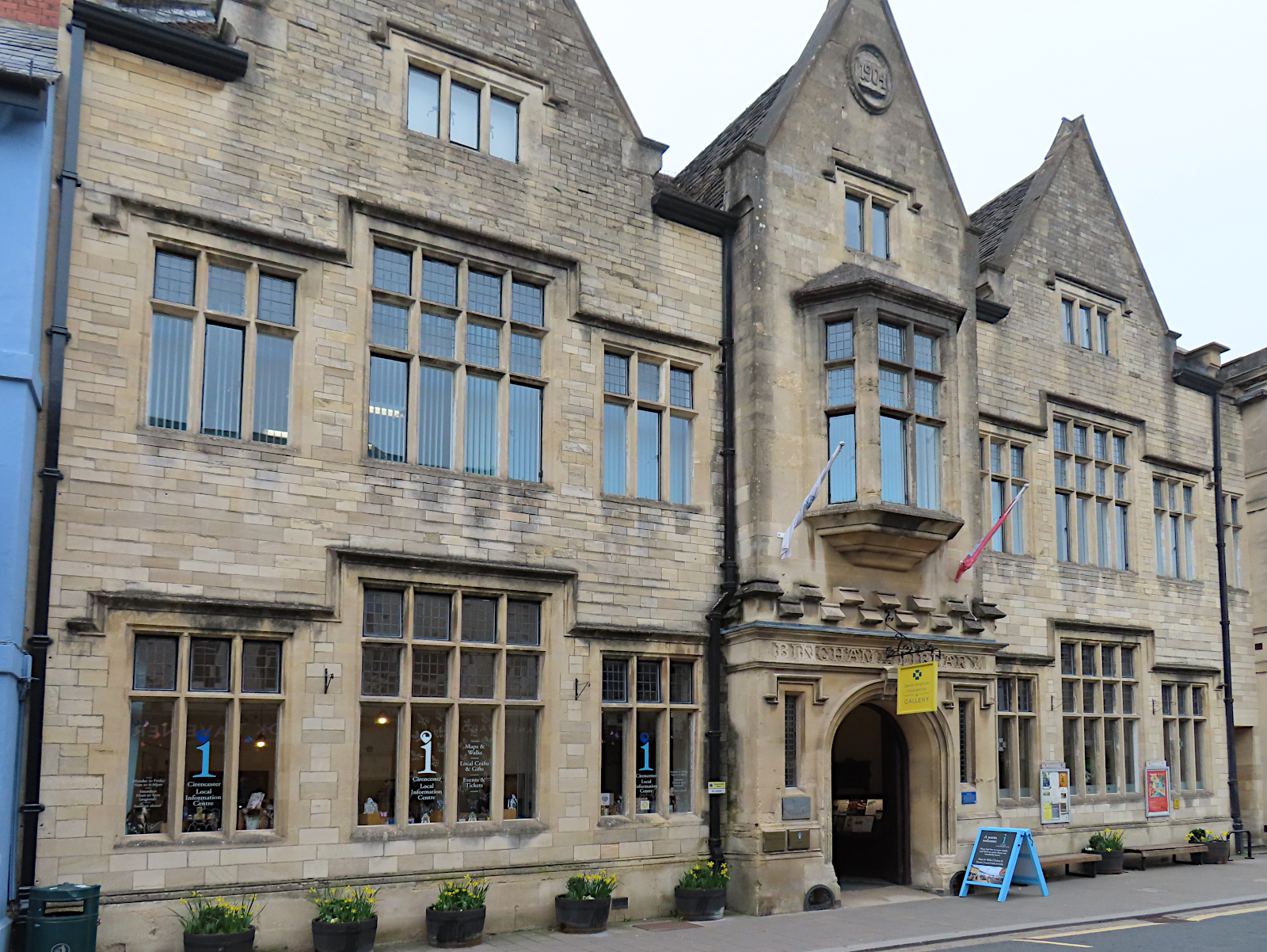
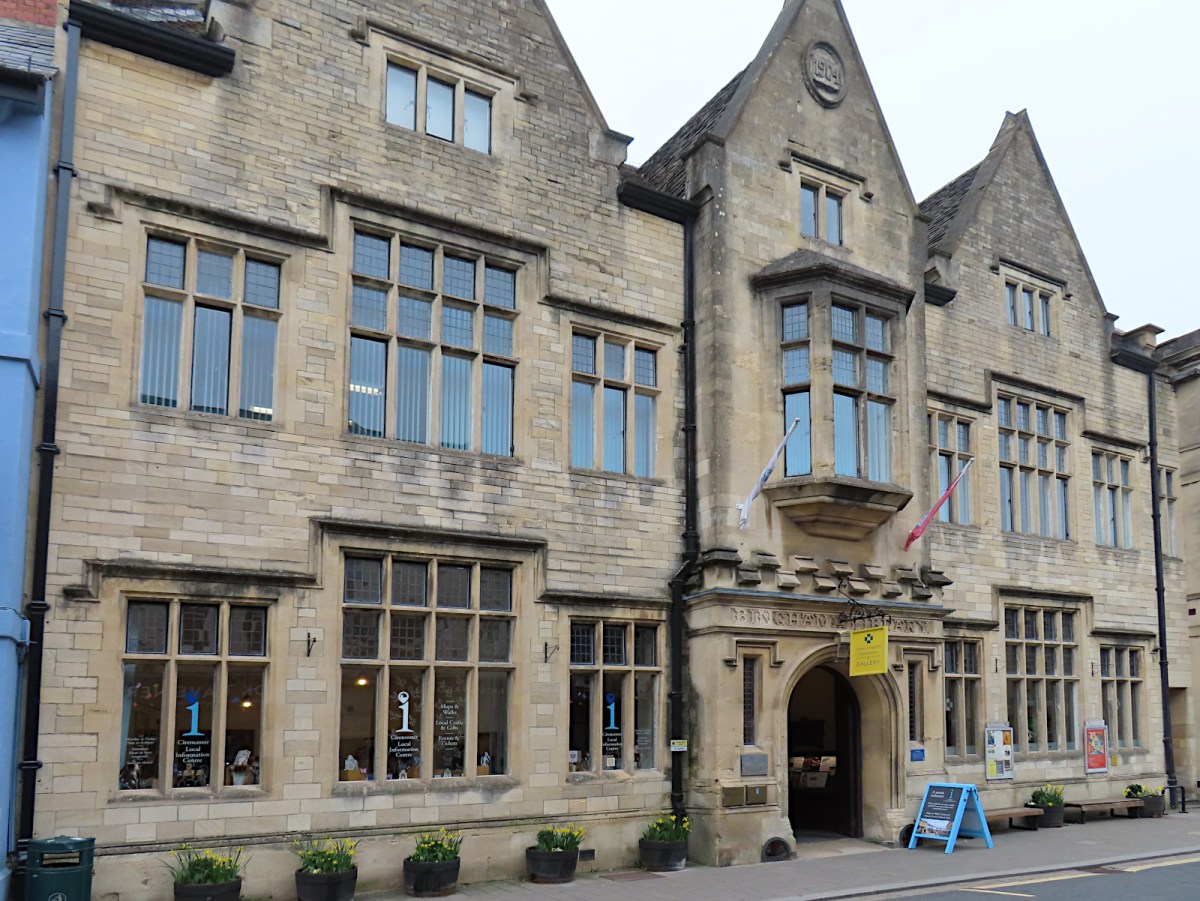
Cirencester’s Bingham Library building is now the Town Council Offices and the Tourist Information Centre. When I was a pupil at Cirencester Grammar School in Victoria Road, this grand old building was still the town’s main library. I remember walking to it from the family home at 37 Victoria Road, often to return books and take out different ones on science fiction, astronomy, or whatever interested me at the time; sometimes to visit the reference library to read articles from Encyclopaedia Britannica and make notes for Geography essays on coffee, rice or tea production in exotic places.
Daniel George Bingham
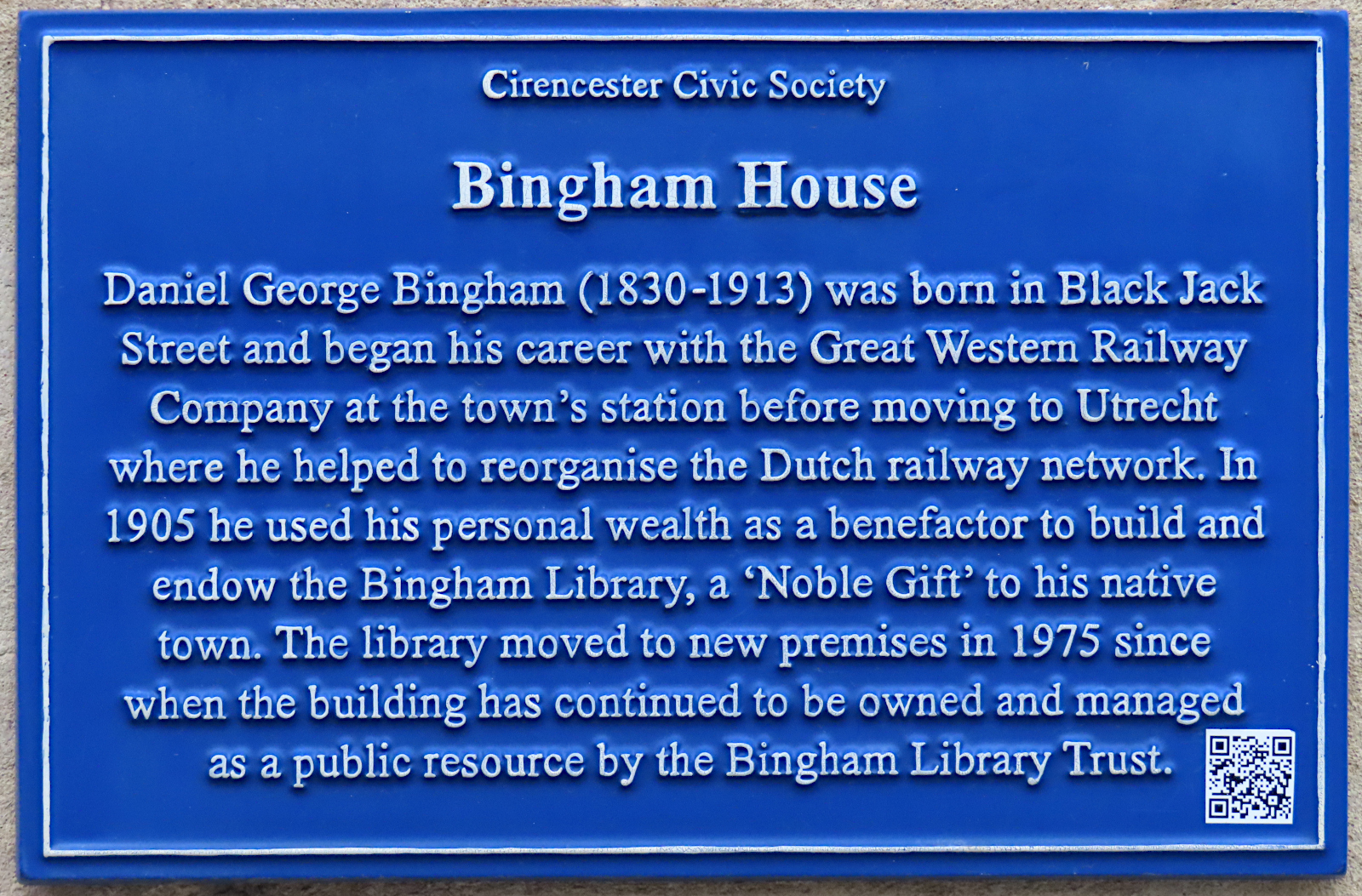
The Bingham Hall in King Street as well as the Bingham Library in Dyer Street were built as town amenities and improvements by Daniel George Bingham. For more details of his life and career, click the blue plaque on the right.
Bingham worked in railway management, first at Cirencester, later at Paddington in London, and finally in Utrecht in the Netherlands where he became wealthy. He visited Cirencester briefly but quite regularly and spent part of his wealth providing the library in 1905 and the Hall in 1908. He and his wife Jane had friends and family in Utrecht so they were always keen to remain living there, though clearly Bingham retained a fondness for his town of birth – Cirencester.
From the beginning, the new library in Dyer Street had a meeting room with seating for 200 people, but it quickly became clear that a larger meeting place was needed. And this is one of the reasons that Bingham decided to fund the Bingham Hall to provide expanded facilities for meetings, dinners, theatre, music, and even a rifle range. I remember being in the Army Cadets in the sixth form at the Grammar School and taking part in target practice with .22 calibre rifles in the Bingham Hall rifle range. Morning assemblies were held in the main hall at the Bingham Hall, also school theatrical productions and musical performances.
What about us?
Few of us will ever have enough money to contribute something major like Bingham did. But most of us can afford to buy a little extra food and put it into the Food Bank receptacle as we leave the supermarket. Or we can join a local organisation helping others in some way, or keeping the local environment tidy. We all have the capability to improve our fellow citizens’ well-being in some way, it may cost no more than a little thought and a simple action.
So why not join in? Bingham did. We all can!
See also:
- Daniel Bingham Foundation – Website
- Daniel George Bingham – Web page
- Noble gifts – Biography of Bingham and history of his work (PDF)
< Previous | Index | Next >
You might also like:
Useful? Interesting?
If you enjoyed this or found it useful, please like, comment, and share below. (If you don’t see those links, click the article’s title above the main photo and they will appear.) Send a link to friends who might enjoy the article or benefit from it – Thanks! My material is free to reuse (see conditions), but a coffee is always welcome and encourages me to write more often! 










 Journeys of Heart and Mind
