
Blast from the past… 33
Photo from the Old Ciren group on Facebook
< Previous | Index | Next >
May 2025 (3 months before publishing this article)

I invited my friend Mark to the Small Group barbecue at Bernard and Vivien’s in Berryhill Road. He enjoyed the food as well as the chance to meet and chat with some new people. Al, especially, enjoyed talking with Mark.

On 16th we took Donna’s Mum, Isobel, to the Old Prison Cafe in Northleach; it’s one of the places we like to visit from time to time as it’s not very far from home and is in relaxing surroundings. You can still visit the old prison cells, but they don’t look relaxing at all!
Paul and Vanessa visited for the day on 18th. We met them at Lynwood in the Market Place for coffee and cake and then back at our house for lunch, with Isobel as well. We chatted in the afternoon round the dining table and then on the patio.
JHM: I wrote about a footbridge in Bedford; and part two of my faith journey. World events: Friedrich Merz was elected Chancellor of Germany; and Robert Francis Prevost was elected as Pope Leo XIV.
February 2025 (6 months before publishing)
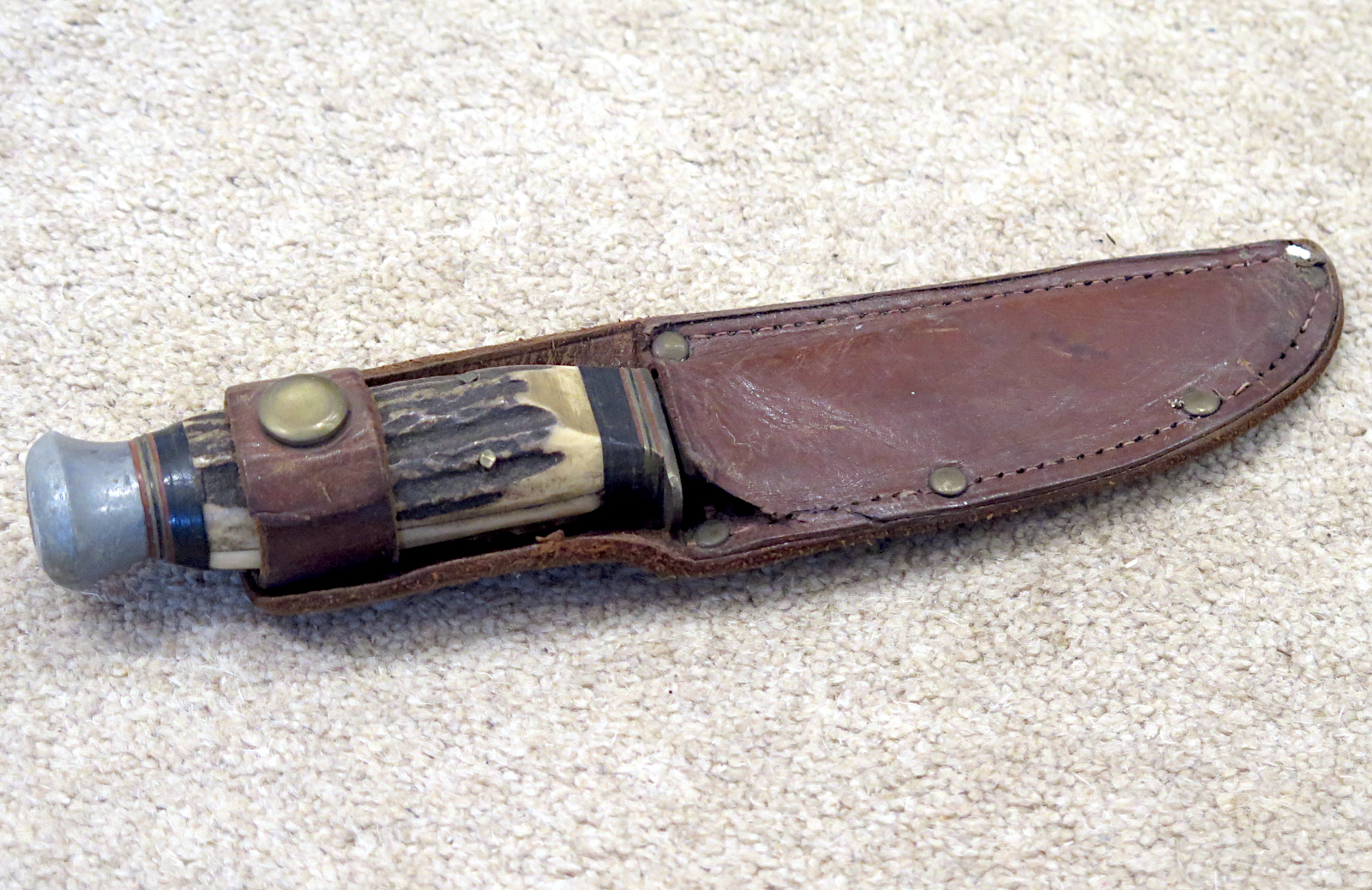
While going through some items from storage boxes I came across this old hunting knife, it has an antler handle and a leather case and I used it as a teenager as a scout knife. But I think it was given to me by an uncle who might have acquired it from his days in the British Army during World War 2. But wherever it came from, it’s not an object I could legally carry around while walking the streets in 2025!

The snowdrops in Painswick’s Rococo Gardens looked lovely as they always do in season. Every year there are more, partly because gaps are being filled by natural spreading , and partly because additional areas are being planted up.
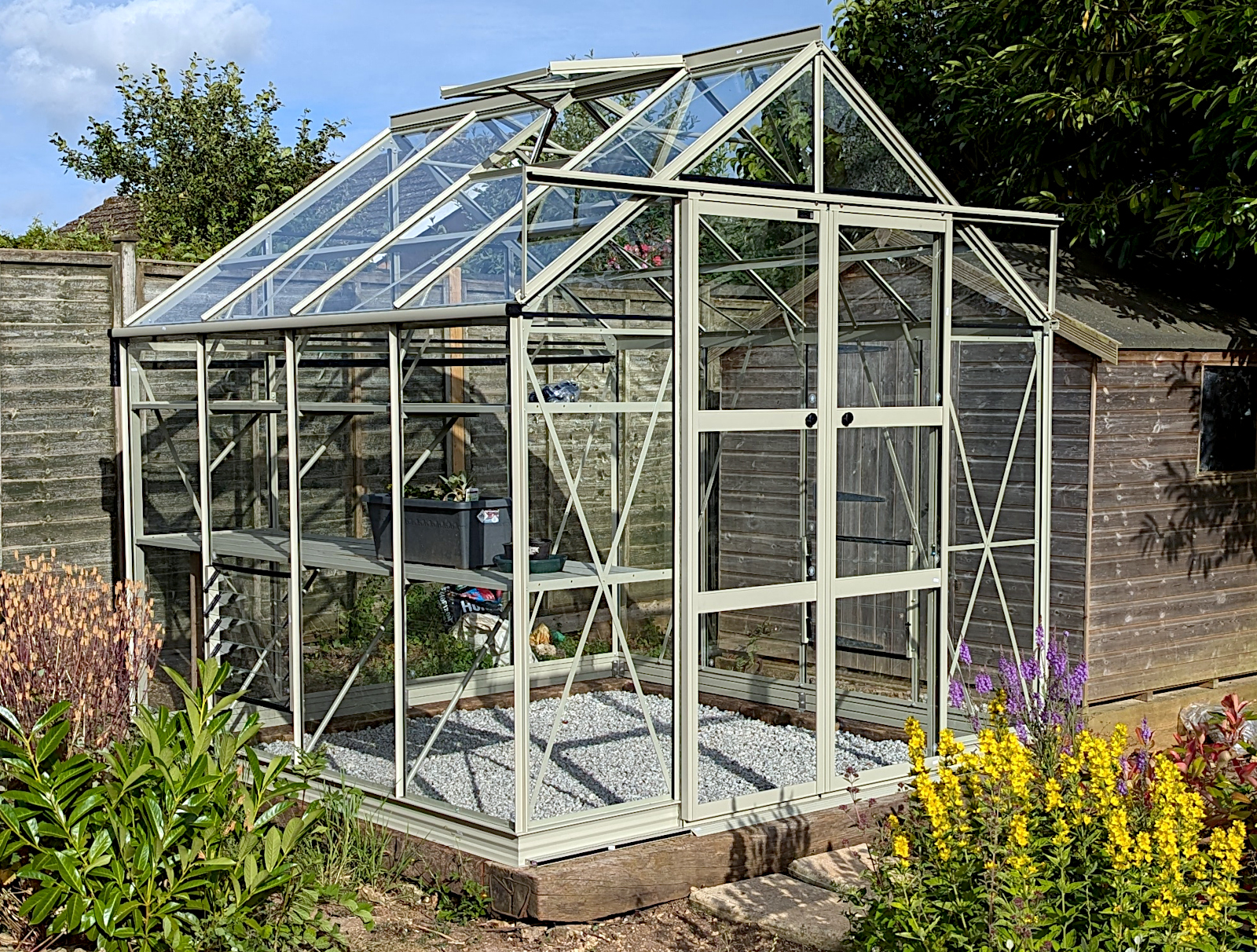
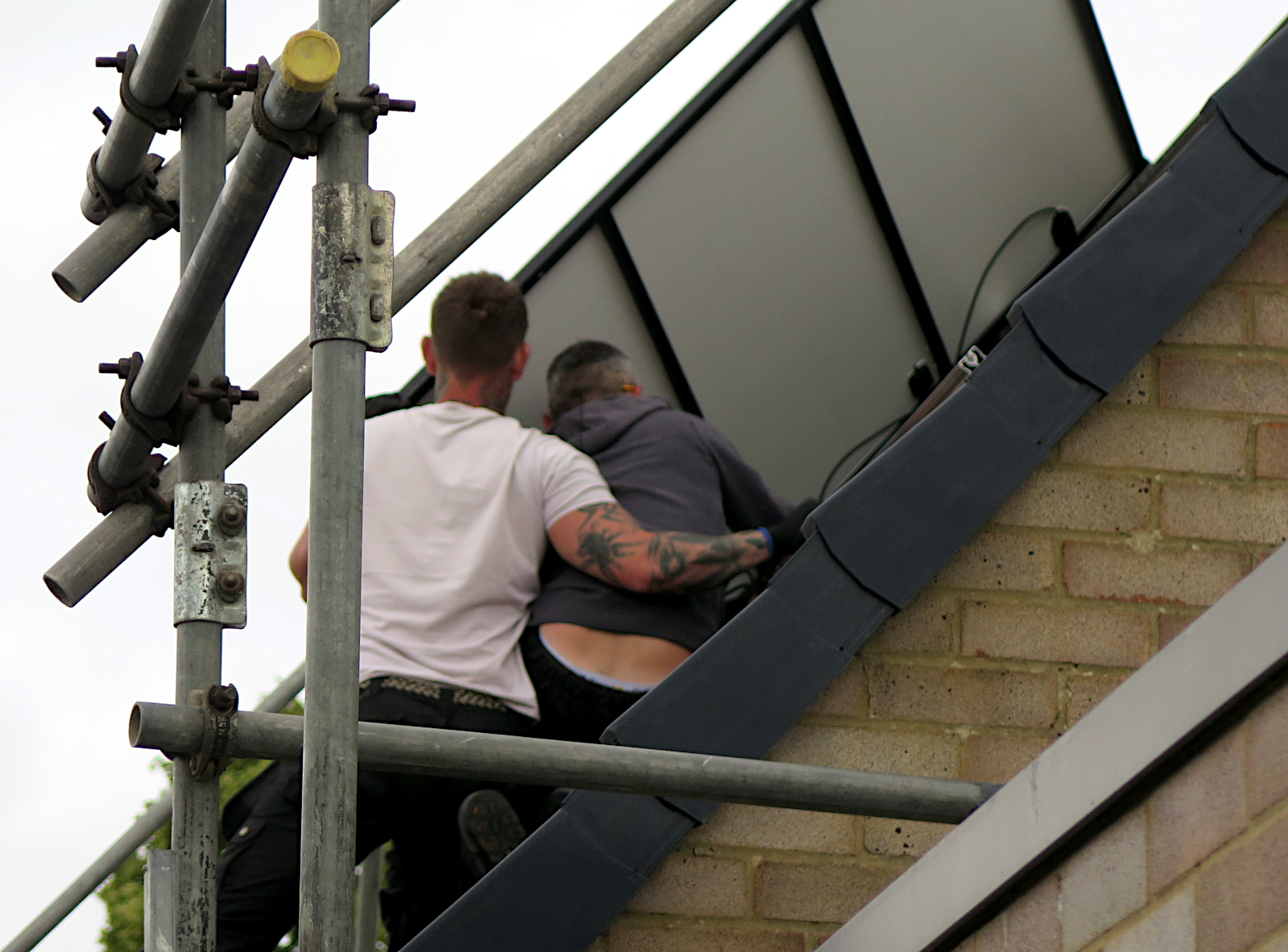
We had some issues with the new heat pump, mostly due to incorrect wiring during installation, but the engineers came back quickly to make fixes. The heating seemed better and better as time passed and we got to grips with the lifestyle changes – like using a summer duvet in the winter.
JHM: I wrote about truth and facts; and about an asteroid heading our way. World events: The Baltic states synchronised their power grids, connected to Europe and disconnected from Russia; and Thutmose II’s tomb was discovered.
August 2024 (1 year before)

We visited Springhill on our way north to Portrush. Mum used to talk about this old house and garden which she really loved. It was the home of William Conyngham who founded the village of Coagh where Mum was born and grew up.
We were on holiday with my daughters and their families, this time in Northern Ireland. On 7th we set out from the house and walked east along the coast to visit Dunluce Castle. Only Aidan and I went inside as we arrived near to closing time, but itwas well worth seeing.

It’s a magnificent coast as you can see from the photo, there are beautiful beaches and rugged cliffs along the way. So it was a memorable walk. The second image shows some of us near the start of our expedition, on Portrush’s east beach with the town in the background. As always, click the thumbnail for a larger version. Read more about our holiday.
Back at home later in the month, I decided to finally close down my account on X. Back in the day when it was still Twitter I used it a lot and enjoyed the conversations, but in its later form it became full of unpleasantness and anger. I had already found a better, more friendly home in Bluesky – so goodbye X.
JHM: I wrote about a Roman office desk; and a visit to Dublin. World events: Ukraine invaded Russia’s Kursk oblast; and The World Health Organization warned that Monkey pox was of international concern.
August 2023 (2 years)
Beth and Paz celebrated their silver wedding this month, a grand achievment!
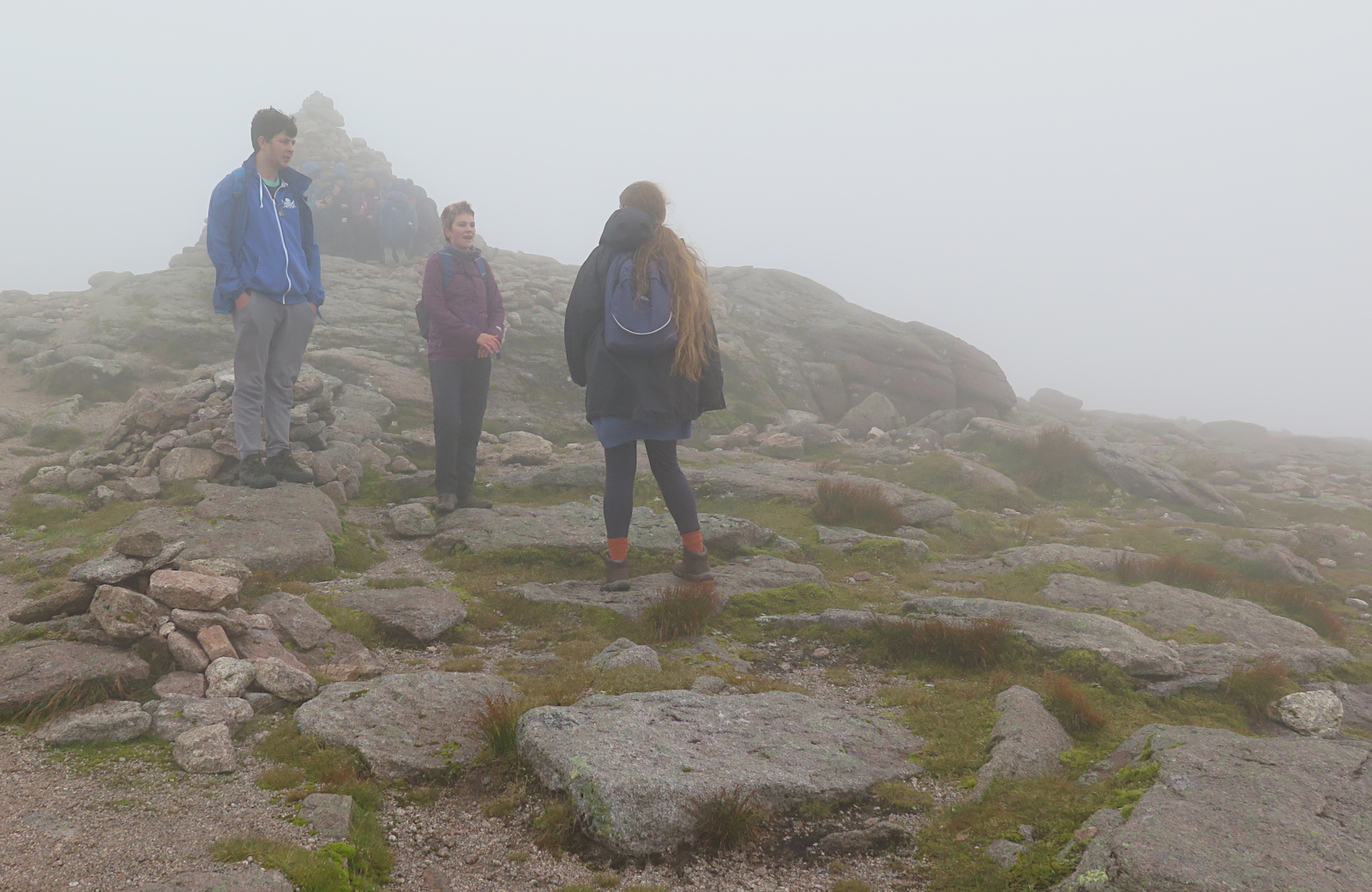
And we also had our family summer holiday, this year in Scotland. Beth, Aidan, Meredith and I made our way from the ski-lift car park to the summit of Cairn Gorm, but were unable to go further because of heavy cloud. On the way up we were lucky enough to spot a small herd of reindeer.
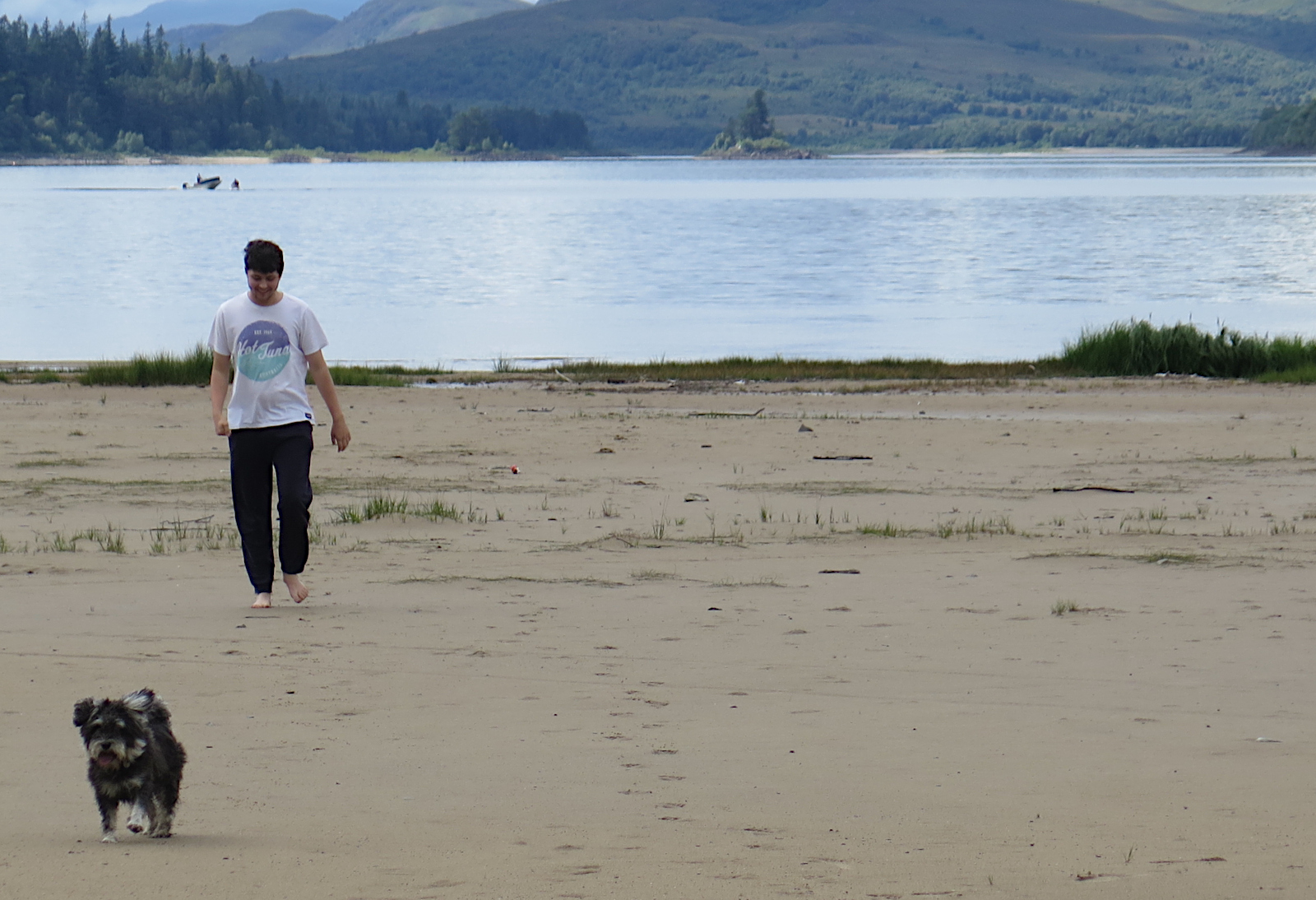
We visited a freshwater beach at Loch Laggan, a very strange thing to see, with patches of grass and seedling conifers growing in the sand.
We stayed in a big, old house in the village of Newtonmore. It held a few surprises for us, for example taking a shower caused water to drip through the ceiling in the dining room! But despite the quirks, we loved the house and the area.
Donna and I visited Boat of Garten where friends from near Cirencester were visiting family. Also in August, I went for a walk through the Beeches Estate where we lived until I was eleven-years-old; it brought back a lot of memories and I was able to jot them all down later when I got home.
JHM: I wrote ‘Blast from the past 9’; and an article on starting our North Coast 500 adventure in which we saw a mermaid! World events: Ocean warming reached a new record high temperature of 20.96 °C; and India’s Chandrayaan-3 was the first spacecraft to land near the south pole of the Moon.
August 2020 (5 years)
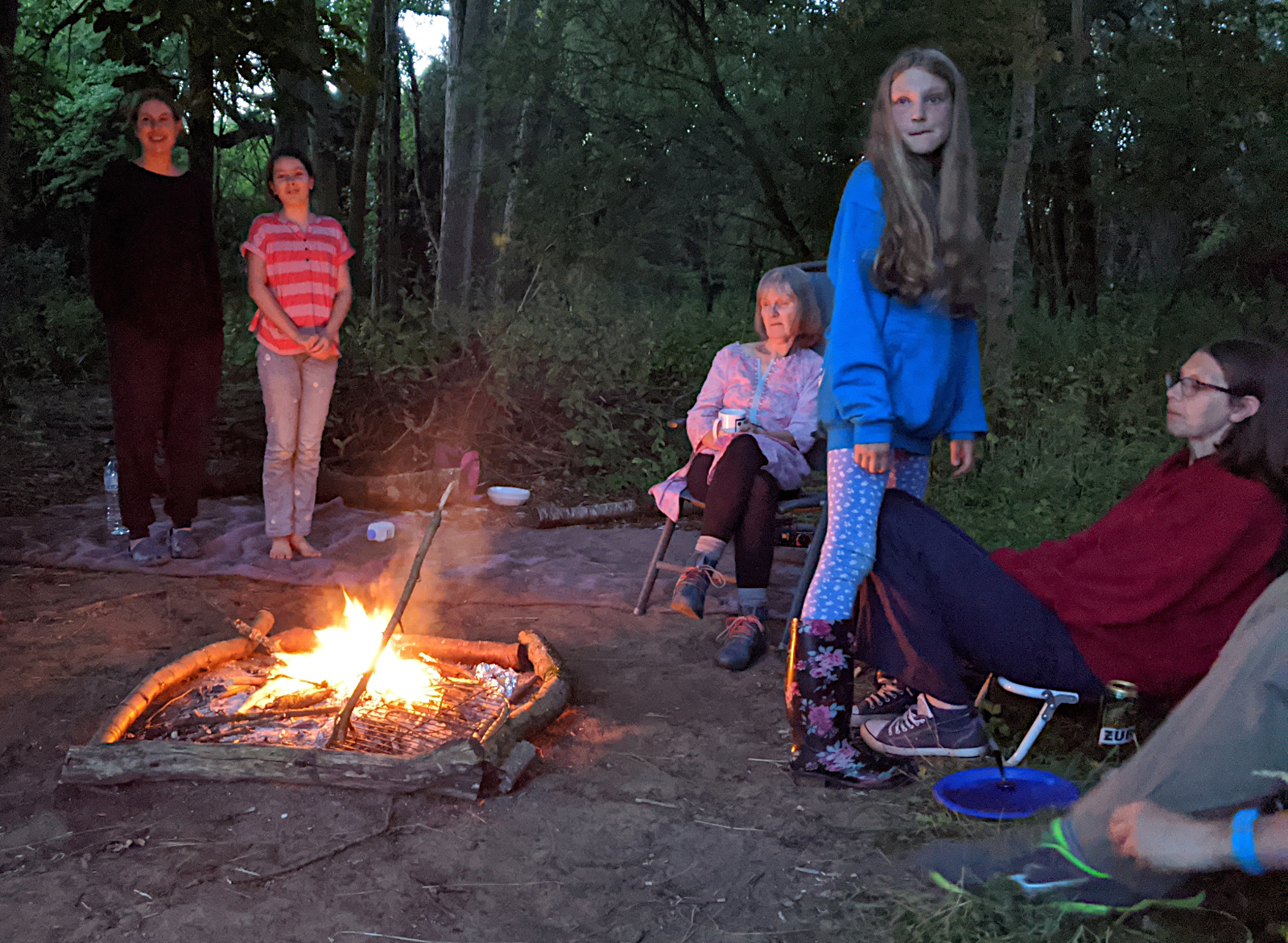
Beth, Debbie and their families camped at Siddington. It was lovely to have them so close and to be able to pop out to spend time with them. in the photo you can see several members of the family and my sister, Cindy.

Paul and Vanessa came to stay for a long weekend and we did a circular walk from Snowshill, then we went to stay at their flat in Weston-super-Mare to look after the dogs while they were away. The photo shows Vanessa, Maizi, Paul and Donna.
And finally, Thomas Holme came to live with us for a period of time, starting on 22nd.
JHM: I updated my article Introducing Matthew. World events: There was an enormous explosion in Beirut; and the number of COVID cases worldwide passed 25 million.
August 2015 (10 years)
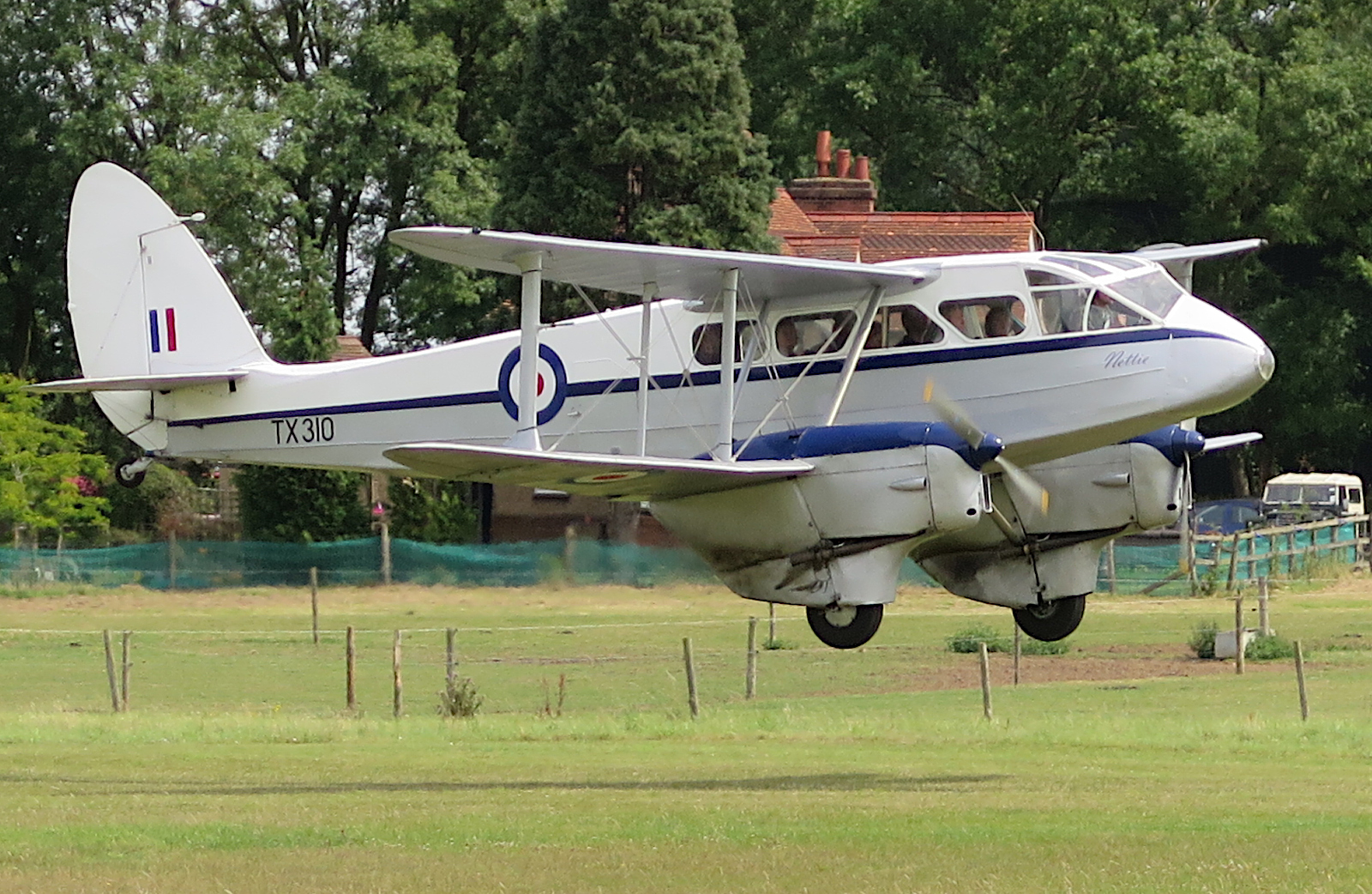
We went to a ‘Wings and Wheels Day’ at Old Warden airfield, not far from home in St Neots. It was amazing, with a series of vintage aircraft flying and vintage cars on display, and with a picnic as well. Donna booked the occasion well in advance, and as it turned out the weather was perfect.
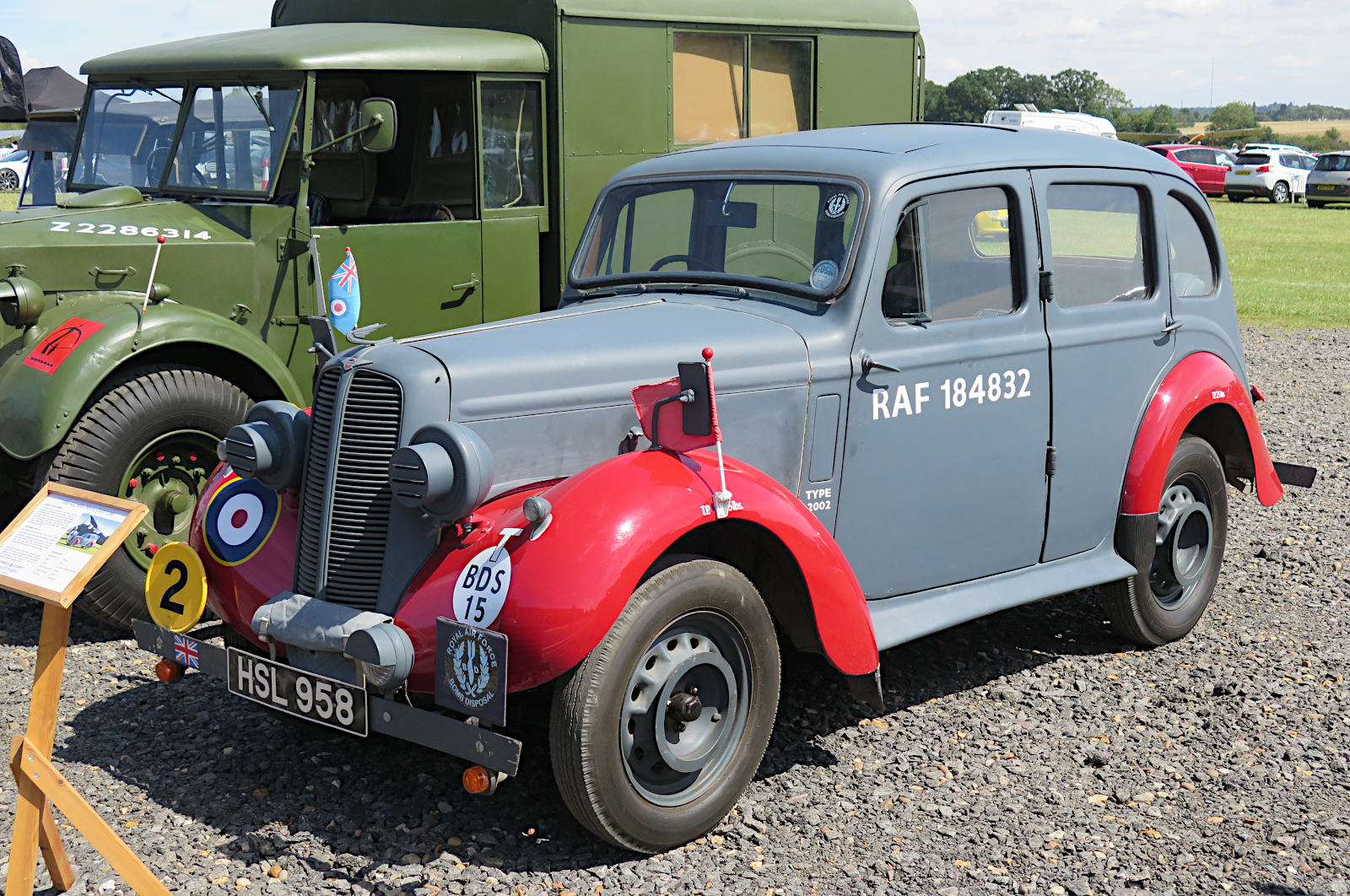
The cars and trucks were a mix of civilian and military vehicles from throughout the twentieth century, some from before World War I. And many of them were in the air or driving about, often flown or driven by people in period costume. It was an amazing day!
Also in August – I released a new version of JDMC, Ed and Jo were married, Peter and Dadka came to live with us for a while, and we had a visit from Beth, Paz, Meredith and Verity. Quite an eventful month.
World events: Debris from Malaysia Airlines Flight 370 was found on Réunion; and large accidental explosions in China killed and injured over 1000 people.
August 2010 (15 years)

The Cornerstone cafe and bookshop opened for business in St Neots; after a lot of hard work by many people guided mainly by our friends Keith on the construction side and Jim on catering. We were able to hand over to Paul who had provided the original idea and most of the funds, and a series of volunteers for the day-to-day running of the business. Cornerstone also offered a small meeting room for local businesses and clubs, and a comfortable space for conversation or counselling. The first directors’ meeting would follow on 1st September, involving Paul, Jim, Donna and me, and Mark.

We visited Broadstone near Poole to see Donna’s Mum and Dad. There was a naval display on, with ships off the coast and Royal Navy planes and helicopters in the air as well and we ate later at a local pub.
And finally, our Swedish friend David came for a short visit.
JHM: I reviewed ‘The End of Religion‘; and published my Bible reading plan. World events: WHO declared the H1N1 flu pandemic over; and Julia Gillard’s Labor government was re-elected in Australia.
August 2005 (20 years)

Donna’s church cell group went to an open air music event in Bedford, in the photo we were enjoying picnic food with our friends before the music began. A few weeks later the cell group went Greyhound racing, another fun social event.
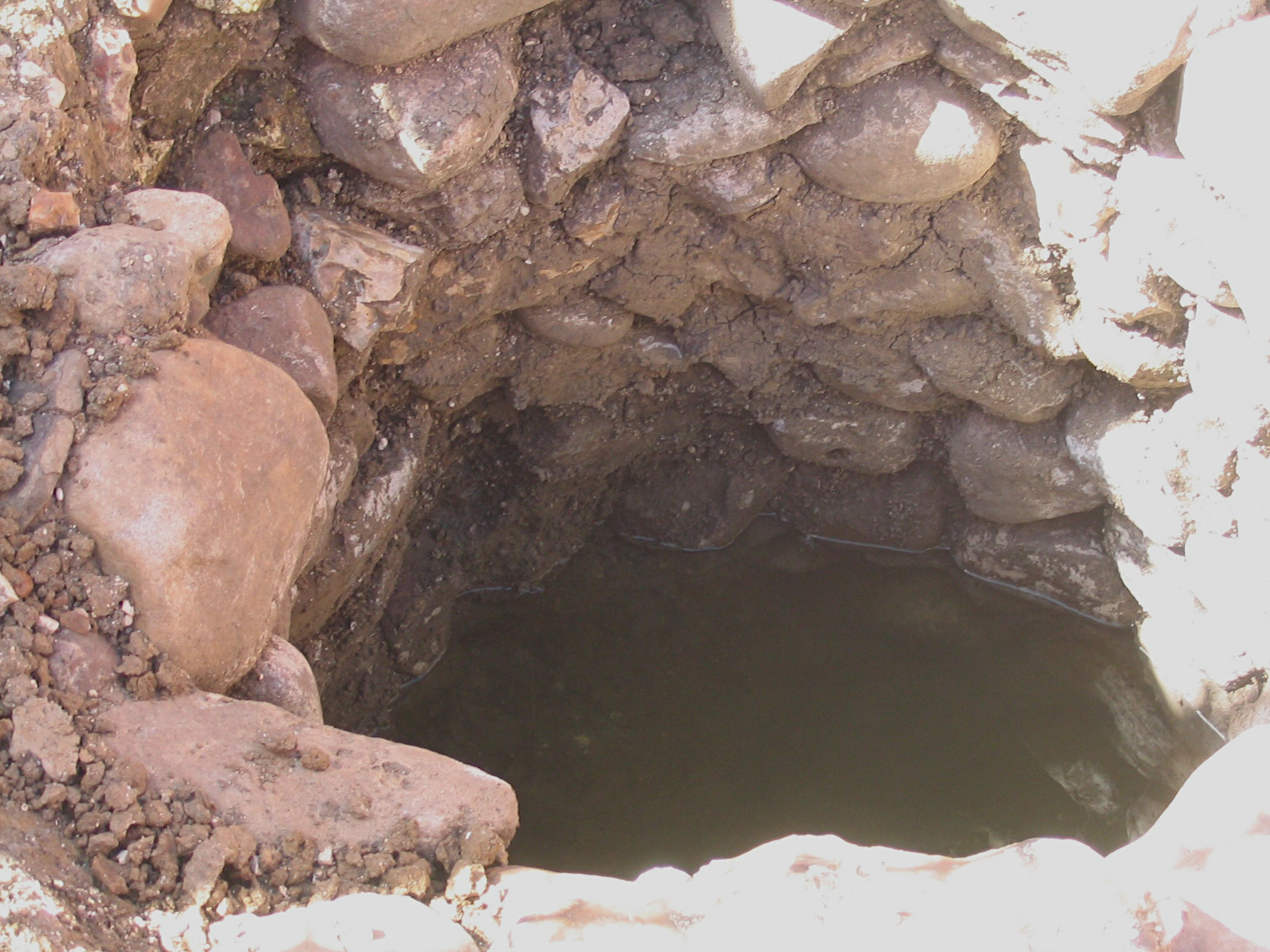
Towards the end of the month, I looked around Loves Farm on the edge of St Neots with our friends Ken and Gayna. Archaeological excavations were going on where a new area of housing and facilities were to be constructed. Iron Age, Roman, and Saxon remains were discovered and recorded on the large site. It seems clear that this land had been farmed continously from Iron Age times right up to today. The Roman well in the image was carefully lined with stone, and ancient ditches were clearly visible as bands of darker soil across the site with several roads and trackways also identified.
World events: The Mars Reconnaissance Orbiter was launched; and the first joint China–Russia military exercise began.
August 2000 (25 years)
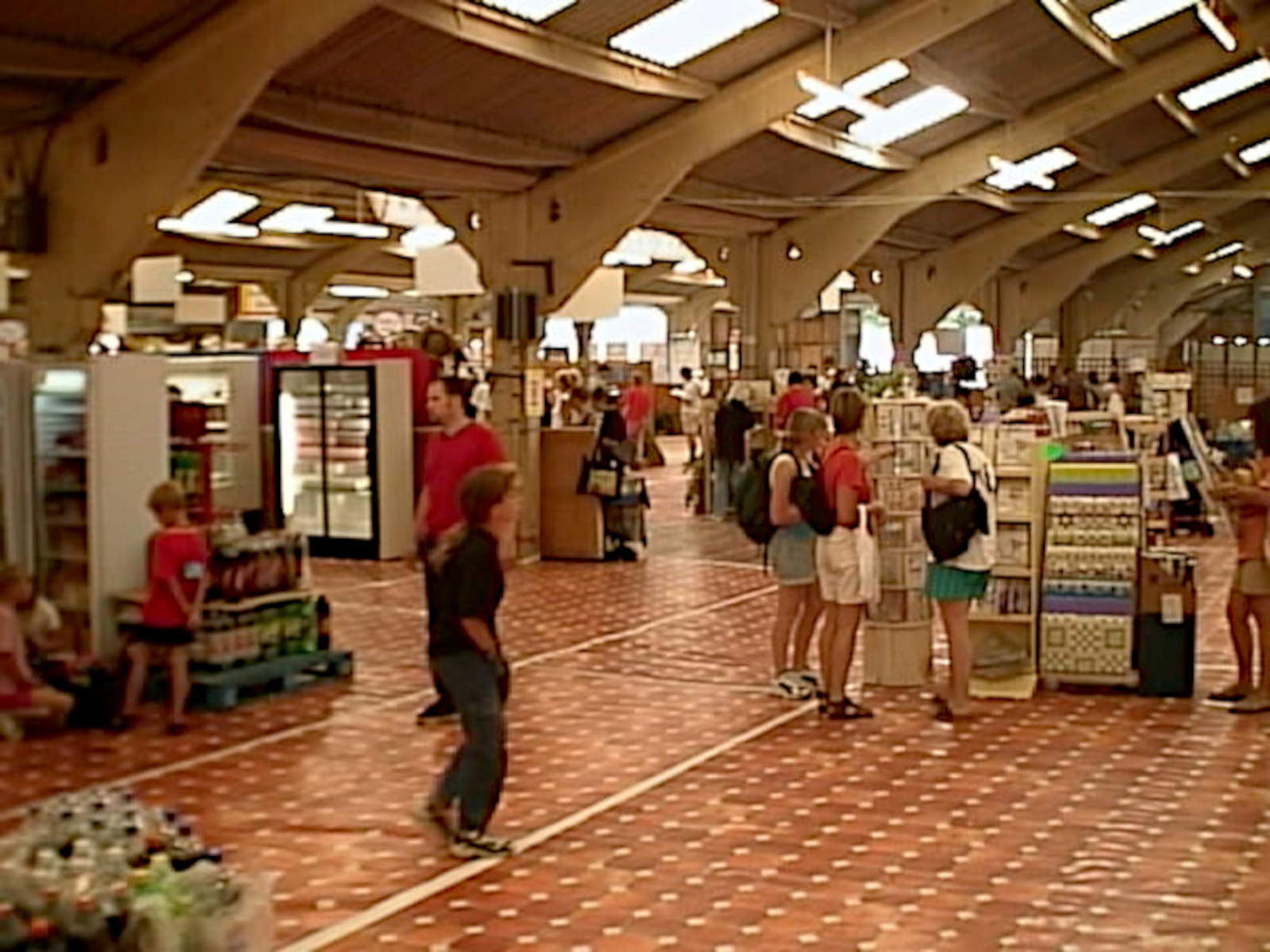
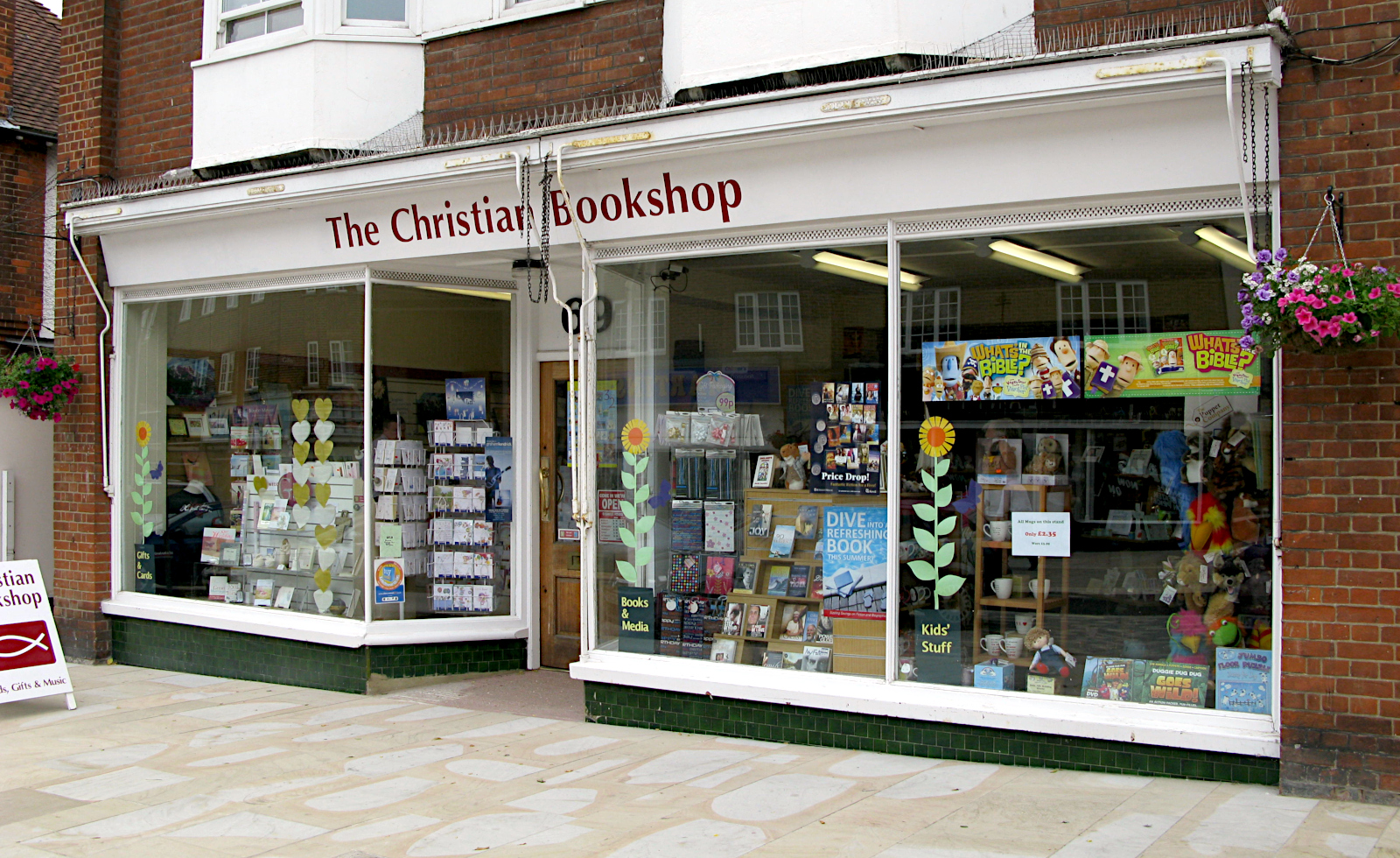
Donna travelled with her Open Door cell group to the New Frontiers annual event at the National Agricultural Showground at Stoneleigh; I drove up for the day on 1st August. The photo shows the book and music shop.
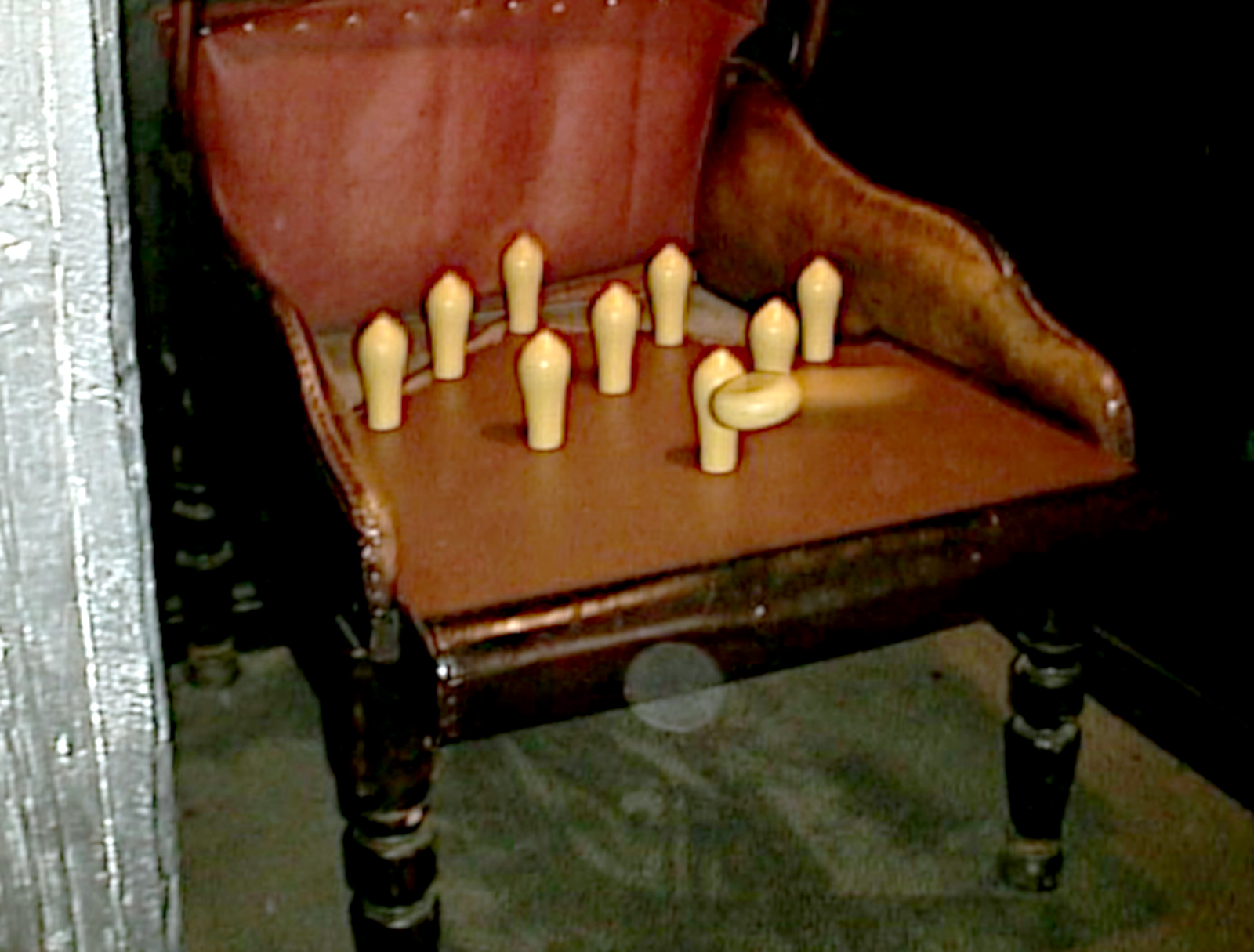
Knowledge Systems Group (KSG) met for lunch at the Beds Arms in Souldrop close to Unilever Research, Colworth. We often went there and played table skittles, a game local to the Northampton, North Befordshire area. Three ‘cheeses’ are thrown at the skittles and apart from that, the rules are very similar to normal ninepin skittles.
Other events this month were a visit from Donna’s Mum and Dad and a weekend with my Mum and Dad at Cirencester. We also visited Cindy and Paul at Bibury and I travelled to Amsterdam for a Unilever meeting on an intranet website, Research onLine.
World events: The Russian submarine Kursk sank in the Barents Sea; and Tsar Nicholas II and his family were canonized .
August 1995 (30 years)

Beth worked hard on her A-level biology project with help and advice from Judy. Debbie was well into her University degree work. Beth appears again in the distance in the second photo. It was a very hot and dry summer, vegetation was scorched, even deep-rooted trees were suffering and grass everywhere was dry and brown.

Judy was still mobile and capable, leading a pretty normal life, though clearly losing weight and often suffering a little discomfort. I continued at Long Ashton Research Station, working for the Statistics and Computing Department and independently developing a Microscopes and Microscopy web site as a resource for professional microscopists. It was developed on my PC at home, and at first hosted only on the Long Ashton web server, but later a microscopist at an American University asked if he could mirror it for faster service in the US and after that it ran on both servers.
Meeting regularly with Tony, Faith, Paul and Jenny was becoming more and more special. Every time we all felt encouraged and peaceful, knowing that whatever the future held, everything would be OK.
It was around this time that Judy began collecting up all her old photos, putting them in albums, and and writing short notes about when, what and who appeared in the images. She was also getting them into date order as far as possible. Clearly she was planning ahead for me, Debbie, Beth and other family members. I’ve always been very appreciative of this, especially as I write these notes for the Blast From the Past series.
World events: Aided by NATO, Bosnian and Croatian forces continued to fight Serbian seperatists; and Eduard Shevardnadze survived an assasination attempt.
August 1990 (35 years)

Debbie returned from her French exchange visit on 8th and we collected her from Lulsgate Airport. She had lots to tell us about her trip and had brought back some souvenirs including a huge French banknote!

Later in the month we visited the Forest of Dean and walked via Biblins Bridge to Symonds Yat where we crossed the river by the rope ferry, stopped for ice-creams, and returned to the car by the same route. And at the end of August we enjoyed a time at the Bristol Flower Show up on Clifton Down, and a trip on the North Somerset Steam Railway.
World events: Iraq invaded Kuwait, leading to the Gulf War; and East and West Germany announced they would unite on October 3.
August 1985 (40 years)

We had a holiday at Ogwen Bank in North Wales. Debbie and Beth are sitting just outside our caravan in the photo. The site was close to Bethesda so we were able to visit lots of interesting places all over Snowdonia

One of the places we visited was Benllech Beach, lovely sand and rocks as you can see. I’ve always enjoyed messing around at the seaside, especially building miniature dams. So there were three kids on the beach and one adult – Judy, who took this photo.
Amongst other things we visited a working slate museum, a woollen mill, The island of Anglesey with its sea zoo and butterfly house, a couple of castles and more. Judy and the girls visited Port Meirion while I stayed at the caravan and worked on an Open University (OU) course.
Apart from the OU courses which ran through the summer, August was always a great time for family life. The girls were on holiday, so was Judy, and we were able to go out for day trips as well as have a week or two away somewhere.
World events: A Japan Air Lines Flight crashed, killing 520 people; and a British Airtours Flight suffered an engine fire on the runway at Manchester Airport, fifty died during evacuation.
August 1980 (45 years)

Beth was interested in the cat, while the cat seemed to be interested in the paddling pool! And the sandpit in the background appeared to have been the scene of a nasty tractor accident. Just an ordinary summer day at 22 Rectory Drive.
Beth was just 2¼-years-old and Debbie was five and a half. Judy was considering beginning a teaching career having earned her qualification before Debbie was born while we were still living in our flat in St Andrew’s, Bristol. I was working at Long Ashton Research Station on fruit crop pollination, mostly on apples and plums; and I also had a week away at an Open University summer school.
World events: Hurricane Allen pounded Haiti, killing over 200 people; and the Gdańsk Agreement was signed in Poland allowing the free trade union, Solidarity.
August 1975 (50 years)

Debbie turned five months old and was growing quickly in both size and ability. She was developing better coordination, holding things and beginning to interact with adults and distinguish between them.
We started to get the house tidier and items put away. We had much more floor space than at the flat and although our furniture was the same it seemed lost in a large space rather than crammed together. We had only the old, green carpet we’d brought with us; it had filled the lounge/diner at the flat, now it just covered the dining area! Every other section of floor was bare boards, including the stairs, but the kitchen retained the covering left by the previous owners.
I began cycling to work from Yatton to Long Ashton, for a couple of years I’d been used to cycling from St Andrew’s, Bristol. What a change! No more dangerous, heavy traffic to contend with, instead a longer but much more relaxing trip through attractive countryside and the villages of Claverham and Backwell.
World events: The Helsinki Accords recognising Europe’s national borders and human rights, was signed in Finland; and NASA launched the Viking 1 planetary probe toward Mars.
August 1970 (55 years)
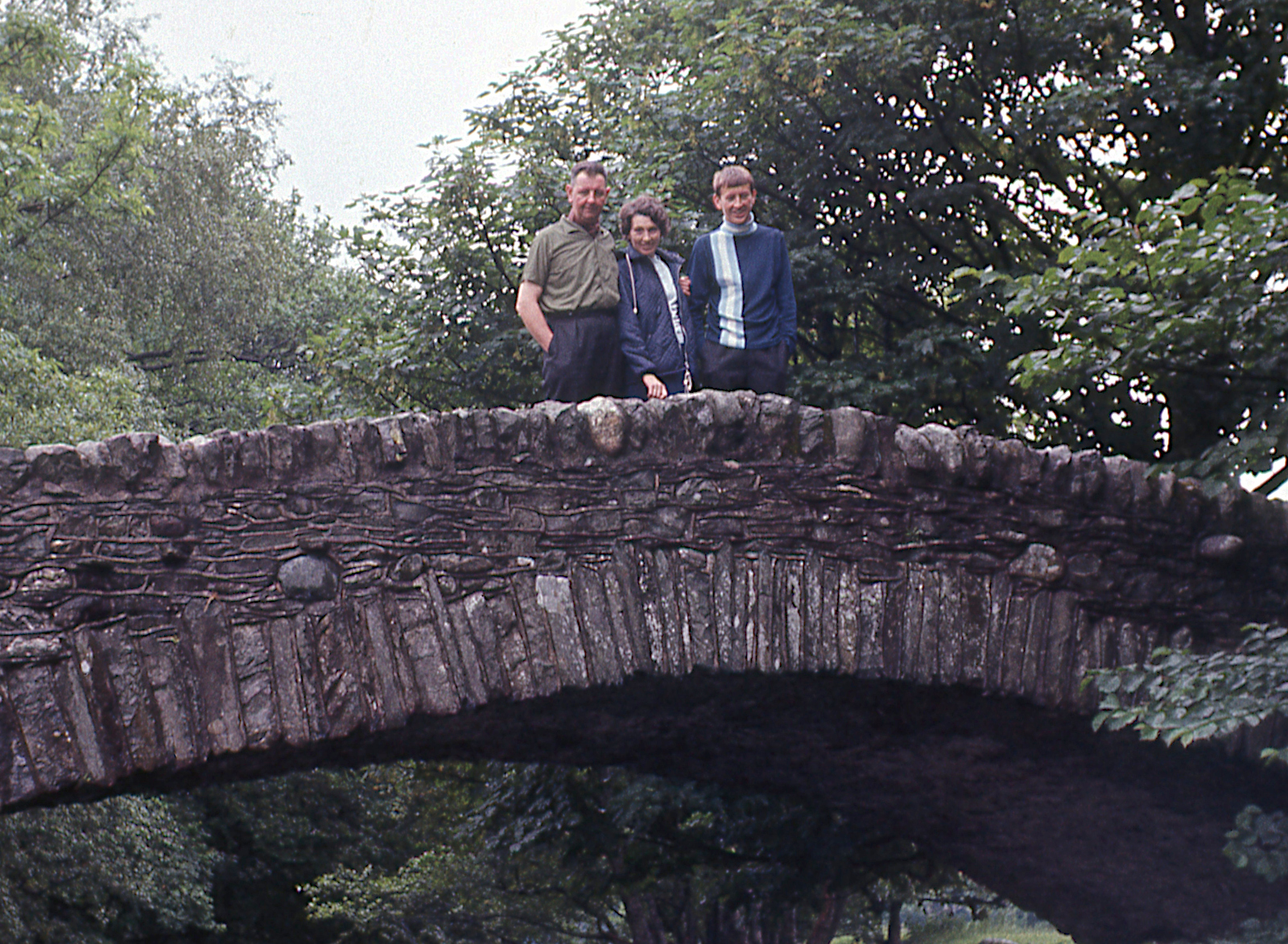
Judy was away on holiday for two weeks in the Lake District with her parents and brother, Frank. She took this photo at Watendlath Packhorse Bridge near Keswick.
Judy and I were planning for our wedding in early October, there were just some finishing touches to put in place really, but we didn’t want to run out of time.
Pete, a good friend from University, discovered the Ministry of Agriculture were empl0ying graduate students to interview farmers during the summer of 1970. We signed up for this survey work as we both had our own transport, and spent several weeks driving around the Cotwolds with the questionnaires interviewing the farmers and some of their employees. We lived at Mum and Dad’s house in Victoria Road as our base of operations. Part of the time they were on holiday in Northern Ireland with my sisters so Pete and I looked after the place while they were away.
World events: The Soviet Union launched Venera 7 towards Venus; and rubber bullets for riot control were used for the first time.
August 1965 (60 years)

This was the month of the Grammar School Explorers Club expedition to Scotland, organised and led by one of my biology teachers, Mr Castle. I was one of two sixth formers who travelled with him in his Bedford van with the lighter equipment (the heavy stuff went by train). Graham and I camped just outside Edinburgh while Mr Castle returned by train to travel north again with the fourth and fifth form members of the expedition. Most of us would travel by coach while Mr Castle brought the van and equipment. Graham and I were assistant leaders.
We walked up the Dee Valley into the Cairngorms, then to Ben McDhui and Cairn Gorm, descending along the ski lift route. We visited Pitlochry for a night or two and then to Mallaig and the ferry to Skye where we viewed the Cuillins from Elgol beach and went to the Portree Highland Gathering. After a night at the coral beaches, we returned to the mainland to visit Fort William and walk to the top of Ben Nevis.
It was quite a journey and an experience I shall never forget.
World events: Singapore left the Federation of Malaysia; and U.S. President Johnson established Medicare and Medicaid.
August 1960 (65 years)
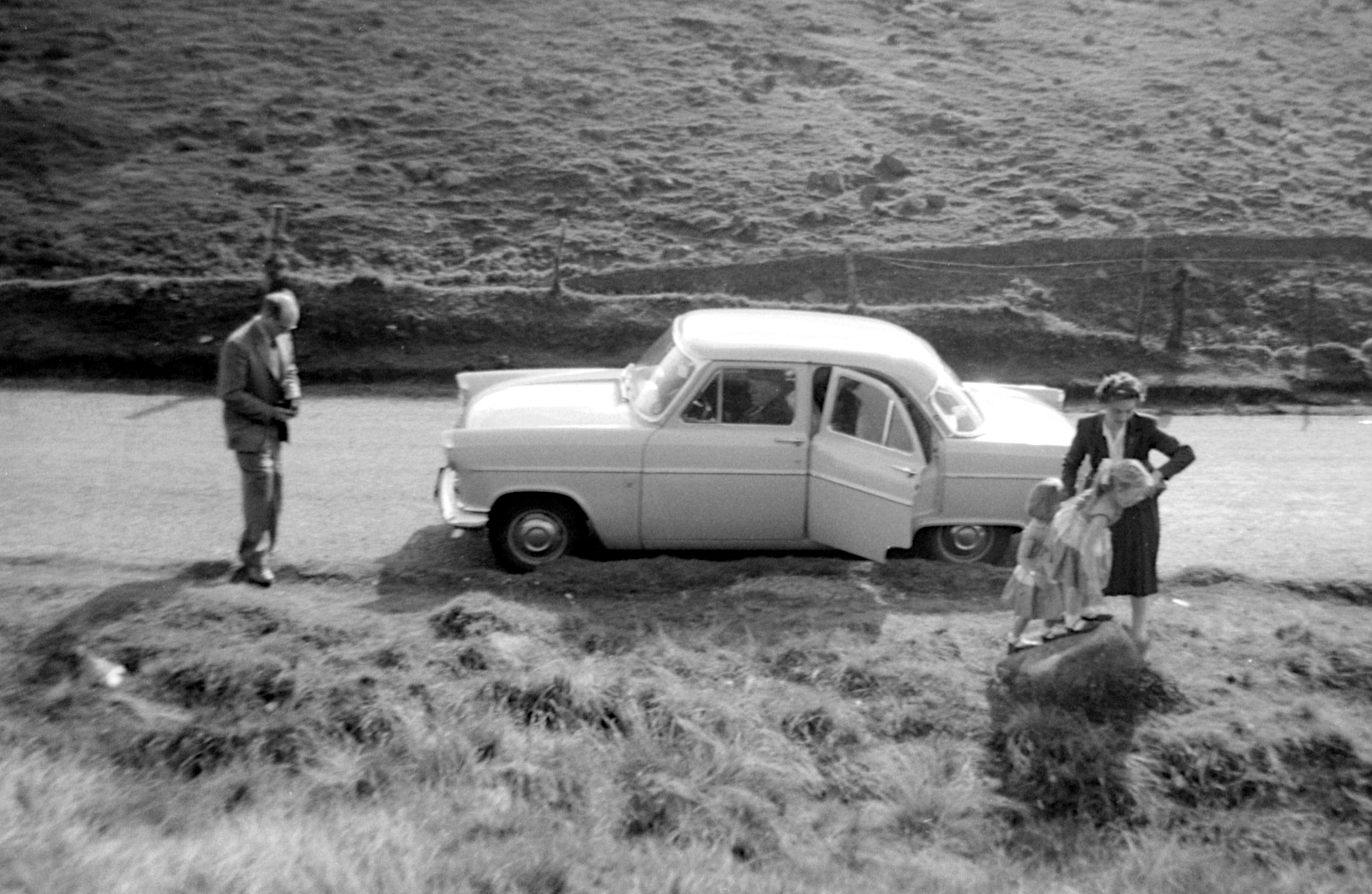
Our annual holiday this year was in Northern Ireland, staying at Holmlea in Coagh, Co Tyrone with Mum’s parents. The photo was a brief stop near the Spelga Dam in the Mountains of Mourne during a day out. I had scrambled up the steep bank and took this image of Dad taking a photo of Mum and my younger sisters, Ruth and Rachael, Granda is sitting in the car. Granny and Cindy may have still been in the car as well. How did we all squeeze in for the trip? Ruth and Rachael were small enough to sit on an adult lap, probably with Mum and Granny.
We’d have done a number of trips out like this one, almost certainly including a day at the seaside at Portrush, maybe a trip to see the Giant’s Causeway, and definitely visits to Cookstown and to Mum’s cousin on the farm at Killycurragh on Slieve Gallion. The first (and only) time that I milked a cow was at Killycurragh, but what I remember most was high tea, where the table with its white cloth groaned under a huge choice of delicious food, much of it home grown and home made.
World events: The Beatles began a 48-night residency at the Indra Club in Hamburg; and Russia launched Sputnik 5 carrying two dogs, mice and rats, and plant specimens. All the animals returned safely after a day in orbit.
August 1955 (70 years)
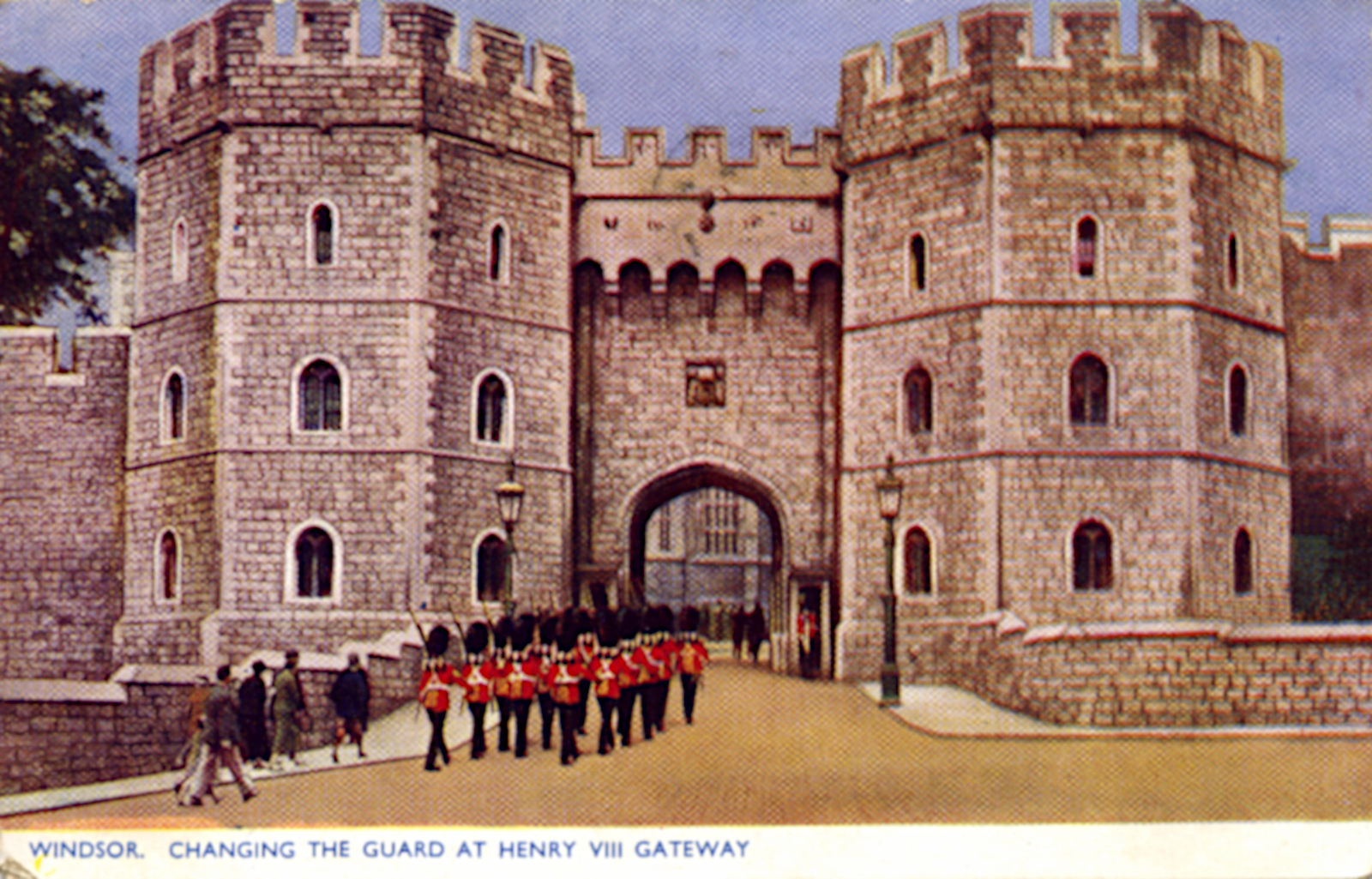
In August we visited Windsor Castle, I don’t remember this trip although I was seven-years-old at the time.
Mum sent the postcard to her younger sister, Annabelle, and wrote on the back,
‘Christopher & Cynthia couldn’t take their eyes off the soldiers & had to send you this picture so that you could see them too. Wish you were all with us. Much love from us all. Your loving Sister, Lilias.’
World events: Hundreds die in anti-French rioting in Morocco and Algeria; and the first edition of the Guinness Book of Records was published.
August 1950 (75 years)
I needed a photo for the summer of 1950 but couldn’t find one. I’m guessing this is a bit more recent, perhaps between 1950 and 1960; but it does capture business life in Cirencester in that era. In those days there were no supermarkets, you would have visited a variety of small bakers, butchers, grocers, greengrocers and so forth. Barnett’s was one of these.
Charlie Barnett was a famous test and county cricketer, born in Gloucestershire. When he retired from cricket, he set up a business in Cirencester, selling fish, game, and more exotic items such as seagull eggs. The photo shows him working in his shop.
We must have been settling into our new home in Queen Anne’s Road at this time. There were probably boxes to unpack, clothes to put away, as well as the normal household chores of laundry; and for Dad there’d have been the task of getting the garden area tidy, clearing weeds, removing building rubble, stones and so forth, and planning a garden.
World events: North Korea’s Air Force was largely destroyed by anti-communist forces; and Uruguay beat Brazil 2–1, to win the 1950 World Cup.
August 1945 (80 years)
< Jul 1945 | Index | Sep 1945 >

On 2nd August Mike had the bad news that he was being posted overseas. He had to rush to get Lilias to Cirencester as fast as possible, perhaps something they’d planned to do a little later.
He arrived in Stranraer on 3rd and was in Coagh on the evening of 4th. By 7th they were on the train south from Stranraer. On 8th his mother, Nor, met them at Cheltenham Station with the car and Mike drove them home. They then had five clear days to enjoy time together in Cirencester and around the south Cotswolds until Mike was required back by the RAF on 14th. But this was a really good day because the victory over Japan was announced and the war was finally over. Medicals, inoculations, and the issuing of tropical kit took almost two weeks; then there was a final twenty-four hour period when he was able to get back to Cirencester to see Lilias and his parents, and the last three days of August were spent on duty in Blackpool waiting for a ship to become available.
World events: Winston Churchill supported the idea of a pan-European army; and Pope Pius XII declared evolution to be a serious hypothesis that does not contradict essential Catholic views.
< Jul 1945 | Index | Sep 1945 >
August 1940 (85 years)
There’s not enough information to write something for every month in the 1940s. Dad’s diaries start in January 1943, so for January 1940 to December 1942 I’ll write about things I know, or draw on dated photos and documents. Sometimes I might use a photo or document with a guessed date.

For August 1940 I’m going to write about another of the John Jefferies & Son nurseries, this time a very small one, the Abbey Nursery. The medieval Abbey owned a great deal of land, not just in the town but in the surrounding countryside. Part of the Abbey’s land lay inside City Bank, and part of it formed the Abbey Nursery. It had a shed for equipment, and cinder block bins for sand, grit, gravel and other garden materials. The bins are still there, just inside the gate on the left. Today the land is a nature reserve and is open to the public.
All Cirencester people will know where City Bank is. As the name might suggest, it has to do with a city (which Cirencester is not). But in Roman times its predecessor Corinium was a large and important city only exceeded in size by Londinium, present day London. In the later years of Roman Britain, most cities aspired to a wall, perhaps defensive, or perhaps just a way to demonstate high status. So there was a city wall. In medieval and later times, the useful cut stone was robbed from the old walls and used to build the town anew. What was left of the old walls was a bank of tumbled stone and soil, covered with grass and scrub, hence City Bank, not City Wall.
In 1940 and up until John Jefferies and Son’s nurseries gradually fell out of use from 1975 onwards, the Abbey Nursery was used mainly for growing Christmas trees for sale in November and December, but was also the storage site for the Cotswold stone and paving slabs used by the landscape construction part of the business.
In August 1940 my father, Mike, was nine-years-old and lived with his parents at ‘Churnside’, 37 Victoria Road. His Father, Edward (Ted, Guv, or ‘the Governor’) was 60 and his mother, Norah (Nor) was 61. His brothers, John, Richard (Dick), and Robert (Bob) were 33, 30, and 27 respectively.
World events: Lithuania, Latvia, and Estonia were annexed by the Soviet Union; and the Royal Air Force bombed Berlin for the first time.
1930-1939 (95 to 86 years ago)
Anything that appears in this section will have some connection with the 1930’s but may extend beyond the decade to follow a meaningful topic more fully.

Uncle John and Auntie Jo were married on 15th September 1932. John was my father’s oldest brother, born in 1907 and 19 years older than his little brother. This is a large gap between the oldest and youngest in the family so it seems my Dad may have been an unexpected late addition!
John and Jo lived at 4 Tower Street, Cirencester; it was a three-storey town house and the features I remember most were a floor to ceiling mirror in the narrow hallway which made the narrow space look much more spacious, and the front reception room with a stone fireplace. There was a fine collection of hand-bells on the mantelpiece, collected over the years it seems and not a set, but nevertheless, in tune with one another. I remember a long passageway with the kitchen at the far end and a little, shady garden beyond that. The floor above must have contained bedrooms and a bathroom, but the top floor was the most exciting as there was a storage room at the front with all sorts of intriguing items discarded from everyday use. An Aladdin’s cave! John and Jo’s daughter, Jill, was my godmother so I was invited round from time to time. She always had something interesting for me to see or fun activities to do.
John and Jo had a poodle (one of the larger kind). He was called Gigot and I remember Auntie Jo collecting the wool when he was clipped and storing it year by year until there was enough to be washed, carded and spun into yarn. Gigot was a mid brown colour and she knitted herself a cardigan from the wool!
As a young child I always found Uncle John a bit solemn and aloof, even a little bit scary, but of course he was quite good fun in many ways if perhaps a little on the serious side. He became Chairman of Cirencester Urban District Council, almost but not quite the Lord Mayor. Cirencester had no mayor in those days, though today it does, and the chain of office is still the one once worn by John.
When my grandfather died, John and his brothers Dick and Bob took over John Jefferies & Son as directors. John’s role had long been managing the landscape design and construction side of the business, using the entire top floor over the shop in Cirencester Market Place as the design studio. I remember Desmond Walker who helped as John’s deputy in the design office. Desmond lived right next to Tower Street Nursery and had a mulberry tree in his garden.
World events (August 1935): The volcanic island of Anak Krakatau began to form permanently in the Sunda Strait. (August 1930): United States President Franklin D. Roosevelt signs the Social Security Act into law.
1900-1929 (125 to 96 years ago)
As with the 1930s material, everything in this section will have a connection of some kind with these two decades.
My father, Mike, was born on 4th June 1926. He would almost certainly have been born at home – Churnside, 37 Victoria Road, Cirencester. His parents were Edward Arthur Jefferies and Norah Jefferies (nee Monger), usually known as Guv or Ted and Nor. Mike had three much older brothers, John, Dick and Bob (19, 17, and 15 years older). Because he was a bouncy baby, his brothers called him ‘Tigger’ and this stuck. He was still known as ‘Tig’ by the brothers and by his parents while they were still alive. Churnside would itself have been fairly new when Dad was little, the house is Edwardian and was built shortly before Guv and Nor were married. This and the house next door are semi-detatched so were built as a pair, I believe they were the first houses on this section of Victoria Road.
World events (August 1900): International troops entered Peking to free European hostages during the Boxer Rebellion. (August 1905): Norway voted to break from the union with Sweden. (August 1910): Japan formally annexed Korea. (August 1915): In the First World War Gallipoli campaign, the Battle of Sari Bair was fought.
(No earlier info) 1900-1929 >>
< Previous | Index | Next >
You might also like
Useful? Interesting?
If you enjoyed this or found it useful, please like, comment, and share below. (If you don’t see those links, click the article’s title above the main photo and they will appear.) Send a link to friends who might enjoy the article or benefit from it – Thanks! My material is free to reuse (see conditions), but a coffee is always welcome and encourages me to write more often! 
















.png)
