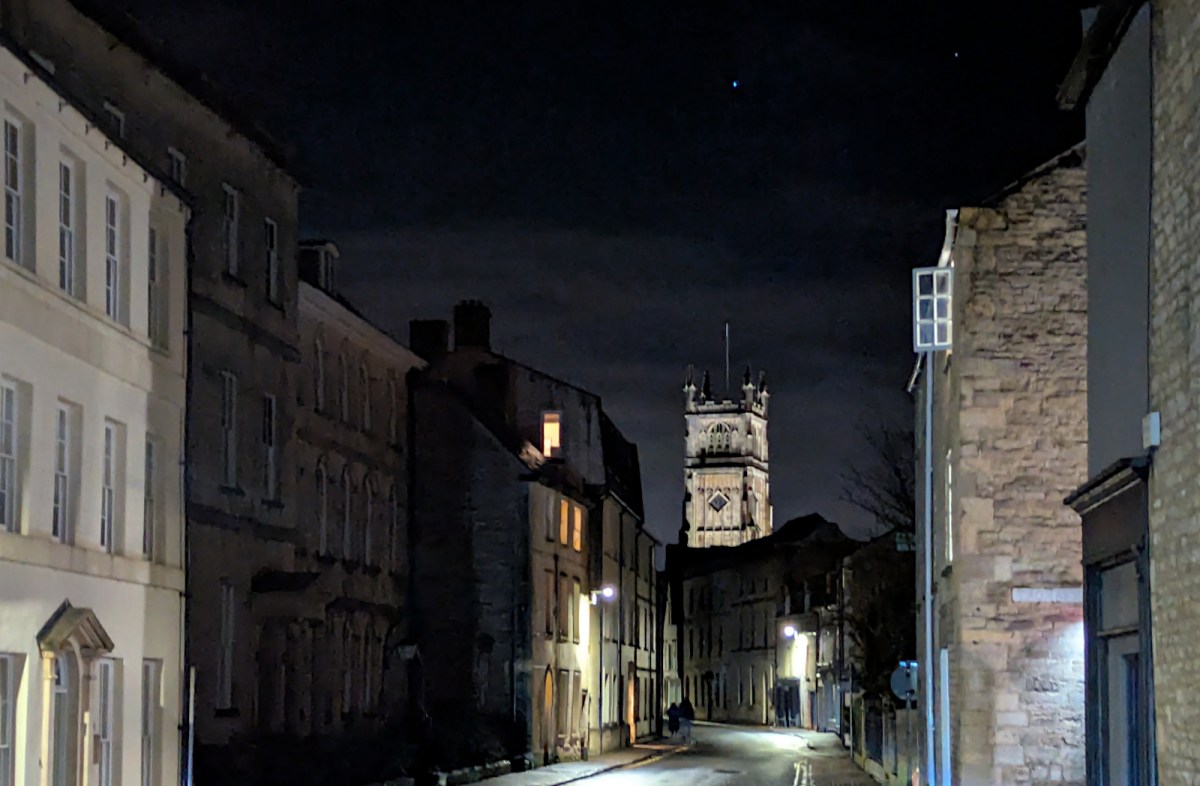
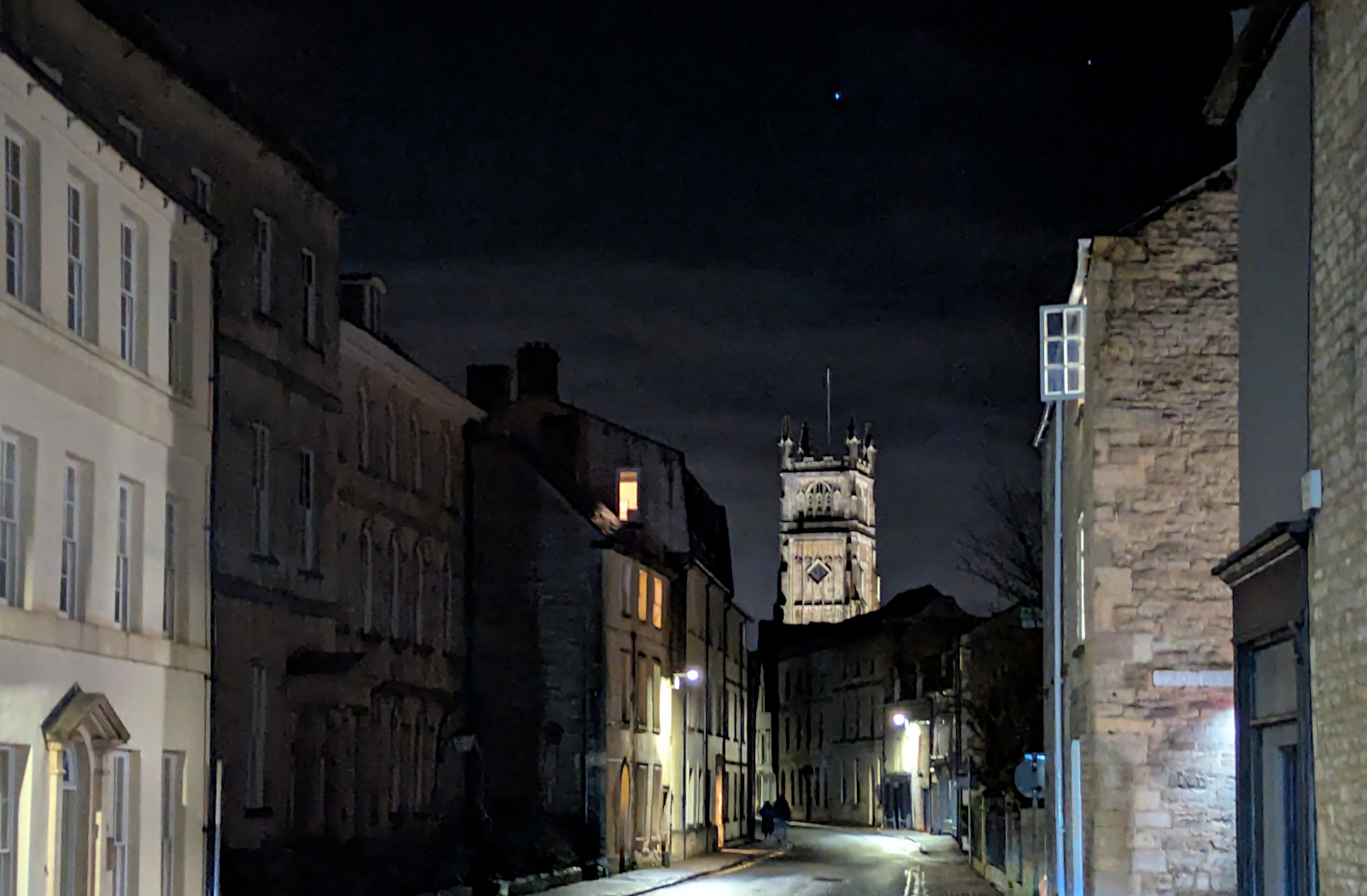
We are looking more or less along what was once a Roman street in old Corinium. Although it winds left and right here and there, nearly 2000 years ago it would have run almost entirely straight.
What’s in an image? Sometimes quite a lot, more than meets the eye. I’m posting an image every few days.
Jupiter and the church tower
The town’s streetlights illuminate the lovely old architecture in Dollar Street, and Jupiter is bright enough to see high above the church tower’s flag pole. Click the thumbnail to enlarge it and you’ll also see a star a little further to the right, almost over the open window. This is Saiph, the bottom-left star of Orion. If you’re looking at the sky from the southern hemisphere Saiph will be Orion’s top-right star and Jupiter will be very low in the sky.
Looking south
We are looking more or less along what was once a Roman street in old Corinium. Although it winds left and right here and there, nearly 2000 years ago it would have run almost entirely straight, part of the Roman military road between Glevum (Gloucester) and Calleva (Silchester) through the local Iron Age kingdom of the Dobunni whose capital was about four miles to the north of Corinium in what is now the village of Bagendon. Behind you, in this view, the road continued north-west to Glevum where there was a military fortress. Some British tribes were allies of the Romans, including the local Dobunni. Some tribes opposed the Romans and their conquest of these islands. In the south-east direction the same Roman road (Ermin Way) passed through the town’s Forum, past the Basilica and made its way to Calleva to the south and east.
If you enjoyed this or found it useful, please like, comment, and share below. (If you don’t see those links, click the article’s title above the main photo and they will appear.) Send a link to friends who might enjoy the article or benefit from it – Thanks! My material is free to reuse (see conditions), but a coffee is always welcome and encourages me to write more often!
What’s in an image? Sometimes quite a lot, more than meets the eye. I’m posting an image every few days.
The Norrington Room (Click to enlarge)
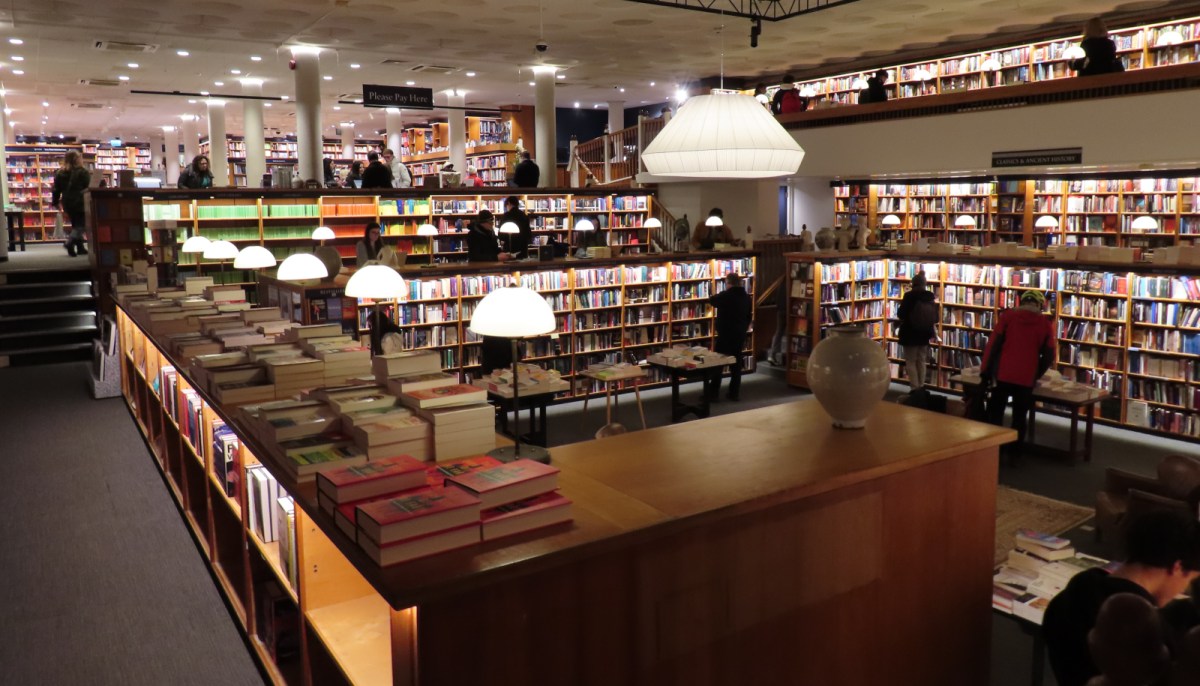
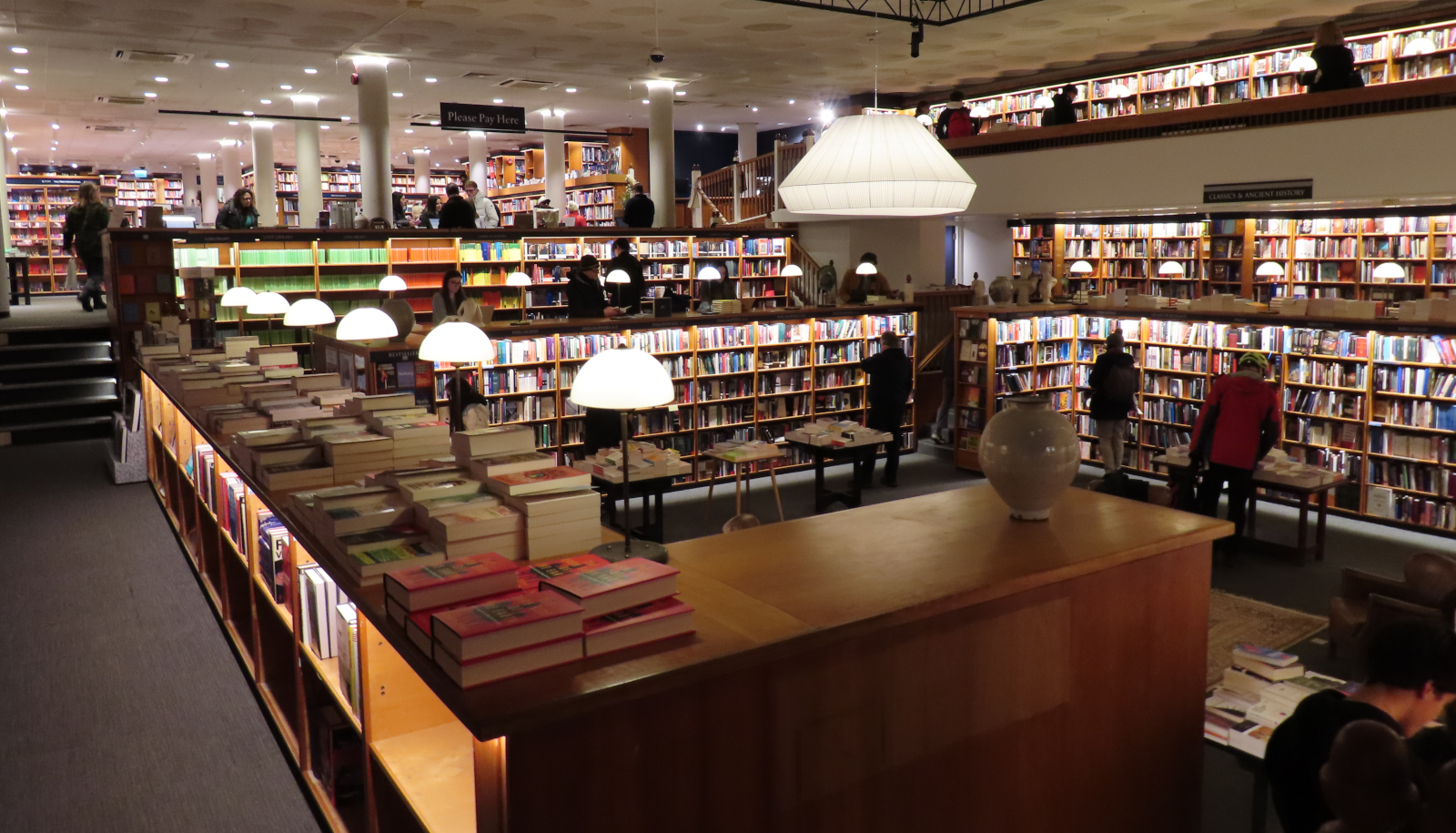
The photo shows the basement of Blackwell’s Bookshop in the centre of Oxford, the famous university town in the UK.
Blackwell’s Bookshop in Oxford is huge
You can get a good idea of size from the photo, there are four or five floors above the basement, large but not as open; the upper floors are smaller and have no long views like this one as the line of sight is broken up by countless units of shelving.
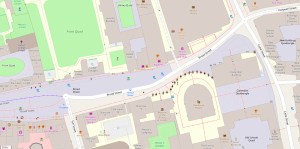
Map centred on Blackwell’s
This was where the original Blackwell’s bookshop was, but it has grown larger and larger over the years. The basement, shown in the photo, is known as The Norrington Room and has five kilometres of bookshelves in it, containing 200 000 books. Blackwell’s in Oxford also hosts a Caffè Nero on the first floor. The map (opens in a new tab, click to resize and drag it) is centred on the bookshop in the very heart of Oxford.
Some history
The current bookshop in Broad Street opened in 1879, though it was much smaller in those days, at a mere 4 m square. The first bookshelf unit is still in use, at the top of the stairs to the first floor. The shop soon expanded, incorporating the cellar and the first floor as well as several adjacent shops. There was an earlier Blackwell’s bookshop, also in Oxford, that opened in 1846.
Blackwell’s had an online presence from 1995, selling books worldwide. It also opened retail outlets in many other cities and towns across the UK. As a company it remained independent until the business was bought in 2022 by Waterstones, another major British book retailer.
If you enjoyed this or found it useful, please like, comment, and share below. (If you don’t see those links, click the article’s title above the main photo and they will appear.) Send a link to friends who might enjoy the article or benefit from it – Thanks! My material is free to reuse (see conditions), but a coffee is always welcome and encourages me to write more often!
It’s likely the cracking will have been caused by differential thermal expansion and contraction with the iron changing its dimenions rather more than the ceramic glaze.
What’s in an image? Sometimes quite a lot, more than meets the eye. I’m posting an image every few days.
Click images to enlarge
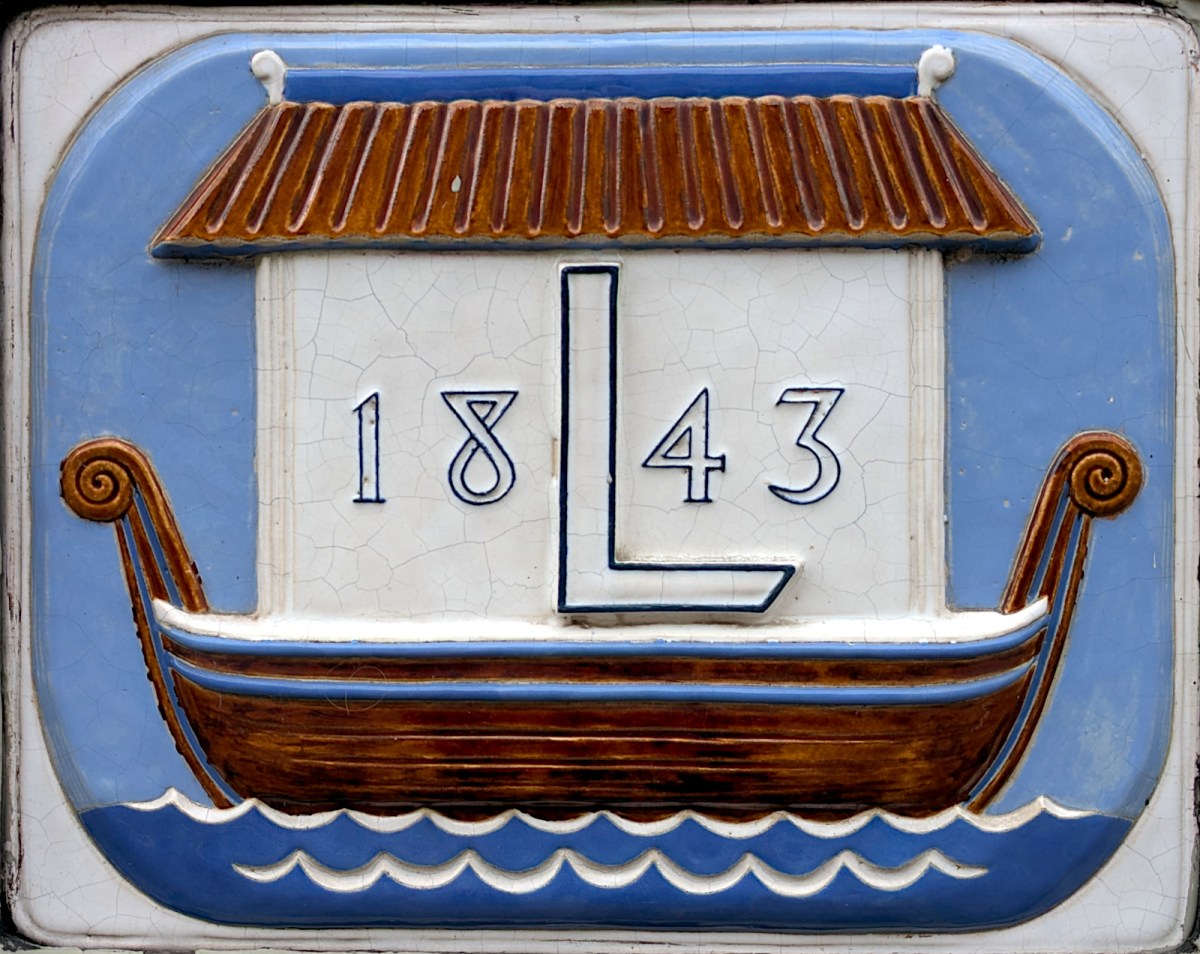
This is one of the old brewery plaques, once numerous across Britain. This example is in Castle Street, outside The Brewers Arms, not far from the junction with Querns Lane and Lewis Lane.
Arkell’s Brewery
The brewery originated in 1843, the year on the plaque. It was founded in Swindon by John Arkell, remains family-owned and operates as one of the oldest remaining brewery companies in Britain.
The plaque is probably of cast iron with enamel decoration and apart from some cracks seems to be in almost perfect condition. It’s likely the cracking will have been caused by differential thermal expansion and contraction with the iron changing its dimenions rather more than the ceramic glaze. The plaque has seen more than 180 day/night cycles in its time!
Brasso
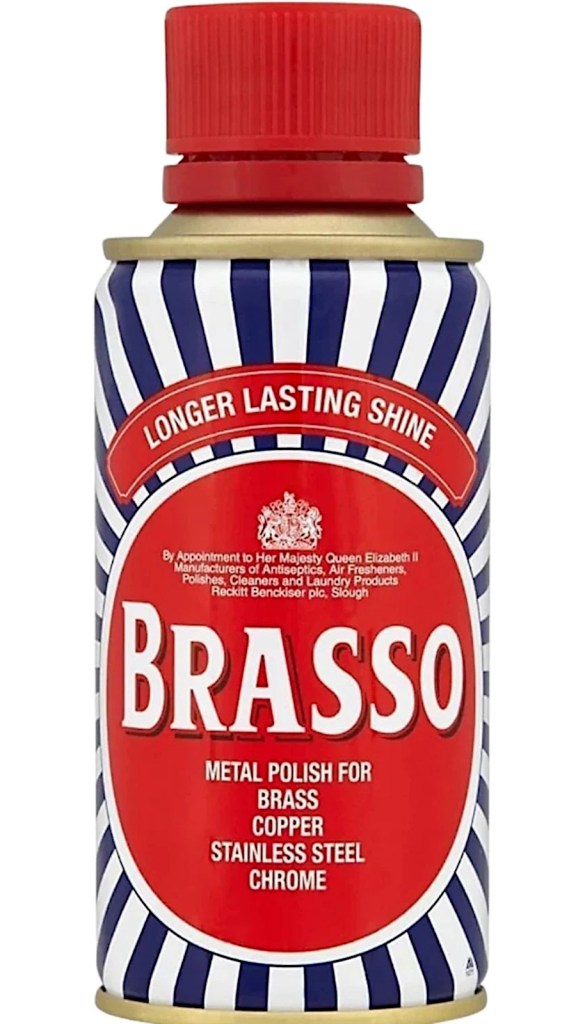
The image is of Noah’s ark with a large capital letter ‘L’, so a play on Arkell (‘arkL’). There’s a long history of businesses advertising their presence with logos and other illustrations, it happens in all nations and cultures, sometimes the themes, names and images employed can become quite famous and long-lived. When I was a young child, Brasso (a British brass polish) was sold in steel containers with blue and white rays coming out in all directions. It’s still available today in cans with the same design. And it probably looked just the same in Victorian times as well! When I was young it was fitted with a low-profile, steel screw-cap, today it has a much larger, plastic cap. Otherwise, it looks identical to me.
If you enjoyed this or found it useful, please like, comment, and share below. (If you don’t see those links, click the article’s title above the main photo and they will appear.) Send a link to friends who might enjoy the article or benefit from it – Thanks! My material is free to reuse (see conditions), but a coffee is always welcome and encourages me to write more often!
The simplest and cheapest way to travel would have been to walk, and people often did exactly that. For an example look no further than the old story of Dick Whittington.
What’s in an image? Sometimes quite a lot, more than meets the eye. I’m posting an image every few days.
Click images to enlarge
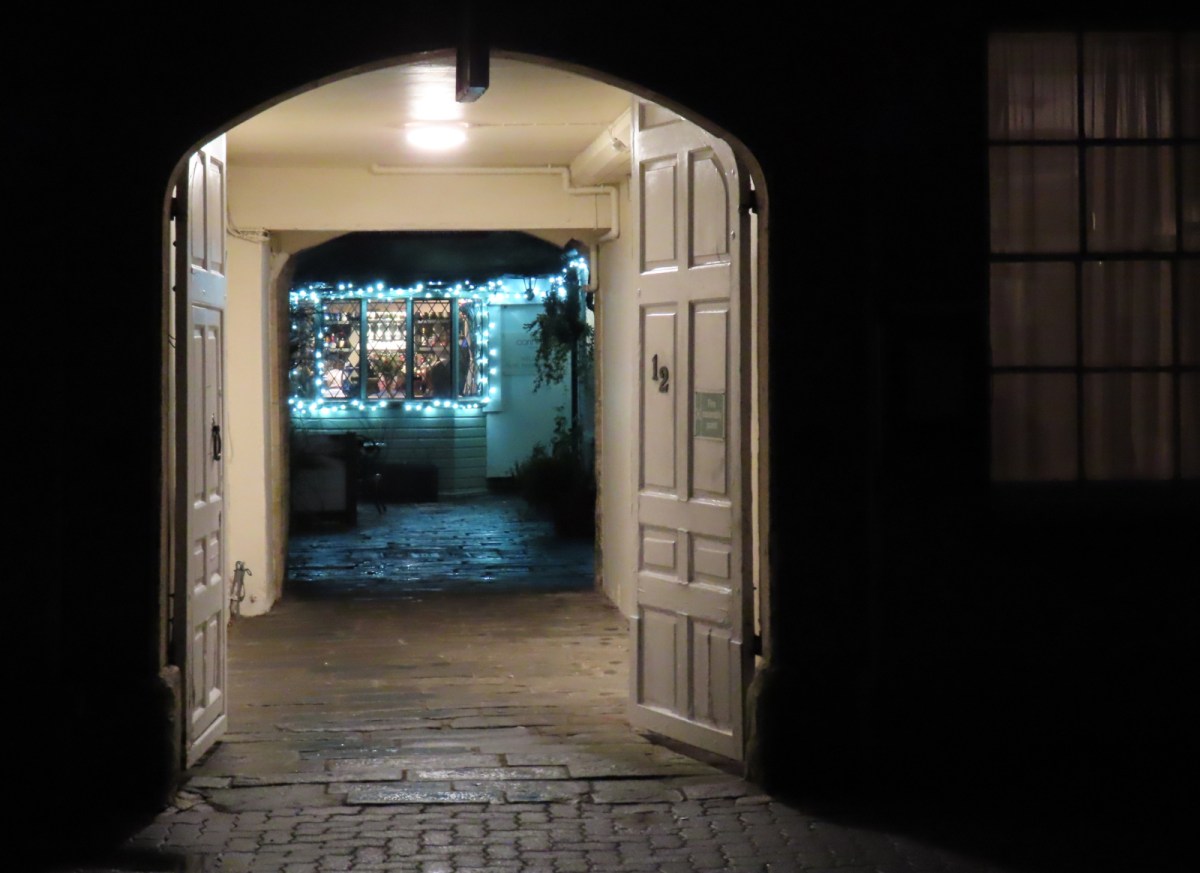
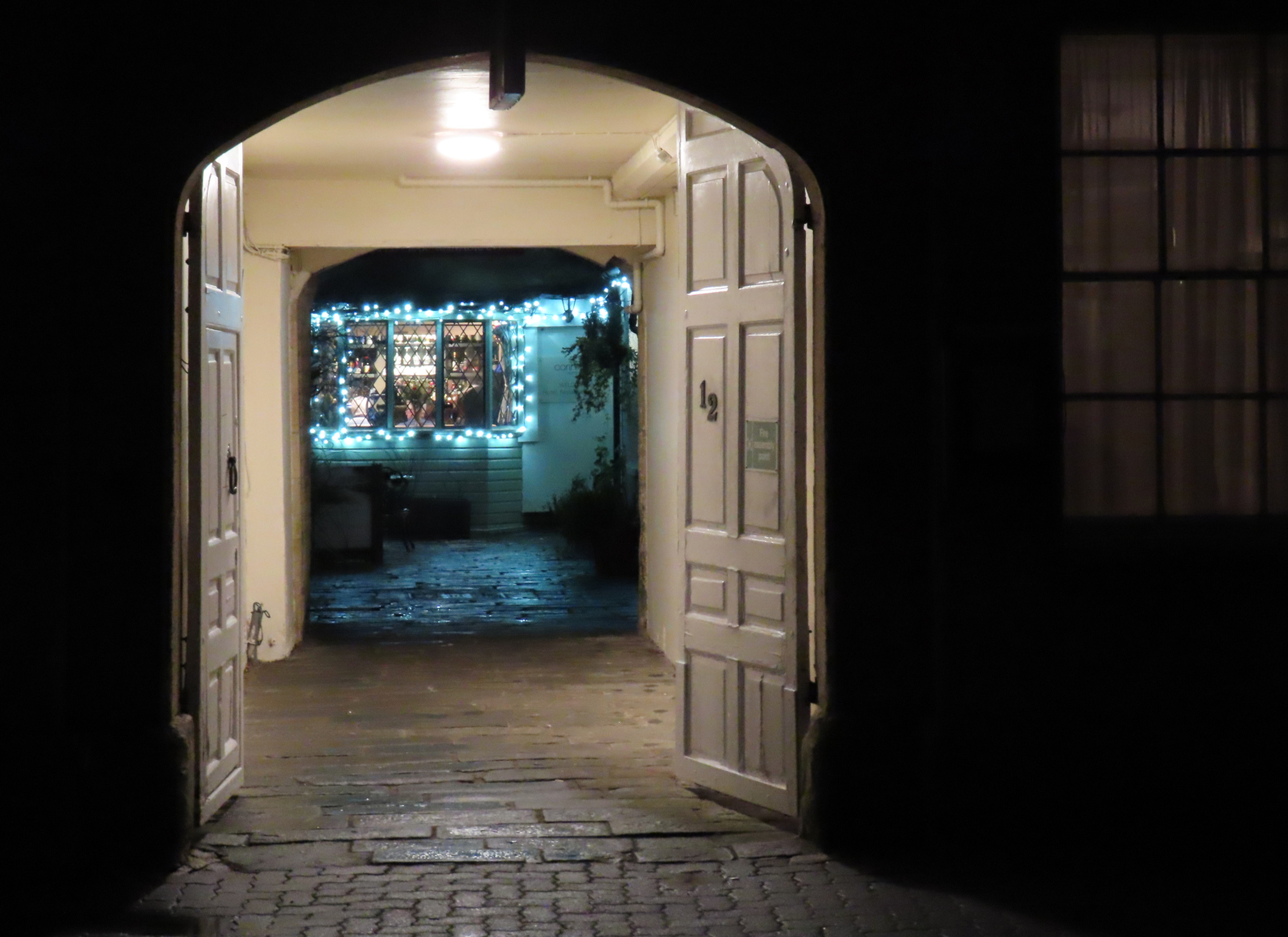
This photo was taken in Cirencester, peering in through an entrance to a courtyard beyond. If you are familiar with the town, I wonder if you know where this is? *The answer is at the bottom of the post.
There’s an invitation in this photo
That’s why I called it ‘Come right in!’ There seems to be an unspoken welcome here. What appeals to you most in this picture? Is it the warmth of the light? Or perhaps the sparkle of the decorative lights at the far end? Or the open doors beckoning you to enter? In days of yore, this double doorway might have allowed a horse to be brought inside for stabling, feeding, watering and grooming to recover for use the following day. The carriage would have remained on the street outside.
‘Days of yore’, this funny old expression is a poetical way of saying long ago. ‘yore’ is an Old English word closely related to the modern word ‘year’. So the sense is ‘in the days of years ago’. There’s a large garden at the back of the hotel, with a lawn scattered with tables and chairs, a lovely place to eat and drink with friends or family in the summer months. I imagine the horses sometimes being turned out to graze in a grassy field here, what a treat for them!
Shelter for travellers
Travelling on horseback or by horse and carriage was a slow affair, requiring regular stops for meals or to shelter for the night, and that’s why the old routes between towns in Britain are liberally scattered with pubs, inns and hostels. Practically every village of hamlet would have had one and towns would have had many more. They’re not hard to spot, although these days many have been converted to other uses.
It wouldn’t always have been necessary to pay for accommodation, friends or family along or near the route would have made travellers welcome and on dry, warm, summer nights it would have been possible to pull off the main roads and sleep outside or in the carriage. The simplest and cheapest way to travel would have been to walk, and people often did exactly that. For an example look no further than the old story of Dick Whittington. In Roman times there were parallel systems for official/military and public use. Every 30 to 50 km (a day’s journey) there were mansiones or official stops with good accomodation, fresh horses, dining areas, and perhaps even baths. And between these were mutationes, (literally ‘changes’) for a brief stop, a fresh horse, and perhaps some refreshments but without overnight facilities. Non-official, privately run facilities included cauponae and tabernae, some of these were a bit rough and disreputable, some were well appointed with courtyards, kitchens, and decorated dining rooms. Several modern English terms come from these words – mansion, mutation, and tavern are notable.
The Bible is usually regarded as a religious book, but it’s also a good historical source as well. Read the book of Acts, for example, to get a good idea of what travel by land and sea was like 2000 years ago. See for example Acts 28:11-16 where a place near Rome called ‘Three Taverns’ is mentioned (Tres Tabernae).
* It’s the Corinium Hotel in Gloucester Street, once the Corinium Court Hotel.
If you enjoyed this or found it useful, please like, comment, and share below. (If you don’t see those links, click the article’s title above the main photo and they will appear.) Send a link to friends who might enjoy the article or benefit from it – Thanks! My material is free to reuse (see conditions), but a coffee is always welcome and encourages me to write more often!
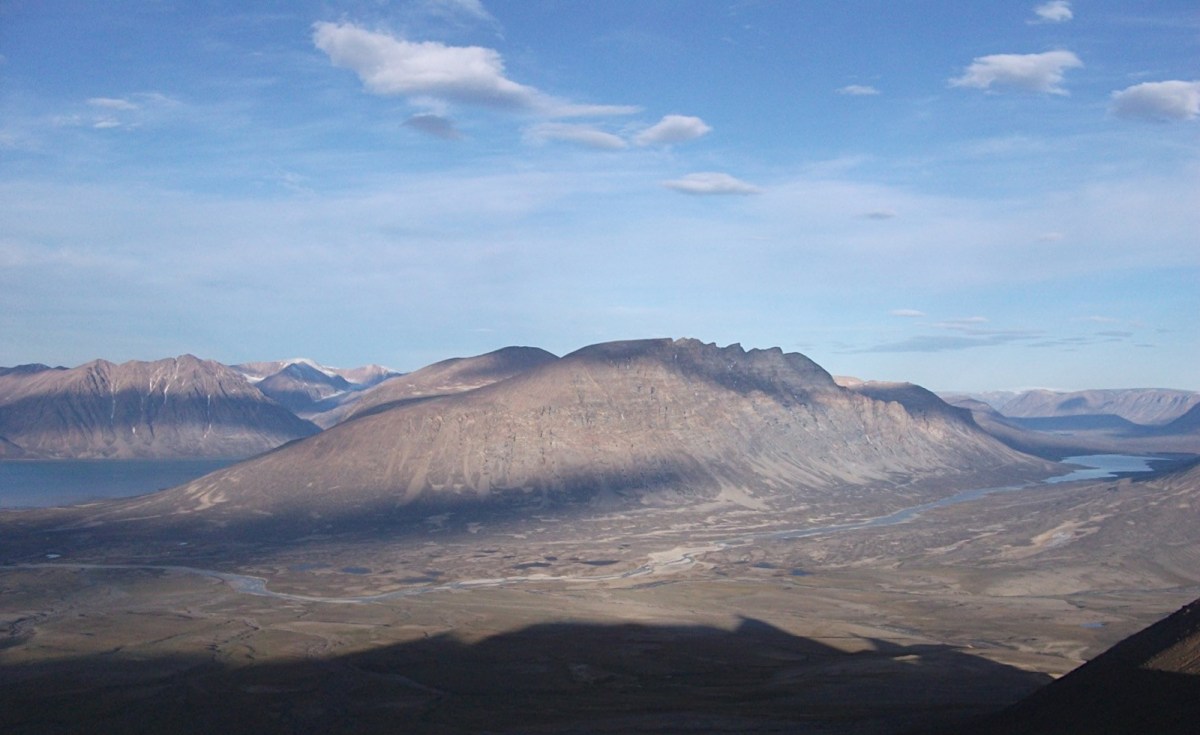
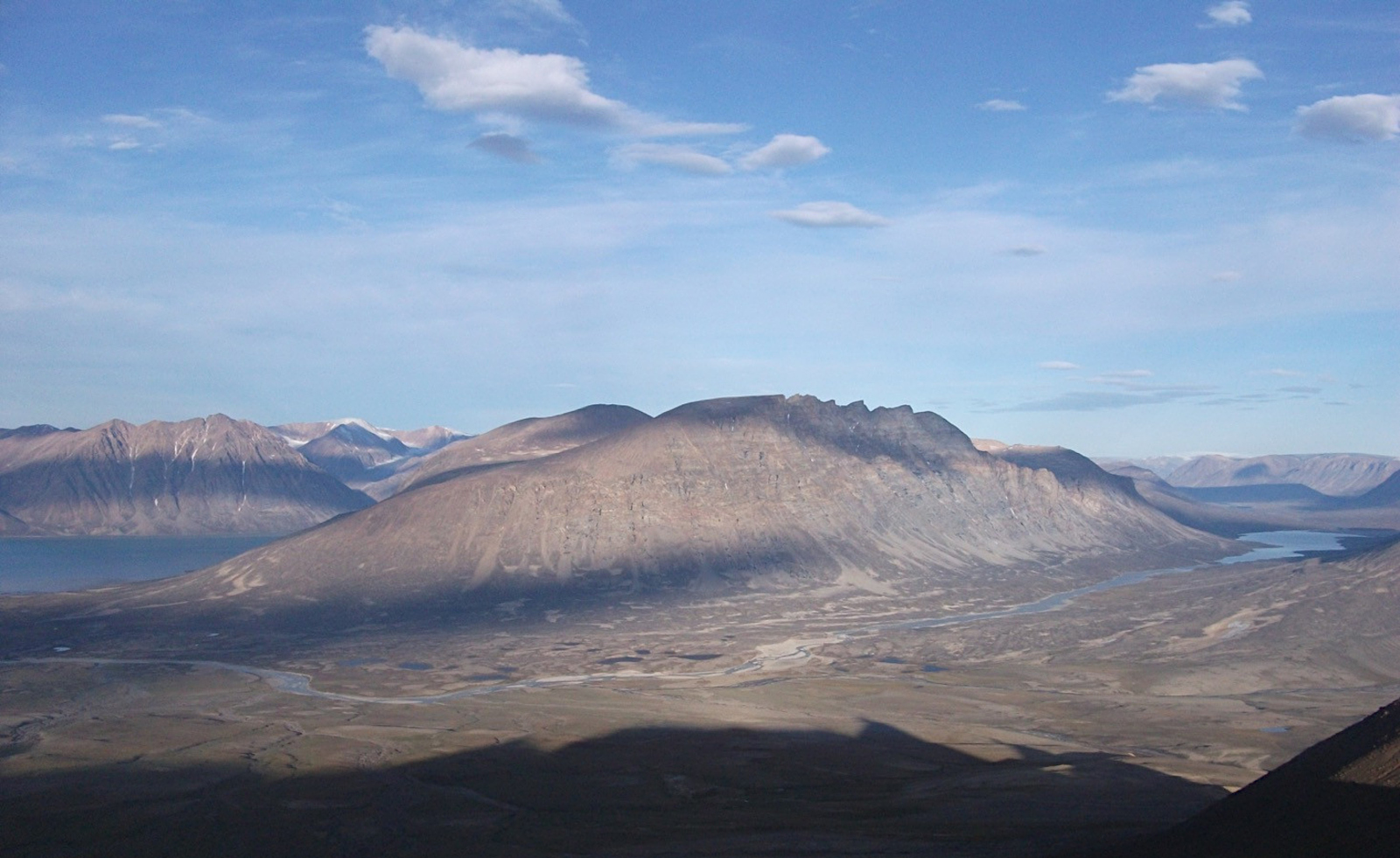
The photo shows a valley in Greenland, a valley is a low point, but Trump’s arrogant rudeness was another kind of low-point, and his falsifications were low-points as well.
What’s in an image? Sometimes quite a lot, more than meets the eye. I’m posting an image every few days.
Greenland (click images to enlarge)
A huge rumpus has developed over Mr Trump’s fixation on owning Greenland. I’ve never been to Greenland, but I’ve seen many photos and read accounts by people who have visited or who live there. It’s a large island with hospitable inhabitants but a very inhospitable climate, mostly covered by an ice cap up to 3 km (2 miles) deep, and peopled by a rich mix of the hardy Inuit natives of the land and Danes. The photo shows a valley in Greenland, a valley is a low point, but Trump’s arrogant rudeness was another kind of low-point, and his falsifications were low-points as well.
The rumpus continued until Trump backed down, but in his Davos address and press conference Trump said many things that did not ring true in my ears and mind so I wanted to see a fact-check.
What follows was not written by me. It’s Chat GPT’s response to my request for the AI to read the transcript, fact-check the claims, and draft a 1000-word essay for me. I planned to edit it into a finished article to publish here, but I decided instead to publish the draft as is.
Read it below: ChatGPT as a guest author on my blog.
Here’s my request to ChatGPT:
Please examine President Trump’s Davos press conference, fact check his claims and draft a 1000 word essay based on your findings.
Feel free to put this prompt into an AI of your choosing, the output will vary between AIs and may change over time as well.
Fact-Checking President Trump’s Davos Speech and Press Conference
Introduction
In January 2026, U.S. President Donald Trump delivered a highly anticipated speech at the World Economic Forum (WEF) in Davos, Switzerland, and later faced questions at a press conference. His address was notable not only for its bold proclamation of U.S. ambitions — especially regarding Greenland — but also for a wide array of controversial and, in many cases, misleading or incorrect claims about international relations, economics, and domestic policy. This essay examines the context of the speech, fact-checks key assertions, and evaluates the broader implications of the rhetoric deployed.
A Controversial Theme: Greenland and U.S. Expansionism
Perhaps the most eye-catching aspect of Trump’s Davos address was his discussion of Greenland, the vast Arctic island that is an autonomous territory of Denmark. Trump reiterated his desire for the United States to acquire Greenland, labeling it “critical” to U.S. and NATO security. He also — for the first time in this campaign — publicly pledged not to use military force to obtain it. – Time
However, this position was controversial for multiple reasons:
International Law and Sovereignty: Greenland is part of the Kingdom of Denmark; any transfer of sovereignty must be voluntary and negotiated. Danish leaders have consistently rejected selling or ceding control of the territory. – AP
Misrepresentation of Defense History: Trump implied that the U.S. “gave Greenland back” after World War II. In reality, the U.S. military presence in Greenland was based on agreements that affirmed Denmark’s sovereignty over the island while allowing the U.S. strategic access — but Greenland was not “returned” in the sense of ending U.S. ownership, because it was never wholly U.S. territory. – MediaITE
Strategic Importance vs. Imperialism: Trump’s framing of Greenland as a necessary bulwark against global threats was criticized as overly nationalistic and potentially destabilizing for NATO unity. European leaders stressed sovereignty and peaceful cooperation. – Guardian
Although Trump’s explicit rejection of military force was welcomed by markets and some commentators, the overall push was seen as a diplomatic provocation rather than constructive strategy. – Time
Misleading and False Claims
Beyond Greenland, Trump’s remarks included a number of statements that were factually inaccurate or misleading. Fact-checkers from multiple outlets documented significant issues:
1. NATO Contributions and Benefits
Trump characterized NATO as a burden on the United States, asserting the U.S. “never got anything” out of the alliance. This framing ignores both measurable benefits and longstanding structural agreements:
The U.S. does bear a large share of NATO defense spending, but it does not pay 100% of it; in 2024, U.S. defense spending comprised roughly 60-plus percent of total NATO expenditure. – NewsChannel3-12
NATO membership delivers both strategic security for the U.S. and economic and political stability among allies, which benefit U.S. interests. – NewsChannel3-12
2. Wind Energy and China
Trump derided renewable energy efforts, particularly wind power, and claimed he couldn’t find evidence of wind farms in China. This is demonstrably false:
China ranks first in the world in installed wind power capacity, with roughly 40–45 percent of global capacity. – Reddit
Such misstatements underscore pervasive misunderstandings about energy infrastructure.
3. Trade and Economic Claims
Trump’s economic narrative included assertions about U.S. trade imbalances and export markets that were incorrect:
He claimed the European Union does not buy American farm products and automobiles, implying that U.S. exports are negligible. In fact, the EU is a major market for U.S. agricultural exports and is among the top vehicle export destinations for U.S. manufacturers. – WRALNews
Additional claims about trade deficits — especially exaggerated figures about China and Canada — were similarly misleading when evaluated against official trade statistics. – WRALNews
4. Election and Historical Falsehoods
During the speech, Trump reiterated the claim that the 2020 U.S. presidential election was “rigged.” This assertion has been conclusively debunked by multiple courts, election officials, and independent fact-checkers. – HindustanTimes
Furthermore, in discussing geopolitical conflicts, Trump mischaracterized some historical events (e.g., conflating diplomatic tensions or border disputes with actual wars). – MediaITE
Economic Performance and Domestic Policy
Trump also touted U.S. economic performance under his administration, claiming low inflation and high growth. While inflation has been reduced from peaks seen earlier in the decade, some of Trump’s accompanying statistics — like headline growth figures and the scale of investment commitments — were overstated compared with independent economic data. – NewsWeek
His framing of U.S. economic strength was intended to contrast with his characterisation of the previous administration, though key metrics show that inflation, growth, and market performance fluctuate due to broader global and domestic conditions, not solely presidential policies. – NewsWeek
Rhetoric, Reactions, and Implications
Trump’s Davos speech was met with a mixture of shock, criticism, and, in some quarters, applause for his combative posture. European leaders, especially from Denmark and the EU, expressed concern about his Greenland remarks and his critiques of European energy and economic policy. – Guardian
Financial markets reacted positively to the pledge not to use force in pursuing Greenland, but broader geopolitical analysts warned that pushing such rhetoric in a forum dedicated to economic cooperation risked undermining U.S. credibility. – Time
Conclusion
President Trump’s appearance at the 2026 World Economic Forum was consequential — not just for its content but for the contradictions and controversies it generated. While his call for U.S. leadership and economic strength resonated with some domestic audiences, the fact-checking analysis reveals that many claims were inaccurate, misrepresented complex facts, or repeated debunked narratives. The emphasis on territorial ambitions like Greenland, along with misstatements about trade, energy, and alliances, highlights the challenges of integrating nationalist and transactional rhetoric into forums predicated on multilateral cooperation.
In sum, the Davos speech stands as a stark example of how high-level international engagement can be shaped as much by political theatre and domestic audience signaling as by policy substance — and the importance of grounding such speeches in verifiable facts if they are to foster trust and constructive global dialogue.
If you enjoyed this or found it useful, please like, comment, and share below. (If you don’t see those links, click the article’s title above the main photo and they will appear.) Send a link to friends who might enjoy the article or benefit from it – Thanks! My material is free to reuse (see conditions), but a coffee is always welcome and encourages me to write more often!
The idea of a wool market is an appropriate one for the town; in medieval times the wool trade was of high importance in the Cotswolds where a series of wool towns developed, of which Cirencester was the largest.
What’s in an image? Sometimes quite a lot, more than meets the eye. I’m posting an image every few days.
Woolmarket (click images to enlarge)
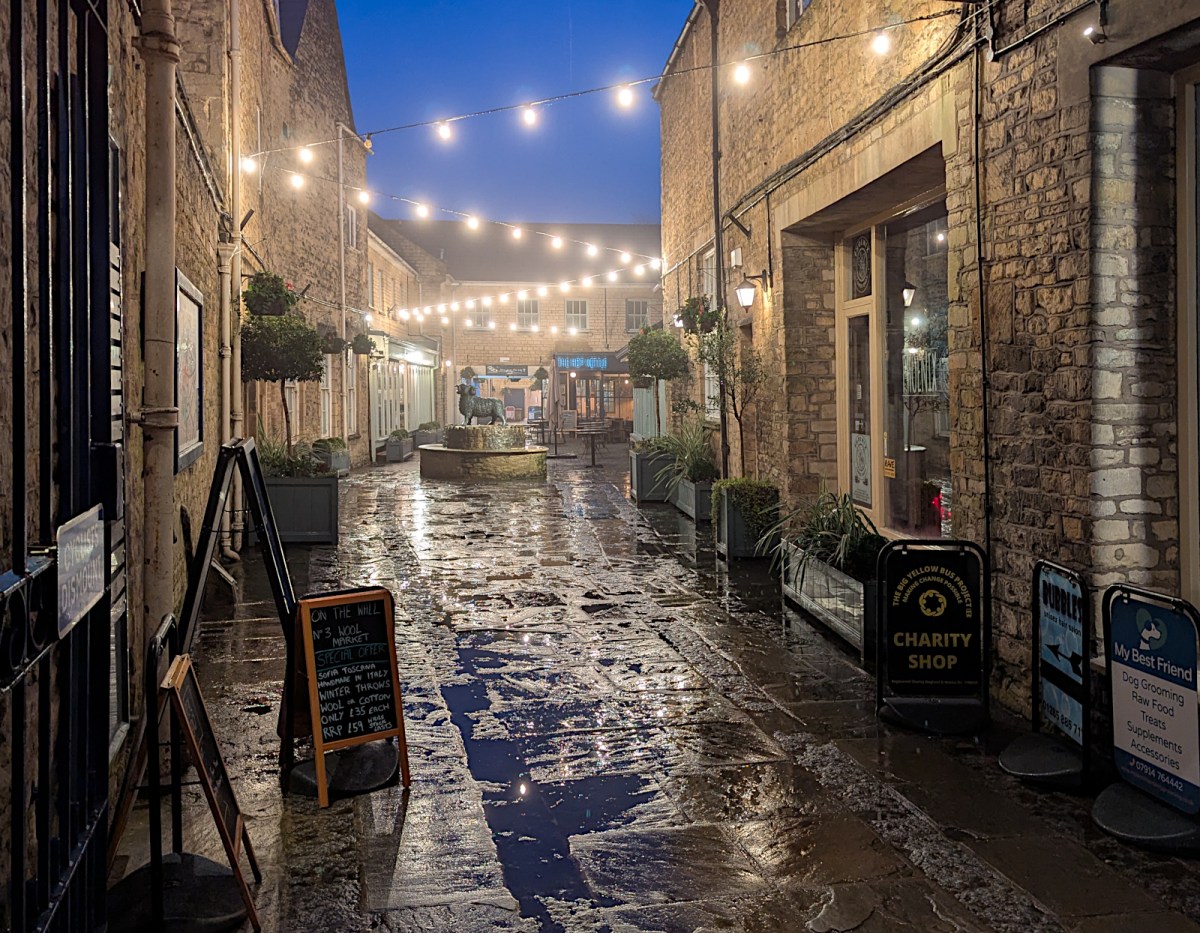
The Woolmarket is a small shopping area between Dyer Street and The Waterloo in Cirencester. It looks old, it’s presented as old, but in fact it’s a relatively recent development, created in the 1980s and further improved in 1996. The idea of a wool market is an appropriate one for the town; in medieval times the wool trade was of high importance in the Cotswolds where a series of wool towns developed, of which Cirencester was the largest. The town’s Parish Church of John Baptist was built and extended in part with money from the wool trade as was the old Abbey before it.
Many of the Georgian frontages around the centre of the town began their lives as the homes of wealthy wool merchants. They are now mostly offices or flats, and sometimes have the ground floors replaced by retail businesses with large windows for display. But look up and you’ll see right away two or three floors of Georgian architecture above those ground floors.
The photo
I took this photo on a wet evening on 18th January 2026, the paving slabs of natural stone glistening in the overhead lighting and the more distant buildings softened by descending mist as the damp atmosphere cooled down following sunset. It’s very typical of January in the Cotswolds. Sometimes we get snow, and heavy frosts are possible, but often it’s just a chill damp with muddy fields and foggy mornings.
The sheep statue
In the middle of the photo, look into the middle distance and you may spot the statue of a traditional Cotswold Lion sheep. This famous old breed was once widespread across a huge expanse of the Cotswolds, though now it is a rarity.
If you enjoyed this or found it useful, please like, comment, and share below. (If you don’t see those links, click the article’s title above the main photo and they will appear.) Send a link to friends who might enjoy the article or benefit from it – Thanks! My material is free to reuse (see conditions), but a coffee is always welcome and encourages me to write more often!
You see the lights and you might hear the engine or the sound of the tyres on the road surface. But there’s no way you could tell the make and model of the car. The details are hidden.
What’s in an image? Sometimes quite a lot, more than meets the eye. I’m posting an image every few days.
Click images to enlarge
Sometimes it’s foggy in Cirencester. The Cotswolds is in the south-west of England and the prevailing winds come from the south-west and are laden with water vapour after crossing the Atlantic. As the air rises over the Cotswolds and other hilly country, some of that water vapour condenses as rain and some as fog. Once the sun appears, any mist or fog clears away with the rising temperature.
It’s all in the detail
As you look at the scene in the photo, you’ll notice right away that the fog obscures details on the church tower while the details on the nearer, and much less tall buildings in the foreground are quite sharp. This is always the way of things in foggy conditions. Nearby objects reveal more detail than those further away. If you stood near the base of the tower and looked towards the top you’d see the same thing. Stonework at the same level as your head would be clear, but raise your gaze to the top of the tower and you’d see few details. In heavy fog you might not see the top of the tower at all.
This is a great illustrative parallel of our ability to see spiritual details too. Look at the people around you and you see a lot of detail – hair colour, eye colour, style of hair, details of clothing , now look up and the detail seems to vanish. The Bible tells us that the Creator is hidden in dark clouds. The English words dark and darkness didn’t traditionally mean an absence of light, the sense was of something hidden from view. When you look into the headlights of a car coming towards you at night you see the lights and you might hear the engine or the sound of the tyres on the road surface. But there’s no way you could tell the make and model of the car. The details are hidden although (or even because) there’s so much light.
Yahweh (God) is like that too, as you get to know him the first thing you’ll understand is the simplest thing of all – he is there! Just an indistinct outline in the distance. As you draw closer, gradually you’ll begin to see how brightly he shines, but spend some time with him and more detail will appear, not what he looks like because he’s not a physical object in our universe, but you’ll start to see that he consists of a pure love, you’ll notice that he cares deeply about everyone, not just his followers, that he is the source of such things as peace, and grace, and joy, and that he knows you better than you know yourself. This experience feels very like walking towards an object almost invisible in the fog and discovering it to be a beautiful tree or an an amazing building. And the closer you get, the more detail you can distinguish – the veins on the leaves or the surface details in the stone.
Making a start
But how can you begin to know him? Where do you start? The answer is simple, begin right where you are right now. Start by noticing that the people you know (and you yourself) have a threefold nature. You are physical, like a stone or a puddle of water, but you also have a mind – utterly unlike a stone or a puddle! Is it so surprising, then, that there’s a third dimension to your existence and nature? These dimensions overlap yet they are distinct.
Your physical presence can be measured just like that of a stone, you have a certain size, shape, and mass, if you’re in motion you have measurable velocity, direction of movement, momentum and so forth. You possess colour and reflectivity. But overlapping with this physical presence are your senses of touch, sight, hearing and the rest.
The stone lacks these abilities. You have a brain that constantly evaluates the information coming from your senses and combines them into knowledge of your environment. This makes you aware of other objects (don’t trip over that stone, don’t step in that puddle), other lifeforms (chase away the fly that has landed on your arm, don’t step on that frog on the footpath), other people (talk to your neighbour, pay for the item you just bought, wave to your friend across the road, ask for directions).
Pushing through the fog
And that third dimension? Most of the overlap here is with your emotions, the love you feel for family and close friends, the fears you entertain (fear of death, fear of injury, fear of loss). There’s a spiritual element to your nature that overlaps mere emotion and goes way beyond feelings. This is another dimension that you can explore and it’s part of our nature that we sometimes fail to consider and rarely, if ever, visit.
So go there, move towards that somewhat foggy zone and the further you go, the more you will see. And I can assure you, the more you see the more you’ll be drawn along to explore further because what you find will be delightful, encouraging and fulfilling. And remember, in the fog, the further and higher you look the less you will see. But go closer and the details will become clearer. Drawing close is the only way to deal with fog.
And there’s a huge additional advantage, the physical and the mental aspects of your existence will pass away, the atoms of your body will be recycled, dispersed, and used to construct other things. But the overlapping spiritual aspects remain, because they are not dependent on the physical world in any way, they remain.
If you enjoyed this or found it useful, please like, comment, and share below. (If you don’t see those links, click the article’s title above the main photo and they will appear.) Send a link to friends who might enjoy the article or benefit from it – Thanks! My material is free to reuse (see conditions), but a coffee is always welcome and encourages me to write more often!
How extraordinary to see both lava and snow close together, lava inside the volcano and snow on the slopes outside. Truly, the natural world is completely amazing.
What’s in an image? Sometimes quite a lot, more than meets the eye. I’m posting an image every few days.
Click images to enlarge
This photo really is extraordinary. Take a guess at what might be going on here first. Then I’ll tell you all about it.
Needless to say, I did not take this photo. It was in Nature Briefing, anyone can sign up free of charge for science news and photos from the prestigious scientific journal, Nature. The signup link is in the upper, right of the Nature home page.
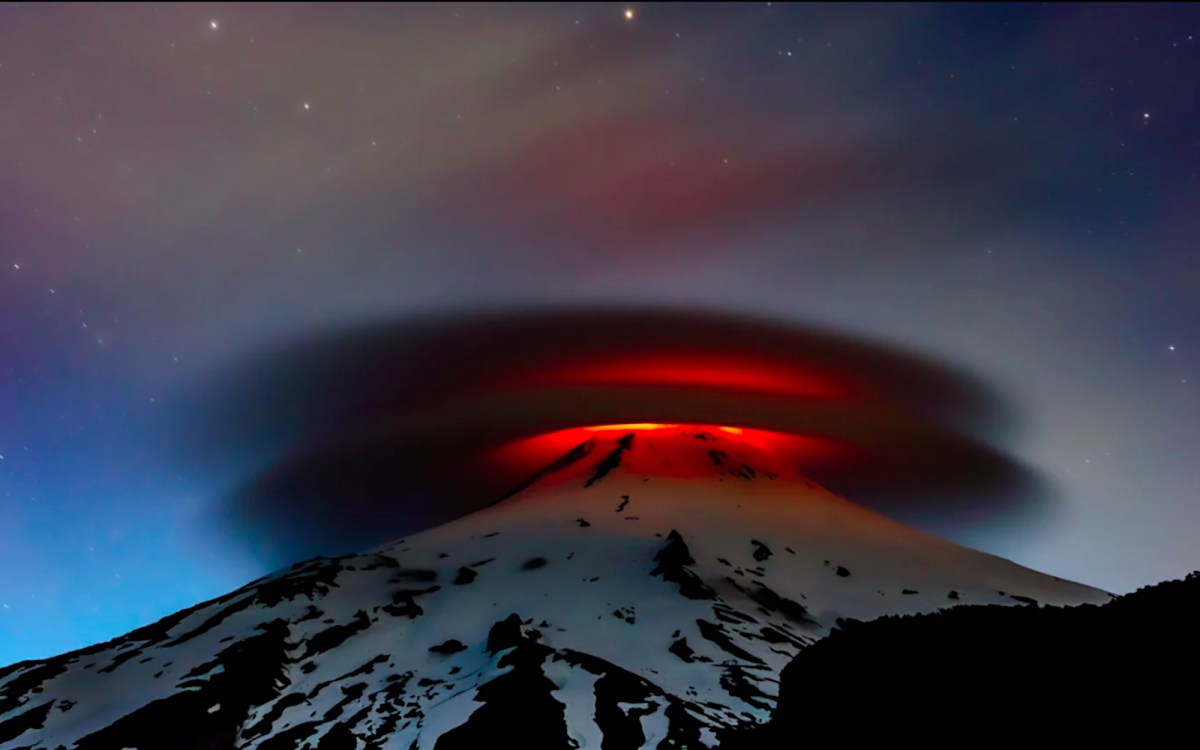
The image was made by the photographer Francisco Negroni and shows Villarrica, described as the most dangerous volcano in Chile. (You can buy a much more detailed version of this image online.)
Two heavy, dark clouds have formed over the volcanic caldera, illuminated by the lava. The heat of the lava below has evaporated the central part of both these clouds, forming them into perfect rings. The sky was already dark enough for stars to be visible. How extraordinary to see both lava and snow close together, lava inside the volcano and snow on the slopes outside. Truly, the natural world is completely amazing.
Think about that last point, lava is literally red hot, around a thousand degrees C, snow is made of water ice, it can’t exist above 0 C at atmospheric pressure. The volcanic rock between the lava and the ice provides sufficient thermal insulation to allow these incompatible materials to survive inside and outside the volcanic cone at the same time!
People of faith may say that God made it that way, people of science will provide a physical explanation. Many people, perhaps even most, might argue these two views are incompatible. But that’s not necessarily the case; there are many people who are both good Christians (or Muslims, Jews, Buddhists or Hindus) and also good scientists. Very often faith communities have enabled and supported great advances in science and technology, enabling us to understand and explain all sorts of phenomena in mechanistic ways that sometimes seem not to require any kind of faith at all. It’s a conundrum that philosophers sometimes explore and discuss.
If you enjoyed this or found it useful, please like, comment, and share below. (If you don’t see those links, click the article’s title above the main photo and they will appear.) Send a link to friends who might enjoy the article or benefit from it – Thanks! My material is free to reuse (see conditions), but a coffee is always welcome and encourages me to write more often!
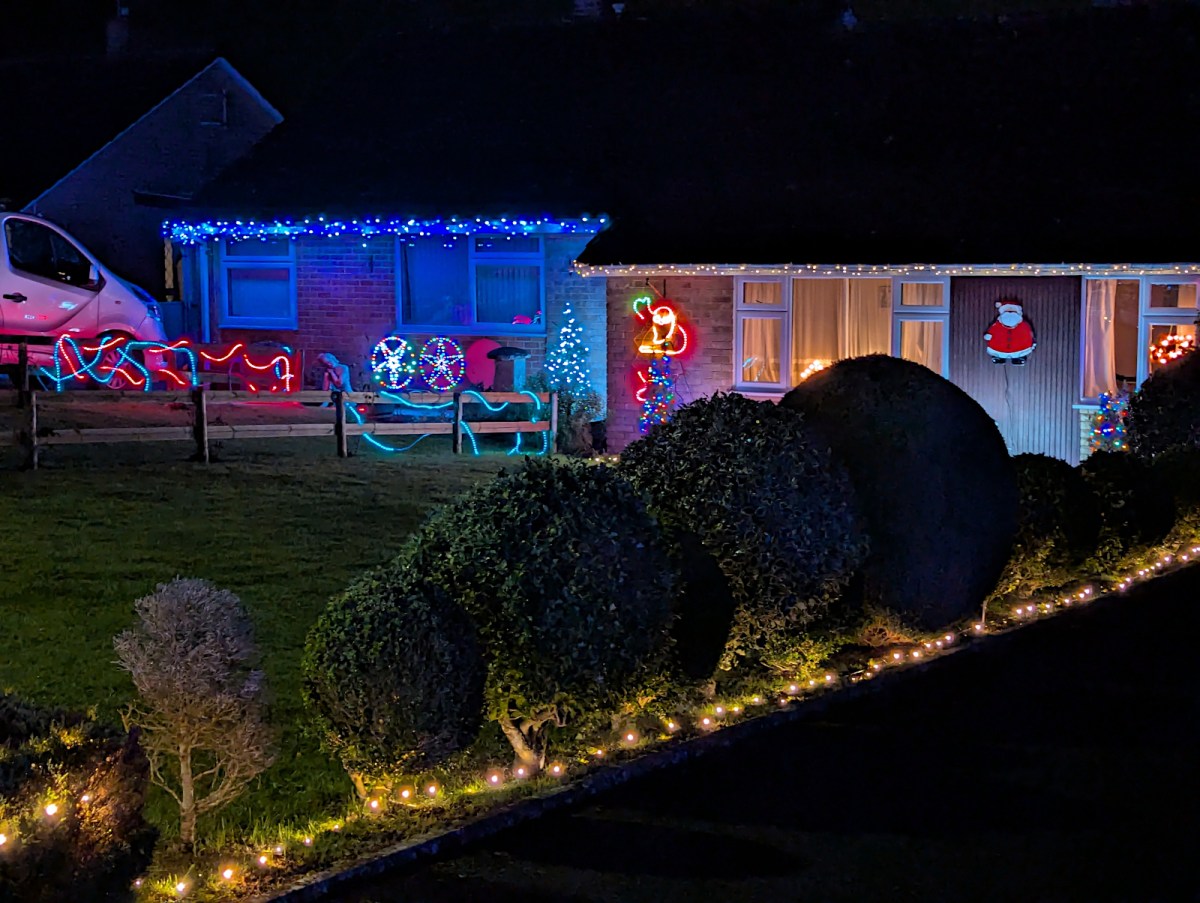
At Vale Road in Stratton on the northern edge of the Cotswold town of Cirencester, residents (and one in particular) put a lot of effort each year into decorating their homes and gardens with all sorts of coloured and illuminated decorations. And they invite the people who come to look to make a contribution to Macmillan Cancer Support.
What’s in an image? Sometimes quite a lot, more than meets the eye. I’m posting an image every few days.
Click images to enlarge
People love Christmas lights and decorations, and people hate illness particularly if there’s no cure. So can Christmas lights help people with incurable illness? Yes they can! But…how?
Well, one way is to use the Christmas decorations to raise money for charity, and that’s what one street in Cirencester has been doing every year for some time now.
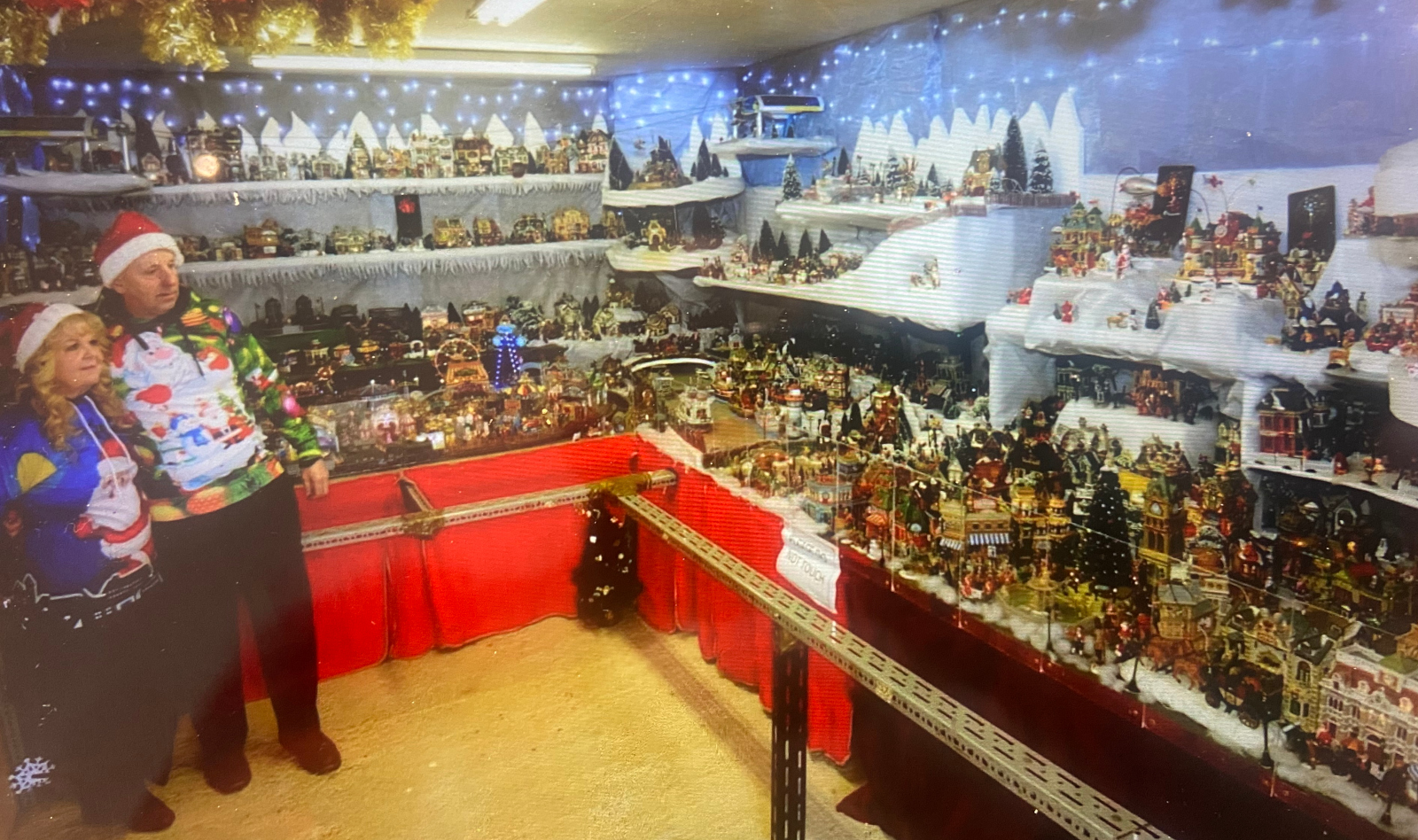
There’s more inside – a model village!
At Vale Road in Stratton on the northern edge of the Cotswold town of Cirencester, residents (and one in particular) put a lot of effort each year into decorating their homes and gardens with all sorts of coloured and illuminated decorations. And they invite the people who come to look to make a contribution to Macmillan Cancer Support. This charity provides care, help, nursing and support for cancer patients and their families right at the time when they need help most. They will help families care for a mum, a dad, or a grandparent at home.
The heart of the action
If you live in Cirencester or the local area, why not drive out to Vale Road and park in a nearby street like Vaisey Road, Tinglesfield or Park View? (But please don’t block any driveways or park near junctions.) Then walk the short distance to Vale Road. You can pay for a tour of the best of the lights, delight your children (or grandchildren), and help support a great cause all at the same time. What could be better than that?
If you enjoyed this or found it useful, please like, comment, and share below. (If you don’t see those links, click the article’s title above the main photo and they will appear.) Send a link to friends who might enjoy the article or benefit from it – Thanks! My material is free to reuse (see conditions), but a coffee is always welcome and encourages me to write more often!
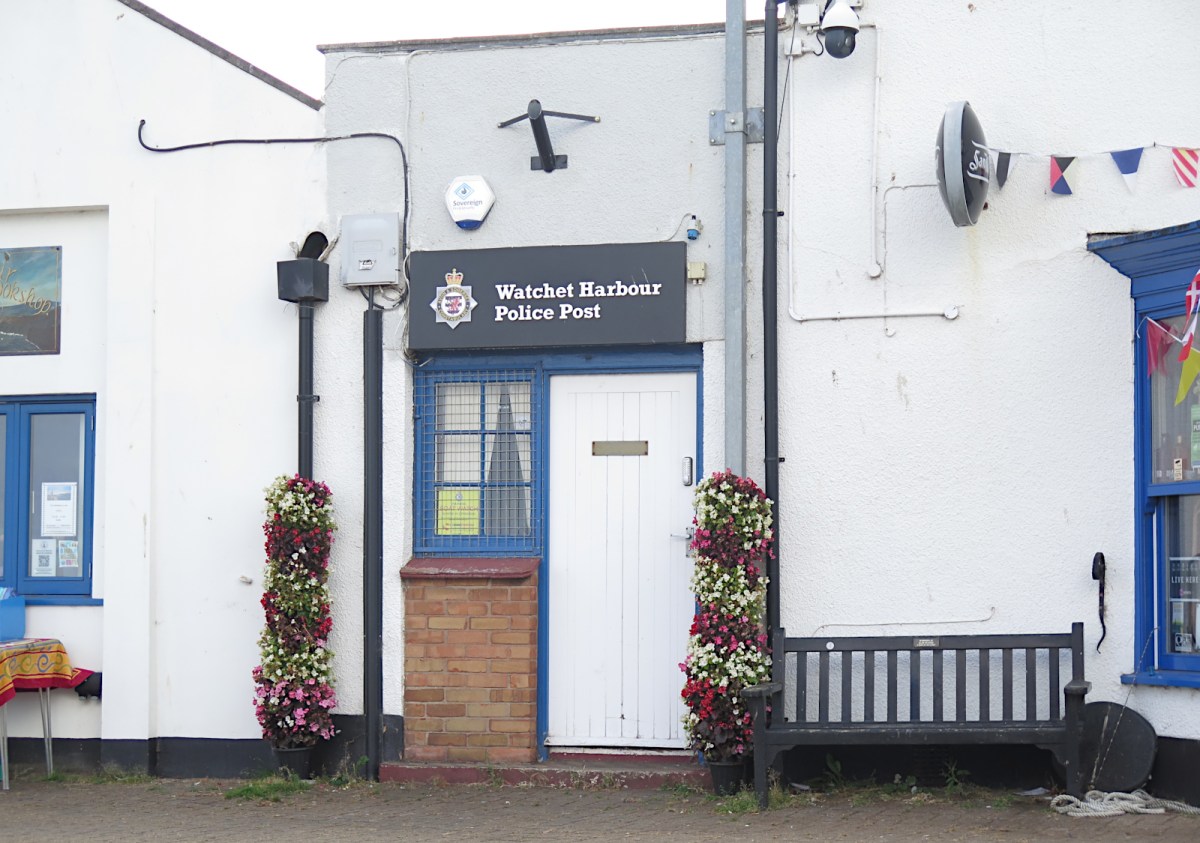
At Watchet Harbour on the north coast of Somerset stands possibly the smallest Police Station in the world. Certainly I’ve never seen one this tiny before. It’s just a door and a small window wide and has the grand title ‘Watchet Harbour Police Post’. If you know of a smaller police building anywhere in the world, please let me know in the comments section below.
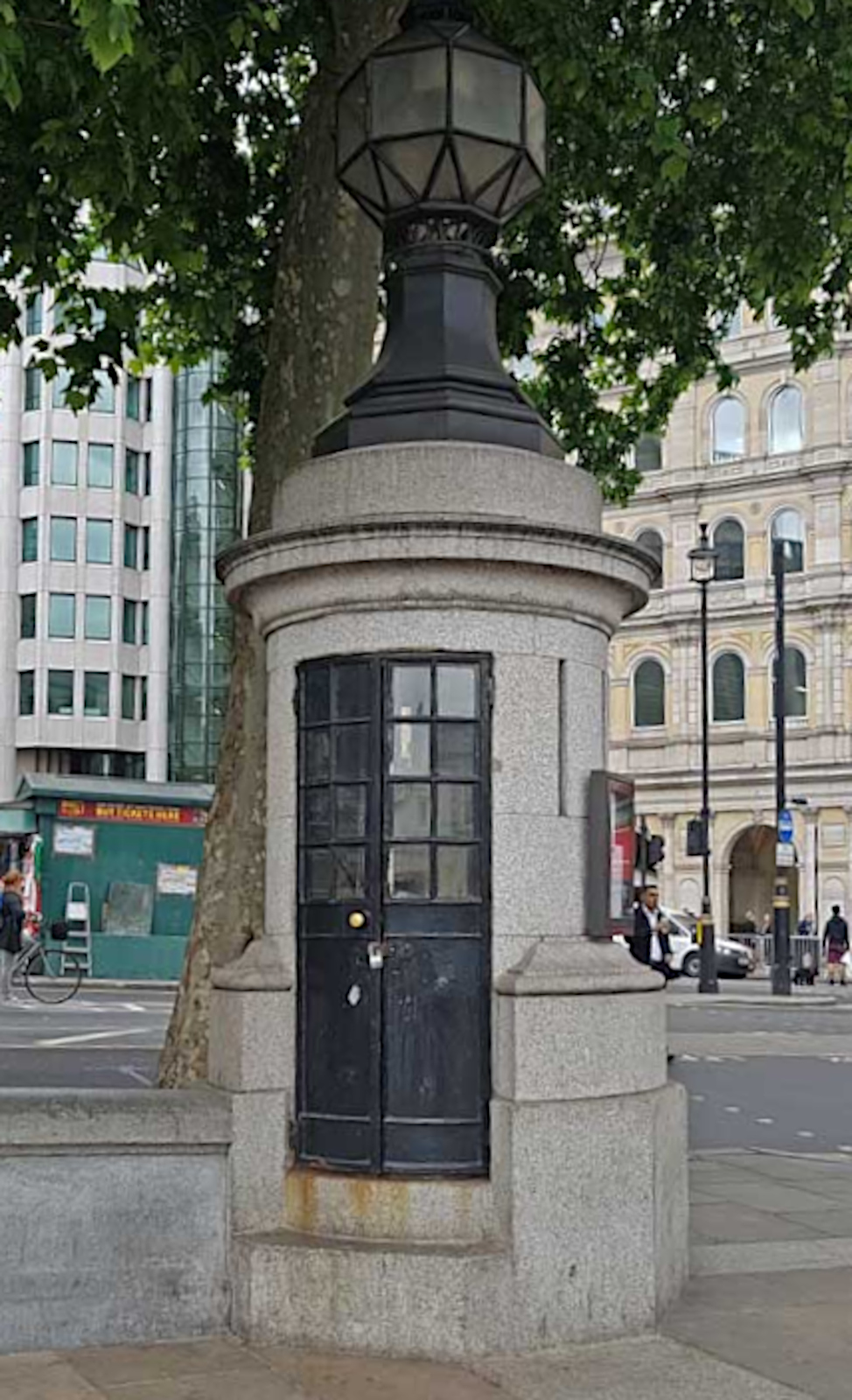
However, a quick Google search turned up an even smaller one in Trafalgar Square, London. So Watchet has already lost its brief claim to fame! Read more about the Trafalgar Square example. However, the London claimant is no longer used by the Police, so Watchet might still claim to have the smallest working police station in the UK.
International claimants
Florida also has a claim to the smallest working police station and it’s certainly much smaller than the police post in Watchet. Like the London version, Florida’s is sheltered by a tree.
I suppose it’s possible there’s a smaller one somewhere else in the world, but if so it must be so tiny that you’d need a smaller than average police officer to occupy it.
This is a bit different. You can’t measure a church in terms of how wide or long it is. Churches are measured in terms of how many people are meeting. Jesus once said, ‘Wherever two or three are gathered in my name, I’ll be there with them’. So the smallest church must be a meeting of two people (three if you include Jesus). That’s because church is not a building at all (although we often call a place where followers of Jesus meet ‘a church’. Is it still a church if the people have all gone home? No. Why? Because church is a community, not a building. Two people is the smallest possible community. We don’t always think of church as a community, but we should. If it’s not a community can it really be church at all?
If you enjoyed this or found it useful, please like, comment, and share below. (If you don’t see those links, click the article’s title above the main photo and they will appear.) Send a link to friends who might enjoy the article or benefit from it – Thanks! My material is free to reuse (see conditions), but a coffee is always welcome and encourages me to write more often!






 Journeys of Heart and Mind