This index lists a collection of articles where the focus is on how we ‘do’ church. We challenge the basis of our thinking about what church is, how it works and is organised. And we examine the ultimate questions – who are we really following, and why?
Church as we know it – The whole point of church is that we are a community of people who follow Jesus
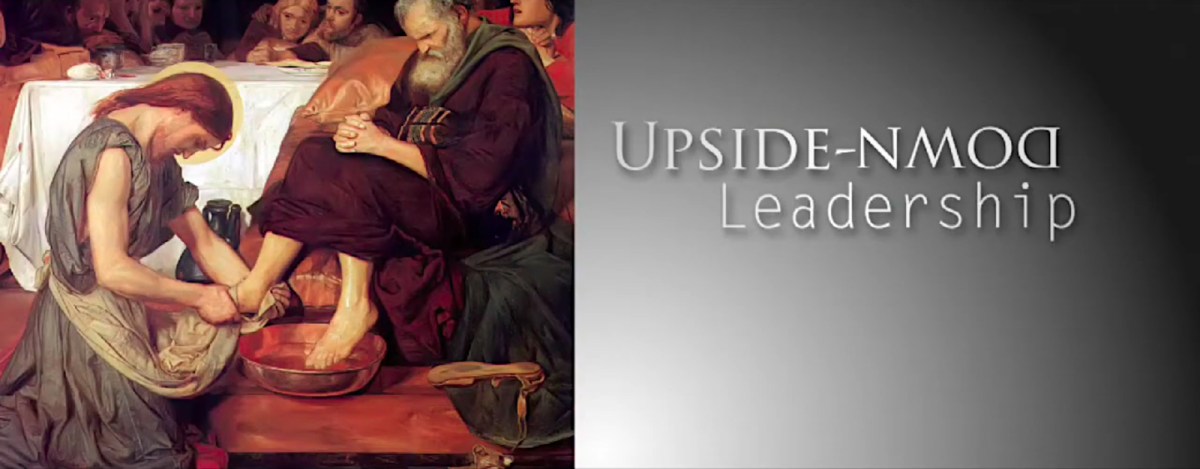
Upside-down? – Leadership and authority that is different from the usual kind
Like a waterfall – A waterfall breaks the pattern of a river’s flow
Message to a friend – It’s hard for passions to stay alive when you’re in a dry and dusty land with the dry bones of church lying all around
The good and bad of services – A meeting that is not managed by us has the opportunity of being managed by the Holy Spirit
Is church unbalanced? – If we learn to cooperate with one another … we will catch a view of [Jesus’] nature and so will the world around us
I’m sharing a vision and message I received recently because, although it was primarily for a small group I meet with weekly, I think it has a much wider application as well. Sometimes Father shows me things when I am not particularly trying to listen to him. But on this occasion I was prompted by something a friend had said and I’d set aside some time to deliberately look and listen to the Spirit. So without more ado, here is what I saw:
Father showed me a waterfall, there was quite a big drop and the water was crashing onto rocks at the bottom. It was not huge like Niagara, but high enough that you wouldn’t want to take a boat over it!
And I sensed the Spirit saying the following words which I wrote down at the time:
A waterfall breaks the pattern of a river’s flow. The water always responds to gravity, but rarely flows freely towards the source of attraction (the centre of the Earth), normally it’s constrained by the river bed and the banks on either side, and only makes very slow progress downwards. But just now and then it gets the chance to flow freely towards the centre of attraction. I am that centre for my people, I want you to flow freely towards me, unrestricted by the channels you normally occupy.
But those channels are comfortable and seem safe, when they are taken away you feel in danger and vulnerable. This is not just true for my people, it’s true for everyone. You can see how the normal and comfortable has been taken away during the current Covid-19 crisis. Jobs, family contacts, high street shopping, watching a film, education, visiting friends – all these things have changed. And the normal patterns of church have changed too. So what remains? Ask yourselves what remains. Ask yourselves what is important.
The water flows differently when there’s no channel and it has complete freedom. That’s true for living water too. The loss of a channel is not a disaster, it’s an opportunity – think about that too.
I called you to be part of my waterfall, not part of a constrained river.
Do you see church as a channel you flow along, something that contains you and controls your flow? Do you see the value of complete freedom to rush headlong towards Jesus like a waterfall, with no channel to contain and direct your flow?
He is our Master, our Teacher, our Shepherd, the King of Kings, the Lord of Lords. He gave us life by breathing his breath into us, and he has given us new, spiritual life in the same way. He is the Way, the Truth, and the Life, he is Living Water, he is the Light by which we see. He gives us gifts including the gifts of apostle, prophet, evangelist, shepherd, and teacher. He calls us to follow him, to say what we hear him say, and do what we see him do. Given all of that, how can we possibly allow ourselves to be channelled by anyone or anything else but him?
He said, ‘Ask yourselves what remains [when the normal channels of church have changed]. Ask yourselves what is important’. And he said, ‘The loss of a channel is not a disaster, it’s an opportunity – think about that too.’
Perhaps we should take him at his word. What remains of normal church life? What is important? What are the opportunities?
Should we go back to the old channels as soon as that becomes possible? Should we cling to church, or should we cling to Jesus? Should we follow habit and tradition, or should we follow Jesus? Will we turn to church to disciple us or will we turn to Jesus to do that? Is there a difference? I think there is an enormous difference. What do you think?
I’ve just re-watched a video posted on You Tube in 2015; I’d like to share it with you. It’s called Upside-Down Leadership and was made by an organisation called House2House. I personally know several of the people speaking in this video, and they are kind, thoughtful, earnest men and women – all of them have walked closely with Jesus for many years. I hope you will recognise Christ in them as you watch and listen to what they have to say.
The video describes leadership and authority that is different from the usual kind of leadership most of us recognise. I can guarantee that in practically any church gathering of any kind, there will be people like these present. They may or may not be recognised by the institutional forms of church we are mostly familiar with; but if you want to grow as a follower of Jesus, these are the people you need to spend time with. They tend to be gentle, wise, kind, thoughtful, humble, loving and often overlooked, sometimes even rejected.
Watch the video and then think about the people in your church, denomination, or small group. Who might benefit from servant leaders like these? Can you identify any upside-down leaders? (They are always there, and just as likely to be found in the congregation as on the platform.) They may be male or female, young or old, uneducated or professorial, wealthy or poor.
How might we find more such upside-down leaders? And how will we thrive without them? Let me know what you think, leave a comment.
I do encourage you to take a look at the claims Jesus makes about himself, and I encourage you to read about him in the Bible, especially in the New Testament. A good place to begin might be one of the gospels. I suggest reading Luke (and then Acts for the early history of the church).
The time has come to ask some questions about church as we know it in 2020. What cause lies behind the shrinking attendance at mainstream denominations? Why do we do the things we do? Do our traditions and assumptions match up with church as Jesus wants it to be? If we need to change, how do we go about that? Should we even be asking questions like these?
I believe we should. Not that things are worse than they were ten years ago, or a hundred years ago. But certainly things are not at all as they were at the beginning. Does that matter? If so, why? If not why not? How can we even begin to wrestle with these questions?
I believe we can – and must. But first we need to calibrate our knowledge and understanding and find a measuring system so that we can establish some basic parameters.
The fundamental measure
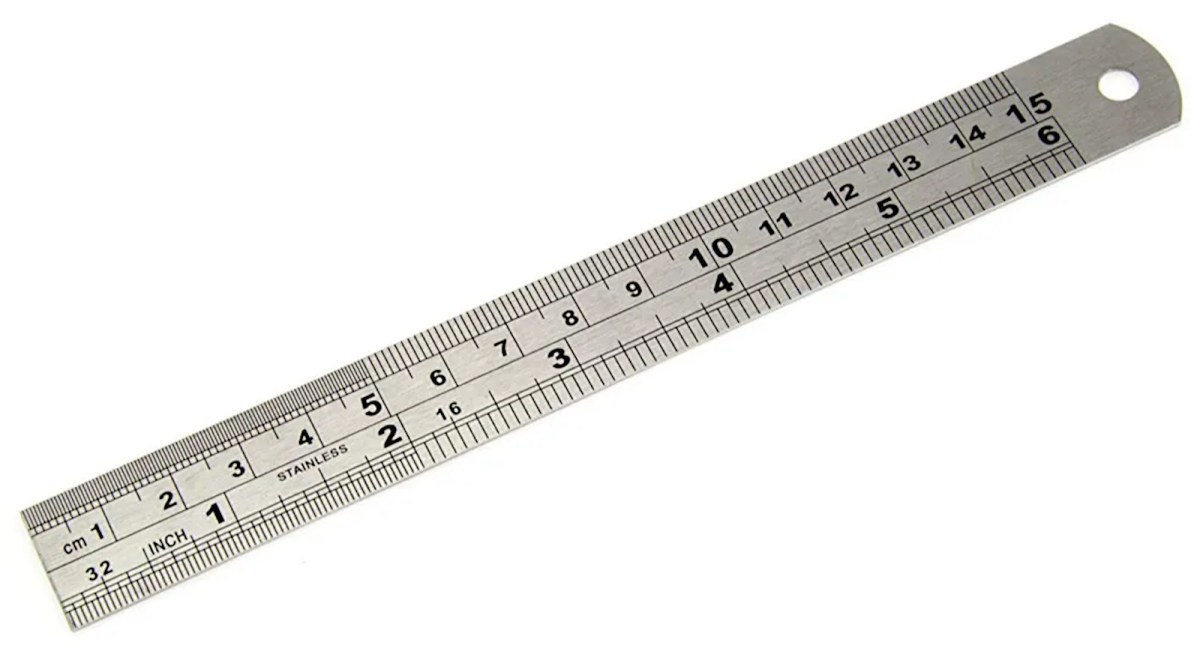
Let’s take length as an example of a physical quantity. To measure the length of something we need a calibrated tool – a ruler, tape measure, laser rangefinder – whatever form it might take. But the measuring device must be calibrated. A ruler with mm and cm markings on it would be useless if it didn’t agree with other rulers. The basic need here is for a length that never changes that we can use as a standard. Until 1960 the standard was a metal bar in France, and this standard meter was used for calibration; if your ruler didn’t agree with the standard meter in France, it was a bad and misleading ruler. The modern standard is based on the wavelength of a particular kind of light and is far more precise and reliable than the metal bar.
In church life we need a similarly precise and reliable standard concerning our organisation and behaviour. Since the whole point of church is that we are a community of people who follow Jesus, it should be obvious that he is the standard we must use for calibration. If our organisation and behaviour don’t agree with his, we are out of true and some adjustments will be essential to bring us back into line. The life and words of Jesus are the primary source for us. And all the church leaders who have ever arisen since Jesus’ day should agree with his standard. If they do not, they are bad and misleading leaders.
So how does Jesus measure up as a fundamental standard for his followers? Does he ever change? No, he is the same yesterday, today and forever. Can we use him as a standard? Yes, he is knowable in several ways, his words and actions are described in the Bible, he has filled his people with his Spirit as a guide and comforter. Is there anyone else with an equal or better claim to be our fundamental standard? Peter? James? John? Paul? A pope? An archbishop? Your pastor? Arguably, some or all of these might be more or less useful substitutes if the primary standard was unavailable. But Jesus is always available! So no, there is no man or woman who can claim to be a better standard than Jesus himself.
He’s consistent and he’s knowable – and that’s all we need.
Where do we go from here?
In future parts of this series we’ll begin to query what we’ve been doing, individually and corporately. We’ll check the standard of Jesus to see if we need to recalibrate. I’m not here to tell you what to do, but along the way I’ll try to encourage you to look for yourself, to examine Jesus and ask yourself some questions, and to act on what you discover. I’ll revisit this topic from time to time. In the meantime, may your journey be an illuminating one, may you grapple with the challenges, find your own answers, and always keep your eyes on Jesus.
What if you are not following Jesus?
Please note: If your faith is Judaism, or Islam, or Buddhism, or Hinduism or any other religion, or if you have no faith at all, then the paragraphs above are not aimed at you. They are aimed squarely at anyone who claims to follow Jesus.
But I do encourage you to take a look at the claims Jesus makes about himself, and I encourage you to read about him in the Bible, especially in the New Testament. A good place to begin might be one of the gospels. I suggest reading Luke and then Acts for the early history of the church (I’ve begun a commentary on Luke). And if you find Jesus is calling you to follow him, then the main part of this article does start to apply to you, as it does to all his people.
If you click those links to Luke and Acts you’ll be able to choose from many Bible translations in a number of modern (and ancient) languages.
When we think about church music, we usually think in terms of something that’s organised in advance and is played by a band of some kind. Often there’s a worship leader. Over the centuries church music has developed in parallel with the changes in secular music, some examples include Gregorian Plainsong, the chanting of psalms, hymns from hymnbooks accompanied by an organ, informal choruses in house meetings, and more recently bands playing in styles drawn from modern secular music and sometimes of excellent professional standard.
How does that compare with music in the early church? We do have some clues; for example, Paul writes about it briefly in Ephesians 5. In verse 18 he tells us
[Be] filled with the Spiritas you sing psalms and hymns and spiritual songs among yourselves, singing and making melody to the Lord in your hearts.
So it seems likely that singing involves inspiration, literally singing as and when and how the Holy Spirit leads. And that would be the very opposite of what we find in many church meetings where the music is led by a person and/or a band at the front and the congregation joins in. It is sometimes the case that people may, in the process, be caught up emotionally and, perhaps, spiritually. But this is never guaranteed and there’s limited freedom to initiate a new song, sing in the Spirit, or be fully free in praise and worship.
Informal and spiritual worship
So what is Victor Choudhrie suggesting? (See the quote below.) Quite simply he is saying that when we meet, at home, in small groups, after sharing a meal, we should forget organised, planned in advance music with a band. Instead, as we pray and worship and teach one another, everyone present should be free to begin a song if they feel led by the Holy Spirit to do so. Not only that, they should feel free to sing in a tongue, or use their voice with no words at all, sing alone or together, pouring out their hearts to the Lord and to one another. As with everything else – complete freedom in music!
Who is it for? Why are we singing? I’m sure you already know the answer! It’s for the Father, Papa, Abba, Daddy, Yahweh, the Mighty One, Elohim – sing to him in praise and worship. And it’s for the Son, Jesus, Yeshua, Yahshua, the Messiah, Christ, our King, our Redeemer and our Rescuer – sing to him in praise and worship. And it’s for his Spirit, the Spirit of Christ, the Holy Spirit, our Comforter, our Guide, our Cousellor and Advocate, the One who prompts us to sing – sing to him in praise and worship. Sing to the Three in One, the Everlasting Mystery! He is with us, and in us, and amongst us. How could we not sing?
Here’s what Victor Choudhrie has to say about it:
Replace professional music with believers speaking to each other in psalms and spiritual songs, making melody in their hearts to the Lord. OT worship required the sacrifice of four-footed beasts; the NT celebrates by offering two-legged Gentiles as a living sacrifice. The meta-church is a discipling hub and not a singing club. Eph 5:19; Col 3:16; Rom. 15:16
Questions:
How can we best give the Holy Spirit freedom in our singing?
Is it helpful or unhelpful to restrict singing to a particular slot in a meeting?
If our hearts are full of praise, are we more or less likely to sing?
If we sing, are our hearts more or less likely to become full of praise?