Jesus at the centre – 1

We are often overwhelmed by the complications and demands of modern life; our focus on the essential is lost and we are distracted by so many side issues.

< Previous | Index | Next >

This article is an extract from my short book, Jesus, Disciple, Mission, Church (JDMC). The bite-sized piece below is roughly two percent of the book. This article opens a deeper look at the first forgotten way.

Introduction

It’s extremely important that Jesus is at the heart of our lives, both individually and in church life too. If we don’t get this foundation right we cannot be built into what he wants us to be. What would happen if you built a house of heavy stones but didn’t have proper foundations?

The fact is, this forgotten way is fundamental; everything else depends on it and results from it. We need Jesus to be in the right place because he is the only foundation we can trust (Matthew 16:15-20, 1 Corinthians 3:9-11). Has this way been truly forgotten? Not completely, perhaps, but we have sometimes been half-hearted in following it.

Discuss or consider – Do you follow Jesus in everything? List some parts of your life where you follow him. List some parts where you don’t. Is he the foundation of your daily living, truly?

The One

Deuteronomy 6:4-9 makes it very clear; Yahweh is One and we are to love him with everything we have and are. What a dramatic change from earlier times when offerings and worship had to be made to many gods, perhaps repeatedly during the day. For us, today, ‘Jesus is Lord’ in exactly the same way (1 Corinthians 8:6). No other loyalties are acceptable in our lives, just Jesus.

There are at least three helpful habits we can develop; these are keeping Jesus at the centre, following Jesus alone, and putting the gospels way, way ahead of anything else.

Discuss or consider – Read Deuteronomy 6:4-9 and think about the difference between one and many where gods are concerned (most people 2000 years ago had to make offerings to many gods). In John 10:30 what does Jesus mean when he says, ‘I and the Father are one’? And in John 17:20-23, what does he mean when he prays for all his followers – including you and me?

Jesus at the centre

We need a fresh understanding of who Jesus really is, every explosive church growth movement throughout history has had this focus. Many of these movements were persecuted and this seems to have given them a fresh and urgent vision. They let go of everything that would hold them back and clung to the core of their faith.

We need to know how Jesus lived and worked because he intends to live and work in these same ways through us. We can so easily block him, that’s part of having the privilege and responsibility of free will. And we are often overwhelmed by the complications and demands of modern life; our focus on the essential is lost and we are distracted by so many side issues.

To get away from everything that hinders us we need to focus on Jesus much more. The Bible calls him King, Shepherd, the One and Only, the Son, Master, Teacher, Lord, the Almighty with us (Immanuel), Prince of Peace, the Word and more. Jesus himself said, ‘Anyone who has seen me has seen the Father’. (John 14:9) By reading books about him, watching films about his life, and going through the gospels repeatedly we will begin to notice for ourselves what he is like, what he says, what he does and who he is.

Discuss or consider – Carefully think about where you are spiritually. How do your lives (individually and together) compare with that of Jesus? What changes would he want to see? When you meet, remember that you are meeting, as in all things, in Jesus’ name. (Colossians 3:17)

More sections of JDMC

IntroductionJDMC, what does it contain?Using JDMC – how to approach it

Working together in six waysIntro and Way 1Ways 2, 3 and 4Ways 5 and 6, six ways

Way One, Jesus at the centreJesus at centre 1Jesus at centre 2Jesus at centre 3

Way Two, Becoming disciplesDisciples 1Disciples 2Disciples 3

Way Three, Outward and integratedOutAndInt1, OutAndInt2

Way Four, Gifts for buildingGiftsForBuilding1, GiftsForBuilding2

Way Five, A living organismLivingOrg1, LivingOrg2

More sections will appear here…

The work of the SpiritIntroJesus, disciples, outwardGifts, living, community, help

Other church leadersIntro, bishops, eldersDeacons, pastors, priests

Last wordsThe end can also be the beginning

< Previous | Index | Next >

Read the book

This was extracted from Jesus, Disciple, Mission, Church (JDMC), pages 13 and 14. Download the whole thing or read it online – GetJDMC.scilla.org.uk

Useful? Interesting?

If you enjoyed this or found it useful, please like, comment, and share below. (If you don’t see those links, click the article’s title above the main photo and they will appear.) Send a link to friends who might enjoy the article or benefit from it – Thanks! My material is free to reuse (see conditions), but a coffee is always welcome and encourages me to write more often!

Ways five and six, and six ways

Different things may stand out for different people; tell one another what seems important and why.

< Previous | Index | Next >

JDMC cover

This article is an extract from my short book, Jesus, Disciple, Mission, Church (JDMC). The bite-sized piece below is roughly two percent of the book. This completes the first chapter entitled Working together in six ways.

5 – A living organism

This session looks at some important differences between organisations and organisms, particularly as they involve movements, networks and growth. As the body of Christ we are an embodiment of Jesus’ life and resurrection.

Is the church alive or is it an institution? How can we even begin to answer a question like this? Does the Bible contain anything to help us? As a clue, does Jesus speak more positively about organisations (Matthew 12:5-8, Matthew 23:1-12) or about living things (Matthew 13:18-23, Matthew 13:31-33)? This is another long forgotten road we need to travel together, a forgotten way.

Discuss – Talk about the differences between organisms (animals, plants, people) and organisations (businesses, governments, schools). Who creates plants? Who creates schools? Who creates church?

6 – More than community

Strong and vibrant communities develop where there is a shared ordeal. We need to be on a risky journey together; we need to be drawn out of our comfort zones. It’s not necessary to be persecuted, but it is necessary to be stretched in significant ways in our lives together.

This is the sixth forgotten way, something we are inclined to stop doing when we are comfortable and unchallenged. Read Acts 4:1-7, Acts 5:17-20 and Acts 8:1-3 for some examples of how the early church lived a risky journey. Even better, read the whole of Acts and note how the early church lived and behaved.

Discuss – Is it natural for people to go beyond a place of comfort and safety? So why do we go on roller coasters? Where would you expect the strongest bonds to form, in an army detachment under fire or at a tea party? Why?

Six parts of a connected whole

The six forgotten ways are utterly dependent on one another. Think about a tree. Trees have four principle parts – roots, trunks, branches and leaves. But if any part is missing the rest of the tree will die. Without roots the tree has no supply of water. Without the trunk the root won’t receive food from the leaves, the branches would have no support and the leaves would lack water and wither. Without branches the leaves would not spread wide in the sunlight. Without leaves there would be no food supply and the tree would starve.

When all six elements of the forgotten ways are active, explosive growth is possible. And this is the key take-home message. Improvement in any one way is useful, but only when all six are active will the full benefit become clear. Like the parts of the tree, the six ways depend on one another and work together.

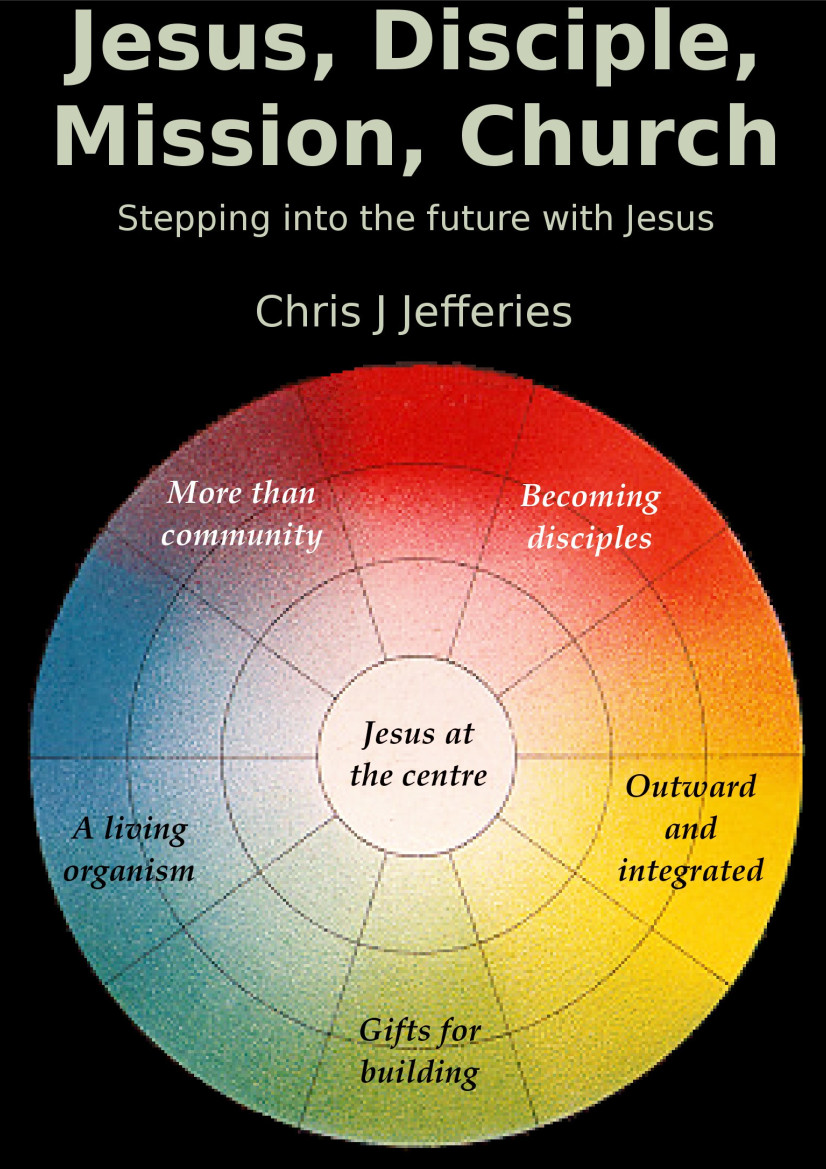
Think of Jesus in the centre surrounded by and intimately involved in each of the other concepts – becoming disciples, outward and integrated, gifts for building, a living organism and more than community. Imagine all six elements at work together. Nothing will be impossible.

That is the dream; it’s an awesome revelation. Let’s watch Jesus turn that dream into reality in our lives together.

Discuss – What is the most important thing you have discovered during this part of the guide? Different things may stand out for different people; tell one another what seems important and why.

More sections of JDMC

IntroductionJDMC, what does it contain?Using JDMC – how to approach it

Working together in six waysIntro and Way 1Ways 2, 3 and 4Ways 5 and 6, six ways

Way One, Jesus at the centreJesus at centre 1Jesus at centre 2Jesus at centre 3

Way Two, Becoming disciplesDisciples 1Disciples 2Disciples 3

Way Three, Outward and integratedOutAndInt1, OutAndInt2

Way Four, Gifts for buildingGiftsForBuilding1, GiftsForBuilding2

Way Five, A living organismLivingOrg1, LivingOrg2

More sections will appear here…

The work of the SpiritIntroJesus, disciples, outwardGifts, living, community, help

Other church leadersIntro, bishops, eldersDeacons, pastors, priests

Last wordsThe end can also be the beginning

< Previous | Index | Next >

Read the book

This was extracted from Jesus, Disciple, Mission, Church (JDMC), pages 11 and 12. Download the whole thing or read it online – GetJDMC.scilla.org.uk

Useful? Interesting?

If you enjoyed this or found it useful, please like, comment, and share below. (If you don’t see those links, click the article’s title above the main photo and they will appear.) Send a link to friends who might enjoy the article or benefit from it – Thanks! My material is free to reuse (see conditions), but a coffee is always welcome and encourages me to write more often!
Ways two, three and four

Think about seeds, they need to be spread out far and wide but they should also be pressed in and covered over if they are to grow.

< Previous | Index | Next >

JDMC cover

This article is an extract from my short book, Jesus, Disciple, Mission, Church (JDMC). The bite-sized piece below is roughly two percent of the book. Now we begin the first chapter entitled Working together in six ways.

2 – Becoming disciples

This second forgotten way is about revealing Jesus to the people around us by becoming more and more like him. (John 13:34-35) It demands a lifetime of challenge and we must grapple with it every single day.

Followers of Jesus are always growing in the fruit of the Spirit (Galatians 5:22-23) and encouraging one another. We learn to become more and more like him in what we say and do. The word ‘Christian’ began as a scornful nickname used by the Romans and Greeks and just means ‘Little Christ’. These ‘Christ-ians’ were obviously different from other people in society. (Acts 2:44-47) When Jesus was in a town in Galilee or Judea he was surrounded by stunned and fascinated people watching his every move. Do we have this effect in our society? We need to do more than declare good news, we need to be good news as well, touching people in practical ways.

Discuss – Are you following Jesus’ example? Take a look at Ephesians 5:8-13, or even the entire chapter. What’s the principal here? Does being a disciple mean being perfect or does it mean growing to be more like Jesus?

3 – Outward and integrated

People who follow Jesus will be driven to go out into the world and will also feel the need to be deeply present in the surrounding culture and society.

Think about seeds, they need to be spread out far and wide but they should also be pressed in and covered over if they are to grow. Jesus went wide and deep, setting us an example. He was sent by his Father and lived among us in our world as one of us. He travelled the length and breadth of the land, and even into Greek areas like the Decapolis. And he met people in their particular circumstances, identifying with them to make his words and actions meaningful. For example, see him at work in John 2:1-11, John 4:4-26, and Luke 19:1-10.

Discuss – What did coming into the world involve for Jesus? Where did he come from? What did he leave behind? Think about the ways he embedded himself in our broken world and became like us – list as many as you can.

4 – Gifts for building

The fourth forgotten way involves the gifts of service identified by Paul in Ephesians 4:11-16. The gifts of apostle, prophet, evangelist, shepherd and teacher work together. Do we recognise these gifts in our brothers and sisters? The apostolic gift lays foundations and releases and stirs up the other gifts. All of them are there in every one of us, but we tend to be strongest in one or two.

This form of guiding church life is so completely forgotten that it may seem strange to most of us, yet without it we tend to go in several unhelpful directions. Our spiritual ears and eyes must be wide open even to see this, let alone walk in it.

Discuss – Think about the different ways we run church, can you list some of them? Read Acts 14:14, in what sense were Paul and Barnabas apostles? (Hint: you might need to read a big chunk of Acts to find the answer, and it may remain hidden from you even then.)

More sections of JDMC

IntroductionJDMC, what does it contain?Using JDMC – how to approach it

Working together in six waysIntro and Way 1Ways 2, 3 and 4Ways 5 and 6, six ways

Way One, Jesus at the centreJesus at centre 1Jesus at centre 2Jesus at centre 3

Way Two, Becoming disciplesDisciples 1Disciples 2Disciples 3

Way Three, Outward and integratedOutAndInt1, OutAndInt2

Way Four, Gifts for buildingGiftsForBuilding1, GiftsForBuilding2

Way Five, A living organismLivingOrg1, LivingOrg2

More sections will appear here…

The work of the SpiritIntroJesus, disciples, outwardGifts, living, community, help

Other church leadersIntro, bishops, eldersDeacons, pastors, priests

Last wordsThe end can also be the beginning

< Previous | Index | Next >

Read the book

This was extracted from Jesus, Disciple, Mission, Church (JDMC), pages 10 and 11. Download the whole thing or read it online – GetJDMC.scilla.org.uk

Useful? Interesting?

If you enjoyed this or found it useful, please like, comment, and share below. (If you don’t see those links, click the article’s title above the main photo and they will appear.) Send a link to friends who might enjoy the article or benefit from it – Thanks! My material is free to reuse (see conditions), but a coffee is always welcome and encourages me to write more often!

Working together in six ways

In the Western church, what has been lying dormant for so long needs to be brought back into activity.

< Previous | Index | Next >

This article is an extract from my short book, Jesus, Disciple, Mission, Church (JDMC). The bite-sized piece below is roughly two percent of the book. Now we begin the first chapter entitled Working together in six ways.

Chapter introduction
JDMC cover

Here’s a question to get you thinking. ‘Why doesn’t church in the West grow explosively like the church described in the book of Acts?’

Jesus told his disciples, ‘Go and make disciples of all nations … and teach them everything that I have taught you’ (Matthew 28:18-20). How many of us actually go? How many make disciples? What was this early, outgoing, discipling church really like?

The gospels are full of hints and clues in the life of Jesus, and Acts describes the early years of the church in exciting detail. Jesus’ followers were reviled and persecuted but determined to press on; they had one another and the presence of the Holy Spirit to sustain them in their constant outward movement.

The church grew from 120 people to 20 million in the first 300 years. Doesn’t that fill you with a sense of challenge? Will you rise to it?

Discuss – List some of the ways church today and church at the beginning
are different. Can you think of other examples of church movements
throughout history that exploded from tiny beginnings? How did they do it? Jesus rarely mentions church, but talks about the kingdom a lot – why?

Key factors

Alan Hirsch identifies six factors that he calls ‘forgotten ways’. These factors were all active in the early church and in other examples of explosive growth; think of them as the DNA of the church. Alan suggests that if you follow Jesus, you already have this DNA, but perhaps some of it is inactive. Jesus is our righteousness, but are we a ‘faithful city’? (Isaiah 1:26). Have we, like the church at Ephesus, forgotten the love we had at first? (Revelation 2:4)

In the Western church, what has been lying dormant for so long needs to be brought back into activity. The next six chapters in this guide are intended to help you start the process and begin a more exciting and fruitful journey.

This first chapter of JDMC might leave you with more questions than answers. That is the intention, to get you wondering and pondering. The remaining chapters provide more focus and detail.

Discuss – Before reading on, make some guesses about what the six factors might be. What most enables rapid, even explosive, growth?

1 – Jesus at the centre

As his followers, Jesus should be central in all we do. Few would argue with that! The alternative is to do things in our own strength and wisdom and we know this will never be enough.

The early believers kept Jesus central in their lives and went out and changed their world. Although many of us today claim (and even sing) that Jesus is at the centre, what do we really mean by that? Do our actions truly bear out our words? Have other things got in our way? To some extent this is a way that most of us have forgotten. One of the issues here is that we might not even be aware there’s a problem. (Luke 9:57-62)

If there are other things crowding out Jesus at the centre of our lives, how might we go about identifying them and rooting them out? Consider Matthew 11:28-30; might a burdensome life get in the way sometimes? Is it necessary to struggle?

Discuss – Is Jesus at the centre in your lives? Are there parts of life where
he takes second place? Think about money, friends, hobbies, family life,
fitness, music, TV, work and even church life. Be as honest as you can;
consider in particular how you use your time.

More sections of JDMC

IntroductionJDMC, what does it contain?Using JDMC – how to approach it

Working together in six waysIntro and Way 1Ways 2, 3 and 4Ways 5 and 6, six ways

Way One, Jesus at the centreJesus at centre 1Jesus at centre 2Jesus at centre 3

Way Two, Becoming disciplesDisciples 1Disciples 2Disciples 3

Way Three, Outward and integratedOutAndInt1, OutAndInt2

Way Four, Gifts for buildingGiftsForBuilding1, GiftsForBuilding2

Way Five, A living organismLivingOrg1, LivingOrg2

More sections will appear here…

The work of the SpiritIntroJesus, disciples, outwardGifts, living, community, help

Other church leadersIntro, bishops, eldersDeacons, pastors, priests

Last wordsThe end can also be the beginning

< Previous | Index | Next >

Read the book

This was extracted from Jesus, Disciple, Mission, Church (JDMC), pages 9 and 10. Download the whole thing or read it online – GetJDMC.scilla.org.uk

Useful? Interesting?

If you enjoyed this or found it useful, please like, comment, and share below. (If you don’t see those links, click the article’s title above the main photo and they will appear.) Send a link to friends who might enjoy the article or benefit from it – Thanks! My material is free to reuse (see conditions), but a coffee is always welcome and encourages me to write more often!

JDMC – How to approach it

Don’t feel you must read JDMC in sequence; it may be better to start with a topic that excites you.

< Previous | Index | Next >

This article is an extract from my short book, Jesus, Disciple, Mission, Church (JDMC). The bite-sized piece below is roughly two percent of the book. The first article in this series explained why I wrote JDMC and set the scene. This time I’m offering advice on how to approach using it.

This extract is still part of the book’s introduction. In fact, this extract completes the introduction, so the next post will get into the real meat of the thing – the first real section.

Practicalities
JDMC cover

Each part of the guide recommends an online video (see ‘For more information’ at the end of each section). You might start each session by watching the video together.

(Note: some of these videos are no longer available. When I can, I’d like to update JDMC. Until then, please accept my apologies.)

If you’re reading through JDMC on your own, I suggest you consider the thoughts and ideas for group study, and adapt them as you think fit.

One way of working is for everyone to read the notes before meeting. Underline anything that seems important or stands out. Jot ideas in the margins. Mark anything you don’t understand so you can raise it in the discussion. Alternatively it may be simpler to read together as far as the first discussion point, and then repeat for the second point. For this reason, the second edition includes a discussion point for every subheading in the text. Decide what works best for your particular group; invent your own method if necessary.

It’s more important to cover everything well than it is to get to the end, but it’s also important not to get stuck; if you don’t have time for a session in one sitting, finish it next time you meet. But if you really can’t agree on something, note down the different points of view and move on. If your numbers are larger than ten, I suggest working as several groups (two groups of six will be better than a group of twelve). Everyone should engage and contribute, but in large groups there are always some who are reluctant to speak up.

The suggested things to do are just that – suggestions; see if you can come up with other creative ideas of your own. Don’t try to do everything but think things through and aim to do a few things well. Agree on some choices and work on them together. Make notes on things you want to return to later and any decisions you make. Get someone to write down the agreed points and circulate them.

If you feel a session highlights a particular weakness for your group, consider returning to it for a second time later. Or you could tackle the weak area in more depth from The Forgotten Ways Handbook.

Some final suggestions

Work through the sessions again from time to time, perhaps annually; different things will come into focus if you do. Better still, read The Forgotten Ways and consider using The Forgotten Ways Handbook to discover a great deal more.

Don’t feel you must read JDMC in sequence; it may be better to start with a topic that excites you; the parts are self-contained and will work in any order. Part 1, the overview, would also work at the end. Some groups might prefer to start with Part 3, Becoming disciples. But however you decide to do it, aim to cover everything at some point.

Encourage other groups to work through JDMC. Offer to guide them through it, but encourage them to make their own choices about what is most relevant and useful in their own situation. If you are helping another group try to listen much more than you speak.

If you do decide to act as a guide for others it would be very useful to read The Forgotten Ways first and work through The Forgotten Ways Handbook. This will provide more detail and supporting information to help you answer questions and give useful advice.

Outward and integrated

We need to reach those around us; Jesus commands it. He said, ‘I’ve been given all authority in heaven and on earth, so as you go, make disciples of all nations … and I’ll be with you.’ (Matthew 28:18-20) But as we go out into the world and seek to embed ourselves deep in the culture (as he did), we do not go alone.

Not only are we together as a community of his people, we are also together in the community of the Almighty Creator. The Son has made the way open and has sent the Spirit to fill us – Father, Son, Spirit, and us! It’s not going to heaven when we die; it’s far better than that. It’s living in their community right here, right now and forever. Jesus says he is with us right to the end (Matthew 28:20) and he says that if we have seen him we have seen the Father (John 14:9).

In our going out and going deep we remain in the Presence, for the Holy Spirit is in us and communicates with us and for us. We couldn’t be effective carriers of good news without him. There are some great examples in the New Testament; read Acts 8:26-39, Acts 10:9-21 and Acts 16:7-10.

As you go out and deep in the culture around you, how will you pay
attention to the presence of the Holy Spirit with you? Consider prayer,
listening, and the truth that the Spirit is alive within you and wanting to
communicate with you.

More sections of JDMC

IntroductionJDMC, what does it contain?Using JDMC – how to approach it

Working together in six waysIntro and Way 1Ways 2, 3 and 4Ways 5 and 6, six ways

Way One, Jesus at the centreJesus at centre 1Jesus at centre 2Jesus at centre 3

Way Two, Becoming disciplesDisciples 1Disciples 2Disciples 3

Way Three, Outward and integratedOutAndInt1, OutAndInt2

Way Four, Gifts for buildingGiftsForBuilding1, GiftsForBuilding2

Way Five, A living organismLivingOrg1, LivingOrg2

More sections will appear here…

The work of the SpiritIntroJesus, disciples, outwardGifts, living, community, help

Other church leadersIntro, bishops, eldersDeacons, pastors, priests

Last wordsThe end can also be the beginning

< Previous | Index | Next >

Read the book

This was extracted from Jesus, Disciple, Mission, Church (JDMC), page 8. Download the whole thing or read it online – GetJDMC.scilla.org.uk

Useful? Interesting?

If you enjoyed this or found it useful, please like, comment, and share below. (If you don’t see those links, click the article’s title above the main photo and they will appear.) Send a link to friends who might enjoy the article or benefit from it – Thanks! My material is free to reuse (see conditions), but a coffee is always welcome and encourages me to write more often!