JDMC – What does it contain?

Good and bad habits alike result from repeated behaviour, and the sessions aim to get you behaving in ways that will form good habits as Jesus’ disciples.

< Previous | Index | Next >

This article is an extract from my short book, Jesus, Disciple, Mission, Church (JDMC). The bite-sized piece below is roughly two percent of the book. It’s the very first section so is a bit different from the rest: there are no questions for readers to ponder, it sets the scene and explains how JDMC might be used.
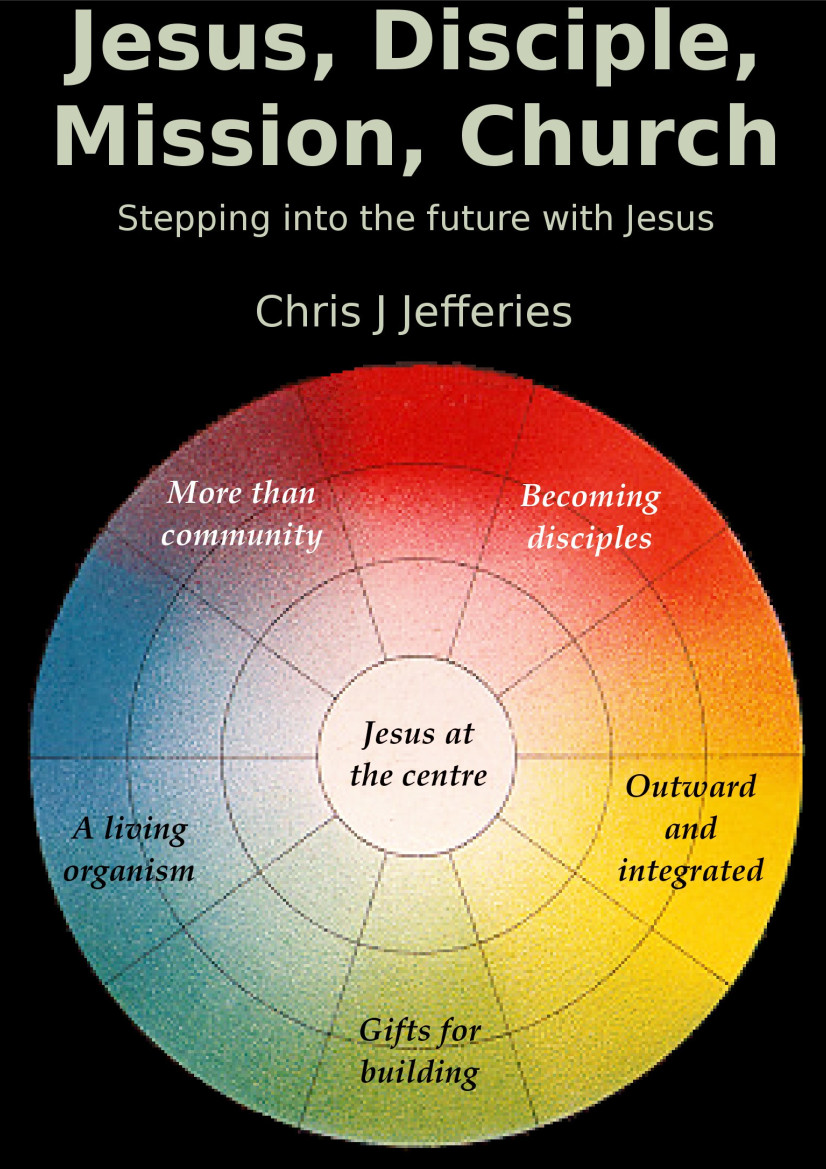
JDMC cover

This twelve-part guide will help you explore some key ideas from The Forgotten Ways by Alan Hirsch (all of his books are available via this link). Of course, one way to grapple with the material is simply to read Alan’s book, and I highly recommend doing so. And if your church or group wants to discuss and learn together there’s The Forgotten Ways Handbook, also highly recommended, but it’s long and detailed. Another way to start is to read The Shaping of Things to Come, a book that provides a lot of useful background.

But if you need an introductory guide you have come to the right place. JDMC is suitable for individual use, but better for up to six to ten people working together. The guide explains the main points to get you thinking and exploring; if you find it interesting you’ll want to go further so I’ll point out the main sources as we go along. For more information visit Jesus, Disciple, Mission, Church.

I became aware of The Forgotten Ways when Alan spoke at a conference. I read some of his books, began working through the Handbook on my own, and then tried it with others. I wrote JDMC because I sensed the need for something short and simple, and I’m using it very effectively with groups of people I know.

Where might you use this guide?

It works well for groups of interested friends, it could be used by a Christian Union at a workplace or college, or it might suit a home group or small group forming part of a local church. Also, it might serve to inject fresh thinking into any church or denomination, perhaps being worked through by a group of church leaders. But please remember that JDMC only skims the surface. If you like what you find here, please consider going deeper and further using the sources mentioned above and throughout the guide.

What it contains

JDMC consists of the introduction you’re reading right now, a first section to outline the thinking behind The Forgotten Ways, six further parts (one for each forgotten way), three supplements to answer questions readers have asked (not based on Alan Hirsch’s work), and a conclusion. The sessions contain simple, introductory material with questions to get you thinking for yourself. The six forgotten ways can be seen as distinct, but also have a way of weaving themselves together in practice. You may notice this as you work through the guide; take it as evidence that the six ways are inextricably linked and interdependent.

We learn by doing. Good and bad habits alike result from repeated behaviour, and the sessions aim to get you behaving in ways that will form good habits as Jesus’ disciples. Over time, I hope and expect that you will behave yourselves into habits and thinking that will take you further in the journey with Jesus than you may have thought possible or necessary.

Don’t skip the questions, they’re an essential part of the discovery process. Take time to process the material and come up with your own ideas and conclusions. It’s not possible to offer exhaustive Bible references in a short guide. The Bible references I’ve included are merely starting points for exploration. As you read your Bible (and especially the gospels) you are likely to find that other relevant verses and paragraphs leap off the page.

The sessions include related online material including text, audio and video. You can click through to these resources in the version of the discussion guide at jdmc.scilla.org.uk. The guide is free to use so download it, print it, modify it, or give it away; all I ask is that if you distribute it you provide attribution by including the link GetJDMC.scilla.org.uk and apply the same copyright conditions that I do.

More sections of JDMC

IntroductionJDMC, what does it contain?Using JDMC – how to approach it

Working together in six waysIntro and Way 1Ways 2, 3 and 4Ways 5 and 6, six ways

Way One, Jesus at the centreJesus at centre 1Jesus at centre 2Jesus at centre 3

Way Two, Becoming disciplesDisciples 1Disciples 2Disciples 3

Way Three, Outward and integratedOutAndInt1, OutAndInt2

Way Four, Gifts for buildingGiftsForBuilding1, GiftsForBuilding2

Way Five, A living organismLivingOrg1, LivingOrg2

More sections will appear here…

The work of the SpiritIntroJesus, disciples, outwardGifts, living, community, help

Other church leadersIntro, bishops, eldersDeacons, pastors, priests

Last wordsThe end can also be the beginning


< Previous | Index | Next >

Read the book

This was extracted from Jesus, Disciple, Mission, Church (JDMC), pages 7 and 8. Download the whole thing or read it online – GetJDMC.scilla.org.uk

Useful? Interesting?

If you enjoyed this or found it useful, please like, comment, and share below. (If you don’t see those links, click the article’s title above the main photo and they will appear.) Send a link to friends who might enjoy the article or benefit from it – Thanks! My material is free to reuse (see conditions), but a coffee is always welcome and encourages me to write more often!

Last words from JDMC

You will only grow and progress if you do the work yourselves daily, weekly, and on into the extraordinary future that Father already has planned for you.

< Previous | Index | Next >

This article is an extract from my short book, Jesus, Disciple, Mission, Church (JDMC). The bite-sized piece below is roughly two percent of the book. It’s the very last section so is a bit different from the rest: there are no questions for readers to ponder, just a blessing at the end.

I suggest reading the blessing and making it your own. And why not see if any of your friends are interested too? Share the link with them, or meet over a coffee to chat about it. Alternatively you could return to the beginning of this series and get them started that way.

Not the end, just the beginning
JDMC cover

Please don’t think that because you have reached the end of the guide, you have also reached the end of the journey. I hope you’ll explore the more detailed books on ‘The Forgotten Ways’ as well.

The various parts of this JDMC guide are just that – a guide. You will only grow and progress if you do the work yourselves daily, weekly, and on into the extraordinary future that Father already has planned for you. He will show you and lead you but you must take the steps one by one. As you live and work and discover new things together you can expect to grow significantly and have an impact on those around you.

An intricate fabric

Remember that the six forgotten ways are woven together to form a rich and intricate fabric. Although I’ve presented them here individually and in a linear form, they are not like that in reality. Each depends on the others, all are needed in our lives together. They don’t begin with knowing Jesus and end with doing stretching things together, they are more like a grand party where the participants, the music, the lighting, the flowers, the food, and the decorations create an unparalleled overall experience.

Take one of them away and the party will be much the poorer.

However, each way does depend on the previous one and provoke the next in significant ways. People who put Jesus first will find themselves becoming disciples. If we truly follow him and love him, we’ll do what he says by going out and deep. Amongst groups of new believers who are open, the APEST gifts will find an opportunity. Where apostolic foundations take root, organic forms of church life will develop. And where church is active, stretching challenges are inevitable.

Just do it!

So make a start in your own lives and your own situation. Listen to what the Spirit says and do what he tells you. Keep Jesus at the centre. Make disciples and grow as disciples yourselves. Make sure to go out but also embed yourselves deep in the local culture. Explore your gifts and encourage one another in using them. Don’t over-organise but be ever more fully alive as parts of one living body. And face some stretching challenges together.

A blessing

I bless you in the name of Jesus, that you may you find yourselves at the heart of revolutionary and explosive growth. It might seem to begin ever so slowly, but stick with it and see what it will become! You’ll find your deepest peace, not by resting, but by being fully active children of the Father and walking daily with the Son.

More sections of JDMC

IntroductionJDMC, what does it contain?Using JDMC – how to approach it

Working together in six waysIntro and Way 1Ways 2, 3 and 4Ways 5 and 6, six ways

Way One, Jesus at the centreJesus at centre 1Jesus at centre 2Jesus at centre 3

Way Two, Becoming disciplesDisciples 1Disciples 2Disciples 3

Way Three, Outward and integratedOutAndInt1, OutAndInt2

Way Four, Gifts for buildingGiftsForBuilding1, GiftsForBuilding2

Way Five, A living organismLivingOrg1, LivingOrg2

More sections will appear here…

The work of the SpiritIntroJesus, disciples, outwardGifts, living, community, help

Other church leadersIntro, bishops, eldersDeacons, pastors, priests

Last wordsThe end can also be the beginning

< Previous | Index | Next >

Read the book

This was extracted from Jesus, Disciple, Mission, Church (JDMC), page 49. Download the whole thing or read it online – GetJDMC.scilla.org.uk

Useful? Interesting?

If you enjoyed this or found it useful, please like, comment, and share below. (If you don’t see those links, click the article’s title above the main photo and they will appear.) Send a link to friends who might enjoy the article or benefit from it – Thanks! My material is free to reuse (see conditions), but a coffee is always welcome and encourages me to write more often!

Other Church leaders – 2

The priests were members of a single family, descended from Aaron and his sons. The men of this family were responsible for offering sacrifices

< Previous | Index | Next >

This article is an extract from my short book, Jesus, Disciple, Mission, Church (JDMC). The bite-sized piece below is roughly two percent of the book.

Deacons
JDMC cover

Sometimes, in the early years as communities of believers formed, individuals or small teams were given particular tasks, often when there was a specific need. The men and women who were given these tasks were called ‘deacons’ (Greek ‘diakonos’). The word at its root means ‘dust kickers’, people who would run errands. Over time it came to have a more general meaning in everyday Greek, servant’, ‘waiter’ or ‘administrator’. Deacons in the early church were about getting things done.

At their first mention (in Acts 6:1-6) they were responsible for giving out aid to Greek widows who had been previously overlooked, but the task could be anything else that needed regular and reliable attention. For more on deacons see 1 Timothy 3:8-13).

Think it through – Read some of the passages about deacons and consider the
people who were chosen to do the work. Can you identify people doing
some of these things in the church today? (They may or may not be called
‘deacons’.) Do deacons have command authority or knowledge and wisdom
authority?

Pastors

Pastor is an old fashioned English word for ‘shepherd’. Read about the The shepherding gift in the section on The APEST gifts, JDMC page 42. Bear in mind that there are many people today called ‘pastor’ who are administrators, teachers and managers. This is not the same thing as the gift of shepherding.

Priests

Where does this title come from and what does it mean? In the Old Testament we read about priests and, in particular the ‘High Priest’ or ‘Chief Priest’ (2 Chronicles 19:11). The priests were members of a single family, descended from Aaron and his sons (Exodus 29:44). The men of this family were responsible for offering sacrifices on the altar, first in the Tabernacle and later in the Temple. An animal would be slaughtered and offered on behalf of the people when they had transgressed the law in some way. A sin offering was required for forgiveness (Leviticus 4:27-31). The priest acted as a go-between, taking the living animal and offering its life (the blood) in place of the sinner’s life, a substitutionary sacrifice.

Priests today are church leaders who offer the bread and wine on our behalf, a role that the New Testament clearly states is not required. All who believe in and follow Jesus are priests! (1 Peter 2:9) We offer Christ’s substitutionary sacrifice to all who will accept him. We are the go-betweens, and need no-one to bring us into the Presence of the Father, something Jesus has already done once and for all (John 14:9).

Consider – Were the priests helpful towards Jesus or a hindrance? (eg
Matthew 16:21) How do you suppose the church made the mistake of
thinking we still need this role today? Think about the role of Jesus as our
Great High Priest and our role as a Royal Priesthood (Hebrews 4:14).

Bishops, elders, deacons, pastors and priests today

(Bishops and elders were considered in the previous post in this series.) Many denominations use these words in a different sense than the early church. Often they are used for organisational roles. But if we see church as a living organism rather than an organisation we will also need to understand these terms in living ways instead.

Consider – Do we need to identify certain people as bishops, elders and
deacons? Paul identified them, think about how he saw them and why he
regarded them as necessary and useful. Did he see them as functions of
control or of service? How do we see them? And is there a role for pastors
and priests?

More sections of JDMC

IntroductionJDMC, what does it contain?Using JDMC – how to approach it

Working together in six waysIntro and Way 1Ways 2, 3 and 4Ways 5 and 6, six ways

Way One, Jesus at the centreJesus at centre 1Jesus at centre 2Jesus at centre 3

Way Two, Becoming disciplesDisciples 1Disciples 2Disciples 3

Way Three, Outward and integratedOutAndInt1, OutAndInt2

Way Four, Gifts for buildingGiftsForBuilding1, GiftsForBuilding2

Way Five, A living organismLivingOrg1, LivingOrg2

More sections will appear here…

The work of the SpiritIntroJesus, disciples, outwardGifts, living, community, help

Other church leadersIntro, bishops, eldersDeacons, pastors, priests

Last wordsThe end can also be the beginning

< Previous | Index | Next >

Read the book

This was extracted from Jesus, Disciple, Mission, Church (JDMC), pages 47 and 48. Download the whole thing or read it online – GetJDMC.scilla.org.uk

Useful? Interesting?

If you enjoyed this or found it useful, please like, comment, and share below. (If you don’t see those links, click the article’s title above the main photo and they will appear.) Send a link to friends who might enjoy the article or benefit from it – Thanks! My material is free to reuse (see conditions), but a coffee is always welcome and encourages me to write more often!

Other Church leaders – 1

Elders … are people we would naturally turn to when we are confused or anxious or when conflict arises.

< Previous | Index | Next >

This article is an extract from my short book, Jesus, Disciple, Mission, Church (JDMC). The bite-sized piece below is roughly three percent of the book.

Why do we need to consider other leaders?
JDMC cover

We have already seen in part Four – Gifts for building, that the original pattern of church leadership springs from the apostolic gift (JDMC, page 41). We also saw that four further gifts are released to operate where there is an apostolic foundation, and we looked at these in more detail in the previous part, The APEST gifts (page 41-44). But the New Testament also mentions bishops (or overseers), elders and deacons, and today we use the terms pastor and priest quite widely. We need to briefly examine these too and understand how they fit into the overall picture. Before we do this, let’s consider the New Testament principles around authority – particularly what Jesus himself said and modelled.

It’s easy to think of the Greek words and their English translations as positions in a hierarchical authority structure, each with defined powers and roles. But as we have seen in Five – A living organism, church is much more a life form than an organisation. The six forgotten ways are not the only things that have been mislaid during the two millennia since Jesus’ time. Our understanding of the functions of bishops, elders and deacons has changed, and very dramatically so. We need to understand them again as they were understood by those early believers, just as recorded in the New Testament.

Perhaps the first thing to say is that as with the APEST gifts, bishops, elders and deacons are not positions of authority in the sense of ruling over other believers. Jesus explicitly told his disciples that they were to love one another as he had loved them (John 13:34-35). If he came to serve, so also should we. And he also told them that they were not to rule over one another as the gentiles do (Matthew 20:25-28). Paul writes that we should submit to one another (Ephesians 5:21). This much is very clear. So whatever else we may say about bishops, elders and deacons, we can be quite certain at the outset that they are not about enforcing rules, governing people’s behaviour or managing an organisation.

Bishops, elders and deacons don’t seem to chime with the idea of
the APEST gifts of service or with church as a living organism. Is this a
problem? If so, how can we resolve it? Consider this carefully before
moving on.

Bishops

The Greek word here is ‘episkopos’ and it means, literally, ‘overseer’, someone who keeps watch, someone who keeps an eye on things. Another word we could use is ‘lookout’. It need not be understood to mean an official who makes sure everyone follows orders, although it might seem to imply control because that is the sense of the English word ‘overseer’ in everyday usage.

We need to check the New Testament to understand how the word is used there. Here are some wise words from JP Louw and EA Nida writing in Greek English Lexicon of the New Testament, ‘Though in some contexts [episkopos] has been regarded traditionally as a position of authority, in reality the focus is upon the responsibility for caring for others’. This is a responsibility we all share, we must all look out for one another.

‘Episkopos’ is not always used in a positive way; just take a look at 1 Peter 4:15. Which word in this verse contains the Greek ‘episkopos’ do you think? There’s another Greek word ‘allotri’ which means ‘other people’s business’ and ‘meddler’ (NIV) is ‘allotriepiskopos’, an ‘episkopos’ who meddles in other people’s business.

When Paul writes ‘episkopos’ it’s clear he is referring to particular people he regards as effective at keeping watch to detect – and respond to – error. But this doesn’t mean that the other believers were free to relax. If any of us sees error, or somebody promoting it, we must question it and, if necessary, alert others. Might it be that Paul is simply saying that we need people among us who will be alert and willing to respond? Perhaps he is just saying that some are better at this than others and it’s useful to identify them, recognise them, and pay attention to what they say. Indeed, the work of keeping watch is one of the things shepherds need to do , something they are gifted at. (See The shepherding gift, JDMC page 42)

Jesus himself can be regarded as an ‘episkopos’. In 1 Peter 2:25 we read that Jesus is ‘the shepherd and guardian of your souls’. Some versions translate this as guardian (NASB, TLB), some as overseer (ESV, NIV), and some as bishop (ASV, KJV). Once again, the sense is not of ruling but of taking care, keeping watch (part of what a shepherd does as noted above).

Look up ‘overseer’ in a concordance or search function and draw
your own conclusions about the work of an overseer or lookout. Try to get
a feeling for what these people were expected to do. Did they have
authority over other believers?

Elders

Paul made a habit of identifying elders in the churches he planted (Acts 14:23, Titus 1:5). It’s worth mentioning that the word translated ‘appointed’ might equally well mean ‘pointed out’ or ‘identified’. But in English, the idea that Paul ‘pointed out’ elders is very different from the idea that he ‘appointed’ them. In everyday life, people who are appointed to a position are given authority to make decisions and to act in a particular role. But let’s remember that the New Testament and the words of Jesus himself suggest love, humility and submitting to one another as the primary focus.

The word ‘elder’ is from the Greek ‘presbuteros’ and it does literally mean an older person. But it is also used to signify someone who is wise, and this is probably the sense in which Paul uses it. Eldership is not a role involving the giving of instructions or the making of decisions on behalf of others. Rather, elders are those people in the church who have more experience and wisdom. They are people we would naturally turn to when we are confused or anxious or when conflict arises. Pointing such people out in new and inexperienced gatherings of believers was a wise precaution taken by Paul and those he coached.

Bear in mind that the word ‘authority’ has two rather different meanings. The police have authority and you do what they tell you or face the consequences; this is command authority. Plumbers have a different kind of authority and you do what they tell you because you have a problem they know how to fix; this is knowledge and wisdom authority. Which kind of authority do you suppose elders should exercise?

Did Jesus exercise command authority or knowledge and wisdom
authority? (Trick question – you should be able to find examples of both.)
What kind of authority does he want us to exercise over demons? What kind
does he want us to exercise with one another?

PS – I liked this post by Christopher Dryden. It’s very much about the subject of elders, but written as a story from his own experience: Fun to read but gentle, kind and definitely not judgemental. He very clearly explains the difference between elders as often found in church life, and elders as Jesus intended them to be. He says what I wanted to say in the section on elders, but he says it more eloquently.

While you’re on his website, have a look around to see what else might grab your attention.

More sections of JDMC

IntroductionJDMC, what does it contain?Using JDMC – how to approach it

Working together in six waysIntro and Way 1Ways 2, 3 and 4Ways 5 and 6, six ways

Way One, Jesus at the centreJesus at centre 1Jesus at centre 2Jesus at centre 3

Way Two, Becoming disciplesDisciples 1Disciples 2Disciples 3

Way Three, Outward and integratedOutAndInt1, OutAndInt2

Way Four, Gifts for buildingGiftsForBuilding1, GiftsForBuilding2

Way Five, A living organismLivingOrg1, LivingOrg2

More sections will appear here…

The work of the SpiritIntroJesus, disciples, outwardGifts, living, community, help

Other church leadersIntro, bishops, eldersDeacons, pastors, priests

Last wordsThe end can also be the beginning

< Previous | Index | Next >

Read the book

This was extracted from Jesus, Disciple, Mission, Church (JDMC), pages 45 to 47. Download the whole thing or read it online – GetJDMC.scilla.org.uk

Useful? Interesting?

If you enjoyed this or found it useful, please like, comment, and share below. (If you don’t see those links, click the article’s title above the main photo and they will appear.) Send a link to friends who might enjoy the article or benefit from it – Thanks! My material is free to reuse (see conditions), but a coffee is always welcome and encourages me to write more often!

The work of the Spirit – 3

Now the church is not the same thing as the kingdom, but if church is not part of the kingdom we are in serious trouble!

< Previous | Index | Next >

This article is an extract from my short book, Jesus, Disciple, Mission, Church (JDMC). The bite-sized piece below is roughly two percent of the book.

Gifts for building
JDMC cover

It really should be self-evident that the Holy Spirit is involved in the fivefold gifts of service – apostles, prophets, evangelists, shepherds and teachers (APEST). These are gifts indeed, and Christ himself is the giver (Ephesians 4:11-12). Paul explains that we are most certainly one, but that these gifts of grace are handed out in individual measure to each of us (Ephesians 4:1-7). We are one, we all receive, yet we all receive individually as he chooses (1 Corinthians 12:27-30).

And if there’s any doubt in your mind about the role of the Holy Spirit in all this, read 1 Corinthians 12:1-11. Verse 11 is very clear! ‘All these are the work of one and the same Spirit, and he distributes them to each one, just as he determines.’

Jesus himself chooses how to distribute these gifts of service. What gifts can you identify in one another? Tell one another what you see, this is a good way of encouraging one another.

A living organism

We know that we need to see the church as a living entity and not as an organisation or institution built and managed by human ability. But what part does the Holy Spirit play in this?

I must begin by pointing out that only the Spirit of Christ can reveal this truth to us. Jesus often told parables to illustrate the nature of the kingdom of heaven, and some of them involve living things. The kingdom is like yeast or a mustard seed; it grows and develops and expands as only living things can.

Now the church is not the same thing as the kingdom, but if church is not part of the kingdom we are in serious trouble! The church, too, is described as part of a living thing; church is the body and Jesus is the head. It’s significant that a body only remains alive as long as the head is attached. Cut off an arm or a leg and a body may continue to live, but cut off the head and it dies immediately. And how is the church attached to Christ? It is the Holy Spirit who makes the connection; he is the Spirit of Christ, yet he has been implanted in you and me, the members of the church. And he works in us (Luke 12:12, Acts 1:5-8, Romans 8:26) and amongst us (Acts 9:31, 1 Corinthians 14:12, Ephesians 4:3-4) as we gather together. The Spirit of the Head is present within every individual part of the body.

Considering church as you have experienced it, talk about aspects that are like an organism and aspects that are like an organisation. Are there ways you can help things move more towards the organism end of the spectrum? What part might the Holy Spirit play in this?

More than community

We need to work together in a community where we will be significantly stretched by sharing in making tough decisions, facing difficulties, supporting one another, and pressing forward together. The challenges we face will be diverse, but whatever they are we are surely going to need the encouragement and wisdom and guidance and insight of the Holy Spirit. Romans 7:6, 1 Corinthians 2:15, Acts 12:1-19.

We all share in the presence and work of the Spirit in our lives. How does this feed into community life, and in particular how does the Holy Spirit draw the community into facing challenges and difficulties? Talk about your own experiences and those of other people you know.

Some practical help


Many believers and followers of Jesus are familiar with the activity of the Holy Spirit, individually and in meeting together. Others may have little or no personal experience of him. The key to listening is not hard, it’s basically a matter of paying attention. Our lives are often too busy and too rushed to do this, but there’s a simple exercise called Virkler that can help. If you don’t think you’re hearing the Holy Spirit fluently and frequently, why not try Virkler for yourself?

It’s a curious name – why ‘Virkler’? That’s simple! The person who first suggested this straightforward practice is called Mark Virkler.

There are four steps, sometimes called the four keys.

  1. Clear the clutter of everyday things from your mind.
  2. Imagine being in Jesus presence.
  3. Pay attention to the thoughts that pop into your mind.
  4. Write down what you are shown, as you receive it. Review and process the material afterwards.

There’s no space here to explain Virkler in detail, but in my experience it can be extremely helpful. If I feel there’s a need, I’ll write about it in more detail in another article here on JHM. If I do, I’ll place a link to it here.

See also:
  • Jargon and the Holy Spirit – JHM
More sections of JDMC

IntroductionJDMC, what does it contain?Using JDMC – how to approach it

Working together in six waysIntro and Way 1Ways 2, 3 and 4Ways 5 and 6, six ways

Way One, Jesus at the centreJesus at centre 1Jesus at centre 2Jesus at centre 3

Way Two, Becoming disciplesDisciples 1Disciples 2Disciples 3

Way Three, Outward and integratedOutAndInt1, OutAndInt2

Way Four, Gifts for buildingGiftsForBuilding1, GiftsForBuilding2

Way Five, A living organismLivingOrg1, LivingOrg2

More sections will appear here…

The work of the SpiritIntroJesus, disciples, outwardGifts, living, community, help

Other church leadersIntro, bishops, eldersDeacons, pastors, priests

Last wordsThe end can also be the beginning

< Previous | Index | Next >

Read the book

This was extracted from Jesus, Disciple, Mission, Church (JDMC), pages 39 and 40. Download the whole thing or read it online – GetJDMC.scilla.org.uk

More sections of JDMC

IntroductionJDMC, what does it contain?Using JDMC – how to approach it

Working together in six waysIntro and Way 1Ways 2, 3 and 4Ways 5 and 6, six ways

Way One, Jesus at the centreJesus at centre 1Jesus at centre 2Jesus at centre 3

Way Two, Becoming disciplesDisciples 1Disciples 2Disciples 3

Way Three, Outward and integratedOutAndInt1, OutAndInt2

Way Four, Gifts for buildingGiftsForBuilding1, GiftsForBuilding2

Way Five, A living organismLivingOrg1, LivingOrg2

More sections will appear here…

The work of the SpiritIntroJesus, disciples, outwardGifts, living, community, help

Other church leadersIntro, bishops, eldersDeacons, pastors, priests

Last wordsThe end can also be the beginning

Useful? Interesting?

If you enjoyed this or found it useful, please like, comment, and share below. (If you don’t see those links, click the article’s title above the main photo and they will appear.) Send a link to friends who might enjoy the article or benefit from it – Thanks! My material is free to reuse (see conditions), but a coffee is always welcome and encourages me to write more often!