Cease fires and talks

Effectively, action in the Black Sea is practically over anyway. Ukraine has sunk half of Russia’s Black Sea Fleet and the survivors have fled to the Caspian Sea. (Ukraine 1, Russia 0.)

Forward look, ukraine – 6

< Previous | Index | Next >

Larger view
(Wikimedia)

March 2025

Representatives of the American president, Donald Trump, have been talking with both Russian and Ukrainian representatives in an attempt to end the war. Trump repeatedly claims, ‘This war would never have happened if I’d been president’, and further claimed that he’d be able to end it in 24 hours once he was in office. The first claim cannot be tested, but no evidence has been presented as to how the war might have been averted. And the second claim was, at best, wishful thinking; Trump has had a lot longer than 24 hours but there’s still no sign of the war ending any time soon.

What is being discussed between the USA and Russia and between the USA and Ukraine is still only partly clear, but the best we can hope for in the near-term is some kind of Black Sea ceasefire and a 30-day stoppage of attacks on energy systems. It’s hardly the kind of complete ceasefire (‘end the killing’) that Donald Trump promised us!

But when you look a little deeper there are issues that would be obvious to anyone who is a good negotiator. Effectively, action in the Black Sea is practically over anyway. Ukraine has sunk half of Russia’s Black Sea Fleet and the survivors have fled to the Caspian Sea. (Ukraine 1, Russia 0.) And Russia will wriggle and squirm endlessly to avoid an energy ceasefire. Putin wants to seem agreeable to the ceasefire to appease Trump, but he doesn’t want to actually sign on the dotted line because he thinks he’s winning the energy battle. (He’s not.) Nor are Trump’s offers to Putin entirely within his gift. No NATO countries involved? No Western troops in Ukraine? No more weapons or ammunition for Ukraine? Sorry Mr Trump, Europe will not necessarily do your bidding over this. French and British forces might be there sooner than you think. Macron is making announcements as I write; you cannot make a gift unless you’re holding it in your hand. (And you’re not holding it.)

What will happen next?

That is, of course, the big question. I can give my thoughts, but nothing is certain.

Let’s start with what we know.

  • If Putin is winning this war, he doing it in a very curious way. So far, his initial take-over bid was stopped and then substantially pushed back by Ukraine. He’s lost 900 000 troops, killed or seriously wounded. He’s lost the vast bulk of his armoured vehicles, tanks, trucks, ships in the Black Sea, artillery, radar equipment, anti aircraft missiles, and many aircraft and helicopters.
  • Energy infrastructure has been severely damaged in both countries, particularly electrical systems in Ukraine; and oil and gas production, transport, refining and storage facilities in Russia.
  • Militarily, Russia has been seriously weakened while Ukraine has become stronger. Ukraine develops and manufactures cruise missiles and drones that are flying further and further into Russian territory.
  • Ukraine is innovating rapidly, and faster than Russia. This is noticeable in the first person view (FPV) drone technology, but also in the longer distance technologies and in sea-drones.
  • Ukraine has focused on specific kinds of target to great effect, taking out much of Russia’s air defence, enabling a greater proportion of attacks to get through undetected.
  • There are clear signs that Ukraine is getting the upper hand along the lines of contact. For a long time, Russia has been making very slow, but continuous progress (though at very great cost). Recently there have been signs that Ukraine might get the upper hand, Russian progress has slowed almost everywhere, stalled in some places, and Ukraine has been able to take back some ground in several areas. This gadual reversal of Russian success will likely become faster as the summer proceeds.
  • The Russian economy is in a really poor state and slowly getting worse, not better. This too could well be a trend that will become a fatal crash within the next twelve months or so.

In terms of Trump’s efforts to curry favour with Russia and crush Ukraine – because that is how I interpret what is going on – there is an elephant in the room. It may not be a truly heavyweight elephant, but Europe (and I include the UK here, as well as other allies like Canada, Japan, Australia, South Korea) has no wish to stop supporting Ukraine. Continued supply of weapons, ammunition, electricity and financial help from Europe and her friends may just be something Trump cannot influence very much. He can make offers and promises to Putin, but can he force the rest of us into line? I have no doubt he’ll try, but at the same time I very much doubt he’ll succeed.

In summary

The short term prospects for Ukraine are more pain, more suffering, and significant struggles to deal with both Russia (miltarily) and America (politically).

But I do believe the longer term prospects are much brighter. Ukraine can become an important part of Europe, a member of the EU, with a strong economy and strong armed forces, contributing culturally, economically and acting in concert with other states bordering Russia as a bulwark against Russian expansionism.

Slava Ukraini! Heroyam slava!

See also:

Here are just three of the many sources of information out there.

< Previous | Index | Next >

Useful? Interesting?

If you enjoyed this or found it useful, please like, comment, and share below. My material is free to reuse (see conditions), but a coffee is always welcome!

Political turmoil in the USA

[A] wider war is possible. There’s a real possibility of a European conflict between Russia and the rest of Europe. There’s a chance of civil war between opposing groups within the Russian Federation.

Forward look, ukraine – 5

< Previous | Index | Next >

Larger view
(Wikimedia)

Feb 2025

So much has changed since our last Forward Look.

The world has seen political turmoil in the USA where President Trump has taken over from Biden. When you stick a spade into an ant’s nest and turn the soil over, there’s a period of frantic activity while the ants go into emergency mode, assess the damage, and begin to rescue whatever they can from the mayhem. That is the USA in February 2025.

And make no mistake, a frantic USA spells trouble for Ukraine, for the whole of Europe (I include the UK here), and perhaps for Russia and China as well. Predicting anything at this stage is about as useful as predicting the result of a horse race without knowing the length or nature of the course or the form of any of the horses.

But what I can say, is that wider war is possible. There’s a real danger of a European conflict between Russia and the rest of Europe. There’s a chance of civil war between opposing groups within the Russian Federation, and there are also possibilities of a second civil war in the USA and/or a third world war. I fervently hope that none of these things will happen, but events rarely take account of our hopes.

We’re going take a wider look at things here because so much has changed in such a short period of time.

First, let’s just catch up on the current state of the war between the invading Russians and the defending Ukrainians.

Russian and Ukrainian war efforts

Russia is finding it more and more difficult to continue the war. Russian casualties (dead and seriously wounded) are growing close to a million. The Russian economy is in an awful state, 40% of the state budget is being spent on the war. Inflation is rampant, interest rates are extremely high, many professional people have fled the country and Ukraine is systematically destroying Russian oil pipelines, distilleries, fuel storage installations and transport infrastructure, military air bases, radar systems, training facilities and military headquarters.

The much touted Russian ‘advance’ in Ukraine has all but stalled and, in some places, has reversed to retreat. The once feared ‘second most powerful army in the world’ has been fighting against a much smaller neighbour for three years and has failed to win. Hardly an impressive display of military might! Russia has lost most of its huge military power at sea, in the air, and on land. They continue to lose between 1000 and 2000 troops every single day. They have lost almost all their tanks and armed personnel carriers and are unable to replace them as fast as they are losing them.

Ukraine on the other hand has been getting better and better at defeating Russian attacks using a combination of high tech drones, great planning and anticipation, nimble action, good training, surprise, and constant technical innovation.

They continue to defend successfully against most incoming drones and missiles. As long as they continue to receive sufficient support, they will, I believe, continue to succeed and will eventually defeat Russia. In their favour is the fact that they and some of their European allies continue to ramp up the production of both weapons and ammunition to levels sufficient to defeat demoralised Russian forces – themselves facing more and more serious shortages of such materiel.

The political climate in February/March 2025

Now we have to pause. At the end of February the situation is changing daily, even hourly at times. Rather than try to make any predictions, I think it’s better to point you to some online resources that you can check daily or weekly to keep yourselves informed in such dynamic times.

I’ve mentioned both these sources previously, but here they are again.

  • Jake Broe – Jake posts a video every day or two. He’s a retired US Air Force pilot, so he knows what he’s talking about in military matters, but he is also an astute political observer and commentator. His videos are closely packed with the latest updates, and he provides links with the evidence needed to back up the things he says. There are no wild claims here, just good reporting, intelligent comment and useful material. Jake is well worth hearing and following.
  • Silicon Curtain – Jonathan Fink posts on Silicon Curtain as well as the shorter-form Silicon Bites. Here you’ll find great comment, opinion, and some penetrating, in-depth interviews with other key players and commentators. Every single video is well worth watching.

You will learn so much from these two excellent channels, but there’s a great deal more good material online. Try this YouTube search for recent material, but don’t believe everything you see and hear. The material turned up by the search may be true or false, checked or unchecked. Use your own judgement.

If you prefer the written form, use the same search in Google or another search engine. (Copy and paste this search or a similar one… war in ukraine 2025 latest news …into any search engine.)

See also:

< Previous | Index | Next >

Useful? Interesting?

If you enjoyed this or found it useful, please like, comment, and share below. My material is free to reuse (see conditions), but a coffee is always welcome!

Jonathan Fink

Silicon Curtain will expand your knowledge and background of the war as well as current events as they unfold. He posts frequently so the interviews are bang up to date.

Jonathan Fink is deeply interested in Russia’s illegal and barbaric invasion of her neighbour, Ukraine. He interviews all sorts of interesting, knowledgeable, and influential people in depth on his channel Silicon Curtain.

The background

Jonathan speaks at length with western politicians, retired army generals, Ukrainian commentators, visionaries, exiled Russians, and more. His interviews are always fascinating and he draws his guests out, always kind and measured, but also always probing and perceptive. Silicon Curtain is well worth watching and will expand your knowledge and background of the war as well as current events as they unfold. He posts frequently so the interviews are bang up to date.

With Mark Galeotti

Here he is, for example, talking with Mark Galeotti, a British historian, academic, and writer as well as being a senior associate fellow at the Royal United Services Institute (Rusi).

With Chuck Pfarrer

And here interviewing Chuck Pfarrer, a retired US Navy Seal team leader and a respected military analyst and commentator, author and more.

Do take time to browse Silicon Curtain, you will find interviews on every aspect of the conflict here with experts who know their topics really well.

Useful? Interesting?

If you enjoyed this or found it useful, please like, comment, and share below. My material is free to reuse (see conditions), but a coffee is always welcome!

Image of the day – 52

Unfortunately evil, lies and cruelty are often employed as levers and instruments of war (as in the current Russia/Ukraine conflict).

< Previous | Index | Next >

What’s in an image? Sometimes quite a lot, more than meets the eye.

I’m posting an image every day (or as often as I can). A photo, an image from the internet, a diagram or a map. Whatever takes my fancy.

Battle of the Boyne

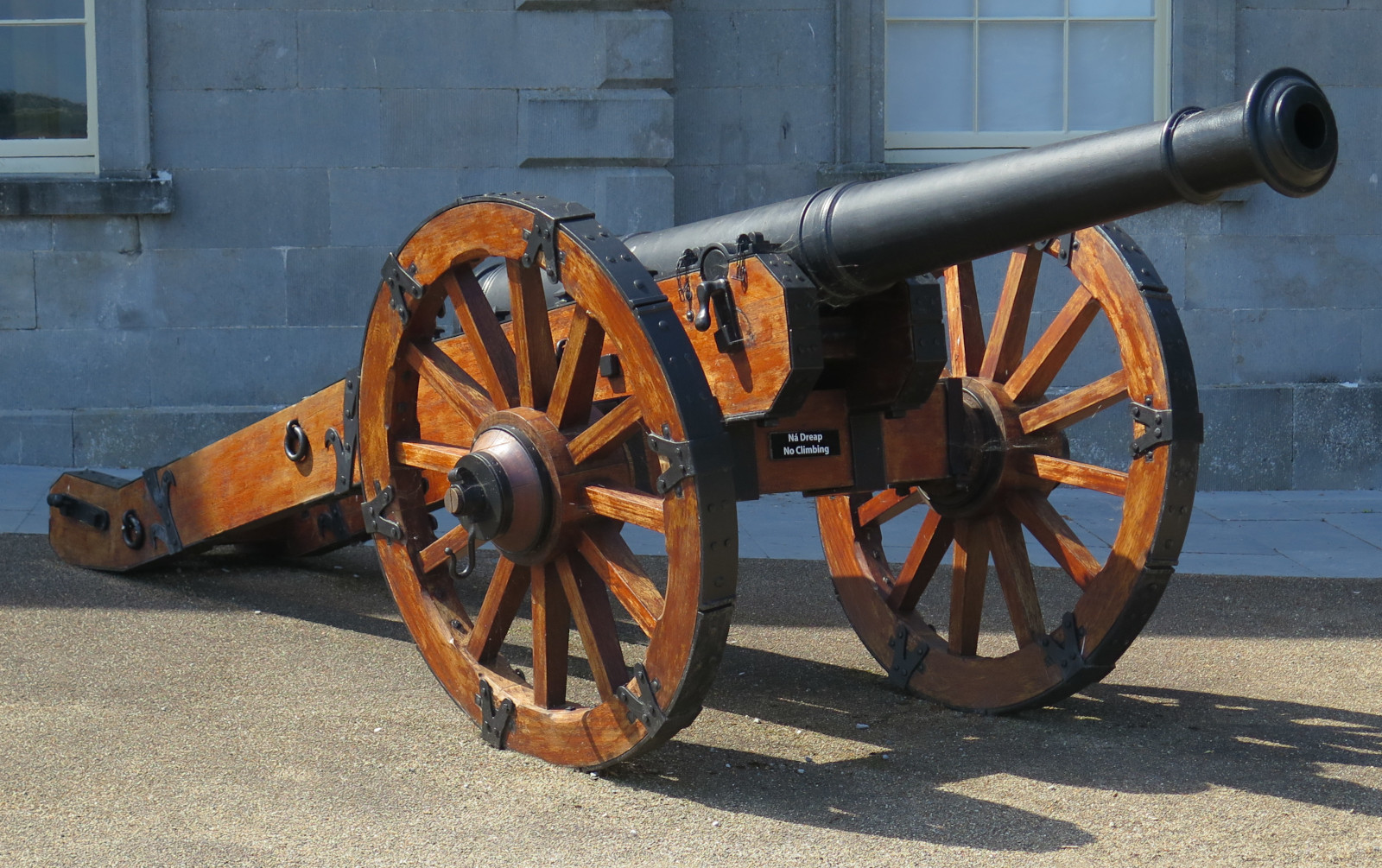
The old cannon in today’s photo dates to the time of the Battle of the Boyne (1690), near the Irish town of Drogheda on the east coast north of Dublin. The battle took place between James II, the final Stuart King of England who was attempting to win back his throne from George III, the first Hanoverian King. But it was a battle of huge significance across the whole of Europe, because both the Catholic Stuarts and the Protestant Hanoverians were backed by various European powers. There were troops from many European states on the battlefield.

George III won the battle and remained the King of England. But the consequences were multinational in nature.

We see the same sorts of thing in the Ukraine/Russia war, it’s not just two national armies pitted against one another. Russia is supported to a greater or lesser degree by China, India, Iran, North Korea, Mongolia, Belarus, and others. Ukraine is supported by most European nations, by the EU, the USA, Canada, Australia, New Zealand, and others. All of these other countries, to a greater or lesser degree, will be affected by the eventual outcome.

Sometimes it seems the world is incapable of living peacefully. The never-ending struggles between good and evil, for example, or truth and lies, or kindness and cruelty, run far deeper than clashes over which king will rule a particular country. Unfortunately evil, lies and cruelty are often employed as levers and instruments of war (as in the current Russia/Ukraine conflict).

I’ll predict one thing, either Russia or Ukraine will lose this war. I fervently hope and pray that the loser will be the nation that has deployed the most evil, lies and cruelty. We can do with less of those things (though realistically they’ll always be present at some level in human societies).


Images from our Irish holiday 2024

For convenience, here’s a list of all the Irish holiday images:

28th Jul – Welsh Botanic Garden, Robin, Fishguard
29th Jul – Wicklow Mts, Glendalough, Powerscourt, Rose, Greystones
30th Jul – Liffey, Temple Bar, St Patrick’s Cathedral
31st Jul – Newgrange, Battle of the Boyne
1st Aug – Monasterboice, Mourne, Thrift, Window
2nd Aug – Spelga Dam, Hydrangea, Pipework, Lough Neagh
3rd Aug – Coagh, Springhill, Portrush
4th Aug – Beach at Portrush
5th Aug – Giant’s Causeway, Carrick-a-Rede, Portrush

Themed image collections

The links below will take you to the first post in each collection

Cirencester, Favourites, Irish holiday 2024, Roman villa

< Previous | Index | Next >

Useful? Interesting?

If you enjoyed this or found it useful, please like, comment, and share below. My material is free to reuse (see conditions), but a coffee is always welcome!

Image of the day – 28

Similar tank traps have been used along the front lines by both sides in the ongoing Russian invasion of Ukraine.

< Previous | Index | Next >

What’s in an image? Sometimes quite a lot, more than meets the eye.

I’m posting an image every day (or as often as I can). A photo, an image from the internet, a diagram or a map. Whatever takes my fancy.

Tank traps

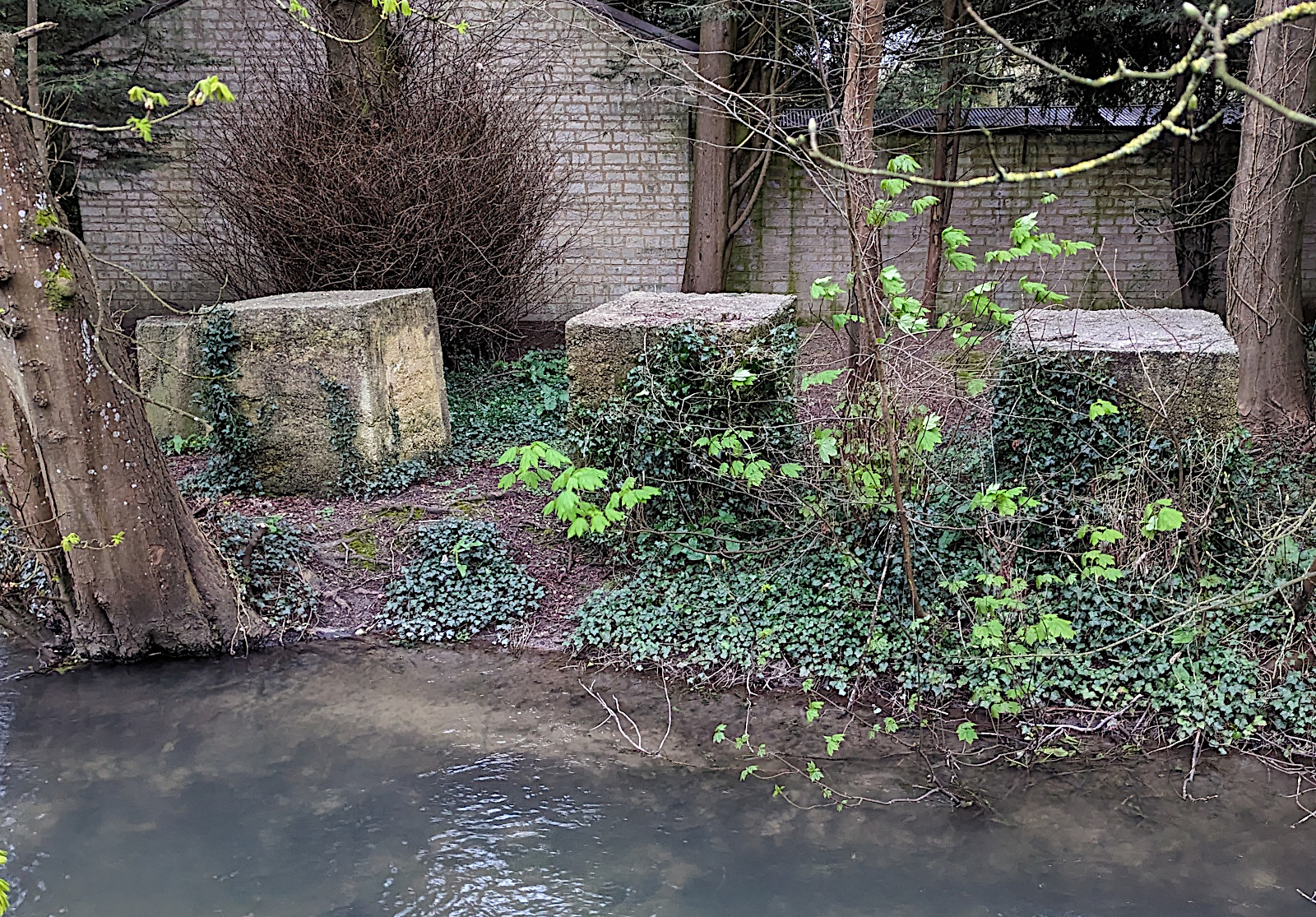
We have some history today. The river is the Churn and it runs in several different channels through the Cotswold town of Cirencester. On the bank you will notice three, large, concrete blocks; there’s also a fourth, partly hidden by the block on the left. The blocks were placed here during the Second World War to slow down German armour in the event that Britain was invaded. German failure to win the Battle of Britain in the air war prevented the invasion, but at the time the blocks were cast and put in place invasion remained a real threat.

The trees in the photo and the wall in the background are more recent than the blocks. The river bank led to an open field with the grounds and gardens of Abbey House beyond at that time, with the centre of the town on the other side of the gardens. The town would have been very vulnerable to attack from this direction.

Similar tank traps have been used along the front lines by both sides in the ongoing Russian invasion of Ukraine. The main difference is that modern, concrete traps are pyramidal (‘Dragon’s Teeth‘, not cubic. The sloping sides use less concrete and are more effective against tanks, but concrete cubes were also commonly used in the 1940s.

It pays to anticipate problems. But wars are rarely anticipated years in advance; political differences can boil over into actual conflict quite suddenly. And once they have started it can be very difficult to bring them to an end.

NOTE: These blocks can be seen from Grove Lane in Cirencester, quite close to the Norman Arch. From inside the Abbey Grounds, walk through the arch and turn right along the footpath for just a few yards. Look across the river, and there they are! A piece of Cirencester history that you can see for free.

< Previous | Index | Next >

Cirencester

For convenience, here’s a list of all the Cirencester area images:

A417 roadworks, Advent Market, Bishops Walk, Baunton, Canal 1, 2, Castle Street, Christmas lights 1, 2, Church 1, 2, 3, 4, 5, 6, Churn flood, Countryside, Fallen tree, Fleece, Gasworks, Gloucester Street, Hare 1, 2, Hospital, Market Place 1, Phoenix Fest, Riverside Walk, Stone plaque, Stratton Meadow, Tank traps, View, Wonky 1, 2, Yellow Iris

Themed image collections

The links below will take you to the first post in each collection

Cirencester, Favourites, Irish holiday 2024, Roman villa

Useful? Interesting?

If you enjoyed this or found it useful, please like, comment, and share below. My material is free to reuse (see conditions), but a coffee is always welcome!

Another message from Yara

Sometimes the worst things are done when the perpetrators are most afraid; and right now I think Putin is very much afraid.

This is a message of despair from a brave Ukrainian lady who deserves so much better. All Ukrainians deserve so much better. Yet I know the despair will be temporary.

A photo from Yara’s message

Yara has an irrepressible nature and despite the terrible circumstances I know she will regain a measure of hope and want to share Ukrainian culture and art with her readers again quite soon.

Please do read her message for today. Below I’ve copied a reply to it that I posted there a few minutes ago. I think there is growing cause for hope, and that’s what I wrote about and want to emphasise.

But before I share that reply: What can you do to help? Visit Yara’s site and take a good look around, read some of her other, more upbeat, messages. Consider becoming a supporting member, buy her a coffee, leave her a reply to one or more of her posts. Contact your government representative asking them to do more. In the UK write to your MP. Hint: Write again after our upcoming elections, you might find you have a different MP.

My reply

Wanting better for you, Yara. Wanting better for Kharkiv. Wanting better for every part of Ukraine.

Sometimes the worst things are done when the perpetrators are most afraid; and right now I think Putin is very much afraid.

Everything in Russia is beginning to fall apart – in fact, more than ‘beginning’. The evidence is everywhere.

  • There is a big shake up in the Russian Army, many senior officers are being arrested, perhaps because Putin fears a coup. Shaking things up does not make an army more effective. Just the opposite.
  • Inflation is ‘under control’ according to Putin. He is ignoring something like 8% inflation per month. How long can he pretend?
  • Crime rates are spiralling out of control.
  • Buildings are collapsing (not bombed, just badly built and lacking maintenance).
  • Roads and railways are broken, water supplies are broken, power supplies are broken, Ukraine is destroying oil refineries. Nothing is being repaired because so many skilled people either left Russia, or have been sent to die in Ukraine.
  • Nearly half the Black Sea Fleet is on holiday, resting peacefully on the sea bed.
  • Aircraft, air defence, airfields are being destroyed daily.
  • The war is going badly, very badly in fact.

What will happen next?

Putin’s time is probably short now, everything is going wrong for him.

Ukraine’s nightmare might end very suddenly, though nobody knows when. It could be in a year’s time, or just a month, or a week, or it might be tomorrow.

None of this affects how you feel right now, so you (like so many in Ukraine) will have to suffer longer. But feelings change day by day, One day, hope will grow like a tree in the springtime. Hope will blossom and flourish. But perhaps not today.

I know you, like all Ukrainians, will cling to hope until it’s no longer needed. Then you will all be able to sing, and dance, and have parties in the street, and then start on the huge task of rebuilding your shattered lives and towns and cities.

Slava Ukraini! Heroyam slava! 🇺🇦 🇺🇦 🇺🇦 🇺🇦 🇺🇦

Congratulations, Mr Putin.

You have stirred up a hornet’s nest of criticism and anger and you are going to get badly stung.

I’m impressed. Slowly, your horrid war in Ukraine has been slowly slipping out of public attention in the West. It’s not that people don’t care (we do), but newspapers and TV channels always focus on what will best attract readers and viewers. Ukraine has been slipping onto the inside pages for months.

Now, with one night of more than 100 drones and missiles hitting Ukrainian cities (the largest strike of the war so far by all accounts) you have brought your cowardly actions back onto the front pages.

Here’s the Guardian website this morning, for example:

So – Congratulations! Your war is front and centre in everyone’s awareness again – which is where it should be. ‘Good job’ as our American friends would put it.

Take a look at social media, where people are now clamouring for their governments to do much more to help Ukraine in every way possible. Wait for the newspaper editorials and letter columns tomorrow. You have just interrupted conversations about all sorts of other issues; and all eyes are swivelling, staring, and glaring at you again.

You have miscalculated very badly with this strike, hitting a maternity hospital, apartment blocks, several schools, a shopping centre. You have stirred up a hornet’s nest of criticism and anger and you are going to get badly stung. You are losing the war; you are losing public support at home; Russians as well as Ukrainians are in pain and despair at the loss of friends and family in your unnecessary and unjustifiable act of war. You have no sound arguments to support your actions, those you offer are morally corrupt, historically inaccurate, militarily inept, politically suicidal, simple distortions, or downright lies.

See also:

A coffee mug from Israel

Shalom is not just peace as in absence of war, quietness, or a chance to think. It means much more than that.

Back in 2007, Donna and I visited Israel. The day we arrived it rained torrentially and our plane had to circle while water was removed from the runway at Tel Aviv airport. But the weather quickly improved and we had a very interesting trip. Much of it I still remember vividly, and the notes I made and the photos I took fill in much more detail.

While we were there, we bought a coffee mug at a tourist site. We still have it, and I enjoy using it now and then. The vivid colours remind me of the bright sunshine and friendly people we met, the colours of items in the market in Jerusalem, the colours of the clothes of the people in the streets.

This mug is special, it carries the word ‘Shalom’ in Hebrew and in English, it means ‘peace’. How I wish for peace in 2023 in Ukraine and around the world. Shalom is not just peace as in absence of war, quietness, or a chance to think. It means much more than that. It means joy, completeness, health in body, mind, and spirit. It means prosperity and a fragrant life.

(I was prompted to write this by Yaroslava Antipina, perhaps to use on her Twitter feed or her blog. Please click the links and leave her some kind thoughts. Thanks!)

War in Ukraine – War in Europe

Despite repeated assurances that no invasion was planned, Russian forces crossed the border into Ukraine on 24th February 2022. As the tanks and support vehicles rolled towards Kyiv, paratroops were dropped to take the city’s Hostomel Airport.

On 24th February, 2022, Russian forces moved into Ukraine, despite Russia’s repeated assurances that they had no such intention. That moment represented a step change in Russian relations, not just with Ukraine, but with the rest of Europe and the entire world. The tanks, personnel carriers, and self-propelled howitzers rolled across the border from Russia and from Belarus, much as the German tanks had rolled across Eastern Poland and into the Soviet Union 80 years earlier.

Informed opinion among Western military and government thinkers was that Ukrainian forces would buckle, the government would fall within a few days, President Zelensky would be captured or would flee, and a new, puppet regime would be set up by the Russians. There would be almost no resistance, defeat would be swift and complete. Everyone was wrong-footed, Ukraine resisted, Zelensky stayed in Kyiv, and the Russian invasion stalled. And here we are ten months after the invasion, and Ukraine’s army has the upper hand having forced three or four major Russian retreats (it depends how you count them).

Map of Ukraine before the 2022 Russian invasion (From Wikimedia)
Why did Russia invade?

Logical, reasonable thinking always begins with unbiased observation; but there’s an inbuilt human tendency to instead begin with our own opinions which may or may not be biased, and then to look for things that will back those up. There are plenty of examples all around us: for example the tobacco industry in the 1970’s and 80’s had the opinion that smoking provided them with solid profits and was not harmful to health and looked for ways to argue against any evidence for harm. That’s just human nature.

And that’s exactly how Russia’s invasion of Ukraine began. The Russian government began with assumed opinions about history and about NATO intending to harm Russia. Next, serious attempts to justify these positions were made: Russia was the origin of Ukraine which was therefore no more than a Russian region along with the Baltic states and some other parts of the old Soviet Union; NATO was not a defensive organisation but had expansive territorial ambitions, the West wanted to destroy Russia.

On the basis of these assumptions political arguments were made by Vladimir Putin and his supporters, that bringing Ukraine back into line would return territory that had always been Russian, would expose Ukraine’s military weakness, prevent NATO expansion, be welcomed by the majority of Ukrainian citizens, and be tacitly accepted by a weak-minded West. And on that basis, after building up forces along the Ukrainian borders with Russia and with Belarus, the ‘Special Military Operation’ began. Mr Putin’s miscalculations were exposed very quickly. Ukrainian citizens did not support Russia; the Ukrainian forces were much stronger than expected; the West including the EU and USA supported Ukraine in practical ways and applied sanctions; Sweden and Finland were alarmed and applied to join NATO.

Stages of the war

Despite repeated assurances that no invasion was planned, Russian forces crossed the border into Ukraine on 24th February 2022. As the tanks and support vehicles rolled towards Kyiv, paratroops were dropped to take the city’s Hostomel Airport. The plan was to capture the city quickly, arrest President Zelensky, install a puppet regime, and then mop up the remnants of the fleeing Ukrainian forces. But that didn’t work out well for the Russians.

The paratroops were defeated at the airport and the city of Kyiv did not fall. The armoured columns and their support vehicles and troops were badly mauled by the Ukrainians and were forced to retreat north across the border and east as far as Kharkiv, and something of a stalemate resulted in the north. In the south, Russian forces fanned out from Crimea and took the coastline of the Sea of Azov, capturing Kherson. Ukrainian forces were able to stop the Russian advance before the cities of Mykolaev and Zaporizhzhia. In the east, Russia expanded their hold on Luhansk and eastern Donetsk, and captured the city of Mariupol.

For some time there was a stalemate in terms of territory, with relentless Russian shelling of settlements along the line of control. During this period the Ukrainian forces grew stronger with aid and materiel from the West, particularly the USA but also the UK and other European and some non-European powers. At the same time Russia was weakened by a heavy toll on both troops and equipment.

As a result of astute leadership and good use of Western precision armaments, Ukraine became strong enough to push the Russians back, initially in the north, and then also in the south where Russian forces had to retreat from Kherson. This seems to be a development that is still ongoing as we approach the beginning of 2023. There are signs that Ukraine is growing stronger while Russia continues to grow weaker. It’s likely that we’ll see further Ukrainian military successes and Russian forces holding less and less territory. What is harder to predict is how the Russian government, armed forces, and population will react as these failures become more and more clear for all to see.

An analysis to consider

Here’s a video of Michael McFaul speaking at Stanford University. He is familiar with government figures including presidents Putin, Zelensky, and Biden; he understands their thinking; he presents a shrewd and well considered analysis of the situation – one that is well worth watching. I’m not going to write anything here in the way of conclusions; far better to settle back and listen to McFaul’s thoughts and ponder his arguments and conclusions for yourself. His address therefore forms the conclusion to my article.