We can be sure there’s trouble ahead and we can imagine some of the long term issues. The authors of this article are putting out a broad warning and setting out the probable longer term dangers.
Recommended – 2
In this series I recommend articles or other work I’ve seen that I really like and want to share with my readers.
Click to enlarge
A quick summary follows, but I encourage you to read the original with its much deeper analysis.
It’s very difficult to analyse the long-term effects of actions that began only three months ago, and may continue for some time; we can only guess how long this process will last and what new forms it might take in future months or years. It’s as if the captain of a large vessel had ordered a hard turn to starboard and the crew was scrambling to put the order into effect. With the ship’s rudder now clearly turning and signs of a change in course, what can possibly be concluded?
The ship will start to lean a little, some loose objects will slide around, these immediate effects are predictable. But what about the longer term? Will there be a catastrophic collision with another ship? Will we run aground? It’s clear there are dangers but it’s too soon to make detailed predictions.
That’s the situation US science finds itself in today. We can be sure there’s trouble ahead and we can imagine some of the long term issues. The authors of this article are putting out a broad warning and setting out the probable longer term dangers.
Damage caused by the Trump administration, science-policy experts warn, could set the United States back for decades. “So many of the damaging impacts are going to be extremely difficult to reverse and are going to take a very long time to recover from,” says John Holdren, a science adviser to former US president Barack Obama.
The authors begin by summarising what’s been done in the first three months and pointing out that it’s just a start; cuts of up to half seem likely. Reader surveys by Nature show well over 90% are troubled by the cuts.
About half the US science budget goes on defence-related programs and more than a quarter on health. The cuts are being presented as necessary to combat waste, corruption and propaganda, but no evidence has been offered to back up these claims. An assumption is being made that private sector research will shoulder the burden, though that is most unlikely for fundamental studies.
Another aspect of budget cuts is the resulting loss of skilled and knowledgeable staff, an immediate loss that will take a long time to rebuild. Indeed, the damage done in a few months will take decades to recover. It seems likely that Congress will be unable (or unwilling) to resist the probable budget cuts for 2026 and the situation is not likely to be alleviated by the various political demands being made of universities by the Trump administration. The USA seems already to be suffering loss of reputation and is less appealing for foreign scientists, not only are fewer international staff and students planning to work in the USA, but American scientists are starting to look abroad for work.
There are worries that other nations will advance beyond what the US can do in years ahead, and putting broken US science together again will be very difficult and expensive to achieve.
The article also contains helpful links for additional reading on the topics discussed.
If you enjoyed this or found it useful, please like, comment, and share below. (If you don’t see those links, click the article’s title above the main photo and they will appear.) Send a link to friends who might enjoy the article or benefit from it – Thanks! My material is free to reuse (see conditions), but a coffee is always welcome and encourages me to write more often!
Our suffering for Christ is not wasted; it is a testimony of our allegiance to Him and a pathway to deeper intimacy with [him].
Recommended – 1
This is the first of what may become an occasional series in which I recommend creators and their creations when they produce things I really like and have found useful.
Today I’ve chosen an article by Chris Dryden who writes at ‘Life with CD’. Here’s a quote from his piece:
Rejoicing in persecution is not about denying pain or pretending hardship doesn’t hurt. It’s about lifting our eyes beyond the immediate struggle to see the eternal reward that awaits us. Our suffering for Christ is not wasted; it is a testimony of our allegiance to Him and a pathway to deeper intimacy with our Saviour.
It’s a useful read, in fact all of Chris’s articles are worth a look. For those of us attempting to live like Jesus, there’s a lot of thought-provoking stuff to read and consider here.
If you’re reading out of a more general interest you’ll still find much to value, perhaps as life lessons or just to understand why Jesus is a person of such long-standing interest to so many people.
If you enjoyed this or found it useful, please like, comment, and share below. (If you don’t see those links, click the article’s title above the main photo and they will appear.) Send a link to friends who might enjoy the article or benefit from it – Thanks! My material is free to reuse (see conditions), but a coffee is always welcome and encourages me to write more often!
Jesus is well aware that we, too, are hemmed in by religious traditions and habits on the one hand, and inflexible structures on the other.
From the Bible – 1
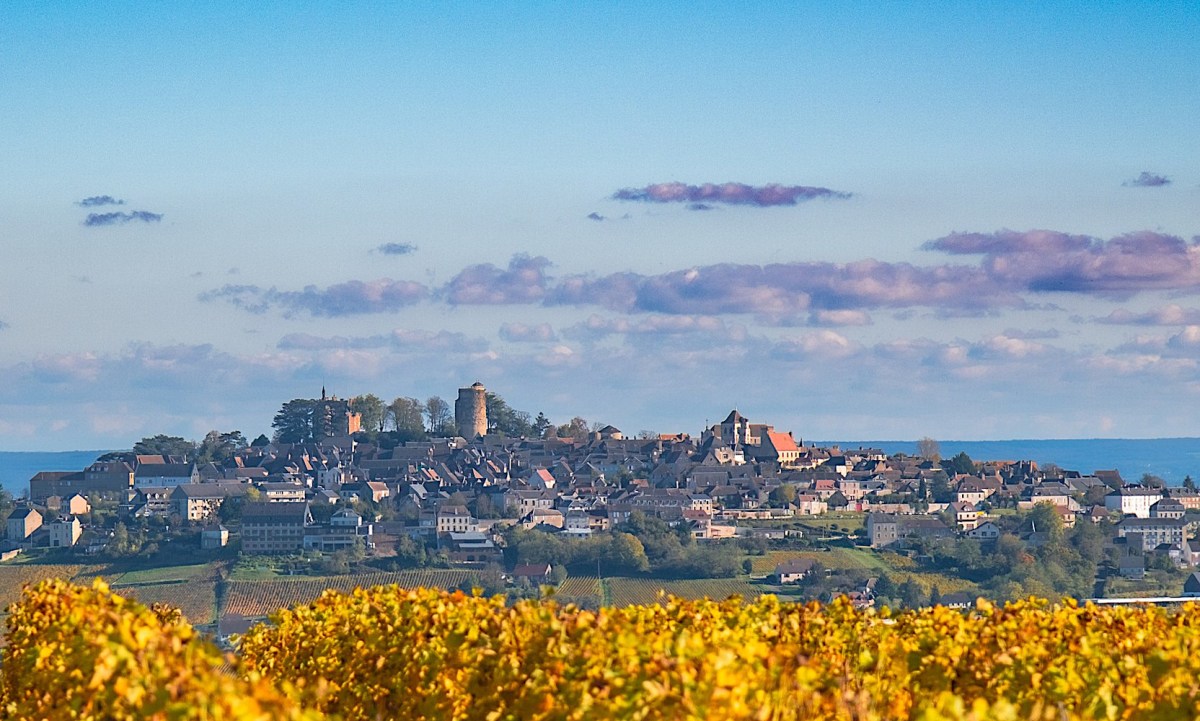
The old city on the hill
What follows is an updated version of an article published on 13th June 2016. The Bible references open in the same tab or window; if you click these links, use the browser’s back arrow to return to the article.
Approaching the end of his three and a half years of teaching and healing, Jesus told his disciples, ‘Jerusalem, Jerusalem, you who kill the prophets and stone those sent to you, how often I have longed to gather your children together, as a hen gathers her chicks under her wings, and you were not willing’. (Matthew 23:37-39)
Jesus means us to take these verses very seriously indeed. In Matthew’s account they’re sandwiched between some of the most severe criticism of the religion of the day and a terrifying promise of the destruction to come. The city of Jerusalem and the temple at its heart were pulled down in 70 AD and replaced by a Roman city. The people died in the assault or were thrown out; this is what Jesus predicts and describes.
Jesus is well aware that we, too, are hemmed in by religious traditions and habits on the one hand, and inflexible structures on the other. And in the same way, he wants to gather us together under his wings. But are we willing? If we are not, he will criticise our religious tradition and allow our structures to be destroyed in order to save us from our own error and foolishness. Let’s not mislead ourselves, religion and structure are central to much that we think and do.
The new city on the hill
This is the New Jerusalem, the bride of the Lamb, the church! In Revelation 21:2-3 we read, ‘I saw the Holy City, the new Jerusalem, coming down out of heaven from God, prepared as a bride beautifully dressed for her husband. And I heard a loud voice from the throne saying, ‘Look! God’s dwelling-place is now among the people, and he will dwell with them. They will be his people, and God himself will be with them and be their God.’ Revelation 21:9-11 tells us, ‘I will show you the bride, the wife of the Lamb. And he carried me away in the Spirit to a mountain great and high, and showed me the Holy City, Jerusalem, coming down out of heaven from God. It shone with the glory of God, and its brilliance was like that of a very precious jewel, like a jasper, clear as crystal.’
This new Jerusalem has no traditions and is not built of stone. We are the living stones it’s constructed from! Jesus said, ‘You are the light of the world. A city built on a hill cannot be hidden. Neither do people light a lamp and put it under a bowl. Instead they put it on its stand, and it gives light to everyone in the house. In the same way, let your light shine before others, that they may see your good deeds and glorify your Father in heaven’.
Sometimes we think in terms of our own, individual lights, and how they should not be hidden. It’s not wrong to read the passage in that way, but surely what Jesus really has in mind is his people collectively, the church, his bride, the new city built on a hill – the city that ‘cannot be hidden’. And this new city is not built on a foundation of traditions and human teaching and Sunday services. It’s built on the foundation of Christ alone and it’s driven by every breath he breathes, the wind of the Spirit of Christ.
The how – life in the city
So what do we get in place of tradition and structure? Church life is based on something far more flexible and adaptable, something much more organic.
Ephesians 4:11-16 reveals church life as Jesus intended it. ‘Christ himself gave the apostles, the prophets, the evangelists, the pastors and teachers, to equip his people for works of service, so that the body of Christ may be built up until we all reach unity in the faith and in the knowledge of the Son of God and become mature, attaining to the whole measure of the fullness of Christ. Then we will no longer be infants, tossed back and forth by the waves, and blown here and there by every wind of teaching and by the cunning and craftiness of people in their deceitful scheming. Instead, speaking the truth in love, we will grow to become in every respect the mature body of him who is the head, that is, Christ. From him the whole body, joined and held together by every supporting ligament, grows and builds itself up in love, as each part does its work.’
And here’s the practical detail. ‘To each one the manifestation of the Spirit is given for the common good. To one there is given through the Spirit a message of wisdom, to another a message of knowledge by means of the same Spirit, to another faith by the same Spirit, to another gifts of healing by that one Spirit, to another miraculous powers, to another prophecy, to another distinguishing between spirits, to another speaking in different kinds of tongues, and to still another the interpretation of tongues. All these are the work of one and the same Spirit, and he distributes them to each one, just as he determines.’ (1 Corinthians 12:7-11)
And yet more detail from 1 Corinthians 14:26. ‘When you come together, each of you has a hymn, or a word of instruction, a revelation, a tongue or an interpretation. Everything must be done so that the church may be built up.’
This is the new city on the hill that shines its light all around (not hidden under a jar). This is the church, the new Jerusalem, light in a dark world, individuals all bringing a contribution, building and equipping one another. This is who we are, it’s what we need to be doing.
If you enjoyed this or found it useful, please like, comment, and share below. (If you don’t see those links, click the article’s title above the main photo and they will appear.) Send a link to friends who might enjoy the article or benefit from it – Thanks! My material is free to reuse (see conditions), but a coffee is always welcome and encourages me to write more often!
What’s in an image? Sometimes quite a lot, more than meets the eye. I’m posting an image every day or so.
Click to enlarge
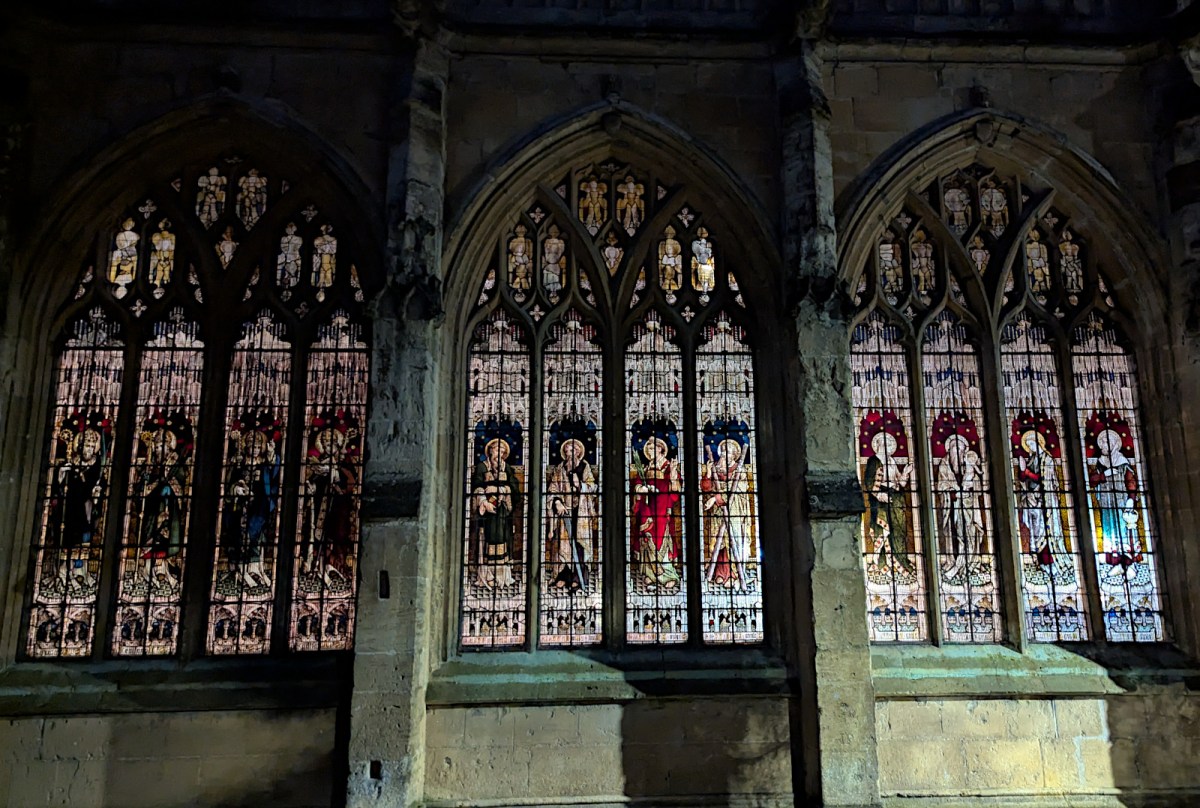
These windows are inside-out. They are stained-glass, and part of Cirencester’s Parish Church. When they were built, the idea was that they would look impressive from the interior in a world without anything much brighter than a candle or an oil lamp. Illuminated in daylight and seen from within a relatively dark building, they would have been amazing – and they still are.
But in this photo, taken from outside the church after dark, the relatively bright, modern lighting inside shows up the windows very nicely. The makers could hardly have imagined them being seen in this way!
If you enjoyed this or found it useful, please like, comment, and share below. (If you don’t see those links, click the article’s title above the main photo and they will appear.) Send a link to friends who might enjoy the article or benefit from it – Thanks! My material is free to reuse (see conditions), but a coffee is always welcome and encourages me to write more often!
Beth was 1¾ this month, and Debbie was almost 5-years-old. We were living at 22 Rectory Drive in Yatton at that time and Debbie would have settled in at the Infants School and made a fair number of friends. (1980)
August 2024 (6 months before publishing this article)
Click to enlarge
We were on our annual family holiday, this time at Portrush in Northern Ireland. On 5th of the month we drove to the Giant’s Causeway and spent a very interesting time looking around. Then we visited the Carrick-a-Rede rope bridge. This was quite an experience as well.
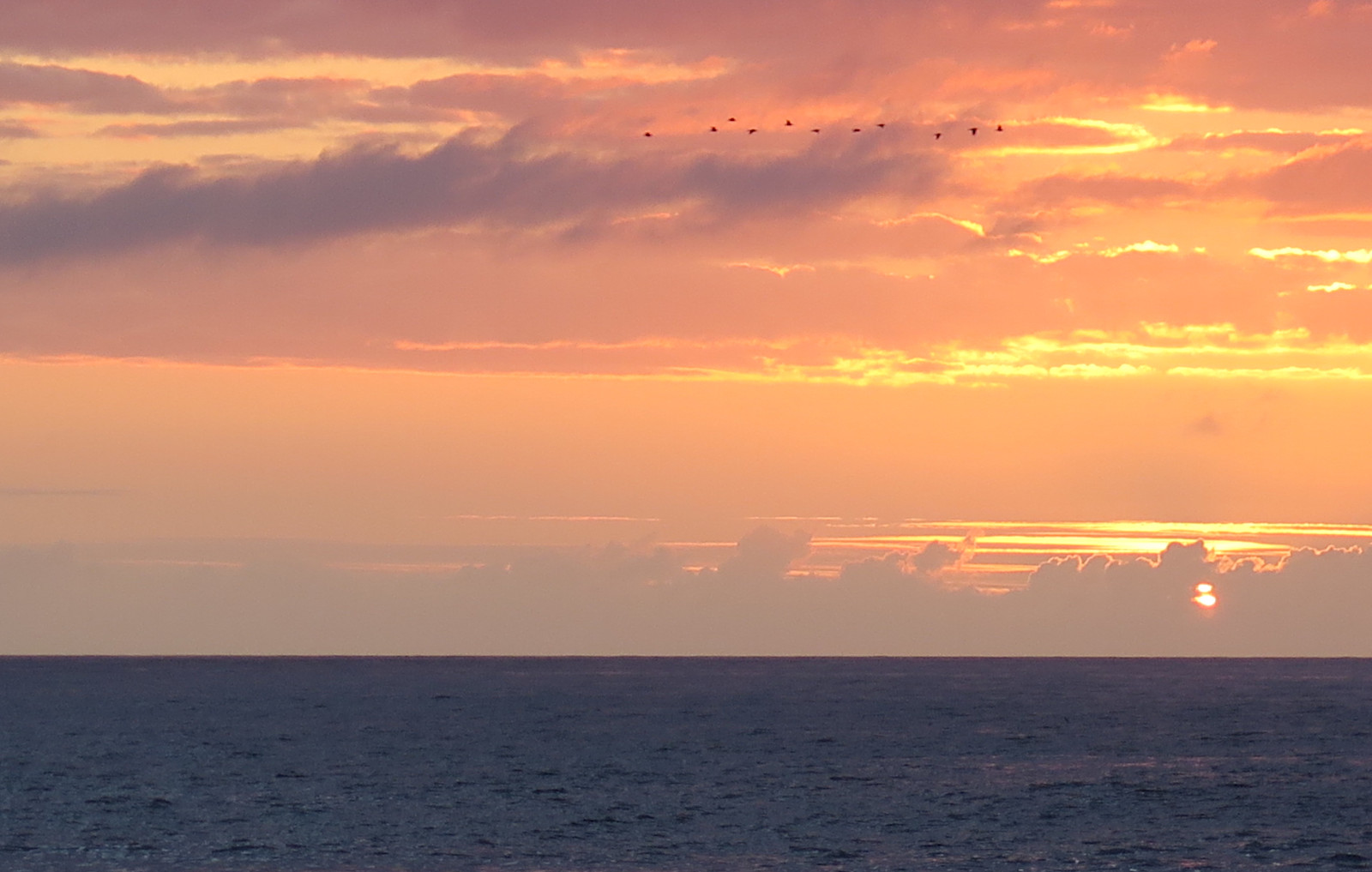
On the evening of 5th, Paz cooked steak for those who wanted it, and later I strolled around the harbour. The sunset was magnificent and I took a lot of photos, including the view of birds heading home as the sun sets.
Gas mains were being replaced in Cirencester. A team was going around, street by street, digging up the roads and pavements and fitting large bore, yellow, plastic pipes – where possible passing them through the old metal pipework they are replacing. Disruption was considerable for a week or two until the work was done and the team moved to a another street. Each property lost gas for only a few hours. Overall the work continued for months.
Cavendish House in Cheltenham closed down in February. Shopping has moved on these days and department stores are dying. I remember going to Cavendish house with my parents as a child, with my first wife before and after we were married, and noting that it was still trading much more recently – but now, it’s gone!
And we visited ‘Nature in Art‘ at Twigworth this month, too; a lovely old house with art exhibits indoors, but also many interesting installations in the gardens.
We drove up to York for a visit and to watch the Fulford School musical, ‘Beauty and the Beast’. Meredith was the beast, Verity played the part of Belle’s father, and Sara was one of the young lady ‘hangers on’ of the villain of the piece, Gaston.
It was very well done by everyone; we were highly impressed. I’d have loved to take some photos, but these days it’s not permitted.
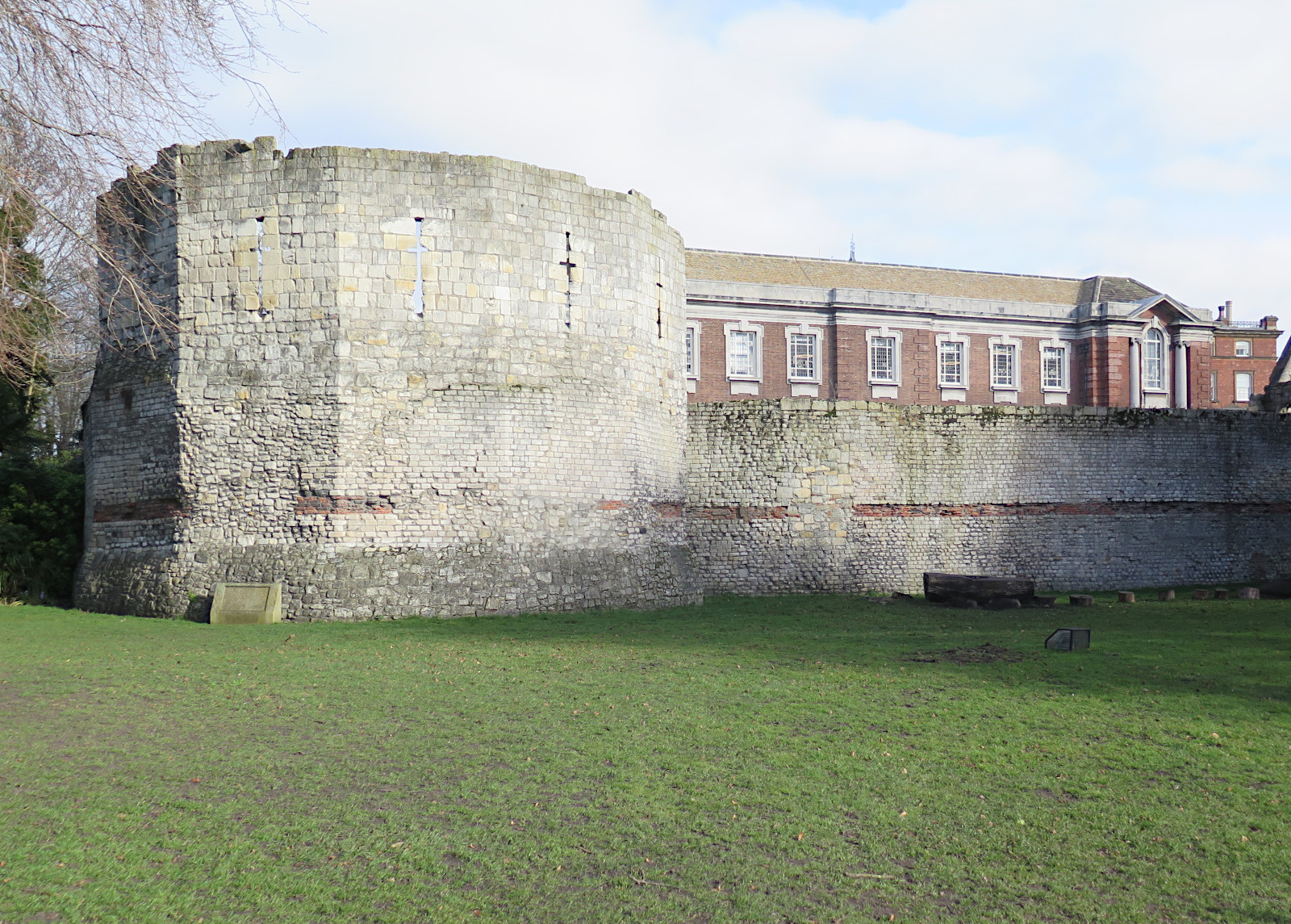
The day after the musical we explored the city centre including All Saints Church and the Museum Gardens. The photo, taken in the Gardens, shows part of the Roman fort dated to 107-108 CE, along with a surviving tower, ‘The Multangular Tower’. The Roman masonry consists of small blocks of stone and the red strip of Roman brick. The much larger stones above are medieval. Click the photo for a clearer view of these details.
On 11th it was clear that there had been more than a thousand coronavirus deaths in China, and although the rate of infection had been reduced it was still around 6% per day. This all seemed rather worrying. By 19th the virus was being called COVID-19 and it seemed to me that we were on a knife-edge between containing the infection or facing a world-wide endemic disease like a very serious kind of flu.
I was pulled over by the police after missing an exit on a roundabout in Gloucester and braking hard. They were very nice about it. After checking my licence and finding it clean they wished me a nice day and sent me on my way.
My sister Cindy held a book signing event in Cirencester at a local bookshop; in the photo she is squeezed between copies of her latest book and various toys and other items. (Find a copy of Cindy’s novel.)
During the month I met often with my friends Mo and Sue Urbano at their home in Eynesbury, and also with a group of friends at local coffee shops. These were useful times of growing together in following Jesus to the best of our abilities. There were other people too and there are snippets of the conversations in my journal. This was a busy period in my life.
We visited Broadstone to stay with Donna’s parents, and Paul and Vanessa came down from Weston-super-Mare as well. We walked on the beach with them at Sandbanks to get some exercise.
We were living in St Neots at this time, in the old village of Eaton Ford, once in Befordshire but now incorporated into the town as part of Cambridgeshire.
Unilever Colworth’s Christian Union (CU) met every Monday lunchtime and of course the meetings were not denominational in any way since we were all from different places and denominations (or in my case from no denomination at all). This was one of the features that made it so good.
Peter Farmer visited us and stayed the night on 6th, in 2009 he had been visiting one region of Britain every month to find out how people were meeting and reaching out. Quite a project! The following day we had a great meeting at Moggerhanger House.
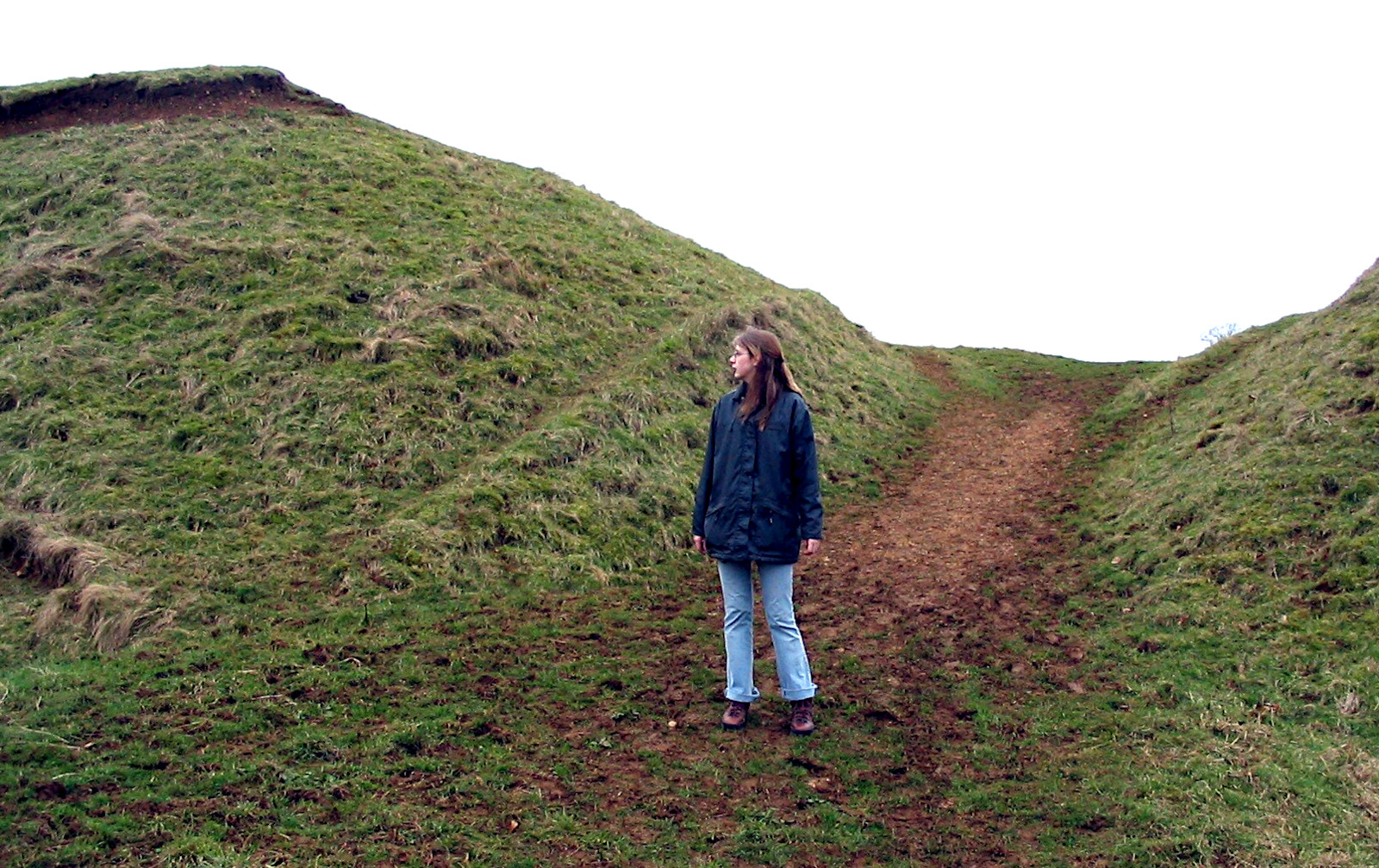
Driving cross country, I visited Debbie and Steve in Chipping Sodbury; Debbie and I walked to the nearby Iron Age hill fort which is very well-preserved. I didn’t even know it was there! There’s a double mound and a deep ditch between them; in the photo Debbie is standing in the entrance across one of the earthworks.
I had recently bought a new Nokia 6230 phone. It seems primitive indeed as I write this in 2025, but at the time it was an impressive little device. The iPhone appeared in 2007 and changed phones forever.
World events:North Korea announced it had nuclear weapons; and YouTube was founded (but not yet operating).
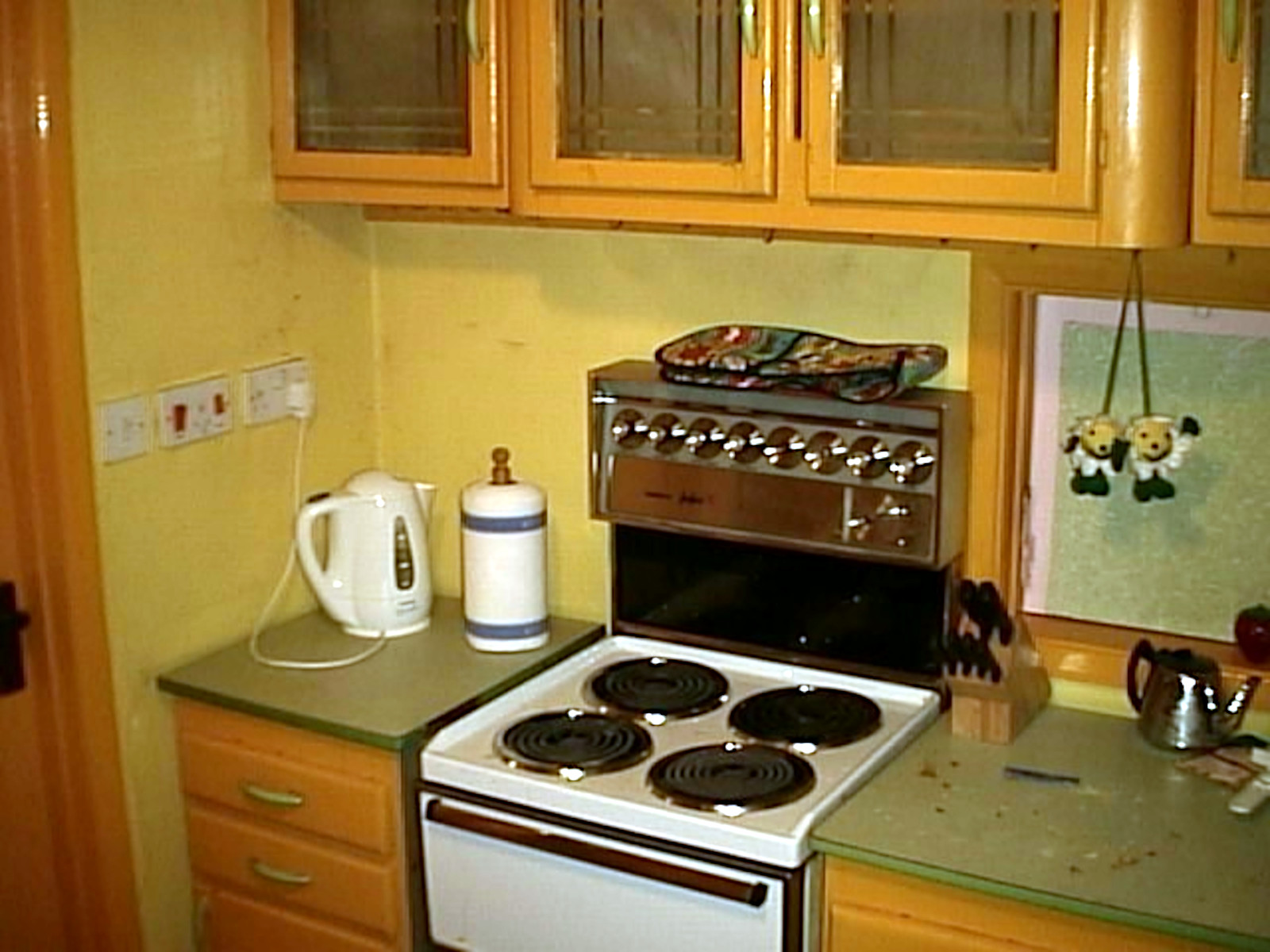
This is the kitchen, still as it was when we moved into our new home in Eaton Ford, St Neots. One of the things we’ll always remember is that the earthing on the cooker was faulty and it was sometimes possible to get a bit of a jolt from a metal pan handle. Renewing the kitchen was high on our to-do list and a few days after this photo was taken, we began taking down the old units and redecorating ready for the kitchen fitters to start work.
Near Calais
Towards the end of the month we travelled to Calais with the Open Door Church Small Group we were part of. Here we are walking along the coast path south-west of the town, I think. It was a good weekend break and fun to all be together. I can recommend it as a way to cement friendships, doing anything together is helpful.
Despite Judy’s best intentions, she had to give up working at Cotham Grammar School because of the stress and demanding hours. She was still not fully fit after some issues with chemotherapy in late 1994. Apart from her teaching job she was in really good shape and able to live perfectly normally.
For the first time in ages we were able to spend time together as a family in the evenings and weekends and that was a real joy for me and our daughters, Debbie and Beth, now 20 and 17 years old.
World events:Steve Fossett landed in Canada, the first person to fly solo across the Pacific by balloon; and Barings Bank in the UK collapsed.
On 10th of the month Debbie took a leading role in the Larchmount Players pantomime production of Tom the Piper’s Son in Yatton Methodist Church Hall. She did really well, a great performance. There were two further performances the following Saturday.
On the 20th we visited Judy’s parents in Cheltenham during the day and mine in Cirencester in the evening before driving back home.
We were living at 22 Rectory Drive in Yatton, between Bristol and Weston-super-Mare. Debbie was nearly ten years old and Beth still six.
My Uncle Dick received a letter (image above) about a book published in Cirencester in 1911. Nobody seemed to want this book at the time and my Dad gave it to me in February 1985, I was working as a microscopist and the book is about microscopy. In January 2017, I asked again if the Corinium Museum would like to have it, and this time they were interested so that’s where it can be found today. If you wish, you can read the letter, the book, and the museum form online.
Beth was 1¾ this month, and Debbie was almost 5-years-old. We were living at 22 Rectory Drive in Yatton at that time and Debbie would have settled in at the Infants School and made a fair number of friends. Judy was at home, looking after the house and I was working at Long Ashton Research Station.
I was considering ways to localise the plant hormone family of gibberellins in sections of plant tissue. The Pomology Division in which I worked was being closed down and the options were redundancy or a move to East Malling Research Station in Kent where pomology research was to continue.
Judy was looking (and feeling) very pregnant by this time. But she was in good health and there were no issues. The ante-natal classes had been helpful and we’d accumulated a lot of freebies and gifts and had bought necessary items ourselves as well. There were baby clothes and blankets, little booties and sterilising kits and bottles and teats and all the other things we thought we’d need. All this stuff fitted neatly in the basketwork crib Judy had made.
My MSc thesis was with the binders at this point. It was good to have all that paperwork and typing and drawing of diagrams (see photo) and charts behind me before the baby arrived!
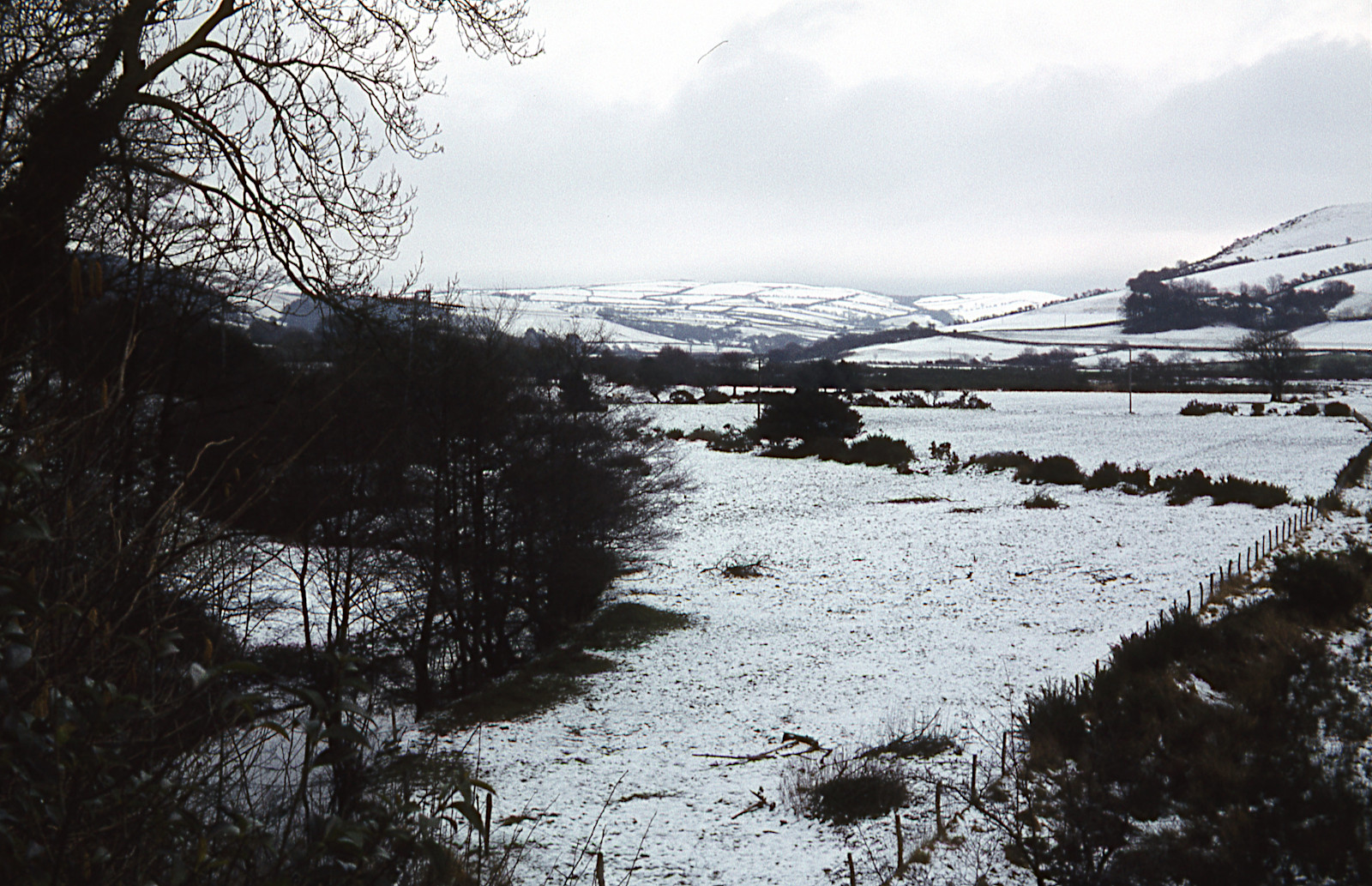
I can’t be certain, but I believe this photo was taken by Judy on her way home from Aberystwyth (where she was at university) to Cheltenham, probably on a Black and White coach. That would be appropriate as the countryside looks black and white as well! I was in my final term at Bath University, and we were both working towards our finals.
World events: Tourists died in an avalanche at Val-d’Isère, France; and Richard Branson founded the Virgin Group as a discount mail-order record retailer.
Cousin Sue had her 21st birthday party on 6th of the month and Granny-in-Ireland’s 67th birthday was on 9th (she was my Mum’s mother).
School continued through February, it was my second term in the Lower Sixth, studying for A levels in Biology, Chemistry and Physics. My sister Cindy was also at the Grammar School, in the third year I think. Ruth and Rachael were still at junior school (Querns School).
World events:The Gambia became independent of the UK; and Ranger 8 crashed on the Moon after photographing possible astronaut landing sites.
One of my favourite toys at this time was Meccano; I’d had small amounts of this as birthday and Christmas presents. There were red bendy steel sheets in various sizes, green strips, dozens of nuts and bolts, wheels, axles – what fun for an eleven-year-old! But around this time I was given large quantities of second-hand Meccano parts, hand-me-downs from my cousins Tim and Jeremy. That was so exciting!
World events: The first CERN particle accelerator became operational in Geneva; and the Hollywood Walk of Fame was established.
We were living at 17 Queen Anne’s Road on Cirencester’s Beeches Estate. There were two conifers, one outside our house and another outside our next door neighbours, the Watts family.
There had been more of these trees, planted when the estate was built; but children being children the young trees had been tweaked and pulled about and most had eventually died. Mum and Mrs Watts would run out and chase the boys away, and had managed to save our two trees.
I was six-years-old and my sister Cindy was three.
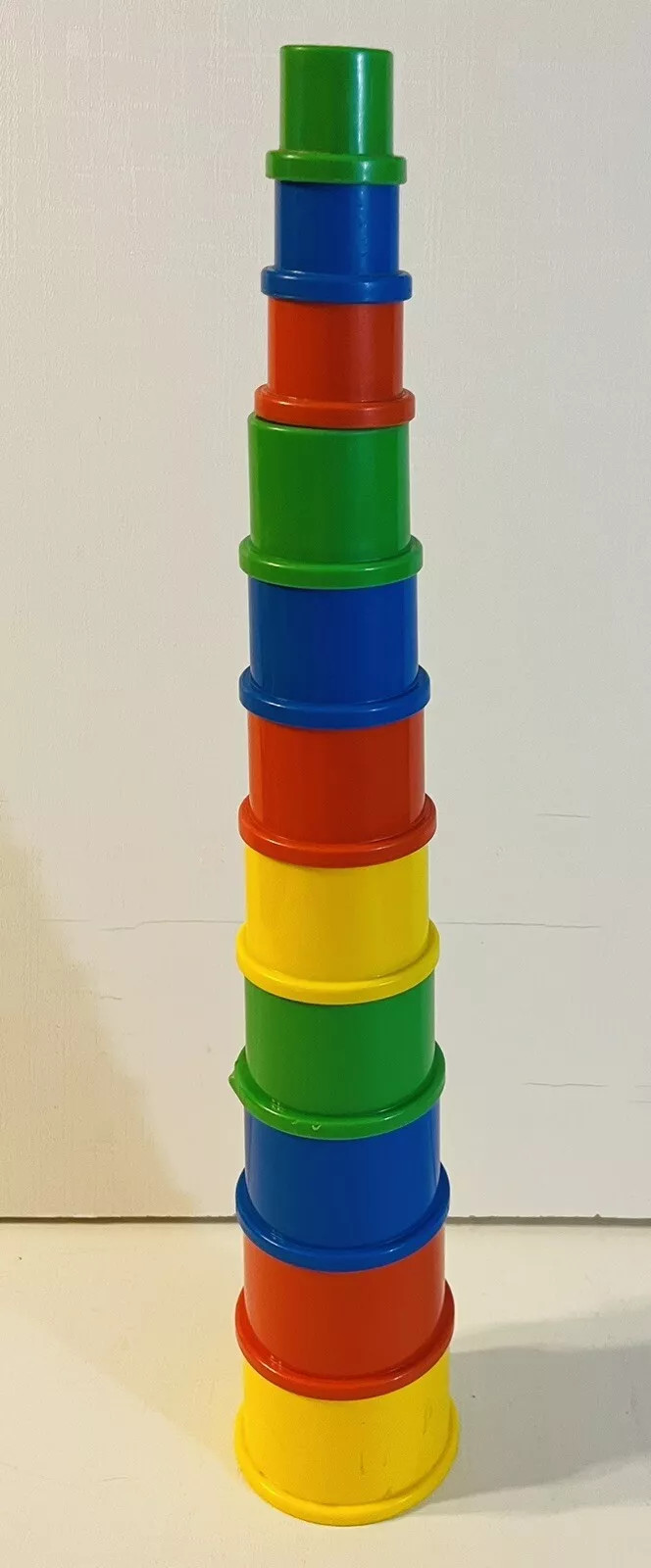
We were a little family in our own, rented council house on the Beeches estate. I had a cardboard box, open at the top, containing my toys. I remember (from later) that there was a nesting stack of bakelite pots in different colours.
You could put them inside each other (I probably watched Mum or Dad do this) or you could make a tower with them (and I’m sure I enjoyed pushing the tower over).
World events:Chiang Kai-shek was re-elected president of the Republic of China; and in New York a credit card (Diners Club) was first used.
On 3rd February Dad travelled back to Skendleby, in Lincolnshire where he was a radar operator on a Chain Home RAF site. It was about a mile north-east of the village, but is not marked on the map, of course.
Mum and Dad continued to write often, on 17th he was troubled to learn that she was unwell and might need surgery that would result in her not being able to have children. On 24th he heard that she would not need the operation after all. He writes in his diary, expressing his extreme relief; and had she needed that op, I wouldn’t be here to write this now!
World events: An oral version of penicillin was announced; and Roosevelt, Churchill and Stalin met at the Yalta Conference.
John Jefferies & Son Ltd had a florists shop on the corner of Cirencester Market Place and Castle Street, now the Vodafone shop. In February 1940 we can assume the vegetable-seed trade was good as the wartime population would have been growing their own produce on every available scrap of land. The ‘Dig for Victory‘ campaign would have encouraged this.
Entering the front door on the corner, there was a space for customers, with a service counter on the right and a private door opposite the shop’s display windows. Through the door and turning right, was a small, almost triangular outdoor space where buckets of cut flowers were stored, and there was always a smell of cooking emanating from the kitchens of Viner’s Restaurant next door in Castle Street.
Turning left instead brought you to a wooden staircase leading to offices on the floor above. There were also steps (possibly stone) leading down to the cellar.
If you enjoyed this or found it useful, please like, comment, and share below. (If you don’t see those links, click the article’s title above the main photo and they will appear.) Send a link to friends who might enjoy the article or benefit from it – Thanks! My material is free to reuse (see conditions), but a coffee is always welcome and encourages me to write more often!
Judy’s Dad turned 70-years-old on the tenth and she made him a cake decorated with emblems representing his life so far. We met at their house in Charlton Kings, Cheltenham, with her brother Frank and his family. (1994)
Notes from bygone years – November (Remember, remember). Hint: Click images to enlarge them.
November 2023 (1 year before publishing this article)
Bristol Boxkite at Bristol Museum
We drove to Bristol to take Donna’s saxophone in for a service at Headwind and then spent the rest of the day in the city. We visited the museum and spent some time in the art gallery there. The main lobby still has the Bristol Boxkite hanging from the ceiling, reminding visitors of Bristol’s long and continuing contribution to the aerospace industry. We also walked down Park Street in the rain, investigated Bristol Guild, ate at a student cafe, and looked around the cathedral briefly. A good day out!
Erin (our cat) responded very well to steroid treatment and was fit and happy for the first half of the month, but towards the end of November she was becoming very unwell again and there was nothing more that the vet could do to help her.
JHM: I posted an article about Chuck Pfarrer and his maps of the Ukraine war; and another about Yara who lives in Kyiv. World events: An AI safety summit was held in the UK; and global average temperatures exceeded 2° C above pre-industrial times.
The Christmas cactus was in great form in November, and a couple of Streptocarpus as well.
We had a visit from two friends from the St Neots area, Jim and Kevin. Jim’s wife, Pam, couldn’t make it this time, and Kevin is living on his own. I took them down to Cirencester and we visited the Corinium Museum. Jim was suitably impressed by the tesselated pavements, and Kevin (a fitter by trade) was intrigued by Roman lock mechanisms and the workmanship of these items.
We were meeting at the Baptist Church in Bibury for a while to help encourage them with some changes and fresh ideas. I was involved in other meetings as well, and we were helping Donna’s Mum and Dad with decorating and getting about (though that was becoming harder).
I went to the election hustings where our local MP, Sir Geoffrey Clifton-Brown was booed and heckled a lot. I certainly wasn’t inclined to support him.
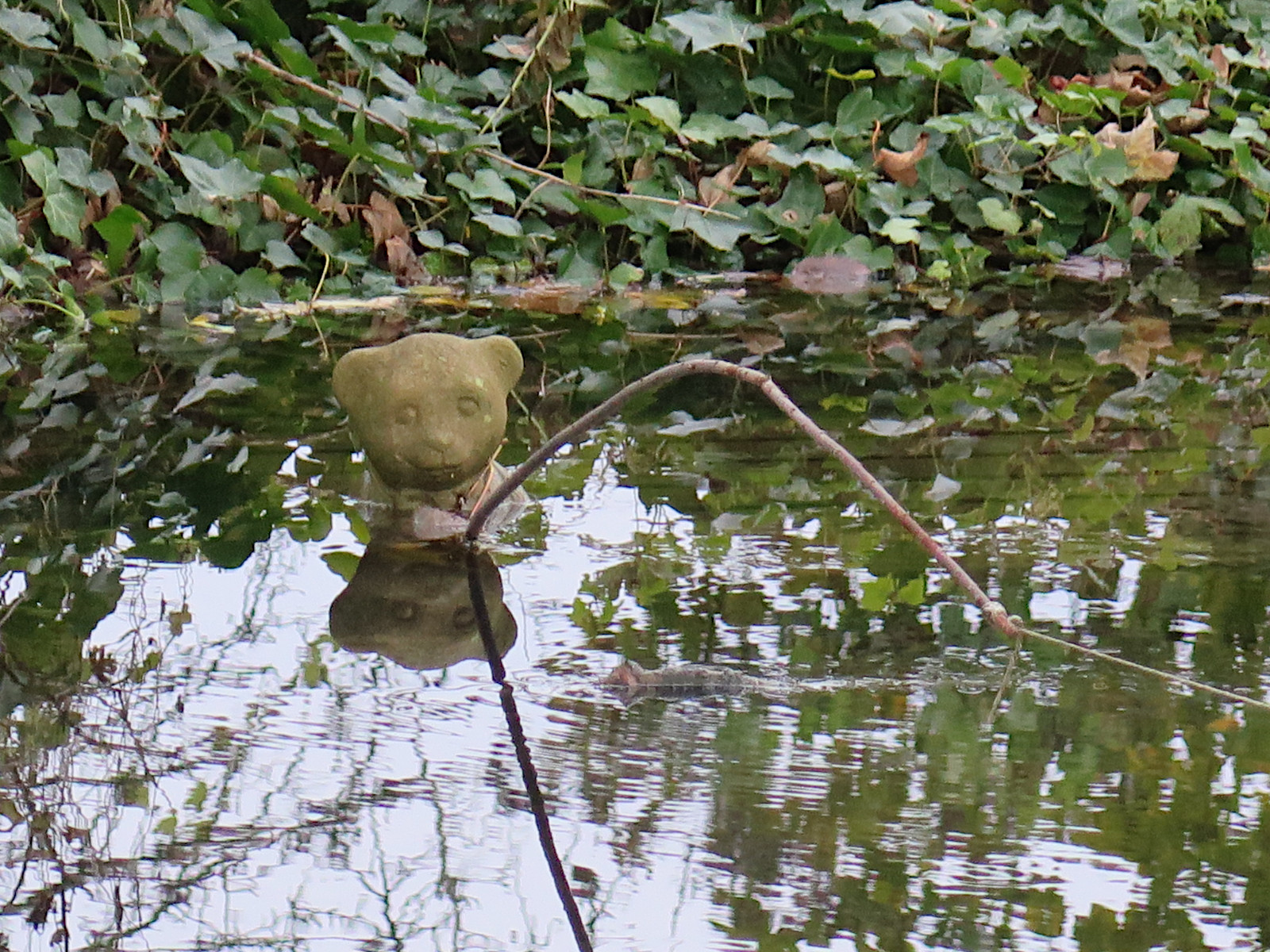
There was quite a lot of rain this month, and a dusting of snow as well. As a result there was some flooding. There’s a concrete bear (a garden ornament) on a wooden platform on the edge of Riverside Walk in Cirencester, and the bear is our water level gauge. As we walk past we see him sitting with his fishing rod on a dry platform (usually). But the photo shows him during the flooding, still clutching his rod and line.
Donna was training as a teacher but was having some second thoughts because of unruly and difficult kids, she also wanted to spend less time running the Open Door Small Group since the teaching work gave her much less available time. Meanwhile I put in a claim for my state pension and we helped some friends move house.
John, one of the guys I’d met at Caffe Nero, was grasping spiritual truths really quickly. He was asking a lot of questions and understanding everything quite deeply. I found this very exciting and immensely encouraging.
I was meeting frequently with different people, there was the Open Door small group once a week, coffee shop meetings with some friends in town, and meetings with my friends Jim, Sean and Kevin rotating around our three homes. It was all good and seemed useful, but three such different groups! Another friend, Chris, was working through Revelation and we met for coffee to discuss this too.
I took my coffee shop friends Matt and Kev to the Newforms Gathering at Kidderminster at the end of the month (photo).
I wrote a short note on the old family dining table we’d been using. It came originally from one of my Dad’s relatives and we’d used it when Judy and I lived in Yatton in the 1980s and 90s. Now we no longer needed it as we required something a good deal larger; we decided it should go to one of my daughters (assuming one of them wanted it).
We had new next door neighbours, Annette and Jerry moved into number 126. And there were major changes taking place in Unilever’s IT organisation that would affect us at Colworth where I was working.
Mum and Dad booked two adjacent holiday villas at Ross-on-Wye and the whole family spent the weekend together. It was a lovely time, a great way to keep in touch, typical of Mum and Dad to organise something like this. They were both closer to the end of their lives than any of us could have imagined, so it’s a special memory for all of us.
Mum had no idea there was an alien spacecraft hovering above her head! Click the photo for a better view.
We had a new gas heating system installed in our home – boiler, radiators, hot tank – everything. The preexisting system was old, decrepit and very inefficient, so high time to replace it.
On 4th November I flew to Schipol for Unilever business at Rotterdam.
And we had a new permanent house guest, Truffles the cat. She was a gift from friends who had more than enough cats, and Truffles preferred being a bit of a loner (though very affectionate with humans).
JHM: View the predecessor website at this time. World events: Australia decided to keep the Queen as head of state; and Kuwait revoked a 1985 law that granted women’s suffrage.
Judy was getting stronger after the problems with the attempted chemotherapy. She was out of danger and out of hospital too during November. She had lost her hair and was wearing a hospital wig, but new hair was already starting to grow and the wig would be only a temporary measure.
Judy’s Dad turned 70-years-old on the tenth and she made him a cake decorated with emblems representing his life so far. We met at their house in Charlton Kings, Cheltenham, with her brother Frank and his family.
In November I bought a new video camera to replace the one stolen in August while were on holiday. This time I bought one of the new, higher resolution Hi-8 cameras. The photo of Beth was made from a VHS copy of a Hi-8 original.
Debbie was probably playing clarinet around this time, but I don’t recall if they ever attempted a piano/clarinet duet!
World events: Dial-up internet was introduced in the USA; while the East German communist government resigned and the Berlin Wall came down.
I developed a DECO database for the Plant Science Division at Long Ashton Research Station to improve the processing and storage of bibliographic information.
This month we had a bit of a breakthrough. My boss at Long Ashton, Ken Stott, put us in touch with a friend of his who was a bank manager; we were then offered good terms on a mortgage.
During the interview we had to hide the fact that Judy was pregnant, as her income had been taken into account.
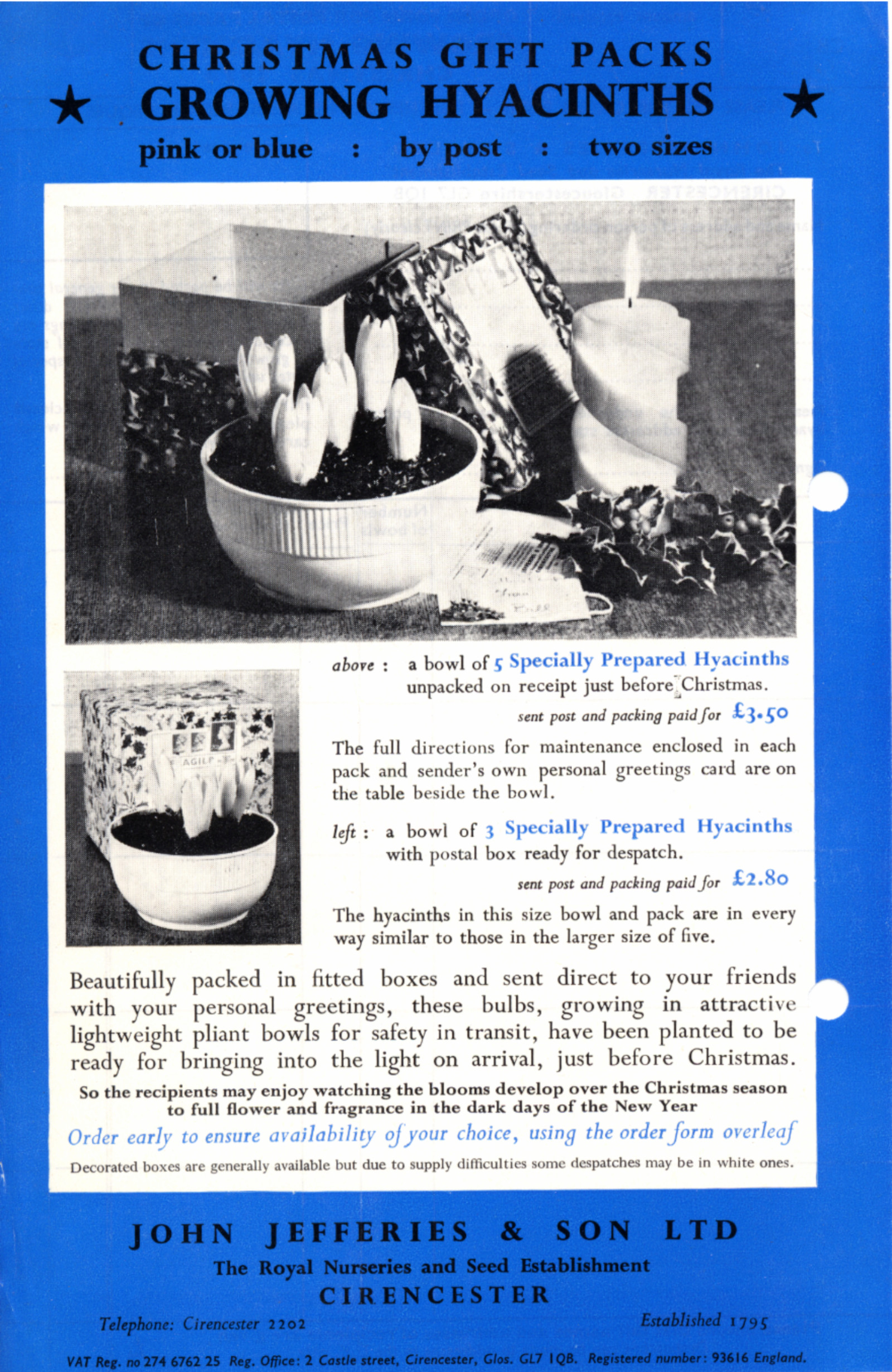
John Jefferies and Son Ltd published their Christmas bulb offer (see the full details, but don’t place an order – they’ve sold out!)
My Granny (Nor) celebrated her 80th birthday and the family gathered for photos and a short celebration at Uncle John’s house, 4 Tower Street, Cirencester.
In the photo – Back row: Cousin Tim, me, Uncles Bob, John and Dick, cousin Jeremy, and my Dad. Middle row: Judy, Aunty Betty (Bob’s wife), Pippa (Jeremy’s wife), My Mum, and Deirdre (Tim’s wife). Front row Aunty Jo (John’s wife), Nor, and Aunt Millicent (Dick’s wife).
Bonfire Night on 5th November was always an important calendar date when I was a child, and indeed right up until recently. It’s gradually been replaced by Halloween over the last ten or twenty years.
This triple Roman candle was the prize firework item in my parent’s back garden in 1964. I took a time exposure on a tripod while this one ran its course, and the photo came out remarkably well. I was 16-years-old and in the Lower Sixth at Cirencester Grammar School.
World events: NASA launched Mariner 4 to Mars; and France tested an atomic bomb underground in Algeria.
I was still in my first term at Cirencester Grammar School. My classroom was in the southernmost of the three Prefab Classrooms; the first year forms 1A, 1B and 1X had these three rooms, perhaps because they were a little way away from the classrooms for the older pupils.
It was an easy walk to the playground where the tuckshop was (it’s important to get important details sorted out as early as possible).
World events: The first section of the M1 Motorway opened; and the MOSFET transistor was invented in the USA.
I was in my second year at Querns School, and half way through the first term. I think that we had Miss Hourihane as our teacher for this second year as well as my first year, although I can’t be sure about that.
I joined the Trex Club, Mummy helped and I remember being a bit puzzled by the whole process, frankly! If you’d like to join, here are the full details.
World events: The first Godzilla film premiered in Tokyo; and a four-kilogram piece of the Hodges Meteorite crashed through a roof injuring a woman.
There’s little to say about this month, as in October I was 1¼-years-old, life went on, and we were still living in my grandparents house in Victoria Road, Cirencester. Dad continued working on the nurseries, part of the old family business.
World events: Oil was discovered beneath the Caspian Sea; and Winston Churchill supported the idea of a European Union.
Mum and Dad briefly talked about the idea of one day being married, and Dad bought a postcard of Cirencester Parish Church in the village shop in Coagh! They visited Uncle Samuel and Aunt Annie in Belfast on 23rd. On the 29th, Dad heard he was soon to be posted away from Northern Ireland, they were both very sad at this unwelcome news.
If you enjoyed this or found it useful, please like, comment, and share below. (If you don’t see those links, click the article’s title above the main photo and they will appear.) Send a link to friends who might enjoy the article or benefit from it – Thanks! My material is free to reuse (see conditions), but a coffee is always welcome and encourages me to write more often!
I never thought I would say this. But I approve of some of Boris Johnson’s actions. But let me be a bit more specific; I disapprove strongly of almost everything he did as Prime Minister, but there is one exception:
I like the way he stood up to Russia and clearly understood that enabling Ukraine to win and standing firm against Russia’s objectives and actions was necessary to Europe’s (and the UK’s) long term safety. Although that is all in the past now, we should still be analysing the European situation as it is today, and facing it by planning and acting wisely in our own and our neighbour’s best interests.
With that in mind, I urge you to watch the video below, in which Jonathan Fink interviews the researcher, political analyst, member of the RUSI think tank and author, Dr Benjamin Tallis. It’s a fascinating, and I think important, conversation. The thinking exposed by the interview is crucial to the survival of our way of life in a very dangerous world.
If you enjoyed this or found it useful, please like, comment, and share below. (If you don’t see those links, click the article’s title above the main photo and they will appear.) Send a link to friends who might enjoy the article or benefit from it – Thanks! My material is free to reuse (see conditions), but a coffee is always welcome and encourages me to write more often!
After finishing her education and working in management roles at a number of major companies in Pakistan, Sabeeta still had the continual feeling of background obstacles and pressures because of her faith.
Here, in brief, is the story of Sabeeta, beginning in Pakistan as a child with an awareness that she and her family were not entirely acceptable and eventually moving to the UK with her husband.
From Qayyumabad
Pakistan to UK
Sabeeta Mushtaq writes about her life in Pakistan where she lived in constant awareness that as a Christian in a Muslim culture, she was seen as a misfit in her country of birth. It’s difficult for many of us here in the UK to imagine what this must be like. Though regrettably, some people living in Britain with non-UK backgrounds might feel related tensions and anxieties.
After finishing her education and working in management roles at a number of major companies in Pakistan, Sabeeta still had the continual feeling of background obstacles and pressures because of her faith. Later still she married a British citizen and after a few more years they made the decision to move to the UK…
To London
…arriving in the difficult early days of COVID.
Eventually she found friends and a spiritual home in a London Anglican congregation and has now become a Lay Deacon. I like her closing sentence and quote it here in full:
My journey, though filled with obstacles, has strengthened my belief that God’s plan for us unfolds in ways we cannot always foresee, but in the end, it is always for a greater purpose.
All of us are on our own, individual journeys, with or without Jesus. And in my opinion, far better with than without! Read Sabeeta’s full story at Anglicanism.org.
Useful? Interesting?
If you enjoyed this or found it useful, please like, comment, and share below. (If you don’t see those links, click the article’s title above the main photo and they will appear.) Send a link to friends who might enjoy the article or benefit from it – Thanks! My material is free to reuse (see conditions), but a coffee is always welcome and encourages me to write more often!
If Jesus builds something, then he may ask us to help – but he will be in charge. He will teach us how to build, he will give us tasks he knows we can do.
A gathering
What did Jesus mean when he said, ‘I will build my church’? And what are the implications for us in our attempts to follow him? Here are some thoughts on the word ‘church’ and the action of building.
Aramaic is similar to Hebrew and was probably spoken at home and in the villages in Galilee in Jesus’ day, it was a widely used language in the region and even today is still used in a few areas of, for example, Syria. Jesus would have been taught Hebrew, as all Jewish boys were; this was the language of the Old Testament and was used in the Synagogues. There were some Greek towns and villages in the region, as there were throughout the Mediterranean more generally, so Jesus likely understood Greek. He might have known some Latin as well because that would have been spoken in imperial government and military circles.
In a conversation with his follower, Peter, he may have used an Aramaic word or possibly the Greek equivalent, ekklesia (church); and that’s how it’s recorded in the New Testament (Matthew 16:13-20). As a word it seems to have its roots in daily life; the village or town elders would have gathered as a local council to discuss and manage local affairs. As people meeting together more or less regularly, groups of people following Jesus may have been been given the same label – a gathering, therefore an ekklesia.
In the conversation described by Matthew, Jesus asks his followers, ‘Who do people say the Son of Man is?’ Of all of them, Peter was the most outspoken and would offer an opinion when the more cautious held back. Peter didn’t seem to worry about the risk of giving a wrong answer and looking foolish. So several of them gave the answer to the easy question – ‘Who do people say I am?’. But it was Peter who responded to the much more tricky question – ‘Who do you say I am?’
What Jesus says next seems ambiguous, at any rate the way Matthew describes it is ambiguous. Some people think he’s saying that Peter is the rock that he’ll build his church on. Others think the rock is the truth Peter expressed, the truth that Jesus is the Messiah, the Son of the Most High. Personally, I take the second view.
Jesus says that he will build his ekklesia, his church.
If Jesus builds something, then he may ask us to help – but he will be in charge. He will teach us how to build, he will give us tasks he knows we can do, but he remains the top man, the boss, the giver of instructions. We can’t just build what we want in the way that we want, call it church, and expect him to approve!
So let’s start by asking Jesus to show us what he wants us to do. And then when we each do our part, let’s keep checking with him that what we’re doing or saying is in line with his design. And then, as the job progresses, we’ll be able to gasp with astonishment saying, ‘Wow! This is far more amazing than anything I’d dreamed or imagined!’
It all starts with Jesus. The next step is that we have to learn to follow, to be Disciples. That will will steer us into Mission. And out of the results of mission we will see Church appear and grow.
If you enjoyed this or found it useful, please like, comment, and share below. (If you don’t see those links, click the article’s title above the main photo and they will appear.) Send a link to friends who might enjoy the article or benefit from it – Thanks! My material is free to reuse (see conditions), but a coffee is always welcome and encourages me to write more often!
There is a synergy, a sparking of abundant life that comes from the interdependence of the parts.
A page from the book
This is a slightly modified copy of an article I wrote in 2014. I’m republishing it because I think it is still useful and deserves another airing. Perhaps it hints at some things we are liable to forget.
The book, Simple Church: Unity Within Diversity, contains twenty-four chapters. Each one discusses a positive aspect of church, something that is an essential part of the whole. Reading from the book I was deeply impacted by Chapter 22 from Kathy Escobar; the chapter is entitled A church that restores dignity where it’s been lost.
She writes:
Jesus calls [Lazarus] out of the tomb, but then he looks to the people around him – his community, friends, and advocates – and says to them ‘unbind him’. Unbind him. Unwrap him. Take off his graveclothes.
I think God calls us to participate in this uncovering-unwrapping-unbinding with each other through healing community.
And it struck me that although church is much more than the sum of its parts, all of the parts need to be actively present. There is a synergy, a sparking of abundant life that comes from the interdependence of the parts. Church is a person, the Bride of Christ.
Like all people, you and I are much more than the sum of hands, ears, spleen, heart, lungs and all the rest. But if any of these were missing we would either die or be unable to fully function. And it’s just the same with the church.
Just consider some of the other chapter themes. The church cherishes Jesus Christ, exhibits personal holiness, counts every member as key, assembles for mutual edification, and knows eternal life is free. Imagine all of those being true in a church that fails to restore dignity where it’s been lost. It would be a church without the active compassion necessary to unbind those who so desperately need it.
Or consider a church that clings to scriptural truth, is most notable for its love and is united in Christ but doesn’t follow the lead of the Holy Spirit. This would be a church that failed to hear where to go and what to do and did everything in its own strength.
Or what about a church that was composed of peacemakers, viewed itself as a people, restored dignity but failed to proclaim the gospel clearly?
The chapters of this book all stand alone and can be read alone. But they often overlap so that there are echoes and glimpses of them in one another. Yet taken together, with no part missing or inactive, they describe a holistic church, a wholesome church and a church that is alive and active and effective in the world. There are other aspects that are not explicitly covered in the book, prayer for example. But these are implied throughout in a variety of ways.
Church is as complex as any living organism, and just like a living organism it is not only complex but also multi-faceted, and astonishingly well constructed. The church is also alive with the life of Christ. And every part contributes!
If you enjoyed this or found it useful, please like, comment, and share below. (If you don’t see those links, click the article’s title above the main photo and they will appear.) Send a link to friends who might enjoy the article or benefit from it – Thanks! My material is free to reuse (see conditions), but a coffee is always welcome and encourages me to write more often!
























 Journeys of Heart and Mind
.jpg)


_01.jpg)
