This index brings together posts on the gradual process of spiritual development or spiritual formation during my life.
1 – Why did I leave the Anglican Church? – This set the pattern for me. It’s been a repeat pattern of deciding I was not where Father wanted me to be and exploring further with as open a mind as possible.
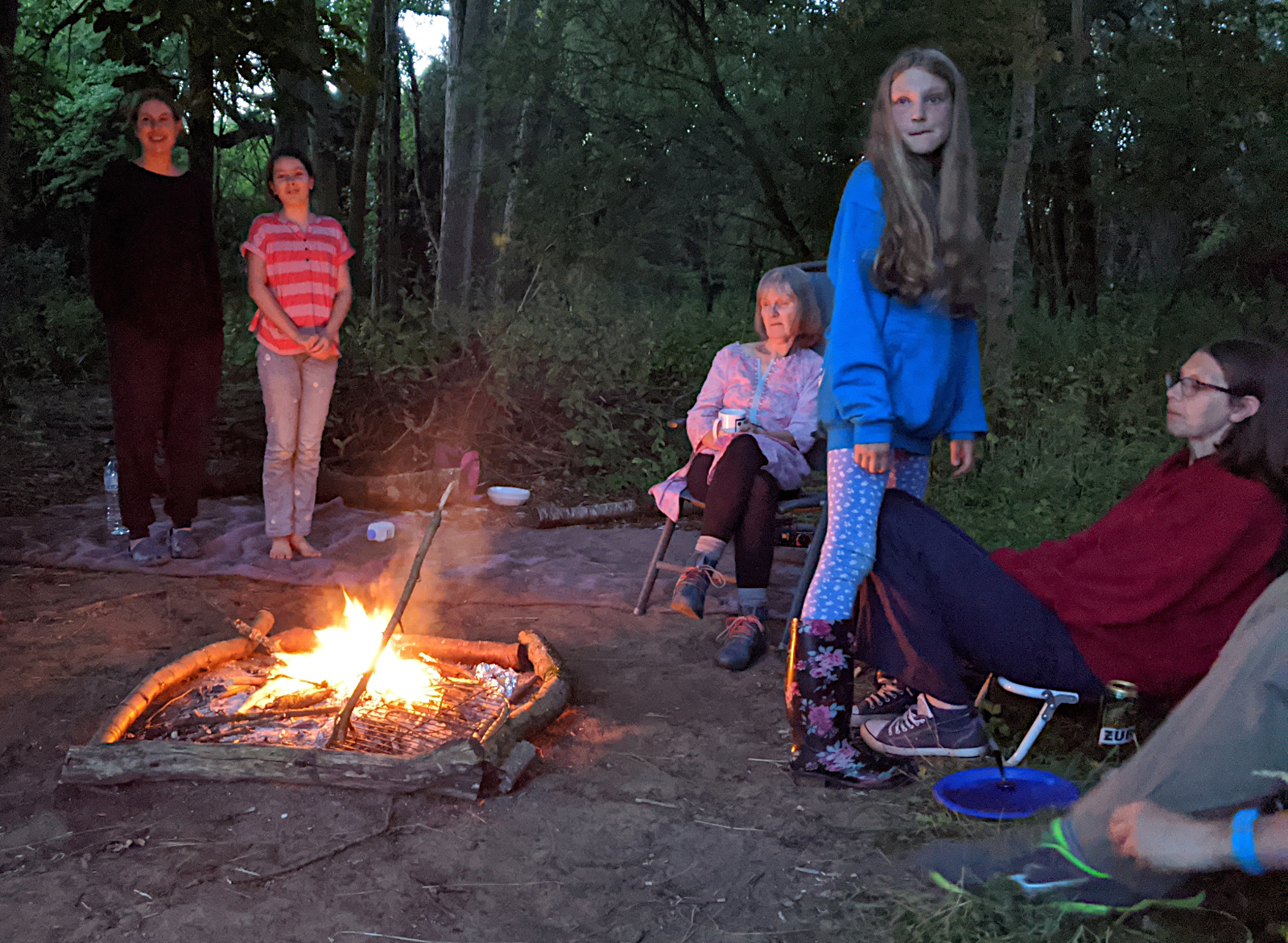
We didn’t see ourselves as a house church, more as a group of local believers from a range of denominations all wanting to be part of the exciting revival going on in the UK at the time, open to the gifts of the Spirit, but not wanting to become yet another splinter group.
Yatton, the village in Somerset where it all happened
Things were changing. We’d been fairly comfortable at Horsecastle Chapel in Yatton, and we’d learned a great deal and felt loved and made very welcome by the people there. But there were one or two niggles already mentioned in part two of this series. We felt it was not right, and rather unfortunate, that women were not able to take leading roles in meetings, that it was required that women wear hats (a minor thing, but an irritant nonetheless). It began to seem that some of these rules were made by people, not by our Father in heaven, and certainly not by his Son, Jesus. But the greater niggle was that we were not able to move in spiritual ways that were being revealed to us more and more as time went by.
An Anglican home group
For me it came into sharper focus when I went to an Anglican study group. Judy might have come to the same ideas in a different way, but she died in 1995 so I can’t check! I’m not sure we discussed it at the time, but we were moving on closely parallel paths, that I can say with certainty. I wanted to meet some of the Anglicans because I had the feeling there was supposed to be a single church, not a plurality of them. I couldn’t see any way that they could all be brought together, but I wanted to at least get to know some people of other denominations. Going along to the study group seemed a good way to approach this. I soon came to understand that the Holy Spirit was nudging me to go along, and rather quickly I discovered what he had in mind!
Friends and allies
The Anglican study group was held in the home of one of the St Mary’s congregation and was led by the Vicar, Revd Richard Acworth. I don’t remember what was discussed, but I very clearly remember the topic of humility coming up. There was a man in the group who protested, quite strongly, that he was not humble and didn’t intend to become so. I had the impression that he equated ‘humble’ with ‘impoverished’ or ‘weak’ or ‘demeaning’ or some other utterly unattractive idea. I think I was also a bit disappointed by the Vicar’s response.
Also in the group was a woman about my age and as we were leaving I mentioned the humility issue. She agreed quite enthusiastically and we had a brief conversation on the way home; her name was Faith. Judy and I would soon become good friends of Faith and her husband Tony. We shared a lot of views in common concerning Jesus, the Bible, and Church – and this excited me because we were from such different church traditions.
Meeting often
We began meeting quite regularly with Tony and Faith. We were like-minded on so many church matters, and some other things too. we both had young families so most often one of us would walk down to Tony and Faith’s house in Court Avenue in the evening while next time one of them would walk up to our house in Rectory Drive. We would do some Bible study, perhaps sing some of the Christian songs that were so common in those days, and we would pray together. But by far the most important thing we did was to listen to one another and to what the Holy Spirit seemed to be saying to us, sometimes in a whisper, sometimes rather loudly! We invited other people we knew to come and join us, especially Paul and Jenny who lived close as well, so four became six, and there were many other local people with us so on a weekly basis we took turns to host these larger meetings. Sometimes there’d be 20 people in our sitting room, on our sofa and armchairs or sitting on the floor. These were great times of blessing when all of us would feel the presence of the Holy Spirit right with us in every word read or spoken and in every song we sang. We were warned of the dangers we were facing by some of the elders at Horsecastle Chapel, we knew their hearts were in the right place and that the warnings were well-meant; but we knew we were following Jesus so we ignored the advice and warnings and carried on.
Music
Fountain at St Barnabas
Tony is a skilled bass guitarist, Paul was good on a steel-strung 12-string he had, And I would plonk along on a nylon-strung Spanish style acoustic guitar Judy and I had bought at a music shop in Park Street, Bristol while we lived in our flat in Belmont Road. This was an expensive instrument – I think it cost us £27 in 1970 or 1971 (around £540 today) and it replaced the two cheap, second-hand guitars we bought while at university. It seemed better to share one good guitar than to persevere with two older ones that were difficult to tune. Rather later, we were joined quite often by David and Mary Bolster, another couple living nearby. David worked for Scripture Union, and was usually busy with youth work of one kind or another. Judy and I went on a youth retreat with them one year at Wroughton near Swindon to help as assistant leaders, and visited them at a camp at Greatwood near Bridgewater in Somerset. The photo shows Fountain in the Church Hall at St Barnabas in Claverham (from left you can see Paul, Faith, me, Ian on flute, Jenny, Judy and Tony on bass). Ian joined us a little later but was a very useful addition providing a higher pitch in the mix and helping strengthen the melody line.
Tongues
One evening after walking down to Tony and Faith’s, Tony mentioned that he’d received the gift of tongues. We’d read about this in Acts and in some of Paul’s letters to the Greek churches. and we’d read about it in modern times too in books by Colin Urquhart, David Watson, Graham and Betty Pulkingham and others. On hearing this news from Tony I felt mild surprise, delight, frustration and envy all at the same time. So, of course I asked about how it had happened and what it was like. Tony told me he’d been having a bath so was very relaxed and he just started talking scribble. He felt warm and encouraged. As I walked home after that evening at Tony and Faith’s. I gave it a try – I talked some scribble words myself. I learned a valuable lesson right at that point. Was this a gift from the Holy Spirit or was it just me talking scribble and being really foolish. I realised right away that there was no way to tell. And I understood something that I’ve never forgotten since that evening. It’s not about me doing something or not doing something. Specifically, it’s all about Jesus doing something in me, and the only skill needed for that is the simple ability to listen to him and do what he wants, not what I want. This tiny revelation changed my entire life. Everything became real in that moment. In this journey with Jesus it’s not for us to do anything more than rest in his presence. If I do that one thing, consistently, he will do anything else that is necessary. My effort is not required, and life is often far better if I keep well out of the way, especially at moments when he’s touching someone else. My surprise and delight are in order, but never frustration or envy.
As the weeks and months went by, our home meetings grew in numbers, but more importantly in depth and in our appreciation of receiving gifts. We were being invited to bring music and teaching to local churches around the county of Avon and the northern areas of Somerset. We called ourselves ‘Fountain’, played all the latest choruses and songs, as well as some of our own songs and acted out little sketches to help people understand the charismatic revival that was taking hold all around us. Tongues and interpretation became normal for us in meetings, as did prophecy, but the most important things for me were the spirit of caring for one another that grew in our hearts and minds and the determination we all had to follow Jesus in everything.
Jesus provides gifts, but will we open them?
One of those sketches sticks in my mind so I’ll share it with you, Tony played the part of Jesus, and Paul was a typical church member. Tony had a cardboard box wrapped in colourful paper, perhaps with a ribbon tied in a bow. He gave the box to Paul, saying I have a special gift for you. Paul took it and made a point of thanking Tony several times, saying, ‘Oh it’s really lovely, thank you so much, but I don’t think I really deserve it’. He put it down on the table, walked round it, looked at it from all angles and carried on saying how lovely it was. Tony (Jesus) asked, ‘Aren’t you going to open it?’ I chose it specially for you, it’s just what you need, you know.’ Oh no, I couldn’t possibly open it,’ said Paul, ‘That would spoil it, it’s so beautifully wrapped, it would crumple that lovely paper. Jesus responded, but if you don’t open it you won’t find out what it is and you won’t be able to use it. I want you to open it’. And this went on for a while. Then we explained that Jesus has gifts for all of us, but we do need to open them and start using them. And without the gifts being unwrapped and used as intended, Jesus will find it a problem to help us do the work he has in mind for us. His work, building his church, growing his people involves him pouring his grace and love into us so that we can share those things with those around us. He does not want us to be timid. We must gratefully receive everything he has for us. It’s for his glory, not ours and we shouldn’t stand in his way.
Good News Crusade
Another thing we did around the same time was print a monthly local newsletter called ‘Community Spirit’ with details of forthcoming meetings at churches around the area, and any special events in the pipeline too. One of these was a Good News Crusade with a series of pre-Crusade rallies beforehand at a church in Portishead. I recorded many of these meetings on a portable stereo cassette machine, and I produced copies from the originals so they could be passed around the community as widely as necessary.
Not a house church
Eventually we would be hosting home meetings of up to twenty people once a week at our house, Tony and Faith’s, or Paul and Jenny’s and one or two other homes in the nearby village of Claverham. There were other similar house meetings going on (for example the Bank House Fellowship in Clevedon). We didn’t see ourselves as a house church, more as a group of local believers from a range of denominations all wanting to be part of the exciting revival going on in the UK at the time, open to the gifts of the Spirit, but not wanting to become yet another splinter group. Much of the leadership effort at the time was spent on starting new streams of churches, New Frontiers for example or Vineyard, or on the other hand bringing spiritual gifts into the established denominations – Anglican, Catholic, Methodist, Baptist and so on. Both of these efforts became successful and widespread, but from my perspective today I can see very clearly that we made by far the better, and perhaps more obedient choice. We thought the way forward was more about bringing people together in freedom to follow Jesus in flexible ways, while providing information, help and encouragement both in the established churches and chapels in our area, and amongst Jesus followers with no connections to established churches. We were also keen to encourage new and deeper spiritual growth in all the local churches, though our links with some of the larger places were more tenuous than those with the smaller and self-governing groups. I still feel privileged to see things this way – as if I had a narrow escape from taking a wrong path. I think we all had a narrow escape, Jesus was protecting us and whispering to us, ‘Not that way, this way, just follow me!’ Many of the churches and chapels we encouraged still exist and remain active, some of their websites are listed below under the See also: heading.
Prophecy
It wasn’t just Tony, as time went by we all found ourselves receiving spiritual gifts in a variety of ways. For me, visions and prophecy became the main gifts and I well remember the first time I became aware of it.
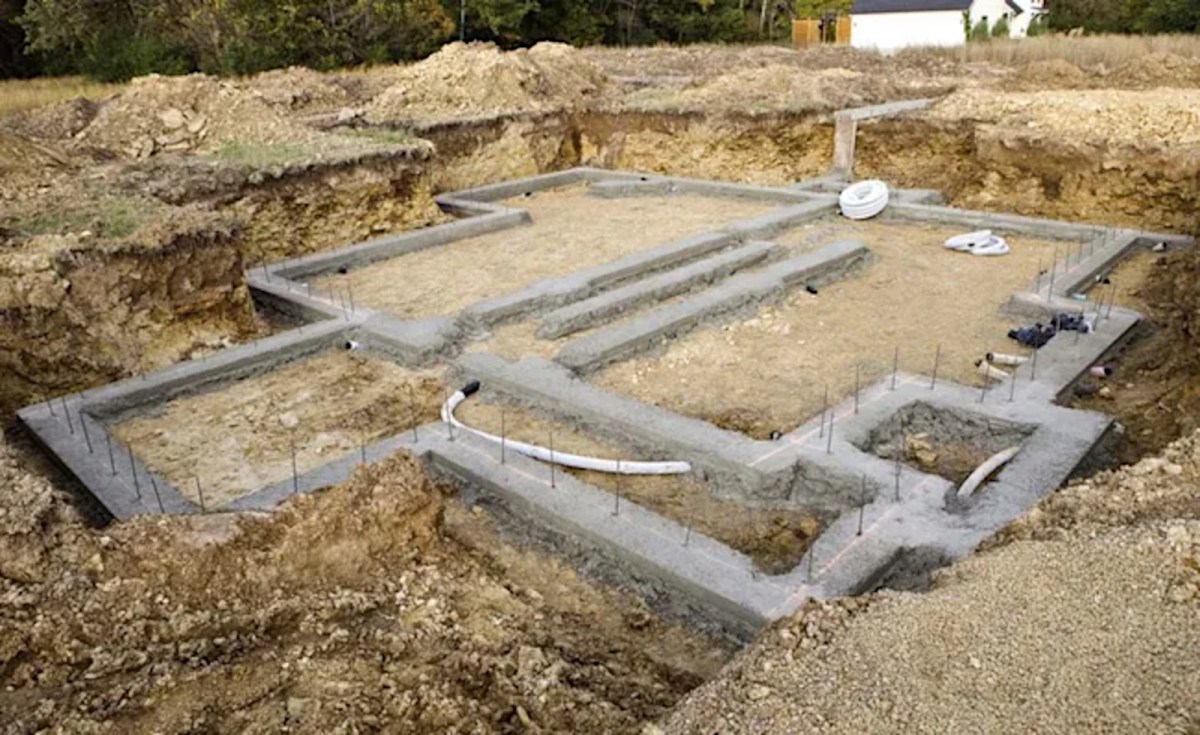
I was sitting on the floor in Tony and Faith’s front room, it was just the three of us. (so before Paul and Jenny became involved). In my mind I saw us as children playing on a building site. There were muddy puddles and stacks of bricks all around. We took some of the bricks and stacked them up to make little ‘houses’, four bricks for walls and another balanced on top to make a roof. We were happy playing with the bricks together, but just then the builder arrived and spotted us. He walked over and smiled, though we thought he’d be cross with us. Somehow I knew the the builder was a representation of Jesus. And he said to us, don’t play with the bricks but bring them to me because I know how to use them to build real houses. If you bring them to me you’ll save me time and I’ll be able to build faster.
So that’s what we did, and the first real house started to rise! It wasn’t much of a stretch to see that the real house represented the church, and our job was not to build something ourselves but to bring people into Jesus’ presence and watch while he builds the church.
It was an important lesson and a growth point for me personally and perhaps for all of us as a group. And I’ve been used that way in meetings ever since. Sometimes it’s been well received, sometimes not.
The Fisherfolk/Community of Celebration
Around this time we became aware of the Fisherfolk, a music ministry that wrote and recorded many new Christian choruses focusing on spiritual growth, and particularly the receiving and use of spiritual gifts. This was right up our street! We bought the music books with words and, most helpfully with keyboard score and guitar chords as well, we bought the LP recordings and avidly absorbed it all, practicing Fisherfolk and other songs as well as creating some of our own.
But then a special opportunity came up. We learned that a weekend of music, praise and worship was planned at a site in Dorset – Lytchett Minster. There was a field for camping, the Fisherfolk would be playing and there’d be a lot of like-minded people to discuss things with. We booked space for three tents and went along. It turned out to be a time of growth and learning, just as we’d hoped – hugely beneficial, confirming much that we were already doing and encouraging us to continue.
Impressed as we were by the community style of living demonstrated by the Community of Celebration, we briefly toyed with the idea of selling our three homes and buying an old farmhouse with some land around it, Faith, Paul and I thought this would be a great idea, but Judy, Tony and Jenny disagreed and we didn’t follow through on the plan. It was only an idea in the back of our minds, we didn’t even start to look into the practicalities. but without unanimity, it couldn’t get off the ground.
If you enjoyed this or found it useful, please like, comment, and share below. (If you don’t see those links, click the article’s title above the main photo and they will appear.) Send a link to friends who might enjoy the article or benefit from it – Thanks! My material is free to reuse (see conditions), but a coffee is always welcome and encourages me to write more often!
Living fossils can be found and recognised over long periods of geological time, and appear very similar throughout. And they may have little diversity, in other words the species in the group all tend to be similar to one another.
The first two are required for recognition as a living fossil; some authors also require the third, others merely note it as a frequent trait.
To put this more simply, Living fossils can be found and recognised over long periods of geological time, and appear very similar throughout. And they may have little diversity, in other words the species in the group all tend to be similar to one another.
Here are some examples, listed in order of their discovery. In some cases the fossil organism was already known before a living form was discovered, in other cases the living form was known first:
Mymarommatidae or ‘false fairy wasps’ (2007ish, North America)
Syntexis libocedrii or ‘cedar wood wasp’ (2011, California to British Columbia)
What else can we learn from this
Two things really. The first thing is that species can sometimes exist for very much longer than normal. And the second thing we learn is that species with astonishingly similar appearance may rise independently more than once. So-called fossil species may be no more than independently arising lines that happen to look very similar.We see the same thing between different living groups, so there’s a marsupial mouse that looks quite like its European namesake. This is known as parallel or convergent evolution.
If you enjoyed this or found it useful, please like, comment, and share below. (If you don’t see those links, click the article’s title above the main photo and they will appear.) Send a link to friends who might enjoy the article or benefit from it – Thanks! My material is free to reuse (see conditions), but a coffee is always welcome and encourages me to write more often!
Charlie Barnett was a famous test and county cricketer … when he retired from cricket, he set up a business in Cirencester, selling fish, game, and more exotic items such as seagull eggs (1950).
May 2025 (3 months before publishing this article)
Click pics to enlarge
I invited my friend Mark to the Small Group barbecue at Bernard and Vivien’s in Berryhill Road. He enjoyed the food as well as the chance to meet and chat with some new people. Al, especially, enjoyed talking with Mark.
At the Old Prison
On 16th we took Donna’s Mum, Isobel, to the Old Prison Cafe in Northleach; it’s one of the places we like to visit from time to time as it’s not very far from home and is in relaxing surroundings. You can still visit the old prison cells, but they don’t look relaxing at all!
Paul and Vanessa visited for the day on 18th. We met them at Lynwood in the Market Place for coffee and cake and then back at our house for lunch, with Isobel as well. We chatted in the afternoon round the dining table and then on the patio.
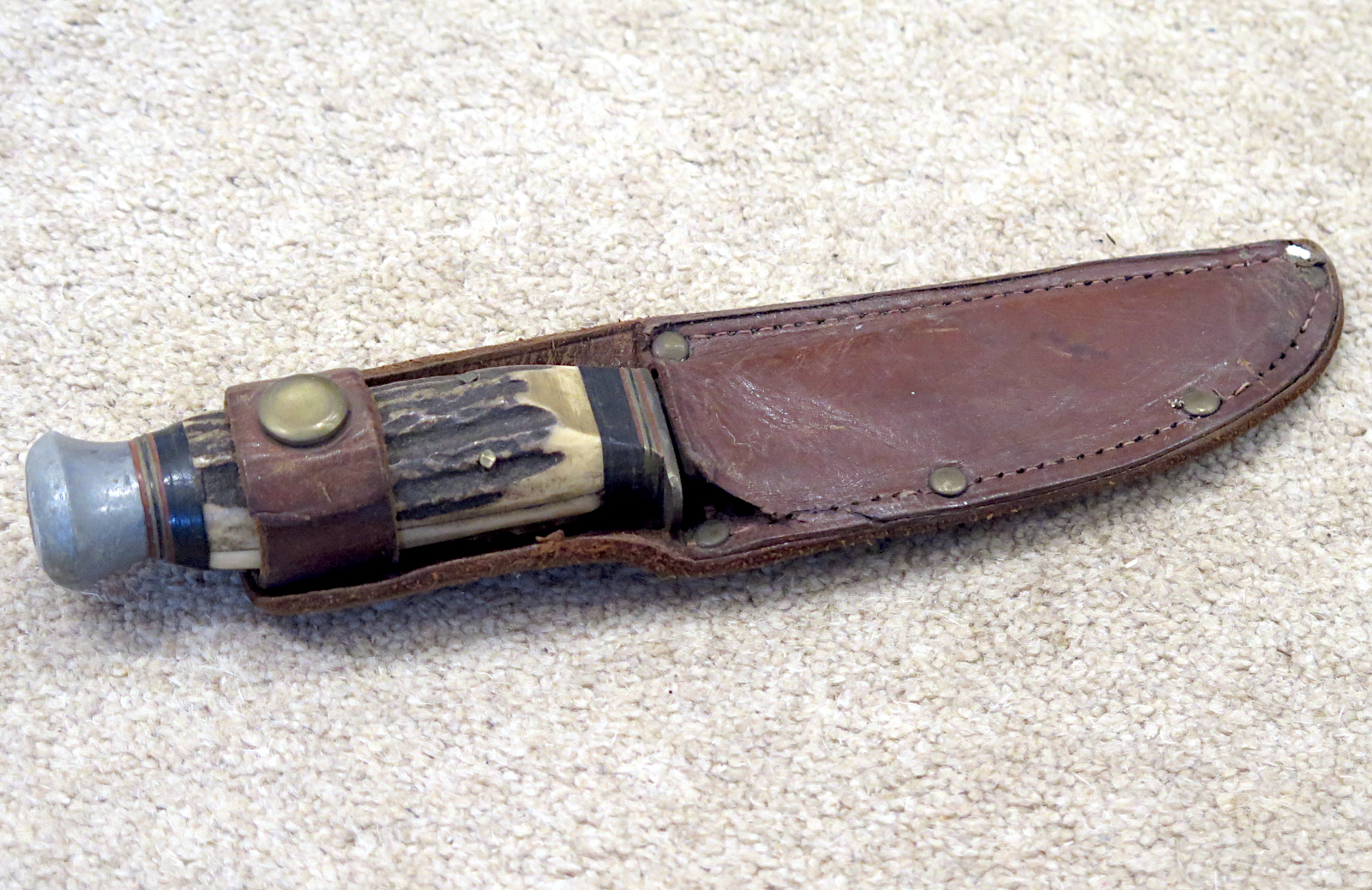
While going through some items from storage boxes I came across this old hunting knife, it has an antler handle and a leather case and I used it as a teenager as a scout knife. But I think it was given to me by an uncle who might have acquired it from his days in the British Army during World War 2. But wherever it came from, it’s not an object I could legally carry around while walking the streets in 2025!
Rococo Gardens
The snowdrops in Painswick’s Rococo Gardens looked lovely as they always do in season. Every year there are more, partly because gaps are being filled by natural spreading , and partly because additional areas are being planted up.
We had some issues with the new heat pump, mostly due to incorrect wiring during installation, but the engineers came back quickly to make fixes. The heating seemed better and better as time passed and we got to grips with the lifestyle changes – like using a summer duvet in the winter.
JHM: I wrote about truth and facts; and about an asteroid heading our way. World events: The Baltic states synchronised their power grids, connected to Europe and disconnected from Russia; and Thutmose II’s tomb was discovered.
We visited Springhill on our way north to Portrush. Mum used to talk about this old house and garden which she really loved. It was the home of William Conyngham who founded the village of Coagh where Mum was born and grew up.
We were on holiday with my daughters and their families, this time in Northern Ireland. On 7th we set out from the house and walked east along the coast to visit Dunluce Castle. Only Aidan and I went inside as we arrived near to closing time, but itwas well worth seeing.
Near the start of our walk
It’s a magnificent coast as you can see from the photo, there are beautiful beaches and rugged cliffs along the way. So it was a memorable walk. The second image shows some of us near the start of our expedition, on Portrush’s east beach with the town in the background. As always, click the thumbnail for a larger version. Read more about our holiday.
Back at home later in the month, I decided to finally close down my account on X. Back in the day when it was still Twitter I used it a lot and enjoyed the conversations, but in its later form it became full of unpleasantness and anger. I had already found a better, more friendly home in Bluesky – so goodbye X.
Beth and Paz celebrated their silver wedding this month, a grand achievment!
Cairn Gorm summit
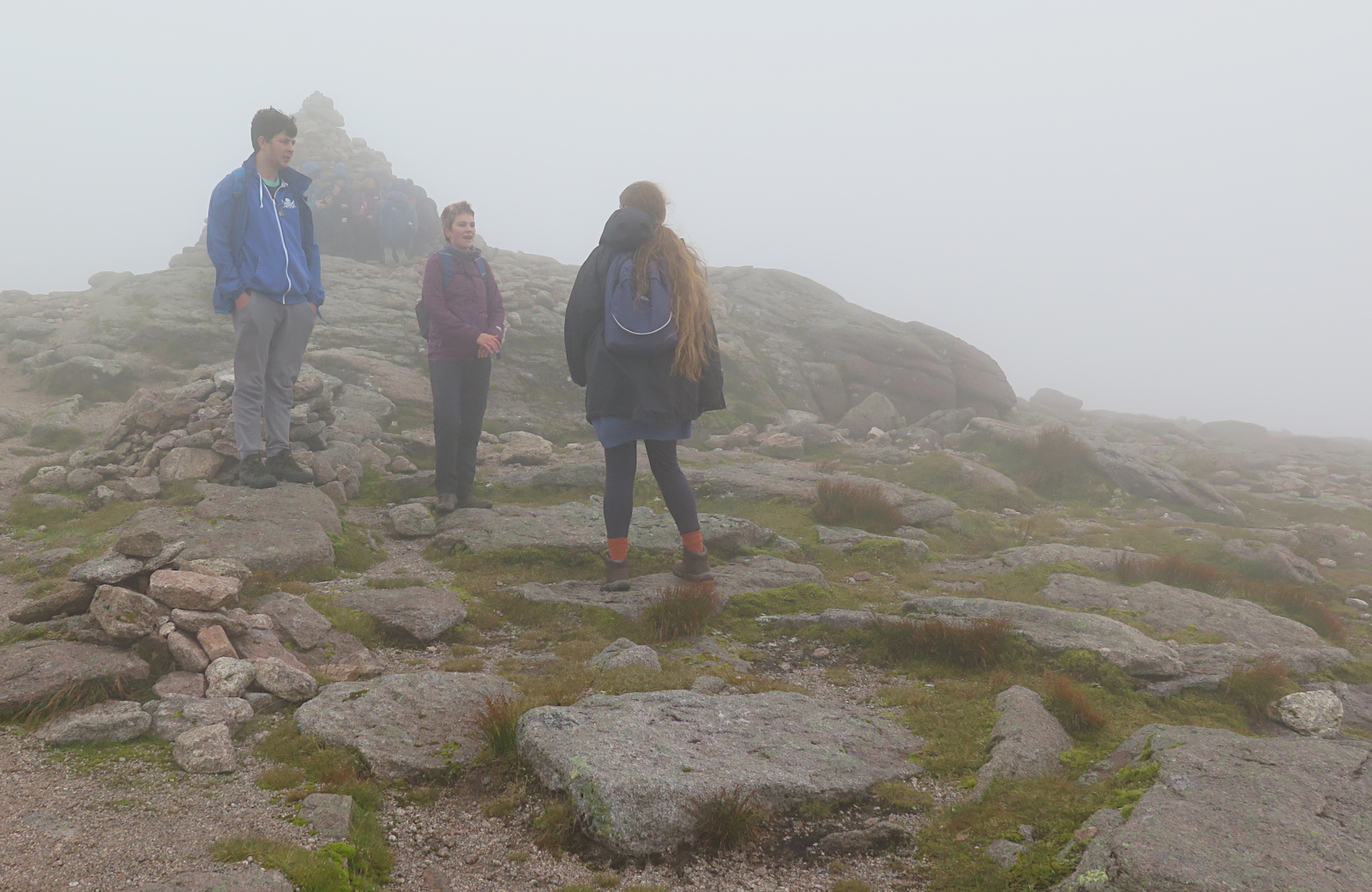
And we also had our family summer holiday, this year in Scotland. Beth, Aidan, Meredith and I made our way from the ski-lift car park to the summit of Cairn Gorm, but were unable to go further because of heavy cloud. On the way up we were lucky enough to spot a small herd of reindeer.
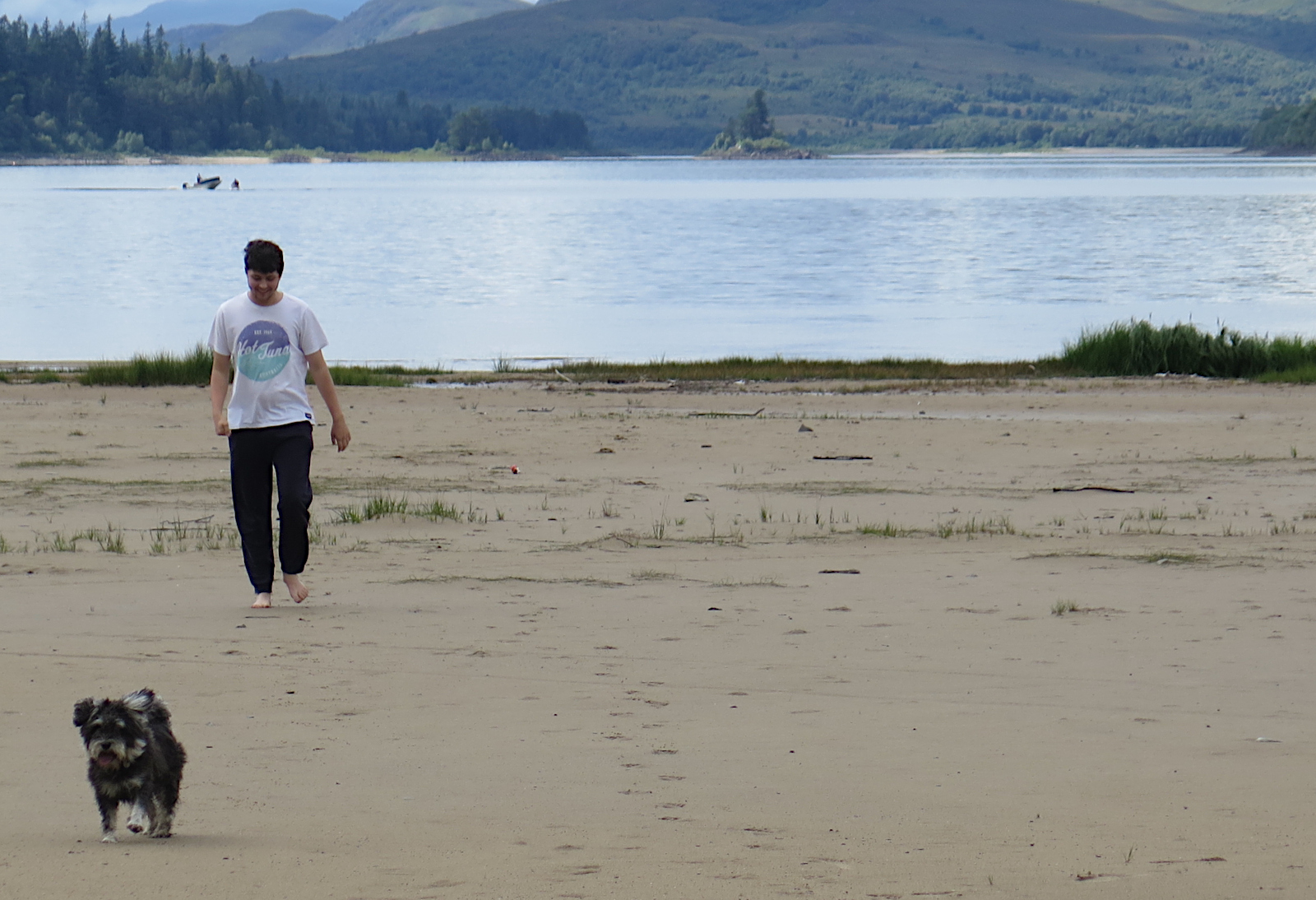
Freshwater beach, Aidan and Heidi
We visited a freshwater beach at Loch Laggan, a very strange thing to see, with patches of grass and seedling conifers growing in the sand.
We stayed in a big, old house in the village of Newtonmore. It held a few surprises for us, for example taking a shower caused water to drip through the ceiling in the dining room! But despite the quirks, we loved the house and the area.
Donna and I visited Boat of Garten where friends from near Cirencester were visiting family. Also in August, I went for a walk through the Beeches Estate where we lived until I was eleven-years-old; it brought back a lot of memories and I was able to jot them all down later when I got home.
Beth, Debbie and their families camped at Siddington. It was lovely to have them so close and to be able to pop out to spend time with them. in the photo you can see several members of the family and my sister, Cindy.
Near Snowshill
Paul and Vanessa came to stay for a long weekend and we did a circular walk from Snowshill, then we went to stay at their flat in Weston-super-Mare to look after the dogs while they were away. The photo shows Vanessa, Maizi, Paul and Donna.
And finally, Thomas Holme came to live with us for a period of time, starting on 22nd.
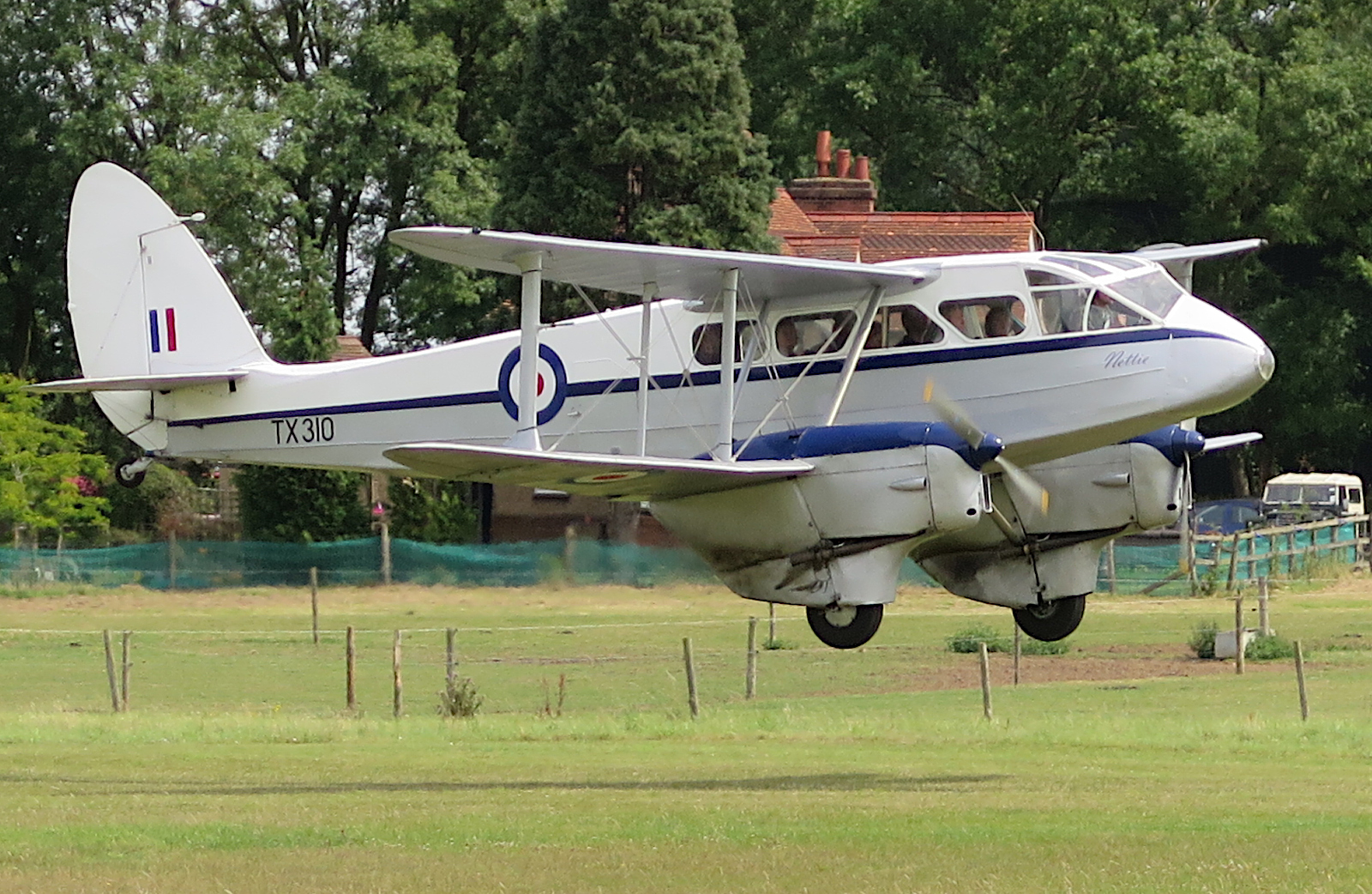
We went to a ‘Wings and Wheels Day’ at Old Warden airfield, not far from home in St Neots. It was amazing, with a series of vintage aircraft flying and vintage cars on display, and with a picnic as well. Donna booked the occasion well in advance, and as it turned out the weather was perfect.
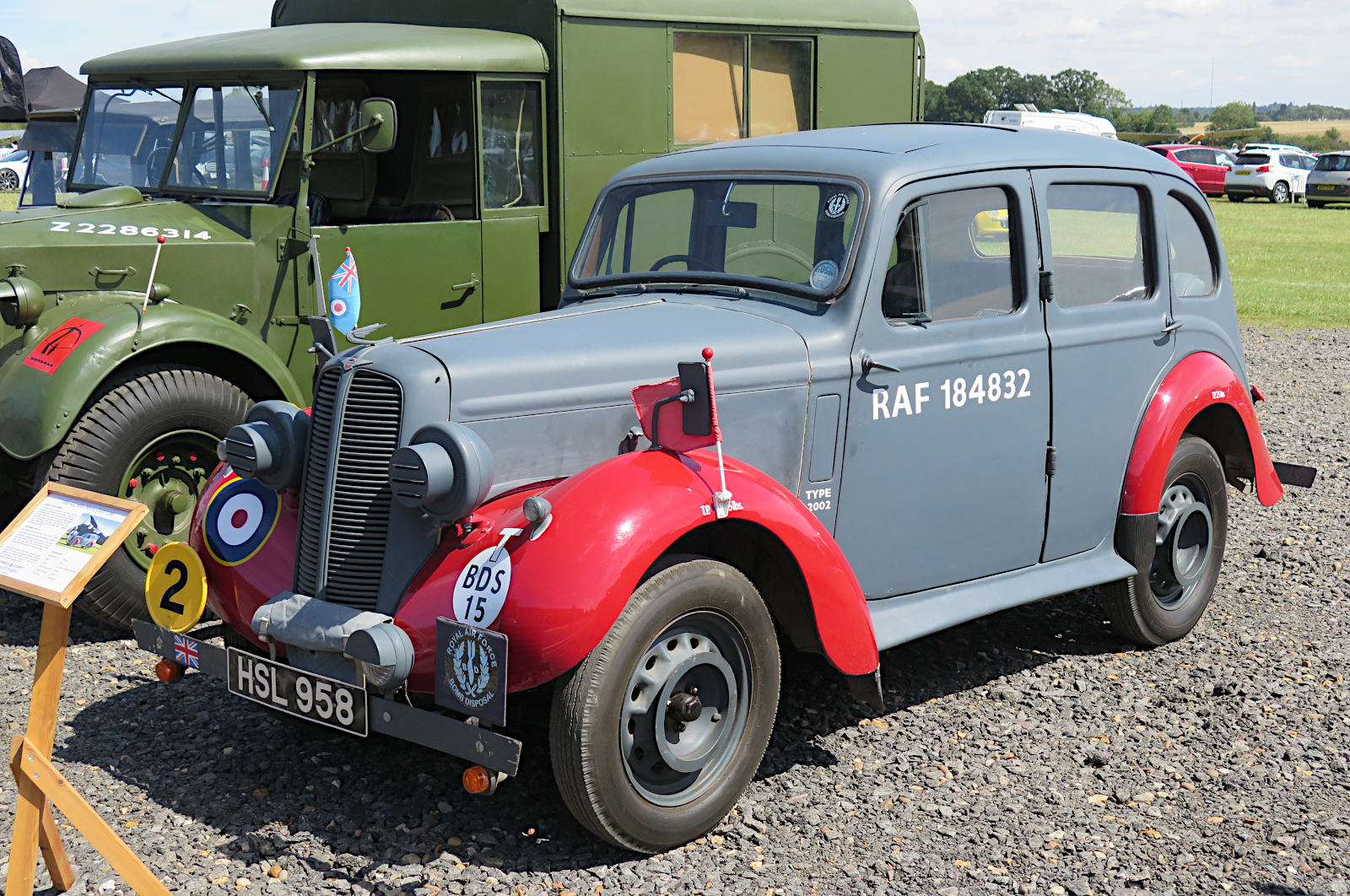
Hillman Minx
The cars and trucks were a mix of civilian and military vehicles from throughout the twentieth century, some from before World War I. And many of them were in the air or driving about, often flown or driven by people in period costume. It was an amazing day!
Also in August – I released a new version of JDMC, Ed and Jo were married, Peter and Dadka came to live with us for a while, and we had a visit from Beth, Paz, Meredith and Verity. Quite an eventful month.
The Cornerstone cafe and bookshop opened for business in St Neots; after a lot of hard work by many people guided mainly by our friends Keith on the construction side and Jim on catering. We were able to hand over to Paul who had provided the original idea and most of the funds, and a series of volunteers for the day-to-day running of the business. Cornerstone also offered a small meeting room for local businesses and clubs, and a comfortable space for conversation or counselling. The first directors’ meeting would follow on 1st September, involving Paul, Jim, Donna and me, and Mark.
Donna and her Dad
We visited Broadstone near Poole to see Donna’s Mum and Dad. There was a naval display on, with ships off the coast and Royal Navy planes and helicopters in the air as well and we ate later at a local pub.
And finally, our Swedish friend David came for a short visit.
Donna’s church cell group went to an open air music event in Bedford, in the photo we were enjoying picnic food with our friends before the music began. A few weeks later the cell group went Greyhound racing, another fun social event.
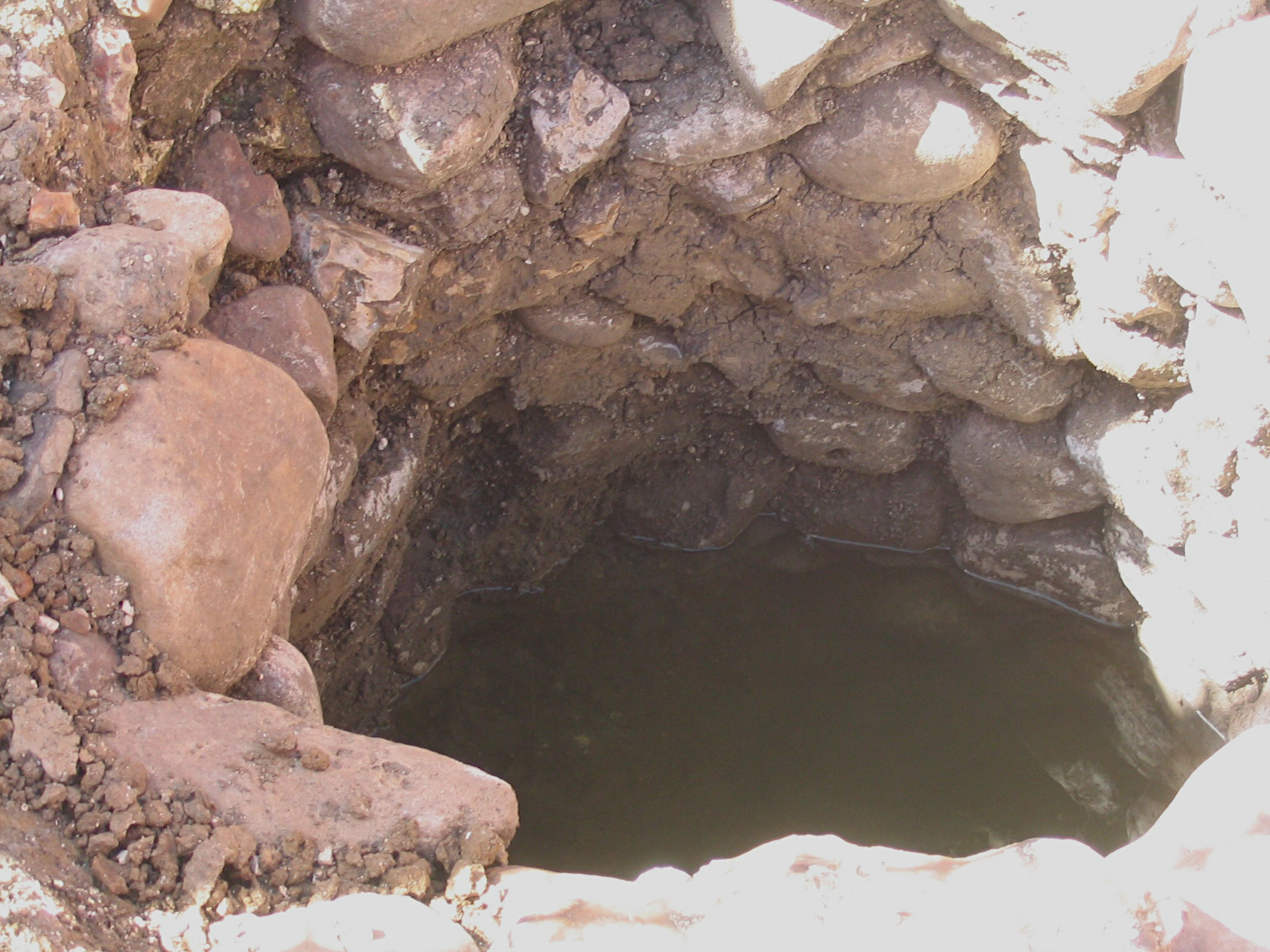
Roman well
Towards the end of the month, I looked around Loves Farm on the edge of St Neots with our friends Ken and Gayna. Archaeological excavations were going on where a new area of housing and facilities were to be constructed. Iron Age, Roman, and Saxon remains were discovered and recorded on the large site. It seems clear that this land had been farmed continously from Iron Age times right up to today. The Roman well in the image was carefully lined with stone, and ancient ditches were clearly visible as bands of darker soil across the site with several roads and trackways also identified.
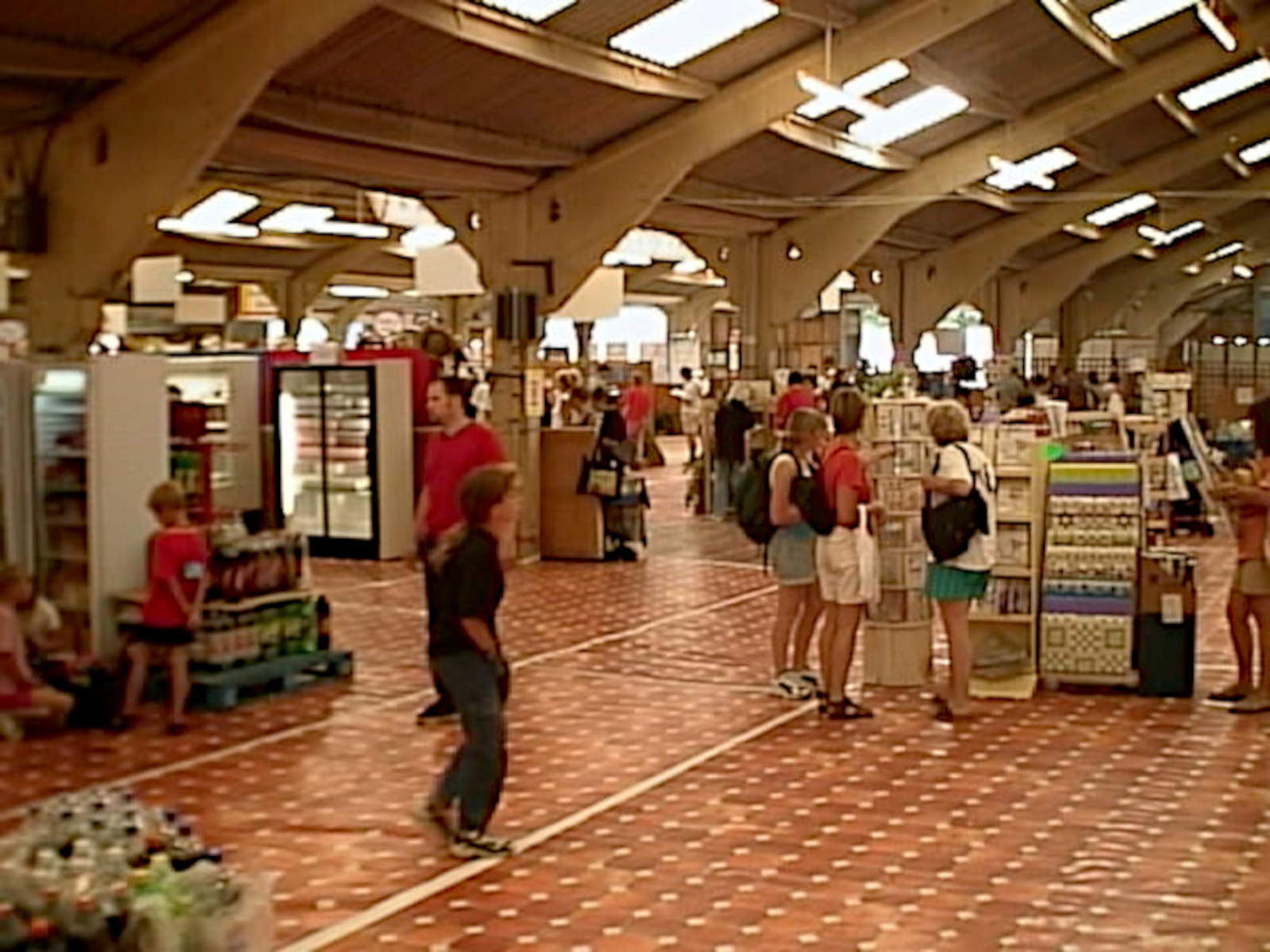
Donna travelled with her Open Door cell group to the New Frontiers annual event at the National Agricultural Showground at Stoneleigh; I drove up for the day on 1st August. The photo shows the book and music shop.
Table skittles
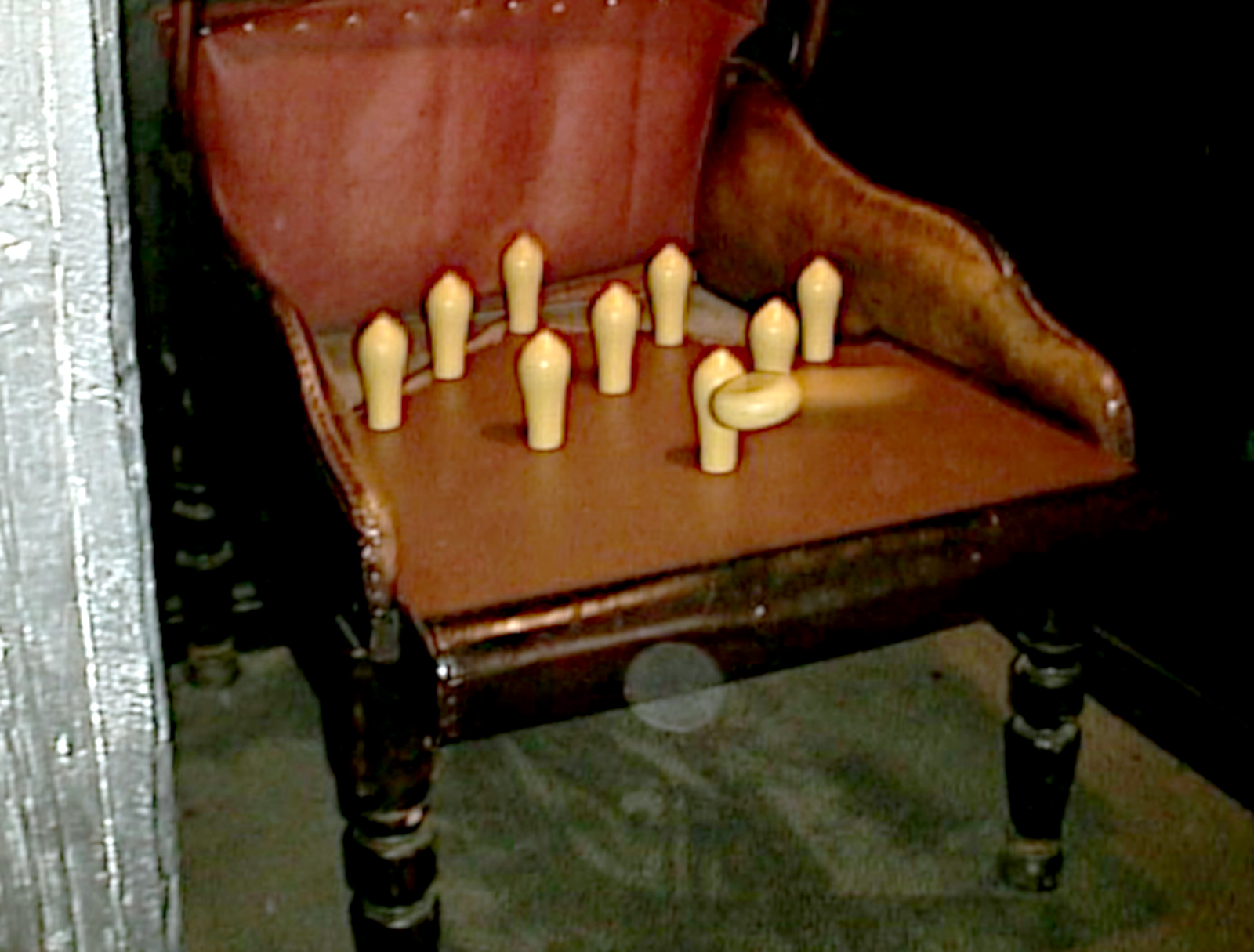
Knowledge Systems Group (KSG) met for lunch at the Beds Arms in Souldrop close to Unilever Research, Colworth. We often went there and played table skittles, a game local to the Northampton, North Befordshire area. Three ‘cheeses’ are thrown at the skittles and apart from that, the rules are very similar to normal ninepin skittles.
Other events this month were a visit from Donna’s Mum and Dad and a weekend with my Mum and Dad at Cirencester. We also visited Cindy and Paul at Bibury and I travelled to Amsterdam for a Unilever meeting on an intranet website, Research onLine.
World events: The Russian submarine Kursksank in the Barents Sea; and Tsar Nicholas II and his family were canonized .
Beth worked hard on her A-level biology project with help and advice from Judy. Debbie was well into her University degree work. Beth appears again in the distance in the second photo. It was a very hot and dry summer, vegetation was scorched, even deep-rooted trees were suffering and grass everywhere was dry and brown.
Blagdon Lake
Judy was still mobile and capable, leading a pretty normal life, though clearly losing weight and often suffering a little discomfort. I continued at Long Ashton Research Station, working for the Statistics and Computing Department and independently developing a Microscopes and Microscopy web site as a resource for professional microscopists. It was developed on my PC at home, and at first hosted only on the Long Ashton web server, but later a microscopist at an American University asked if he could mirror it for faster service in the US and after that it ran on both servers.
Meeting regularly with Tony, Faith, Paul and Jenny was becoming more and more special. Every time we all felt encouraged and peaceful, knowing that whatever the future held, everything would be OK.
It was around this time that Judy began collecting up all her old photos, putting them in albums, and and writing short notes about when, what and who appeared in the images. She was also getting them into date order as far as possible. Clearly she was planning ahead for me, Debbie, Beth and other family members. I’ve always been very appreciative of this, especially as I write these notes for the Blast From the Past series.
World events:Aided by NATO, Bosnian and Croatian forces continued to fight Serbian seperatists; and Eduard Shevardnadze survived an assasination attempt.
Debbie returned from her French exchange visit on 8th and we collected her from Lulsgate Airport. She had lots to tell us about her trip and had brought back some souvenirs including a huge French banknote!
Symonds Yat
Later in the month we visited the Forest of Dean and walked via Biblins Bridge to Symonds Yat where we crossed the river by the rope ferry, stopped for ice-creams, and returned to the car by the same route. And at the end of August we enjoyed a time at the Bristol Flower Show up on Clifton Down, and a trip on the North Somerset Steam Railway.
World events:Iraqinvaded Kuwait, leading to the Gulf War; and East and West Germany announced they would unite on October 3.
We had a holiday at Ogwen Bank in North Wales. Debbie and Beth are sitting just outside our caravan in the photo. The site was close to Bethesda so we were able to visit lots of interesting places all over Snowdonia
Debbie, Beth, and me!
One of the places we visited was Benllech Beach, lovely sand and rocks as you can see. I’ve always enjoyed messing around at the seaside, especially building miniature dams. So there were three kids on the beach and one adult – Judy, who took this photo.
Amongst other things we visited a working slate museum, a woollen mill, The island of Anglesey with its sea zoo and butterfly house, a couple of castles and more. Judy and the girls visited Port Meirion while I stayed at the caravan and worked on an Open University (OU) course.
Apart from the OU courses which ran through the summer, August was always a great time for family life. The girls were on holiday, so was Judy, and we were able to go out for day trips as well as have a week or two away somewhere.
Beth was interested in the cat, while the cat seemed to be interested in the paddling pool! And the sandpit in the background appeared to have been the scene of a nasty tractor accident. Just an ordinary summer day at 22 Rectory Drive.
Beth was just 2¼-years-old and Debbie was five and a half. Judy was considering beginning a teaching career having earned her qualification before Debbie was born while we were still living in our flat in St Andrew’s, Bristol. I was working at Long Ashton Research Station on fruit crop pollination, mostly on apples and plums; and I also had a week away at an Open University summer school.
World events:Hurricane Allen pounded Haiti, killing over 200 people; and the Gdańsk Agreement was signed in Poland allowing the free trade union, Solidarity.
Debbie turned five months old and was growing quickly in both size and ability. She was developing better coordination, holding things and beginning to interact with adults and distinguish between them.
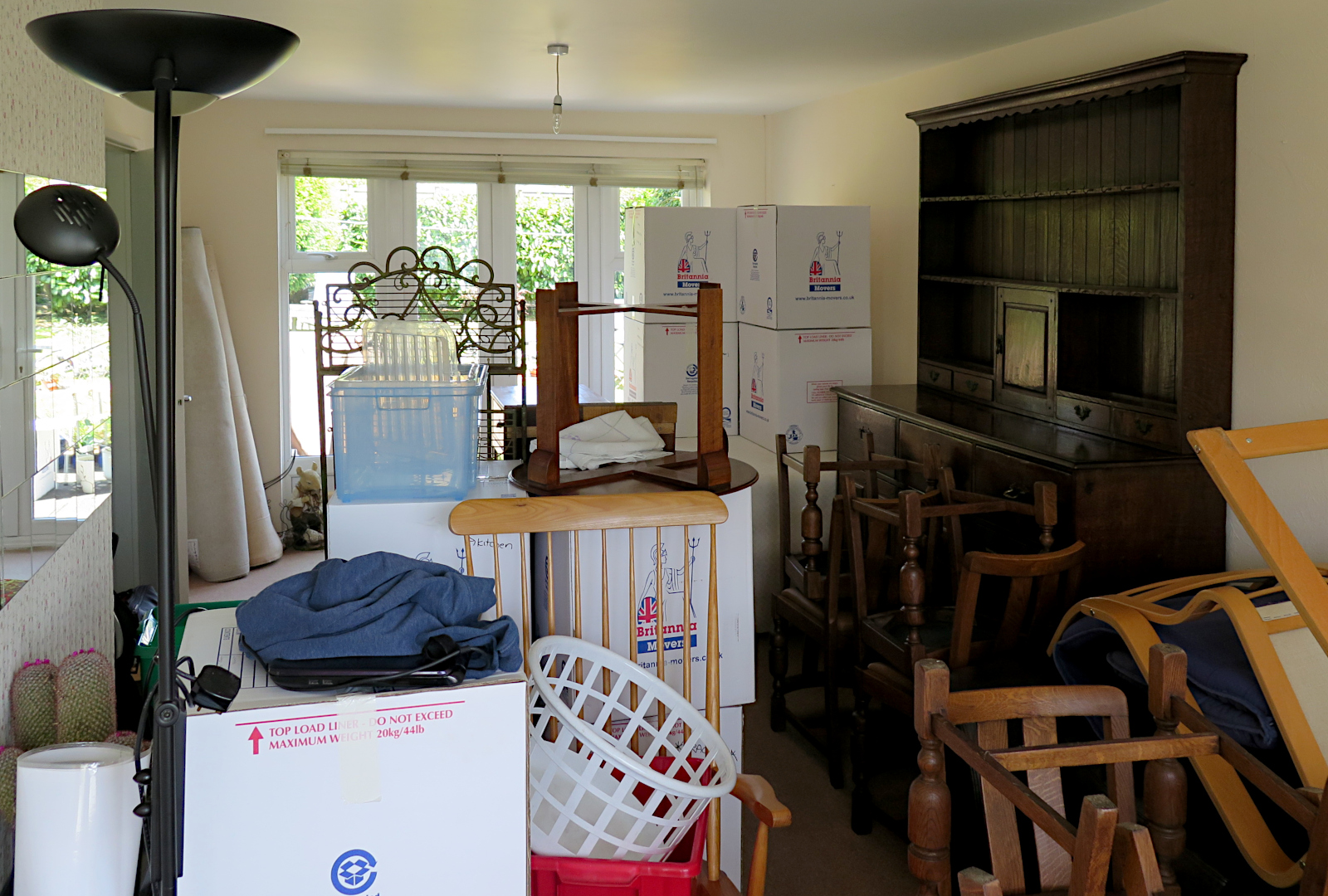
We started to get the house tidier and items put away. We had much more floor space than at the flat and although our furniture was the same it seemed lost in a large space rather than crammed together. We had only the old, green carpet we’d brought with us; it had filled the lounge/diner at the flat, now it just covered the dining area! Every other section of floor was bare boards, including the stairs, but the kitchen retained the covering left by the previous owners.
I began cycling to work from Yatton to Long Ashton, for a couple of years I’d been used to cycling from St Andrew’s, Bristol. What a change! No more dangerous, heavy traffic to contend with, instead a longer but much more relaxing trip through attractive countryside and the villages of Claverham and Backwell.
World events: The Helsinki Accords recognising Europe’s national borders and human rights, was signed in Finland; and NASA launched the Viking 1 planetary probe toward Mars.
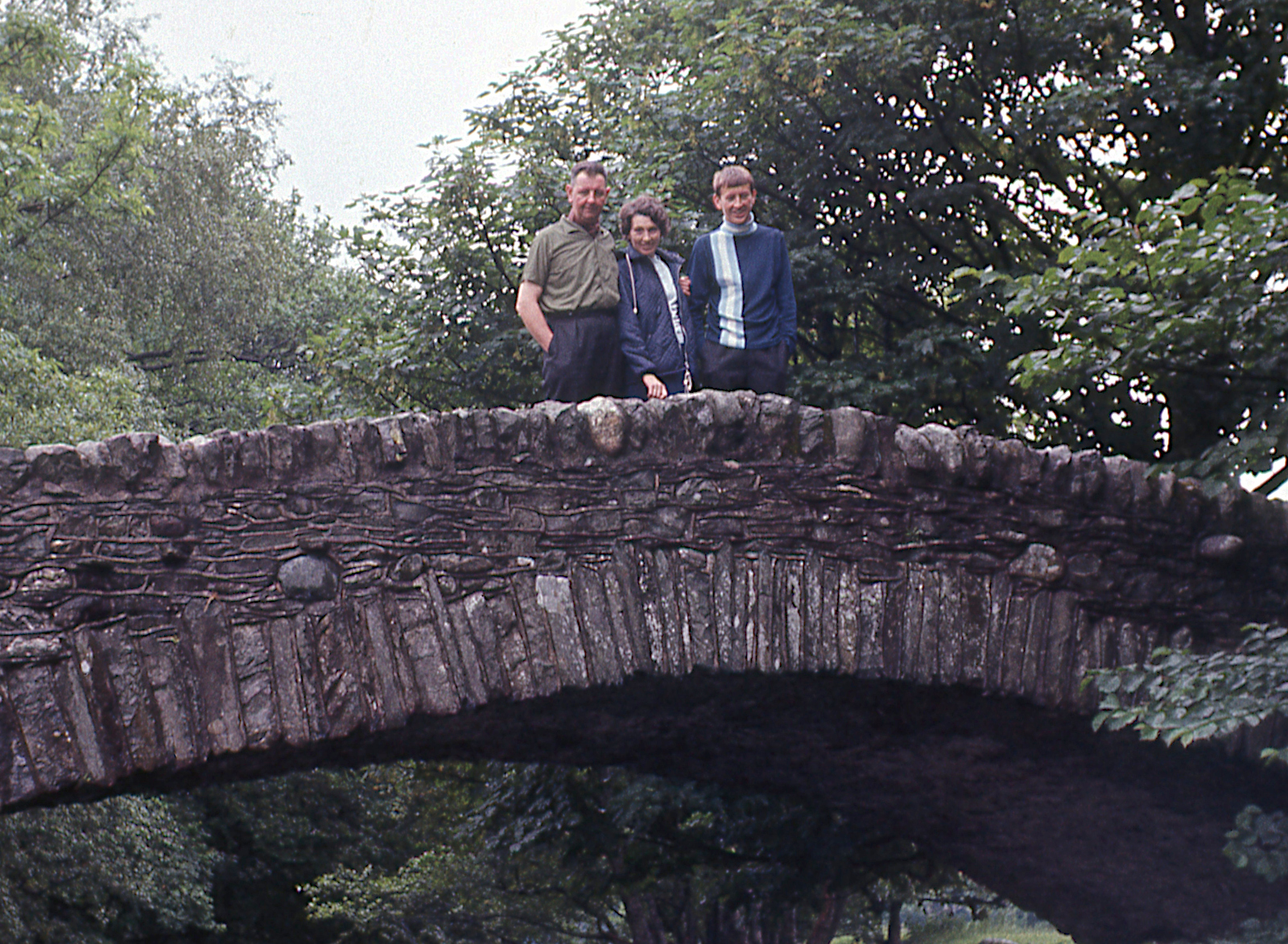
Judy was away on holiday for two weeks in the Lake District with her parents and brother, Frank. She took this photo at Watendlath Packhorse Bridge near Keswick.
Judy and I were planning for our wedding in early October, there were just some finishing touches to put in place really, but we didn’t want to run out of time.
Pete, a good friend from University, discovered the Ministry of Agriculture were empl0ying graduate students to interview farmers during the summer of 1970. We signed up for this survey work as we both had our own transport, and spent several weeks driving around the Cotwolds with the questionnaires interviewing the farmers and some of their employees. We lived at Mum and Dad’s house in Victoria Road as our base of operations. Part of the time they were on holiday in Northern Ireland with my sisters so Pete and I looked after the place while they were away.
World events: The Soviet Union launched Venera 7 towards Venus; and rubber bullets for riot control were used for the first time.
This was the month of the Grammar School Explorers Club expedition to Scotland, organised and led by one of my biology teachers, Mr Castle. I was one of two sixth formers who travelled with him in his Bedford van with the lighter equipment (the heavy stuff went by train). Graham and I camped just outside Edinburgh while Mr Castle returned by train to travel north again with the fourth and fifth form members of the expedition. Most of us would travel by coach while Mr Castle brought the van and equipment. Graham and I were assistant leaders.
We walked up the Dee Valley into the Cairngorms, then to Ben McDhui and Cairn Gorm, descending along the ski lift route. We visited Pitlochry for a night or two and then to Mallaig and the ferry to Skye where we viewed the Cuillins from Elgol beach and went to the Portree Highland Gathering. After a night at the coral beaches, we returned to the mainland to visit Fort William and walk to the top of Ben Nevis.
It was quite a journey and an experience I shall never forget.
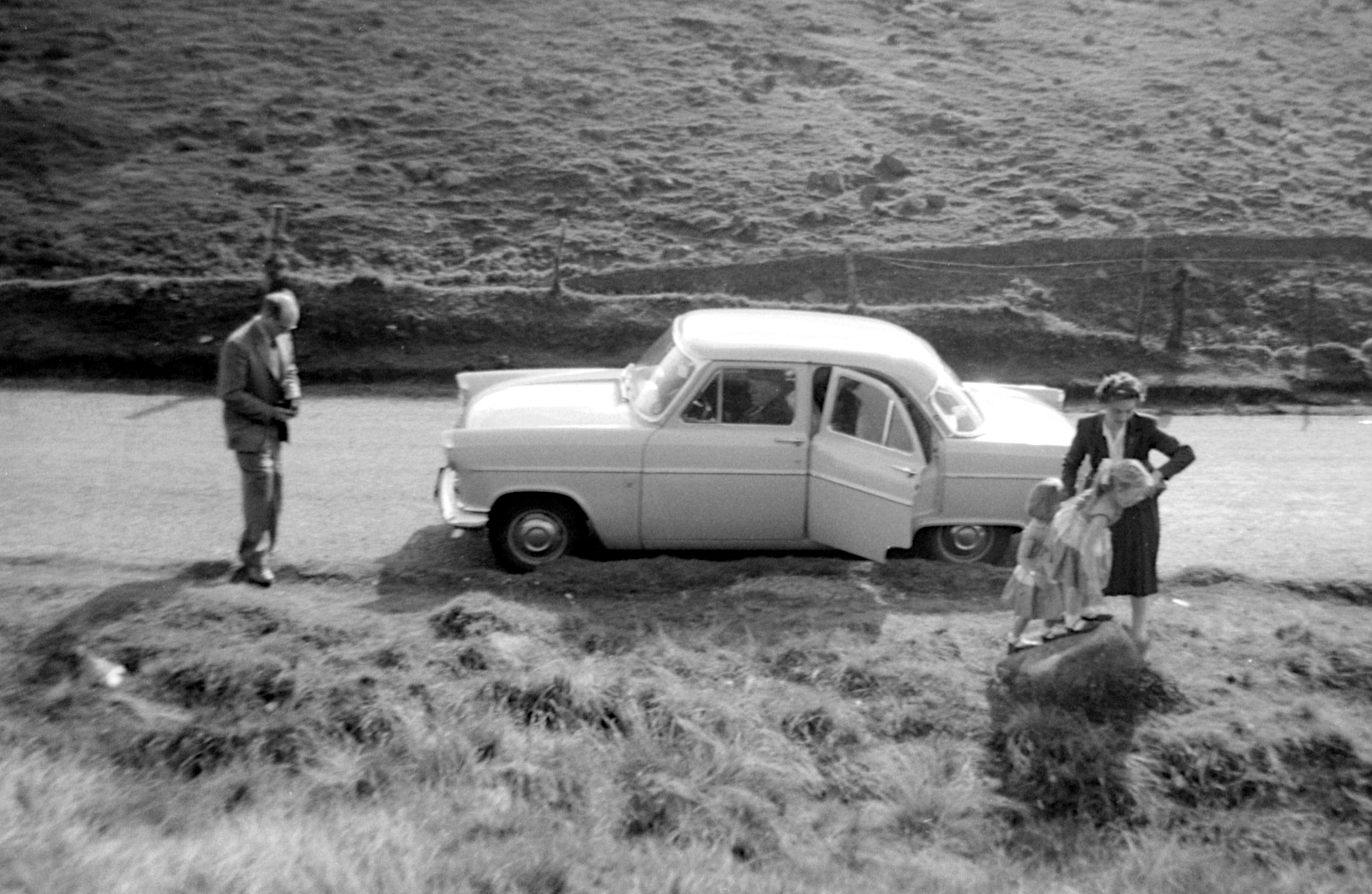
Our annual holiday this year was in Northern Ireland, staying at Holmlea in Coagh, Co Tyrone with Mum’s parents. The photo was a brief stop near the Spelga Dam in the Mountains of Mourne during a day out. I had scrambled up the steep bank and took this image of Dad taking a photo of Mum and my younger sisters, Ruth and Rachael, Granda is sitting in the car. Granny and Cindy may have still been in the car as well. How did we all squeeze in for the trip? Ruth and Rachael were small enough to sit on an adult lap, probably with Mum and Granny.
We’d have done a number of trips out like this one, almost certainly including a day at the seaside at Portrush, maybe a trip to see the Giant’s Causeway, and definitely visits to Cookstown and to Mum’s cousin on the farm at Killycurragh on Slieve Gallion. The first (and only) time that I milked a cow was at Killycurragh, but what I remember most was high tea, where the table with its white cloth groaned under a huge choice of delicious food, much of it home grown and home made.
World events:The Beatles began a 48-night residency at the Indra Club in Hamburg; and Russia launched Sputnik 5 carrying two dogs, mice and rats, and plant specimens. All the animals returned safely after a day in orbit.
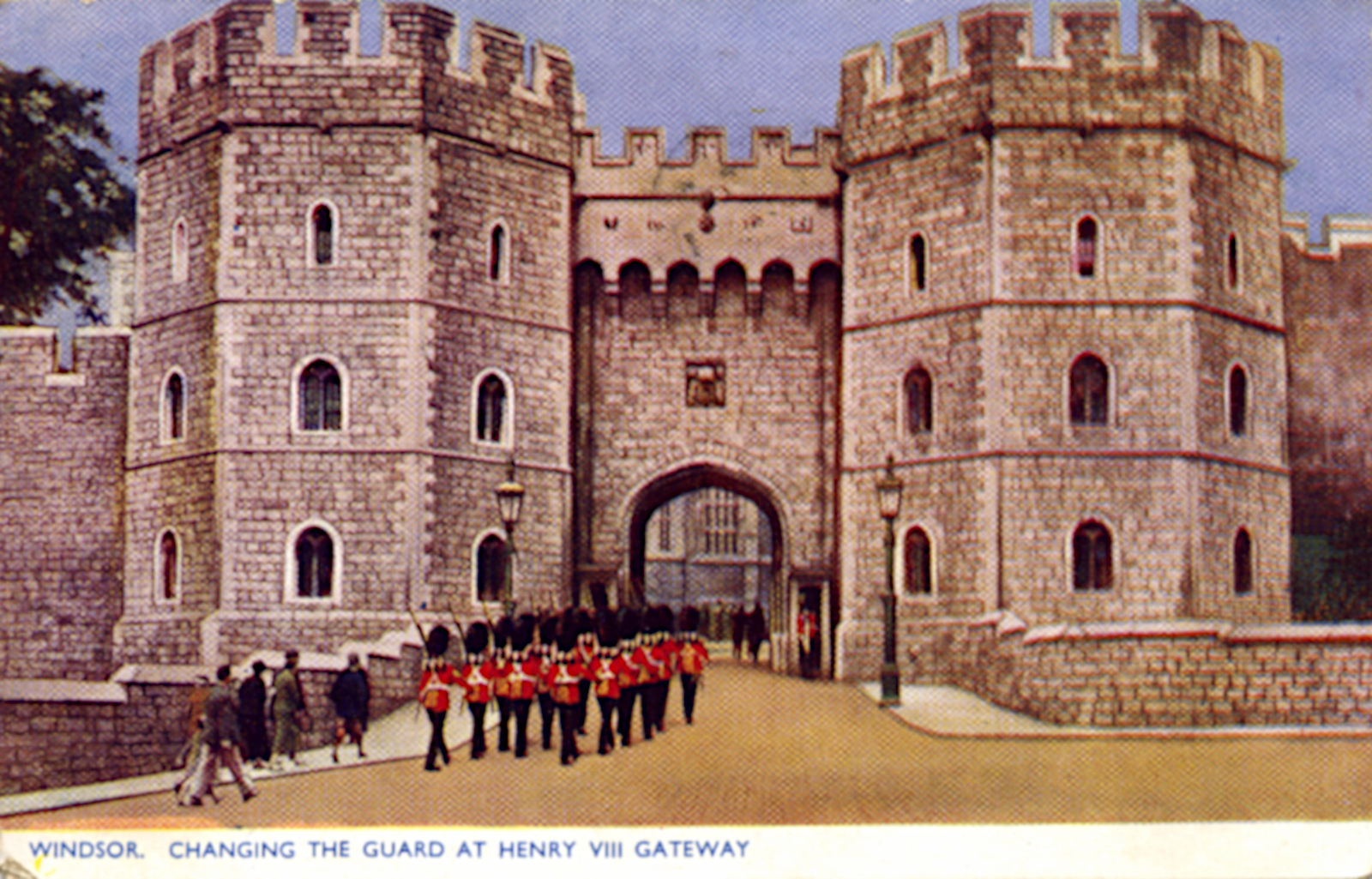
In August we visited Windsor Castle, I don’t remember this trip although I was seven-years-old at the time.
Mum sent the postcard to her younger sister, Annabelle, and wrote on the back,
‘Christopher & Cynthia couldn’t take their eyes off the soldiers & had to send you this picture so that you could see them too. Wish you were all with us. Much love from us all. Your loving Sister, Lilias.’
I needed a photo for the summer of 1950 but couldn’t find one. I’m guessing this is a bit more recent, perhaps between 1950 and 1960; but it does capture business life in Cirencester in that era. In those days there were no supermarkets, you would have visited a variety of small bakers, butchers, grocers, greengrocers and so forth. Barnett’s was one of these.
Charlie Barnett was a famous test and county cricketer, born in Gloucestershire. When he retired from cricket, he set up a business in Cirencester, selling fish, game, and more exotic items such as seagull eggs. The photo shows him working in his shop.
We must have been settling into our new home in Queen Anne’s Road at this time. There were probably boxes to unpack, clothes to put away, as well as the normal household chores of laundry; and for Dad there’d have been the task of getting the garden area tidy, clearing weeds, removing building rubble, stones and so forth, and planning a garden.
World events: North Korea’s Air Force was largely destroyed by anti-communist forces; and Uruguay beat Brazil 2–1, to win the 1950 World Cup.
On 2nd August Mike had the bad news that he was being posted overseas. He had to rush to get Lilias to Cirencester as fast as possible, perhaps something they’d planned to do a little later.
He arrived in Stranraer on 3rd and was in Coagh on the evening of 4th. By 7th they were on the train south from Stranraer. On 8th his mother, Nor, met them at Cheltenham Station with the car and Mike drove them home. They then had five clear days to enjoy time together in Cirencester and around the south Cotswolds until Mike was required back by the RAF on 14th. But this was a really good day because the victory over Japan was announced and the war was finally over. Medicals, inoculations, and the issuing of tropical kit took almost two weeks; then there was a final twenty-four hour period when he was able to get back to Cirencester to see Lilias and his parents, and the last three days of August were spent on duty in Blackpool waiting for a ship to become available.
World events:Winston Churchill supported the idea of a pan-European army; and Pope Pius XII declared evolution to be a serious hypothesis that does not contradict essential Catholic views.
There’s not enough information to write something for every month in the 1940s. Dad’s diaries start in January 1943, so for January 1940 to December 1942 I’ll write about things I know, or draw on dated photos and documents. Sometimes I might use a photo or document with a guessed date.
Cinder-block bins
For August 1940 I’m going to write about another of the John Jefferies & Son nurseries, this time a very small one, the Abbey Nursery. The medieval Abbey owned a great deal of land, not just in the town but in the surrounding countryside. Part of the Abbey’s land lay inside City Bank, and part of it formed the Abbey Nursery. It had a shed for equipment, and cinder block bins for sand, grit, gravel and other garden materials. The bins are still there, just inside the gate on the left. Today the land is a nature reserve and is open to the public.
All Cirencester people will know where City Bank is. As the name might suggest, it has to do with a city (which Cirencester is not). But in Roman times its predecessor Corinium was a large and important city only exceeded in size by Londinium, present day London. In the later years of Roman Britain, most cities aspired to a wall, perhaps defensive, or perhaps just a way to demonstate high status. So there was a city wall. In medieval and later times, the useful cut stone was robbed from the old walls and used to build the town anew. What was left of the old walls was a bank of tumbled stone and soil, covered with grass and scrub, hence City Bank, not City Wall.
In 1940 and up until John Jefferies and Son’s nurseries gradually fell out of use from 1975 onwards, the Abbey Nursery was used mainly for growing Christmas trees for sale in November and December, but was also the storage site for the Cotswold stone and paving slabs used by the landscape construction part of the business.
In August 1940 my father, Mike, was nine-years-old and lived with his parents at ‘Churnside’, 37 Victoria Road. His Father, Edward (Ted, Guv, or ‘the Governor’) was 60 and his mother, Norah (Nor) was 61. His brothers, John, Richard (Dick), and Robert (Bob) were 33, 30, and 27 respectively.
World events: Lithuania, Latvia, and Estonia were annexed by the Soviet Union; and the Royal Air Force bombed Berlin for the first time.
Anything that appears in this section will have some connection with the 1930’s but may extend beyond the decade to follow a meaningful topic more fully.
An illustration from the book
Uncle John and Auntie Jo were married on 15th September 1932. John was my father’s oldest brother, born in 1907 and 19 years older than his little brother. This is a large gap between the oldest and youngest in the family so it seems my Dad may have been an unexpected late addition!
John and Jo lived at 4 Tower Street, Cirencester; it was a three-storey town house and the features I remember most were a floor to ceiling mirror in the narrow hallway which made the narrow space look much more spacious, and the front reception room with a stone fireplace. There was a fine collection of hand-bells on the mantelpiece, collected over the years it seems and not a set, but nevertheless, in tune with one another. I remember a long passageway with the kitchen at the far end and a little, shady garden beyond that. The floor above must have contained bedrooms and a bathroom, but the top floor was the most exciting as there was a storage room at the front with all sorts of intriguing items discarded from everyday use. An Aladdin’s cave! John and Jo’s daughter, Jill, was my godmother so I was invited round from time to time. She always had something interesting for me to see or fun activities to do.
John and Jo had a poodle (one of the larger kind). He was called Gigot and I remember Auntie Jo collecting the wool when he was clipped and storing it year by year until there was enough to be washed, carded and spun into yarn. Gigot was a mid brown colour and she knitted herself a cardigan from the wool!
As a young child I always found Uncle John a bit solemn and aloof, even a little bit scary, but of course he was quite good fun in many ways if perhaps a little on the serious side. He became Chairman of Cirencester Urban District Council, almost but not quite the Lord Mayor. Cirencester had no mayor in those days, though today it does, and the chain of office is still the one once worn by John.
When my grandfather died, John and his brothers Dick and Bob took over John Jefferies & Son as directors. John’s role had long been managing the landscape design and construction side of the business, using the entire top floor over the shop in Cirencester Market Place as the design studio. I remember Desmond Walker who helped as John’s deputy in the design office. Desmond lived right next to Tower Street Nursery and had a mulberry tree in his garden.
World events (August 1935): The volcanic island of Anak Krakatau began to form permanently in the Sunda Strait. (August 1930): United States President Franklin D. Roosevelt signs the Social Security Act into law.
As with the 1930s material, everything in this section will have a connection of some kind with these two decades.
My father, Mike, was born on 4th June 1926. He would almost certainly have been born at home – Churnside, 37 Victoria Road, Cirencester. His parents were Edward Arthur Jefferies and Norah Jefferies (nee Monger), usually known as Guv or Ted and Nor. Mike had three much older brothers, John, Dick and Bob (19, 17, and 15 years older). Because he was a bouncy baby, his brothers called him ‘Tigger’ and this stuck. He was still known as ‘Tig’ by the brothers and by his parents while they were still alive. Churnside would itself have been fairly new when Dad was little, the house is Edwardian and was built shortly before Guv and Nor were married. This and the house next door are semi-detatched so were built as a pair, I believe they were the first houses on this section of Victoria Road.
World events (August 1900): International troops entered Peking to free European hostages during the Boxer Rebellion. (August 1905): Norway voted to break from the union with Sweden. (August 1910):Japan formally annexed Korea. (August 1915): In the First World War Gallipoli campaign, the Battle of Sari Bair was fought.
If you enjoyed this or found it useful, please like, comment, and share below. (If you don’t see those links, click the article’s title above the main photo and they will appear.) Send a link to friends who might enjoy the article or benefit from it – Thanks! My material is free to reuse (see conditions), but a coffee is always welcome and encourages me to write more often!
What’s in an image? Sometimes quite a lot, more than meets the eye. I’m posting an image every few days.
Click to enlarge
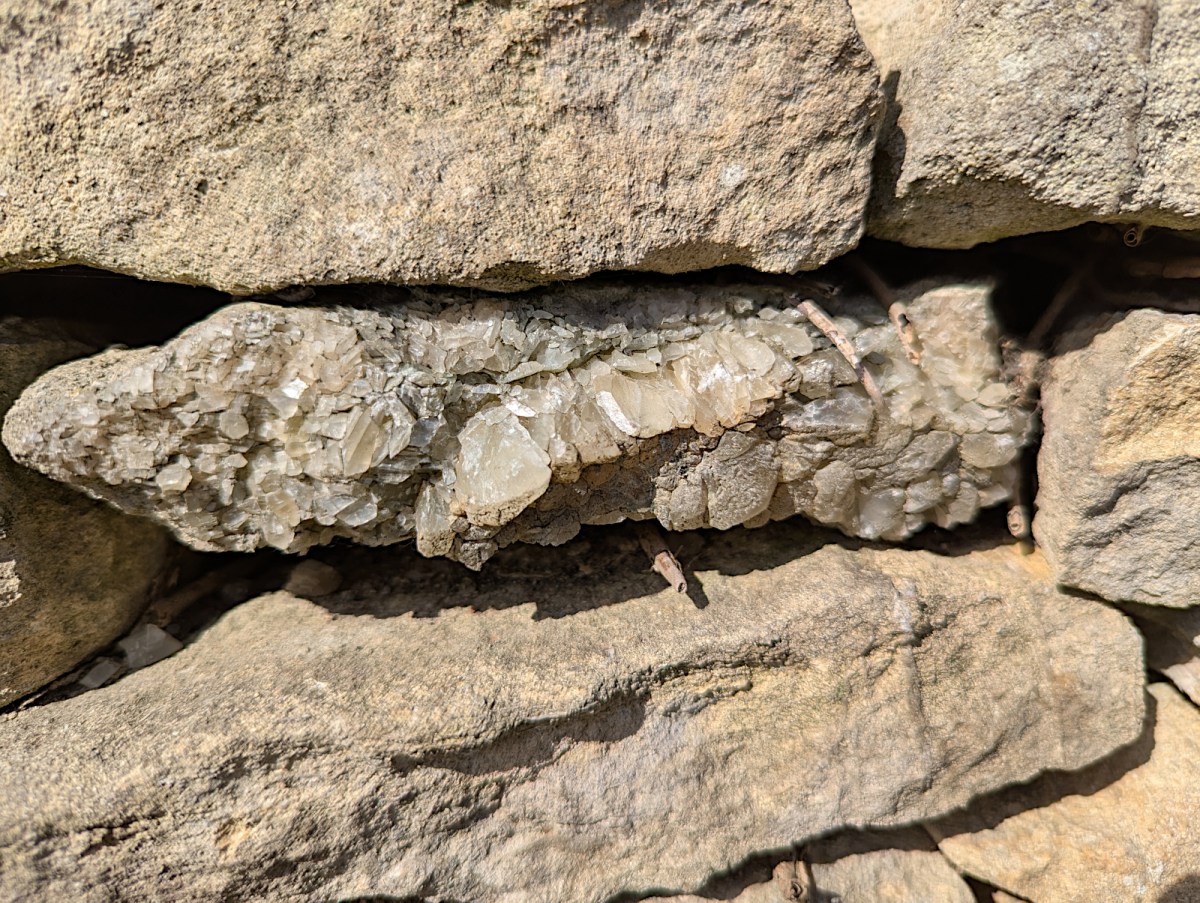
There’s a long stretch of dry stone Cotswold wall along the western edge of the Gloucester Road between Cirencester and Stratton. Walking along the footpath one day I was surprised to see the crystalline inclusions featured in this photo. The crystals look to me like a form of quartz (six-sided columns with six-faced prisms at both ends).
This might be part of a geode fractured open while quarrying the stone. There’s a small chance that the other side of the geode exists elsewhere in the same wall or in some other structure built around the same time. It seems that quartz geodes are not unusual in Oolitic limestone deposits. When they are stained purple purple the crystals are known as amethyst. The formation in the photo shows no hint of colour at all. The deposit must have formed from a particularly pure solution of quartz.
If you enjoyed this or found it useful, please like, comment, and share below. (If you don’t see those links, click the article’s title above the main photo and they will appear.) Send a link to friends who might enjoy the article or benefit from it – Thanks! My material is free to reuse (see conditions), but a coffee is always welcome and encourages me to write more often!
Is Jesus apostolic? You bet he is! Did he lay foundations? He laid himself as the one true Foundation by dying for us. Was he sent? He was sent by the Father and was fully obedient in coming into our world.
These single point extracts are intended to spark fresh thinking individually or in group discussions of up to ten people – (Christian Unions, church home groups, house churches for example).
Remember that this gift is foundational; read Acts 1:1-4. We can think of the
apostolic as a sending gift, an apostle is an emissary or, indeed, a missionary. People with a large measure of the apostolic gift tend to get things started and then move on to repeat the process again somewhere else; this is what Paul did, over and over again. He also returned from time to time to make sure things stayed on track; when he couldn’t be there in person he wrote letters for the same purpose.
Apostolic people prepare the ground for the prophetic gift to work. They also stir others up to do apostolic things. And they are always concerned about right foundations and right direction. Don’t think of this gift as more important than the others, it is usually first in sequence but if you are apostolic you are a servant in the church.
And don’t think in terms of ‘an apostle’, but rather recognise that we all have a measure of this gift, every follower of Jesus is apostolic to a degree. We need apostolic people around us to remind us constantly that Jesus is the only foundation and that he commands us to go out to the people around us. Apostolic people get troubled and upset if they see people veering away from the truth set out by Jesus and taking control of church life. They know that church life should never be controlled by people, but by the Holy Spirit, the Spirit of Christ.
And is Jesus apostolic? You bet he is! Did he lay foundations? He laid himself as the one true Foundation by dying for us. Was he sent? He was sent by the Father and was fully obedient in coming into our world. Did he get things started? He is the Beginning, he is the Way, he is the Truth. It’s through him that everything started. Perhaps the most apostolic words in the New Testament are Matthew 28:18-20.
Discuss
We are all emissaries for Jesus. Is there a difference between reaching people with the good news, and being apostolic? If so, can you identify this difference? Discuss or consider carefully.
If you enjoyed this or found it useful, please like, comment, and share below. (If you don’t see those links, click the article’s title above the main photo and they will appear.) Send a link to friends who might enjoy the article or benefit from it – Thanks! My material is free to reuse (see conditions), but a coffee is always welcome and encourages me to write more often!
What’s in an image? Sometimes quite a lot, more than meets the eye. I’m posting an image every few days.
Click to enlarge
The land now occupied by Watermoor House and St Michael’s Park may once have been common land. But early large scale Ordnance Survey maps mark a much larger area, including that now occupied by the house and park, as a large nursery. It might have been owned at one time by Richard Gregory who was a Cirencester nurseryman in the 1790s.
The business (and probably the land) passed into the hands of John Jefferies at least by the early 1800s, and it seems that Randolph Mullings, a local solicitor, bought a substantial piece of it in order to build a large house in its own grounds. The details remain unknown, but Gregory, Jefferies and Mullings were known to one another, and Jefferies worked as a manager for Gregory on the nurseries. Gregory lost much of his money by providing surety for a friend’s loan, and Mullings advised Jefferies to continue managing the business and wait to see how things would work out.
Having acquired part of the land, Mullings engaged the architect William Jay to design the building; Watermoor House was constructed to Jay’s plan around 1827 in the Greek Revival style; and the garden and park were added to complete the property. The house is now grade II listed.
At some point Watermoor House became a private school until it closed in the 1950s or 60s. It may have had some other function following this, but today it is a residential care home.
I’ve cobbled this tale together from limited sources that may or may not be reliable. There are also many gaps. It would be good if the story could be properly researched by someone with the time and skills to undertake it.
If you enjoyed this or found it useful, please like, comment, and share below. (If you don’t see those links, click the article’s title above the main photo and they will appear.) Send a link to friends who might enjoy the article or benefit from it – Thanks! My material is free to reuse (see conditions), but a coffee is always welcome and encourages me to write more often!
It’s completely astounding that the Almighty Creator of the universe lived as a man among the village folk of Galilee for thirty years as a carpenter – and nobody noticed!
These single point extracts are intended to spark fresh thinking individually or in group discussions of up to ten people – (Christian Unions, church home groups, house churches for example).
JDMC extract – 2
Be wary of reforming people, persuading them to wear different clothes, eat different food or change their customs, culture and language. This won’t reveal Christ to them. If you claim to represent Jesus, they will assume that he is like you. Jesus came to live among the ordinary people of Judaea and Galilee and he expects us to live among the people around us and identify with them just as he did; this demands that we go deep, something Paul understood and practised (1 Corinthians 9:19–23). Jesus shows us how to do it, he ate with Pharisees and tax collectors. He was fully present. He came as a servant and he shared the good news. It’s completely astounding that the Almighty Creator of the universe lived as a man among the village folk of Galilee for thirty years as a carpenter – and nobody noticed! That shows us how deeply he involved himself in the local culture, he became invisible.
Jesus is our example for going out and going deep. These two activities work together so that the gospel (good news) and the church (the gospel people) become firmly embedded in the local community. Rapid expansion is not going to happen any other way. We need to understand that knowing Jesus more deeply will lead us into both going out (Luke 10:1-4) and going deep (Luke 10:5-7). That will affect what church looks like in the place where we live. If we let him, Jesus will take us first into mission and then into new church life shaped as he wants it to be. And this will be different depending on whether we live in France or Fiji, inner city or village, or among the poor or rich.
Discuss
Will you identify with people as you find them, or will you bring your own culture with you as if that, too, is part of the good news? Jesus came in weakness, he came to give up his life. Talk about what that might mean for you as you follow him.
If you enjoyed this or found it useful, please like, comment, and share below. (If you don’t see those links, click the article’s title above the main photo and they will appear.) Send a link to friends who might enjoy the article or benefit from it – Thanks! My material is free to reuse (see conditions), but a coffee is always welcome and encourages me to write more often!
What’s in an image? Sometimes quite a lot, more than meets the eye. I’m posting an image every few days.
Click to enlarge
At the top of the image you can see the rears of buildings on Cecily Hill in Cirencester. Their gardens contain the trunks and foliage of mature trees just beyond the wall. The wall separates those gardens from the water channel and may have been built specifically for that purpose. Some of the tree branches have grown across the top of the wall.
Near the base of the wall is a distinct line, brown below and much paler above. I think the brown part of the wall is often underwater. The water flow is strongly seasonal, high in wintertime and much, much lower in the summer. The River Churn divides at the Gloucester Road bridge, only a kilometre from this point. The major branch follows the outside of the Roman city wall and usually continues to flow all year round. But the branch in the photo is fed from the outflow of the long, narrow, supply pound for Barton Mill and this in turn is fed from the main flow of the River Churn. The water flows in the town are complex, this section is often known as Gumstool Brook, but it might also be regarded as a diverted part of the Churn.
The pipework at the bottom of this wall was there in the 1950s and 60s when I was a child. Most of it was hidden then by a low wall topped with flagstones, but today much of the structure has fallen away exposing the glazed pipes. Out of the photo a little further to the left, the water disappears underground, running south of Coxwell Street and reappearing at the surface further west in the Abbey Grounds.
It’s good to know that the Town Council and the Friends of Gumstool Brook are looking into ways of improving the flow of this watercourse by adjusting the sluice management rules. We might see the water flowing properly all summer in 2026.
If you enjoyed this or found it useful, please like, comment, and share below. (If you don’t see those links, click the article’s title above the main photo and they will appear.) Send a link to friends who might enjoy the article or benefit from it – Thanks! My material is free to reuse (see conditions), but a coffee is always welcome and encourages me to write more often!
One thing you could do was fix a piece of flexible card to the rear frame so that it made contact with the spokes of the back wheel. Then it made a marvellous noise that rose in pitch the faster you went (1955).
Apr 2025 (3 months before publishing this article)
Click any photo to enlarge
My friend, Dave, from Unilever days came down for a chat, a coffee, a walk and lunch. It was great to see him, as always. We took a look at the Roman amphitheatre and ate at Blend in the old brewery building.
Donna moving compost
It was Donna’s birthday this month and we visited Hidcote which has to be one of our favourite gardens. Our grandson, Aidan, was trekking in South America, exploring the Caribbean coast of Colombia, sending back regular comments and photos on the family WhatsApp channel. He’s taken some time out between A levels last year and starting University in York later this year.
At home, Donna and I were building and filling two raised beds where she plans to grow vegetables this summer and we had a dumper bag of a soil/compost mix delivered and barrowed it all to the back garden.
JHM: I wrote about dinosaurs and the Bible; and the little wren which is a bird and a coin. World events:Fram2 carried astronauts on a polar orbit for the first time; and Pope Francis died at the age of 88.
The new heat pump system was running by the end of the month and we had warm radiators for the first time on January 31st. What a joy! In the photo Akki, the team’s electrician, is commissioning the system.
Our leaking chimney was also repaired this month and a damp ceiling dried out well with no more drips in heavy rain; some alterations and improvements to the house were finished as well. We now have windows we can open in our bedroom on hot summer evenings, and that will be a huge benefit. Everything is getting better (but it’s all costing money too).
The CBC Small Group I go to every week had a social evening with a meal at Tony and Penny’s, there must have been ten or twelve of us there and it was a great time.
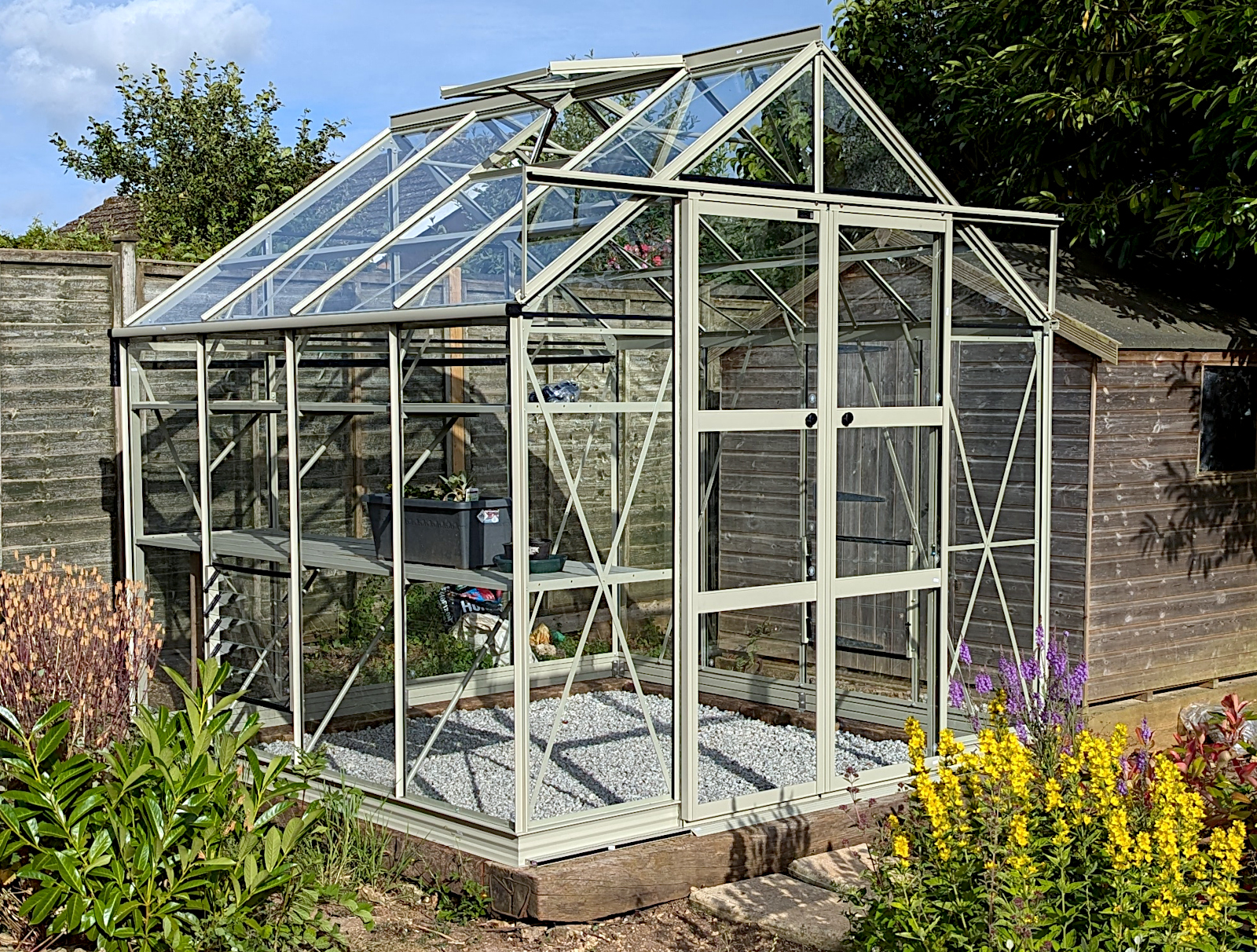
Our new greenhouse was erected today and looks just great. More good news is that Labour won the General Election and Roz Savage won our local constituency (South Cotswolds) for the Lib Dems.
The rather less good news was that Isobel had a fall while she was away with Donna for a Warner’s break. She had a partial hip fracture which resulted in a partial hip replacement operation and the need for recovery and physiotherapy.
Leaving Wales
Our friends Jim and Pam from St Neots stayed with us for one night. They arrived in a large camper van and were heading for a touring holiday in Wales. And on 17th I started my ‘Image of the day‘ series of posts here on JHM. On 28th we set off for Ireland via Fishguard and Rosslare for our annual summer holiday with the family.
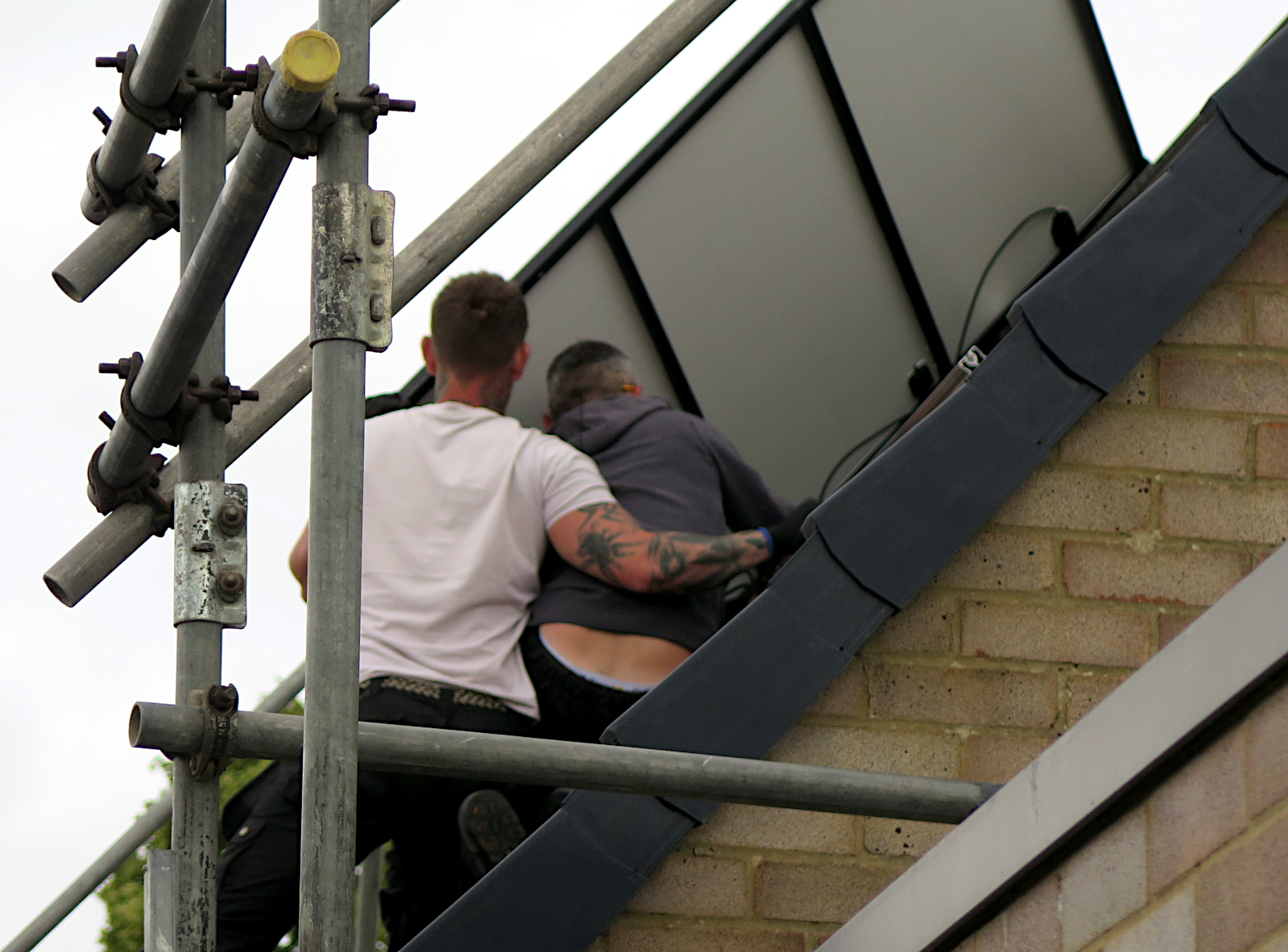
Our solar panels were commissioned and fully working by 3rd July, and they came with a phone app that would let us monitor their activity as well as that of the 10 kWh battery that we’d bought. It was great to see the power flowing on sunny days, meeting all our needs day and night on good days and often exporting power to the grid as well. We knew things would be less impressive in the winter months.
With Debbie and the grandchildren
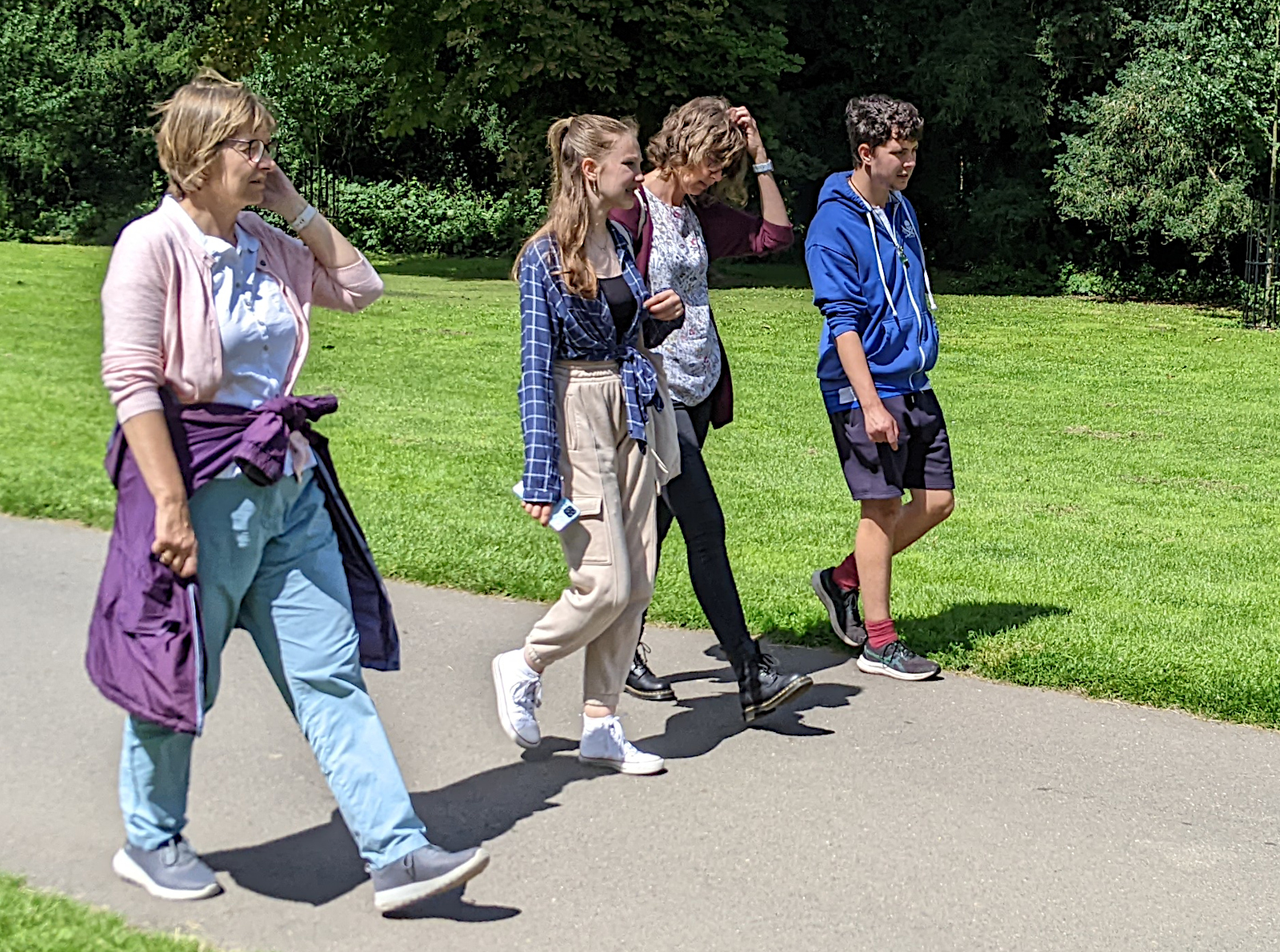
The Small group I’m a member of met for a meal at Phil and Judith’s house in South Cerney, it was good fun as always and an opportunity for longer conversations. Donna and I visited Batsford Arboretum, and Debbie, Aidan and Sara came to visit us for two nights at the end of the month. In the photo we’re strolling in Cirencester Park heading for the town centre.
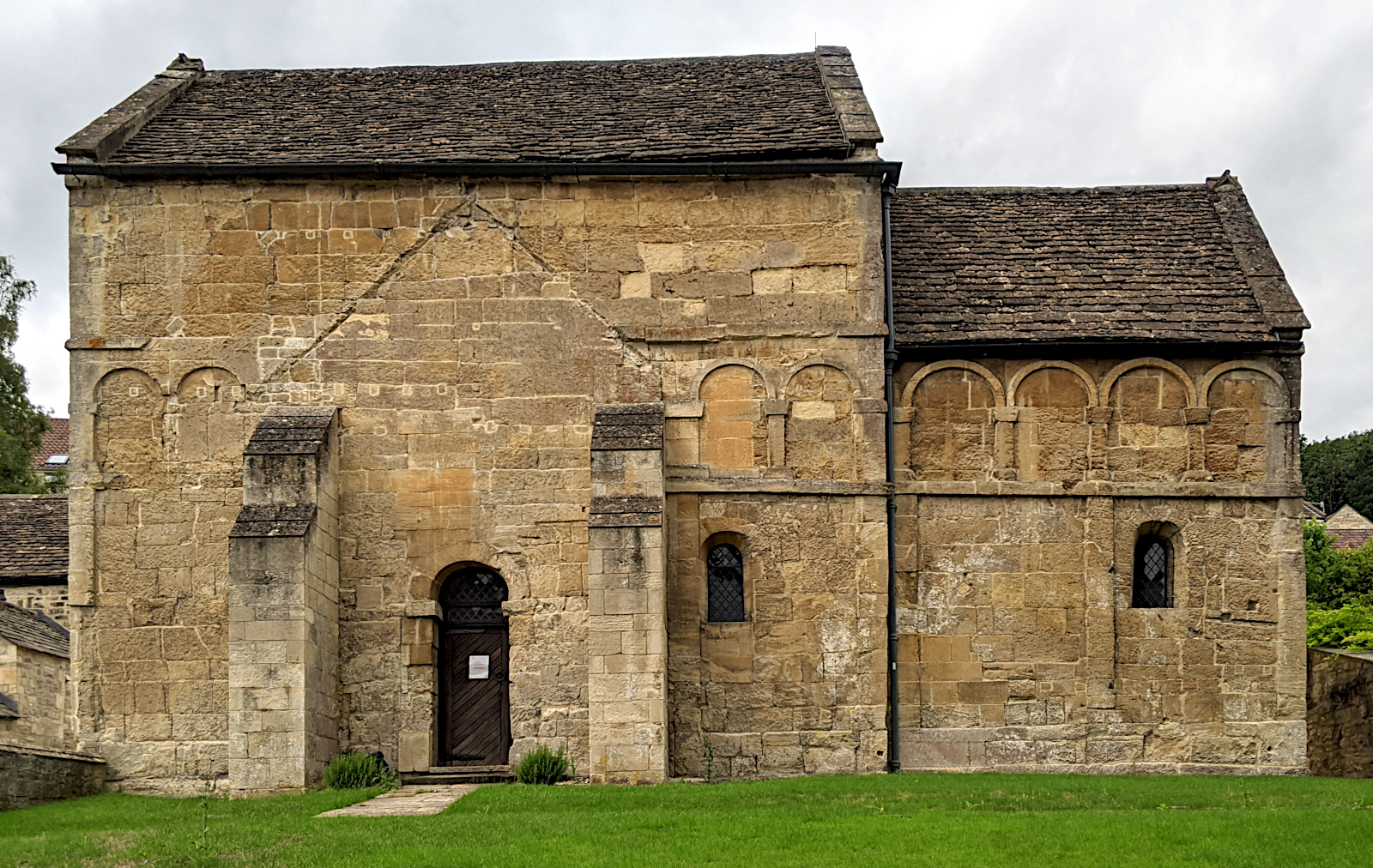
We visited Bradford-on-Avon to visit an old garden and take a look at the town. Much to my surprise, there’s a particularly well-preserved Saxon church there. It wasn’t open so we couldn’t look around inside, but it was fascinating to see a structure that dates back before the Norman Conquest. It may have been built in 1001 CE, so very late Saxon. (See: Wikipedia article)
We ate breakfast in Cirencester’s Toro Lounge, the first time we’d done this since the COVID outbreak.
Gloucester Cathedral
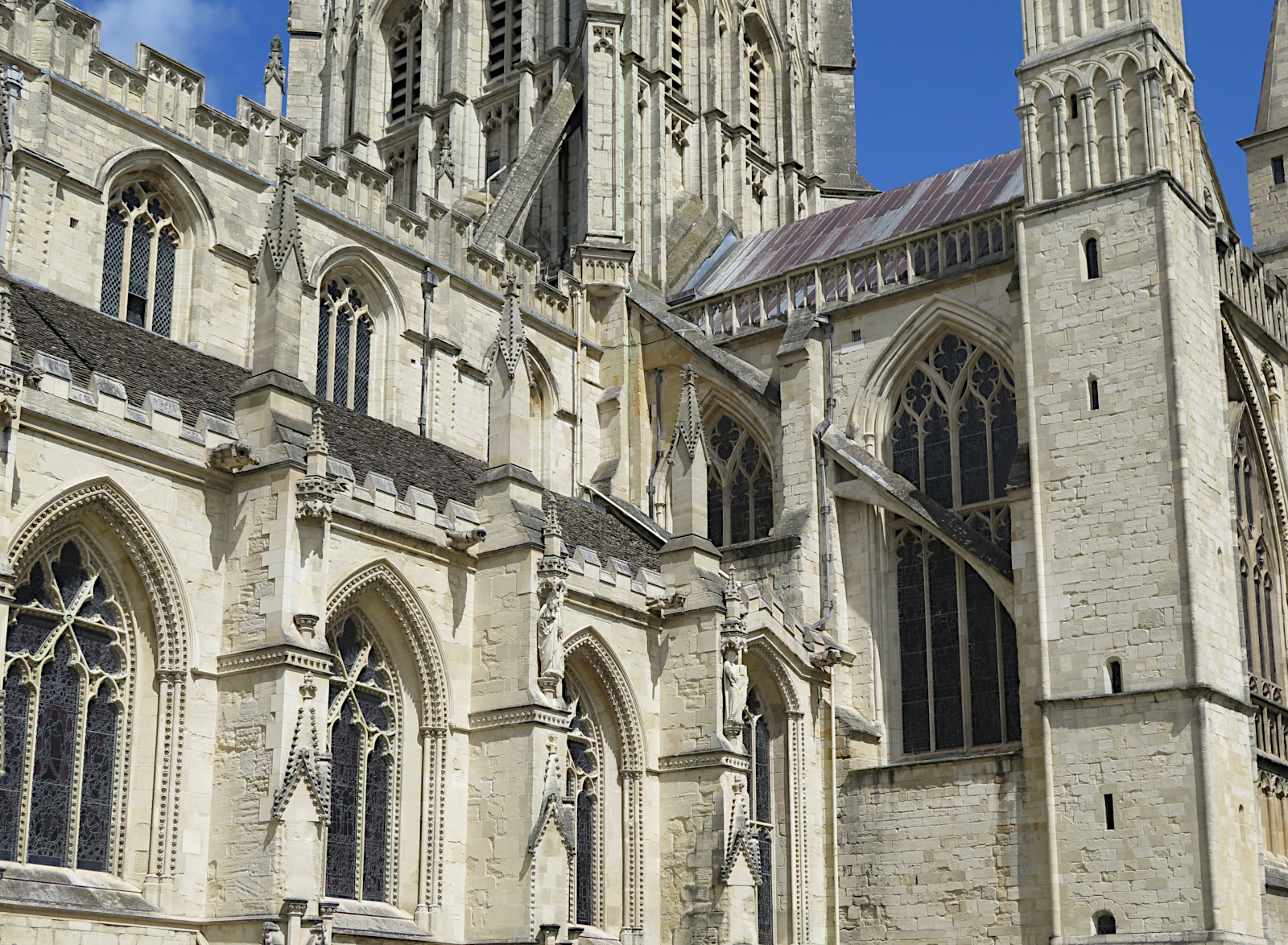
Near the end of the month we visited Gloucester Docks and the Cathedral with Donna’s Mum, Isobel. The docks area is being redeveloped as a shopping centre with restaurants and a museum as well as all the old docks themselves now in use as a large marina. There’s a large plaza, places to sit, car parking nearby, and an easy walk to the city centre and the cathedral.
JHM: I wrote about a local musician; and a free way of writing online. World events: Russian voters backed an amendment permitting Putin another two terms as president after 2024; and the number of COVID cases worldwide passed 15 million.
Our family holiday was at Noordbeemster in the Netherlands, we crossed on the ferry from Harwich. One of the places we enjoyed during this week away was the Zuiderzee Museum in Enkhuizen. In character it’s very like the Welsh Folk Museum and the children enjoyed it just as much as the adults. The photo shows Meredith in the distance and Aidan trying out weird Dutch traditional toy vehicles. Pump the handle to move and steer with your feet. This proved to be much harder than you might think!
I drove to Burton Latimer to meet Rachael and our friend, Jody, for lunch and to talk about meeting again in our homes to hear what the Holy Spirit would say to us together.
It was an exciting month for astronomy as the New Horizons probe flew by Pluto and Charon and began to return data on 15th.
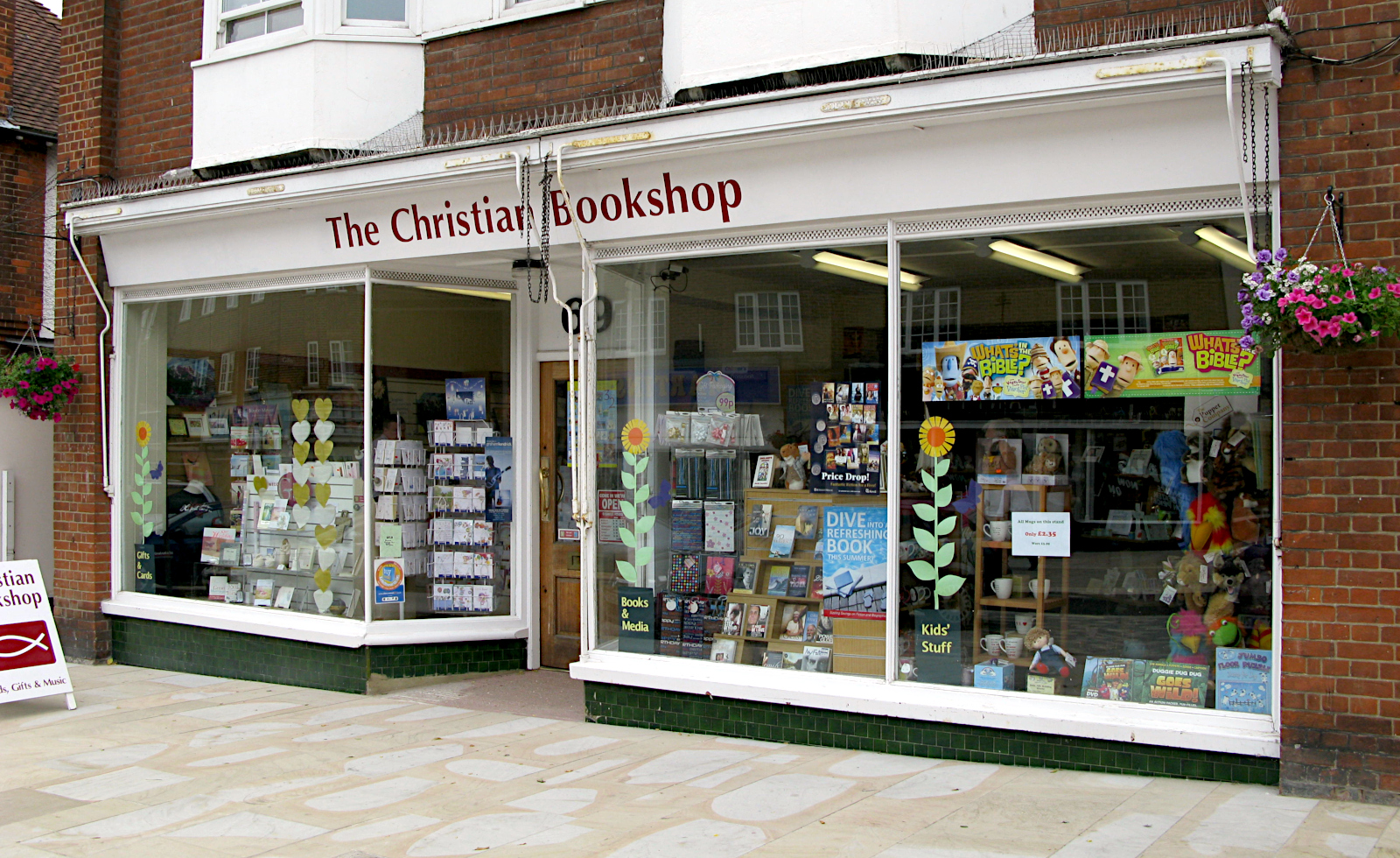
I visited the Christian Bookshop in Letchworth with my friends Jim and Paul to see if we could learn anything that would help us develop the new cafe/bookshop in St Neots. We were looking for good ideas, things to avoid, and advice from people who’d been through a similar process.
Train ride
Our family holiday was in North Wales at the end of July this year. The photo shows Beth and Paz with their daughters Meredith and Verity on the narrow-gauge steam train, something we have to do on every holiday! This time we were on the Welsh Highand Railway. A few days later we went to visit the Dinorwig pumped storage power station which is an impressive feat of engineering.
World events: The first 24-hour flight by a solar-powered plane was completed; and Slovenia became the 32nd member of the OECD.
Debbie and Steve were married in Cornwall at the end of July. It was a quiet but special occasion, with just the two of them, Donna and me, and Steve’s parents. We explored the local area briefly while were there, Steve’s Dad and I very much enjoyed the amazing Bicycle Museum.
Steph, Donna and Sondra
Our friend Steph Bennett and her daughter, Sondra, came to stay earlier in the month. During their visit we travelled to Paris by train via the Channel Tunnel and spent a day or two in the city. In the photo we’re on our way to the top of Montmartre.
World events:Eris was discovered, the most massive known dwarf planet in the Solar System; and the Huygens spacecraft landed on Titan.
Our friends Karen and Gert were married in Ampthill and I had the job of taking the photos, most were taken on Kodak colour negative film, and a few on my first digital camera. These were low resolution, but were better than film in low light conditions.
My Uncle Dick’s funeral was on 25th, and my branch of the family gathered at Churnside in Cirencester before the event and returned afterwards for a meal together. It was the same day that an Air France Concorde caught fire and crashed near Paris with tragic loss of life.
A Ford Anglia
We went along to the Tilbrook Village Fete where I spotted a 100E Ford Anglia just like the one I’d owned in 1969. It was great fun to see one again after all this time. I remembered the three-speed gearbox and the windscreen wipers using a partial vacuum from the engine. They were not the best wipers in the world!
Judy’s health was definitely declining slightly and she continued to lose weight slowly. But apart from that she was doing quite well and was not in pain at the start of the month. By the end of July, though, she needed some paracetamol now and then, especially when travelling in the car.
My Mum and Dad came down on my birthday and we were able to sit outside on the patio in the evening. Debbie and Beth were with us and Nick joined us as well.
We continued meeting regularly with our friends Tony and Faith, and Paul and Jenny for the most amazing times of spiritual experiences, feeling very close to one another and very close to Jesus too. They were such special occasions, not prayer sessions and not about physical healing, but they were about spiritual revelation and growth for all of us. Dad sometimes jokingly referred to them as ‘The Gang of Four’ or all six of us as ‘The Crazy Gang’.
Dad retired from Country Gardens this month where he’d worked to ease the handover of the old family business as a going concern to the new owners. His nephew Tim had worked with him on this, and being younger Tim continued with them after Dad left. Mum was pleased to have Dad at home and with time to walk into town or go out for daytrips, and even on longer holidays.
Cindy, Paul and little Sebastian visited us in Yatton. Seb was unable to walk without some support, but with his walker to aid him he was already bombing along really confidently – and fast!
Mum and Judy
We visited Mum and Dad on my birthday, we spent some time chatting in the garden as it was a lovely summer’s day. The photo shows Mum and Judy, with Dinah the Siamese cat sitting on Judy’s lap for a relaxing stroke.
World events: East and West Germany merged their economies; and Belarus declared sovereignty in a move towards independence.
I was at the RMS Microscopy Conference at York University on 12th, this was to help me get to grips with some new techniques, including electron microscopy and fluorescence microscopy. At this point I was still attempting to localise the plant hormones known as gibberellins in frozen plant tissue for Long Ashton’s Plant Sciences Group.
Debbie, Beth, and dolls
Judy continued teaching Biology GCSE and A Level at Cotham Grammar School in Bristol. Debbie (10) was studying at Backwell School, and Beth (7) was at Yatton Junior. We were living at 22 Rectory Drive in Yatton west of Bristol; the photo was taken in our front garden.
World events: The Rainbow Warrior was bombed and sunk; and P. W. Botha declared a state of emergency in South Africa.
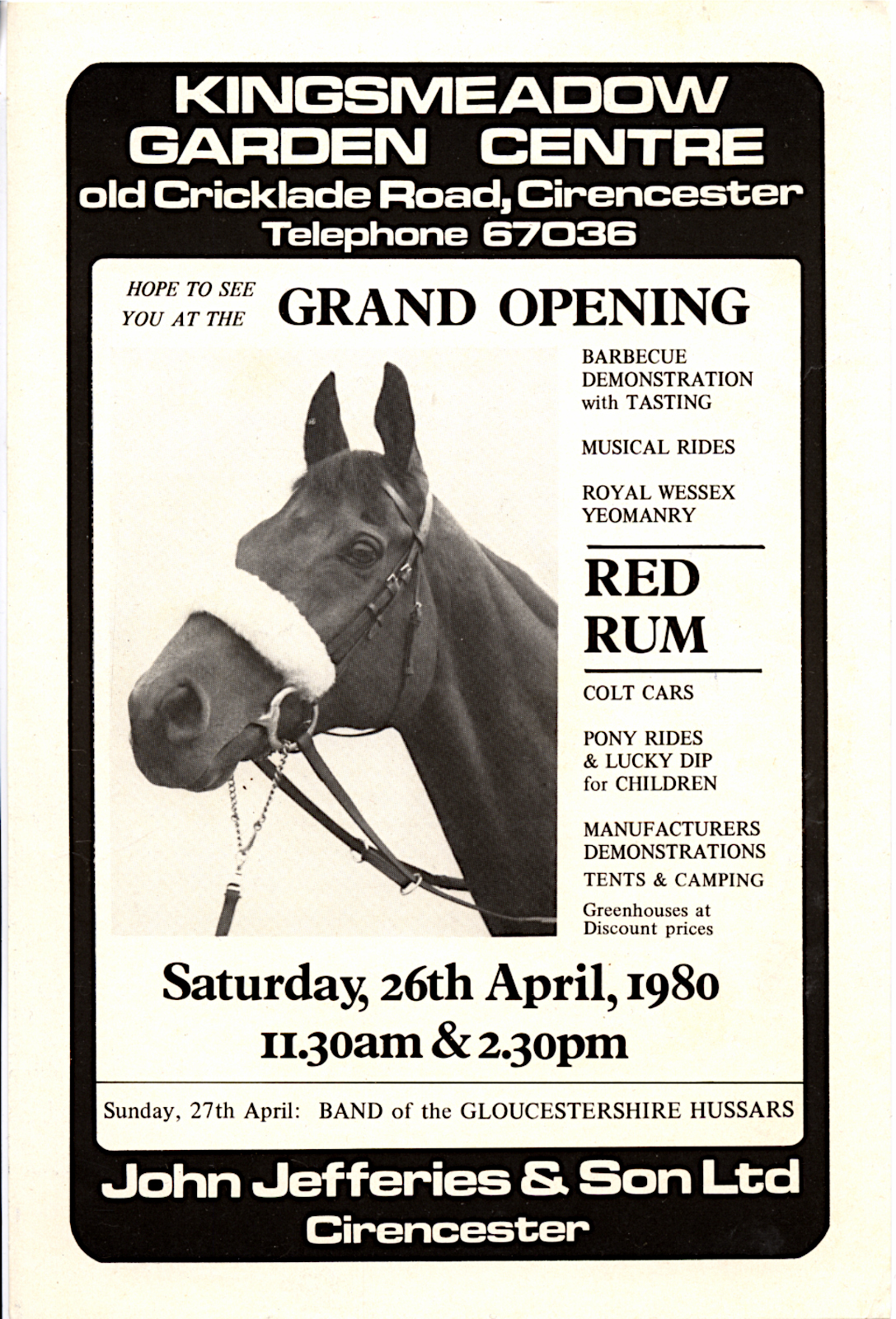
The new Jefferies garden centre at Kingsmeadow was doing a good trade during the summer months after opening to customers in April. The Tower Street garden centre continued operating, as well as the shop in the Market Place (now Vodafone). And although the nurseries were still in use, they were beginning to fade away in terms of the value they added to the business. It was becoming cheaper to buy in nursery stock than to employ staff to raise plants locally.
Kathy, Debbie and Joanne
We travelled up to Frank and Kathy’s home for the Christening of their new daughter, Joanne, almost certainly in the car with Judy’s parents.
This was the last full month that we lived in our flat (upper flat in the photo) in Belmont Road, Bristol before moving to Yatton on 2nd August. The flat was very cluttered at the end of July, everything was piled up or packed in boxes ready for the move. This was at once exciting and very inconvenient.
Debbie was four months old on 12th and was dedicated at Zetland Road Fellowship on 27th according to a note in my Dad’s photo notebook. So a lot was happening in July 1975!
World events:Cape Verde gained independence after 500 years of Portuguese rule; and the Apollo–Soyuz Test Project docked American and Soviet crewed spacecraft in orbit.
My degree ceremony at Bath was a little earlier than Judy’s at Aberystwyth (or it might have been the other way around), but we both had our hired robes for the period between the two and the photos were taken at her parent’s house in Cheltenham during that week.
I travelled to Aber with Judy’s parents and brother and crept into the hall at the back to watch and listen as there were insufficient tickets for Judy’s family and for me as well. Then at Bath Judy came along with my parents. The next big occasion for us would be our wedding in October, and planning for that was pretty much done and everything arranged apart from little jobs like writing name cards for the tables at the reception and so forth.
World events: France tested a hydrogen bomb on Mururoa Atoll; and the Aswan High Dam in Egypt was completed.
At the beginning of July we visited Oxford for the day, Günter Klauß who was staying with us on a school exchange came too and very much enjoyed the trip. Mum sent an Oxford postcard to Granny in Northern Ireland reporting that Ruth had learned to swim a few days earlier.
On 10th, Günter returned home to West Germany, we took him to Kemble Station to see him off on the train to London. This was also the end of my first year in the Sixth Form at Cirencester Grammar School and Mum’s 37th birthday was on the 5th.
World events:Mariner 4 flew by Mars, becoming the first spacecraft to return images of the planet; and Edward Heath became Conservative Leader in the UK.
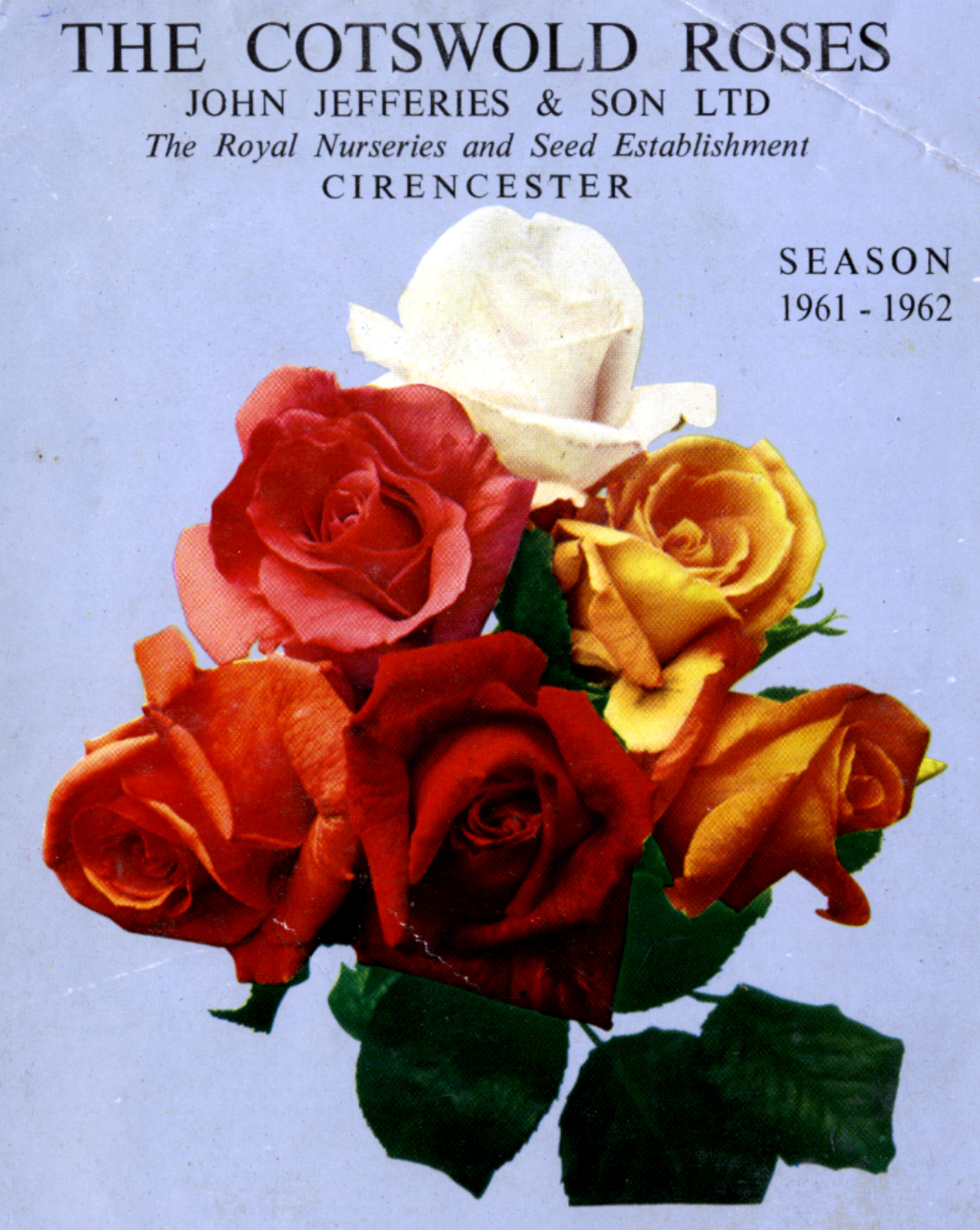
The Cotswold Roses would have been flowering freely on the London Road Nursery (now Partridge Way and Pheasant Way on the eastern side of Cirencester). The photo of the catalogue for the following season gives some idea of what they would have looked like.
The school holidays were always a time to look forward to, the freedom to do whatever I liked was great and we would certainly have some family days out to enjoy and a summer holiday away somewhere.
Mum’s birthday was on 5th, she was 32; mine was on 31st, my twelfth; Dad’s birthday was in June and he was now 34; Cindy was 8-years-old and about half way through her time at Querns School (juniors); while Ruth and Rachael had not yet started school at all being just four and three.
World events:Kwame Nkrumah became the first President of Ghana; and Francis Chichester won the first Single-Handed Trans-Atlantic Race aboard Gypsy Moth III taking 40 days.
My seventh birthday was the 31st of July in 1955. Mum and Dad gave me a somewhat faded red bike that was almost too big for me to ride, even with the saddle and handlebars set as low as possible. I found it quite daunting at first, but once I’d learned to ride it, I loved that bike. One thing you could do was fix a piece of flexible card to the rear frame so that it made contact with the spokes of the back wheel. Then it made a marvellous noise that rose in pitch the faster you went. Before long I was riding my bike to Querns School, though Dad came with me to make sure I was safe in all the town traffic. The photo shows our back garden at 17 Queen Anne’s Road where we lived at the time. It was taken in September 1960, but wouldn’t have changed very much since June 1955.
Mummy was 22-years-old on 5th July and I was two at the end of the month. I was admitted to Cirencester’s Memorial Hospital as a one-year-old (date unknown, so probably not July) and was apparently very taken with a large teddy bear they had on the ward. I was suffering from a serious bout of diarrhoea and, presumably, dehydration and was kept in for a week. The photo shows the hospital in 1950 (from the Facebook group, Old Ciren).
World events: North Korea’s Air Force was largely destroyed by anti-communist forces; and Uruguay beat Brazil 2–1, to win the 1950 World Cup.
A three watch system was started, and Mike spent a good deal of time writing and reading letters to and from Lilias, his family, old school friends, and RAF friends now at other stations. In one of her letters Lilias mentioned a problem with serious period pains, a cause of concern for them both.
Generally, RAF duties were rather light during July with the war in Europe now over. Mike mentions activities like cricket, softball, swimming and tennis as well as lectures on topics like returning to civilian life.
On 16th he was off to Staxton Wold radar station near Scarborough where there was rifle, machine gun, and hand grenade practice. Mike had a B+ Pass from the course at Staxton Wold. On 26th he was disappointed to learn that Labour had won a landslide victory in the General Election.
He spent Friday 27th travelling to Cirencester, Saturday with family and friends, and Sunday 29th travelling back to Skendleby and normal duties again with some new radar equipment. The picture shows a Midland Railway engine, probably still in use by the London, Midland, and Scottish (LMS) when Mike made his journey to Cirencester.
World events: Germany was divided between the Allied occupation forces; and the first atomic bomb test (Trinity), used 6 kg of plutonium to explode with the force of 22 million kg of TNT.
There’s not enough information to write something for every month in the 1940s. Dad’s diaries start in January 1943, so for January 1940 to December 1942 I’ll write about things I know, or draw on dated photos and documents. Sometimes I might use a photo or document with a guessed date.
Peace
For July 1940 I thought I’d write about the London Road Rose Nursery. This was a large field with a north facing slope, typical of hilly ground in the Cotswolds generally; it was limestone brash overlain by a shallow, stony subsoil and thin topsoil, by no means the most promising site for rose growing. Today it is an area of housing, Pheasant Way and Partridge Way. The field was owned by John Jefferies & Son and must have been bought by the company quite early.
To help keep the poor soil in reasonable condition a rotation was employed. It included a cereal crop, and roses the following year. I don’t know, but it’s possible (even likely) that a crop of mustard or some other nitrogen fixing choice would have been grown in a third year and ploughed in during the autumn to fertilise the soil and add organic matter. From the 1960s I recall stooks of corn (wheat or barley most likely) and the use of a threshing machine to separate and clean the seed for bagging and to produce straw. In 1940 it might have been done the same way or perhaps in those days there would have been more hand labour involved.
Corn seed would have gone to the Jefferies warehouse in Tower Street for further processing, cleaning and bagging for onward sale to local farmers for delivery in the autumn and sowing in the field in the autumn or the spring for early or later harvest. Straw was useful for packing plant orders for despatch in the winter months, and excess quantities could be sold to farmers and horse owners for bedding, or if long enough and of the right quality, sold for thatching.
See July 1960 above for more on the Jefferies roses. Wikipedia has a good background article on roses. The bloom in the image is a cultivar named Peace, the photo is taken from that article. It’s a hybrid tea rose with a good fragrance, presumably named shortly after the end of World War II. My father had two rose beds in the front garden at 17 Queen Anne’s Road, and the one nearest the front door was Peace.
Anything that appears in this section will be material that I believe belongs in this decade. Items will not be in sequence within the decade, but where I can make a good guess of the date I will do so.
An illustration from the book
When Tigger (my father) was about six or seven (a guess) his father, my Grandpa, wrote a little story for him. His mother (Nor) had a hand in this too for the book is machine stitched. I well remember her treadle sewing-machine from the 1950s when I was a child, clearly he had asked her to use it to stitch along the central fold of the sheets of paper making up the book.
The book has the title ‘Mr Fizwig, his monkey, and their adventures’ and was ‘Written for Tigger’. The illustrations have been coloured, mostly by a child of Tigger’s age, and a list of page numbers added along with the word ‘chapter’. Taken as a whole this provides a touching insight into family life around 1932 at ‘Churnside’, 37 Victoria Road, Cirencester.
You can read the book if you want to, it will open in a new browser tab. I’ve assumed a date of Christmas Day 1932, but it might have been written at any time and was not necessarily a birthday or Christmas gift. After a few years it was most likely forgotten, but never discarded. But now it’s here for anyone to read.
World events (July 1932): The Dow Jones reached its lowest level of the Great Depression, at 41.22; and Norway annexed northern Greenland.
If you enjoyed this or found it useful, please like, comment, and share below. (If you don’t see those links, click the article’s title above the main photo and they will appear.) Send a link to friends who might enjoy the article or benefit from it – Thanks! My material is free to reuse (see conditions), but a coffee is always welcome and encourages me to write more often!



























 Journeys of Heart and Mind

.png)
